



Bol à matcha Hiiro Shino
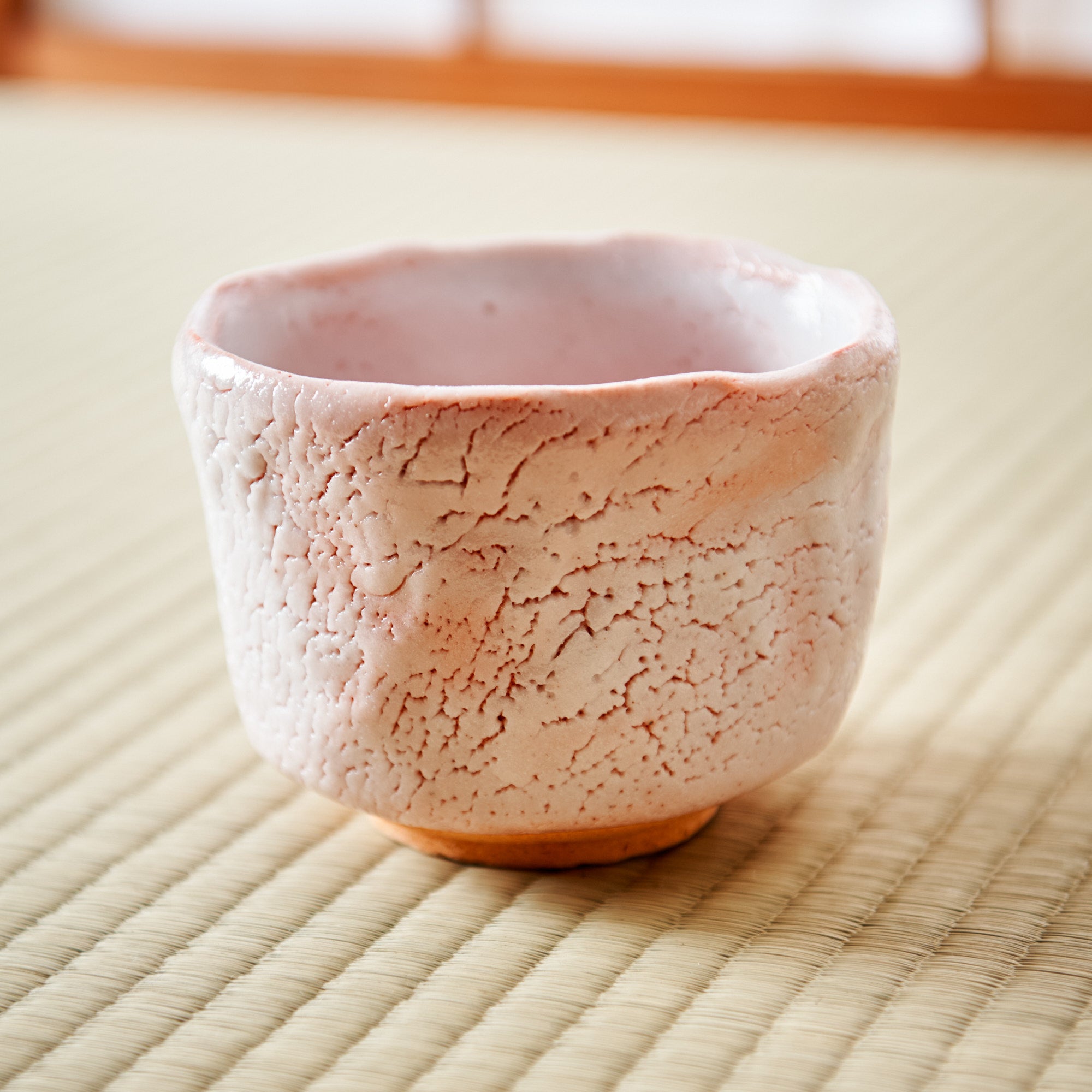
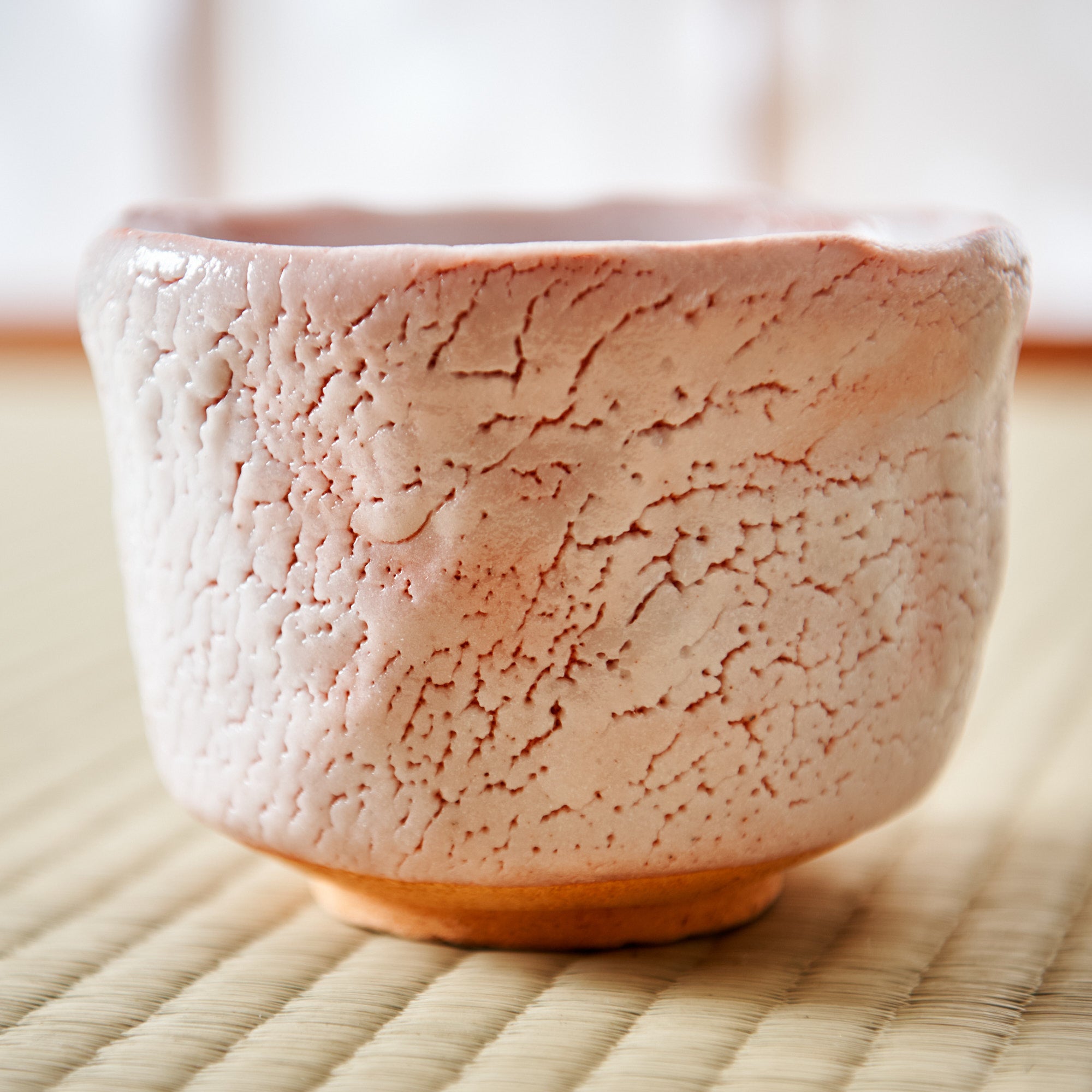
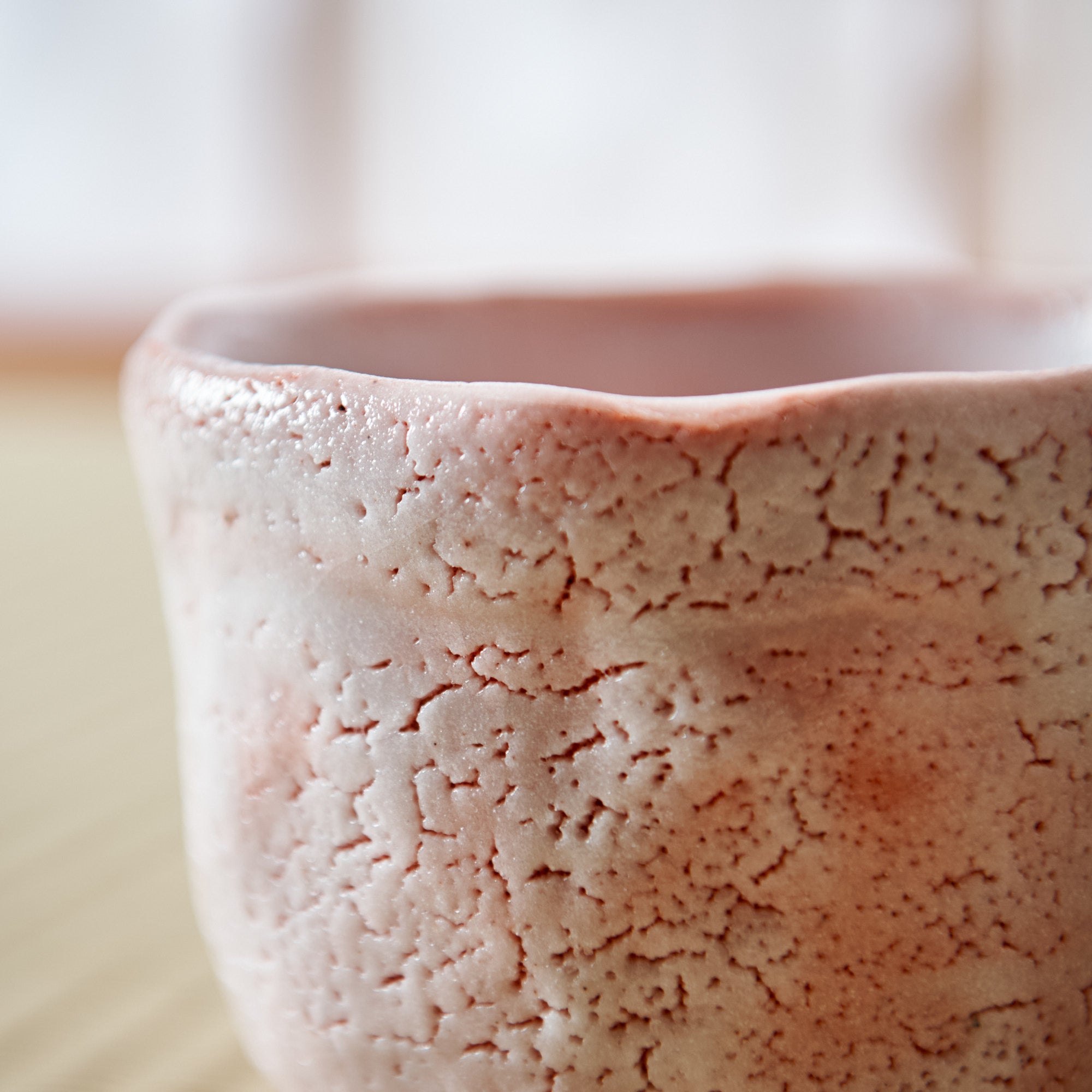
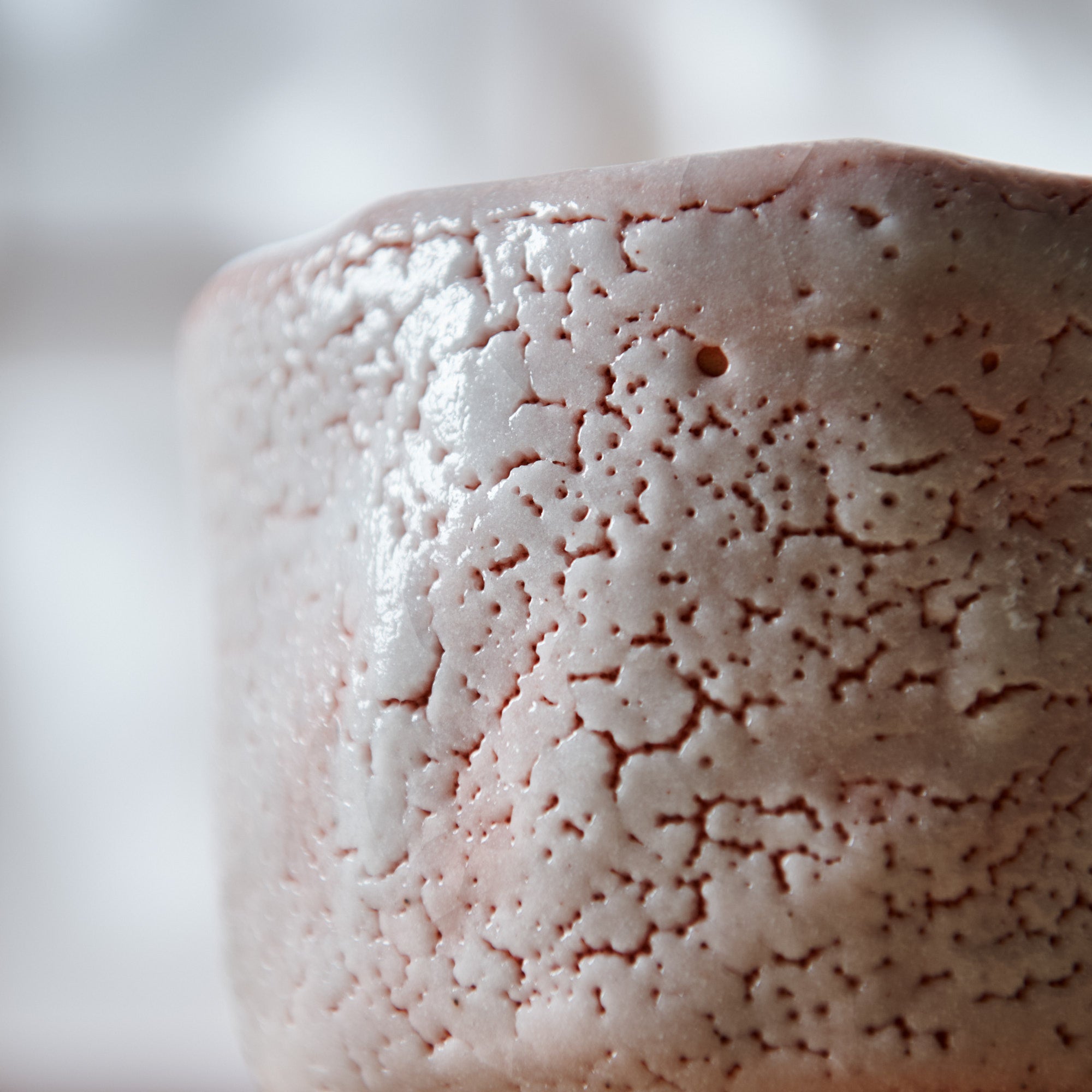
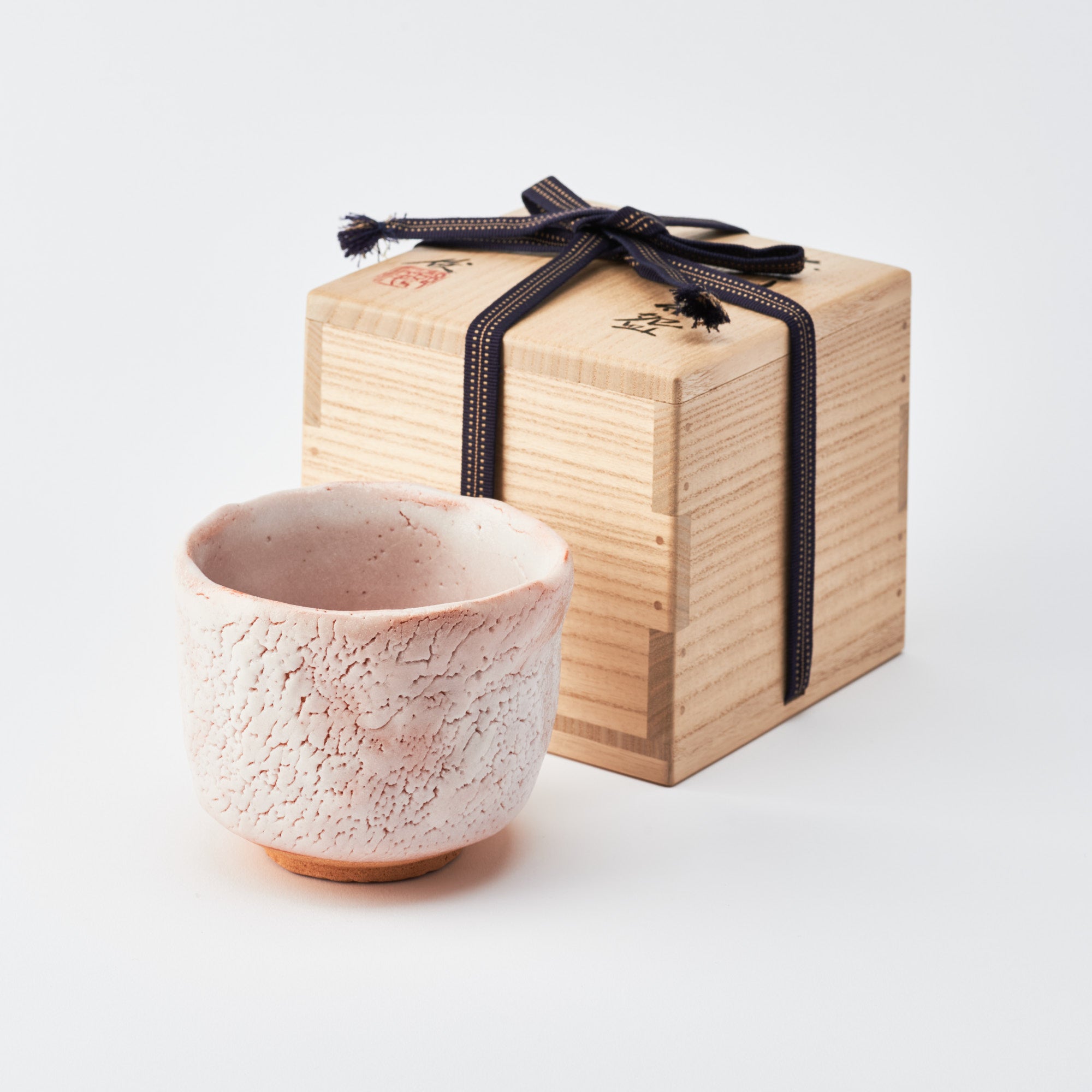
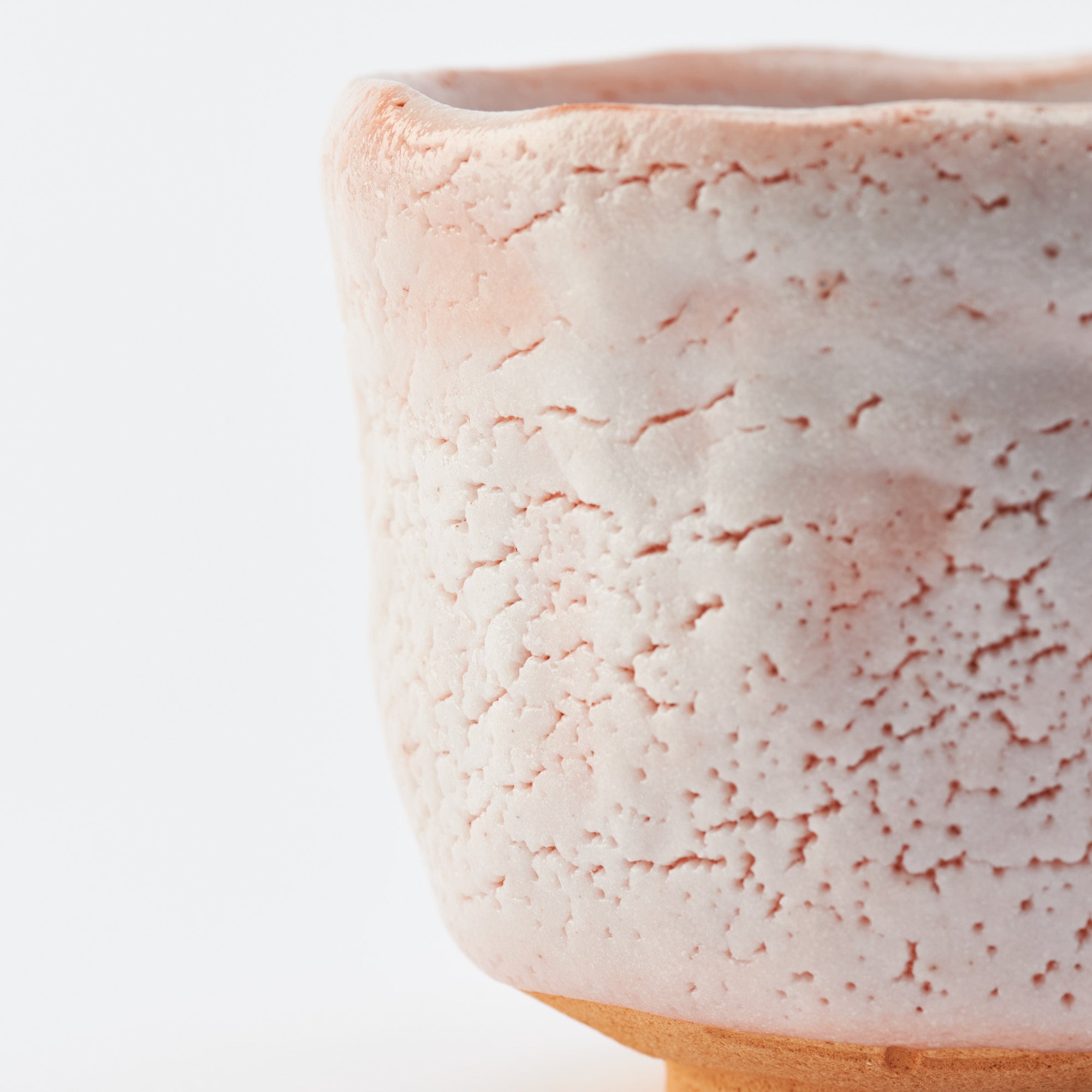
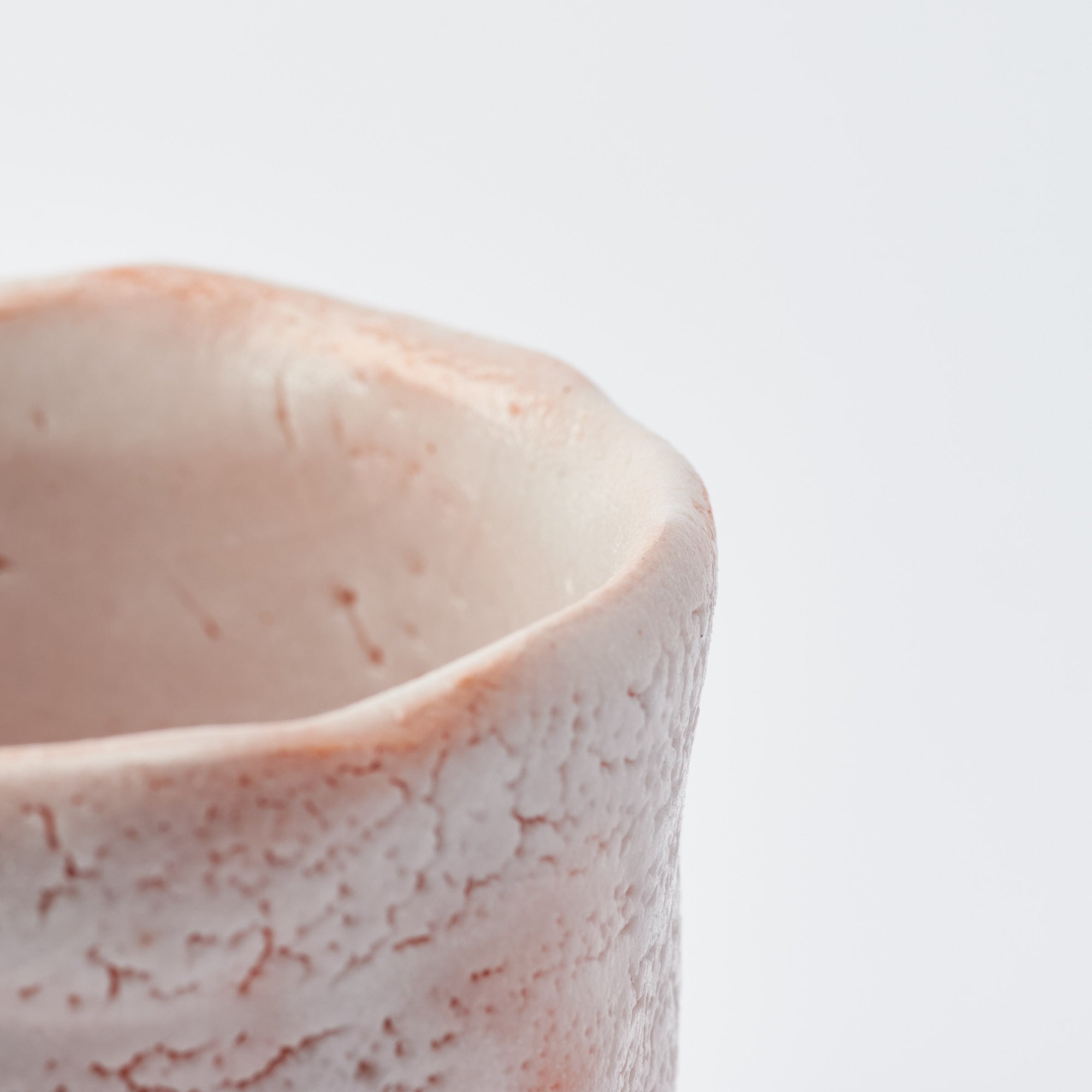
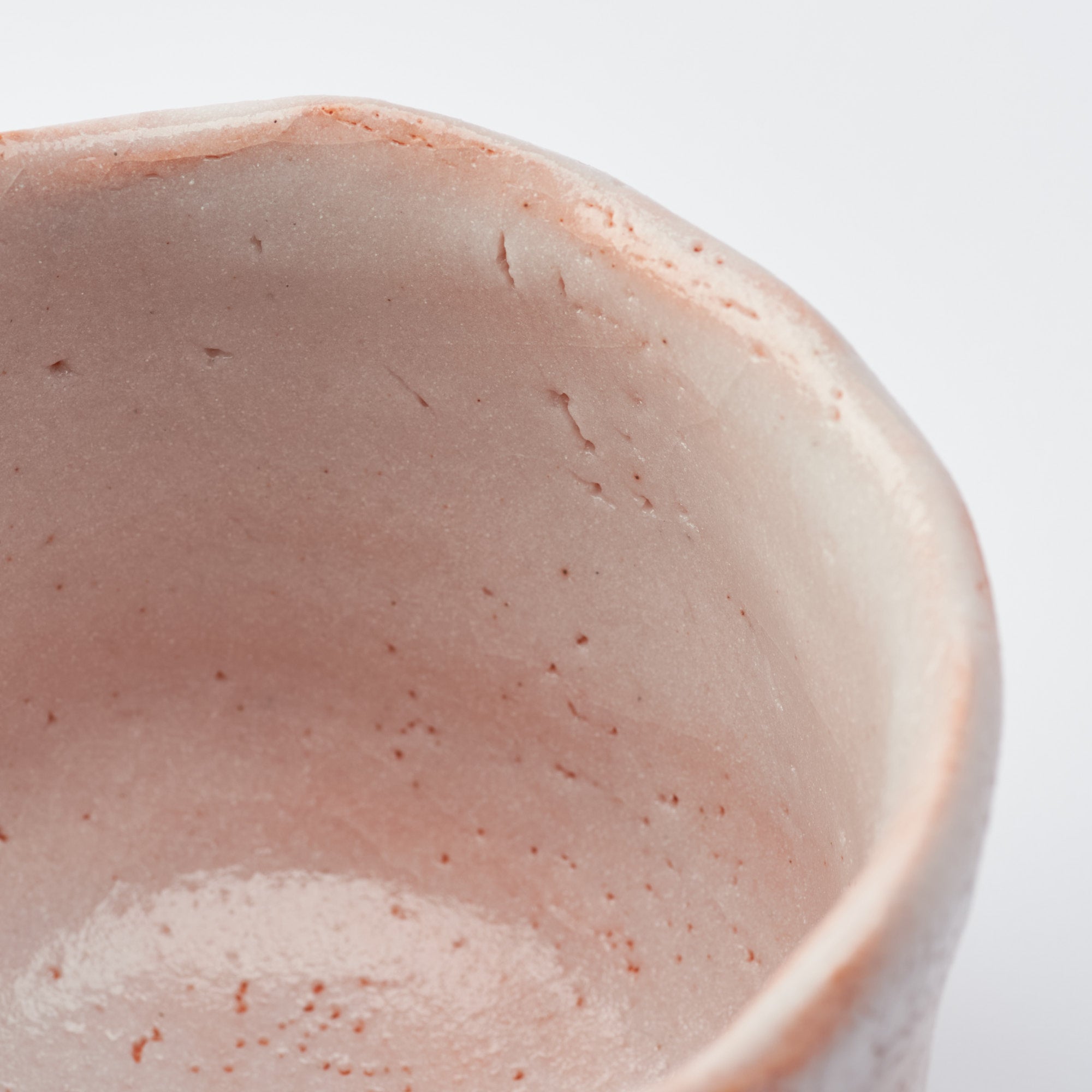
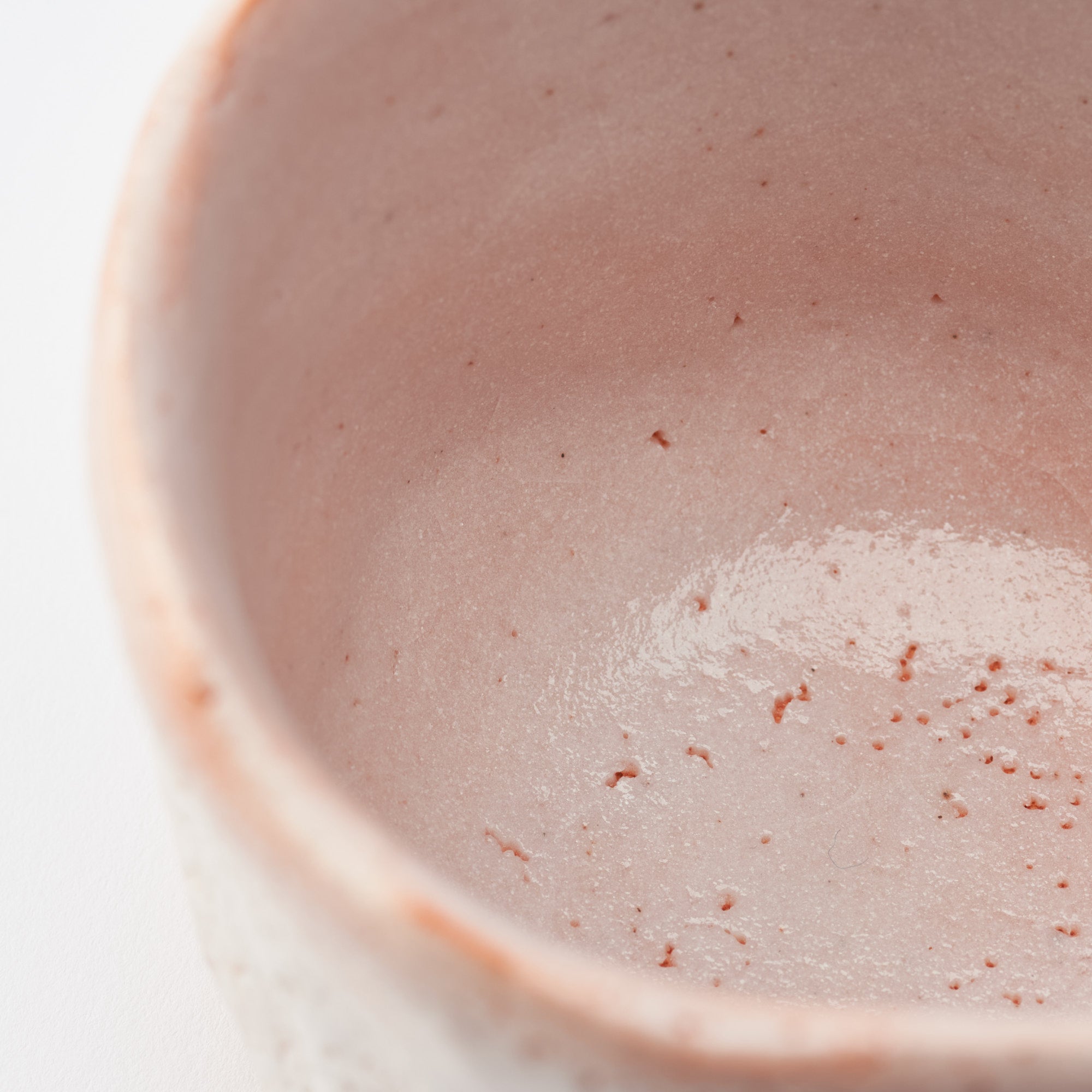
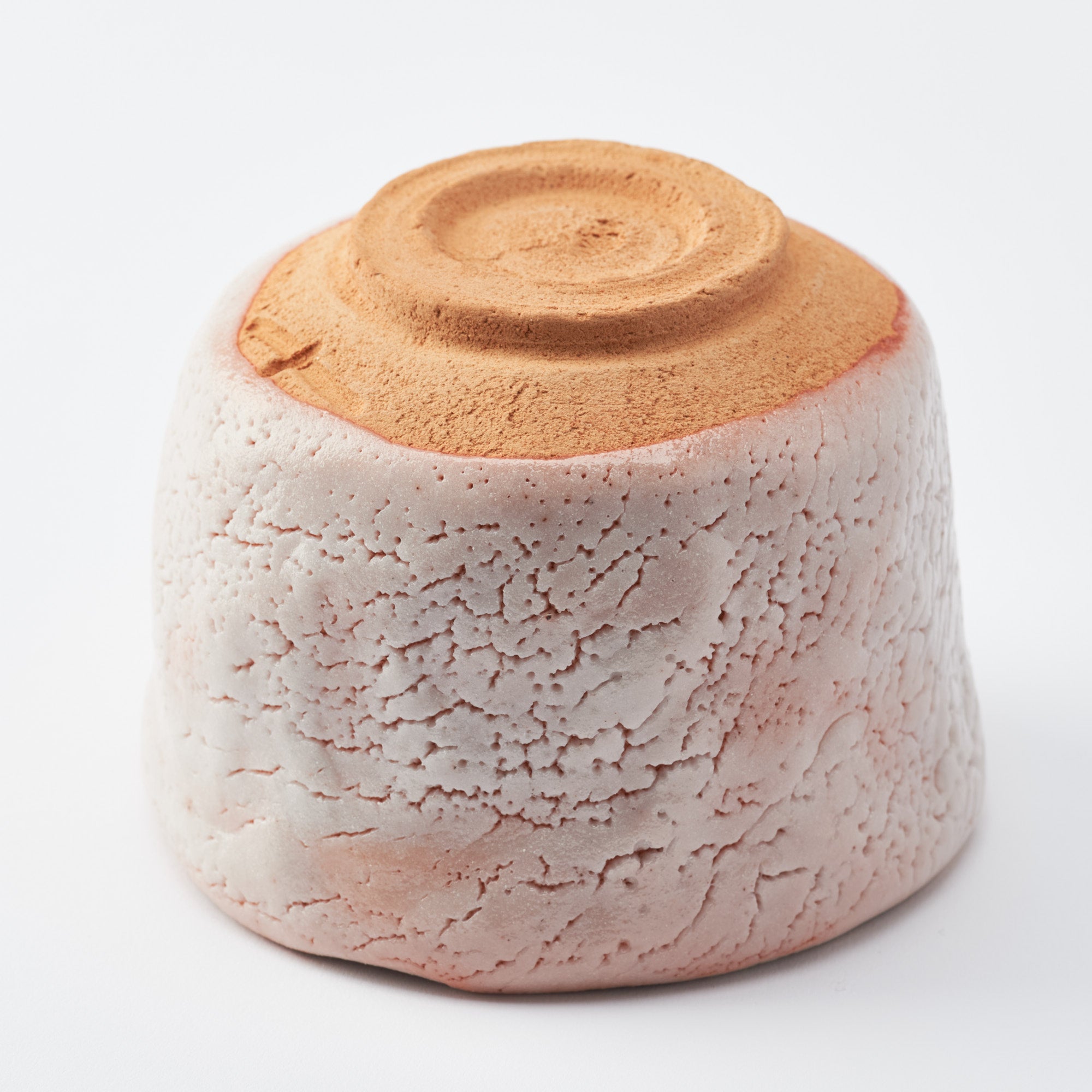
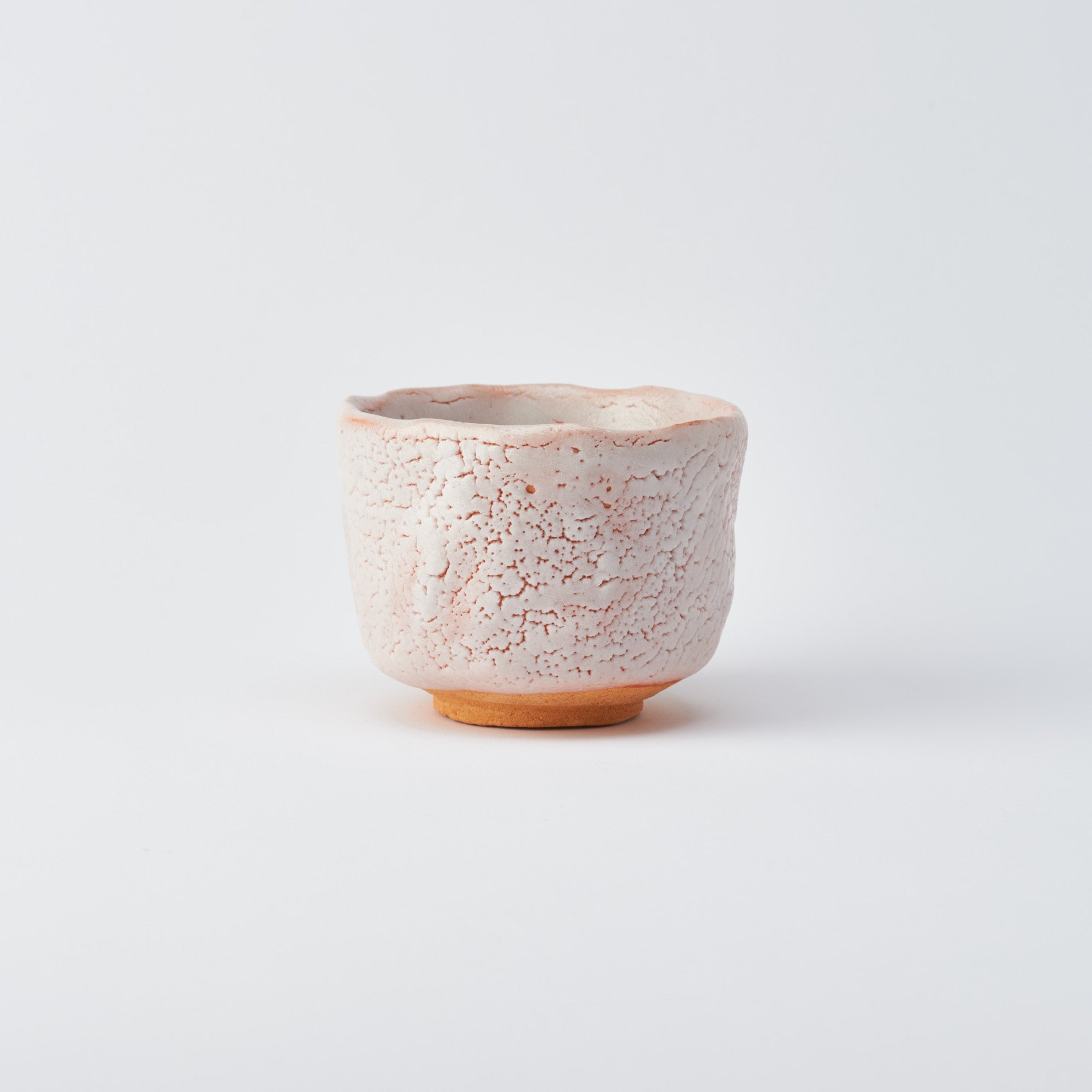
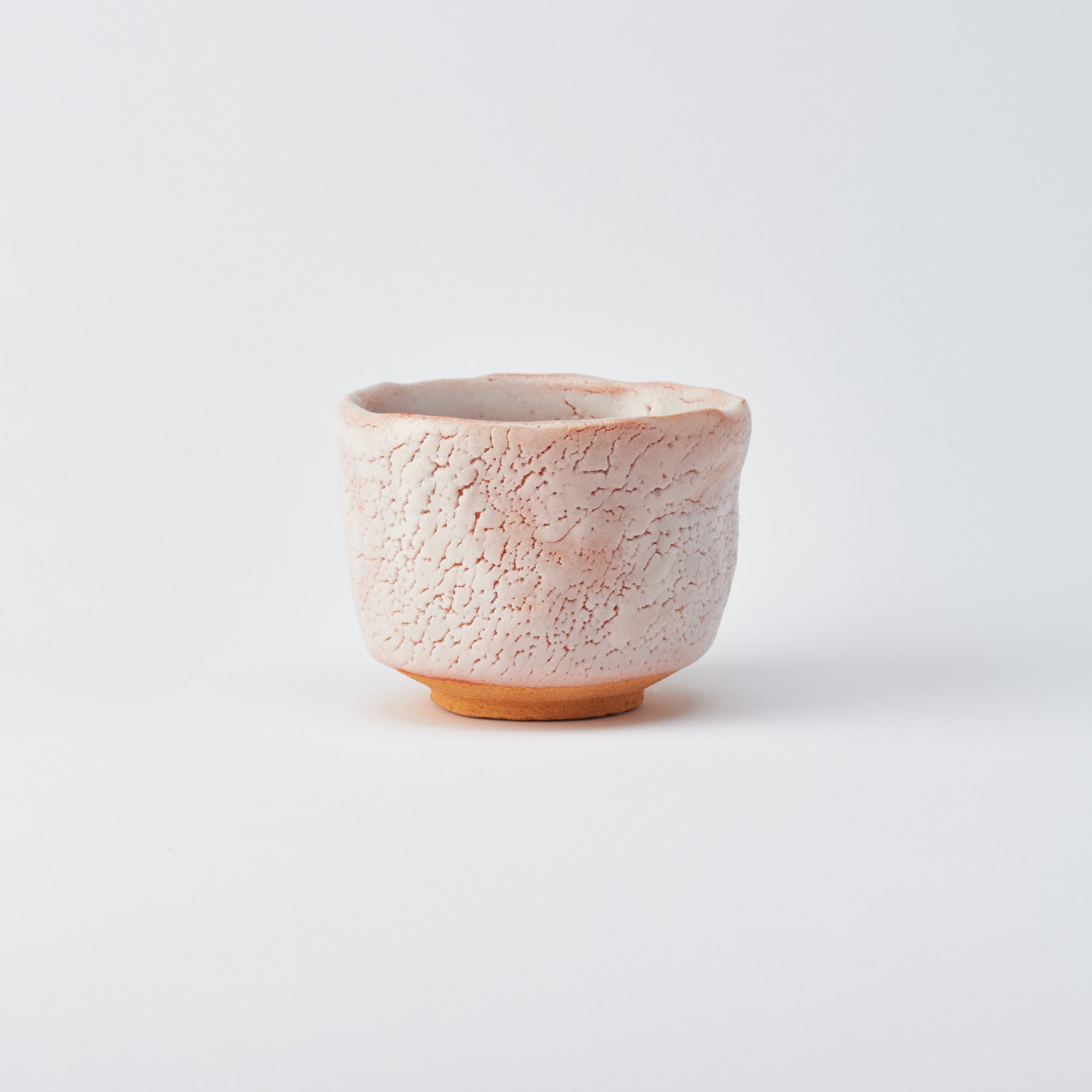
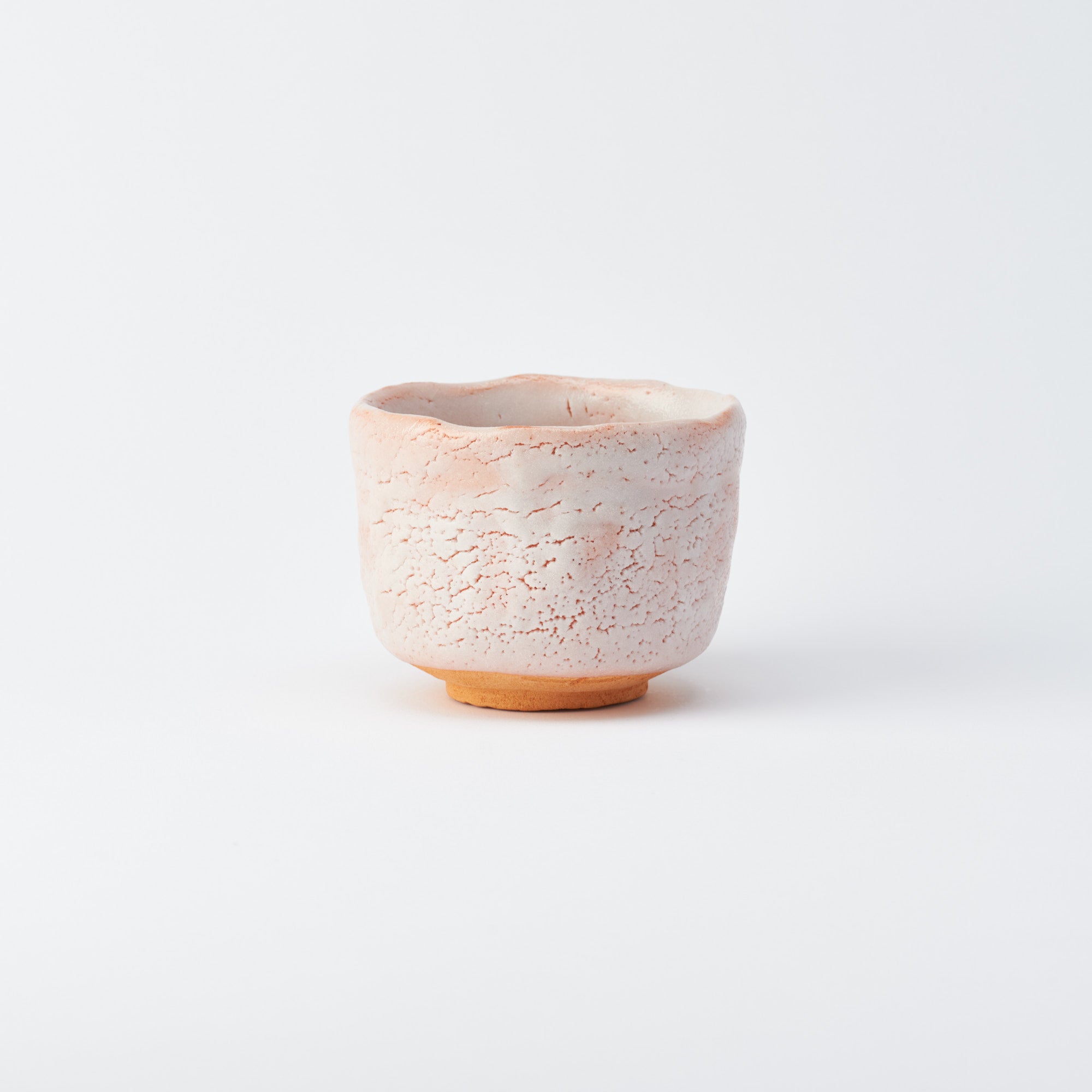
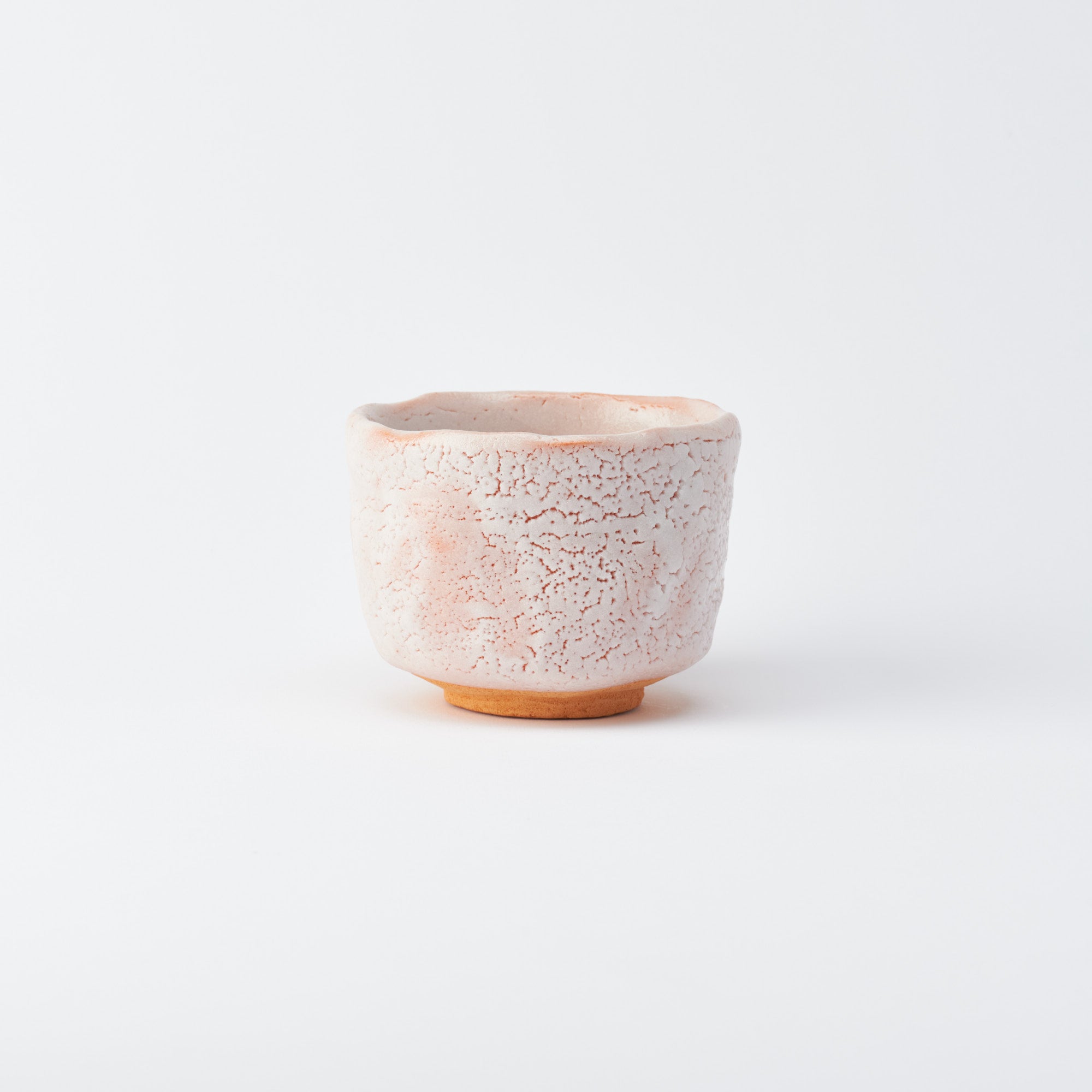
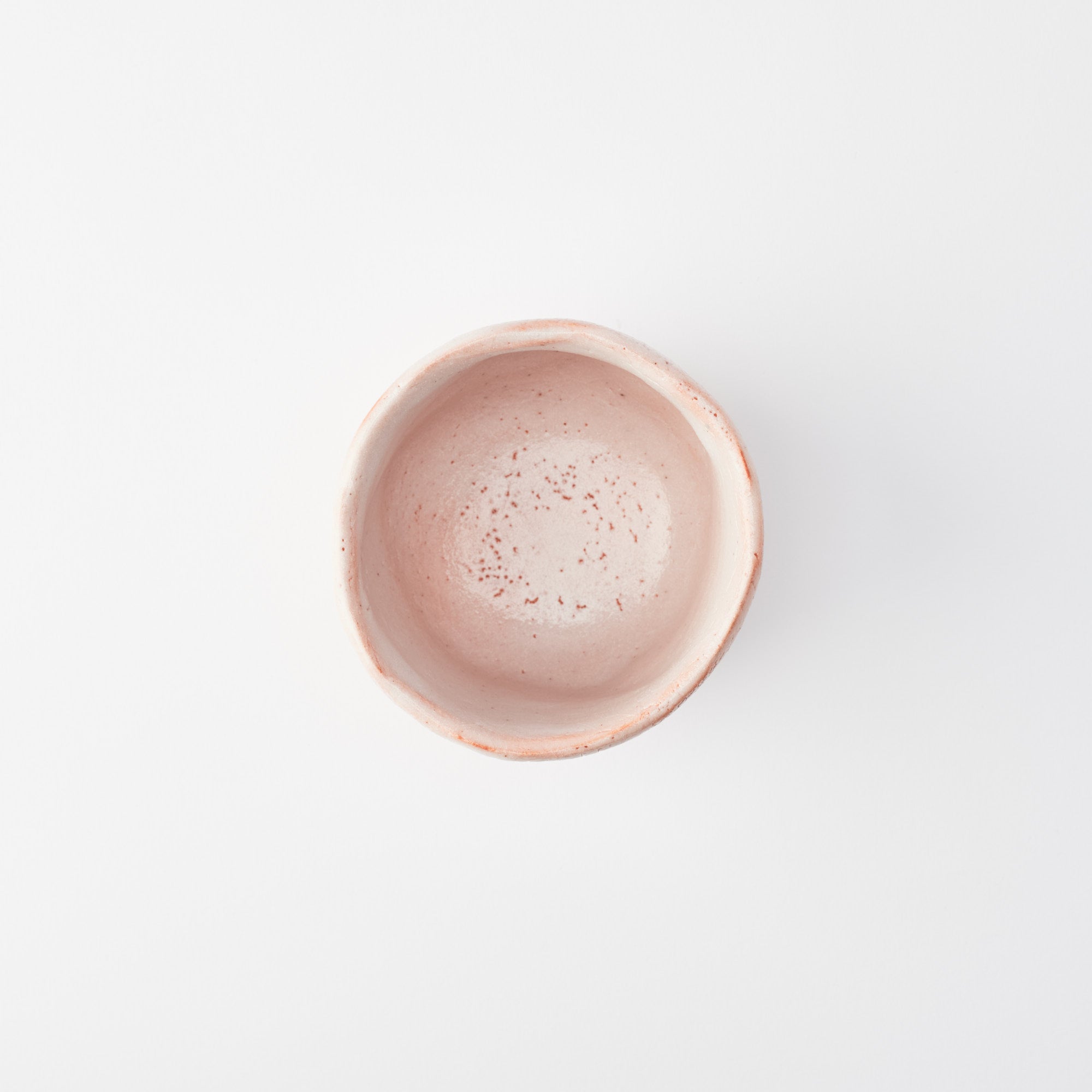
Ce bol à matcha de Hori Toshiro, maître de Mino ware, incarne la chaleur raffinée du Shino, première glaçure blanche du Japon. Des craquelures audacieuses mais délicates se ramifient doucement à la surface de la glaçure, créant un dialogue de couleur entre la glaçure Shino blanc nacré et la teinte flamboyante de l'argile appelée hiiro. À la fois dissimulant et révélant, ce bol témoigne de l'habileté de Hori à équilibrer le contrôle technique avec les variations fortuites nées des forces naturelles.
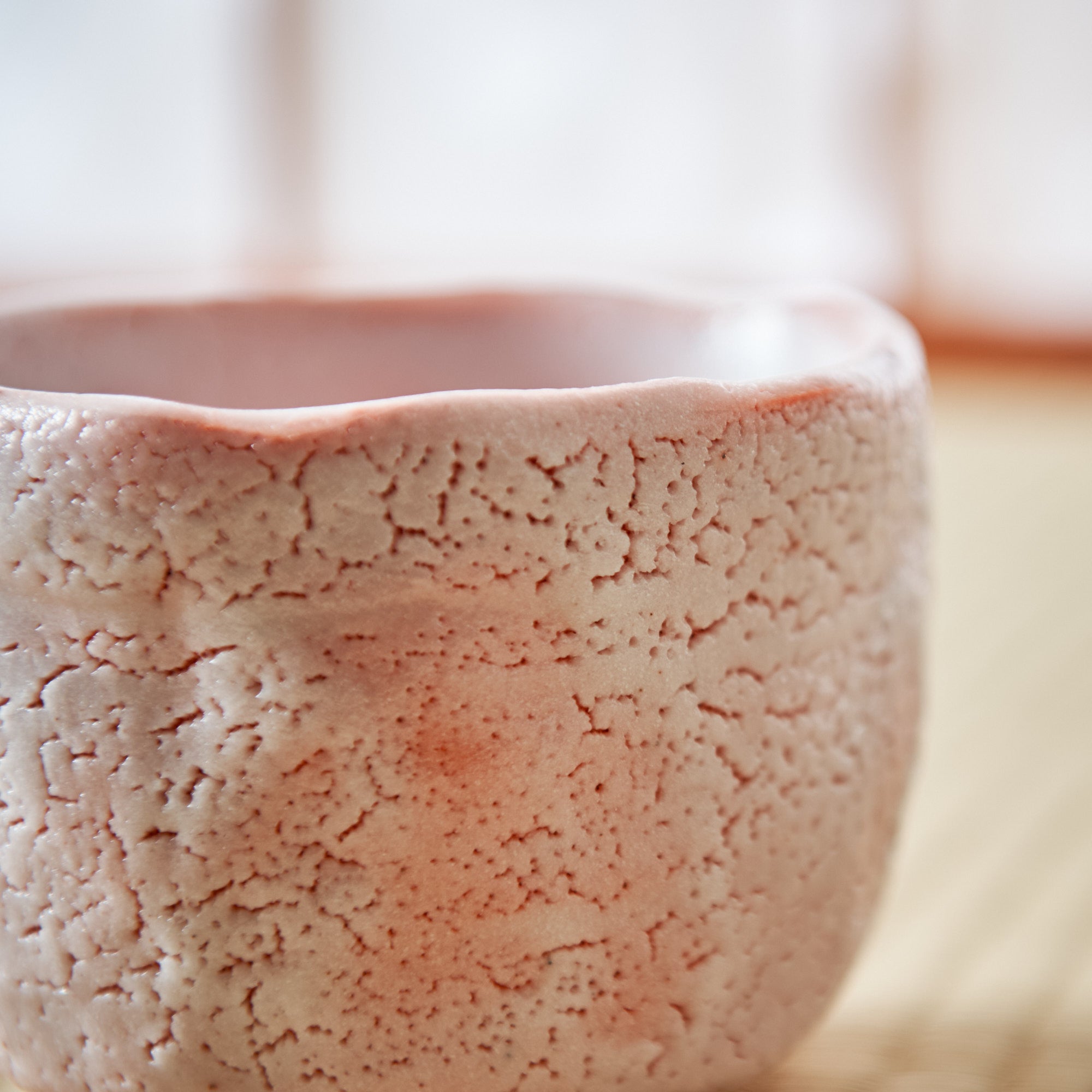
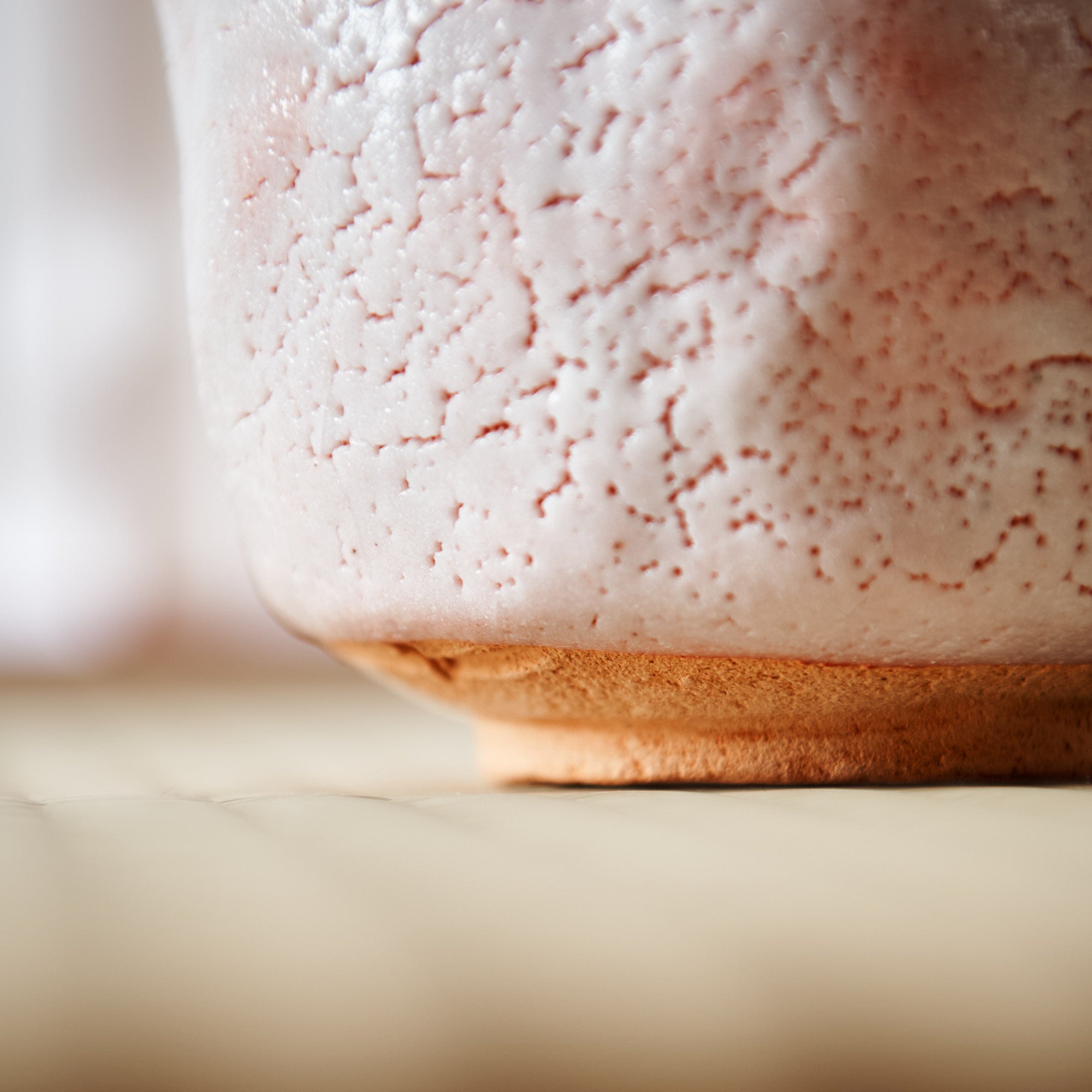
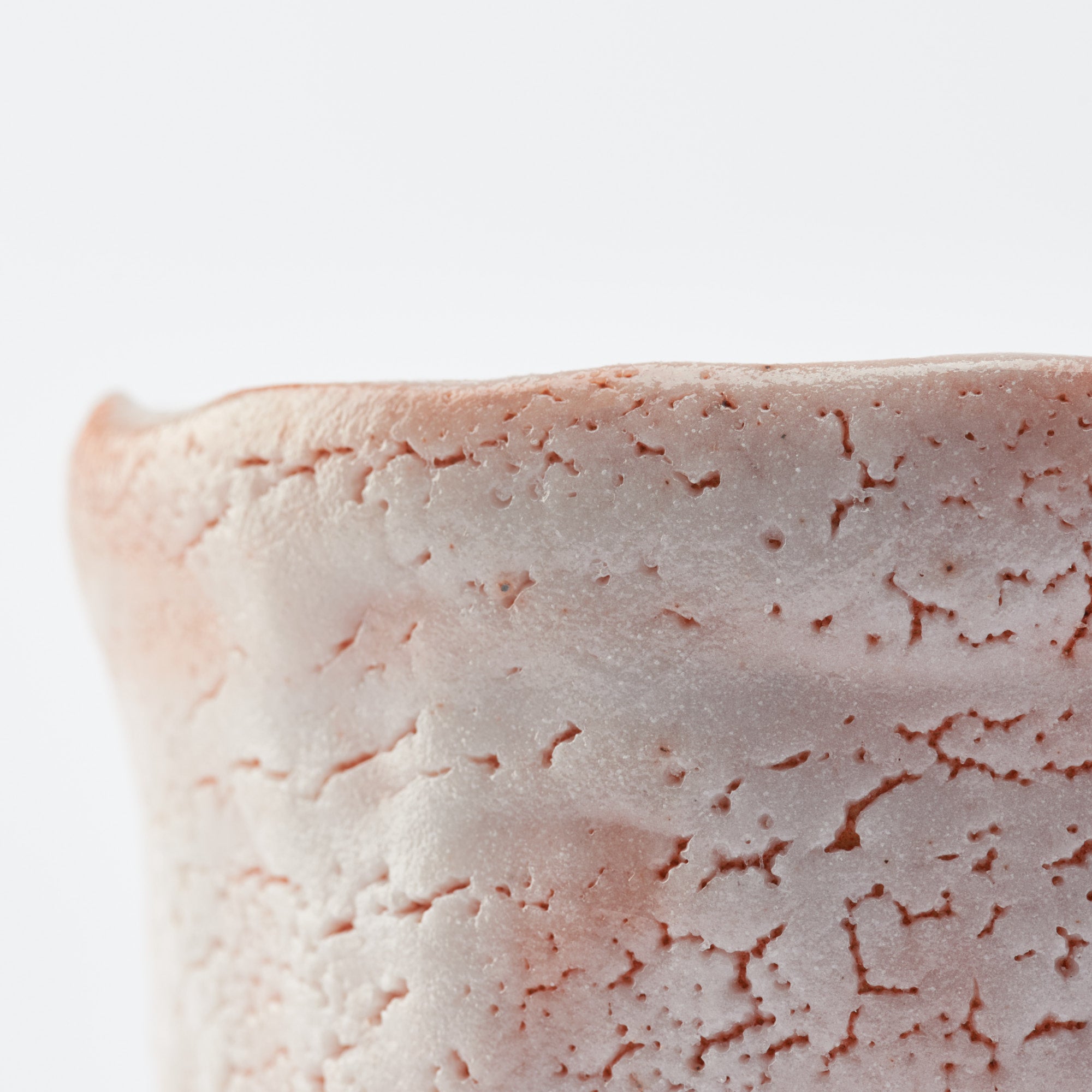
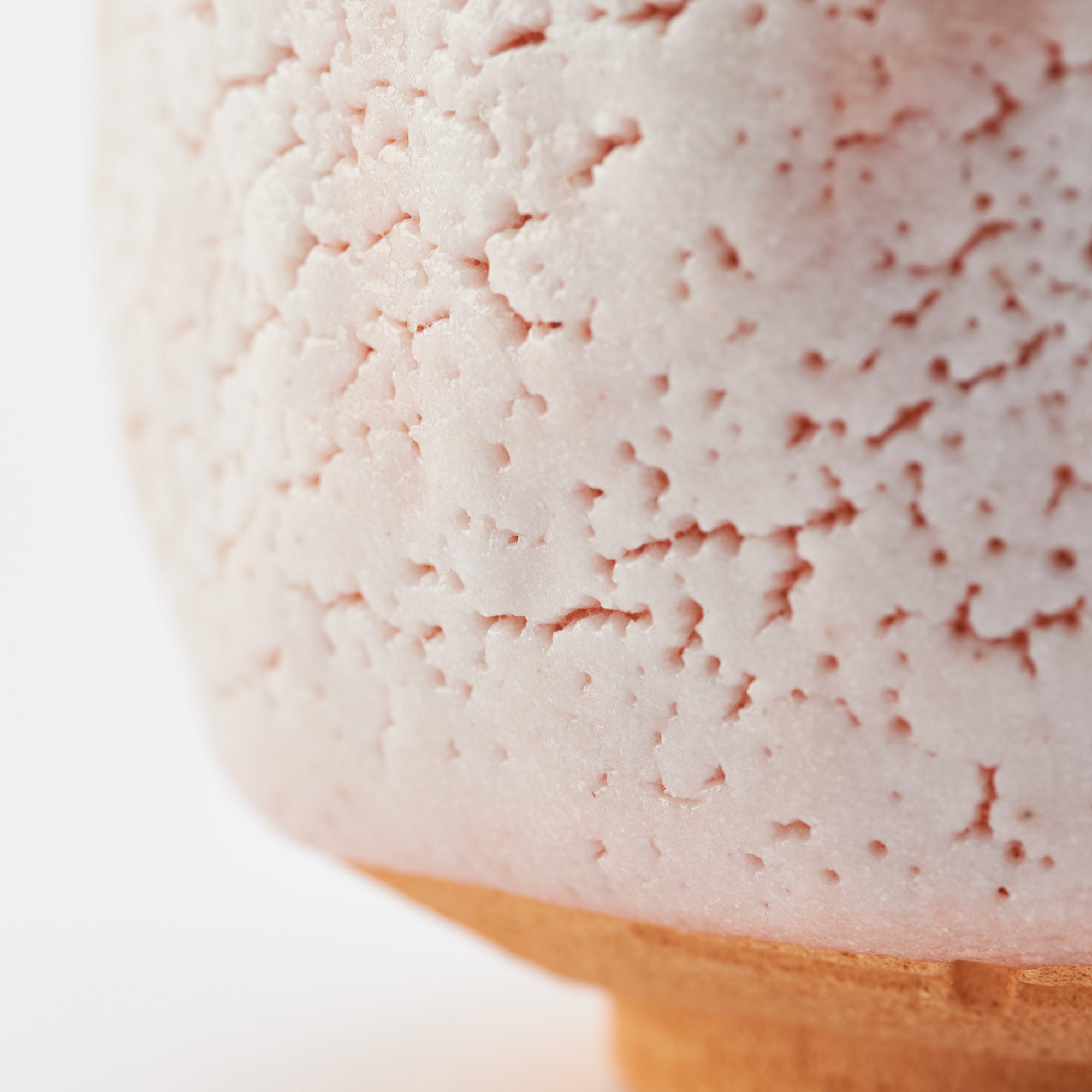
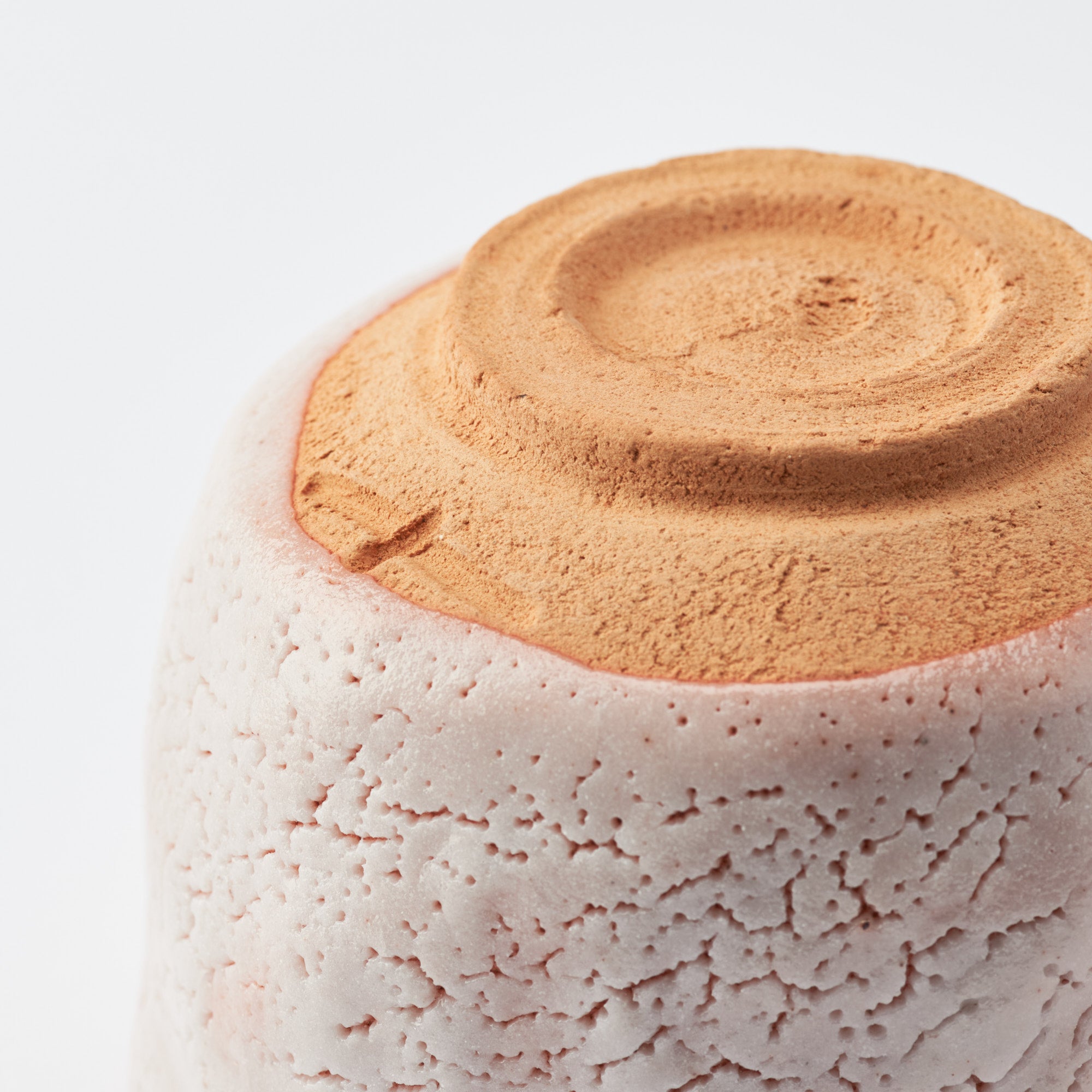
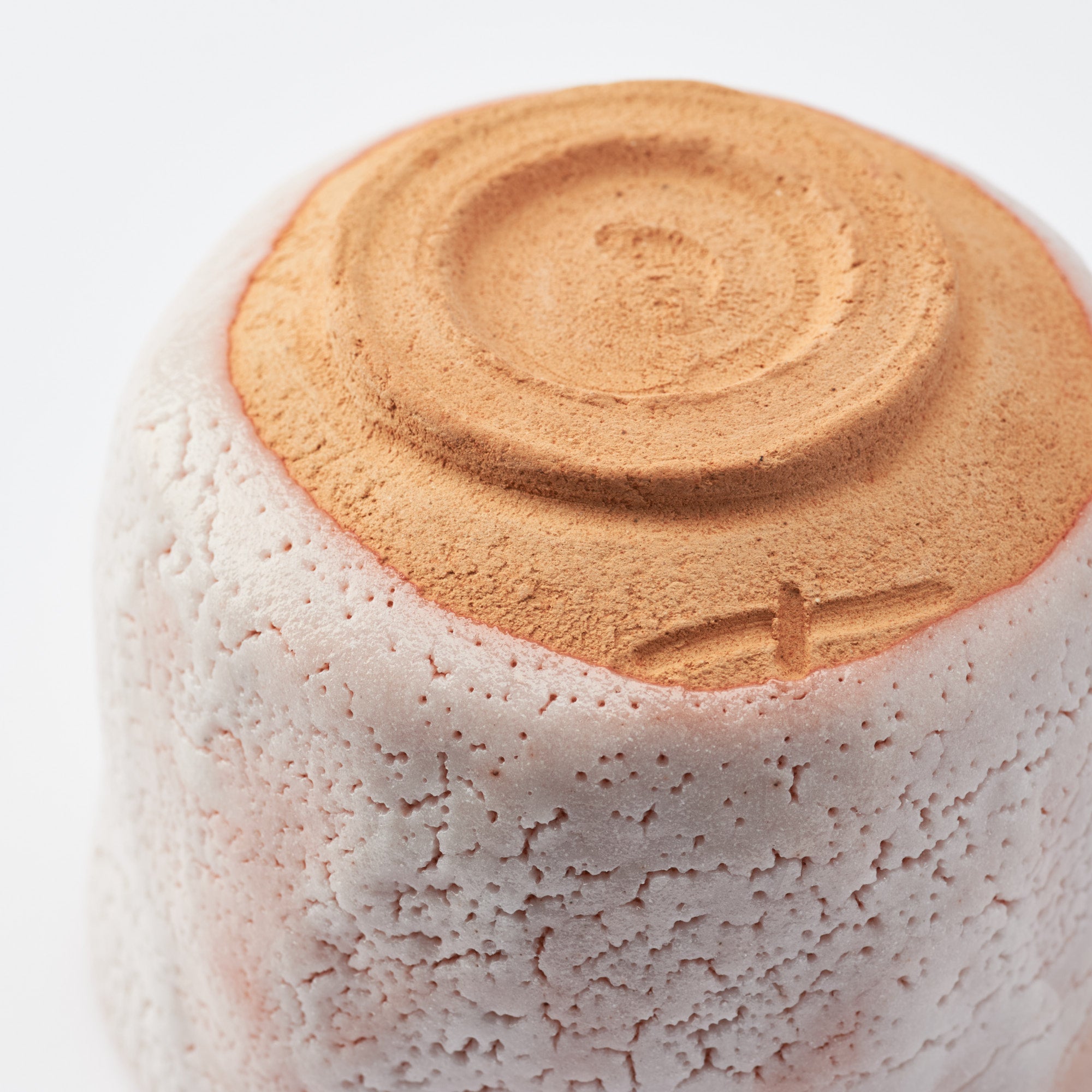
Le Shino est une glaçure à base de feldspath qui se contracte davantage que le corps d'argile sous-jacent, produisant sa texture distinctive appelée kairagi, ou « peau de fleur de prunier ». Cette pièce a été cuite pendant trois jours dans un four traditionnel anagama , un four à bois en forme de tunnel utilisé au Japon depuis 1 600 ans. Les interactions entre le fer présent dans l'argile, l'atmosphère fortement réductrice du four et une gaine riche en fer placée autour du récipient pendant la cuisson ont généré la couleur rouge orangé qui transparaît à travers les craquelures.
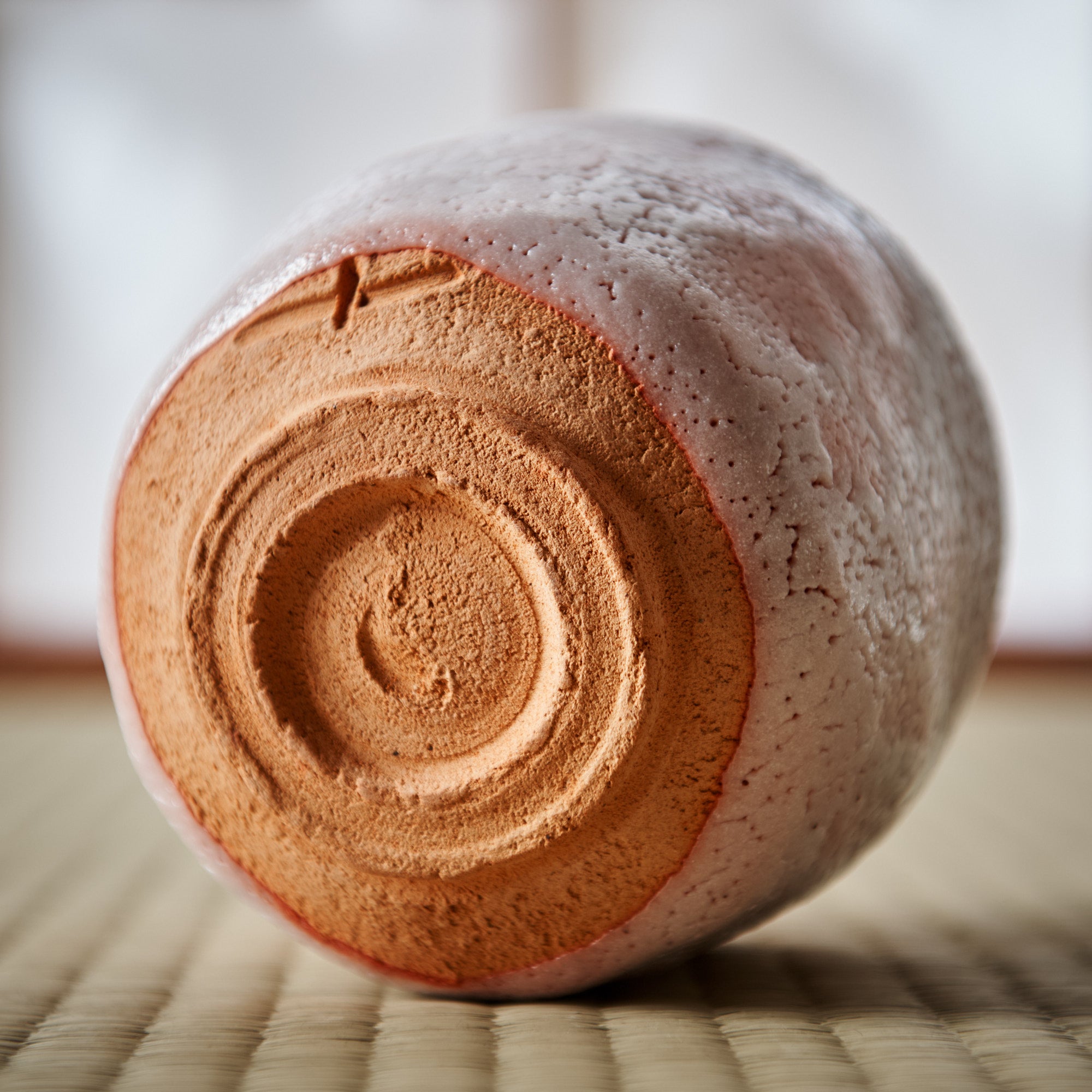
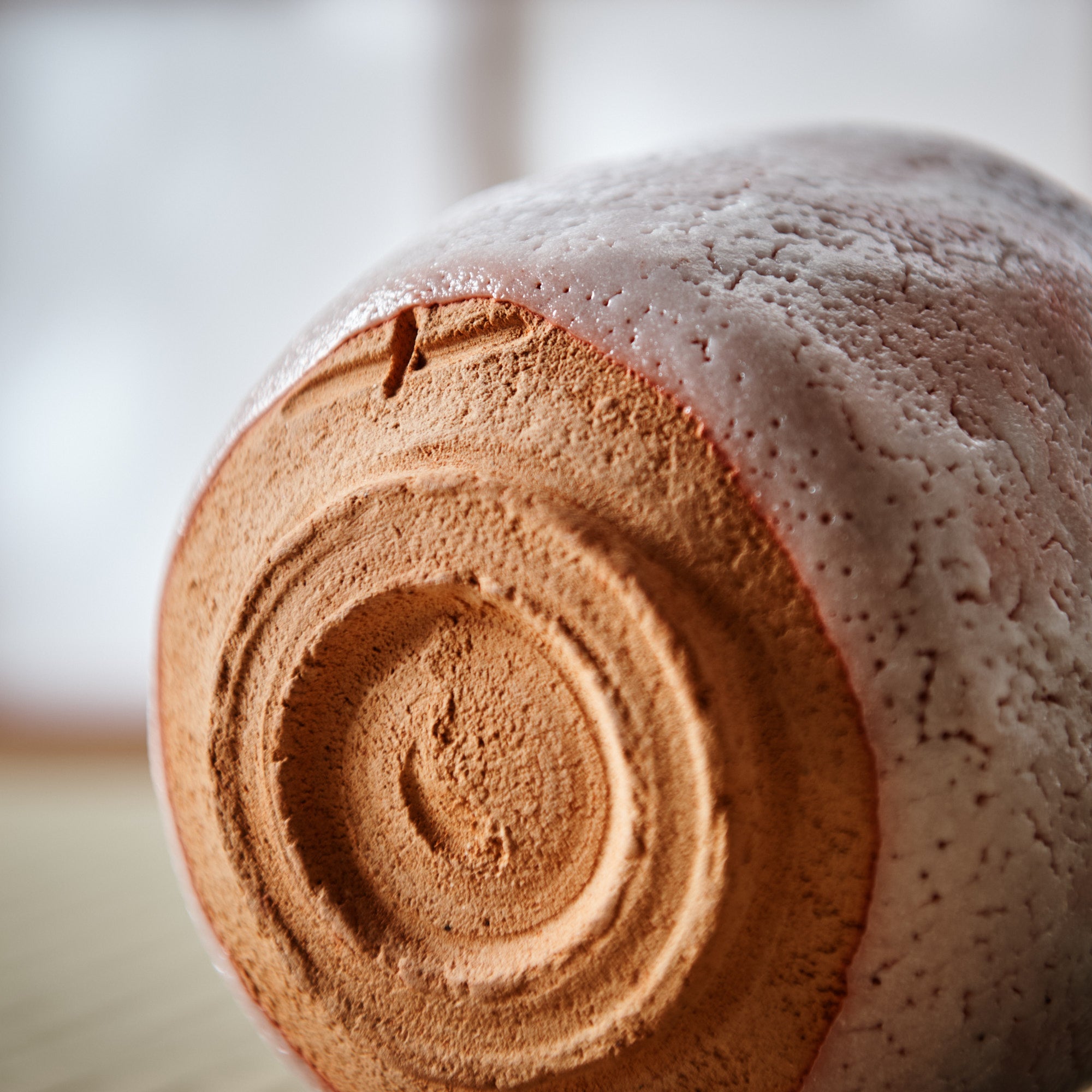
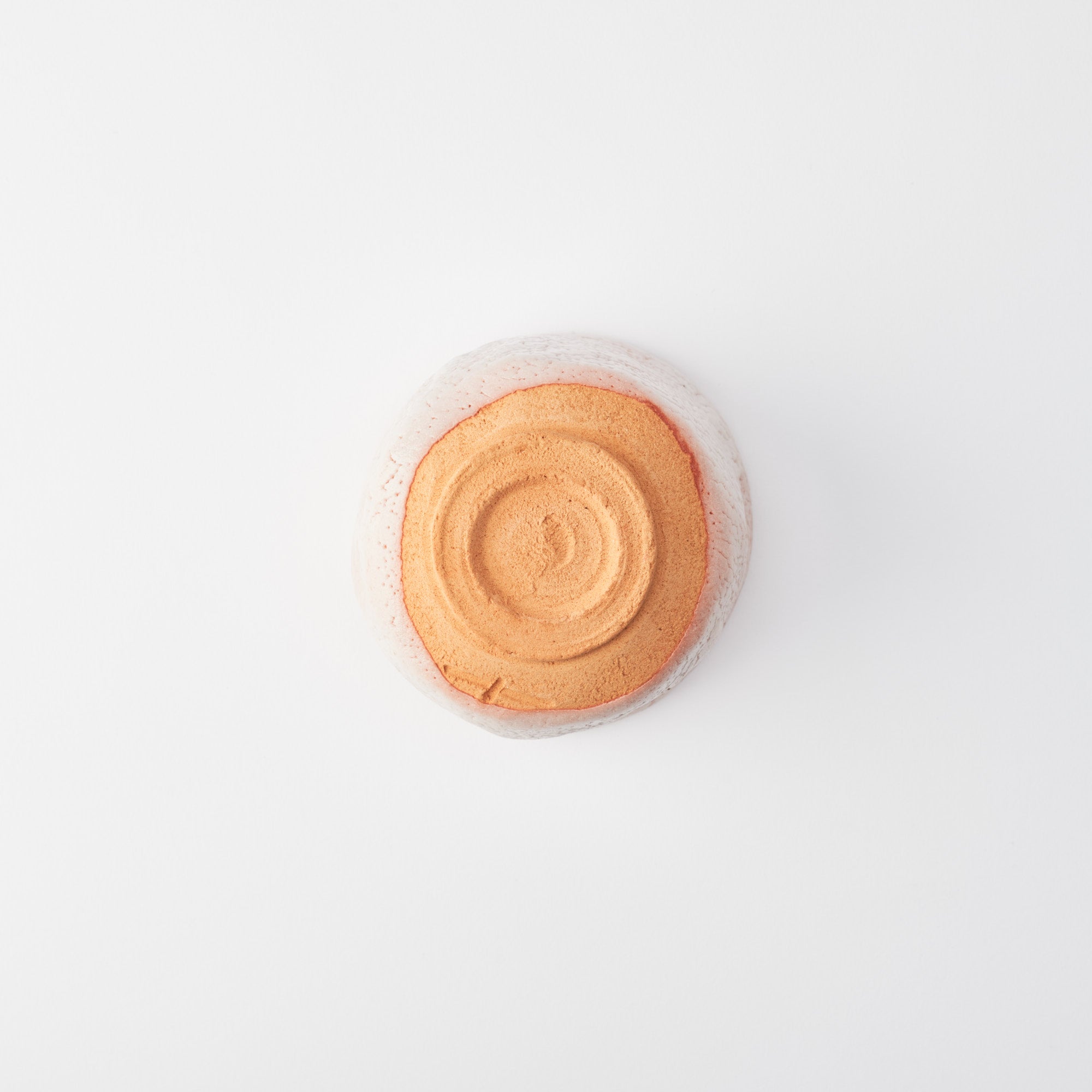
Cette pièce a été façonnée à partir d'argiles locales mogusa et gotomaki à parts égales, une proportion élevée de mogusa. Nommée d'après les herbes de moxibustion pour sa texture, l'argile mogusa est très difficile à travailler, mais possède une qualité moelleuse semblable aux céramiques de la période Azuchi-Momoyama (1573–1603). La base reste non émaillée, un style appelé tsuchimise, ou « montrer la terre », qui révèle la qualité douce et organique de cette argile particulière.
Imparfaitement cylindrique, le bol à matcha présente des creux et des courbes subtiles qui lui permettent de se nicher doucement dans les paumes, la glaçure épaisse offrant une sensation douce et luxuriante. Chaque rotation révèle un nouveau paysage de surface, récompensant l'observation répétée. Avec l'usage, le thé s'infiltrera lentement dans les craquelures, incarnant les philosophies de la cérémonie du thé et le concept japonais de keinen bika, la conviction que la beauté grandit avec l'âge. L'utilisateur devient ainsi partie intégrante de l'histoire de cette œuvre d'art, qui n'est pas seulement historiquement significative, mais crée également un pont vers l'avenir.
DES DÉTAILS
| Quantity | 1 |
| Size |
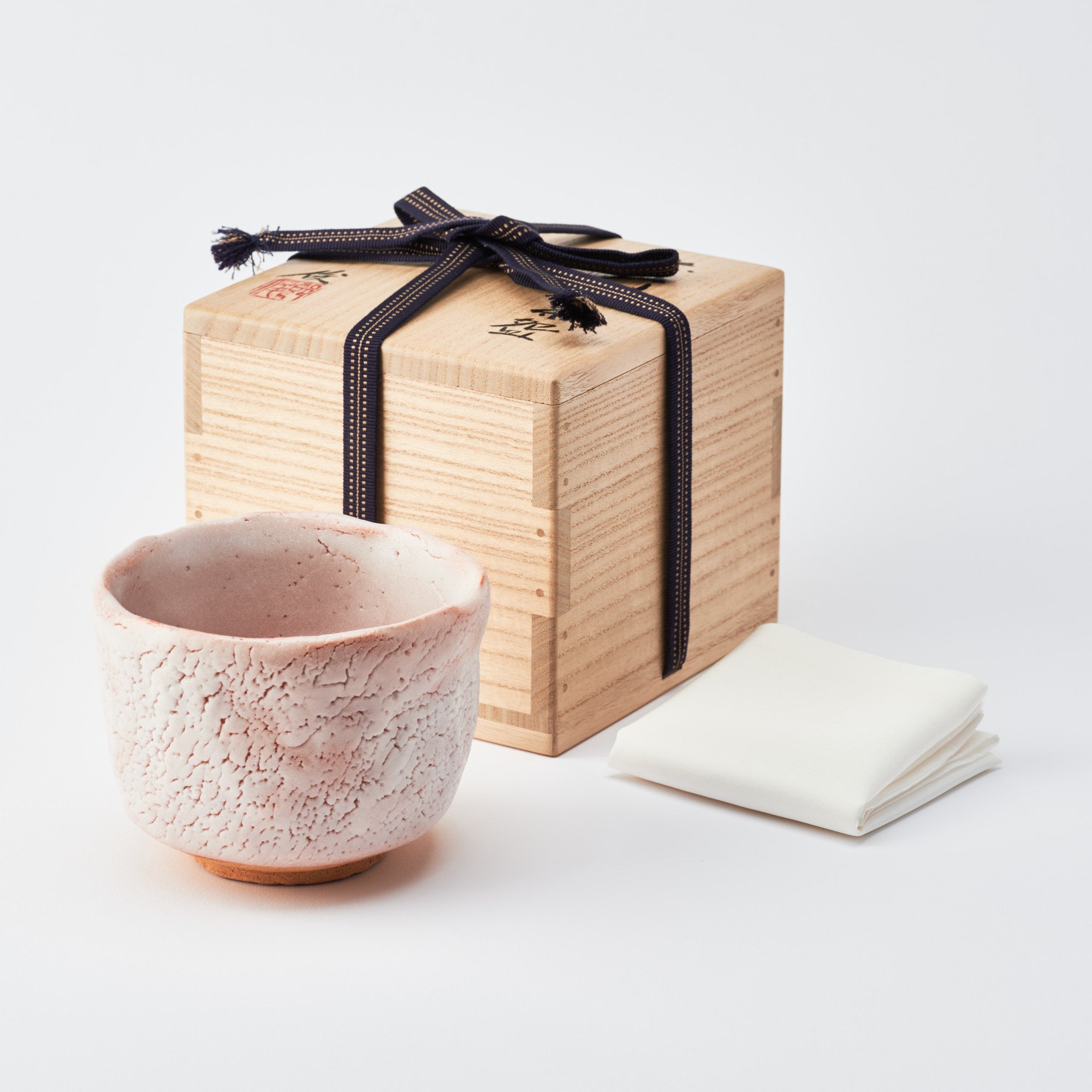
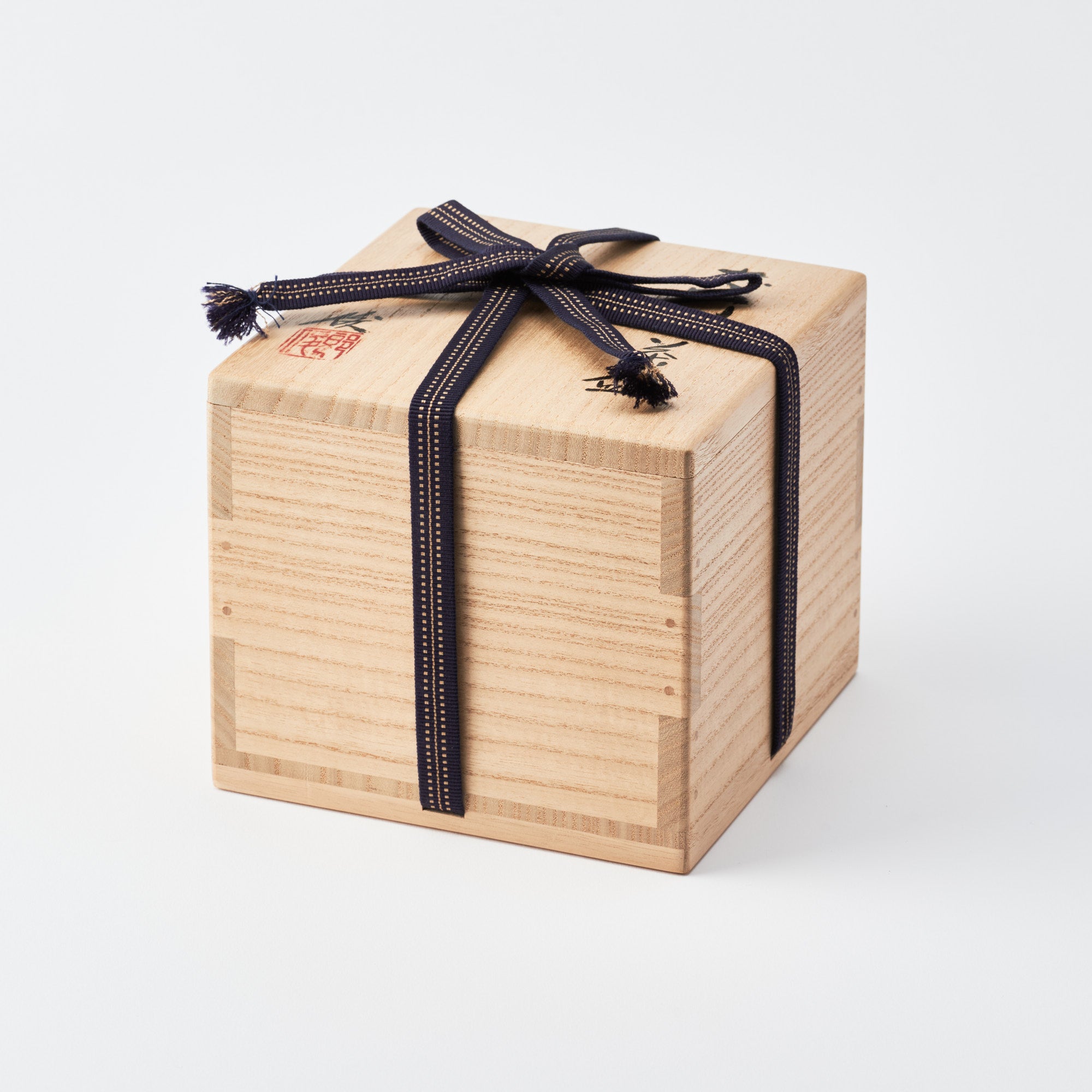
D 12.0 cm (4.7 in) x H 9.5 cm (3.7 in) [Innner size] D 11.0 cm (4.3 in) x H 8.0 cm (3.1 in) [Wooden box] L 14.5 cm (5.7 in) x W 14.5 cm (5.7 in) x H 14.0 cm (5.5 in) |
| Weight | 470 g (16.6 oz) |
| Material | Stoneware |
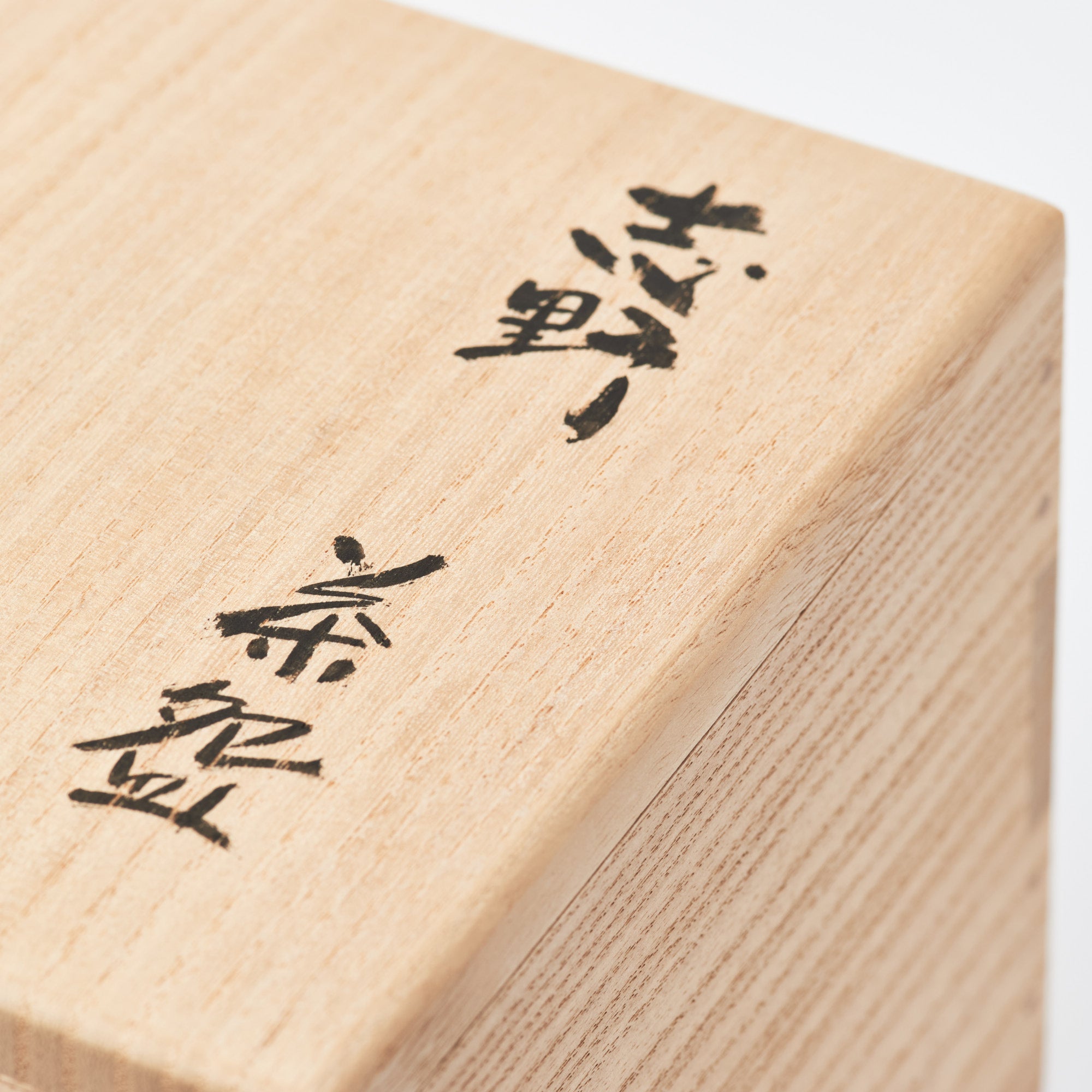
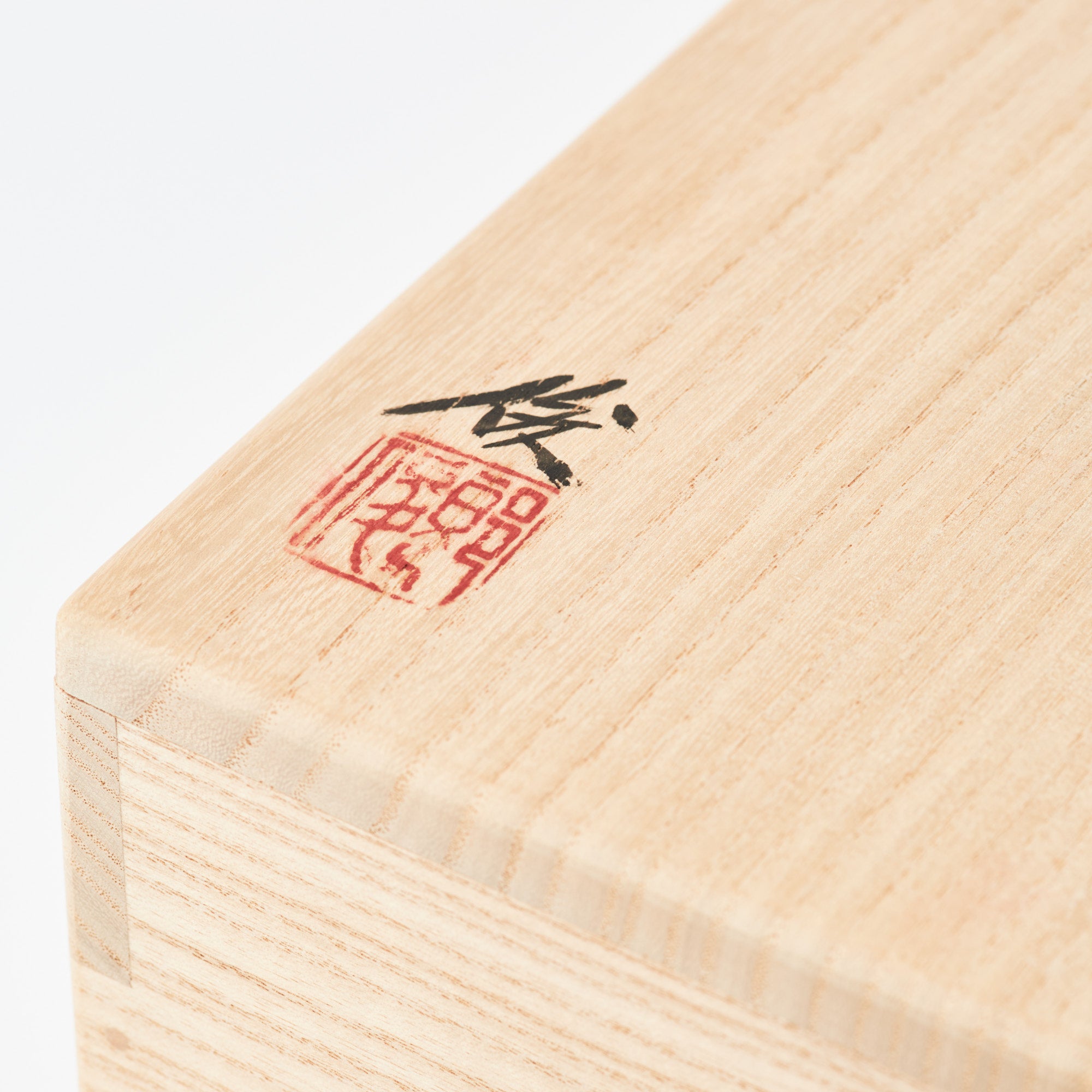
| Package Type | Wooden box |
Fabricant / Marque
Hori Toshiro est un artiste spécialisé dans les techniques traditionnelles de la céramique Mino Momoyama, telles que Shino, Setoguro, Oribe et ki-Seto. Utilisant de l'argile locale et un four à bois anagama , il crée des textures riches et des glaçures lustrées qui incarnent l'élégance wabi sabi du genre.
Hori est détenteur du titre de Bien culturel immatériel de la ville de Kani pour Shino, et a hérité de Setoguro du détenteur du Bien culturel immatériel important Kato Kozo, aux côtés duquel il a travaillé pendant cinquante ans. Aujourd'hui, Hori contribue activement à la renaissance et à la diffusion de la céramique Mino Momoyama. En plus de sa propre pratique artistique, Hori agit comme conseiller technique pour la marque de céramique deidei afin de transmettre le savoir-faire aux générations futures.

Artisanat
La céramique Mino, fabriquée dans la région de Tono, dans la préfecture de Gifu, est réputée pour sa richesse patrimoniale et sa polyvalence. Elle présente plus de quinze styles distincts, ce qui la rend plus variée que de nombreuses autres céramiques japonaises.
Représentant aujourd'hui plus de 50 % de la production céramique japonaise, sa popularité est inégalée. Classée artisanat traditionnel en 1978, la céramique de Mino allie profondeur historique et modernité, illustrant un savoir-faire exceptionnel.
Remarques
Choisir les options
About Artist
Galerie Musubi
Depuis sa création, Musubi Kiln s'est efforcée de faire découvrir au monde entier les plus beaux artisanats traditionnels de maîtres artisans de tout le Japon.
Ici, dans la galerie, nous mettons en valeur le summum des techniques traditionnelles transmises de génération en génération. Vous pourrez y découvrir les œuvres de maîtres qui ont non seulement perfectionné ces méthodes, mais y ont également insufflé leur imagination pour les réinventer.
Certains de ces maîtres ont même été nommés Détenteurs du patrimoine culturel immatériel important, un titre qui leur a été décerné par le gouvernement japonais pour reconnaître officiellement leur contribution à l'artisanat et à la culture, consolidant ainsi leur héritage et faisant d'eux une partie importante de l'histoire de l'art.
Chaque pièce est minutieusement confectionnée à la main pendant de longs mois pour créer un trésor intemporel et unique en son genre. Et lorsqu'elle trouvera sa place chez vous, vous aussi, vous ferez partie de cette histoire.
Bienvenue à la galerie. Prenez le temps de la parcourir.