

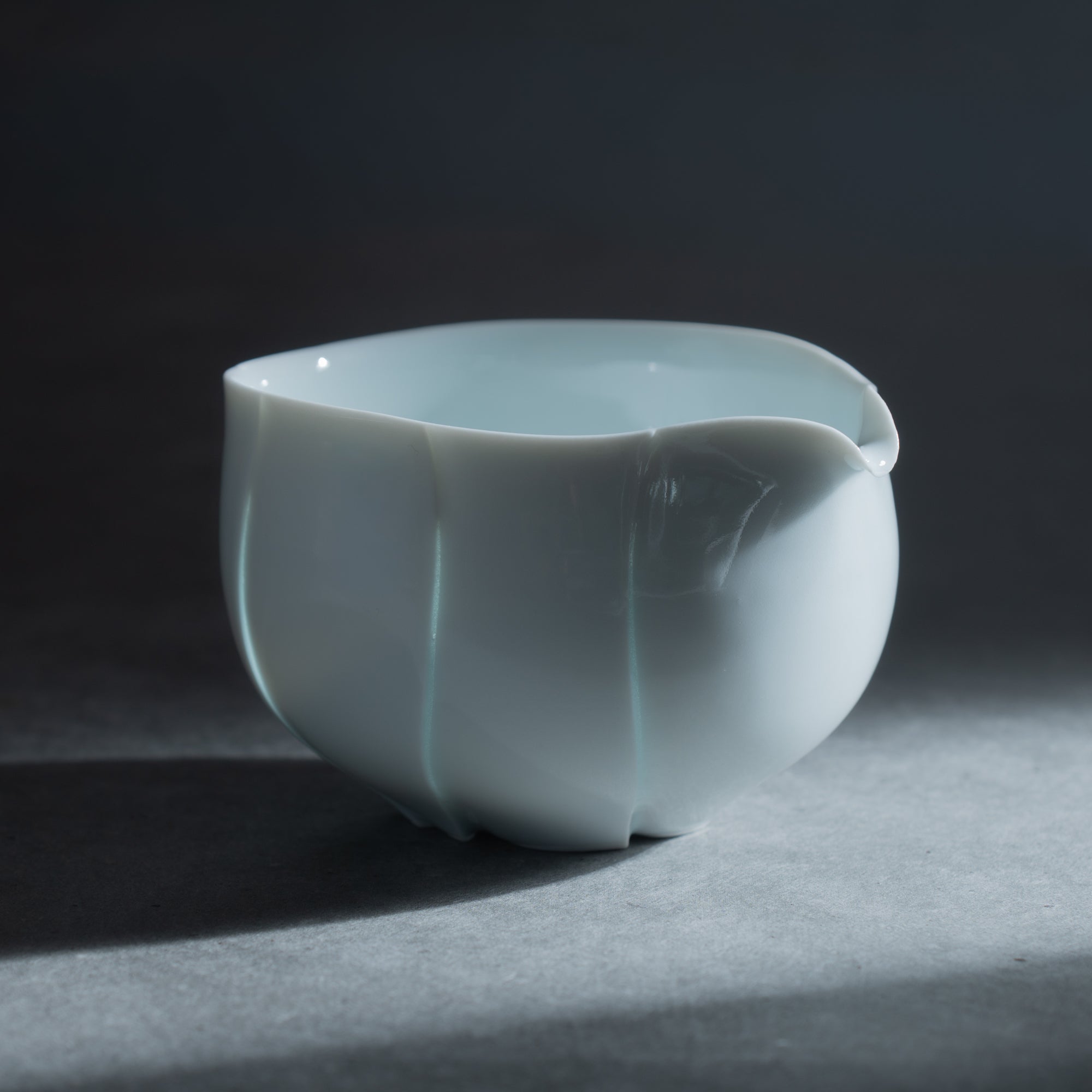
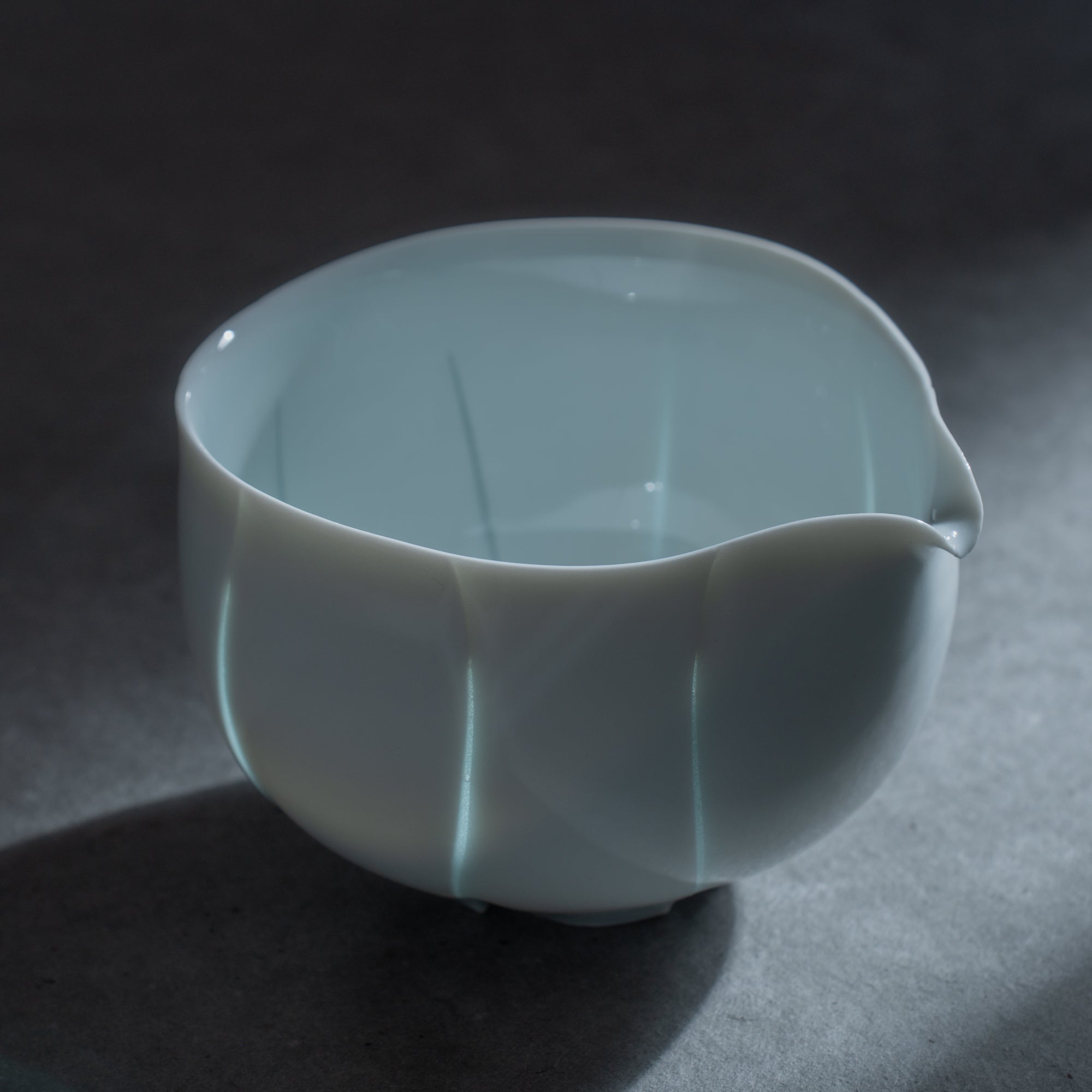
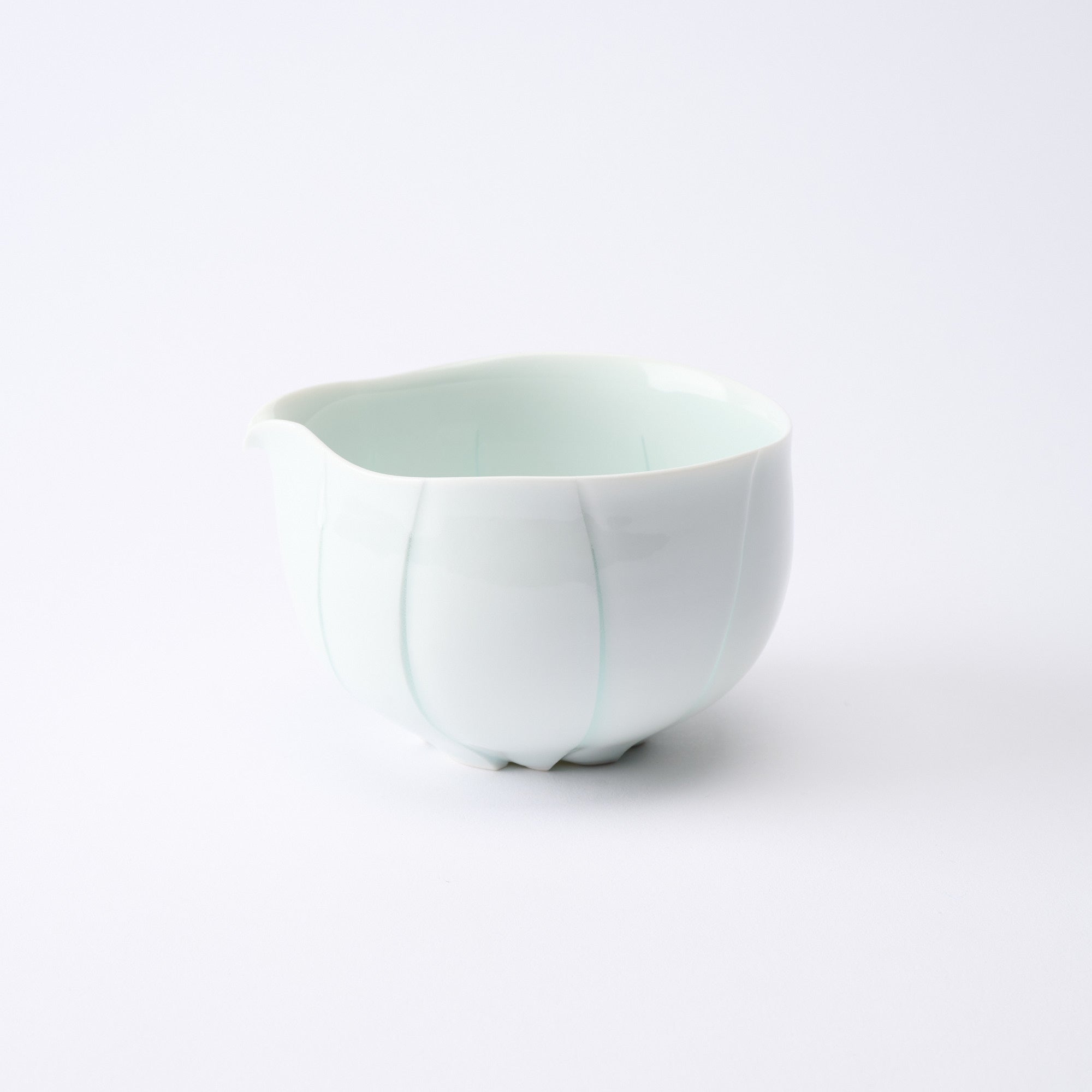
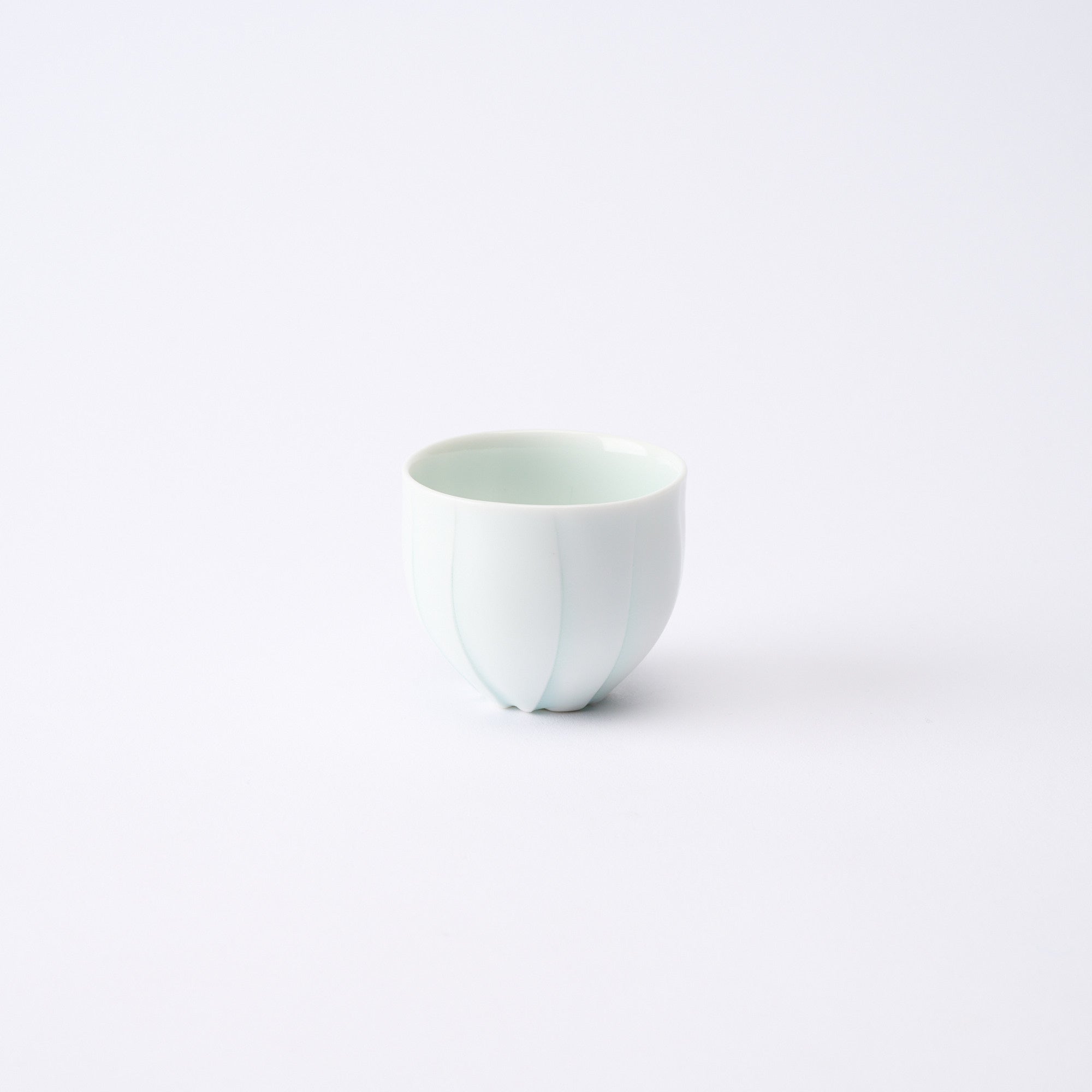
Ensemble à sake Fluctuation
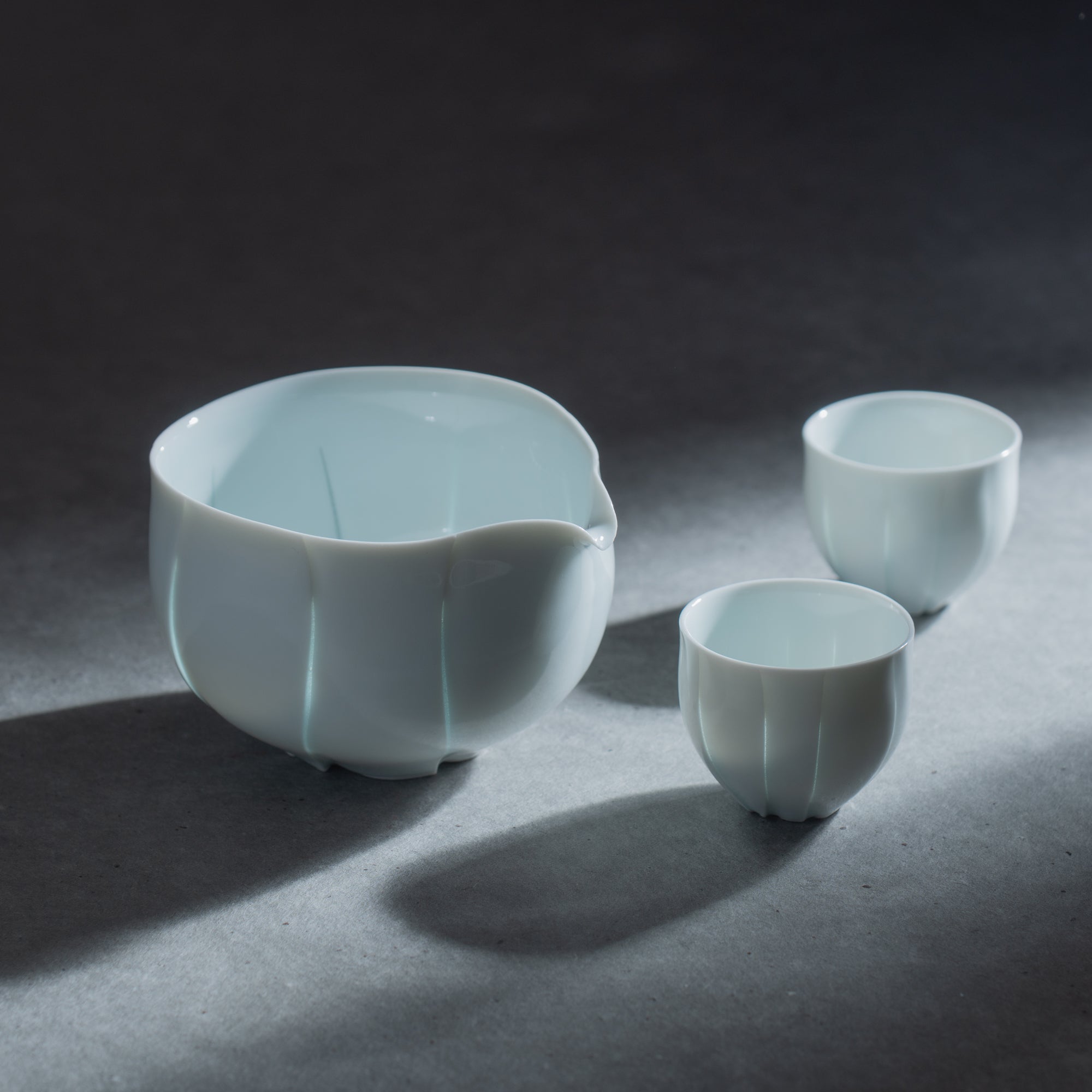
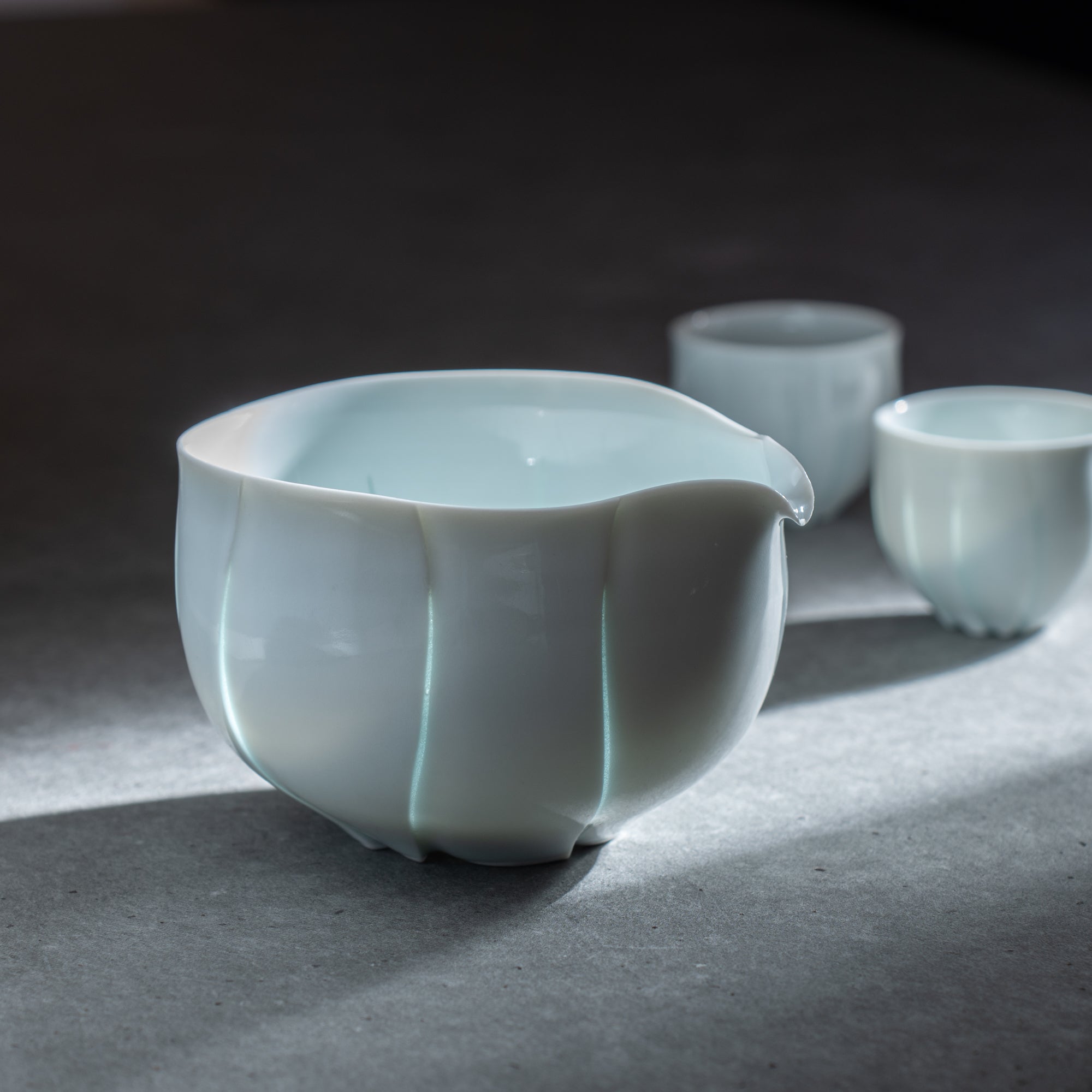
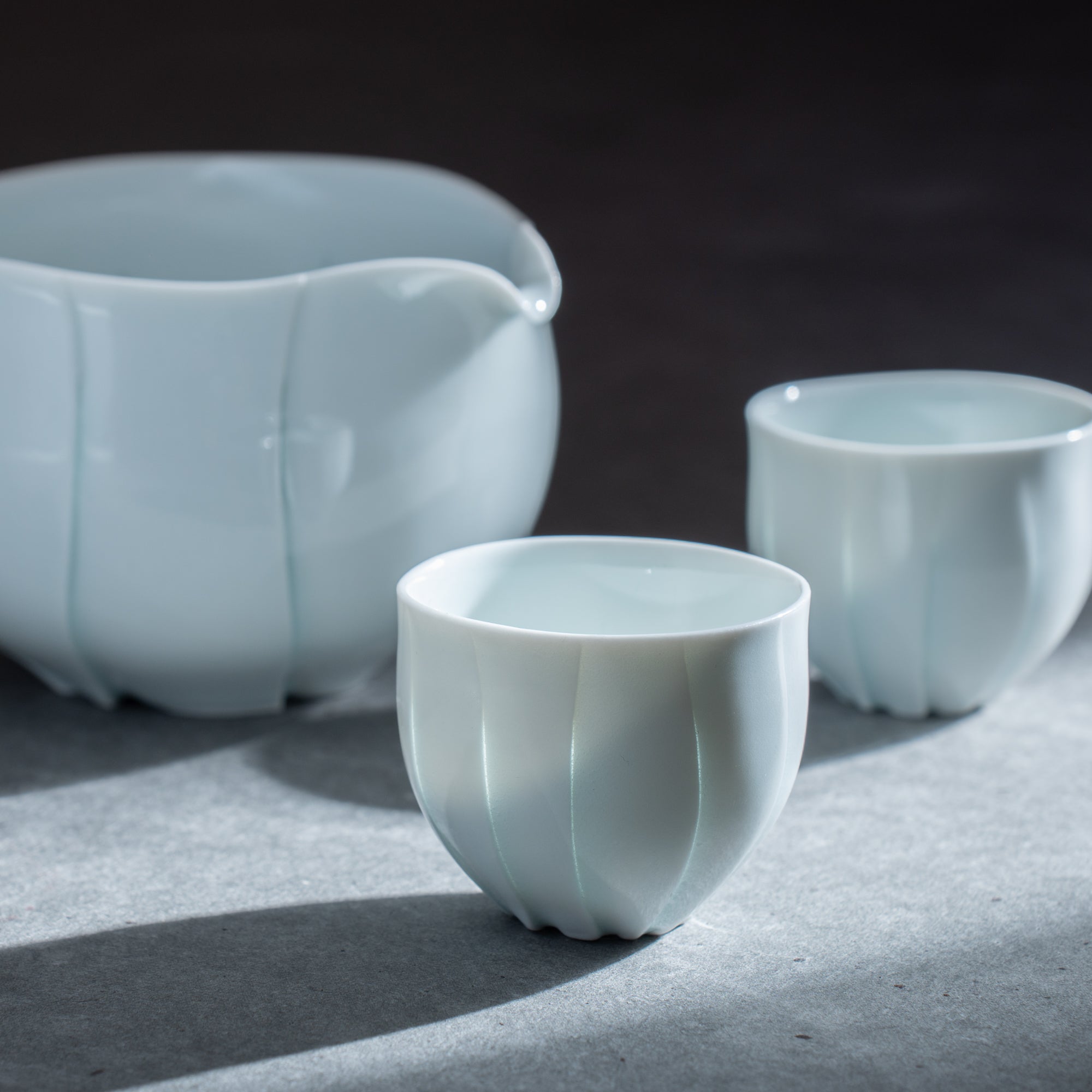
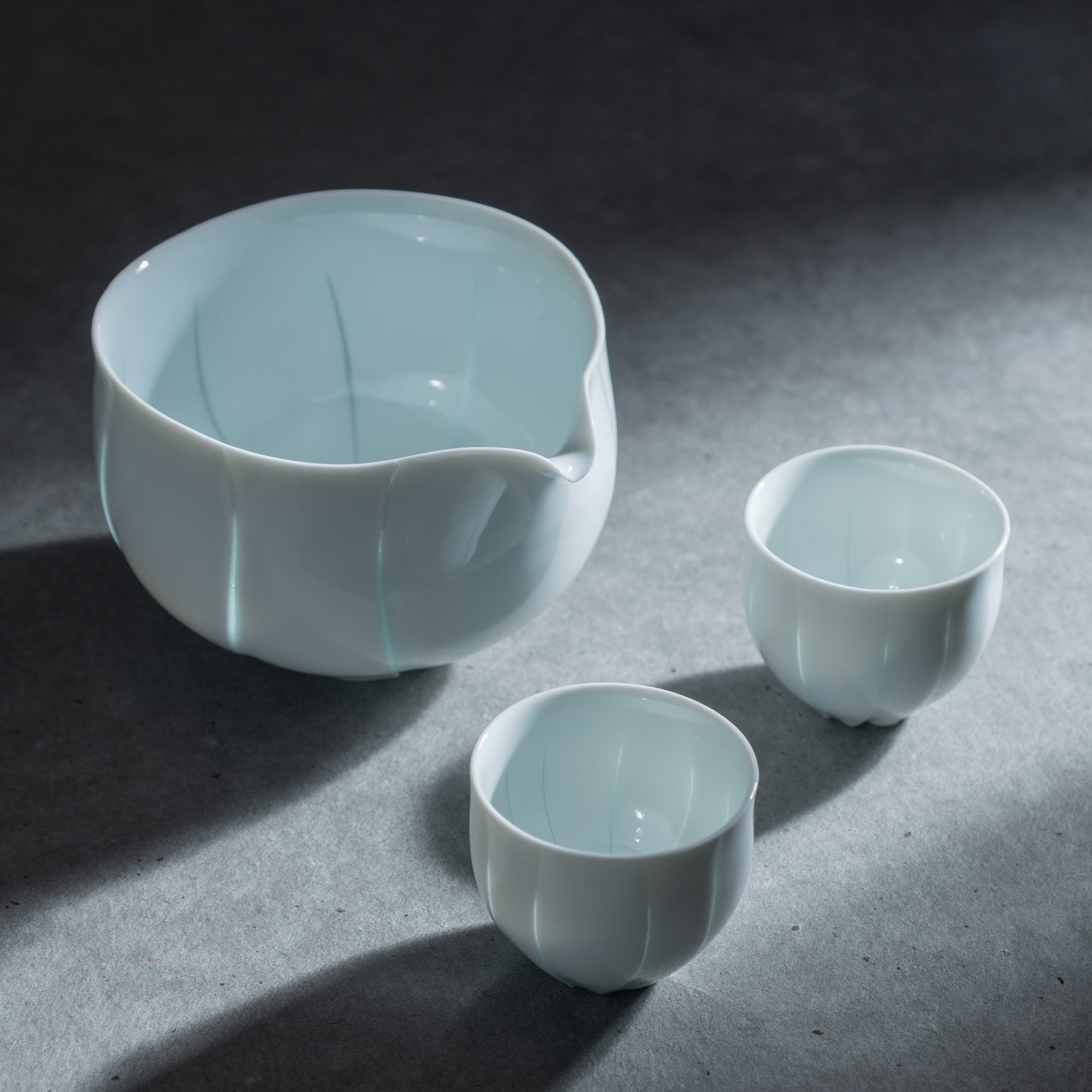
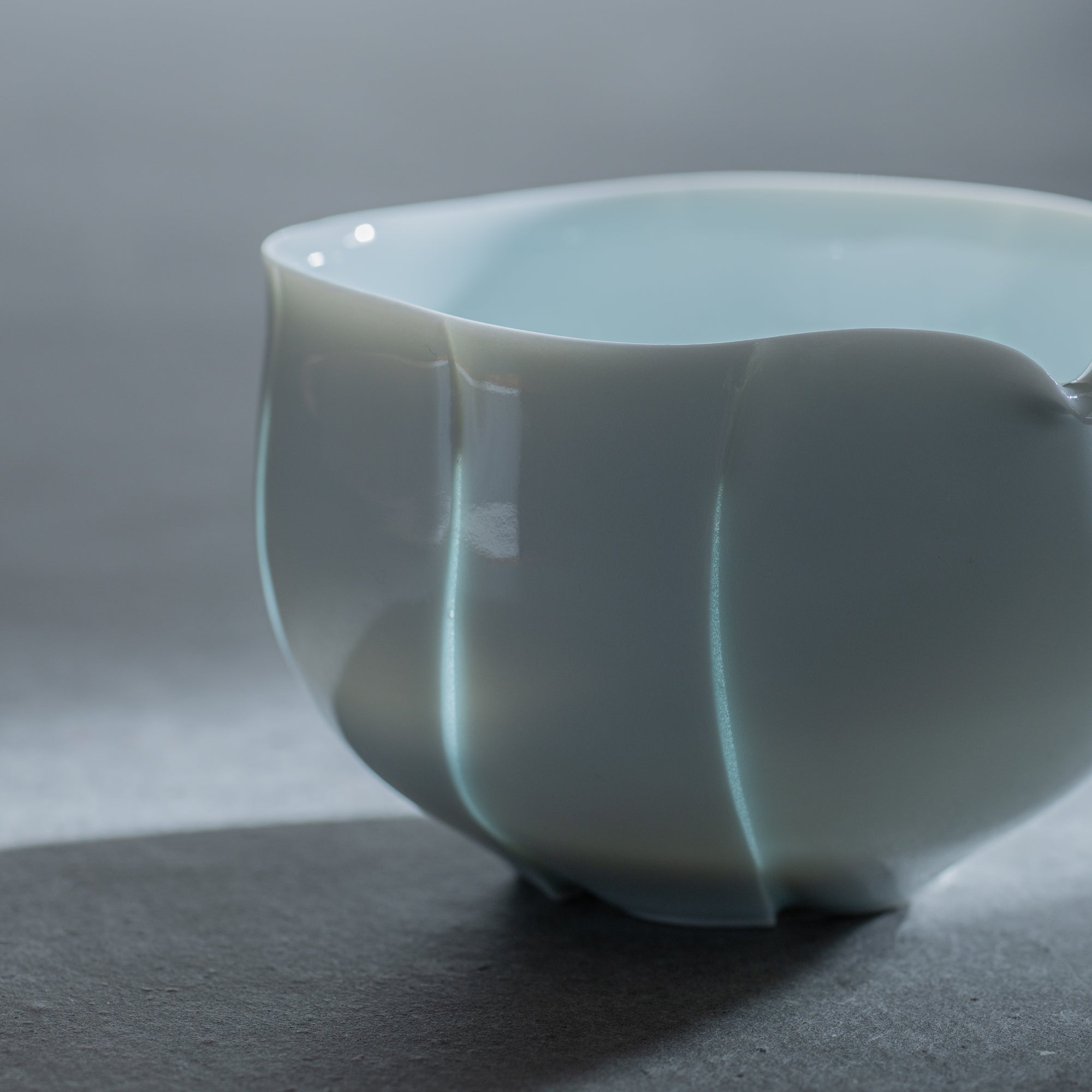
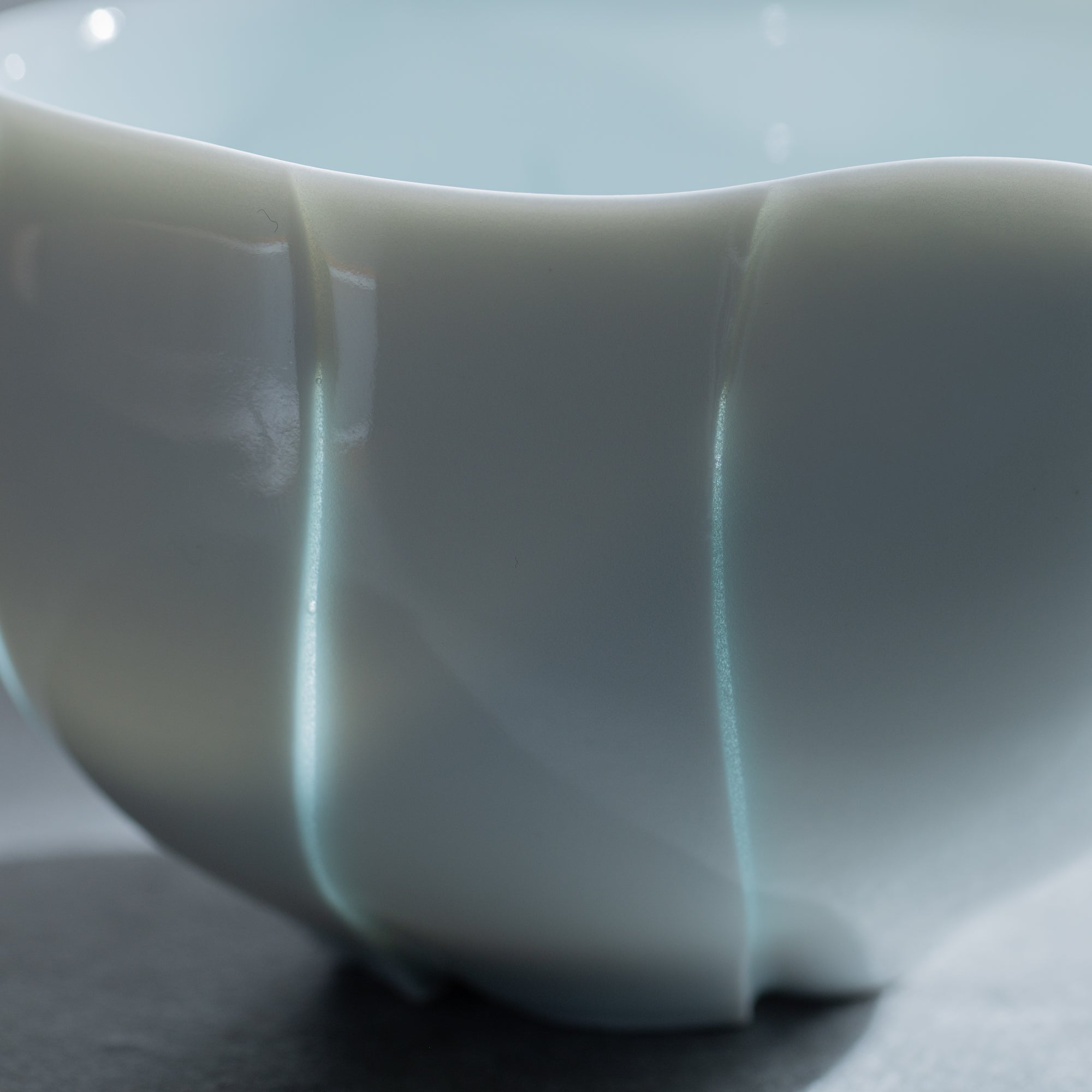
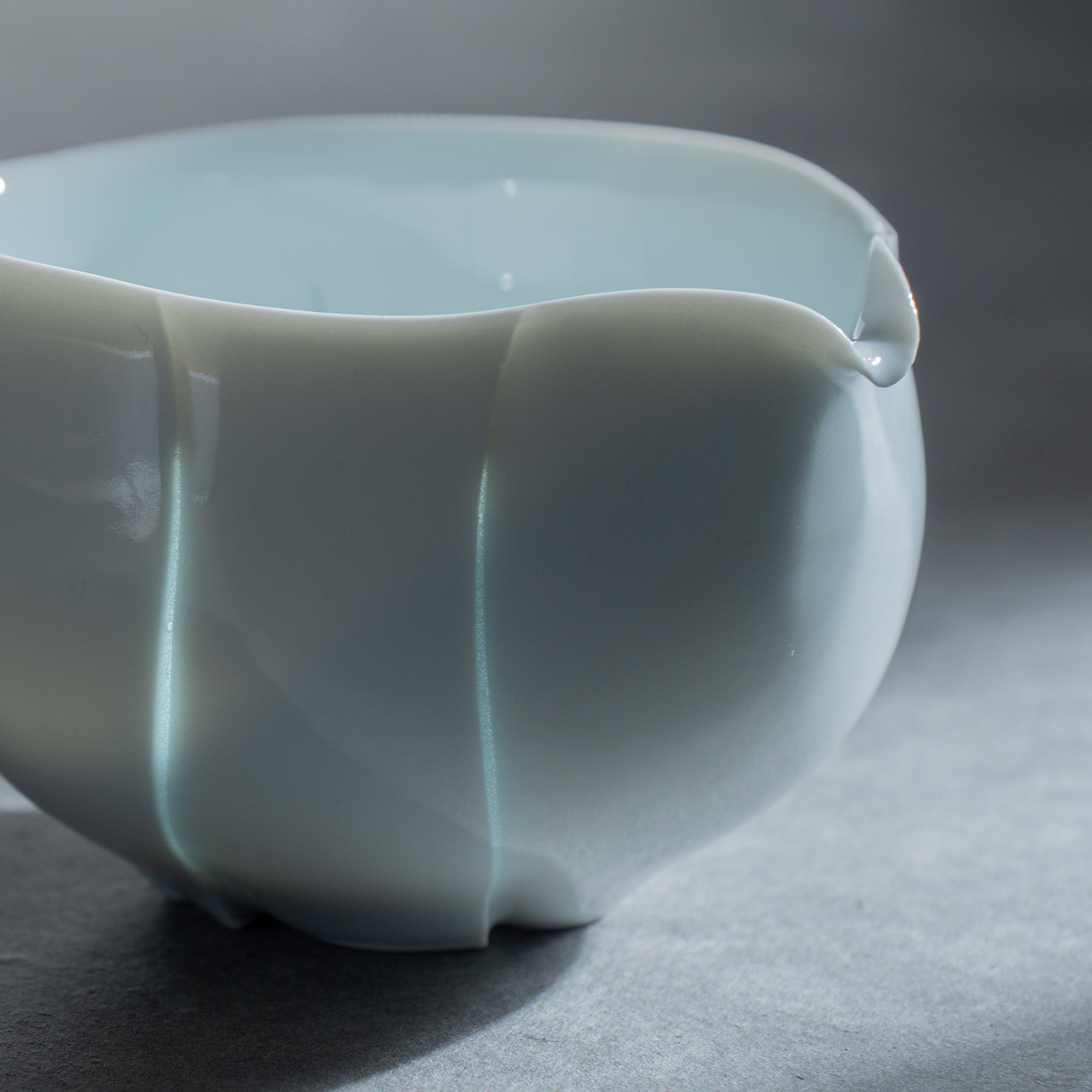
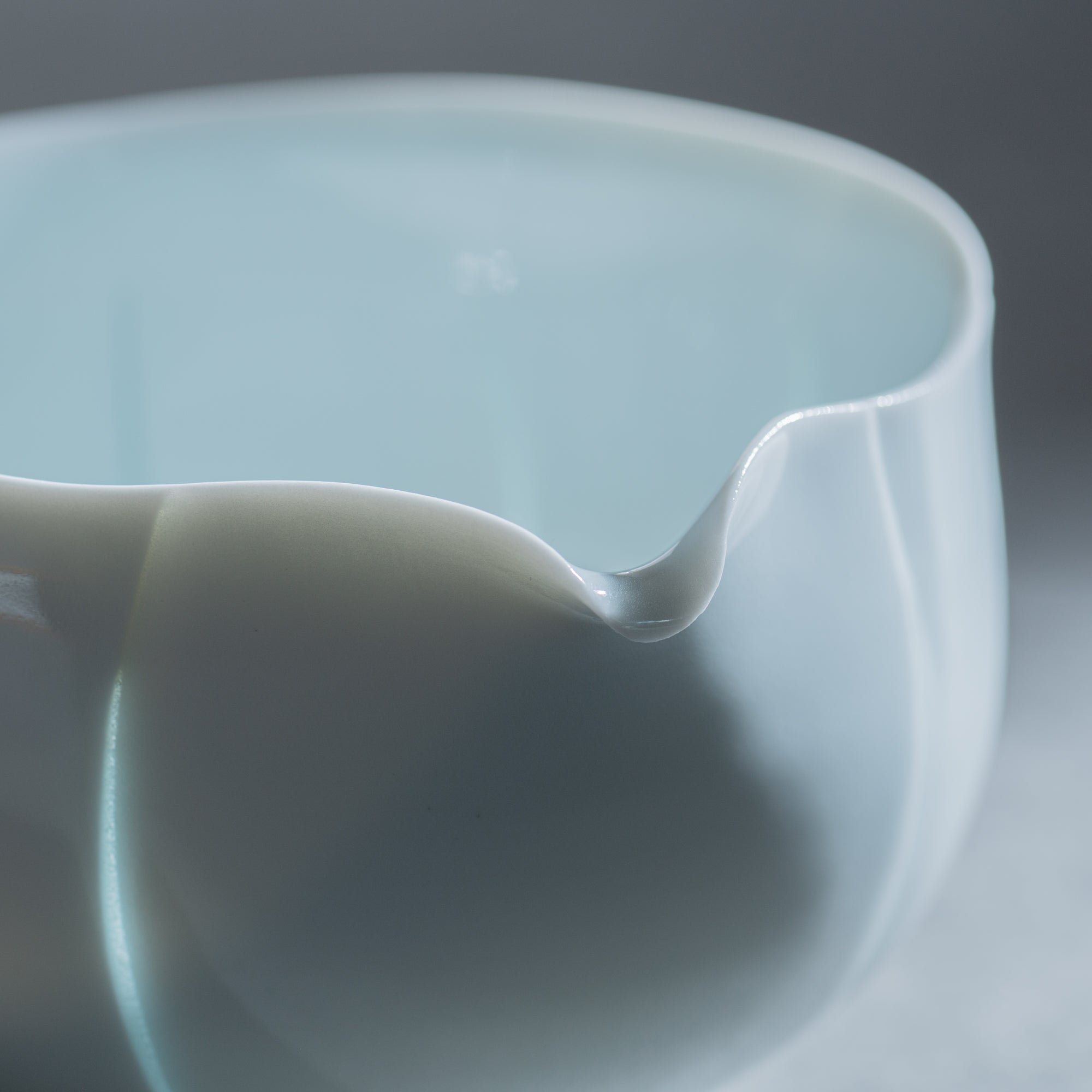
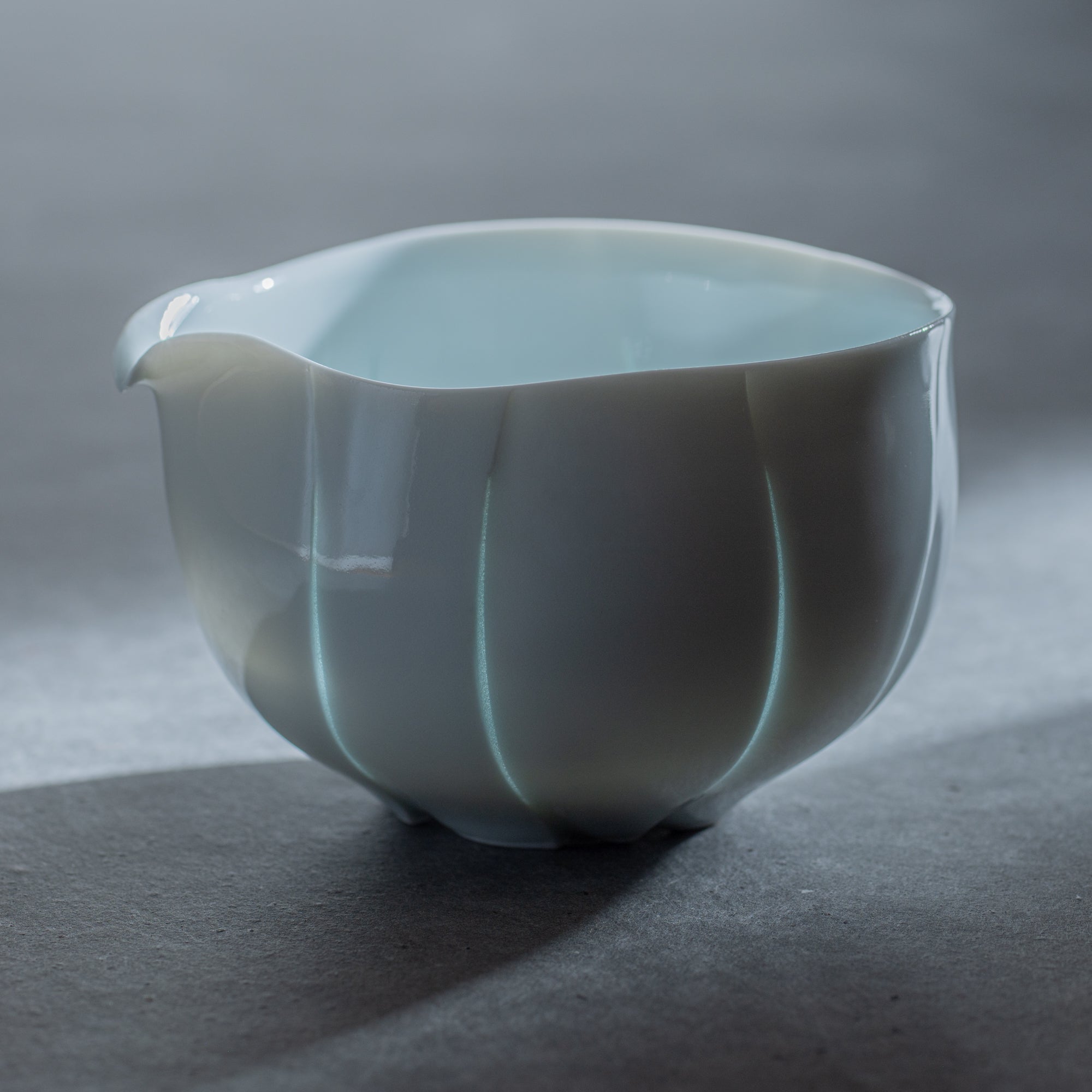
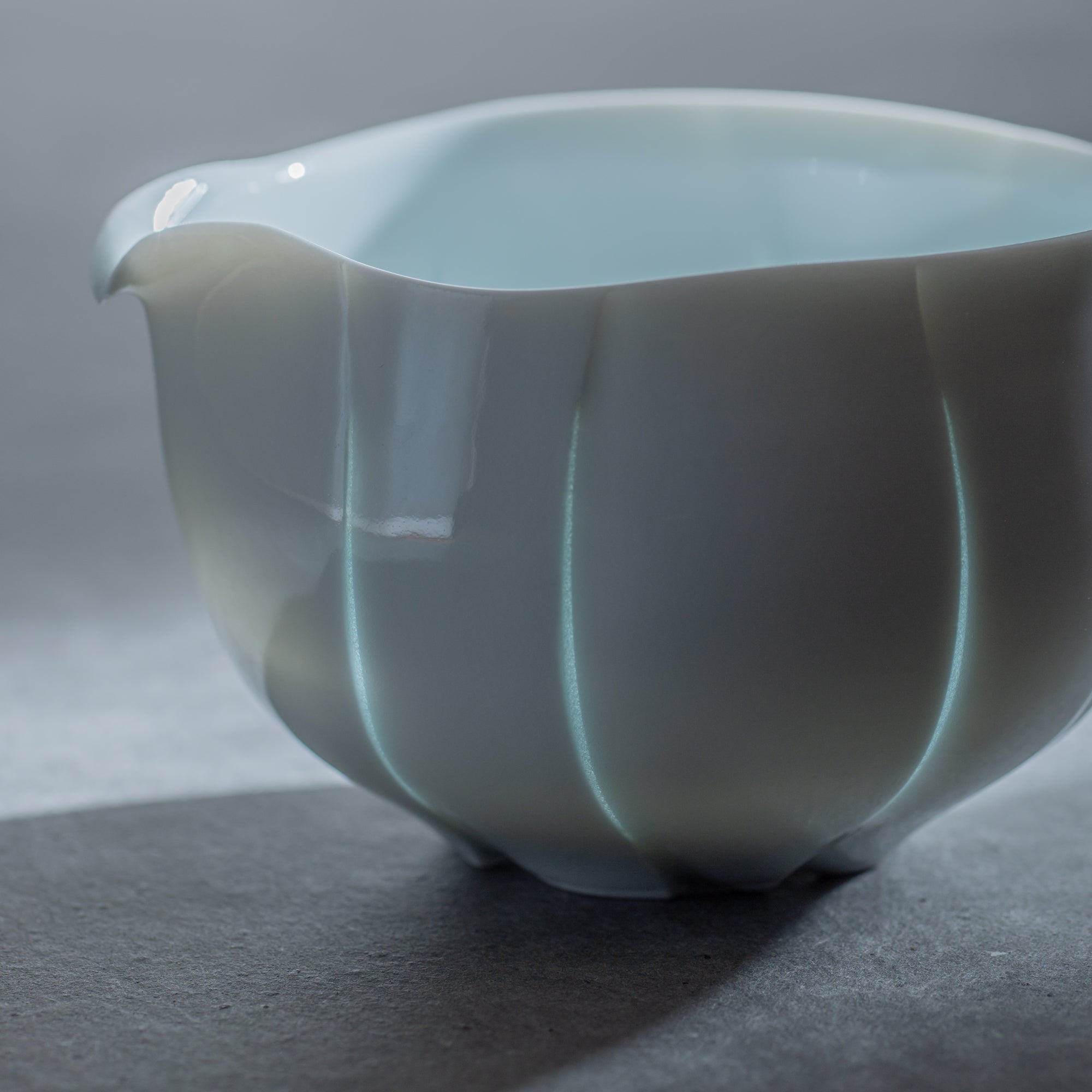
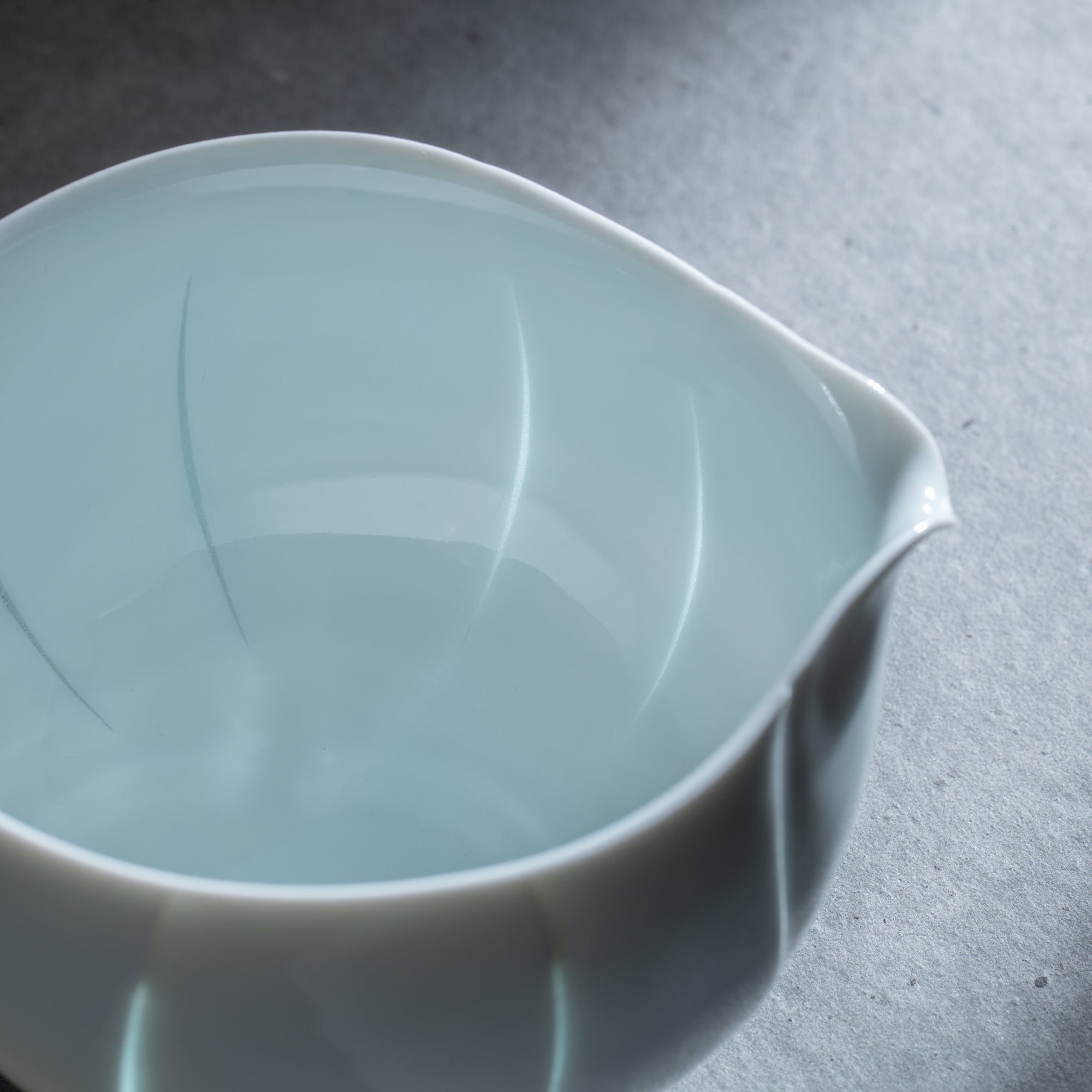
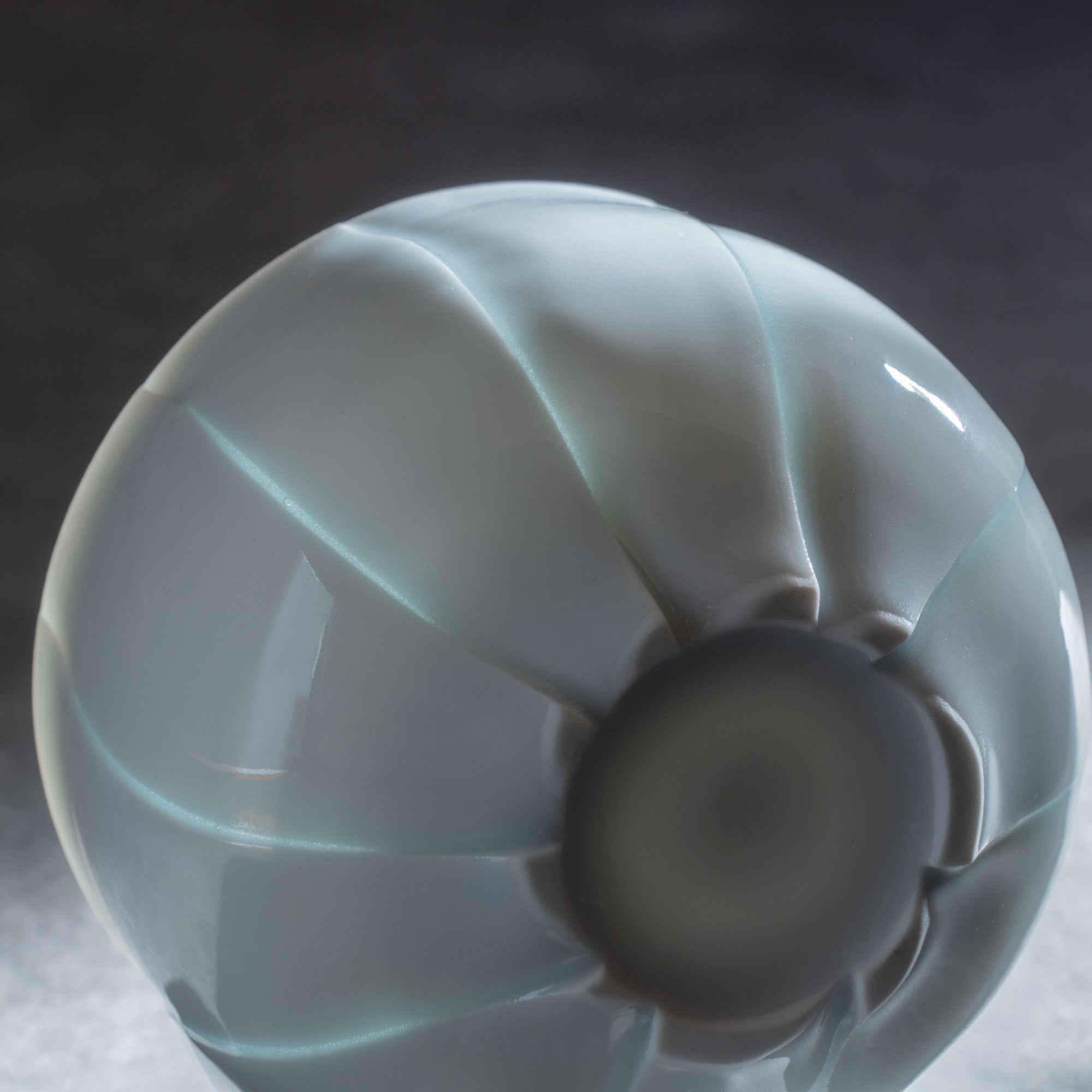
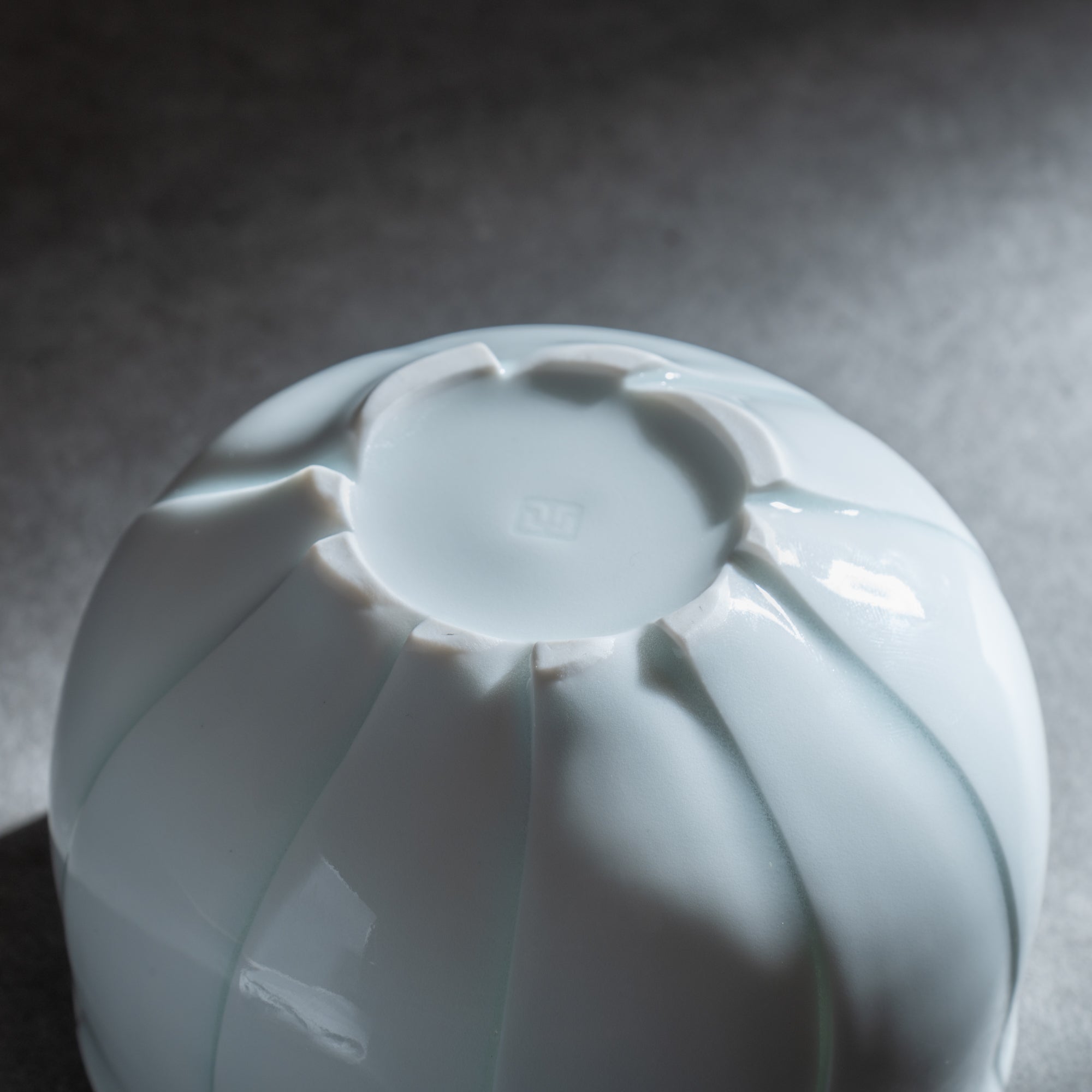
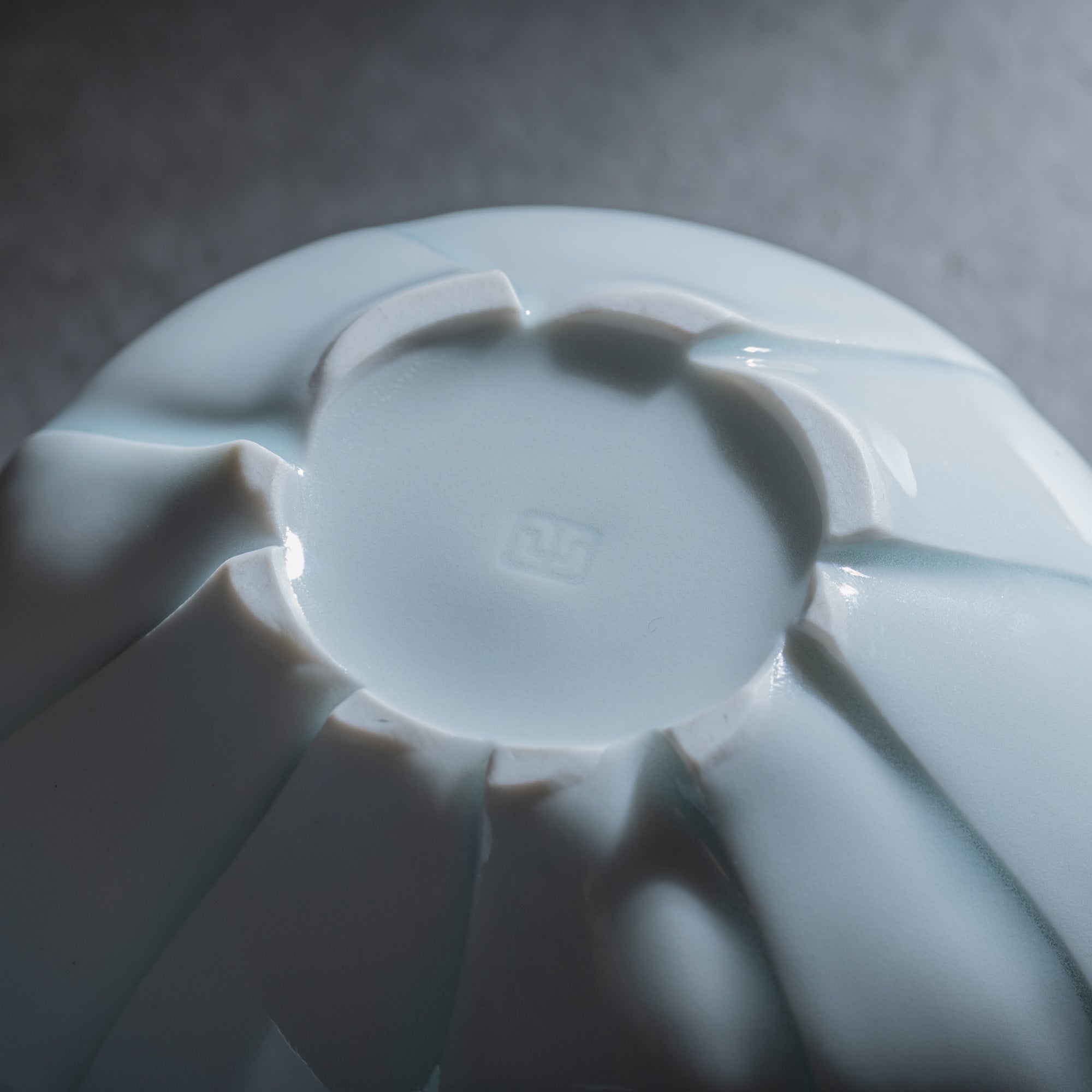
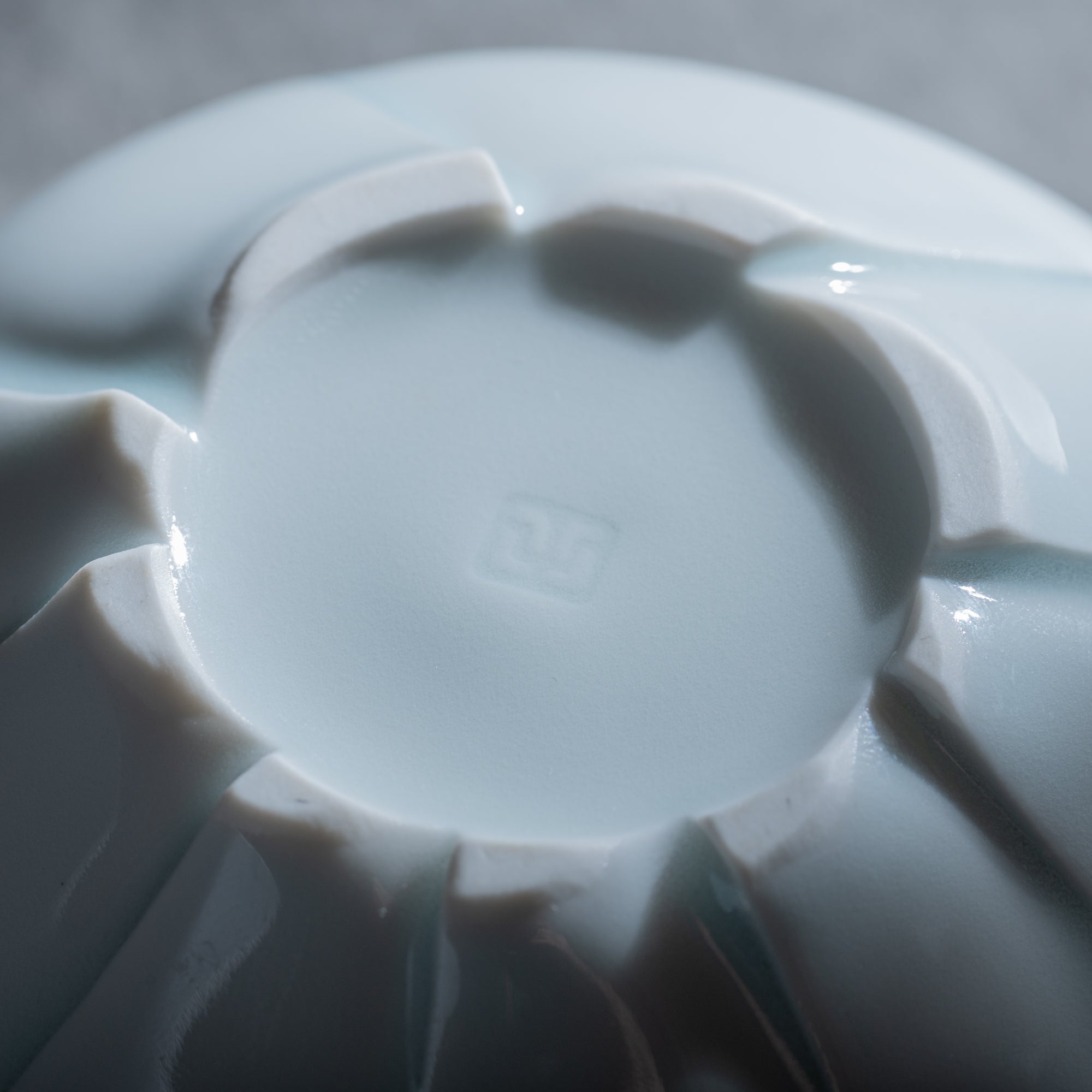
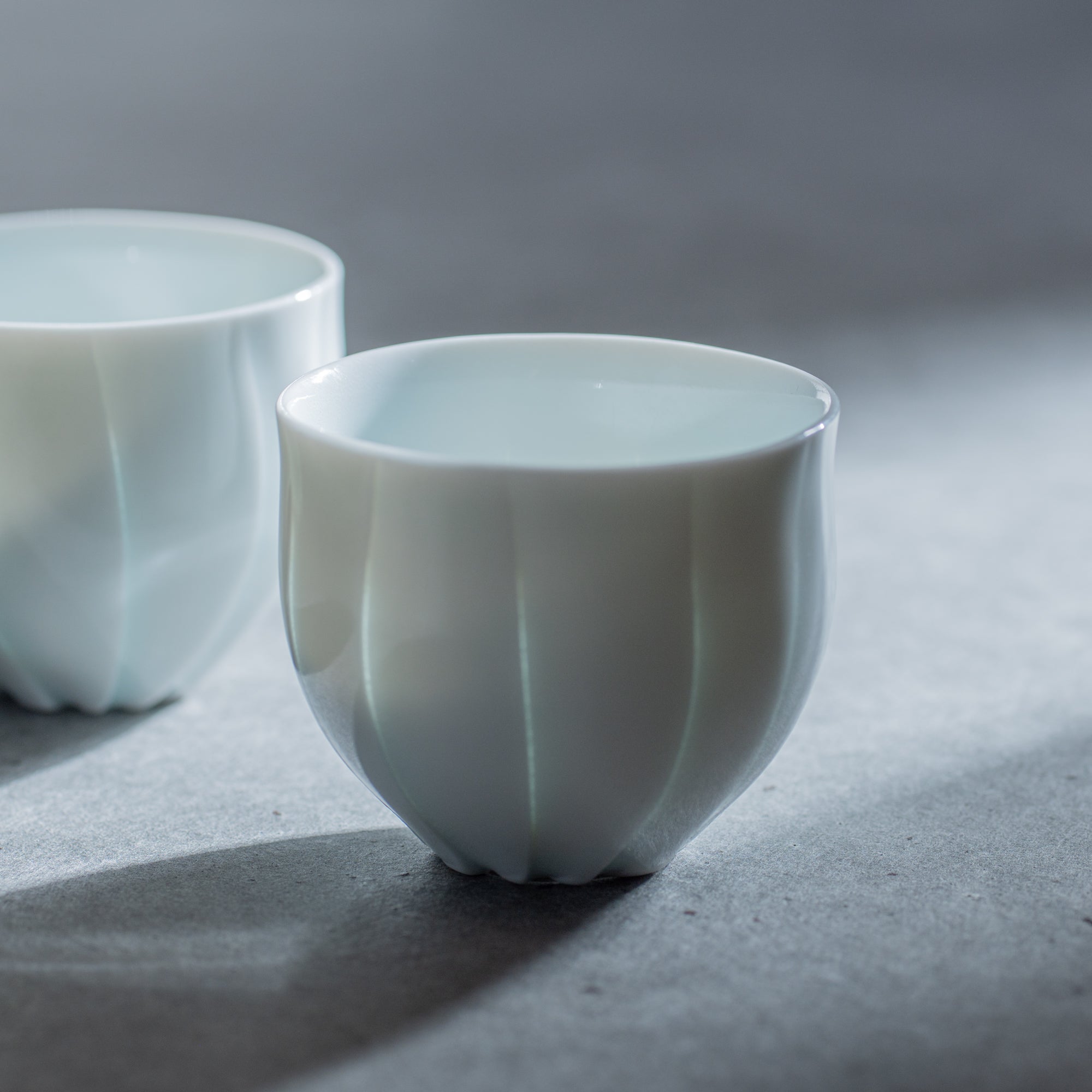
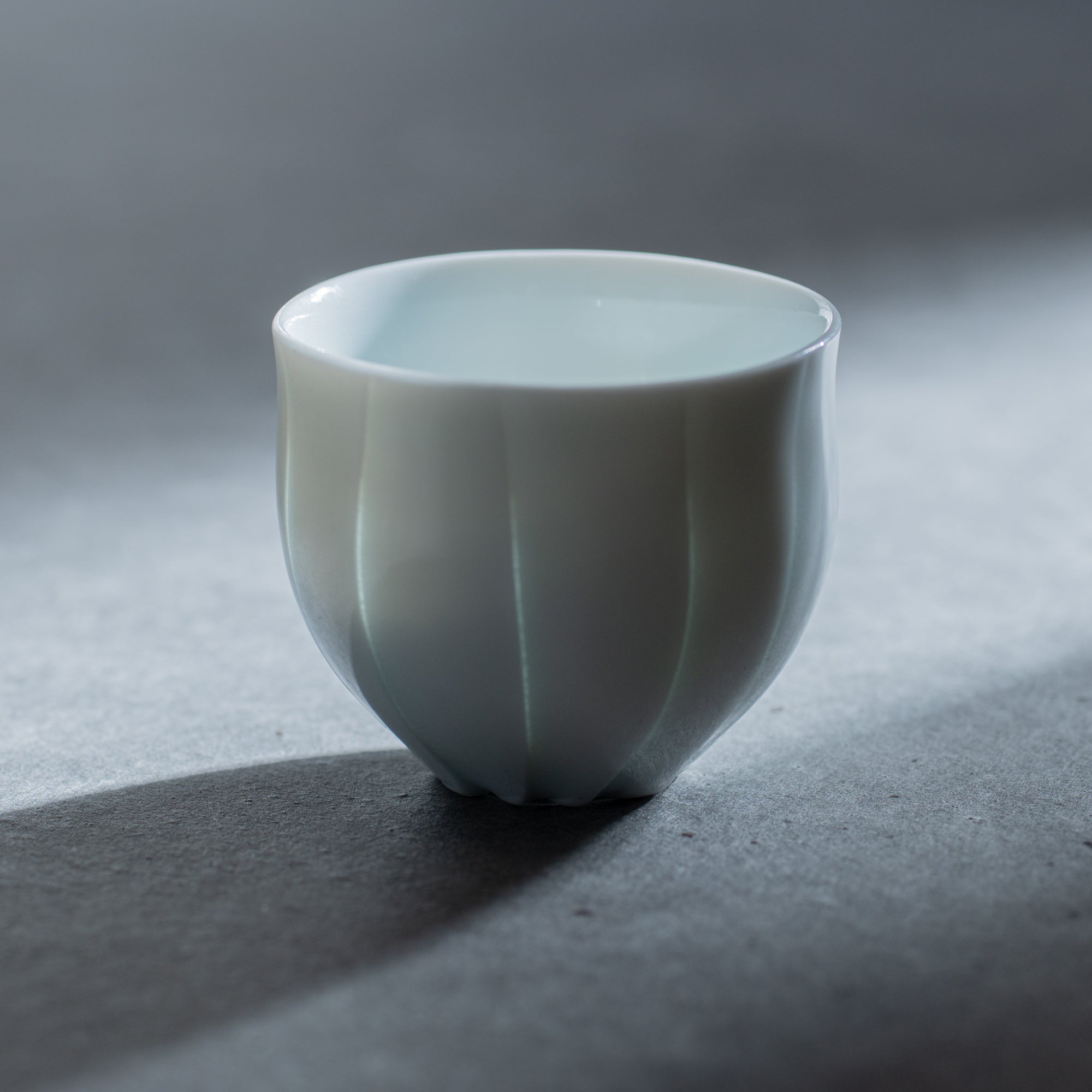
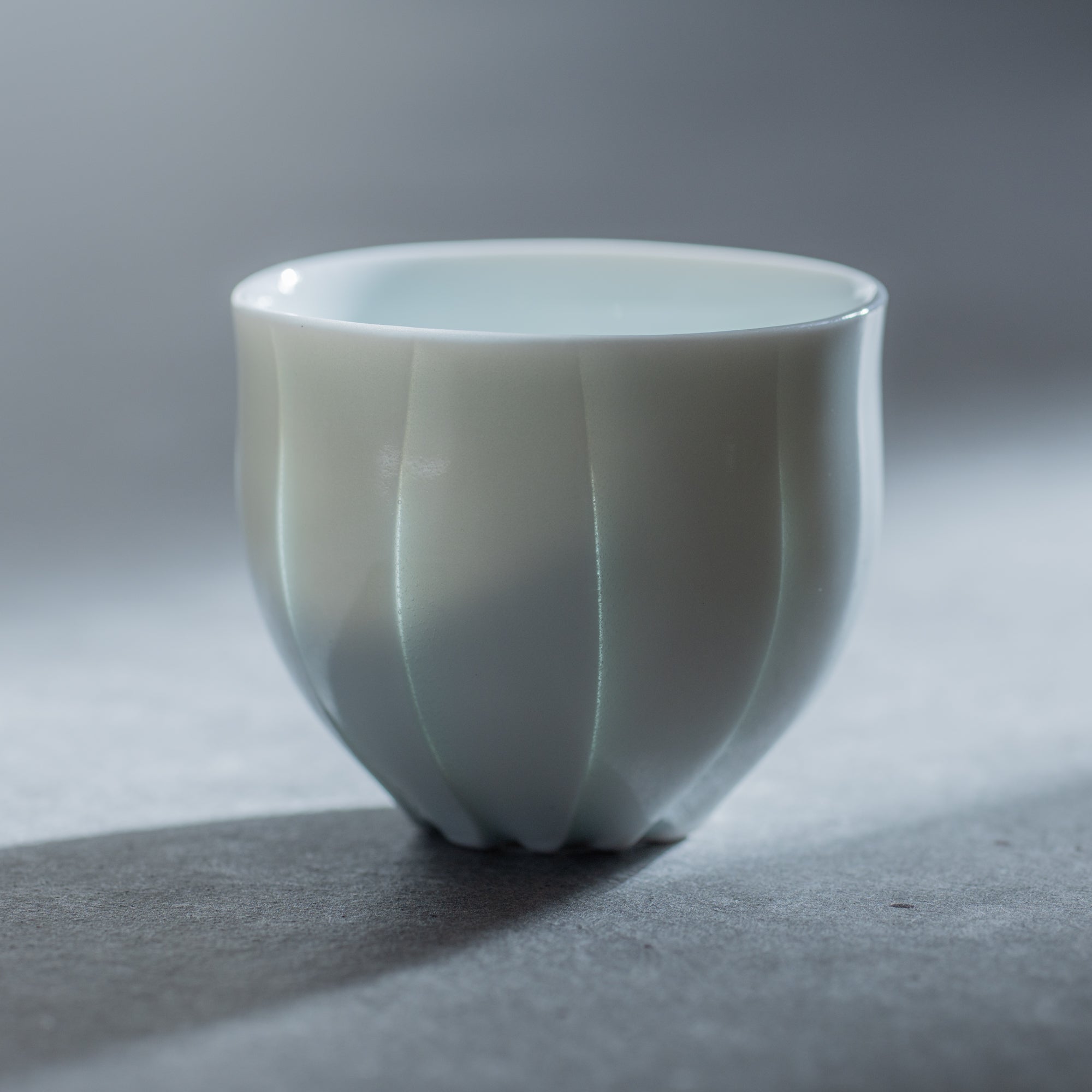
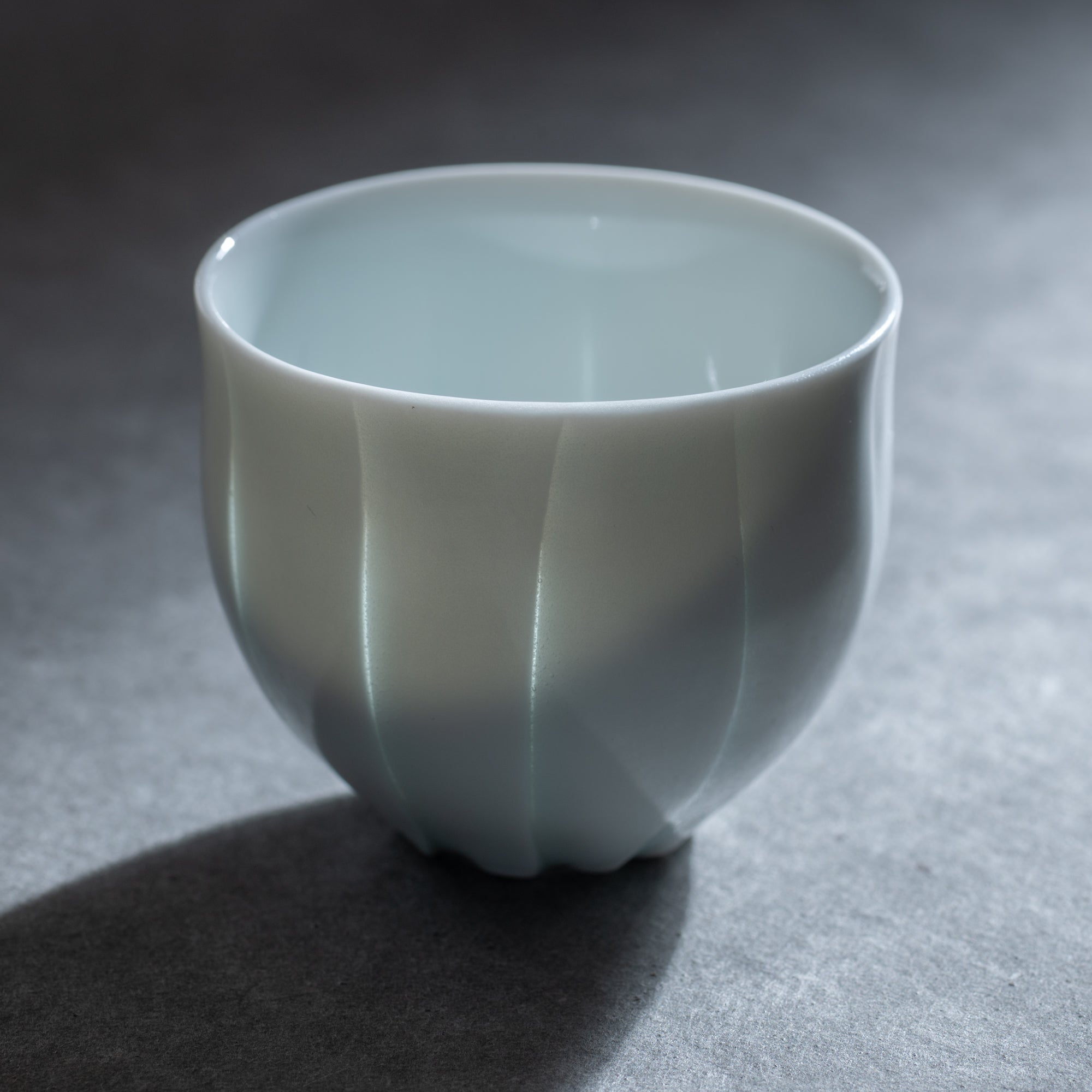
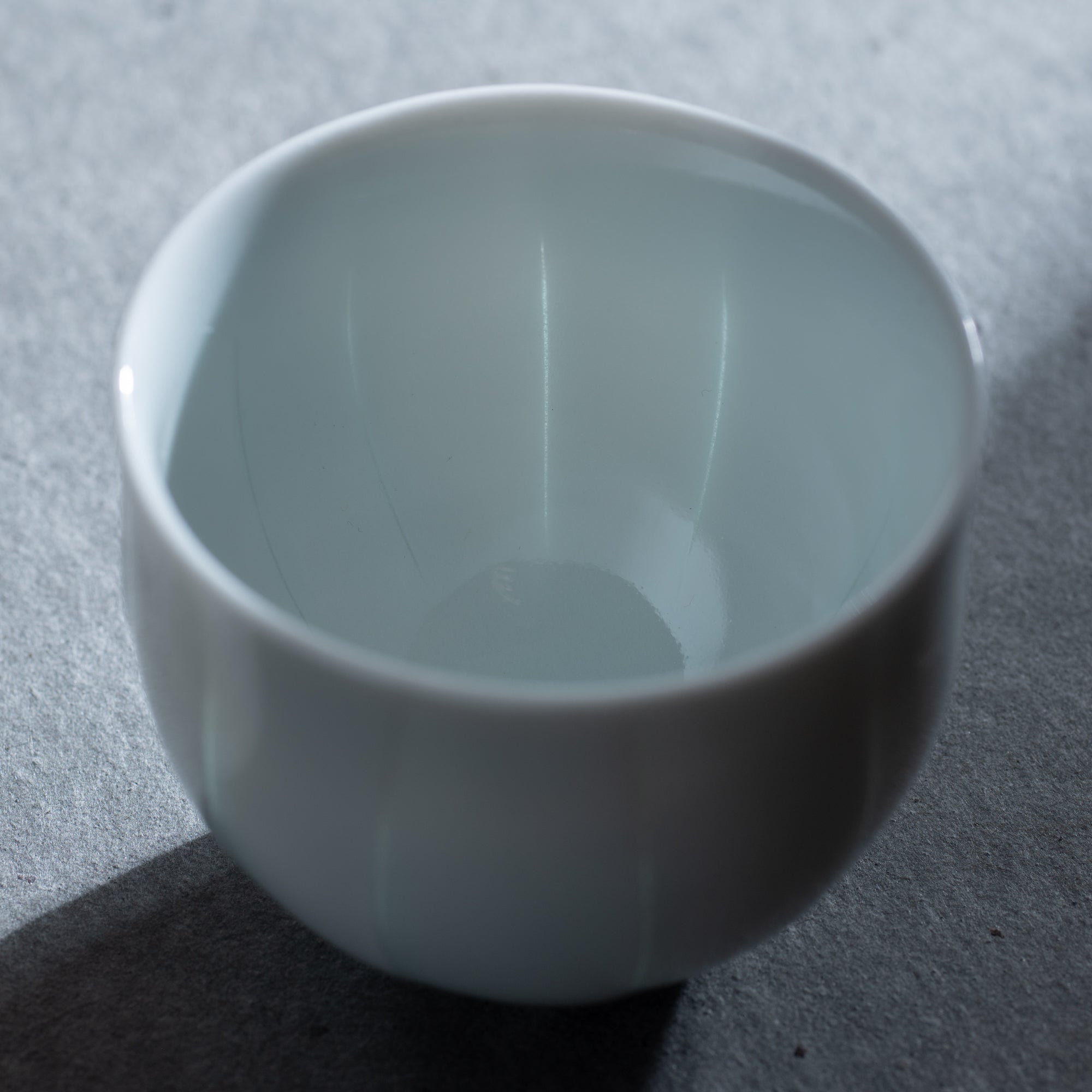
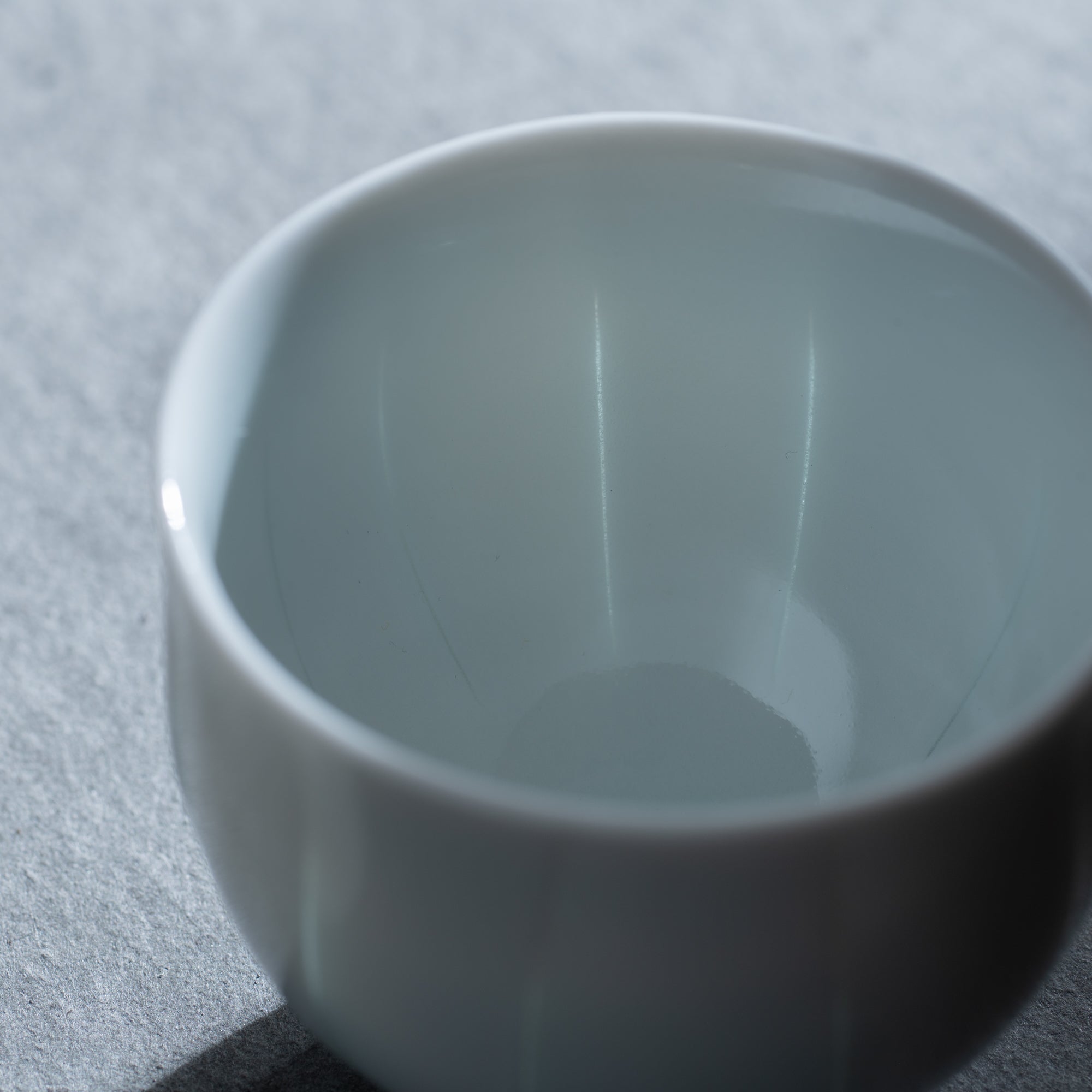
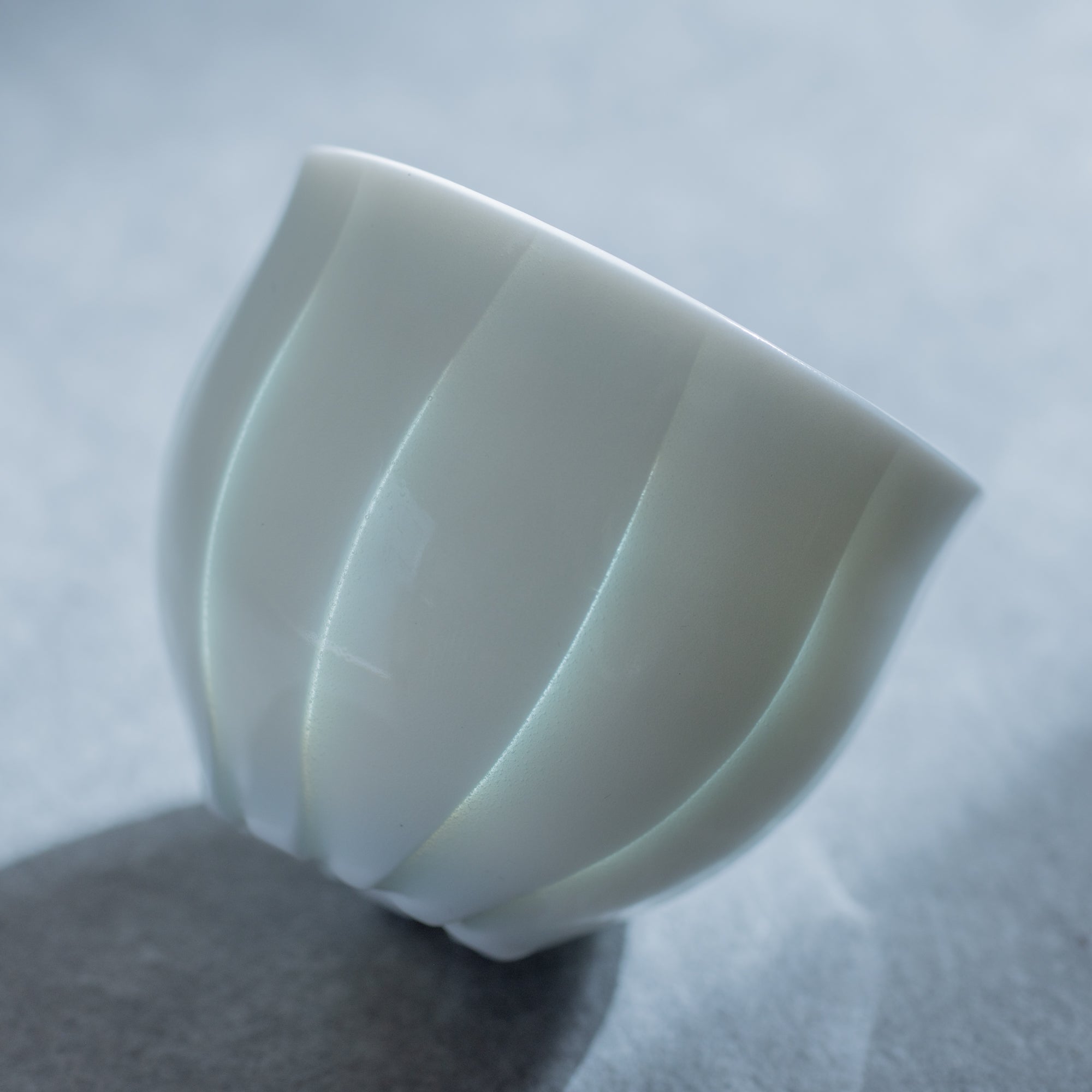
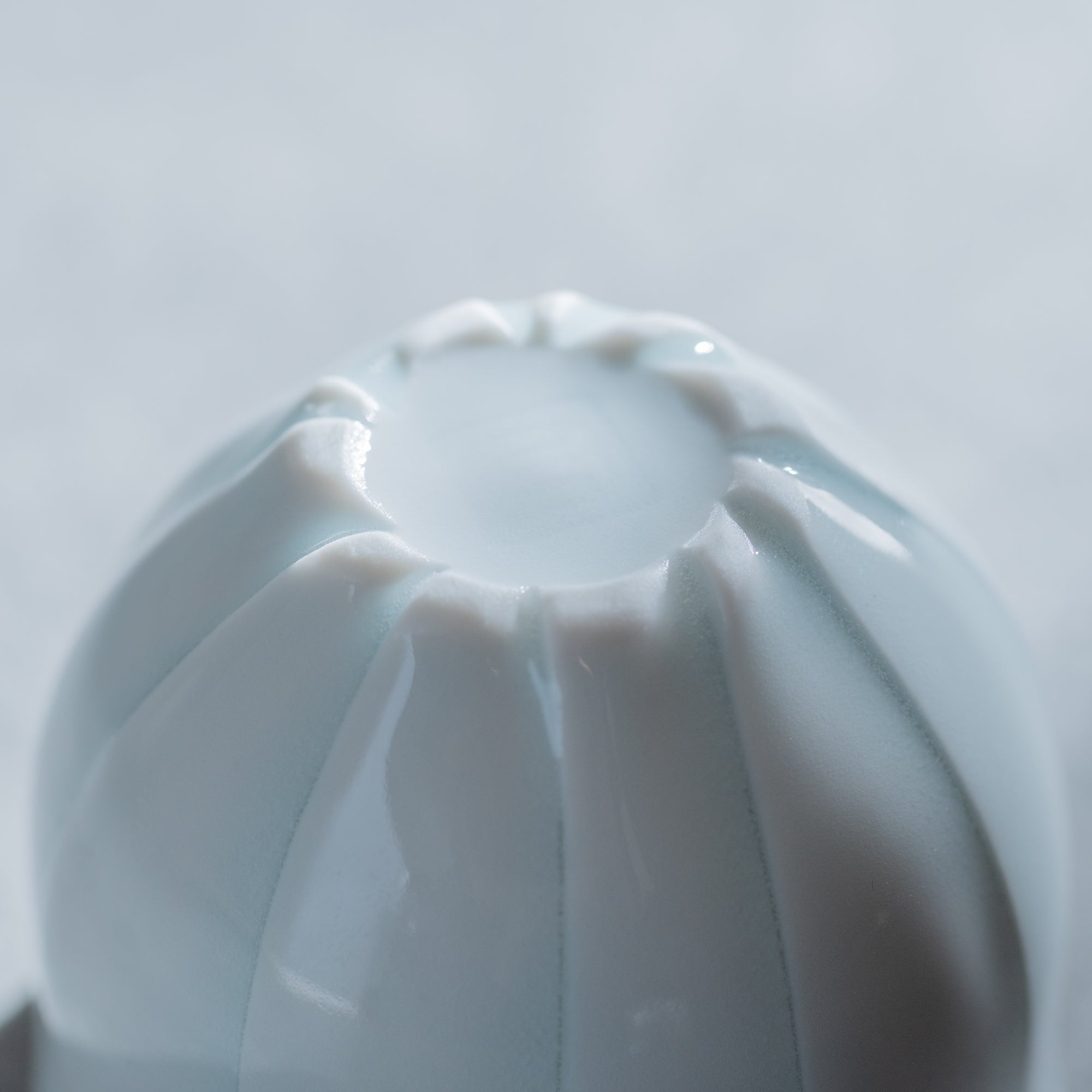
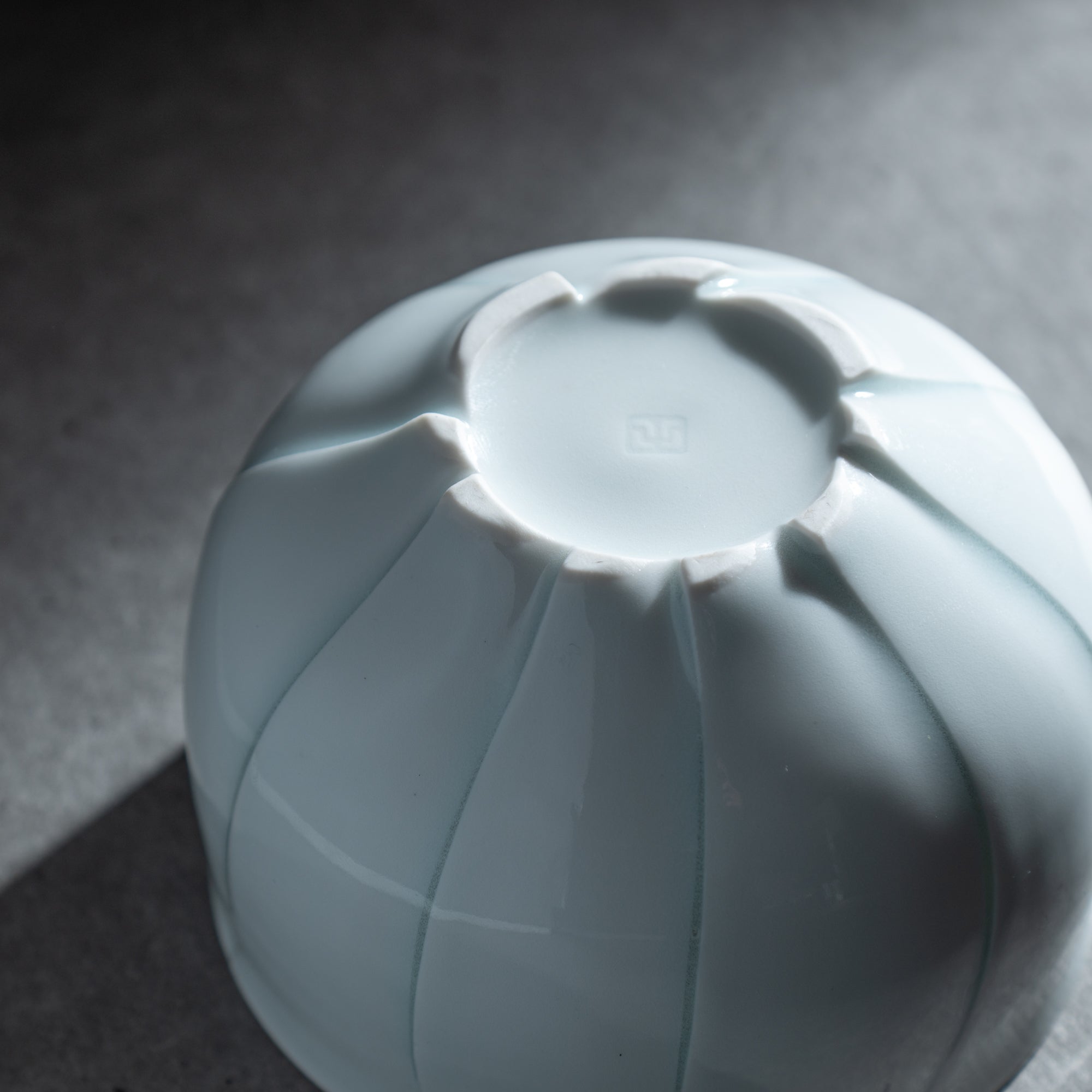
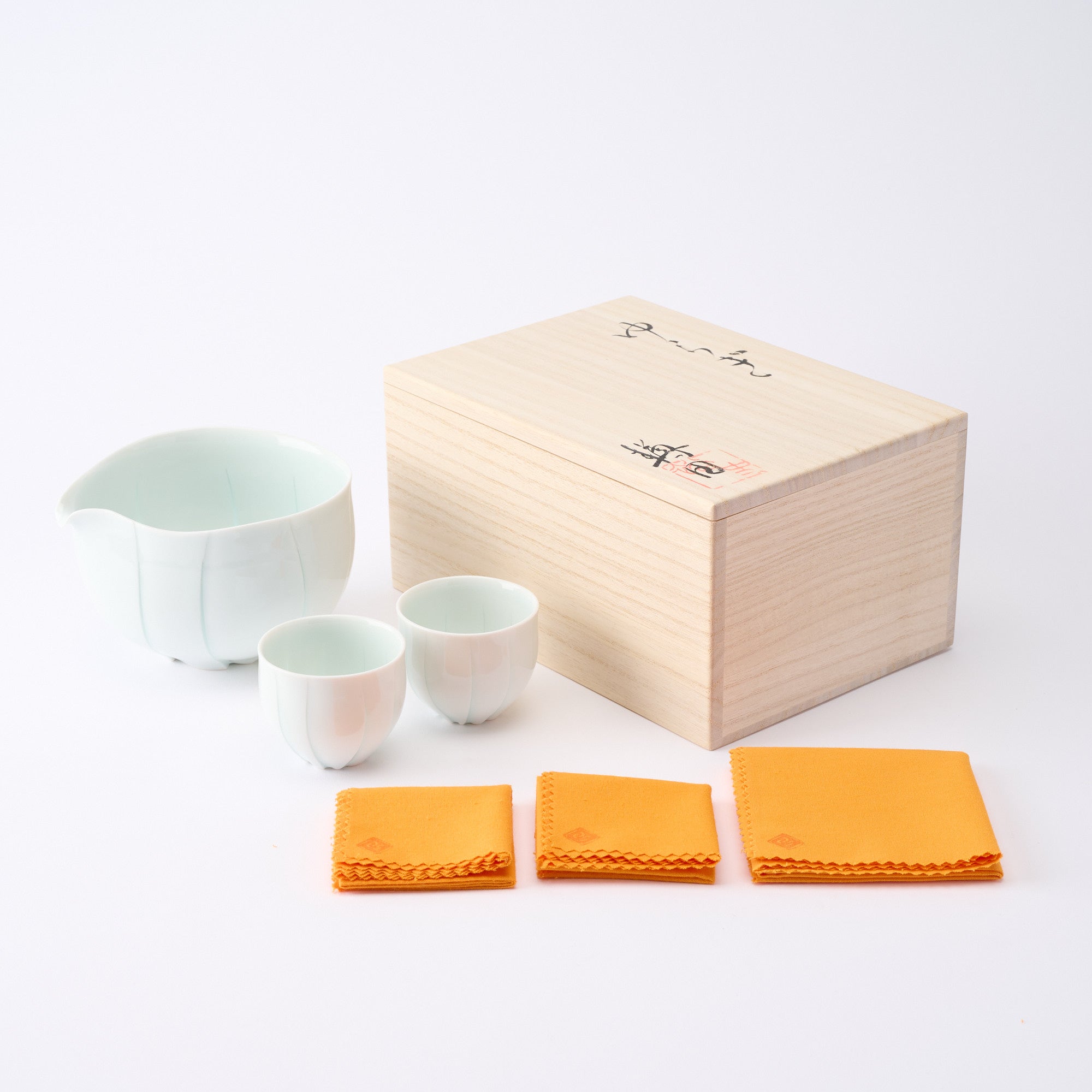
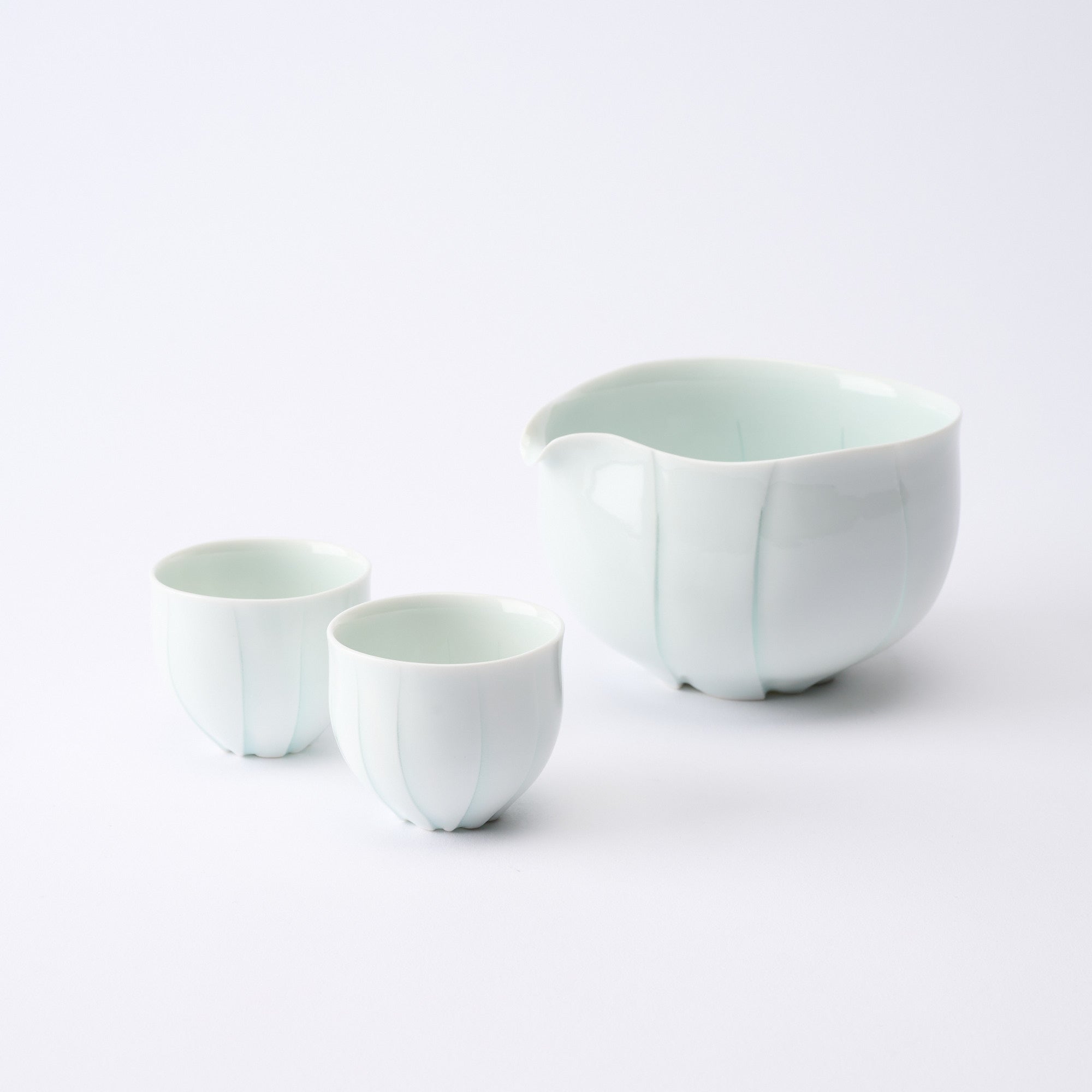
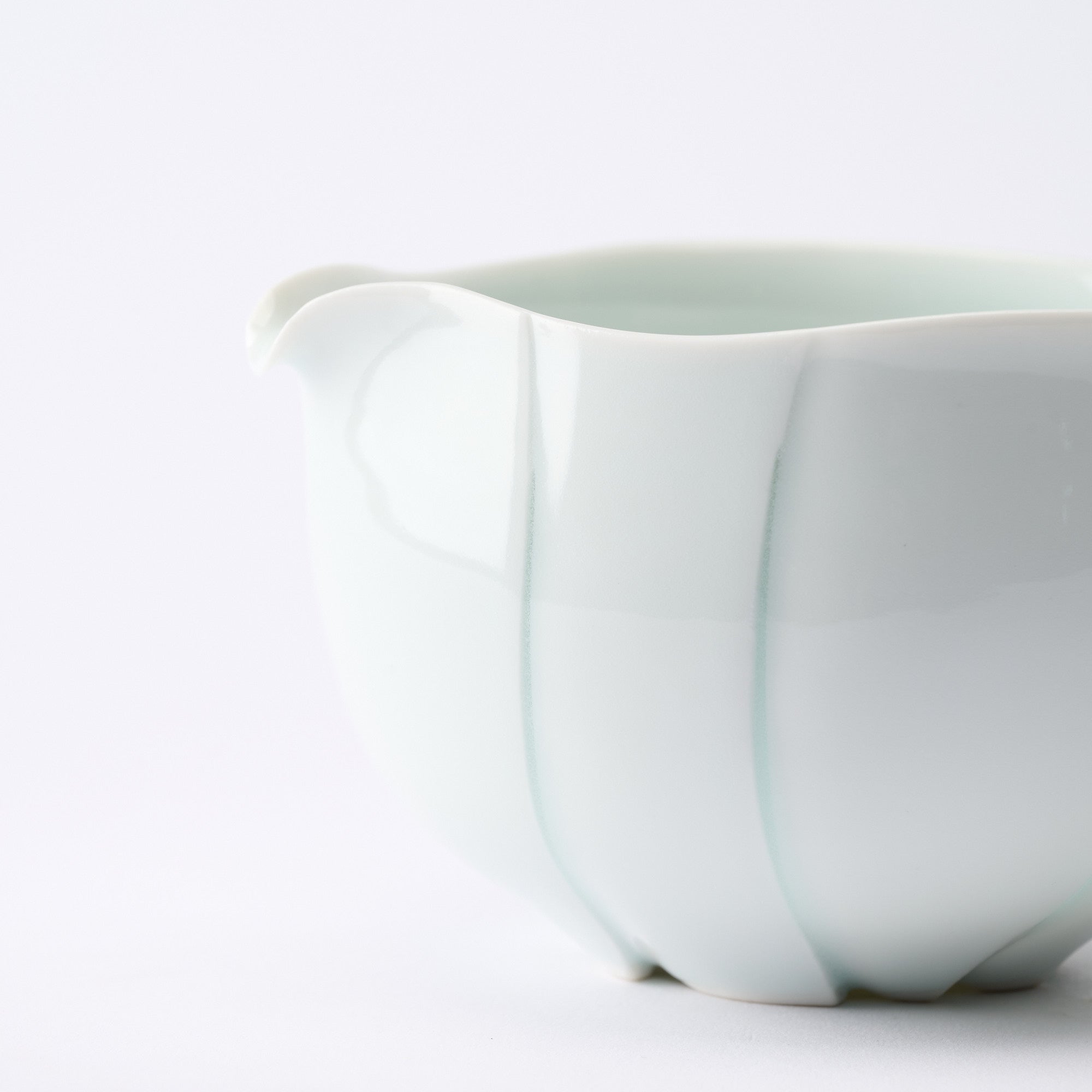
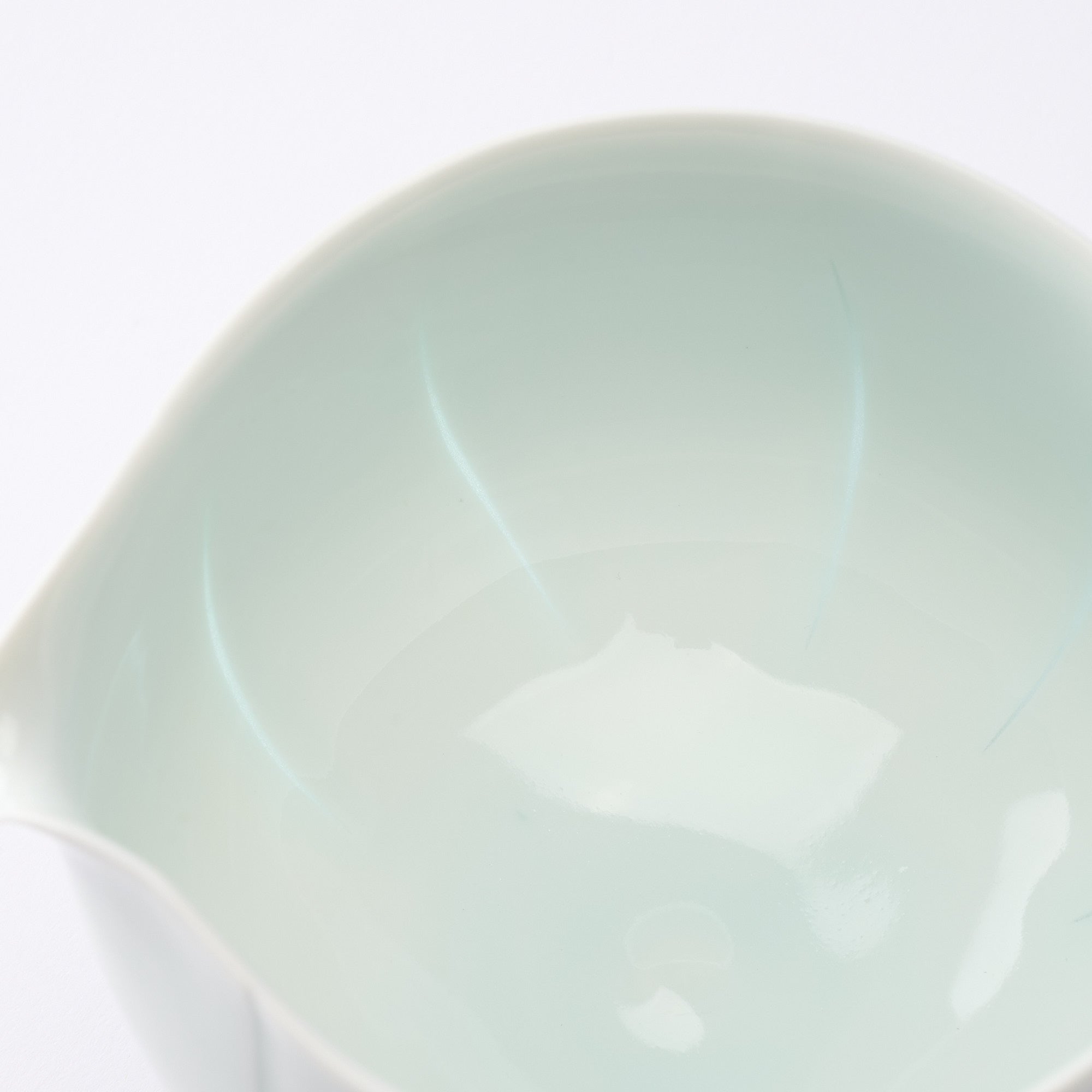
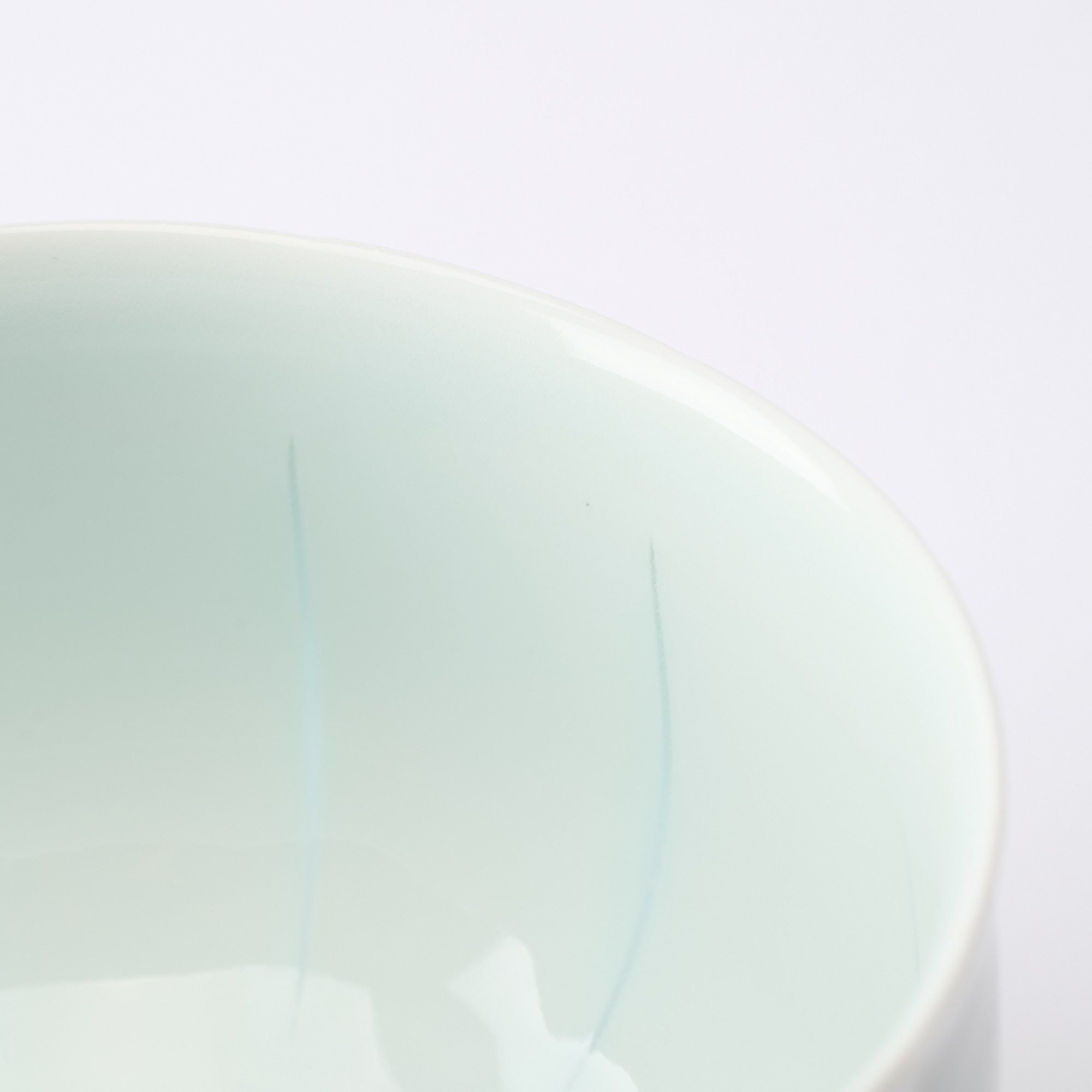
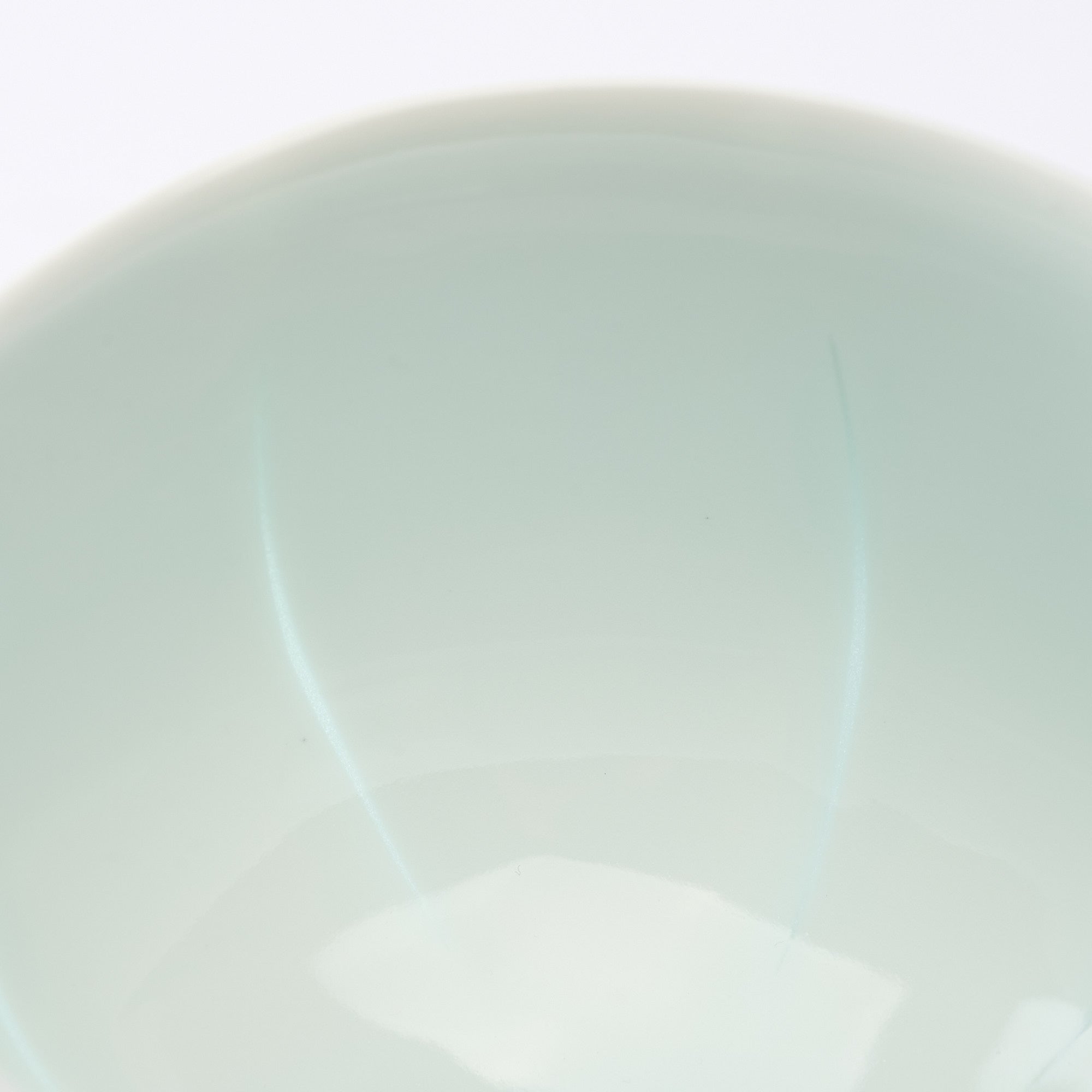
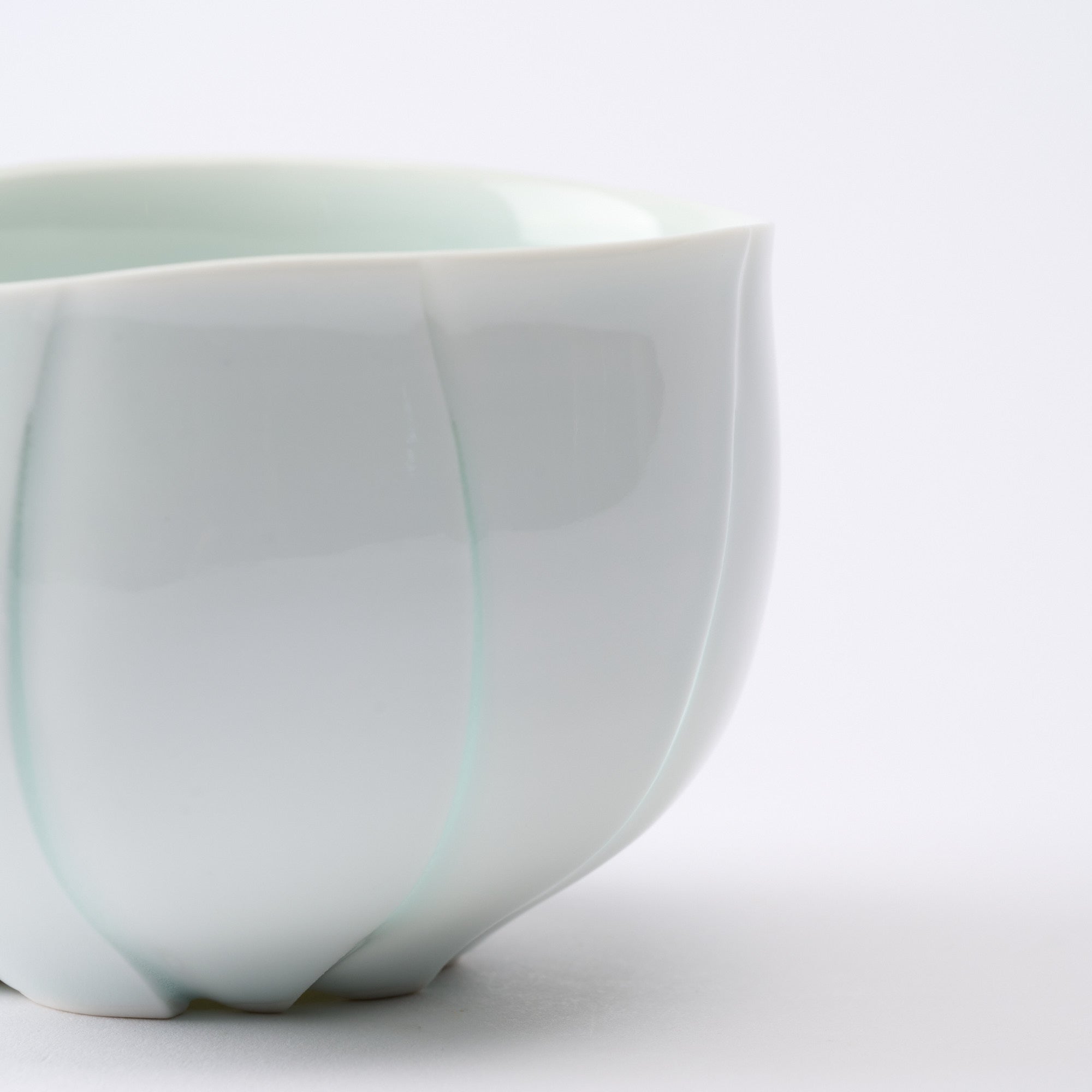
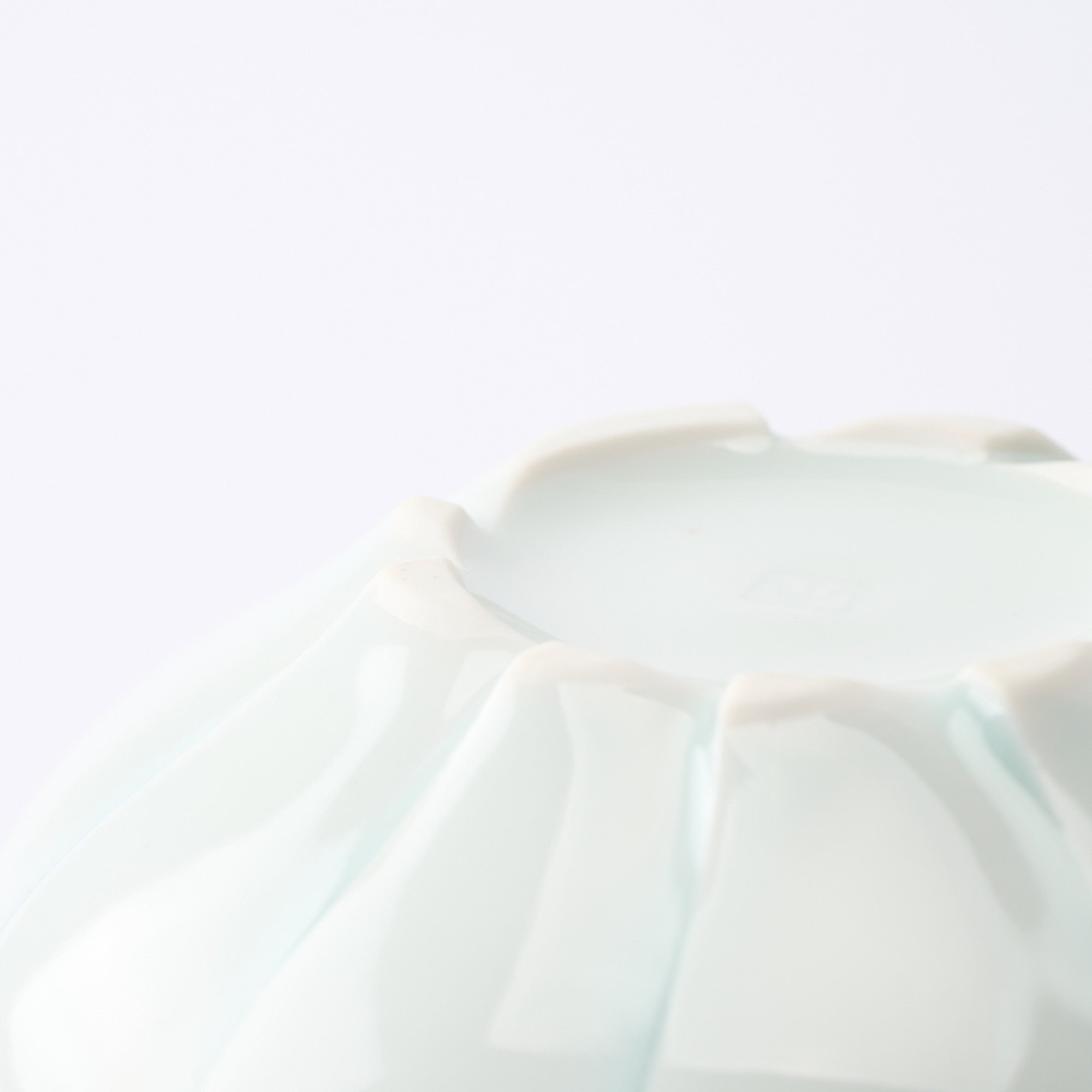
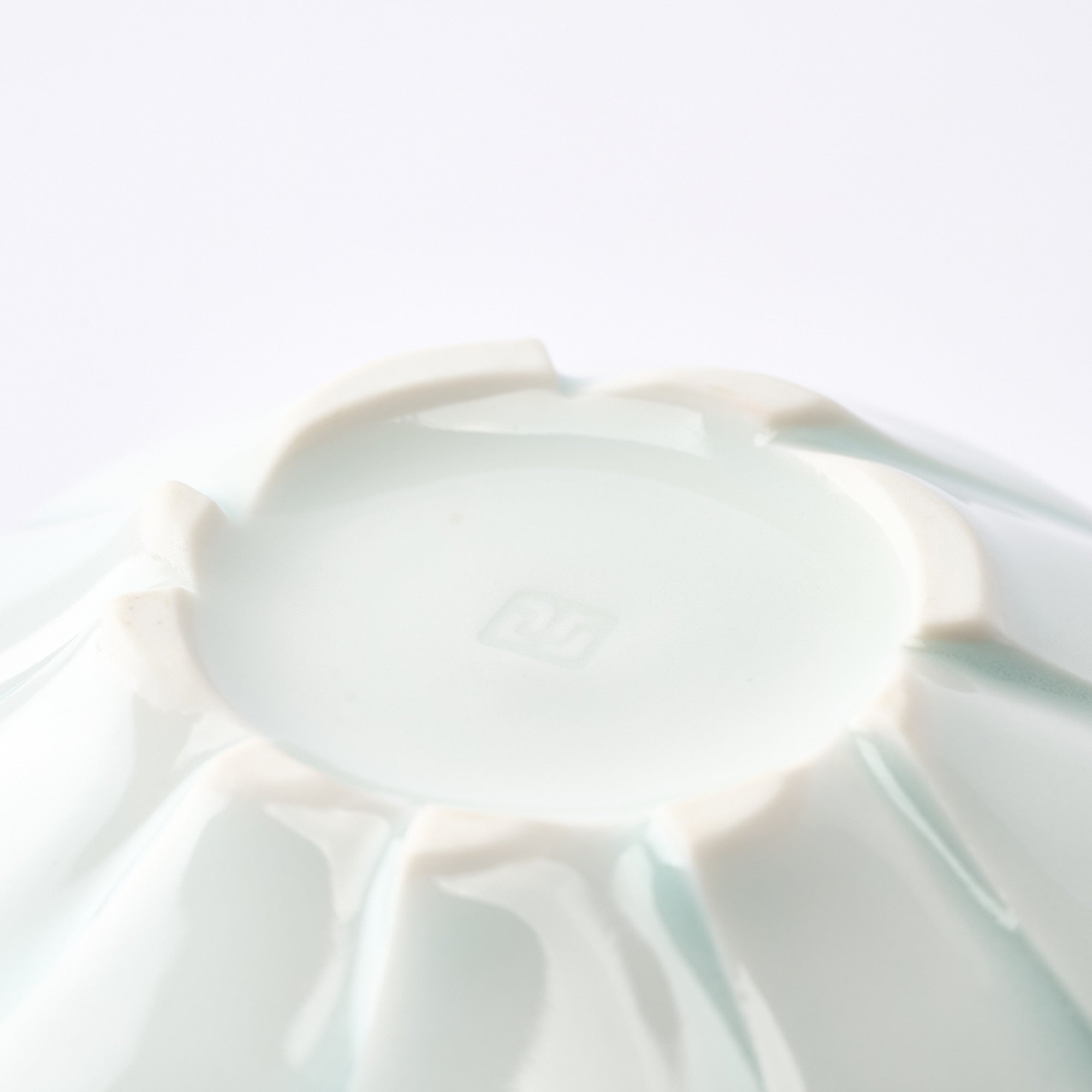
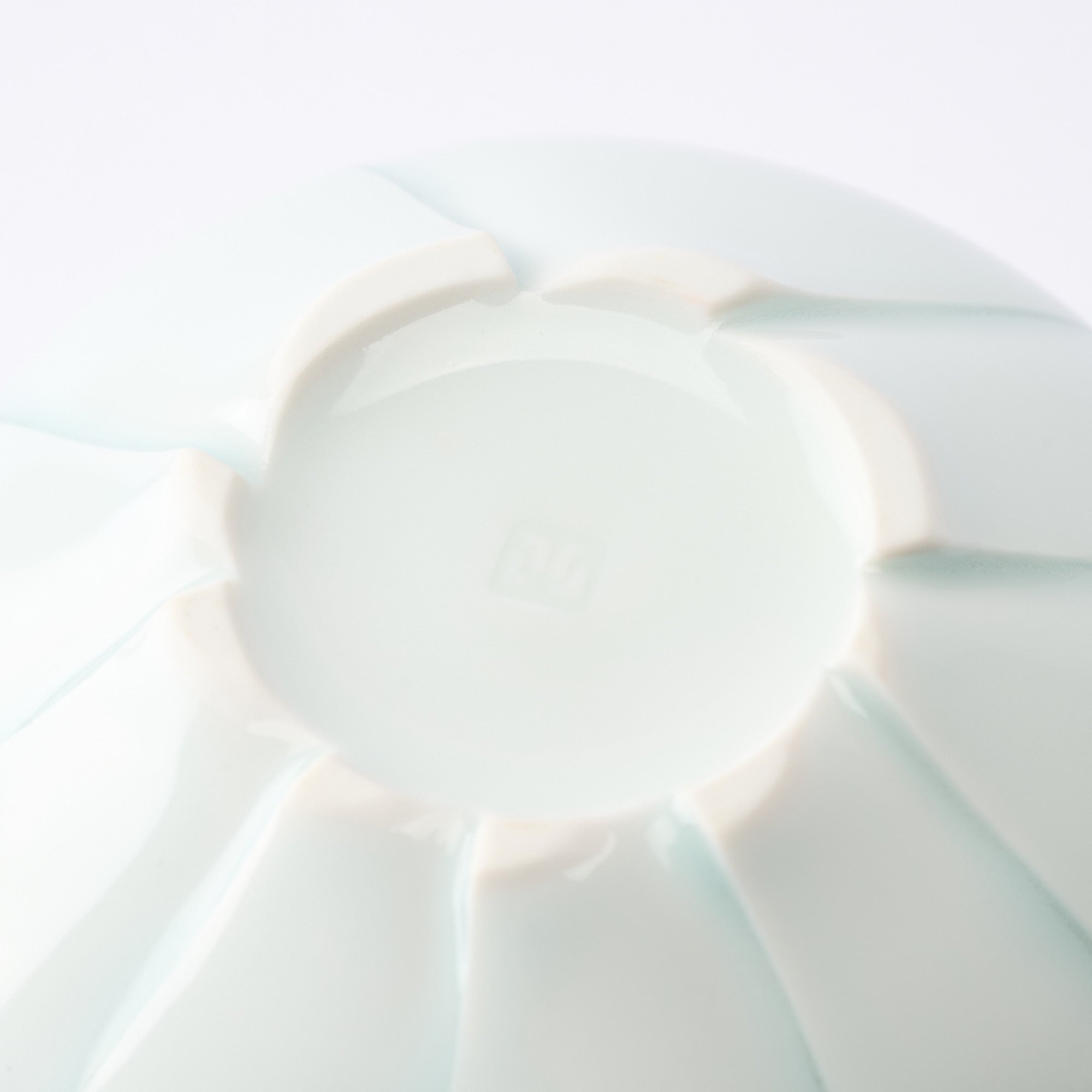
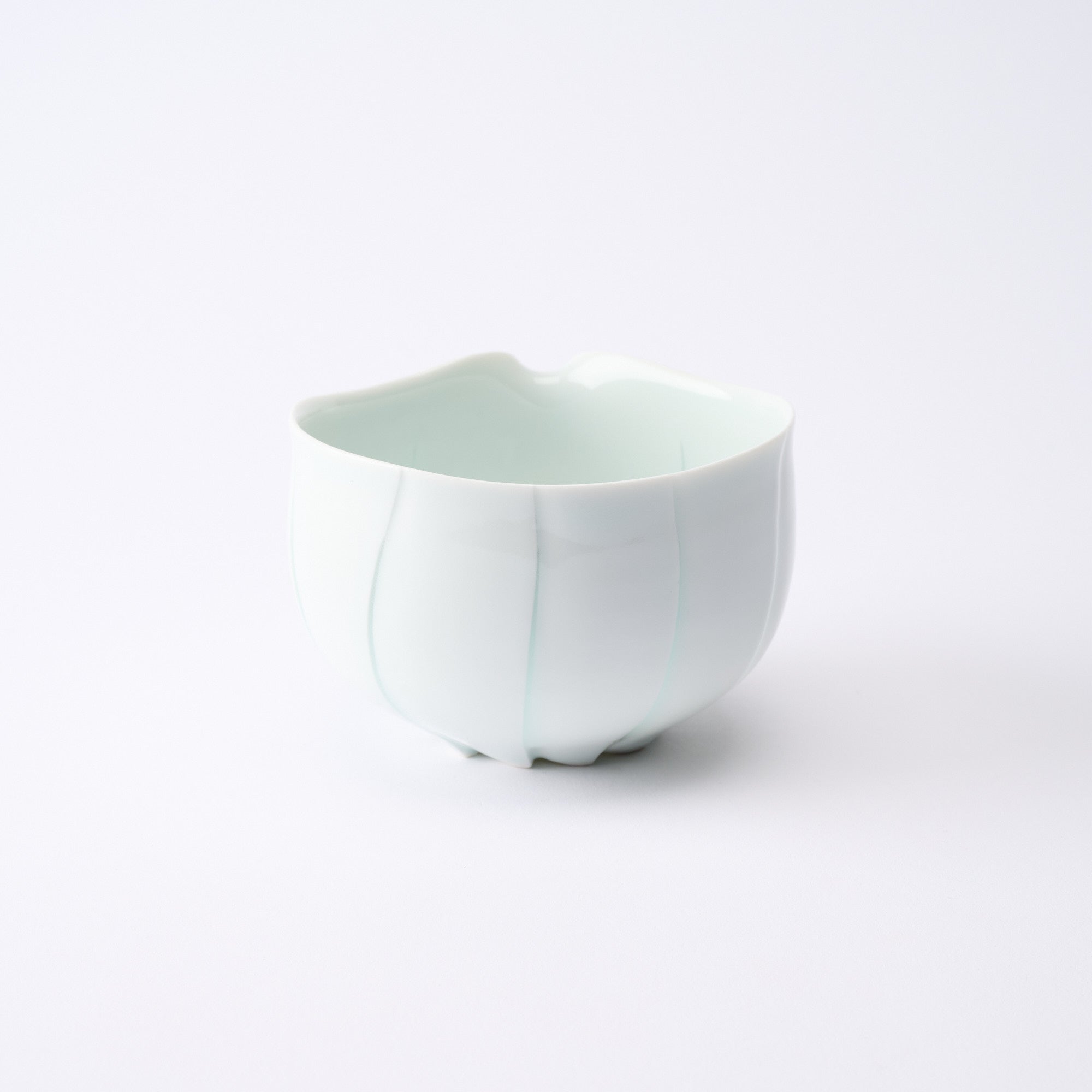
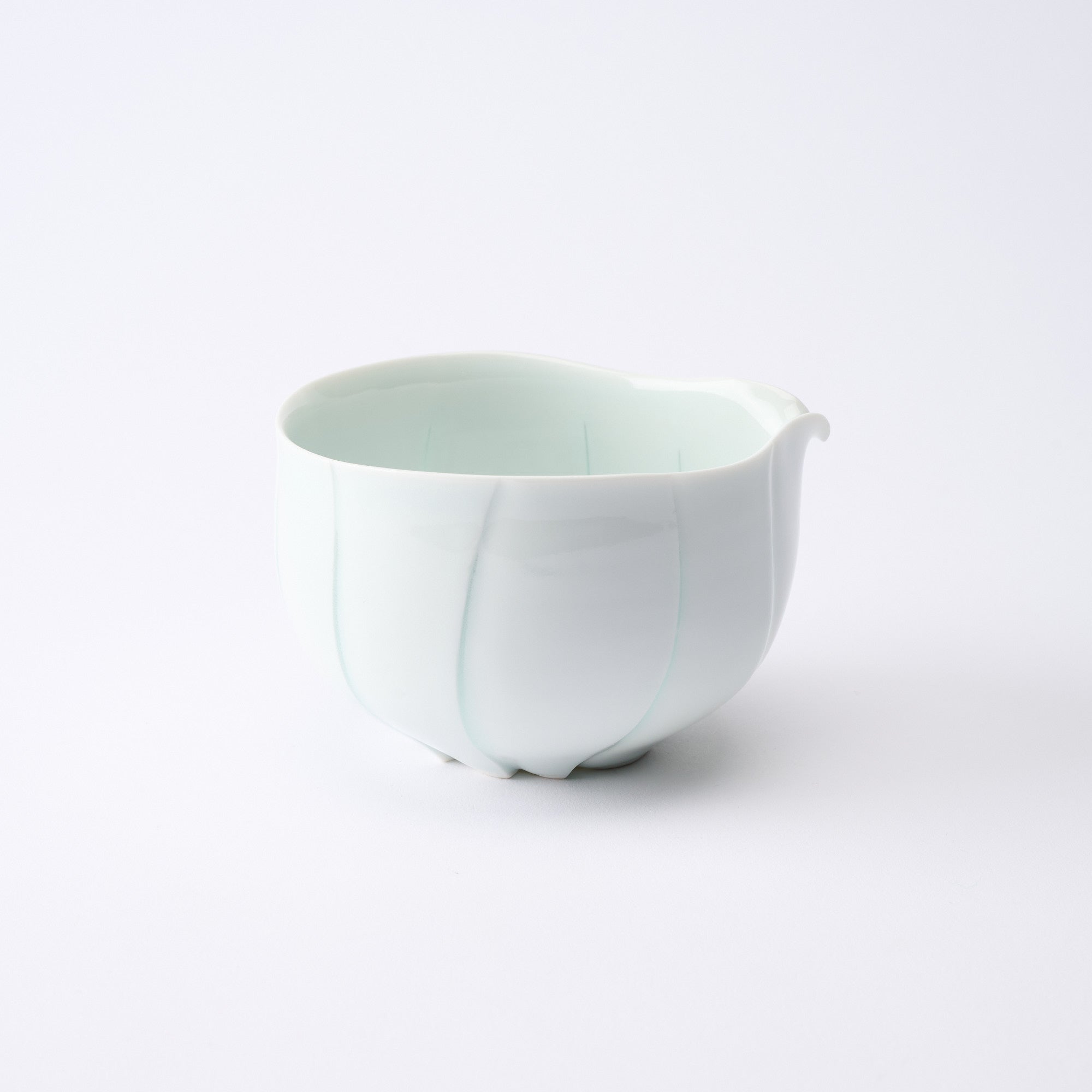
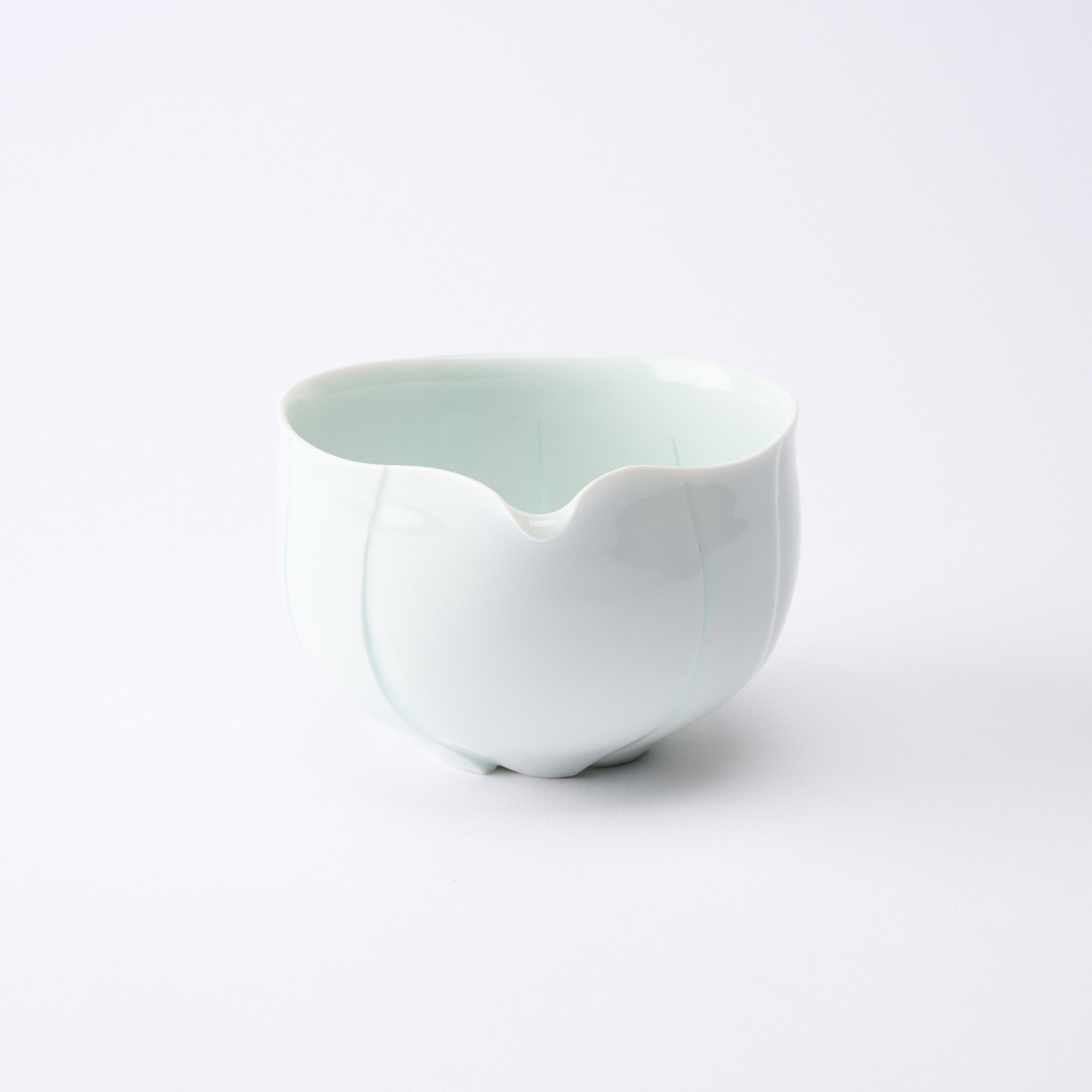
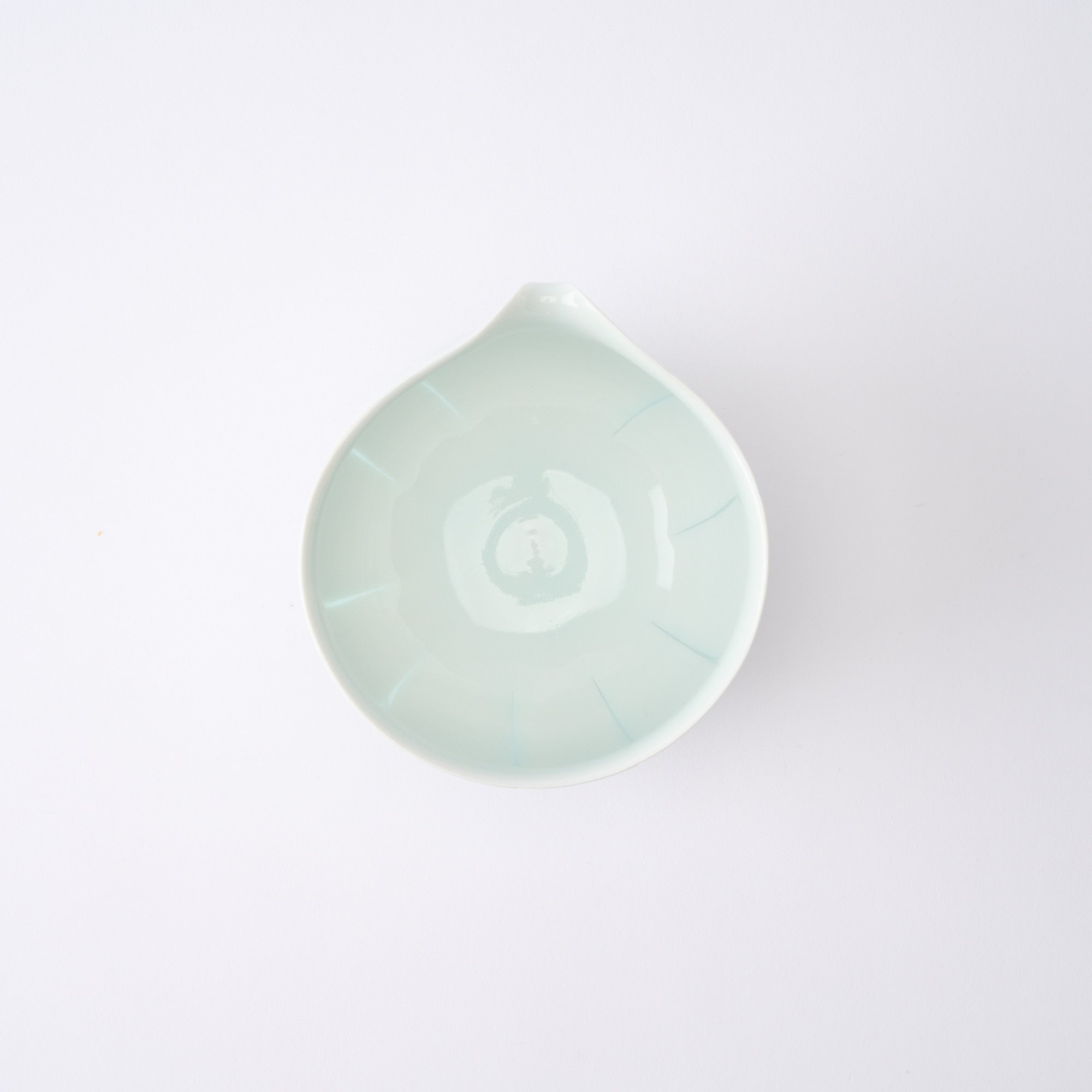
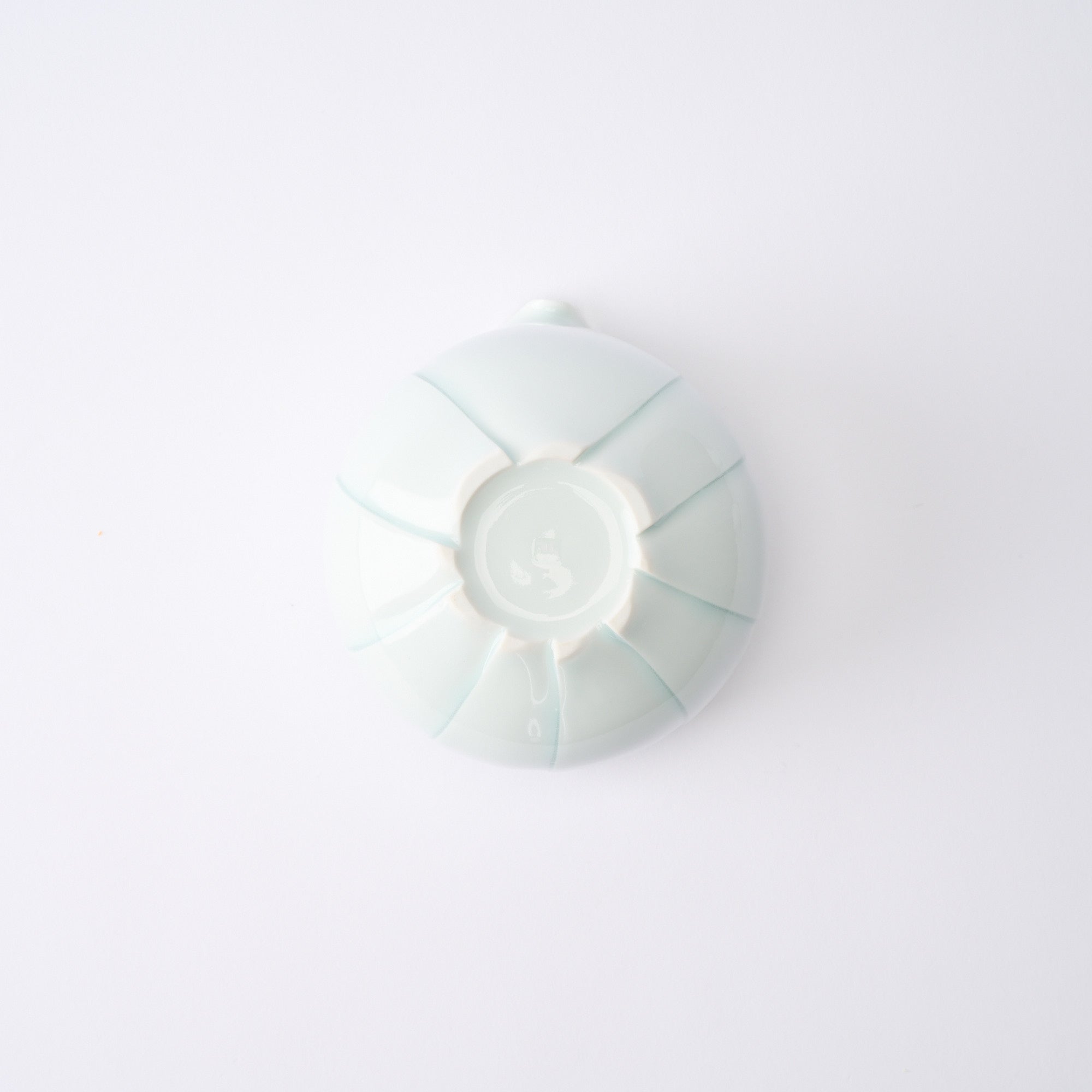
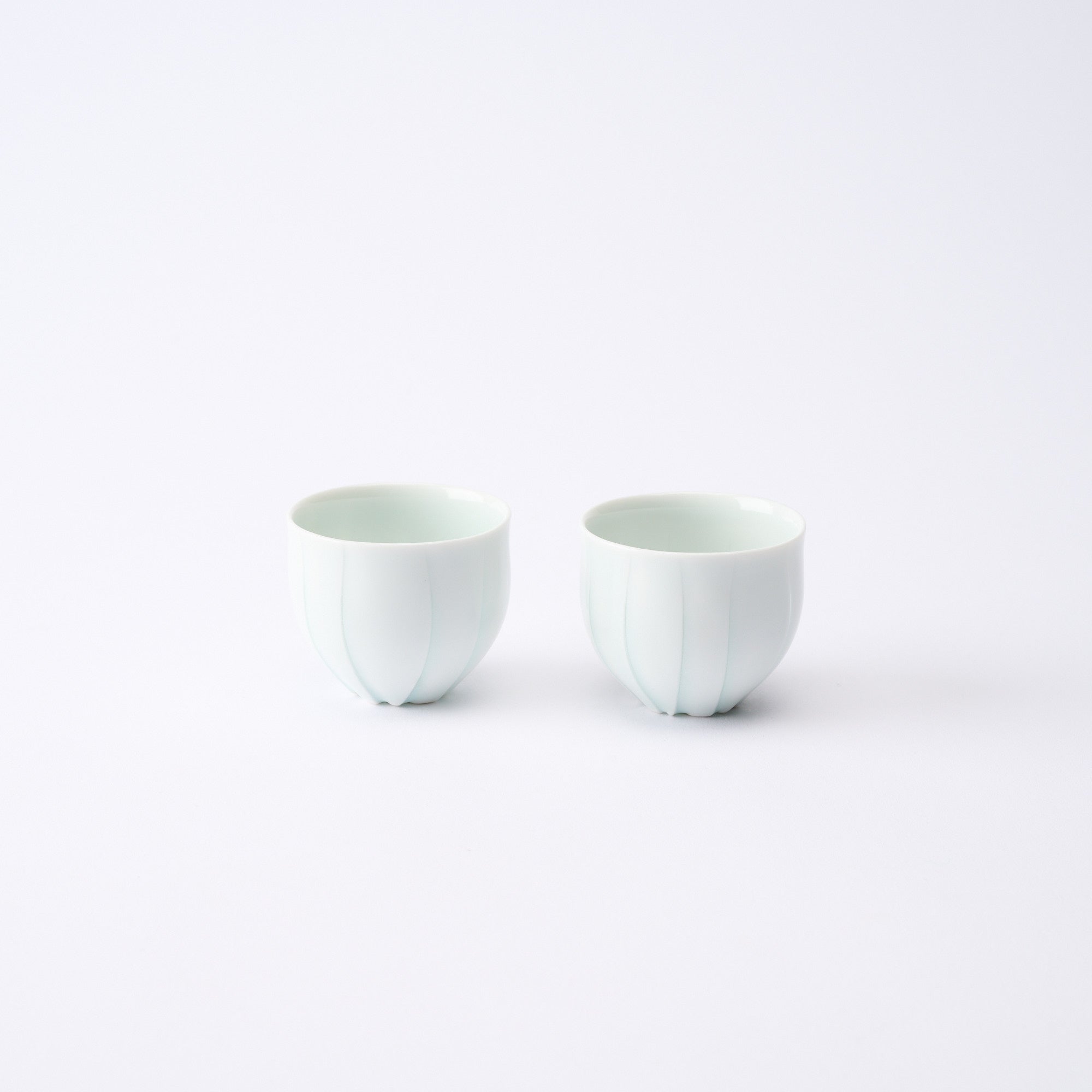
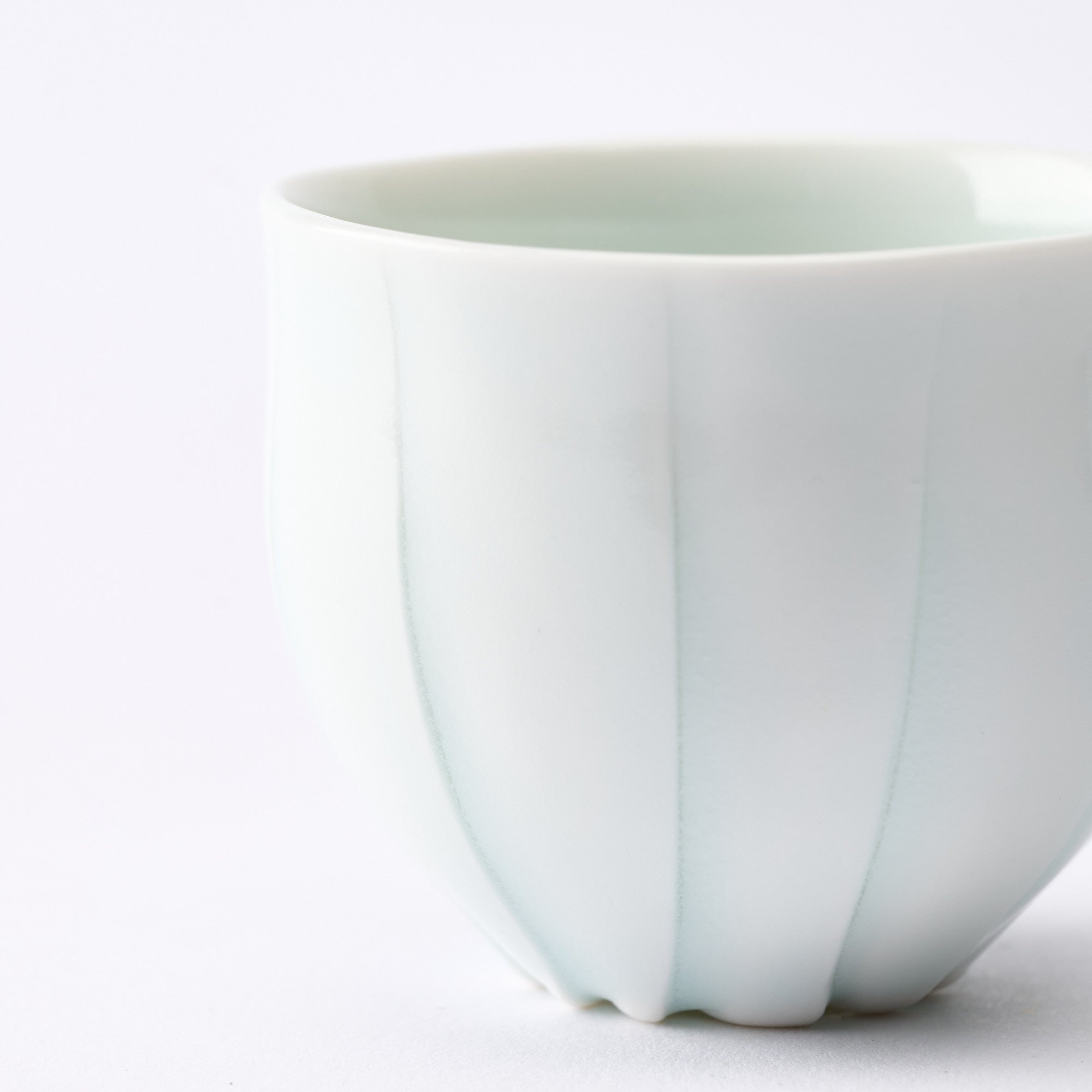
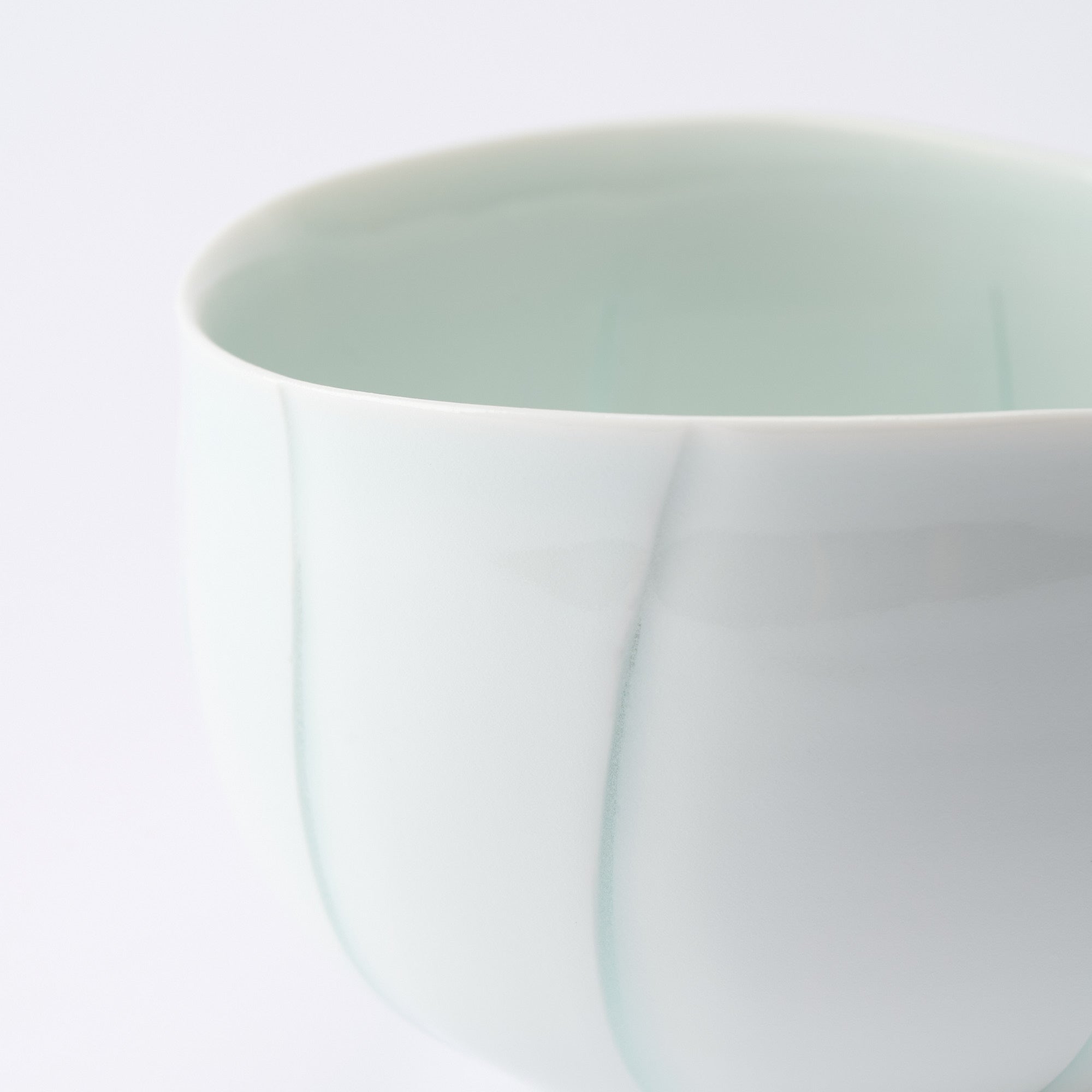
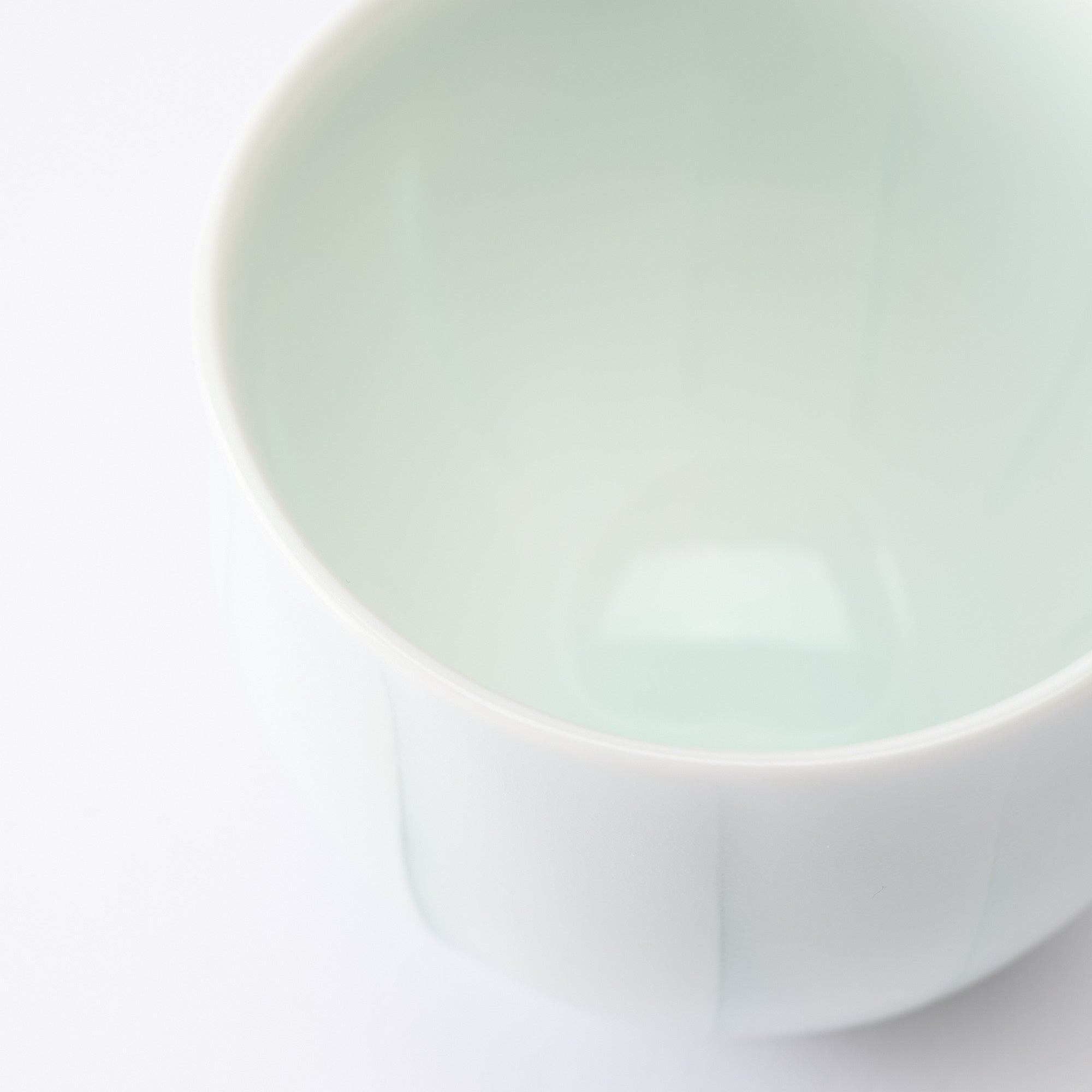
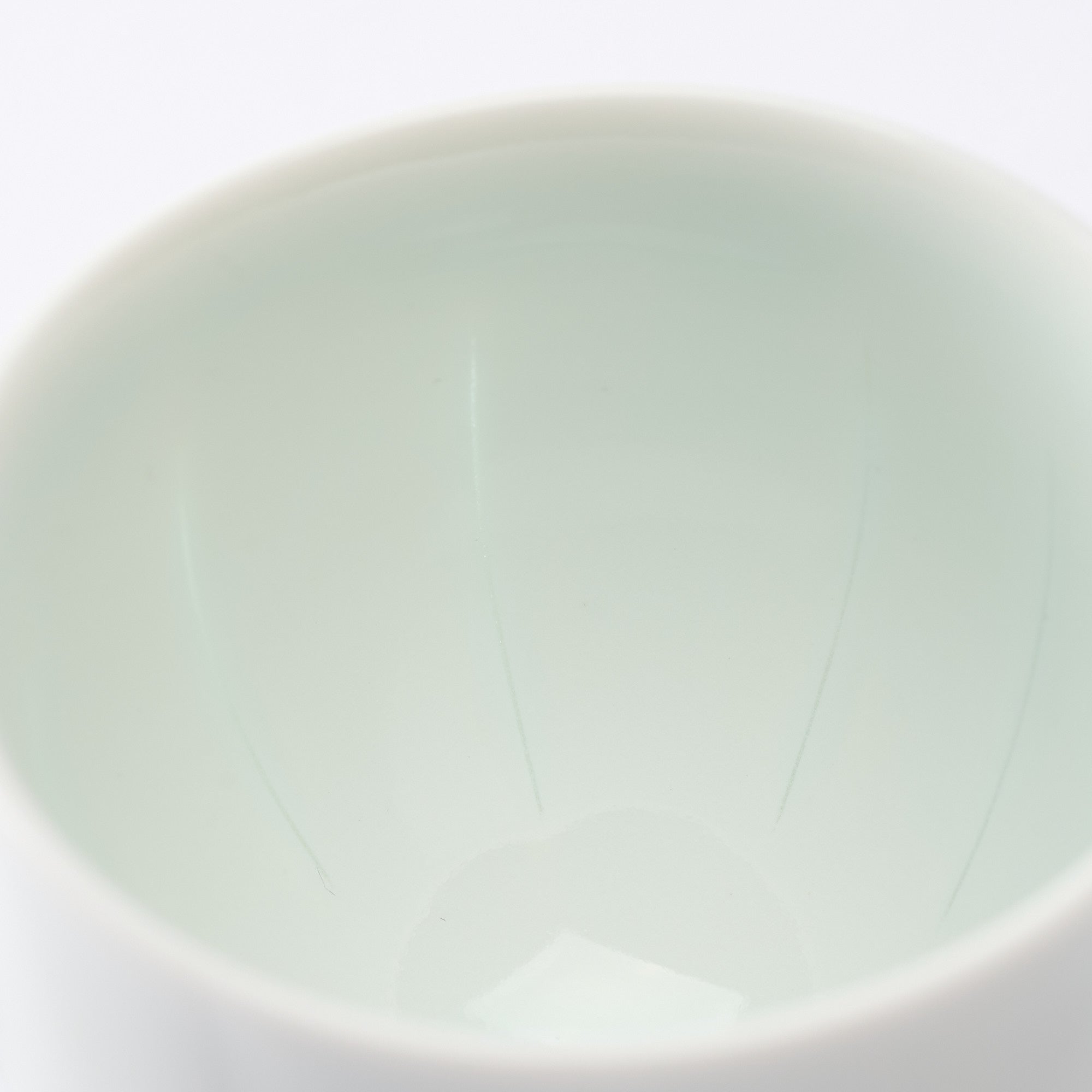
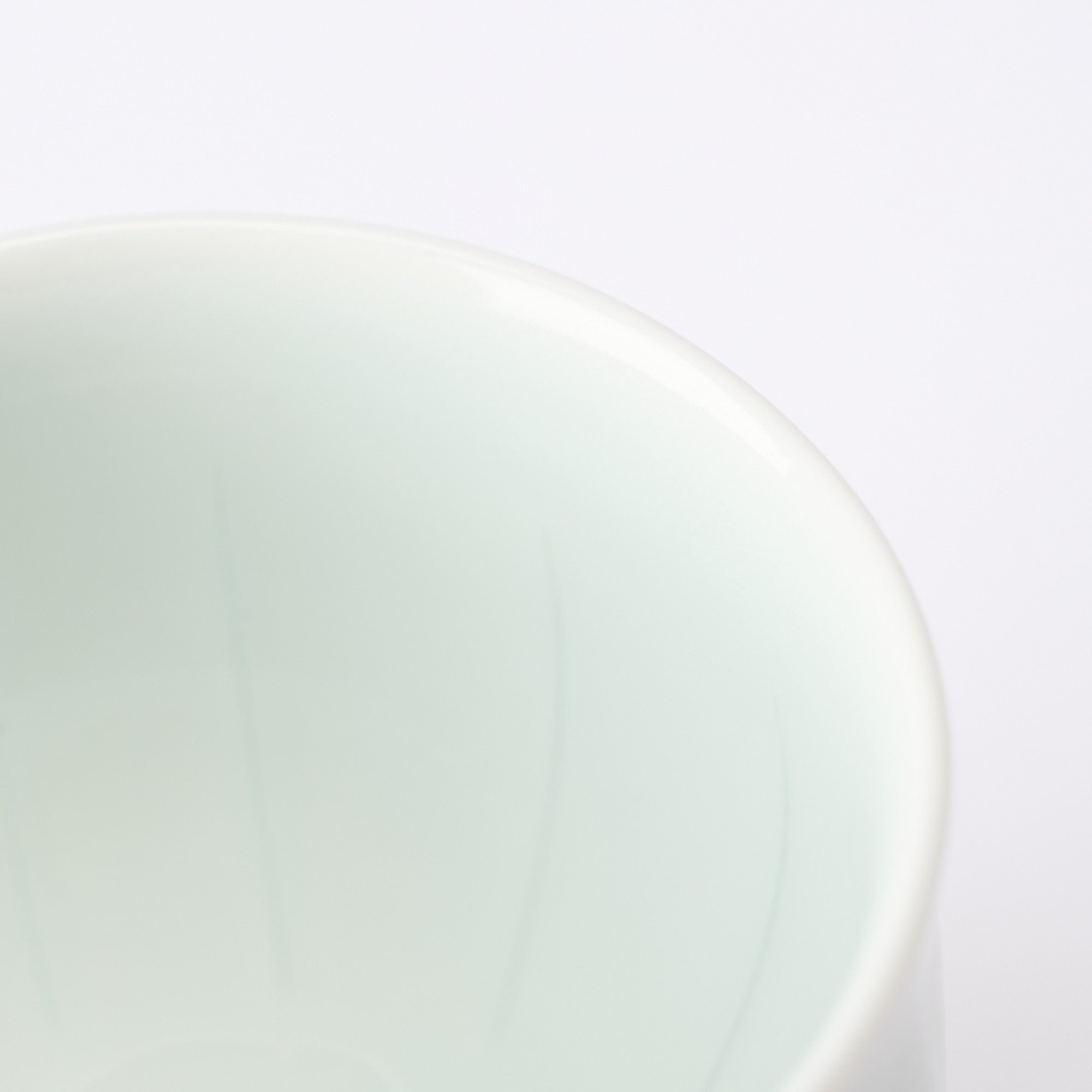
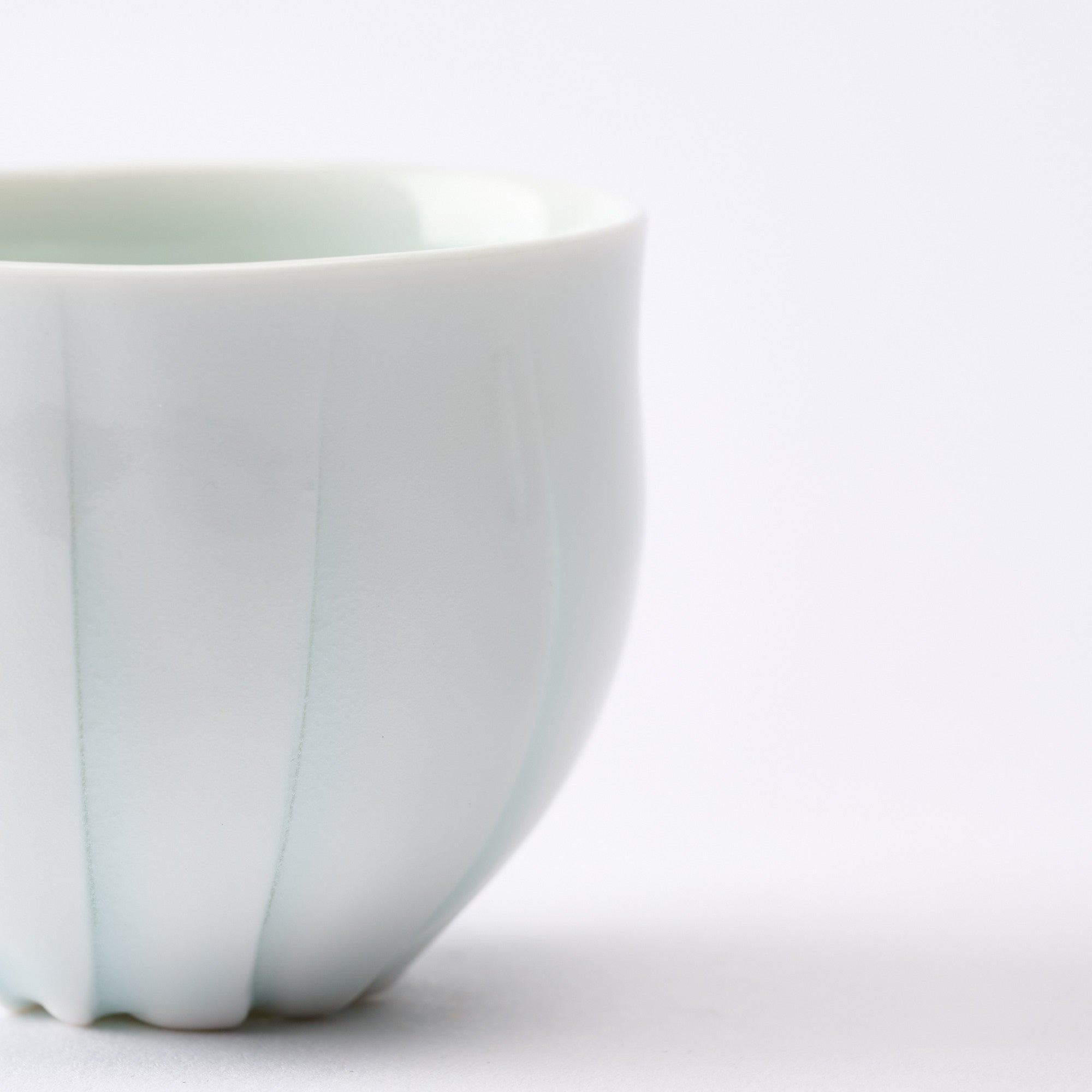
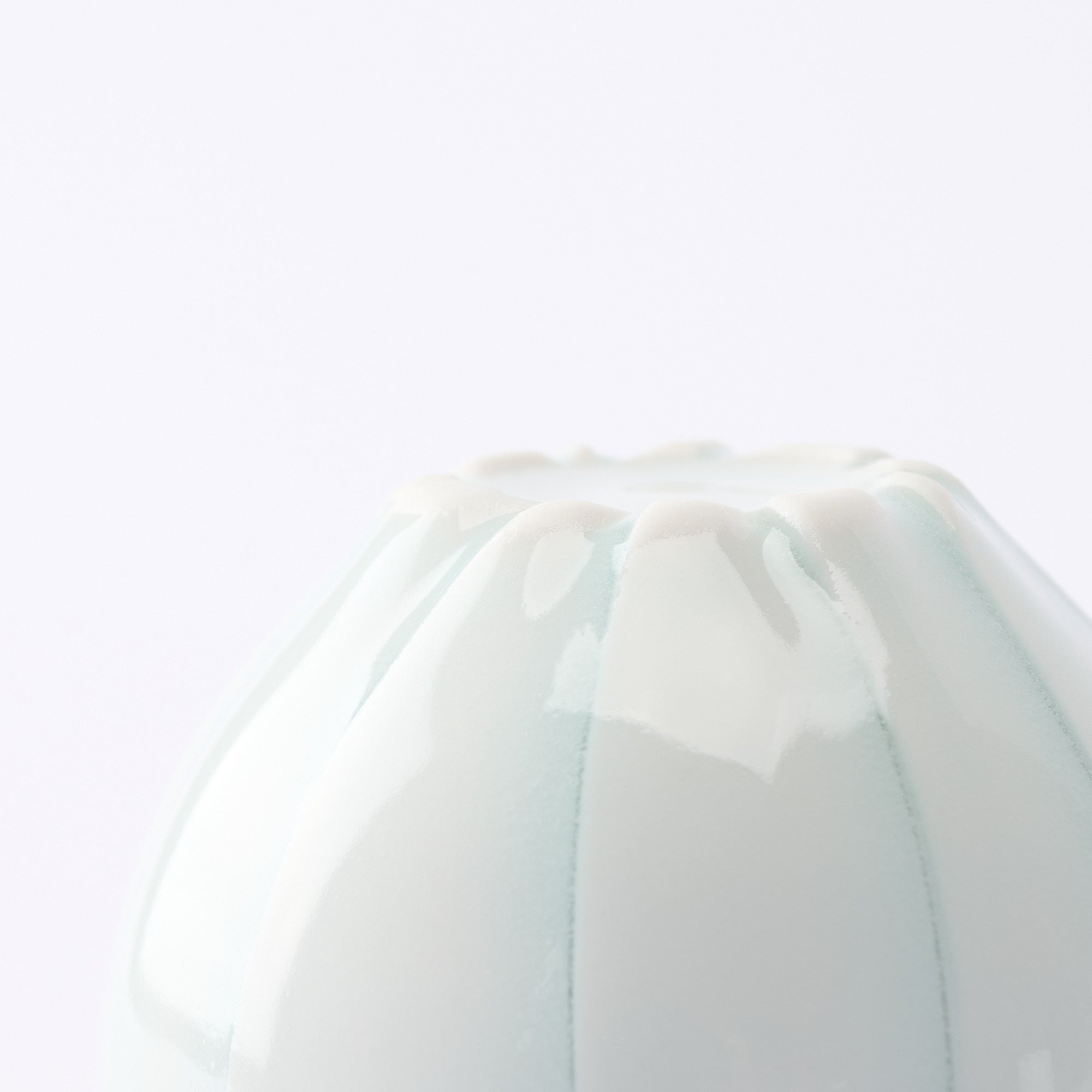
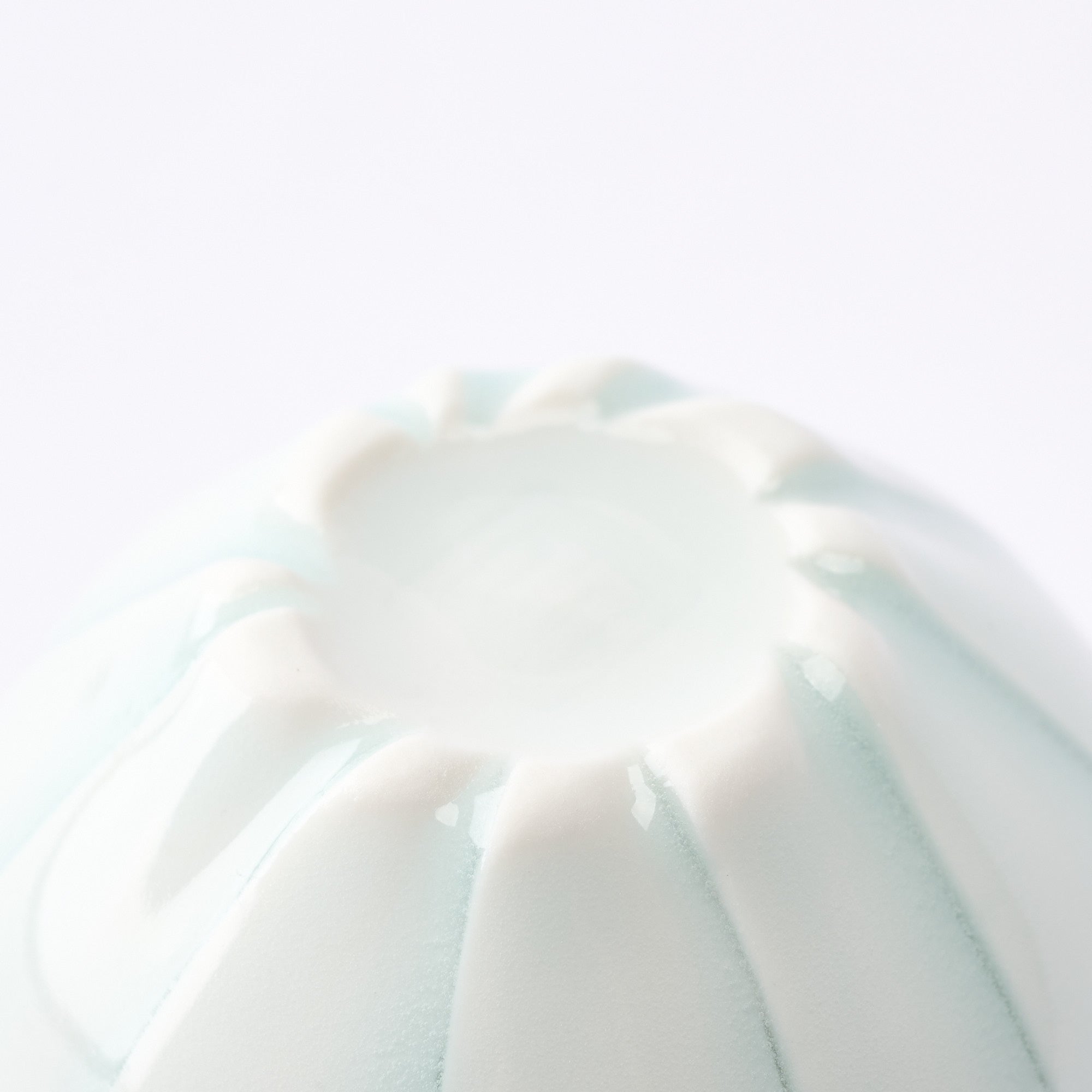
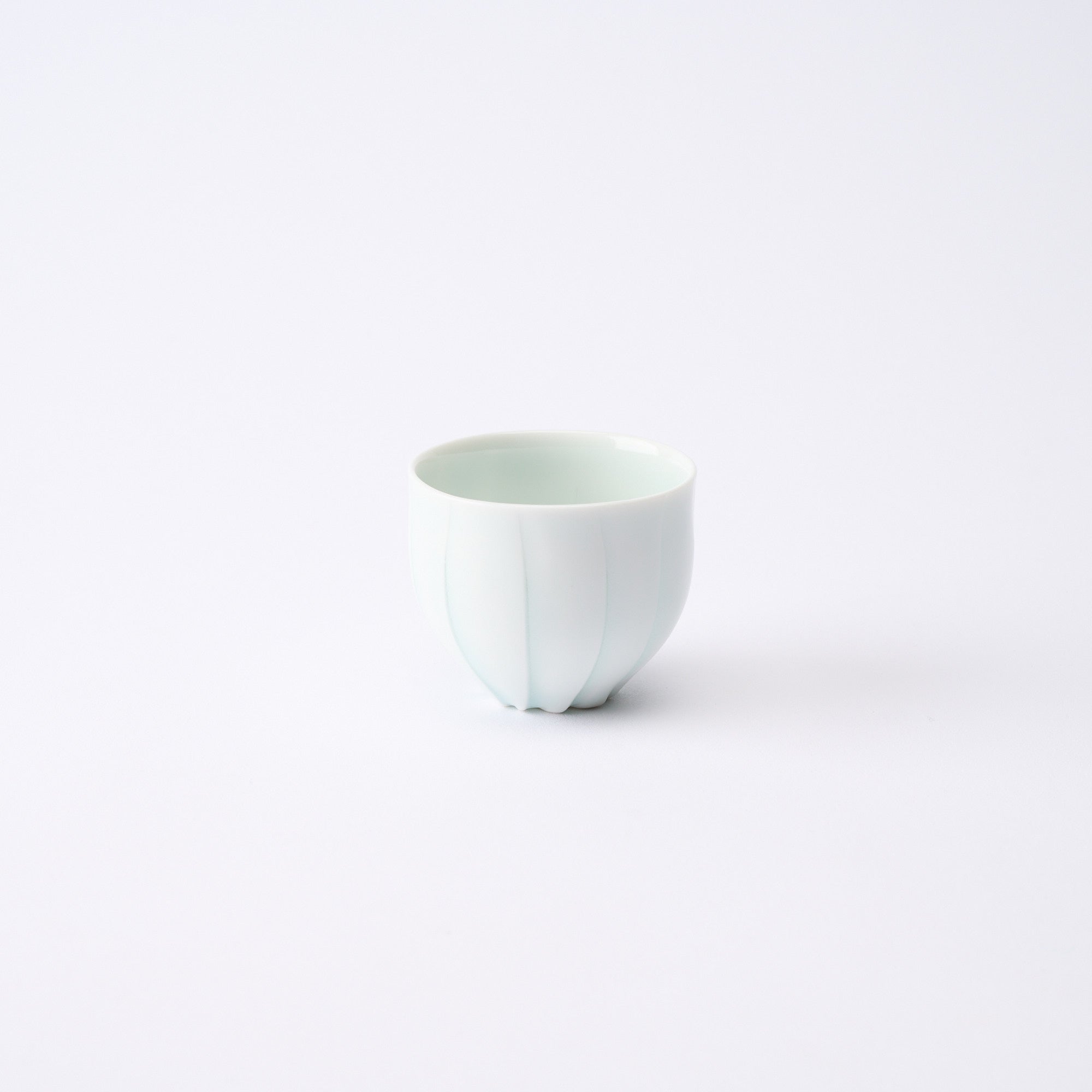
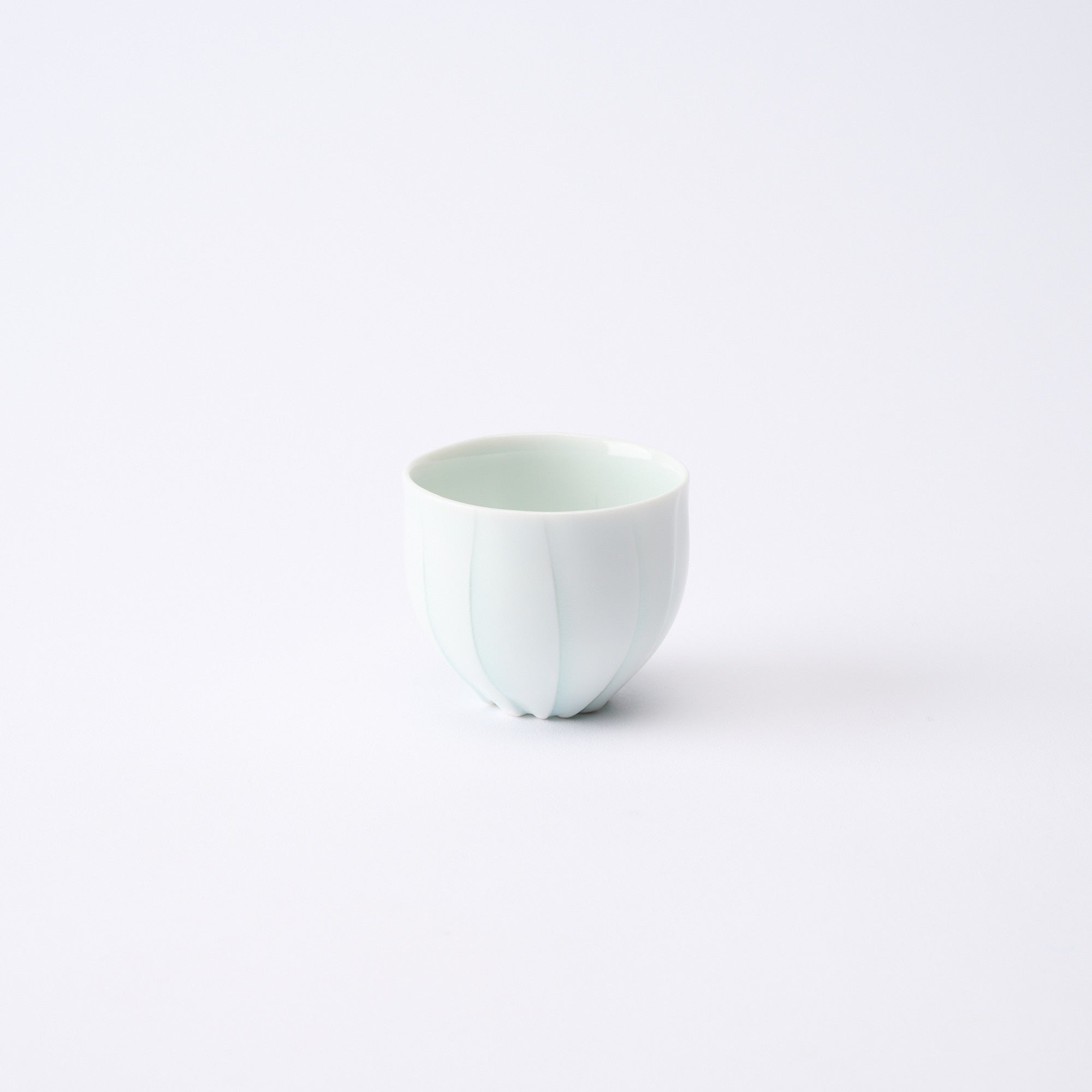
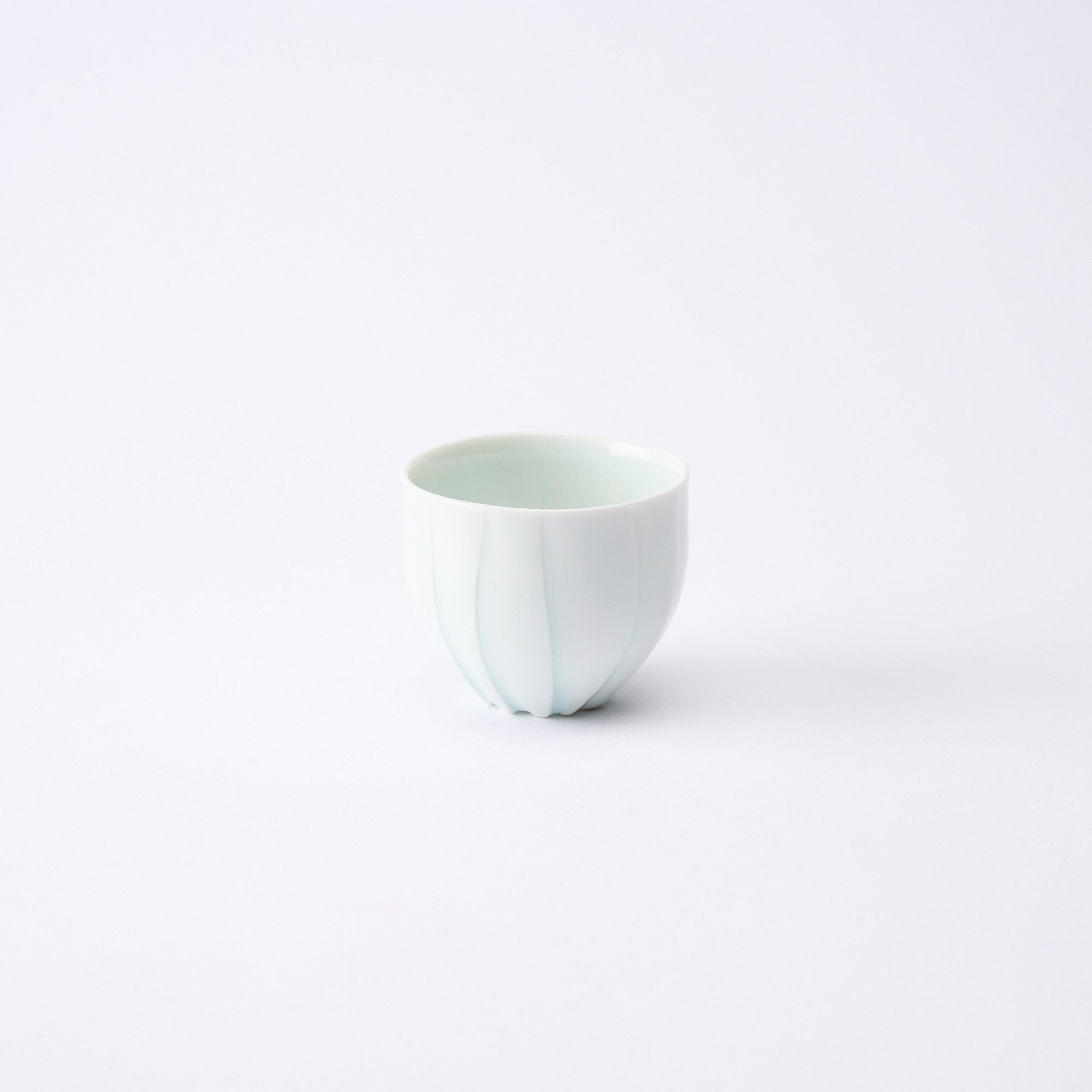
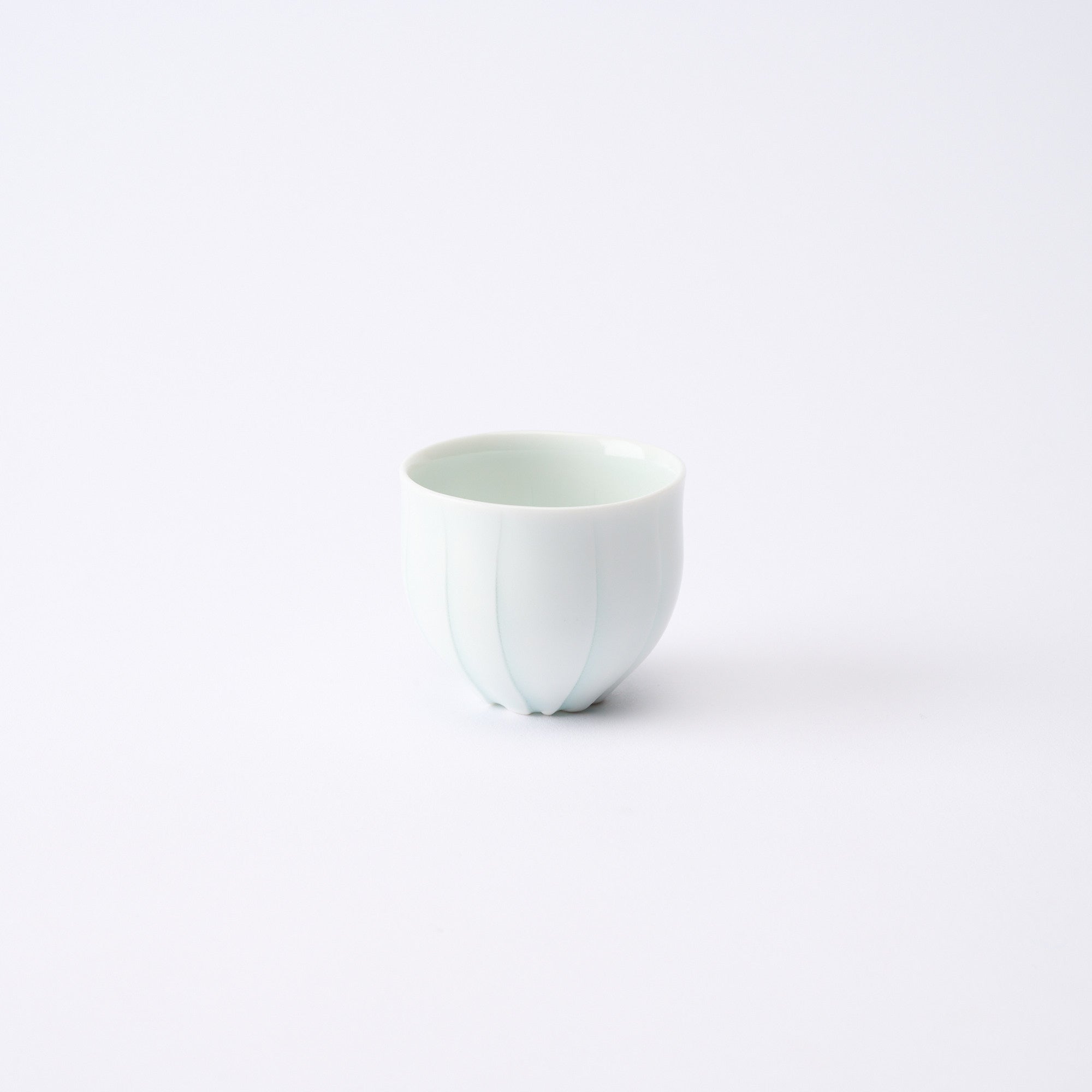
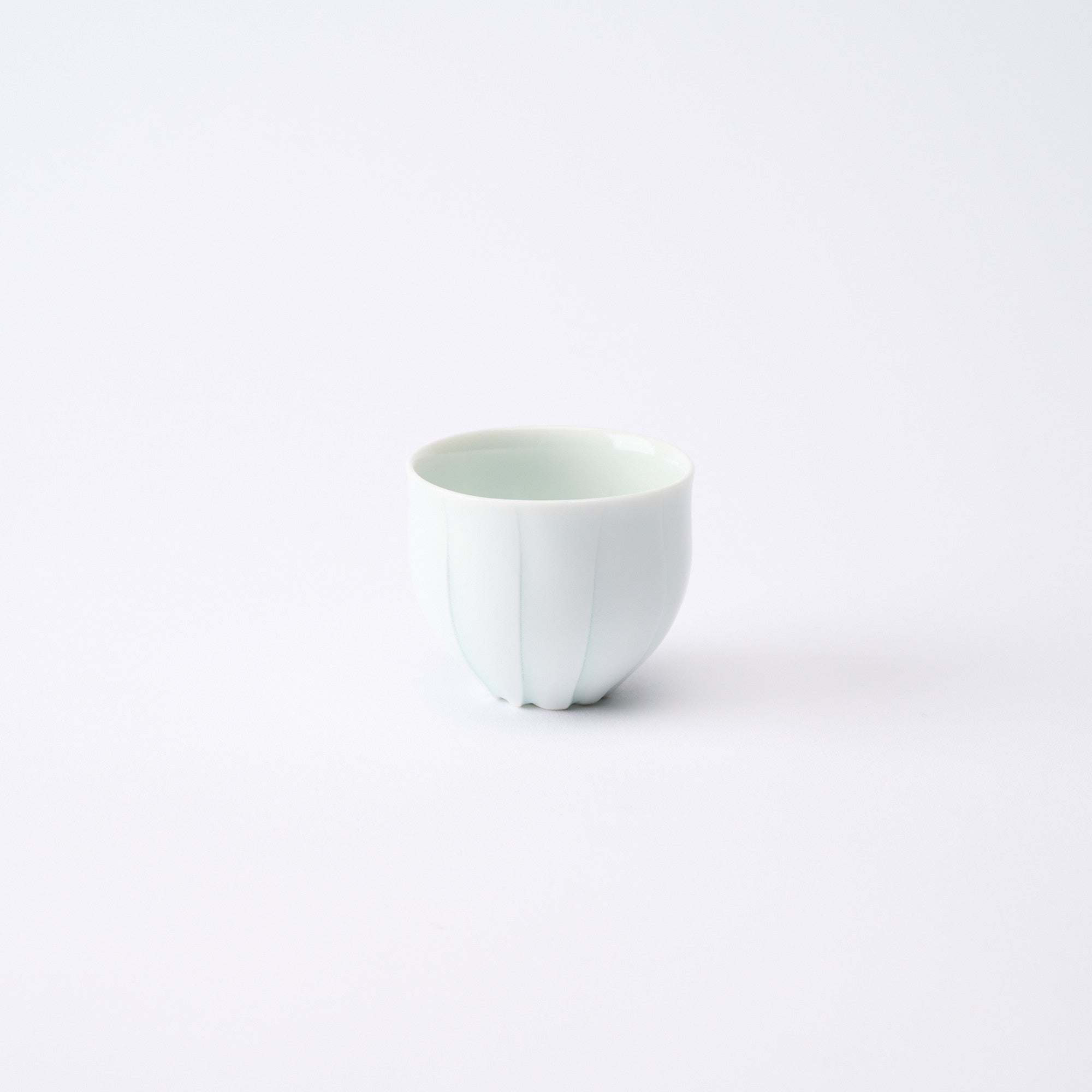
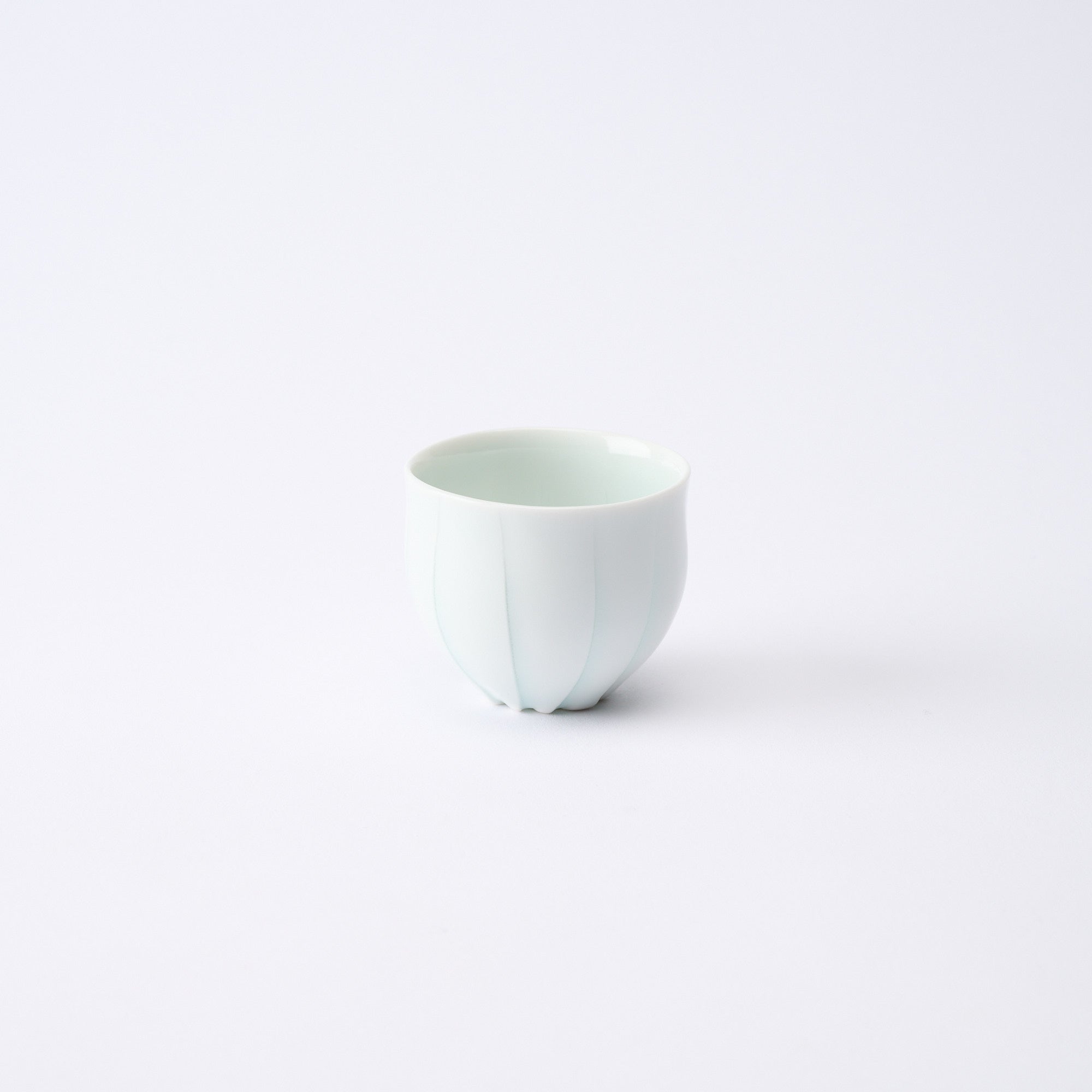
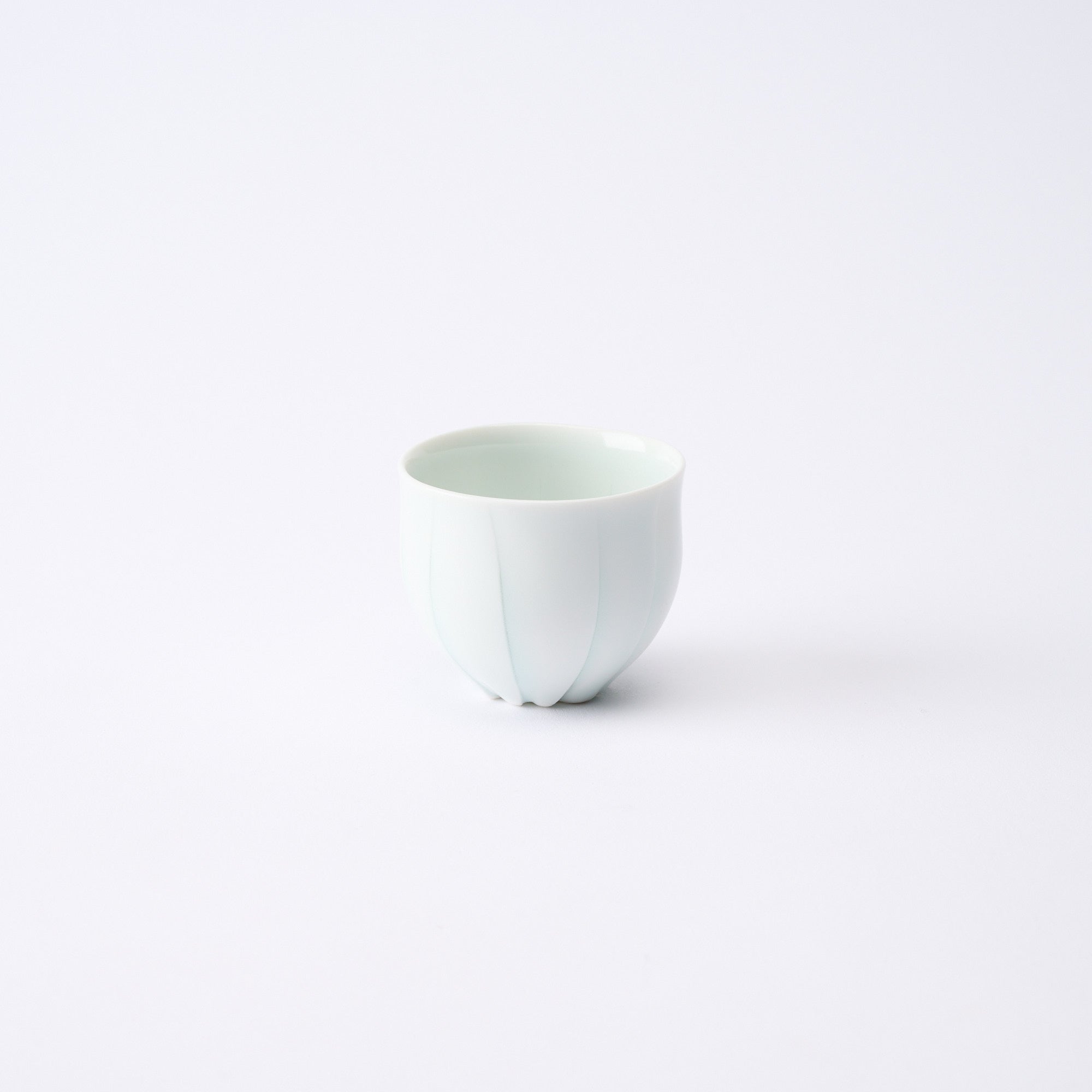
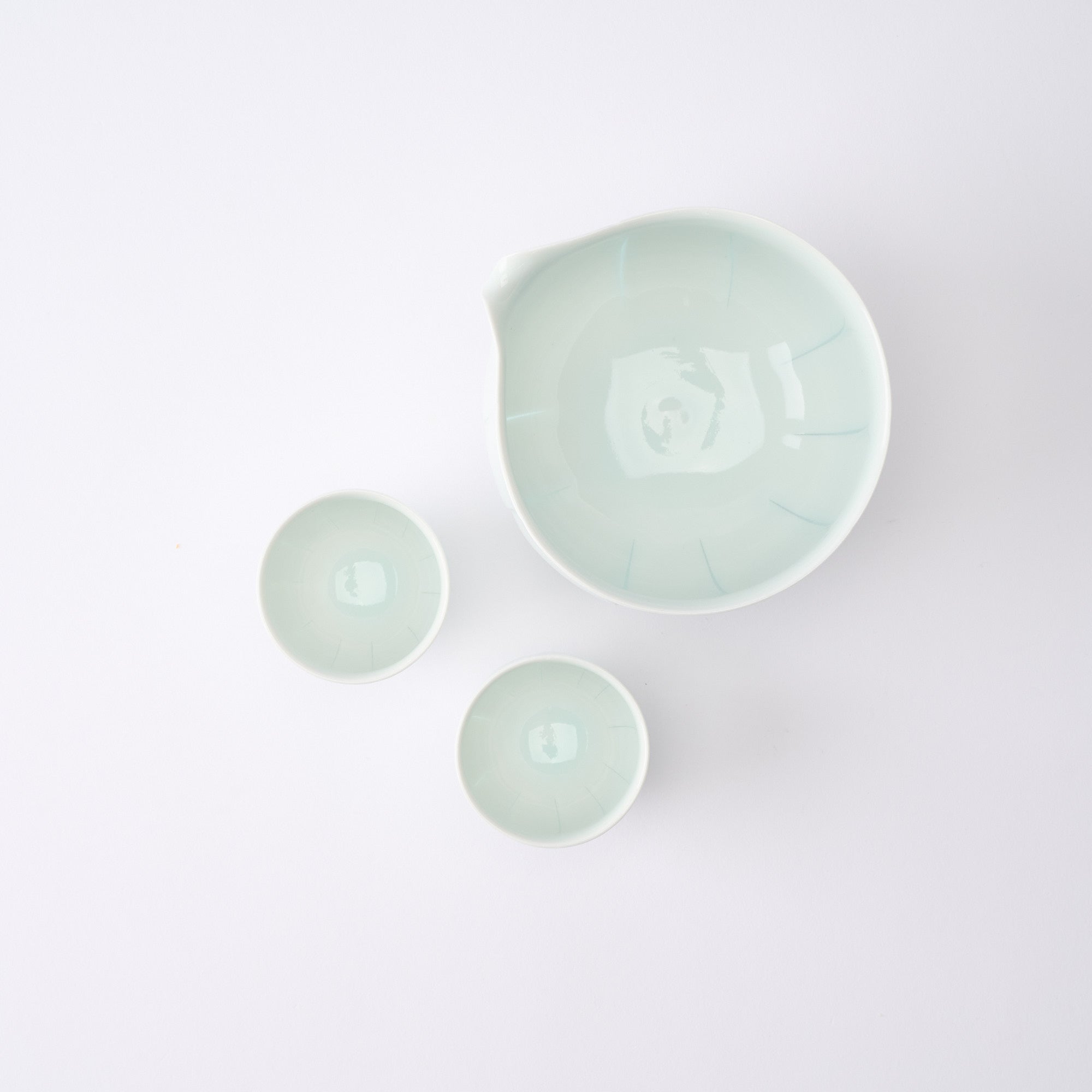
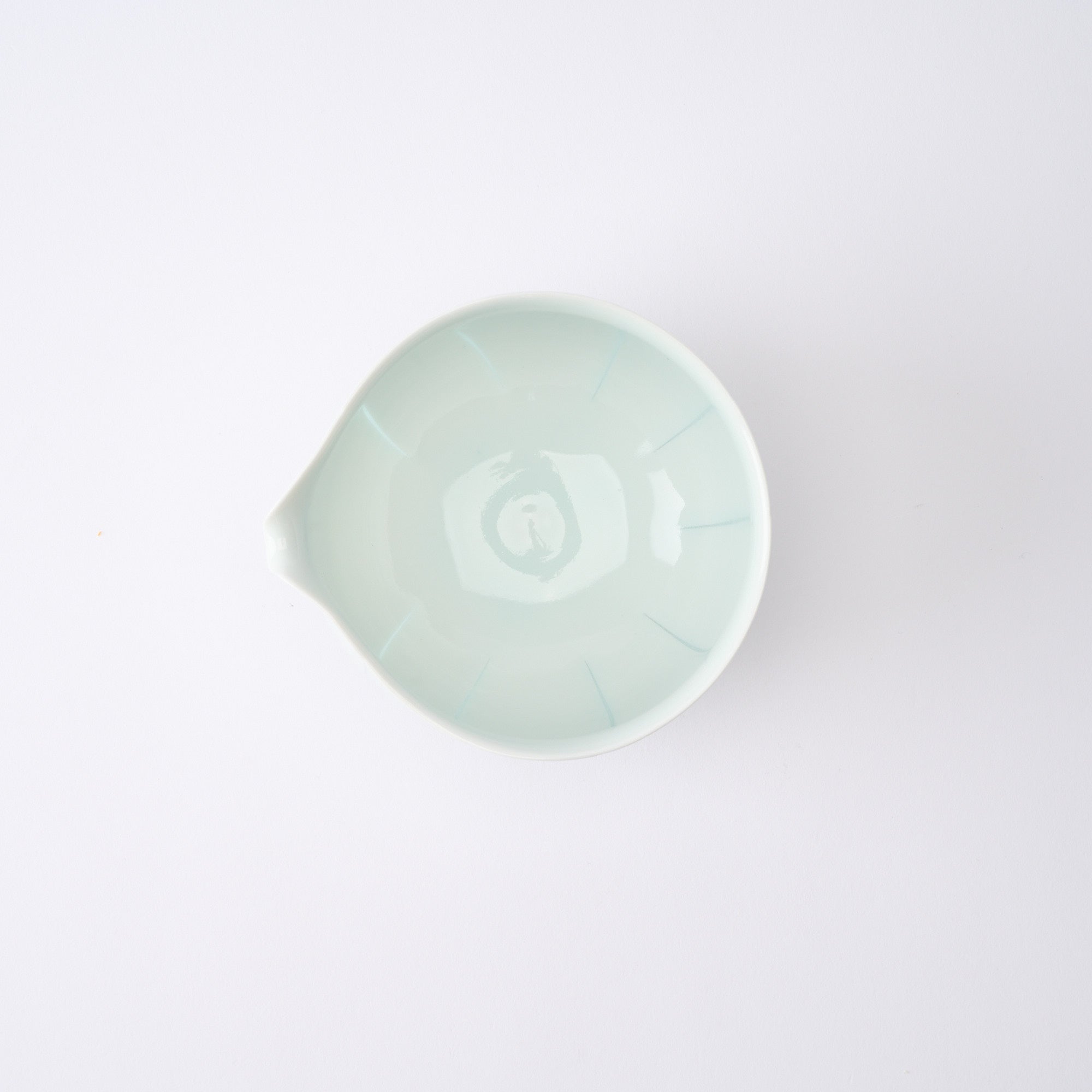
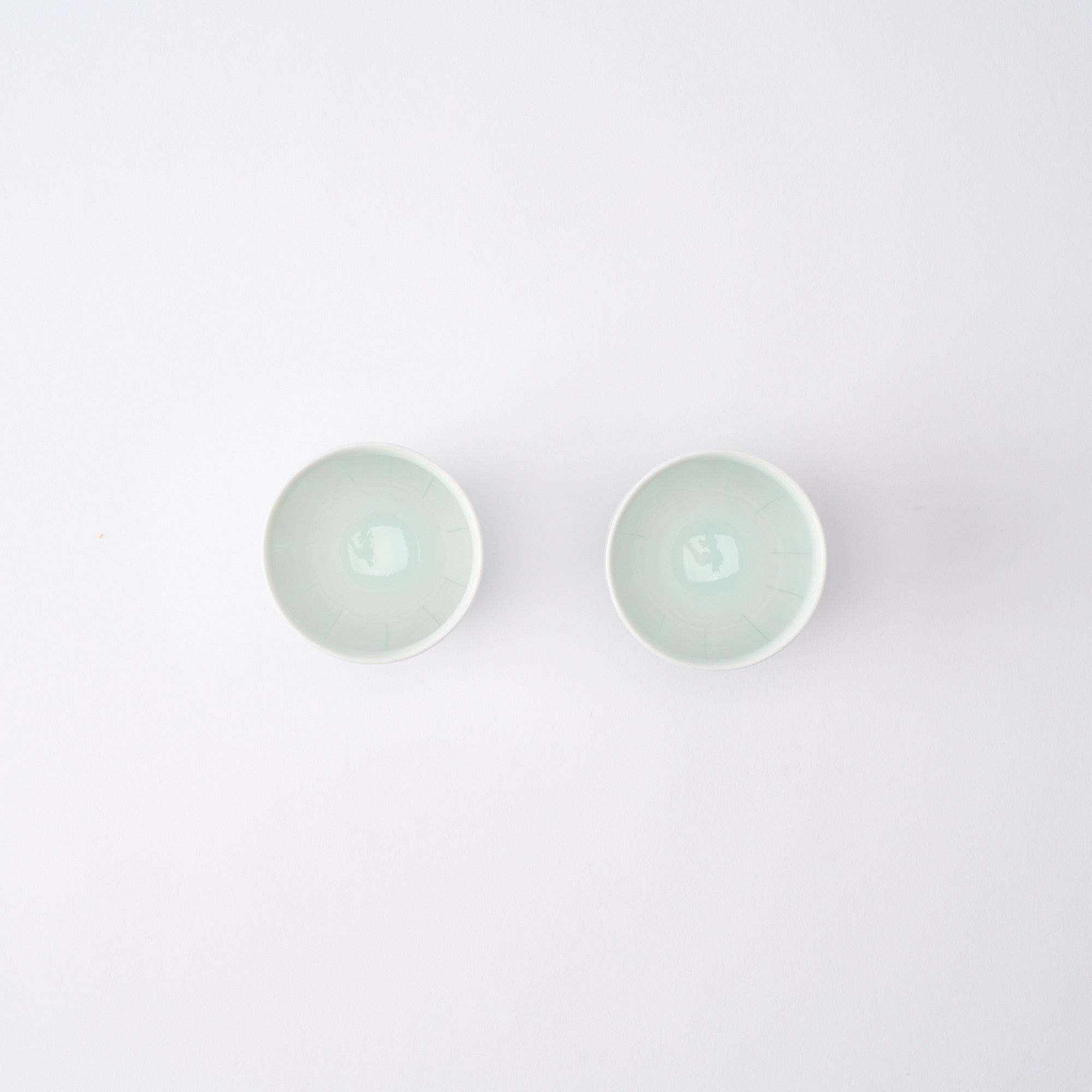
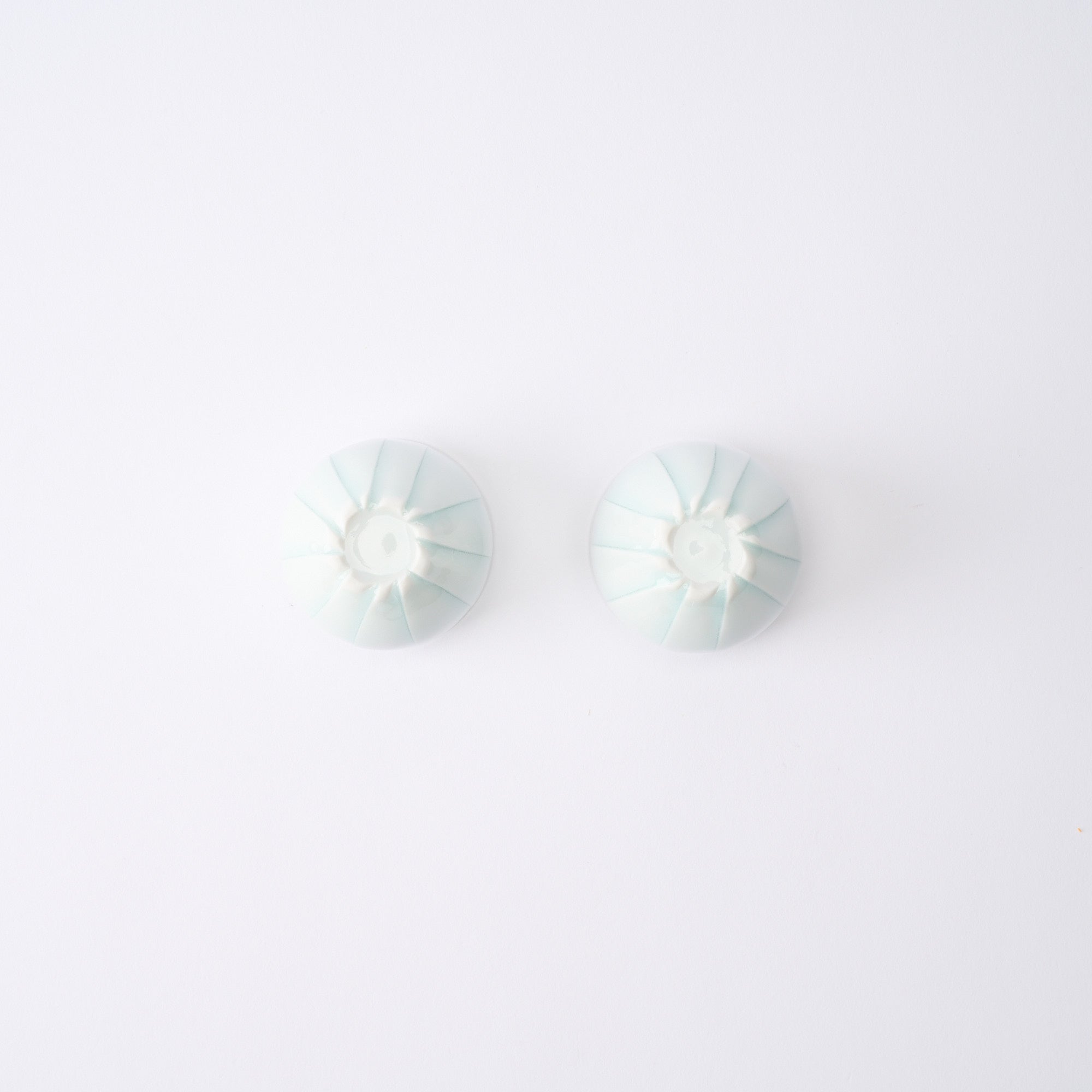
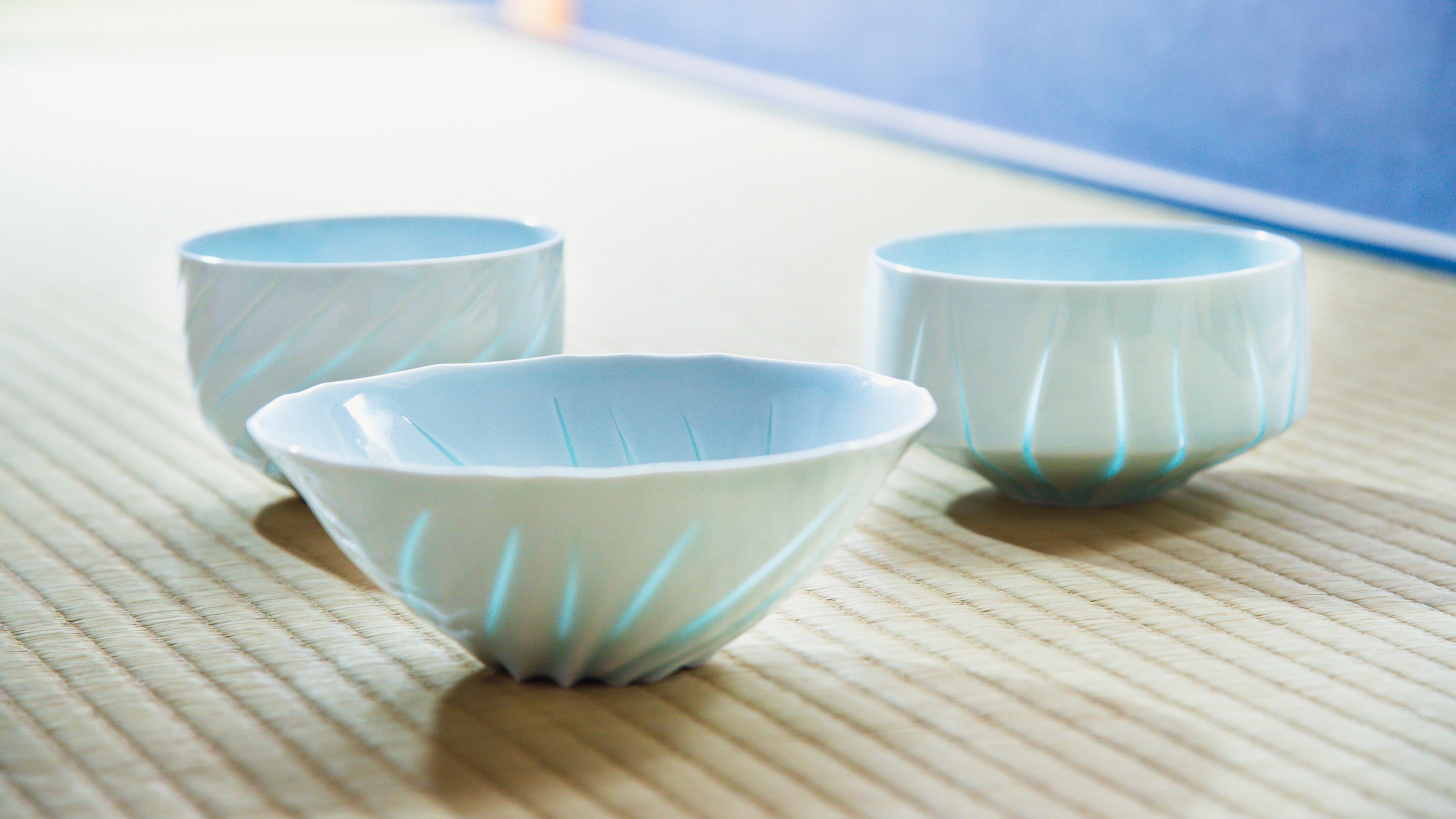
Avec le service à saké Fluctuation, l'artiste de Seto ware Taruta Hiroshi réfléchit à la nature changeante de la lumière. L'ensemble comprend une carafe à saké et deux coupes à saké. Fini d'un glaçage céladon doux, le bol se sent léger et discrètement raffiné dans sa présence. Sur la surface de porcelaine, de longues lignes fluides sont tracées à main levée et soigneusement gravées, créant de légères variations d'épaisseur qui donnent à la matière texture et éclat. Là où la porcelaine devient particulièrement fine, la lumière se rassemble et scintille doucement.
La technique appliquée par Taruta, connue sous le nom de hotarude—littéralement « technique de la luciole »—consiste traditionnellement à graver des ouvertures complexes dans la porcelaine et à les recouvrir d'un glaçage translucide. Cela permet à la lumière de traverser le récipient tout en maintenant une surface continue, créant des points d'illumination qui rappellent les lucioles scintillant dans une nuit de soie sombre. Bien que les découpes hotarude soient le plus souvent circulaires, Taruta se spécialise dans les gravures linéaires, apportant sa propre vision artistique à la forme.
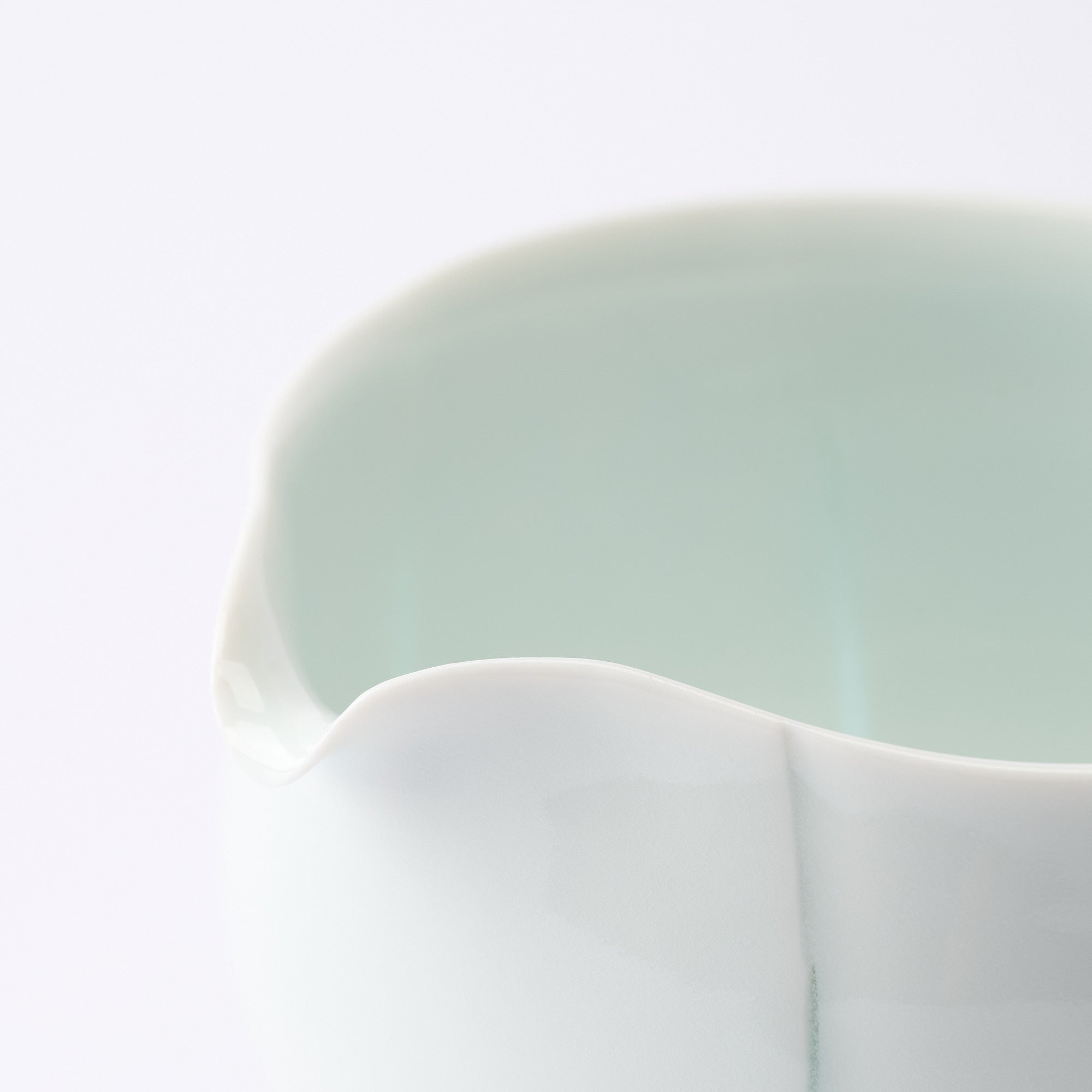
Au-delà de la complexité de la gravure, le glaçage joue un rôle essentiel dans la formation de son caractère lumineux. Taruta a commencé à travailler avec ce glaçage pendant son apprentissage et a continué à affiner sa formulation en ajustant soigneusement la composition du glaçage et les conditions de cuisson, atteignant un équilibre entre couleur et translucidité. La porcelaine brille doucement tout en préservant la clarté des lignes gravées.
Là où la porcelaine devient la plus fine, une douce luminosité émerge, son éclat délicat rappelant la lumière filtrant à travers des nuages dérivants. Parce que la lumière elle-même change avec l'heure et la saison, l'ensemble offre une expression légèrement différente à chaque utilisation. Qu'il soit apprécié lors d'une boisson tranquille en soirée ou partagé lors d'un rassemblement sans hâte, il invite celui qui boit à faire une pause et à savourer la beauté de la lumière changeante.
DÉTAILS
| Quantity | 1 sake carafe and 2 sake cups |
| Size |
[Sake carafe] D 11 cm (4.3 in) x H 7.6 cm (3.0 in) [Sake cups] D 5.5 cm (2.2 in) x H 4.9 cm (1.9 in) |
| Capacity |
[Sake carafe] 300 ml (10.1 fl oz) [Sake cups] 40 ml (1.4 fl oz) |
| Weight |
[Sake carafe] 228 g (8.0 oz) [Sake cups] 48 g (1.7 oz) |
| Material | Porcelain |
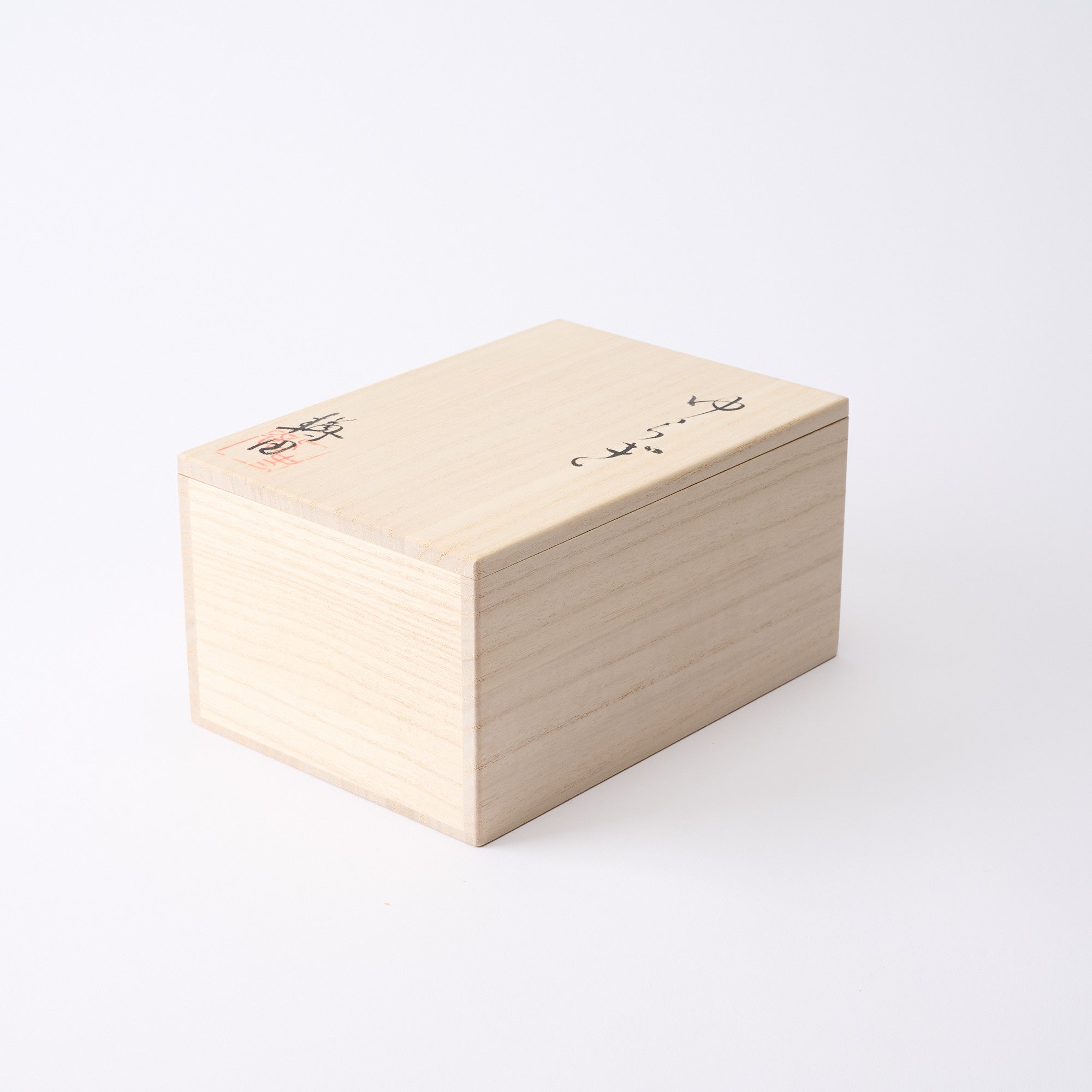
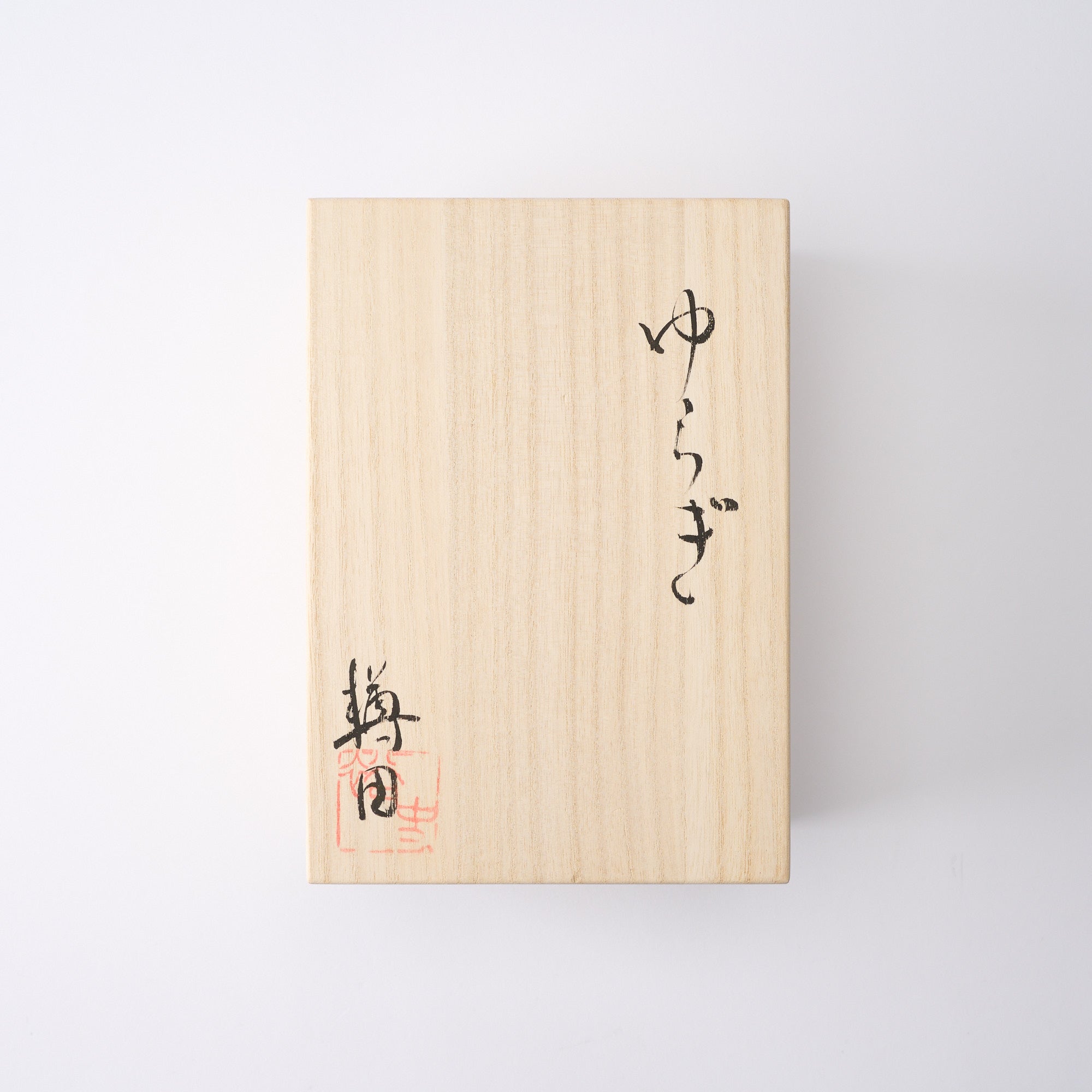
| Package Type | Wooden box |
| Microwave | No |
| Dishwasher | No |
Artisan / Marque
Taruta Hiroshi est un artiste de la céramique de Seto spécialisé dans le hotarude, une technique d'ajourage où des découpes de lignes gracieuses sont gravées dans l'argile, puis remplies d'émail translucide avant cuisson. Travaillant la porcelaine et l'émail céladon pâle, Taruta crée ainsi des paysages de lumière à chaque incision délicate. Il apporte une approche innovante à son travail, cherchant de nouveaux modes d'expression en repoussant les limites du hotarude. Ses pièces élégantes créent des interactions entre l'espace et la lumière qui suscitent émerveillement et mystère silencieux.
Artisanat
Fabriqué dans et autour de la ville de Seto dans la préfecture d'Aichi, la vaisselle de Seto englobe une large gamme de céramiques qui reflètent des siècles de savoir-faire et d'innovation. Figurant parmi les six fours anciens (Rokkoyo) du Japon, la région de Seto occupe une place de choix dans le patrimoine céramique du pays. Elle fut également pionnière dans la production de porcelaine en série, et son usage répandu a donné naissance au mot « soupe » . Setomono — terme encore utilisé aujourd'hui pour désigner la céramique en général.
Remarquable par son ampleur stylistique, Seto est l'une des rares régions du Japon où l'on fabrique à la fois du grès et de la porcelaine. De la simple vaisselle du quotidien aux pièces plus raffinées, la vaisselle de Seto continue de rythmer le quotidien avec des créations alliant tradition et créativité.
Notes
Choisir les options