

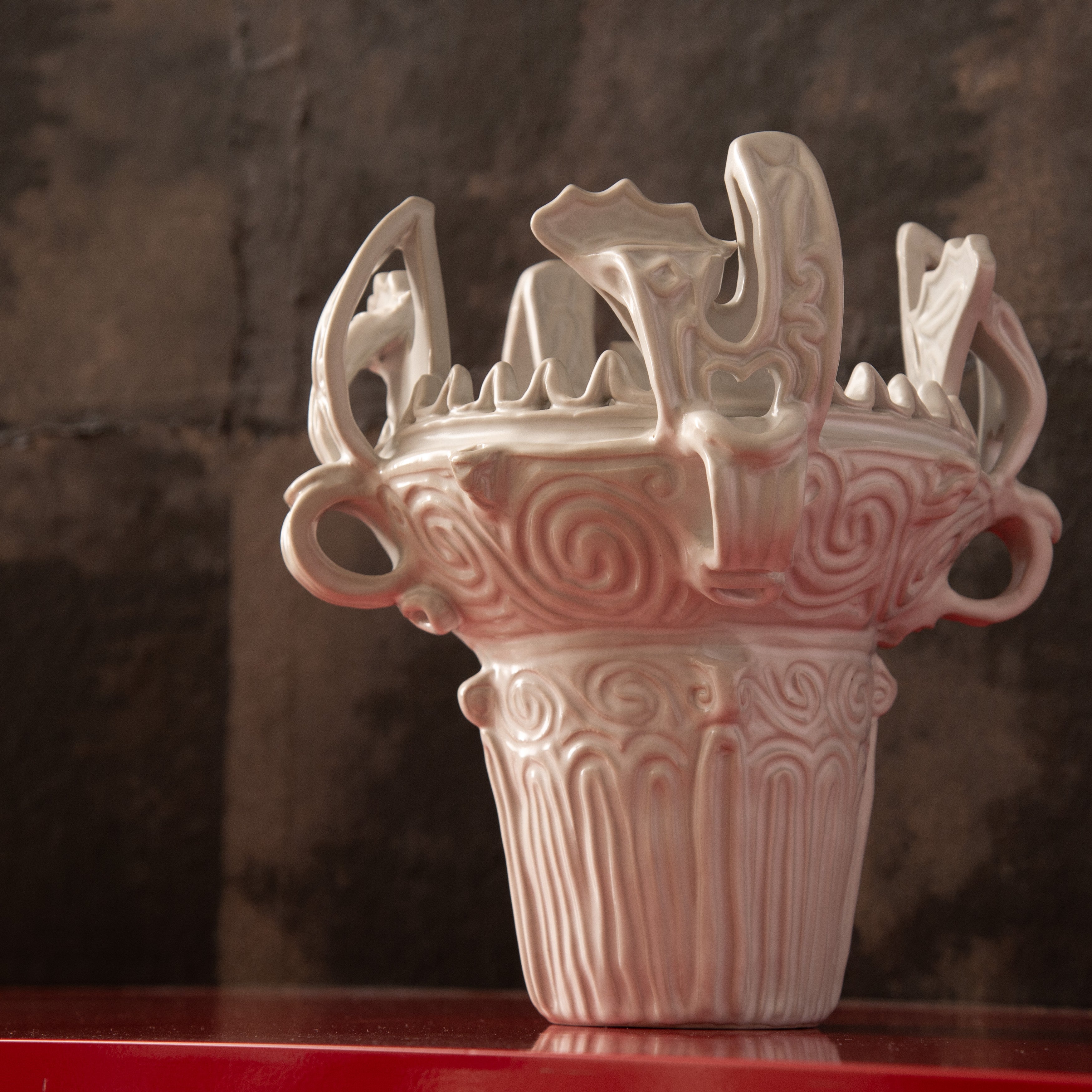
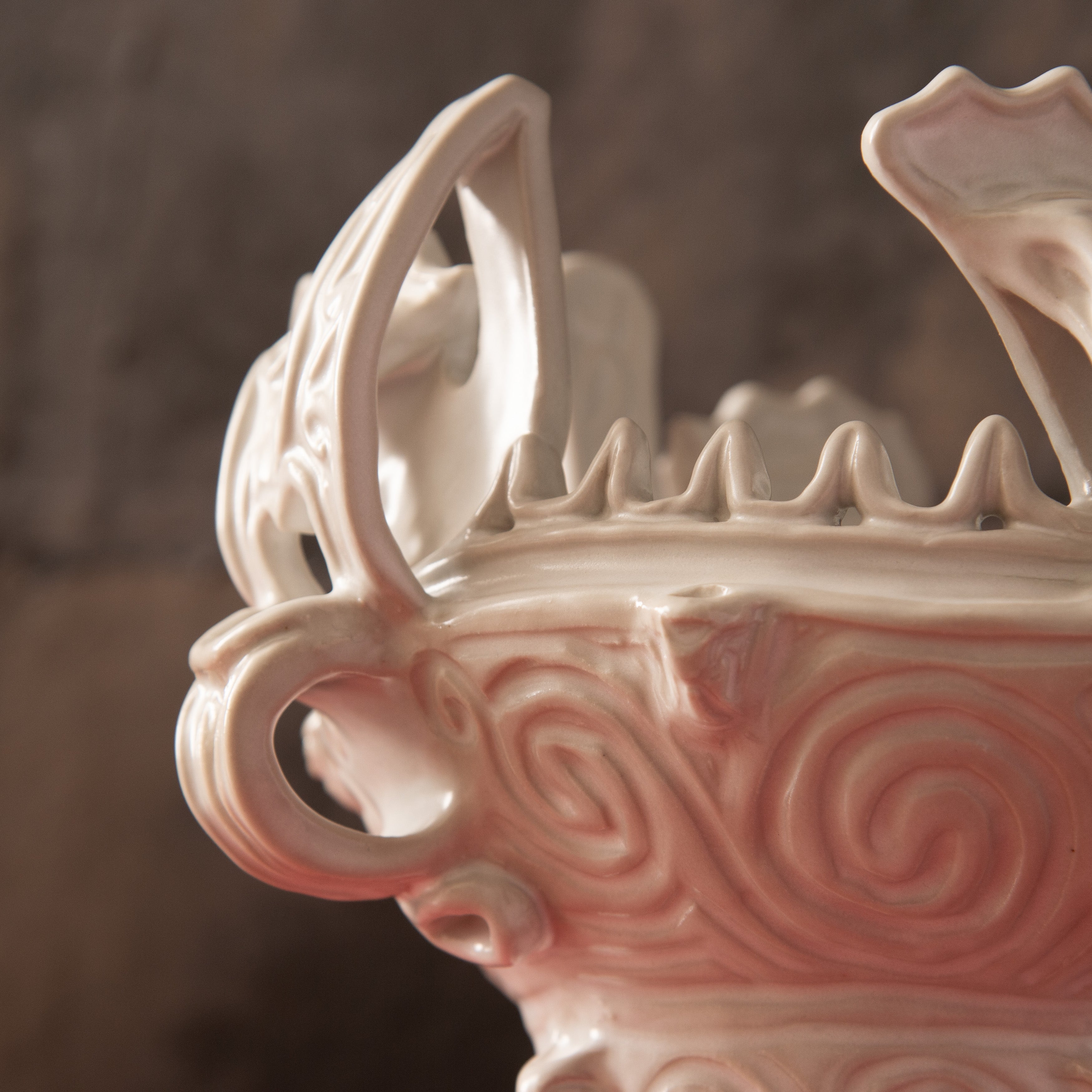
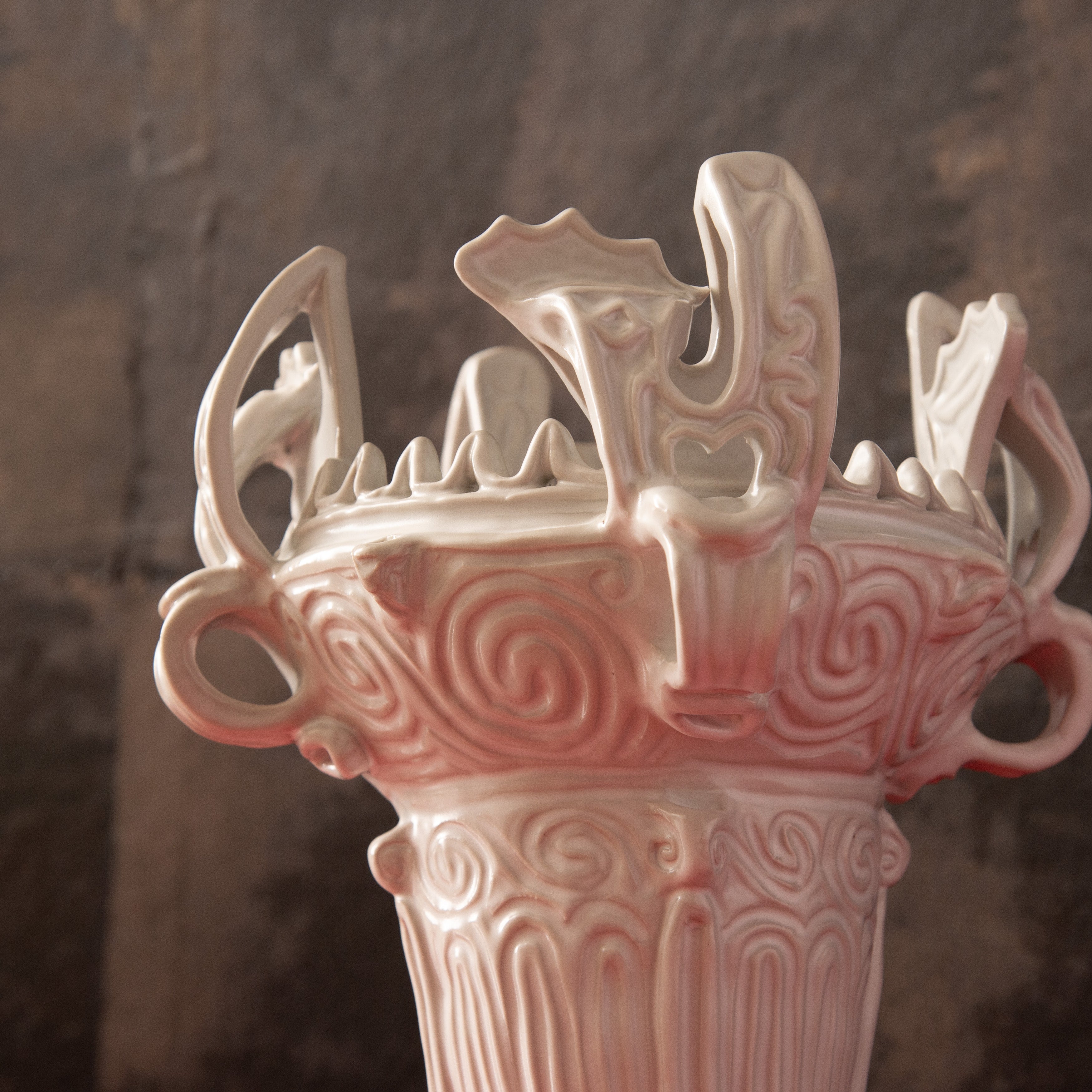
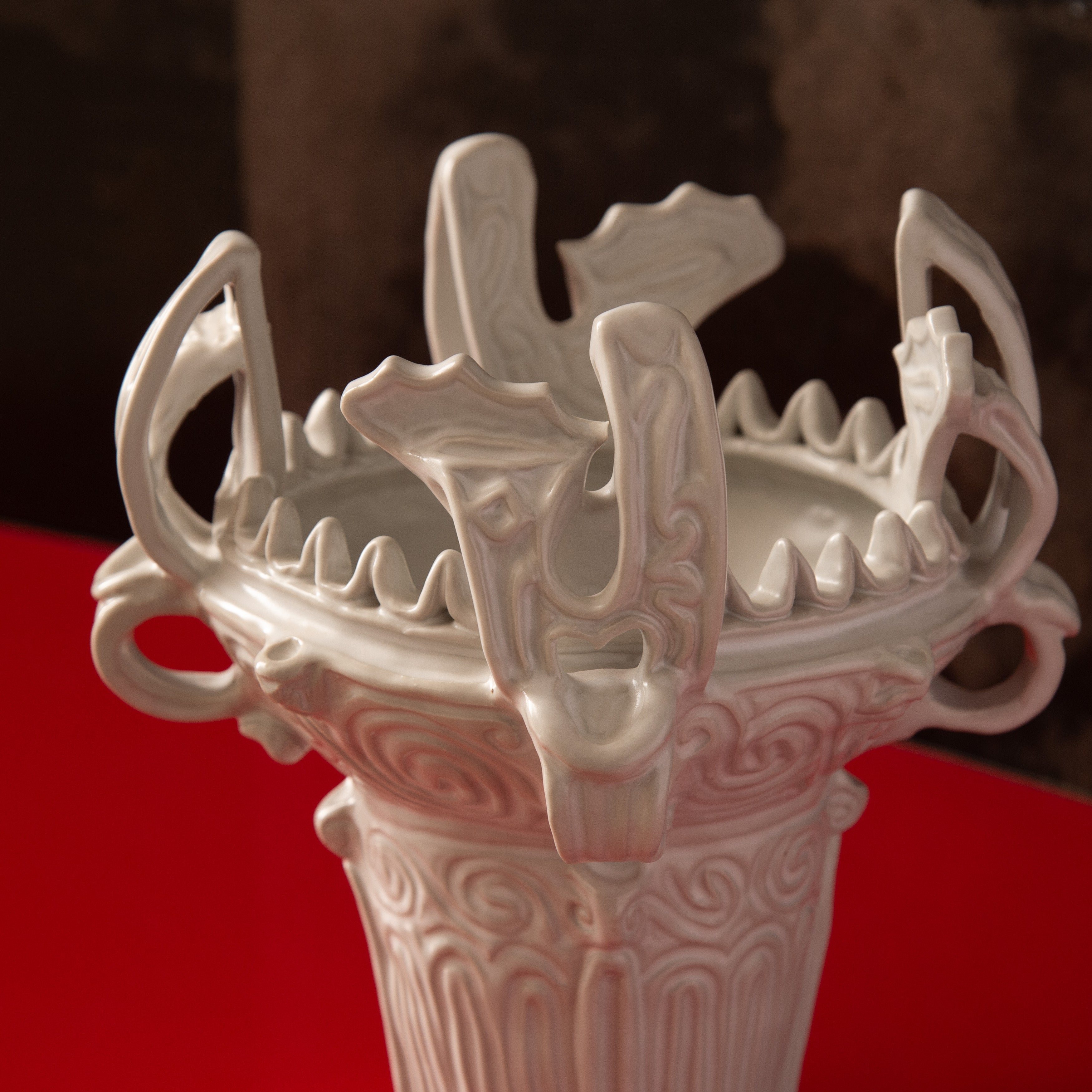
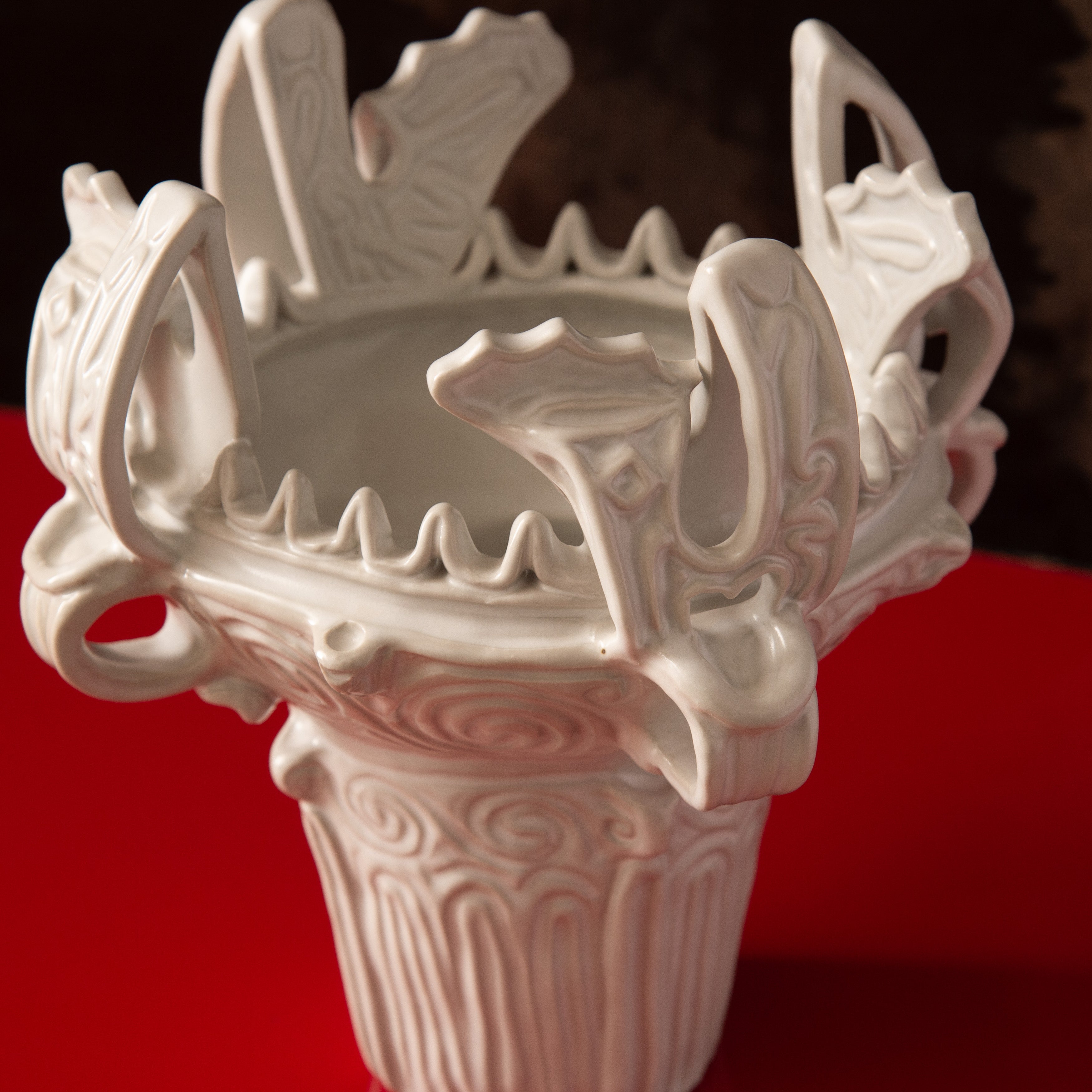
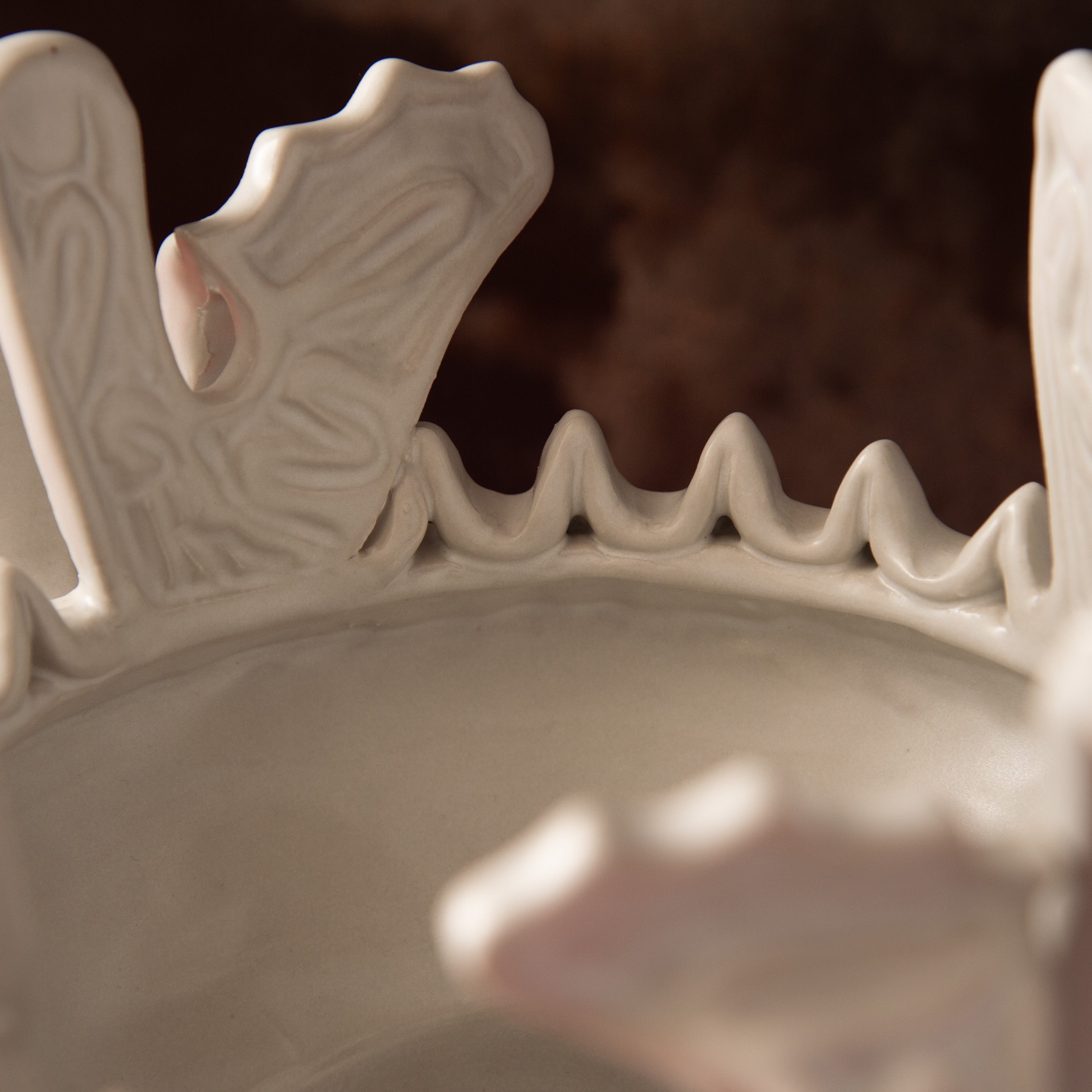
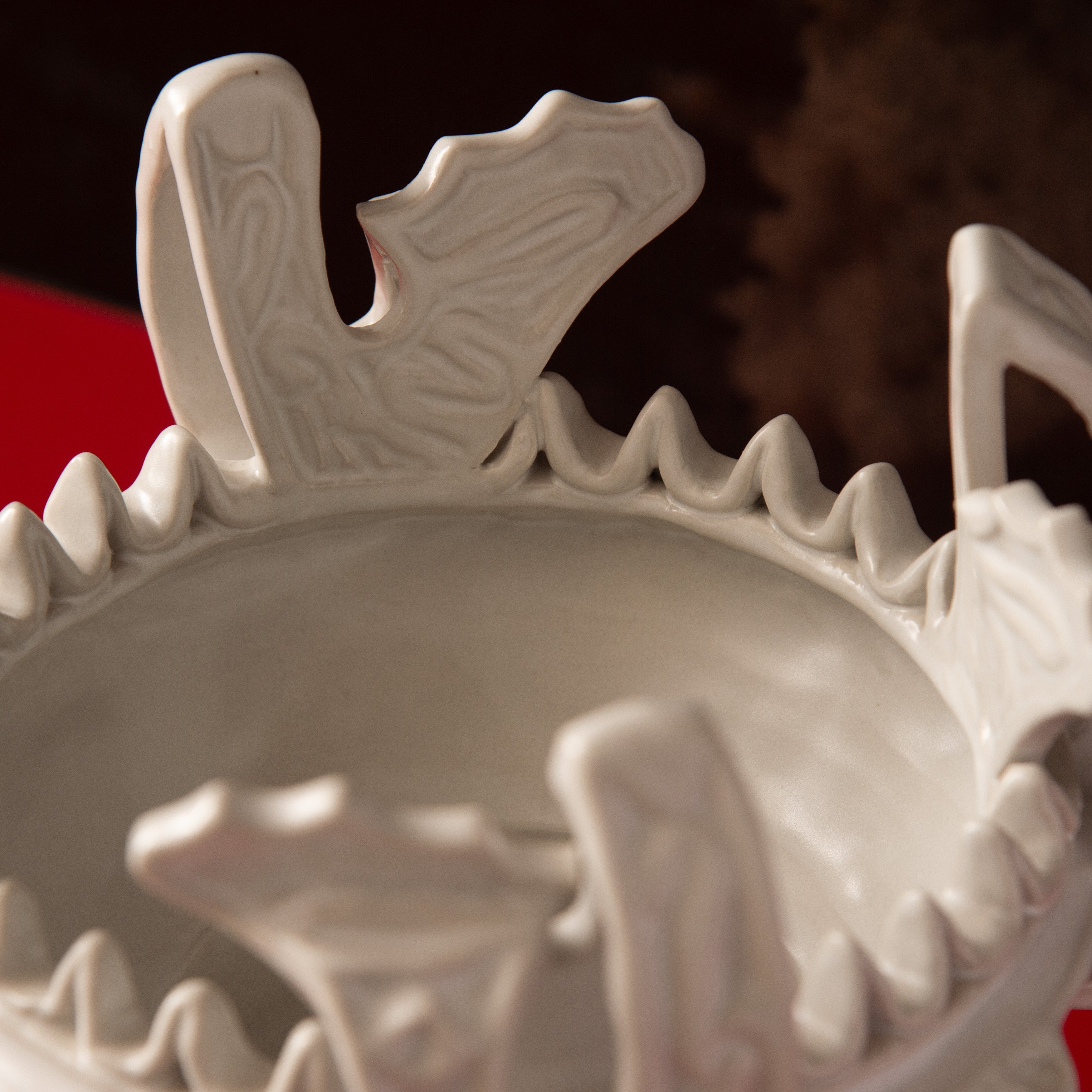
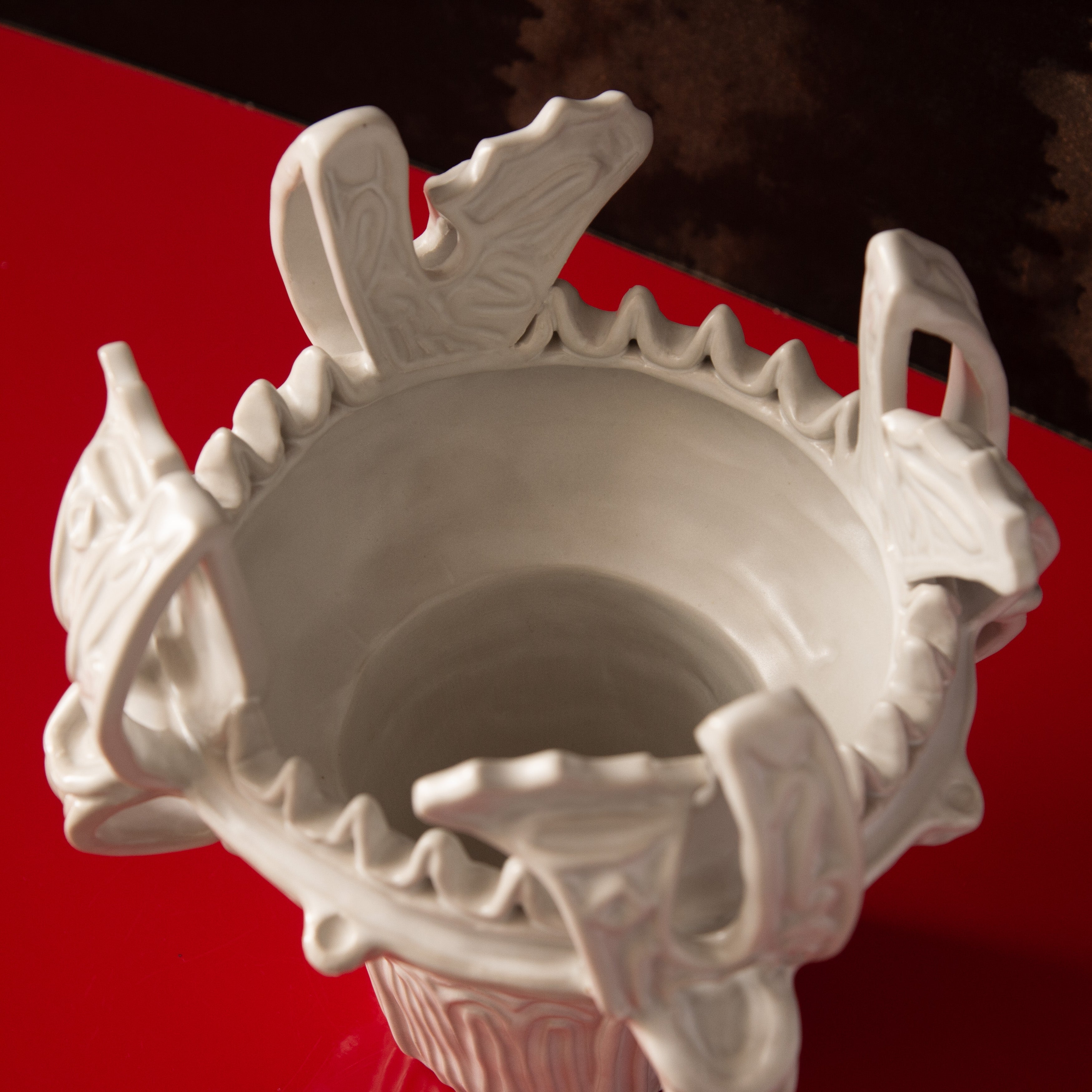
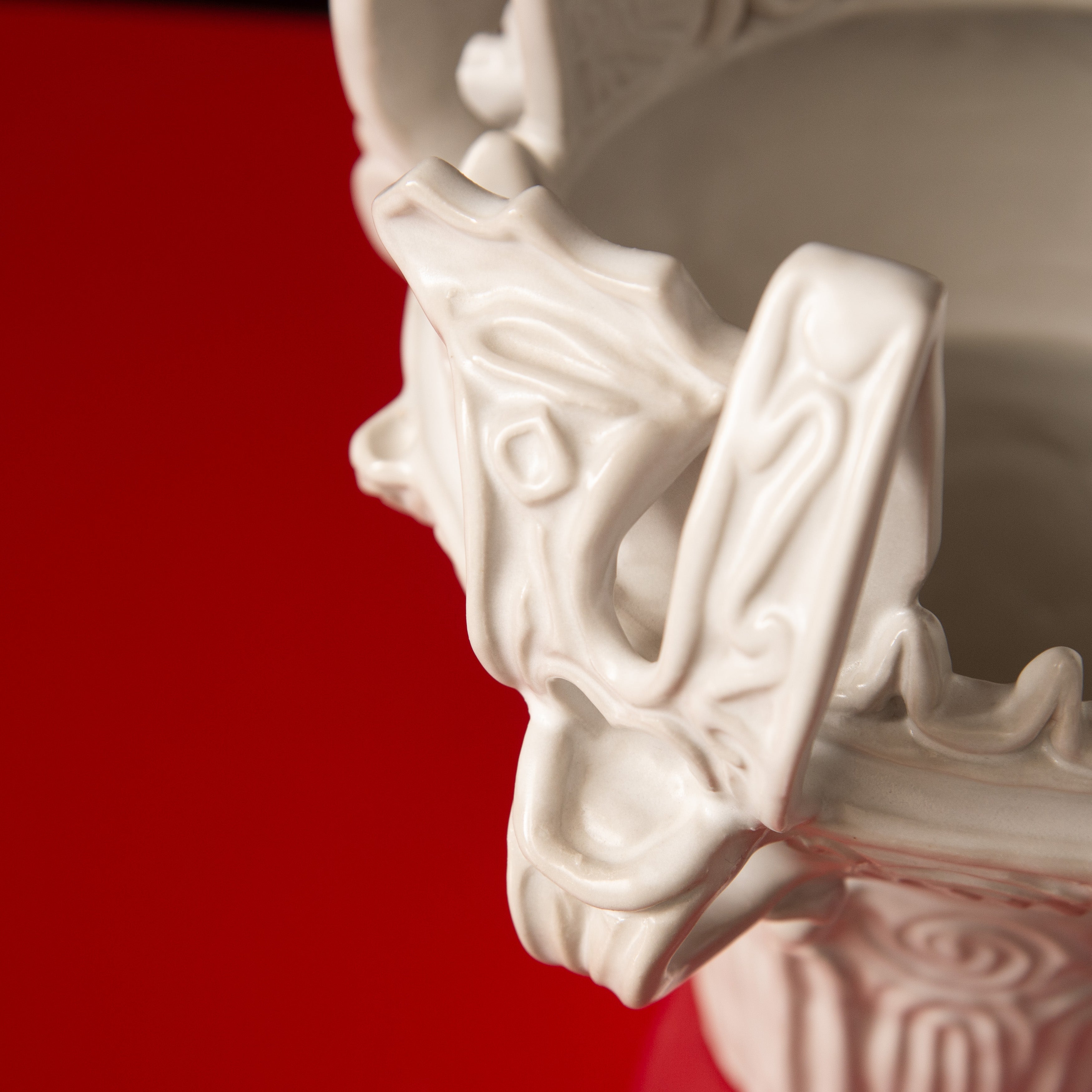
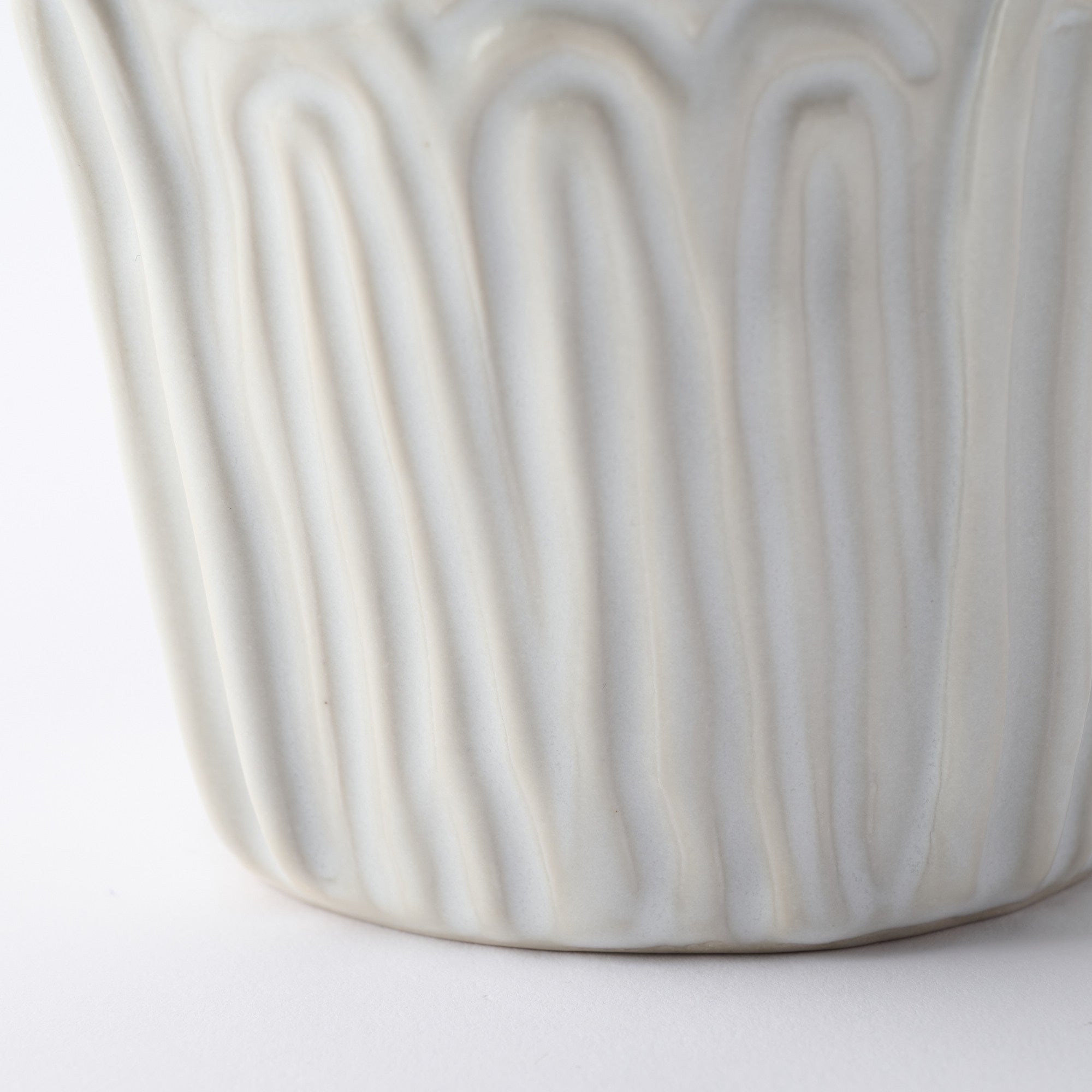
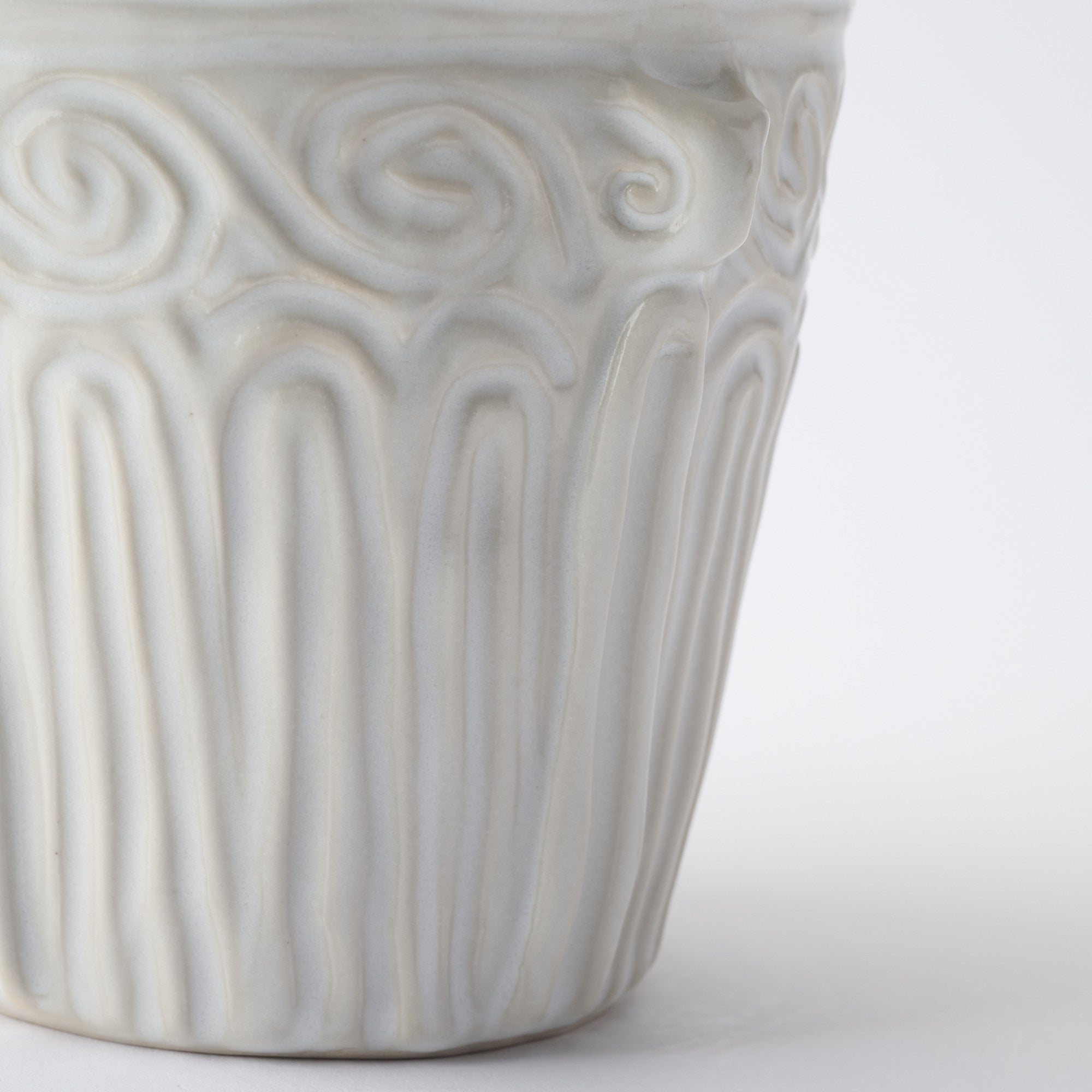
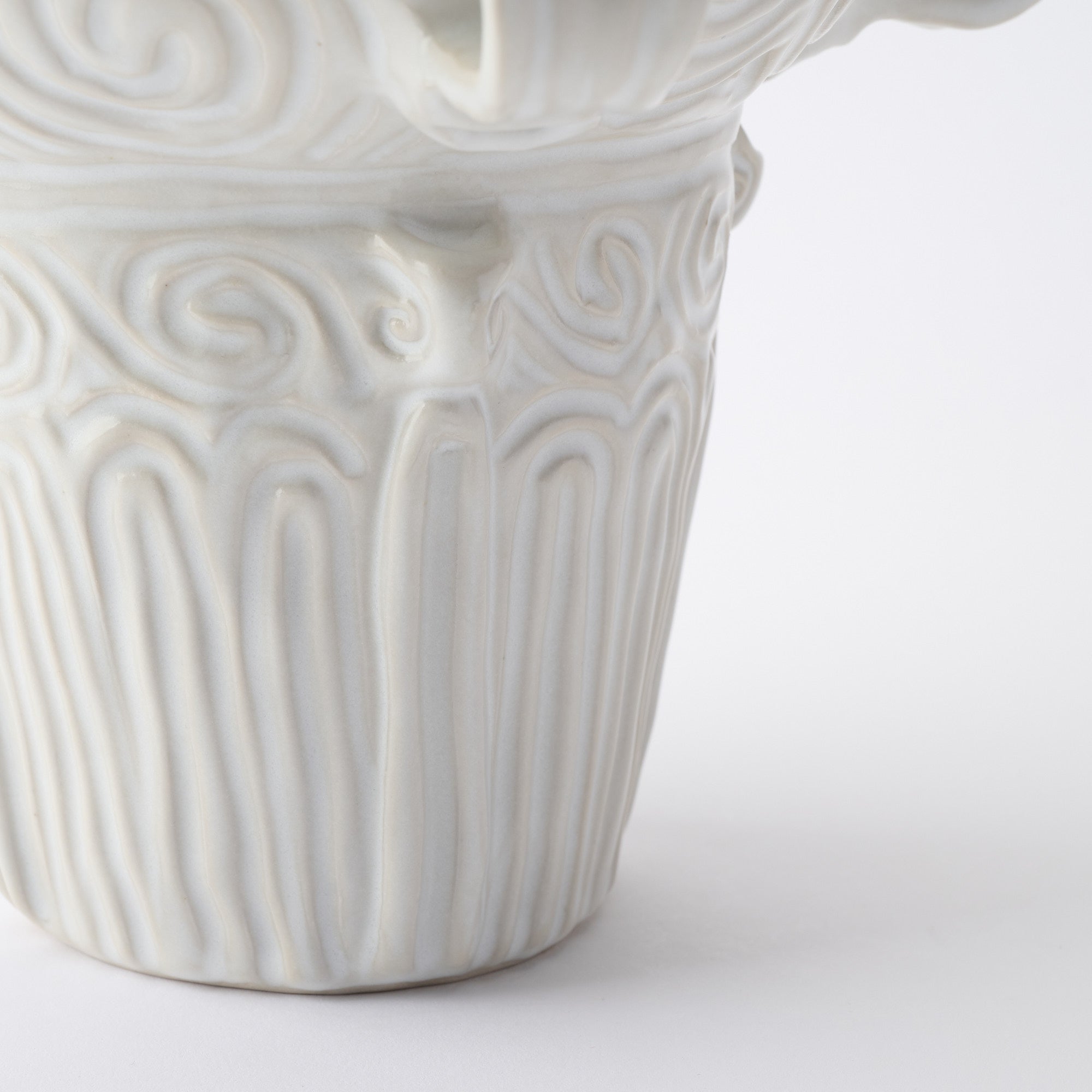
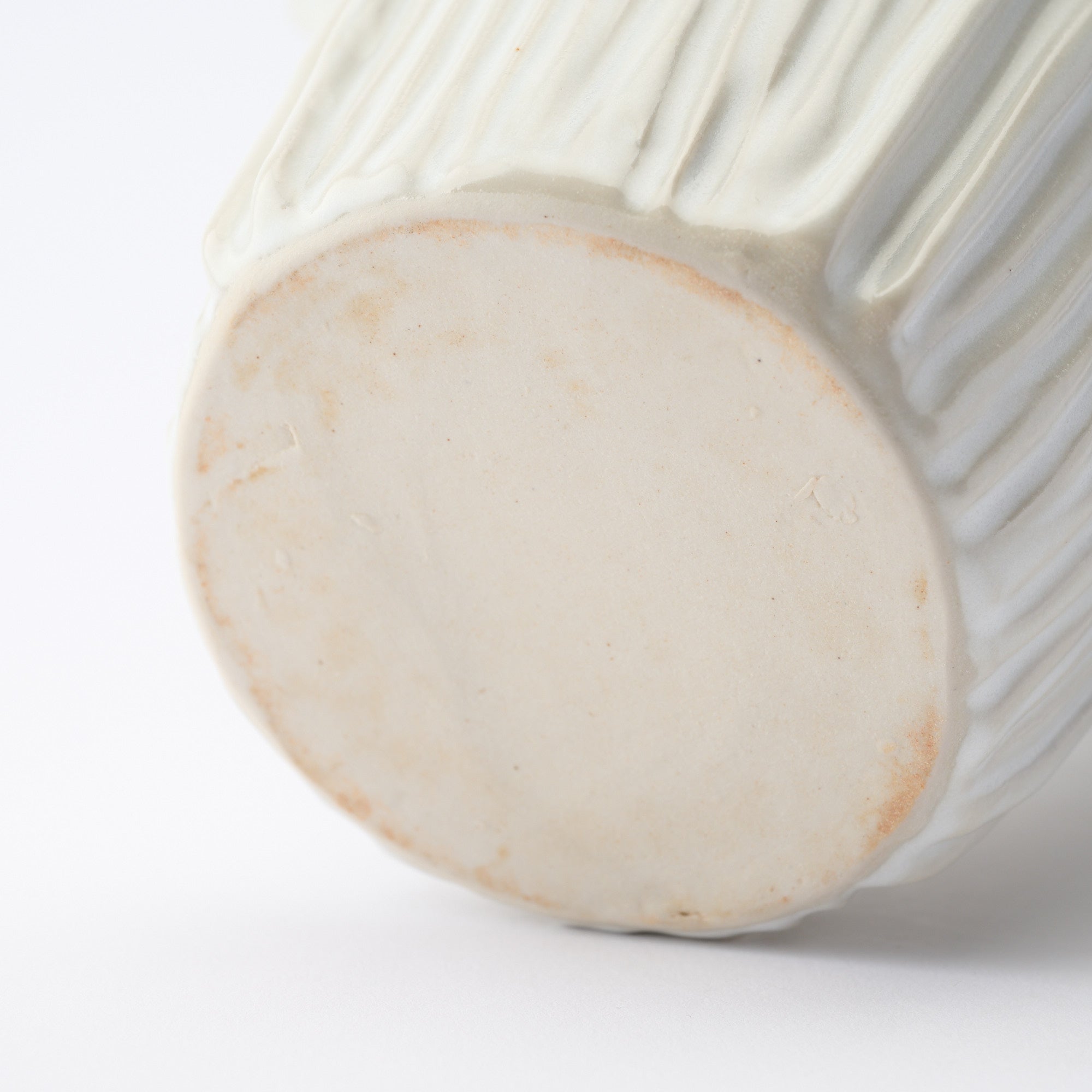
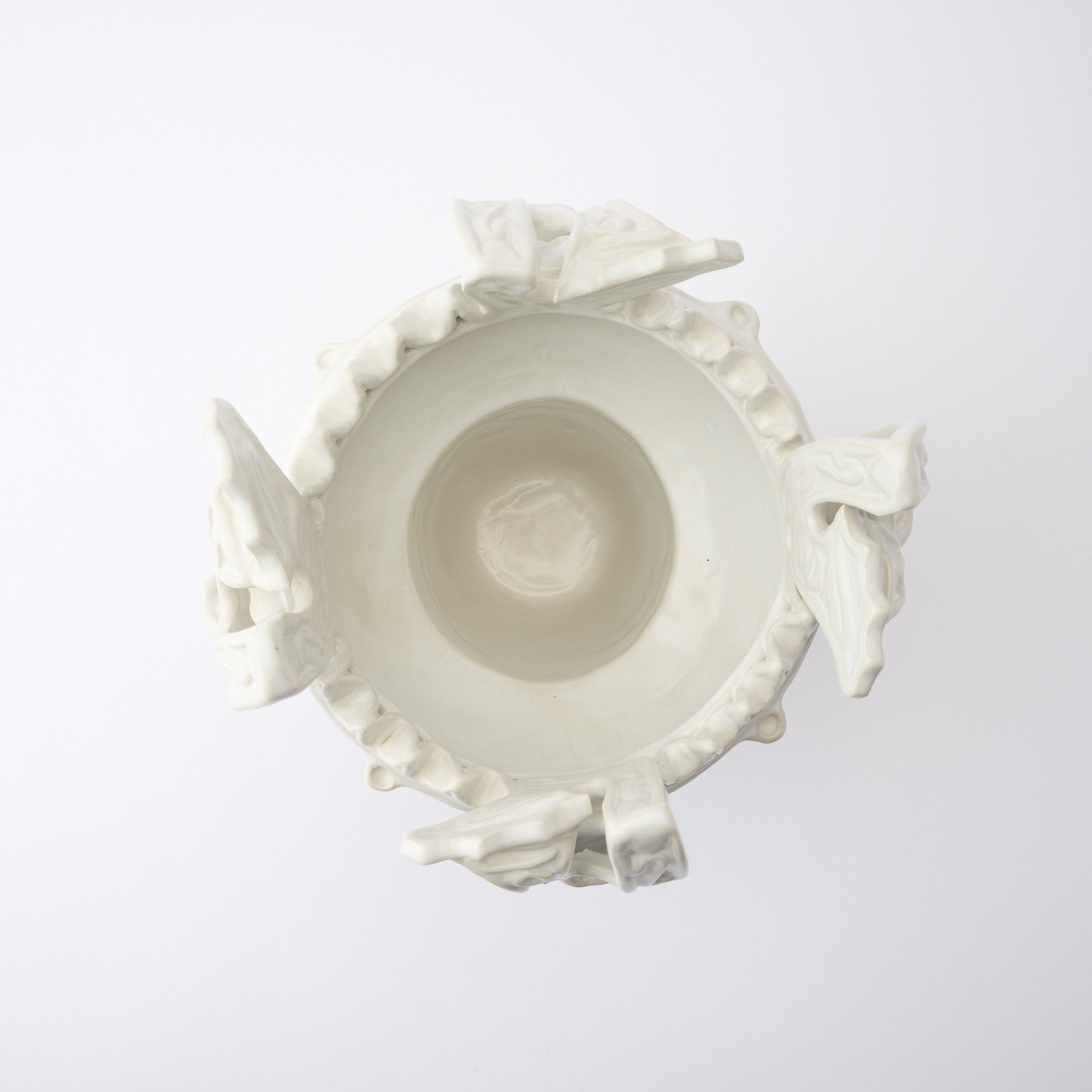
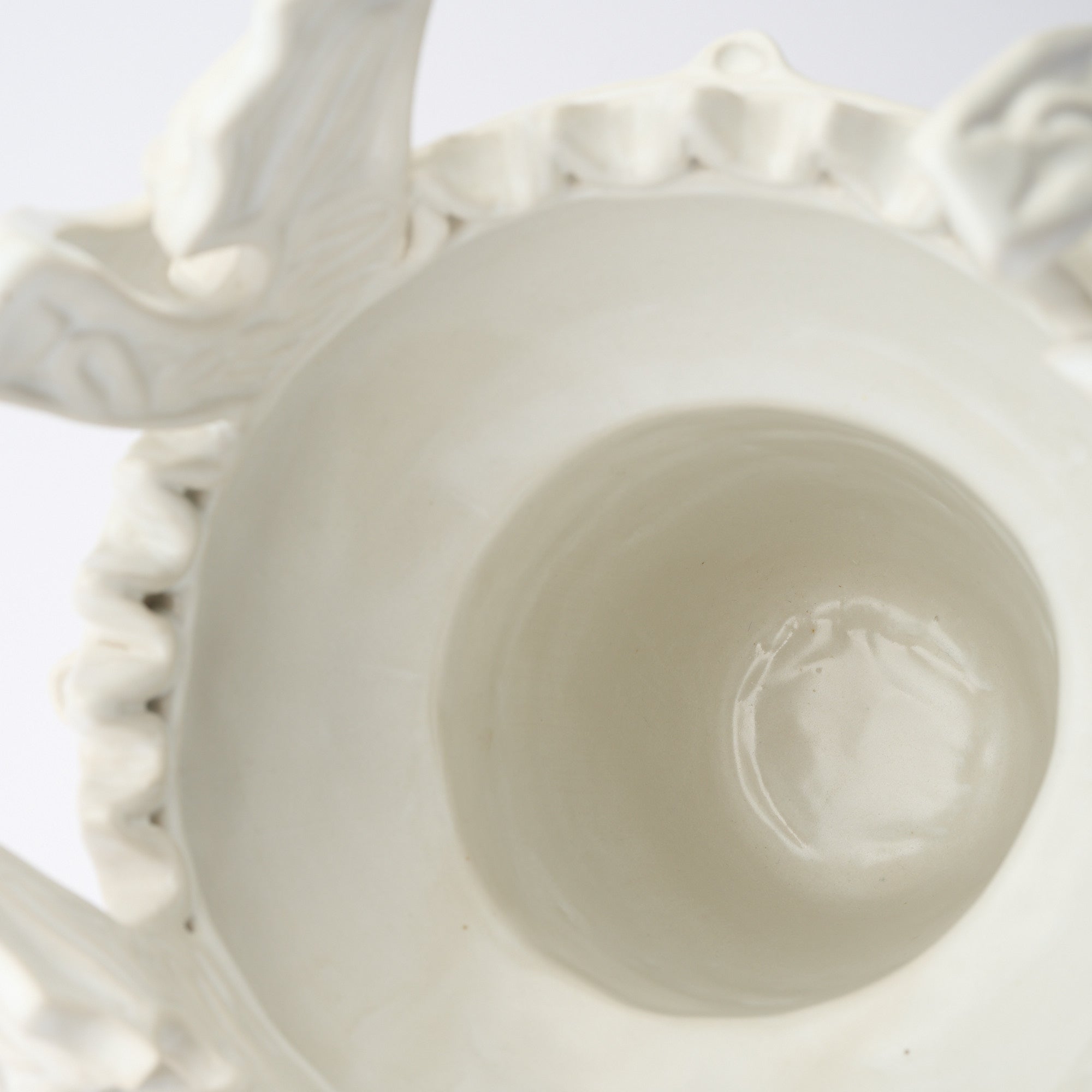
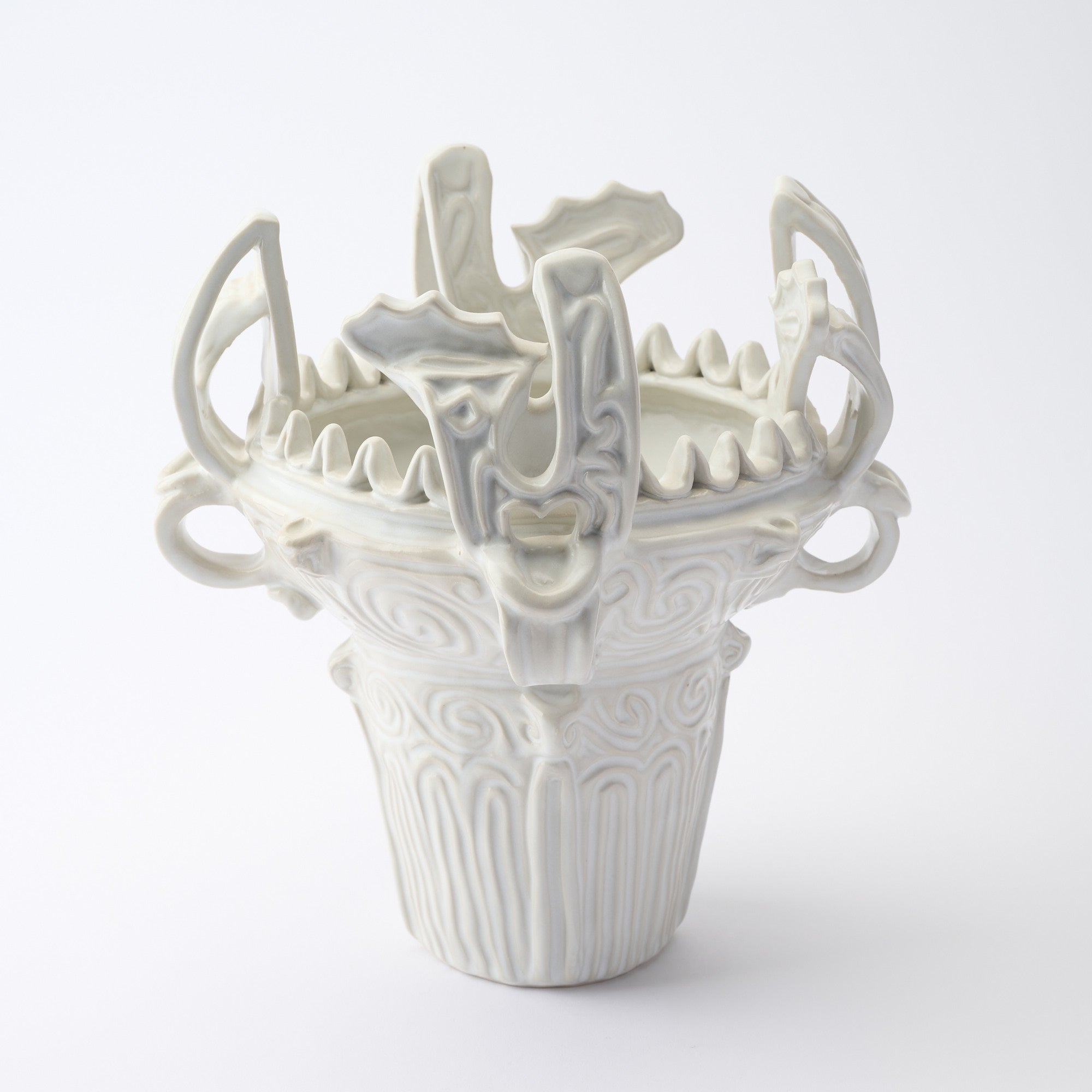
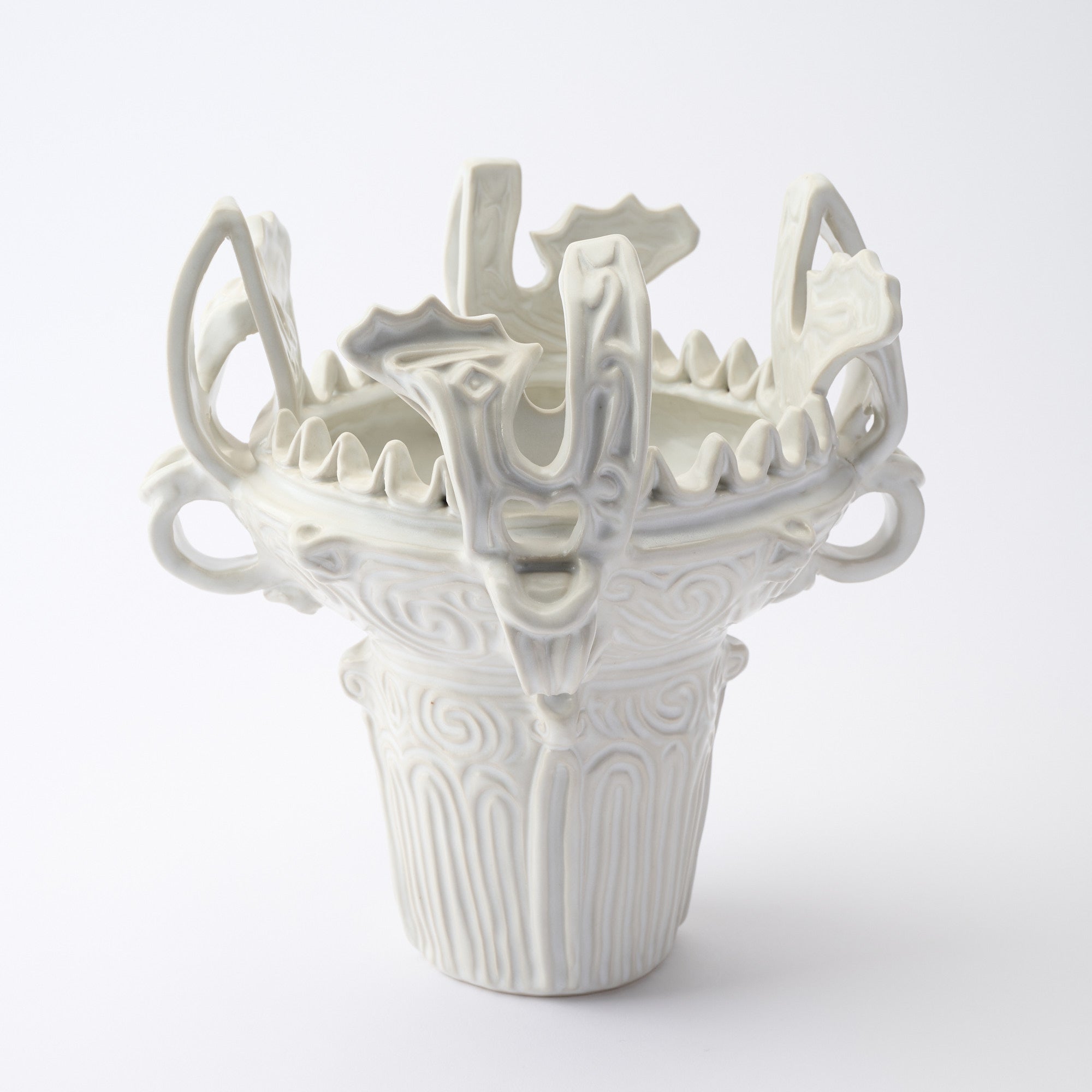
Vase Flamme Jomon Blanc Homura
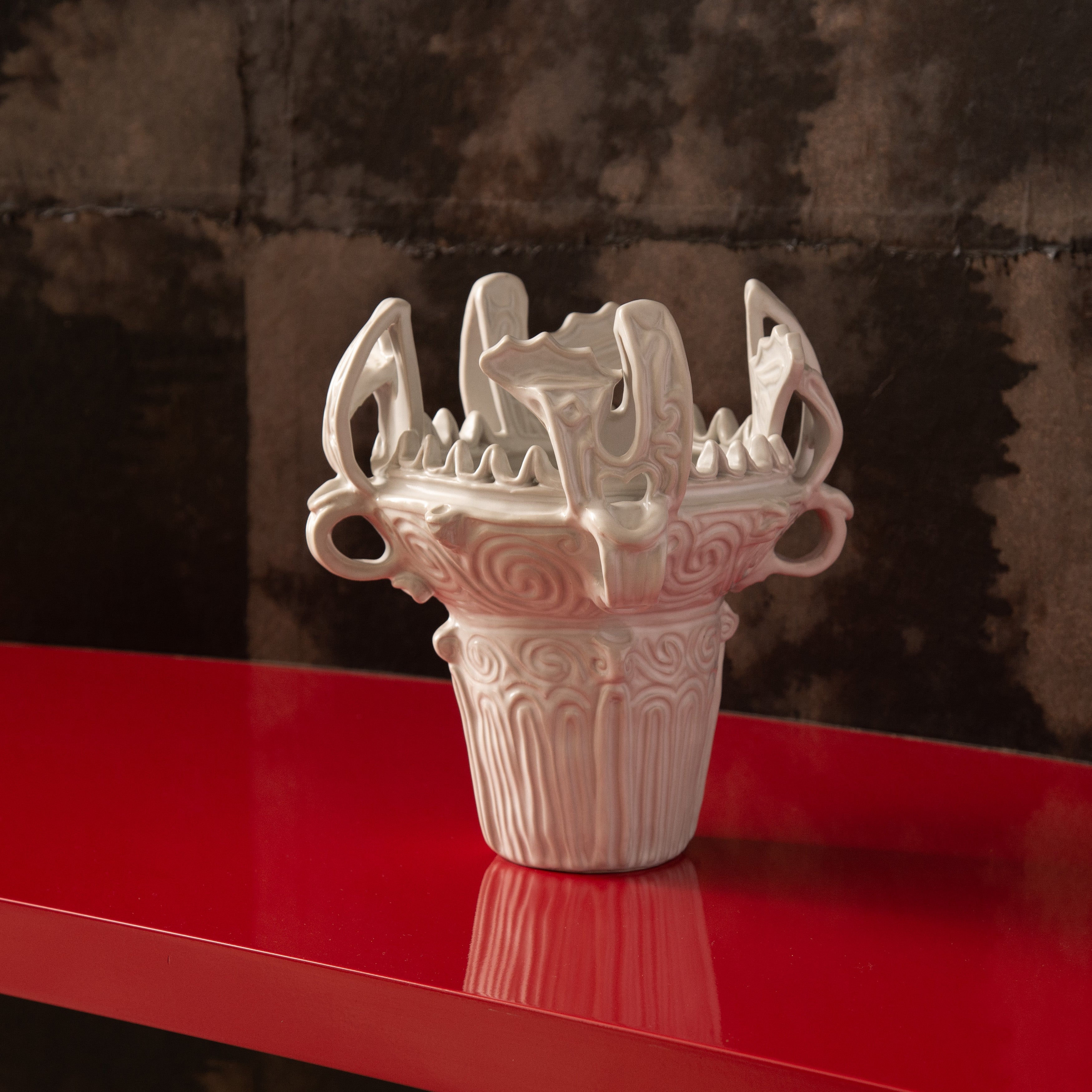
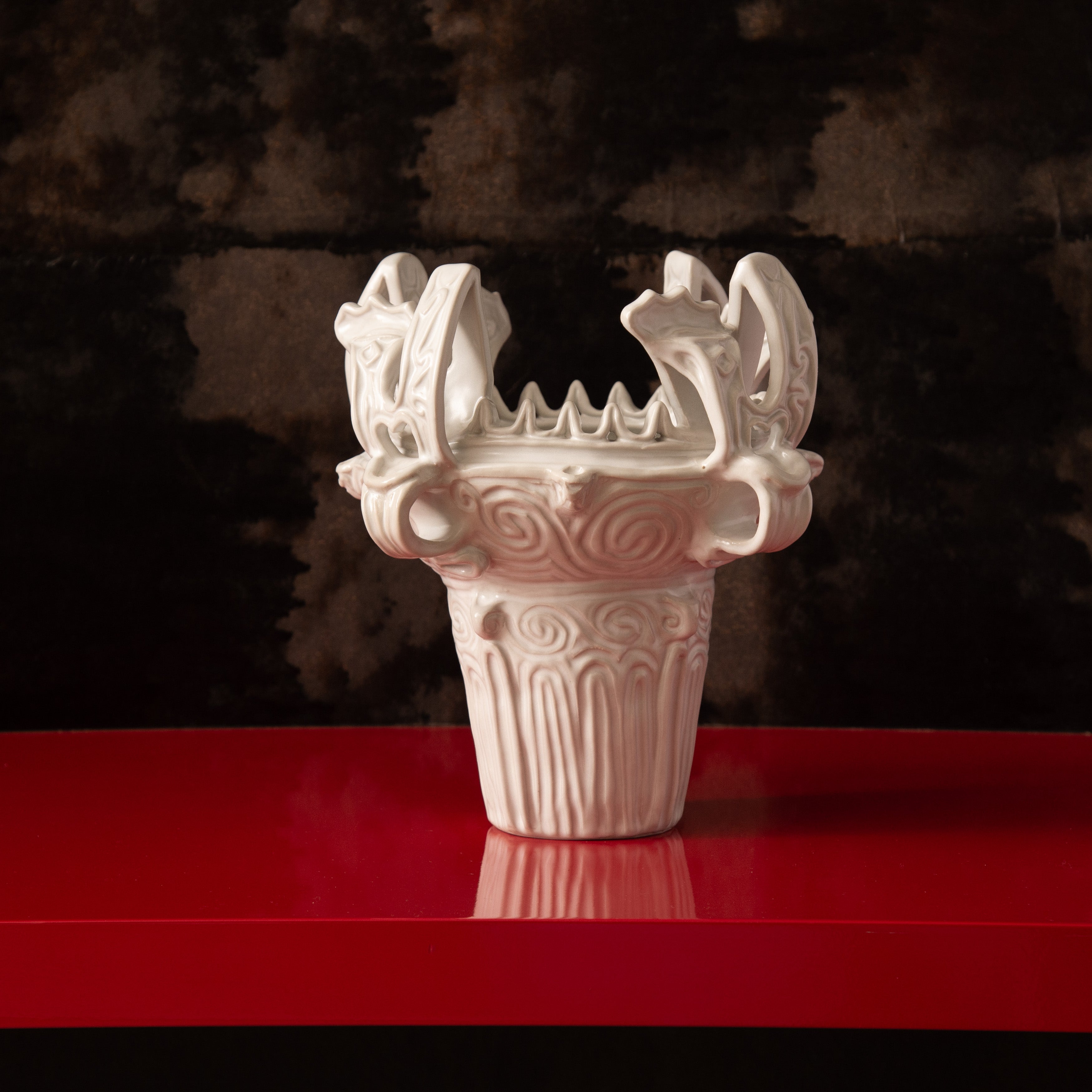
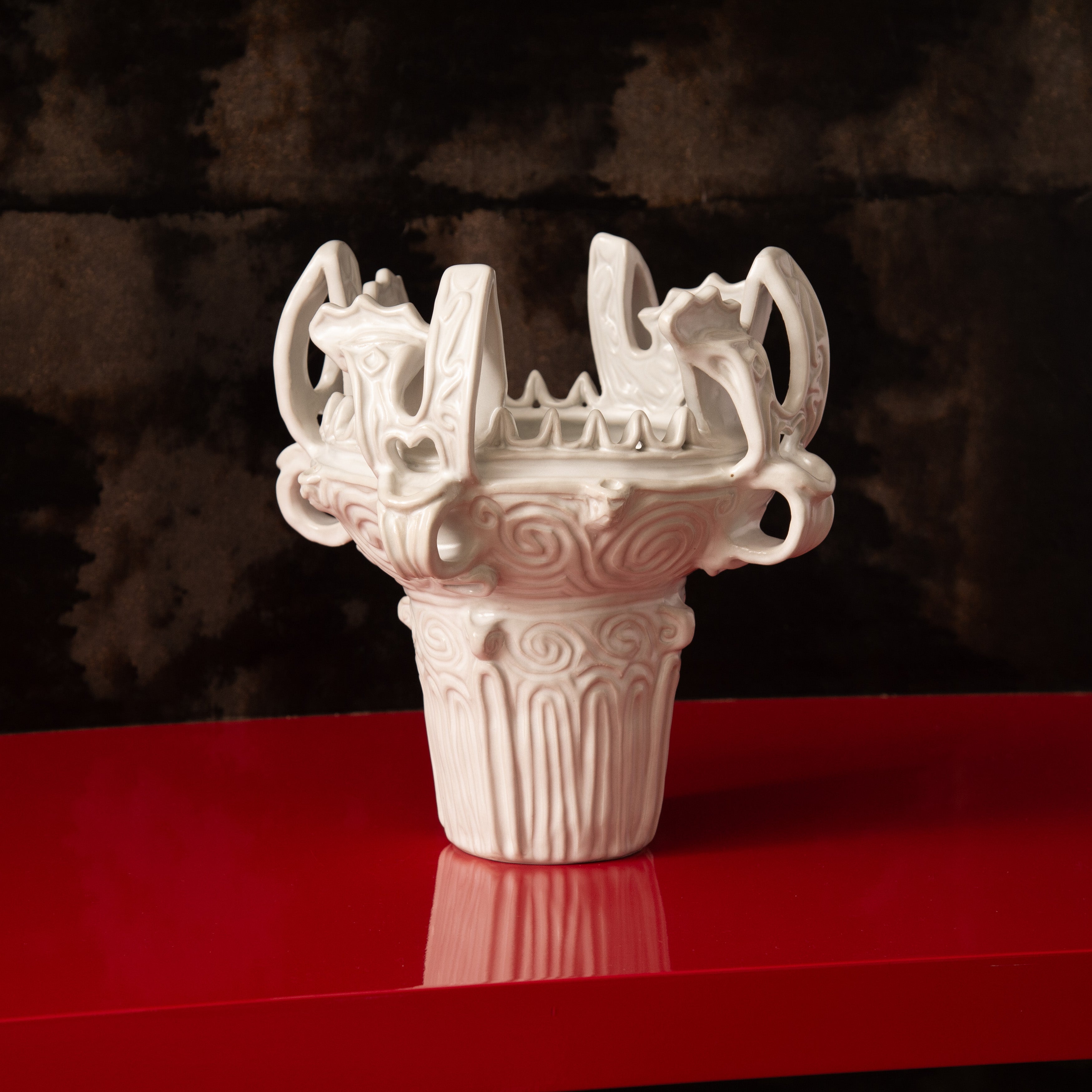
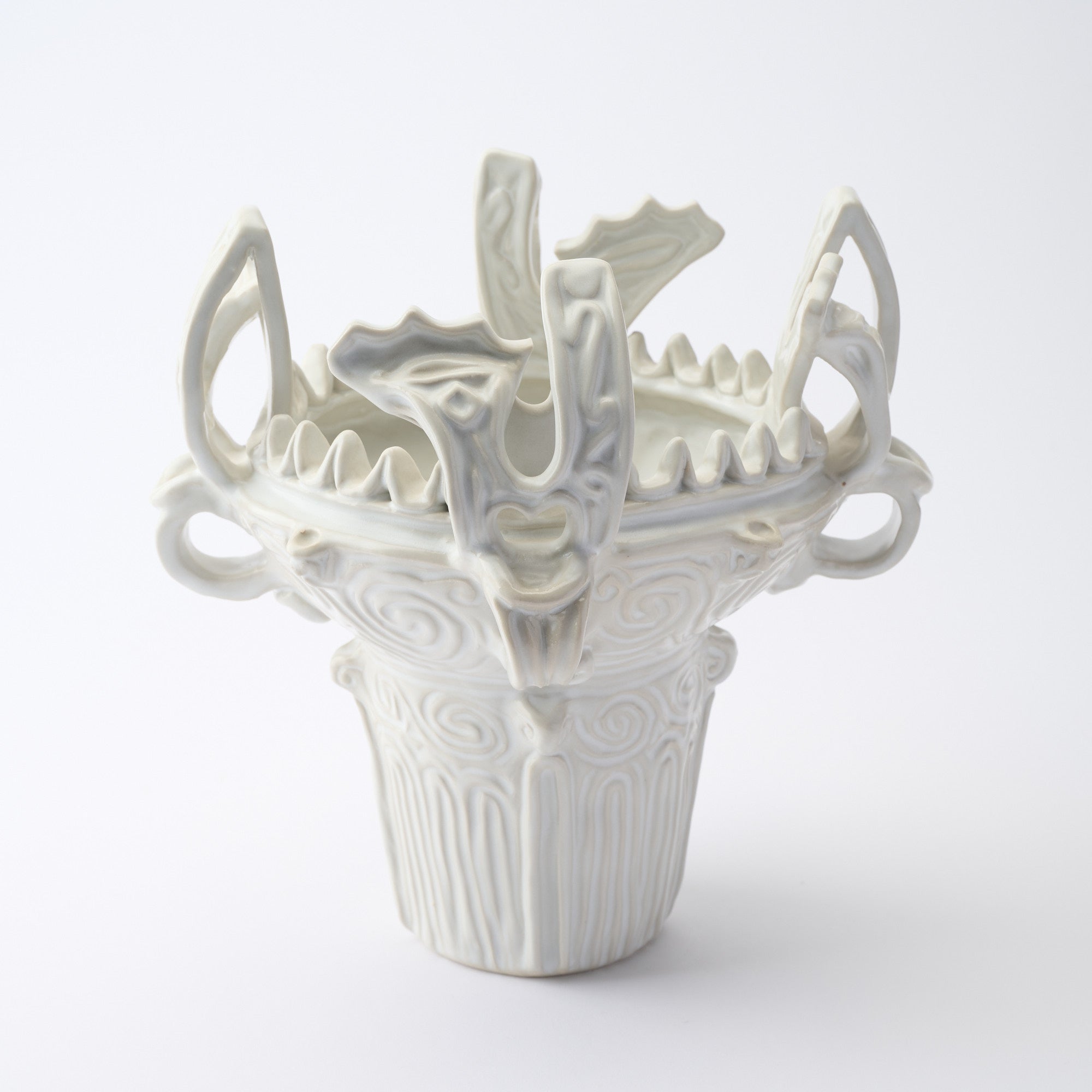
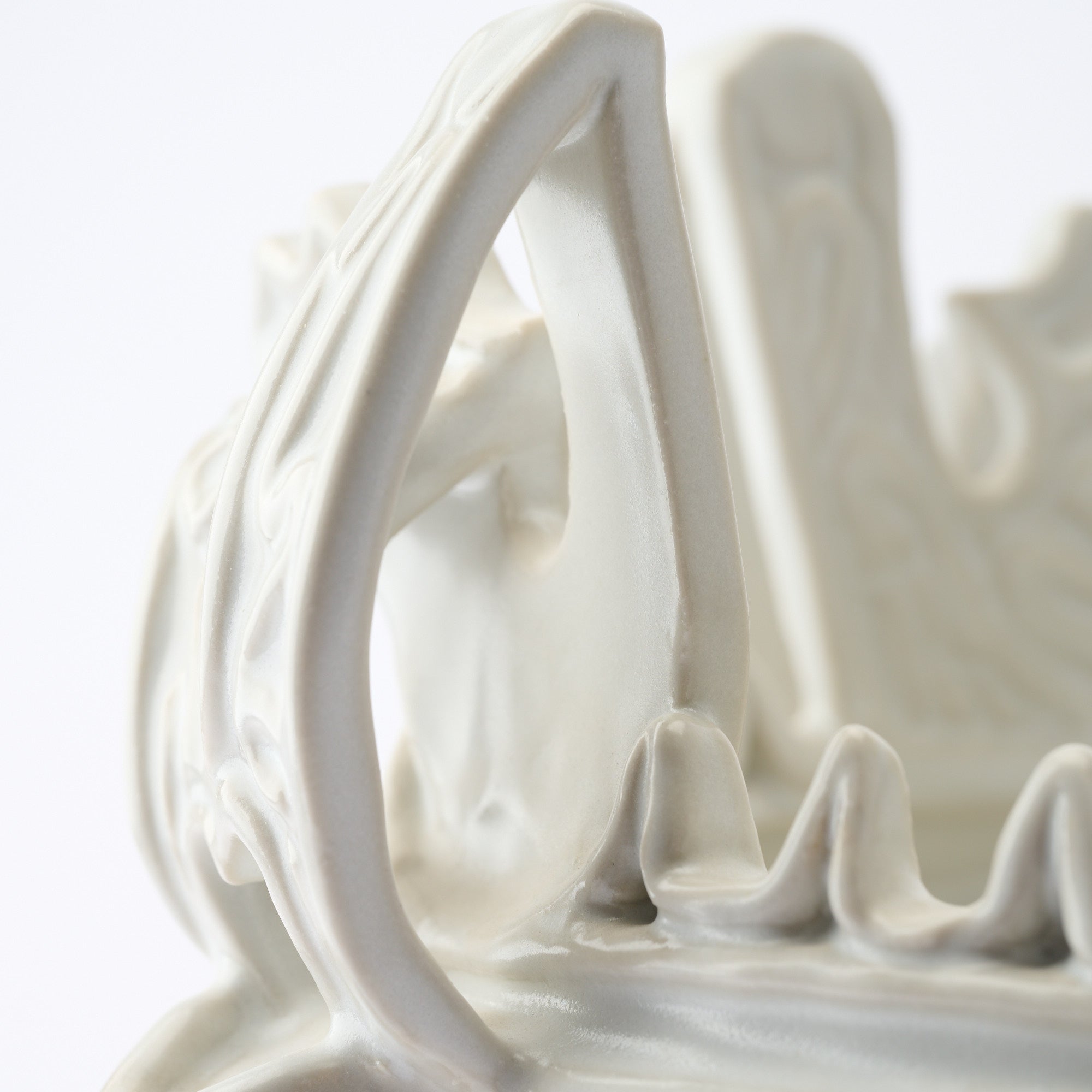
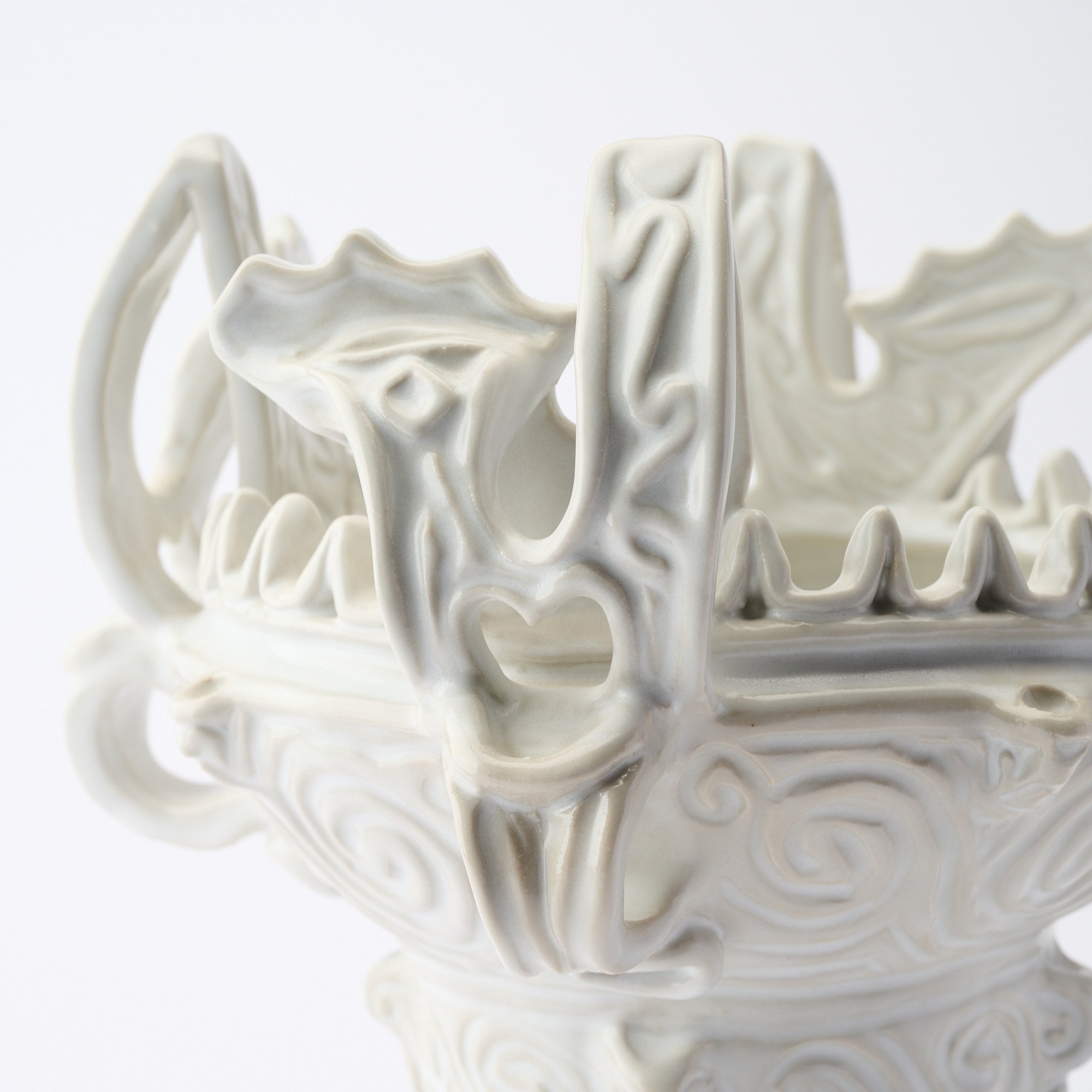
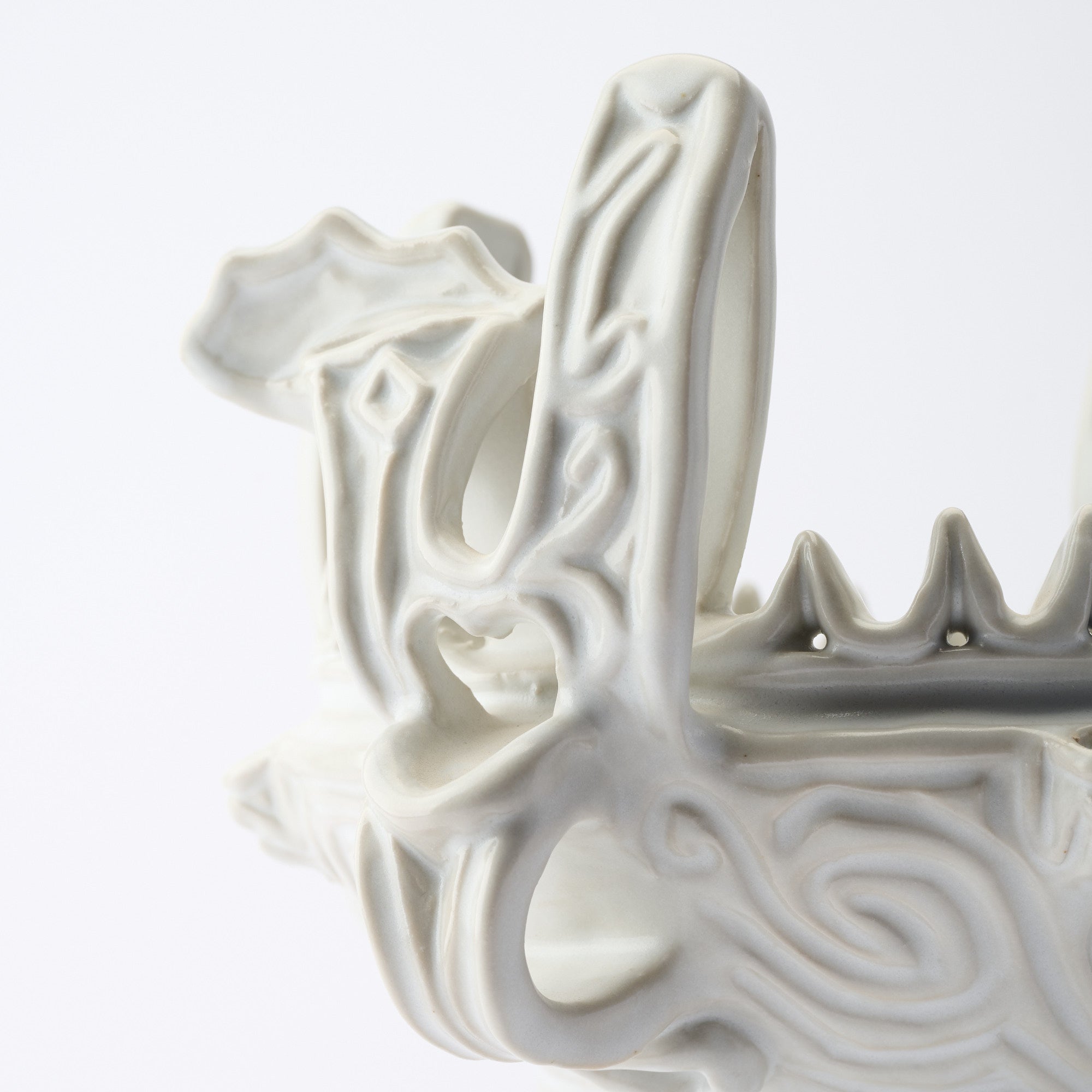
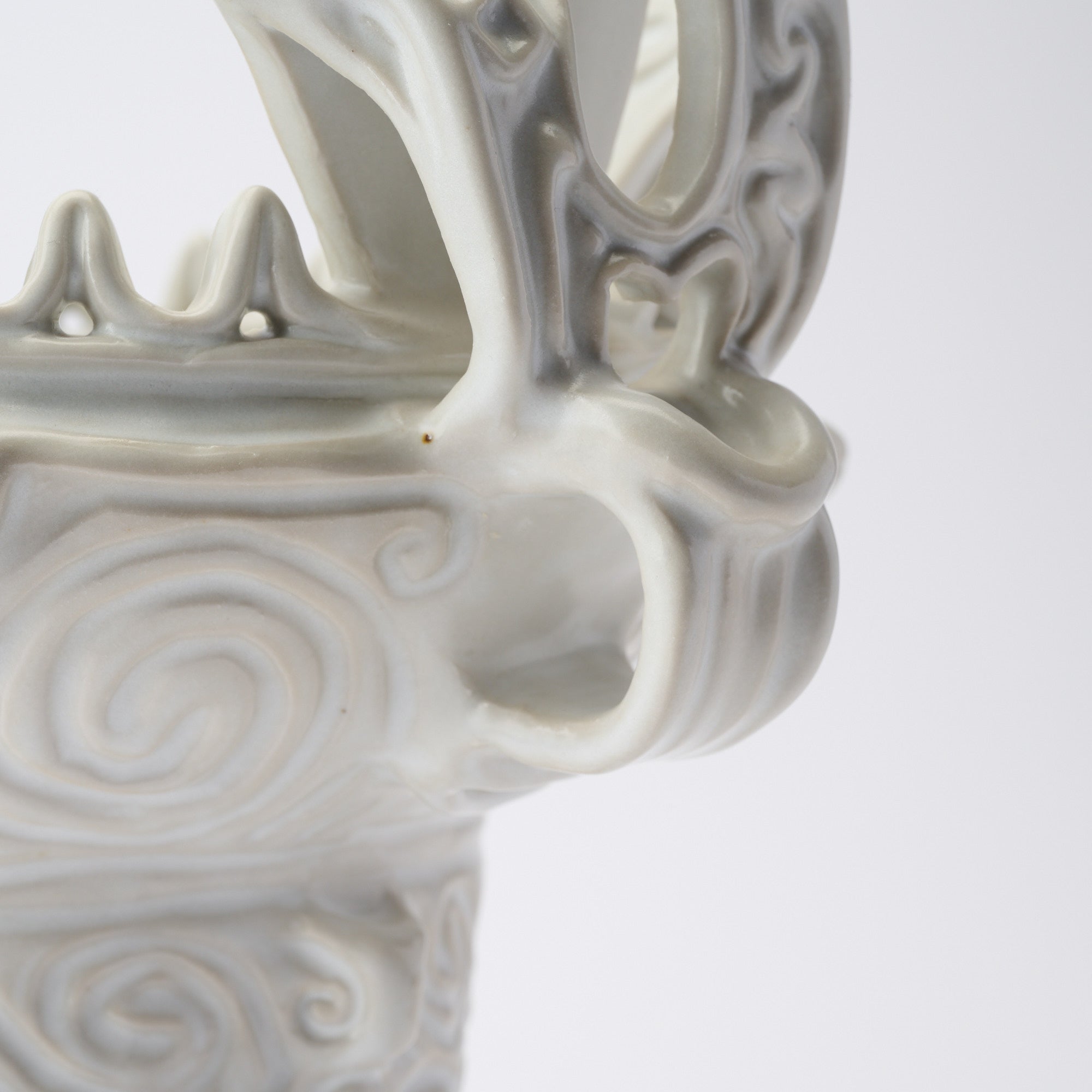
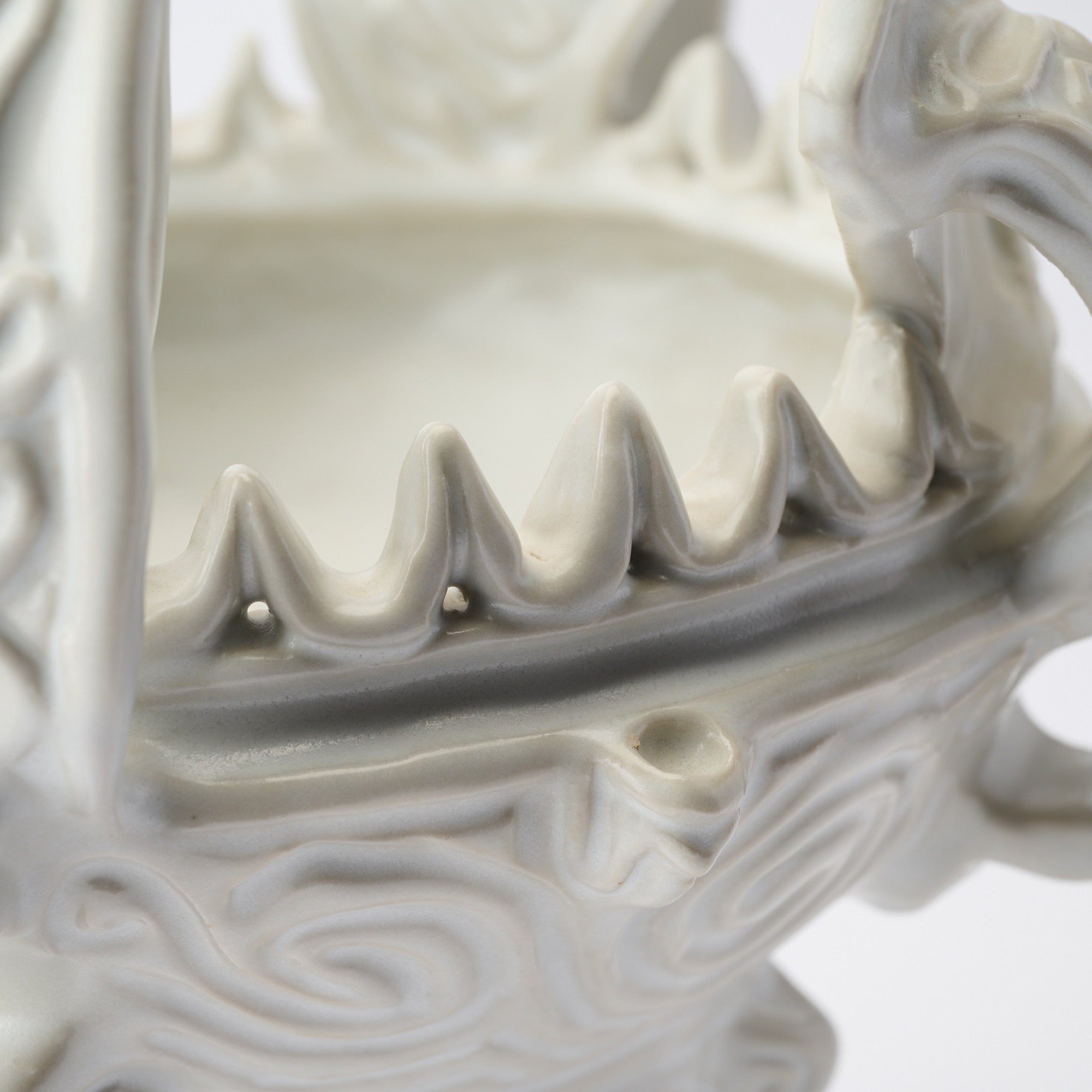
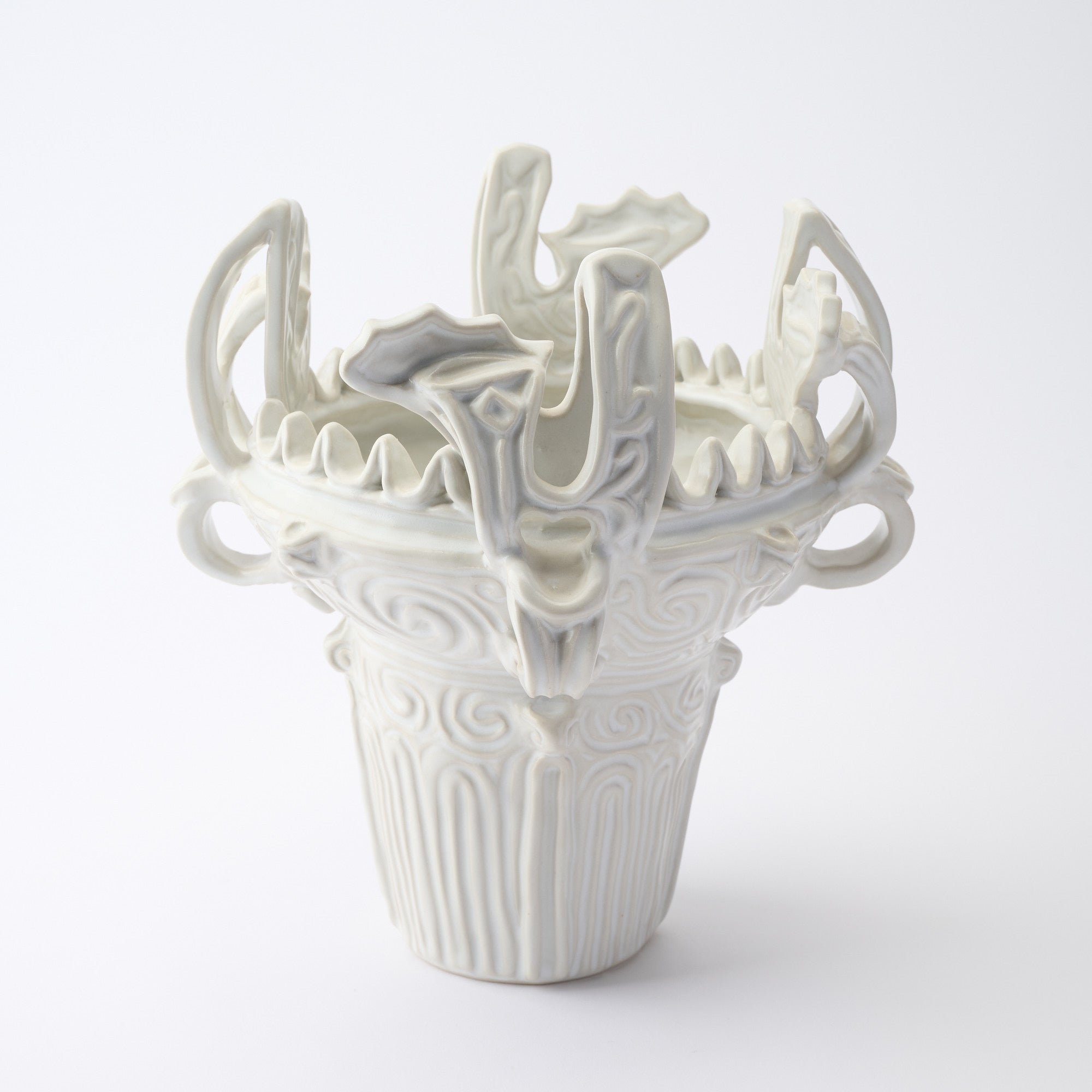
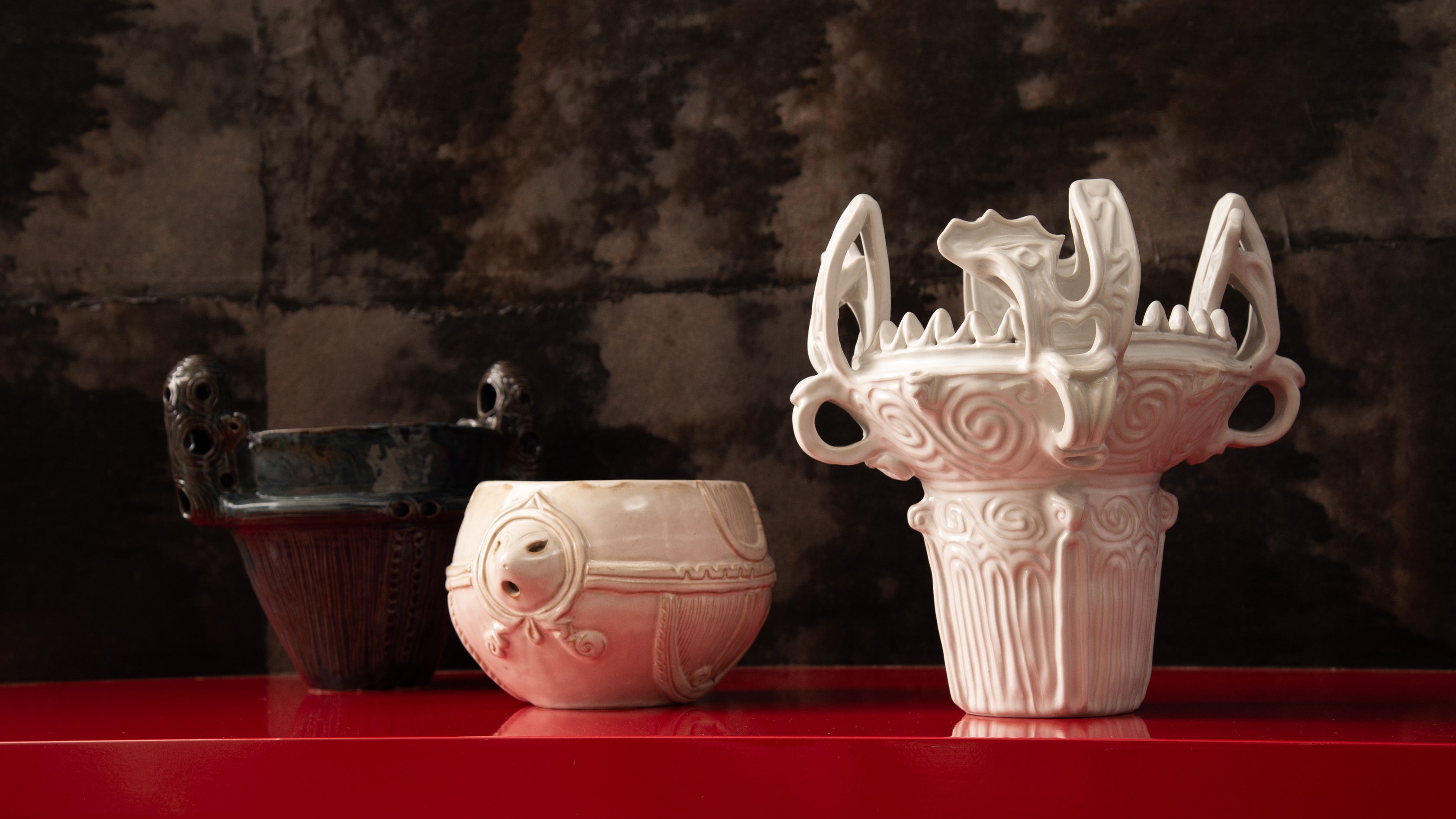
Inspirée par les récipients spectaculaires à décor flamboyant de la période Jomon du Japon ancien (env. 10 000–300 av. J.-C. notionvc: 4a7321fb-7d5e-470f-96cd-ed4cec262356 ), cette œuvre de la céramiste Wakunami Madoka, basée à Kyoto, reconsidère l'une des formes les plus emblématiques de la poterie japonaise ancienne. Les poteries à décor flamboyant elles-mêmes datent d'environ 5 000 ans, leurs contours ascendants et leurs projections complexes évoquant le feu capturé dans l'argile. Intitulée Homura—qui signifie flamme en japonais—l'œuvre reflète l'engagement soutenu de Wakunami envers ces formes anciennes.
Plutôt que de reproduire la poterie flamboyante Jomon historique, Wakunami aborde sa forme par des interrogations structurelles. Elle étudie les poteries Jomon exposées dans les musées, observe comment le poids se répartit, comment les éléments en saillie atteignent l'équilibre, et comment le détail et la proportion se résolvent. Ce qui émerge n'est pas une citation archéologique, mais une réarticulation contemporaine de la forme flamboyante façonnée par un savoir-faire discipliné.
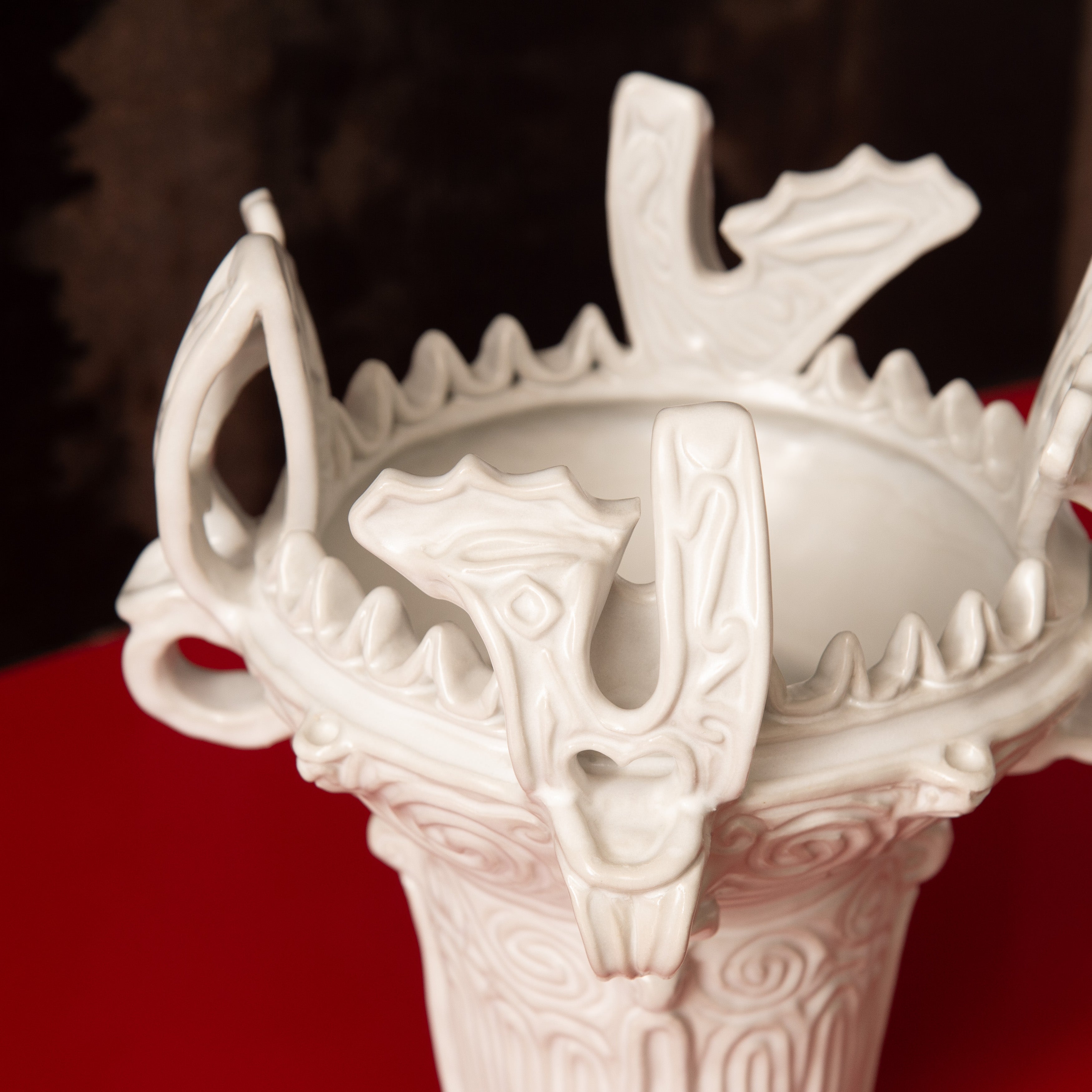
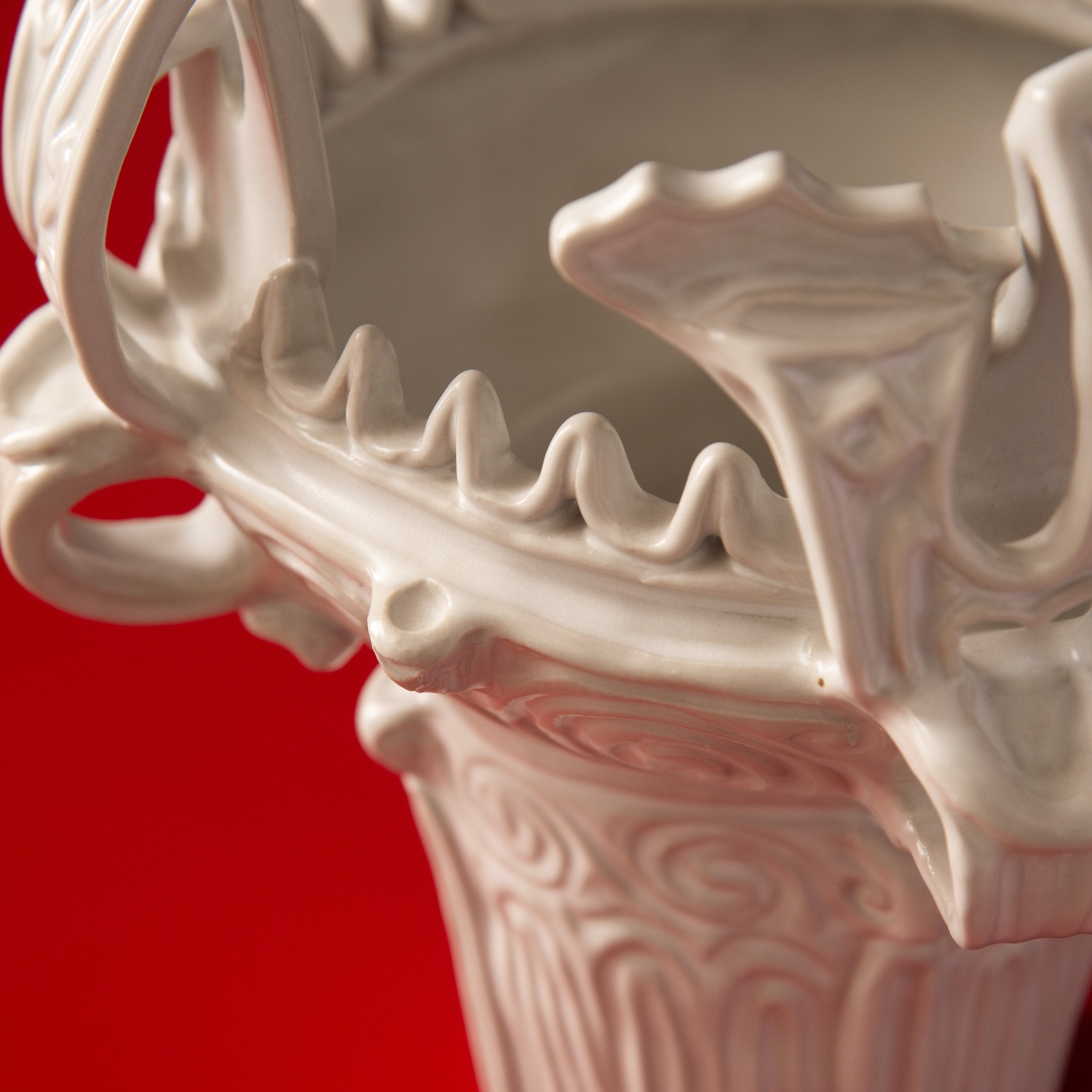
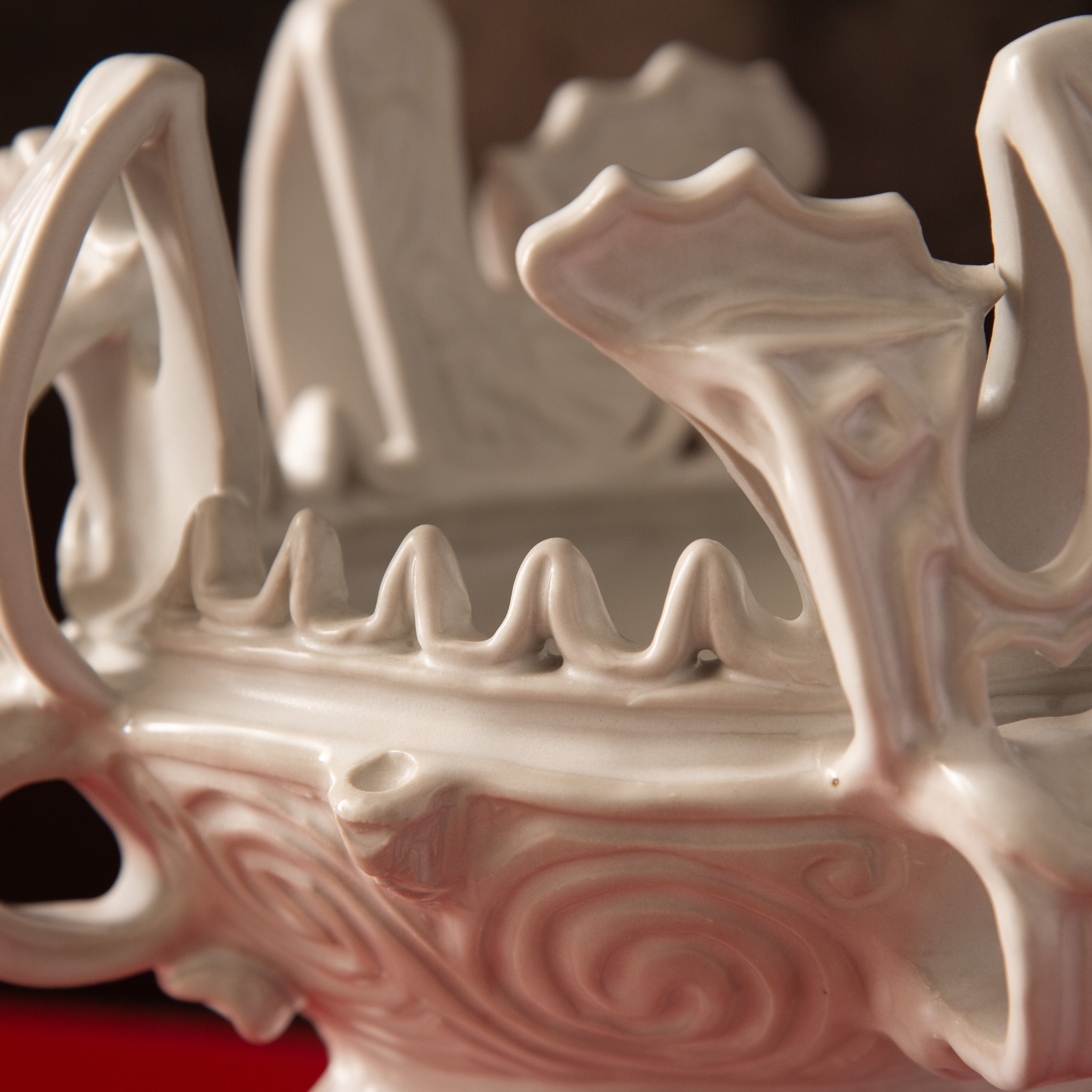
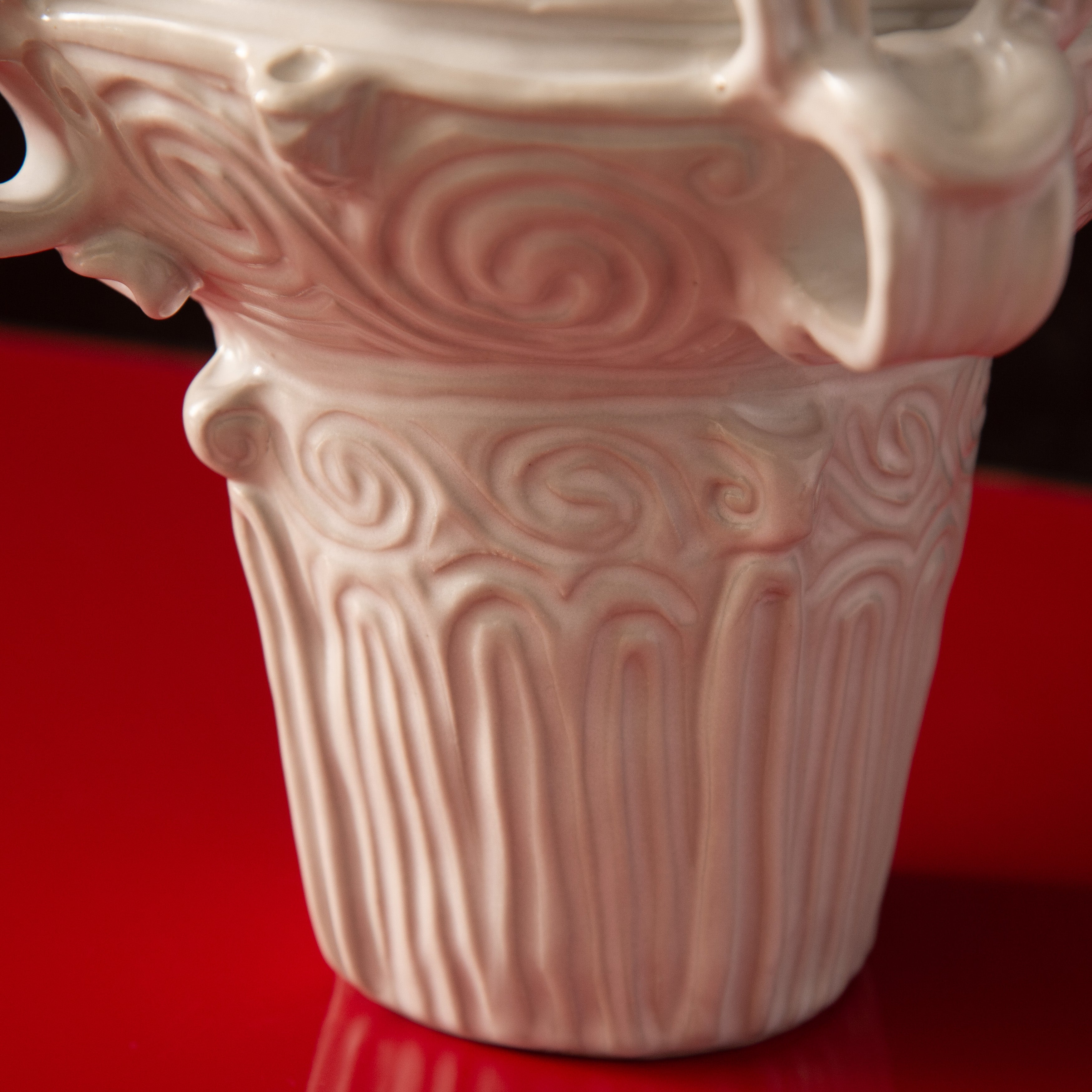
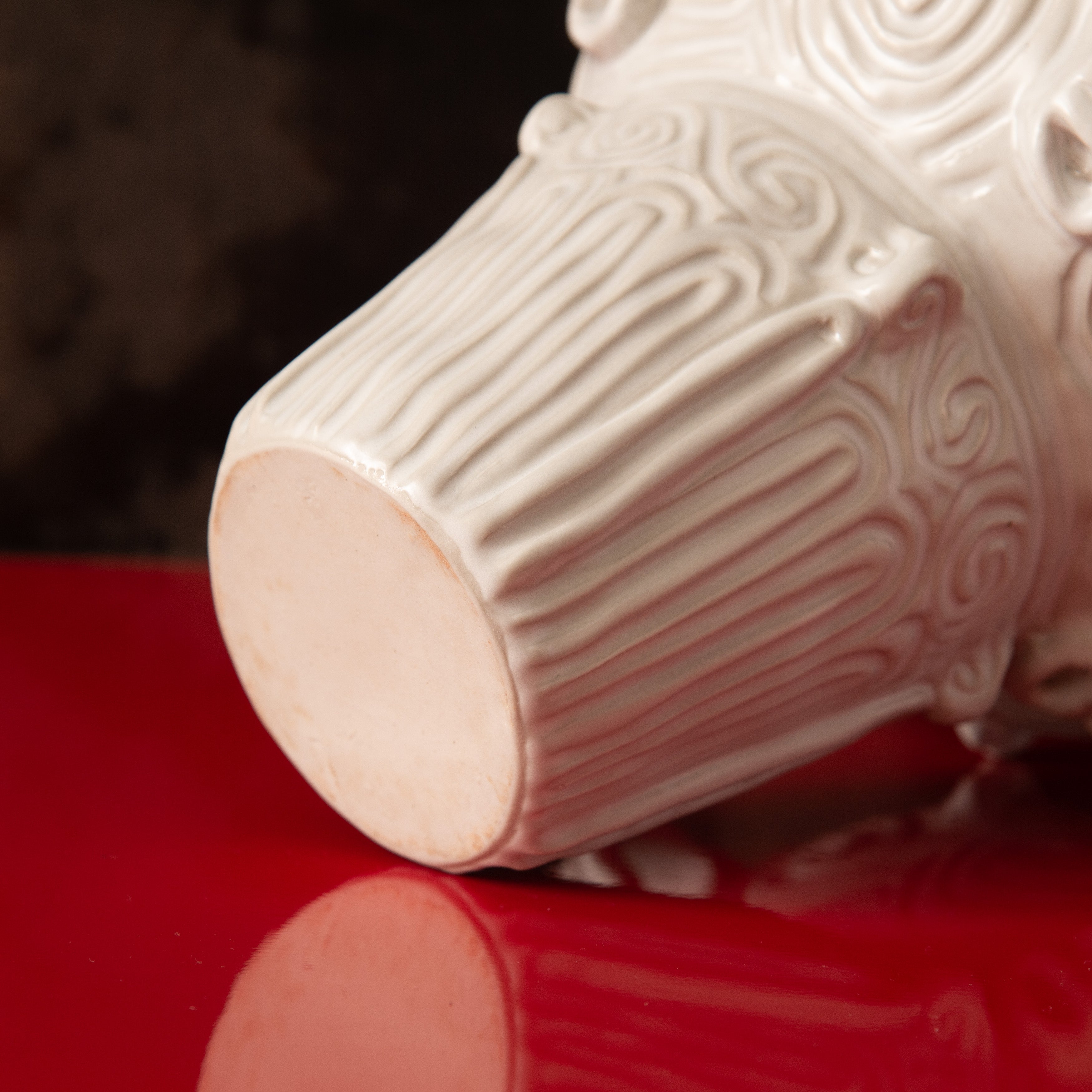
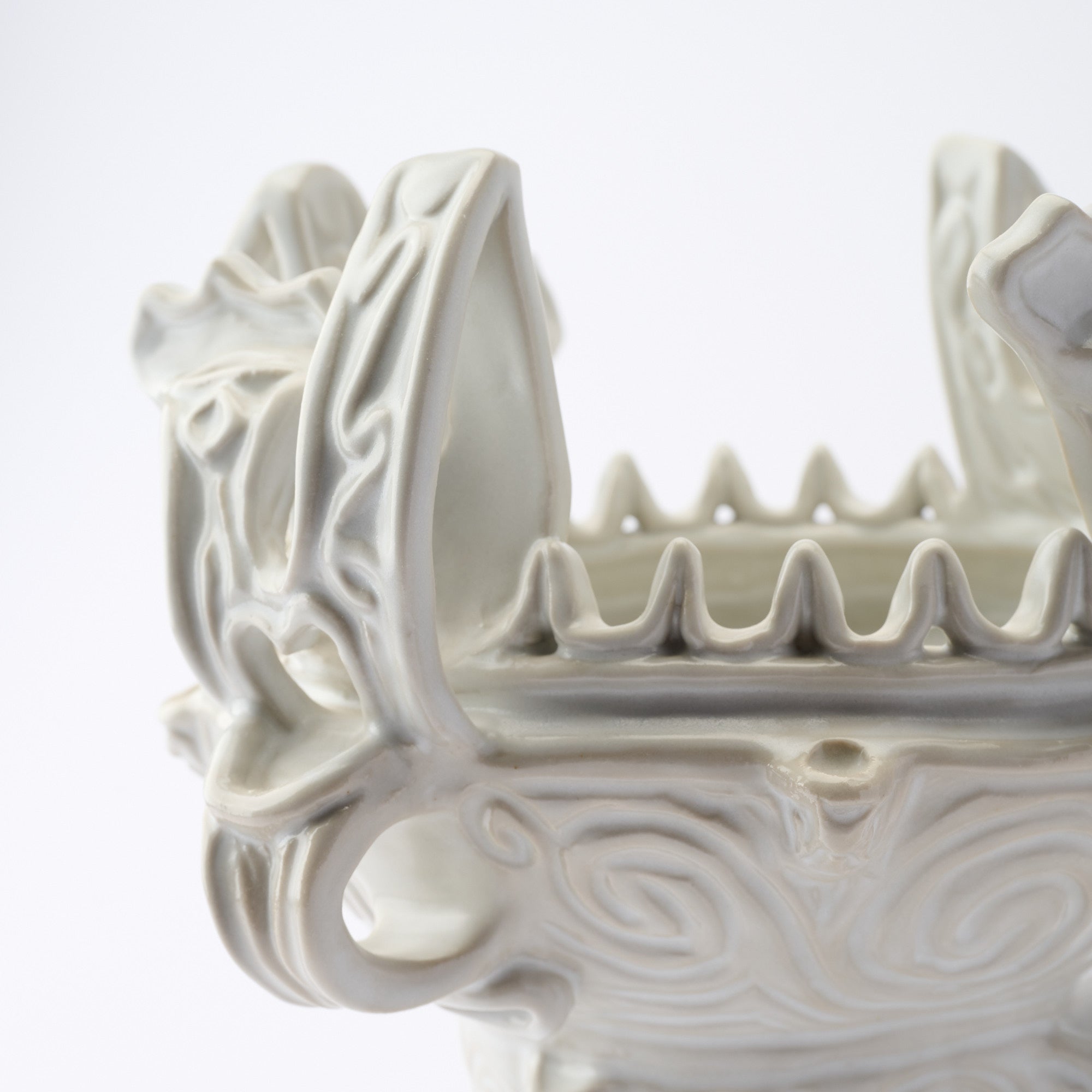
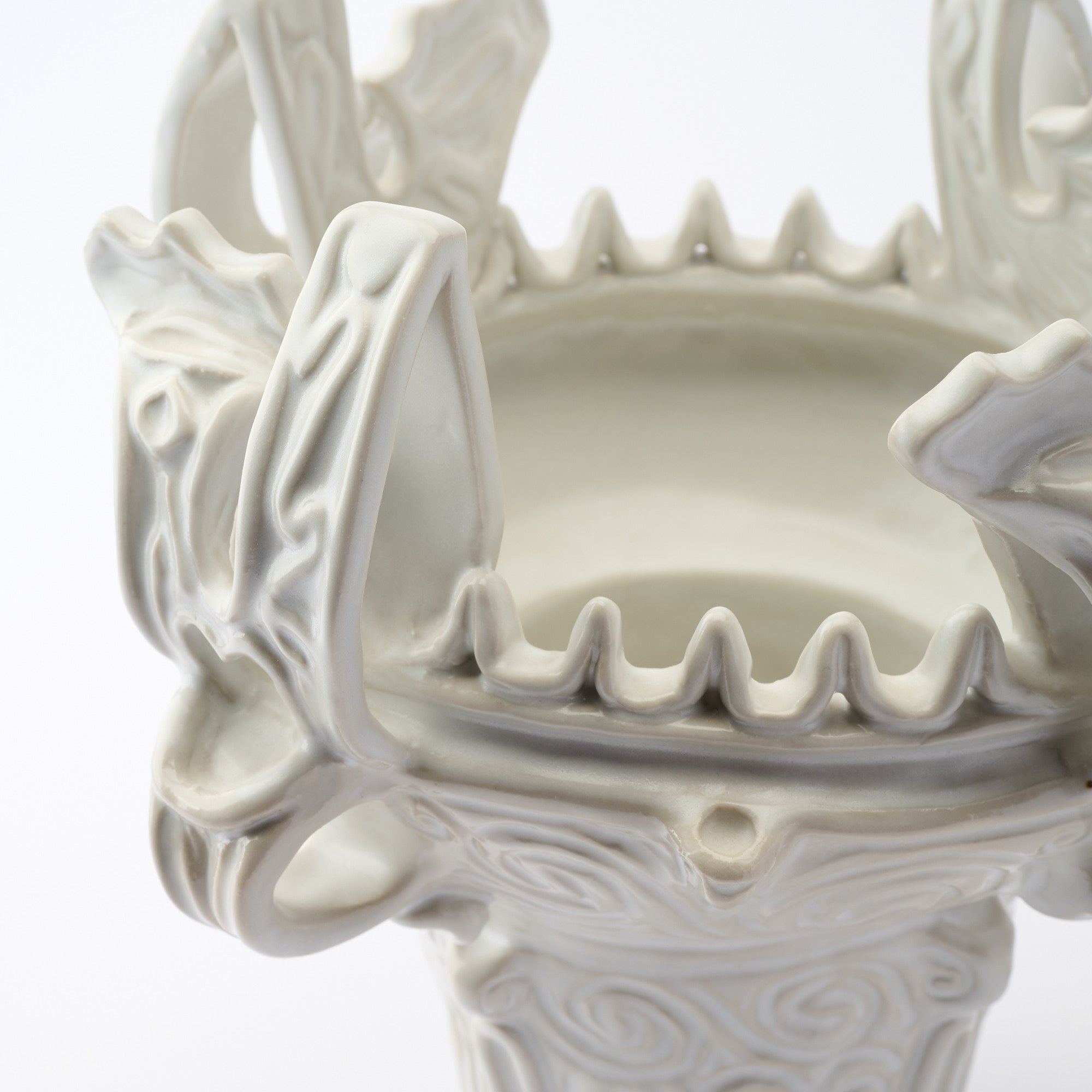
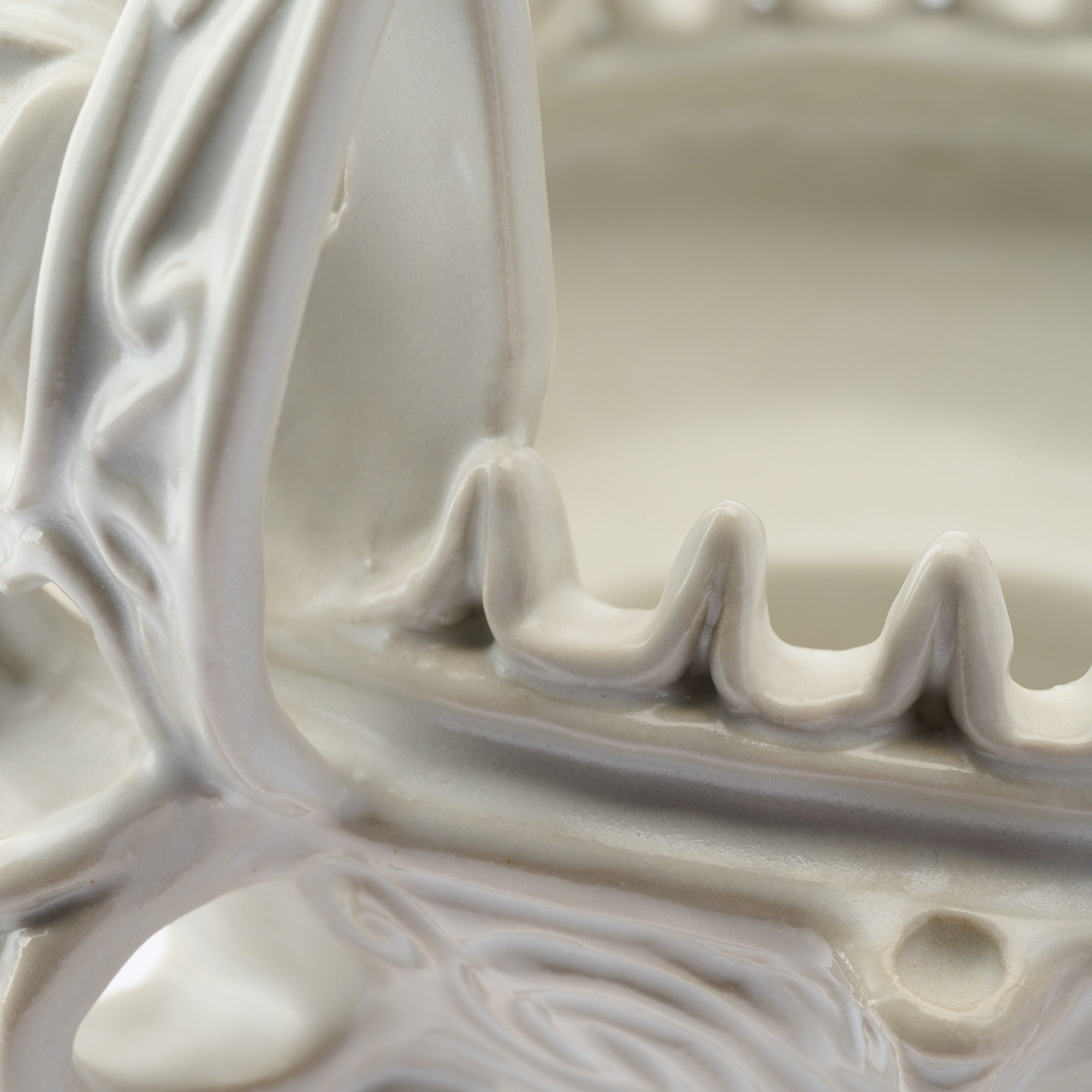
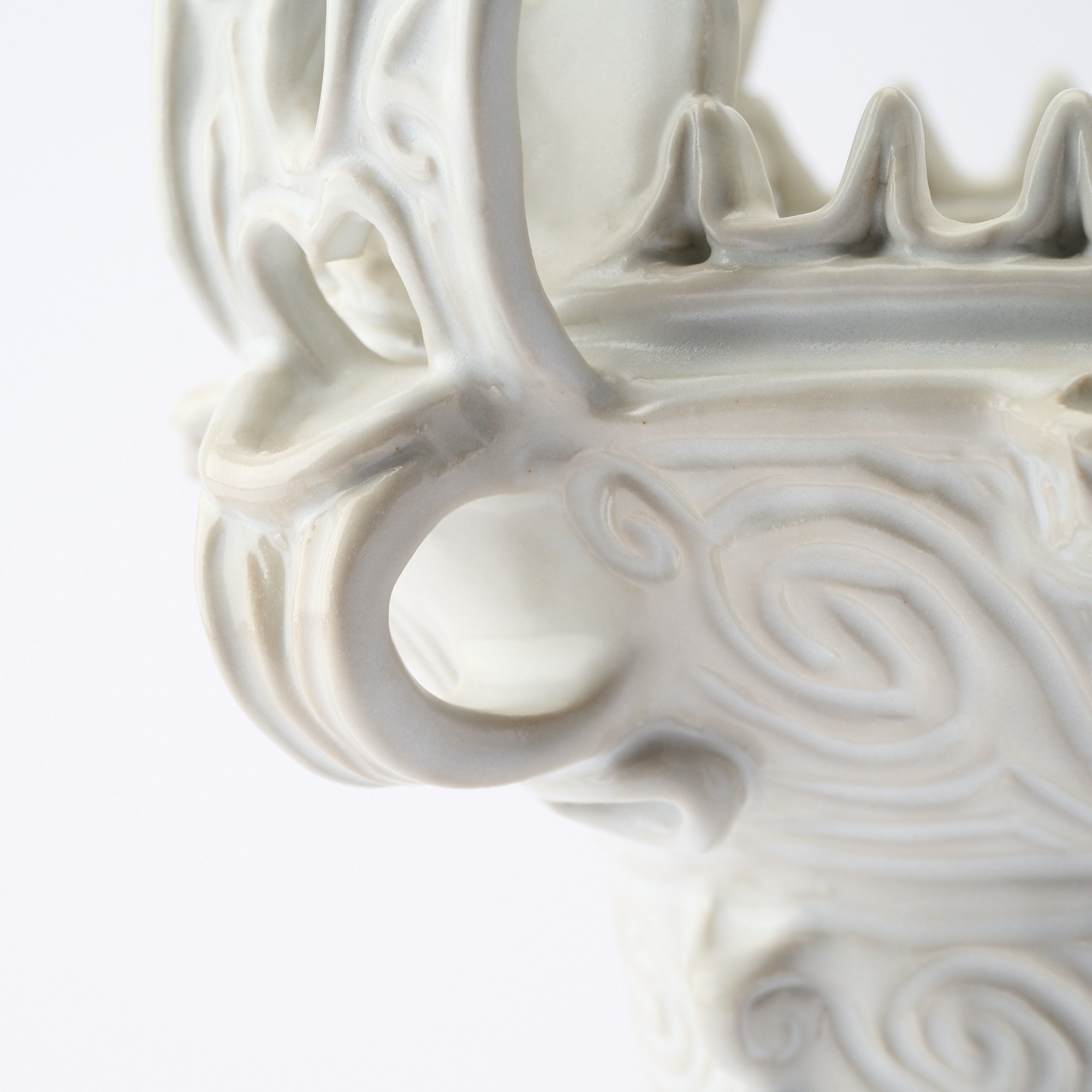
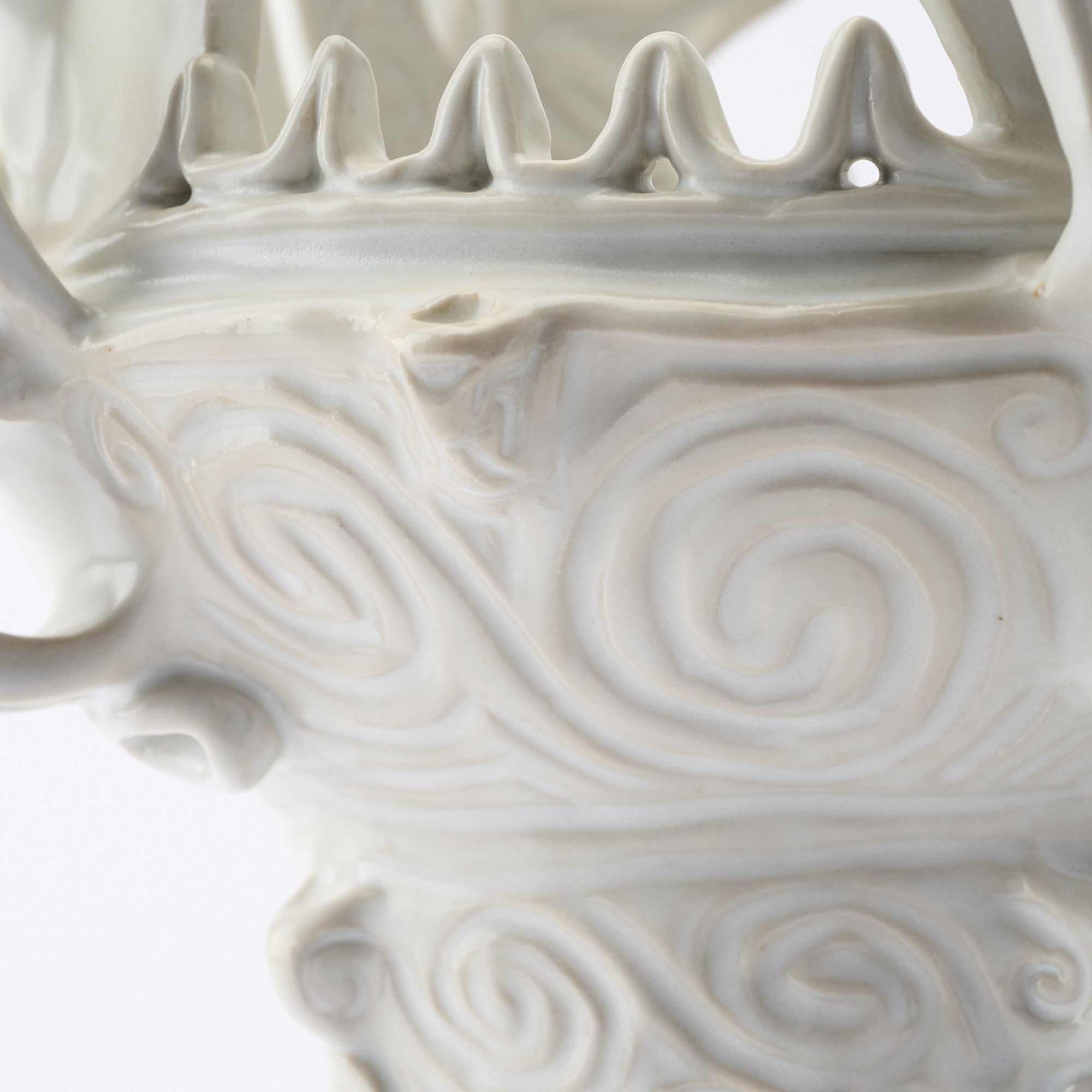
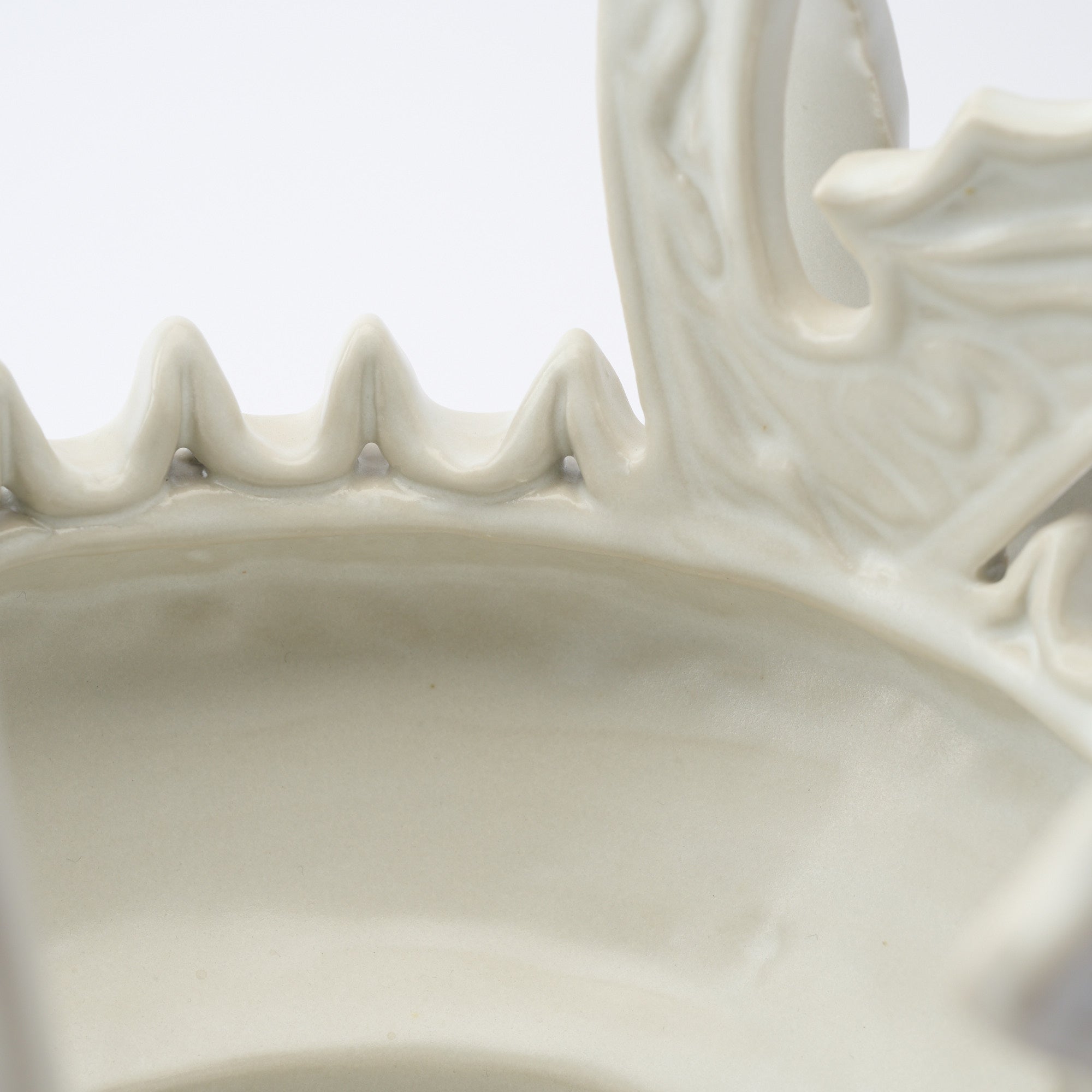
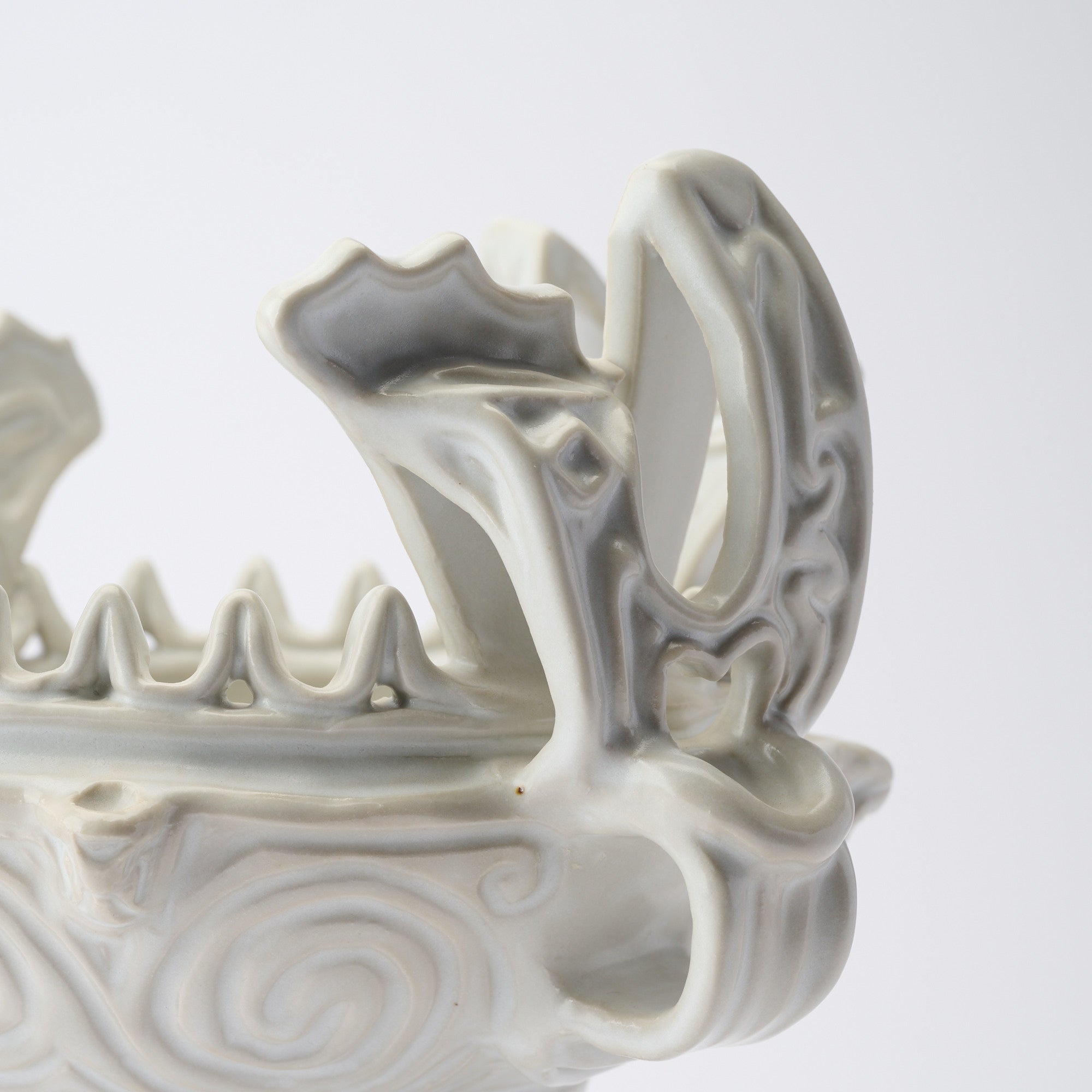
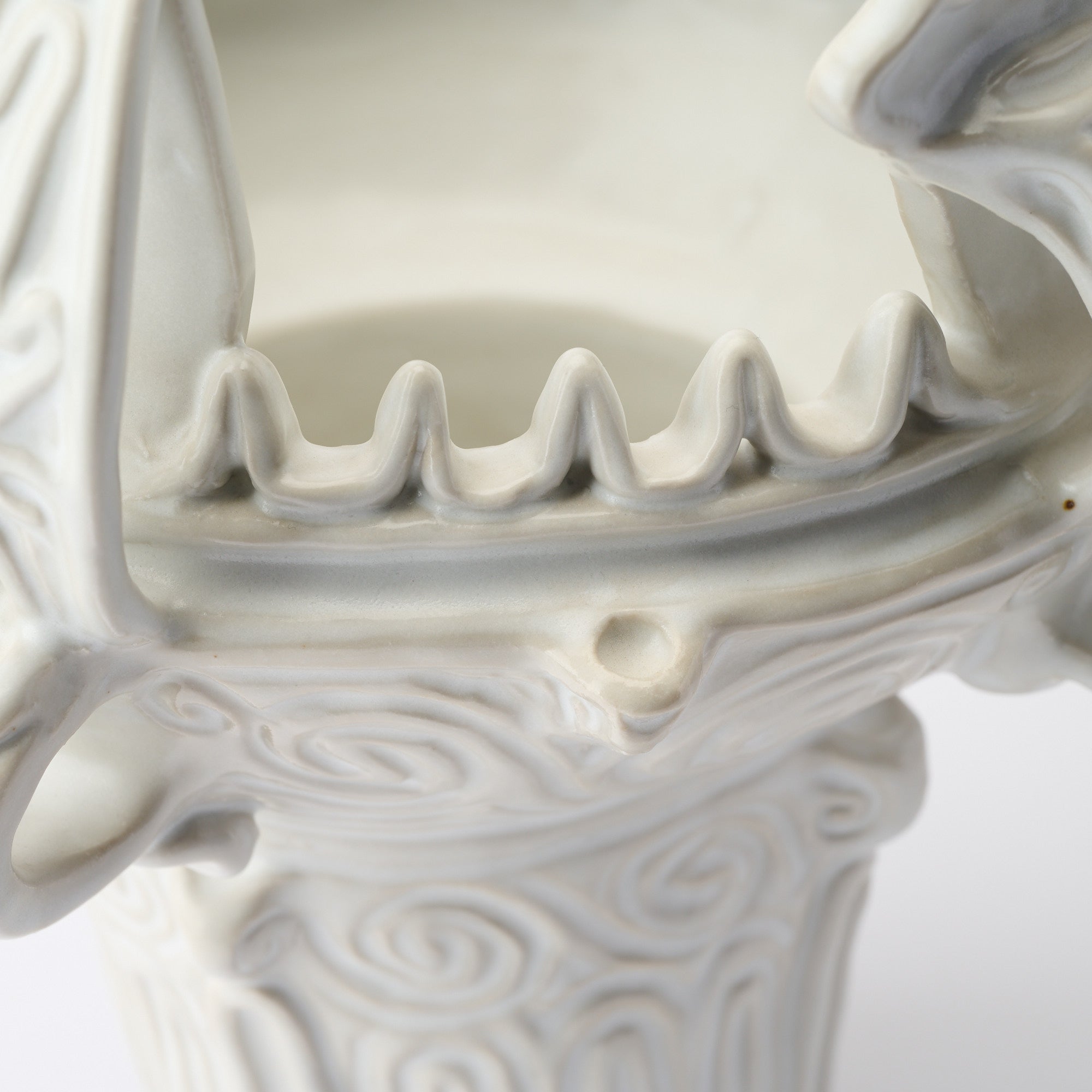
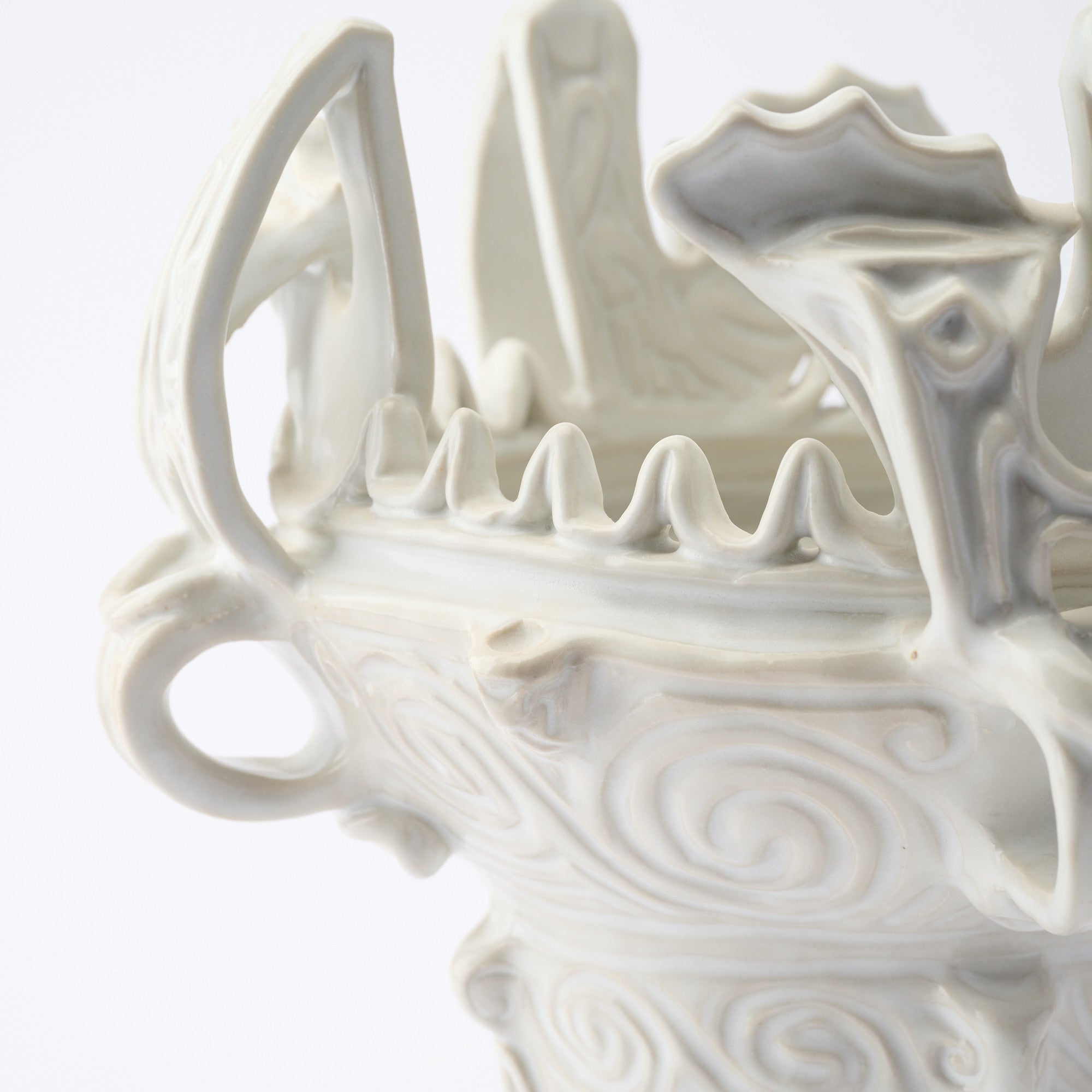
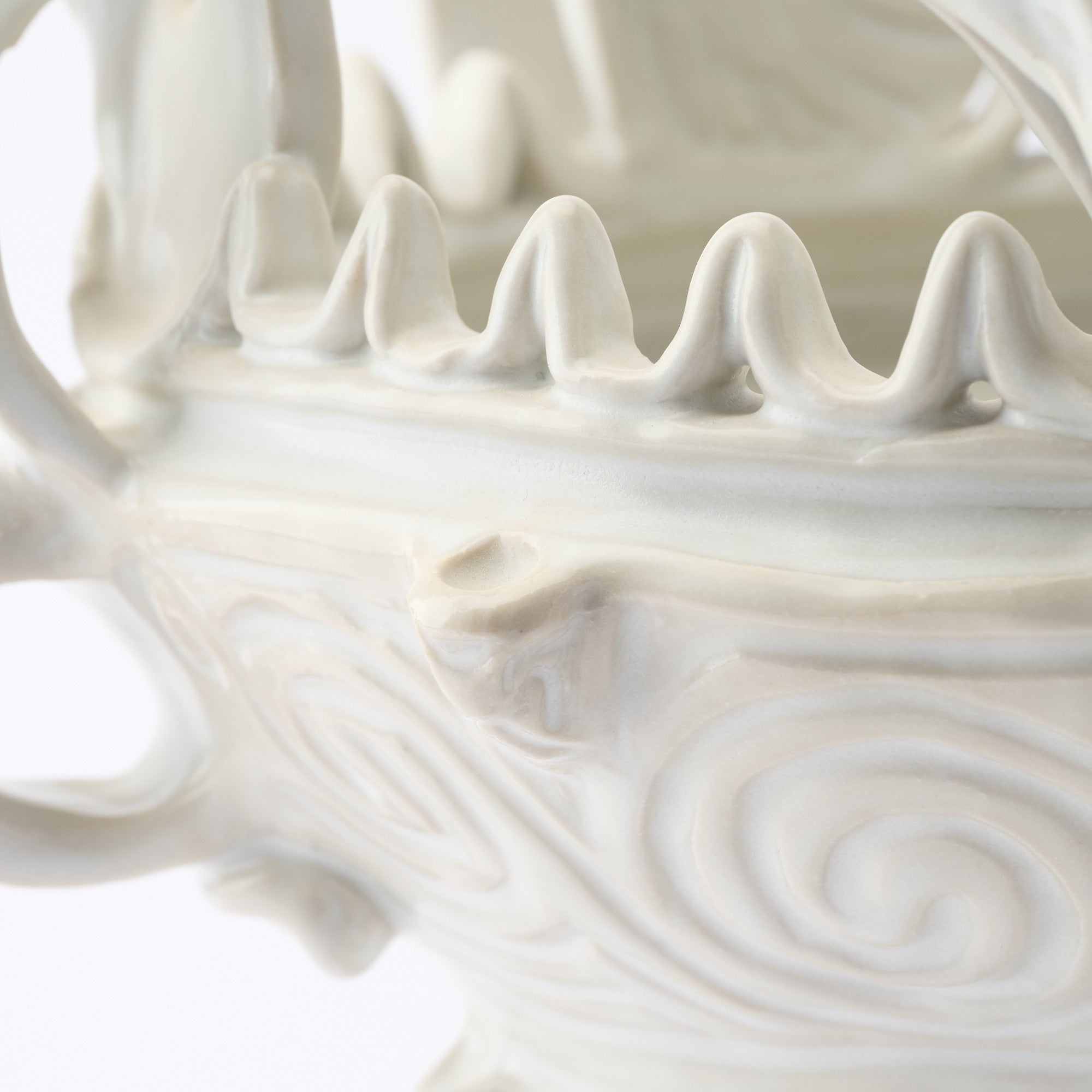
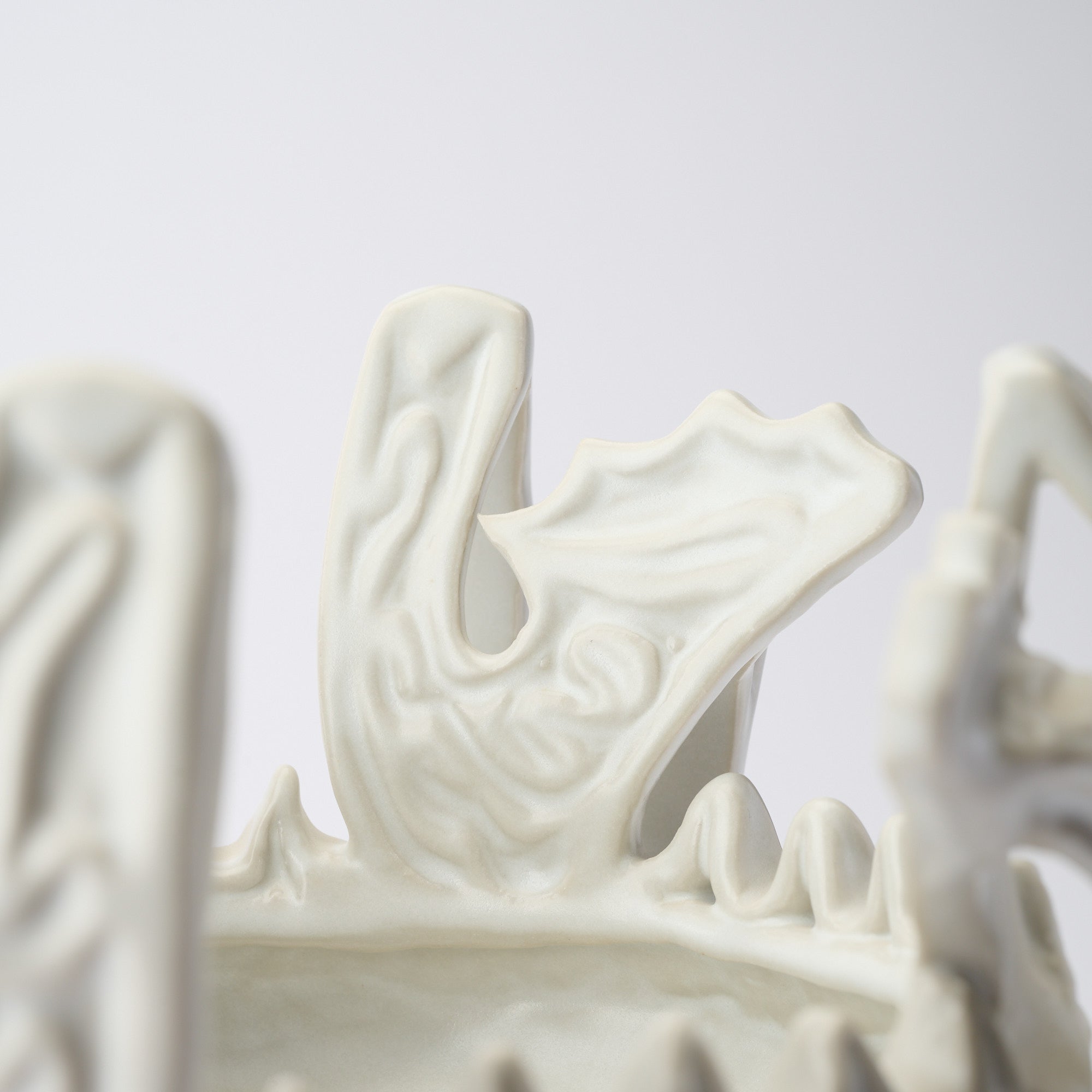
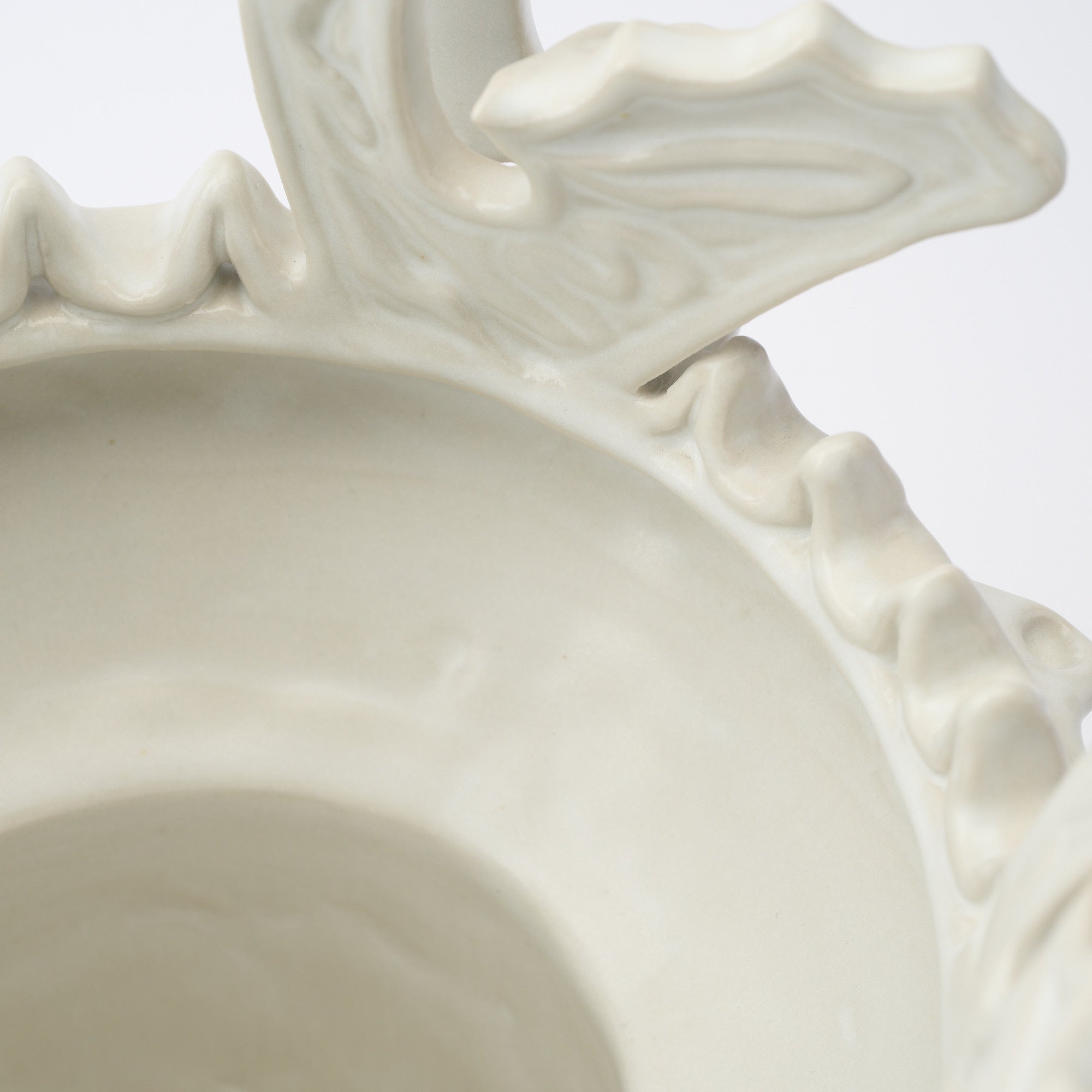
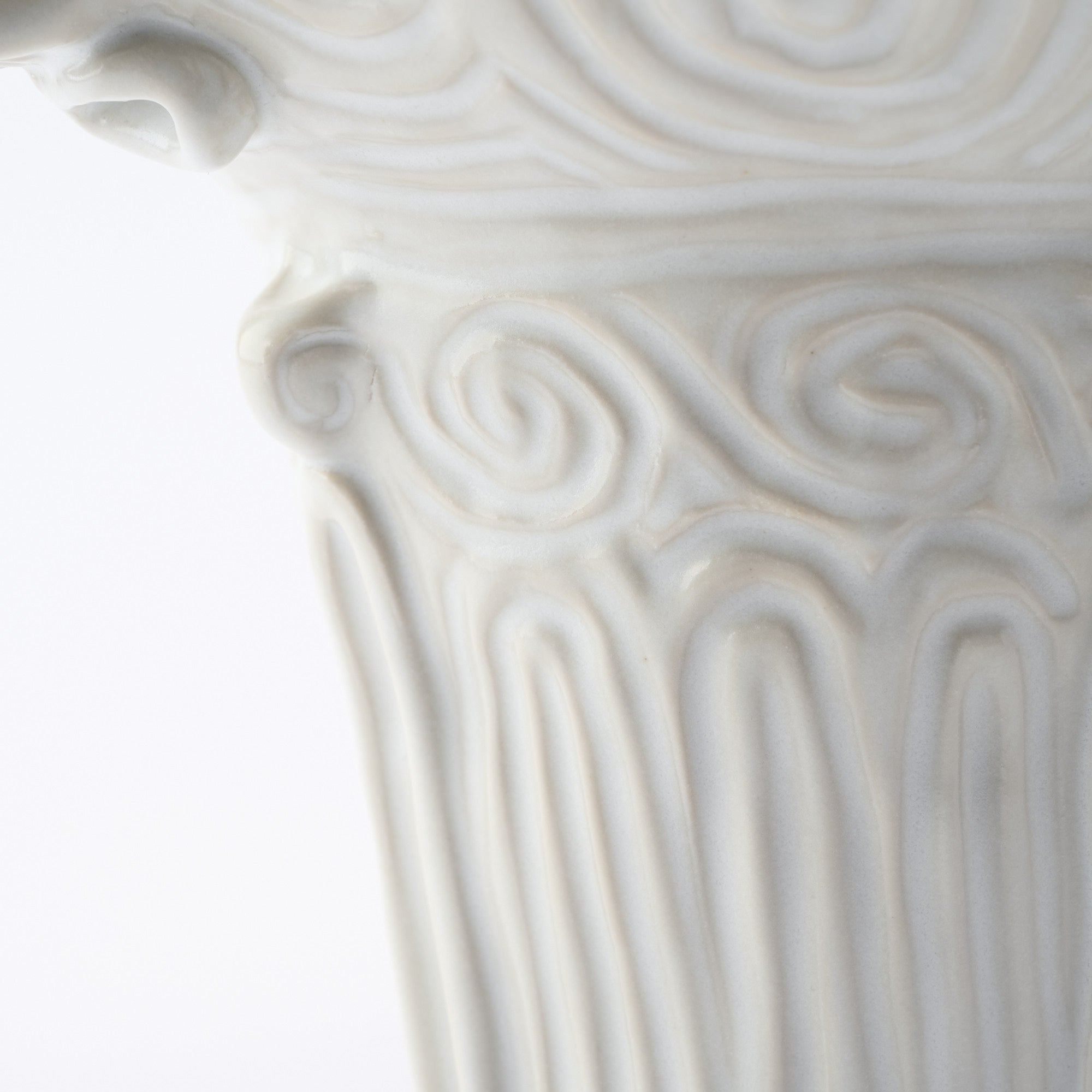
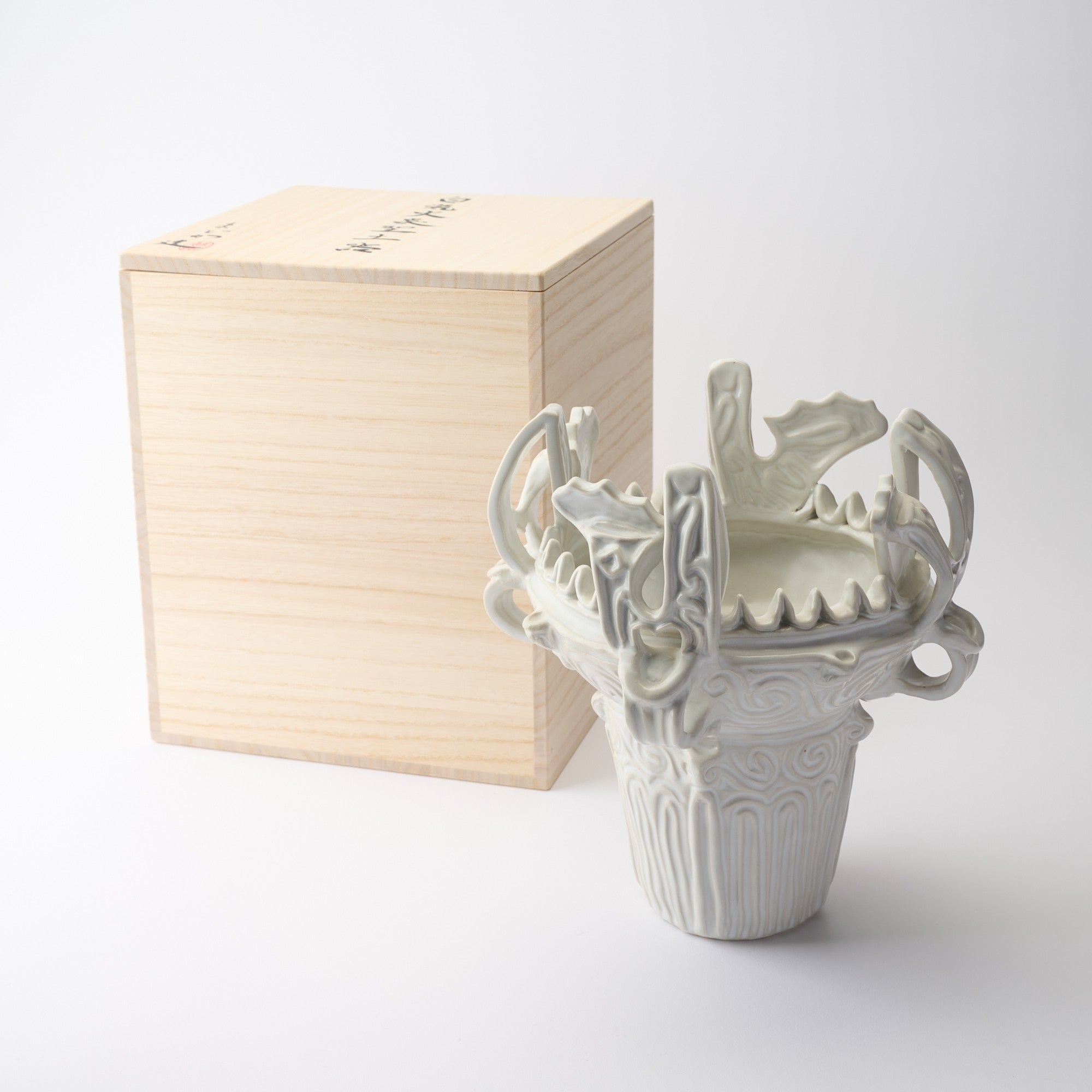
La pièce est entièrement construite à la main selon une méthode de montage au colombin, sans tour. Le corps central s'élève progressivement à partir de colombins d'argile superposés et repose avant que les éléments supérieurs ne soient fixés. Les quatre projections prononcées de la sculpture sont façonnées individuellement et positionnées avec une attention délibérée au rythme et à la symétrie. Leurs formes complexes, évoquant des flammes, créent un mouvement ascendant tout en préservant l'équilibre structurel. Par une planification méticuleuse et un calibrage précis de l'échelle et de la proportion, Wakunami situe l'œuvre entre héritage et paternité.
La pâte d'argile est soigneusement mélangée pour renforcer la clarté et la réactivité de l'émail. Rendue dans une finition blanche sur mesure, la sculpture est intentionnellement dépouillée de l'historicisme terreux. En l'absence de tons d'argile naturels, le contour et l'ombre prennent le pas. La lumière définit les arêtes ; la profondeur émerge par le contraste. La forme affirme sa présence uniquement par la structure.
Homura se présente comme une méditation contemporaine sur la forme flamboyante Jomon—une exploration de la tension et de l'ascension imprégnée de révérence et de fascination durable pour les récipients d'argile qui peuvent être considérés comme l'origine même de la poterie japonaise.
DÉTAILS
| Quantity | 1 |
| Size |
D 25.5 cm (10.0 in) x H 25 cm (9.8 in) [Wodden box] L 24 cm (9.4 in) x W 24 cm (9.4 in) x H 29 cm (11.4 in) [Size of opening] D 10 cm (3.9 in) |
| Weight | approx. 4.9 lb (2.2 kg) |
| Material | Stoneware |
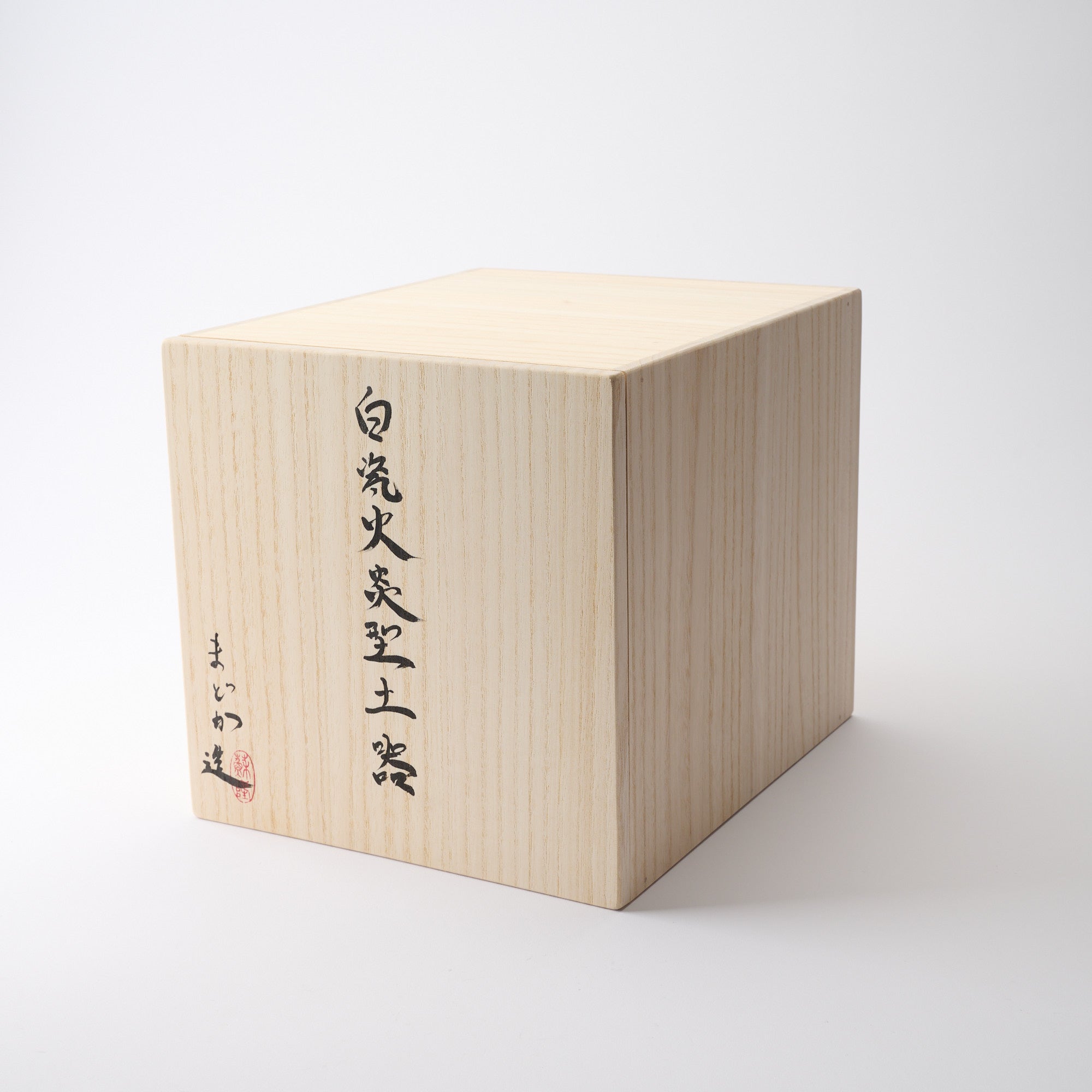
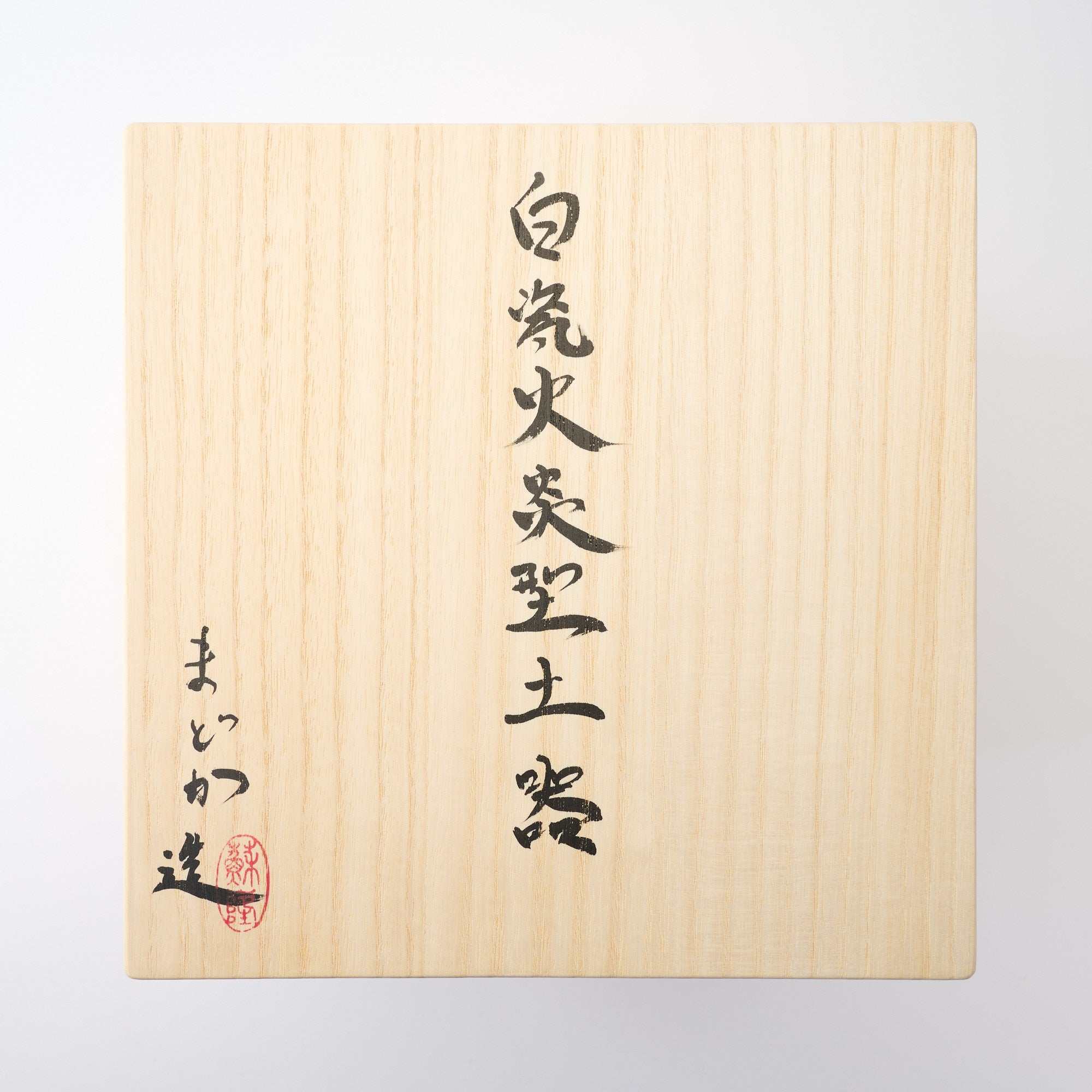
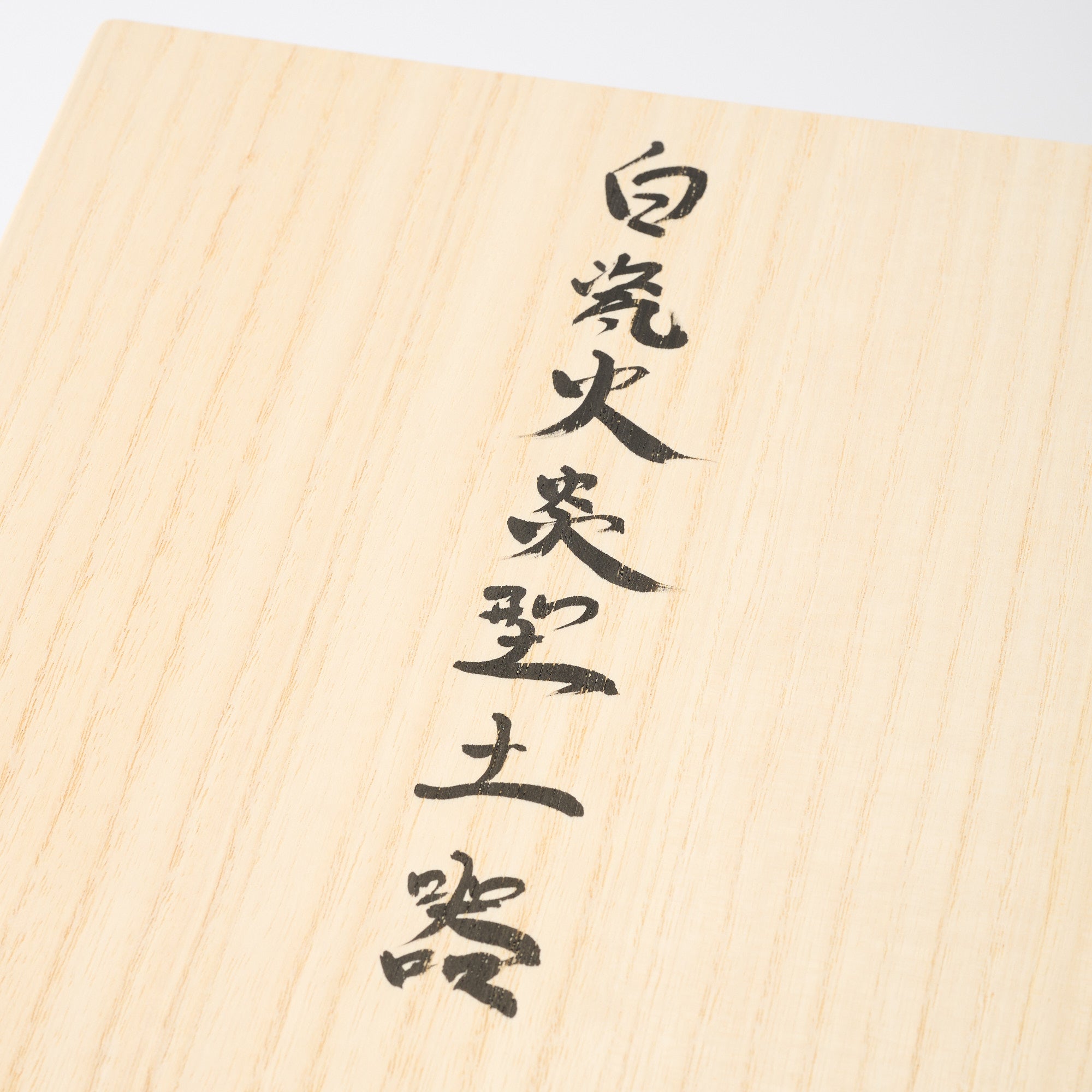
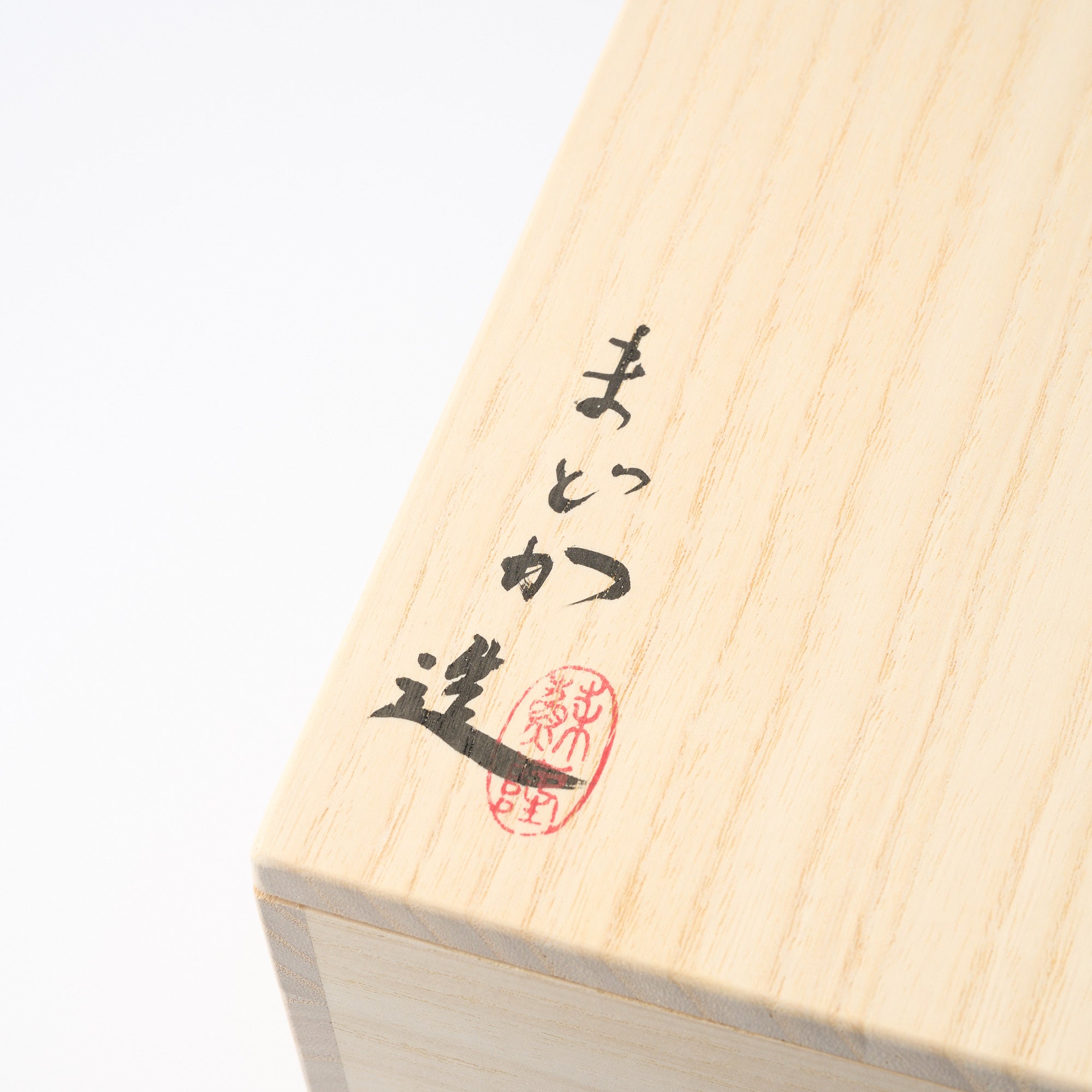
| Package Type | Wooden box |
Artisan / Marque
La céramiste Wakunami Madoka, basée à Kyoto, puise son inspiration dans l'ancien. Profondément touchée par l'art du peuple Jomon, qui compte parmi les plus anciennes poteries au monde, elle réinterprète des formes millénaires pour l'époque actuelle. Forte d'une formation à la fois dans la céramique Koishiwara, un artisanat populaire originaire de Kyushu, et dans la céramique Kyo native de Kyoto, elle apporte un raffinement doux et gracieux à l'attrait primitif des formes Jomon par son usage de nouvelles argiles et émaux.
Choisir les options