Keshiki 景色
景 landscape · 色 color
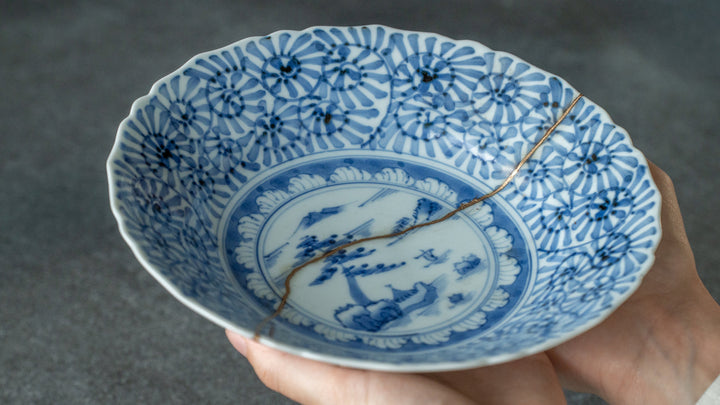
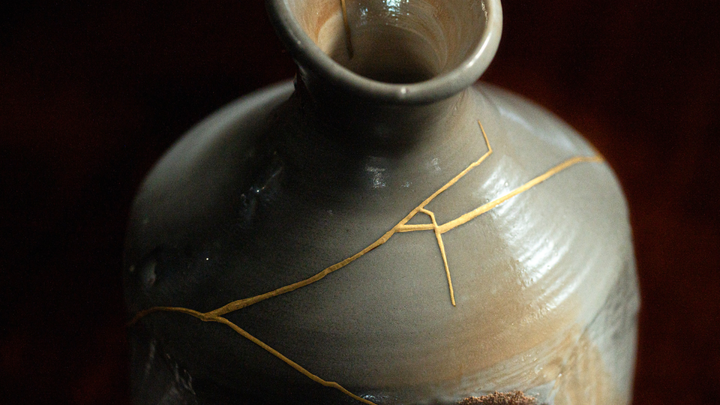
Keshiki (littéralement « paysage ») désigne une manière japonaise d'apprécier la céramique qui trouve la beauté dans les expressions qu'une pièce acquiert pendant la cuisson — la façon dont l'émail fondu coule sur la surface, les marques de brûlure laissées par les flammes, le caractère de l'émail de cendre, et la « saveur » variée du corps d'argile. Parce que la cuisson au four à bois dépend du hasard incontrôlable, aucune pièce ne cuit de la même manière, et ces effets accidentels sont prisés comme l'individualité de l'œuvre. Cette sensibilité s'étend même aux fissures et aux anciennes réparations : les célèbres ustensiles de thé sont admirés pour leurs grandes fissures, reflétant un goût japonais — distinct de l'idéal chinois de raffinement impeccable et uniforme — qui voit dans l'émail naturel coulant et l'imperfection un « paysage » à lire comme un panorama.
Dans la cuisson Raku, le keshiki apparaît comme un jeu de rouges, de bruns, de gris et de noirs façonnés par la flamme plutôt que par le dessin. Dans le kintsugi, les parties réparées sont appelées keshiki ; lorsqu'elles sont magnifiquement exécutées, elles peuvent augmenter la valeur d'un objet au-delà de celle d'une pièce intacte.