

8 thèmes de vaisselle japonaise pour sublimer votre table
De la poterie rustique à la laque élégante, découvrez les thèmes de vaisselle japonaise qui reflètent votre mode de vie.
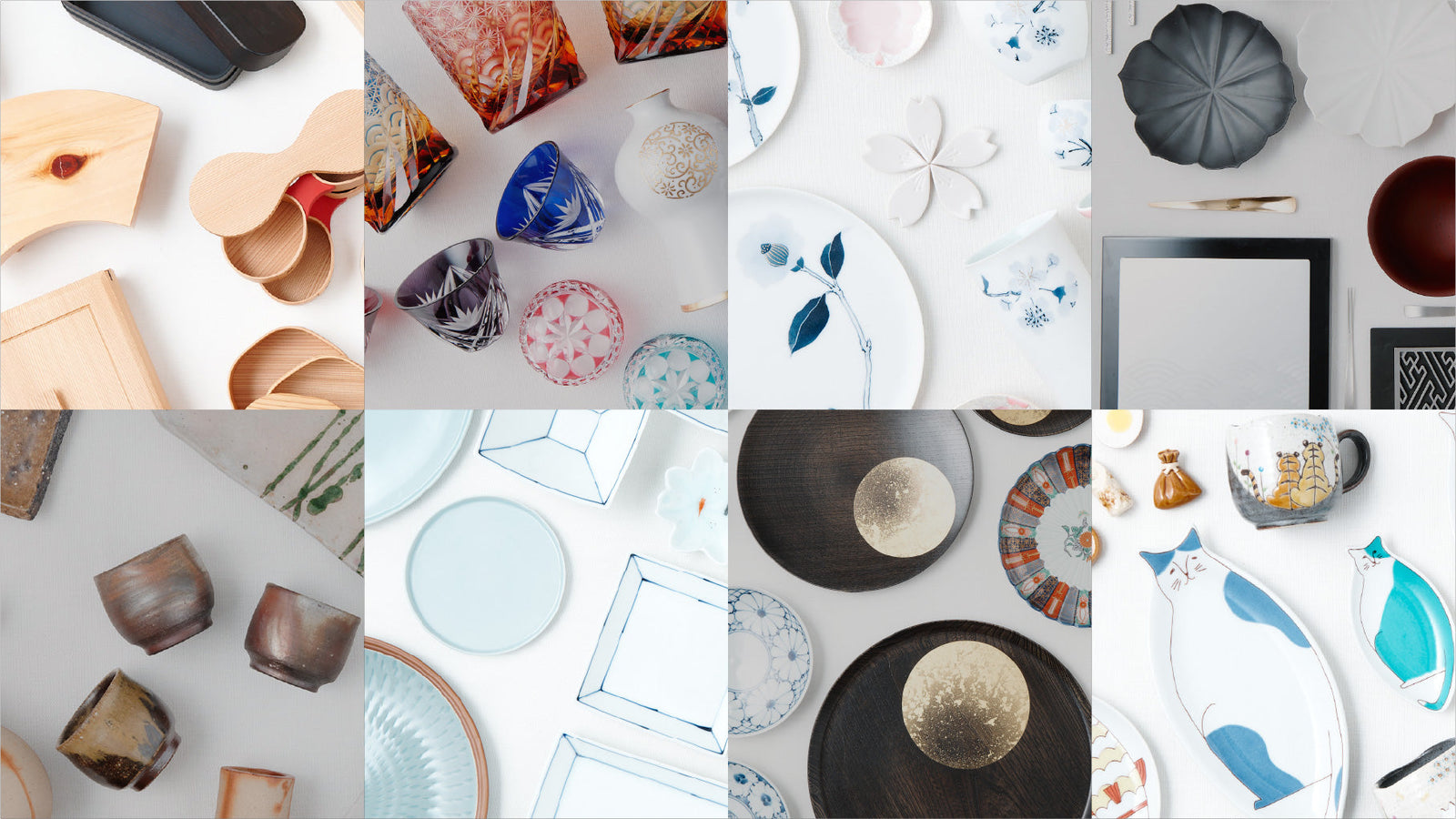
La vaisselle japonaise offre une large gamme de formes, de matériaux et d'expressions, de la porcelaine raffinée aux laques richement travaillées. Si vous explorez la vaisselle japonaise pour la première fois, cette diversité peut sembler difficile à appréhender. Il n'est pas toujours évident de comprendre comment les pièces diffèrent, comment elles s'associent, ou ce qu'il convient de choisir pour votre intérieur.
Plutôt que d'aborder la vaisselle japonaise uniquement par la couleur et la forme, ce guide propose une approche plus intuitive. Chez MUSUBI KILN, nous organisons la vaisselle japonaise en huit thèmes distincts. Chacun reflète un équilibre différent entre matériau, forme et impression visuelle.
En comprenant ces thèmes, il devient plus facile d'identifier ce qui vous attire naturellement et d'aborder la sélection avec plus de clarté. Que vous constituiez votre première collection ou que vous affiniez votre art de la table japonaise, ce cadre offre un point de départ utile pour choisir des pièces qui vous correspondent.

Les huit thèmes de la vaisselle
Modern

Ce thème se définit par une sophistication urbaine et une clarté affirmée. Il privilégie une palette composée de noirs d'obsidienne, de gris ardoise et de blancs crayeux, souvent soulignés par des finitions mates. Dans ce thème, le vermillon profond de la laque japonaise, adouci par la technique traditionnelle du suri-urushi , apporte un accent ancré et raffiné sur un fond monochrome. Les formes sont maîtrisées et géométriques, soulignant une beauté qui s'intègre naturellement dans une atmosphère contemporaine où chaque objet remplit une fonction distincte.
Elegant

La vaisselle Elegant apporte une dimension cérémonielle et lumineuse à la table. Ce thème se caractérise par des courbes gracieuses et fluides et une délicatesse raffinée, comme l'éclat aux tons de gemme du verre taillé Edo Kiriko ou la lueur translucide de la porcelaine blanche fine ornée de dorures décoratives. Ces pièces ajoutent du prestige aux occasions formelles ou cérémonielles.
Traditional

Ce thème rend hommage à la présence digne des techniques et motifs utilisés à travers les générations. Avec des formes intemporelles depuis des siècles, vous découvrirez les motifs iconiques de style old Imarien vermillon riche et les bords festonnés classiques inspirés des chrysanthèmes en fleur. Ces pièces portent un poids patrimonial à la fois formel et durable.
voir la collection TRADITIONAL
Rustic

Le thème Rustic célèbre l'énergie brute et puissante de la terre et la chaleur transformatrice du four. Ancré dans l'esprit du wabi-sabi, ces pièces révèlent la beauté de l'imperfection à travers des surfaces d'argile rugueuses et des émaux naturels de cendre aux variations sauvages. C'est une expérience tactile, offrant une présence lourde et chaleureuse en main.
Minimalist

Le thème Minimalist réduit les éléments visuels à l'essentiel. Les surfaces sont épurées, avec peu de décoration, et l'attention se porte sur la proportion et l'espacement. Des céladons pâles ou des blancs cassés doux créent une atmosphère sereine et dégagée. Ces pièces agissent comme un cadre discret pour vos mets, soulignant la tension d'une courbe unique ou la texture subtile d'un émail fin sans la distraction de motifs décoratifs.
Natural

La tranquillité d'une forêt japonaise entre dans la salle à manger à travers les matériaux utilisés dans les pièces du thème Natural. Elles conservent une chaleur organique définie par le grain doux et pâle du hinoki, cyprès japonais, la force souple du bambou et la texture terreuse du papier washi . Des courbes iconiques des boîtes en bois cintré magewappa aux objets en bamboutissés à la main, ces pièces semblent légères, respirantes et profondément ancrées dans le cycle de la nature.
Charming

Ce thème introduit la douceur à travers la forme et la décoration. Les formes arrondies, les motifs délicats et les palettes de couleurs douces sont courants. Une légère asymétrie et des formes subtilement galbées créent un sentiment de confort accessible, tandis que les floraux peints à la main et les symboles saisonniers apportent une familiarité émotionnelle à la table.
Casual

Marqué par une atmosphère vivante et décontractée, le thème casual est fait pour l'énergie animée d'un foyer actif. Ces pièces sont conçues pour la durabilité et l'usage quotidien, avec des rayures audacieuses, des couleurs vives et des illustrations ludiques d'animaux comme des chats et des poissons. C'est un style sans prétention qui ne se prend pas trop au sérieux, vous invitant à profiter du plaisir d'un repas partagé.
Comment choisir la vaisselle japonaise pour votre intérieur
Choisir de la vaisselle japonaise ne consiste pas seulement à assortir des ensembles ou à connaître les traditions céramiques. Cela commence par remarquer ce qui vous attire naturellement. Vous pourriez vous retrouver à tendre constamment vers le poids terreux d'un bol rustique, ou peut-être préférez-vous l'éclat captant la lumière d'un verre élégant. Ces préférences instinctives restent souvent constantes, formant une “signature stylistique” personnelle qui transcende les artisans ou régions spécifiques.
En identifiant lequel des huit thèmes vous revient le plus souvent, des motifs commencent à émerger. Cela facilite le choix, surtout face à de nombreuses options similaires. Plutôt que de vous demander ce que vous devriez choisir, la question devient plus directe : quelles pièces semblent les plus naturelles à utiliser dans votre quotidien ?
Naviguer dans le tableau des thèmes de vaisselle
Pour vous aider à visualiser ce que vous préférez, nous avons organisé les huit thèmes dans un Tableau des thèmes de vaisselle basé sur deux axes intuitifs : Chaud à Froid et Doux à Structuré. Ce tableau est conçu pour montrer comment différents styles se rapportent les uns aux autres, s'éloignant de catégories rigides vers une carte fluide d'esthétiques.
Vous pouvez utiliser ce tableau pour décoder votre propre collection. En plaçant les pièces que vous possédez déjà dans ce cadre, vous remarquerez peut-être que vos favorites partagent une “sensation”similaire — peut-être qu'elles tendent toutes vers le Chaud et Doux (comme Natural ou Charming) ou le Froid et Structuré (comme Modern ou Minimalist).
En même temps, le tableau révèle des directions inexplorées. Au fil du temps, cette carte vous aide à choisir de nouvelles pièces avec la certitude qu'elles s'intégreront non seulement à votre intérieur, mais qu'elles s'harmoniseront aussi avec la vie que vous menez.
Téléchargez le tableau et essayez-le par vous-même.
L'art de la table japonais : une approche minimaliste
Comprendre la vaisselle à travers des thèmes n'est qu'un début. L'étape suivante consiste à apprendre comment ces pièces se réunissent sur la table.
L'une des façons les plus accessibles de commencer passe par une perspective fondamentale. Plutôt que d'ajouter davantage, elle se concentre sur ce qu'il faut laisser de côté—permettant à chaque pièce de se tenir avec intention.
Dans l'esthétique japonaise, cette idée est étroitement liée au concept de yohaku no bi, ou la beauté de l'espace vide. Il ne s'agit pas simplement de réduire les éléments, mais de créer un équilibre entre ce qui est présent et ce qui ne l'est pas.
Sur la table, cela signifie donner à chaque objet l'espace pour respirer. Une assiette n'est pas seulement une surface pour la nourriture, mais un cadre. Une composition ne se définit pas par la quantité, mais par le placement, la proportion et le rythme.
Cette approche s'aligne naturellement avec des thèmes tels que Minimaliste, Naturel et Élégant, où la retenue et l'espacement jouent souvent un rôle central. Cependant, l'idée peut s'appliquer à tous les styles. Une table rustique, par exemple, gagne en équilibre lorsqu'on laisse de l'espace entre les éléments, tandis qu'une table charmante devient plus raffinée lorsque les détails ne sont pas entassés.
Pour un regard plus approfondi sur la manière d'appliquer ces idées en pratique, consultez notre guide : Comment dresser une table japonaise minimaliste.
La vaisselle japonaise n'a pas besoin d'être comprise d'un seul coup. En reconnaissant les caractéristiques qui vous attirent, le parcours de choix devient progressif et plus personnel. À travers ces huit thèmes, nous espérons que ce guide offre une façon de commencer.
Stay close to the craft
Now and then, a quiet letter — new stories, seasonal notes, and the hands behind the work.
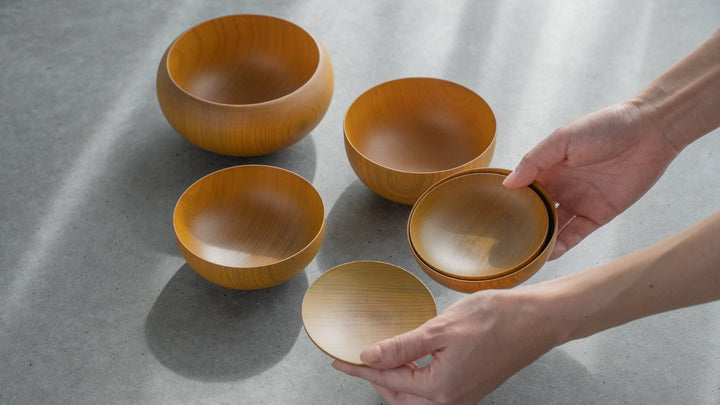
Que sont les bols Oryoki ? La vaisselle Zen de la méditation
Découvrez les bols oryoki, vaisselle gigogne traditionnelle du zen ancrée dans la pratique bouddhiste.
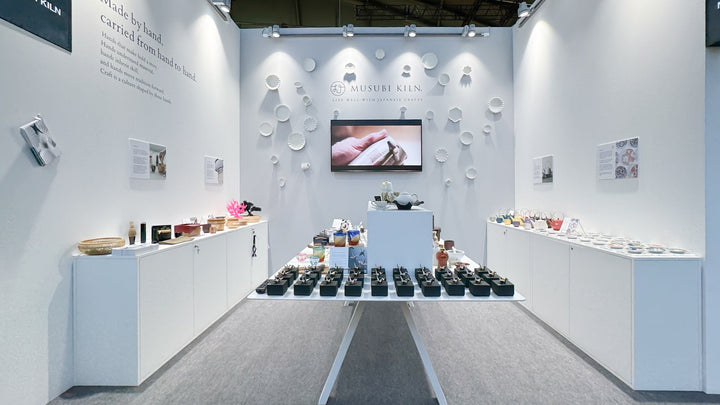
Musubi Lab à Ambiente 2026
Musubi Lab a exposé à Ambiente 2026, mettant en relation des acheteurs internationaux avec…
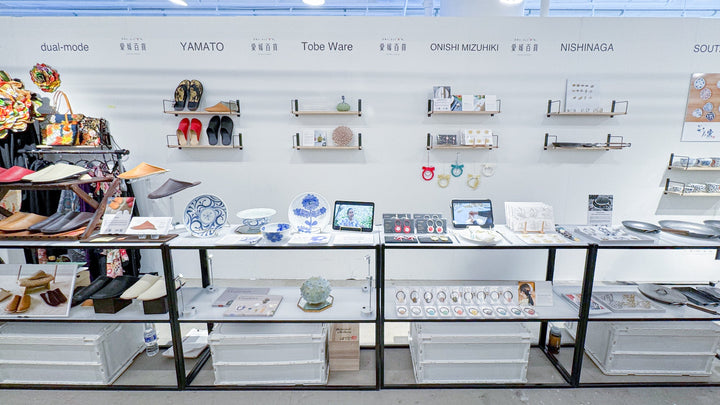
Musubi Lab exposé à Shoppe Object à New York
Découvrez comment Musubi Lab a présenté la céramique Tobe au salon professionnel Shoppe Object…
Leave a comment