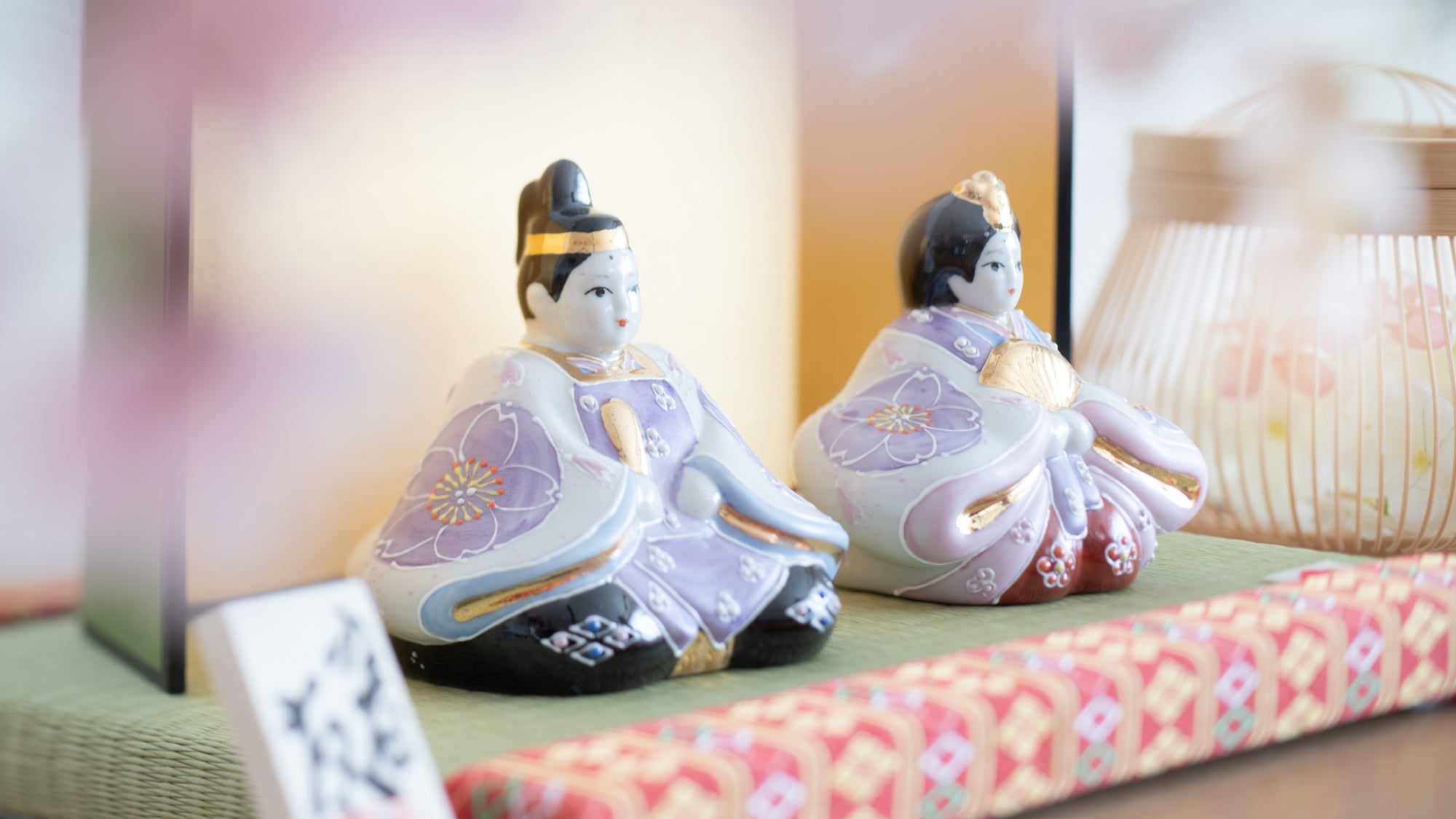
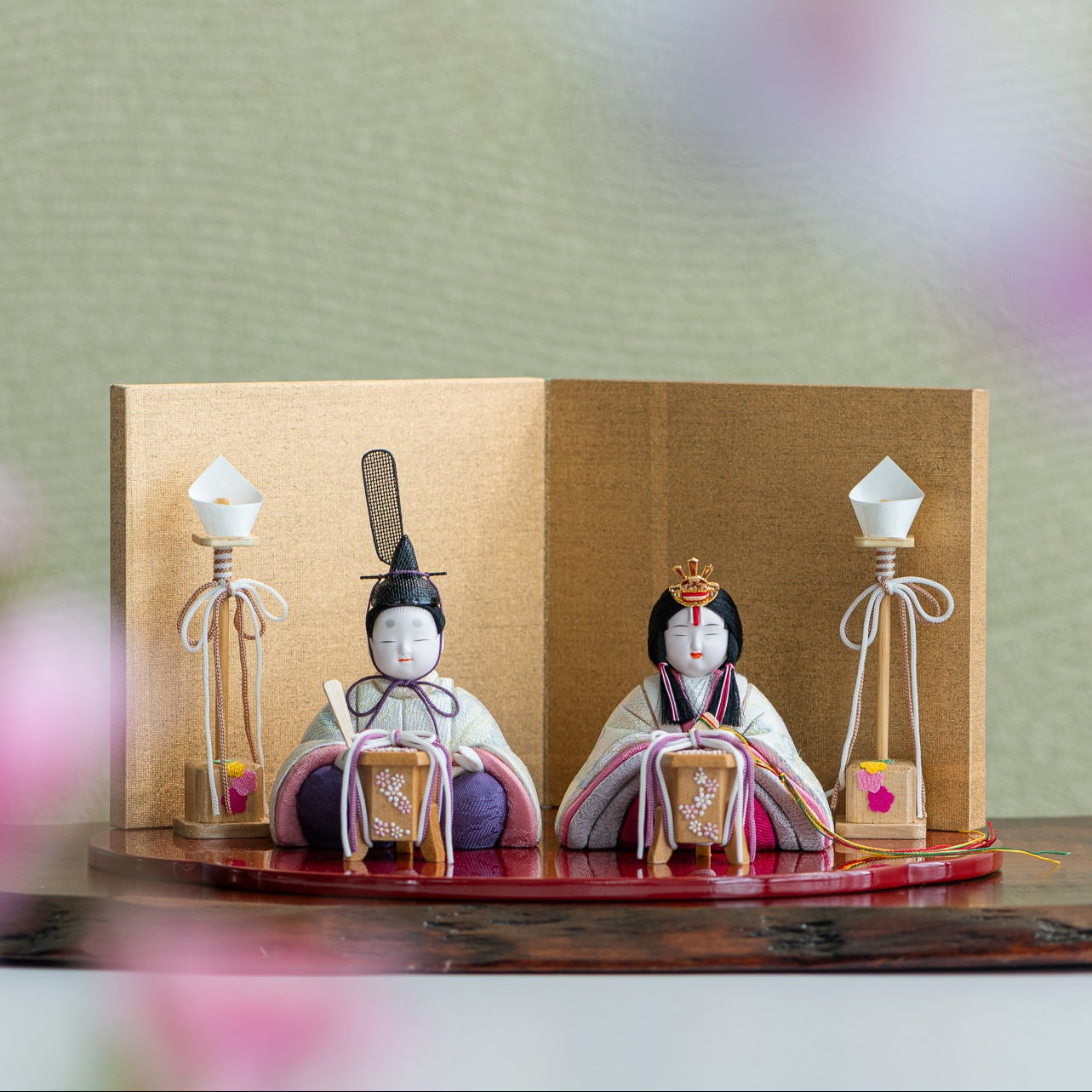
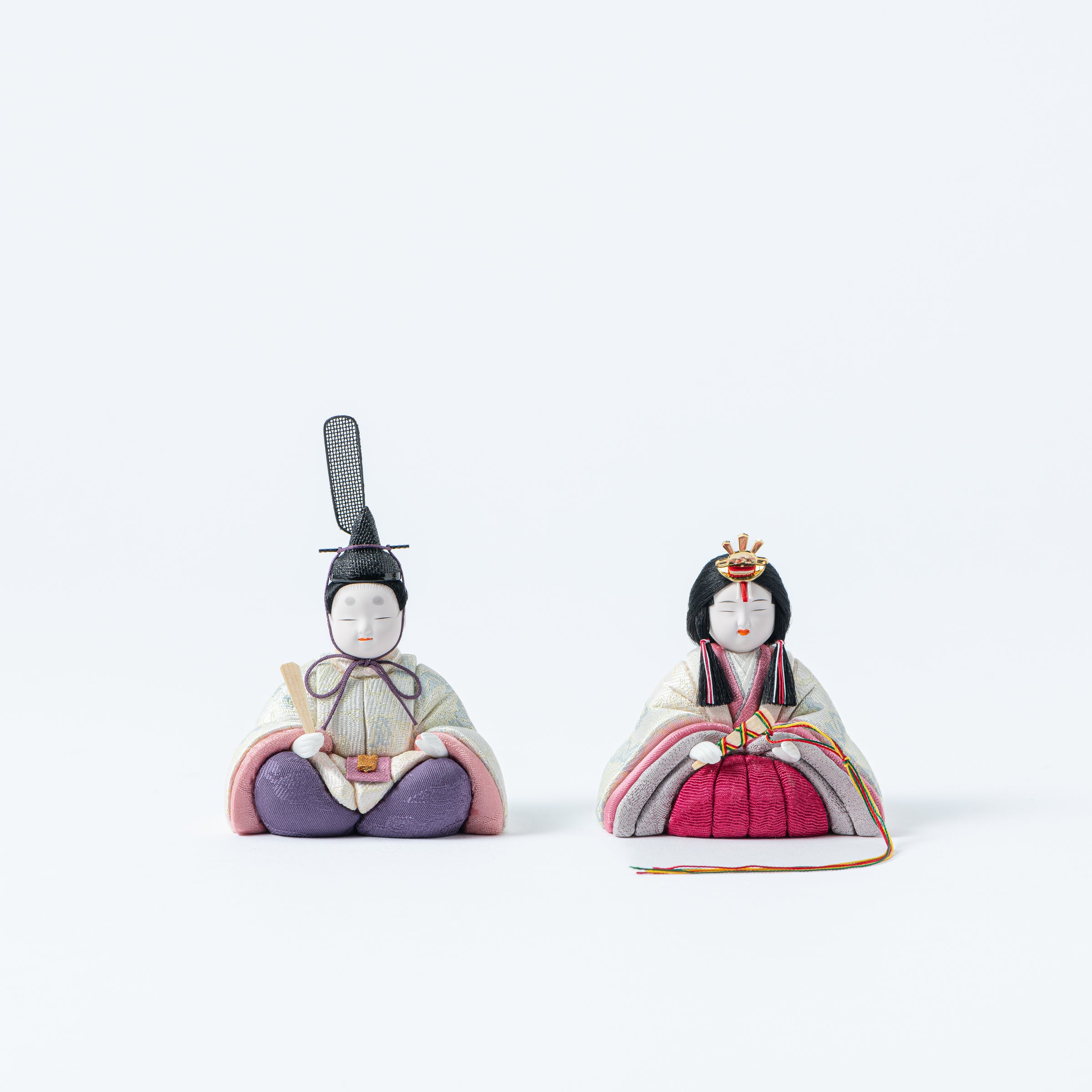
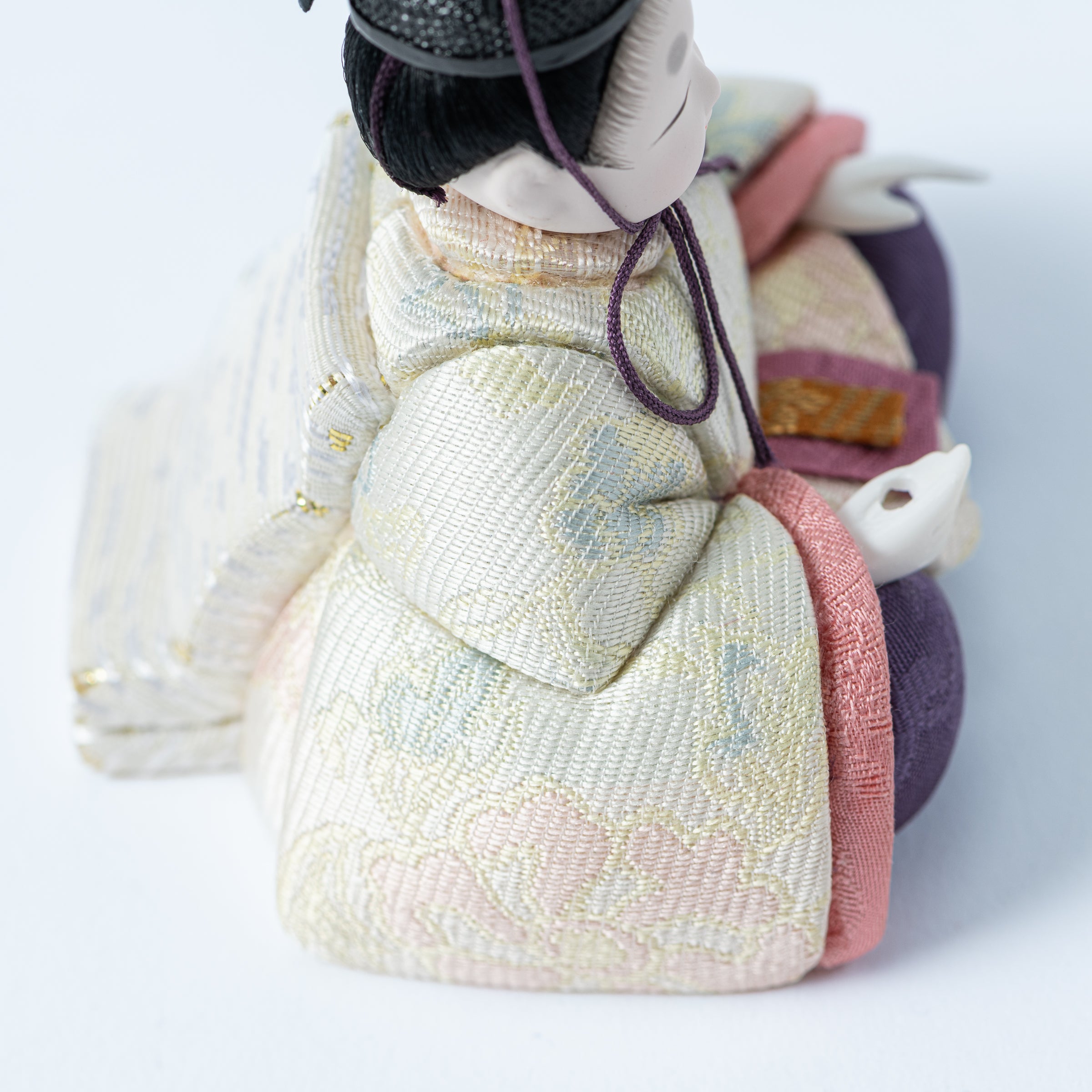
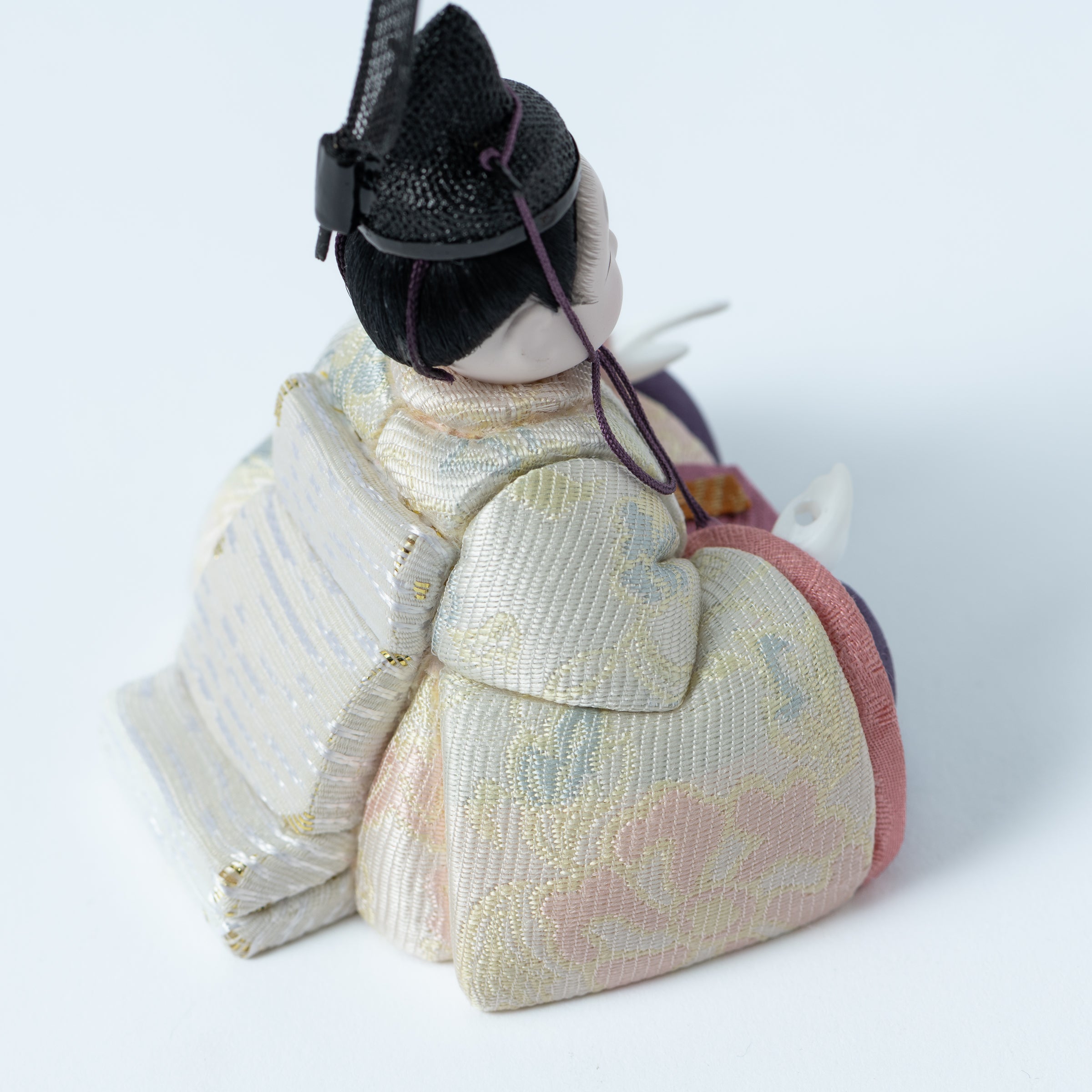
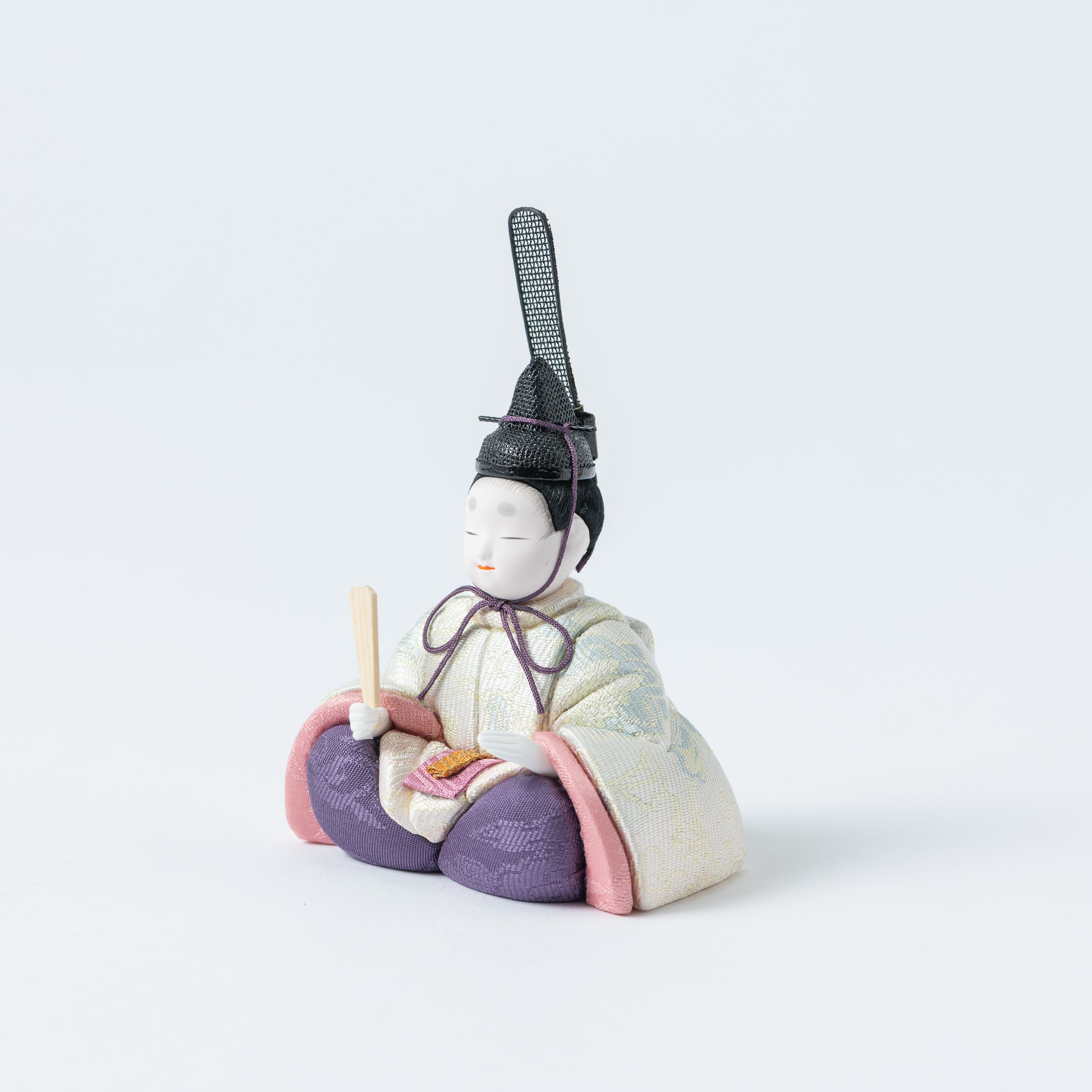
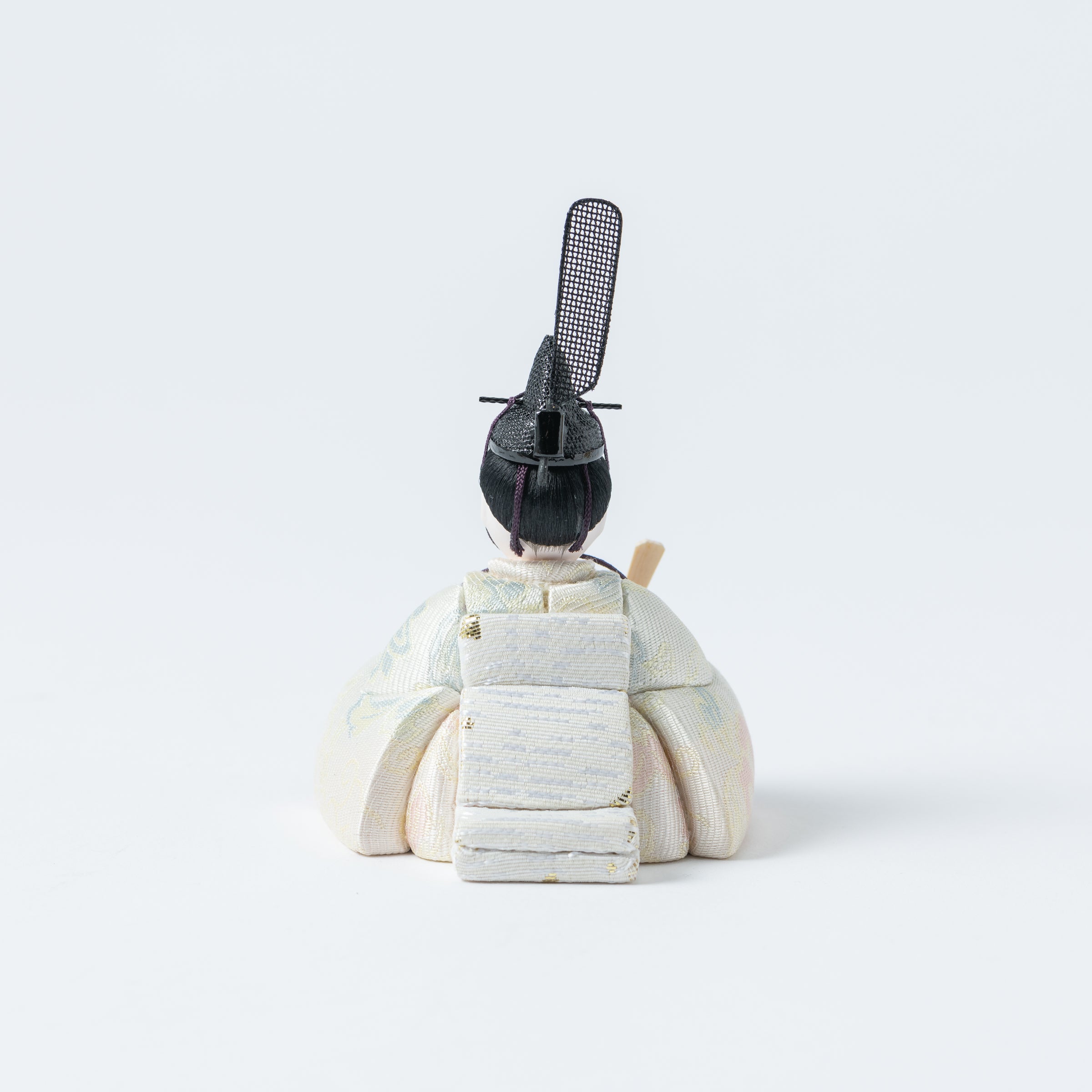
Poupées Hina motif arabesque de pivoines avec paravent doré pliant
Ships from Japan · Free shipping on orders over $250 USD
Estimated Shipping Widget will be displayed here!
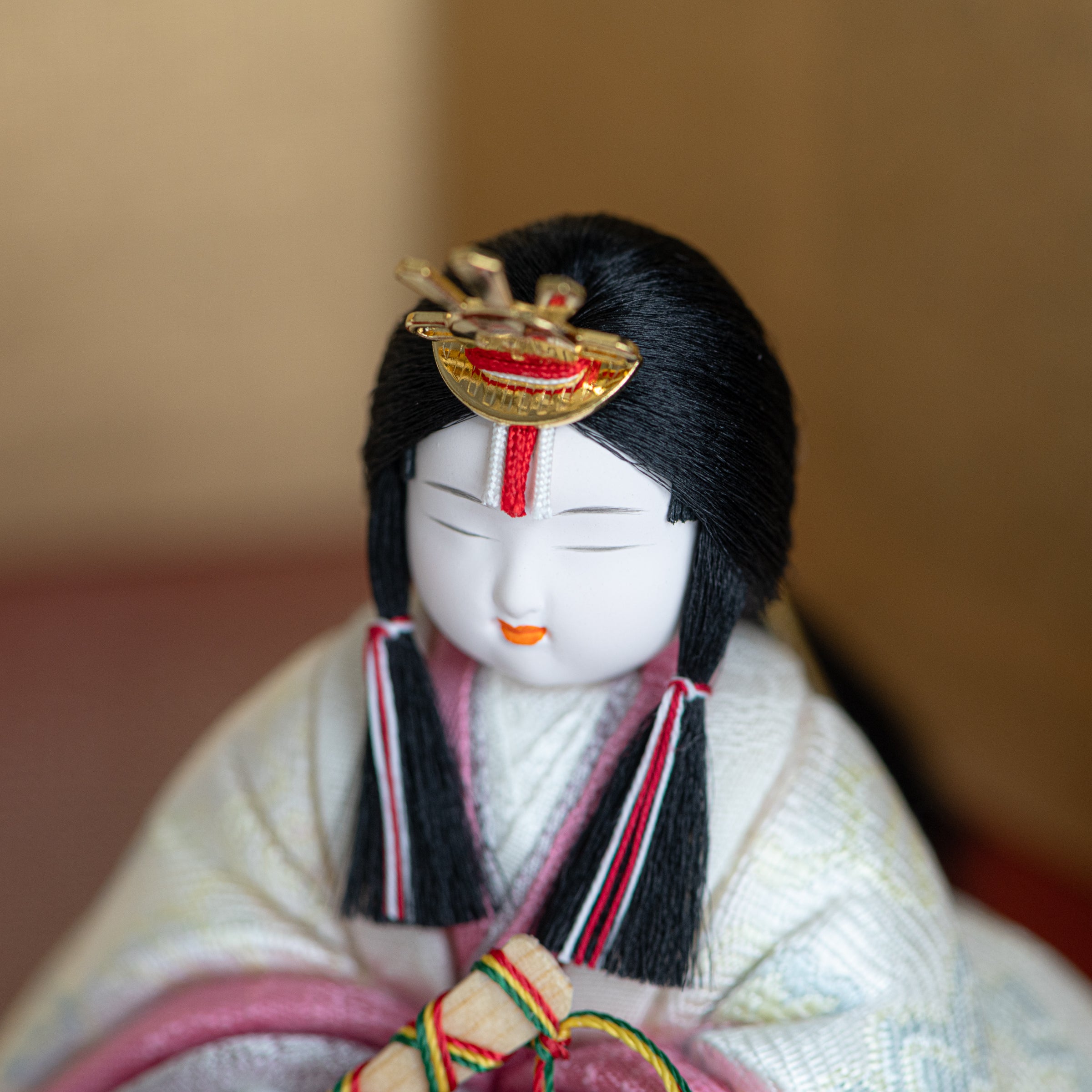
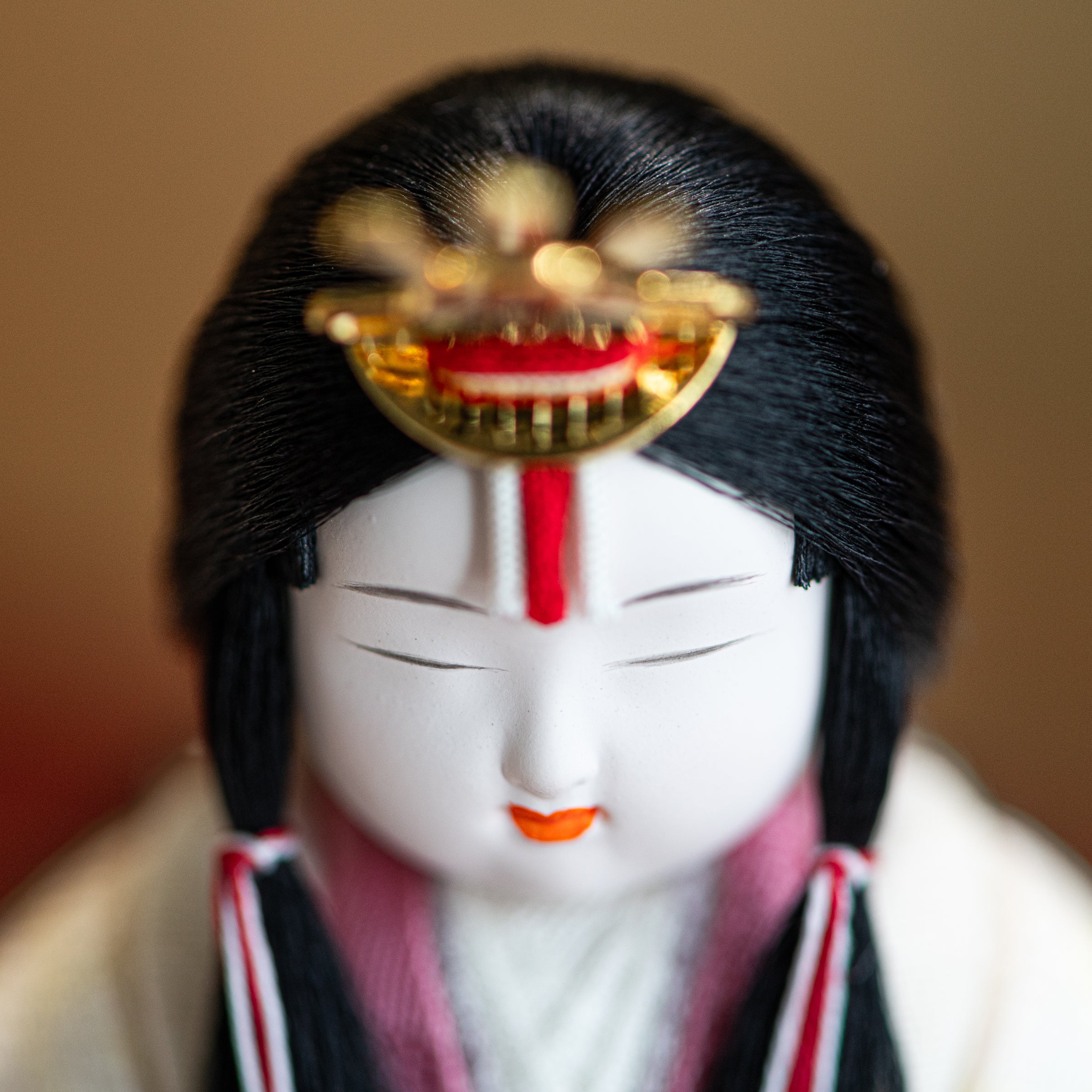
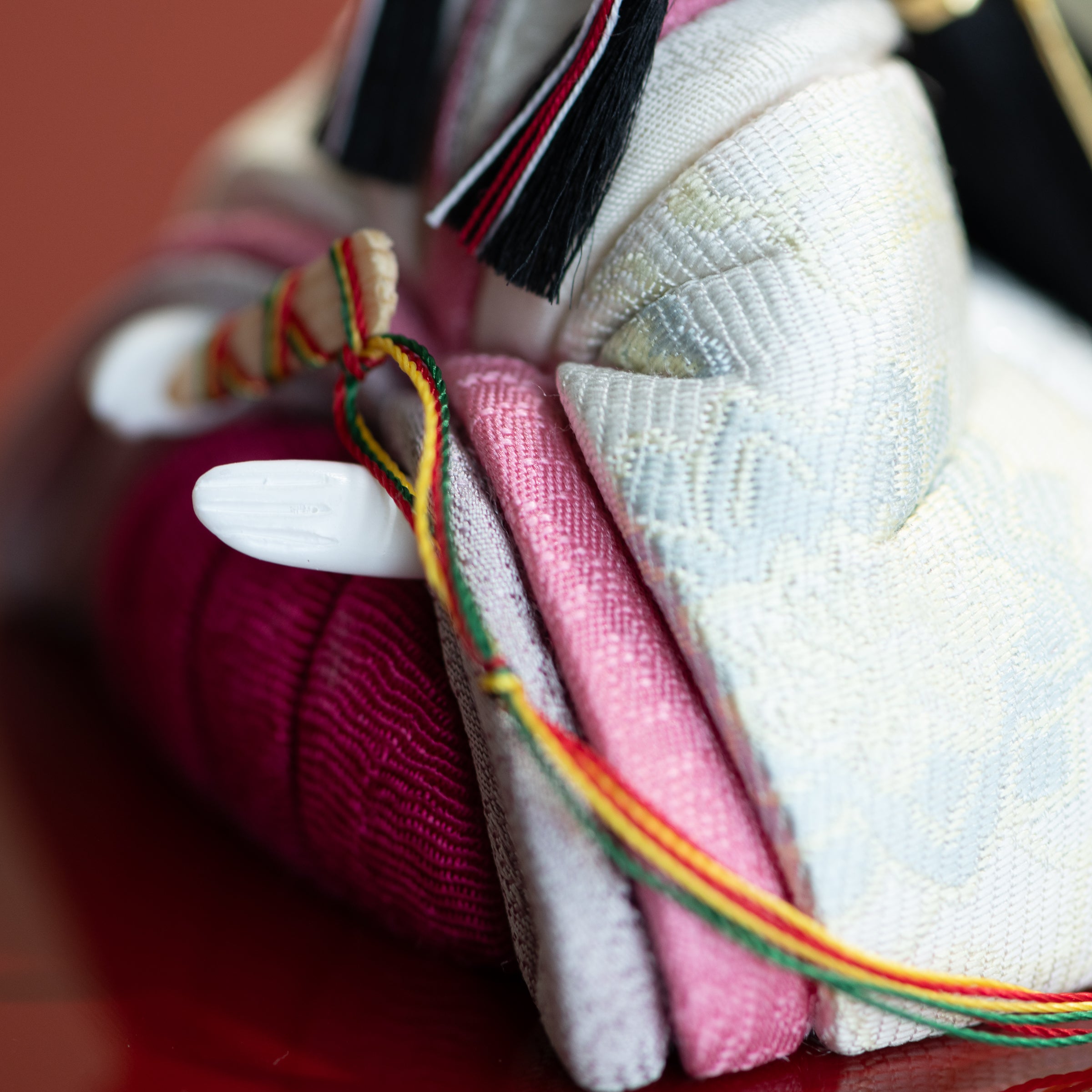
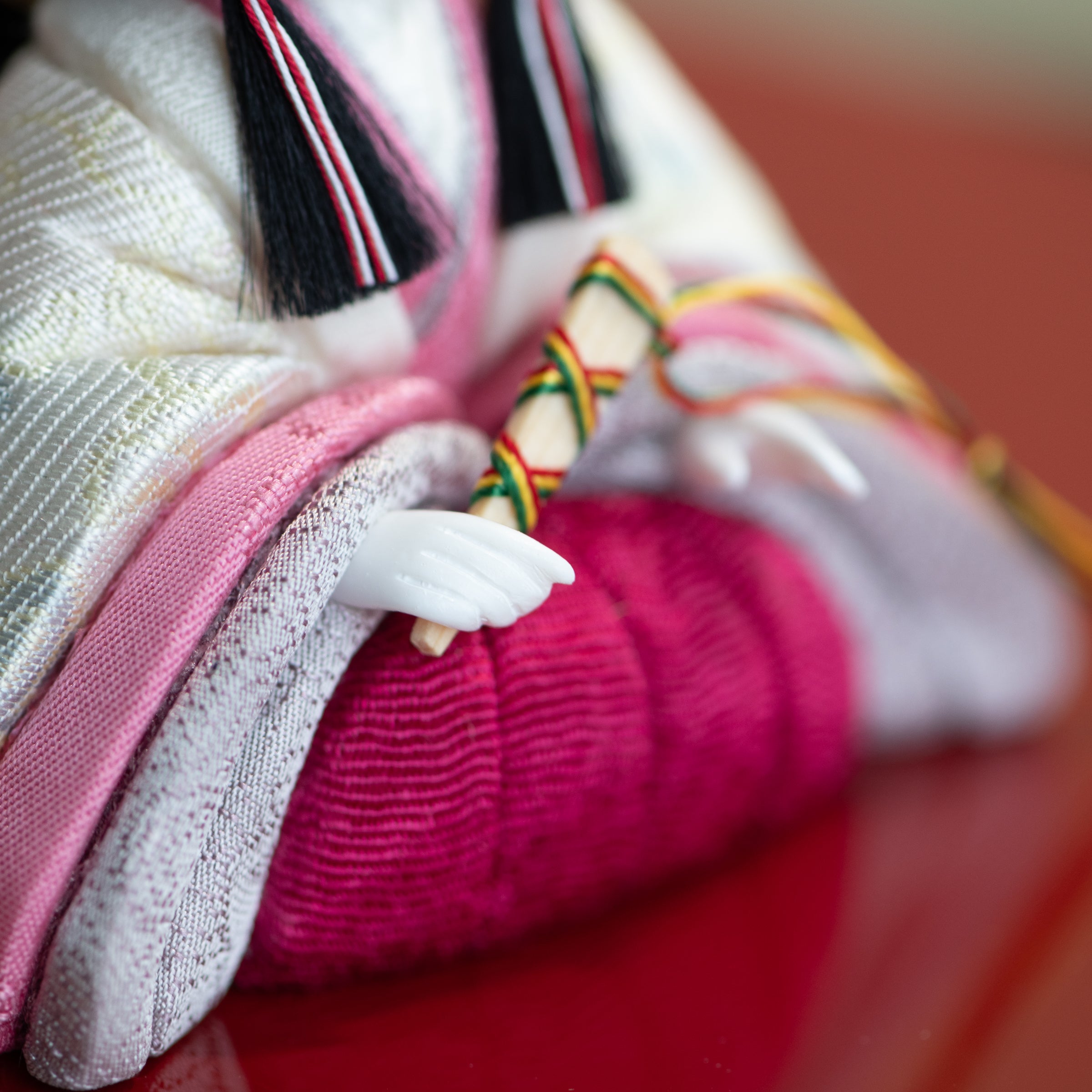
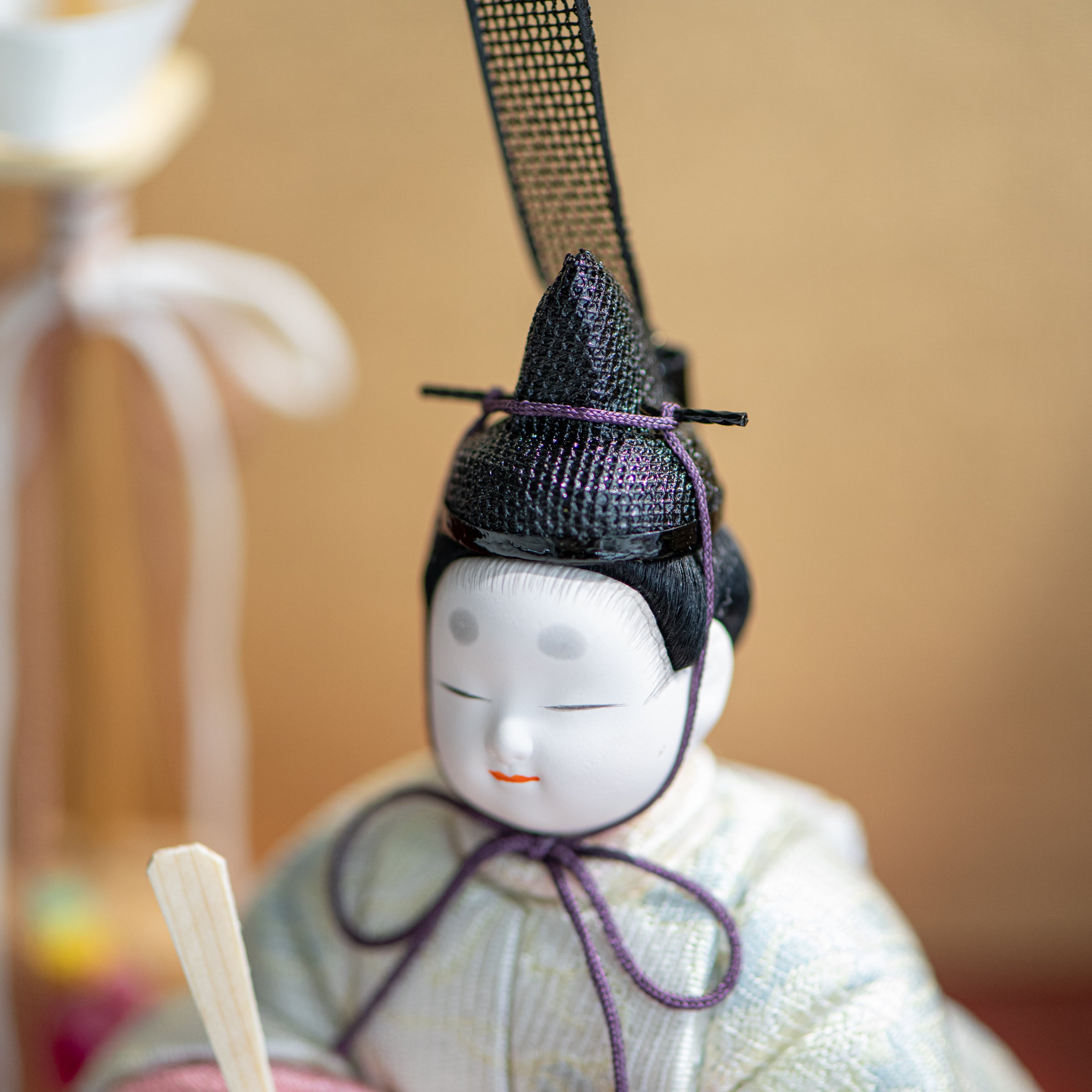
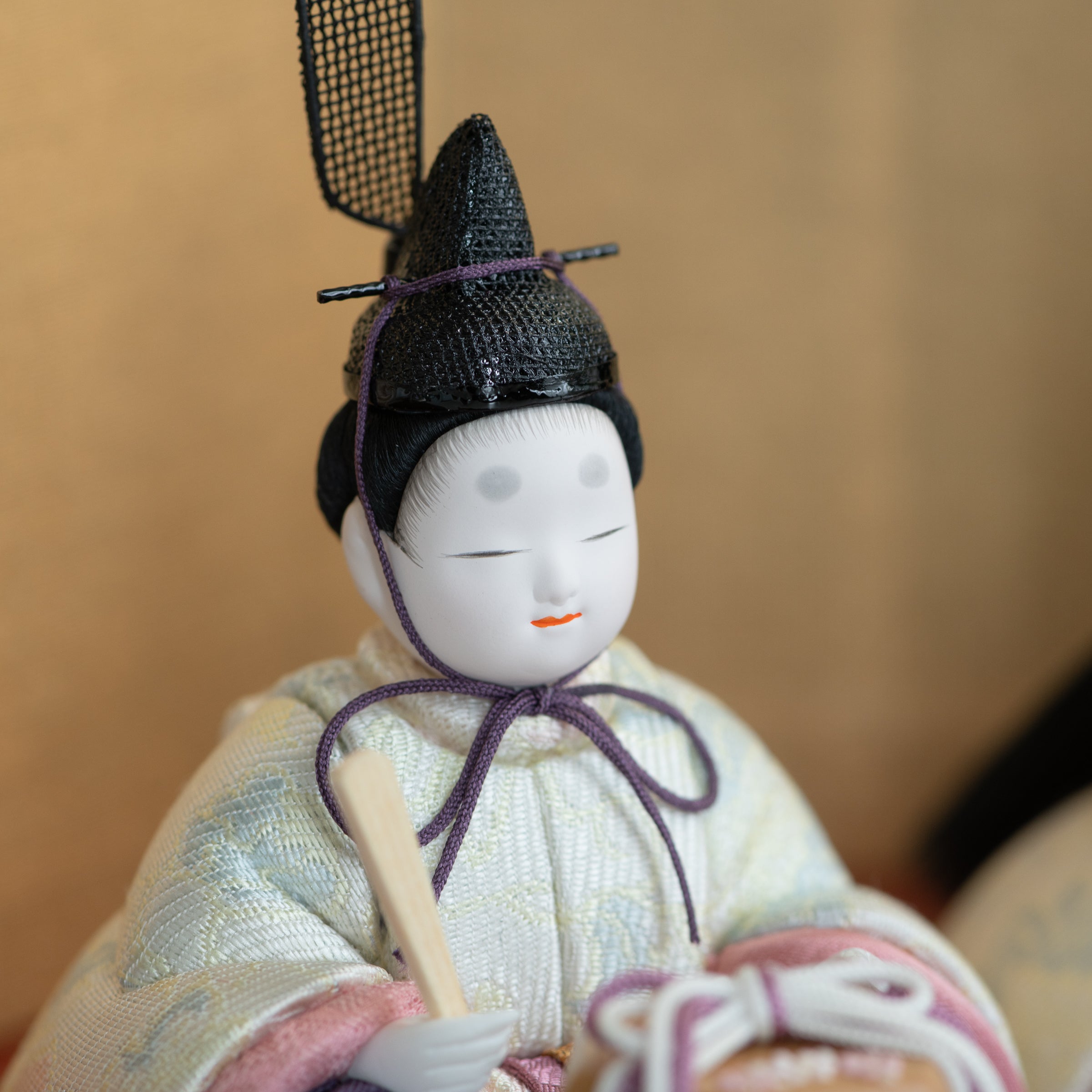
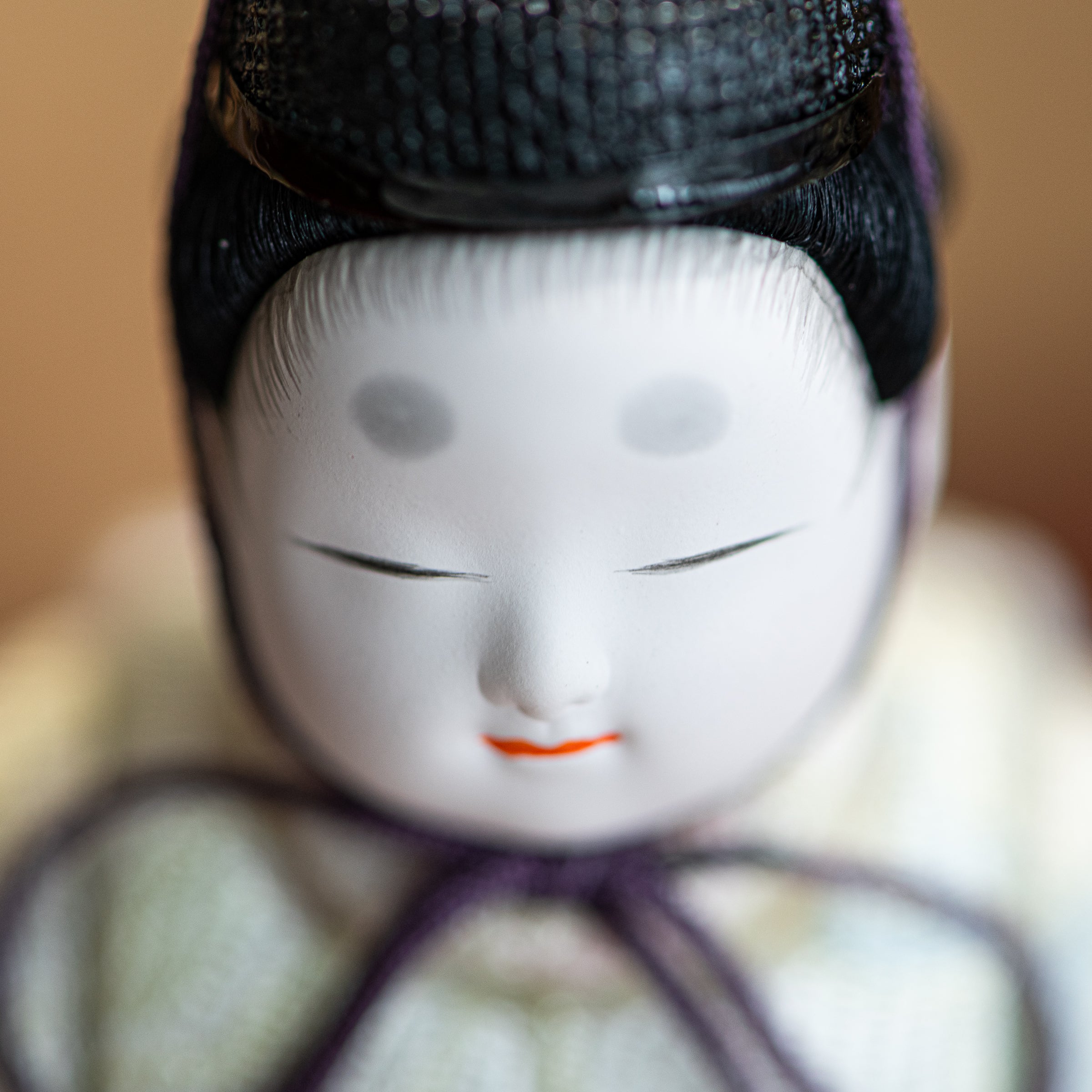
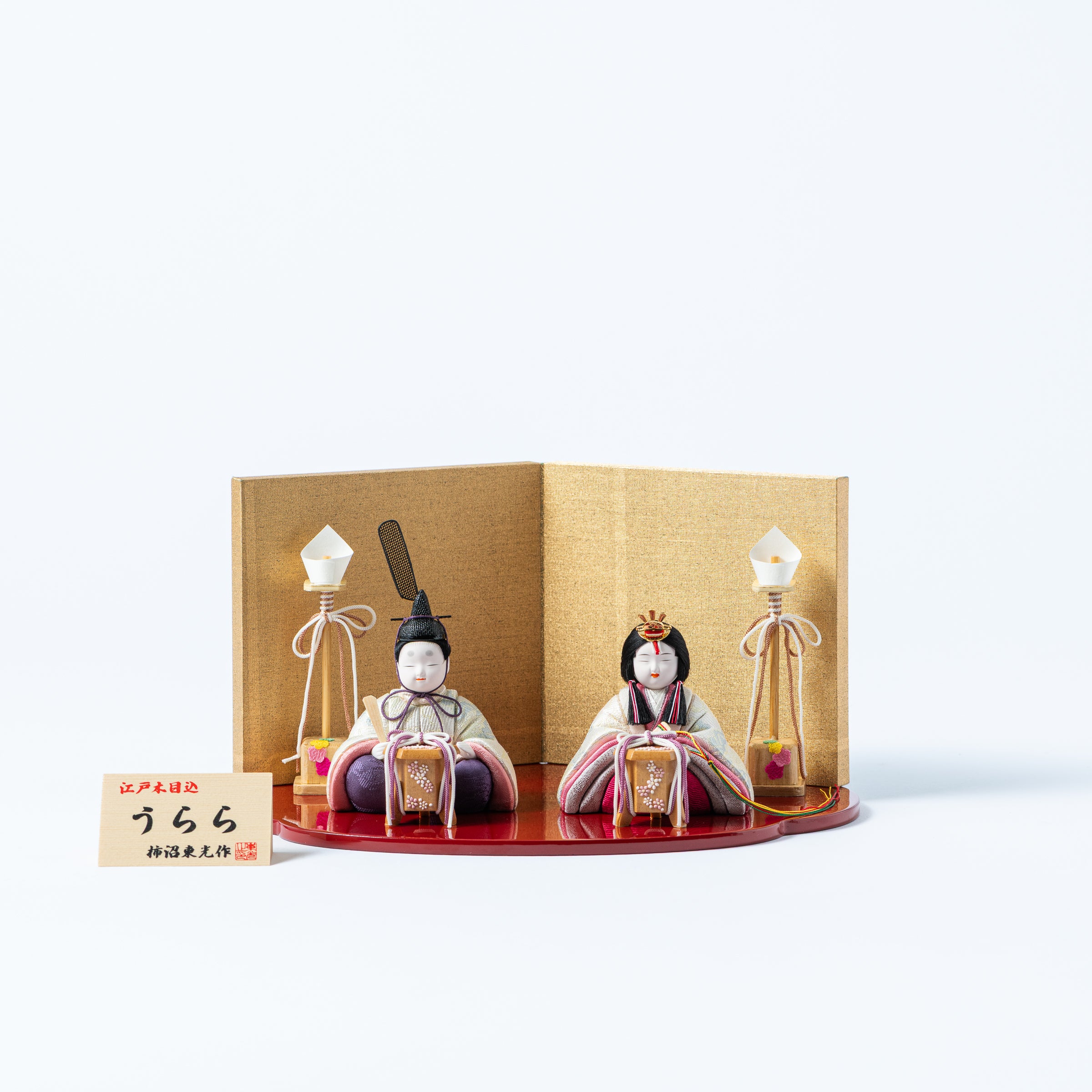
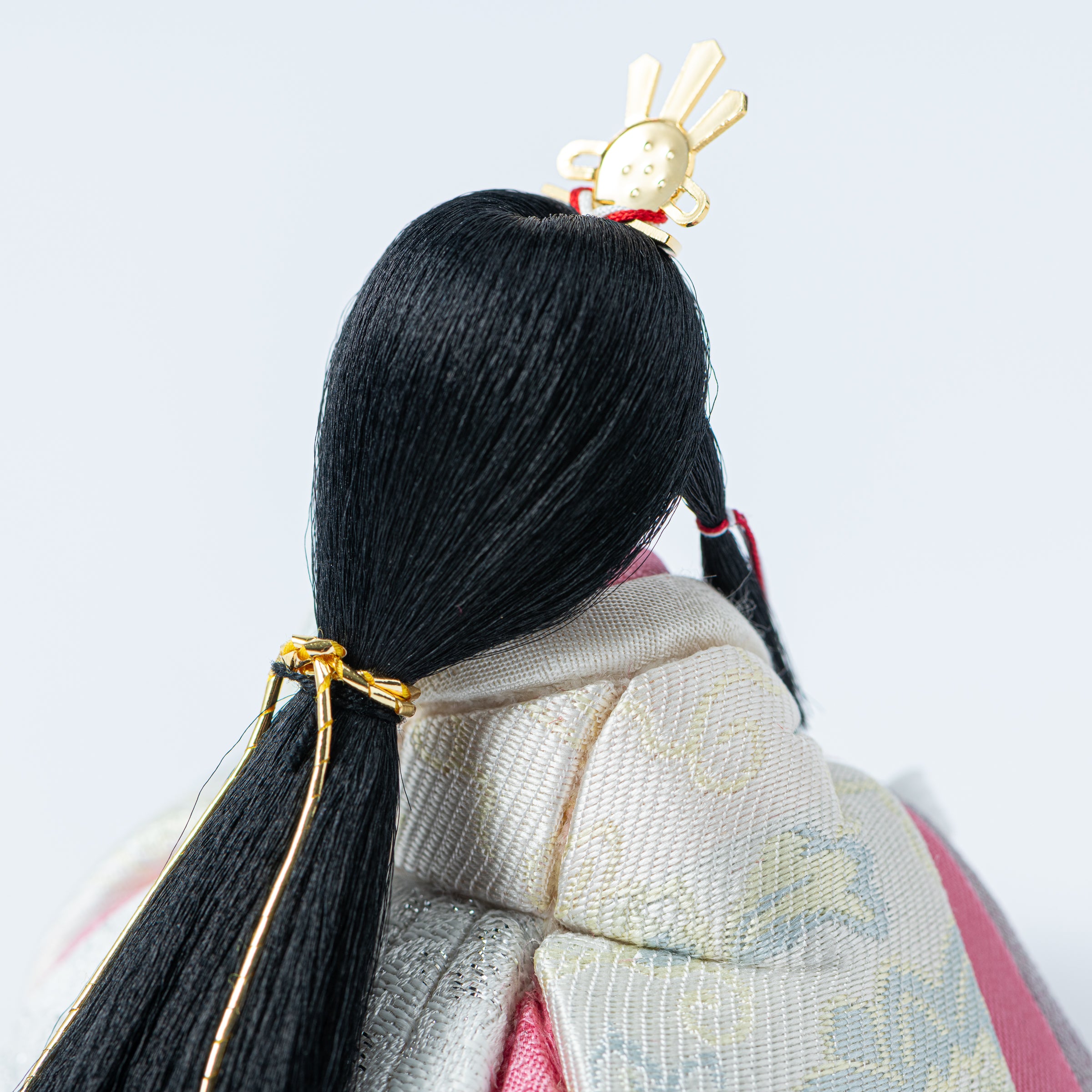
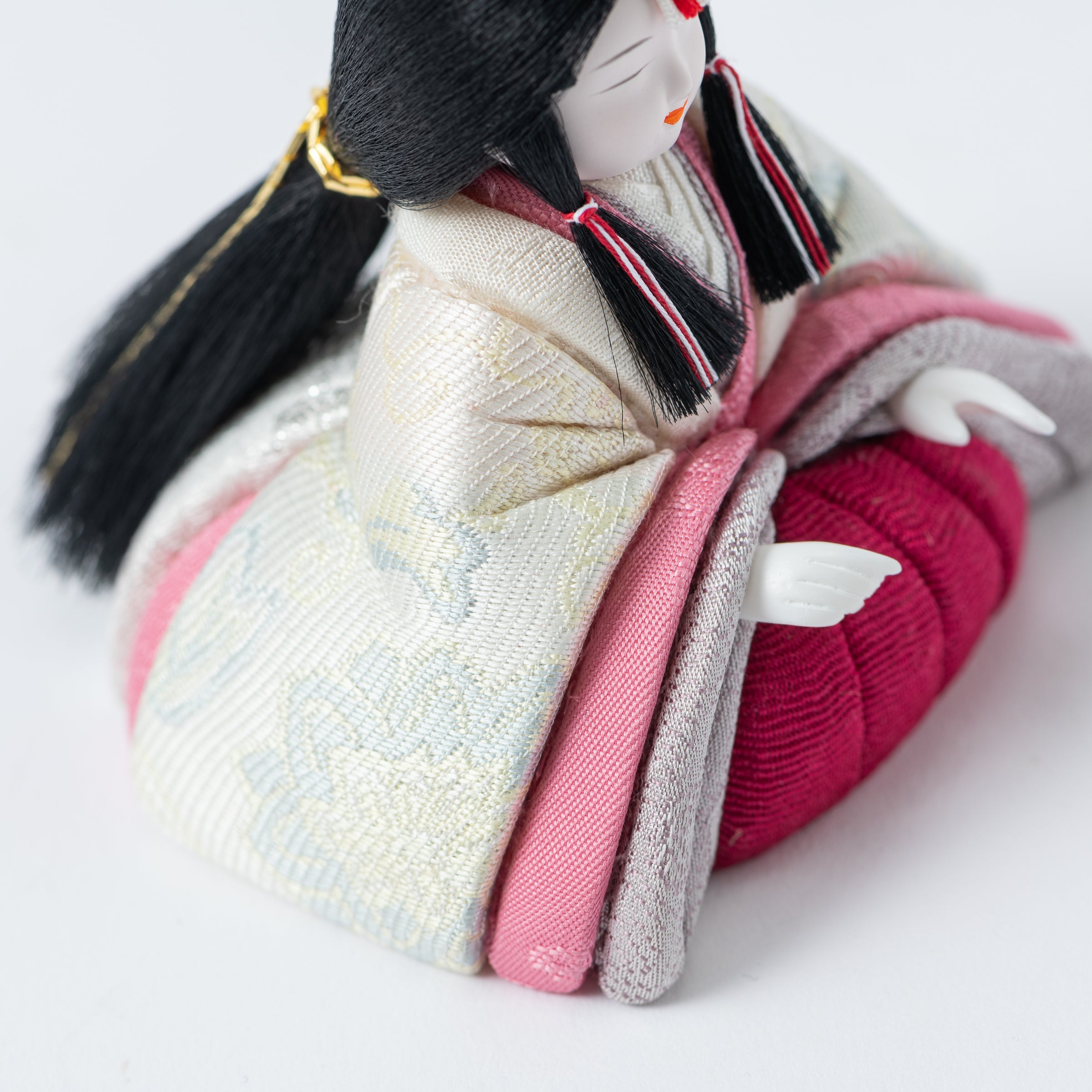
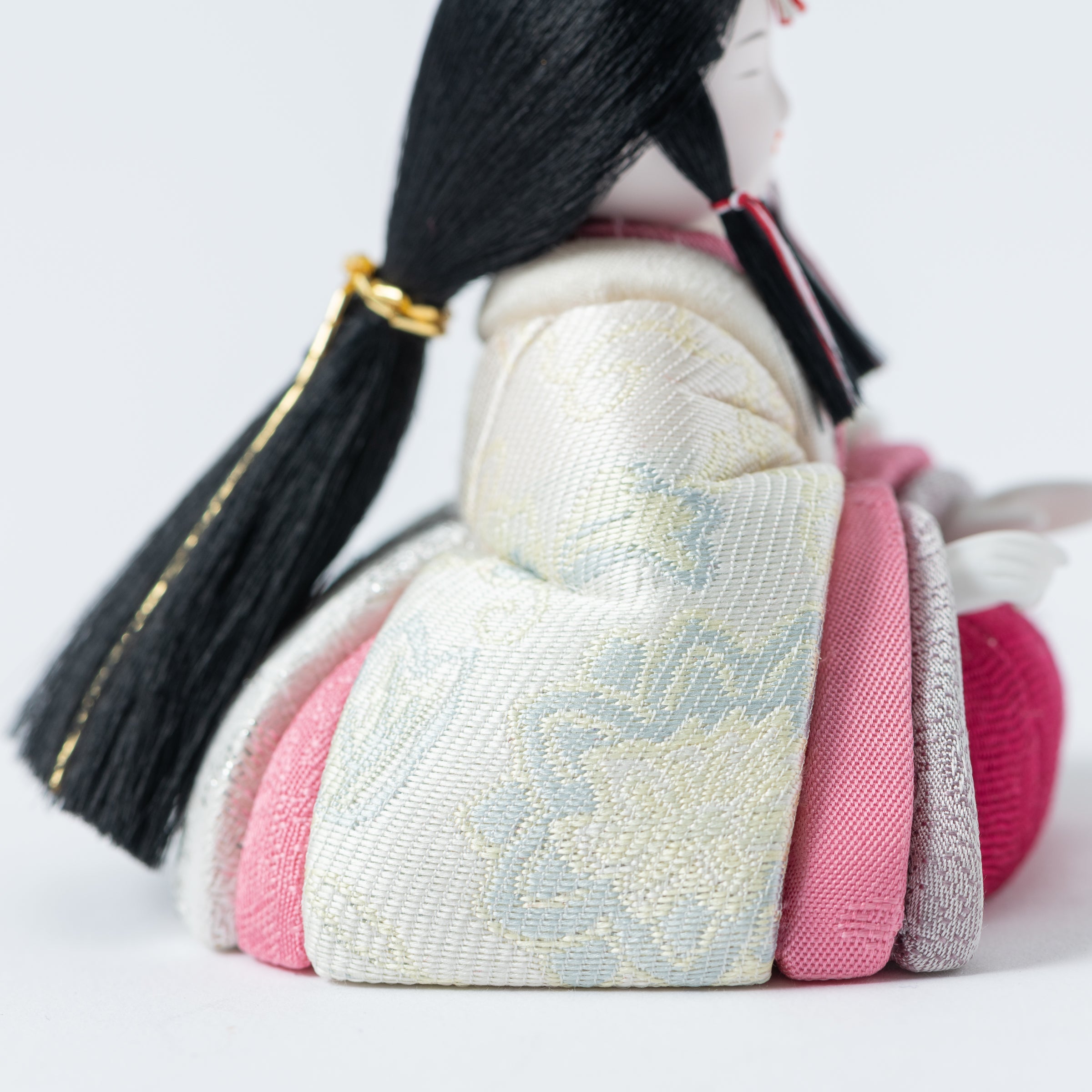
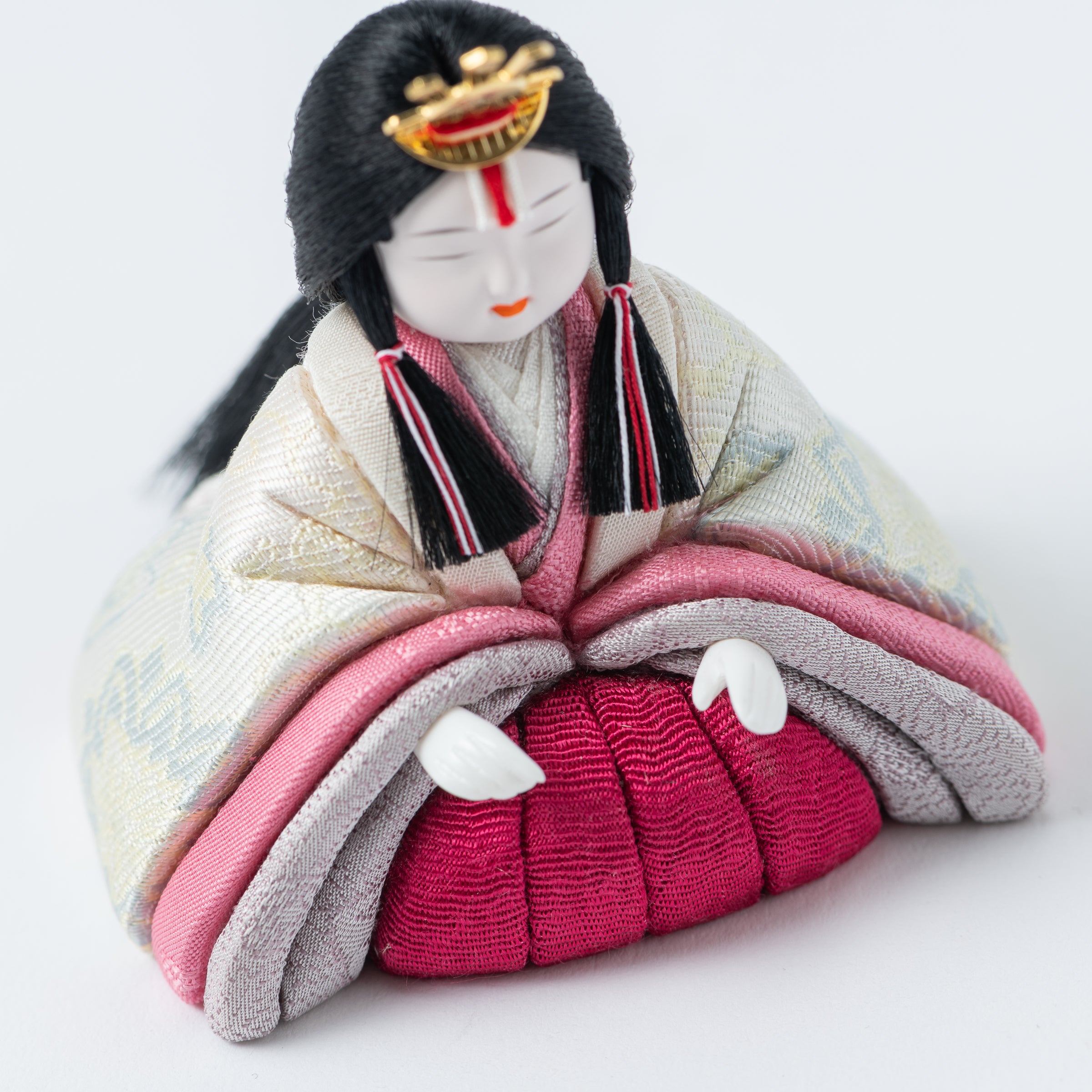
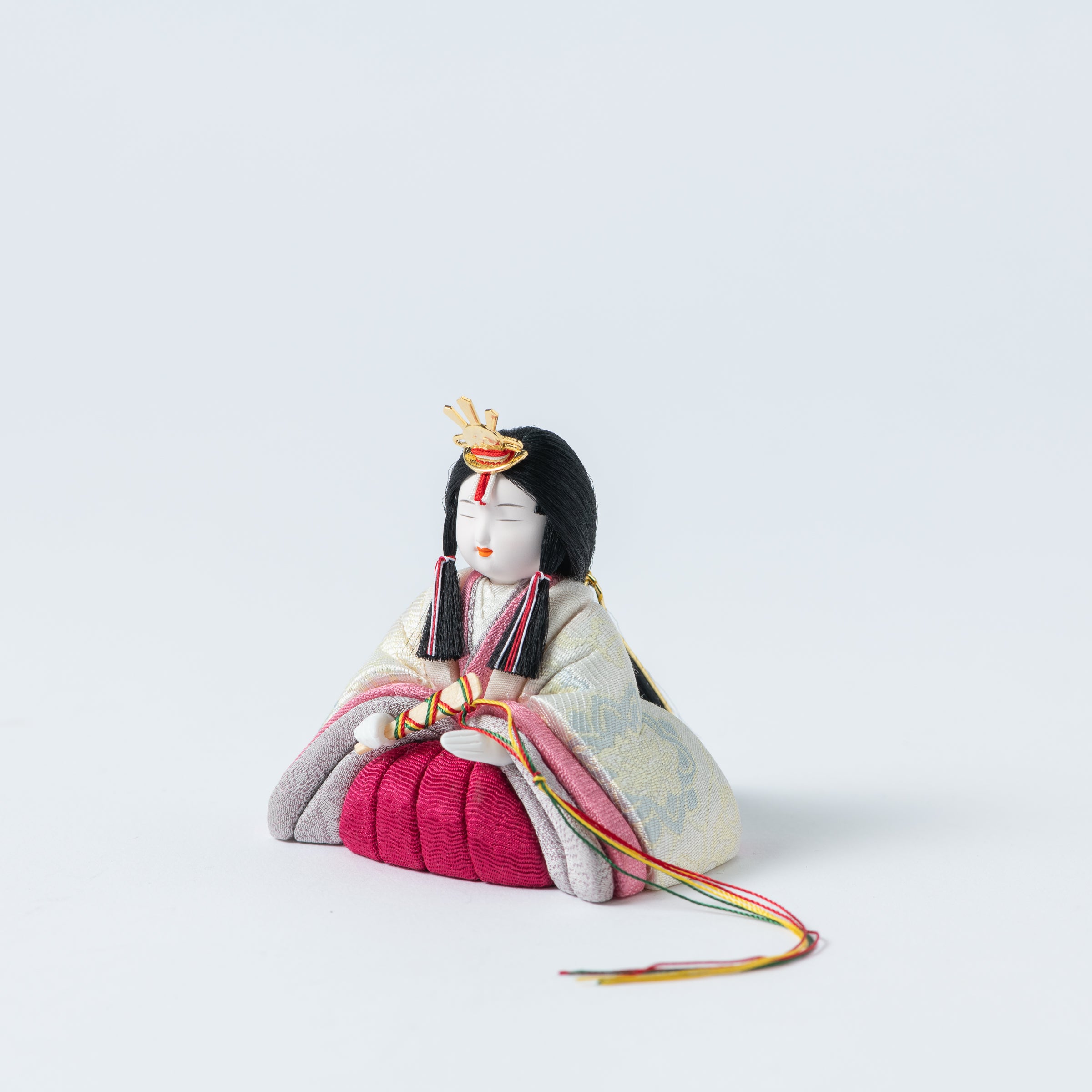
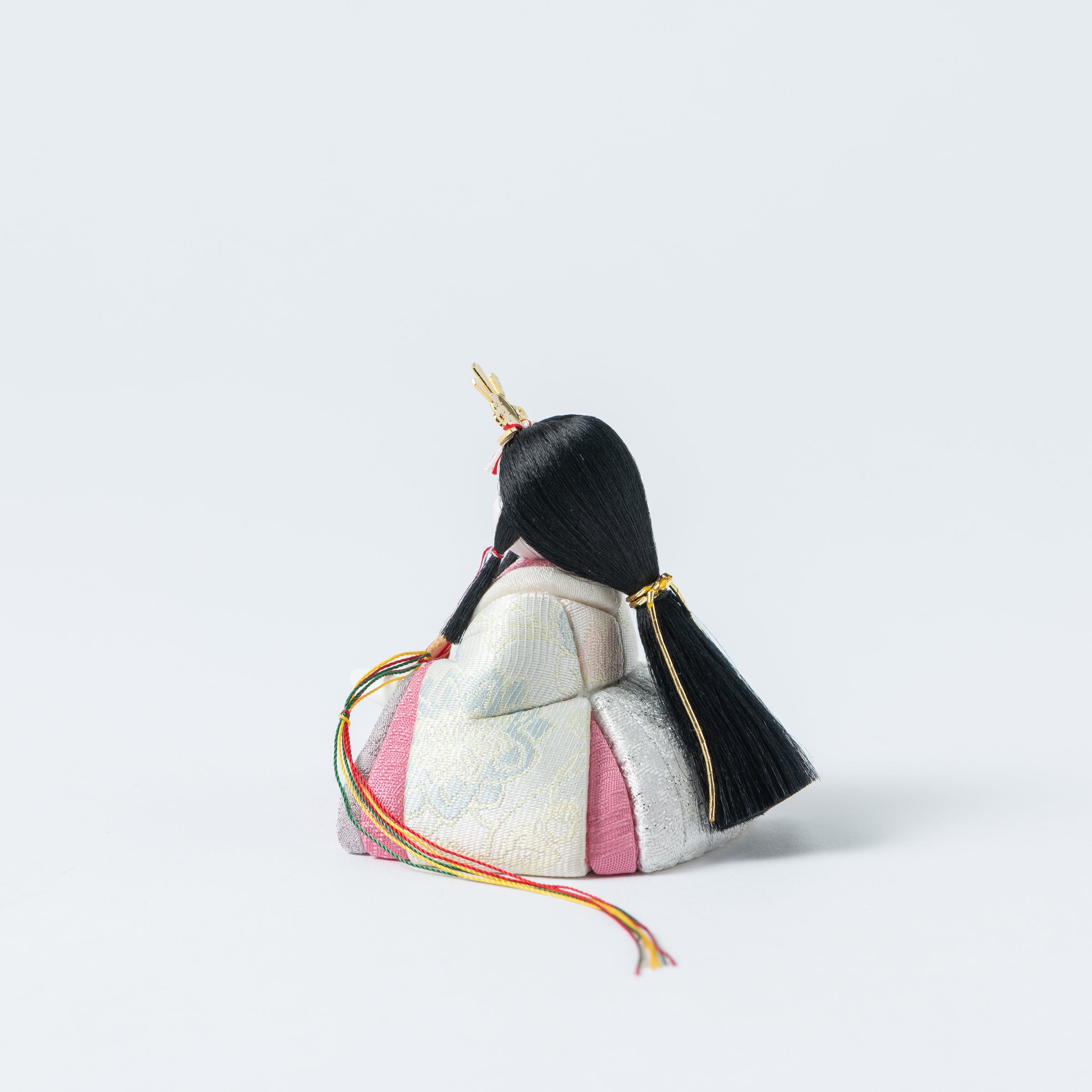
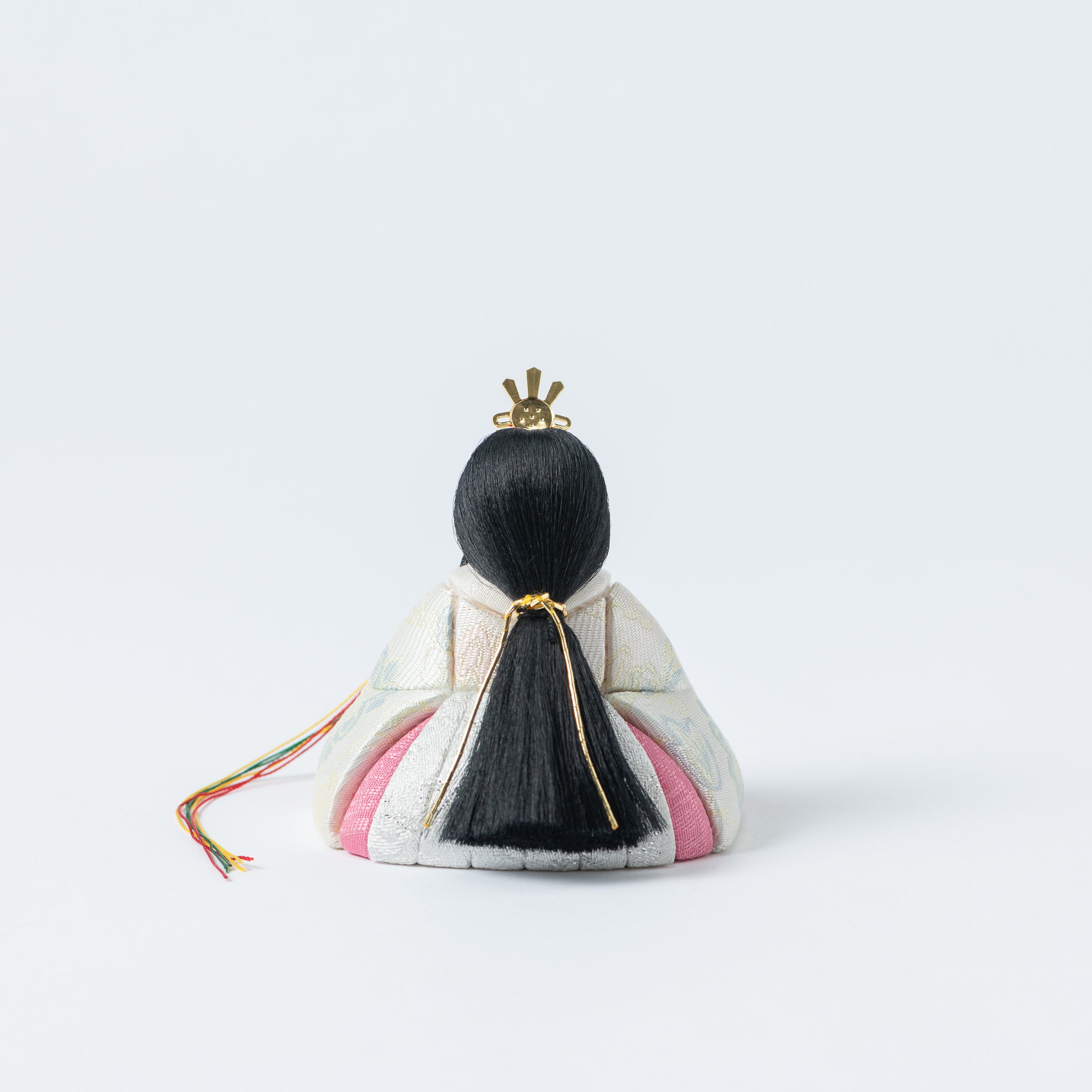
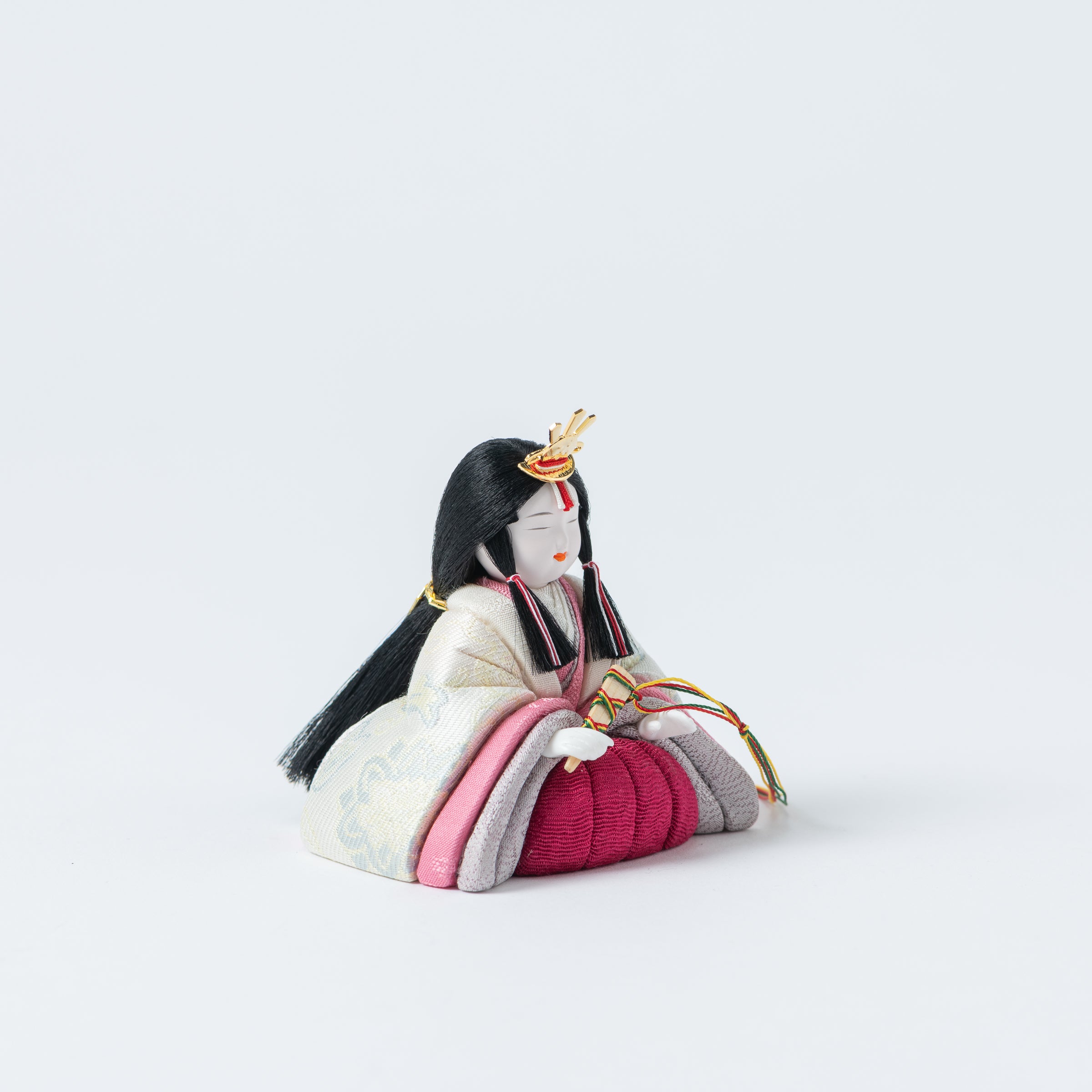
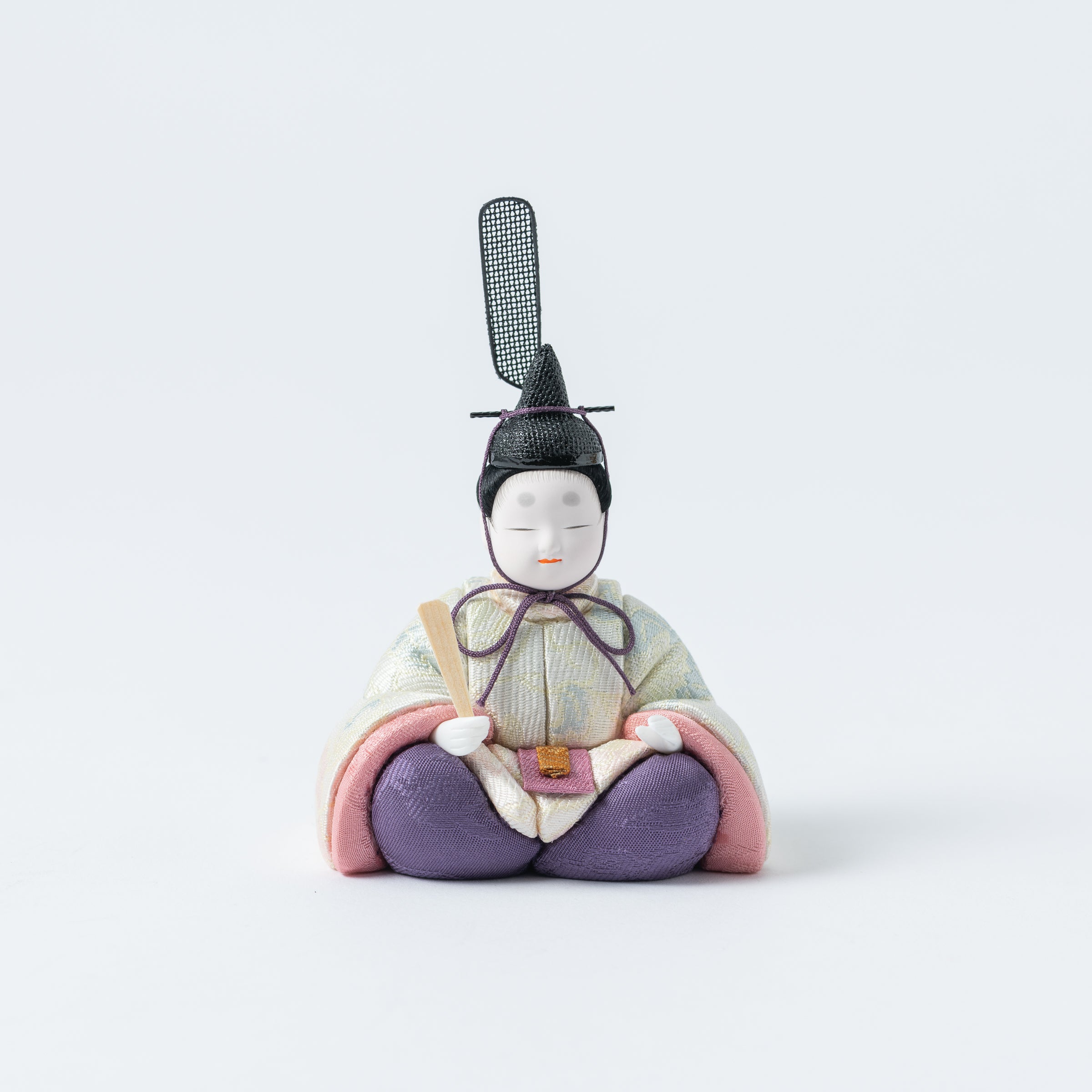
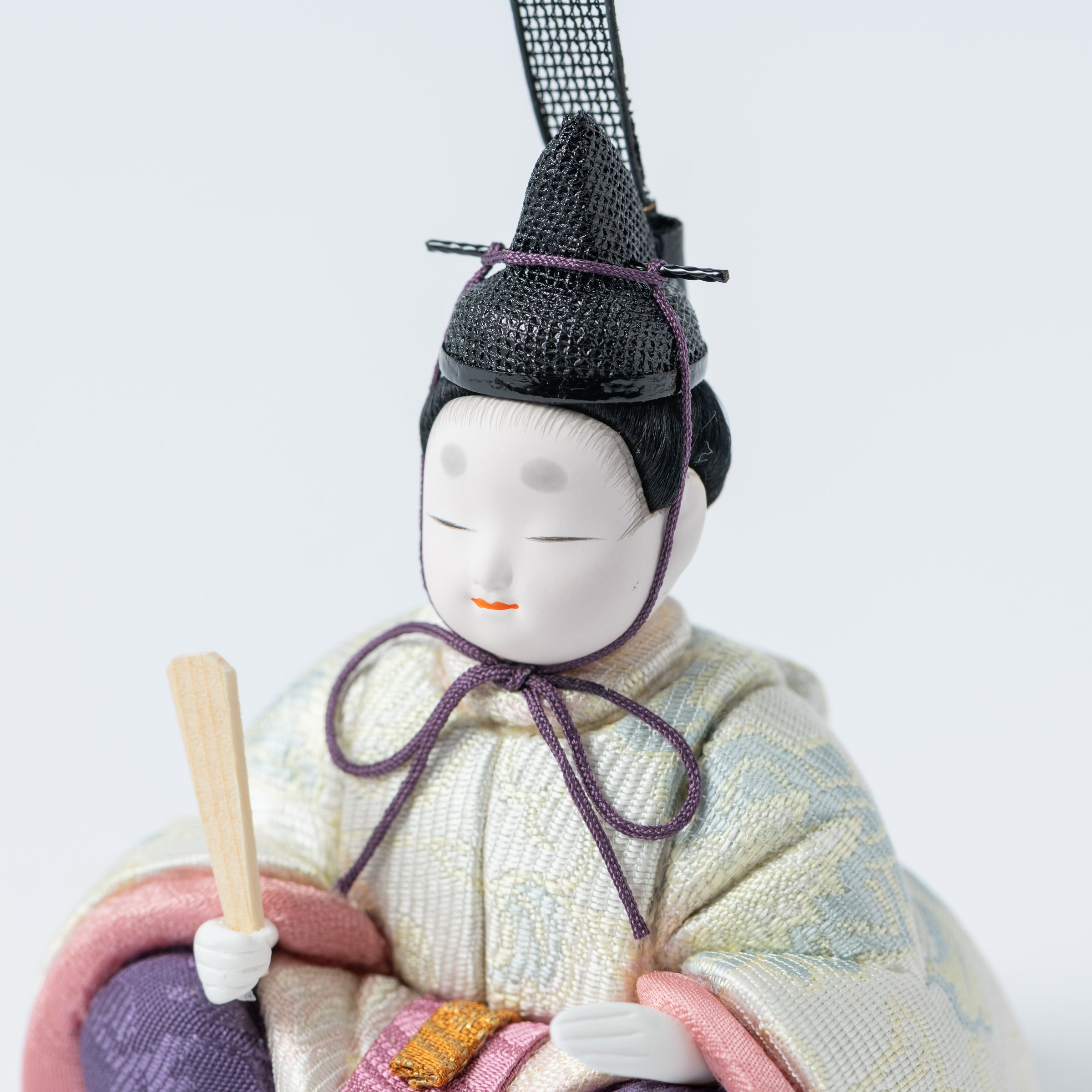
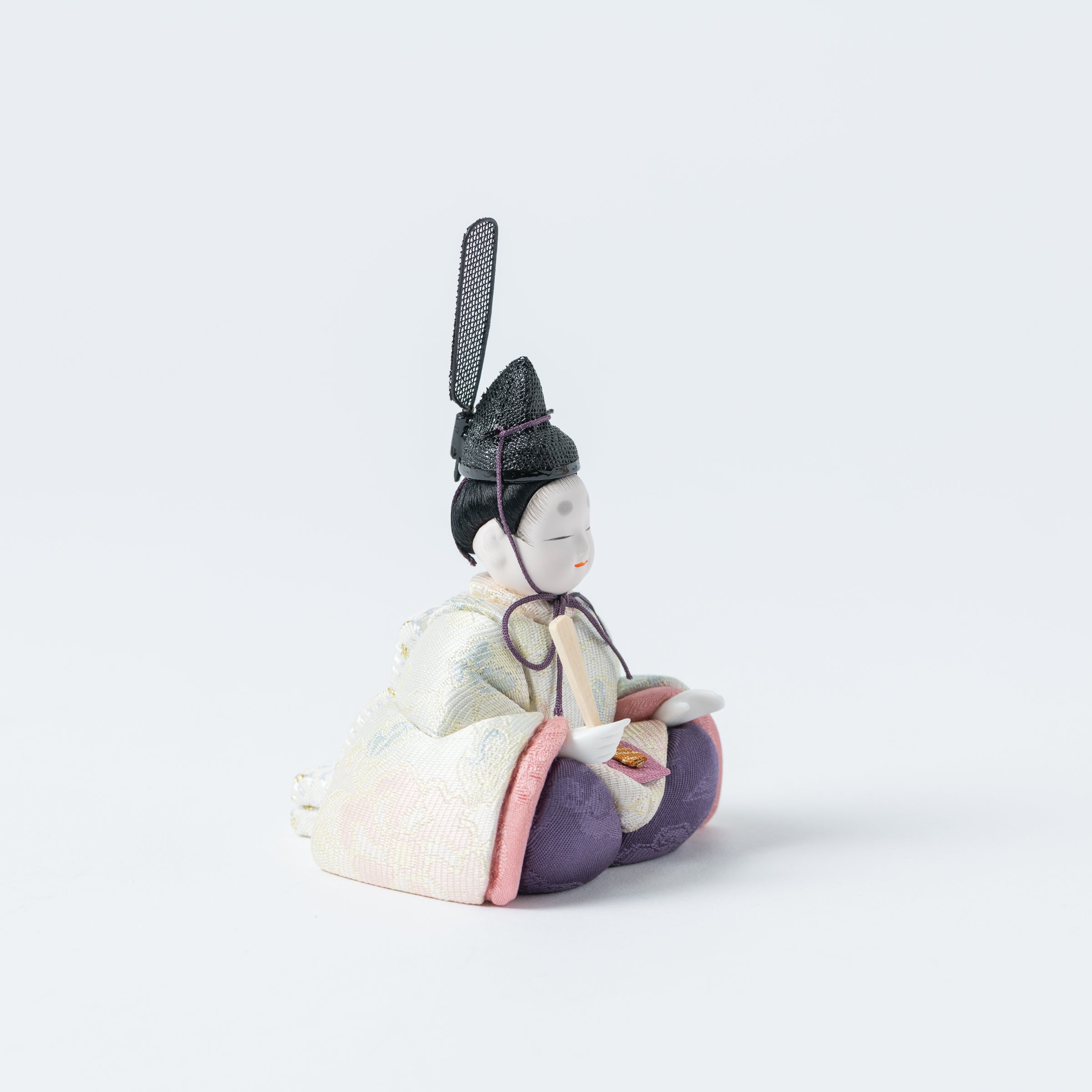
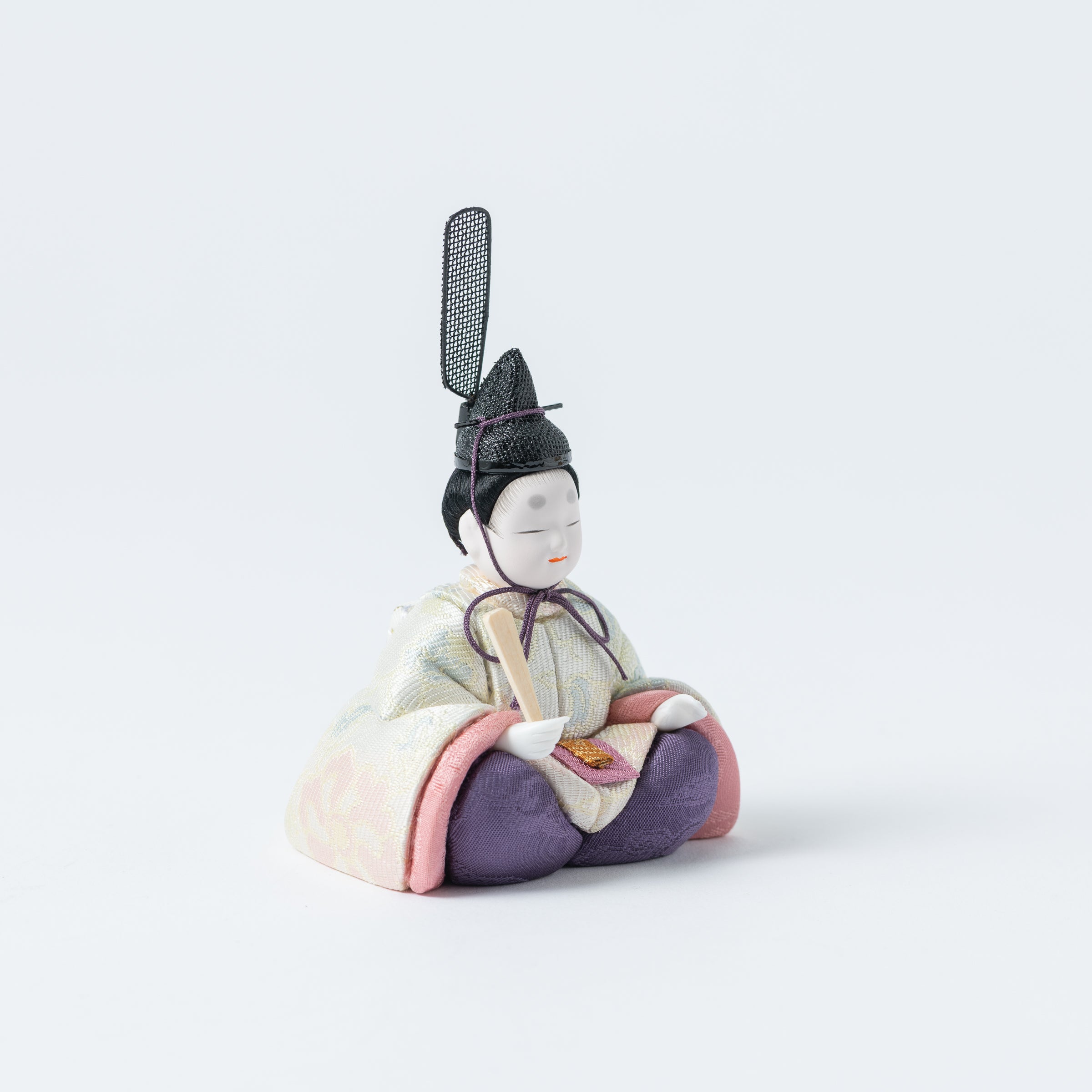
Cet hina ensemble de poupées capte la douceur du printemps dans sa forme et ses teintes. Présentation élégante et minimaliste, sa présence digne convient aux célébrations traditionnelles de Hinamatsuri comme à un accent saisonnier d'intérieur. Ses dimensions permettent un placement et un rangement aisés, même dans les espaces réduits, ce qui en fait un choix durable pour les années à venir.
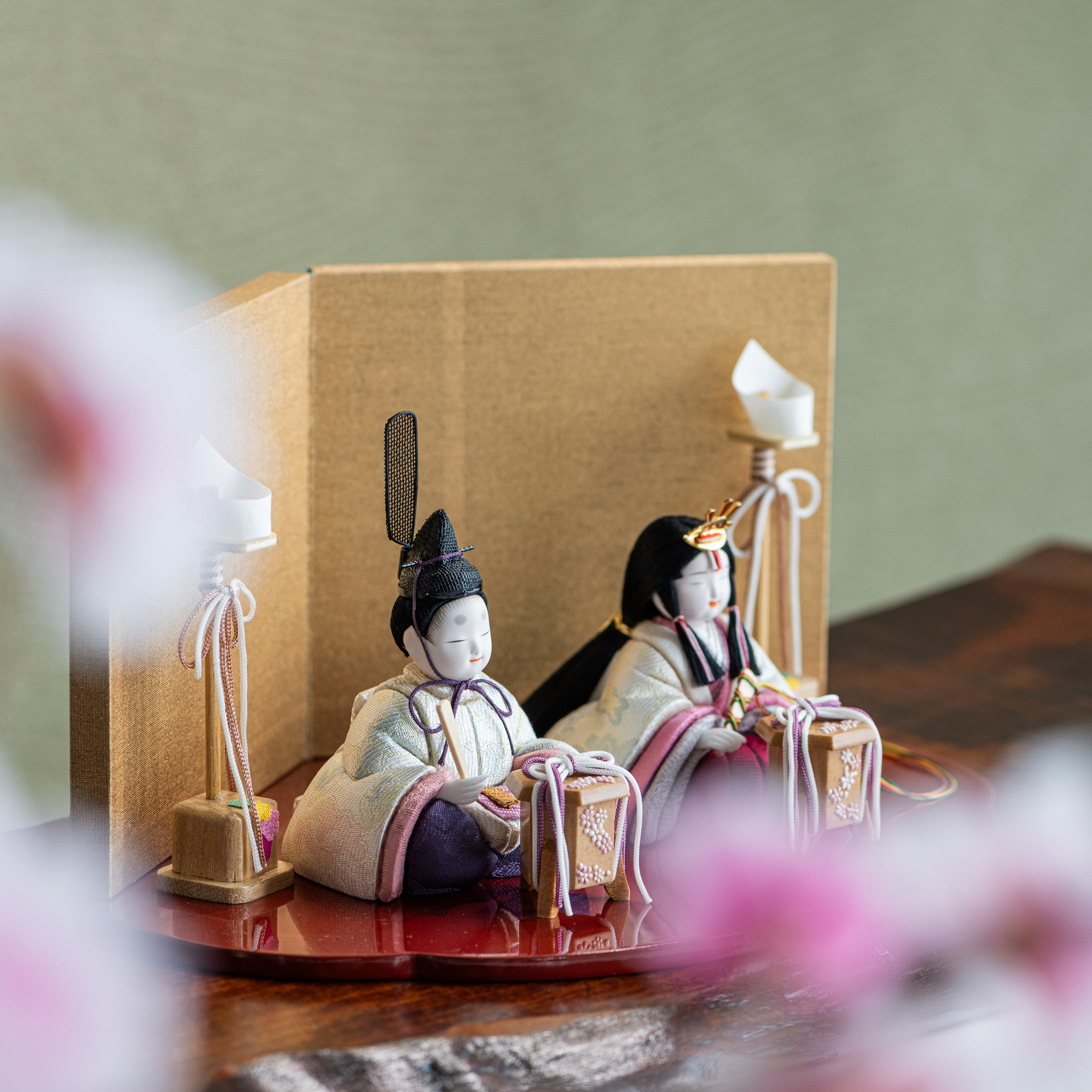
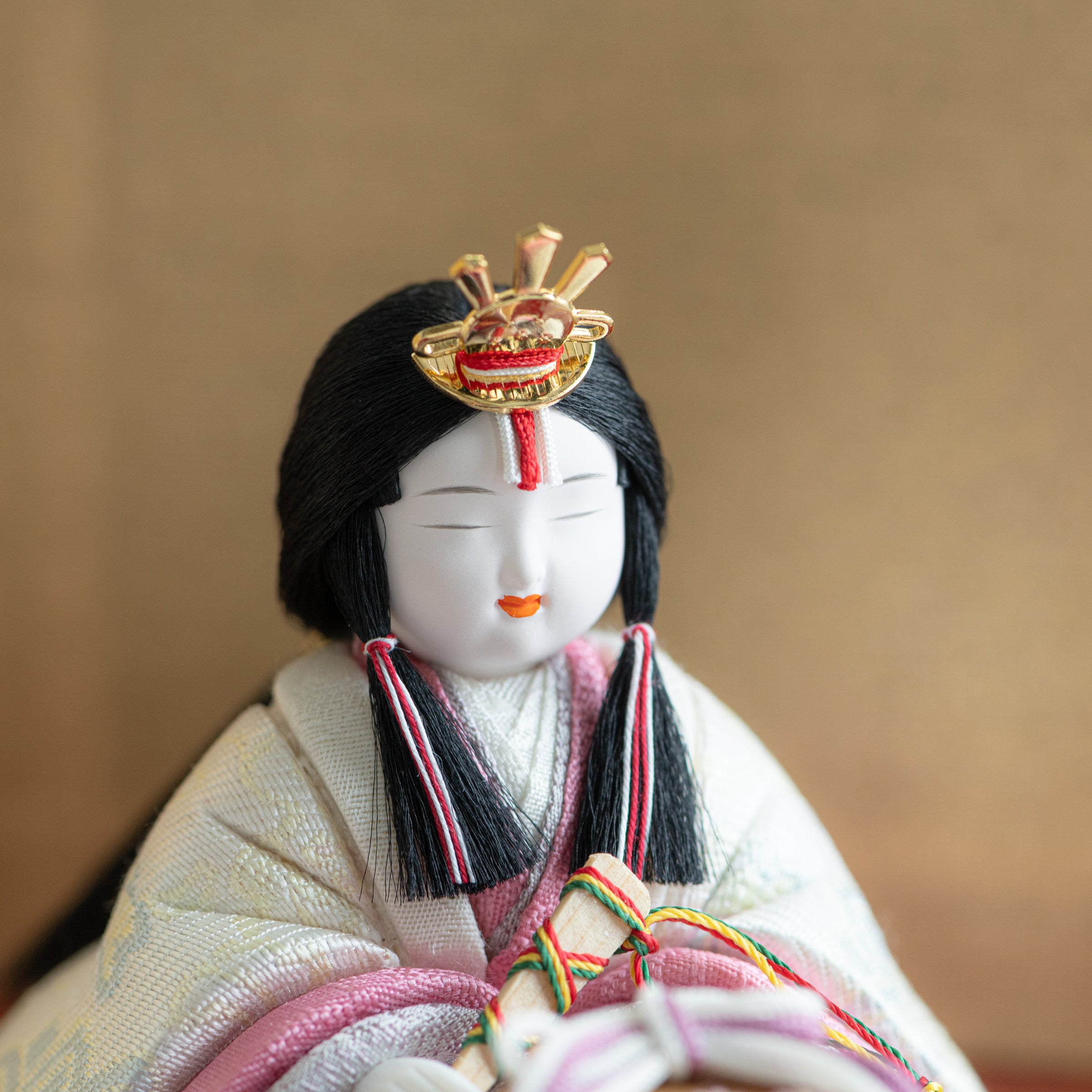
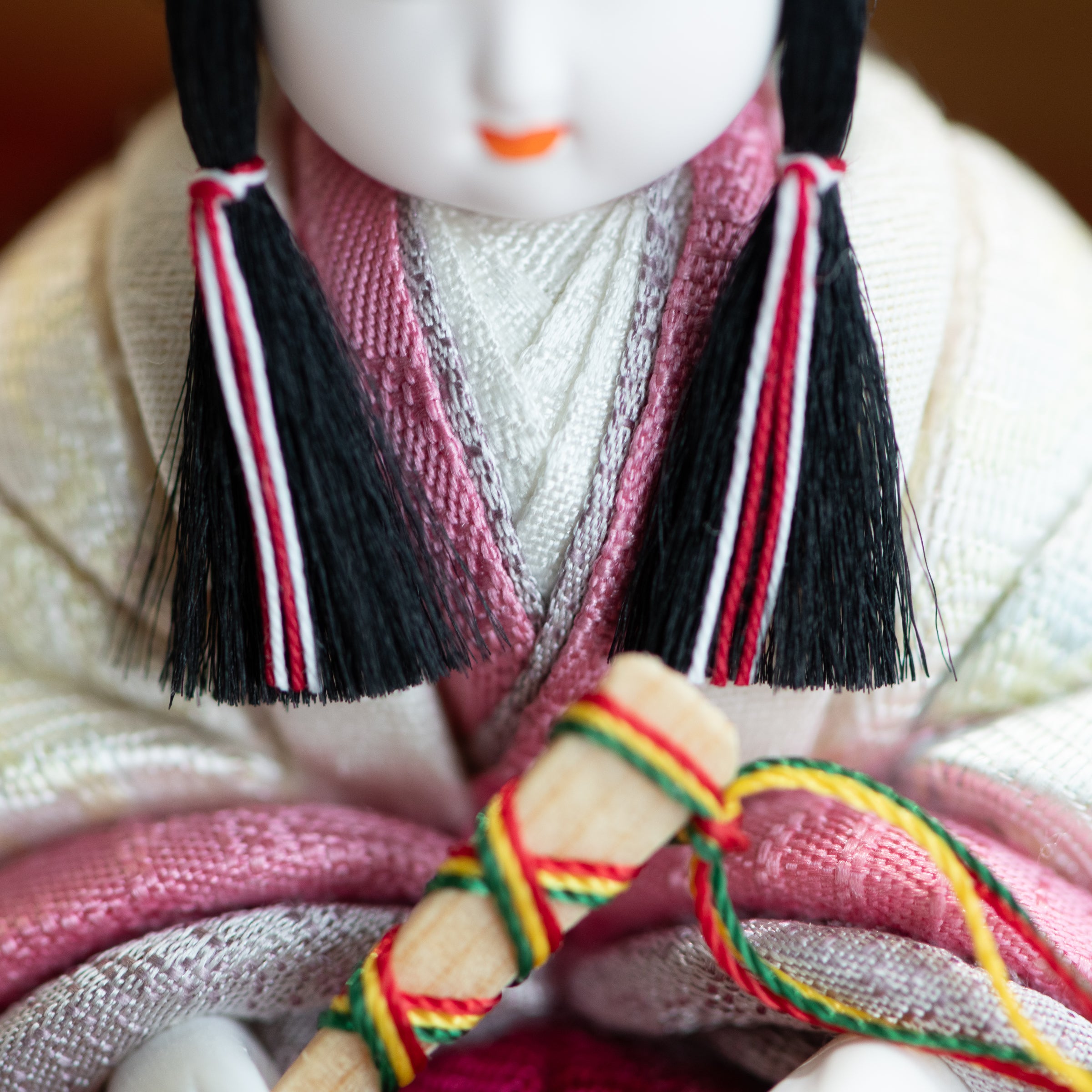
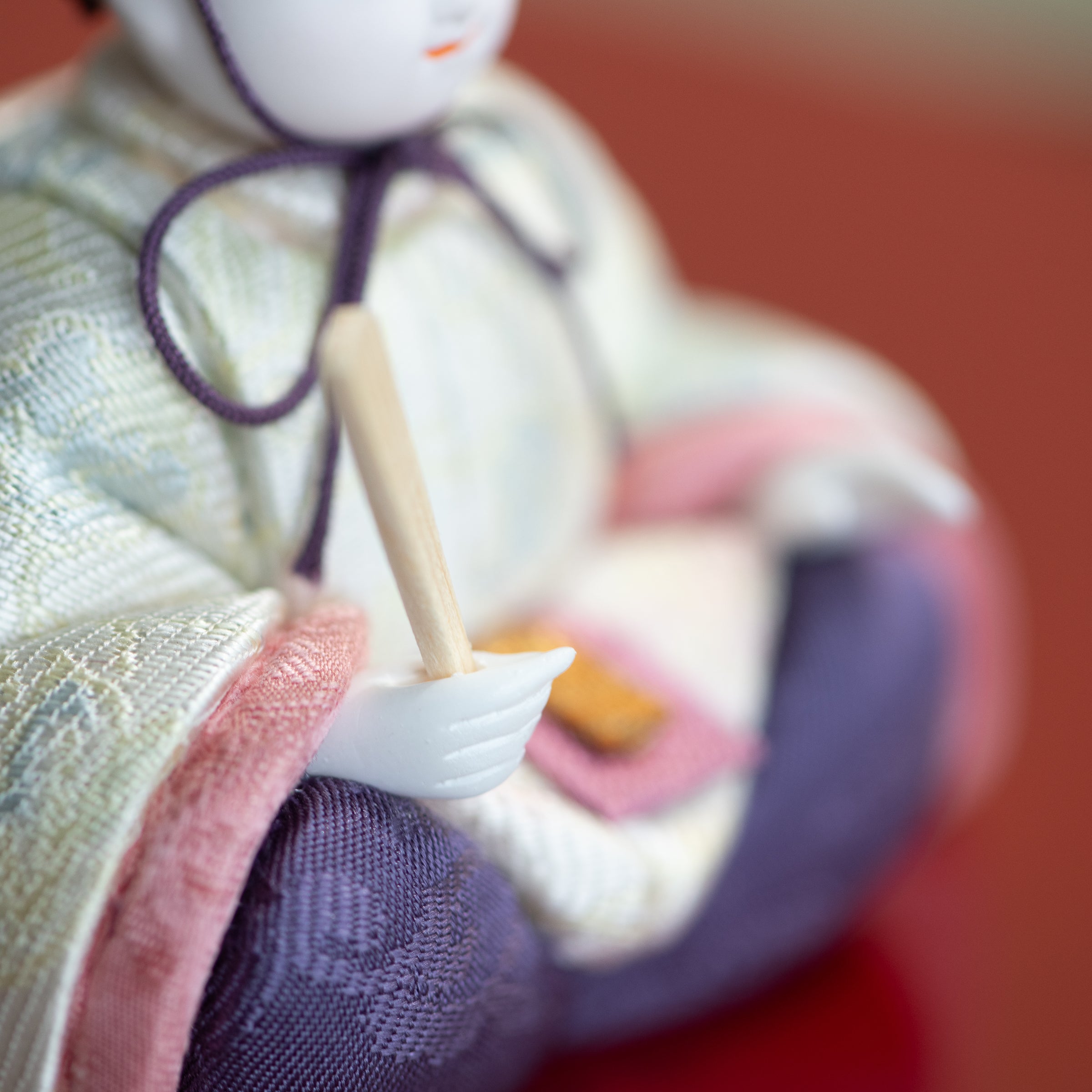
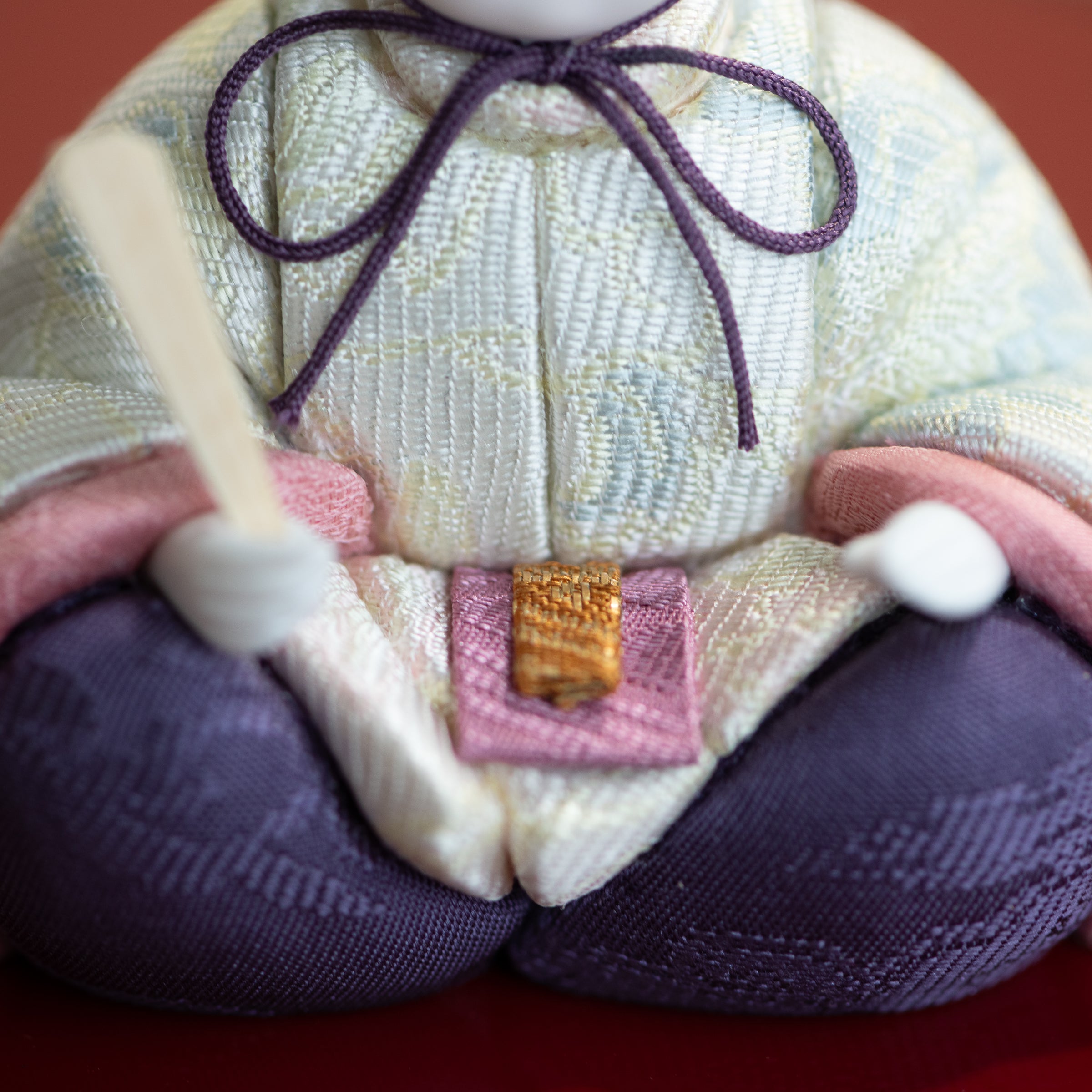
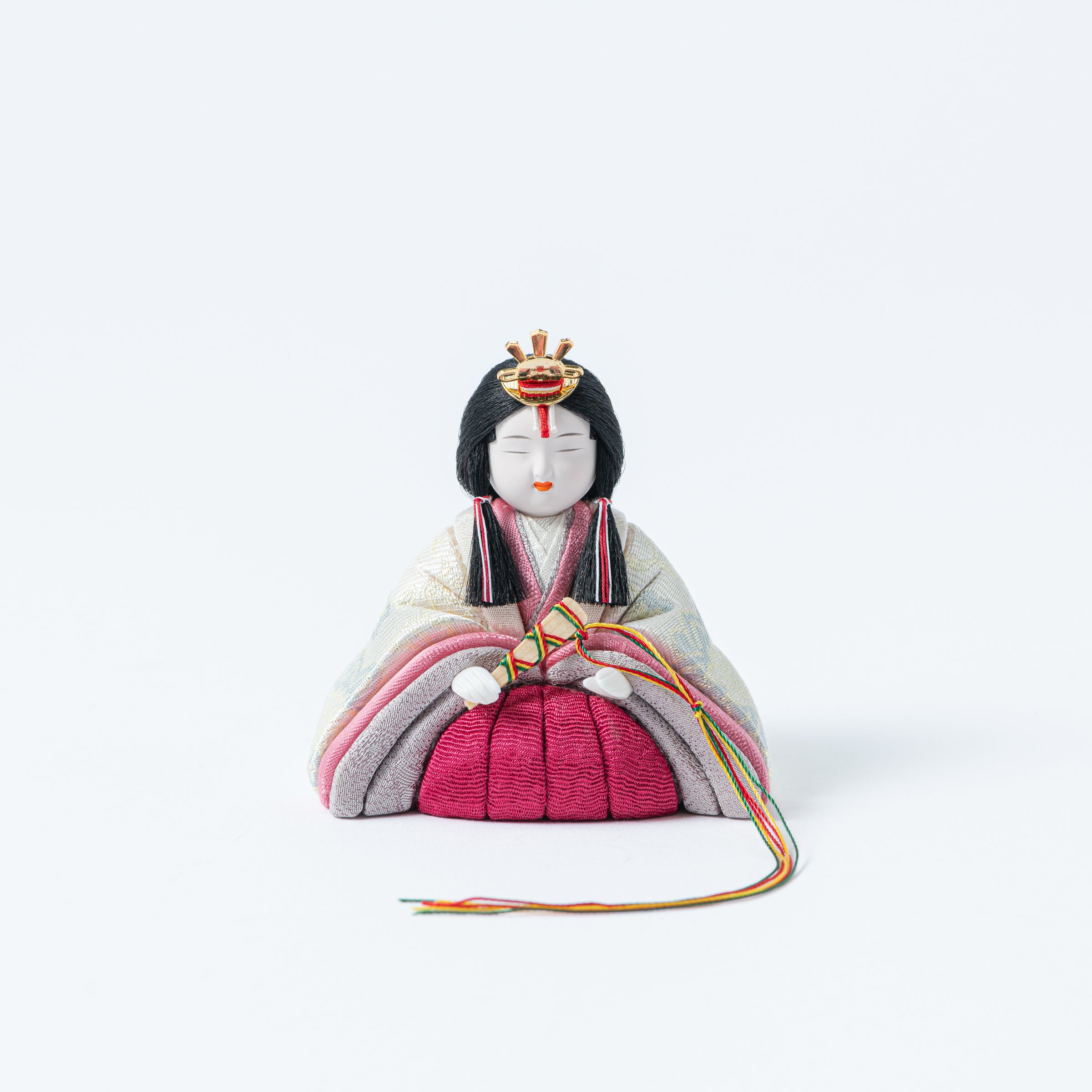
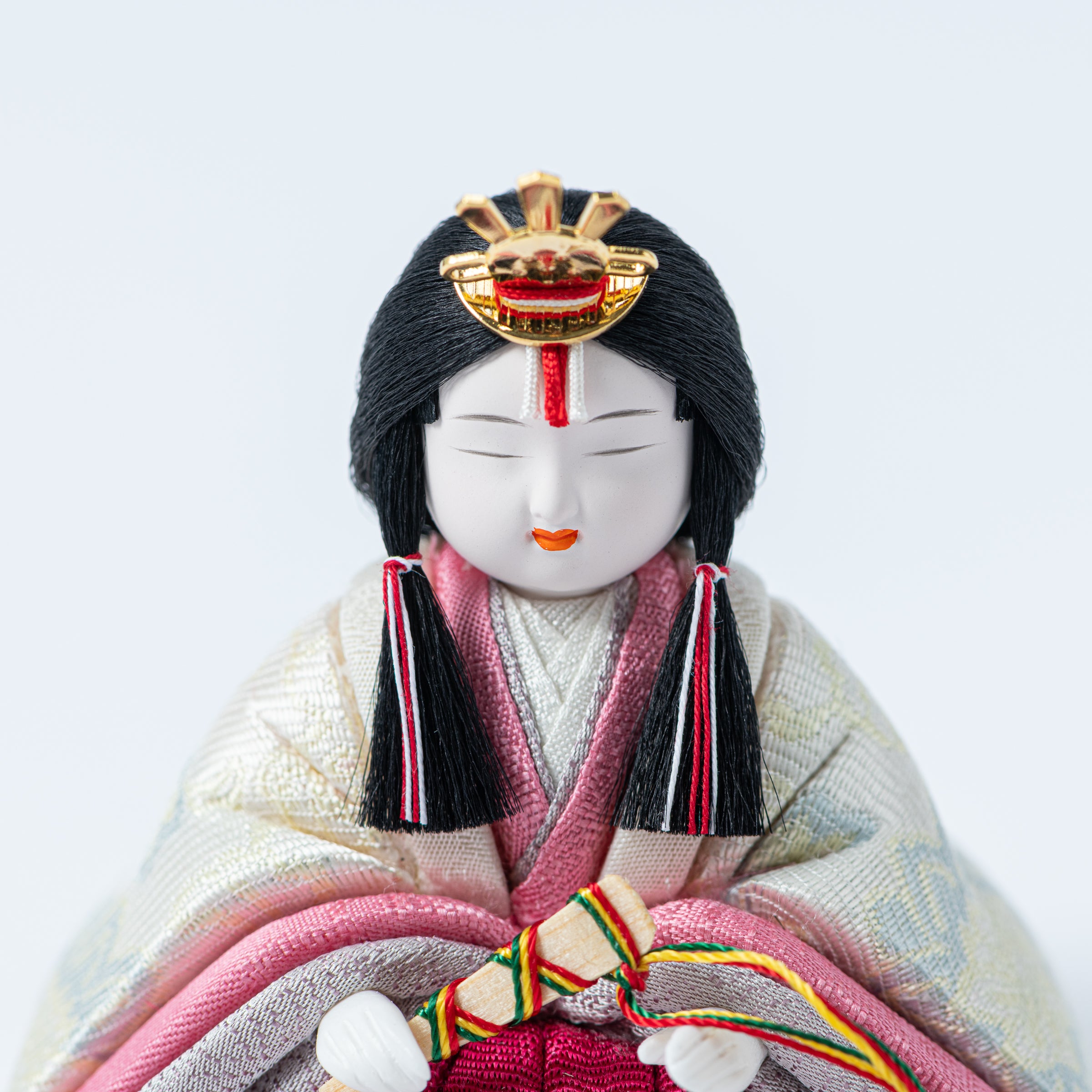
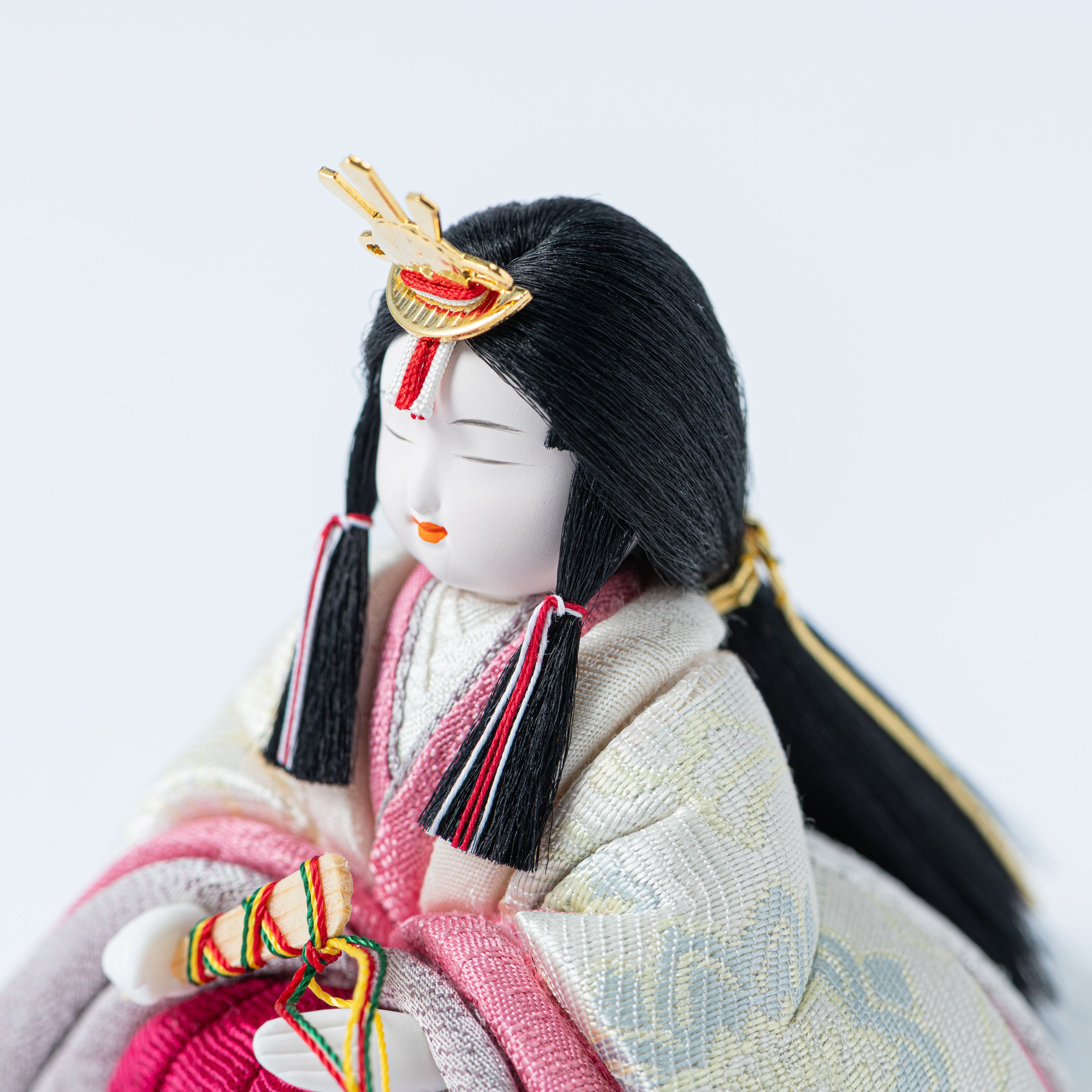
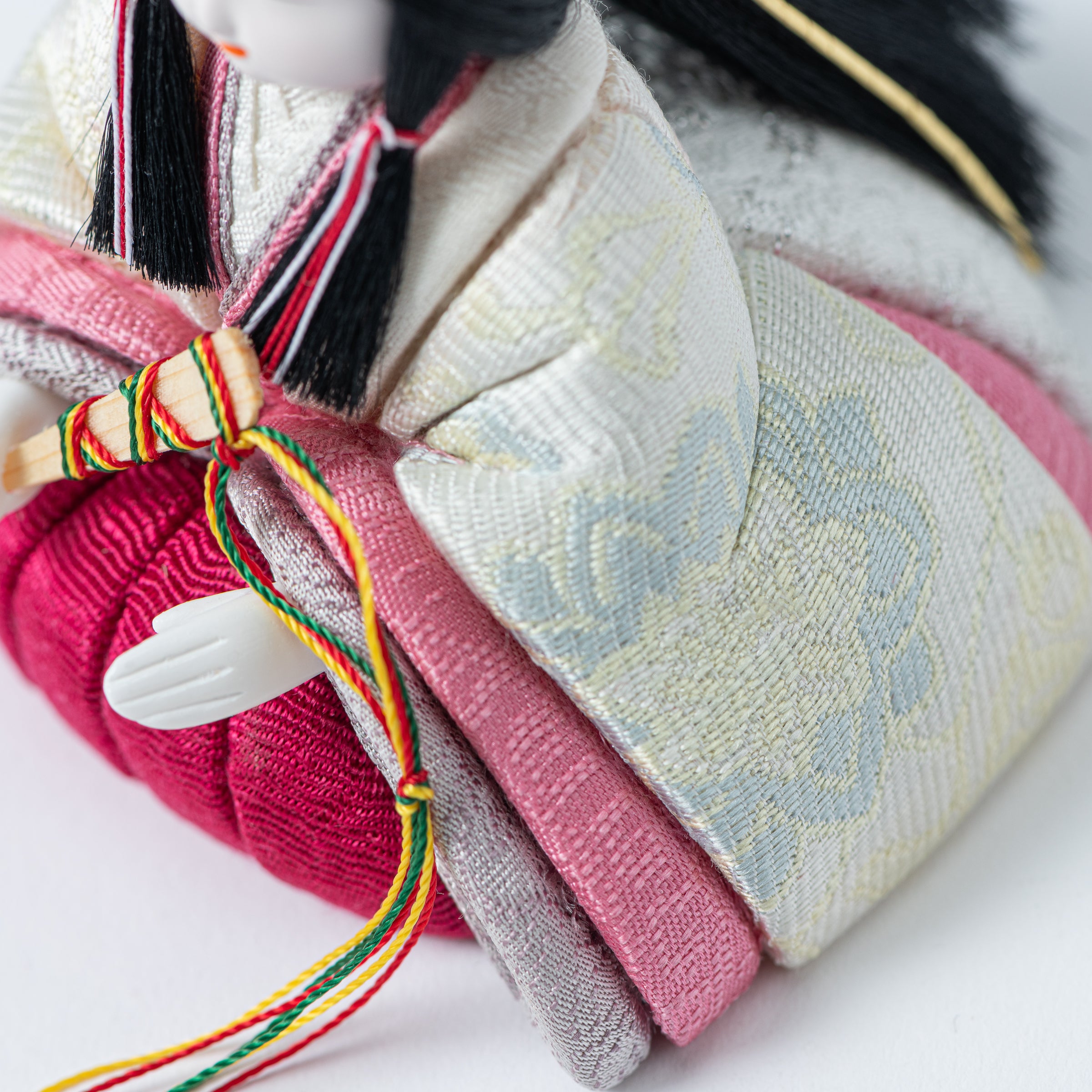
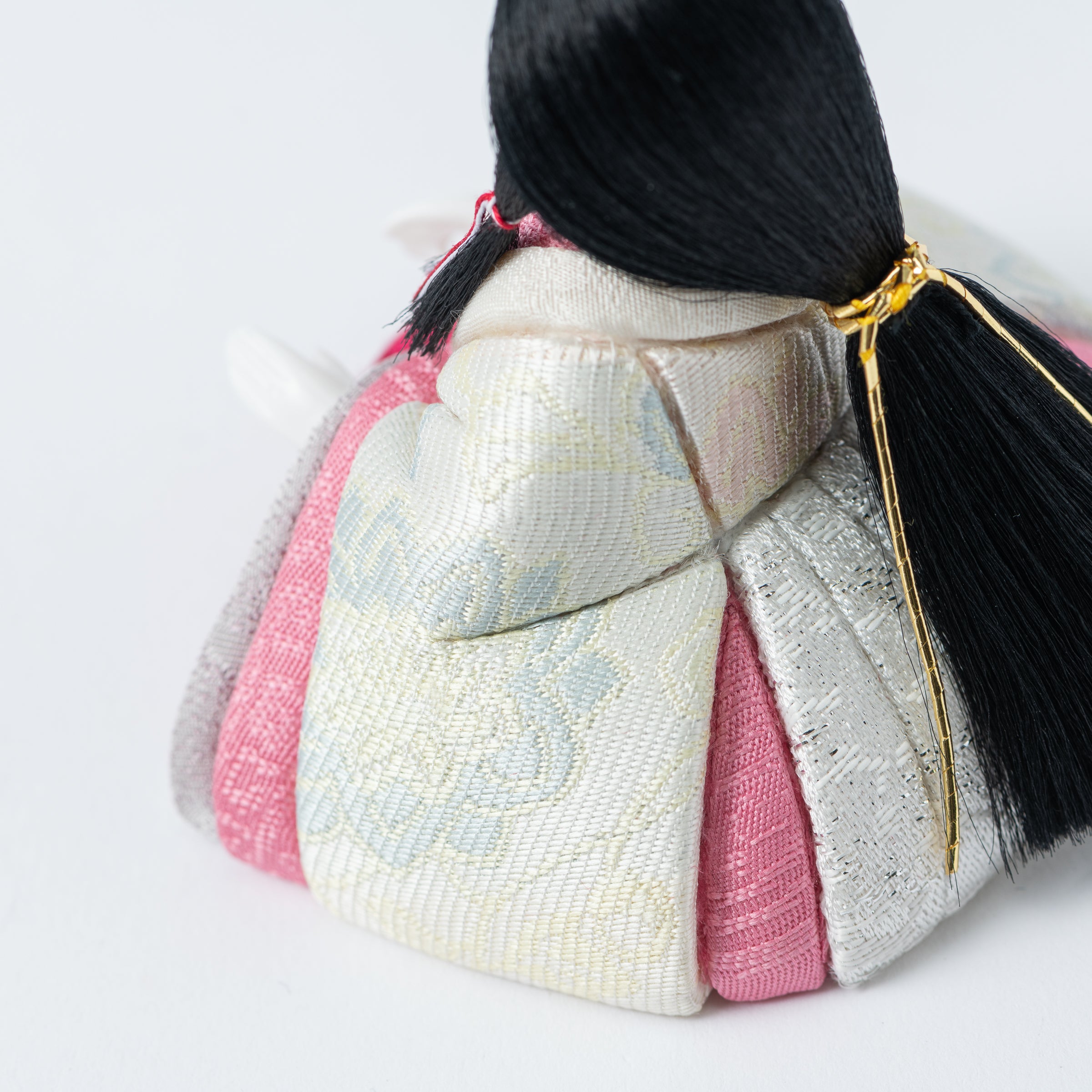
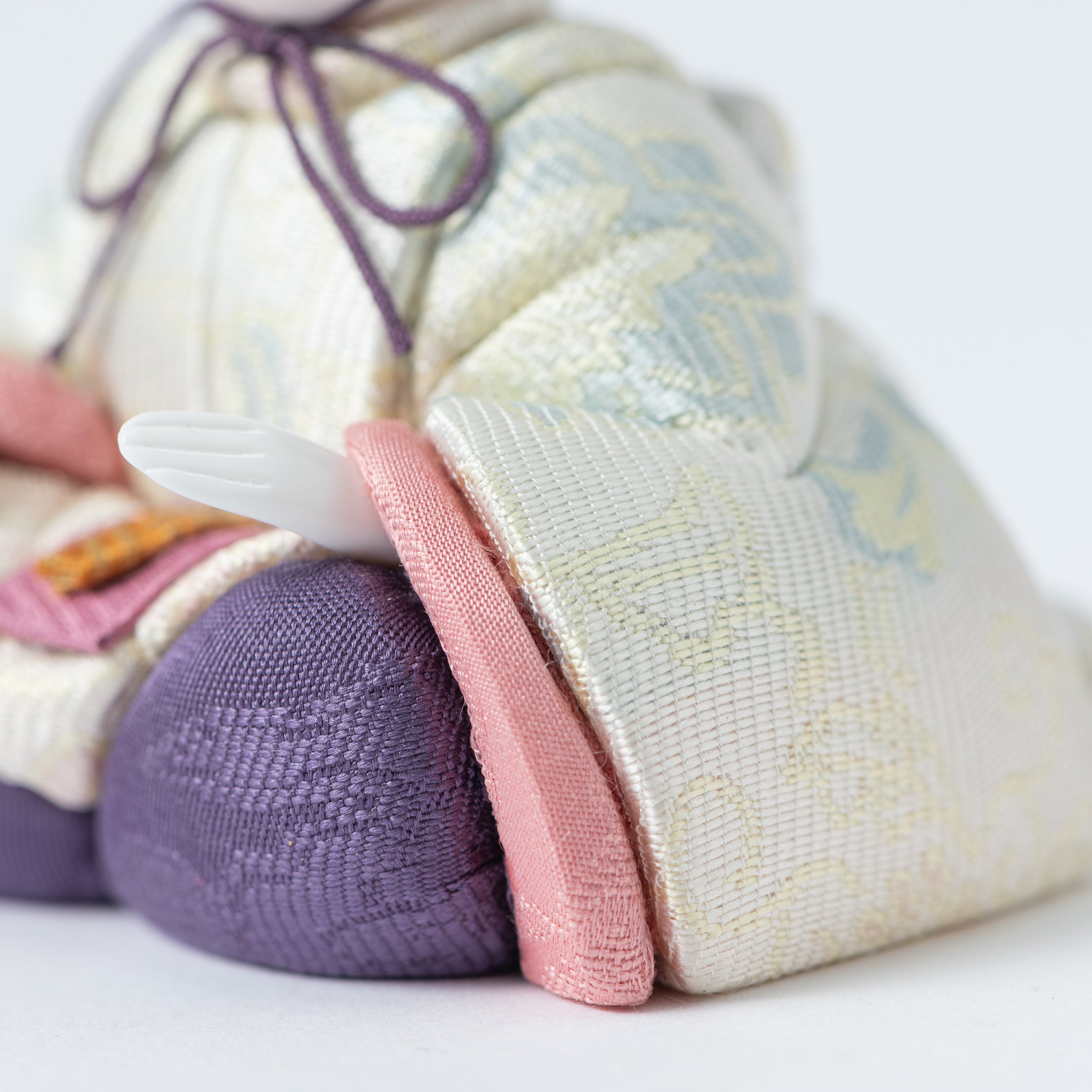
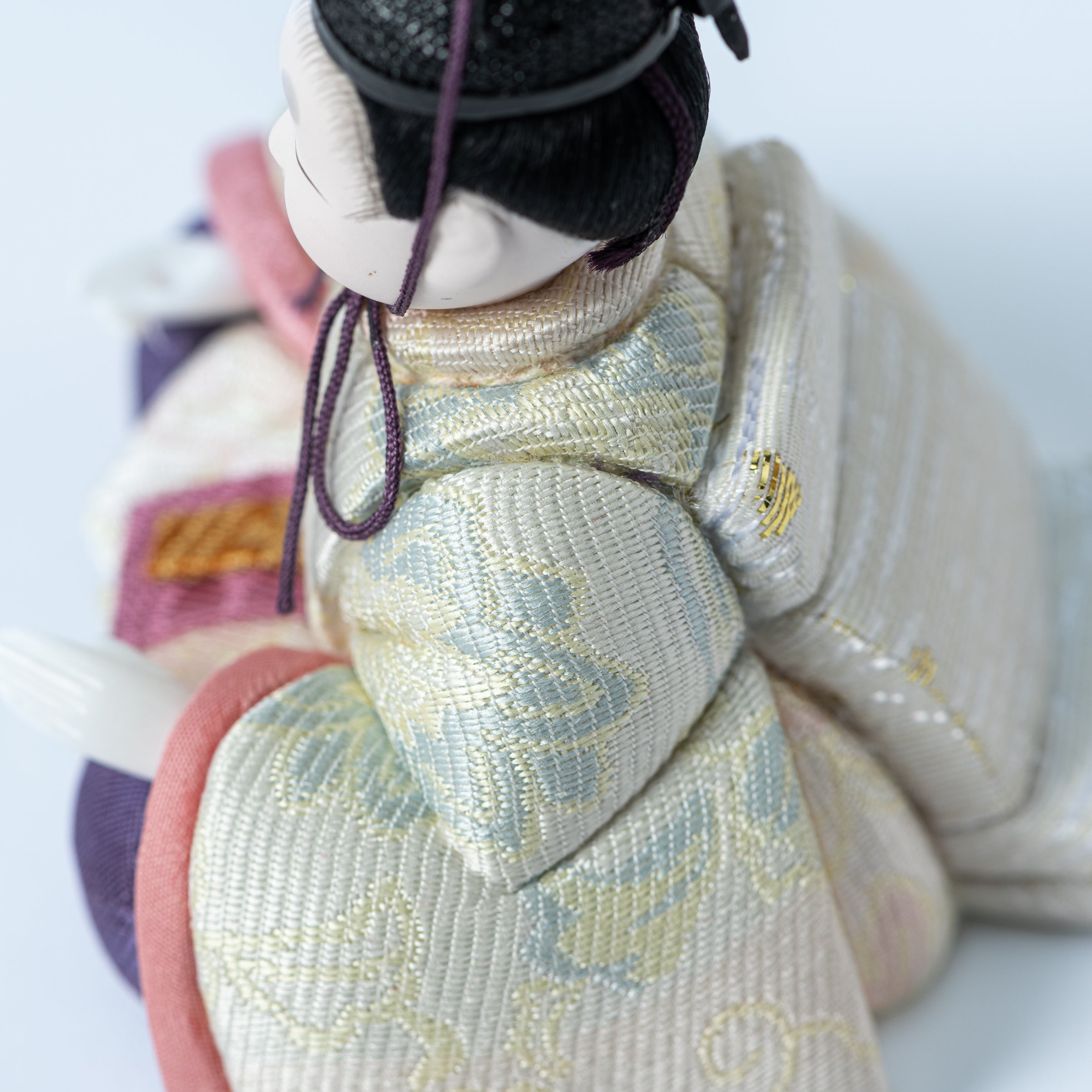
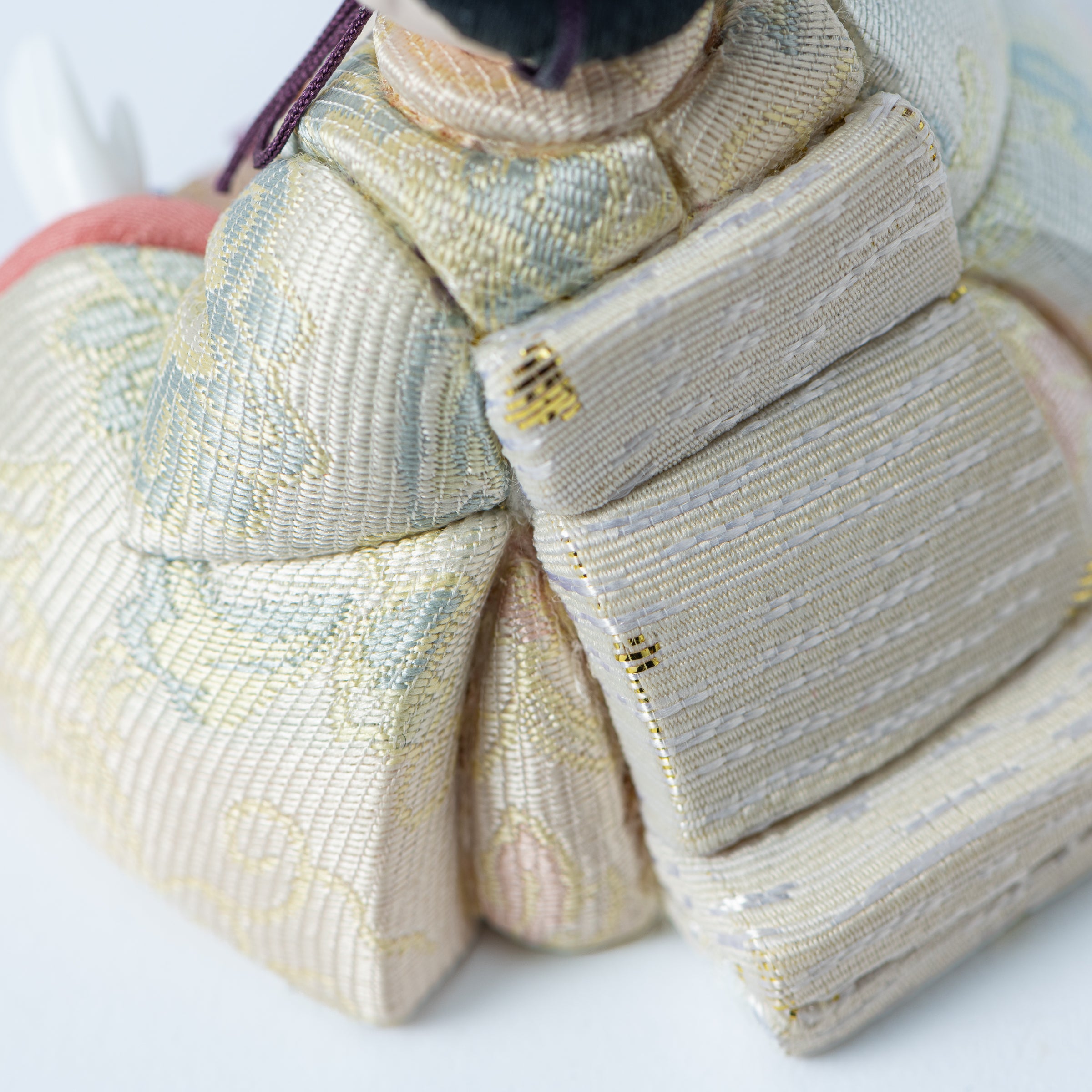
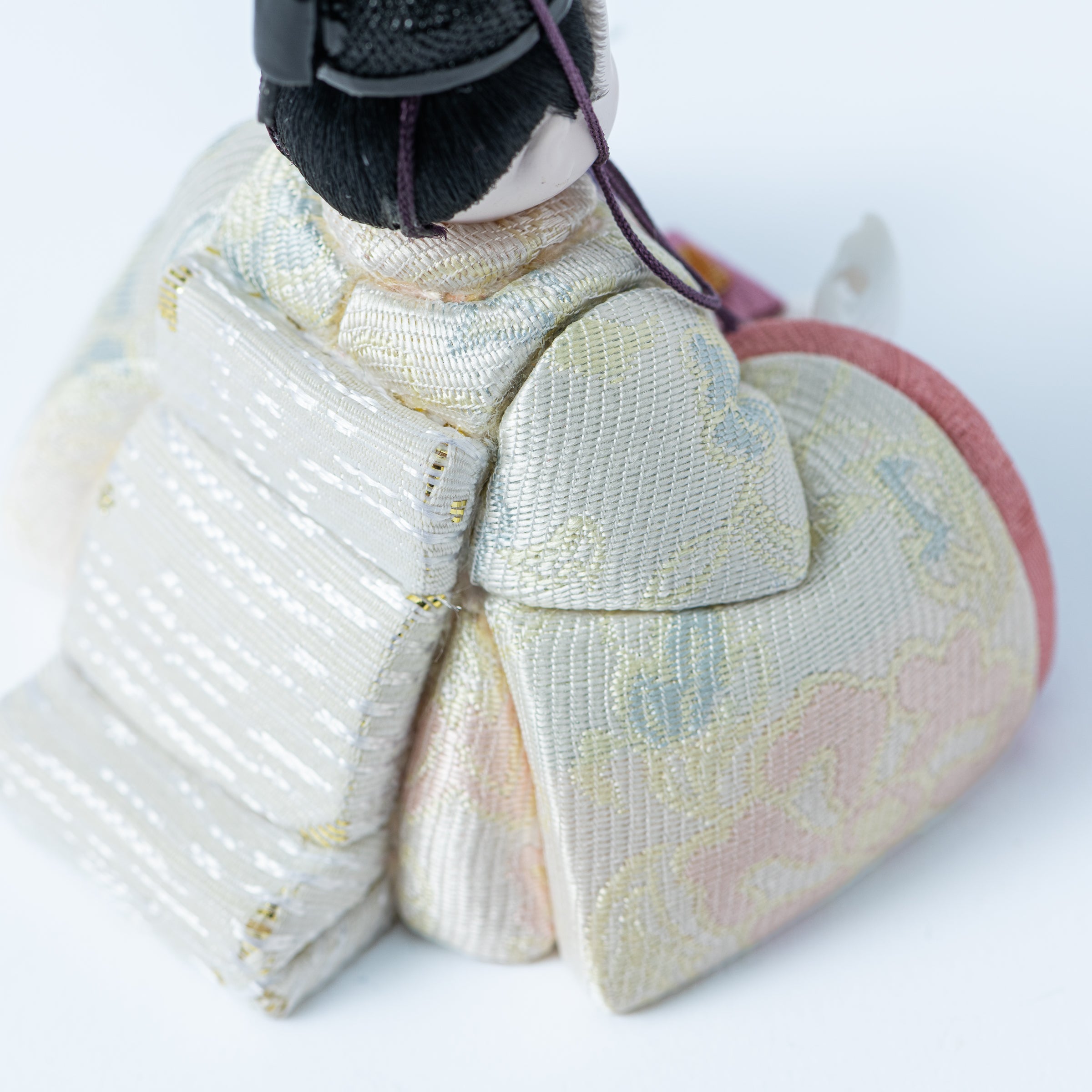
Les vêtements des poupées hina sont réalisés selon la technique Edo Kimekomi, où des rainures précises sont sculptées dans la base de la poupée pour y insérer le tissu et créer des plis détaillés. De la soie fine est tissée en fils délicats pour représenter le motif botan karakusa « arabesque de pivoine » sur les kimonos. Ce motif complexe scintille en argent sous la lumière, reflétant le symbolisme de la pivoine : bonheur, prospérité et noblesse.
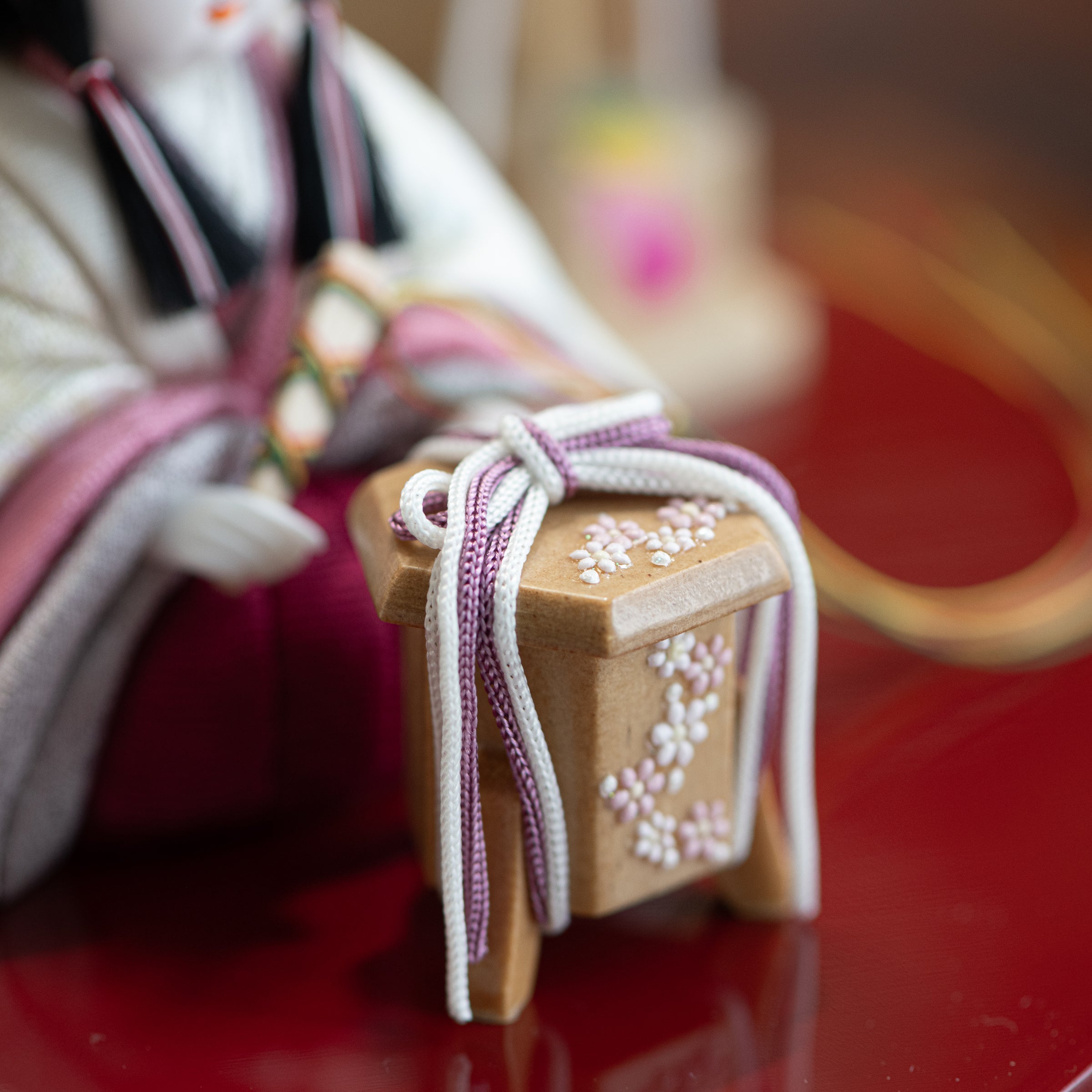
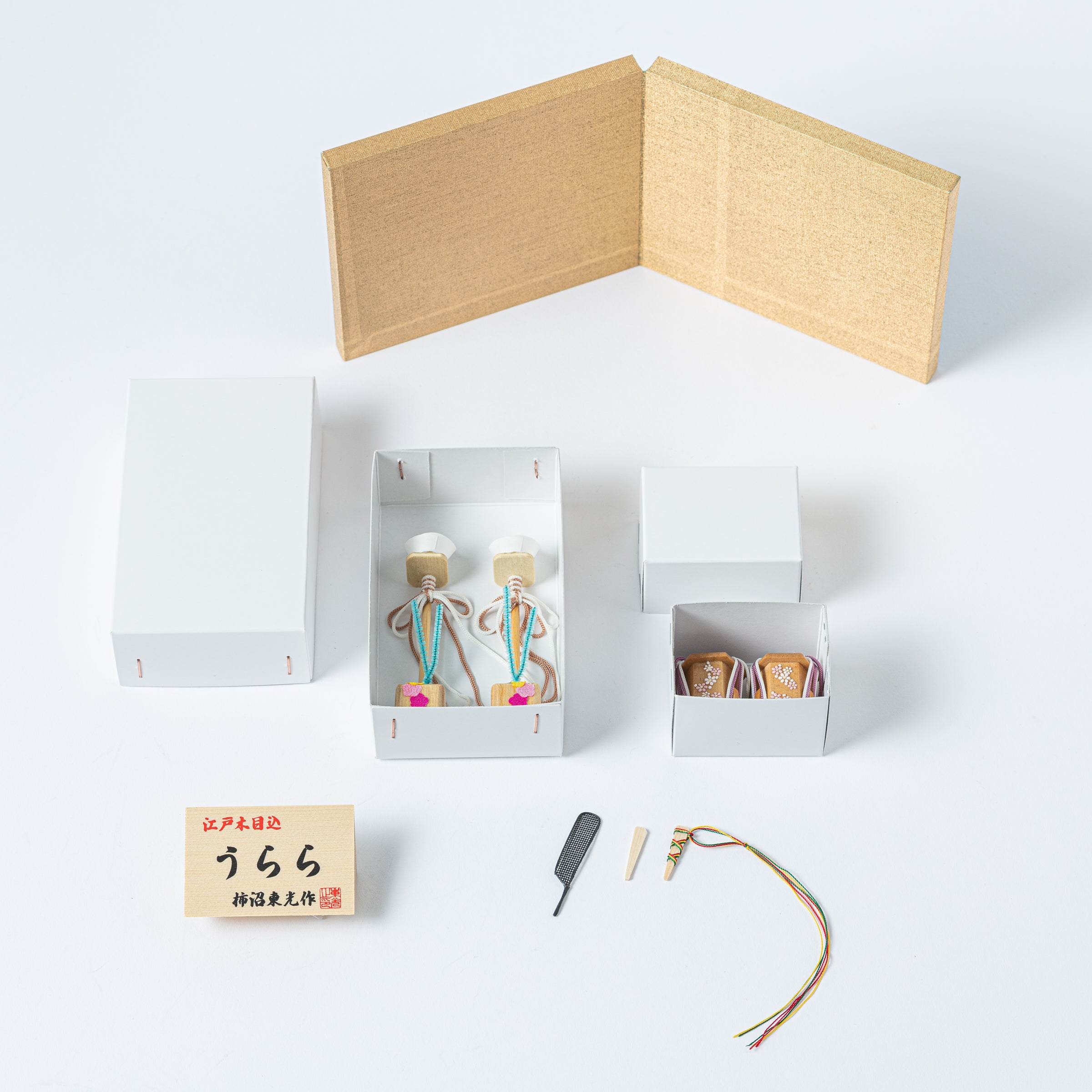
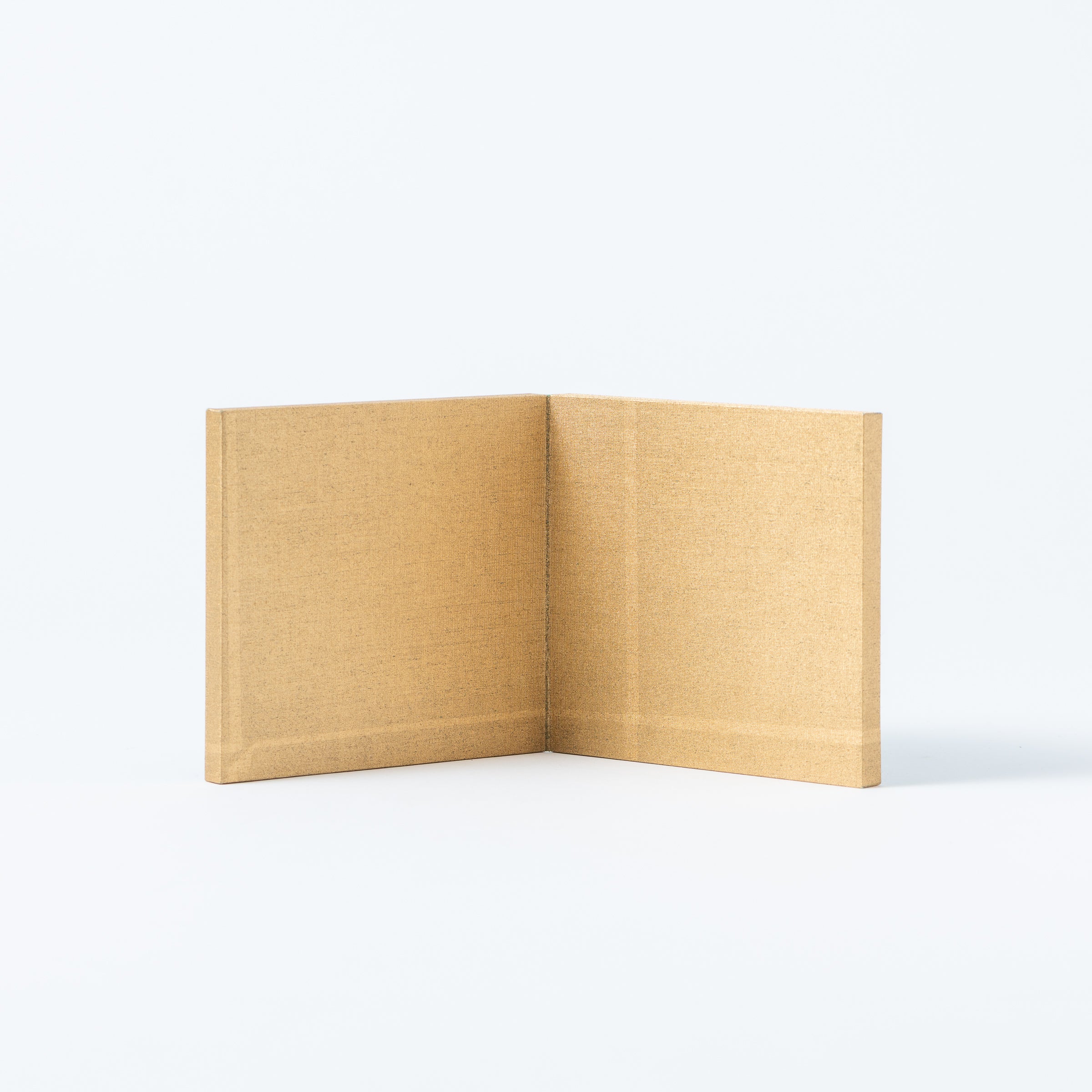
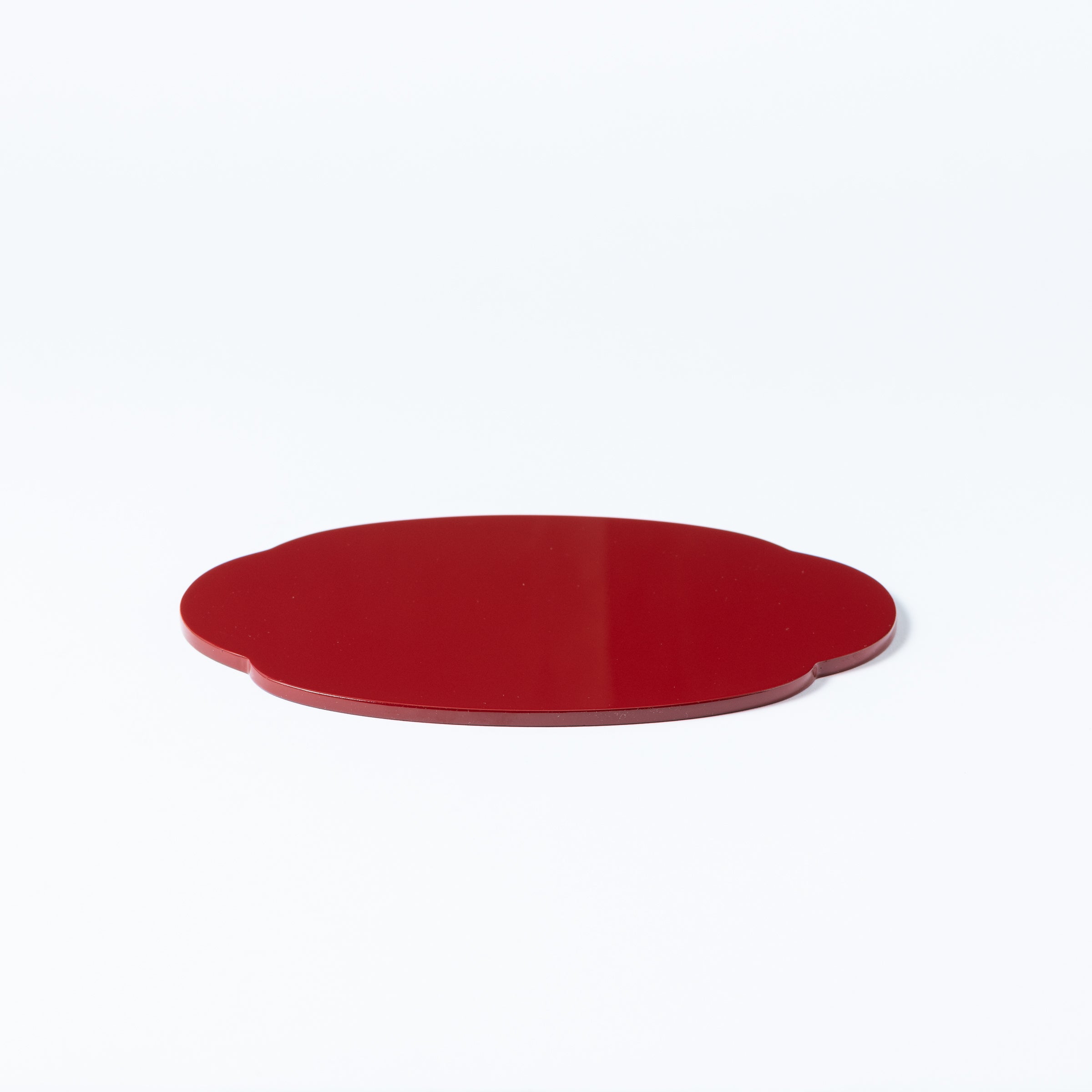
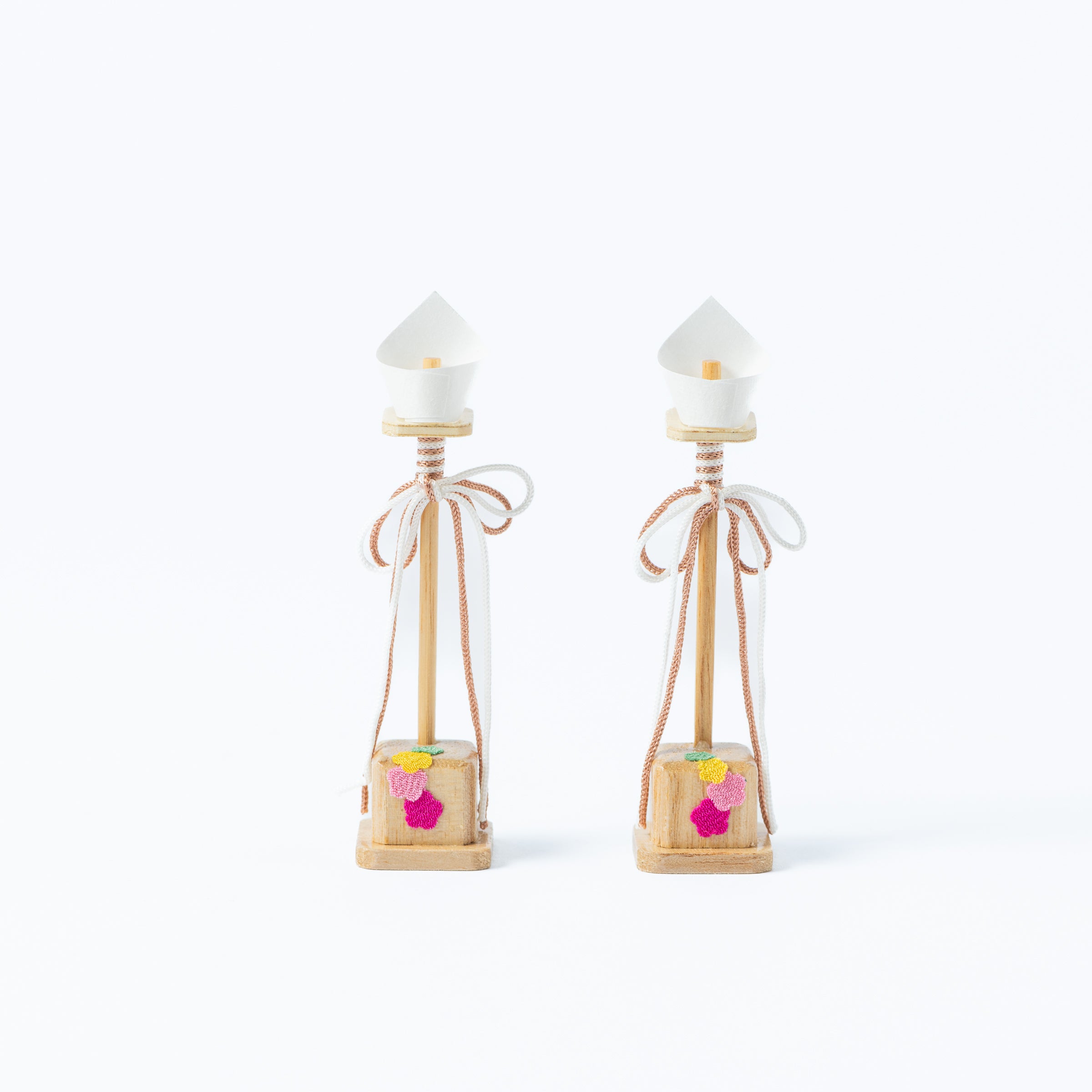
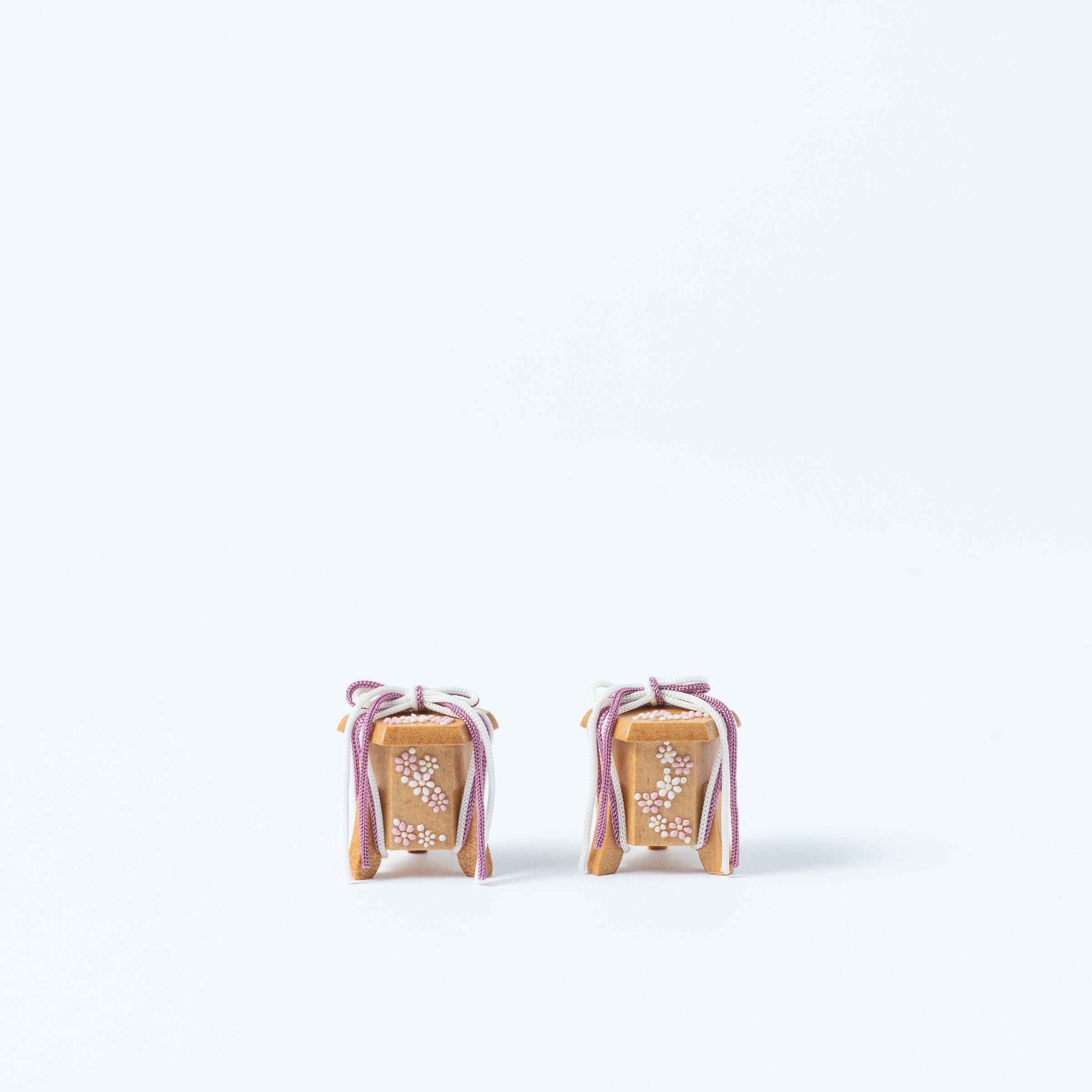
L'ensemble comprend un paravent orné de feuilles d'or superposées sur tissu de soie comme toile de fond élégante. Des chandeliers en bois classiques, décorés d'accents floraux en tissu coloré, ajoutent un détail historique charmant à la présentation. Devant les poupées se trouvent des kaioke miniatures, « boîtes à coquillages », traditionnellement utilisées par les aristocrates de la période Heian (794–1185) pour ranger les coquillages peints servant aux jeux. L'ensemble de la présentation repose sur un support en laque Echizen lustré qui unifie la composition.
Avec une attention méticuleuse portée à chaque élément, cet ensemble de poupées hina est une pièce intemporelle pour célébrer l'arrivée du printemps et au-delà.
DES DÉTAILS
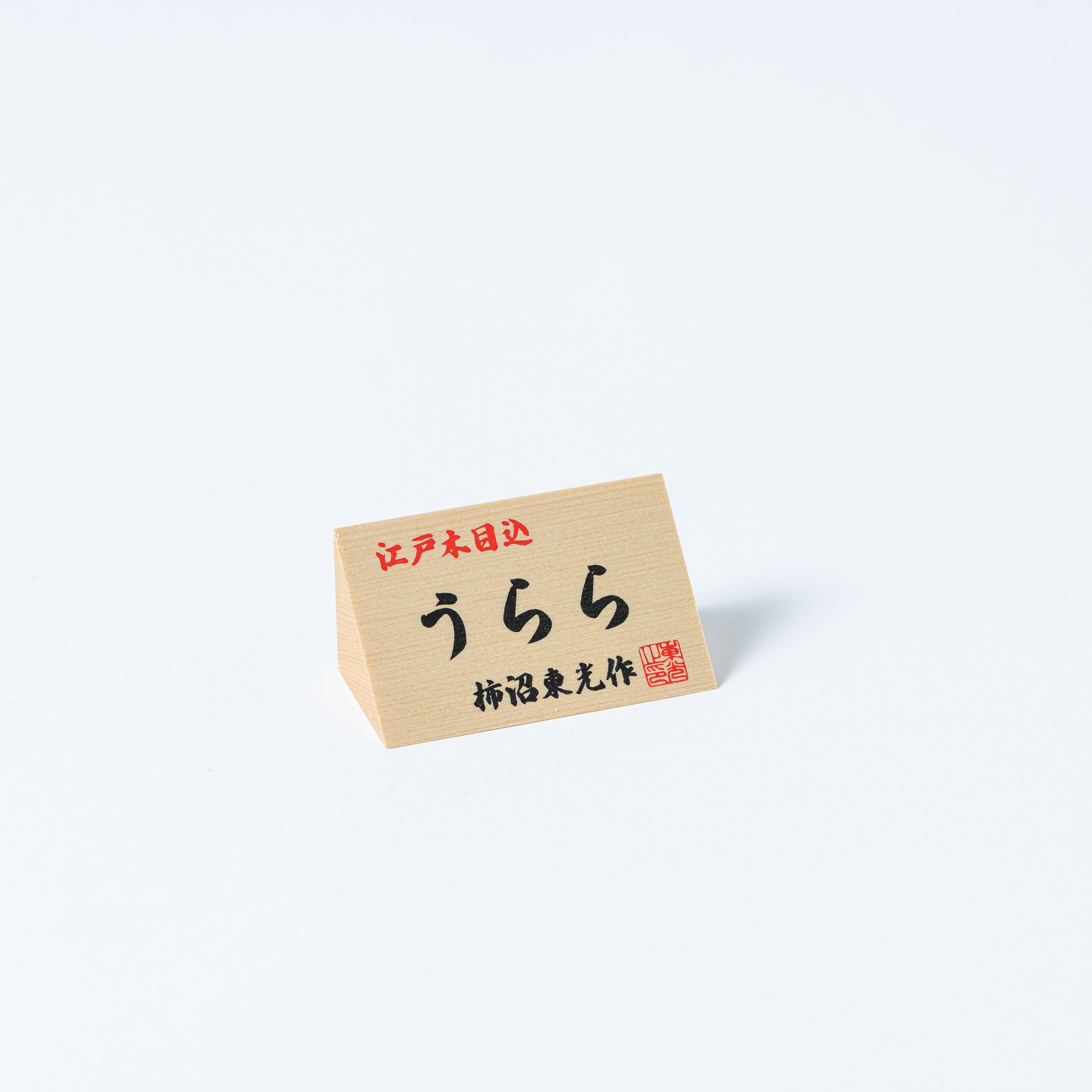
| Quantity | 2 dolls, 1 decorative stand, 1 golden screen, 1 wooden name plate, 2 sets of decorations, 1 crown tail, 1 scepter, 1 folding fan |
| Size |
[Dolls] L 6.0 cm (2.4 in) x W 7.0 cm (2.8 in ) H 8.0 cm (3.1 in) [Decorative stand] L 19.0 cm (7.5 in) x W 24.0 cm (9.4 in) x H 0.5 cm (0.2 in) [Screen] L 11.5 cm (4.5 in) x W 25.0 cm (9.8 in) |
| Weight | approx. 15 oz (430 g) |
| Material | [Dolls] Urethane resin, fabric, Plaster [Decorative stand] Wood |
| Package Type | Paper box |
Fabricant / Marque
Fondée en 1950, Kakinuma Ningyo est un modèle d'excellence dans le domaine des poupées Edo Kimekomi, une forme distinguée de l'artisanat traditionnel japonais. Du classique Chine des poupées et des poupées Boys'Day aux créations modernes et imaginatives comme maneki neko (chats chanceux) et DarumaChaque pièce allie harmonieusement savoir-faire ancestral et élégance contemporaine. S'engageant à innover tout en respectant la tradition, Kakinuma Ningyo continue de créer des œuvres exceptionnelles qui relient le passé et le présent de l'artisanat japonais.

Artisanat
Les poupées Edo Kimekomi sont de petites poupées en bois fabriquées en bois de paulownia et habillées de textiles de soie traditionnels japonais.
Originaires de Kyoto, les poupées Kimekomi ont été introduites à Edo (aujourd'hui Tokyo) , où elles ont développé un style unique. Ces figurines d'une extrême finesse sont des souvenirs appréciés, ancrés dans les traditions japonaises.
Notes
Choisir les options
Estimated Shipping Widget will be displayed here!
Poupées Hina
La tradition de célébrer une journée spéciale pour les filles en affichant Chine Les poupées ont évolué de la période Muromachi (1336-1573 de notre ère) , lorsque le 3 mars a été établi comme Hinamatsuri, à la période Edo (1603-1868 de notre ère) , au cours de laquelle le festival s'est largement répandu parmi les gens ordinaires.
L'installation de poupées hina est ancrée dans l'espoir que les nouveau-nées grandissent en bonne santé, tout en reflétant le souhait qu'elles agissent comme des substituts, les protégeant du malheur. Les poupées hina incarnent les bienfaits profonds pour leur bien-être et leur bonheur futur.