

Comment entretenir la laque japonaise
Apprenez à entretenir la laque japonaise, du lavage au rangement, pour que vos pièces restent belles pendant des années.
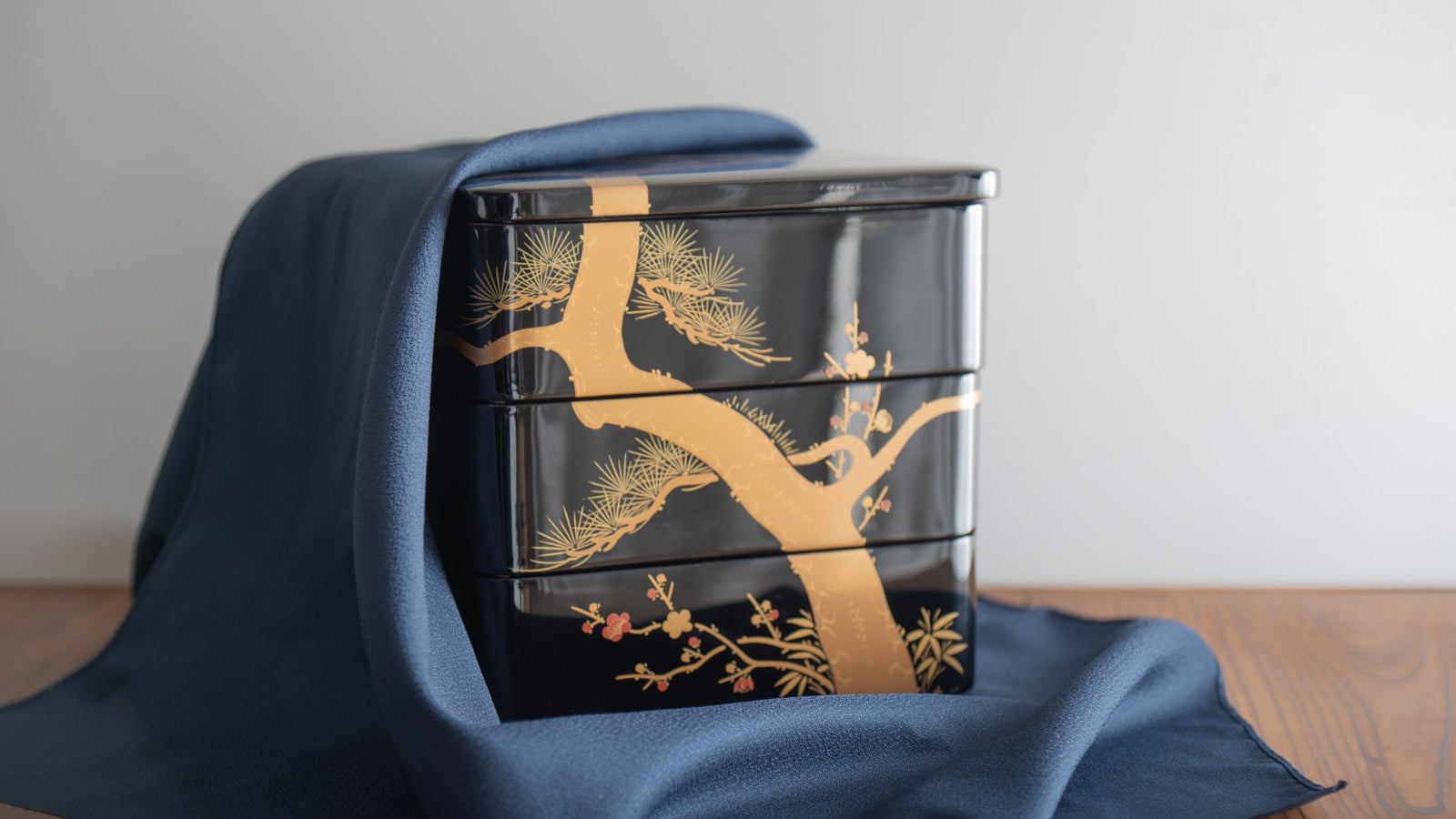
Réputée pour son fini soyeux, son élégance sans poids et sa résistance à traverser une vie entière, la laque japonaise est un chef-d'œuvre artisanal. Pourtant, son apparence exquise la fait souvent percevoir comme fragile—laissant beaucoup se demander si elle a vraiment sa place sur la table du quotidien.
En réalité, la laque japonaise, shikki en japonais, est faite pour être utilisée. Qu'elle soit réalisée avec de la laque naturelle ou finie avec des revêtements synthétiques modernes, les pièces laquées sont conçues pour vivre sur la table. En suivant quelques gestes simples, elles peuvent intégrer les repas quotidiens et se familiariser à chaque usage.
Ce guide présente les deux principaux types de laque japonaise et explique comment entretenir chacun d'eux de manière à soutenir un usage régulier. Lisez pour comprendre les différences et profiter de la laque confortablement chez vous.
Les deux types de laque japonaise
Ni la laque naturelle ni la laque synthétique n'est supérieure à l'autre, et malgré leurs différences de nature, toutes deux sont fièrement réalisées par des artisans japonais.
Laque naturelle

Avec des racines remontant à la période préhistorique Jomon (env. 10 000–300 av. J.-C.), la laque naturelle est depuis longtemps vénérée pour sa durabilité et sa surface raffinée.
La laque naturelle est fabriquée à partir de la sève raffinée de l'arbre Urushi. Contrairement aux revêtements modernes qui sèchent par évaporation, la laque naturelle « durcit » par une réaction chimique unique. Pour durcir correctement, les pièces neuves sont placées dans une armoire en bois à climat contrôlé maintenue à environ 70 % d'humidité. Pour un regard plus approfondi sur l'histoire, les matériaux et les techniques derrière urushi, consultez notre Guide de la laque Urushi japonaise : un héritage de beauté et d'artisanat.
Ce revêtement organique retient la chaleur, est naturellement antibactérien et remarquablement durable. Parce qu'il « respire », la laque naturelle durcit et gagne en éclat au fil des décennies d'usage, récompensant ceux qui la traitent comme un outil vivant.

Laque synthétique

La laque synthétique a été développée pour apporter l'esthétique de l'artisanat traditionnel dans les modes de vie modernes et rapides. Ces pièces sont généralement fabriquées en recouvrant une base—souvent en résine ou en bois—avec des finitions techniques.
Le revêtement uréthane standard est la finition de travail la plus courante, appréciée pour sa flexibilité, sa résistance à l'eau et sa compatibilité généralement avec le lave-vaisselle. Pour les pièces synthétiques haut de gamme, un revêtement acrylique uréthane est souvent utilisé car il est plus dur et spécifiquement formulé pour garantir que les couleurs restent vives dans le temps. Enfin, la laque de cajou est une résine hybride dérivée des coques de noix de cajou qui partage des propriétés biologiques similaires à la laque naturelle, offrant un éclat profond.
La comparaison ci-dessous met en évidence les différences clés pour vous aider à choisir le type qui convient le mieux à vos besoins.
Laque naturelle
Avantages
-Excellente rétention de chaleur
-Naturellement antibactérienne
-Vieillit magnifiquement avec le temps
Considérations
-Lavage à la main uniquement
-Sensible aux conditions sèches
-Sensible à la lumière UV
-Non compatible avec le micro-ondes
Laque synthétique
Avantages
-Très durable et résistante aux rayures
-Commodité généralement compatible avec le lave-vaisselle (vérifiez la description du produit car cela peut varier selon le produit)
-Prix accessible
Considérations
-Durée de vie du revêtement limitée
-Absence de « lueur » de vieillissement
-Sécurité au micro-ondes variable
Si vous n'êtes pas sûr que le produit de laque japonaise que vous souhaitez acheter soit en laque naturelle ou synthétique, vous pouvez trouver l'information sur les pages produit individuelles.
Entretien quotidien de base pour la laque japonaise

Les exigences d'entretien dépendent largement de la nature du revêtement, organique ou technique. Alors que les pièces synthétiques offrent une commodité moderne, la laque naturelle nécessite une approche légèrement plus attentive pour maintenir son intégrité.
Entretenir la laque naturelle
Pour l'urushi naturel, la règle d'or est de l'utiliser souvent. Parce que ce matériau prospère avec l'humidité, l'usage et le lavage réguliers empêchent la laque de se dessécher et de devenir cassante. En un sens, l'humidité d'une cuisine standard et l'acte de laver sont les meilleures façons de « nourrir » la pièce.
Lors du nettoyage de la laque naturelle, utilisez de l'eau tiède et une éponge douce avec un détergent doux sans eau de Javel. Évitez les tampons abrasifs ou les nettoyants agressifs, car ils créeront des micro-rayures au fil du temps.
Si des aliments ont séché sur la surface, vous pouvez tremper la pièce dans l'eau pendant une courte période ; contrairement au bois brut, la laque naturelle est stabilisée par l'hydratation.
Après le lavage, essuyez immédiatement l'objet avec un chiffon doux et non pelucheux. Cela élimine les traces d'eau et agit comme un polissage doux, aidant la surface à développer un éclat plus profond à chaque usage.

Pour le rangement, évitez la lumière directe du soleil pour prévenir le dessèchement excessif et les rayons UV.
De plus, il est préférable de ranger la laque avec d'autres pièces laquées pour éviter les collisions avec des céramiques dures. Lors de l'empilement de pièces laquées les unes sur les autres, placez un morceau de papier entre chaque pièce.
Lorsque vous transportez de la laque japonaise à l'extérieur, il est préférable d'envelopper l'objet dans un tissu furoshiki pour éviter tout dommage à la surface.
Entretenir la laque synthétique
Pour les revêtements synthétiques, l'avantage principal est leur résilience dans les environnements de vie modernes. Ces finitions sont chimiquement stables et ne nécessitent pas d'hydratation régulière pour maintenir leur intégrité. Cela les rend beaucoup plus tolérantes dans les maisons sèches et climatisées ou les climats à faible humidité.
Après chaque usage, lavez à la main ou au lave-vaisselle (suivez les instructions dans la description du produit). La laque japonaise synthétique résiste aux rayons UV, mais avec le temps, son revêtement peut se décolorer, ternir ou s'user, contrairement à la laque naturelle qui continue de durcir et de s'approfondir avec l'usage.
Suivez les mêmes étapes lors du lavage à la main. Bien que conçue pour la commodité quotidienne, la surface lisse est sujette aux rayures lorsqu'elle est nettoyée avec des éponges ou des détergents grossiers.
Utiliser la laque avec micro-ondes, fours et lave-vaisselle
Pour la laque naturelle
Les pièces en laque naturelle ne doivent jamais être utilisées au micro-ondes, au four, ni placées près d'une flamme nue. En tant que matériau organique, l'urushi et son âme en bois sont sensibles à la chaleur extrême, qui peut déformer la pièce. Évitez également d'utiliser un lave-vaisselle pour les pièces naturelles ; la chaleur intense et l'air sec du cycle de séchage peuvent faire rétrécir ou fissurer l'âme en bois. Pour préserver l'intégrité de la sève naturelle et du bois, le lavage à la main est la seule méthode recommandée pour l'entretien quotidien et à long terme.
Pour la laque synthétique
La plupart des laques japonaises synthétiques sont conçues pour passer au lave-vaisselle, offrant une solution pratique pour les cuisines modernes. Cependant, même avec des revêtements synthétiques, la prudence s'impose avec les appareils à haute température. Si le matériau de base est en bois naturel, le four et le micro-ondes doivent toujours être évités pour ne pas endommager l'âme. Bien que certains produits à base de résine synthétique soient étiquetés comme compatibles avec le micro-ondes, il est essentiel de vérifier les instructions spécifiques à chaque article. Consultez toujours les détails du produit ou l'emballage pour confirmer les limites de température de votre pièce.
Pour le rangement à long terme

Parce que la laque naturelle est un matériau organique, elle nécessite une attention particulière lorsqu'elle est rangée pour la saison. Pour les articles utilisés seulement occasionnellement, comme une boîte bento jubako pour les célébrations du Nouvel An, un rangement approprié est essentiel pour empêcher le bois de se dessécher.
Lors du rangement à long terme de la laque, conservez-la dans un endroit frais et sombre, à l'écart de l'air sec des bouches de chauffage ou de la lumière directe du soleil. Si vous vivez dans une région particulièrement sèche, placer un petit verre d'eau dans le même placard peut aider à maintenir les niveaux d'humidité dont la laque a besoin pour rester souple. Pour les boîtes à étages ou les bols empilés, placez toujours un tissu doux ou une couche de papier de soie entre chaque pièce pour éviter les rayures. Enfin, envelopper l'article dans un furoshiki ou un tissu de coton doux le protégera de la poussière et des rayons UV tout en permettant au matériau de « respirer ».


Dans l'univers de la vaisselle japonaise, la laque et la poterie sont souvent décrites comme des objets à « cultiver ». Avec un usage régulier, leurs surfaces changent, s'approfondissent et gagnent en caractère au fil du temps. Cette façon de penser reflète l'esprit du wabi, une appréciation de la beauté trouvée dans les outils bien utilisés, ainsi qu'un respect de longue date pour la réparation et la réutilisation plutôt que le remplacement. Pour découvrir comment la vaisselle japonaise embellit avec l'usage, consultez notre blog L'art du Keinen Bika : comment l'artisanat japonais vieillit avec grâce.
Bien que la laque puisse sembler délicate, en prendre soin avec intention lui permet de devenir une compagne pour la vie. Chaque repas, chaque lavage attentif, fait partie de son histoire. En adoptant cette relation plus lente et plus attentive avec votre vaisselle, vous invitez le réconfort dans les routines quotidiennes et aidez à transmettre une seule pièce, d'une génération à l'autre.
Stay close to the craft
Now and then, a quiet letter — new stories, seasonal notes, and the hands behind the work.
Comment entretenir la Nambu ironware
Apprenez à entretenir les bouilloires et théières en Nambu ironware, avec des conseils pour…

Comment entretenir les ustensiles de cuisine en cuivre japonais
Apprenez à entretenir vos ustensiles de cuisine en cuivre japonais, de la préparation initiale…
Comment nettoyer une théière japonaise
Apprenez à nettoyer une théière kyusu japonaise avec des conseils d'entretien sur le rinçage,…
Leave a comment
@Therese – Thank you very much for sharing. New chopsticks and a spoon sound like wonderful additions to your oryoki bowl. We hope this guide helps you care for your lacquerware with confidence so it can continue to bring enjoyment to your table.
beautifull new chopsticks and spoon to go with my oryoki bowl.
Thank you very much for your comment. We’re delighted to hear that you found the article and our care tips for lacquerware helpful.
We truly appreciate your feedback and are planning to further enrich this blog with more in-depth in the future. We hope you’ll visit again and continue enjoying our articles.
View 1 more comment Hide comments
Thank you for the interesting article and how to care for lacquerware. I found it most helpful.