

Recette de Sukiyaki : Fondue de Bœuf Japonaise
Apprenez à préparer le sukiyaki japonais classique chez vous avec un donabe PETARI, mettant en valeur du bœuf tendre et des saveurs sucrées-salées.
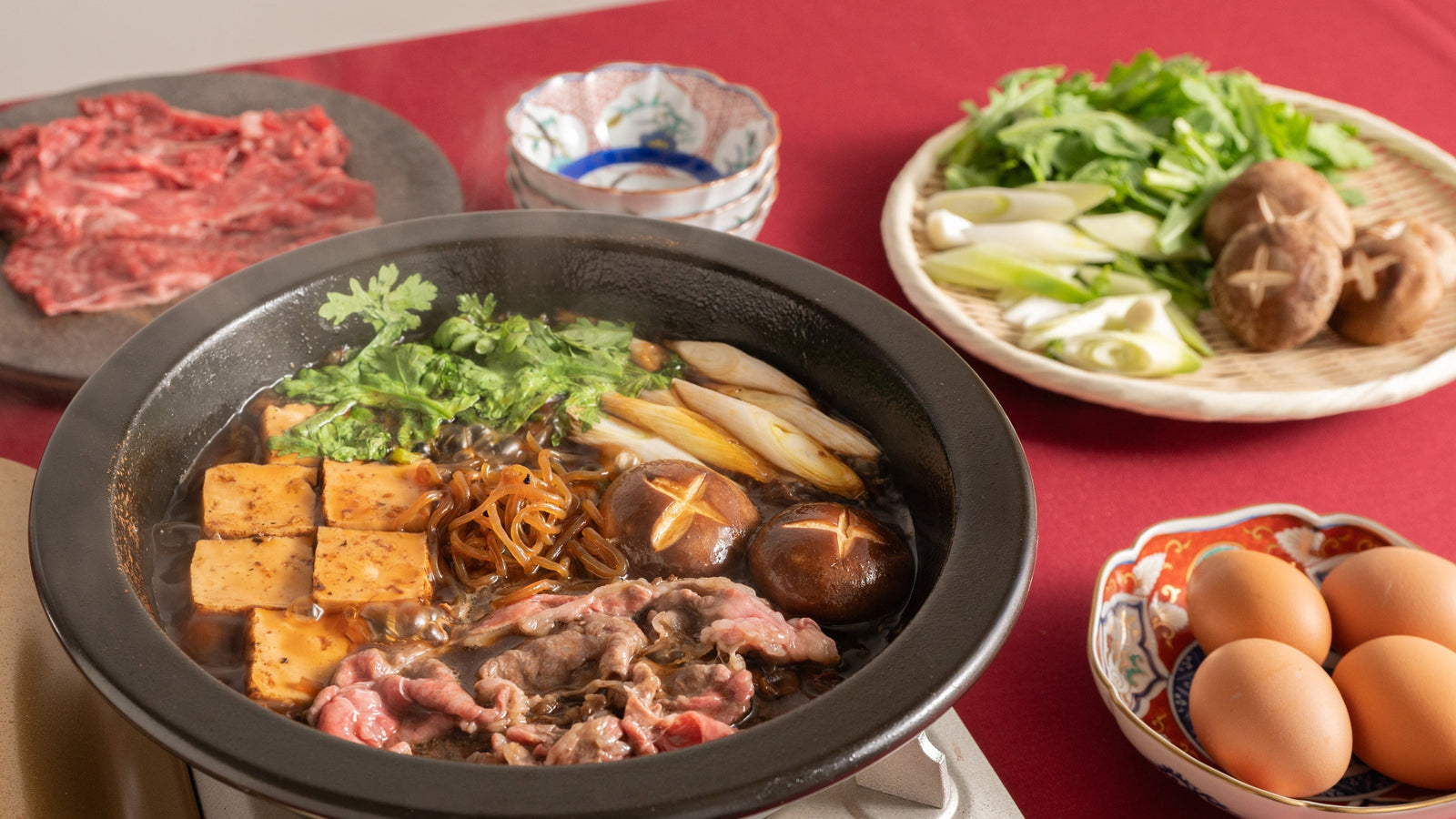
Il y a une forme de réconfort discret dans le sukiyaki. Il ne cherche ni la chaleur vive ni l'intensité tranchante—il invite plutôt à un équilibre doux où le sucré et le salé se rejoignent au lieu de s'opposer. Le sucre fond dans la chaleur de la marmite, la sauce soja apporte de la profondeur, et le bœuf libère ses jus riches et savoureux, créant un bouillon brillant qui a du corps sans peser. À mesure que les ingrédients s'ajoutent, la saveur s'approfondit progressivement, restant chaleureuse et constante de la première à la dernière bouchée.
Ce réconfort s'exprime à travers deux traditions régionales classiques. Dans cet article, nous explorons les deux styles Kanto et Kansai du sukiyaki—Kanto, centré autour de Tokyo dans l'est du Japon, et Kansai, centré autour de Kyoto et Osaka dans l'ouest. Le premier repose sur une sauce warishita préparée à l'avance, le second s'assaisonne directement dans la marmite au fur et à mesure. Avec tout préparé et le rythme ralenti, cuisinons à travers deux styles classiques de sukiyaki.
Recette de Sukiyaki Style Kanto
Le sukiyaki style Kanto trouve ses racines dans le gyunabe, un ragoût de bœuf ancien, et cette histoire façonne encore aujourd'hui sa préparation. Tout tourne autour du warishita—un assaisonnement préparé à l'avance à base de sauce soja, mirin, sucre, eau ou sake, et dashi. La sauce entre d'abord dans la marmite, est portée à un frémissement doux, et ce n'est qu'ensuite que le bœuf et les légumes sont ajoutés. Dans la recette qui suit, nous verrons comment préparer le warishita et construire une marmite équilibrée qui définit le sukiyaki style Kanto.
Ingrédients (Pour 3 à 4 personnes)
- 400 g de bœuf finement tranché (coupe sukiyaki)
- 1 oignon vert long
- 4 champignons shiitake
- 1 botte de shungiku (feuilles de chrysanthème comestibles)
- 1 bloc de yaki dofu (tofu grillé)
- 1 paquet de nouilles shirataki (blanchies pour retirer l'amertume)
- Graisse de bœuf solide ou huile de cuisson, selon besoin
- 3 à 4 œufs (frais et propres à la consommation crue), pour tremper
- Nouilles udon, facultatif
Pour le Warishita
- 150 ml de sauce soja
- 150 ml de mirin
- 6 c. à soupe de sucre
- 100 ml d'eau


Instructions
1. Préparer la Sauce Warishita
Mélanger les ingrédients du warishita dans une petite casserole. Porter à ébullition douce et écumer la mousse qui remonte à la surface.

2. Couper et Préparer les Ingrédients
Trancher l'oignon vert long en diagonale (environ 1 cm). Couper le shungiku en tronçons de 5 cm. Retirer les tiges des shiitake. Couper le tofu grillé et les nouilles shirataki en morceaux faciles à manger.

3. Chauffer la Marmite et Saisir les Oignons Verts
Placer une marmite peu profonde à feu moyen. Faire fondre la graisse de bœuf (ou chauffer l'huile) et enduire uniformément le fond. Ajouter les oignons verts et saisir jusqu'à ce qu'ils dégagent leur arôme.

4. Cuire le Sukiyaki dans le Warishita
Verser le warishita dans la marmite, disposer les tranches de bœuf à plat, et ajouter les ingrédients restants. Laisser mijoter doucement jusqu'à ce qu'ils soient tendres et que les saveurs se mêlent.

5. Servir et Déguster
Facultativement, battre les œufs crus dans de petits bols individuels et y tremper les ingrédients cuits. Cela adoucit la saveur et donne au sukiyaki sa texture soyeuse caractéristique.

Recette de Sukiyaki Style Kansai

Dans la région occidentale de Kansai, le sukiyaki ne repose pas sur un mélange de sauce préparé à l'avance. La saveur se construit dans la marmite, étape par étape, pour ajuster l'équilibre au fur et à mesure.
Commencer par chauffer la poêle et saisir rapidement les fines tranches de bœuf. Une fois la surface dorée et l'arôme monté, saupoudrer un peu de sucre pour qu'il fonde dans les jus, puis verser un trait de sauce soja et une touche de sake pour créer un glaçage sucré-salé. Les premières bouchées sont le moment clé : manger le bœuf immédiatement pendant qu'il est à son plus riche, avant que les légumes ne libèrent leur humidité et n'adoucissent l'assaisonnement.
Ensuite, ajouter le reste des ingrédients et continuer à goûter. Si c'est trop sucré, allonger avec un peu d'eau ou de sake. Si cela manque de profondeur, ajouter une touche de sauce soja.
Ingrédients (Pour 3 à 4 personnes)
- 400 g de bœuf finement tranché (coupe sukiyaki)
- 1 oignon vert long
- 4 champignons shiitake
- 1 botte de shungiku (feuilles de chrysanthème comestibles)
- 1 bloc de yaki dofu (tofu grillé)
- 1 paquet de nouilles shirataki (blanchies pour retirer l'amertume)
- Graisse de bœuf solide ou huile de cuisson, selon besoin
- 3 à 4 œufs (frais et propres à la consommation crue), pour tremper
- Nouilles udon, facultatif
Pour l'Assaisonnement (Pour 3 à 4 personnes)
- 4 c. à soupe de sauce soja
- 5 c. à soupe de sucre
- 4 c. à soupe de sake
- 3 à 4 œufs (frais et propres à la consommation crue)
Que vous soyez attiré par la structure et la constance du style Kanto, avec son warishita soigneusement préparé, ou par le rythme intuitif et direct du style Kansai, où l'assaisonnement se fait dans l'instant, les deux reflètent une manière distincte de penser la nourriture et la table. Aucun n'est plus « correct » que l'autre ; ils offrent simplement des chemins différents vers le même réconfort partagé. Quel que soit le style que vous essayez en premier, faites-en une occasion de ralentir, de cuisiner avec intention, et de savourer le plaisir d'un plat fait pour être partagé.
Stay close to the craft
Now and then, a quiet letter — new stories, seasonal notes, and the hands behind the work.

Délices au Petari Donabe : Un guide de recettes élégantes en un seul pot pour chaque repas
Du petit-déjeuner au dessert, découvrez des recettes simples en un seul plat qui révèlent…

Trois recettes japonaises de riz à essayer chez vous
Découvrez 3 recettes de riz au donabe japonais : riz blanc moelleux, saumon savoureux…

Recette de printemps au donabe par Hasegawa Akari : Takikomi Gohan au saumon et asperges
Cette recette de takikomi gohan en donabe par Hasegawa Akari est légère, fraîche et…
Leave a comment
@Michalina Thank you for your comment on our journal. If you do not have edible chrysanthemum greens, you can also substitute with follows;
Mizuna – the closest substitute; light bitterness and fresh flavor
Komatsuna – mild taste and holds up well in sweet soy sauce
Spinach – rich and tender; add near the end so it doesn’t overcook
Bok choy – good texture and absorbs the sauce nicely
Mitsuba (Japanese parsley) – use a small amount at the end for aroma
This sounds delicious! Definitely a recipe to try out, at least whenever I get my hands on a donabe. Out of curiosity however, is there any good enough substitute for the chrysanthemum greens? I’m not sure even our local Asian market has it, unfortunately…