

Découvrir les trésors d'un marché d'antiquités japonais
Entrez dans les marchés d'antiquités japonais et partez à la chasse au trésor à travers des siècles de céramique, d'art et bien plus encore.
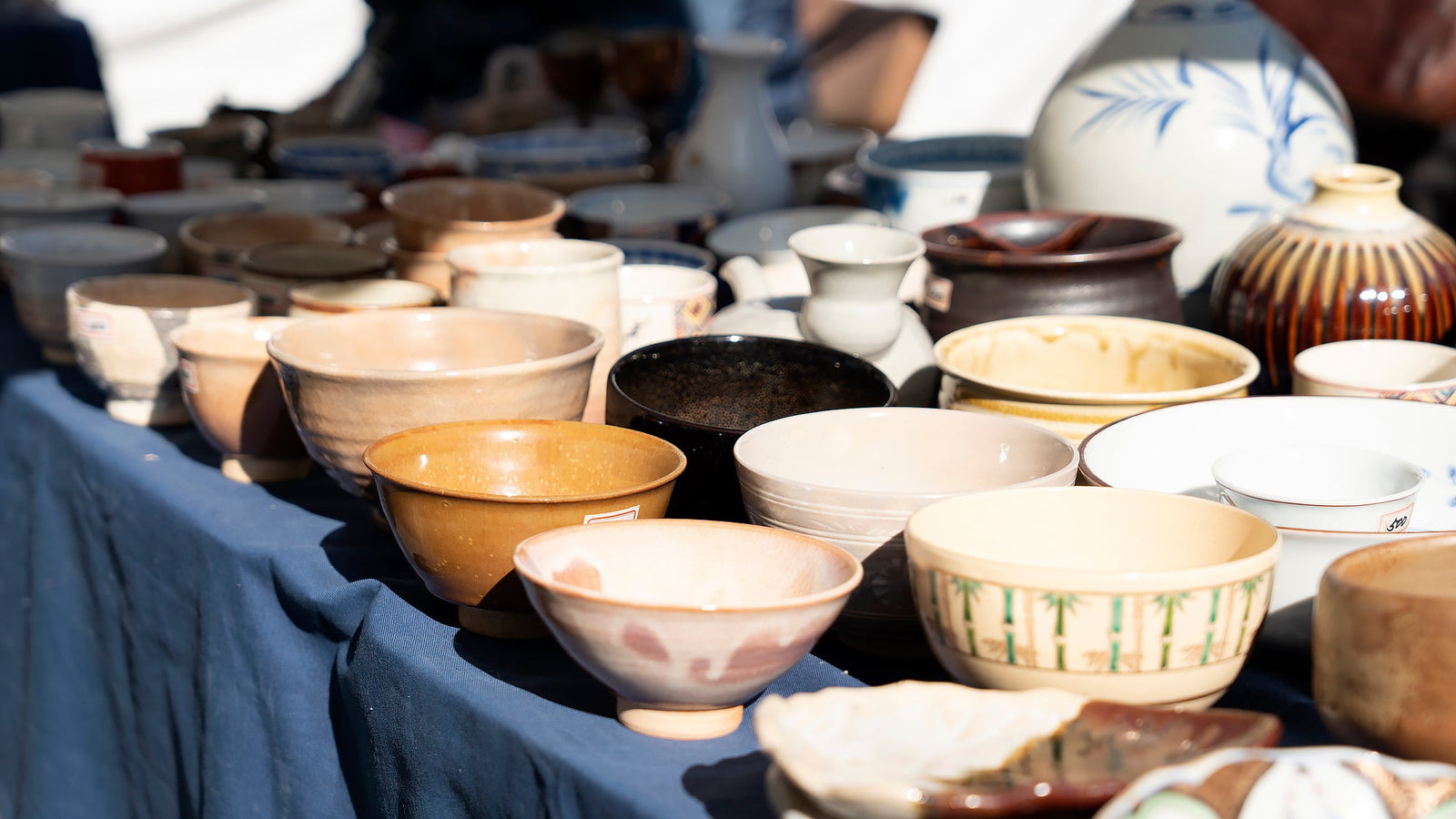
L'un des lieux les plus singuliers à visiter le week-end ou lors d'un voyage au Japon est un marché d'antiquités — un véritable trésor d'histoire. Vous trouverez des marchés d'antiquités organisés dans des temples, des sanctuaires, des places, des parcs et d'autres lieux à travers tout le Japon. Ces marchés proposent une grande variété d'objets, principalement du début du XVIIe siècle à nos jours, incluant céramiques, laques, peintures, kakejiku rouleaux suspendus, kimonos, livres anciens, et bien plus encore. Parcourir les étals constitue un voyage à travers le temps et la culture, ce qui en fait une destination incontournable pour quiconque s'intéresse à l'histoire et aux arts.
Tokyo regorge de marchés d'antiquités, et l'un des plus anciens et des plus charmants parmi eux est le Ueno Aozora Market. Ce joyau se tient en plein air sous le ciel bleu, aozora en japonais, dans le parc d'Ueno, juste devant la gare JR d'Ueno. Il attire environ 16 000 visiteurs par jour.

Par une magnifique journée de novembre, lorsque les feuilles d'érable arboraient de superbes nuances de rouge et que les ginkgos resplendissaient de jaune, l'équipe Musubi a visité le marché d'antiquités d'Ueno et s'est entretenue avec des antiquaires professionnels sur la manière de trouver des antiquités de valeur et de vivre une chasse au trésor inoubliable.
Marchés d'antiquités : une histoire remontant au XVIIe siècle
Les origines des marchés d'antiquités sont étonnamment anciennes, remontant aux années 1600 durant la période Edo.
Le Kobo Market au temple Toji à Kyoto est l'un des marchés les plus anciens et les plus fascinants du Japon. Chaque mois, le 21, les festivités commencent au temple Toji, célébrant la vie et l'héritage de Kobo Daishi (774–835 apr. J.-C.), également connu sous le nom de Kukai, le célèbre fondateur du bouddhisme Shingon.

À Tokyo, le Setagaya Boroichi est un lieu animé depuis 1578, et il détient le titre prestigieux de bien culturel folklorique immatériel désigné par le gouvernement métropolitain de Tokyo. D'environ 1600 au début des années 1800, les articles vendus étaient principalement des objets du quotidien, tels que des articles du Nouvel An, des nécessités quotidiennes et des outils agricoles, soulignant à quel point le marché différait autrefois de ce que nous voyons aujourd'hui. Vers 1887, il semble que près de soixante pour cent des articles vendus étaient des vêtements usagés et des chiffons achetés comme vêtements quotidiens pour les agriculteurs. Ce n'est qu'à partir de la période de croissance économique rapide des années 1960 durant l'ère Showa que le marché a commencé à prendre la forme qu'il a aujourd'hui, avec un accent sur les antiquités.

Certains marchés d'antiquités se tiennent dans l'enceinte de temples et de sanctuaires, comme le magnifique temple Toji, tandis que d'autres ont lieu dans des parcs locaux et des places de ville.
Le Ueno Aozora Market est l'un des rares marchés organisés dans un parc pendant une semaine et est soutenu par la Fédération du tourisme d'Ueno. Il possède une histoire impressionnante s'étendant sur plus de quarante ans.
Le Ueno Aozora Market est le lieu où il faut être
Le parc d'Ueno, site du vibrant Aozora Market, est un centre animé au cœur de la ville. Il abrite l'historique temple Kanei-ji, le populaire zoo d'Ueno et le Musée national de Tokyo, parmi d'autres musées fascinants. Cette destination animée attire 80 000 visiteurs par jour, ce qui en fait l'une des attractions les plus populaires de la ville. En chemin, se trouve un marché d'antiquités où de nombreux visiteurs s'arrêtent pour explorer. Il offre un riche mélange d'antiquités uniques et fascinantes, chacune avec sa propre histoire qui attend d'être découverte.

« Nous avons constaté un changement dans les personnes qui visitent le marché d'antiquités, les touristes étrangers représentant désormais soixante pour cent ces dernières années, ce qui en fait un lieu touristique populaire », déclare Tamura Akihiko, président du groupe organisateur du Ueno Aozora Market.

Tamura, qui tient un étal à Ueno depuis le début du marché, explique qu'à l'époque il n'y avait que quelques marchés d'antiquités et seulement soixante marchands professionnels à Tokyo qui pouvaient installer des étals. Il affirme que le fait que des professionnels avertis tiennent des étals est ce qui distingue l'Aozora Market des marchés aux puces, que n'importe qui peut installer.
L'Aozora Market compte environ quinze étals, selon le jour, chacun présentant une spécialité distincte. L'étal de Tamura est un guichet unique pour les antiquités, vendant des objets précieux allant de poteries vieilles de 2 000 ans à des pièces de monnaie de la dynastie Ming de Chine, ainsi que des pierres brutes. Certains se spécialisent dans les kimonos, tandis que d'autres vendent de la vaisselle, des jouets régionaux, des ornements et d'autres articles datant principalement de 1868 (période Meiji) et après.
Sur ce marché, les articles sont vendus selon le principe du premier arrivé, premier servi, ce qui rend les visites matinales essentielles pour les trouvailles rares. Les gens commencent à arriver à 10 heures, prêts à acheter les articles qu'ils attendaient. Les foules arrivent tôt le matin, et à l'heure du déjeuner le marché bourdonne d'excitation. Les vendeurs voient un flux constant de clients, et certains articles se vendent rapidement.

Un monde de trésors fascinants vous attend
Les marchés d'antiquités sont un lieu rempli de curiosité et de fascination. Quels aspects des marchés d'antiquités nous attirent ? Tamura a parlé avec passion des antiquités.
« L'attrait des antiquités est qu'elles nous transportent à l'époque où vivaient nos ancêtres, nous permettant d'entrevoir leur vie quotidienne. Les objets quotidiens tels que les céramiques et les poteries qui enrichissaient leur vie et ont été transmis de génération en génération sont considérés comme précieux parce qu'ils ont traversé une longue histoire. Les céramiques modernes possèdent des valeurs et des qualités différentes des pièces anciennes. Il est impossible de dire si les antiquités ou les pièces modernes sont meilleures. »

Tamura a partagé une histoire intéressante. Dans le monde des antiquités, les marchands empruntent parfois l'expression humaine « né et élevé » pour souligner que la valeur d'un objet reflète à la fois la manière dont il a été fabriqué et comment il a vécu à travers le temps. Même si une pièce de poterie a été fabriquée dans un four prestigieux, si elle a été mal manipulée et que les dommages sont évidents, elle serait généralement jugée comme ayant peu de valeur. D'un autre côté, bien qu'une pièce de poterie ait été fabriquée en grande quantité, si elle s'est enrichie d'une certaine saveur au fil des années, elle peut être traitée comme un chef-d'œuvre.
Tamura illustre cette idée avec un exemple de céramique Karatsu des années 1860. Lors de l'invasion de la Corée par Toyotomi Hideyoshi, un grand nombre de personnes se sont rassemblées dans la région de Kitakyushu, créant une demande soudaine de récipients alimentaires. Pour répondre à ce besoin, de vastes quantités d'assiettes Karatsu simples ont été produites et jetées après usage, comme des contenants jetables aujourd'hui. Bien qu'elles aient été fabriquées à l'origine comme vaisselle quotidienne, ces pièces sont maintenant connues sous le nom de « Karatsu moucheté » et sont très prisées par les collectionneurs. Leur valeur ne réside pas seulement dans leur qualité matérielle, mais dans l'histoire qu'elles incarnent—offrant un lien tangible avec les vies et les circonstances de cette époque.

« La clé pour apprécier pleinement la poterie n'est pas seulement d'apprécier ses usages pratiques et sa valeur intrinsèque, mais d'aller plus loin, en explorant ses facettes diverses, y compris son histoire et ses origines fascinantes. »
Durant notre conversation de 30 minutes avec Tamura, un touriste du Moyen-Orient a acheté une pierre précieuse, une Canadienne a acheté un petit cheval en céramique chinoise, et un Britannique, client régulier et collectionneur d'antiquités japonaises, a acheté une table basse de l'ère Showa des années 1960.
Conseils pour trouver de bonnes affaires
Hayashiya est un magasin d'antiquités spécialisé dans les céramiques et la poterie. Au début du marché, il a exposé une collection remarquable de coupes à sake en céramique de l'ère Meiji (1868–1912) ayant appartenu à une famille très aisée. Beaucoup ont été achetées par un touriste de Hong Kong qui aime les arts et la culture japonais.
« La provenance était impeccable et l'ensemble avait été méticuleusement entretenu, donc je suis absolument certain qu'il s'agissait d'un achat superbe et précieux. »
Si vous examinez attentivement les antiquités, vous pouvez trouver une véritable affaire, comme ce client de Hong Kong. Cependant, pour ceux qui visitent un marché d'antiquités pour la première fois, les attentes peuvent être élevées. Tamura a partagé ses secrets pour trouver de bonnes affaires dans n'importe quel marché d'antiquités.

« Faites confiance à votre instinct. Une antiquité n'a pas besoin d'être précieuse pour avoir du sens. Tant que vous en êtes satisfait, elle en vaut la peine. Nous sommes toujours heureux de répondre aux questions des clients qui nous interrogent sur le contexte et l'histoire d'un objet. En fin de compte, la décision d'acheter ou non vous appartient. Bien que nous puissions croire en son potentiel, nous nous abstiendrons de recommander son achat. Le plus important est que vous trouviez un objet qui vous parle personnellement. Même si vous découvrez plus tard que l'objet que vous avez acheté n'est pas bon et que c'était une erreur, vous apprendrez ce qui est important pour vous et construirez vos propres valeurs. Une fois que vous aurez une meilleure compréhension de ce que vous recherchez, vous trouverez peut-être un plus grand plaisir et une appréciation plus profonde des offres uniques des marchés d'antiquités. »

Découvrir votre favori
Les poupées Kokeshi faisaient fureur il y a quelques années parmi les touristes étrangers, mais maintenant leur popularité s'est étendue à toutes sortes d'objets. Comme Akihabara est à proximité, ceux qui aiment les bandes dessinées japonaises viennent acheter des jouets en plastique des années 1960 aux années 1990. Les kimonos se vendent également très bien. Parmi les autres articles populaires figurent les poupées traditionnelles en papier japonais, les cartes postales anciennes et les bouilloires en fer.

Un homme dans la quarantaine visitant le Japon avec sa famille depuis Vancouver, Canada, qui a acheté un hyottoko, le masque de clown humoristique fait de vieux papier japonais dans l'une des boutiques, Tsukasa Sakuraya, a déclaré : « Quand je vais dans les boutiques de souvenirs, je ne vois que les mêmes choses, mais quand je viens ici, je peux acheter des objets japonais uniques. Le Hyottoko est unique en son genre, donc je pense l'exposer au mur de mon salon. Ma femme et ma fille cherchent également leurs souvenirs préférés pour se souvenir de notre voyage au Japon. » C'est sa femme qui a acheté le cheval en céramique dans la boutique de Tamura.
Tsukasa Sakuraya vendait également des cartes postales, des affiches et des pièces en papier mâché représentant d'anciens paysages et modes de vie japonais. Une famille américaine avec deux jeunes enfants a acheté des chars en papier mâché et des poupées pour leurs enfants. Ils semblaient adorer jouer avec ces jouets traditionnels. C'était un peu un contraste, cependant, car les enfants japonais dans le parc semblaient préférer jouer à des jeux sur leurs smartphones. Une femme mexicano-américaine dans la quarantaine qui a acheté une petite bouilloire en fer pour une portion a dit qu'elle avait remarqué sa beauté par hasard et aimait qu'elle soit de la taille parfaite pour servir le thé.
Des personnes de divers pays profitaient du marché d'antiquités, se mêlant aux clients japonais qui achetaient des assiettes en céramique, des bols laqués, des kimonos et plus encore.

Vous aimerez le frisson de trouver quelque chose qui vous plaît dans une boutique remplie d'antiquités. C'est comme une chasse au trésor, tellement amusant que vous perdrez la notion du temps.
« D'abord, allez dans un petit marché d'antiquités pour vous habituer aux antiquités. Vous allez adorer ce que vous ressentirez lorsque vous serez entouré de toutes ces antiquités. La clé est de choisir une boutique où les propriétaires ne vous parlent pas trop pendant que vous regardez les objets. »
Tamura a partagé quelques conseils précieux sur la façon de profiter d'un marché d'antiquités.

Marchés d'antiquités recommandés
De nombreuses régions du Japon abritent des marchés d'antiquités qui présentent des artisanats traditionnels, notamment la poterie, les céramiques et les ouvrages en argent et en or. Si vous vous intéressez aux céramiques, il pourrait être utile d'envisager de rechercher les zones de production et les marchés d'antiquités locaux. Visiter un marché d'antiquités régional pourrait être une expérience agréable, vous permettant d'explorer et potentiellement de trouver quelque chose d'intéressant.
Vous pourriez envisager les marchés suivants :
Tokyo
Oedo Antique Market :
Idéalement situé à seulement une minute à pied de la gare JR Yurakucho (sortie International Forum), ce marché se tient le premier et le troisième dimanche de chaque mois sur la place du rez-de-chaussée du Tokyo International Forum. Depuis sa création en 2003, il est devenu l'un des plus grands marchés d'antiquités en plein air du Japon, avec environ 250 boutiques vendant une variété d'articles japonais, y compris des antiquités et des objets du quotidien.

Setagaya Boroichi :
Ce marché se tient deux fois par an en hiver. Il se trouve à trois minutes à pied de la gare de Setagaya ou de la gare de Kamimachi sur la ligne Tokyu Setagaya. On y vend une grande variété de produits, allant des articles du quotidien et accessoires aux jouets et plantes.

Marché aux antiquités en plein air du sanctuaire Hanazono :
Organisé chaque dimanche matin de 7h30 à 16h00, ce marché en plein air se situe dans l'enceinte du sanctuaire Hanazono, à deux minutes à pied du métro Shinjuku-Sanchome et à sept minutes à pied de la sortie est de la gare JR de Shinjuku. Une dizaine de vendeurs se rassemblent pour proposer une grande variété de produits, des bouilloires en fonte et poteries aux objets rétro et accessoires.

Kyoto
Marché Kobo :
Il se tient le 21 de chaque mois au temple Toji, classé au patrimoine mondial, et constitue l'un des plus anciens marchés, apparu dans les années 1860.

Marché Tenjin du sanctuaire Kitano Tenmangu :
Le sanctuaire Kitano Tenmangu accueille un marché lors d'un festival qui se tient le 25 de chaque mois. Ce festival honore Sugawara no Michizane, dieu des études. Cette date marque à la fois les anniversaires de sa naissance et de sa mort. Environ 1 000 stands proposent antiquités, outils anciens, nourriture et bien plus encore.

Osaka
Festival Daishi du Shitennoji d'Osaka :
Il se tient le 21 de chaque mois (sauf en mars et septembre) dans l'enceinte du temple Shitennoji. 300 stands y sont installés.

Fukuoka
Marché aux puces du sanctuaire Hakozaki :
Il se tient le long de l'allée menant au sanctuaire Hakozaki dans la préfecture de Fukuoka, de 7h00 à environ 14h00 les dimanches, sauf en janvier et septembre. Affichant la plus grande envergure de l'ouest du Japon, ce marché aux puces compte plus de 200 stands proposant une grande variété d'antiquités et d'articles du quotidien, notamment des kimono, céramiques, jouets et bien plus encore provenant de tout le Japon.

*Veuillez noter que les dates et horaires indiqués ici peuvent être sujets à modification.
Les antiquités reflètent l'art et la culture riches du Japon, transmis de génération en génération. Ceux qui visitent les marchés aux antiquités en quête de pièces précieuses se réjouissent souvent de l'opportunité d'ajouter une telle richesse à leur quotidien. Une femme japonaise qui a acheté des bols à soupe laqués de l'ère Showa (1926–1989) en témoigne. Elle a déclaré : « J'aime associer de la vaisselle ancienne à des pièces modernes pour apprécier la beauté de la combinaison de deux valeurs différentes. » Le potentiel de l'association de l'ancien et du nouveau mérite d'être exploré. Les marchés aux antiquités pourraient constituer un point de départ idéal pour votre recherche.
Marché Aozora d'Ueno
Accès : Devant la porte Bentenmon de l'étang Shinobazu, parc d'Ueno (5 minutes à pied de la gare JR d'Ueno ; 2 minutes à pied de la gare Keisei Ueno)
Horaires : 10h00 à 18h00
Dates prévues :
-4 au 20 janvier
-Marché aux antiquités du festival des cerisiers en fleurs (fin mars à début avril)
-Marché aux antiquités de mai (1er au 16 mai)
-Marché aux antiquités du festival d'été (fin juillet à début août, organisé conjointement avec le festival d'été d'Ueno)
*Les dates indiquées sont prévues pour 2026 et sont sujettes à modification.

Stay close to the craft
Now and then, a quiet letter — new stories, seasonal notes, and the hands behind the work.
Voyagez au Japon à travers la vaisselle
Voyagez à travers le Japon par la vaisselle cet été. Découvrez des pièces artisanales…
Explorer la culture céramique du Kyoto artistique
Partez à Kyoto avec Team Musubi, à la rencontre des artisans et céramiques qui…
Zhao Minyi
Chroniques de Kyoto : Aventures entre art et appétit
Rejoignez l'équipe Musubi à Kyoto pour découvrir la poterie, savourer une cuisine délicieuse et…
Shirata Ai
Leave a comment