

Hori Toshiro : L'héritage vivant des céramiques Shino et Setoguro
Découvrez comment Hori Toshiro est devenu maître dans l'art de la céramique pour le thé et sa mission de préserver la poterie Mino traditionnelle aujourd'hui.
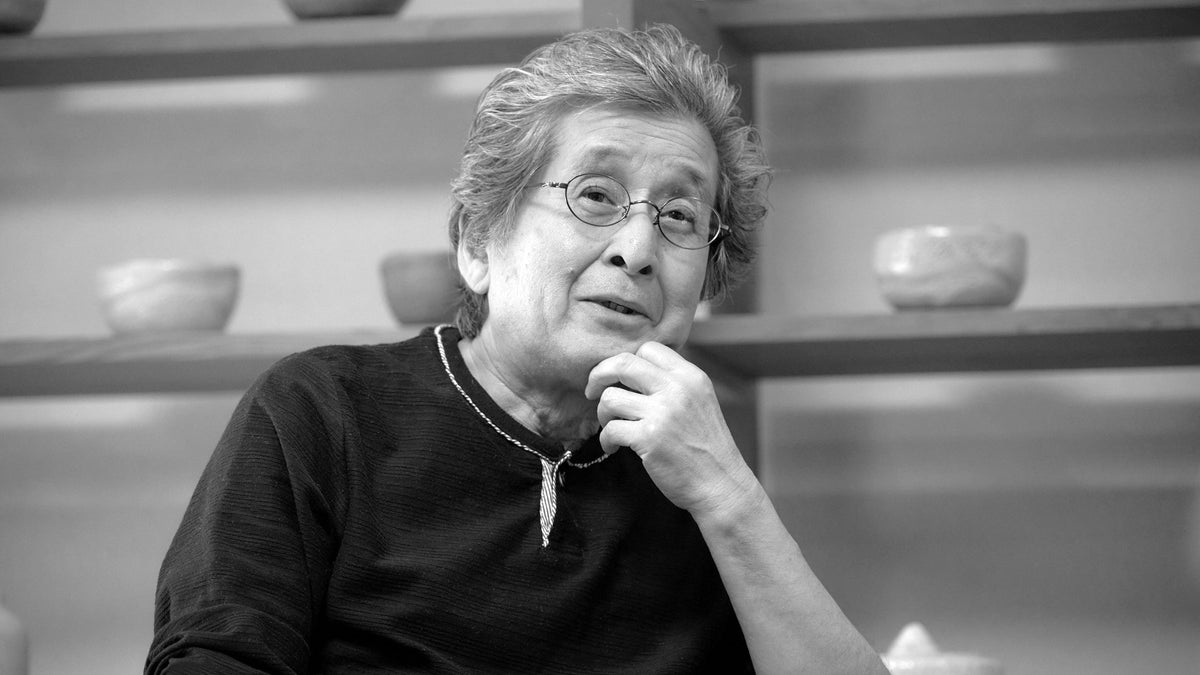
Des éclats ardents d'orange-rouge sous un émail blanc doux. Un noir intensément réfléchissant qui semble miroiter sous la surface. Ce sont les bols à matcha de Hori Toshiro, maître de Mino ware et détenteur du titre de Bien culturel immatériel de la ville de Kani pour la poterie Shino. Hori a passé cinquante ans à travailler aux côtés du détenteur de Bien culturel immatériel important, Kato Kozo, héritant des techniques céramiques japonaises traditionnelles tout en poursuivant son propre chemin. Aujourd'hui, Hori transmet son savoir en conseillant la jeune génération sur les techniques historiques de Mino ware.
Cet article retrace le parcours de Hori en tant qu'artiste, d'une rencontre fortuite à la maîtrise du métier, tout en explorant la beauté et les techniques du Shino blanc et du Setoguro noir. Ces deux styles se sont développés durant la période Azuchi-Momoyama (1573–1603) et ont profondément influencé l'esthétique de la cérémonie du thé. Pourtant, peu après, leur production s'est interrompue pendant plus de 300 ans. La tradition a finalement été ravivée dans les années 1930 par des artisans pionniers comme Arakawa Toyozo. C'est cet héritage que Hori a reçu et transmet aujourd'hui.
La rencontre fortuite qui a mené à une vie de métier
Né à Kobe dans une famille sans lien avec un domaine technique ou artistique, Hori ne s'attendait pas à poursuivre une carrière dans la céramique. C'est en parcourant une librairie qu'il a découvert ce domaine pour la première fois.
En feuilletant des livres d'art un jour durant sa première année d'université, Hori est tombé sur une section consacrée à Kato Kozo—l'homme qui, à l'insu de l'un comme de l'autre, allait bientôt devenir son maître.

Se remémorant ce moment, Hori dit : « Il y avait une photo de son visage. Rien qu'à partir de cette photo, j'ai eu le sentiment : 'Il y a quelque chose chez cette personne.' Parfois, on ressent cela à travers l'atmosphère de quelqu'un, vous voyez ? Comme une aura.
« J'ai pensé que ce serait intéressant de lui rendre visite. J'ai pensé qu'en parlant avec lui, je pourrais trouver une sorte d'indication—sur ce que je devrais faire à partir de maintenant, quel genre de choses je devrais poursuivre, comment je devrais vivre ma vie. Il semblait être quelqu'un qui aurait une indication à me donner. »

Bien que Hori vivait à Wakayama à l'époque, il a fait le trajet de plusieurs heures jusqu'à Tajimi, préfecture de Gifu, où vivait Kato, pour le rencontrer. En moins d'un an, Hori avait quitté son programme universitaire et déménagé à Tajimi pour devenir l'apprenti résident à temps plein de Kato. C'était en 1976.
Ils allaient vivre et travailler côte à côte pendant les cinquante années suivantes.
Vivre et travailler aux côtés d'un Trésor national vivant

Kato Kozo a été reconnu en 2010 comme détenteur de Bien culturel immatériel important désigné au niveau national pour sa technique Setoguro. Alors, qu'est-ce que cela signifiait d'apprendre auprès d'un potier dont le dévouement au domaine le mènerait à devenir un Trésor national vivant (officiellement, un détenteur de Bien culturel immatériel important) ?
Hori explique : « Ce n'était vraiment pas tant 'apprendre' que regarder et absorber. Pour que Kozo-sensei puisse faire son travail, je devais comprendre ce dont il aurait besoin ensuite, le flux du travail. C'était la première chose.

« Je faisais mon propre travail et j'avais mes propres tâches, mais à moins que j'apporte ce que je fabriquais et que je le lui montre, je ne recevais pas de conseils sur la façon dont je devais procéder.
Être apprenti résident n'avait « rien à voir avec l'école », dit Hori. C'était global.
« La poterie existait au sein de la vie quotidienne. Parce que—comment dire—être enseigné n'était jamais la prémisse de base. Tout se faisait ensemble : planter des fleurs et des herbes, faire le jardin. Tout, tout était la vie quotidienne. Au sein de cette vie, la poterie existait. Ce n'est pas comme si la poterie était séparée. On m'a tout enseigné, j'ai tout appris. »
« Au sein de la vie elle-même, nous avons fait l'expérience de ce qui était beau. »
Tout construire à partir de zéro
Hori ne venait pas d'une famille de potiers, ce qui comportait ses désavantages. Cela signifiait qu'il devait préparer les outils, les espaces de travail et construire d'autres ressources à partir de zéro.
Même en travaillant avec un maître, « je restais avec lui, mais nos travaux étaient séparés. Je devais faire mon propre travail. C'était vraiment un départ de zéro. »

C'est quelque peu inhabituel dans un domaine où les artisans ont souvent le soutien de plusieurs générations de membres de famille artisans pour les épauler. Mais le ton de Hori est resté optimiste tout au long de notre conversation.
« Je ne me suis jamais senti désavantagé à cause de cela. Je pouvais observer le travail de premier ordre de Kozo-sensei de près—cette opportunité est rare. Si j'avais été un apprenti externe, je n'aurais pas pu tout voir, même pour les émaux : quelle séquence, quelle méthode, quelle réflexion, quel flux. Si vous n'êtes pas là, vous ne pouvez pas voir cela.
« Être là pour le voir était une telle chance. »
Travailler aux côtés de Kato pendant tant d'années fait partie de ce qui a permis à Hori d'approfondir l'univers de Mino ware—en particulier, les techniques traditionnelles ravivées de Setoguro et Shino. Les sections suivantes examineront de plus près ces formes d'art et la façon dont Hori crée son travail.
Setoguro : céramique de thé noir de jais
Signifiant littéralement « noir de Seto », les céramiques Setoguro sont prisées pour leurs surfaces noires de jais et brillantes. Cette finition unique s'obtient en retirant une pièce du four en pleine cuisson et en la refroidissant rapidement en la plongeant immédiatement dans l'eau froide. L'un des plus grands défis avec Setoguro est de juger quand retirer la pièce du four.
Les pièces de Hori sont cuites dans un anagama, un type de four traditionnel à bois utilisé au Japon depuis plus de 1 600 ans. Construit sur une pente et composé d'une seule chambre de cuisson, la cuisson avec ces fours confère une présence unique aux céramiques. Pourtant, la température des flammes et l'environnement intérieur de cuisson peuvent être difficiles à contrôler, nécessitant une compréhension délicate du fonctionnement interne du four. Pour en savoir plus sur les types de fours japonais, lisez notre article ici.
 Bol à matcha Setoguro
Hori explique ce que c'est que de cuire du Setoguro. « Le Setoguro est cuit avec le Shino dans un environnement de réduction forte—cuisson avec peu d'oxygène. Vers 900 à 950°C, la réduction commence. Il faut surveiller la flamme dans le four. Quand elle recule, on ajoute plus de bois, la flamme jaillit à nouveau, et on répète ce cycle.
« Vers 1070 °C, juste avant 1100 °C, la flamme commence à devenir collante, visqueuse — comme si elle s'accrochait. Quand elle atteint cet état, vous regardez dans le four et vous jugez.
 Bol à matcha Setoguro
« À ce moment-là, l'intérieur du four n'est plus rouge — il est d'un blanc pur. Si lumineux qu'on ne distingue plus ce qu'on voit. C'est éblouissant. Dans cette blancheur, vous cherchez des signes de la façon dont l'émail fond. Vous utilisez une tige métallique et vous touchez la surface. Si elle colle comme une pluie poisseuse, c'est un signe.
« Vous vérifiez l'avant et l'arrière du four. L'avant fond plus vite parce que le feu le frappe directement. L'arrière, vous ne pouvez pas le voir, mais quand vous jugez que l'arrière a suffisamment fondu, c'est le moment de sortir la pièce. J'utilise un thermomètre, mais il n'est pas précis— juste une estimation approximative. Alors je décide avec mes propres yeux.
« Et quand vous sentez "Maintenant !", vous sortez la pièce et vous la plongez dans l'eau avec un sifflement. Elle devient immédiatement complètement noire. »
 Bol à matcha Setoguro
Le noir des pièces Setoguro de Hori est complexe, plus profond qu'une seule couleur.
Hori explique : « Dans mes pièces Setoguro récentes, vous pouvez voir du noir qui apparaît rougeâtre, verdâtre ou bleuté. Le "noir" n'est pas seulement noir. En lui, de nombreuses couleurs sont cachées. La question devient : comment les faire ressortir ? »
Ajuster les flammes, le moment de l'extraction et la façon dont la température augmente à l'intérieur du four font tous partie de l'art de créer ces noirs fascinants. Chaque pièce est unique, produit irremplaçable d'un instant dans le temps.
Shino : blanc et texture douce
 Bol à matcha Hiiro Shino
La céramique Shino, quant à elle, se caractérise par son émail blanc laiteux et sa surface texturée. Connu sous le nom de kairagi, ce motif de surface craquelé et poreux se forme lorsque l'émail à base de feldspath se contracte pendant la cuisson. Cela crée un contraste de couleur lorsque des aperçus du corps d'argile émergent de dessous. Dans les ustensiles à thé Shino, le motif kairagi s'approfondit avec l'usage à mesure que le thé s'infiltre lentement dans les craquelures. La céramique continue de se développer, comme un être vivant qui mûrit aux côtés de l'utilisateur.
Cette qualité est très appréciée dans la culture de la cérémonie du thé. « Quand un bol à thé est chéri, manipulé avec soin et bien utilisé, les taches gagnent en dignité », dit Hori. « C'est une sensibilité culturelle uniquement japonaise. » Pour ce type de céramique, chaque marque d'usage est un signe qu'il s'agit « d'un objet précieux utilisé pendant des années. Quand vous l'avez acquis, quand vous l'avez utilisé — tout est inclus dans l'histoire du récipient. »
 Bol à matcha Hiiro Shino
L'une des clés de la céramique Shino de Hori est le mélange d'argile. Dans le cadre de son travail continu pour faire revivre et transmettre le Shino d'il y a 400 ans, Hori utilise un mélange d'argiles locales : une argile très douce et friable connue sous le nom d'argile mogusa , et une argile plus collante provenant de couches de sol plus profondes. L'argile mogusa est difficile à travailler en raison de sa consistance instable, mais augmenter sa proportion donne à une pièce une sensation plus douce. Elle a aussi une signification historique. « Elle se rapproche davantage des pièces anciennes excavées sur les sites de fours antiques », explique Hori.
Les efforts actuels de Hori en tant qu'artiste consistent à explorer ce qu'il peut faire avec l'argile mogusa. « Jusqu'où puis-je aller ? Quelle est la limite de la maniabilité de l'argile ? » Tout cela fait partie de son parcours continu en tant qu'artiste.
 Bol à matcha Hiiro Shino
Former la prochaine génération avec Deidei
Repousser les limites artistiques n'est pas la seule chose sur laquelle Hori travaille ces jours-ci. Il fournit également des conseils techniques à deidei, une marque de céramique dirigée par son fils, Hori Taichi.

L'objectif de Deidei est d'aider à préserver les techniques de Mino ware comme Shino, ki-Setoet Oribe en les introduisant dans les foyers quotidiens. Bien que ces styles ne soient traditionnellement visibles que dans les ustensiles à thé haut de gamme, la ligne de vaisselle quotidienne de deidei les rend plus accessibles.

Tout comme Hori Senior est entré dans le monde de la céramique par sa rencontre fortuite avec Kato Kozo, il espère que deidei augmentera les opportunités pour les gens de rencontrer Shino et d'autres Mino ware traditionnelles. Il rêve de créer de nouvelles possibilités et d'élargir les horizons.
« Si seul un petit nombre d'artistes existe », explique-t-il, « cela pourrait convenir en tant qu'"art", mais petit à petit, les techniques disparaîtront. Nous nous retrouverions dans la même situation », comme avant que Shino et Setoguro ne soient ravivés il y a près d'un siècle.
Hori désigne les tasses Shino dans lesquelles nous avons bu du thé pendant l'entretien.
« Les pièces d'art ne sont pas faciles à utiliser dans un foyer ordinaire. Mais des yunomi comme ceux-ci — vous pouvez les utiliser tous les jours. S'ils sont utilisés quotidiennement, beaucoup de gens peuvent les manipuler. Nous devons laisser de telles opportunités. »

Héritage et avenir
Kato Kozo est décédé en 2023. Depuis, Hori a réaffirmé son engagement à transmettre ses techniques traditionnelles.
« Setoguro, en particulier, ressemble à une sorte de mission. C'est quelque chose que je ne dois pas abandonner. Depuis que Kozo-sensei est décédé, il n'y a personne d'autre à proximité qui ait vu ce travail de près. D'autres disciples existent, mais personne d'autre ne cuit dans un anagama comme celui-ci. Si je ne produis pas d'œuvres à partir de ce four, la technique disparaîtra instantanément. »

Hori note que l'Agence des affaires culturelles a créé des films d'archives pour la Bibliothèque nationale de la Diète. Ceux-ci documentent le travail et les cuissons au four de Kato dans un effort pour préserver la culture traditionnelle. Mais avoir un enregistrement n'est pas la même chose qu'avoir des personnes vivantes capables de réaliser le travail elles-mêmes.
« Kozo-sensei a mis sa vie en jeu pour ce travail. En tant que personne qui a été son disciple, je sens que je dois poursuivre cela. »
Les œuvres de Hori reflètent profondément l'histoire et sont imprégnées de respect pour son maître et la tradition. Elles se tiennent aussi par elles-mêmes en tant qu'ustensiles à thé supérieurs pour leur grâce raffinée et leur beauté élégante. Mais le mérite artistique du travail de Hori va encore plus loin. Il vient du fait d'être créé par les mains de quelqu'un dont la vie quotidienne est inséparable du processus de création. Qui a pris une chance sur une personne et a découvert l'œuvre de sa vie. Il y a de la poésie dans cela.
Stay close to the craft
Now and then, a quiet letter — new stories, seasonal notes, and the hands behind the work.
Tsujii Musashi : Cultiver la générosité de la terre par l'agriculture et la poterie
Rencontrez l'artisan Tsujii Musashi, qui intègre des motifs de sa vie à la ferme…
Nakada Hiroshi : Façonner la nature en porcelaine blanche
Entrez dans l'univers de Nakada Hiroshi, où les formes bourgeonnantes et les surfaces nacrées…
Wakunami Madoka : En dialogue avec la poterie Jomon
Rencontrez la céramiste Wakunami Madoka, dont les œuvres façonnées à la main réinterprètent les…
Leave a comment