

Le Wabi de Sen no Rikyu : La Source Spirituelle de l'Esthétique Japonaise
Découvrez comment Sen no Rikyu a transformé la cérémonie du thé japonaise en une philosophie de la beauté.
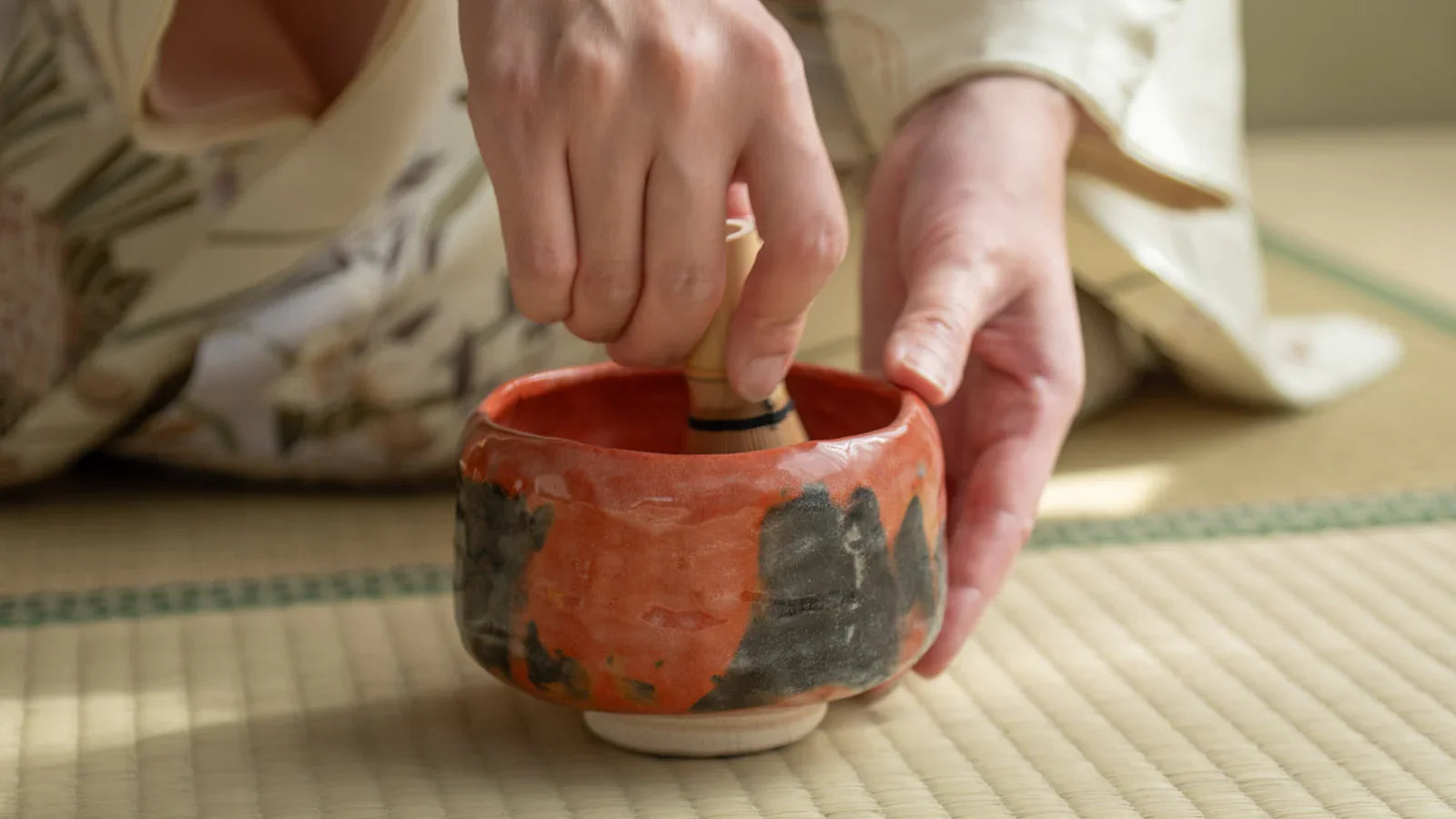
Chanoyu, ou la cérémonie du thé japonaise, telle que perfectionnée par Sen no Rikyu (1522–1591), continue d'être transmise dans le Japon moderne et forme le fondement d'une conscience esthétique distinctive.
Rikyu a perfectionné le wabi-cha, la forme de pratique du thé qui sous-tend la cérémonie du thé japonaise moderne. Elle accorde la plus grande importance à la communion des cœurs entre les individus et cultive une sensibilité qui trouve un accomplissement tranquille dans la simplicité.
Sa beauté diffère de la splendeur manifeste et visible. Elle émerge plutôt à travers une sensibilité raffinée aux états esthétiques subtils et un sentiment d'accomplissement intérieur. En d'autres termes, c'est une beauté qui n'est pas appréhendée par l'œil, mais perçue par le cœur.

Cet article explore la vie de Rikyu, sa spiritualité et ses principes esthétiques pour retracer la « source » philosophique inscrite dans les éléments de la culture matérielle japonaise tels que les bols à thé, les maisons de thé et les objets.
La vie et le contexte historique de Sen no Rikyu
Le maître de thé qui a perfectionné le wabi-cha

Sen no Rikyu était un maître de thé du XVIe siècle, durant la période Azuchi–Momoyama (1568–1600), et la figure qui a établi le wabi-cha, les fondements de ce que l'on appelle aujourd'hui la Voie du thé.
Il est né en 1522 dans une famille de riches marchands à Sakai, dans l'actuelle Osaka, une ville commerciale florissante. Son nom d'enfance était Yoshiro, son nom bouddhique Soeki, et dans ses dernières années, il devint connu sous le nom de Rikyu. Rikyu a commencé à étudier le thé vers l'âge de dix-sept ans. Plus tard, il a pratiqué le thé sous la direction de Takeno Joo (1502–1555), héritant de la lignée de Murata Juko (1423–1502), et a finalement mené le wabi-cha à sa pleine maturation.

Sous la direction de Takeno, il a absorbé une forme de thé profondément influencée par la pensée zen. S'appuyant sur le style soan (hutte de chaume) développé par Takeno, Rikyu l'a raffiné davantage avec une subtilité croissante. À travers des interactions avec des praticiens de thé influents à Sakai, il a progressivement établi sa position de maître de thé de premier plan. À la fin du XVIe siècle, son style de thé avait atteint un état d'achèvement.
Il a également servi Oda Nobunaga (1534–1582) et Toyotomi Hideyoshi (1537–1598), les deux premiers des « Trois Unificateurs » du Japon, en tant que sado (茶頭), se positionnant ainsi au centre de la politique et de la culture. Un sado, littéralement « chef des affaires du thé », était un praticien du thé qui servait un seigneur féodal tel qu'un daimyo ou un shogun, supervisant tous les aspects de la réunion du thé.
Rikyu a systématisé les procédures et l'étiquette avec rigueur, incorporant une tension raffinée dans la réunion du thé. Chaque rencontre était imprégnée du poids de ce que l'on pourrait appeler «ichi-go ichi-e,» une rencontre unique dans une vie, élevant la réunion en une expérience spirituelle profonde. Il a également étendu sa vision esthétique à chaque détail, des ustensiles à la salle de thé elle-même, intégrant l'ensemble de la pratique du thé dans une expression unifiée de sa sensibilité.
Une époque entre la vie et la mort
Pour comprendre l'esthétique de Rikyu, il faut d'abord considérer l'époque dans laquelle il a vécu.
Durant la période des États en guerre au Japon (vers 1467–1615), l'avenir n'était jamais garanti pour les seigneurs de guerre dont les jours étaient consumés par des batailles constantes. Les réunions de thé offraient un espace de concentration, de méditation et de tranquillité au milieu de ce monde extrême et précaire. Dans la petite salle de thé, même s'ils partageaient un moment autour d'un bol de thé, le lendemain ils pouvaient apprendre que l'un d'eux était parti pour toujours. C'est précisément dans ce contexte éphémère et fragile que le concept d'ichi-go ichi-e en est venu à incarner l'esprit de la Voie du thé.
Le thé était également profondément lié à la politique. Oda Nobunaga a transformé la cérémonie du thé d'une pratique principalement récréative en un outil d'influence politique. Ses politiques entourant le thé, souvent appelées ochanoyu goseido, restreignaient les réunions de thé à certains vassaux et les formalisaient comme partie de l'étiquette coutumière des seigneurs. De plus, il a mené des meibutsu-gari, la collecte d'ustensiles de thé célèbres et très prisés à travers le pays, qu'il exposait lors de réunions soigneusement mises en scène. De cette manière, le thé est devenu à la fois une activité culturelle et une scène pour affirmer l'autorité et renforcer les relations.

En tant qu'officiel du thé sado servant Oda Nobunaga puis Toyotomi Hideyoshi, Rikyu dirigeait ces réunions et gagnait naturellement une grande influence non seulement dans la sphère culturelle mais aussi dans la sphère politique. À une époque où la vie et la mort coexistaient, un monde qui le conduirait finalement à se donner la mort sur ordre de Toyotomi, son thé assumait une signification unique : il était ancré dans la sensibilité de chérir chaque rencontre comme irremplaçable. Une réunion de thé n'était pas une simple occasion sociale ; elle devenait un espace dans lequel les participants s'engageaient profondément les uns avec les autres dans un laps de temps fini. En concentrant la conscience à sa limite extrême, Rikyu a transformé le simple acte de boire du thé en une expérience de singularité profonde.

La spiritualité et l'esthétique de Rikyu ont ainsi été forgées dans ce monde tendu et volatile, où la vie et la mort, le pouvoir politique et le raffinement culturel se croisaient.
L'esthétique de Sen no Rikyu
De l'opulence au wabi
Pour Rikyu, la beauté n'est pas quelque chose d'immédiatement visible. Elle n'émerge qu'à travers un état d'esprit particulier. Dans l'atmosphère du thé, on apprend à rechercher la profondeur esthétique et l'accomplissement intérieur. Ce n'est pas une beauté perçue par l'œil, mais une beauté vue par le cœur. Cette sensibilité se trouve au cœur de son concept de wabi. L'importance de Rikyu dans la culture japonaise réside précisément dans son articulation de cette esthétique.
La valeur du wabi s'est développée à partir des transformations de la culture du thé durant la période Muromachi précédente (1336–1573), lorsque les réunions de thé somptueuses et compétitives ont progressivement cédé la place à des formes plus calmes et introspectives. Murata a introduit le style soan simple, et plus tard Takeno l'a approfondi en une pratique davantage ancrée spirituellement.

Rikyu a hérité de cette lignée et l'a menée à son accomplissement sous la forme du wabi-cha. Une anecdote raconte comment, lorsqu'on lui demanda quel était l'agencement approprié du roji (jardin de thé), Rikyu répondit par un seul poème waka décrivant des feuilles de chêne tombées recouvrant un sentier de montagne solitaire.
Ce poème, composé par un moine, évoque la désolation d'un sentier menant à un temple de montagne reculé, recouvert de feuilles de chêne tombées qui n'ont pas changé de couleur. Dans cette atmosphère subtile, Rikyu a indiqué ce que devrait être un jardin de thé.

Ce qui apparaît ici n'est pas une beauté artificielle, mais le calme inhérent à la nature elle-même, et la mélancolie subtile qui révèle une beauté essentielle enracinée dans le cœur humain. La sensibilité esthétique de Rikyu s'enracine profondément dans ce sentiment accompli de « désolation ».
Affirmation de l'inachèvement
L'esthétique de Rikyu n'existe pas de manière isolée. Des objets qui peuvent ne pas paraître beaux en eux-mêmes révèlent une harmonie à travers leurs relations les uns avec les autres.
Une anecdote de son arrière-petit-fils, Koshin Sosa, rapporte que Rikyu disait qu'avec un simple vase en bambou, un bol à thé noir et un rouleau de calligraphie zen, même une demeure de montagne ne semblerait pas solitaire. Individuellement modestes, ces objets remplissent ensemble un espace de richesse.

Les ustensiles wabi présentent souvent des tons subtils, atténués et principalement monochromes. Ils n'exigent pas l'attention, et c'est précisément par cette retenue qu'ils attirent le regard vers une perception de profondeur au-delà de la surface. La beauté qu'ils incarnent n'est jamais fixe ni complète ; elle demeure ouverte, activée par la réponse intérieure du spectateur.
Saisir cette beauté requiert une attitude mentale particulière, proche du zen. Le manque n'est pas une déficience mais une force génératrice qui éveille l'esprit. Les objets conservent un sens d'ouverture, et en s'engageant avec cet inachèvement, on est conduit vers l'intérieur, découvrant sens et beauté en soi-même.
Les participants aux réunions de thé de Rikyu devaient partager cette sensibilité, non simplement observer. Ainsi, comprendre le wabi n'était pas seulement un jugement esthétique mais une forme de discipline spirituelle.
Ustensiles et espace comme incarnations de l'esthétique de Rikyu
Beauté qui émerge par l'usage
La culture matérielle entourant la voie du thé n'existe pas simplement pour l'appréciation visuelle ; elle existe fondamentalement pour l'usage.
Contrairement à de nombreuses formes d'art, comme les peintures, qui sont principalement destinées à être regardées, les ustensiles de thé révèlent leur véritable valeur au cours de leur utilisation. Ils sont plus que de simples outils, car leur beauté est indissociable de l'expérience de les manipuler, de les tenir et de s'engager avec eux.
Dans une réunion de thé, des éléments tels que le rouleau suspendu définissent le thème, tandis que les ustensiles sont souvent sélectionnés en réponse à celui-ci. La question n'est pas de savoir si un objet est excellent de manière isolée, mais comment il contribue au sens de l'ensemble. Ainsi, les ustensiles de thé fonctionnent comme des éléments vivants au sein d'une composition totale, expérimentés par les sens en relation avec l'espace, l'action et l'interaction humaine.
La salle de thé : espace de vide et de réflexion

Le chashitsu, ou maison de thé, incarne l'esthétique de Rikyu. La maison de thé de deux tatamis appelée Taian, créée par Rikyu lui-même, qui existe encore aujourd'hui à Kyoto, représente le plus petit espace possible conçu pour l'hôte et l'invité, réduit au maximum afin d'incarner le wabi-cha.
Le nijiriguchi (petite entrée basse), qui oblige les invités à s'incliner en entrant, fonctionne comme un seuil vers un espace intérieur et contemplatif. L'intérieur ne contient que le strict nécessaire : un rouleau, des fleurs et un minimum d'ustensiles. Cette simplicité n'est pas absence, mais espace intentionnel.
Par la réduction des stimuli visuels, l'attention se tourne vers l'intérieur. La salle de thé devient plus qu'un lieu d'observation de la beauté, mais un espace qui cultive une conscience accordée à discerner ce qui est véritablement beau et ce qui perdure en signification.
Rikyu a également embrassé le concept de mitate, réinterprétant des objets quotidiens au-delà de leur fonction originale : un panier de pêcheur fut transformé en vase à fleurs, et une petite entrée utilisée pour monter à bord d'un bateau fut adaptée en nijiriguchi d'une salle de thé par le regard perspicace et ludique de Rikyu.
Ainsi, l'esthétique de Rikyu n'était pas liée par des valeurs existantes ou des usages conventionnels, et en transformant sa manière même de voir, il a ouvert un nouvel horizon de beauté.
Fleurs et vases : nature et imperfection
Les fleurs dans une réunion de thé expriment éloquemment la sensibilité esthétique de Rikyu.
Rikyu enseignait que « les fleurs doivent être arrangées comme elles le sont dans les champs ». Cela exprime une perspective qui ne consiste pas à façonner excessivement la nature par la main humaine, mais à recevoir les choses telles qu'elles sont, même dans leur imperfection, et à reconnaître cela comme beauté.

Cette philosophie est également évidente dans les contenants à fleurs, ou hanaire, utilisés pour arranger les fleurs lors d'une réunion de thé. Les hanaire en bambou que Rikyu privilégiait et fabriquait parfois lui-même restreignaient l'artifice et utilisaient la forme naturelle du matériau. Parmi ceux-ci, le contenant à fleurs ichijugiri présente une structure simple avec une seule fenêtre découpée dans le bambou. Cette « fenêtre » sert non seulement d'ouverture fonctionnelle pour placer les fleurs, mais aussi de lien entre l'espace intérieur et le monde naturel extérieur.
Sur le vase à fleurs ichijugiri attribué à Rikyu, une large fissure verticale parcourt la face avant. Elle n'a pas été créée artificiellement ; elle préserve la fente naturelle qui s'est formée dans le bambou. L'intersection de cette fissure avec le nœud du bambou crée un caractère visuel unique, comme si la pièce avait été coupée précisément pour mettre en valeur les traces de la nature elle-même.
Lorsque des fleurs étaient placées dans le vase, l'eau s'écoulait par la fissure, dit-on. Quand on le lui fit remarquer, Rikyu aurait répondu :
« Là où l'eau s'écoule — c'est là que réside sa vie. »
En plaçant délibérément au centre ce qui pourrait normalement être perçu comme un défaut, Rikyu révèle l'essence de son esthétique. La véritable vitalité ne réside pas dans la perfection, mais dans les objets qui portent des écarts, des irrégularités et des imperfections.
Cette approche est étroitement liée à la compréhension zen de l'impermanence, la reconnaissance que toutes les formes sont transitoires. Plutôt que de rejeter le hasard, la variation ou l'incomplétude, elle les accueille, trouvant sens et beauté en eux. Elle reflète une volonté de renoncer à l'illusion de contrôler la nature et d'accepter de faire partie de son flux.
Les fleurs et les vases de Rikyu incarnent cette philosophie, non par les mots mais par la forme. Pour nous qui vivons dans le monde pressé d'aujourd'hui, ils rappellent une vérité souvent négligée : l'humanité existe au sein de la nature.
Raku : l'intimité de la main
Parmi les ustensiles de thé, le Raku incarne peut-être le mieux les idéaux de Rikyu.
Tous les ustensiles de thé ne sont pas uniformément noirs. Pourtant, dans l'ensemble, on observe une tendance à supprimer l'éclat au profit de tons sobres et discrets, en particulier le noir, qui apaise l'esprit et le guide vers la clarté et la sérénité.
Un exemple remarquable en est le bol à thé Raku, créé sous la supervision de Rikyu par le potier Chojiro (dates inconnues–1589). Façonné à la main plutôt qu'au tour, sa forme est simple mais saisissante, incarnant l'esprit wabi de Rikyu avec une clarté remarquable.

Le bol à thé Raku est réalisé par un procédé appelé tezukune, le modelage de l'argile à deux mains, et le grattage minutieux de l'excédent. Les variations naturelles du modelage manuel et le raffinement du grattage existent dans une tension délicate, affinant progressivement la forme.
Ce qui émerge n'est pas un objet uniforme et sans défaut. Le bol porte plutôt les traces de la main du créateur, y compris de subtiles irrégularités et asymétries. C'est précisément cette imperfection qui permet au bol de résonner avec l'utilisateur, favorisant une relation intime par la tenue, le toucher et la dégustation.
Ce n'est qu'à travers ces expériences physiques — le poids ressenti dans la paume, la chaleur de l'argile, la douceur de la lèvre touchant le bord — que le bol atteint son accomplissement. Le bol à thé Raku est une beauté définie par la relation. Il n'existe pleinement que lorsqu'il est partagé et utilisé par les gens.

Résonances avec le luxe contemporain
L'intérêt actuel pour le minimalisme et les espaces d'inspiration zen reflète un changement de valeurs, de la quantité et de l'ornementation vers l'essence et l'expérience.
Nous vivons désormais à une époque où le concept de luxe est redéfini. Les objets produits en masse, remplacés rapidement et fréquemment, sont de plus en plus perçus comme ayant peu de valeur au-delà de la simple fonctionnalité. En revanche, on apprécie de plus en plus la qualité plutôt que la quantité, et les liens durables, tant avec les personnes qu'avec les créateurs des objets que nous utilisons. Le luxe contemporain, alors, ne concerne plus l'excès ; il soutient une vie essentielle et porteuse de sens, et offre des expériences enrichissantes.

Ce changement se manifeste dans l'intérêt croissant pour l'épure à une époque de surcharge informationnelle, alimentant la demande d'espaces minimalistes et d'inspiration zen. Rikyu, lui aussi, recherchait l'accomplissement à travers des aménagements de salles de thé et le jardin de thé qui ne comprenaient que le strict nécessaire. La vie moderne nous a appris qu'accumuler des objets toujours plus élaborés ne satisfait pas nécessairement le cœur. La valeur réside plutôt dans les choses qui peuvent être utilisées dans le temps, entretenues et partagées comme partie intégrante de l'expérience vécue.
L'esprit de Rikyu résonne également dans l'artisanat contemporain. Les artisans modernes maintiennent la tradition tout en introduisant de nouvelles perspectives, tout comme Rikyu incorporait des éléments nouveaux et des innovations dans la cérémonie du thé. Depuis l'époque moderne, l'art bouddhique, la céramique, le verre et le travail du métal ont été adoptés comme ustensiles de thé par le mitate (réinterprétation), apportant de nouvelles possibilités dans l'univers du thé.
En fin de compte, l'essence du thé réside dans le partage d'un moment de connexion autour d'un bol de thé. En d'autres termes, ce qui compte le plus, c'est le lien entre les personnes.
Le wabi de Rikyu ne place pas la valeur dans les objets eux-mêmes, mais dans l'expérience et l'essence révélées à travers eux. Sa beauté ne réside pas dans la splendeur visible, mais dans l'accomplissement et la profondeur esthétique. C'est, au sens le plus vrai, une beauté réalisée par l'engagement du cœur.
Stay close to the craft
Now and then, a quiet letter — new stories, seasonal notes, and the hands behind the work.
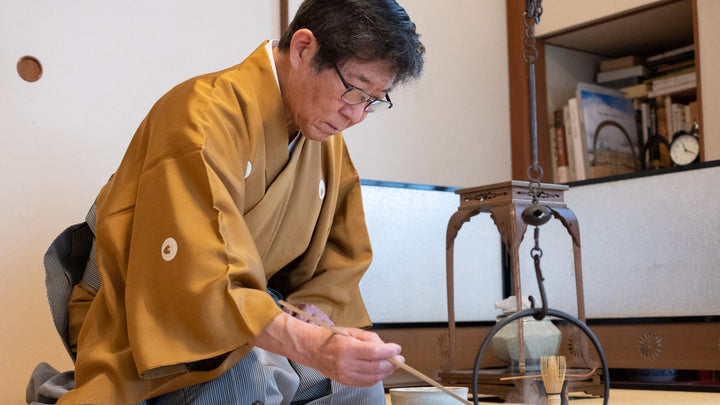
Série Chado de MUSUBI KILN : Une promenade sur le chemin du thé des samouraïs
L'équipe Musubi a découvert l'unicité de la cérémonie du thé japonaise au Komaba Warakuan,…
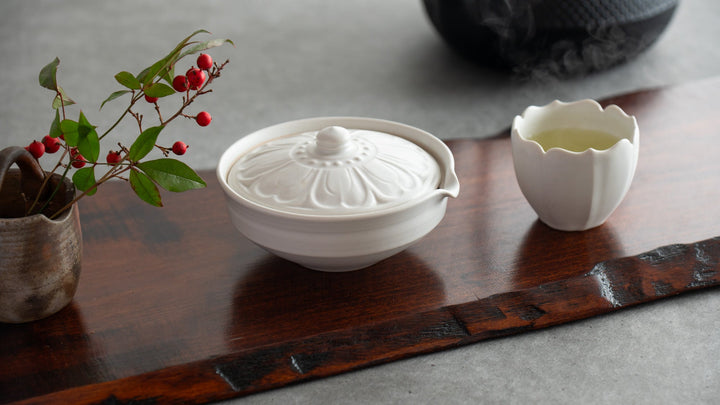
Quatre pratiques japonaises pour cultiver la pleine conscience
Découvrez quatre rituels japonais de pleine conscience qui utilisent des gestes doux pour retrouver…
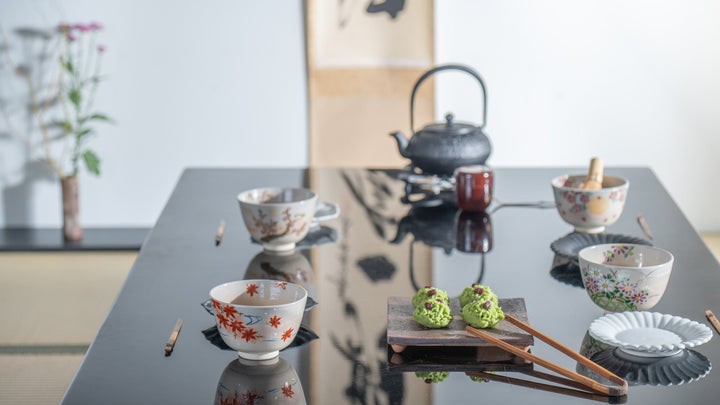
Comment créer un coin salon de thé chez soi
Transformez n'importe quel coin de votre maison en salon de thé et créez un…
Leave a comment