

Introduction aux techniques de façonnage de la céramique japonaise
Découvrez les techniques de façonnage de la céramique japonaise, et observez comment l'argile, le toucher et le feu donnent forme à chaque pièce.
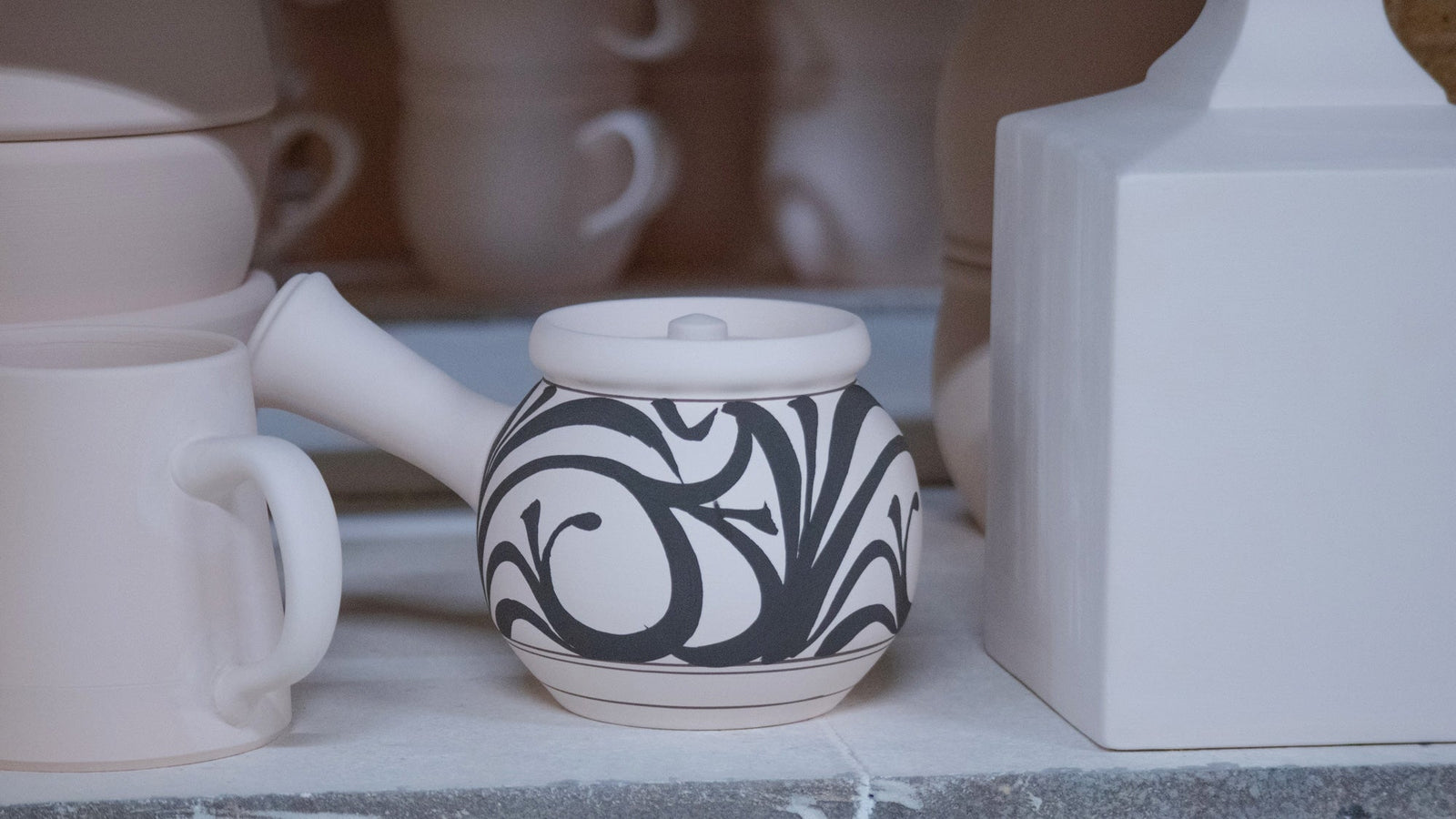
Façonnées avec intention et modelées à la main, les céramiques japonaises portent une beauté qui dépasse leur surface. Dès l'instant où l'argile est d'abord façonnée, le processus de mise en forme définit le caractère, l'équilibre et la fonction d'un récipient.
Cet article explore les techniques de façonnage fondamentales utilisées dans les céramiques japonaises, du mouvement fluide du tour de potier au toucher expressif du modelage à la main. Chaque méthode reflète un dialogue entre l'artisan et la matière, donnant naissance à des formes qui semblent à la fois intentionnelles et profondément personnelles.
En comprenant comment ces pièces prennent vie, vous pouvez commencer à apprécier non seulement leur attrait esthétique mais aussi le savoir-faire et la réflexion qui en font une part significative du quotidien.
Le processus de fabrication des céramiques

Avant qu'une pièce céramique n'atteigne sa forme finale, elle traverse une série d'étapes soigneusement considérées. Parmi elles, le façonnage est l'une des plus significatives, déterminant non seulement la silhouette du récipient mais aussi son équilibre, sa texture, son poids et sa fonctionnalité.
Dans les céramiques japonaises, la forme n'est jamais créée indépendamment de l'usage. La courbe d'un bol, l'épaisseur d'un rebord ou la subtile asymétrie d'une tasse émergent tous à travers le processus de façonnage, reflétant à la fois une intention pratique et une sensibilité artistique.
Pour mieux comprendre le rôle du façonnage, il est utile d'observer le processus global de fabrication céramique. De la préparation de l'argile brute à la cuisson finale, chaque étape transforme progressivement la terre en une œuvre achevée, chaque pas affectant l'apparence finale et le caractère de la pièce.
Extraction des matières premières

Chaque pièce céramique commence avec l'argile. À travers le Japon, différentes régions produisent différents types d'argile, chacune avec sa propre texture, couleur et qualités de cuisson.
Certaines argiles sont lisses et faciles à façonner, tandis que d'autres contiennent plus de fer, se sentent plus rugueuses au toucher, ou deviennent très distinctives après cuisson.
Le choix de l'argile influence l'apparence finale et l'atmosphère d'une céramique.
Raffinage et pétrissage de l'argile

Avant que le façonnage ne commence, l'argile doit être soigneusement pétrie pour éliminer l'air emprisonné et créer une consistance uniforme. Si de l'air reste à l'intérieur de l'argile, il peut se dilater pendant la cuisson et provoquer la fissuration de la pièce ou même son explosion dans le four.
Au Japon, la préparation de l'argile implique généralement deux étapes de pétrissage : ara-neri et kiku-neri. L'ara-neri (pétrissage grossier) est un processus de pétrissage préliminaire utilisé pour égaliser la dureté et l'humidité de l'argile avant qu'une préparation plus raffinée ne commence.
La seconde étape, kiku-neri, souvent traduite comme « pétrissage chrysanthème », tire son nom du motif en spirale semblable à une fleur formé à la surface de l'argile pendant le processus. Au-delà de l'élimination des poches d'air, le kiku-neri aide également à aligner le flux et la direction des particules d'argile, créant une matière plus stable et plus maniable pour le façonnage.
Parce que la technique exige un contrôle considérable et de la répétition, elle a longtemps été considérée comme l'une des compétences fondamentales dans la pratique céramique japonaise. Un pétrissage approprié améliore la consistance de l'argile, la rendant plus réceptive aux mains du créateur tout au long du processus de mise en forme.
Façonnage et mise en forme

Une fois l'argile préparée, elle peut être formée dans sa forme prévue en utilisant des techniques telles que le tournage, le modelage à la main, le colombinage ou le moulage.
Cette étape joue un rôle majeur dans la détermination de l'équilibre, de la texture et de l'expression de la céramique. La pression des mains du créateur, le rythme du mouvement et les qualités de l'argile deviennent tous visibles dans la forme finale.
Après le façonnage, la pièce est laissée à sécher lentement dans un espace bien ventilé pour prévenir les fissures ou les déformations avant la cuisson.
Tournassage et décoration

Lorsque l'argile devient cuir-dure, le récipient peut être affiné davantage par le tournassage et la décoration de surface. Parce que l'argile est encore assez souple pour être travaillée, la surface peut être sculptée, peinte ou texturée avant la cuisson.
L'excès d'argile est souvent sculpté à partir de la base pour créer un pied annulaire, aidant à améliorer à la fois l'équilibre et l'apparence. Des techniques décoratives telles que l'application d'engobe blanc, shiro-gesho, ou le filet d'engobe en relief icchin sont également couramment ajoutées à cette étape.
Séchage

Avant la cuisson, les pièces céramiques doivent sécher complètement pour éliminer toute humidité restante du corps d'argile. Ce processus est effectué lentement et uniformément, car un séchage inégal peut causer des fissures ou des distorsions.
Selon la taille et l'épaisseur de la pièce, le séchage peut prendre plusieurs jours ou plus. Bien que le récipient paraisse solide à cette étape, il reste délicat et très absorbant.
Un séchage approprié est essentiel pour garantir que la pièce puisse résister à la chaleur du four.
Cuisson de dégourdi

La première cuisson, connue comme cuisson de dégourdi, durcit l'argile et la transforme en céramique.
Sans cette étape, l'argile séchée se ramollirait à nouveau lorsqu'elle serait exposée à l'eau pendant l'émaillage ou la décoration. La cuisson de dégourdi stabilise la forme tout en laissant la surface suffisamment poreuse pour absorber les pigments et l'émail.
Cette étape prépare la pièce pour les prochaines phases de décoration et de finition.
Peinture sous émail

Après la cuisson de dégourdi, une peinture décorative peut être appliquée directement sur la surface céramique. Ce processus est connu comme shita-etsuke, peinture sous émail.
Dans ce processus, les potiers peignent des motifs, des coups de pinceau ou des illustrations sur la surface céramique avant l'émaillage.
Toutes les céramiques n'incluent pas de décoration peinte, mais lorsqu'elle est utilisée, la peinture sous émail devient une partie importante de l'atmosphère du récipient.
Émaillage

L'émaillage donne aux céramiques à la fois leur surface protectrice et une grande partie de leur caractère visuel. L'émail est appliqué après la cuisson de dégourdi, généralement en trempant, versant ou brossant sur la pièce.
Les émaux traditionnels sont fabriqués à partir de matériaux tels que le feldspath, la silice, la cendre et des composés métalliques. Pendant la cuisson, ces ingrédients fondent et se transforment, créant des surfaces qui peuvent apparaître brillantes, mates, transparentes ou richement texturées.
Parce que l'émail change radicalement dans le four, le résultat final reste souvent incertain jusqu'à ce que la pièce soit retirée du feu.
Cuisson finale

La cuisson finale est l'étape où la céramique atteint sa pleine maturité. Le four est chauffé à haute température, souvent au-delà de 1240 °C, permettant à l'argile et à l'émail de se transformer de manière permanente.
Durant la cuisson, l'émail se vitrifie en une surface vitreuse, révélant les couleurs, les textures et les effets subtils créés par la chaleur et l'atmosphère à l'intérieur du four.
Après la cuisson, le four doit refroidir lentement pendant plusieurs jours avant que les céramiques puissent être retirées en toute sécurité.
Peinture sur émail

Certaines céramiques reçoivent une décoration supplémentaire après la cuisson finale par un procédé appelé uwa-etsuke, également désigné comme peinture sur émail.
À ce stade, des pigments sur émail sont appliqués sur la surface émaillée pour créer des couleurs vives telles que le rouge, le jaune, le vert ou l'or. Parce que la décoration repose sur l'émail, elle permet des détails plus complexes et des tons plus lumineux que la peinture sous émail.
Cette technique est particulièrement répandue dans les traditions de porcelaine décorative.
Cuisson de l'émail de surface
Une fois la décoration sur émail appliquée, la pièce est cuite à nouveau à une température plus basse, généralement autour de 800 °C.
Cette cuisson fixe les pigments sur émail à la surface émaillée et fait ressortir leur éclat et leur clarté. La température plus basse permet à la décoration sur émail de fusionner avec la surface sans refondre significativement l'émail sous-jacent.
Céramiques achevées

Une fois la cuisson terminée, les céramiques sont laissées à refroidir lentement avant d'être retirées du four. Les pièces finies sont ensuite inspectées avec soin pour détecter fissures, déformations ou autres défauts.
À cette étape finale, la transformation de la terre brute en objet fonctionnel est accomplie. Chaque pièce reflète les effets accumulés de l'argile, du toucher, de l'émail et du feu.
Même après la fin du processus, les traces de chaque étape demeurent visibles dans la céramique achevée, conférant à chaque forme ses qualités propres.
Techniques de façonnage céramique

Les céramiques japonaises emploient une grande variété de techniques de façonnage, chacune choisie selon les propriétés de la pâte d'argile et la forme souhaitée de la pièce. Certaines méthodes privilégient la précision et l'uniformité, tandis que d'autres préservent les marques des mains du créateur, produisant des surfaces plus organiques et expressives.
Le choix de la technique influence bien plus que l'apparence seule. Il affecte le poids du récipient, le rythme de ses lignes, la texture ressentie dans la main, et même l'atmosphère que la pièce apporte à l'usage quotidien. Dans de nombreux cas, la méthode de façonnage elle-même devient partie intégrante de l'identité de la céramique.
Certaines techniques sont pratiquées depuis des siècles avec peu de changements, tandis que d'autres continuent d'évoluer par l'expérimentation contemporaine. Ensemble, elles démontrent la remarquable polyvalence de l'argile comme matériau et la diversité d'expression présente dans les traditions céramiques japonaises.
Les sections suivantes présentent plusieurs des méthodes de façonnage fondamentales utilisées dans les céramiques japonaises. Chaque section explore le processus de formation de base, les qualités visuelles et tactiles distinctives créées par la technique, et la manière dont elle façonne le caractère global de la pièce achevée.
Tebineri (façonnage à la main)

Tebineri, ou façonnage à la main, est l'une des techniques de formation céramique les plus anciennes et les plus fondamentales. Plutôt que d'utiliser un tour de potier ou un moule, la forme d'argile est façonnée entièrement à la main, permettant au créateur de travailler lentement et directement avec l'argile.
L'une des méthodes les plus simples est le tama-zukuri, ou façonnage au pincé, dans lequel une boule d'argile est creusée en pressant le pouce en son centre et en façonnant progressivement les parois avec les doigts. Parce que le processus repose entièrement sur le toucher, même les petits mouvements de la main restent visibles dans la pièce achevée.
Comparé au tournage, le façonnage à la main demande généralement plus de temps, mais il offre une plus grande liberté pour ajuster l'épaisseur, les proportions et l'asymétrie subtile. Les formes qui en résultent semblent souvent intimes et expressives, portant une douceur et une chaleur que la précision mécanique ne peut reproduire.
Le façonnage à la main est particulièrement apprécié pour le sentiment de proximité qu'il crée entre créateur et utilisateur. Les douces irrégularités de la surface, les légères variations de forme et l'ajustement naturel dans la main contribuent tous au caractère émotionnel de l'œuvre.
L'un des exemples les plus connus de céramiques japonaises façonnées à la main est celui des bols à thé Raku ware , célébrés depuis plus de quatre cents ans dans la cérémonie du thé pour leur simplicité et leur présence tactile.
Himo-zukuri (montage au colombin)
Himo-zukuri, ou montage au colombin, est une technique de façonnage à la main dans laquelle de longs boudins d'argile sont empilés couche par couche pour créer les parois d'un récipient. Les colombins sont ensuite assemblés pour former une surface continue.
Cette méthode est utilisée depuis l'Antiquité, notamment durant la période Jomon (vers 14 000–300 av. J.-C.), l'une des plus anciennes cultures céramiques au monde. Parce que les parois sont construites progressivement, le montage au colombin convient particulièrement à la création de grands récipients tels que jarres et contenants de stockage.
Contrairement au tournage, qui crée le récipient par rotation continue, le montage au colombin développe la forme par accumulation. Cela permet aux créateurs de contrôler la silhouette lentement et intentionnellement, ajustant courbes et proportions à mesure que la forme s'élève.
Même lorsque la surface est soigneusement lissée, les céramiques montées au colombin conservent souvent un subtil sentiment de rythme et de stratification sous la surface. Ces traces de construction confèrent à la pièce achevée une sensation de mouvement et de travail manuel.
Tatara-zukuri (montage à la plaque)

Le montage à la plaque consiste à façonner des céramiques à partir de feuilles plates d'argile appelées tatara. L'argile est roulée ou découpée en plaques régulières, qui sont ensuite pliées, assemblées ou pressées dans des moules pour créer différentes formes.
Le montage à la plaque est particulièrement utile pour créer des formes difficiles à réaliser au tour de potier, notamment des formes angulaires, ovales et asymétriques. Assiettes, plats rectangulaires et contenants en forme de boîte sont couramment réalisés par montage à la plaque.
Dans de nombreux cas, les plaques sont pressées contre des moules en plâtre pour créer des formes cohérentes de manière efficace. En même temps, parce que l'argile est encore façonnée et affinée à la main, chaque pièce conserve de subtiles différences et une sensation de chaleur malgré l'utilisation de moules.
Le montage à la plaque permet également une expérimentation considérable. Les plaques peuvent être pliées, superposées, sculptées ou assemblées en structures géométriques, tandis que des techniques décoratives telles que la peinture à l'engobe peuvent être appliquées avant le façonnage. Ces possibilités permettent à la fois une précision structurelle et une liberté d'expression.
Ikomi Seikei (Coulage en barbotine)

Ikomi seikei, ou coulage en barbotine, est une technique de moulage couramment utilisée dans la production de porcelaine et d'autres formes nécessitant précision et cohérence. Au lieu d'argile solide, un mélange d'argile liquide appelé barbotine est versé dans des moules en plâtre.Ikomi seikei, ou coulage en barbotine, est une technique de moulage couramment utilisée dans la production de porcelaine et d'autres formes nécessitant précision et cohérence. Au lieu d'argile solide, un mélange d'argile liquide appelé barbotine est versé dans des moules en plâtre.
Lorsque le plâtre absorbe l'humidité de la barbotine, une couche d'argile se forme progressivement le long de la surface intérieure du moule. Une fois l'épaisseur souhaitée atteinte, l'excès de barbotine est versé, laissant derrière lui un corps céramique creux.
Parce que le moule détermine la forme finale, le coulage en barbotine permet aux artisans de produire un grand nombre de récipients presque identiques avec un haut degré de précision. Cela rend la technique particulièrement adaptée aux articles de table nécessitant empilabilité, équilibre et dimensions uniformes.
Le coulage en barbotine permet également des formes difficiles à obtenir par tournage ou façonnage manuel, notamment des formes aux angles vifs, des parois fines et des surfaces décoratives très détaillées. Les pièces obtenues présentent souvent un aspect épuré et raffiné avec une distorsion minimale. Le Blossom Mist Matcha Bowl reflète particulièrement bien cette technique, combinant précision du moulage et délicat raffinement manuel. Ce raffinement supplémentaire confère à la pièce une présence à la fois substantielle et délicate lorsqu'on la tient dans les mains.
Rokuro Seikei (Tournage)

Dans le tournage, une masse d'argile est placée au centre d'un tour rotatif, et la forme est façonnée par la force combinée de la rotation et du mouvement des mains du potier.
En exerçant une pression avec les doigts et les paumes, l'artisan tire progressivement l'argile vers le haut tout en contrôlant l'épaisseur et la symétrie de la forme. Les bols, tasses et autres articles circulaires sont particulièrement adaptés à cette technique.
Au Japon, on utilise à la fois des tours électriques et des tours à pied traditionnels. Les tours à pied, actionnés manuellement par le pied, produisent de subtiles variations de vitesse qui donnent souvent des formes plus douces et organiques. De nombreux céramistes continuent de les privilégier pour la chaleur et le rythme qu'ils apportent au processus de façonnage.
Le tournage exige un haut niveau de compétence technique et de répétition. Au Japon, on dit que « trois ans pour pétrir l'argile, dix ans pour le tour », reflétant la discipline nécessaire pour créer des formes cohérentes. Pourtant, malgré cette précision, les céramiques tournées semblent rarement mécaniques. De légers changements de pression, de mouvement et de rythme donnent à chaque forme son individualité. Le mouvement circulaire du tour crée également des lignes fluides et une énergie naturelle au sein de la forme, qualités qui continuent de définir une grande partie de l'esthétique céramique japonaise aujourd'hui.
Le Animals and Florals Mug capture magnifiquement la chaleur et la beauté organique du tournage façonné à la main. Combinée à son design décoratif complexe, la pièce reflète un niveau remarquable de savoir-faire et d'attention aux détails.
Le processus de façonnage se trouve au cœur de la céramique japonaise. Chaque technique porte sa propre histoire et crée une relation entre l'artisan, le matériau et l'utilisateur.
Dans la culture japonaise, les céramiques sont souvent décrites comme si elles étaient « vivantes ». Formées à partir d'argile prélevée dans la terre, elles gagnent progressivement en profondeur au fil des années d'utilisation, façonnées non seulement par l'artisan mais aussi par les mains de ceux qui les utilisent.
En apprenant à reconnaître les techniques de façonnage, les céramiques peuvent être appréciées non seulement comme des objets visuels, mais aussi comme des créations tactiles et profondément humaines qui embrassent, plutôt que de dissimuler, l'irrégularité et l'imperfection.
Dans la vie quotidienne, ces qualités apportent une sensation chaleureuse de connexion aux moments ordinaires.
Stay close to the craft
Now and then, a quiet letter — new stories, seasonal notes, and the hands behind the work.
Découvrir le shibori avec Suzusan : textiles traditionnels réinventés
Découvrez la vision contemporaine de Suzusan sur le shibori d'Arimatsu, vieux de 400 ans,…
Rebecca Menasché
Rencontrez les spécialistes d'outils qui soutiennent les artisans de Seto
Découvrez les coulisses de Seto et rencontrez les fabricants d'outils et les experts dont…
Carnet de voyage de l'acheteur : Transformer la Bizen ware en pots de plantes
Façonnés à la main à Okayama, ces pots en Bizen ware associent argile recyclée…
Shirata Ai
Leave a comment