

Rencontrez les spécialistes d'outils qui soutiennent les artisans de Seto
Découvrez les coulisses de Seto et rencontrez les fabricants d'outils et les experts dont le savoir-faire soutient les traditions artisanales du Japon.
Un artisan ne peut pas travailler sans ses outils. Cela vaut doublement dans l'atelier de céramique, avec son éventail de spatules en bois, d'outils de modelage en métal et d'innombrables variétés d'émaux. Bien qu'ils travaillent en dehors des projecteurs, les fournisseurs et fabricants de cet équipement jouent un rôle de soutien vital pour maintenir l'industrie céramique traditionnelle japonaise en activité.
Guidé par Seto ware artiste Taruta Hiroshi, nous sommes allés visiter deux de ces fournisseurs dans le centre de production de poterie vieux de près de 1 000 ans de la ville de Seto, préfecture d'Aichi. Là, nous avons parlé aux propriétaires d'une quincaillerie spécialisée dans les outils de poterie et d'un magasin d'émaux et de pigments.

Un thème commun dans nos conversations était les défis économiques qui exercent une pression sur l'ensemble de l'industrie artisanale traditionnelle japonaise. Pourtant, au milieu de ces problèmes, émerge également une histoire porteuse d'espoir de soutien mutuel, où artisans et fournisseurs s'entraident, chacun apportant sa propre passion et son expertise au monde de l'artisanat.
Ce sont les personnes réelles qui travaillent dans l'ombre, dont l'expertise aide les artisans à obtenir ce dont ils ont besoin pour créer les belles œuvres qui ornent nos tables et nos maisons.
Les spécialistes de la quincaillerie qui maintiennent les potiers en activité
Notre première étape nous mène à un bâtiment sans prétention à un coin de rue animé, orné d'une enseigne audacieuse indiquant « Quincaillerie Murakami : Outils de modelage pour l'industrie céramique ». Dès que nous franchissons les portes vitrées tapissées d'affiches d'expositions de poterie locales, nous sommes accueillis par un trésor d'artiste. Sur chaque étagère s'alignent des boîtes dépareillées remplies de tous les types d'équipement qu'un potier pourrait imaginer : outils de tournage à manche en bois, éponges de dizaines de formes différentes, tampons en biscuit, sachets colorés de pigment, et suffisamment de pinceaux pour faire chanter le cœur d'un peintre.

Les outils que Taruta utilise pour ses pièces linéaires hotarude —délicates céramiques céladon pour matcha et coupes à sake ornées de découpes gracieuses—proviennent de cette boutique. Il vient ici depuis ses années d'étudiant.


Taruta le dit simplement. « Sans cette boutique, je serais en difficulté. Je ne pourrais pas faire mon travail. »


Il nous présente le propriétaire, Watanabe Takahiro, un homme de bonne nature avec un manteau hanten jeté sur un sweat-shirt, noué à la hanche avec une assurance désinvolte. Quatrième génération de la boutique, il est le visage derrière l'une des rares quincailleries spécialisées dans l'industrie céramique restantes au Japon.
Pas simplement un fournisseur, la boutique de Watanabe fabrique et répare également des outils, et son expertise est reconnue par la communauté. Pourtant, les pressions dans l'industrie artisanale traditionnelle menacent également les fabricants d'outils—impactant davantage les artisans eux-mêmes, dans un cycle de défis structurels.

« Les usines de céramique étaient autrefois nos principaux clients », explique Watanabe. Mais les temps ont changé depuis la création du magasin en 1957, une époque où l'activité céramique artisanale était encore florissante.
« Il reste encore quelques usines de céramique, mais elles ne font plus de poterie à l'ancienne avec le type d'outils que nous avons ici. Elles se sont tournées vers les capitaux étrangers et les céramiques de haute pureté. Pour celles-ci, les outils sont spécialisés, et les produits sont des choses que les humains peuvent à peine toucher avec leurs mains, des choses minuscules. »
« Des pièces pour téléphones portables ou navettes spatiales », précise Taruta. « Rien à voir avec ce que nous considérerions comme de la poterie. »
Les problèmes qui en résultent en termes d'échelle et d'anxiété économique sont palpables. Watanabe contourne cela en stockant tout et n'importe quoi—et en saupoudrant le tout de son attitude positive.
Par exemple, il garde en stock des articles peu demandés, même si une seule personne ou entreprise les utilise. Ainsi, ils sont disponibles quand les gens viennent les chercher. Grâce à cela, certains articles fabriqués sur commande pour des artistes individuels sont même devenus de bons vendeurs, car on ne peut les trouver nulle part ailleurs.
Watanabe ajoute en riant : « Si vous gardez des choses étranges, il y a des gens qui viennent chercher des choses étranges. C'est amusant, n'est-ce pas ? »
Hériter du contact personnel
Taruta intervient avec sa perspective d'artiste sur la quincaillerie Murakami. « Si je suis en difficulté, je viens ici. Parce qu'il y a tant d'articles, je pourrais trouver quelque chose qui semble utilisable. » Les clients viennent également chercher des informations, s'appuyant sur les décennies d'expérience de la boutique à travailler étroitement avec les artisans.
Bien que les outils de potier puissent être achetés en ligne, cela ne peut pas remplacer le contact personnel d'un fournisseur expérimenté—quelque chose qui est devenu immédiatement apparent alors que nous regardions Taruta consulter Watanabe en détail sur quelle bande de peau de chamois il devrait acheter pour son projet actuel.

Important aussi est le fait que le magasin propose des outils traditionnels spécialisés comme les dami fude, des pinceaux épais avec une pointe de précision utilisés pour étaler les pigments de sous-glaçure sur une surface de biscuit. Ceux de Watanabe sont fabriqués avec des poils de queue de cerf, dont la douceur est réputée idéale pour ces pinceaux. Des articles de haute qualité comme ceux-ci ne sont pas nécessairement faciles à trouver ailleurs.

Avec une position si importante dans l'écosystème de l'artisanat traditionnel japonais, qu'est-ce qui maintient l'entreprise en activité et en position de soutenir les potiers qui travaillent plus haut dans la chaîne industrielle ?
D'abord, le bouche-à-oreille et la réputation bien méritée du magasin. Taruta nous dit : « Un artiste japonais que j'ai rencontré en Allemagne a visité cette boutique avec moi une fois. Il était si heureux, genre, 'Est-ce l'endroit dont on parle ?' Je ne sais pas si l'information circule quelque part, mais le mot dans la rue est : 'Si vous venez à Seto, allez ici.' »
Cruciale aussi est la participation de la jeune génération. Watanabe désigne la jeune femme debout à côté de lui au comptoir comme la cinquième génération du magasin. « Je suis content qu'elle nous ait rejoints. C'était devenu une telle lutte, je pensais que ce serait la fin. »

« Nous, artistes, nous sentons également soulagés », ajoute Taruta. « Quand il y a une bonne jeune personne, vous pensez qu'elle sera là pour les décennies à venir, n'est-ce pas ? Vous pensez : 'Les prochaines décennies seront bien.' »
Enfin, des initiatives locales comme le Salon de la poterie de Seto en avril, auquel Taruta participe, rassemblent tous les acteurs de la communauté céramique, des artistes aux fournisseurs d'outils comme Watanabe.
« Je survis grâce à l'enthousiasme de tous », sourit Watanabe.
Comment un professionnel résout les problèmes de pigments
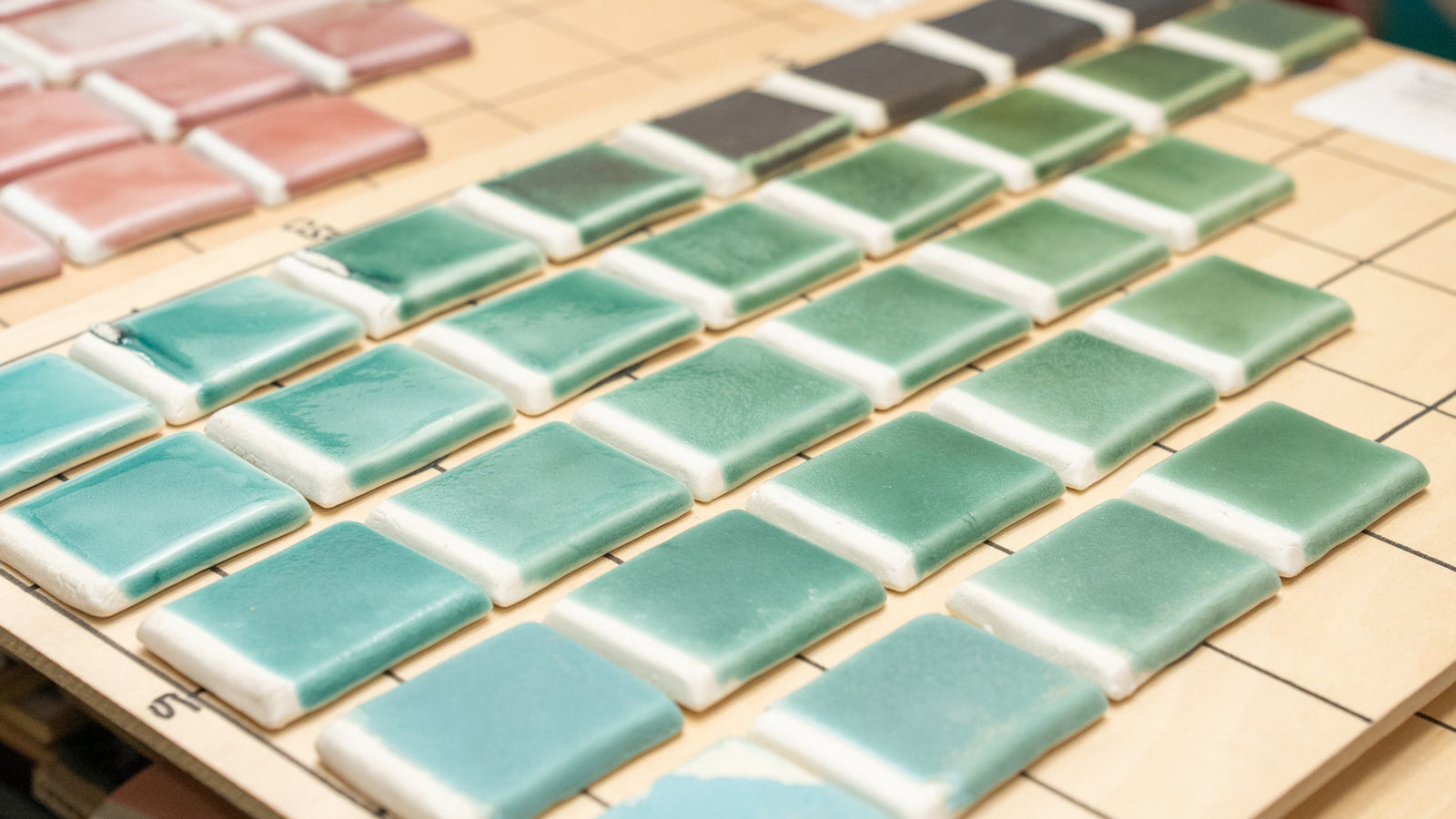
Notre prochaine étape à Seto nous conduit chez Kajita Pigment Shop, spécialiste des émaux et pigments céramiques. Des rangées d'assiettes peintes dans un arc-en-ciel de nuances bordent les vitrines, et l'intérieur déploie une palette de couleurs — littéralement. Des dizaines de planches de contreplaqué garnissent les étagères. Sur chacune sont fixés plus d'une douzaine d'échantillons montrant la gamme chromatique d'un seul émail appliqué selon différents ratios de mélange et cuit dans diverses conditions de four.

Le propriétaire, Kajita Shigekatsu, un homme grand et jovial en salopette de travail, entre directement dans le vif du sujet. « Avec la céramique, les réactions chimiques deviennent essentielles. Le problème, c'est que beaucoup de gens sont restés bloqués depuis l'étude des formules chimiques au collège. Ils maîtrisent le tournage, mais quand la chimie intervient, ils hésitent. Si cela arrive, ils ne peuvent pas créer ce qu'ils veulent créer. Alors, pour les produits que nous proposons, nous préparons des échantillons à l'avance — montrant que si vous mélangez ceci et cela, cela devient ceci — pour qu'il soit facile aux clients de les intégrer dans leur travail. »

Ce dans quoi Kajita se spécialise, et ce qui le rend indispensable aux potiers professionnels, c'est une connaissance approfondie des formules d'émaux et la capacité de donner des conseils personnalisés aux artisans. Selon les besoins d'un artiste, il peut suggérer différentes quantités d'ingrédients d'émail comme la silice, l'alcali ou l'alumine, et des ajustements selon la température ou la durée de cuisson du four particulier d'un potier. Cela s'avère crucial pour des artistes comme Taruta, dont le travail dépend de la façon dont l'émail fond pendant la cuisson.

Kajita a acquis cette connaissance en pratiquant lui-même, en peignant et en cuisant des échantillons dans son propre four. « Tout ce qui se trouve dans cette pièce, je l'ai fait moi-même. Puisque mes propres échecs et réussites sont tous stockés dans ma tête, je peux parler aux clients. J'ai vécu les difficultés qu'ils rencontrent, alors je peux dire : "Ah, j'ai résolu ça de cette façon." »

À quoi ressemble ce conseil en pratique ? « Avec Taruta-san », dit Kajita, « nous discutons de la façon dont l'émail couvrira les zones sculptées pour laisser passer la lumière. Il ne doit pas être trouble et couler, mais il ne doit pas non plus ne pas fondre et devenir trop épais. Il a dû passer par beaucoup d'essais et d'erreurs. »
Taruta ajoute : « Quand j'ai commencé à créer mes propres émaux, je formulais une hypothèse et la testais. Une fois que j'en savais plus, la nature de mes consultations ici a changé. »
Un savoir-faire qui résiste aux pressions économiques
Kajita donne également des conférences à travers le Japon sur la science des pigments, notamment à la Japan Kogei Association, la principale organisation d'artisanat traditionnel du Japon. « Si un problème survient, les artisans n'ont peut-être personne à qui demander », explique-t-il. « Ils comprennent ce que leurs pères faisaient, mais beaucoup ne connaissent pas vraiment la "céramique" en tant que science. »
Puisque Seto ware englobe une gamme de styles si diverse, Kajita se trouve parfaitement positionné avec le savoir-faire pour conseiller les autres.
Comme pour Murakami Hardware Store, le travail de Kajita s'est lui aussi développé en réponse aux pressions économiques sur les industries artisanales traditionnelles.

« C'était après les accords du Plaza », dit Kajita, faisant référence à l'accord commercial de 1985 qui a déprécié le dollar américain par rapport au yen japonais, entre autres monnaies. « Le commerce — fabriquer au Japon et vendre en Amérique, au Moyen-Orient ou en Asie — n'était plus viable. Pour nous, c'était un problème. Les gens de Seto s'étaient spécialisés dans une partie du processus jusqu'alors, mais quand le volume a chuté, ils ont dû commencer à tout faire eux-mêmes. »
Habitué à compter sur des fournisseurs désormais en voie de disparition et un modèle économique dépendant du volume de commandes, Kajita faisait face aux mêmes défis. Réalisant qu'il ne pouvait pas laisser son entreprise rétrécir davantage, il a décidé de retourner à l'école pour élargir et approfondir sa connaissance de la science céramique. C'est ainsi qu'il est devenu le type de fournisseur qui fabrique tout lui-même.
« Je pense que peu de gens essaient réellement de procéder ainsi. Cela demande un temps considérable », dit-il. Pourtant, le résultat est une entreprise durable qui remplit une niche vitale : une boutique de pigments en qui les artistes céramistes professionnels ont confiance.
À Seto, nous avons trouvé non seulement le monde intérieur des boutiques d'outils et d'émaux qui servent les professionnels, mais aussi une voie pour l'industrie artisanale traditionnelle. Bien qu'il y ait moins d'individus dans le domaine qu'auparavant, ceux qui continuent se soucient profondément de la communauté céramique et d'aider les artisans à faire leur meilleur travail.
Taruta l'a exprimé au mieux. « Les deux boutiques que nous visitons aujourd'hui participent au festival Land of Pottery en avril. C'est rassurant de les avoir. Plutôt que de se concentrer uniquement sur ce qui est juste devant nous, ils regardent vers l'avenir et coopèrent avec la communauté. Au final, c'est de cela qu'il s'agit. »
Stay close to the craft
Now and then, a quiet letter — new stories, seasonal notes, and the hands behind the work.
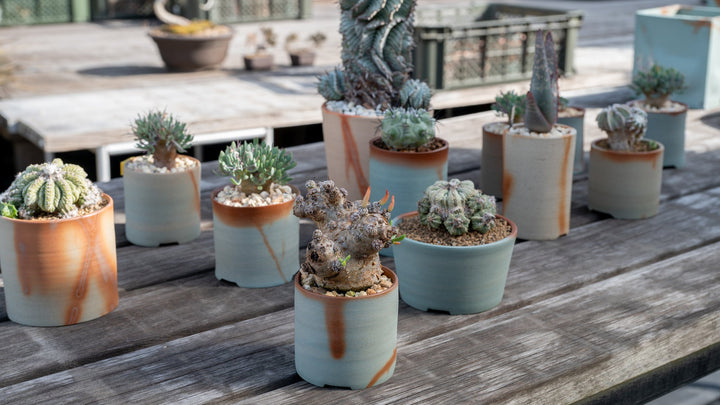
Carnet de voyage de l'acheteur : Transformer la Bizen ware en pots de plantes
Façonnés à la main à Okayama, ces pots en Bizen ware associent argile recyclée…
Shirata Ai
Découvrir le shibori avec Suzusan : textiles traditionnels réinventés
Découvrez la vision contemporaine de Suzusan sur le shibori d'Arimatsu, vieux de 400 ans,…
Rebecca Menasché
Rencontrez les maîtres de l'encens : l'art de l'arôme thérapeutique de l'île d'Awaji
Découvrez l'héritage de l'encens d'Awaji et apprenez comment l'artisanat traditionnel façonne des fragrances raffinées…
Leave a comment