

Le charme des onsen : les sources thermales du Japon
Explorez la culture des onsen au Japon, ses liens profonds avec l'artisanat traditionnel, et découvrez comment ces esthétiques chaleureuses et apaisantes ont pris vie.
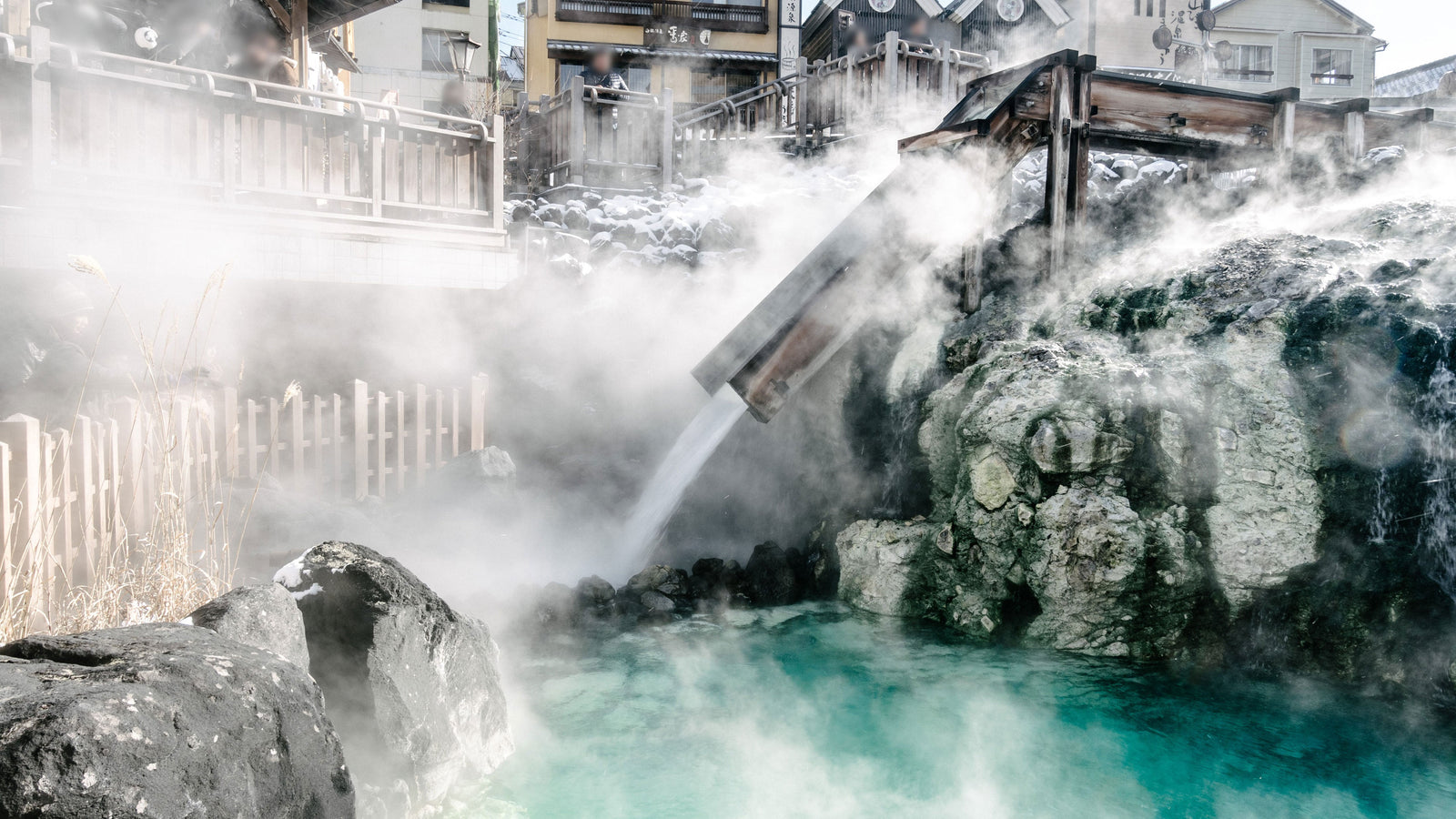
Le Japon abrite un grand nombre de sources chaudes naturelles, connues en japonais sous le nom d' onsen. Et de leurs eaux s'élève non seulement de la vapeur, mais aussi l'héritage vivant de l'artisanat traditionnel. La vaisselle et les objets en bois créés à l'origine pour accueillir les visiteurs des sources chaudes se sont développés pour devenir les beaux artisanats régionaux que nous voyons aujourd'hui.

Les sources chaudes japonaises sont depuis longtemps valorisées comme des lieux pour soigner le corps et l'esprit. Une culture unique les entoure. Nous explorerons cette culture tout en présentant comment les villes thermales ont nourri des artisanats uniques, de la laque de Yamanaka aux poupées kokeshi . Voici les histoires derrière « l'esthétique de la chaleur » qui ont émergé aux côtés des eaux curatives des onsen.
L'esthétique curative des sources chaudes japonaises

Archipel volcanique, le Japon compte environ 3 000 sources chaudes réparties dans tout le pays. Ces onsen ne sont pas de simples sites touristiques, mais font partie de la culture d'harmonisation du corps et de l'esprit, chère au peuple japonais depuis des siècles.
Remontant aux temps mythiques décrits dans les plus anciens documents historiques du Japon, le–Kojiki et le Nihon Shoki du début du VIIIesiècle , les sources chaudes ont été considérées comme possédant un pouvoir divin et vénérées comme des sites pour guérir les maux physiques. Par exemple, une entrée de la même période dans l' Izumo no Kuni Fudoki décrit le Tamatsukuri Onsen de la préfecture de Shimane en disant : « Si vous vous y baignez une fois, votre apparence deviendra belle. Si vous vous y baignez à nouveau, toute maladie sera instantanément guérie. » Cette utilisation des sources chaudes comme traitement médical pour guérir une maladie ou une blessure est connue sous le nom detoji

Tamatsukuri Onsen. L'image ci-dessus est fournie à titre indicatif uniquement. Les propriétés curatives des sources chaudes ne se limitent pas aux composants chimiques de l'eau. Plusieurs facteurs agissent ensemble pour soulager le corps et l'esprit des visiteurs : la tranquillité des montagnes, les paysages saisonniers qui changent magnifiquement, et les espaces soigneusement préparés avec une esthétique d'hospitalité. La culture de la visite des sources chaudes curatives et la mythologie qui les entoure montrent que pour les Japonais, les onsen ne sont pas seulement des lieux de guérison physique. Ce sont aussi des sites pour s'harmoniser avec la nature et réaligner son cœur en contemplant les paysages des.
quatre saisons

L'image ci-dessus est fournie à titre indicatif uniquement. Indissociable de la culture japonaise des onsen se trouve le terme toji, ou cure thermale. Il apparaît pour la première fois dans les journaux des nobles de la fin de l'époque Heian (794–1185) avant de se répandre parmi les courtisans impériaux, les moines et la classe guerrière. La célèbre écrivaine de l'époque Heian, Sei Shonagon, a loué les onsen dansLes Notes de chevet
, montrant que le concept de cure thermale suscitait de l'intérêt à l'époque.

Kusatsu Onsen. L'image ci-dessus est fournie à titre indicatif uniquement.

L'image ci-dessus est fournie à titre indicatif uniquement.
Le lien profond entre les sources chaudes et l'artisanat traditionnel
Il existe en fait un lien profond entre les célèbres villes thermales du Japon et l'artisanat traditionnel. Les récipients, ustensiles et meubles créés pour divertir les invités des sources chaudes curatives se sont développés pour devenir des artisanats représentatifs de leurs régions. Nous présentons ici quelques-uns des artisanats d'une beauté chaleureuse qui ont été nourris aux côtés des propriétés curatives des sources.

L'image ci-dessus est fournie à titre indicatif uniquement. Yamanaka Onsen se trouve dans les montagnes de la ville de Kaga, dans lapréfecture d'Ishikawa . Ici, la laque de Yamanaka possède une histoire de plus de 400 ans. Sa caractéristique la plus distinctive est l'élaboration de sestechniques de tournage sur bois , oukiji-biki

L'image ci-dessus est fournie à titre indicatif uniquement.

voir la collection de laque de Yamanaka
Yamashiro Onsen : Kutani ware Yamashiro Onsen, également dans la ville de Kaga, préfecture d'Ishikawa, est connu pour son lien profond avec la céramique Kutani ware . À la fin de l'époque Edo, Toyoda Den-emon, également connu sous le nom de Yoshidaya Den-emon, a construit un four pour faire revivre le ko-Kutani techniques. Construit à l'origine dans le village de Kutani (aujourd'hui Yamanaka Onsen), le four fut déplacé en 1826 dans la vallée d'Etchu à Yamashiro Onsen. Cela établit Yamashiro Onsen comme un lieu important soutenant la renaissance de la céramique Kutani, et la région devint un point de rassemblement pour un grand nombre de fours et d'artisans.

Caractérisée par ses couleurs vives et ses peintures audacieuses, la céramique Kutani vint orner généreusement les tables des auberges thermales. Ses cinq couleurs emblématiques, appelées les Kutani gosai (vert, jaune, bleu marine, violet et rouge), illuminent le cœur de ceux qui la contemplent.

Aujourd'hui encore, les visiteurs de Yamashiro Onsen peuvent observer de près le savoir-faire des artisans dans les galeries et ateliers, et vivre le lien profond entre sources thermales et artisanat.

voir la collection kutani ware
Wakura Onsen : Wajima lacquerware

Située à environ une heure de route de Wakura Onsen sur la péninsule de Noto dans la préfecture d'Ishikawa se trouve la ville de Wajima, berceau de la Wajima lacquerware. La Wajima lacquerware est de la plus haute qualité, caractérisée par un lustre profond et une solidité créés par l'application minutieuse de nombreuses couches de laque. Son beau brillant colore élégamment les tables, plateaux et vaisselle des ryokan (auberges de style traditionnel) thermaux. La combinaison de ses teintes riches avec une cuisine colorée est véritablement ce que l'on pourrait appeler « la beauté de l'hospitalité transmise avec les sources thermales ».

Ces dernières années, certaines auberges ont commencé à utiliser la laque pour des éléments d'intérieur tels que les piliers et les sols. Certaines ont même ouvert des galeries Wajima lacquerware attenantes, offrant aux hôtes l'expérience d'un séjour entouré d'artisanat traditionnel.

voir la collection wajima lacquerware
Naruko Onsen : Kokeshi Dolls

Naruko Onsen, situé dans les montagnes de la région du Tohoku, est connu comme le foyer de l'adorable kokeshi doll. Les Kokeshi dolls furent créées pour la première fois par des artisans du bois à la fin de la période Edo comme souvenirs pour les visiteurs des sources thermales. Bien que ces poupées en bois soient simples, leurs expressions douces et leurs formes arrondies apaisent le cœur, et elles sont aimées comme symboles de chaleur et de guérison.

Si vous visitez Naruko Onsen, vous pouvez vivre le plaisir de découvrir la culture artisanale par vous-même en visitant le Japan Kokeshi Museum, en vous essayant à la peinture, ou en assistant à des démonstrations d'artisans.

voir la collection naruko kokeshi dolls
Ureshino Onsen : Arita Ware

Le célèbre Ureshino Onsen dans la préfecture de Saga, à Kyushu, est connu comme l'une des trois meilleures sources thermales du Japon pour la beauté de la peau. Environ trente minutes de route depuis cette ville thermale vous amènent à la ville d'Arita, berceau de la Arita ware. Forte d'une histoire de 400 ans, la Arita ware se caractérise par une porcelaine si blanche qu'elle semble translucide et par une peinture délicate en bleu et blanc, connue sous le nom de sometsuke. Sa beauté pure s'harmonise parfaitement avec la sérénité des sources thermales.

Durant la période Edo, la porcelaine d'Arita fut exportée à l'étranger depuis le port voisin d'Imari, ce qui conduisit à ce qu'elle devienne largement connue à l'époque sous le nom de «Imari ware». Elle fut très appréciée à l'étranger, notamment en Europe, et reste à ce jour l'un des artisanats représentatifs du Japon. Dans les auberges d'Ureshino Onsen, les spécialités culinaires locales sont servies dans des plats Arita ware, la beauté de la porcelaine blanche rehaussant les couleurs de la cuisine.

Apporter la beauté apaisante des sources thermales dans la vie quotidienne
La culture onsen de vivre aux côtés du pouvoir guérisseur des sources thermales illustre les valeurs japonaises chères de « beauté en harmonie avec la nature » et « richesse qui aligne le cœur ». Indissociables de cela sont les artisanats dont la création fut nourrie au milieu de la vapeur des eaux. En utilisant ces artisanats, nous vous encourageons à inviter l'esprit onsen, et un peu de guérison avec lui, dans votre vie. Peut-être savourer votre thé du matin dans un récipient en laque, ou disposer des assiettes Arita ware sur votre table. À travers cela, vous aussi pouvez permettre à la beauté apaisante des sources thermales japonaises de s'imprégner dans vos routines quotidiennes.
Stay close to the craft
Now and then, a quiet letter — new stories, seasonal notes, and the hands behind the work.
Voyagez au Japon à travers la vaisselle
Voyagez à travers le Japon par la vaisselle cet été. Découvrez des pièces artisanales…
Crafeat : Goûter la tradition de l'artisanat et de la cuisine japonaise, Partie 1
Situé au cœur gastronomique de la ville de Kanazawa, Crafeat propose une fusion unique…
Trésors cachés de Kutani : visite des artisans de la ville de Komatsu
Cette fois, nous avons entrepris un voyage de deux jours et une nuit pour…
Shirata Ai
Leave a comment