

Comment décorer pour le Nouvel An à la japonaise
Découvrez les décorations japonaises du Nouvel An comme le shimekazari et le kadomatsu, ainsi que leurs significations porte-bonheur.
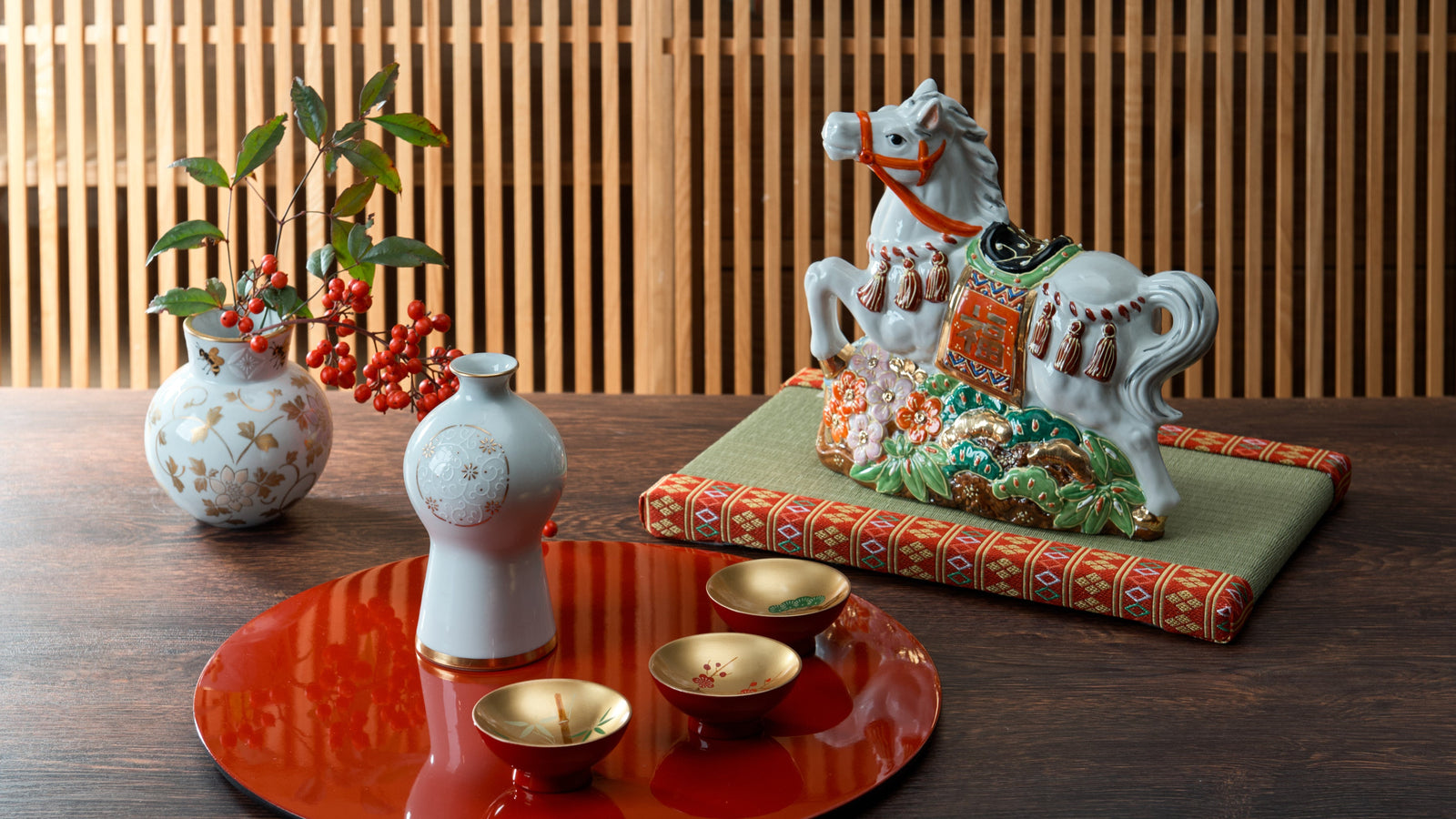
Se préparer pour le Nouvel An japonais relève moins de l'organisation d'une fête que de la mise en ordre de la maison avec un soin calme et rituel. À la fin de l'année, les familles effectuent un grand nettoyage de fin d'année, puis habillent leur espace avec des décorations du Nouvel An japonais—des ornements porte-bonheur traditionnels appelés oshogatsu kazari. Ces compositions saisonnières ne sont pas simplement décoratives : elles marquent le foyer comme prêt à accueillir Toshigami-sama, la divinité qui, selon la croyance, rend visite au Nouvel An et apporte des bénédictions pour les mois à venir.
Dans cet article, nous explorons le sens, le calendrier et les motifs clés des décorations du Nouvel An japonais, y compris pourquoi de nombreux foyers commencent à les installer vers le 13 décembre—et, pour ceux qui se demandent comment décorer pour le Nouvel An japonais, la signification des ornements du Nouvel An japonais.
Quand installe-t-on les décorations du Nouvel An ?

À l'origine, les préparatifs du Nouvel An au Japon commençaient vers la mi-décembre. Sous le calendrier Senmyo (calendrier lunaire Tang), utilisé jusqu'au milieu de l'époque Edo (1603–1868), le 13 décembre tombait un jour kishuku-nichi, un jour propice pour toutes les affaires sauf les mariages. Pour cette raison, il en est venu à être considéré comme un jour approprié pour commencer à préparer l'accueil de la divinité du Nouvel An et est devenu connu sous le nom de Shogatsu koto-hajime, le début traditionnel des préparatifs du Nouvel An.
Dans le Japon moderne, Noël est devenu plus courant, de sorte que de nombreux foyers attendent désormais la fin décembre pour installer leurs décorations du Nouvel An. Même ainsi, il y a quelques dates que l'on essaie d'éviter : le 29, qui est lié par un jeu de mots à l'idée de « double difficulté », et le 31, où décorer pour une seule nuit est considéré comme portant malheur. Installer les décorations du Nouvel An ces jours-là au Japon est censé inviter l'infortune et défaire tout le soin que vous avez mis dans vos préparatifs.
Décorations du Nouvel An japonais
Figurines d'animaux du zodiaque

Le zodiaque à douze signes est originellement venu au Japon depuis la Chine et aurait été développé sur la base de l'astronomie et de l'astrologie anciennes. Il était également utilisé comme ensemble de symboles pour indiquer le temps et la direction, et a été introduit au Japon sous la forme de douze signes animaux.
Au Japon, on expose une figurine de l'animal du zodiaque de l'année à venir avant le Nouvel An. Cette coutume repose sur la croyance que l'animal de l'année éloignera l'infortune au cours des mois à venir. Ces eto kazari sont de petits ornements ou figurines en forme d'animaux du zodiaque.
Traditionnellement, chaque animal du zodiaque est considéré comme un compagnon amené par Toshigami-sama, la divinité du Nouvel An, pour cette année particulière. Exposer l'animal est donc une façon de se préparer à accueillir cette divinité dans le foyer. En même temps, le signe du zodiaque est censé « élever » la chance de l'année, portant des vœux de protection contre la malchance et l'invitation de la bonne fortune.
L'année 2026 sera l'année du Cheval. Les chevaux sont depuis longtemps chéris comme symboles de force, d'élan et de réussite. Leur galop rapide, semblable au vent, représente le progrès, la croissance et les bonds audacieux vers l'avenir. En particulier, une année du Cheval est considérée comme un moment favorable pour agir de manière décisive et faire avancer les projets, offrant un soutien puissant à ceux qui travaillent régulièrement vers leurs objectifs.
Rouleaux suspendus Kakejiku
Au Japon, les kakejiku rouleaux suspendus exposés pour le Nouvel An sont appelés geishun no kakejiku—littéralement, rouleaux « d'accueil du printemps ». Ils sont choisis pour exprimer l'espoir et l'esprit avec lesquels on accueille l'année à venir, et présentent généralement des images propices ou des motifs porte-bonheur. Beaucoup de ces rouleaux peuvent également être utilisés lors d'autres occasions festives, pas seulement au Nouvel An.
Un motif qui convient particulièrement bien à la saison est un rouleau suspendu représentant le nandina (bambou céleste) accompagné de symboles de longévité et de bonne fortune. Le nandina est censé éloigner le mal. Le nandina est également chéri comme une plante qui représente les prières pour un accouchement sans danger, c'est pourquoi il apparaît si souvent dans les décorations du Nouvel An.

Un autre choix approprié pour le Nouvel An est un rouleau portant l'expression ichigo ichie. Cette expression, enracinée dans l'esprit de la cérémonie du thé, transmet l'idée que « ce moment, cette rencontre, n'arrivera qu'une seule fois dans une vie ». Elle reflète une attitude de chérir le présent et de s'engager avec les autres sincèrement, comme si chaque rencontre était unique et irremplaçable. Lorsque vous exposez un tel rouleau au tournant de l'année, vous accrochez en effet un vœu : chérir les personnes que vous rencontrez et le temps qui vous est donné au cours des douze mois à venir. En ce sens, un rouleau suspendu du Nouvel An est plus qu'une décoration—il devient une déclaration significative de la façon dont vous avez l'intention de vivre l'année à venir.

voir la collection de rouleaux suspendus Kakejiku
Fleurs du Nouvel An

Les fleurs arrangées pour le Nouvel An japonais sont une partie essentielle de l'accueil de l'année avec un sentiment de pureté, et elles incarnent également un vœu simple : « Que cette année soit bonne ». Chaque fleur porte sa propre signification propice, et simplement en les plaçant dans une pièce, elles éclairent l'espace et lui donnent une sensation fraîche et revigorante.
L'une des combinaisons les plus classiques est shochikubai—pin, bambou, et fleur de prunier. Le pin représente la vitalité et la longévité, le bambou symbolise la croissance et la prospérité, et le prunier représente la persévérance et l'espoir. Ensemble, ils expriment le désir de passer l'année à venir en bonne santé et de bonne humeur. Les plantes qui portent des baies rouges, comme le senryo (sarcandra japonais) et le nandina, sont également populaires au Nouvel An. Associées à la richesse et à la protection contre l'infortune, elles sont chéries comme plantes porte-bonheur du Nouvel An. Lorsque vous les associez à des chrysanthèmes blancs ou des lys, le résultat est un arrangement épuré et gracieux avec un sentiment de dignité. Vous pouvez librement combiner les fleurs présentées ici pour créer une composition qui convient à votre foyer et capture l'ambiance festive du Nouvel An.
Si vous prévoyez d'arranger des fleurs, ce grand vase en porcelaine d'Arita constitue un choix approprié et remarquable. Il est décoré selon la technique traditionnelle some-nishiki , avec des motifs audacieux et complexes travaillés sur toute la surface. Des fleurs vives, des plumes d'oiseaux stylisées et des touches de feuille d'or se rejoignent dans un design richement détaillé qui complète magnifiquement les arrangements floraux du Nouvel An.
Kagami Mochi

Dès l'arrivée de décembre, vous commencerez à apercevoir des kagami mochi partout au Japon. Le nom signifie littéralement « gâteaux de riz miroir », et l'on dit qu'il provient de leur forme : deux rondeurs empilées qui rappellent les miroirs en bronze considérés comme précieux dans le Japon ancien.
Le kagami mochi est une décoration porte-bonheur du Nouvel An souvent comprise comme représentant l'année écoulée et la nouvelle. On le dispose dans différentes parties de la maison, comme le kamidana (autel domestique), la cuisine, le salon ou l'entrée.
Traditionnellement, il reste en place de la mi-décembre environ jusqu'au kagami biraki, « l'ouverture du miroir », le 11 janvier. Ce jour-là, le mochi séché est brisé et utilisé dans des plats comme l' ozoni (soupe du Nouvel An). Le moment varie selon les régions : dans le Kansai, le kagami biraki est souvent observé le 15 ou le 20 janvier, tandis que Kyoto se distingue en le tenant dès le 4 janvier.
Et si vous préférez ne pas décorer avec du vrai mochi, envisagez plutôt un kagami mochi en porcelaine Kutani ware—quelque chose que vous pourrez ressortir année après année. C'est une manière simple et belle de profiter d'une touche de style saisonnier japonais chez vous.
Kadomatsu

Si vous avez déjà visité le Japon pendant les fêtes du Nouvel An, vous avez peut-être remarqué des kadomatsu exposés devant les boutiques et les restaurants. La façon dont ils sont arrangés varie d'une région à l'autre, mais un élément reste remarquablement constant : la pièce centrale. Trois tiges de bambou épaisses, coupées à différentes hauteurs, s'élèvent en un ensemble étagé souvent compris comme représentant le ciel, l'humanité et la terre de haut en bas.
Le kadomatsu est censé apporter la bonne fortune aux foyers également, c'est pourquoi le placer à l'entrée est considéré comme propice. Composé de pin et de bambou, il reflète une vision shinto selon laquelle les esprits sacrés peuvent habiter dans les arbres ; en ce sens, un kadomatsu est considéré comme servant de demeure temporaire aux dieux pendant la saison du Nouvel An. Même son nom porte un sens, combinant kado, signifiant « porte » ou « entrée », avec matsu, signifiant « pin », pour suggérer une porte d'accueil, tandis que la nature persistante du pin symbolise la longévité et la bonne fortune.
Shimekazari

Dans le cadre de la préparation pour accueillir le Nouvel An, de nombreux foyers au Japon installent à la fois des shimekazari et des kadomatsu. Un shimekazari est une décoration en forme de couronne faite d'une épaisse shimenawa (corde sacrée) tressée. Dans les sanctuaires shinto, la shimenawa est utilisée pour marquer la frontière entre un espace sacré et le monde quotidien. Au Japon, vous l'avez peut-être vue suspendue à la porte d'un sanctuaire—un autre type de marqueur de seuil qui signale que vous entrez dans un lieu où les divinités sont présentes.
À la maison, un shimekazari est accroché à la porte d'entrée pour maintenir l'intérieur de la maison comme un espace sacré et protégé et pour éloigner le malheur. Ces décorations sont généralement installées de la mi à la fin décembre, avec l'espoir que le Toshigami-sama (divinité du Nouvel An) trouvera la maison sans difficulté et apportera le bonheur pour l'année à venir.
Quand Retirer les Décorations
Après le début du Nouvel An, les célébrations se poursuivent généralement pendant sept jours. Cette période est connue sous le nom de Matsu no Uchi, qui désigne la période allant du début des préparatifs du Nouvel An jusqu'au moment où l'on croit que les divinités repartent. Pendant ce temps, les foyers laissent leurs décorations du Nouvel An en place.
La fin du Matsu no Uchi dépend de la région. Dans de nombreuses zones—comme la région du Kanto, la région du Tohoku et la région du Kyushu—elle s'étend jusqu'au 7 janvier, tandis que dans la région du Kansai elle dure souvent jusqu'au 15 janvier. Cela dit, les coutumes ne sont pas uniformes : à Okinawa, les décorations sont généralement rangées le 14e jour du Nouvel An lunaire, et dans certaines parties du Japon, elles restent en place jusqu'au 20 janvier.
Une fois le Matsu no Uchi terminé, les décorations du Nouvel An sont généralement retirées et offertes dans un sanctuaire shinto en signe de remerciement, où elles sont traditionnellement brûlées dans un feu.
Comme vous pouvez le constater, se préparer pour le Nouvel An japonais ne consiste pas à organiser une fête—il s'agit de préparer toute la maison pour accueillir la divinité censée apporter la bonne fortune pour l'année à venir. Même si vous ne pratiquez pas le shinto, l'atmosphère calme et rituelle de ces coutumes peut rendre la saison indéniablement spéciale.
Installer des décorations propices chaque année vous aide à entrer dans la nouvelle année avec le bon état d'esprit—invitant la chance à entrer, et accueillant les jours à venir avec intention. Et parfois, cet acte simple est exactement ce dont vous avez besoin.
Bonne année ! Nous vous souhaitons de merveilleuses fêtes et une pause de fin d'année reposante.
Stay close to the craft
Now and then, a quiet letter — new stories, seasonal notes, and the hands behind the work.
Quelle est exactement la fonction du tokonoma ?
Découvrez la signification culturelle profonde du tokonoma et son rôle dans l'hospitalité traditionnelle.
Votre première dégustation d'ozoni : une tradition délicieuse du Nouvel An
Découvrez l'ozoni, une soupe japonaise du Nouvel An garnie de mochi et de légumes…
Guide du Kakejiku
Découvrez le kakejiku, ou rouleau suspendu japonais, avec des informations sur son histoire, ses…
Leave a comment