

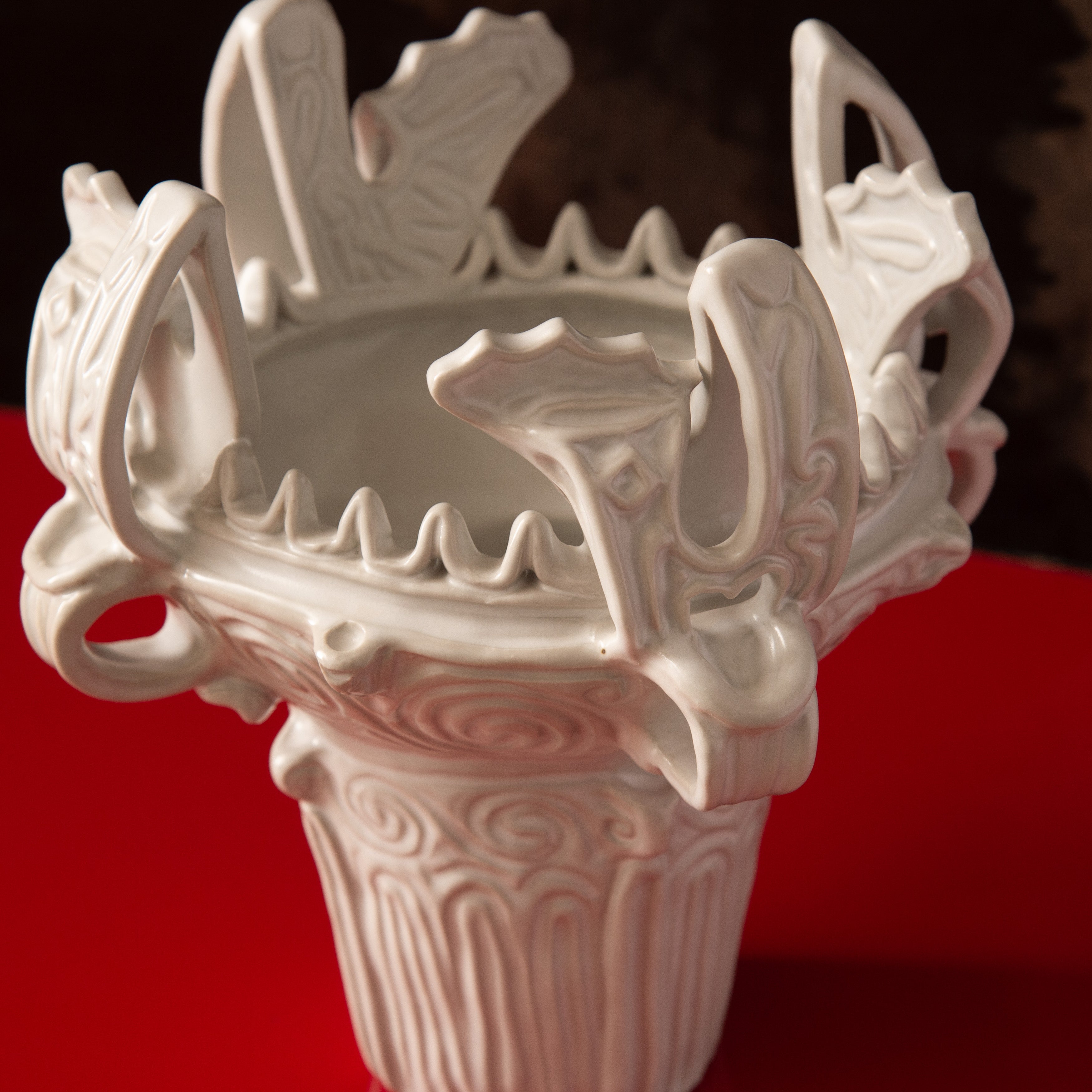
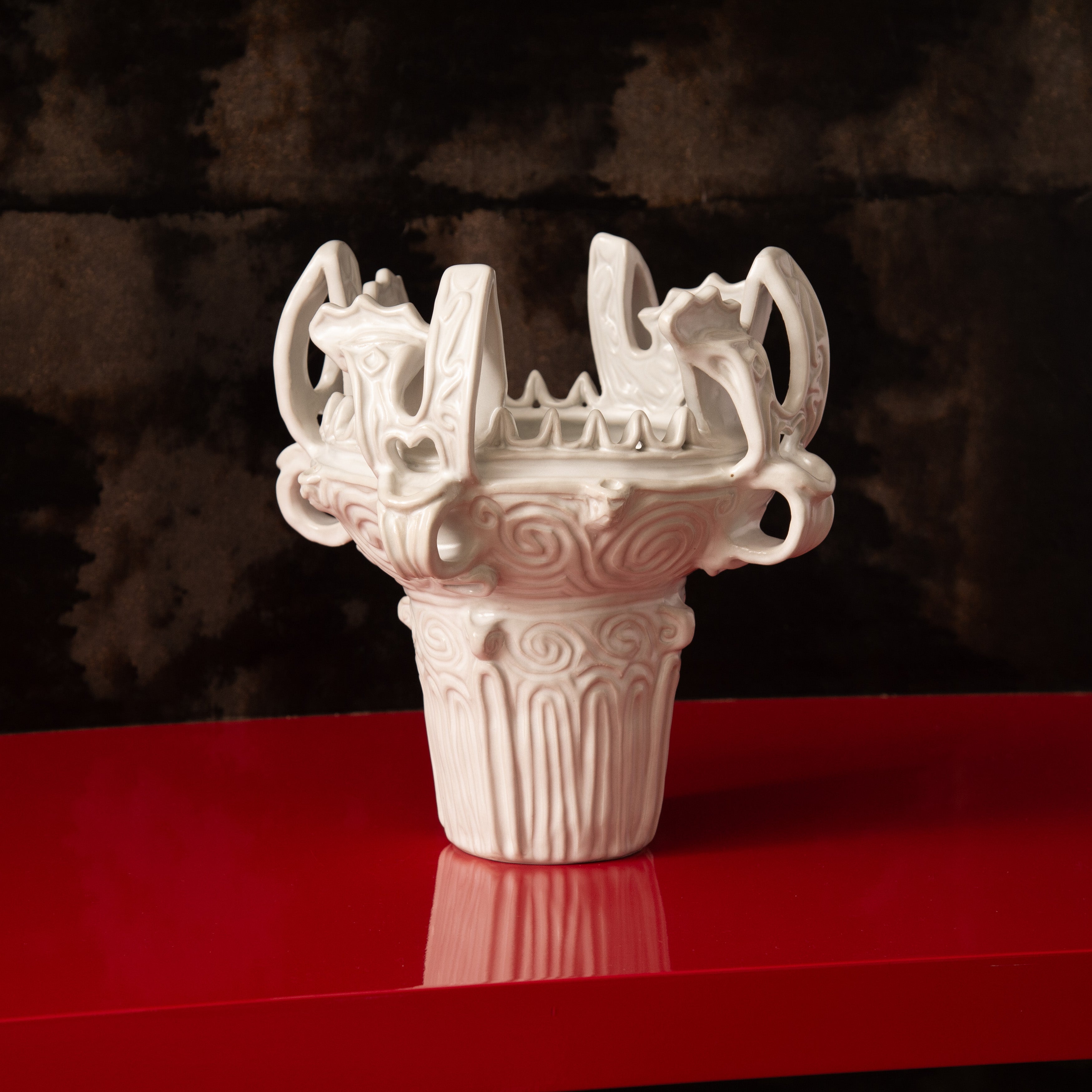
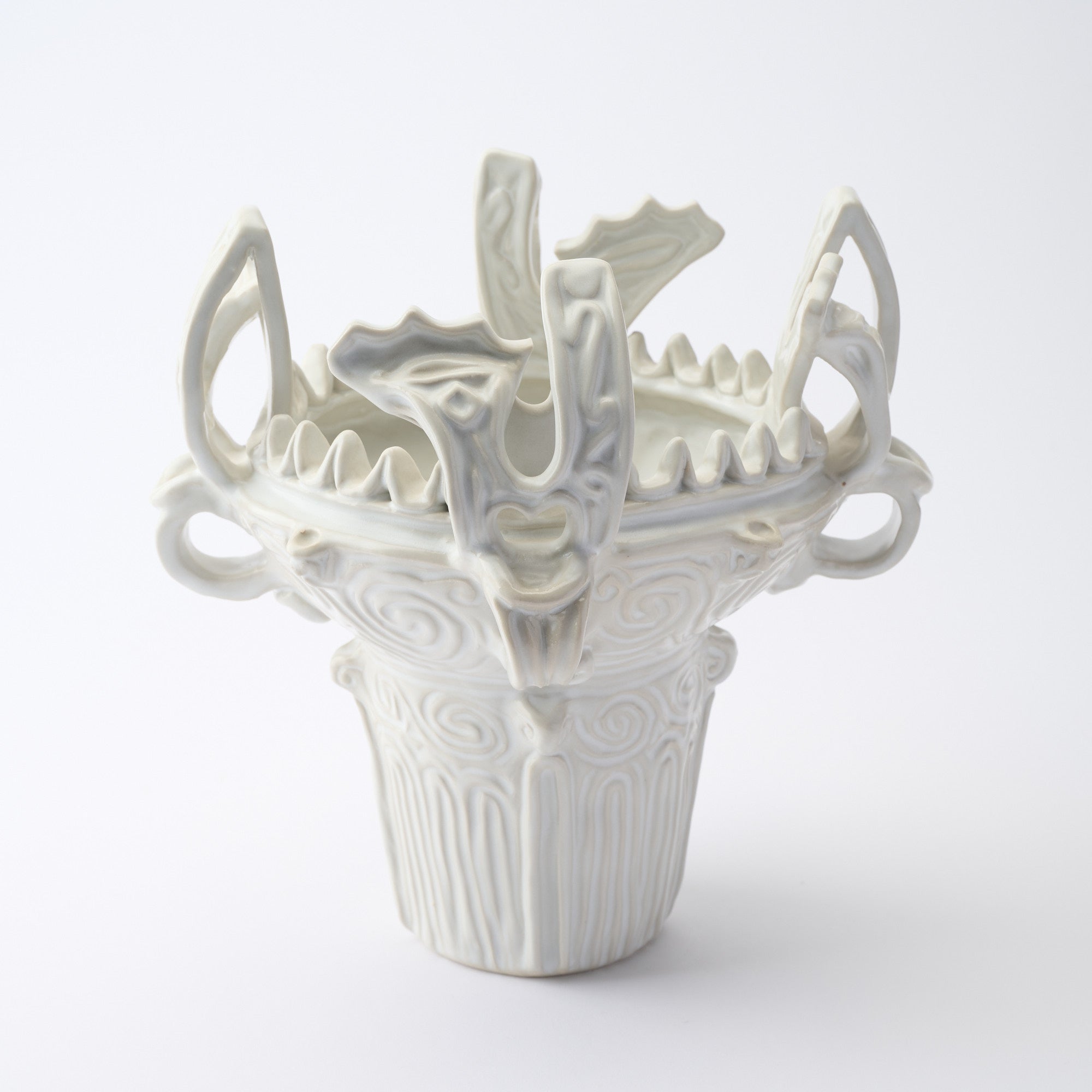
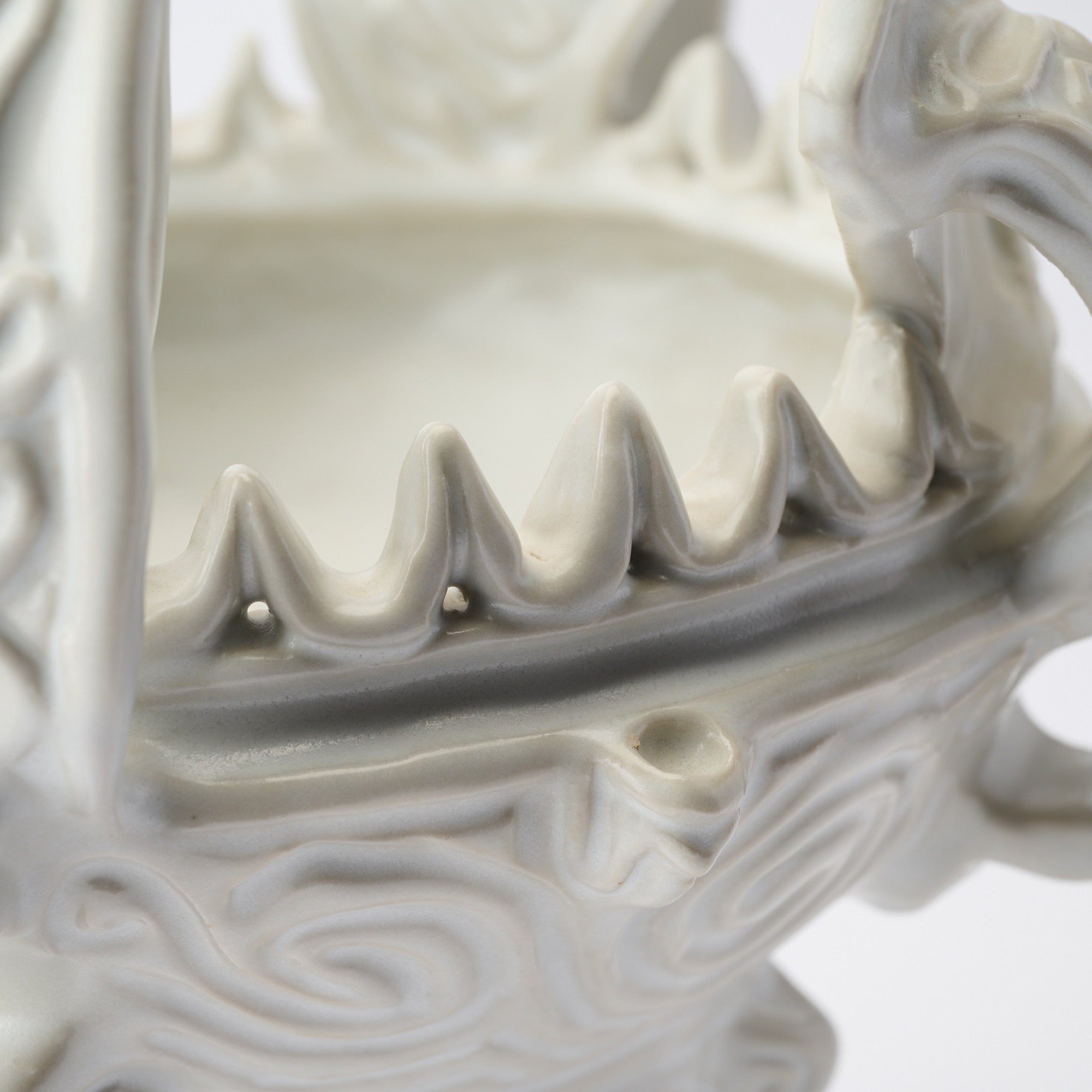
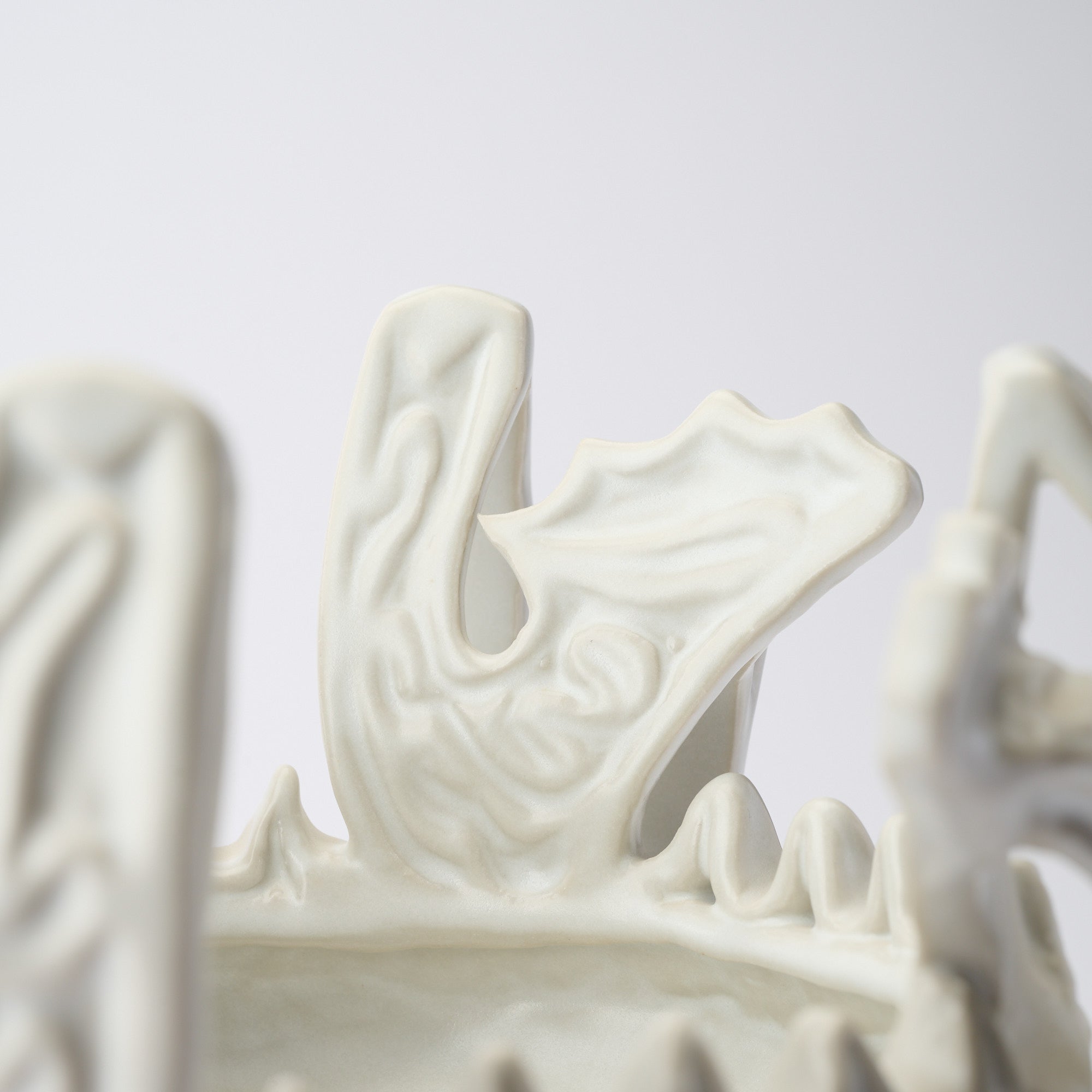
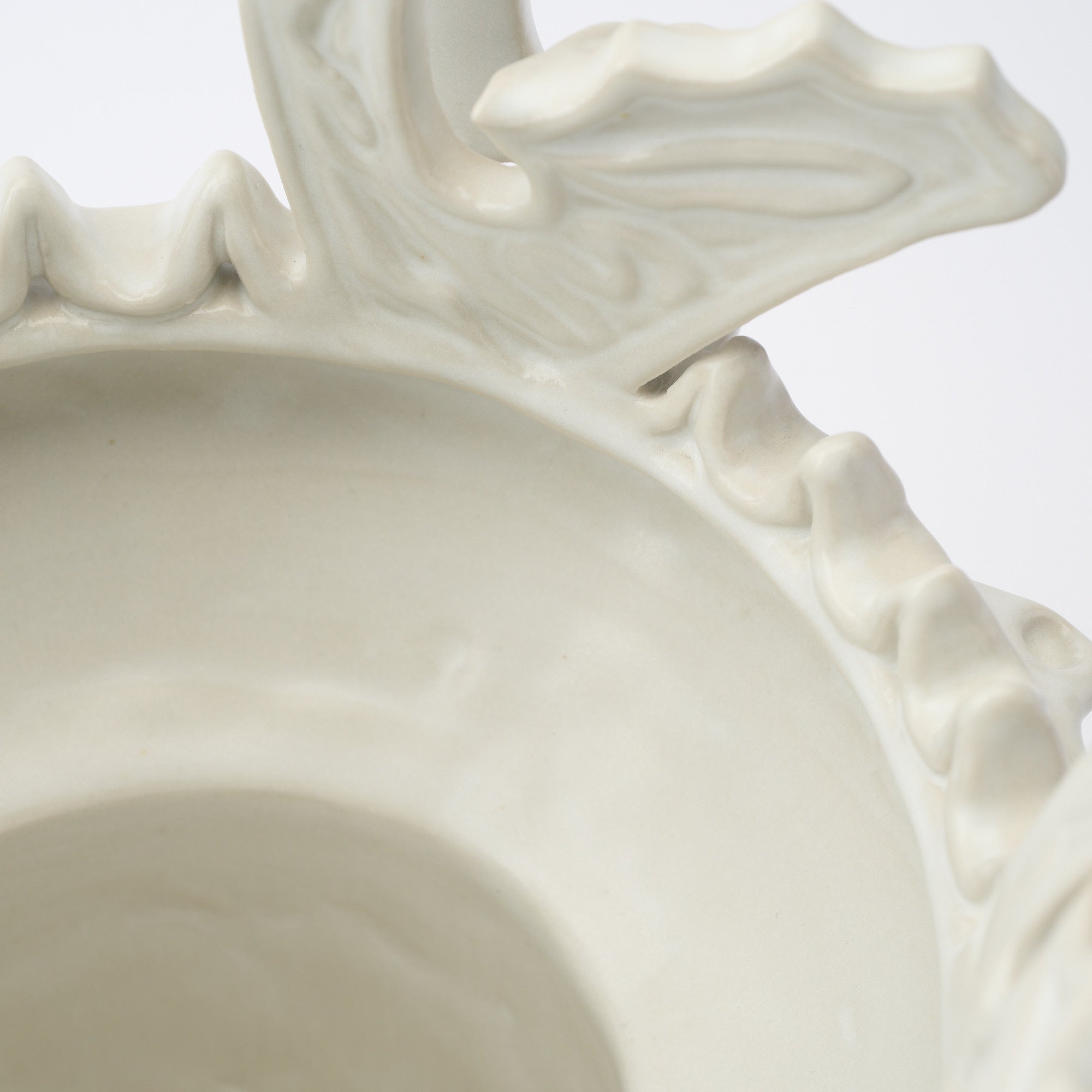
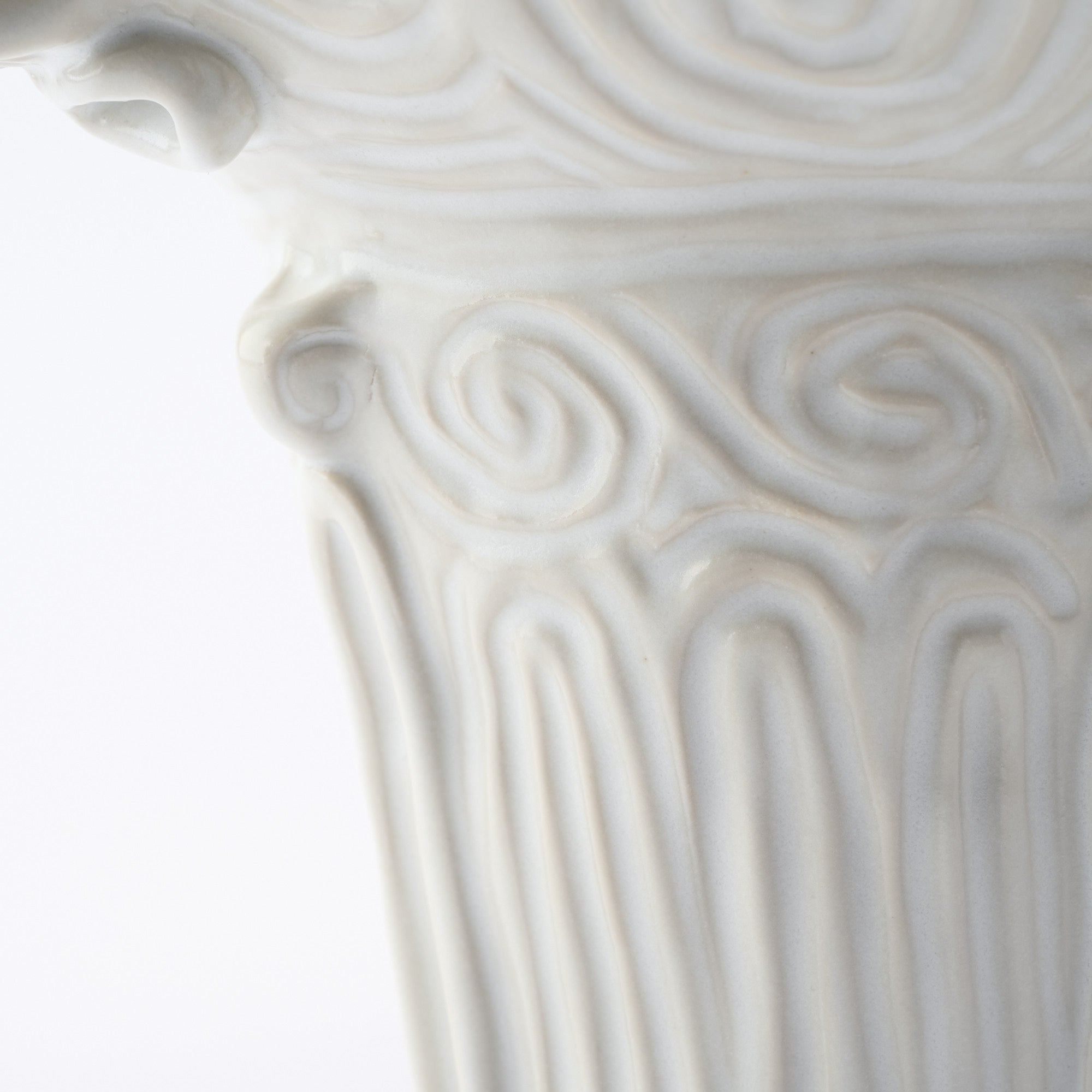
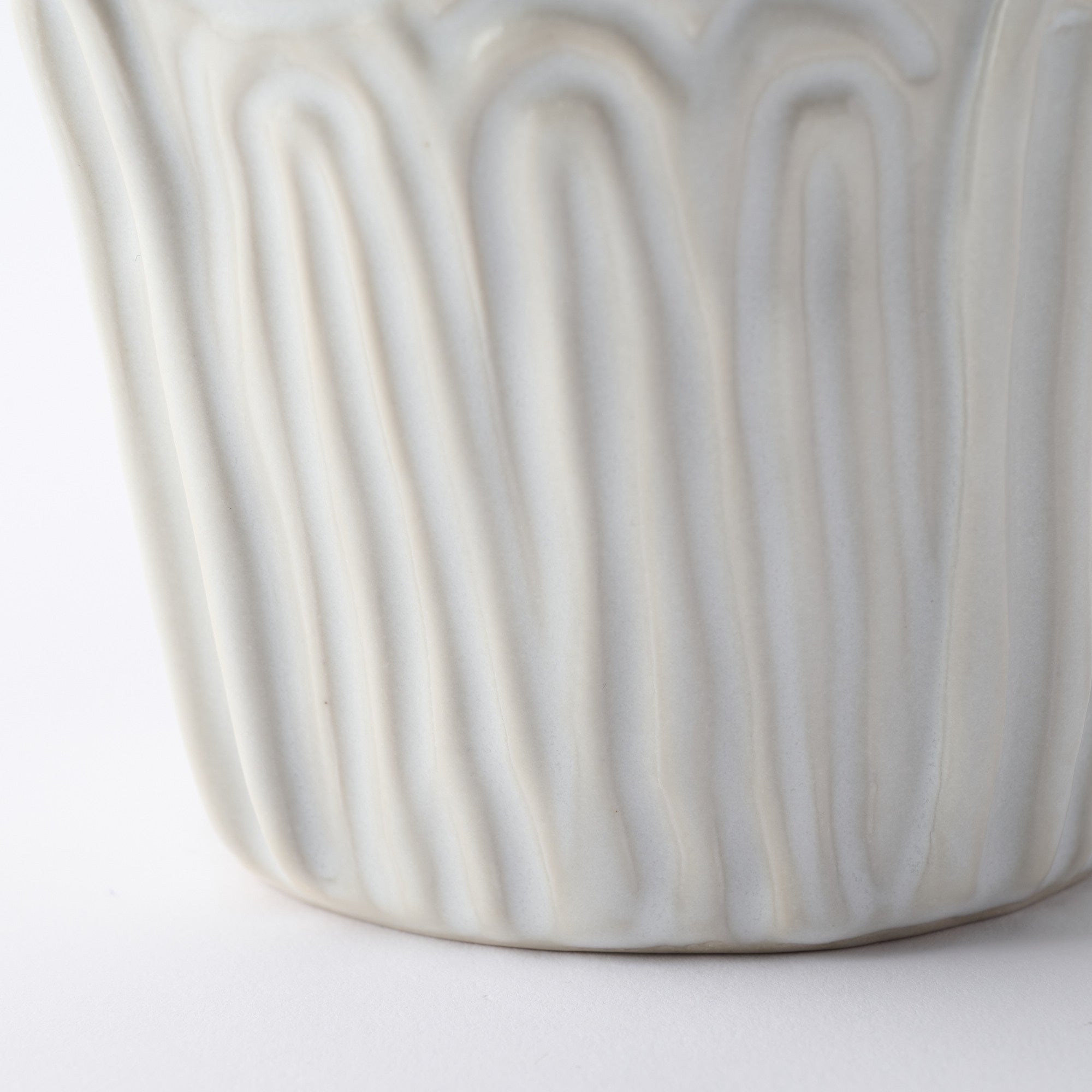
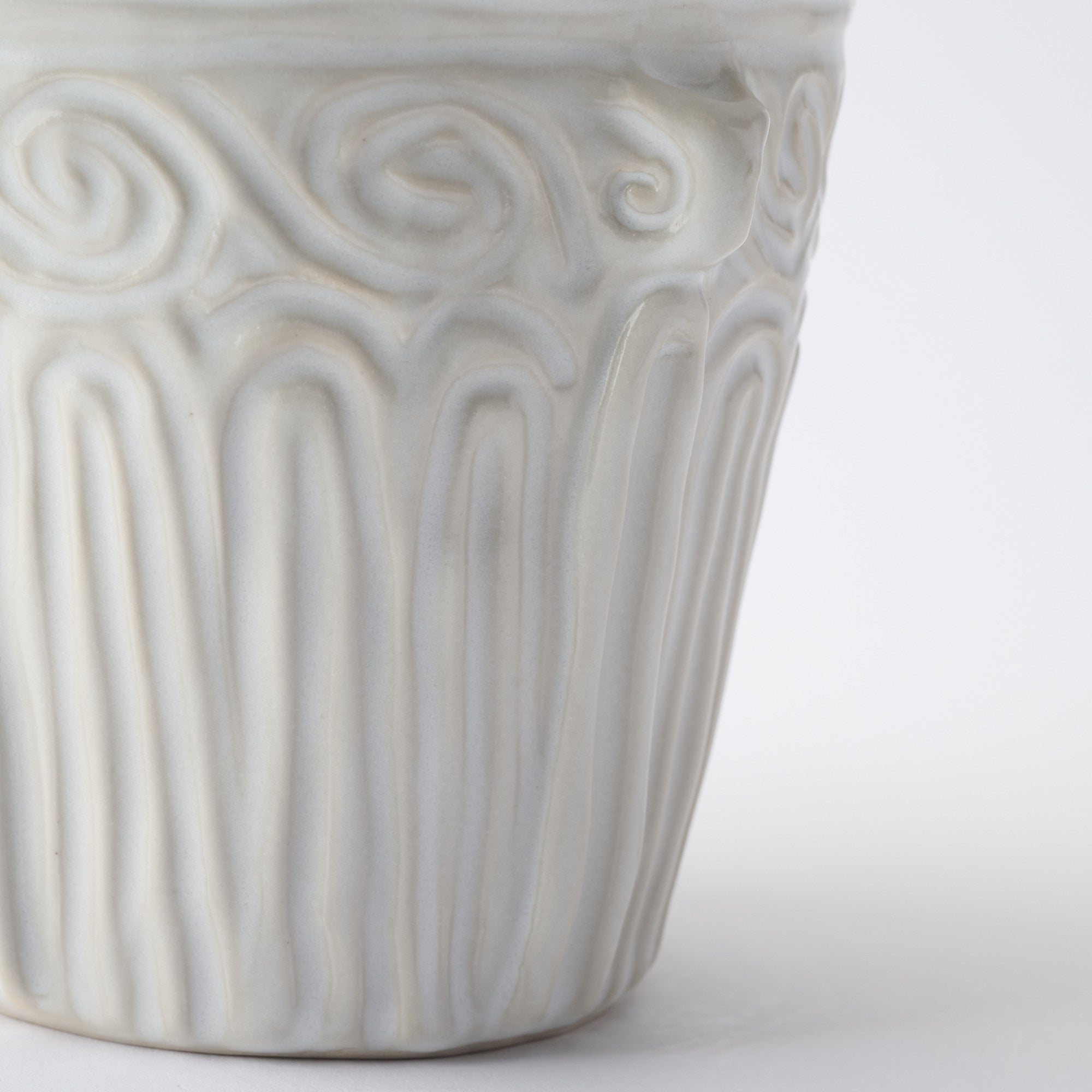
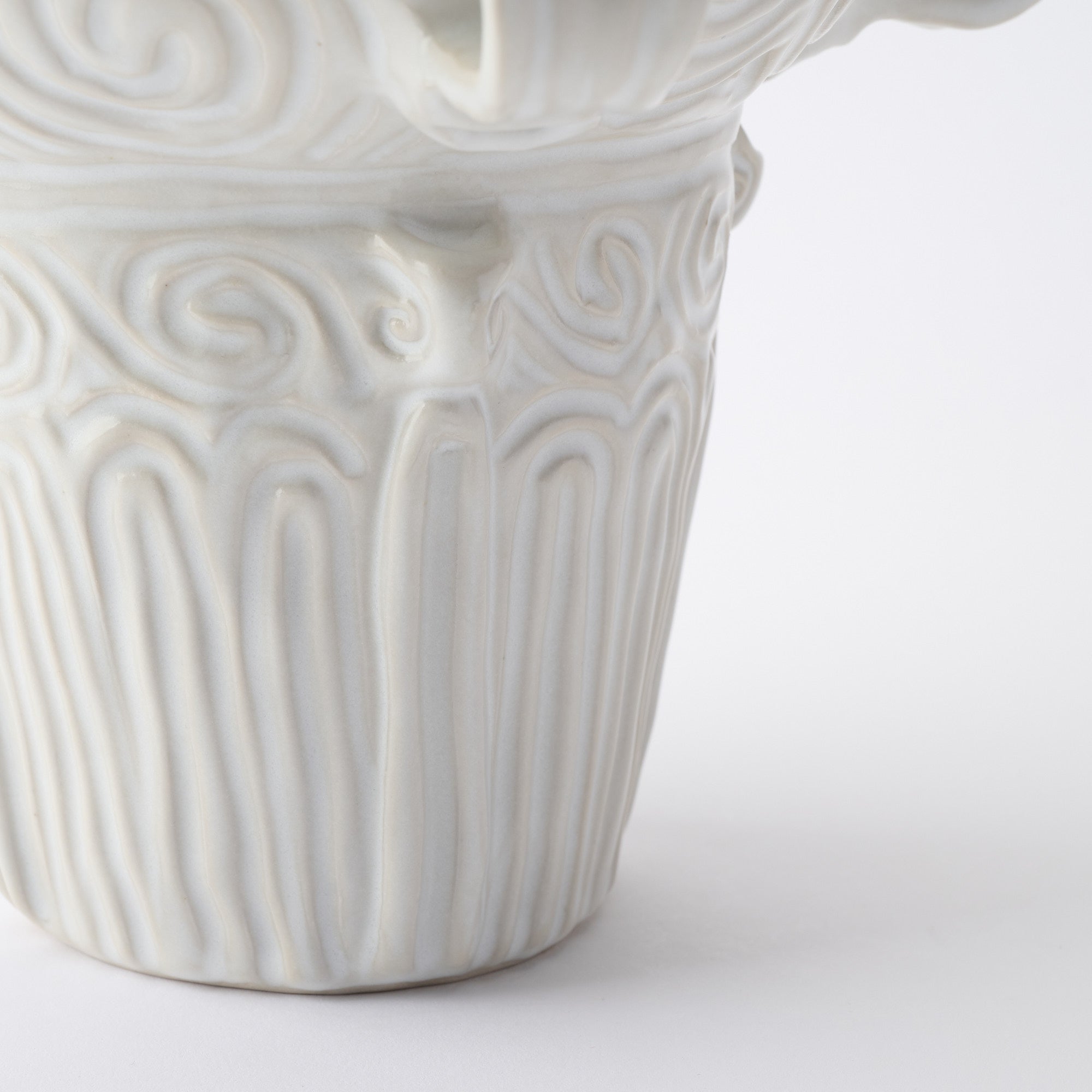
Homura Weiß Jomon-Flammengefäß
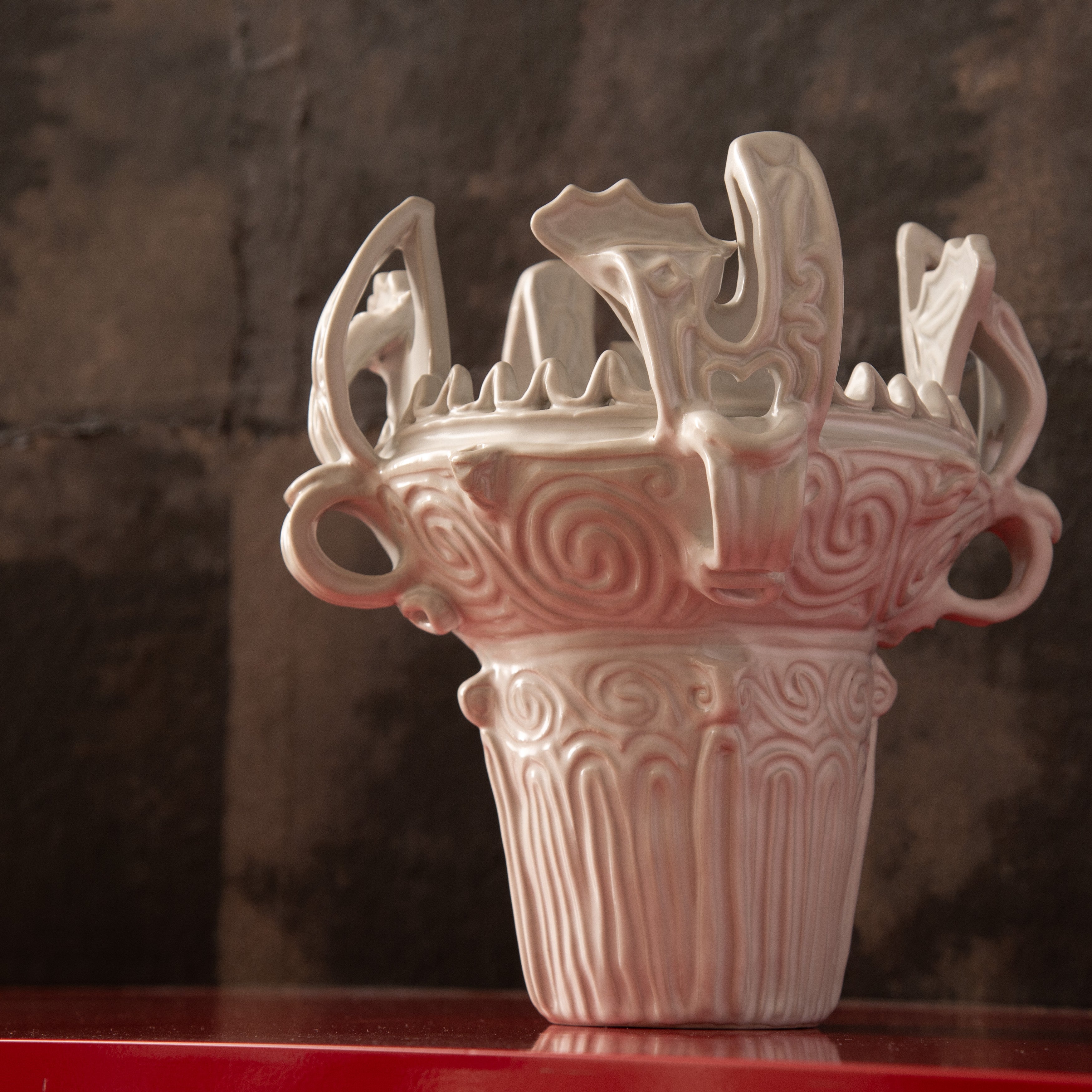
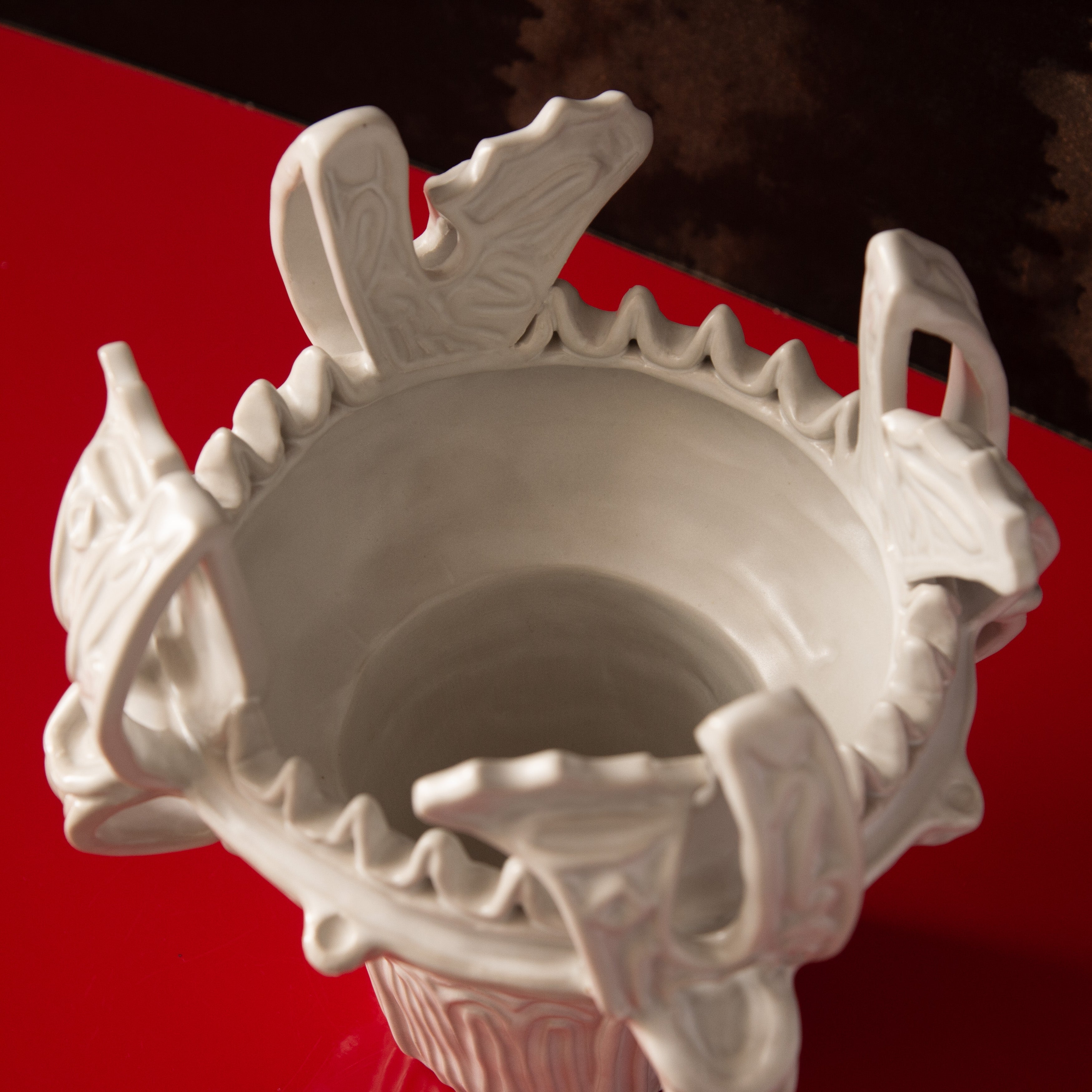
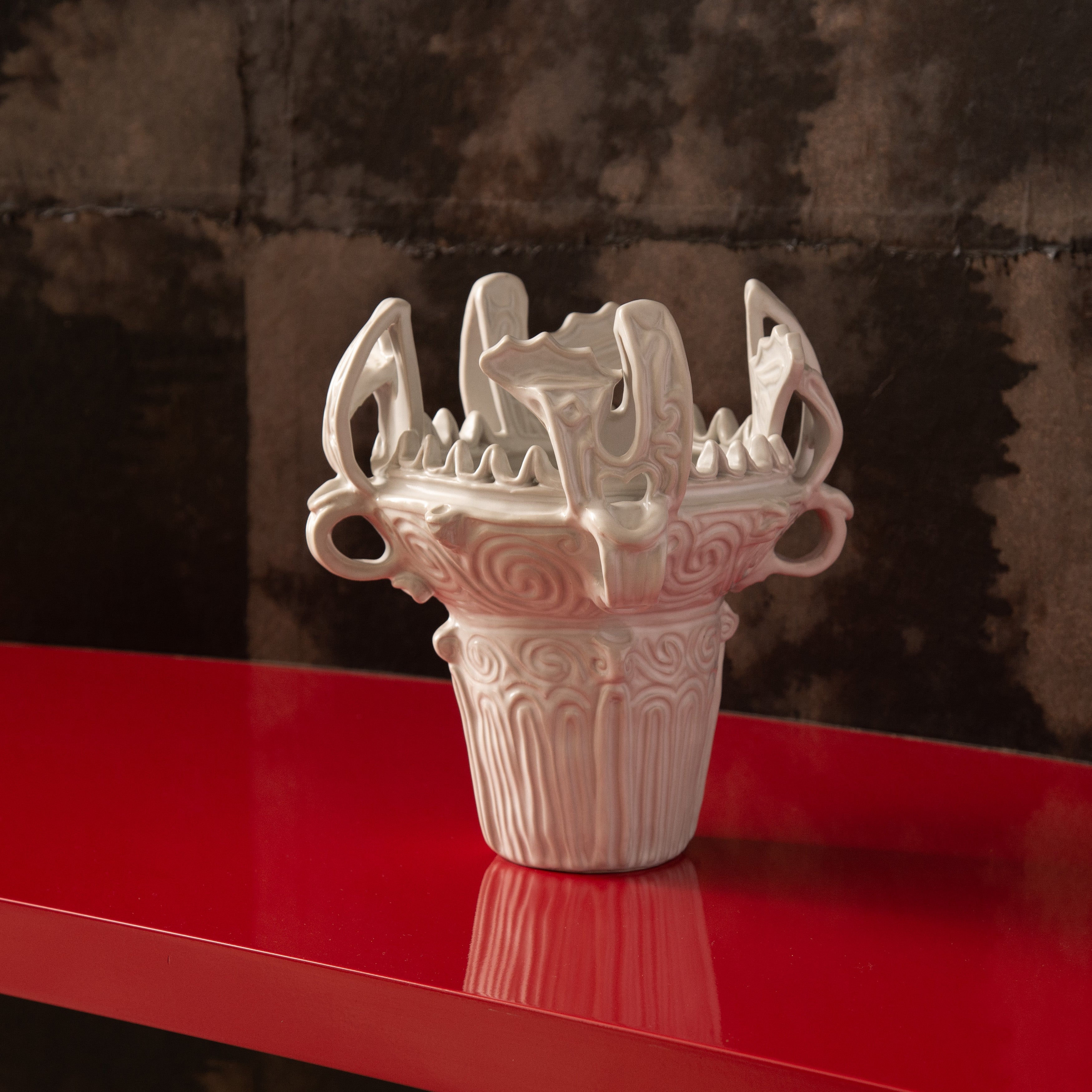
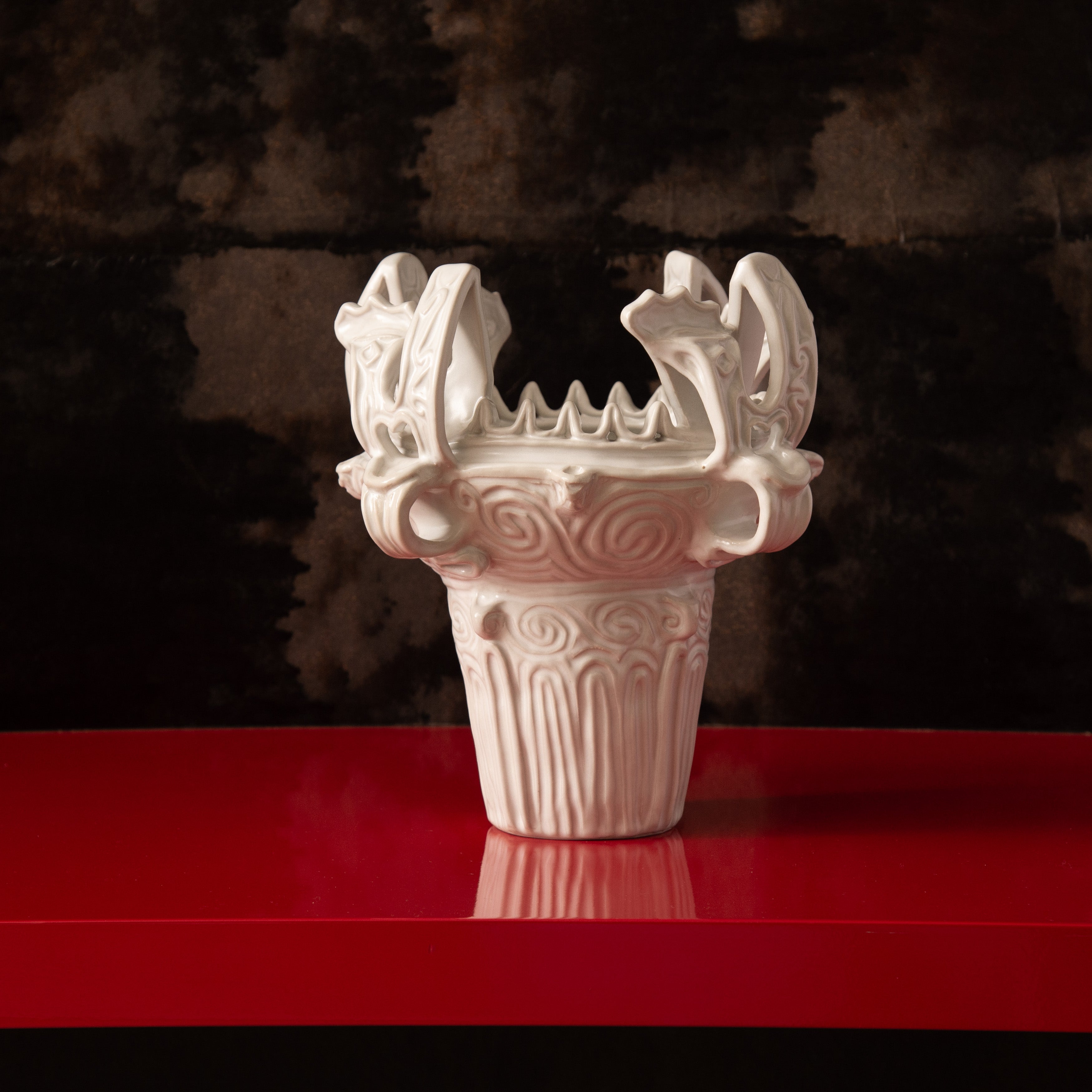
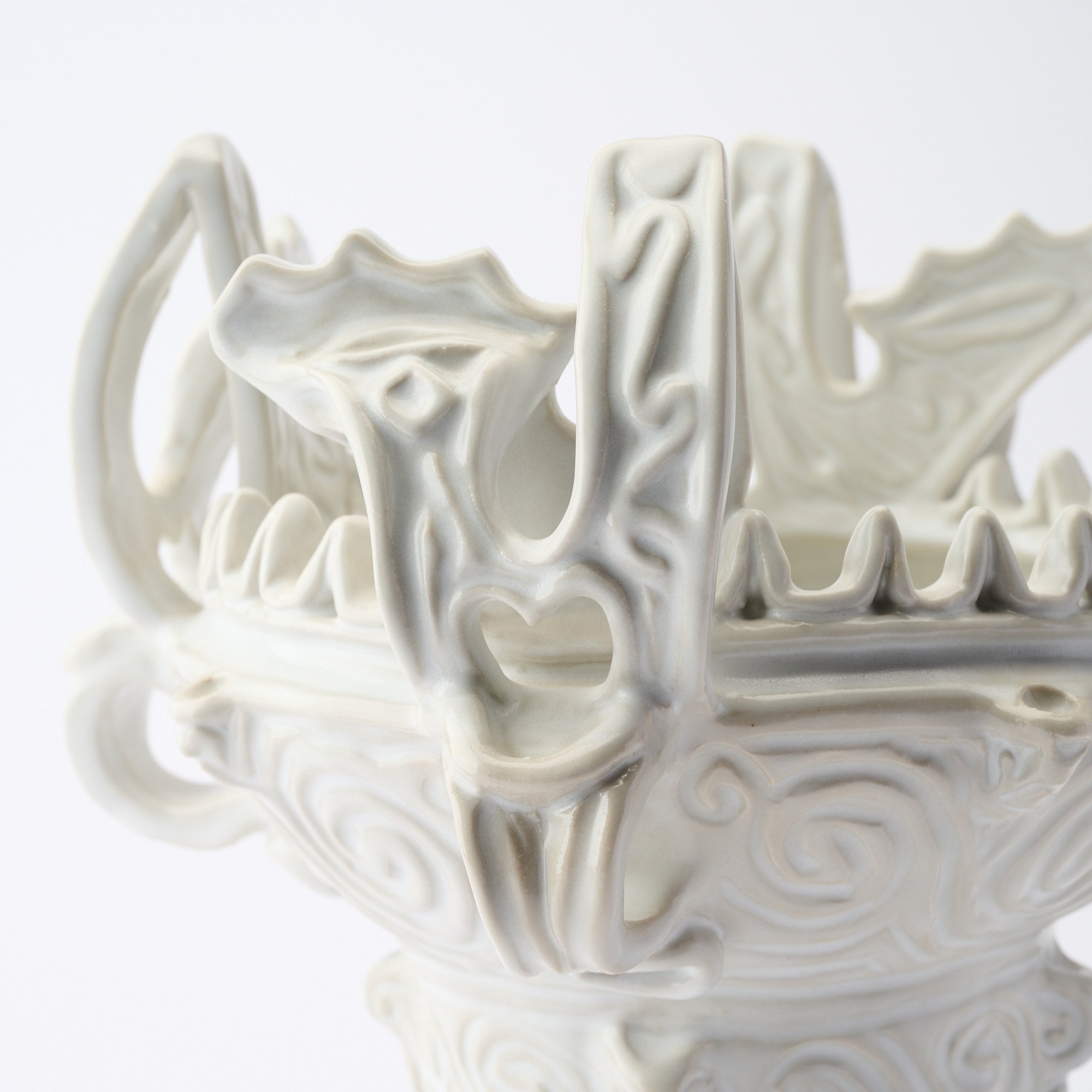
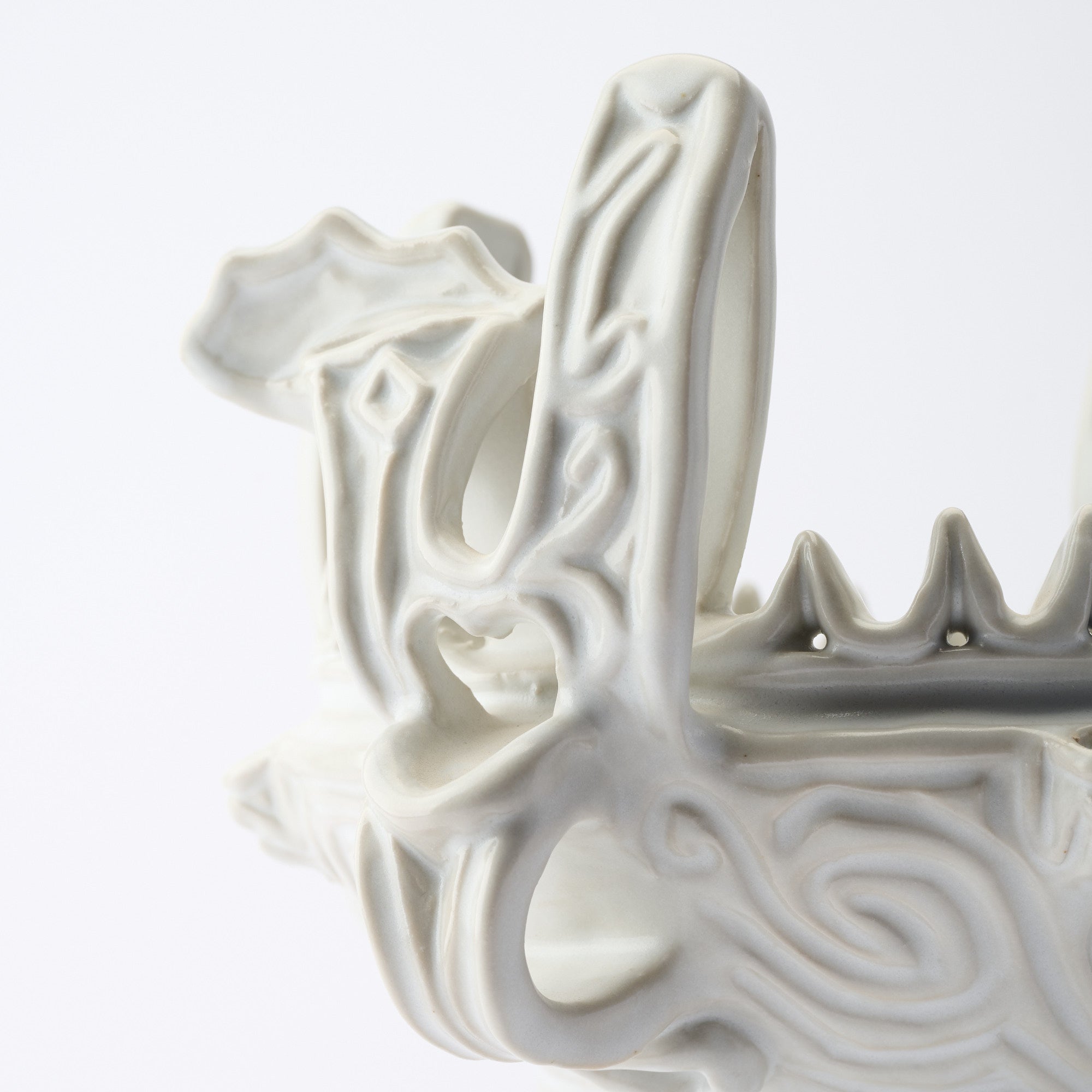
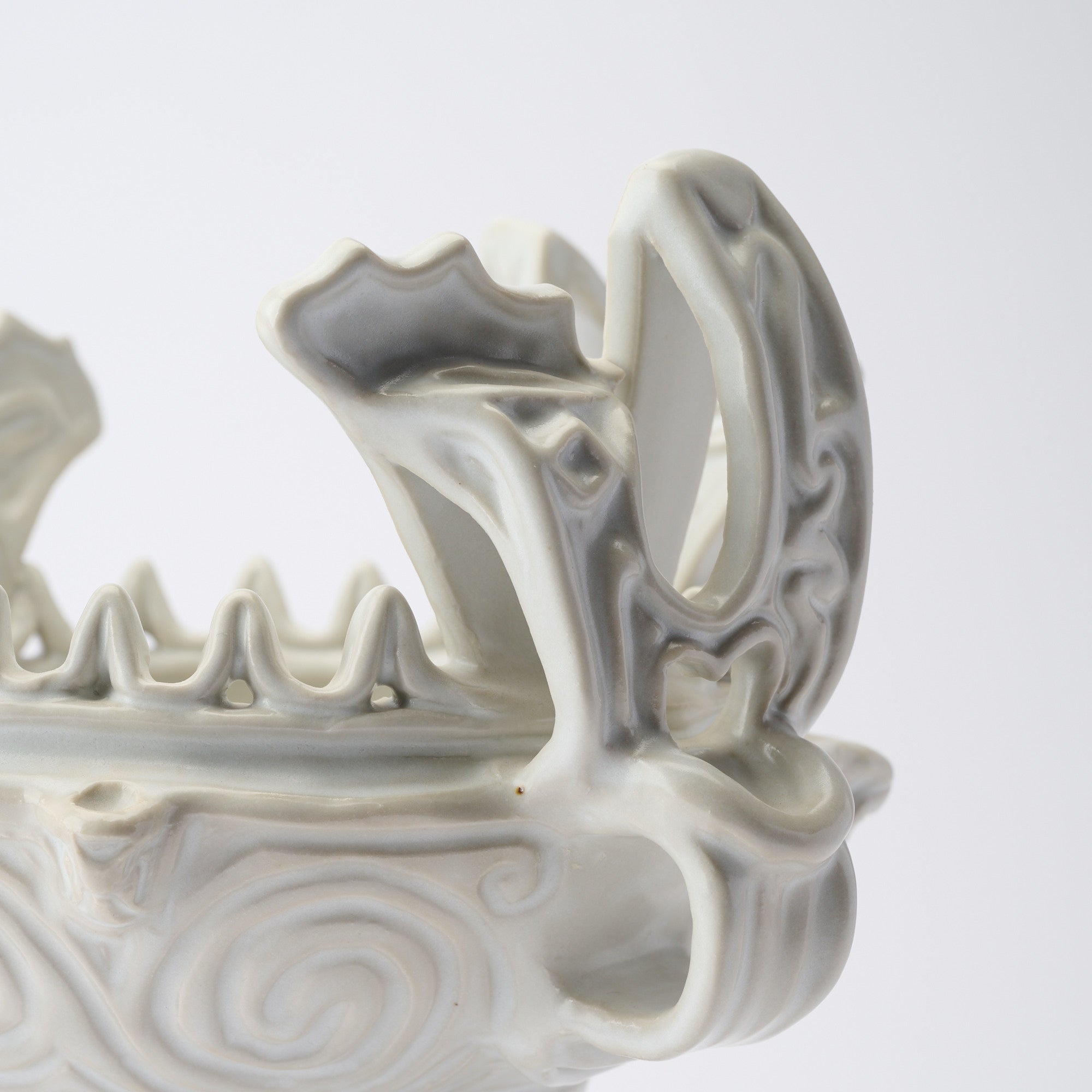
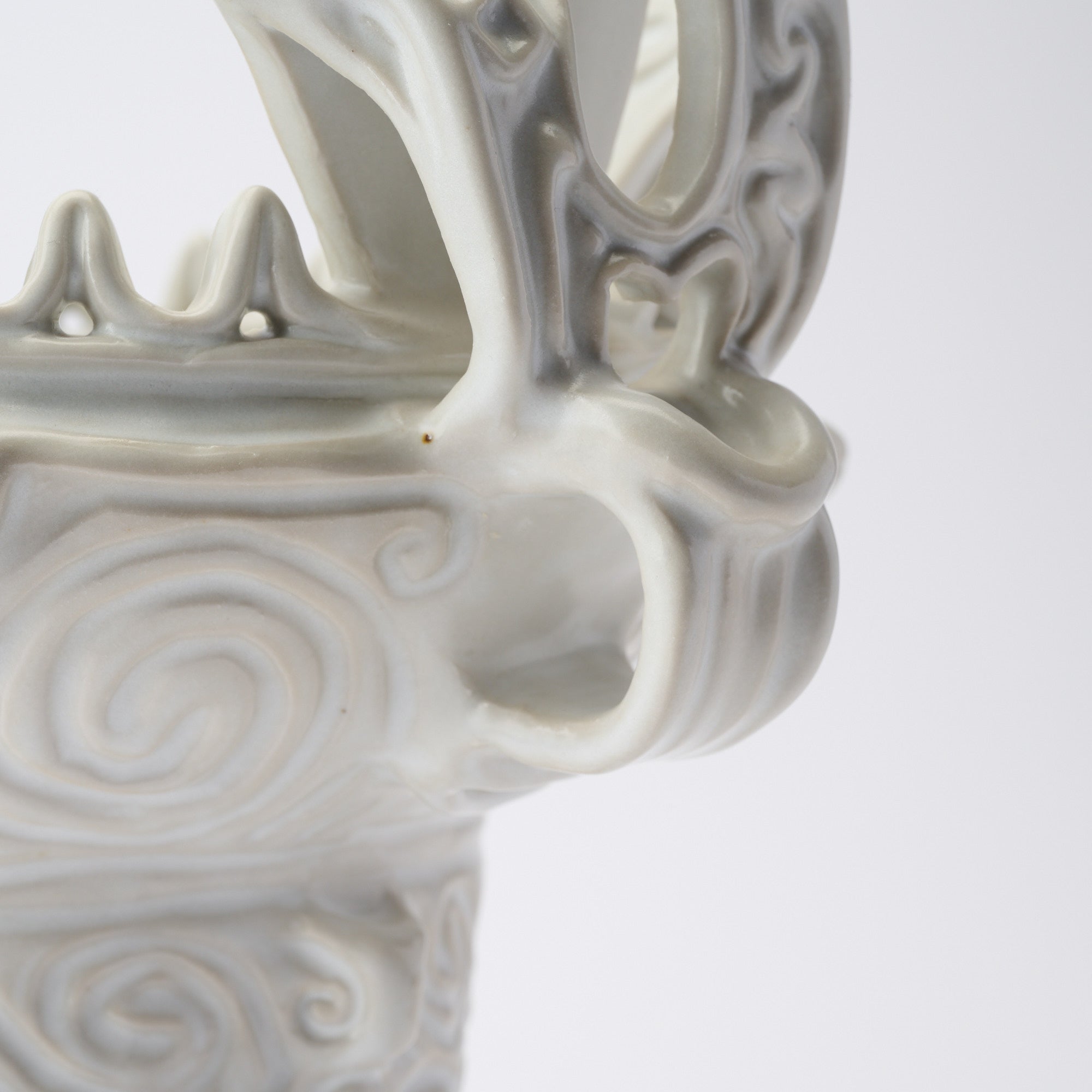
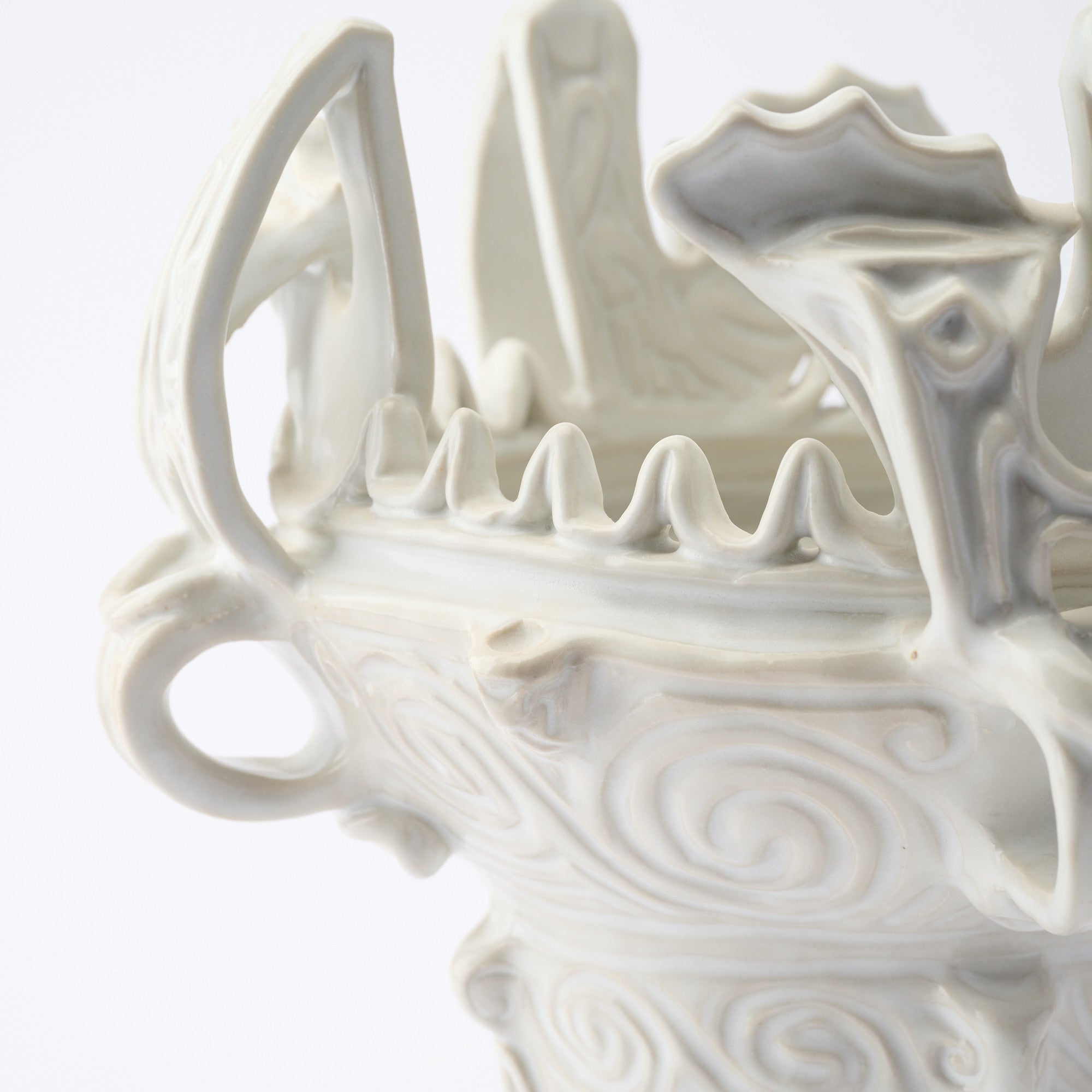
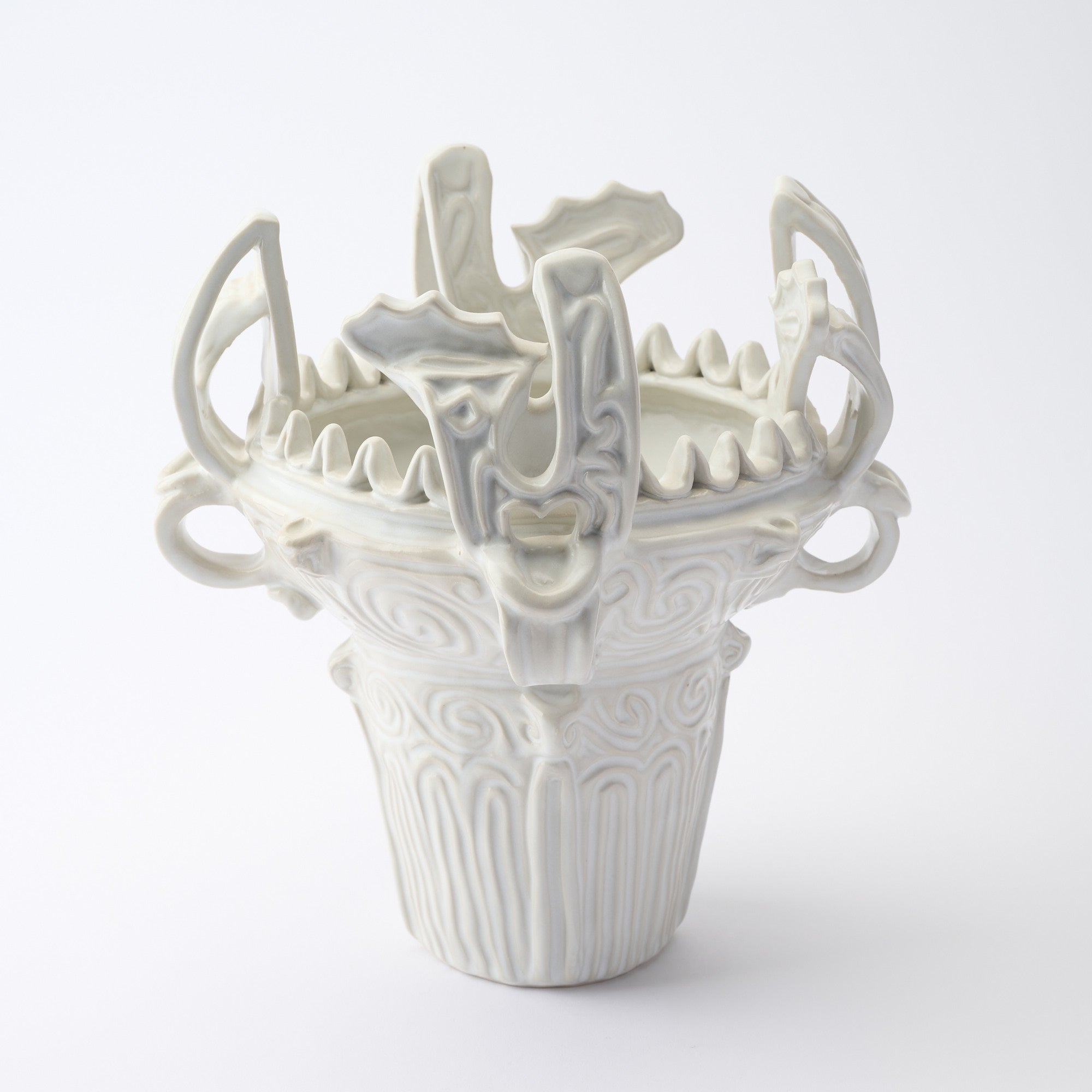
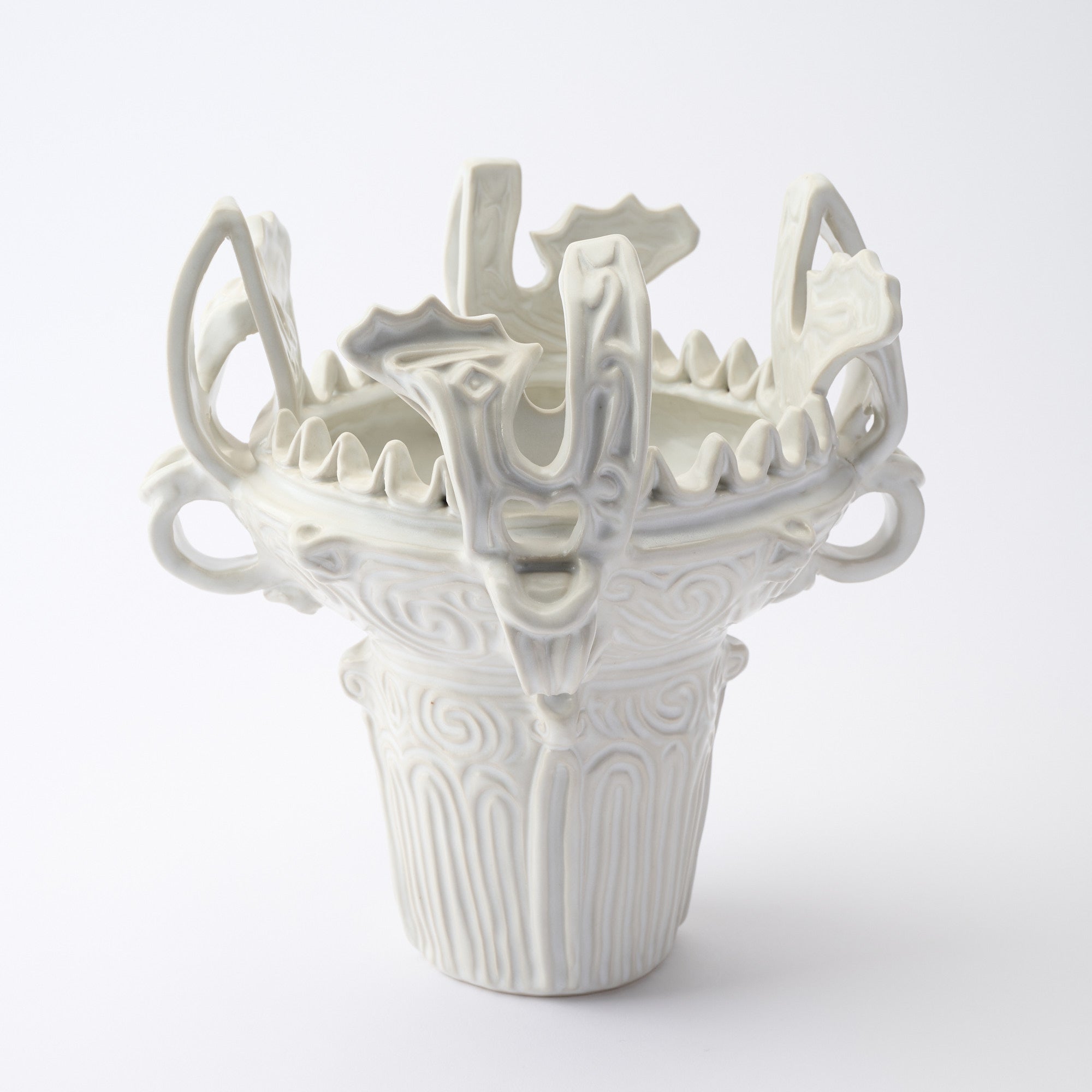
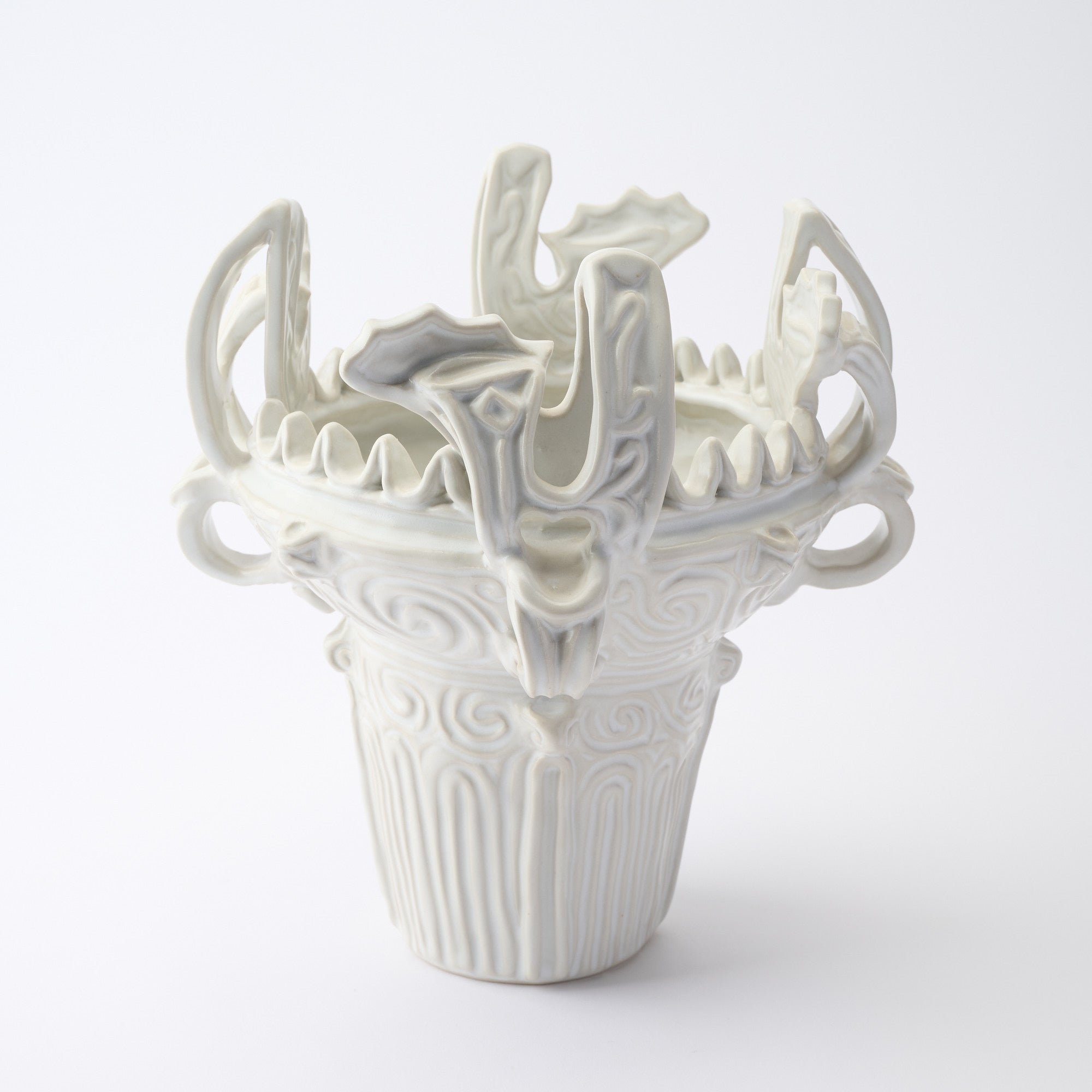
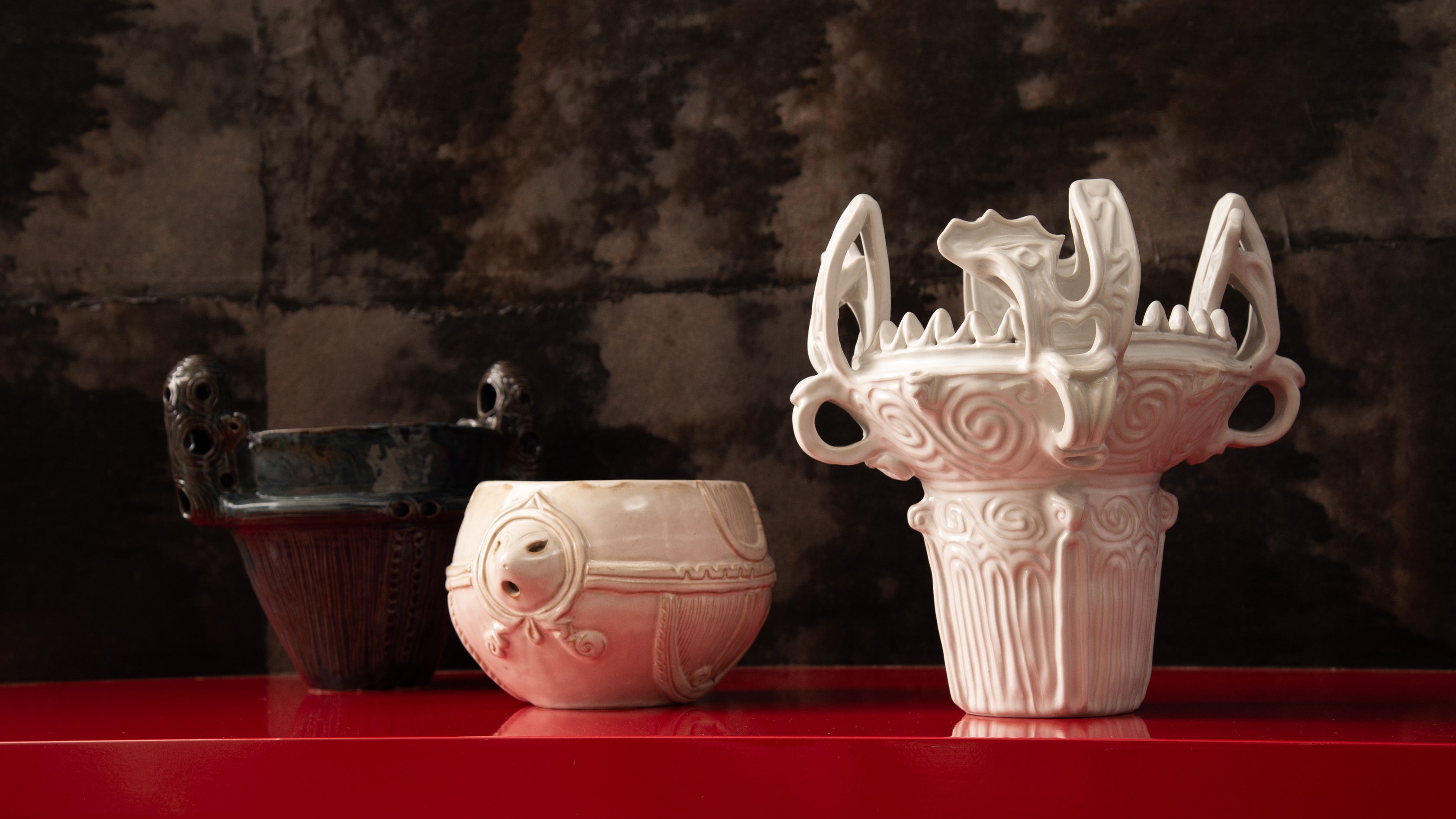
Inspiriert von den dramatischen, flammenförmigen Gefäßen der alten japanischen Jōmon-Zeit (ca. 10.000–300 v. Chr.Dieses Kunstwerk der in Kyoto lebenden Keramikerin Wakunami Madoka interpretiert eine der ikonischsten Formen der frühen japanischen Töpferei neu. Die flammenförmigen Gefäße selbst stammen aus der Zeit vor etwa 5.000 Jahren; ihre aufsteigenden Konturen und filigranen Verzierungen erinnern an in Ton eingefangenes Feuer. Das Werk mit dem Titel „Homura“ – japanisch für Flamme – spiegelt Wakunamis anhaltende Auseinandersetzung mit diesen alten Formen wider.
Anstatt den historischen Jomon-Flammentopf einfach nachzubilden, nähert sich Wakunami seiner Form durch strukturelle Untersuchungen. Sie studiert Jomon-Keramik in Museen und beobachtet die Gewichtsverteilung, das Gleichgewicht hervorstehender Elemente sowie die Ausgestaltung von Details und Proportionen. Das Ergebnis ist keine archäologische Kopie, sondern eine zeitgenössische Neuinterpretation der Flammenform, geprägt von disziplinierter Handwerkskunst.
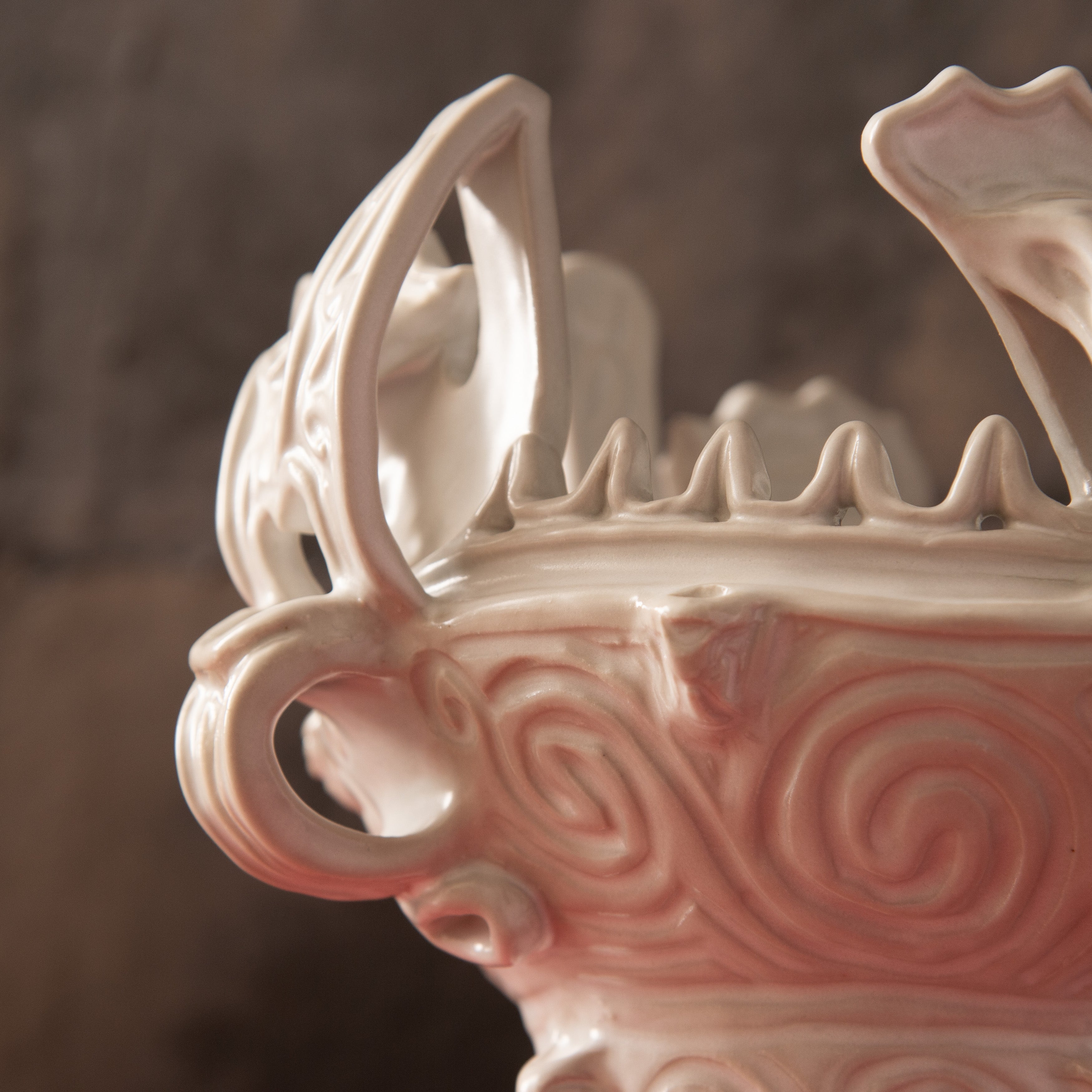
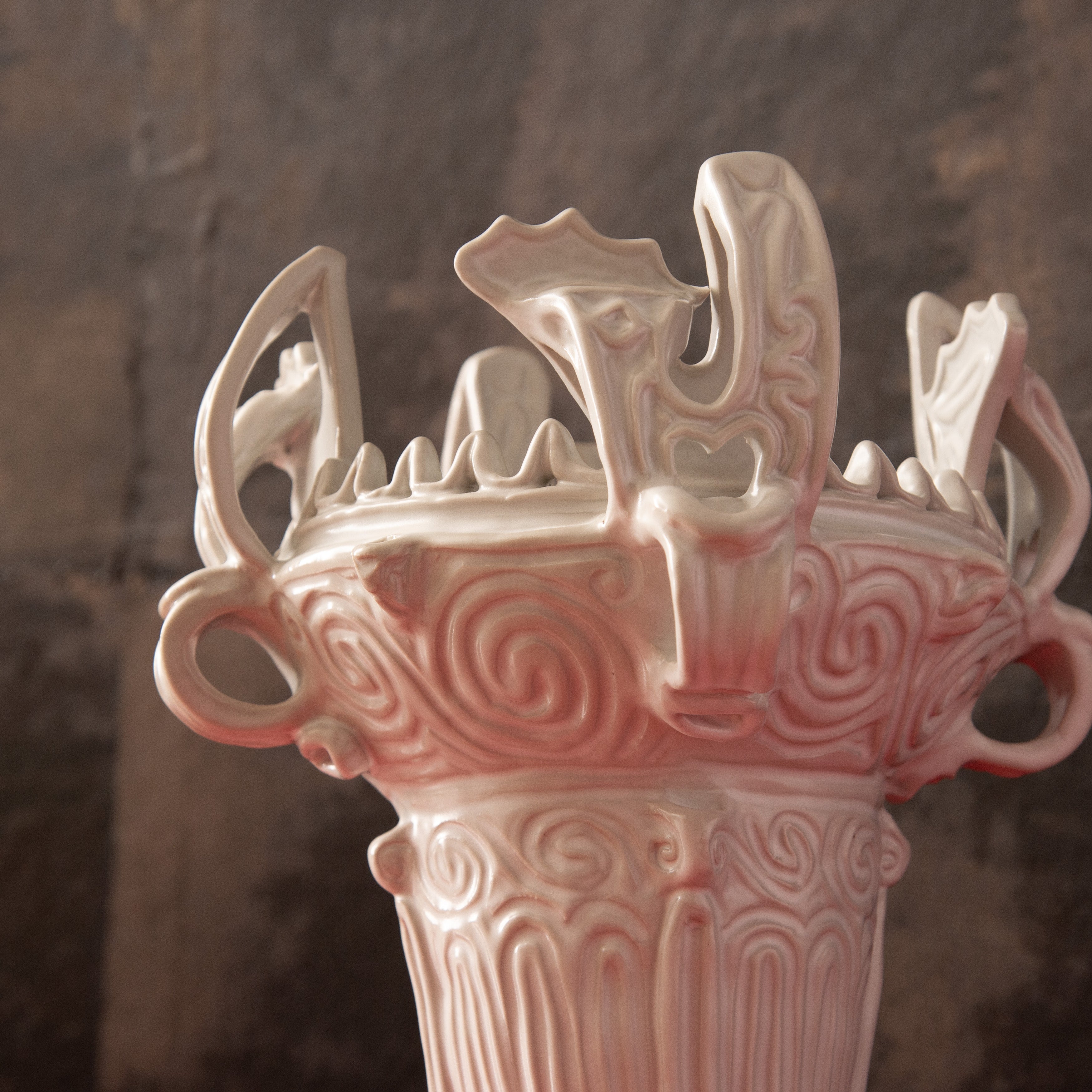
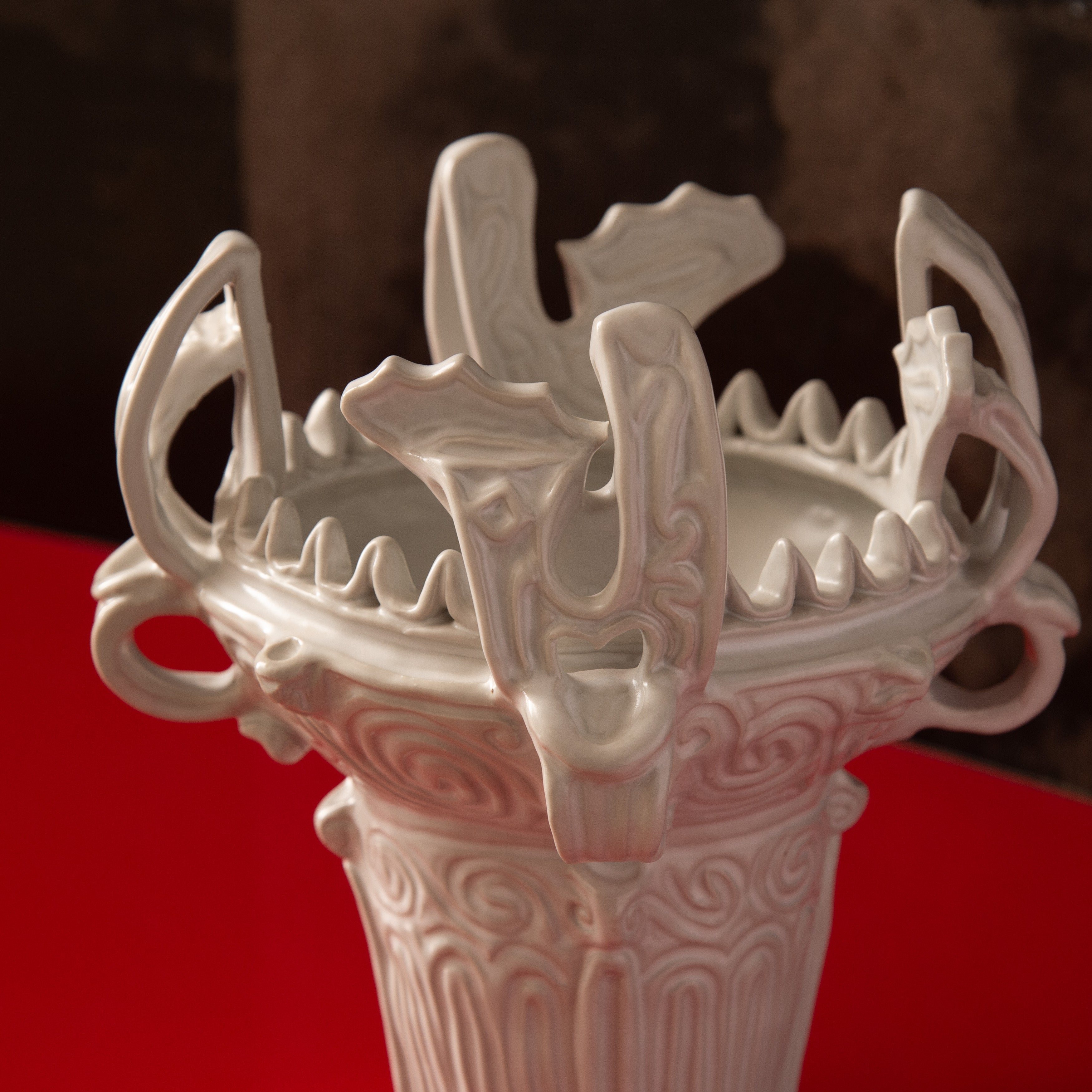
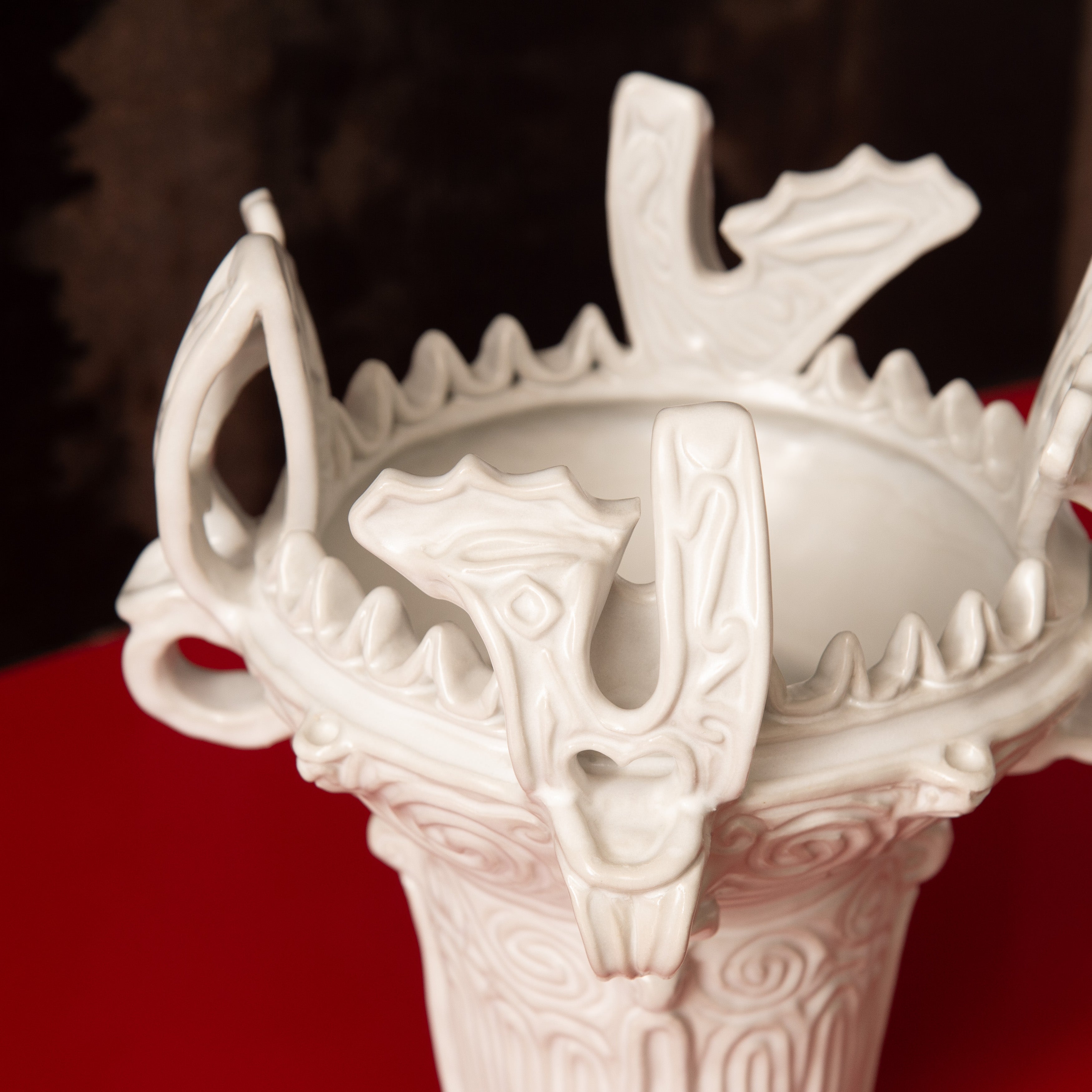
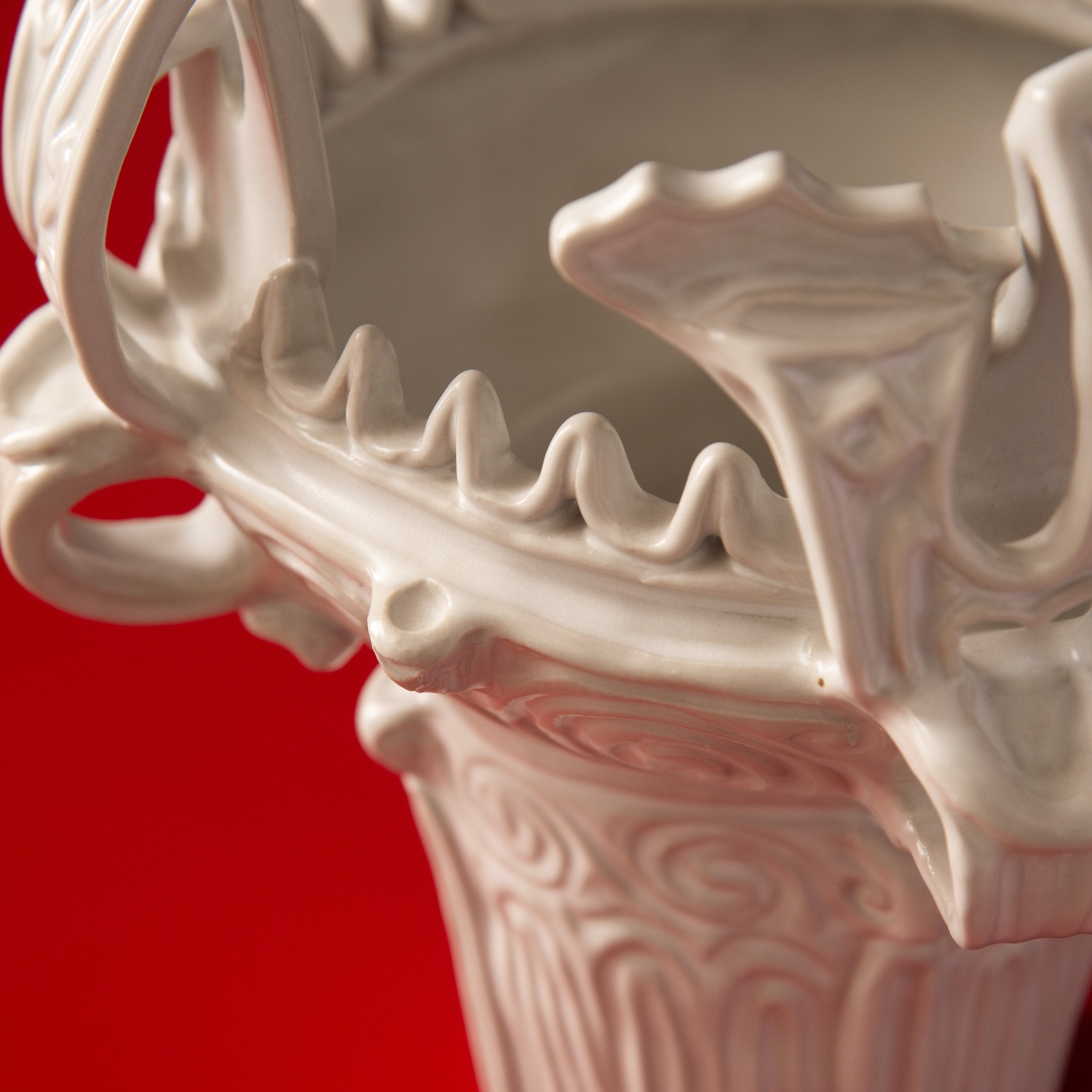
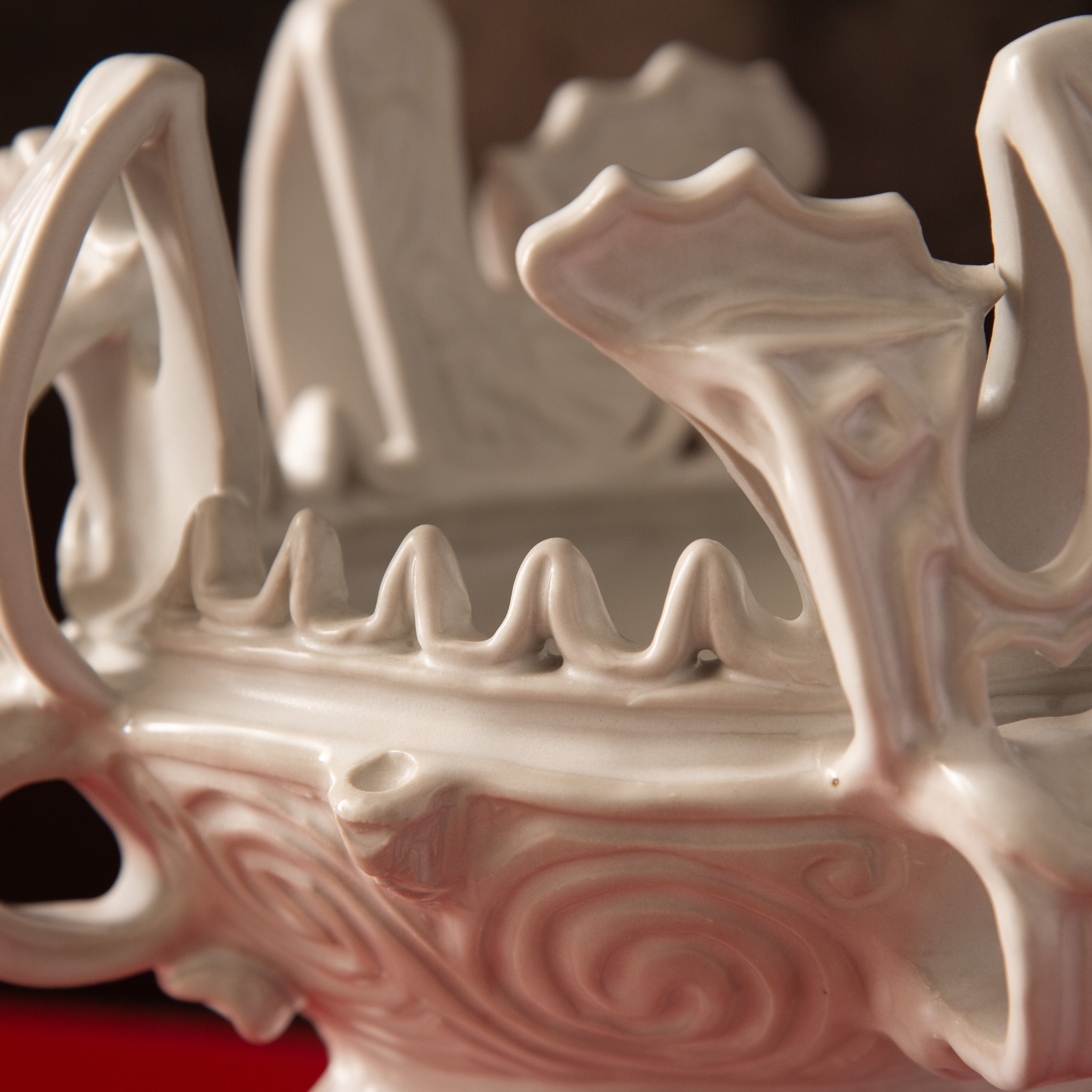
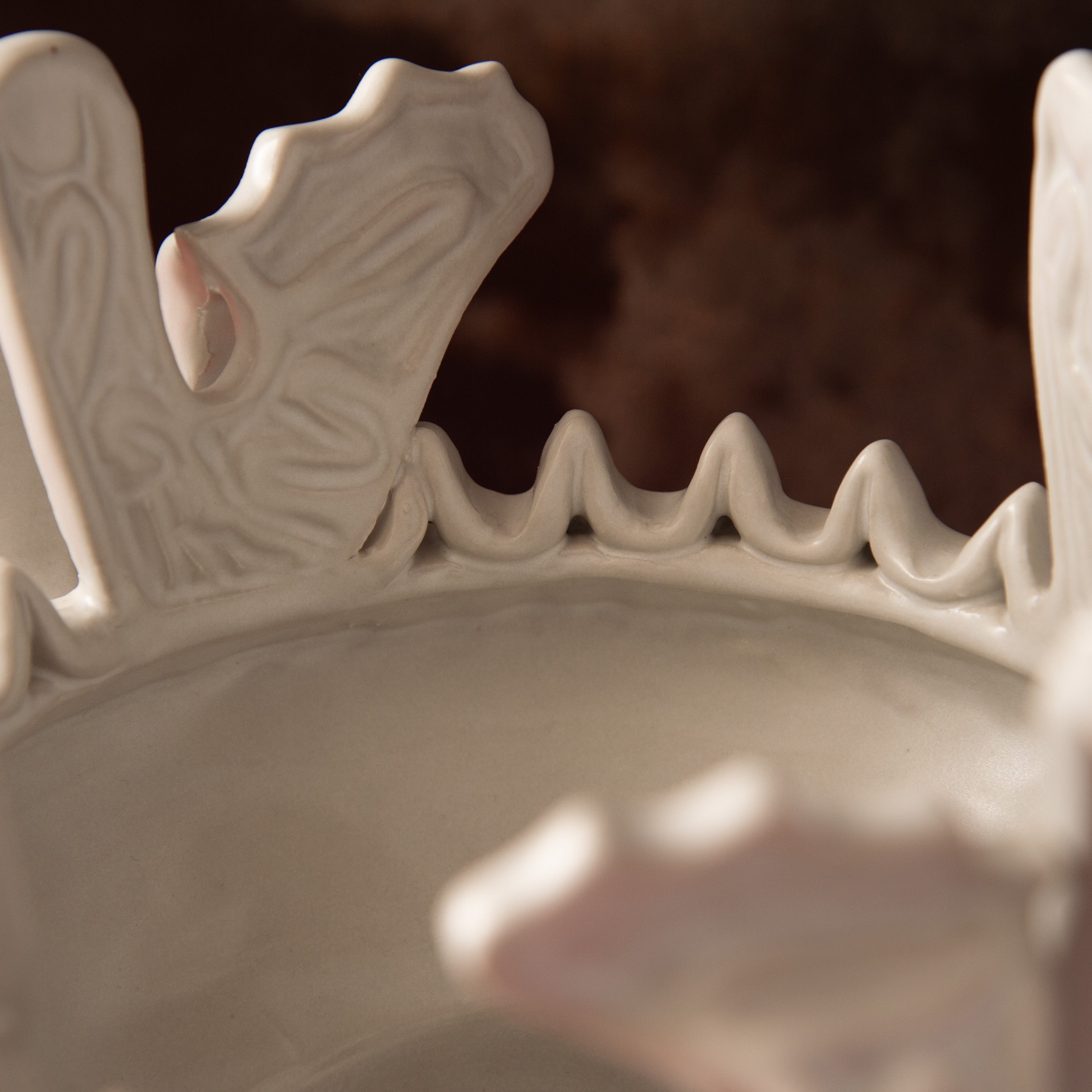
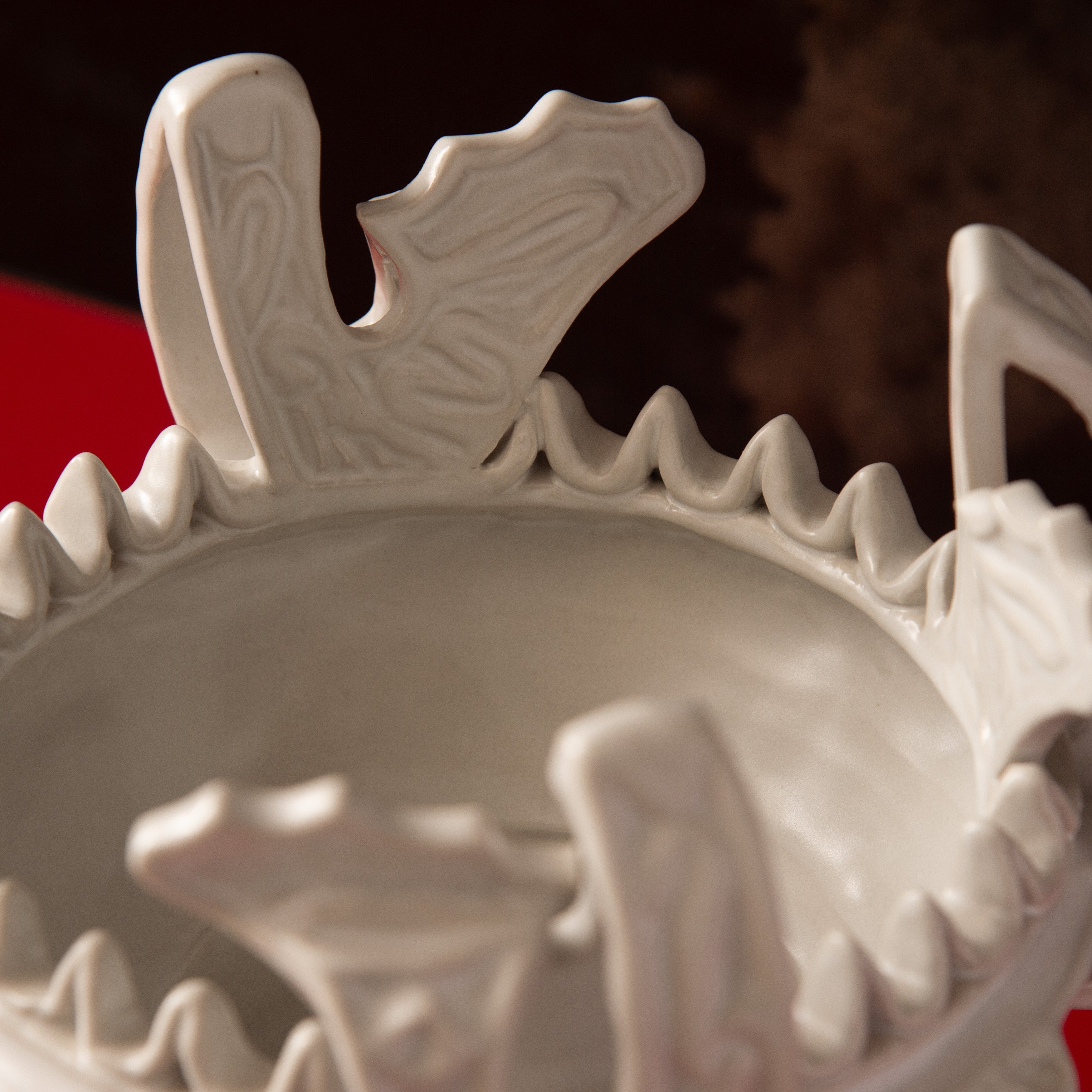
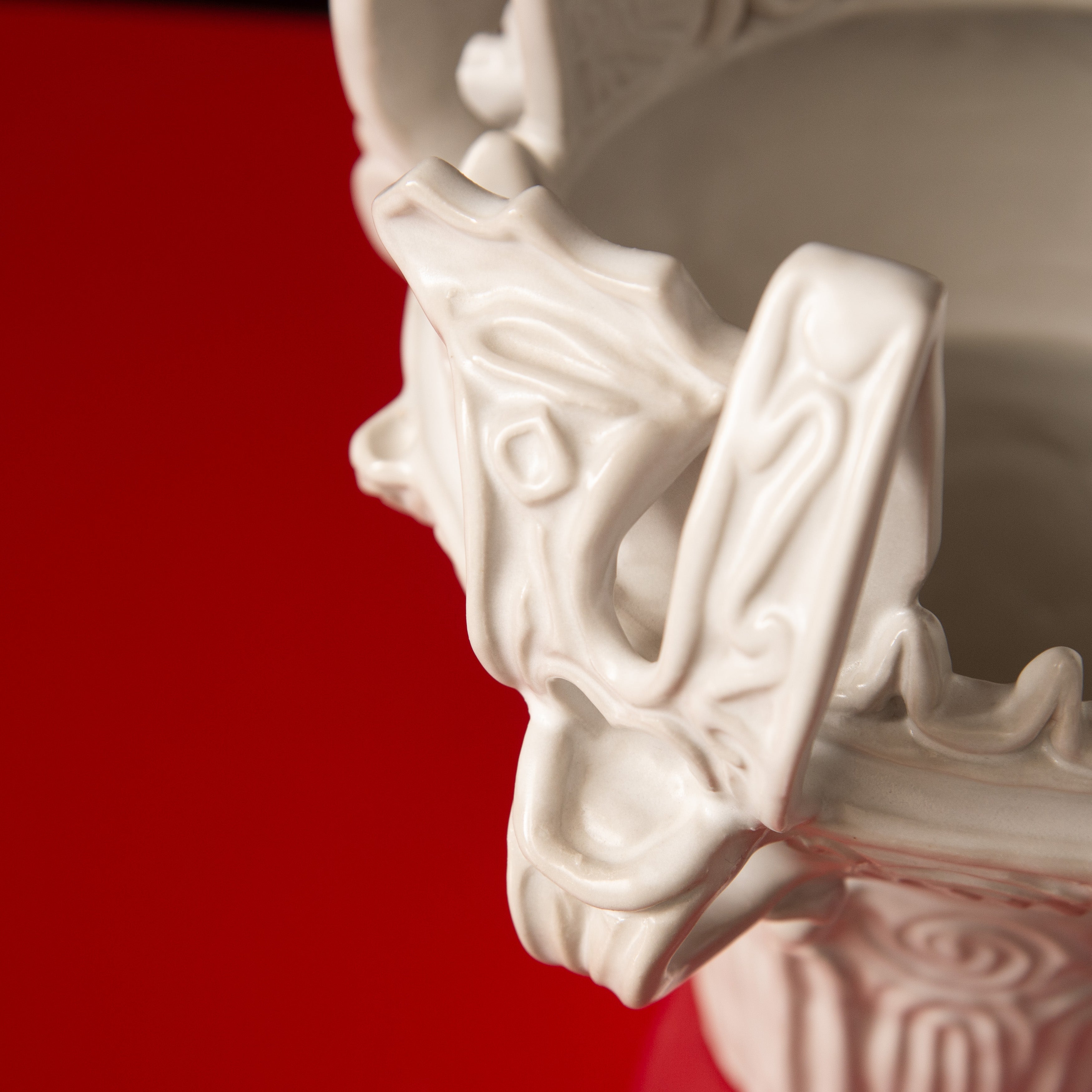
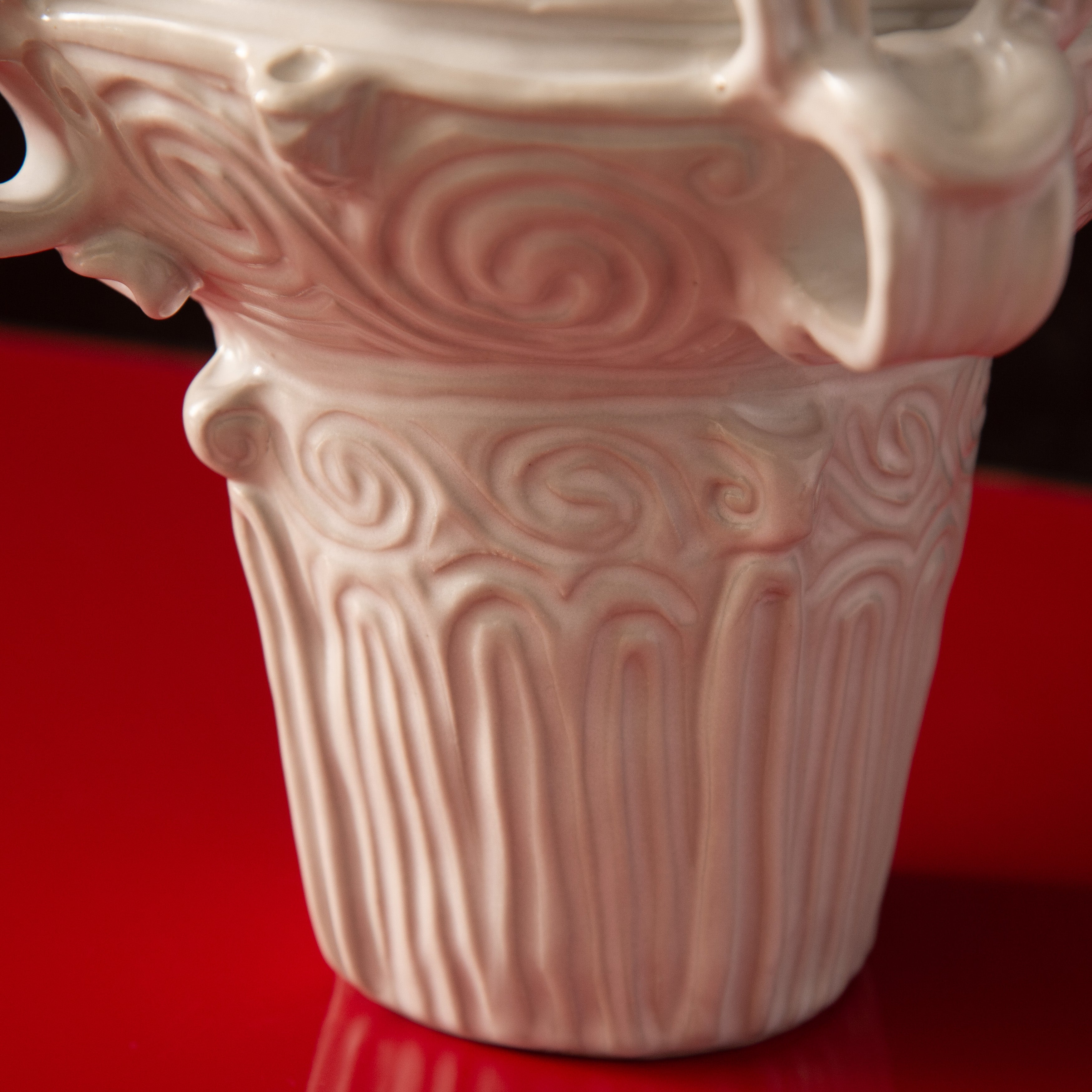
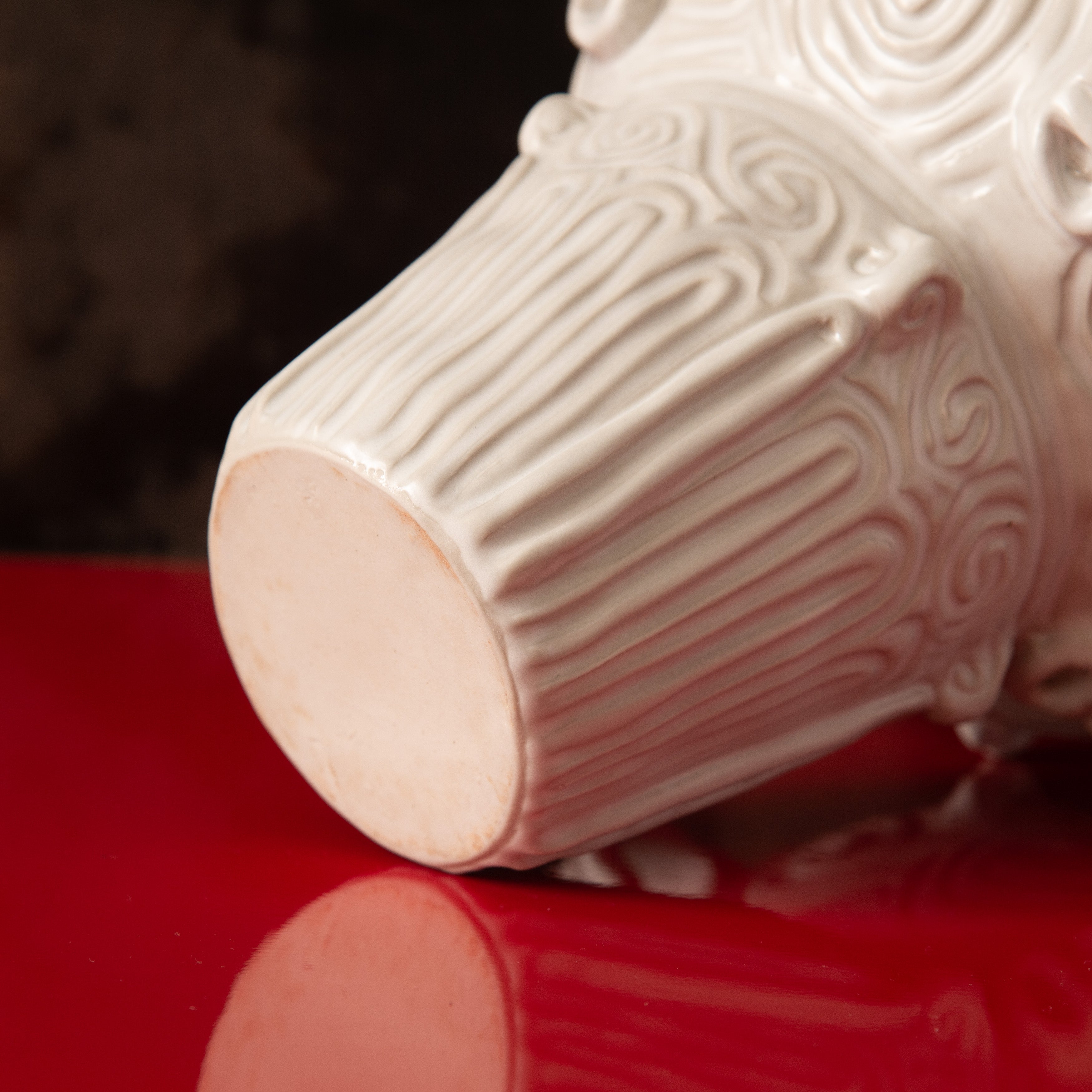
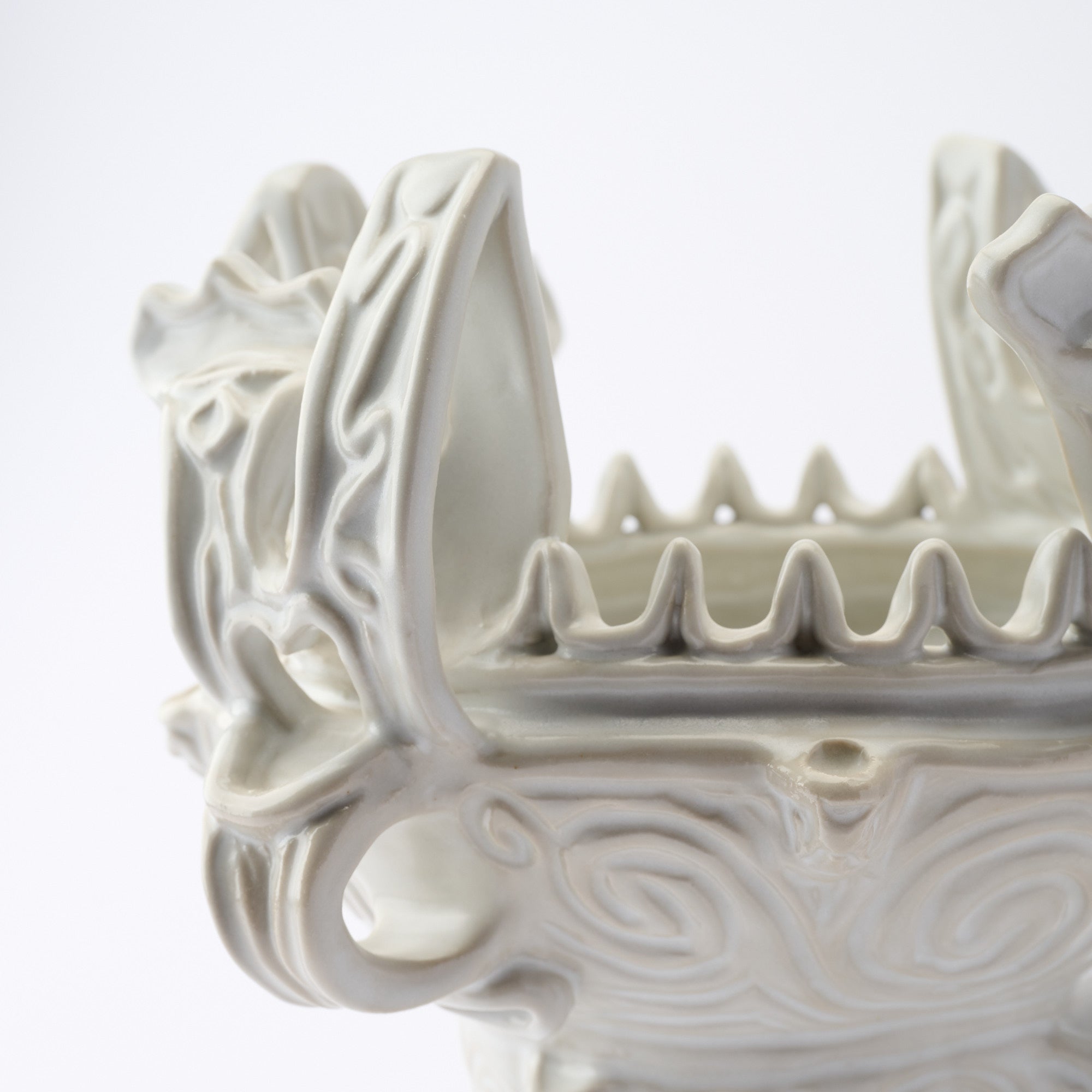
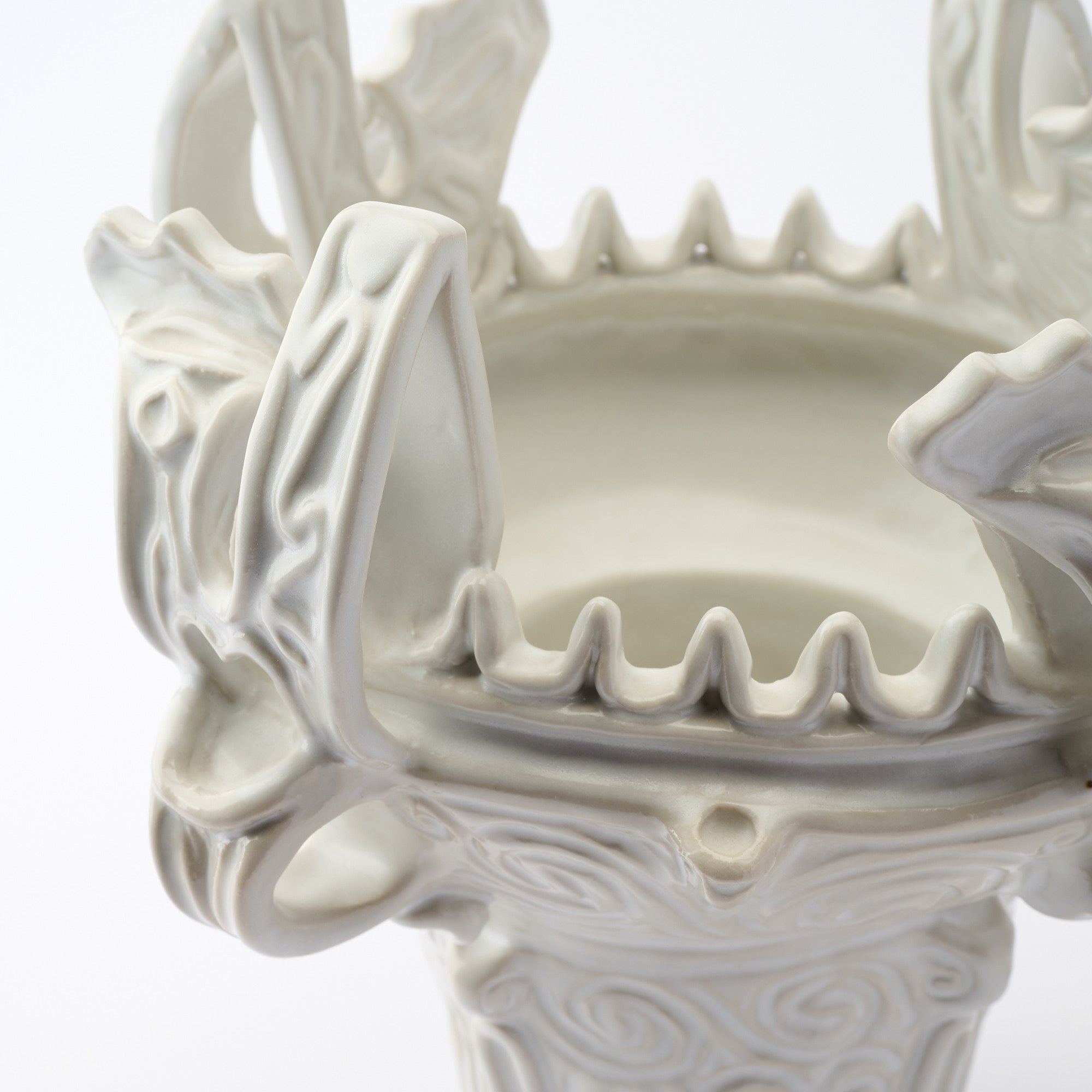
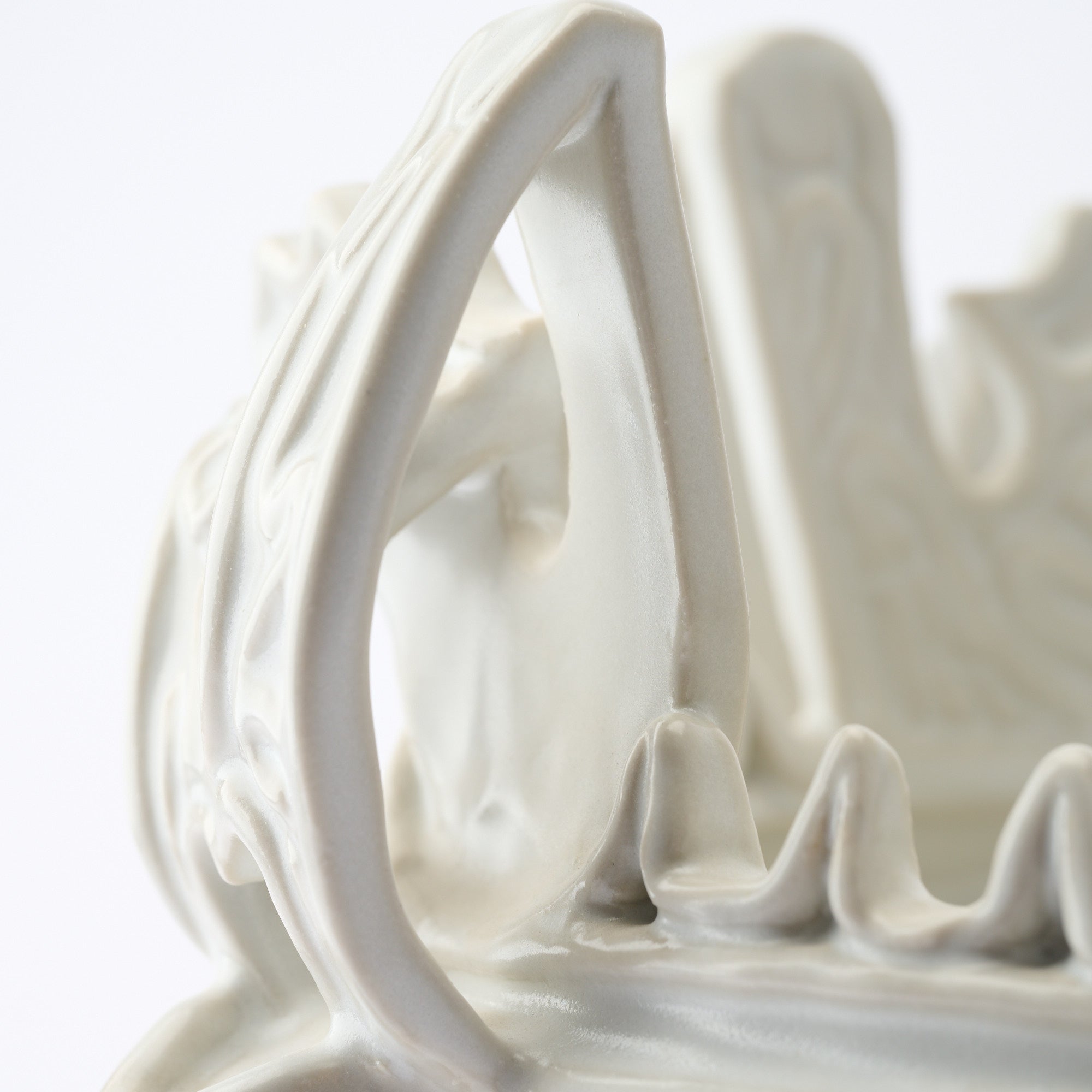
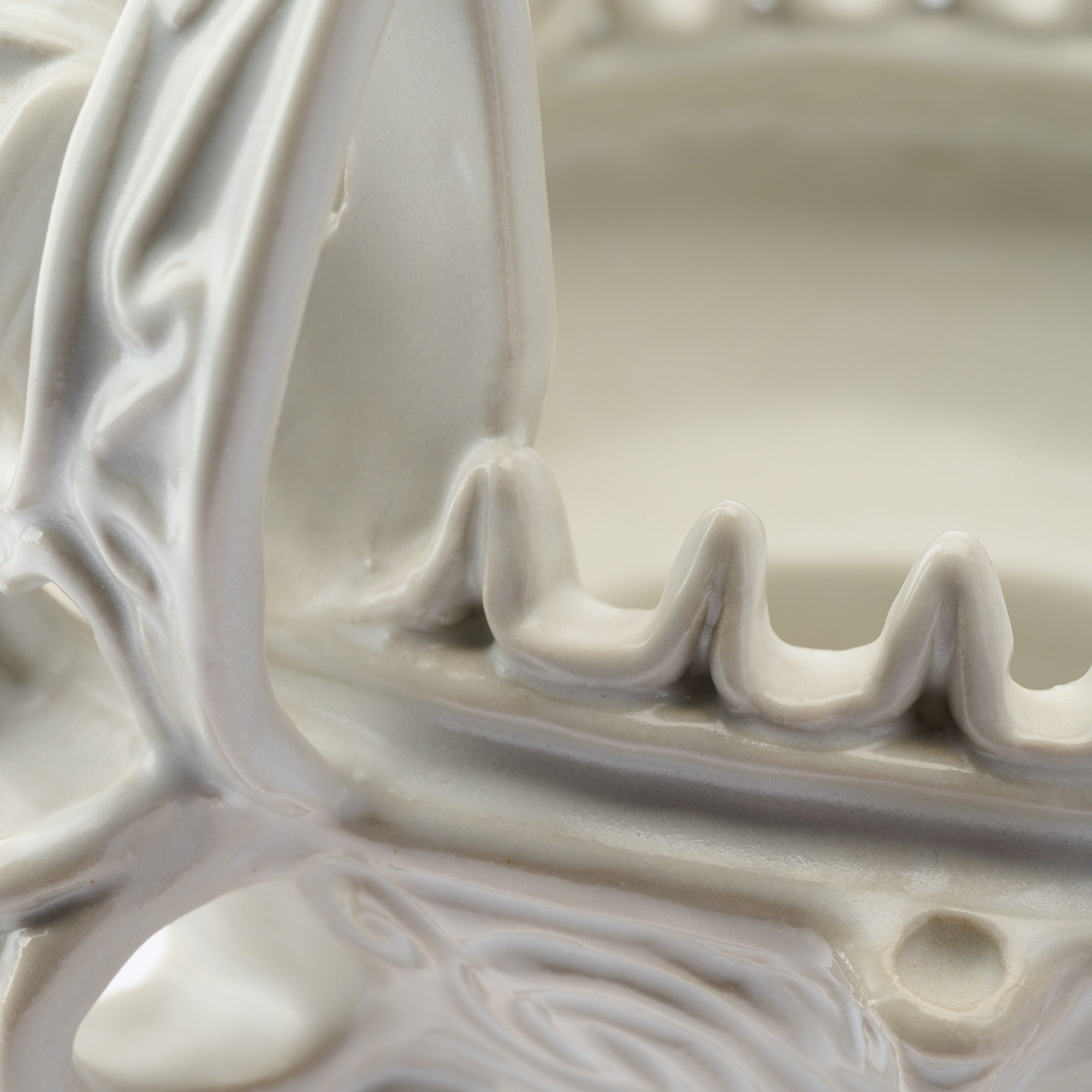
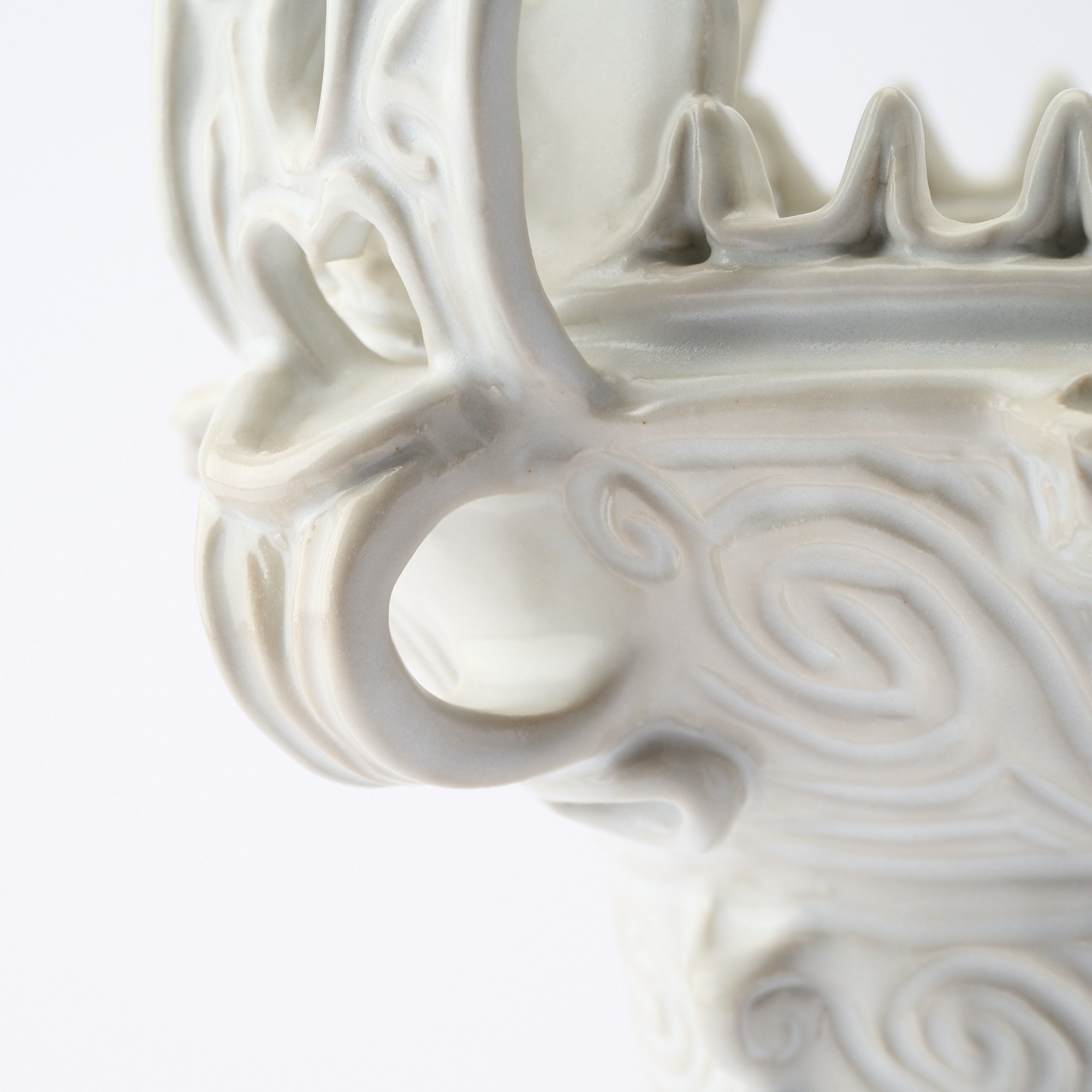
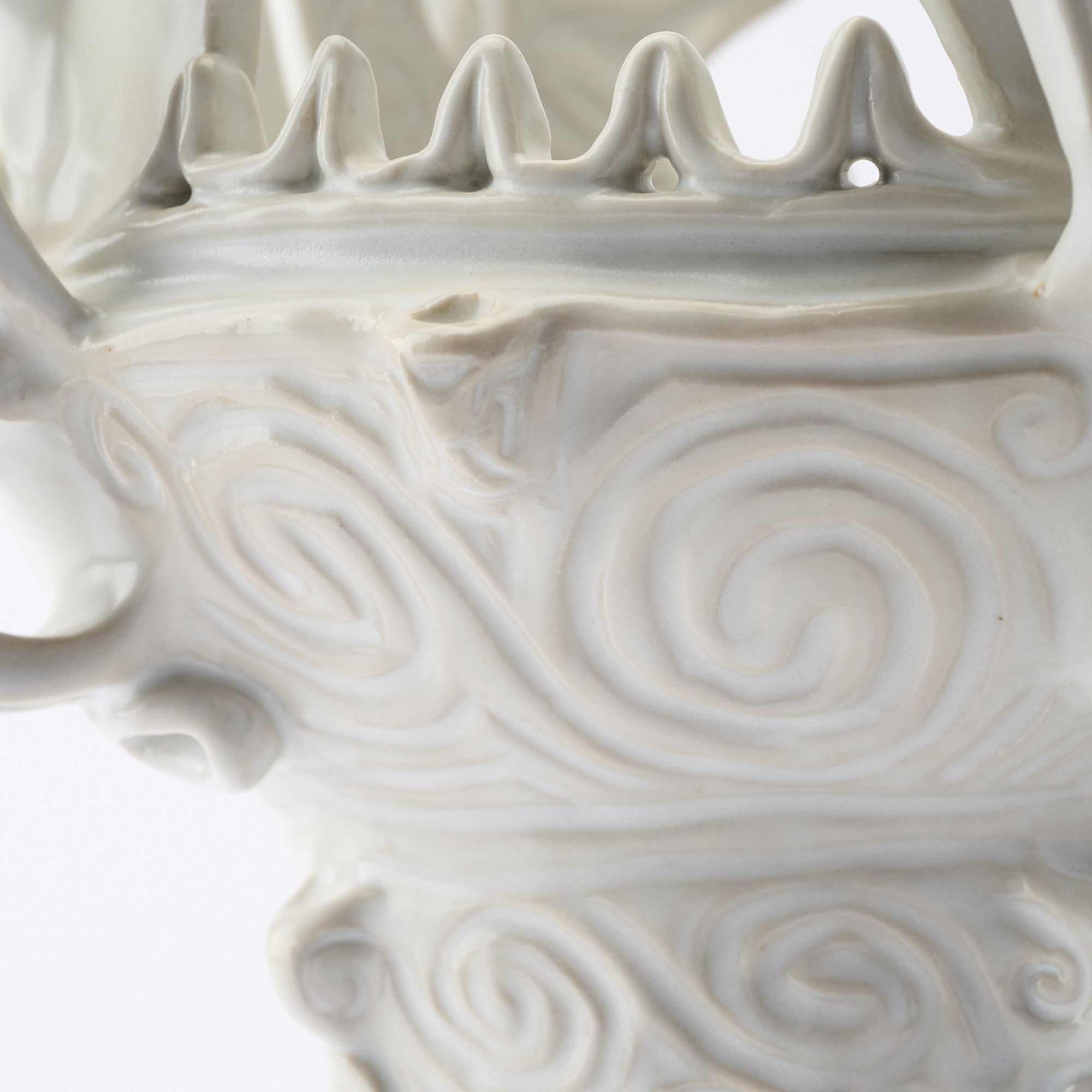
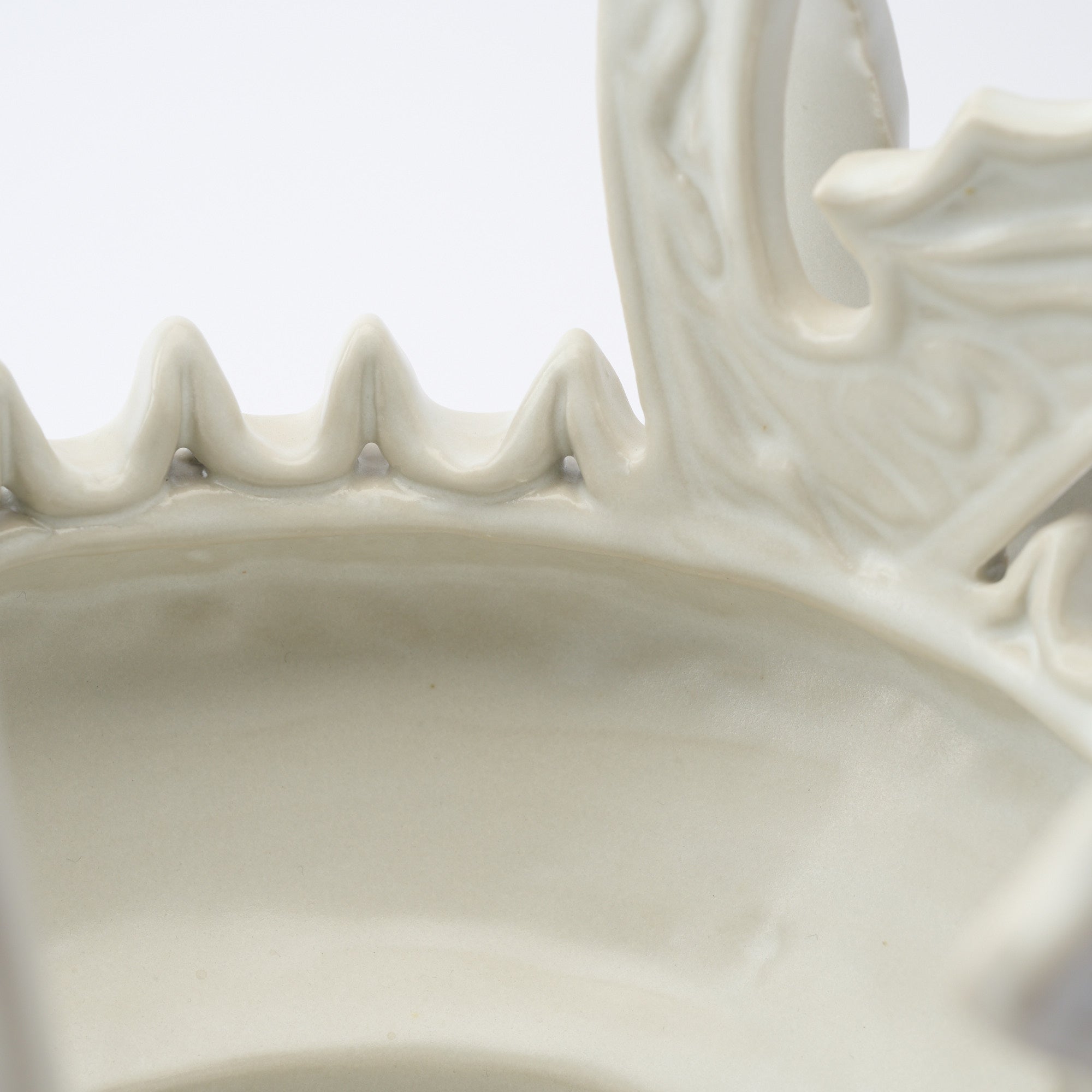
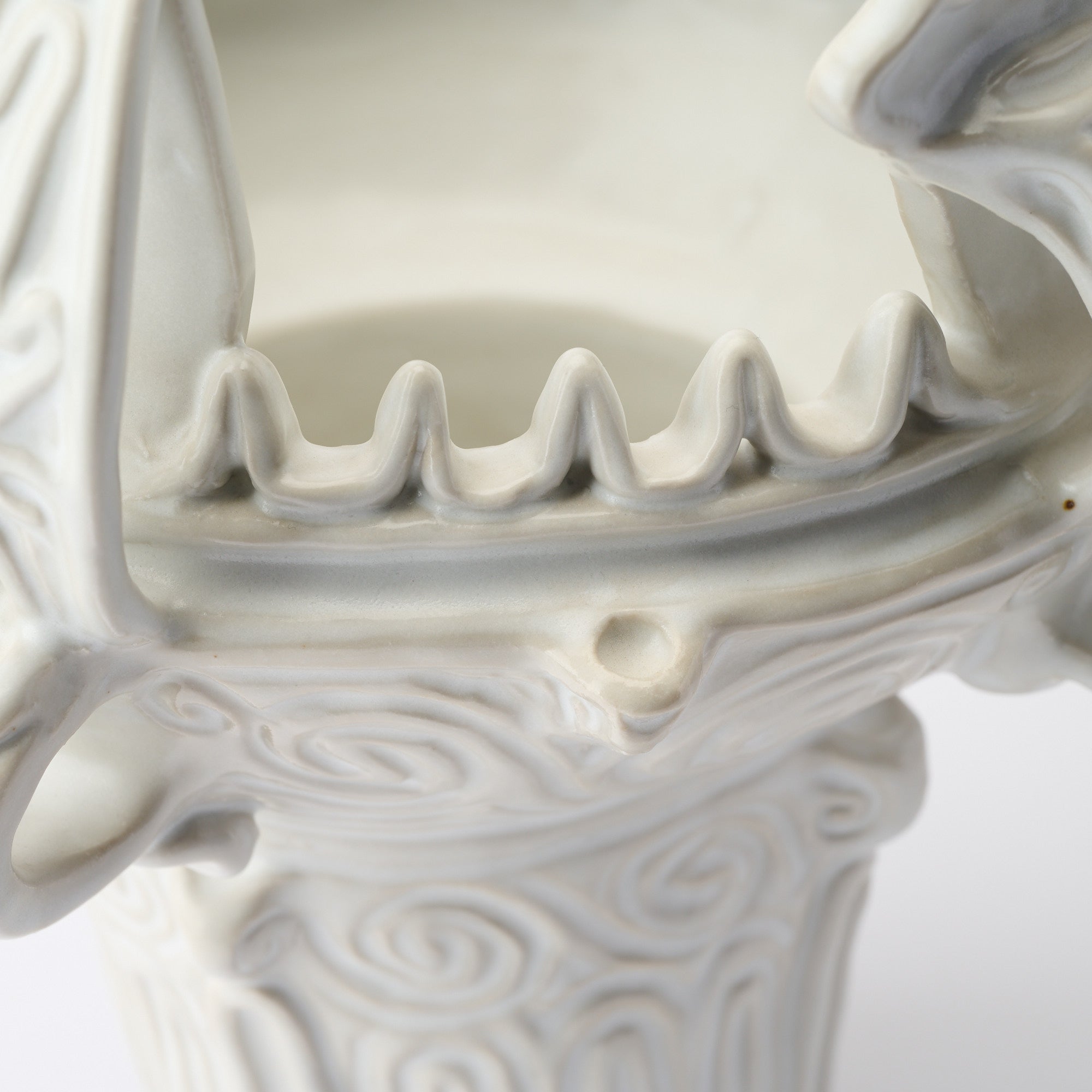
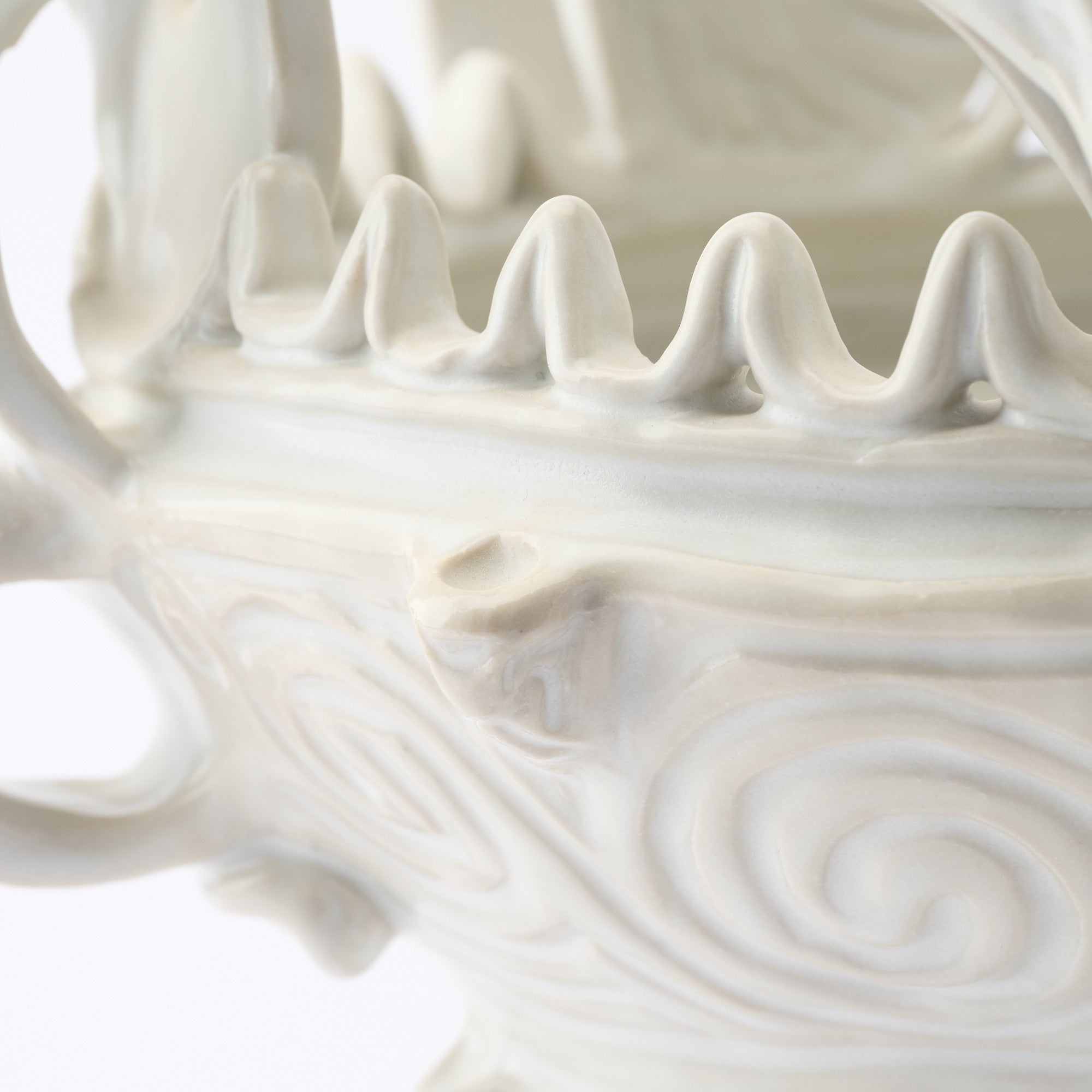
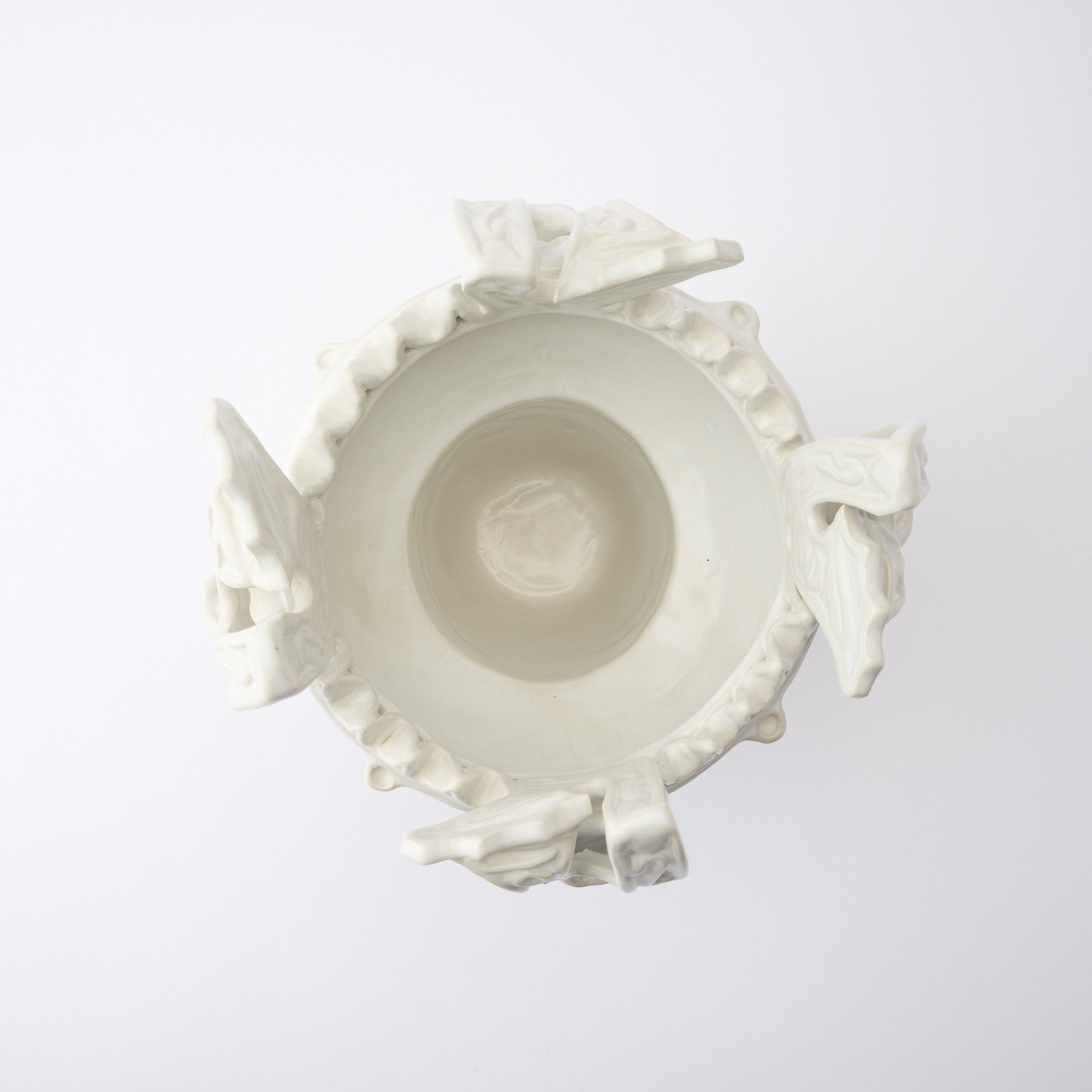
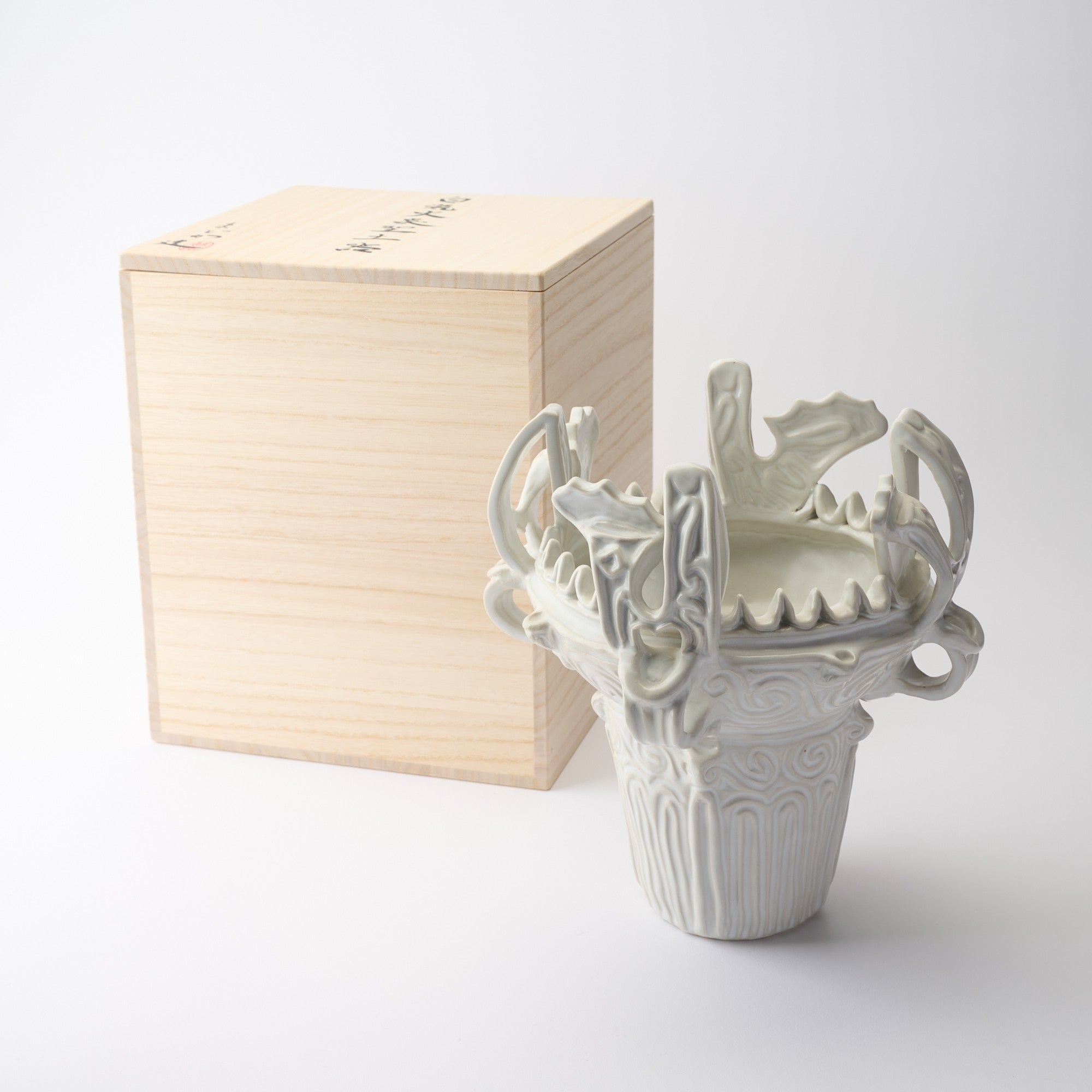
Das Werk entstand vollständig in Handarbeit in Wulsttechnik, ohne Töpferscheibe. Der Mittelteil wächst allmählich aus geschichteten Tonwülsten empor und ruht, bevor die oberen Elemente angebracht werden. Die vier markanten Ausläufer der Skulptur wurden einzeln geformt und mit viel Liebe zum Detail hinsichtlich Rhythmus und Symmetrie positioniert. Ihre komplexen, flammenartigen Formen erzeugen eine Aufwärtsbewegung und bewahren gleichzeitig die strukturelle Balance. Durch sorgfältige Planung und präzise Abstimmung von Maßstab und Proportionen verortet Wakunami das Werk zwischen Tradition und Eigenständigkeit.
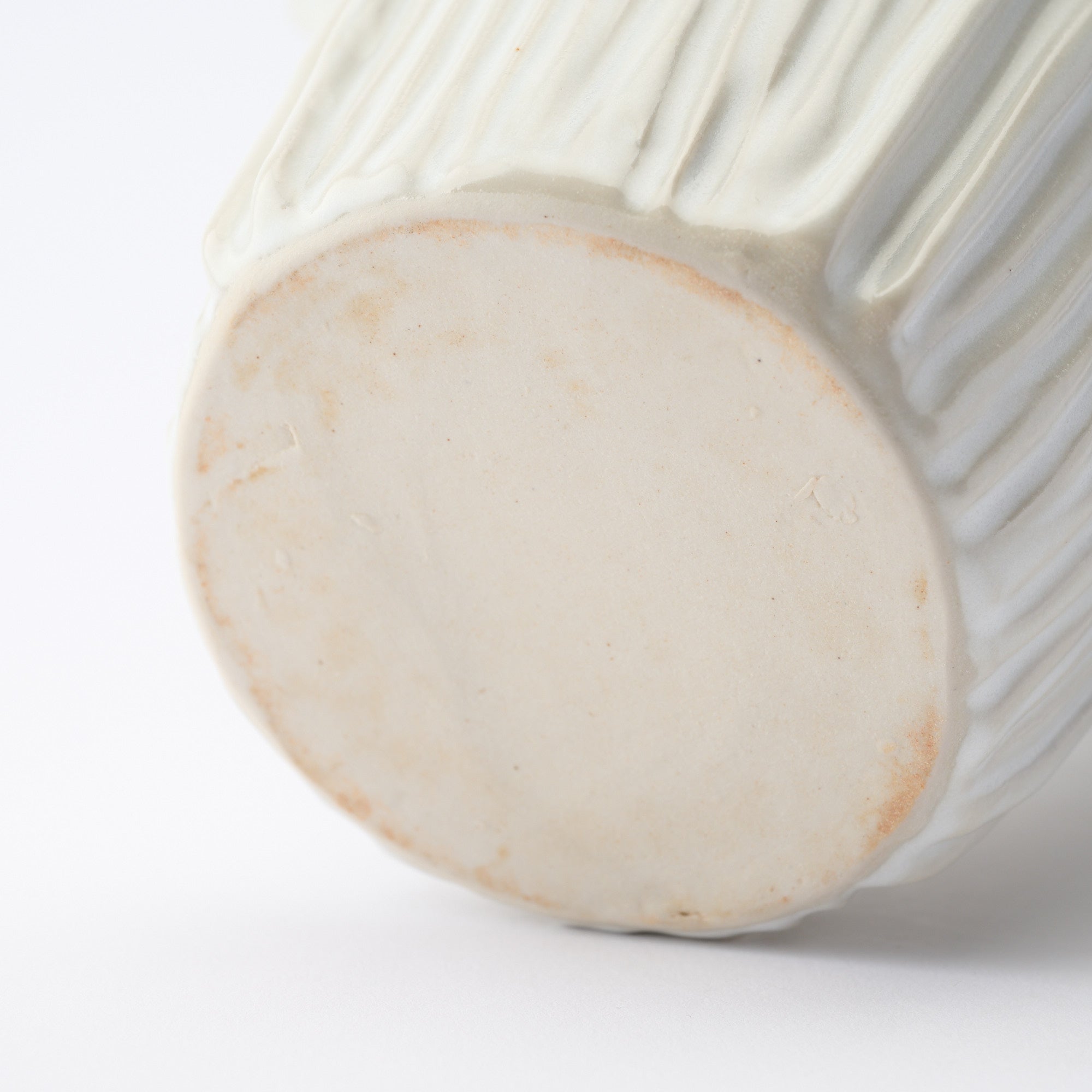
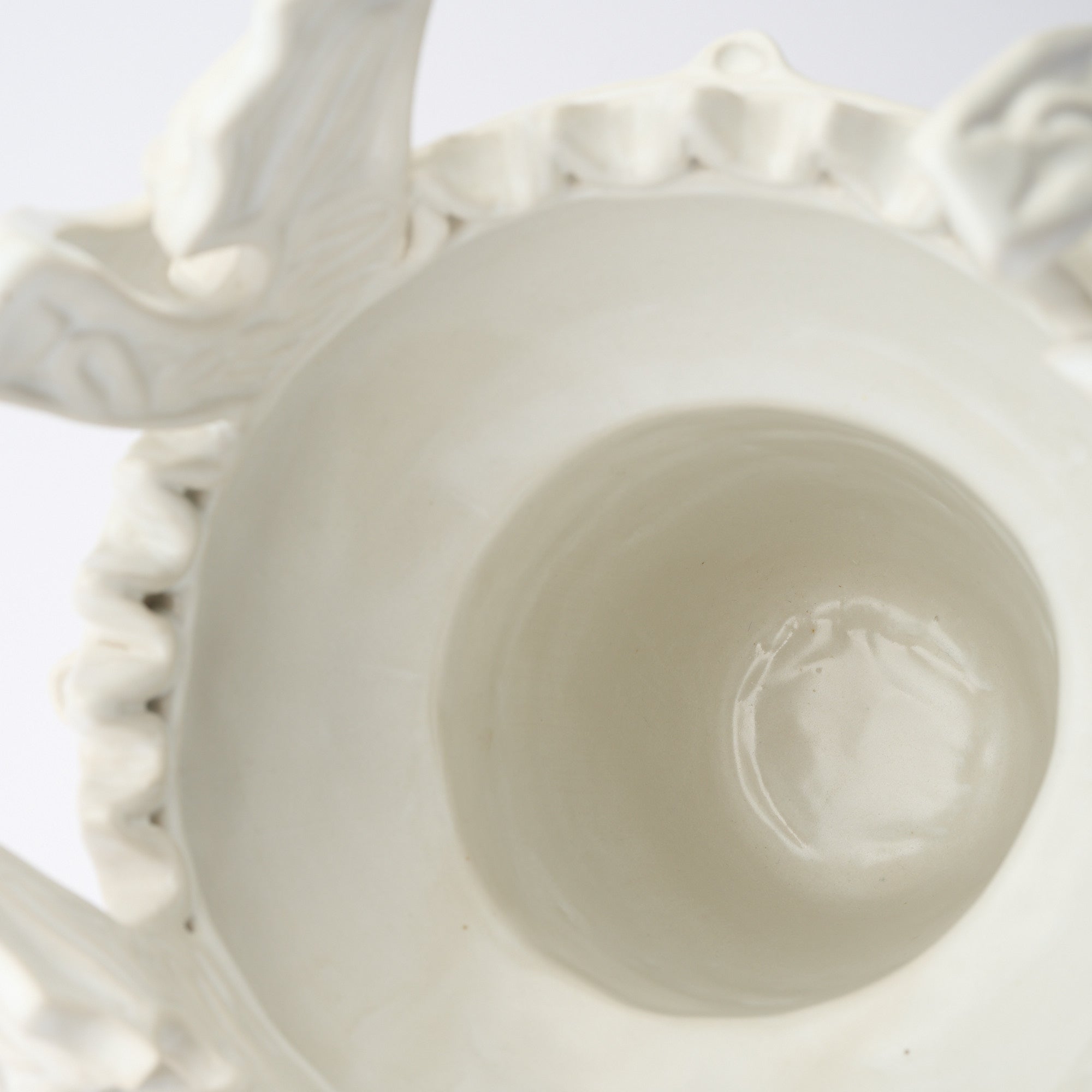
Der Tonkörper wird sorgfältig vermischt, um die Klarheit und Farbwirkung der Glasur zu optimieren. Die Skulptur, die in einem speziellen Weißton gehalten ist, verzichtet bewusst auf jeglichen erdigen historischen Bezug. Da die natürlichen Tontöne fehlen, treten Kontur und Schatten in den Vordergrund. Licht definiert die Kanten; Tiefe entsteht durch Kontrast. Die Form behauptet ihre Präsenz allein durch ihre Struktur.
Homura versteht sich als zeitgenössische Meditation über die Jomon-Flammenform – eine Erkundung von Spannung und Aufstieg, durchdrungen von Ehrfurcht und anhaltender Faszination für die irdenen Gefäße, die als Ursprung der japanischen Töpferei selbst gelten können.
EINZELHEITEN
| Quantity | 1 |
| Size |
D 25.5 cm (10.0 in) x H 25 cm (9.8 in) [Wodden box] L 24 cm (9.4 in) x W 24 cm (9.4 in) x H 29 cm (11.4 in) [Size of opening] D 10 cm (3.9 in) |
| Weight | approx. 4.9 lb (2.2 kg) |
| Material | Stoneware |
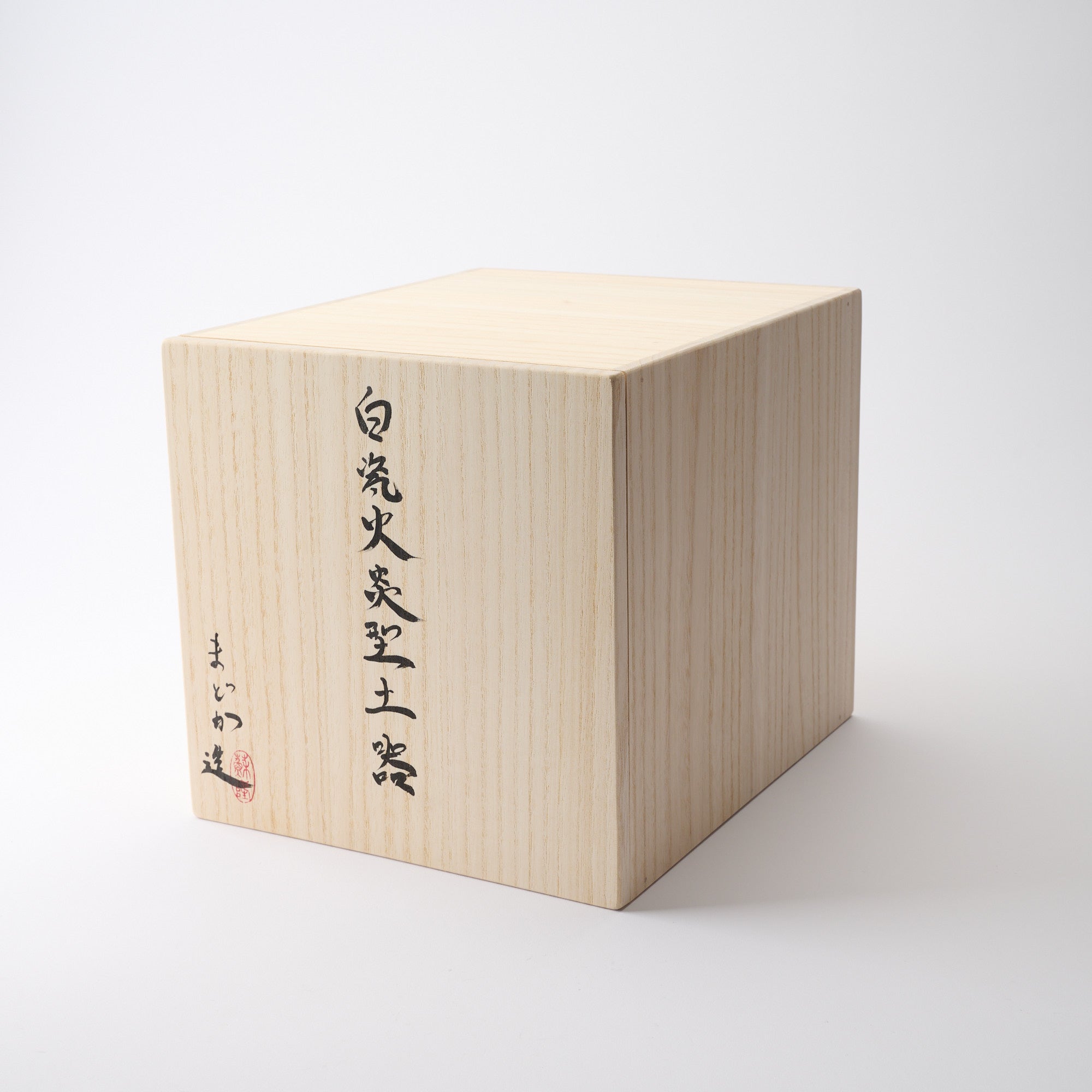
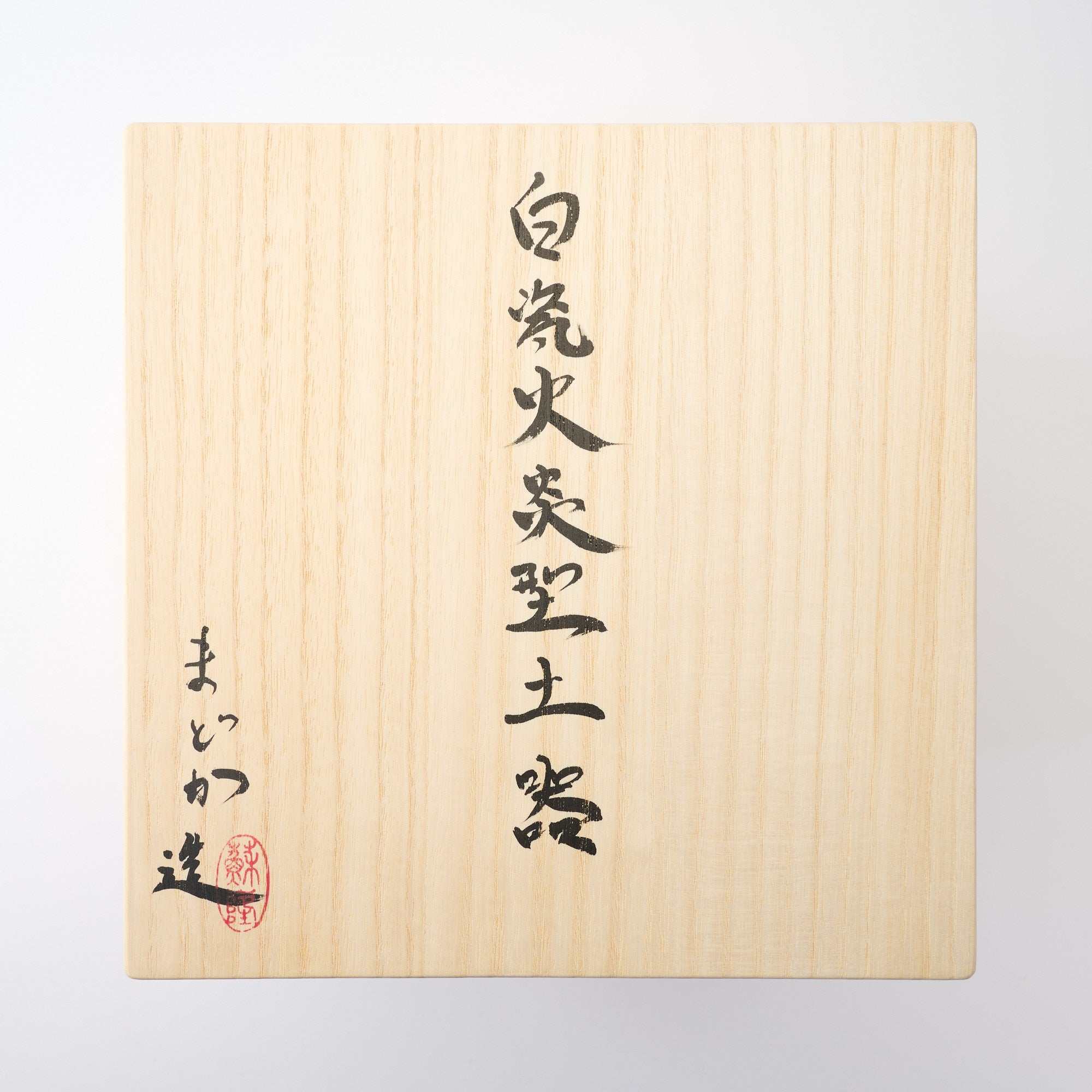
| Package Type | Wooden box |
Hersteller / Marke
Die in Kyoto lebende Keramikkünstlerin Wakunami Madoka lässt sich von der Antike inspirieren. Tief berührt von der Kunst der Jōmon-Kultur, die zu den ältesten Keramiktraditionen der Welt zählt, interpretiert sie jahrtausendealte Formen für die Gegenwart neu. Mit ihrer Erfahrung sowohl in der Koishiwara-Keramik, einem keramischen Volkshandwerk aus Kyūshū, als auch in der für Kyoto typischen Kyō-Keramik, verleiht sie dem ursprünglichen Reiz der Jōmon-Formen durch die Verwendung neuer Tone und Glasuren eine sanfte, anmutige Raffinesse.
Optionen auswählen