

Demandez à l'équipe Musubi : Nos vraies résolutions du Nouvel An dans nos cuisines
Inspirez-vous de véritables résolutions de cuisine pour la nouvelle année, de la cuisine saine et la préparation des repas au moment du thé en pleine conscience.
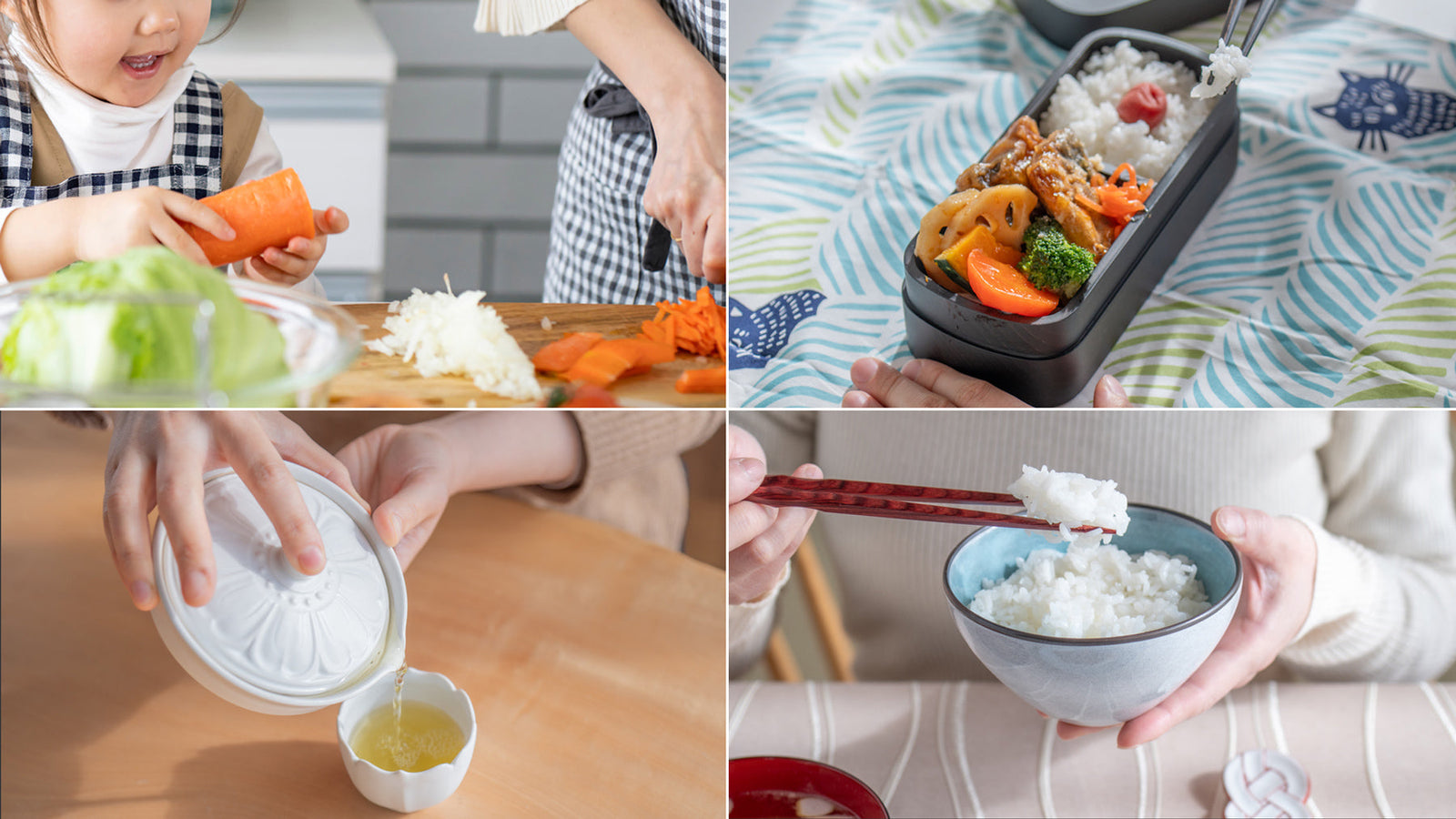
La nouvelle année est le moment d'essayer quelque chose de nouveau — que ce soit dans le cadre d'une résolution, d'un objectif renouvelé, ou pour cocher des cases sur sa liste de souhaits. Chez MUSUBI KILN, nous aimons nous lancer des défis en cuisine. Apporter son bento plus souvent pour le déjeuner, cuisiner davantage avec des légumes ou des ingrédients sans gluten, aider les enfants au potager : ce sont là des objectifs réels de membres de l'équipe Musubi.
Rêver grand est facile, mais le plus difficile dans une résolution de nouvelle année reste le côté pratique. Comment intégrer une nouvelle routine dans un emploi du temps chargé. Quelles actions concrètes entreprendre pour atteindre un objectif plus vaste. Quelles étapes intermédiaires relient le point A au point B. Nous nous sommes donc assis avec cinq membres de l'équipe pour parler objectifs personnels, plans pour les atteindre, et vaisselle et ustensiles de cuisine qui soutiennent le processus. Ce que nous avons découvert, c'est une feuille de route pour transformer ces rêves « ce serait bien si… » en réalité.
Suivez nos histoires et puisez-y conseils et inspiration pour vos propres résolutions de nouvelle année.
Mai K. : Manger plus de légumes
Amatrice de ski dans les montagnes japonaises, Mai K. apporte une ambiance décontractée au travail, et aujourd'hui elle a partagé un objectif très accessible : manger plus de légumes.
« Ma peau se craquelle en hiver avec l'air sec, alors je veux soutenir mon corps de l'intérieur. Je me dis que si je mange des légumes que j'aime, j'obtiendrai aussi les vitamines dont j'ai besoin. »
En plus de son emploi à temps plein, elle cuisine cinq fois par semaine pour elle et sa famille, qui compte deux enfants de huit et onze ans. Avec ses journées bien remplies, la cuisine en semaine se compose de plats rapides comme les hot-pots et le riz au curry. Alors comment prévoit-elle d'ajouter des légumes à cette routine ?

« D'abord, j'achèterai des légumes pré-découpés au supermarché pour réduire la préparation », me dit-elle. « Ensuite, j'ajouterai de plus grandes portions de légumes dans les plats que je prépare déjà. Je peux facilement le faire avec le curry, par exemple. »

La motivation et l'ambiance comptent aussi. « Je veux ajouter des ingrédients de saison pour rendre nos repas plus jolis — comme du zeste de yuzu pour garnir une salade. Le yuzu ajoute de la couleur et égaye l'atmosphère. En plus, cela nous donne quelque chose à partager à table. Je peux relier le repas aux bains de yuzu d'hiver et enseigner à mes enfants les traditions japonaises. Ce serait idéal. »

Pour soutenir une table garnie de légumes et de tradition, il y a le Summum Large Bowl. Sa touche de bleu apporte de la gaieté en toute saison, tandis que sa taille généreuse contient assez pour nourrir deux enfants en pleine croissance. Pendant ce temps, le Mishima Donabe Japanese Clay Pot for 3 to 4 persons passe directement du feu à la table, idéal pour ces hot-pots et ragoûts rapides en semaine.

En parlant avec Mai K., je me suis rappelé qu'atteindre nos objectifs ne dépend pas seulement des étapes concrètes que nous franchissons ou même de l'étincelle initiale qui nous a poussés à les fixer. Cela dépend tout autant des êtres chers qui donnent du sens à ces objectifs.
Chieri : Aider les enfants au potager
Chieri, des ressources humaines, est le genre de personne qui entre au bureau avec un joyeux « Bonjour ! » et un sourire. Elle a apporté cette énergie positive à notre conversation aussi.
« Je veux profiter du processus de faire pousser les choses moi-même, du plaisir de créer, et pouvoir manger des légumes que ma famille et moi avons réellement cultivés », a-t-elle dit.
Elle a expliqué : « Nous louions un jardin partagé, mais l'endroit a fermé. Mes enfants ont été vraiment déçus, alors nous avons décidé de créer notre propre potager chez mes beaux-parents. Maintenant nous retournons la terre, faisons du compost, plantons des graines de saison. C'est un défi ! Nous venons de commencer cet automne, alors on verra comment ça se passe. Mon objectif est d'y participer davantage. »

Qu'est-ce qui a éveillé l'intérêt de sa famille pour le jardinage au départ ? « Je n'ai pas de dégoûts en matière de nourriture, et j'espère transmettre cela à mes enfants aussi. Je veux réduire les barrières à la consommation de légumes et cultiver une conscience du gaspillage alimentaire. »
Ce processus d'apprentissage ne s'arrête pas au jardin, cependant. Chieri attend avec impatience de le poursuivre en cuisine. « Je ferai cuisiner mes enfants avec moi. Quand mon fils rapportait des tonnes de légumes de notre jardin partagé, nous les cuisinions ensemble. Laver la boue, partager le travail — tout cela fait partie de la vie de famille. »

Que cuisinent-ils ? « Maintenant que c'est l'hiver, nous cueillons du brocoli, du daikonet des radis. Ils sont excellents en nimono (plats mijotés). Je veux aussi profiter de l'accord entre la vaisselle et chaque plat. »
Pour accompagner les objectifs de Chieri, nous avons suggéré le Blue Line Leaf Vein Medium Bowl, un plat de service qui convient aussi bien aux salades du jardin qu'à l'umami doux et mijoté des nimono japonais. Pour compléter une table de nimono chaleureuse, il y a des bols individuels pour la portion de chaque personne. Pour cela, le Coneco Cat Bowl Set est une option mignonne et familiale en porcelaine robuste, compatible micro-ondes et lave-vaisselle. Parents et enfants peuvent tous choisir leur préféré parmi les quatre motifs de chats chaque soir, apportant un peu de plaisir renouvelé à la table du dîner.

Chieri conclut : « Je veux valoriser non seulement la préparation des aliments, mais tout le processus de leur culture du début à la fin. »
Bonne chance pour le jardin dans la nouvelle année !

Mai I. : Augmenter les repas sans gluten
Ensuite, j'ai discuté avec Mai I. Sa carrière culinaire l'a récemment menée à MUSUBI, où elle aide chaque recette sur notre chaîne YouTube et chaque repas sur notre vaisselle à paraître sous son meilleur jour.
« J'aimerais manger plus de repas sans gluten », m'a-t-elle dit sans hésitation, confirmant mon intuition qu'elle aurait une résolution liée à la cuisine. Mais où je me suis trompé ? L'objectif de Mai I. n'impliquait pas de recettes de niveau professionnel ou de secrets culinaires. Au contraire, c'étaient des étapes simples que n'importe qui pourrait suivre.
« Éliminer complètement le gluten n'est pas réaliste pour moi, alors je prévois de le réduire à la place. Je remplacerai les biscuits par des senbei (crackers de riz) et j'achèterai moins de pâtisseries à base de pain quand je fais mes courses. Pour des plats comme la tempura et le karaage, je remplacerai la farine de blé par de la fécule de maïs ou de la farine de riz. » C'est une réduction équilibrée, pas une élimination.

Et pour les repas quotidiens ? "Washoku (la cuisine japonaise) utilise peu de blé. Elle repose sur le riz. Donc si je reviens à ce que les Japonais mangent depuis longtemps, réduire mon apport en gluten ne sera pas si difficile."
Pour rendre son objectif plus flexible et plus facile à atteindre, Mai I. a désigné les jours de semaine pour le washoku et fait du week-end une "zone gluten autorisé". C'est une approche mesurée qui permet des plaisirs sans stress comme les pancakes du dimanche matin et le déjeuner au restaurant avec des amis.

Idéaux pour les repas construits autour du riz sont les éléments de base de la vaisselle dans tout foyer japonais : un bol à riz et des baguettes qui correspondent au style de chacun. Mai I. apprécie le Raska Marin Modern Kobachi Small Bowl 4.7 in et les Wavy Grip Wood Grain Chopsticks. Le bol correspond à son esthétique épurée et moderne, et elle apprécie la façon dont les baguettes révèlent toute la beauté du grain du bois.
Bien que Mai I. ait expliqué le quoi et le comment de sa résolution culinaire, j'étais toujours curieuse du pourquoi. Elle m'a donné le contexte. "J'ai d'abord été inspirée par une ancienne élève de cuisine, un mannequin qui disait que réduire le gluten lui donnait plus d'énergie. Peu après, le Covid est arrivé, et j'ai pensé essayer moi-même."
Mais comme beaucoup de personnes qui ont ajusté leur alimentation pendant la pandémie, éliminer le gluten est devenu plus difficile une fois le confinement levé. "Tout le monde voulait juste aller manger une pizza ensemble à nouveau, vous voyez ? Maintenant, avec le recul, je suis prête à franchir cette étape supplémentaire pour ma santé."
Mai I. montre qu'il est acceptable de laisser nos objectifs être flexibles et évoluer au fil des années. Le monde change constamment, c'est donc naturel. Quand le moment sera venu, cet objectif sera toujours là, nous attendant pour nous lancer à nouveau le défi.
Kayoko : Faire du moment du thé un moment "pour soi"
"Quelque chose que je veux absolument faire cette année, c'est prendre les choses un peu plus lentement. Et une façon d'y parvenir, c'est à travers le thé."
Kayoko se retrouve dernièrement prise dans l'agitation du travail et de la vie de famille avec deux jeunes enfants. Elle s'est tournée vers la commodité des sachets de thé et du thé en poudre, mais elle ne retire pas de son moment thé le plaisir qu'elle souhaiterait. "C'est pourquoi je veux intégrer des outils dédiés au moment du thé dans ma routine, et valoriser les moments qui me permettent de réinitialiser mon esprit."
Kayoko a expliqué : "Quand je bois du thé en feuilles, je peux davantage apprécier la saveur. Je remarque plus. Cela fait partie d'une vision plus large du soin de soi, que je n'ai pas pu beaucoup pratiquer… Le thé est quelque chose pour moi-même."

Mais comment ajouter cette pause dans sa journée ? Kayoko a dit que sa première étape serait d'investir dans les bons outils. Elle a désigné la RINKA Shiboridashi Japanese Teapot comme candidate idéale pour son gyokuroen feuilles, un thé vert délicat qui infuse bien dans une théière large et plate. "Si j'ai un équipement approprié," a dit Kayoko, "cela ressemblera à un rituel du thé." Cela ajoute cette touche supplémentaire d'intentionnalité qui l'aidera à ralentir.
Cela s'étend aussi à ses tasses quotidiennes. "Les Animals and Florals Mugs Kutani incluent justement les animaux du zodiaquede mes enfants, le lapin et le sanglier. Elles me permettent de ressentir un lien avec ma famille et portent une petite histoire."

Quelle est la prochaine étape ? "Souvent, je suis assise devant l'ordinateur pendant deux ou trois heures et je bouge à peine, donc j'aimerais prendre quelques minutes par heure pour me lever, m'étirer et ne pas regarder l'écran un moment."
Enfin, Kayoko m'a laissée avec quelque chose à méditer au milieu de ma propre routine agitée.
"L'agitation sera toujours agitée," a-t-elle souligné. "Mais je peux dégager trente secondes par heure pour ajouter du thé en feuilles dans une théière, ajouter de l'eau et boire dans une belle tasse."
Rebecca : Augmenter la préparation des repas et apporter son déjeuner au travail
"Je ne prends jamais de résolutions du Nouvel An, mais je le fais cette année ! J'ai tellement de choses que je veux accomplir en 2026, et je sais que cela n'arrivera pas à moins que je fasse des plans précis."
Américaine vivant à Tokyo, Rebecca est rédactrice en anglais pour MUSUBI KILN. Et en ce qui concerne la cuisine, sa résolution est d'augmenter la préparation des repas et d'apporter son déjeuner au bureau deux fois par semaine. Cuisinière à domicile qu'elle décrit comme "probablement de niveau intermédiaire" et vivant seule, ses priorités incluent économiser de l'argent pour avoir plus de ressources à consacrer aux expériences. Actuellement, elle achète un bento chaque jour au supermarché local. Alors comment prévoit-elle de passer aux déjeuners faits maison ?

"Je sais déjà comment préparer mes repas à l'avance, donc l'essentiel sera de réduire les obstacles." Pour elle, cela signifie réserver du temps dans son agenda, dégager de l'espace dans son réfrigérateur pour les déjeuners préparés, noter des idées de ce qu'elle va cuisiner et garder sa cuisine propre entre les sessions de cuisine.
"Prendre des décisions demande vraiment beaucoup d'énergie quand je suis fatiguée, donc décider des routines et des menus à l'avance est crucial."
Même de petits changements font une différence. "J'ai commencé à étiqueter les contenants de conservation avec la date à laquelle j'ai cuisiné quelque chose. Garder des notes adhésives et un stylo près de mon réfrigérateur est tellement basique, mais cela me donne confiance que je ne vais pas manger quelque chose de vieux et me donner accidentellement une intoxication alimentaire," a-t-elle ri.
"Aussi, si je ne peux pas voir quelque chose, cela disparaît de mon cerveau. J'ai un tableau blanc sur mon réfrigérateur avec des listes : une pour les courses, une pour ce qui est actuellement dans le réfrigérateur. Pour m'aider avec cet objectif, j'ai ajouté une troisième section pour les aliments que j'ai préparés. Les listes aident à réduire le gaspillage alimentaire et me donnent des indices sur quoi cuisiner ensuite. Genre, 'Ah oui, mieux vaut utiliser ce concombre bientôt. Peut-être que je vais le combiner avec du tofu et faire du hiyajiru mercredi.'"

Jusqu'à présent, les plans de Rebecca ont consisté à rendre la préparation des repas "moins difficile"—un processus de soustraction. Mais qu'en est-il de quelque chose qu'elle pourrait ajouter ?
"Ce serait bien d'emballer mon déjeuner dans une bento box de qualité et un furoshiki (tissu d'emballage japonais)." Rebecca a choisi la Wood-Grain Rectangular Two Tiers Bento Box naturelle et le Green Cat and Birds Furoshiki 17.7 in. « Le bois est vraiment beau, et j'apprécie qu'un furoshiki ne fasse pas de bruits de froissement bruyants quand je le transporte au bureau, contrairement au plastique. De plus, les couleurs vives le rendent plus facile à repérer, donc je n'oublierai pas de prendre mon déjeuner en sortant précipitamment. »

Et pour la cuisine elle-même ? « Mes planches à découper actuelles sont en plastique, mais passer à du hinoki serait agréable. J'aime l'aspect et l'odeur du bois naturel, cela pourrait remonter le moral pendant la préparation des repas. » Elle a désigné la Planche à Découper Rectangulaire Tono Hinoki avec Support, dont le support pratique facilite le séchage et le rangement.

« Je m'attends à quelques essais et erreurs », a conclu Rebecca, « mais j'ai hâte de relever de nouveaux défis aussi. »
Nous espérons que nos objectifs culinaires vous ont donné des pistes et de l'inspiration pour votre propre cuisine, potager ou salle à manger. Puissiez-vous réaliser toutes vos résolutions cette année !
Stay close to the craft
Now and then, a quiet letter — new stories, seasonal notes, and the hands behind the work.

Les baguettes que le personnel de MUSUBI KILN garde précieusement
L'armoire du bureau de MUSUBI KILN contient les mêmes baguettes que celles présentées sur…

Les merveilles hivernales de la cuisine régionale japonaise
Découvrez la cuisine d'hiver japonaise avec ses soupes consistantes et ses hot pots, offrant…
Nous trouvons l'amour dans le placard
Laissez-nous partager avec vous quelques histoires sur nos favoris qui occupent une place particulière…
Leave a comment