

Guide des couteaux japonais
Découvrez les couteaux japonais, leurs caractéristiques et conseils d'entretien pour choisir celui qui correspond à votre style de cuisine.
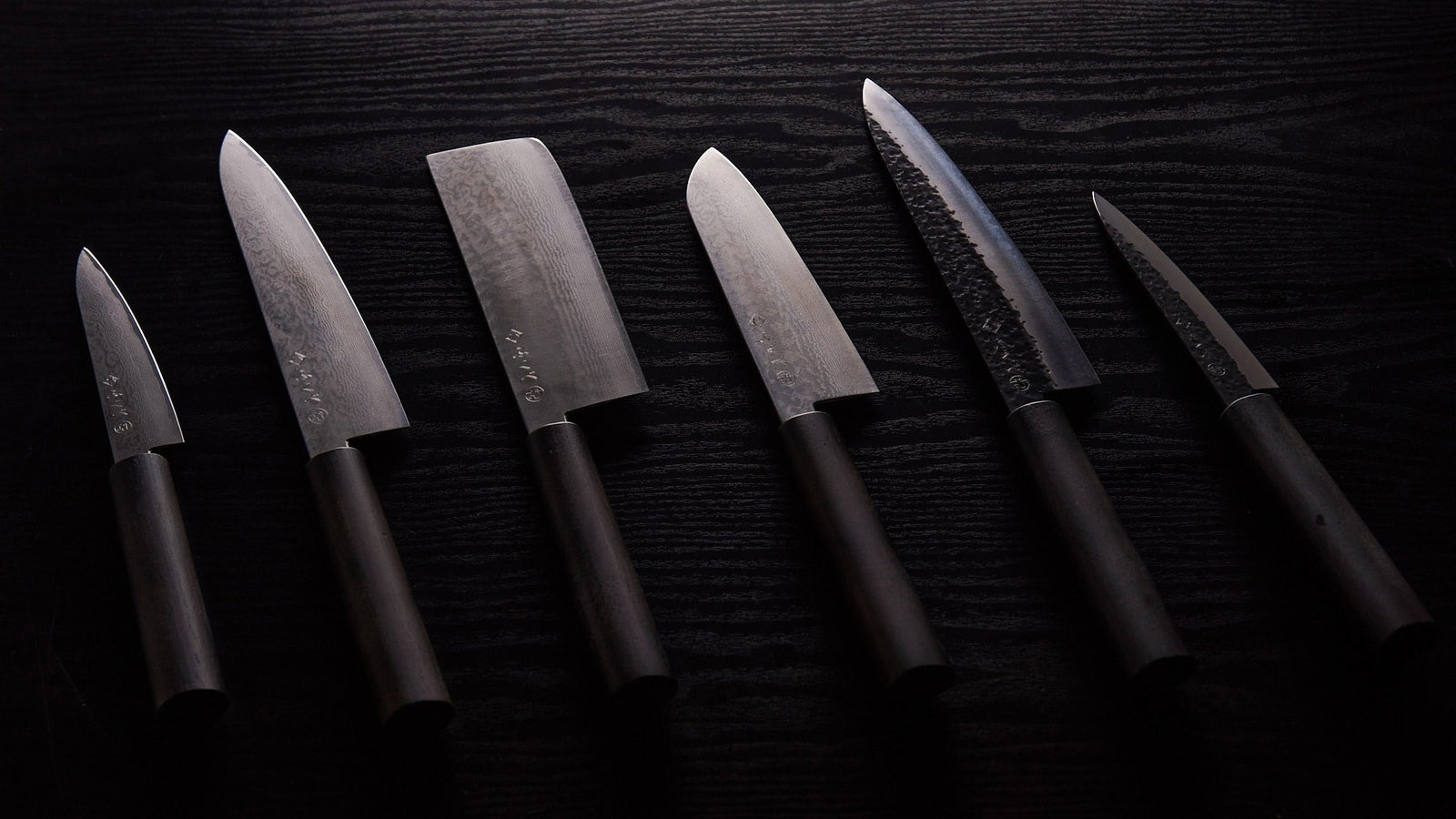
Les couteaux japonais apportent confort, précision et plaisir à la cuisine quotidienne. Une lame bien fabriquée traverse les ingrédients avec aisance, améliore la précision et produit des coupes nettes et propres. Pourtant, avec tant de noms et de formes, choisir son premier couteau peut être déroutant. Ce guide présente les types essentiels de couteaux japonais, comment sélectionner celui qui convient à votre style de cuisine, et des conseils d'entretien de base pour vous aider à choisir un couteau qui vous convient dans votre cuisine.
Comprendre les principaux types de couteaux japonais
Les couteaux japonais, appelés wabocho, sont conçus avec des rôles spécifiques à l'esprit. Voici les types de base les plus couramment utilisés dans les cuisines domestiques, expliqués par leur nom pour plus de clarté.
Avant d'explorer les différents types de couteaux, il est utile de savoir que les couteaux japonais sont généralement fabriqués avec deux structures de tranchant principales : double biseau et simple biseau. Les couteaux à double biseau sont affûtés des deux côtés, ce qui les rend familiers et faciles à manier pour la plupart des cuisiniers amateurs. Les couteaux à simple biseau sont affûtés d'un seul côté, permettant des coupes extrêmement précises, bien qu'ils nécessitent une technique plus spécifique et soient généralement fabriqués pour les droitiers ou les gauchers.
Le couteau Santoku

Le couteau santoku est un couteau polyvalent équilibré, à double biseau, largement utilisé dans les foyers japonais. Sa taille compacte et son tranchant relativement plat le rendent confortable pour couper légumes, viande et poisson avec des mouvements réguliers et contrôlés. C'est l'un des types de couteaux japonais les plus accessibles pour la cuisine quotidienne.
Le couteau Gyuto

Un autre couteau à double biseau courant est le couteau gyuto . Avec une lame plus longue et une courbe douce vers la pointe, il favorise le tranchage fluide et s'adapte à divers mouvements de coupe, y compris les mouvements vers l'avant et en tirant. Sa longueur le rend bien adapté aux ingrédients plus volumineux et aux cuisiniers qui préfèrent des coupes fluides et continues.
Le couteau Nakiri

Le couteau nakiri est un couteau à légumes à double biseau avec une lame haute et à tranchant droit. Avec son poids léger, il traverse les légumes. La hauteur de la lame aide à soulever les ingrédients hachés de la planche, ce qui en fait un choix pratique pour un travail concentré sur les légumes dans les cuisines domestiques.
Le couteau Petty

Compact et utile pour l'épluchage et les tâches détaillées, le couteau petty est un couteau utilitaire pratique. Sa lame étroite et sa pointe pointue facilitent l'épluchage ou la coupe de petits ingrédients. De nombreux cuisiniers gardent un couteau petty à portée de main pour les tâches quotidiennes rapides.
Le couteau Deba

A Le couteau deba
possède un dos épais, un poids substantiel et une pointe effilée. Il est traditionnellement utilisé pour découper des poissons entiers, couper têtes et arêtes, et séparer les filets. Sa géométrie est étroitement liée à son usage, ce qui en fait un couteau spécialisé plutôt qu'un couteau de cuisine courant.
Bien que généralement à simple biseau, il existe également des couteaux deba à double biseau qui peuvent être utilisés commodément que vous soyez droitier ou gaucher, ce qui en fait une option plus accessible pour les cuisiniers amateurs.

L'image ci-dessus est à titre illustratif uniquement. Long et étroit, le yanagiba est traditionnellement utilisé pour trancher le poisson cru. Sa lame élancée favorise des mouvements de traction lisses qui aident à laisser les surfaces de sashimi propres et brillantes. Bien qu'il soit souvent appelé couteau à sashimi, ce terme décrit l'usage plutôt qu'un style de lame unique. Le nom « yanagiba » vient de la forme de feuille de saule de la lame, avec yanagi signifiant « saule » et ba
signifiant « feuille » en japonais.
Caractéristiques clés des couteaux japonais
Comprendre les caractéristiques clés des couteaux japonais aide à clarifier ce qu'il faut rechercher lors du choix d'un couteau.

Couteau Santoku Damas
Les couteaux japonais traditionnels étaient souvent fabriqués en joignant un tranchant en acier au carbone dur à une base en fer plus tendre. Cette construction favorise un tranchant vif tout en gardant le couteau maniable pour un usage quotidien. Les couteaux occidentaux, en comparaison, sont généralement fabriqués à partir d'un seul type d'acier au carbone. L'acier au carbone est apprécié pour sa dureté, son tranchant et sa facilité d'affûtage. Les différents aciers au carbone varient dans leur composition, et des facteurs tels que la teneur en carbone influencent le tranchant, la rétention du fil et les besoins d'entretien. Ces différences deviennent plus perceptibles avec l'expérience. Lisez les différences dans notre blog sur les couteaux japonais et notre article.
No Knife, No Cuisine: All About Japanese Kitchen Knives
Les couteaux japonais en acier inoxydable sont devenus populaires pour offrir une performance tranchante avec un entretien réduit. Ils maintiennent le profil mince associé aux couteaux japonais tout en résistant à la rouille plus efficacement que l'acier au carbone.

Couteau Santoku Damas
Une lame mince est l'une des caractéristiques déterminantes des couteaux japonais. Cette géométrie élancée traverse facilement les aliments. La plupart des cuisiniers amateurs commencent avec des couteaux à double biseau car ils coupent droit et semblent intuitifs.
Les couteaux à simple biseau favorisent les tâches spécialisées et permettent des coupes exceptionnellement fines. Leur asymétrie nécessite de la compétence pour contrôler, utilisant souvent des mouvements de tranchage en diagonale ou des coupes fermes avec le talon ou la pointe de la lame.

Couteau Santoku Damas
Les couteaux japonais présentent souvent des manches en bois comme le magnolia ou le palissandre, créant une sensation légère et équilibrée. La virole (le collier entre la lame et le manche) affecte l'équilibre et la sensation générale dans la main.
Les formes de manche varient. Les manches ovales s'adaptent naturellement à la main, tandis que les manches octogonaux offrent une orientation plus claire pendant la coupe. Un manche qui convient à la forme de votre main améliore la précision et réduit la fatigue lors de sessions de cuisine plus longues.

Couteau Santoku Damas
Les descriptions de couteaux incluent souvent des détails tels que la longueur totale, la longueur de la lame et la hauteur de la lame. Connaître ces termes vous aide à choisir un couteau qui convient à votre main et à votre style de coupe.
-Longueur du couteau : inclut la lame et le manche
-Longueur de la lame : se réfère uniquement à la lame
-Hauteur de la lame : la longueur du tranchant au dos
-Épaisseur de la lame : épaisseur de la lame
Comment choisir le couteau japonais adapté à votre style de cuisine
Ce que vous cuisinez et les ingrédients que vous préparez le plus souvent jouent un rôle important dans le choix du couteau qui vous convient.
Un couteau polyvalent pour les repas quotidiens

Un couteau santoku ou petty constitue un point de départ pratique. Les deux traitent une large gamme d'ingrédients. Le couteau santoku se contrôle facilement sur les planches de petite taille. Un couteau petty peut servir d'alternative compacte pour ceux qui préfèrent une lame plus légère ou plus courte.
Pour une cuisine centrée sur les légumes

Le nakiri excelle dans le travail des légumes. Son tranchant droit et sa lame haute permettent de créer des tranches uniformes et des mouvements de coupe réguliers. Il est utile pour préparer les légumes verts, les légumes racines et les aliments qui bénéficient d'une épaisseur constante, comme le chou, la citrouille ou les patates douces.
Pour une découpe fluide

Le gyuto favorise les mouvements de tranchage longs et fluides. Lorsque la présentation soignée compte, sa lame fine et sa longueur étendue aident à réaliser des coupes régulières.
Pour la préparation intensive du poisson

Le deba est l'outil traditionnel pour découper le poisson entier. Son poids et sa conception lui permettent de couper à travers les arêtes et de suivre les lignes osseuses sans effort. Pour compléter la préparation du poisson, un long couteau yanagiba permet de réaliser des tranches fines et régulières.
Le couteau Deba à double biseau est une pièce de style deba conçue pour faciliter l'utilisation, notamment lors de la préparation du poisson. Il fonctionne également bien pour couper la viande et les légumes. Fabriqué avec une lame en acier inoxydable, il résiste à la rouille et s'affûte plus facilement que l'acier au carbone traditionnel.
Techniques de base pour utiliser les couteaux japonais
Les couteaux japonais répondent bien aux mouvements réguliers et contrôlés. Ces règles simples vous aideront à les utiliser confortablement.
1. Comment tenir le couteau
Saisissez le manche dans votre paume avec l'index et le pouce placés à la base du manche près de la lame pour guider le couteau. Pour un travail de précision, poser l'index sur le dos de la lame augmente le contrôle.

2. Mouvement de tranchage
Les couteaux japonais fonctionnent mieux avec des mouvements vers l'avant ou vers l'arrière plutôt qu'avec un hachage forcé, sauf dans le cas d'un couteau nakiri. Laissez la lame glisser tout en la maintenant près de la planche. Pour les lames longues ou un deba, un mouvement de traction doux produit les meilleurs résultats.

3. Position de la lame
Utilisez la partie centrale de la lame pour la plupart des tâches et travaillez avec un arc bas et régulier. Avec un deba, utilisez le talon pour les sections plus épaisses comme les grosses arêtes de poisson, et guidez la pointe avec précaution le long des lignes osseuses pour séparer la chair des arêtes.

Conseils d'entretien pour vos couteaux japonais
Un bon entretien préserve la performance et prévient l'usure. Ces habitudes soutiennent aussi bien les couteaux en acier inoxydable qu'en acier au carbone.
1. Laver et sécher après chaque utilisation
Utilisez une éponge douce et un savon doux. Nettoyez du dos vers le tranchant pour plus de sécurité et séchez soigneusement. N'utilisez un lave-vaisselle que si la page produit indique clairement qu'il est sûr. L'humidité provoque la rouille, un séchage approprié est donc essentiel.

2. Ranger correctement
Utilisez un étui en bois, une bande magnétique ou un bloc à couteaux pour ranger. Évitez de ranger le couteau en vrac dans les tiroirs, car cela peut causer des blessures ou endommager la lame et d'autres ustensiles de cuisine.

3. Choisir la bonne planche à découper
Utilisez des planches en bois ou en matériau synthétique souple. Les surfaces dures comme le verre ou la pierre peuvent endommager la lame.

4. Affûter au besoin
Lorsque le couteau commence à résister ou à déchirer les aliments, il est temps de l'affûter. Les pierres à aiguiser maintiennent la forme appropriée de la lame en retirant l'acier de manière uniforme et en préservant l'angle de tranchant prévu. Les affûteurs à passage grattent la lame à un angle fixe et peuvent retirer trop de métal ou créer des micro-ébréchures, en particulier dans les aciers japonais plus durs.

Un couteau est l'un des outils les plus essentiels en cuisine, et en posséder un bien fait vous donne confiance à chaque coupe, aide les saveurs à s'exprimer plus clairement et améliore la présentation des plats. Plus que tout, un couteau de qualité rend la cuisine plus agréable, vous permettant de vous concentrer sur les détails et les subtilités. Avec une utilisation appropriée, un couteau japonais continuera à évoluer avec vous, rendant la cuisine quotidienne plus gratifiante.
Stay close to the craft
Now and then, a quiet letter — new stories, seasonal notes, and the hands behind the work.
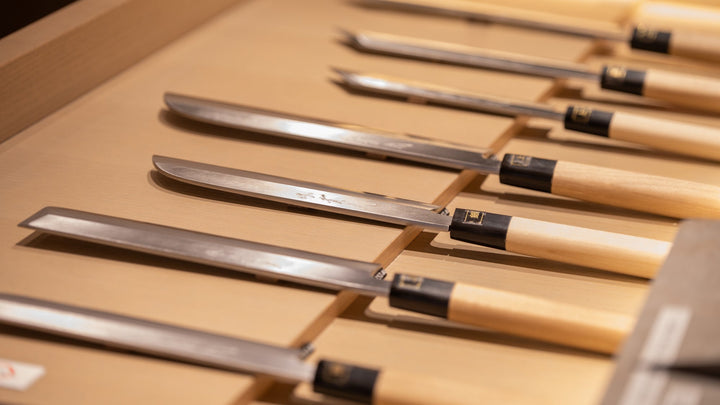
Sans couteau, pas de cuisine : tout sur les couteaux de cuisine japonais
Découvrez notre guide des couteaux de cuisine japonais. Apprenez à connaître les différents types,…
Ito Ryo
Guide de la poterie japonaise
Découvrez l'histoire de la céramique japonaise, de la porcelaine, du grès, de la faïence,…

Guide du Maki-e Partie 2 : Processus de Production
Découvrez comment l'art du maki-e prend vie avec l'or, la laque et la nacre.…
Urushi Art Hariya
Leave a comment