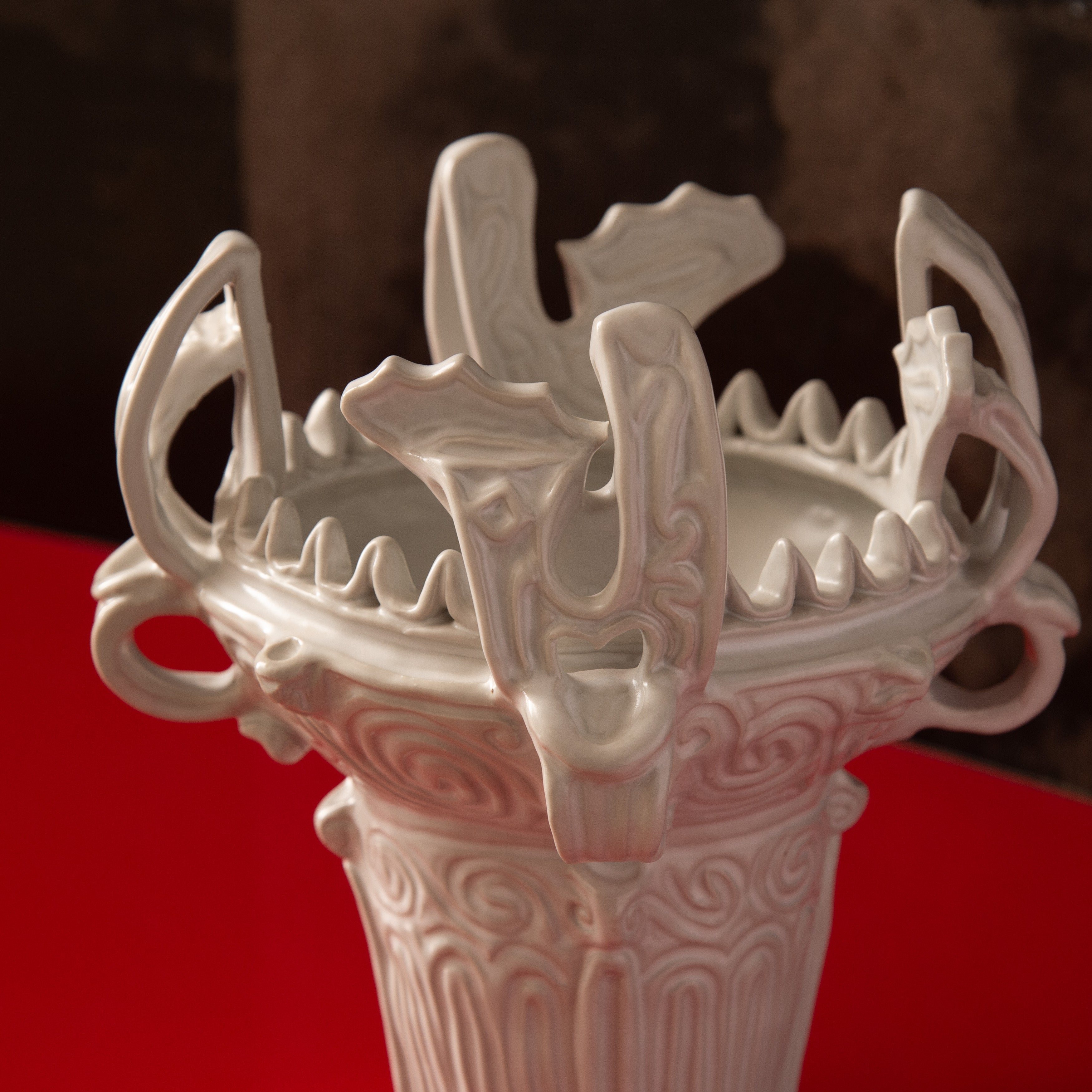
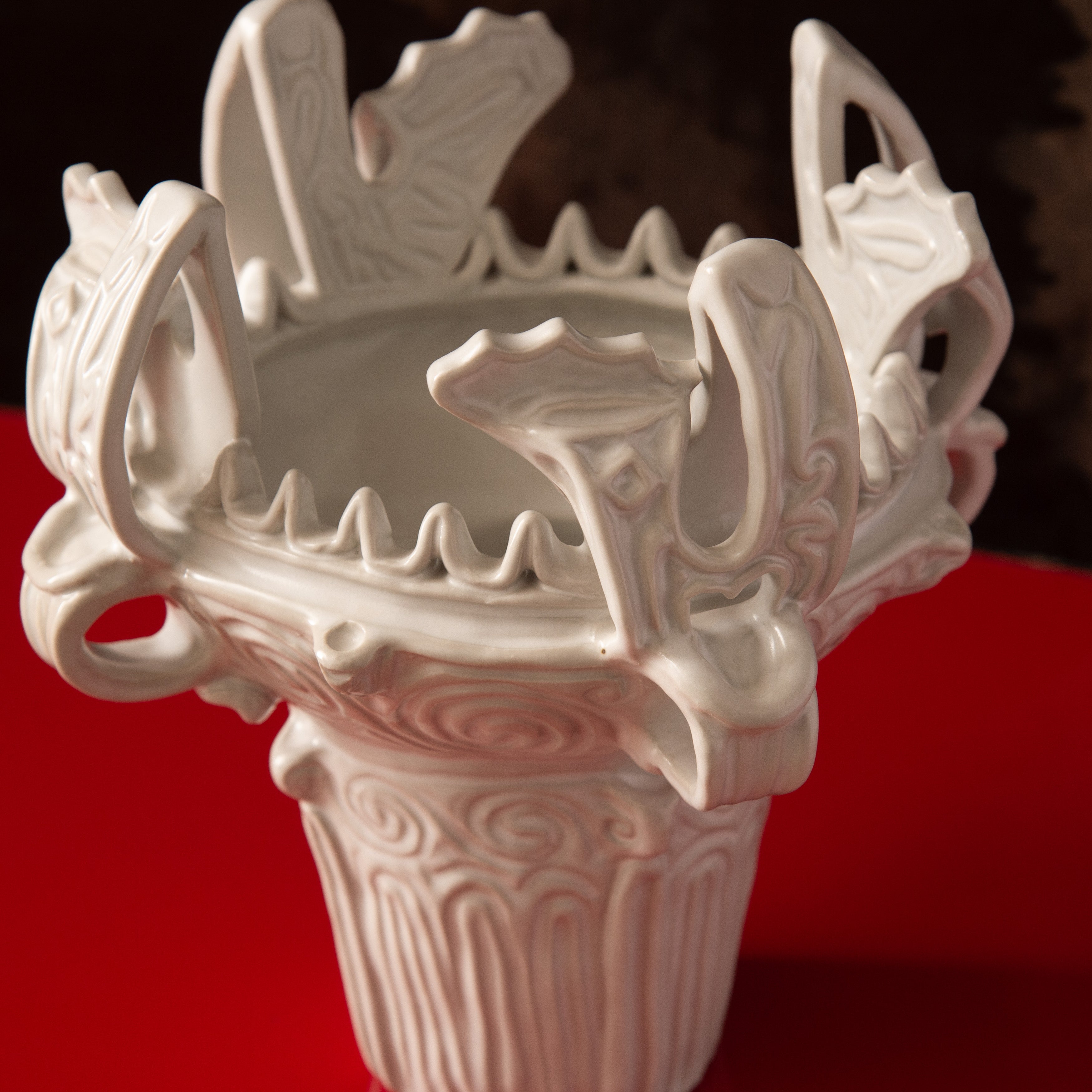
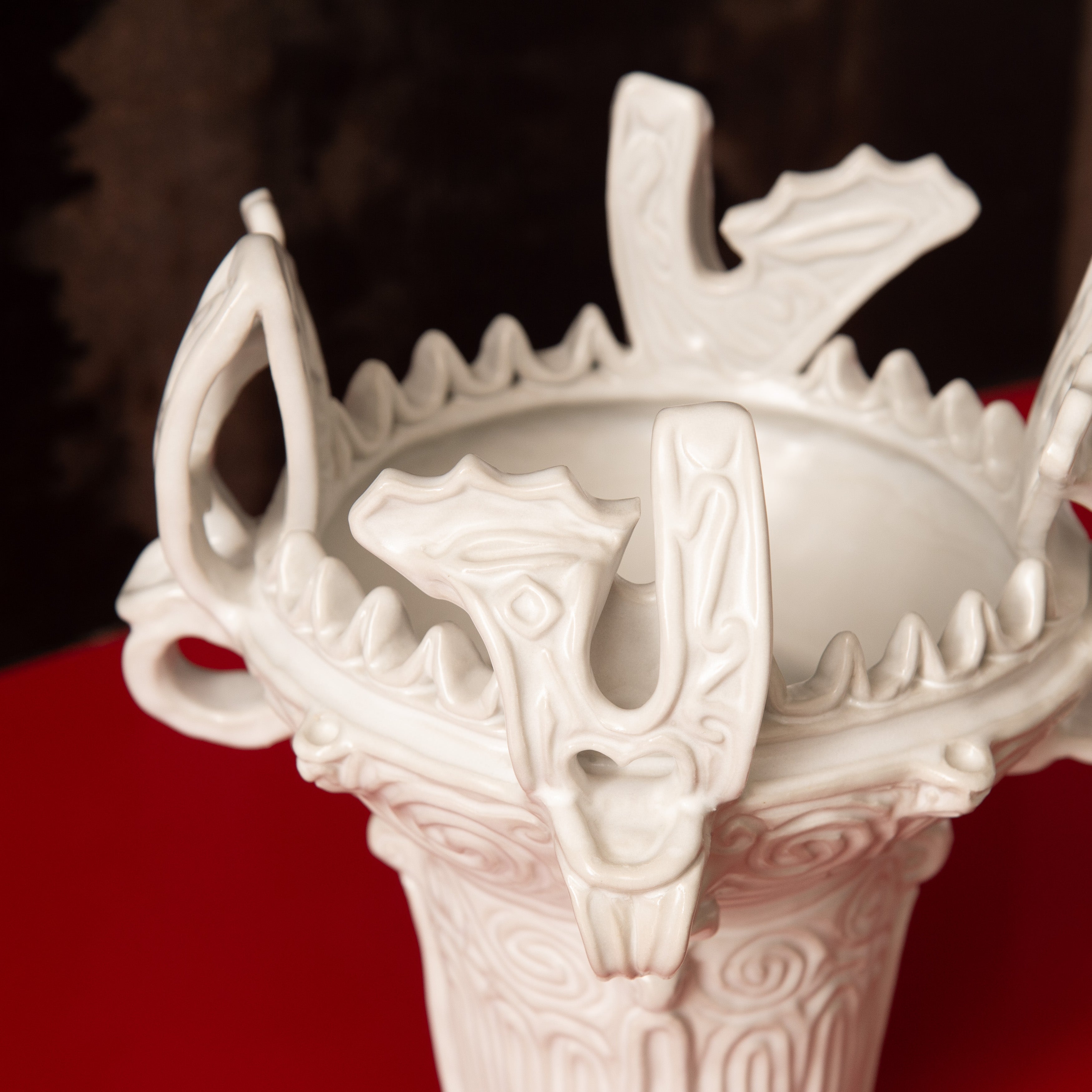
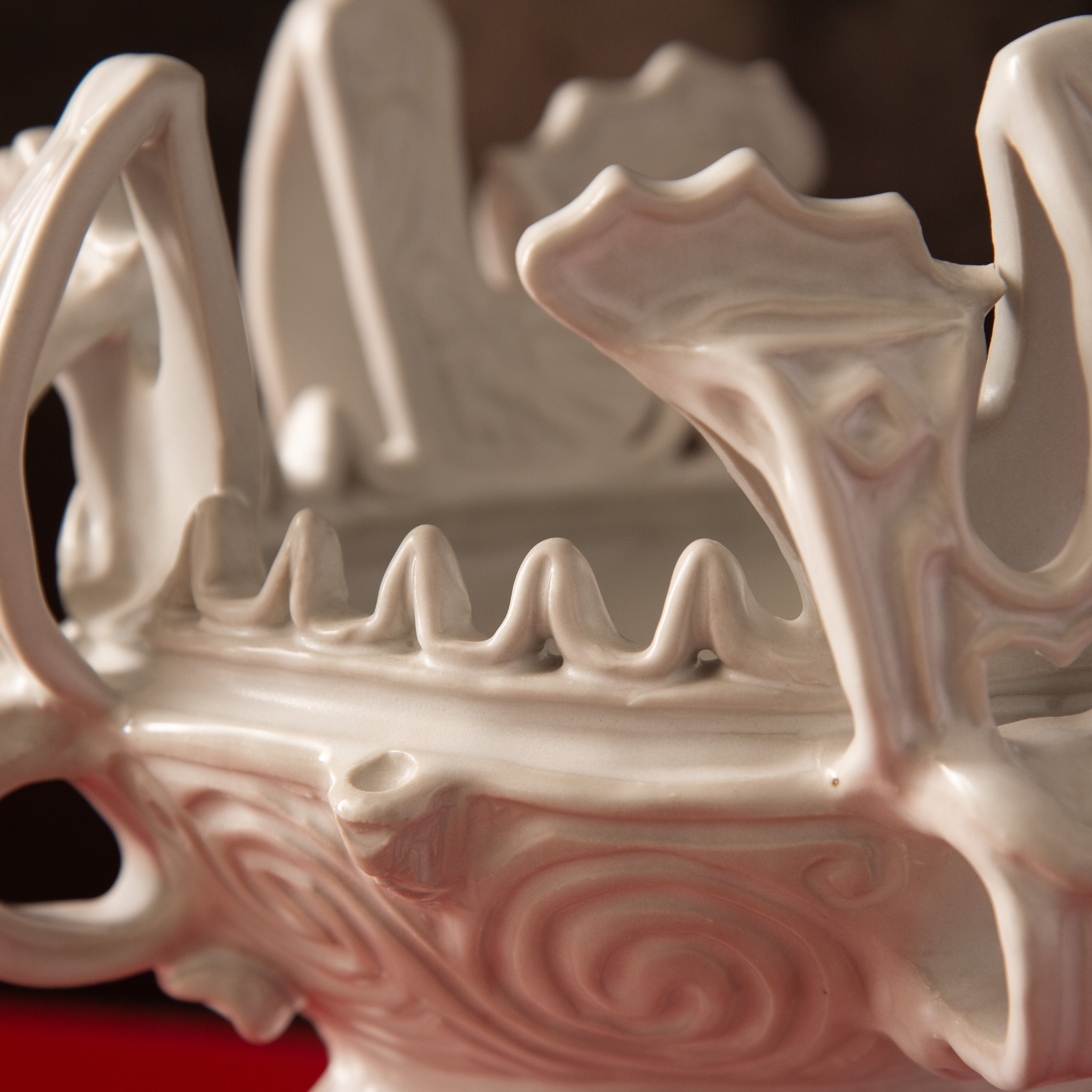
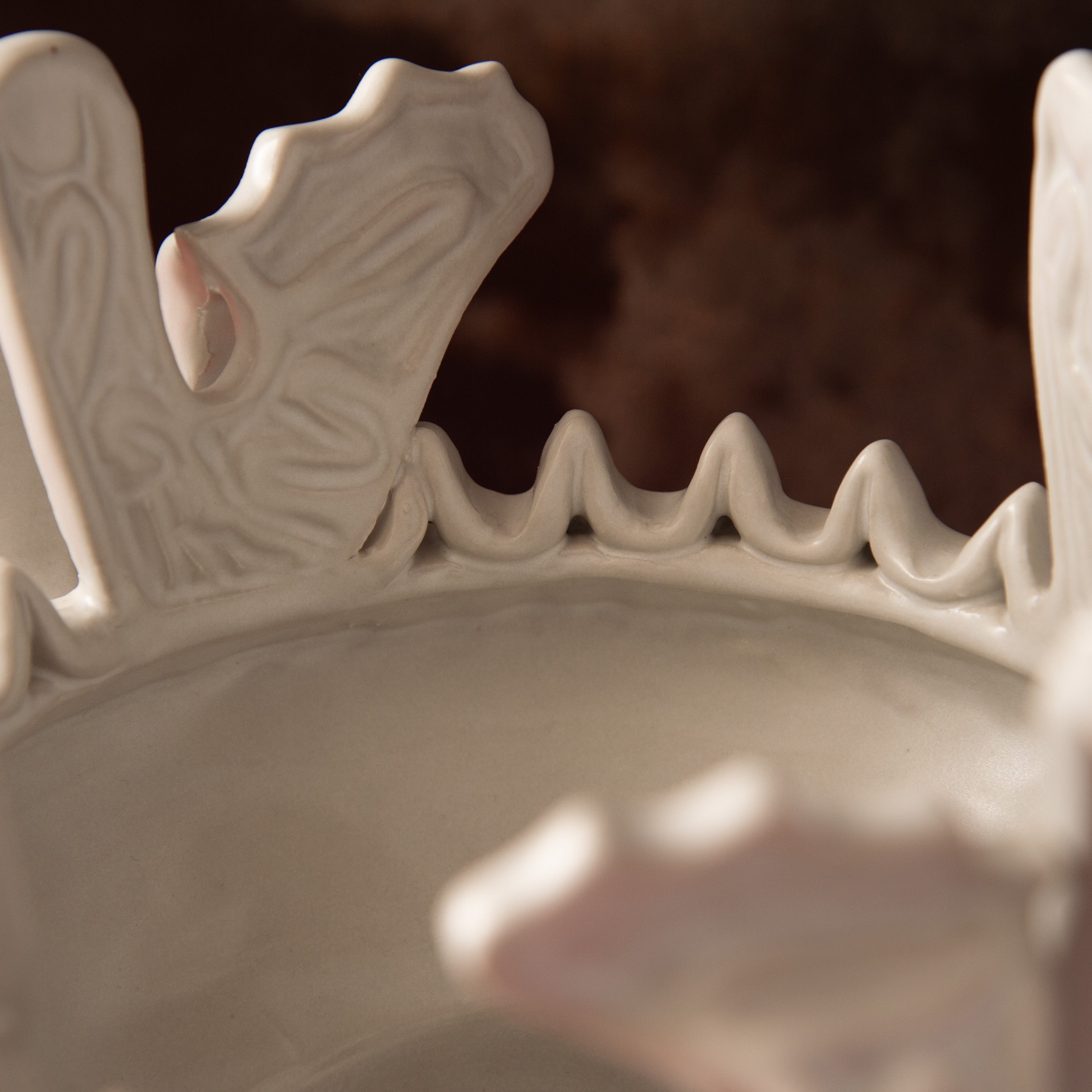
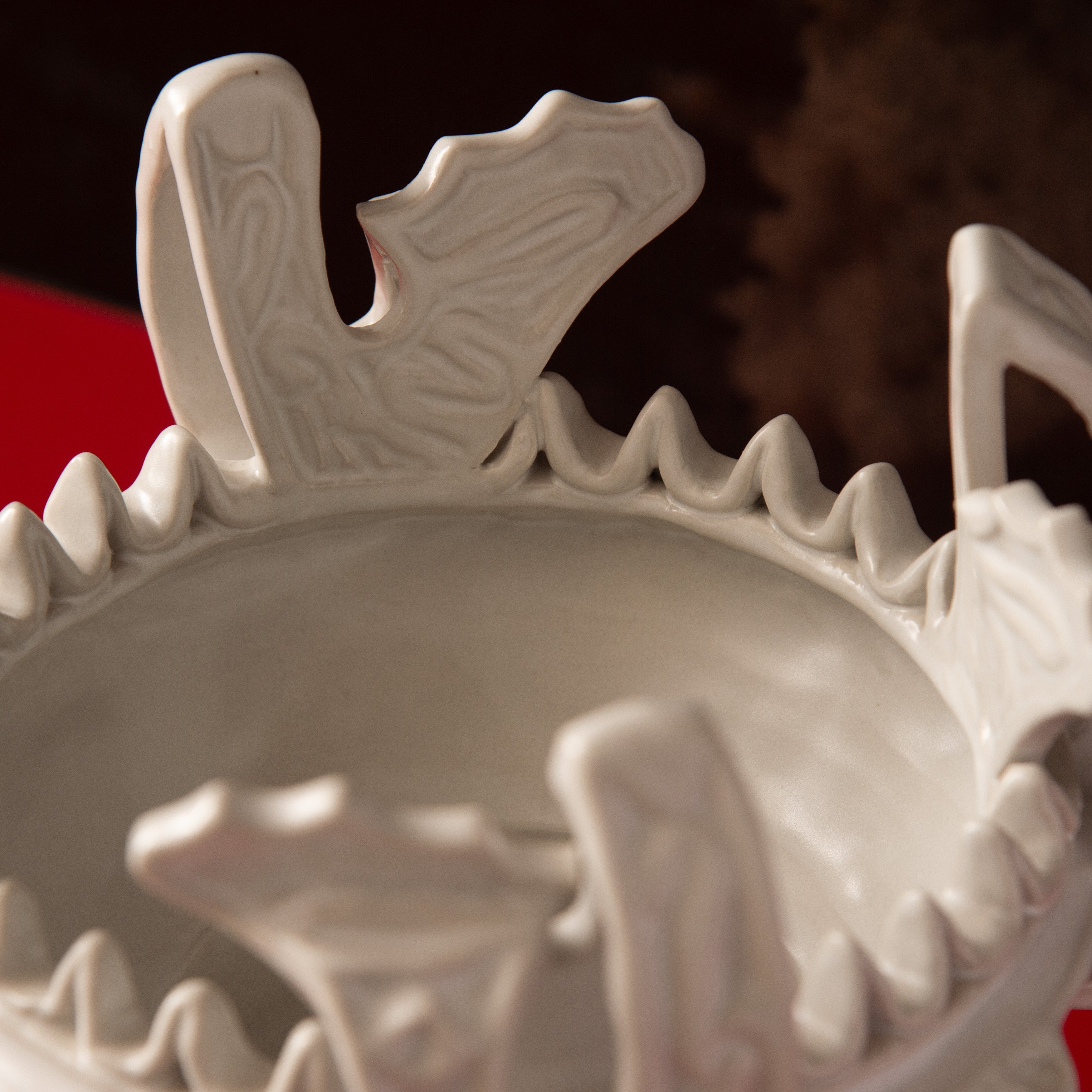
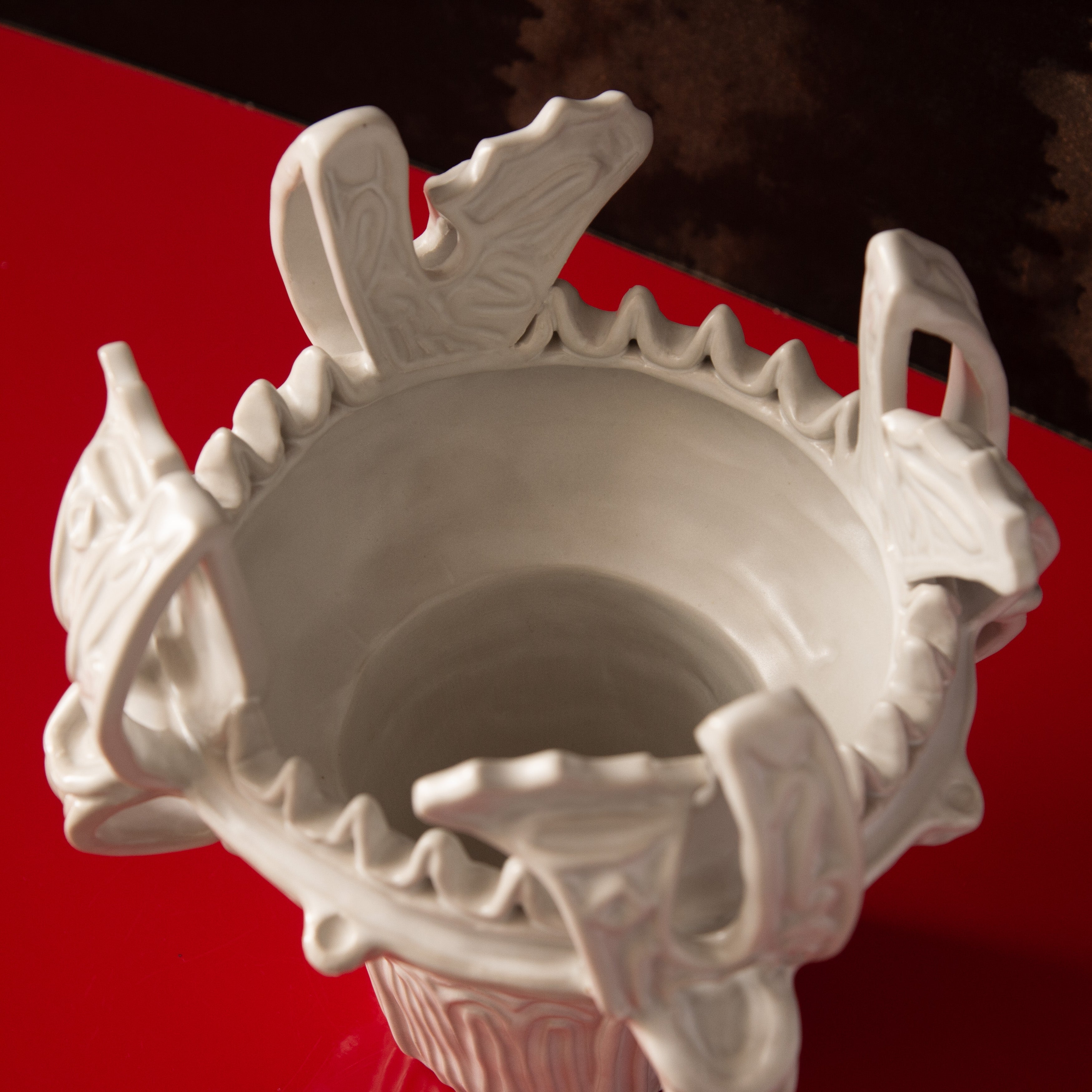
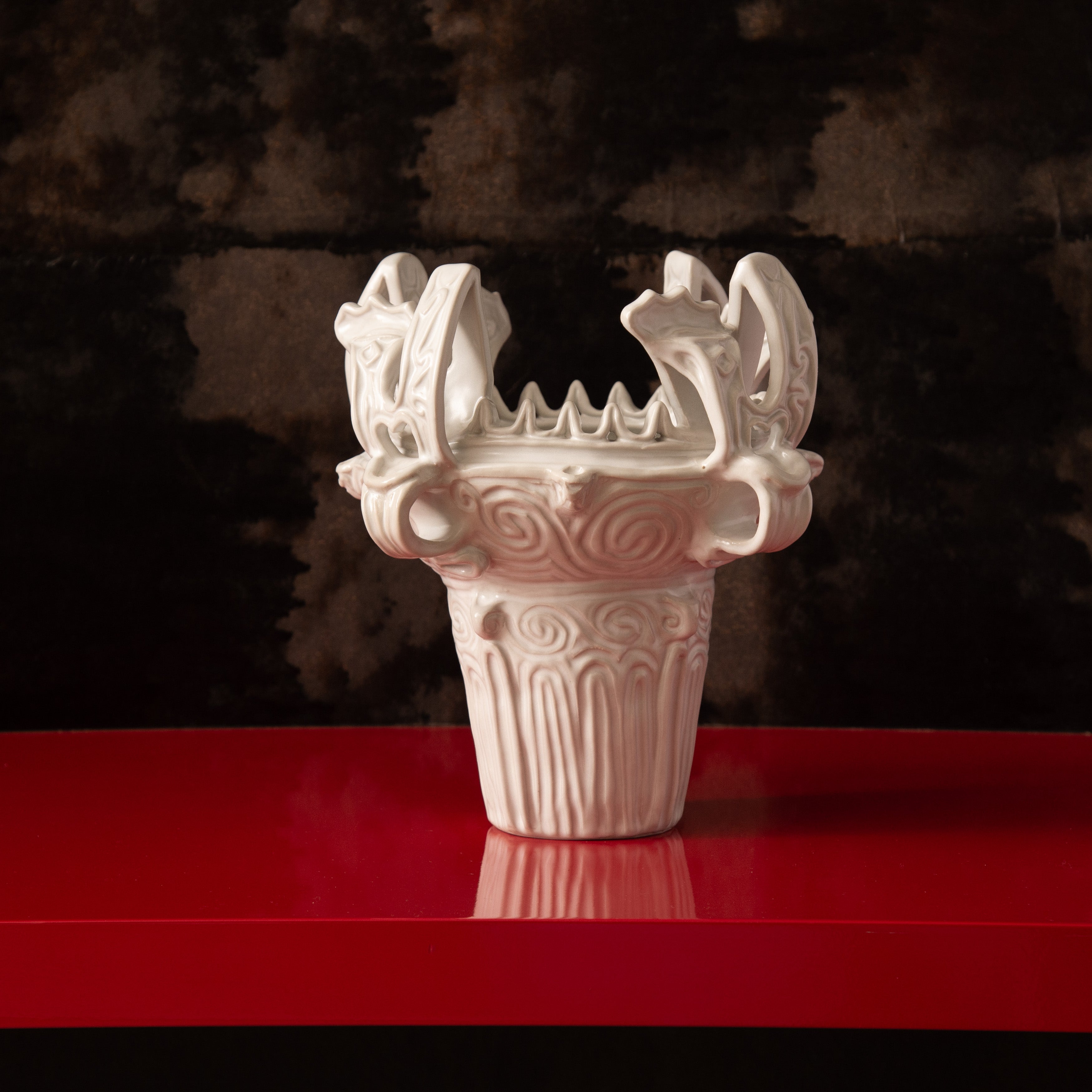
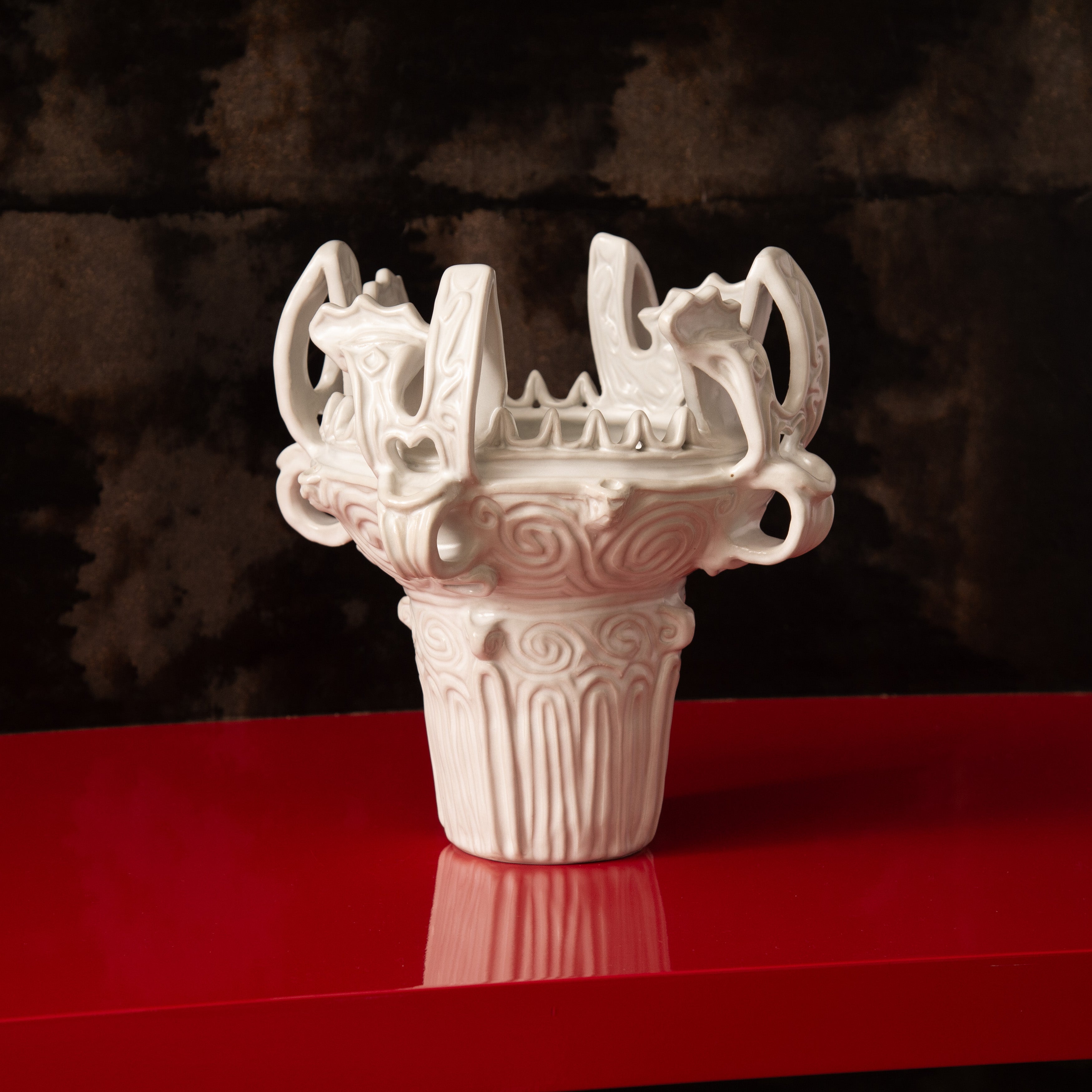
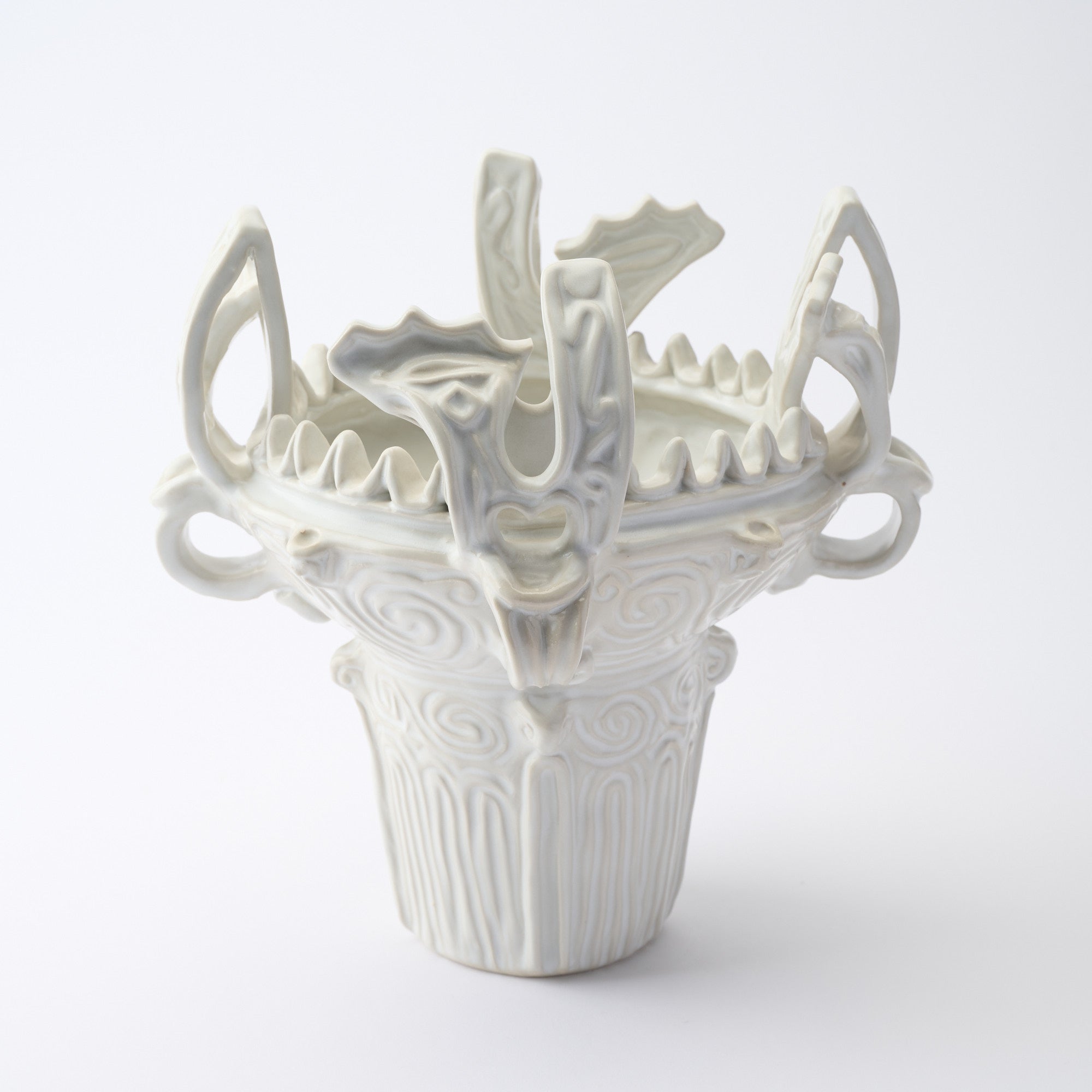
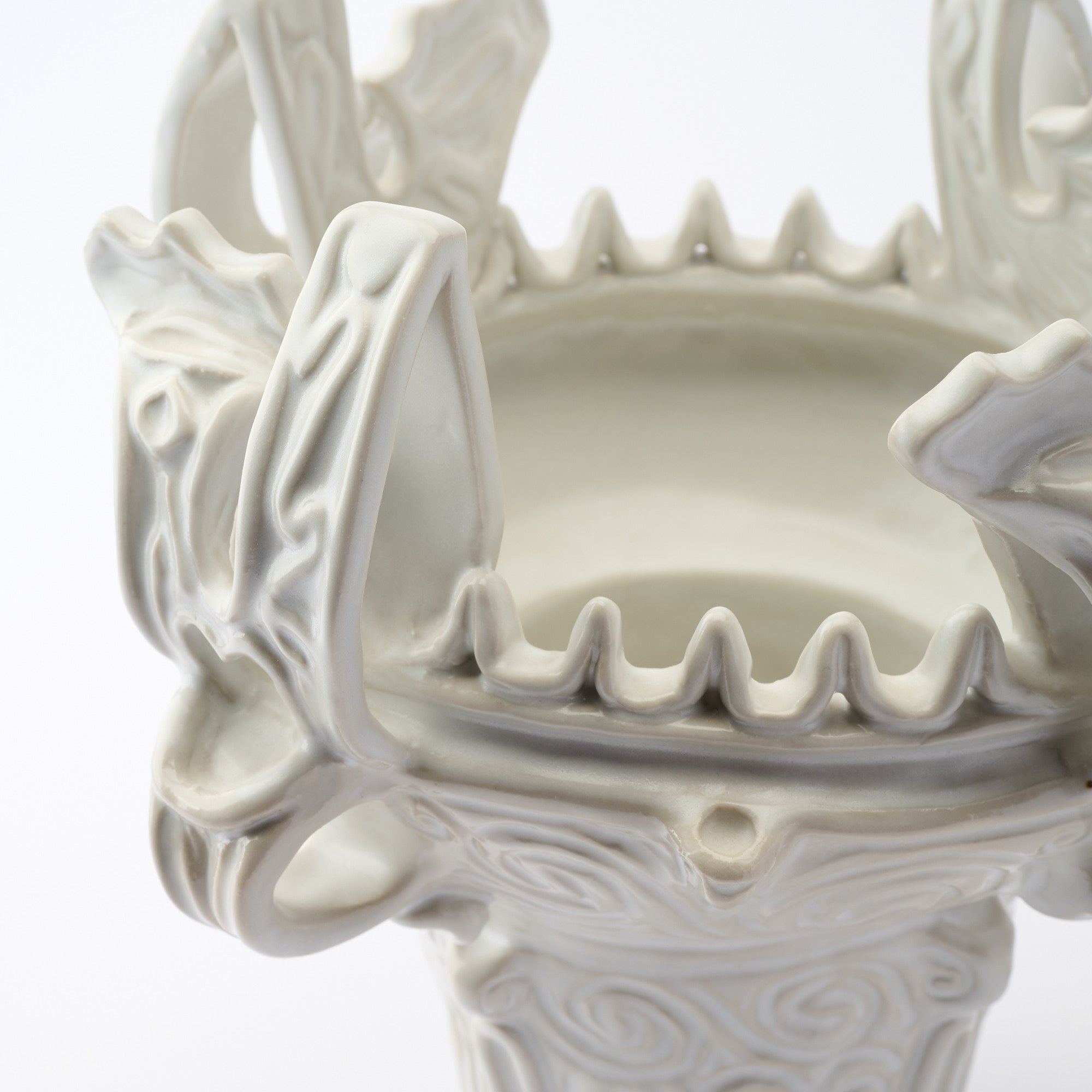
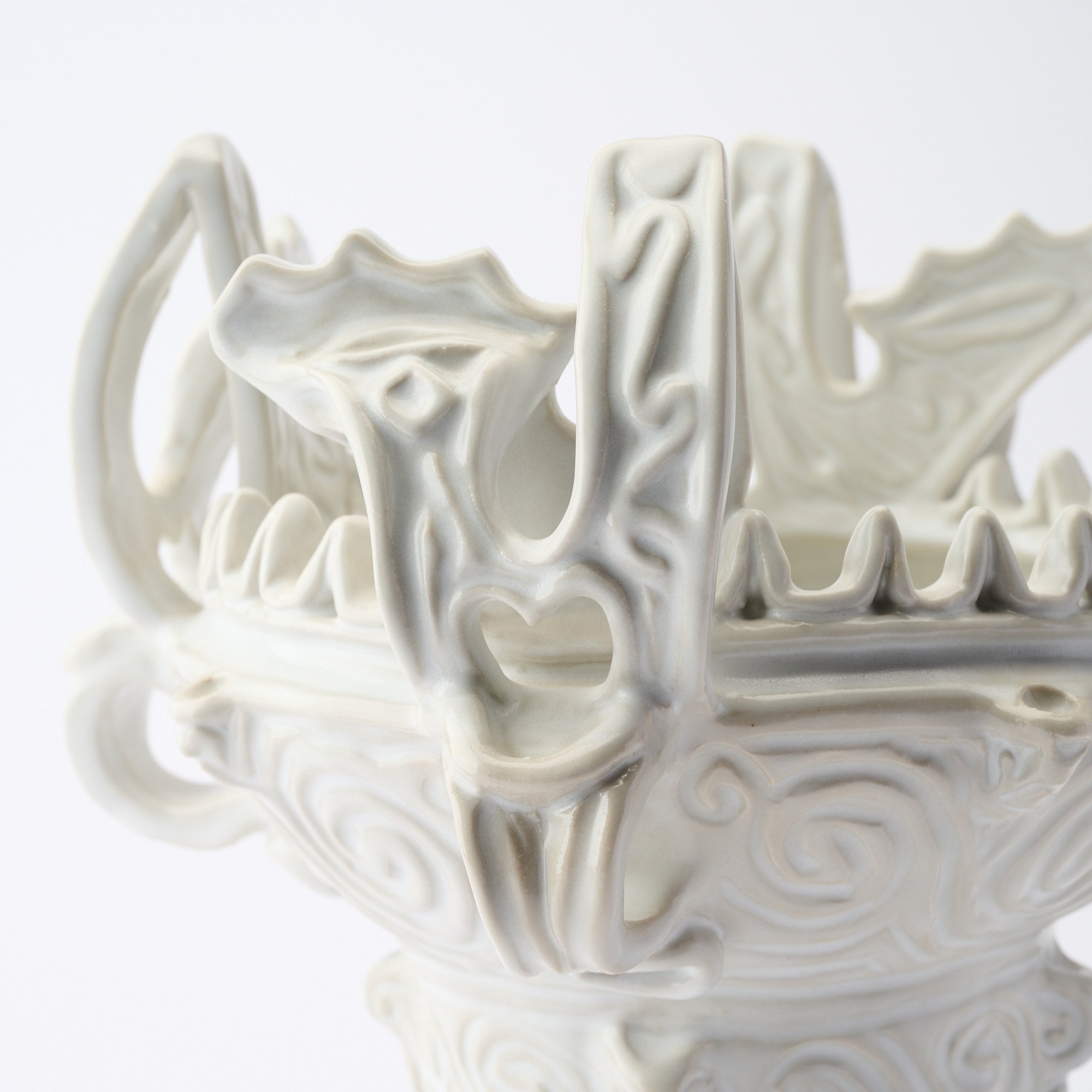
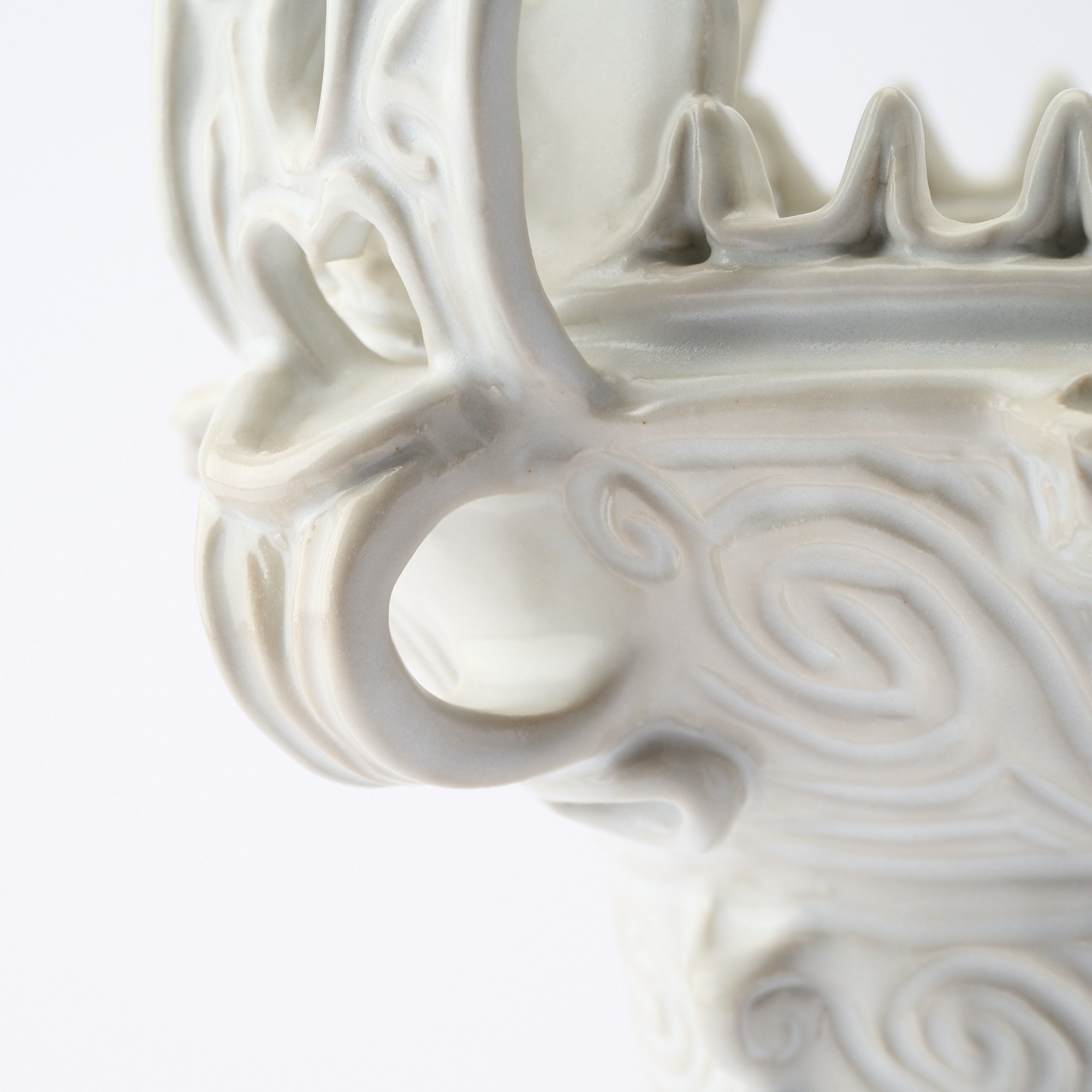
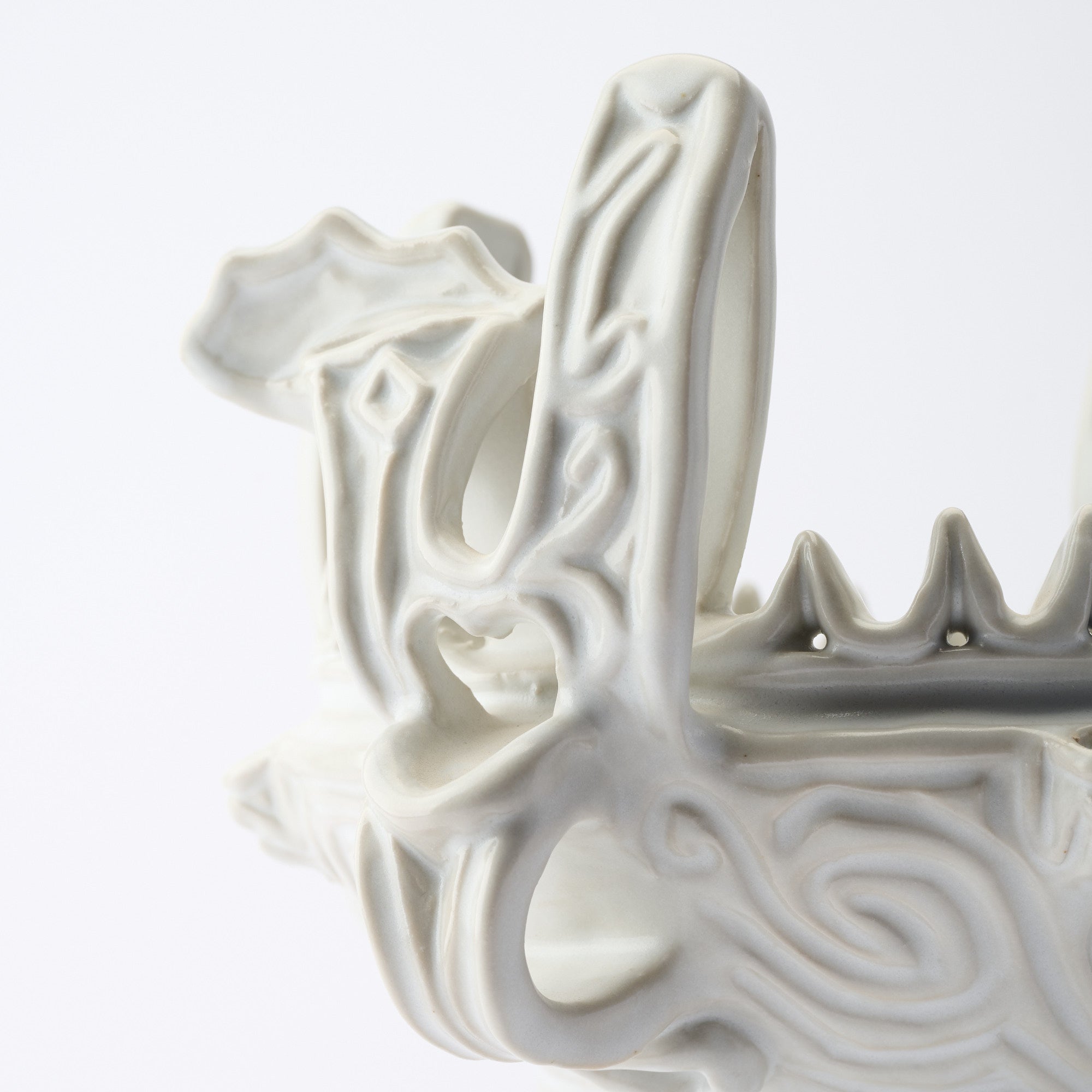
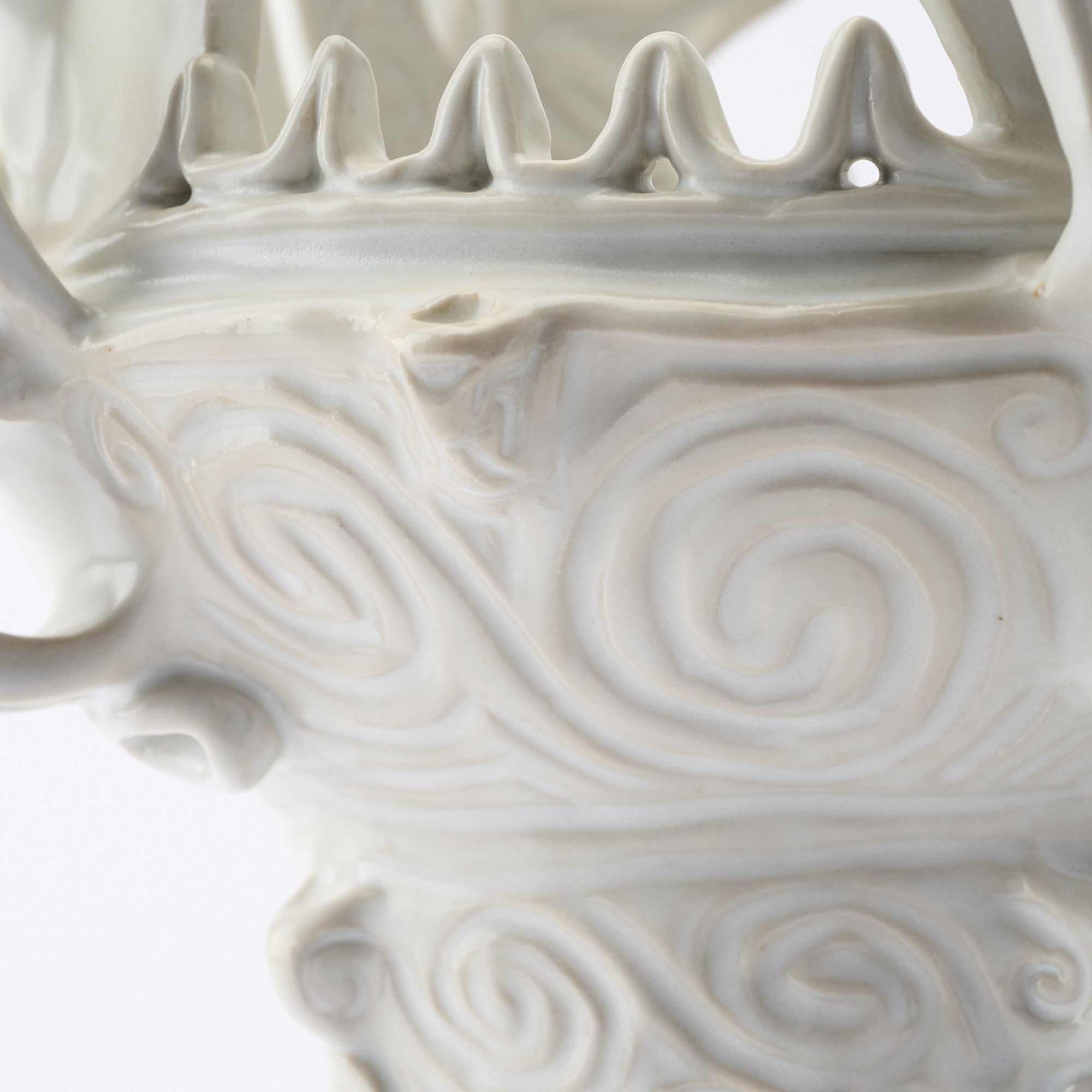
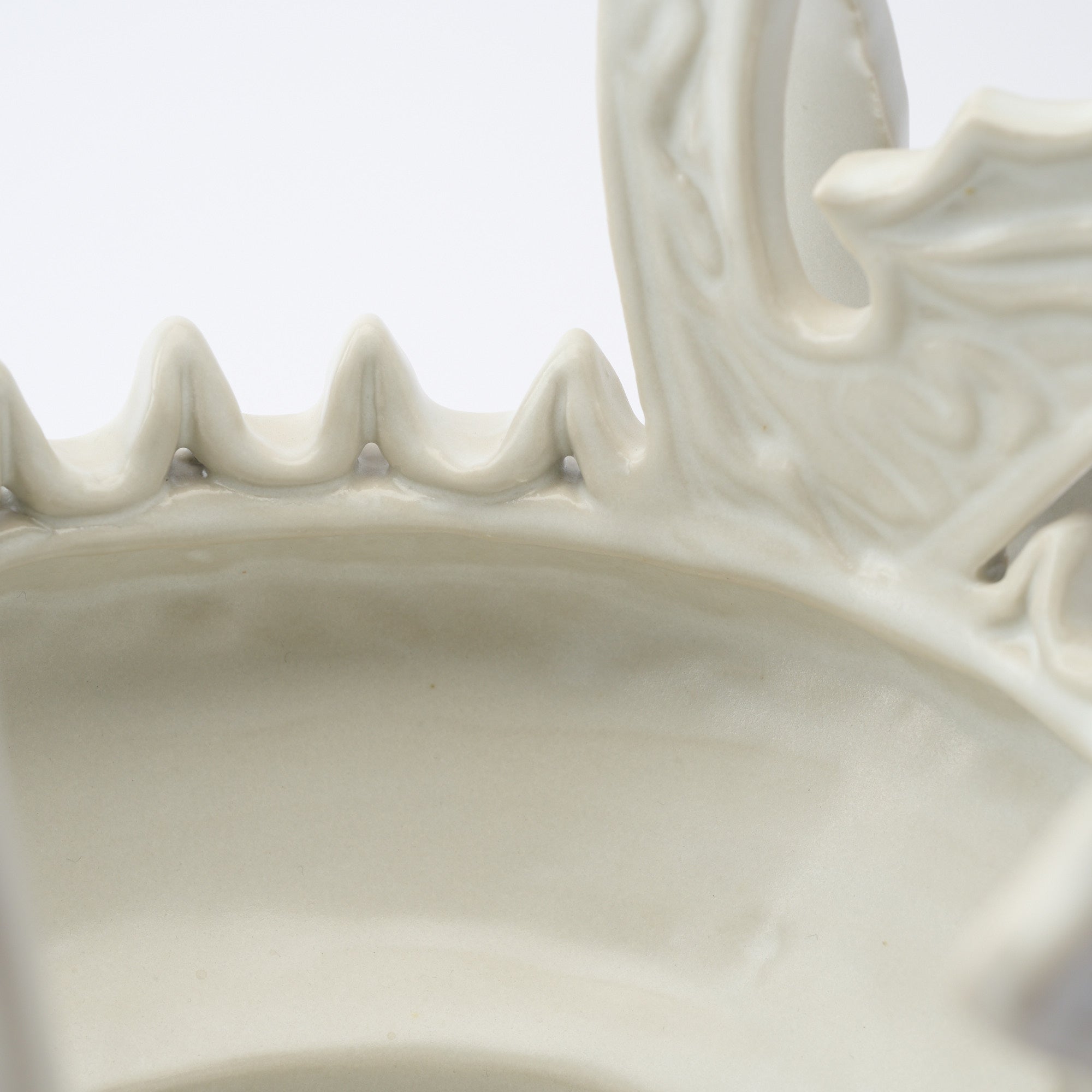
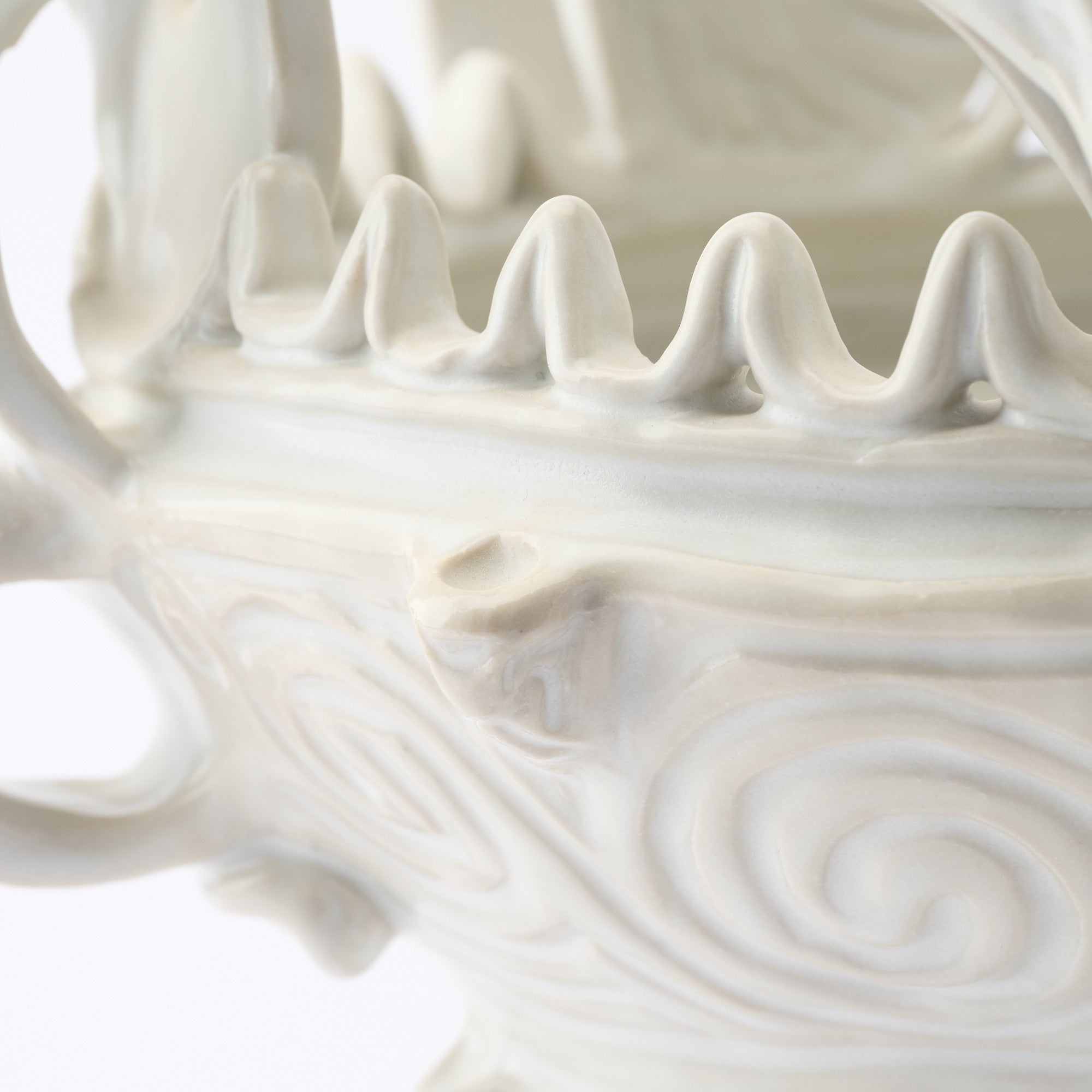
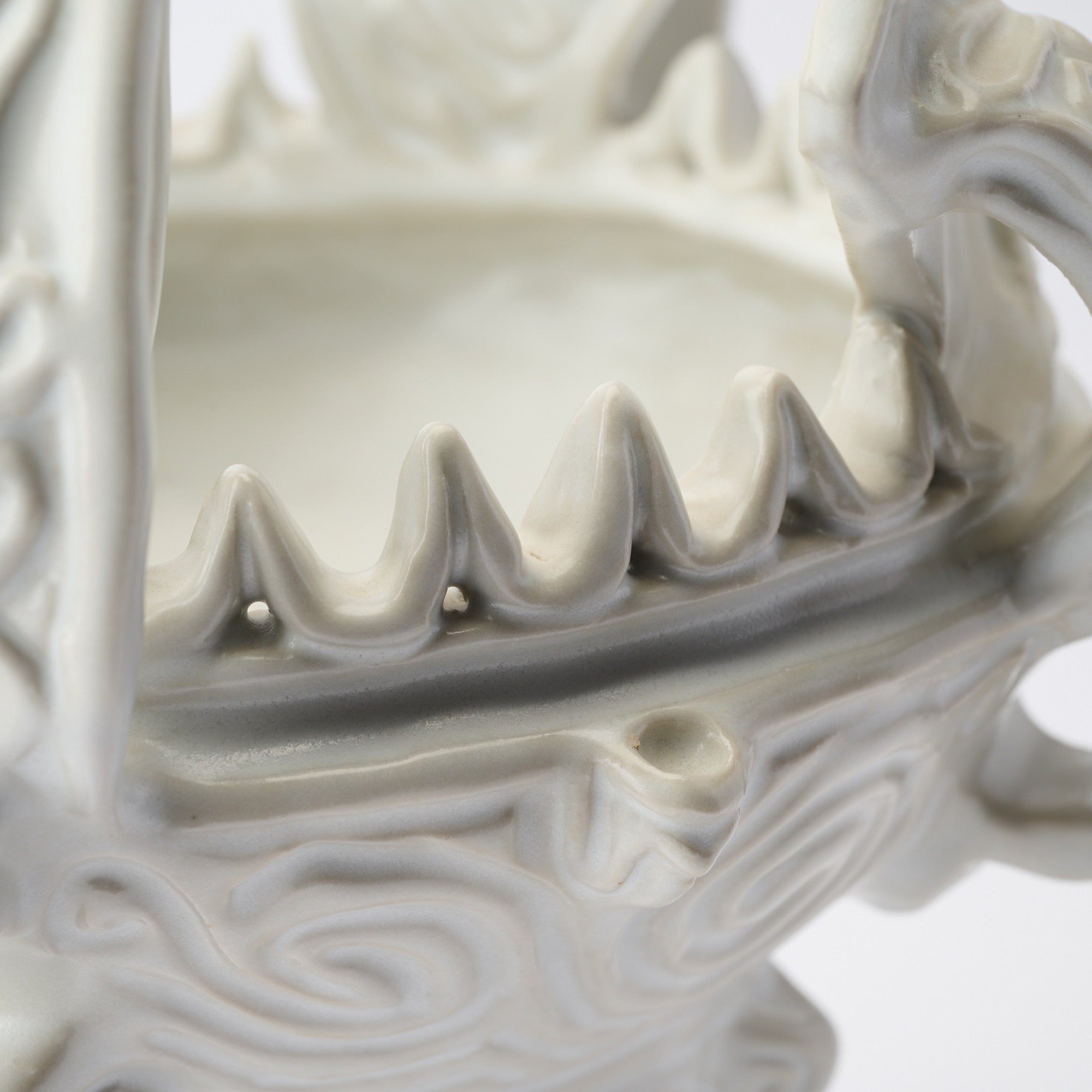
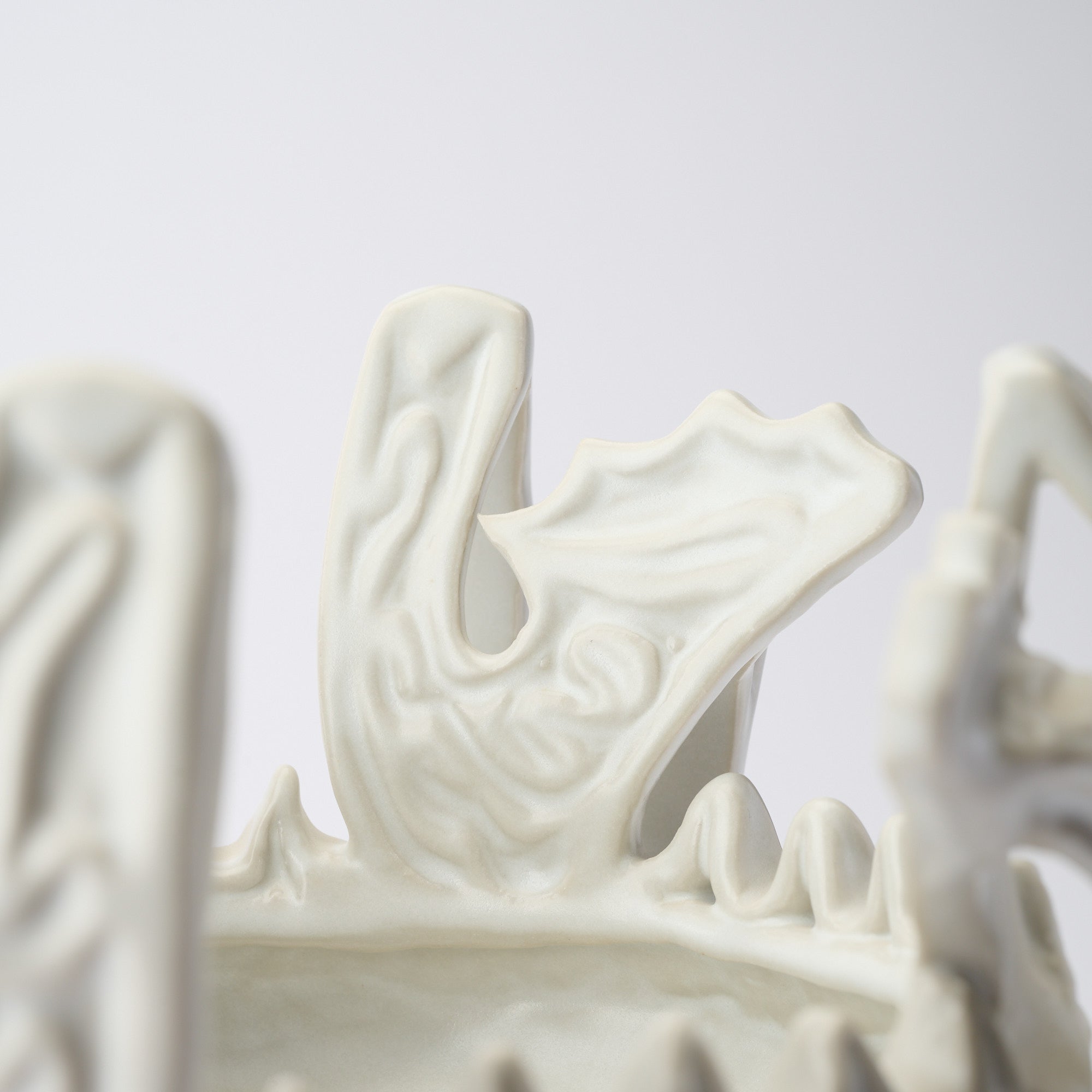
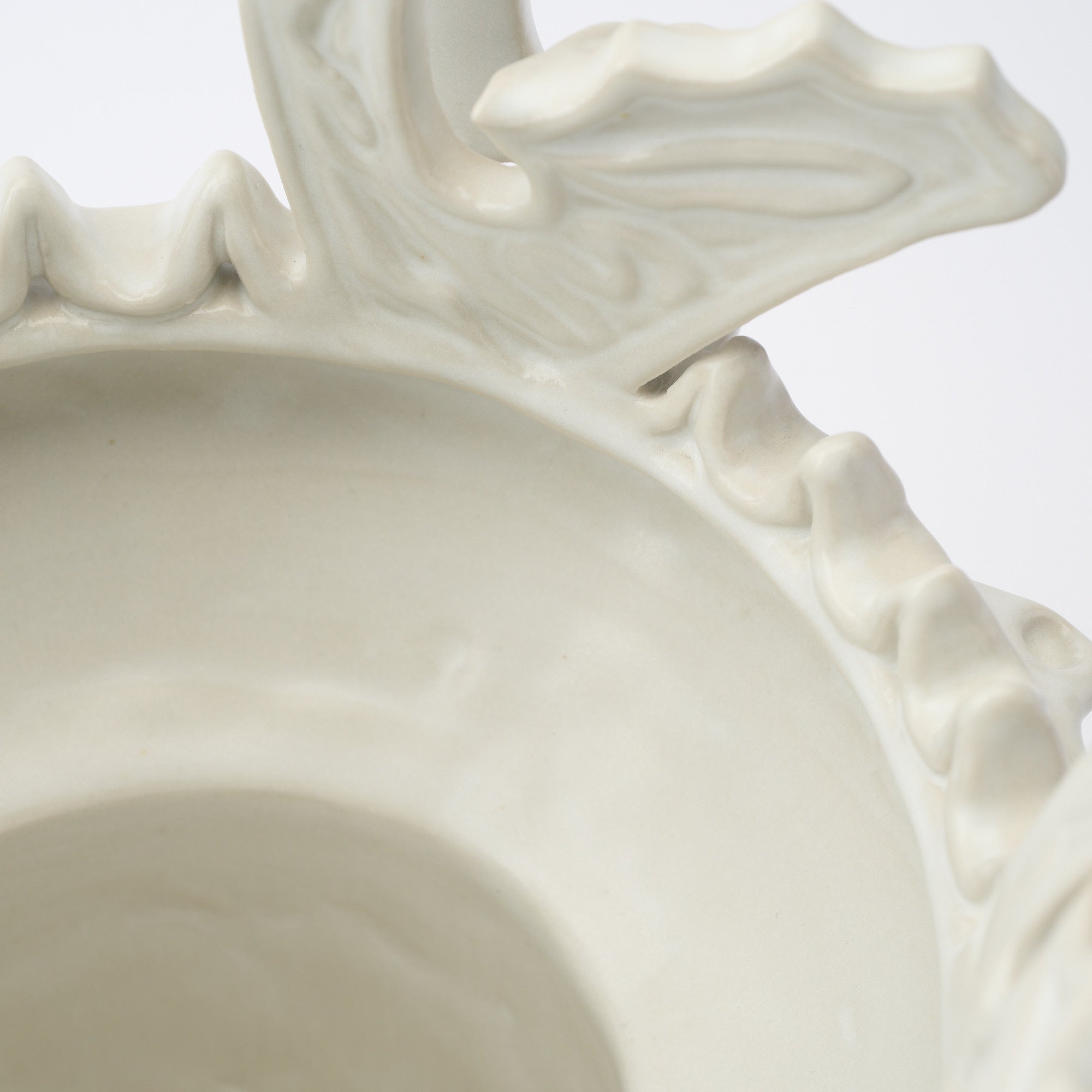
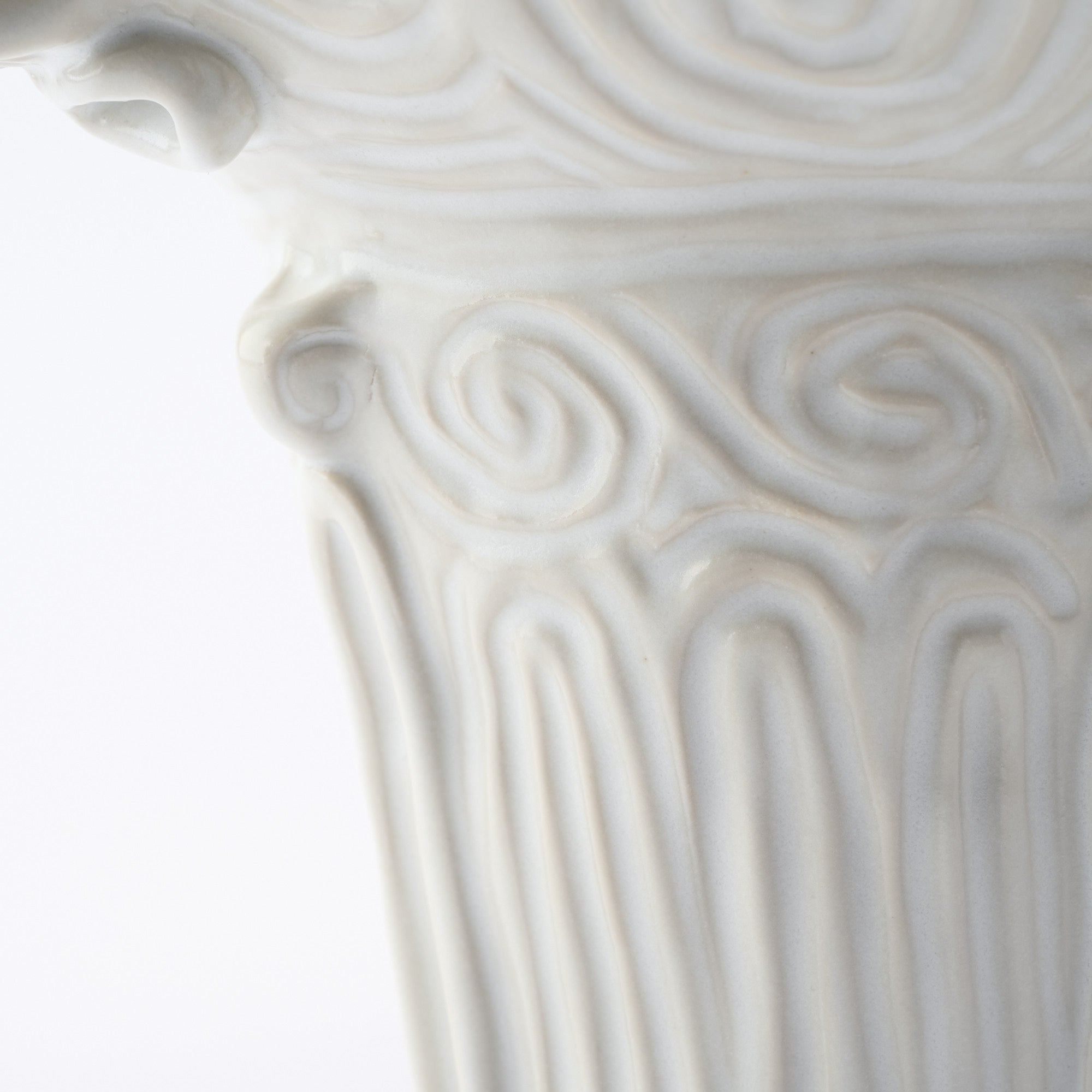
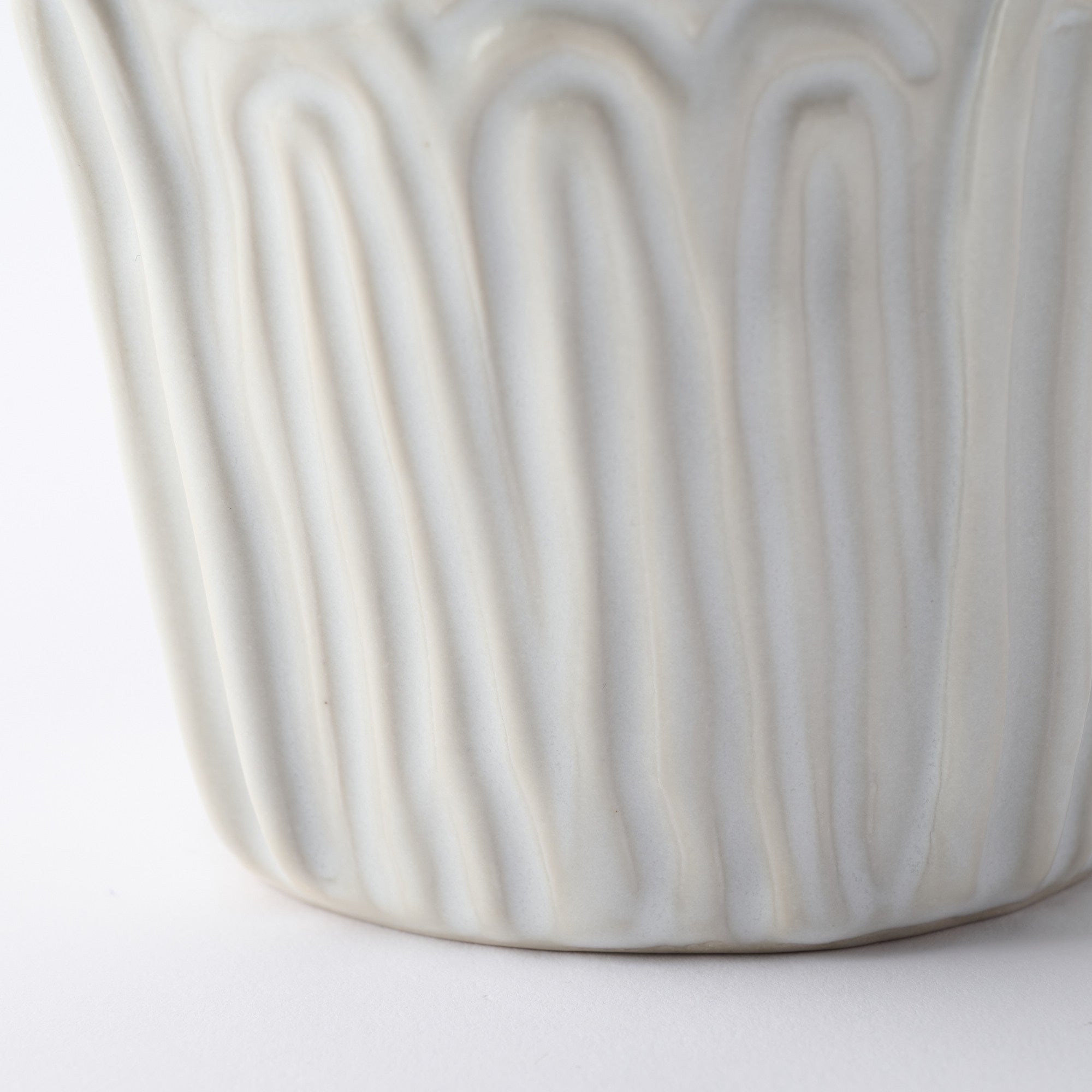
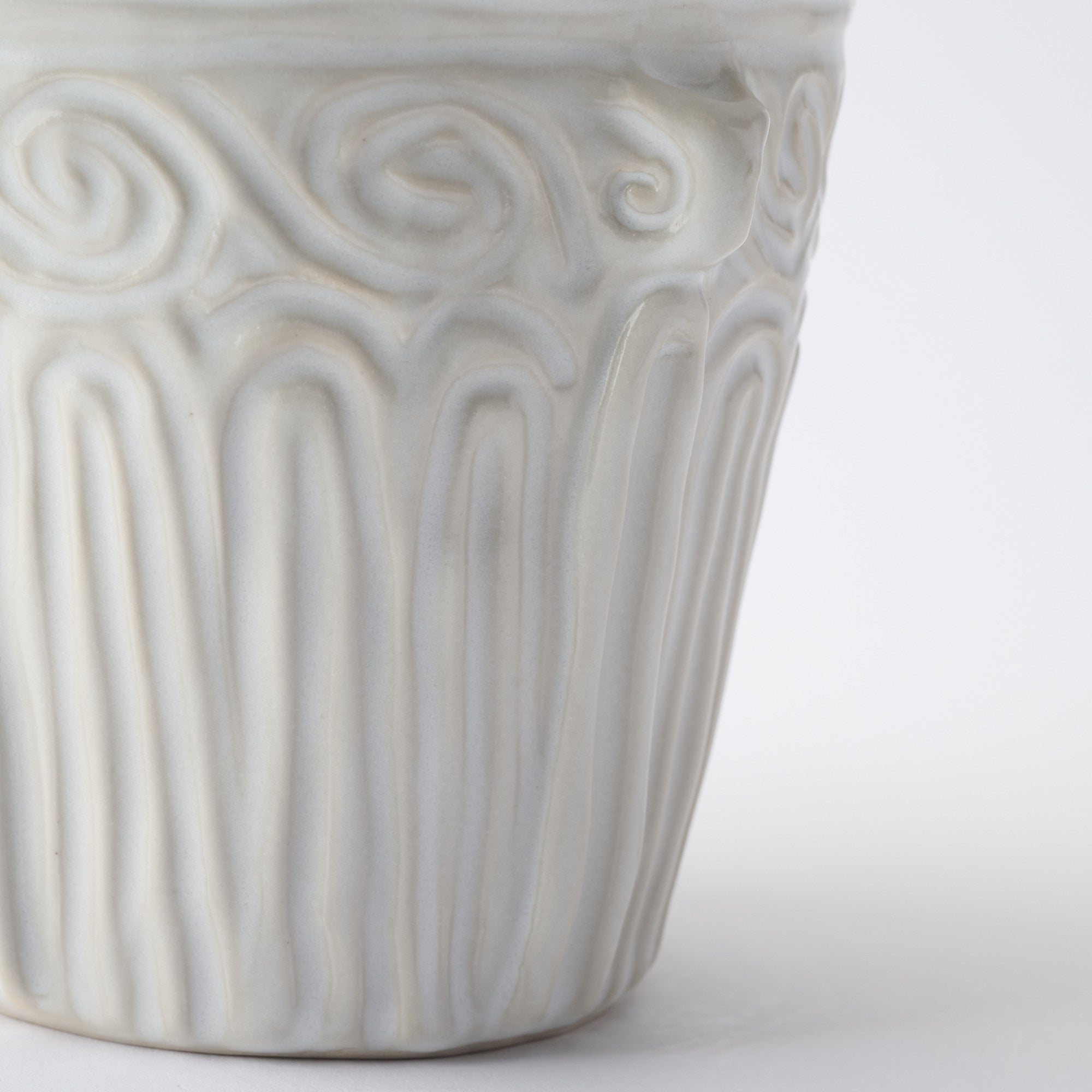
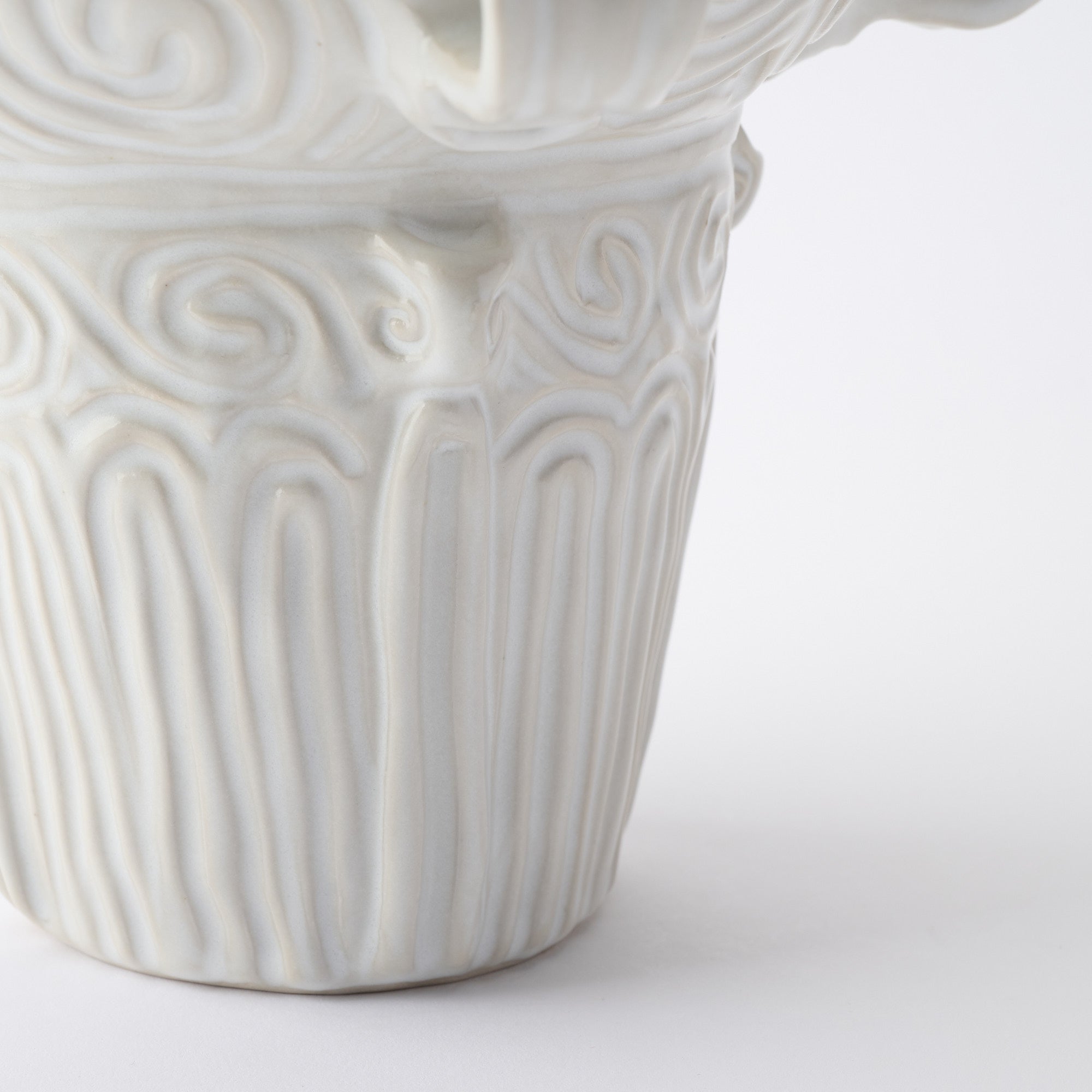
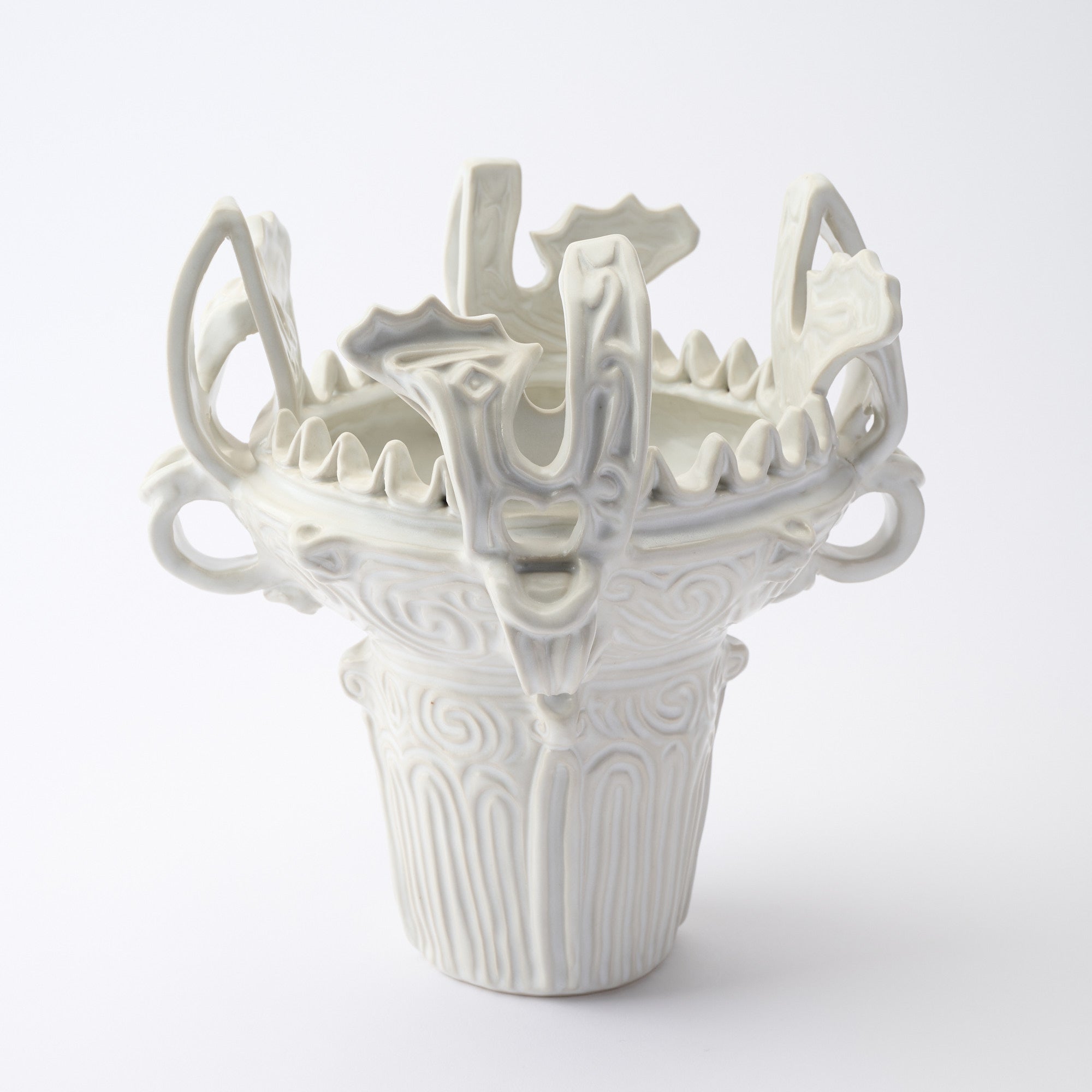
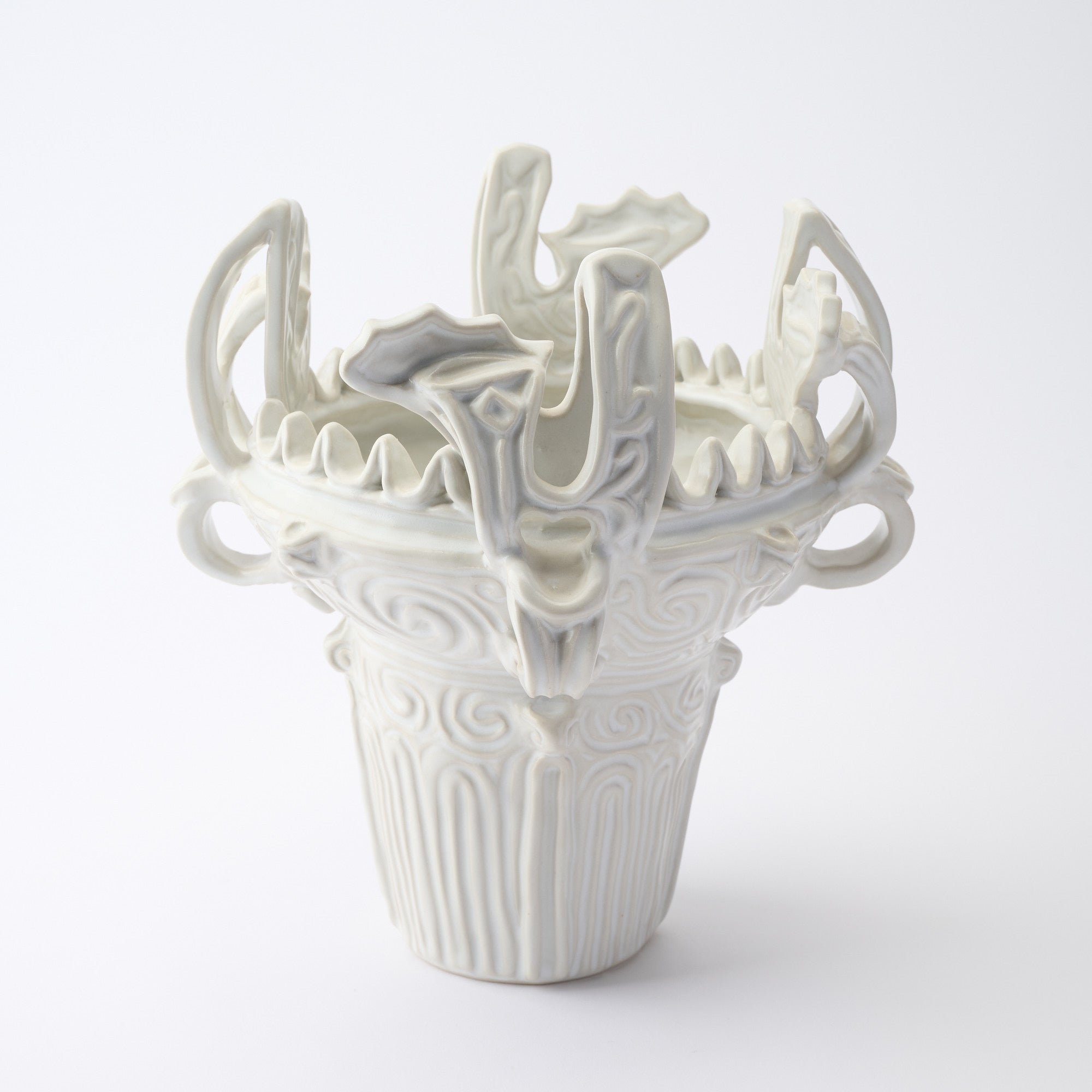
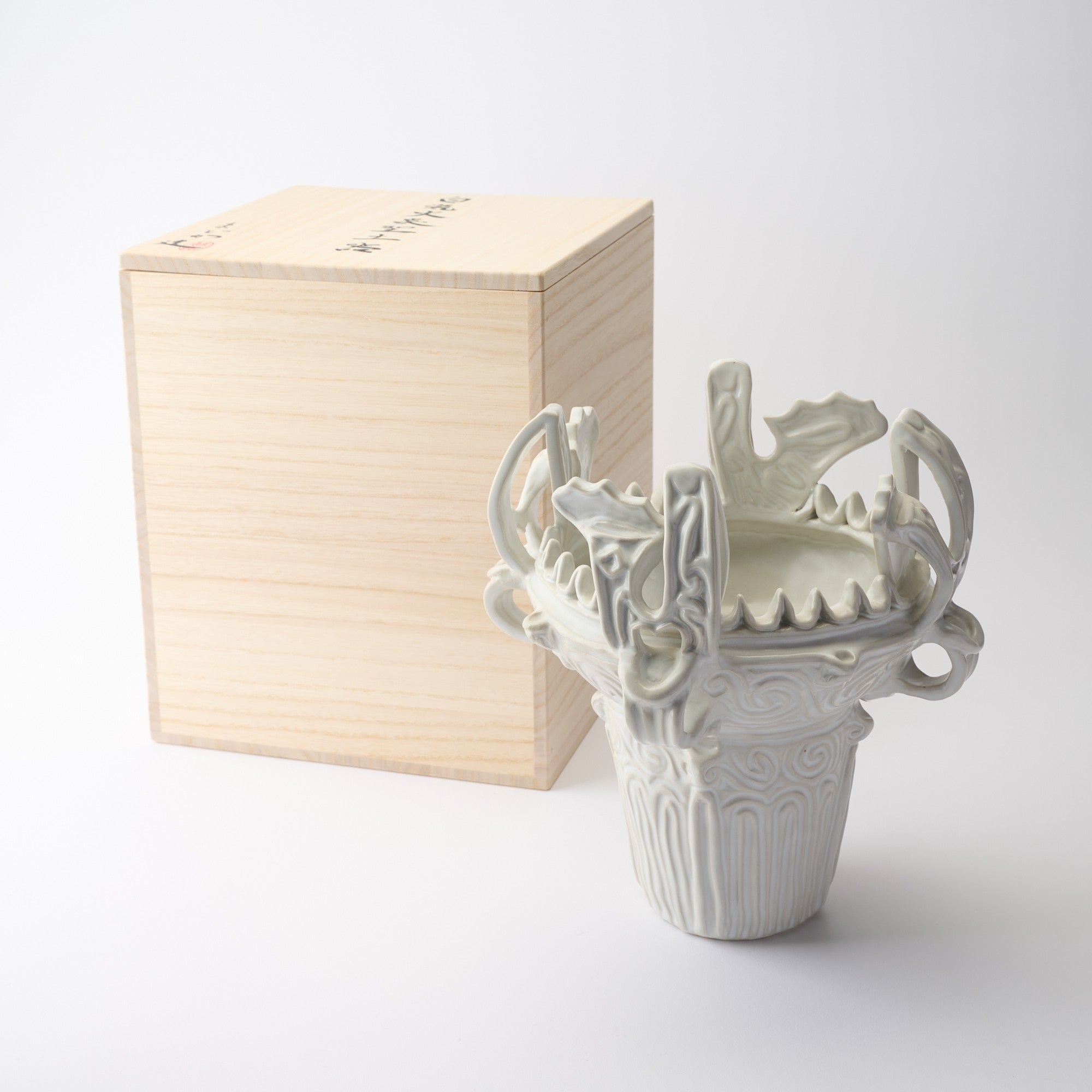
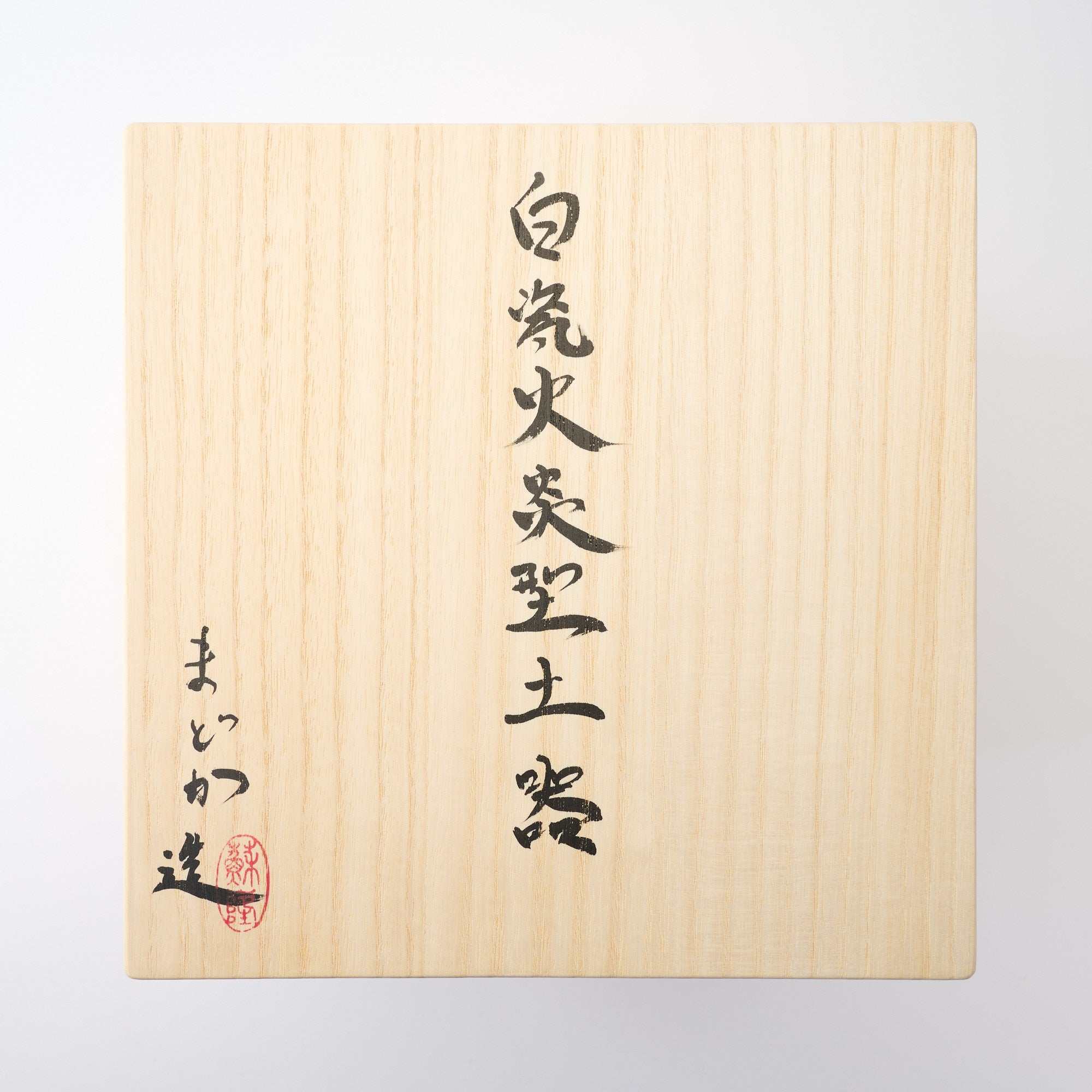
Homura White Jomon Flame Vessel
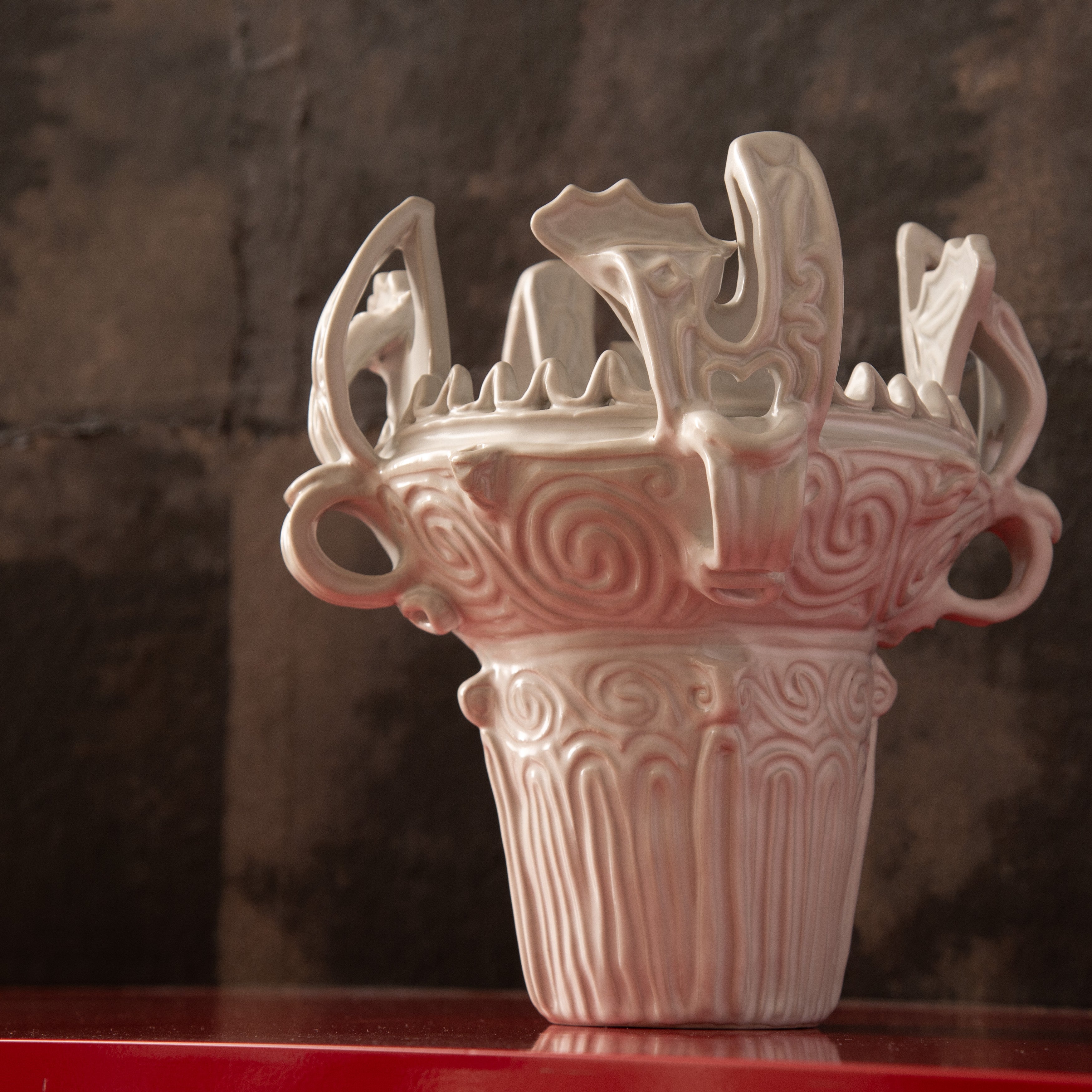
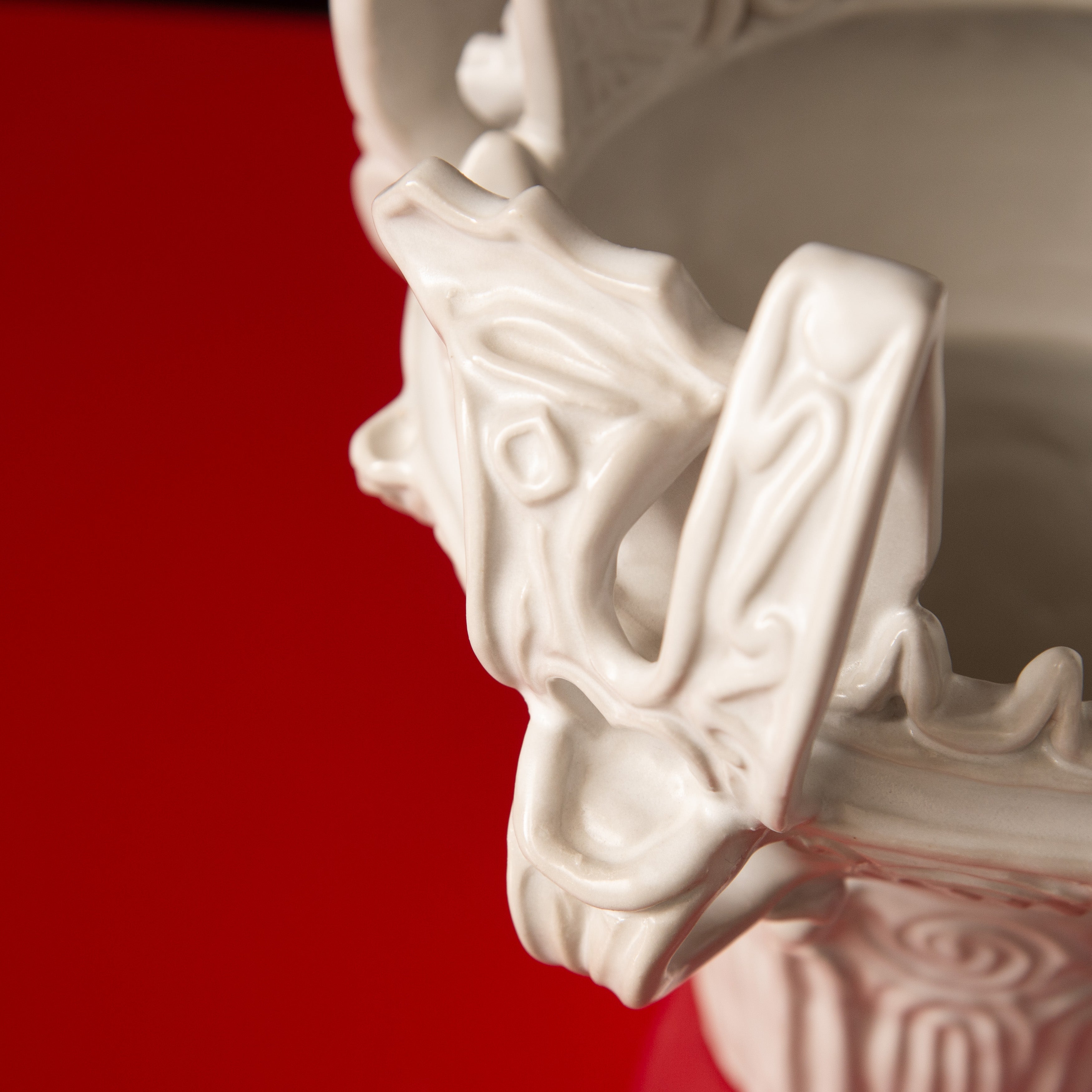
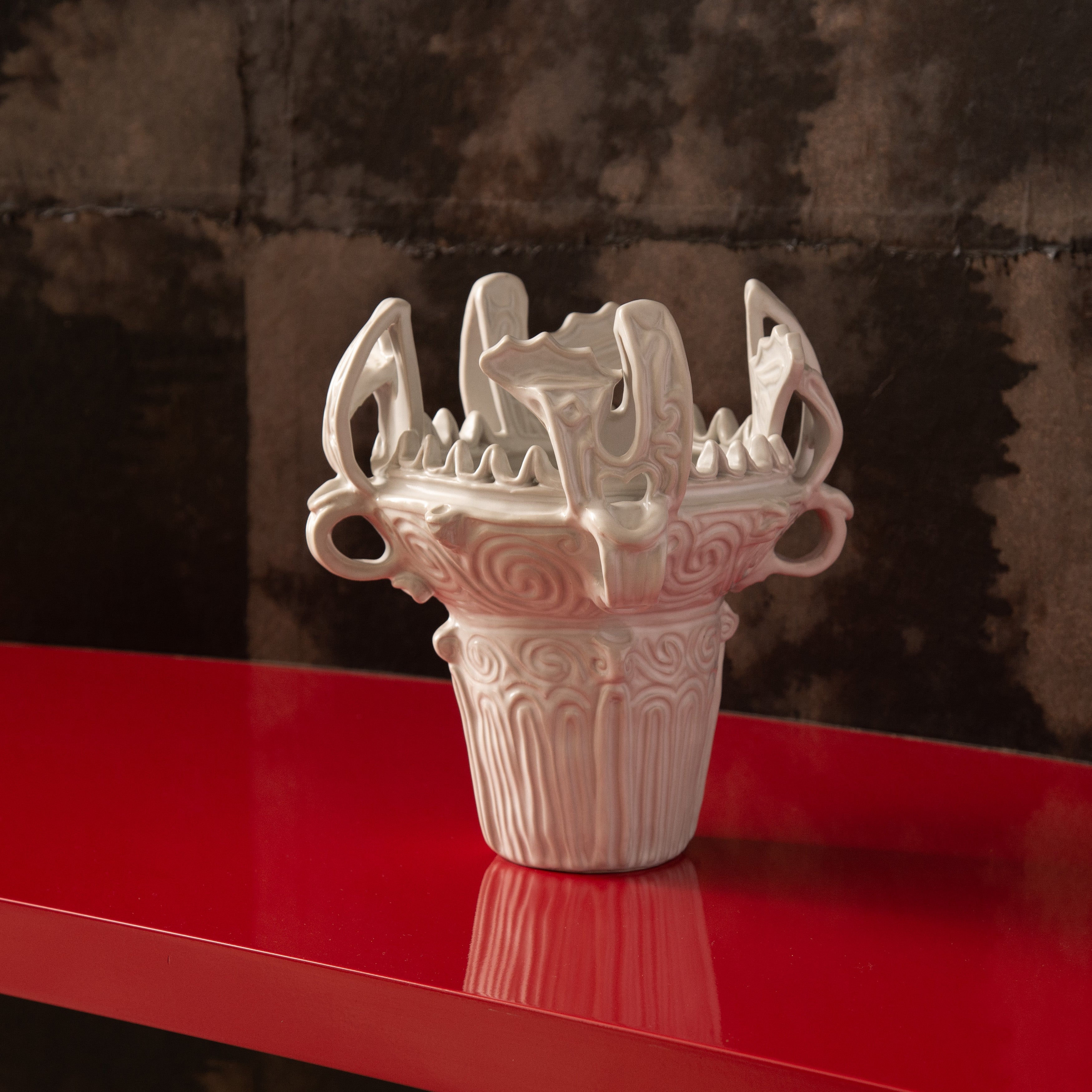
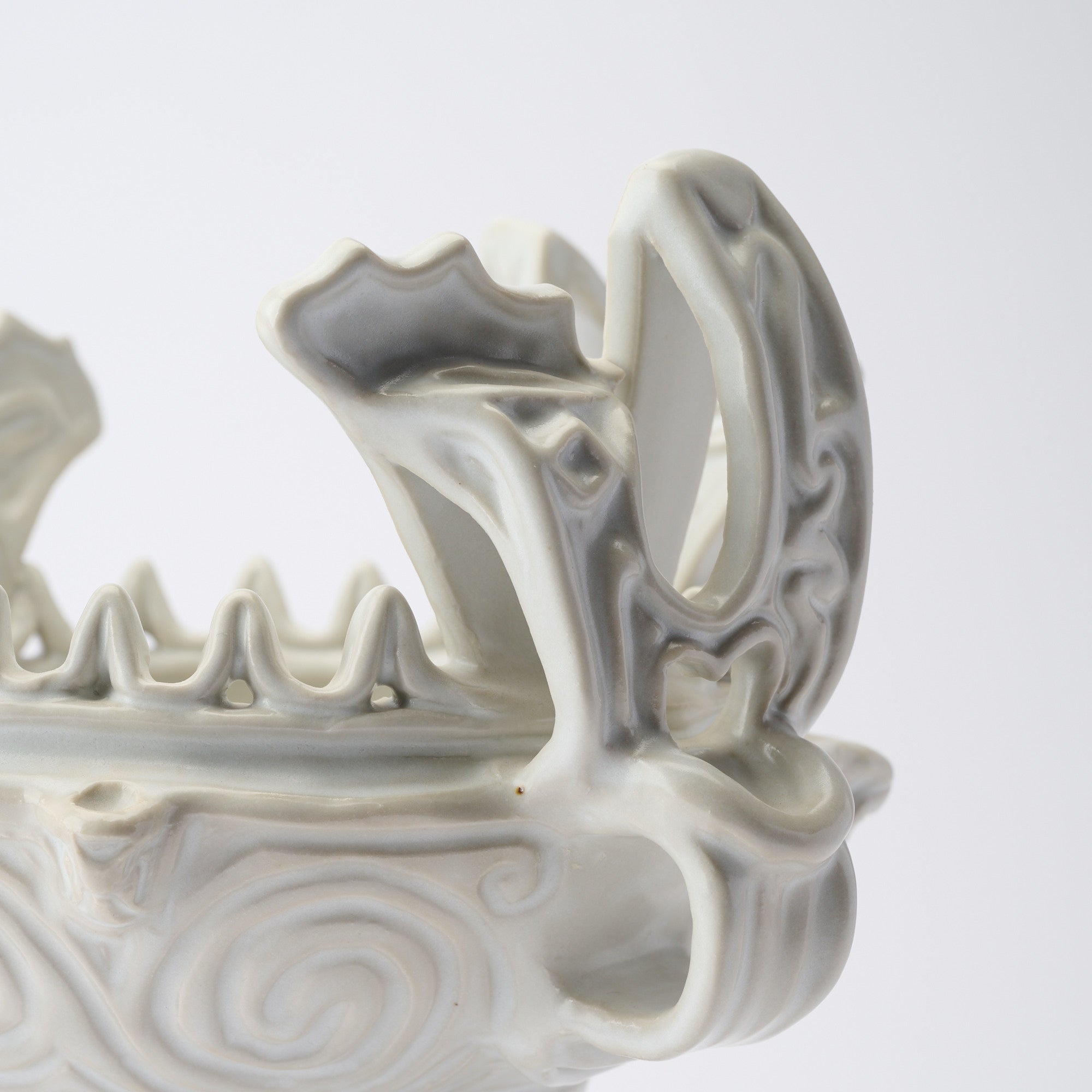
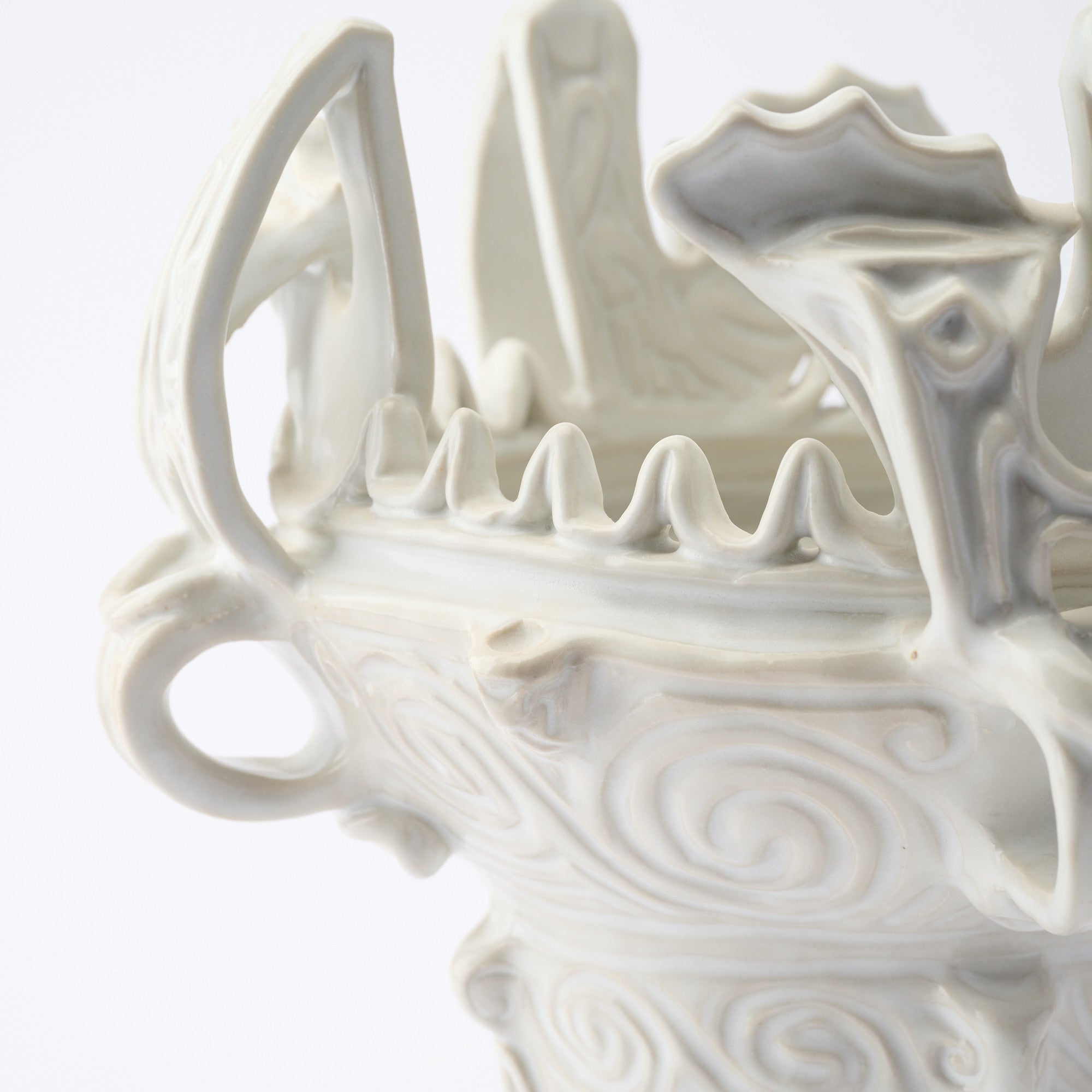
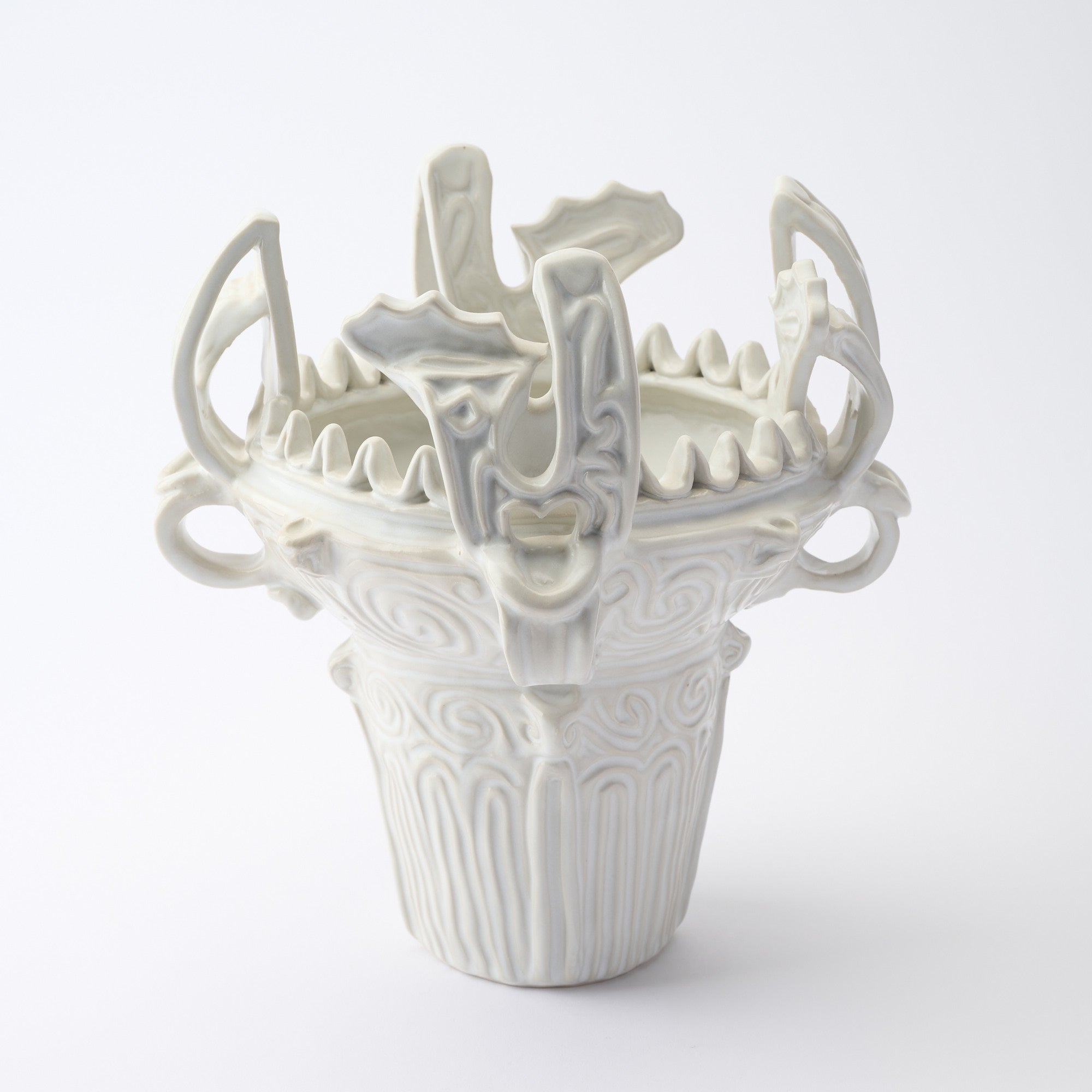
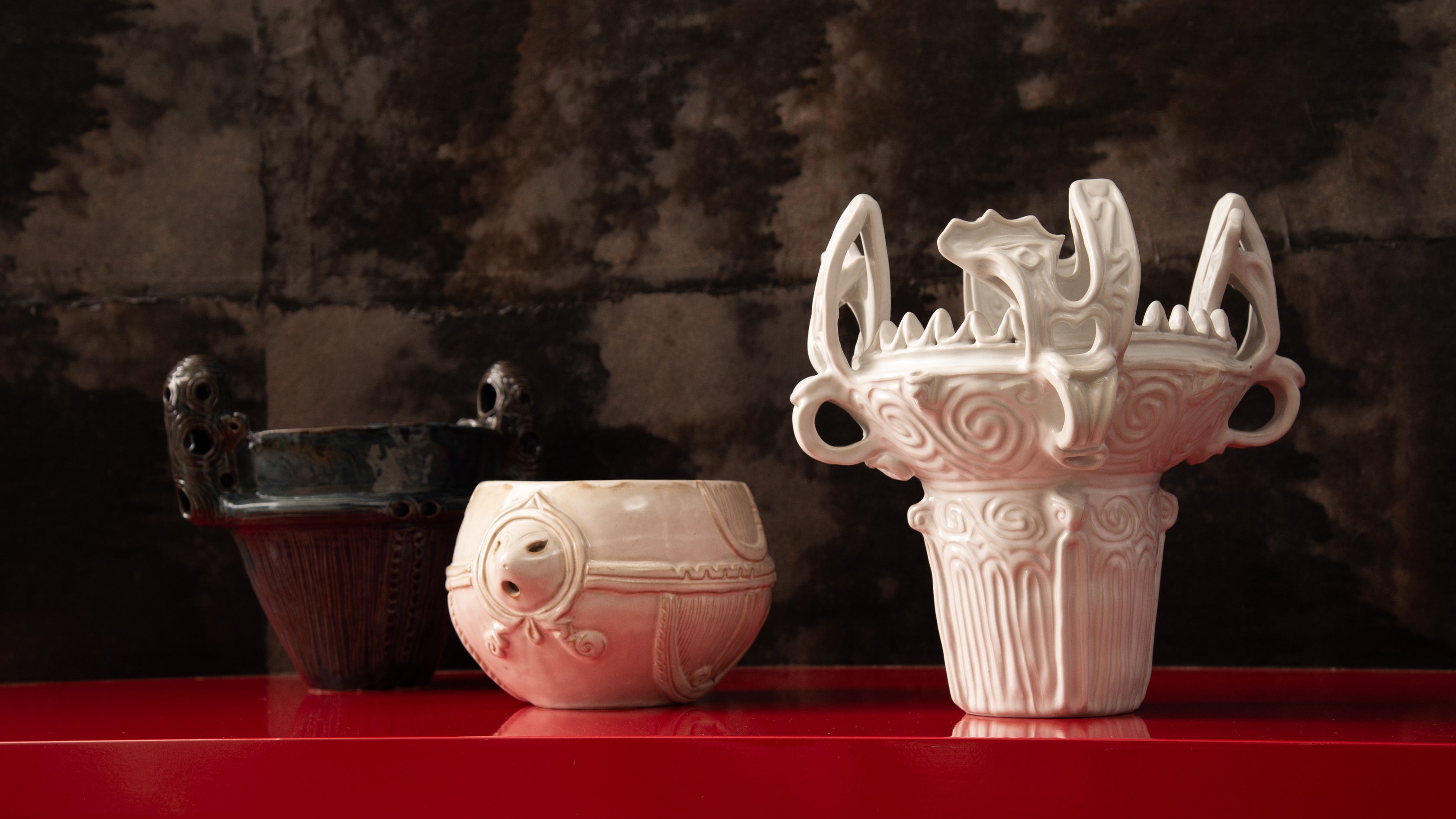
Inspired by the dramatic flame-style vessels of Japan’s ancient Jomon period (ca. 10,000–300 BCE), this artwork by Kyoto-based ceramist Wakunami Madoka reconsiders one of the most iconic forms in early Japanese pottery. The flame-style pots themselves date to approximately 5,000 years ago, their rising contours and intricate projections evoking fire captured in clay. Titled Homura—meaning flame in Japanese—the work reflects Wakunami’s sustained engagement with these ancient forms.
Rather than replicate the historical Jomon flame pot, Wakunami approaches its form through structural inquiries. She studies Jomon pottery exhibited in museums, observing how weight is distributed, how projecting elements achieve equilibrium, and how detail and proportion are resolved. What emerges is not an archaeological quotation, but a contemporary rearticulation of the flame form shaped through disciplined craftsmanship.
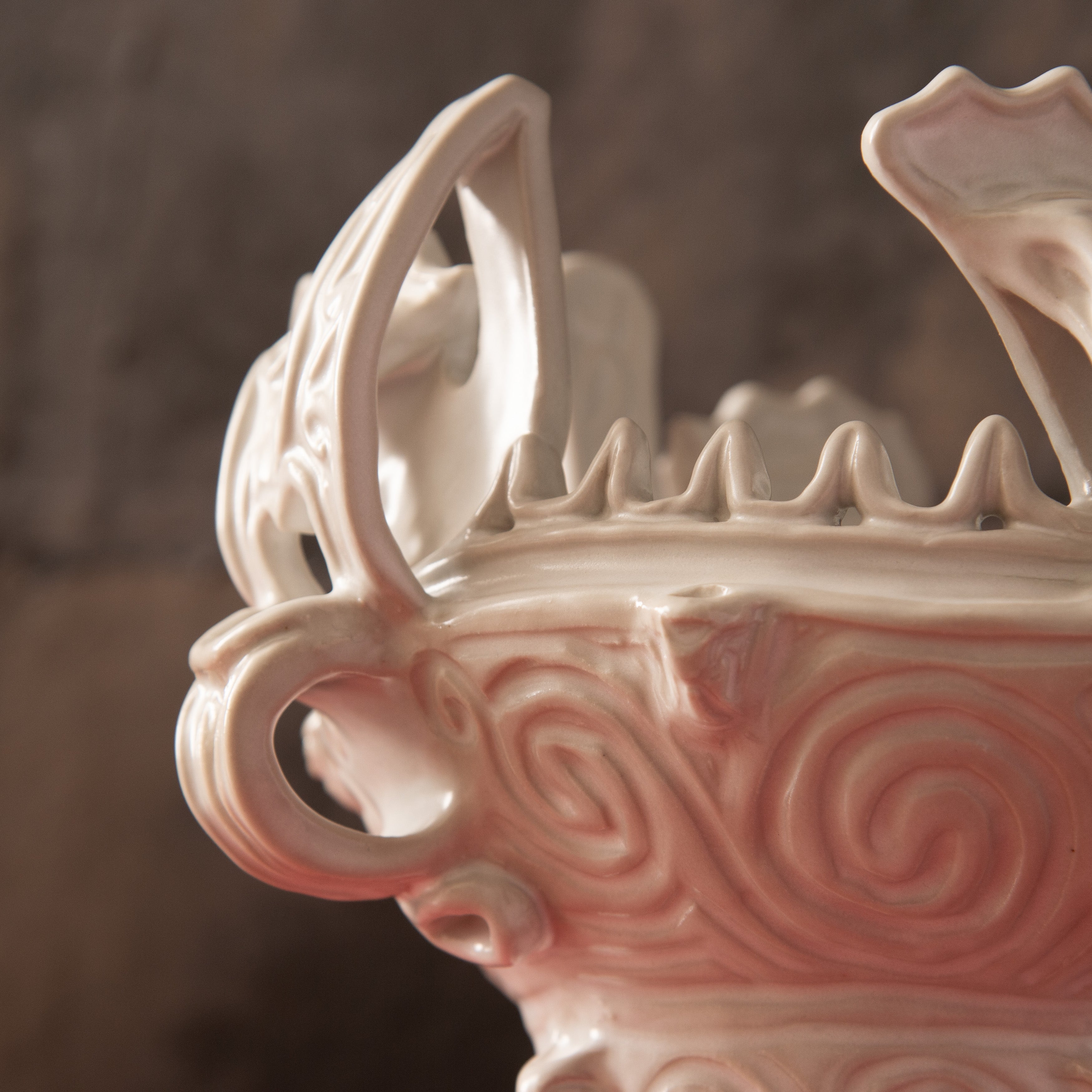
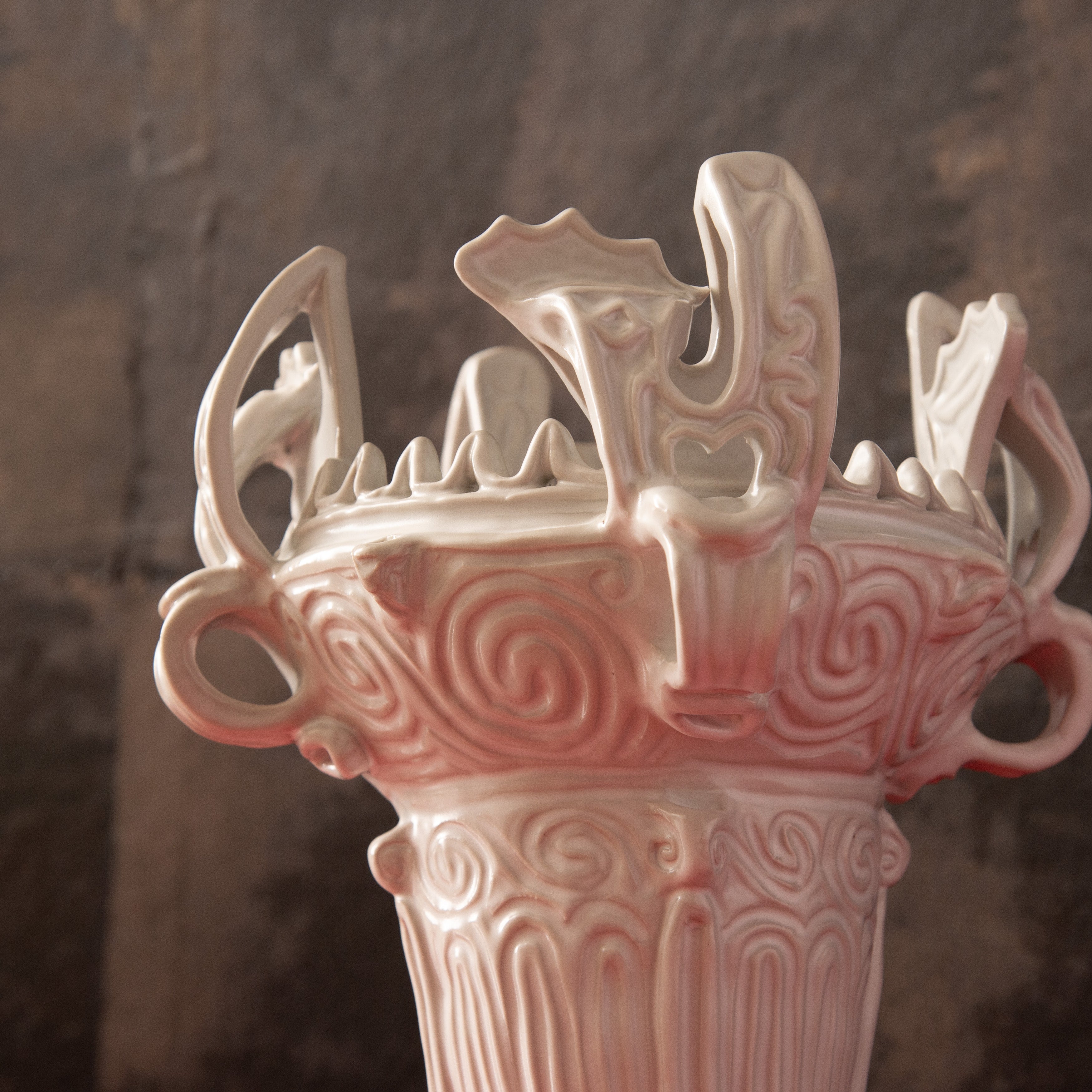
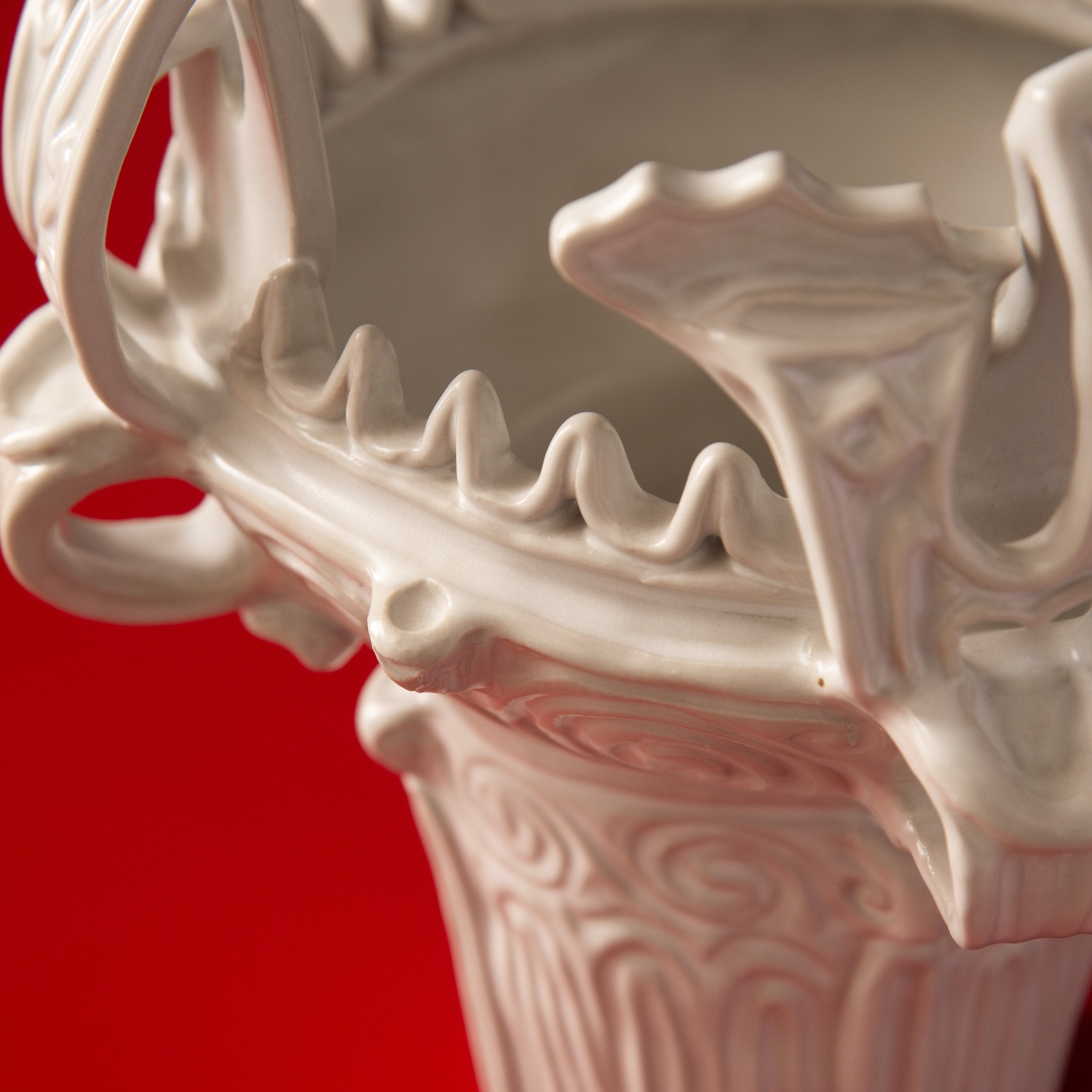
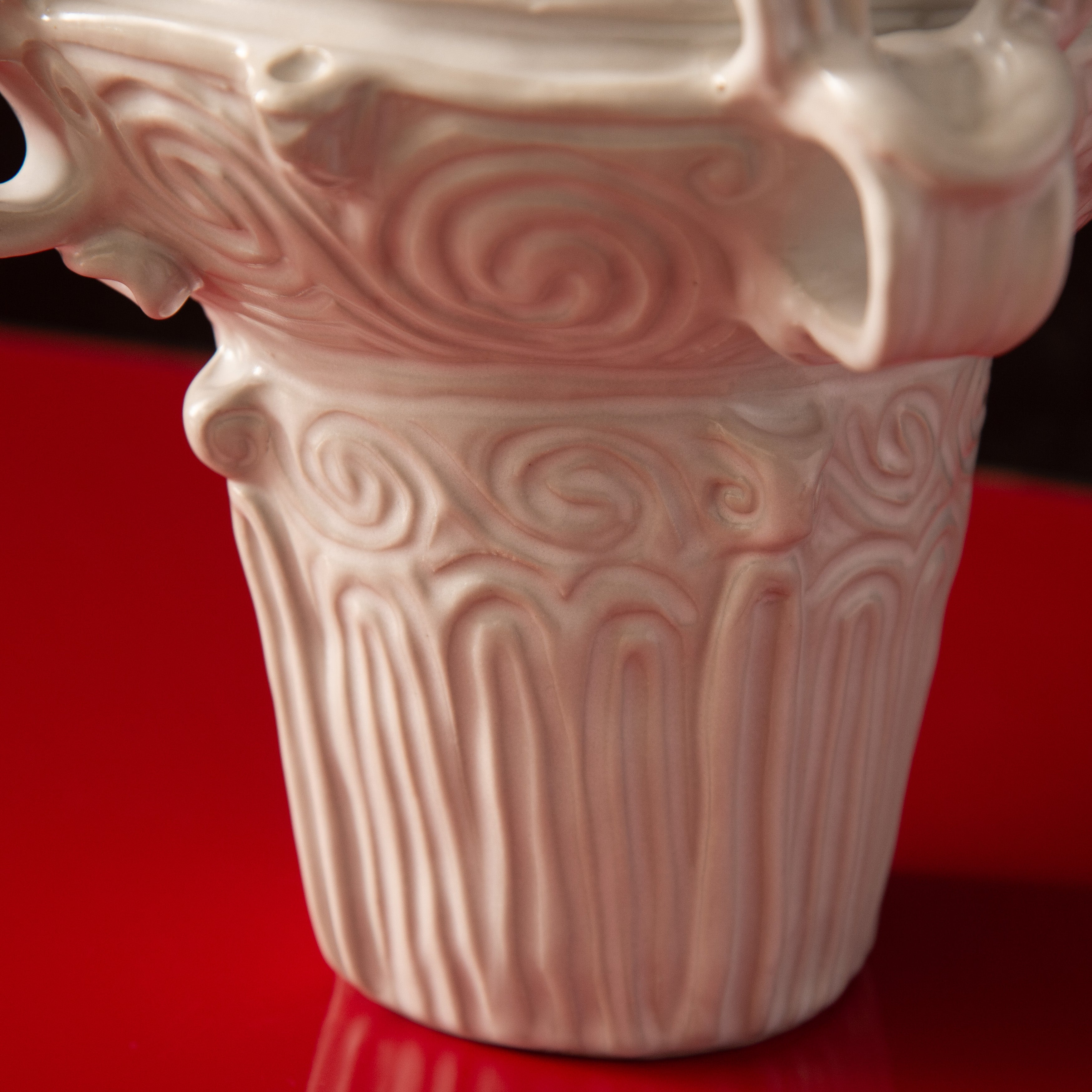
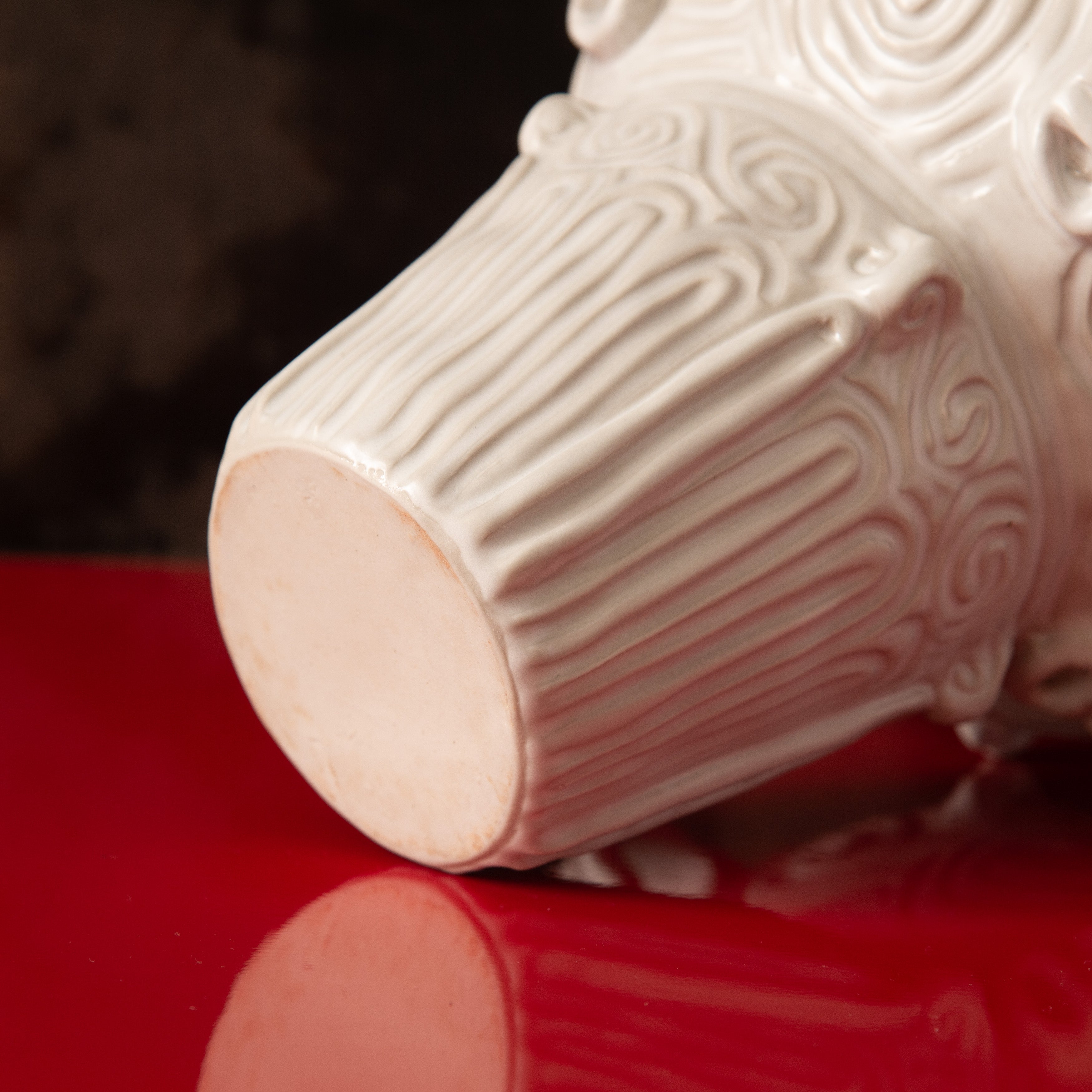
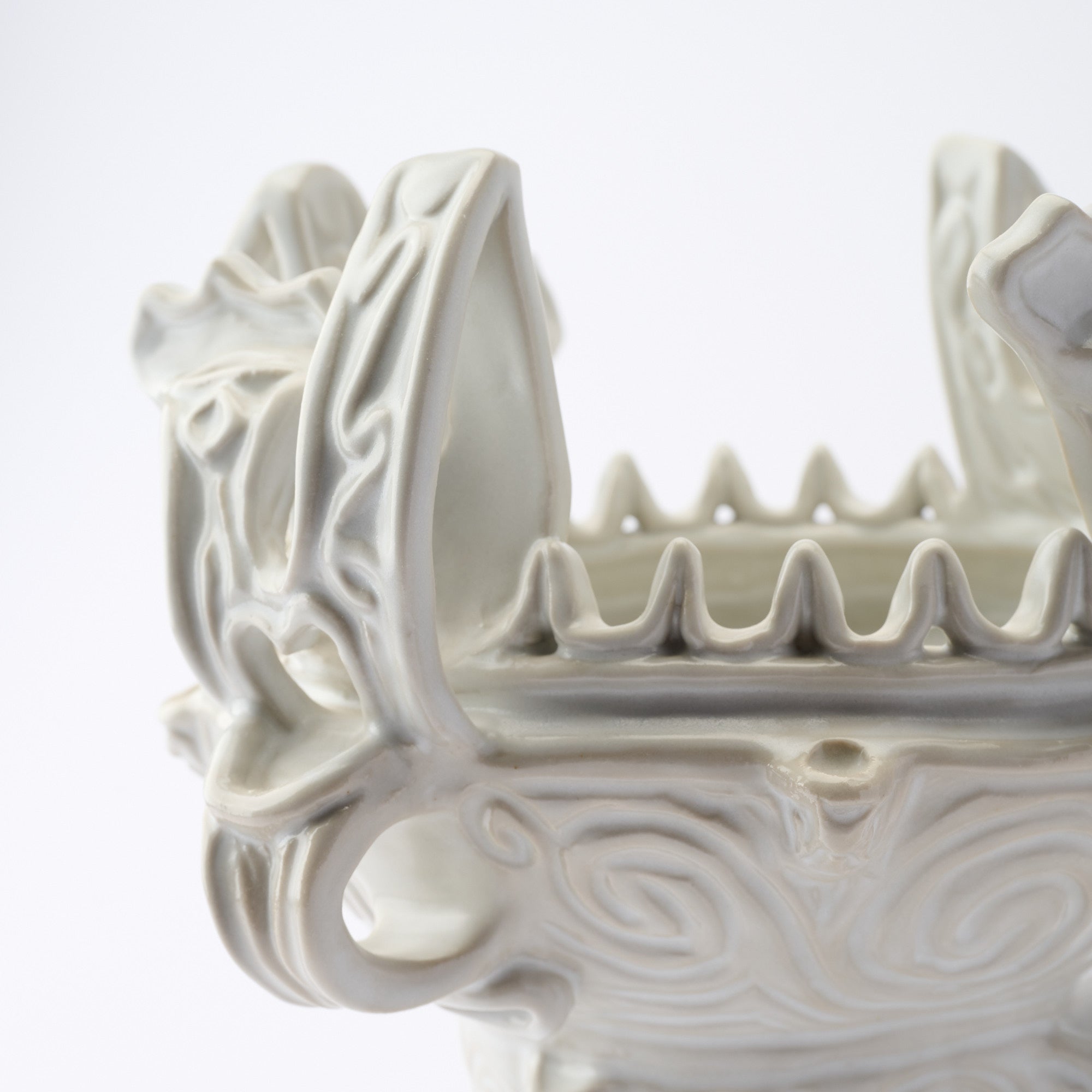
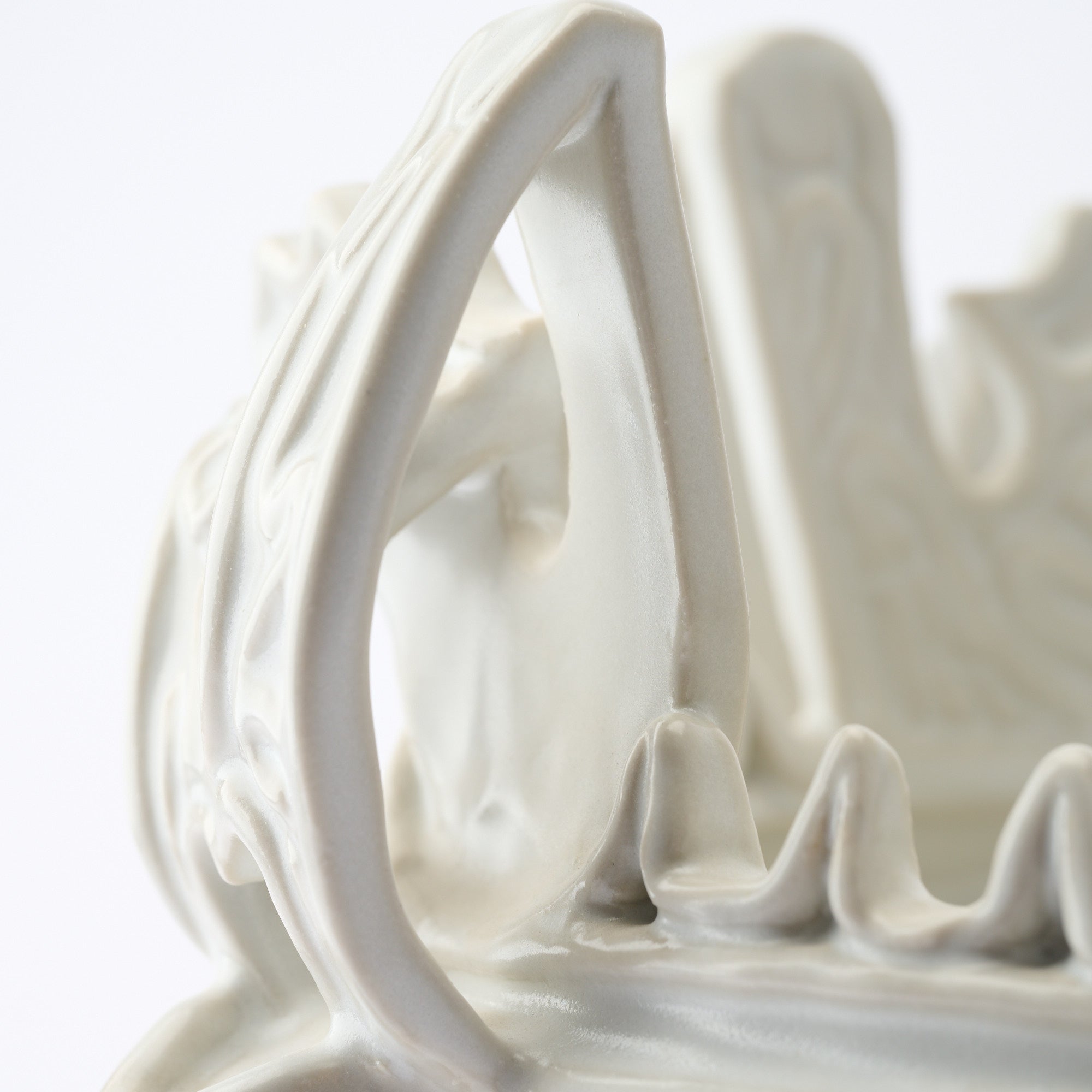
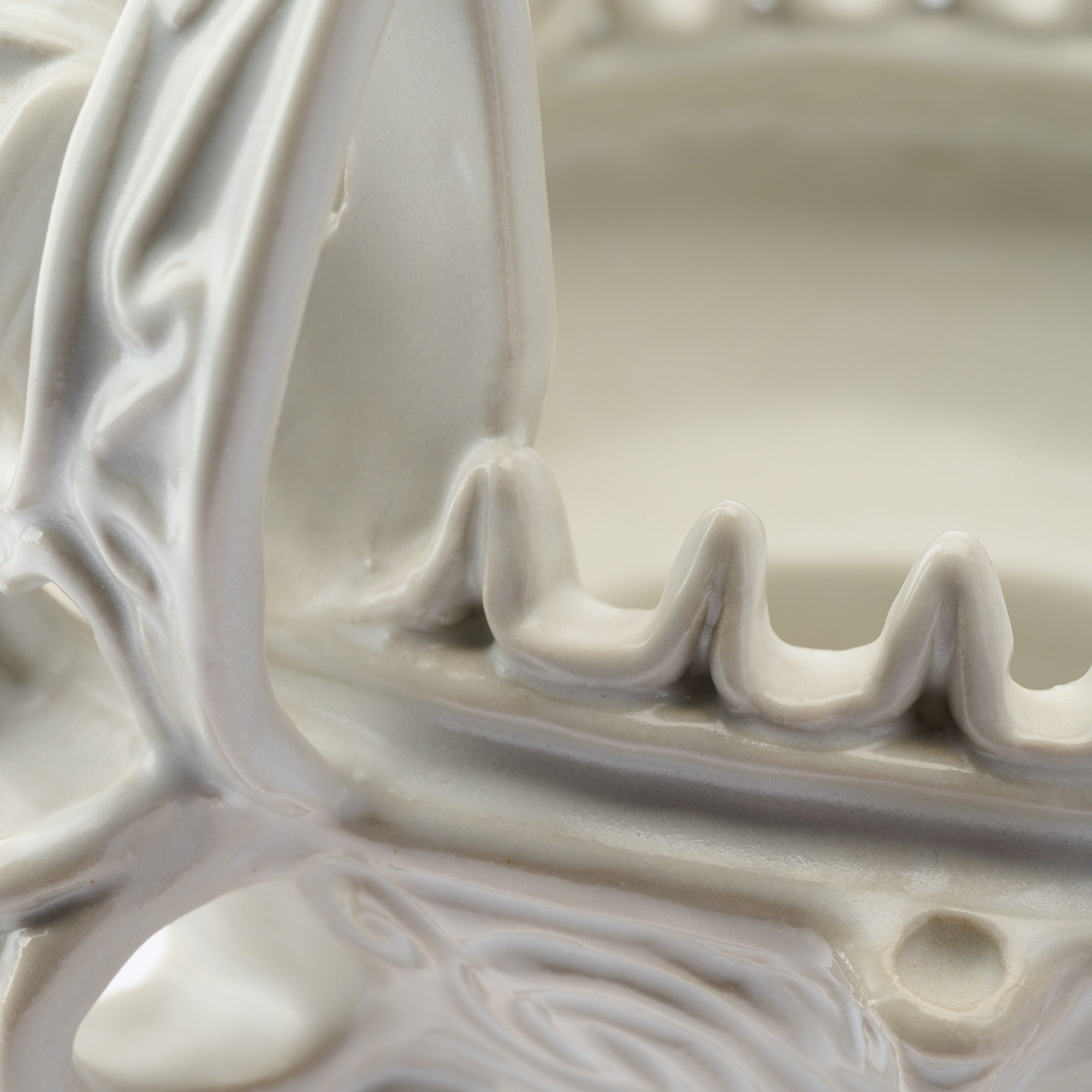
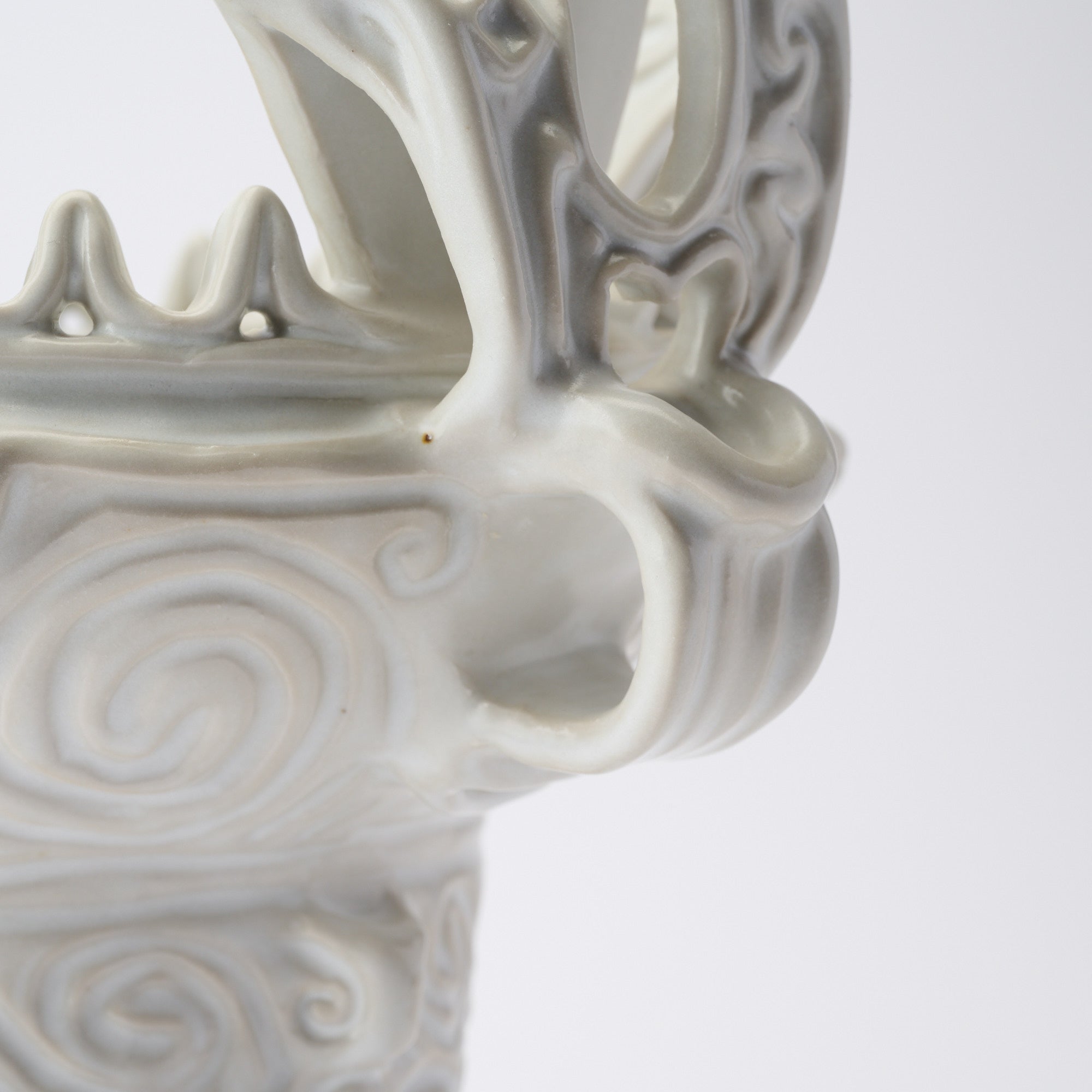
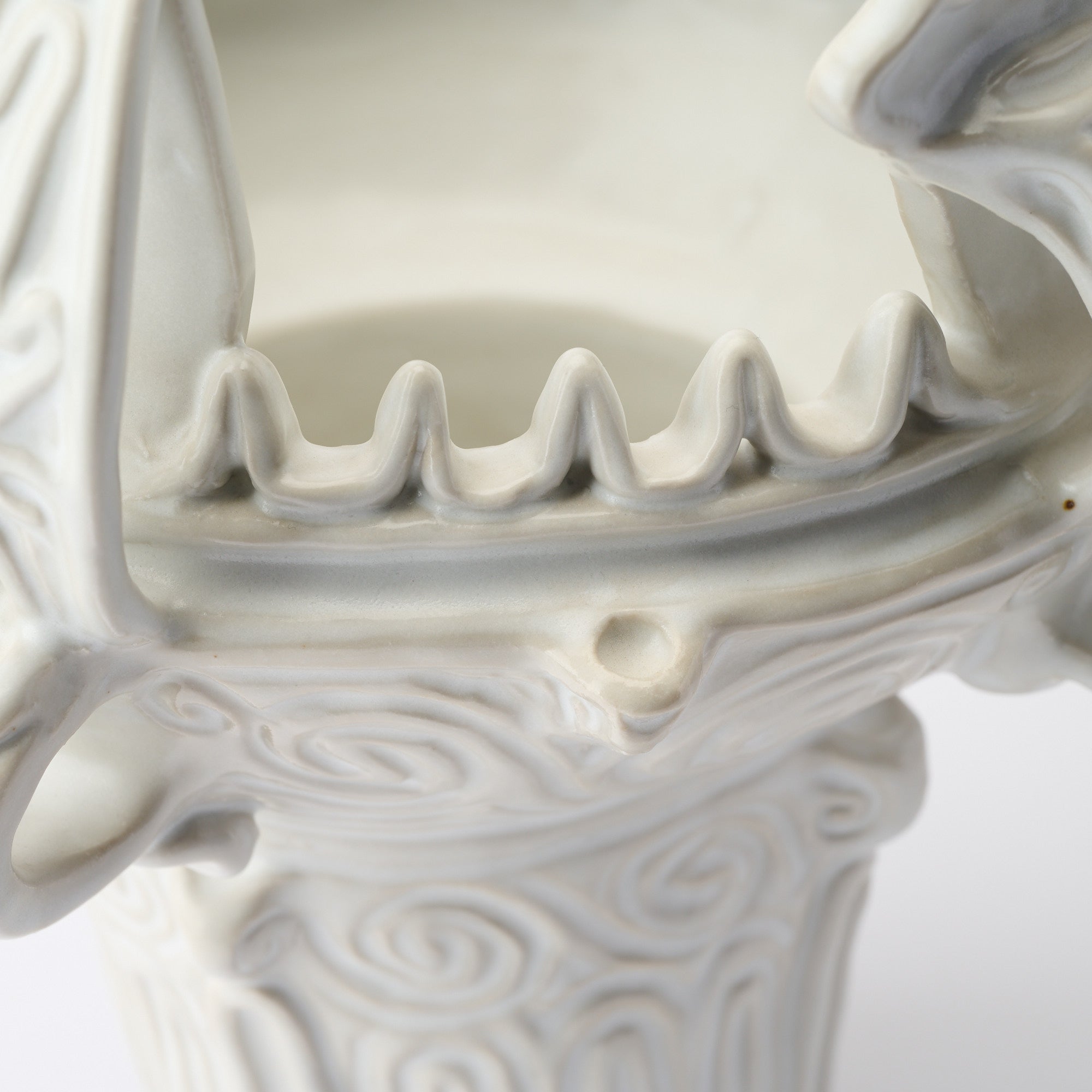
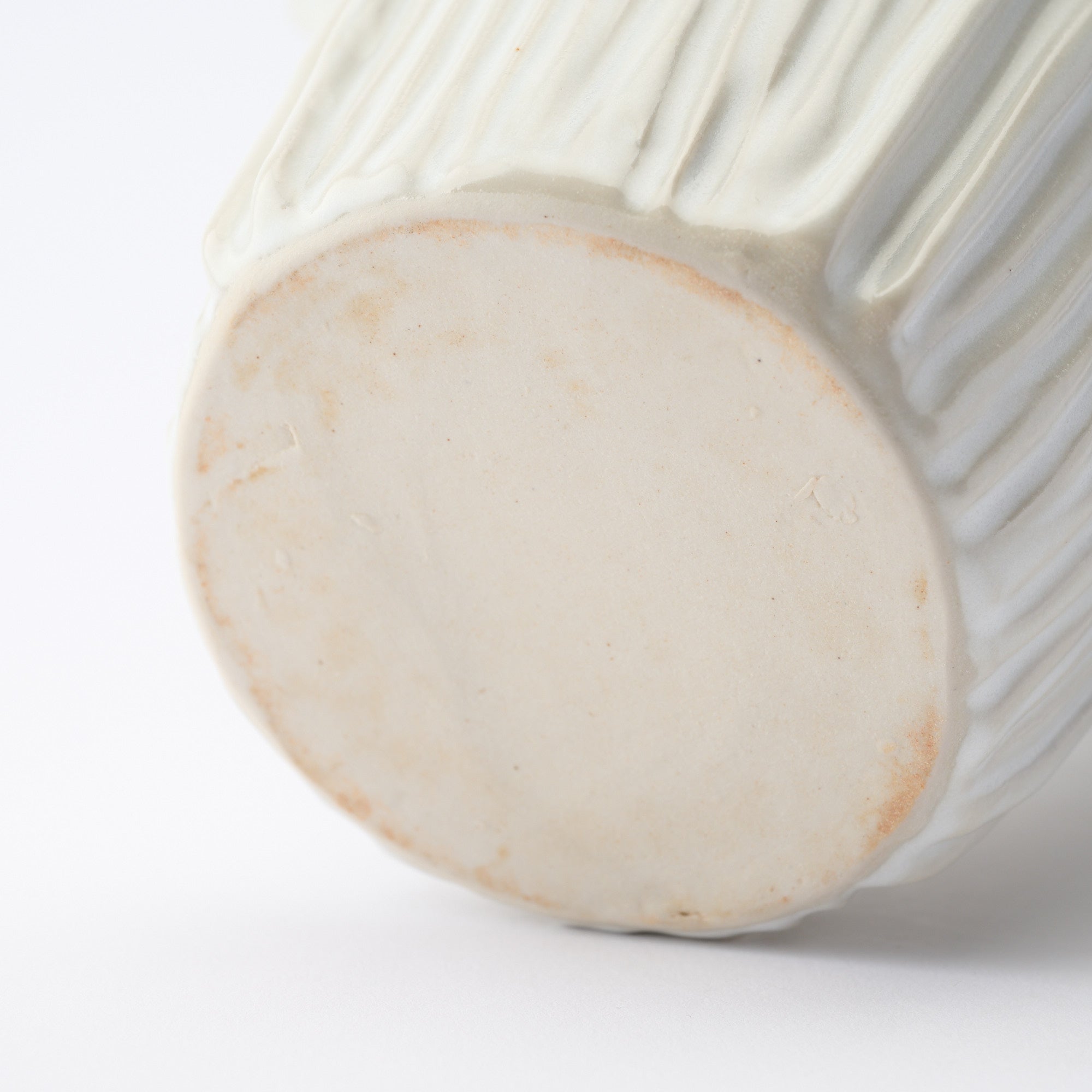
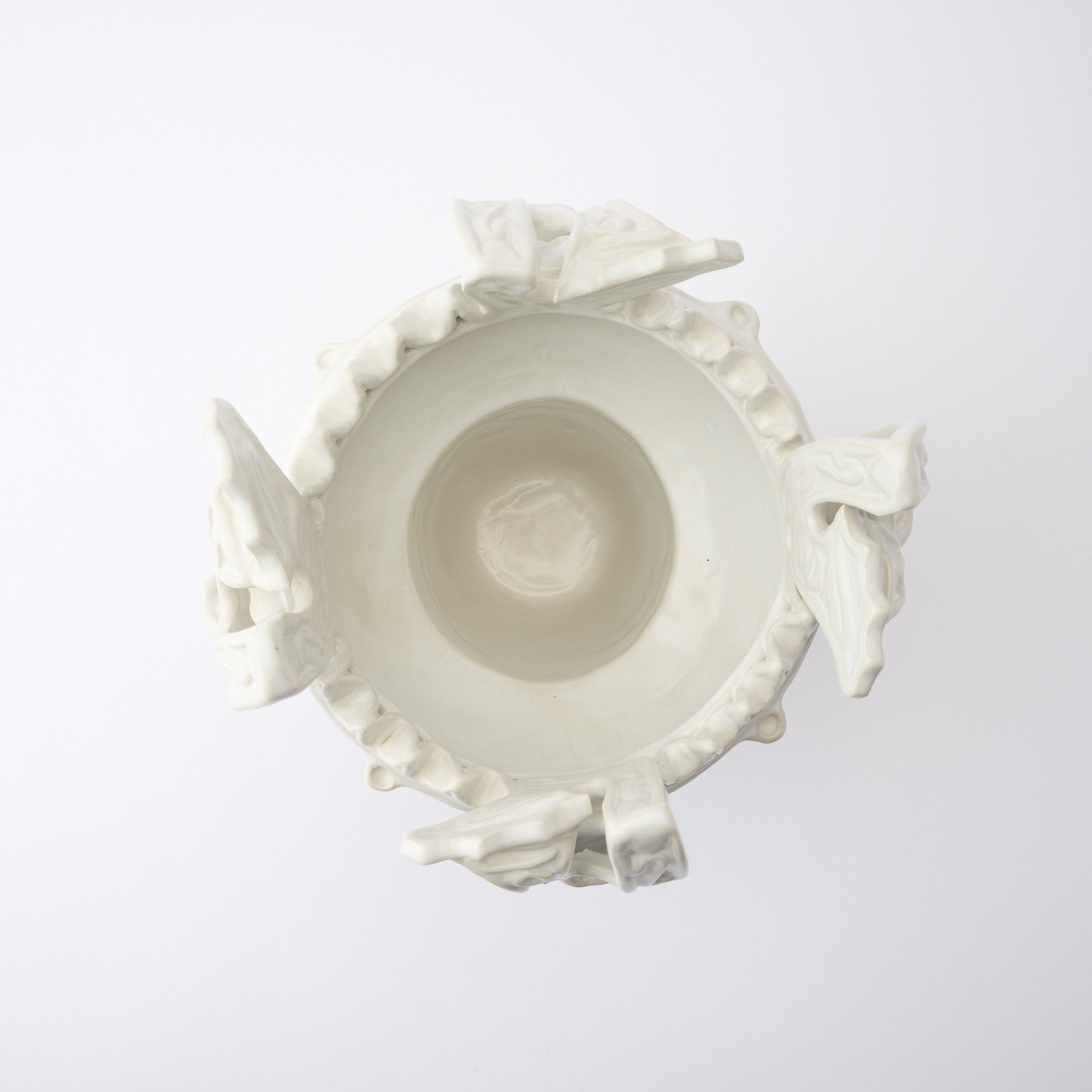
The piece is constructed entirely by hand using a coil-building method, without a wheel. The central body rises gradually from layered coils of clay and is allowed to rest before the upper elements are attached. The sculpture’s four pronounced projections are shaped individually and positioned with deliberate attention to rhythm and symmetry. Their complex, flame-like forms create upward movement while preserving structural balance. Through meticulous planning and precise calibration of scale and proportion, Wakunami situates the work between inheritance and authorship.
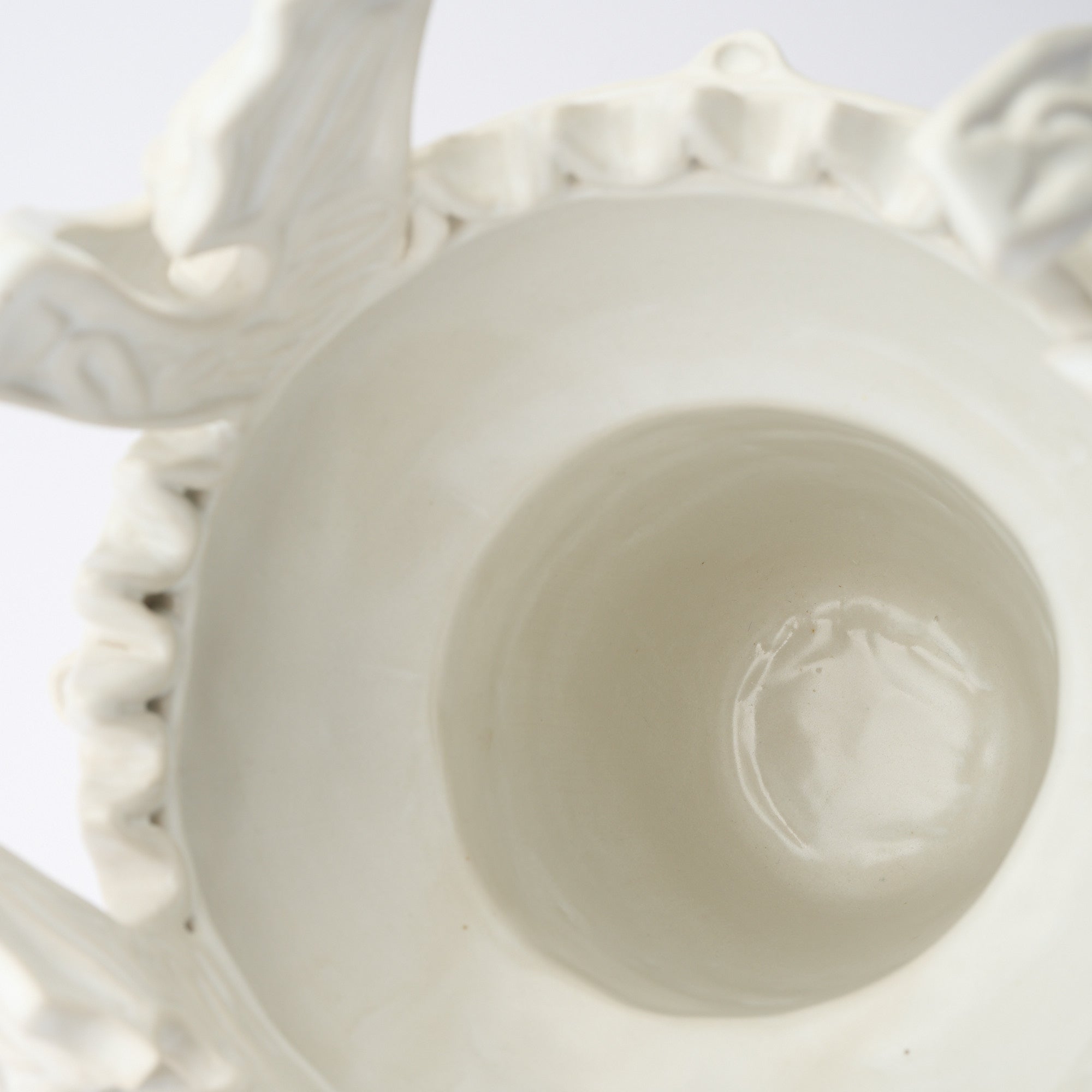
The clay body is carefully blended to enhance the clarity and responsiveness of the glaze. Rendered in a custom white finish, the sculpture is intentionally stripped of earthen historicism. In the absence of natural clay tones, contour and shadow take precedence. Light defines the edges; depth emerges through contrast. The form asserts its presence solely through structure.
Homura stands as a contemporary meditation on the Jomon flame form—an exploration of tension and ascent imbued with reverence and enduring fascination for the earthen vessels that may be considered the origin of Japanese pottery itself.
DETALLES
| Quantity | 1 |
| Size |
D 25.5 cm (10.0 in) x H 25 cm (9.8 in) [Wodden box] L 24 cm (9.4 in) x W 24 cm (9.4 in) x H 29 cm (11.4 in) [Size of opening] D 10 cm (3.9 in) |
| Weight | 2160 g (76.2 oz) |
| Material | Stoneware |
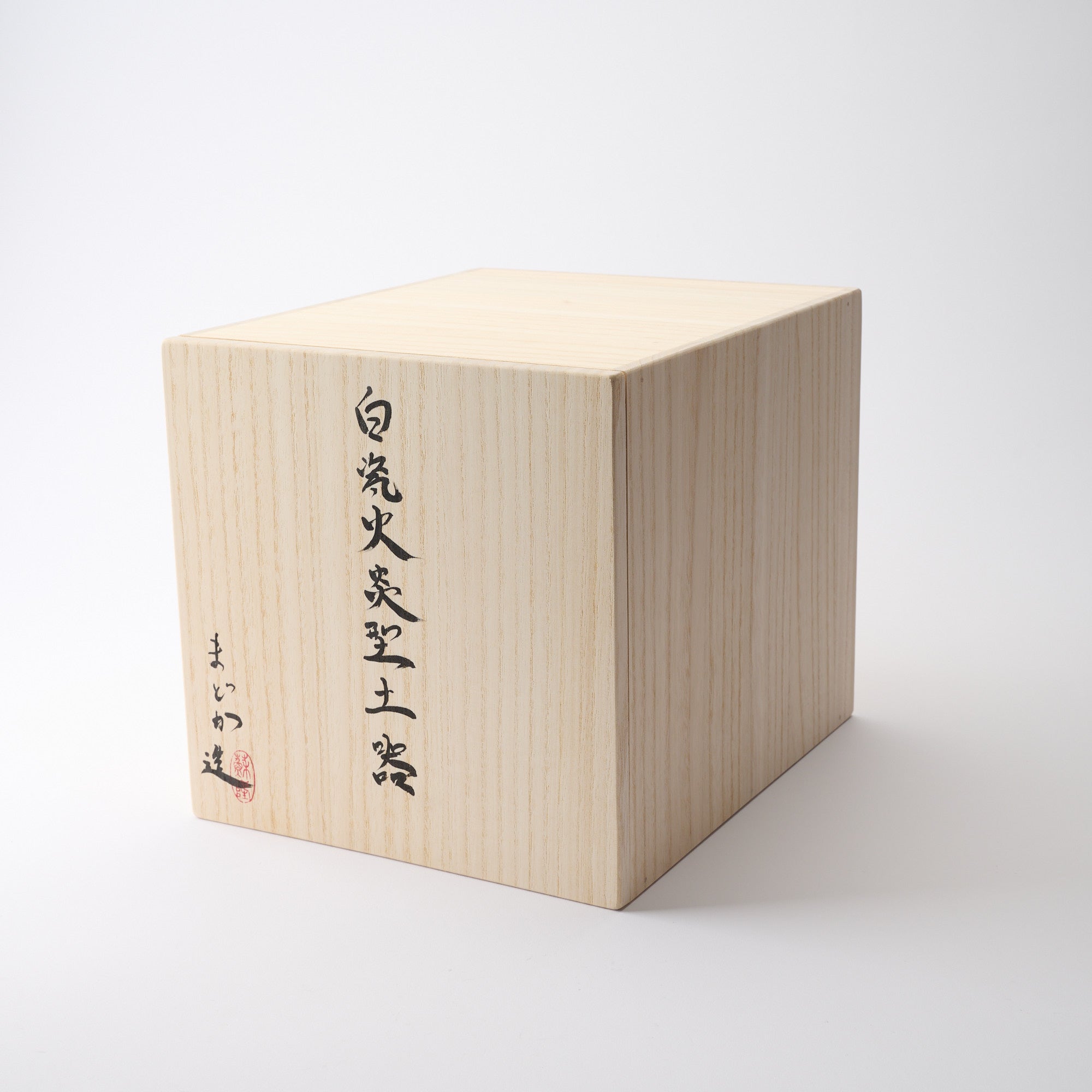
| Package Type | Wooden box |
Fabricante / Marca
Kyoto-based ceramic artist Wakunami Madoka finds inspiration in the ancient. Deeply moved by the art of the Jomon people, which is among the oldest pottery in the world, she reinterprets millennia-old forms for the present age. With a background in both Koishiwara ware, a ceramic folk craft originating in Kyushu, and Kyoto’s native Kyo ware, she lends a soft, graceful refinement to the primitive allure of Jomon forms through her use of new clay and glazes.
Elige opciones
About Artist
Galería Musubi
Desde sus inicios, Musubi Kiln Se ha esforzado por presentar al mundo las mejores artesanías tradicionales de maestros de todo Japón.
Aquí, en la Galería, buscamos exhibir las técnicas tradicionales más avanzadas, transmitidas de generación en generación. Podrás descubrir obras de maestros que no solo han perfeccionado estos métodos, sino que también han aportado su imaginación para innovar aún más el oficio.
Algunos de estos maestros incluso han sido nombrados Poseedores de Importante Patrimonio Cultural Inmaterial, un título que les otorgó el gobierno japonés para reconocer formalmente su contribución a la artesanía y la cultura, consolidando así su legado y convirtiéndolos en una parte importante de la historia del arte.
Cada pieza se elabora meticulosamente a mano durante muchos meses para crear un tesoro atemporal único. Y cuando esté en tu hogar, tú también formarás parte de esa historia.
Bienvenidos a la Galería. Les invitamos a explorarla con calma.