

La porcelaine d'Arita : chez soi et par-delà les mers
Un parcours au Kyushu Ceramic Museum de Saga, retraçant la porcelaine Arita depuis la vie quotidienne d'Edo jusqu'aux cours d'Europe.

Je suis arrivé au Kyushu Ceramic Museum à Saga au son des cigales. Dans la cour, j'ai été accueilli par un oiseau en porcelaine blanche, dressé contre le ciel bleu d'été.

L'oiseau était d'une échelle saisissante, proche de celle d'une autruche. Il s'agissait d'une réplique du Haubenkasuar, ou casoar à casque, modelé en 1731 par Johann Joachim Kändler, l'un des plus importants modeleurs de porcelaine de Meissen. La fontaine a été offerte à Arita en 1987 par sa ville jumelle, Meissen. Aux pieds de l'oiseau se trouvait la marque incontestable de la manufacture : deux épées croisées.
Rencontrer Meissen ici, au cœur d'Arita, semblait inattendu. Mais en parcourant les galeries, la distance entre les deux lieux a commencé à se réduire.
Pour la vie quotidienne : Arita ware à l'époque Edo
En entrant dans la salle d'exposition principale, j'ai découvert quatre cents ans de porcelaine d'Arita déployés à travers sept petites galeries.
La production de porcelaine japonaise a débuté dans la région d'Arita au début de l'époque Edo (1603–1867). S'appuyant sur des techniques venues de la péninsule coréenne et sur les longues traditions porcelainières de la Chine, Arita s'est développée en un centre majeur de production de porcelaine, soutenue par des gisements locaux de pierre à porcelaine et par la protection et la supervision du domaine de Saga.
Ce qui a retenu mon attention en parcourant l'exposition, ce sont les objets de la vie quotidienne. Sachant que des pièces comme celles-ci étaient utilisées par les citadins ordinaires, j'ai été frappé par la sensibilité esthétique qu'elles révèlent et par la richesse de la vie quotidienne à l'époque Edo.


Pinceaux, encre, pierres à encre et papier—les quatre instruments traditionnellement connus sous le nom de Quatre trésors du lettré—témoignaient d'une culture dans laquelle l'écriture était devenue partie intégrante de la vie pour une part croissante de la population. Même un pinceau pouvait être façonné et décoré avec soin, transformant un petit objet pratique en expression du goût de son propriétaire.

À proximité, des ustensiles à thé remplissaient une autre vitrine. Mon regard s'est d'abord porté sur une théière au couvercle inhabituel et ondulant, dont le contour montait et descendait comme une vague.

La théière était peinte de pins et de grues. Ses couleurs avaient un caractère très différent de celles que l'on voit dans beaucoup d' Arita ware aujourd'hui, le décor se détachant clairement sur la porcelaine blanche.

Un petit bol à matcha combinait le bleu et blanc du sometsuke avec une glaçure au fer de couleur ambrée. La glaçure était appliquée de manière sélective plutôt que sur toute la surface, faisant ressortir plus nettement le décor bleu.

Puis sont venus les récipients à sake. Un pot à sake en porcelaine blanche était orné de chrysanthèmes encadrés dans des panneaux, sa forme doucement incurvée se prolongeant jusqu'à l'extrémité du bec. Trois coupes plates sakazuki étaient posées à côté. Le choix du récipient pouvait changer selon la saison—selon que le sake était servi chaud—et selon avec qui il était partagé. J'ai été surpris de constater qu'une simple coupe de sake pouvait nécessiter son propre ensemble d'ustensiles soigneusement choisis.

De fins points en relief recouvrent tout le corps, tandis que son anse prend la forme de deux vignes entrelacées.

Une coupe à sake peu profonde en akae est peinte de chrysanthèmes et de vignes enroulées, avec de la couleur s'étendant jusqu'au revers.
Écrire, boire, prendre plaisir aux petits rituels du jour—ces objets appartenaient au tissu de la vie quotidienne du Japon Edo. Bien avant d'atteindre la porcelaine fabriquée pour les lointains marchés européens, ces objets modestes offraient une autre image d'Arita : un lieu fabriquant des choses pour les vies qui se déroulaient autour de lui.
Par-delà la mer : la porcelaine d'Arita en Europe
Une autre salle m'a entraîné dans une histoire très différente : la Collection Kanbara.
La collection a été constituée par Kanbara Hakaru (1896–1987), un homme d'affaires d'Arita qui a étudié l'histoire de la céramique tout en travaillant pour Mitsui & Co. dans sa jeunesse. Après la guerre, il a voyagé à travers l'Europe, recherchant la porcelaine japonaise qui avait quitté le Japon des siècles plus tôt. En 1976, il a fait don de sa collection à la ville d'Arita, et lorsque le Kyushu Ceramic Museum a ouvert en 1980, elle est devenue partie intégrante de l'exposition permanente du musée.

Ici se trouvaient des pièces fabriquées à Arita il y a quelque trois cents ans, envoyées par-delà la mer vers l'Europe, et finalement ramenées chez elles.
De grandes jarres et des cafetières reflétaient les formes et les coutumes de la vie européenne. Leur échelle, leur décoration abondante et leur utilisation de l'or leur conféraient une splendeur très différente de celle observée au Japon. Pourtant, leurs surfaces restaient remplies de motifs distinctement japonais : symboles de bon augure, fleurs et oiseaux, et images de belles femmes.

Après avoir atteint l'Europe, certains vases ont été équipés de montures métalliques et transformés en chandeliers ou lustres, prenant de nouvelles formes et fonctions loin de leur lieu de fabrication.

La porcelaine d'Arita était expédiée depuis le port d'Imari, et les gens ailleurs au Japon ont commencé à appeler ces produits par le nom du port plutôt que par leur lieu de production.
Aujourd'hui, la porcelaine qui a traversé la mer pendant l'époque Edo est connue sous le nom de ko-Imari, ou Vieil Imari, perpétuant le nom utilisé pour ces produits à l'époque. Elle se distingue de l'Imari ware produite dans l'actuelle Imari. Le nom « Arita ware », mettant l'accent sur Arita elle-même comme lieu de production, s'est établi plus tard.
Fabriquées à partir des mêmes matériaux et cuites dans les mêmes fours, ces pièces ont pris des noms différents en traversant les frontières et le temps. Plus que toute autre chose, cette salle raconte comment les objets peuvent porter un lieu en eux tout en acquérant de nouvelles identités en chemin.
Kakiemon et Meissen : un voyage dans les deux sens
Après avoir parcouru l'exposition, je suis retourné dans la cour. Le casoar en porcelaine blanche était toujours là, tel que je l'avais trouvé à mon arrivée.

Le style Kakiemon , dans lequel des émaux de grand feu rouges et verts se posent sur les espaces ouverts de la décoration sometsuke bleu et blanc, a captivé Auguste le Fort, Électeur de Saxe, au début du XVIIIe siècle et a profondément influencé Meissen. Les artisans de Meissen ont étudié de près la porcelaine Kakiemon d'Arita, reproduisant ses motifs et ses compositions dans leur propre travail. Ces interprétations se sont ensuite répandues à travers l'Europe.

Vu ainsi, l'oiseau en porcelaine était plus qu'un simple cadeau entre villes jumelles. Des siècles plus tôt, le style Kakiemon avait voyagé d'Arita à Meissen, laissant sa marque sur la porcelaine européenne. Maintenant, des siècles plus tard, une pièce de porcelaine de Meissen avait fait le voyage dans l'autre sens, venant se poser dans cette cour. Ce qui m'avait semblé une vue inattendue à mon arrivée se rattachait désormais à une histoire bien plus longue d'échanges par-delà la mer.
Les objets faits pour enrichir la vie quotidienne, et les œuvres en porcelaine faites pour traverser la mer—leurs chemins n'auraient pu être plus différents. Pourtant, tous deux sont nés à Arita et sont passés entre les mains de ses artisans. L'un a accompagné la vie quotidienne des habitants du Japon d'Edo ; l'autre a traversé la mer pour trouver sa place dans les palais européens. Quatre cents ans plus tard, tous deux demeurent proches de nous sous différentes formes, à nos tables et dans nos maisons.
Lorsque MUSUBI KILN envoie une pièce d' Arita ware par-delà la mer aujourd'hui, nous devenons partie du prochain chapitre de cette histoire. La beauté que les fours d'Arita ont créée pour la vie quotidienne, et la beauté qu'ils ont envoyée dans le monde—ce sont deux traditions que nous espérons porter dans les années à venir.
Les cigales ne s'étaient pas tues. L'oiseau en porcelaine blanche contemplait toujours l'eau.

Musée de la céramique de Kyushu
3100-1 Toshaku Otsu, Arita-cho, Nishimatsuura-gun, Saga 844-8585
Stay close to the craft
Now and then, a quiet letter — new stories, seasonal notes, and the hands behind the work.
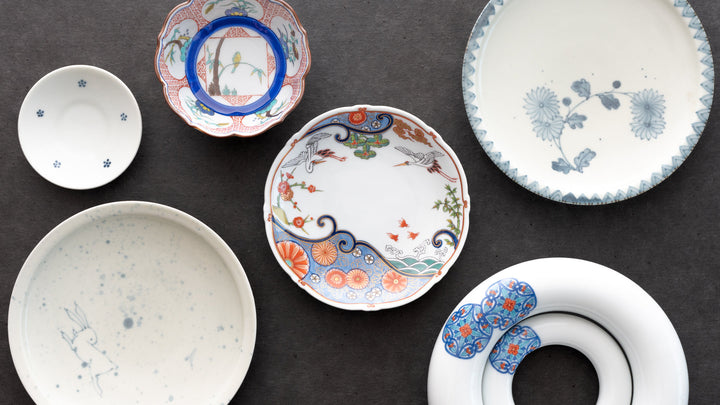
La beauté durable de la porcelaine fine d'Imari
Découvrez les origines et les traditions de la porcelaine Imari, du Kakiemon au Nabeshima,…
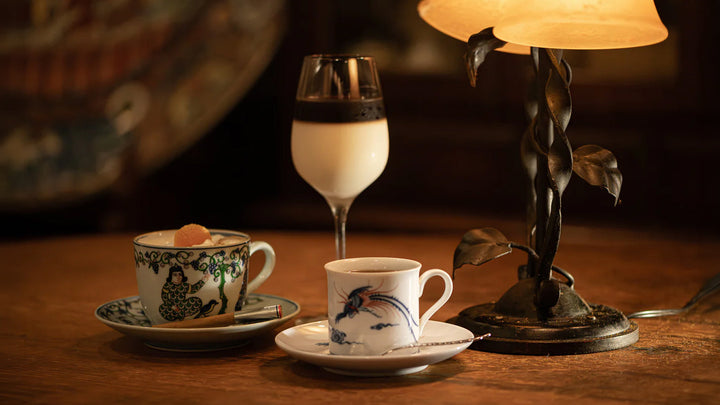
L'art du kissaten : la culture du café au Japon à travers le temps
Découvrez la culture du café japonaise à travers les traditions kissaten, l'artisanat du café…
Nakazawa Hiroko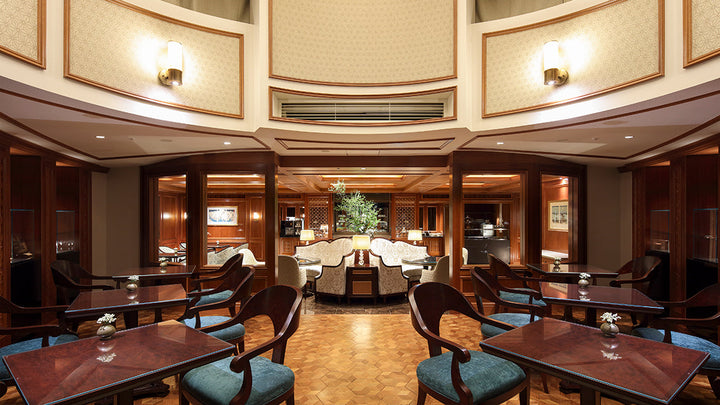
Hôtels de luxe à Tokyo : Là où l'art rencontre la tradition
Découvrez les hôtels de Tokyo où l'art rencontre l'histoire. Des jardins sereins aux havres…
Ito Ryo
Leave a comment