

Nishikata Ryota: Schönheit in Bewegung schmieden
Erfahren Sie mehr über Nishikata Ryotas seltene Tsuiki-Metallarbeiten, die mit Präzision und skulpturaler Schönheit gefertigt sind.
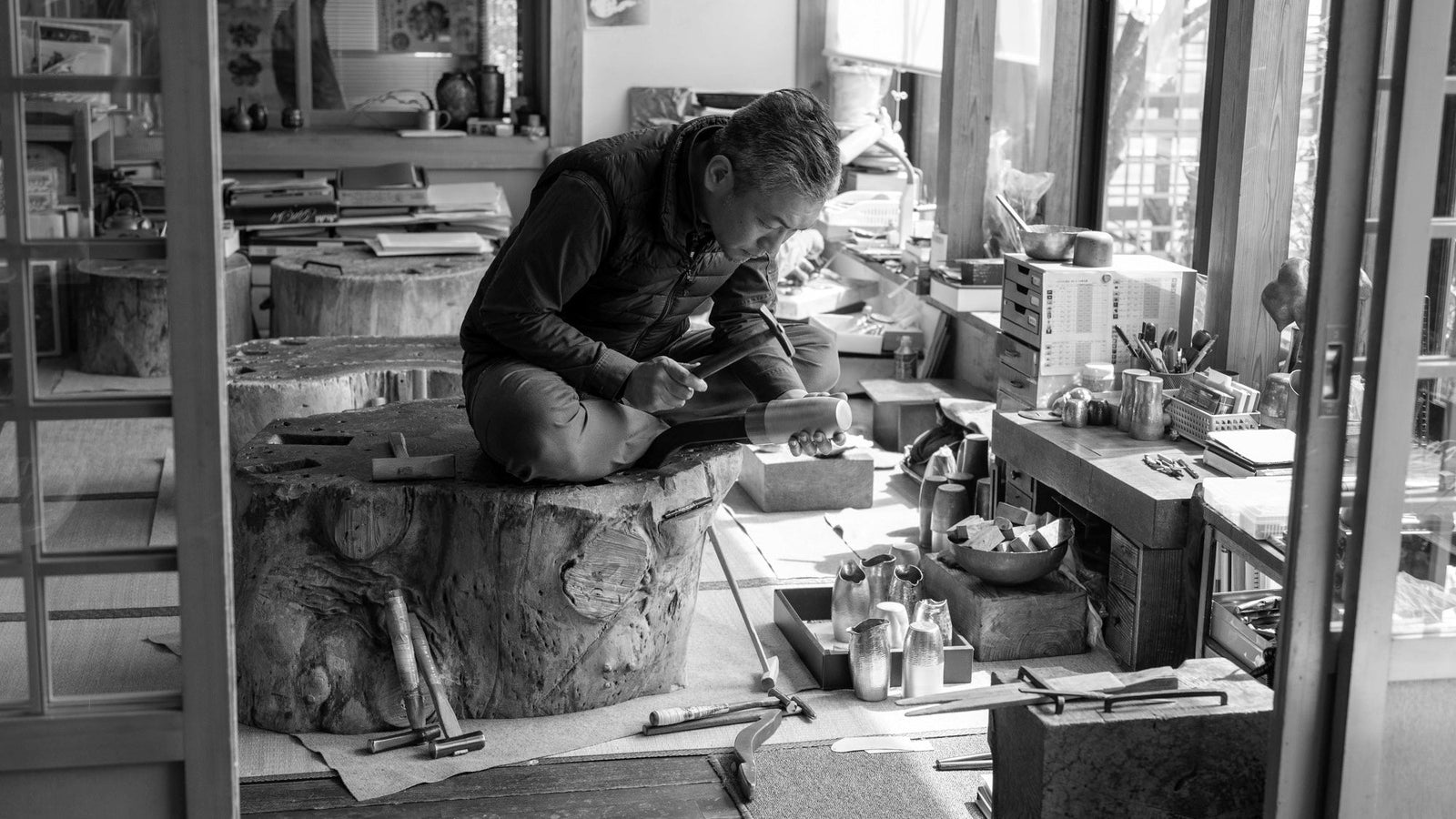
Unter Japans traditionellen Handwerkskünsten tsuiki -Metallarbeiten – getriebene Kupferwaren – gehören zu den beständigsten und raffiniertesten. Seit über drei Jahrhunderten fasziniert dieses Handwerk aus der Präfektur Niigata Sammler weltweit.
Jedes Stück beginnt als einzelnes flaches Kupferblech, das geduldig von Hand gehämmert wird, um das Material zu dehnen oder zu verdichten und in Form zu bringen. Das Ergebnis ist eine nahtlose Form, deren Festigkeit von ihrem sanften Glanz begleitet wird. Jeder Schlag hinterlässt eine Spur menschlichen Rhythmus und verwandelt Metall in etwas, das lebendig wirkt.
Bei Seigado, der 1945 von seinem Großvater gegründeten Werkstatt, führt Nishikata Ryota die Linie als Nachfolger der dritten Generation fort. Seine Arbeit verkörpert die Disziplin und sich entwickelnde Kunstfertigkeit, die die Werkstatt seit fast achtzig Jahren prägen.

Eine lebenslange Faszination für das Schaffen
Seit seiner Kindheit fühlt sich Nishikata zur Freude am Herstellen von Dingen hingezogen. Seine frühesten Erinnerungen sind das Zusammenbauen, Zerlegen und Wiederzusammenbauen von Bastelsets aus Zeitschriften, entschlossen, aus dem bereits Fertigen etwas Neues zu schaffen. Diese Neugier für Struktur und Neuerfindung hat ihn nie verlassen.

Obwohl seine Familie seit langem getriebene Kupferwaren herstellte, plante er zunächst nicht, das Handwerk zu übernehmen. „Ich wollte vom Herstellen von Dingen leben", erinnert er sich, „aber ich stellte mir vor, das würde Design oder Kunst bedeuten." Nach dem Studium der Handwerksgestaltung an der Universität und während er mit vielen verschiedenen Materialien arbeitete, entdeckte er die Anziehungskraft von Metall selbst – und die Freiheit der Techniken, mit denen es geformt wird. Dies wurde zu einem Wendepunkt in seiner Karriere.

Nach seinem Abschluss trat er in die Familienwerkstatt ein. In den nächsten zwei Jahrzehnten arbeitete er an der Seite seines Vaters und jüngeren Bruders und übernahm schließlich 2022 die Rolle des leitenden Handwerkers.
„Mein Vater lehrte mich, dass die Arbeit nicht mit einem perfekten Stück endet. Das Handwerk lebt in der Wiederholung, etwas immer wieder herzustellen, bis es Teil von einem wird."
Er fügt hinzu, dass der Antrieb, über Konventionen hinauszublicken und Ideen zu verfolgen, die andere übersehen mögen, eine Denkweise ist, die er von seinem Großvater geerbt hat, die an seinen Vater weitergegeben wurde und die nun von ihm getragen wird.
Wiederbelebung einer verlorenen Technik
Unter Nishikatas Schöpfungen definiert ein Stück sowohl sein Können als auch seinen Geist: der mimikuchi-uchidashi yuwakashi– ein Kessel, dessen Körper, Ausguss und mimi, zwei kleine ohrähnliche Vorsprünge, an denen der Griff befestigt ist, alle aus einem einzigen Kupferblech getrieben sind. Die Technik zur Herstellung dieses Kessels entstand vor etwa einem Jahrhundert, galt aber lange als verlorenes Handwerk.

Diese nahtlose Form, sowohl skulptural als auch funktional, erfordert außergewöhnliche Kontrolle. Sie umfasst unzählige Werkzeuge, Dutzende von Stadien und mehr als einen Monat geduldiger Arbeit. Aufgrund ihrer Komplexität können jedes Jahr nur eine Handvoll hergestellt werden. Heute ist Nishikata der einzige aktive Handwerker in Japan, der sie noch herstellen kann.
Er erklärt die Abstammung der Technik mit Respekt. Um 1920 entwickelte der Meistermetallarbeiter Sasage Kenjiro erstmals die Methode, aber sie verschwand bald, da sie zu arbeitsintensiv war, um aufrechterhalten zu werden. Jahrzehnte später stellte Ueno Yoshio, Nishikatas verstorbener Mentor, sie von Grund auf neu vor und belebte sie wieder.

Ueno bot an, Nishikata die Technik beizubringen, gerade als er mit schwierigen Methoden experimentierte, die die meisten jungen Handwerker mieden, und seine Werke jährlich auf der Kunstausstellung der Präfektur präsentierte. Und es war 2009, als er dreißig war, dass er Ueno bat, ihm die Technik beizubringen.
„Mein Lehrer sagte: ‚Beherrsche jetzt die schwierigsten Fähigkeiten – sie werden dich eines Tages retten.' Und er hatte recht." Nur wenige Jahre später, als tsuiki-Metallarbeiten internationale Anerkennung erlangten, begannen Bestellungen aus der ganzen Welt einzutreffen. Dieser Anstieg des Interesses half, Seigados Ruf über Japan hinaus zu etablieren, und er ist seitdem stabil geblieben.
Schönheit und Präzision in alltäglicher Form

Nishikatas Kunstfertigkeit liegt in seinem Streben nach Schönheit und Gebrauchsfähigkeit. „Eine Form muss schön sein, aber sie muss auch perfekt funktionieren", sagt er. Im mimikuchi-uchidashi-Kessel ist diese Philosophie am deutlichsten im Ausguss sichtbar. Der untere Teil ist gerundet und voll, die Spitze nach vorne in einer zarten Kurve geneigt, um ein sauberes Ausgießen zu gewährleisten. Das Gleichgewicht ist subtil, fast anatomisch, und schwer zu reproduzieren.

Da der Kessel vollständig aus einem Blech geformt ist, gibt es keine Nähte, die mit der Zeit schwächer werden könnten. Die Integrität der Form gewährleistet nicht nur ästhetische Harmonie, sondern auch bemerkenswerte Haltbarkeit.
„Ohne Nähte bleibt das Stück über Generationen hinweg ganz. Es ist auf diese Weise sowohl stärker als auch schöner."
Sein Prozess verkörpert den Rhythmus der Meisterschaft: einen Zyklus aus Schöpfung und Reflexion. „Kein Stück hat jemals unvollendet oder unbefriedigend meine Hände verlassen", sagt er leise. „Aber Monate oder Jahre später sehe ich immer etwas, das ich verbessern könnte. Das nächste ist immer die wahre Herausforderung."
Farbe, Oberfläche und subtiler Ausdruck
Nishikatas Arbeit zeichnet sich auch durch ihre Farbe aus. Seigados Kupferwaren sind für ihre sanften, aber lebendigen Oberflächen bekannt, die durch kontrollierte chemische Reaktionen erreicht werden. Durch Eintauchen des Kupfers in spezielle Lösungen verwandelt sich die Oberfläche langsam: ihr Ton wird von Temperatur, Luftfeuchtigkeit und dem Zustand der Flüssigkeit an diesem Tag beeinflusst.

Er beschreibt den Prozess als „zu gleichen Teilen Wissenschaft und Gefühl." Der goldene Farbton des mimikuchi-uchidashi-Kessels wird beispielsweise erzeugt, indem eine dünne Zinnschicht auf das Kupfer aufgeschmolzen und dann durch Hitze Farbe erzeugt wird. Das Ergebnis ist ein sanfter, gealterter Glanz statt eines auffälligen Glanzes. Die gehämmerte Oberfläche, oder tsuchime, fängt das Licht ungleichmäßig ein und offenbart zarte Tonverschiebungen.
Den Kessel umgeben mehrere schwache Bänder, ein subtiles Streifenmotiv, das von Sasages ursprünglichem Design übernommen wurde. „Die Schatten zwischen den Graten lassen die Form lebendig werden", bemerkt Nishikata.

Ein drei Jahrhunderte altes Erbe weitertragen
Als einziger lebender Praktiker der mimikuchi-uchidashi-Technik trägt Nishikata sowohl die Last als auch die Freiheit der Tradition. Er erkennt die Verantwortung an und bewahrt dabei eine moderne Perspektive. „Egal wie sehr wir es versuchen, wir können vergangene Stücke niemals perfekt nachbilden", reflektiert er. „Was wir tun können, ist jene vor uns zu ehren, indem wir durch unsere eigene Arbeit Entdeckungen machen."
In seiner Werkstatt fertigt er weiterhin jeden Kessel von Hand gemeinsam mit seiner Familie, geleitet von der Überzeugung, dass Verfeinerung endlos ist. „Ich bin dankbar, beschäftigt zu sein, aber ich ruhe mich niemals auf meinen Lorbeeren aus."

„Es gibt keine größere Anerkennung, als zu wissen, dass die Stücke, die ich herstelle, sehr lange genutzt werden", sagt er. Die Oberflächen seiner Kessel tragen sichtbare Hammerspuren – eine bewusste Entscheidung. Mit den Jahren entwickeln sich diese erhabenen und vertieften Texturen. Die Erhebungen polieren sich natürlich durch die Handhabung, während die Vertiefungen dunkler werden und das Muster betonen. Für Nishikata ist diese langsame Transformation Teil der Schönheit. „Ich hoffe, weiterhin Stücke zu schaffen, die von dieser Art der Anziehungskraft erfüllt sind", schließt Nishikata.
Die Kunst eines Handwerkers
Während seiner Universitätszeit träumte Nishikata einst davon, Künstler zu sein und schuf skulpturale Arbeiten aus Metall in späten Nächten und an Wochenenden. Heute, obwohl sich sein Fokus auf funktionales Handwerk verlagert hat, bleibt dieser kreative Geist in seiner Arbeit eingebettet. „Wenn mich jemals jemand bitten würde, wieder Kunst zu schaffen, würde ich es lieben", teilt er mit einem Lächeln.

In Wahrheit überbrücken seine außergewöhnlichen tsuiki-Stücke bereits Kunst und Gebrauch. Jedes trägt die Präzision der Nützlichkeit und eine Präsenz, die über Jahre hinweg Bestand hat – eine Verschmelzung, die durch seine lebenslange Verbindung zur Kunst möglich wird. Es ist die beständige Kunstfertigkeit eines Mannes, der durch Hammer und Hand dem Kupfer sowohl Schönheit als auch Leben verleiht.
Stay close to the craft
Now and then, a quiet letter — new stories, seasonal notes, and the hands behind the work.
Nishikata Ryota: Die Leidenschaft und die Herausforderungen von Tsuiki
Lernen Sie die Kunst des Tsuiki vom Meisterhandwerker Nishikata Ryota kennen, der kunstvolle Metallstücke…

Nishikata Hiroshi: Expertise aus der Schmuckindustrie für Tsuiki Innovation
Entdecken Sie bei Seigado, wie Nishikata Hiroshi sein Schmuckhandwerks-Know-how mit traditioneller Tsuiki-Metallhandwerkskunst verbindet.
Seigado – Die strahlende Schönheit von Kupfer
Erkunden Sie Seigados Studio und entdecken Sie traditionelle handgehämmerte Kupferwaren mit Einblicken in Produktion,…
Leave a comment