

Die Welt der Raku-Keramik: Form, Feuer und Wabi
Entdecken Sie Raku-Keramik, die von Hand und durch Feuer geformt wird. Erforschen Sie ihre Geschichte und die zeitlose Schönheit japanischer Teeschalen.
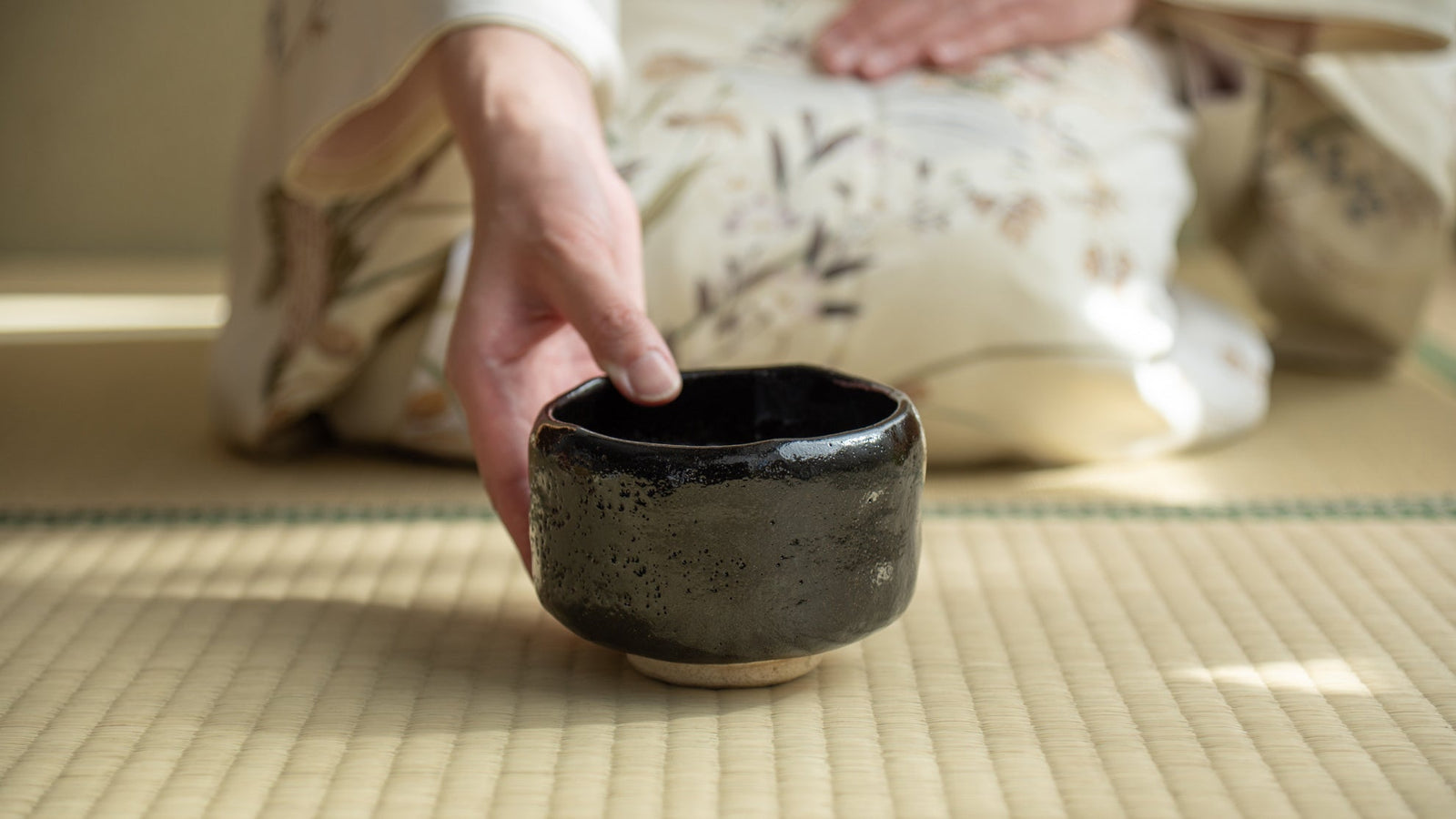
Raku-Ware ist eine Form der Töpferkunst, die den Geist von ichigo ichieverkörpert – „eine Zeit, eine Begegnung" –, ein zentrales Konzept der japanischen Teezeremonie. Für Tee geschaffen, steht sie für die vollkommene Verbindung von Tee, Keramik und menschlicher Begegnung. Jede Schale entsteht durch die geschickten Hände des Handwerkers und die unvorhersehbare Kraft des Feuers, wodurch unwiederholbare Muster und feine Variationen entstehen, die sicherstellen, dass kein Stück dem anderen gleicht.
In einer Raku-Teeschale werden Tee und Form eins. Ihre weiche Textur, ihr Gewicht in den Händen und die Sanftheit, mit der sie die Lippen berührt, schaffen eine Intimität, die von keiner anderen Teeschale erreicht wird. Mehr als ein Objekt, das betrachtet wird, ist sie eine Erfahrung, die sich durch Berührung, Bewegung und Gebrauch verwirklicht – eine, die sich im Akt der Teezubereitung vollendet.

Einzeln mit tiefer Sorgfalt gefertigt, trägt Raku-Ware über 450 Jahre Geschichte in sich und erinnert Gastgeber wie Gast an die Unersetzlichkeit des gegenwärtigen Augenblicks. Eine Raku-Teeschale zu halten bedeutet, etwas Einzigartigem zu begegnen: einem Objekt, das nur jetzt existiert, in dieser geteilten Zeit und an diesem Ort.
Dieser Artikel erkundet die Welt der Raku-Ware, ihre Geschichte, ihre anhaltende Anziehungskraft, die Variationen, die im Laufe der Zeit entstanden sind, und wie diese jahrhundertealte keramische Tradition im zeitgenössischen Leben weiterhin nachhallt.
Was ist Raku-Ware?
Raku-Ware ist eine Form japanischer Töpferkunst, die sich meist auf Teeschalen bezieht und im späten sechzehnten Jahrhundert in Kyoto mit dem Handwerker Chojiro (Lebensdaten unbekannt–1589 n. Chr.) ihren Ursprung fand. Seither wird sie von aufeinanderfolgenden Generationen der Raku-Familie weitergeführt. Während der Begriff zunächst ausschließlich Werke bezeichnete, die innerhalb dieser Linie entstanden, erweiterte sich seine Bedeutung allmählich auf Keramiken, die mit denselben Techniken hergestellt wurden, sowie auf handgeformte Teeschalen, die von Teepraktizierenden gefertigt und innerhalb dieser Traditionen gebrannt wurden.

Ein bestimmendes Merkmal der Raku-Ware liegt in ihrer Formgebungsmethode. Raku-Teeschalen werden aus weichem Ton gefertigt, der rund um Kyoto gewonnen wird, und vollständig von Hand geformt, ohne Verwendung einer Töpferscheibe. Die Form entsteht langsam durch tezukune (Handformung) und wird durch bewusste, skulpturale Spatelarbeit verfeinert. Ob durch subtile Einbuchtungen oder sanfte Unregelmäßigkeiten – die Schale legt sich oft auf natürliche Weise in die Hände und erzeugt ein Gefühl von Wärme und Nähe, das sich mit dem Gebrauch vertieft. Diese Unmittelbarkeit der Herstellung verleiht Raku-Ware ihre charakteristische Tiefe und anhaltende Resonanz innerhalb der Teepraxis.
Raku-Ware ist vor allem für Aka Raku (rote Raku) und Kuro Raku (schwarze Raku) Teeschalen bekannt. Anstatt eine dekorative Funktion zu erfüllen, werden diese Schalen für ihre taktile Qualität, ihre zurückhaltenden Formen und ihre Präsenz geschätzt. Sie entstanden durch die enge Zusammenarbeit zwischen dem Teemeister Sen no Rikyu (1522–1591 n. Chr.) und dem Töpfer Chojiro, wobei Rikyu Gefäße förderte, die seine wabi -Ästhetik verkörperten: Einfachheit, Bescheidenheit und Achtsamkeit für den gegenwärtigen Moment.
In chanoyu, der japanischen Teezeremonie, wird diese Sensibilität oft als wabi-sabi beschrieben. Obwohl die Worte wabi und sabi sich auf Entbehrung, Einsamkeit und das stille Vergehen des Lebens bezogen, wurden sie innerhalb der japanischen Poesie und Teekultur als ästhetische Ideale kultiviert. Wabi-sabi umarmt Einfachheit, Stille und Unvollkommenheit und findet Tiefe in dem, was zurückhaltend, verwittert und vergänglich ist, statt in dem, was kunstvoll oder dauerhaft ist. Dadurch fördert es eine Wertschätzung des gegenwärtigen Moments: was hier und jetzt ist und die Menschen, mit denen es geteilt wird. Raku-Ware trägt diesen Geist in materielle Form.

Geschichte der Raku-Ware
Die Geschichte der Raku-Ware ist untrennbar mit der von chanoyu verbunden. Ihre Ursprünge liegen im sechzehnten Jahrhundert, als Chojiro begann, Teeschalen im Auftrag von Sen no Rikyu herzustellen, der die Grundlagen der modernen Teezeremonie etablierte. Diese Schalen wurden nicht als eigenständige Kunstwerke konzipiert, sondern als integrale Elemente innerhalb der Teepraxis.

So wie Rikyus Linie durch die drei Hauptteeschulen Omotesenke, Urasenke und Mushanokoji Senke weitergeführt wurde, hat sich die Herstellung von Raku-Ware als erbliches Handwerk der Raku-Familie fortgesetzt. Seit über 450 Jahren übertragen aufeinanderfolgende Generationen ihre Techniken und Philosophie. Bemerkenswert ist, dass die Methoden der Formgebung und des Brennens von Raku-Ware heute im Wesentlichen unverändert gegenüber jenen sind, die zu ihrem Beginn praktiziert wurden.
Das derzeitige Oberhaupt der Raku-Familie repräsentiert die sechzehnte Generation seit Chojiro. Im Laufe der Geschichte haben die Raku-Familie und die von Rikyu abstammenden Teelinien in engem Dialog zusammengearbeitet, vereint durch das gemeinsame Streben nach Harmonie zwischen Tee und Schale.
Technisch entwickelte sich Raku-Ware aus der sancai (Dreifarbigen) Keramik der Ming-Dynastie Chinas (1368–1644 n. Chr.). Chojiros Vater, Ameya, soll ein Töpfer chinesischer Herkunft aus der Provinz Fujian gewesen sein, der sancai-Techniken nach Japan brachte. Während der Momoyama-Zeit (1573–1615 n. Chr.) wurde Kyoto zu einem Zentrum für die Produktion sancai-basierter Keramiken, und Chojiro nahm an diesem Milieu teil. Es wird angenommen, dass er seine erste Raku-Teeschale 1579 herstellte.
Zu Lebzeiten von Chojiro und Rikyu waren diese Werke noch nicht als Raku-Ware bekannt. Sie wurden zunächst imayaki (Waren der Gegenwart) genannt, was ihren innovativen Charakter widerspiegelte, und später Juraku-yaki, nach dem Jurakudai-Palast, der von einem der Großen Einiger Japans, Toyotomi Hideyoshi (1537–1598 n. Chr.), in der Nähe der Wohnsitze von Chojiro und Rikyu erbaut wurde. Dieser Name wurde schließlich zu Raku-yaki oder Raku-Ware verkürzt. Der Überlieferung nach verlieh Hideyoshi Chojiro ein Siegel mit dem Schriftzeichen „樂 (raku)", von dem der Familienname abgeleitet wurde. Dies stellt einen seltenen Fall in der Keramikgeschichte dar, in dem eine Familienlinie und nicht ein Produktionsort oder eine stilistische Zuschreibung den Namen und die Identität der Ware definierte.

Arten und Verbreitung von Raku-Keramik
Unter den verschiedenen Formen der Raku-Keramik nehmen Aka Raku und Kuro Raku eine zentrale Stellung ein. Obwohl Raku-Keramik technische Wurzeln in chinesischen Sancai-Traditionen hat, entwickelte sie sich zu einer ausgesprochen zurückhaltenden keramischen Form, die sich durch die ausschließliche Verwendung monochromer roter oder schwarzer Glasuren auszeichnet.
Sowohl Aka Raku- als auch Kuro Raku-Teeschalen werden durch Tezukune (Handformung) geformt, langsam in den Handflächen aufgebaut und nicht auf der Scheibe gedreht. Die Oberfläche wird dann durch sorgfältiges Spatelschnitzen verfeinert, ein bildhauerischer Prozess, der überschüssigen Ton Strich für Strich entfernt. Die Schale wird im Ofen gebrannt und herausgenommen, bevor der Ton vollständig aushärtet, dann rasch abgekühlt. Dieser Prozess erzeugt eine weiche Keramik, die sich von hochgebranntem Steinzeug unterscheidet.


Bei Aka Raku stammt die rote Farbe vom eisenreichen roten Ton, der ursprünglich aus Juraku-Ton gewonnen wurde, der in der Nähe des Jurakudai-Palastes ausgegraben wurde. Bei etwa 800 °C mit einer transparenten Glasur gebrannt, zeigt Aka Raku oft ein komplexes Zusammenspiel von Rot-, Braun-, Grau- und Schwarztönen, keshiki „Landschaften", die durch Flammen und nicht durch Gestaltung geformt werden. Historisch gilt Aka Raku als die frühere der beiden Formen.


Bei Kuro Raku entwickelte Chojiro eine tiefschwarze Glasur, indem er pulverisierte schwarze Steine einarbeitete, die aus dem Kamo-Fluss in Kyoto gesammelt wurden. Die Schale wird bei etwa 1000 °C gebrannt, dann im präzisen Moment des Glasurschmelzens herausgenommen und rasch abgekühlt. Jede Kuro Raku-Schale wird einzeln gebrannt, was zu Variationen in Form und Oberfläche führt.
Über Generationen der Raku-Familie hinweg hat sich die Behandlung der schwarzen Glasur weiterentwickelt. Einige Kuro Raku-Schalen zeigen rote Flecken, die durch die schwarze Oberfläche hervortreten. Dieser Effekt, der durch die Mischung von shu-gusuri (Zinnoberglasur) und der schwarzen Glasur erreicht wird, wurde von Donyu (1599–1656) aus der dritten Generation eingeleitet und von Ichinyu (1640–1696) aus der vierten Generation verfeinert. Diese Innovation sollte einen bleibenden Einfluss auf spätere Raku-Keramik ausüben.
Raku-Keramik lehnt dekorativen Überfluss ab und stellt Einfachheit, Gewicht und Präsenz in den Vordergrund. Innerhalb der begrenzten Palette von Rot und Schwarz erreicht sie eine bemerkenswerte Ausdruckskraft und ermöglicht es der Schale, nicht nur als Gefäß zu fungieren, sondern als aktiver Teilnehmer an der Zubereitung und dem Teilen von Tee.

Utsushi: Neuer Körper, geteilter Geist
Originale Raku-Keramik aus der Raku-Familie wurde mit tiefer Sorgfalt verwendet und über Generationen weitergegeben. Einige von Chojiros ursprünglichen Teeschalen existieren noch heute und werden sogar weiterhin verwendet, darunter eine von Rikyus Favoriten, Kamuro. Gleichzeitig erweiterte sich Raku-Keramik sowohl in Bedeutung als auch in der Praxis durch das Konzept von utsushi.
Utsushi bezeichnet die respektvolle Reproduktion eines Originals (honka), nicht als Fälschung mit der Absicht zu täuschen, sondern als Akt der Ehrerbietung, der danach strebt, den Geist, die Form und die Technik des ursprünglichen Werks zu bewahren. In der Welt des Tees wird utsushi sowohl als Ausdruck der Hommage als auch als Mittel zur Bewahrung von Wissen geschätzt, sollte das Original verloren gehen.
Die Aka Raku-Teeschale namens Kimamori verkörpert diesen Geist. Die Schale befand sich einst im Besitz von Sen no Rikyu. Bei einer Gelegenheit erlaubte er seinen Schülern, ihre bevorzugten Teeschalen auszuwählen; die einzige, die zurückblieb, war diese Schale. Rikyu begann, sie tief zu schätzen, und verglich sie mit Kimamori-gaki: dem Brauch, nach der Ernte absichtlich eine Kaki am Baum zu belassen als Dankesopfer an die Natur, als Wunsch nach künftigem Überfluss und als Geschenk an andere Lebewesen. Er nannte die Schale Kimamori und schätzte sie sein Leben lang.

Die Schale wurde anschließend über Generationen weitergegeben. Sie wurde jedoch beim Großen Kanto-Erdbeben schwer beschädigt, sodass nur wenige Fragmente übrig blieben. Nach der Katastrophe schuf das damalige Oberhaupt der Raku-Familie, Seinyu (1887–1944), eine neue Schale, die Stücke des Originals einarbeitete und sich auf bestehende utsushi von Kimamoristützte. Diese Episode spiegelt einen tiefen Respekt sowohl für das Handwerk als auch für seinen Schöpfer wider und umfasst zugleich ein buddhistisches Verständnis von Vergänglichkeit: Alle Dinge verändern sich ständig, und nichts bleibt. Anstatt diese Wahrheit zu leugnen, wird Wertschätzung durch kreative Erfindungsgabe und die Weitergabe von Wissen aufrechterhalten.
Durch solche Praktiken hat utsushi eine entscheidende Rolle bei der weiteren Verbreitung von Raku-Keramik gespielt, indem es ihre Ästhetik und Philosophie über die Raku-Linie hinaus ausdehnte und ihren Platz in der breiteren Welt der Keramik sicherte.

Der Reiz von Raku-Keramik: Die spirituelle Verkörperung von Wabi
Raku-Teeschalen laden zur Begegnung durch alle fünf Sinne ein. Man spürt die Wärme des Tees durch den Körper der Schale, verfolgt die Abdrücke der Finger des Schöpfers und begegnet den Texturen von Ton und Glasur, die durch Feuer geformt wurden. Sie sind Gefäße, die nicht nur gesehen, sondern vollständig erlebt werden sollen.
Die Welt von Rot und Schwarz, die durch Raku-Keramik kultiviert wird, entsteht aus einer innigen Beziehung zu Erde, Stein und Flamme. Ohne die Gaben natürlicher Materialien und Energie kann Raku-Keramik nicht existieren. Feuer vollendet die Schale nicht nur; es nimmt an ihrer Entstehung teil und hinterlässt Spuren, die sich vollständiger Kontrolle entziehen.

Als weiche Keramik nimmt Raku-Keramik Wärme sanft auf und hält sie, überträgt sie sanft auf die Hände und verstärkt die sensorische Erfahrung des Tees. Diese physische Eigenschaft vertieft den Moment der Begegnung und lenkt die Aufmerksamkeit auf Wärme, Gewicht und Präsenz.
Im Kern schätzt chanoyu die Begegnung der Herzen zwischen Gastgeber und Gast. Die Rolle von Raku-Keramik ist nicht nur praktisch bei der Zubereitung von Tee; sie trägt eine tiefere Absicht, Harmonie zwischen Menschen und zwischen Menschheit und Natur zu fördern. Auf diese Weise verkörpert Raku-Keramik die wabi-Ideale im Kern der Teezeremonie.
Letztlich ist Raku-Keramik mehr als eine keramische Tradition oder eine funktionale Teeschale. Durch ihre materiellen Eigenschaften, ihren Herstellungsprozess und ihre Verwendung innerhalb von Chanoyu gibt sie einer Art des Sehens und Bewohnens der Welt Form. Indem sie das Bewusstsein für Wärme, Präsenz und menschliche Verbindung fördert, verkörpert sie das Wabi-Ideal der Harmonie zwischen Menschen, Natur und dem flüchtigen Moment, den sie teilen. Dabei erinnert uns Raku-Keramik daran, dass Bedeutung in Einfachheit, Unvollkommenheit und Begegnung zu finden ist.
Stay close to the craft
Now and then, a quiet letter — new stories, seasonal notes, and the hands behind the work.
Was ist Wabi-Sabi? Die Entdeckung einer zentralen japanischen Ästhetik
Entdecken Sie Wabi-Sabi, die japanische Ästhetik der Unvollkommenheit, des Alterns und der Pflege, und…
Was ist Ukiyo-e? Ein Blick auf Japans ikonische Holzschnittkunst
Entdecken Sie die Schönheit des Ukiyo-e, von der Kunstgeschichte der Edo-Zeit bis hin zu…
Nihonga: Die Kunst der japanischen Malerei
Entdecken Sie die elegante Welt des Nihonga, der japanischen Malerei, die in Natur und…
Leave a comment