

Nakada Kazuo: Ein Meister von Silber auf Porzellan
Lernen Sie Nakada Kazuo kennen, einen Meister der Herstellung von Kunis-Waren und Unterglasur-Blattsilber.
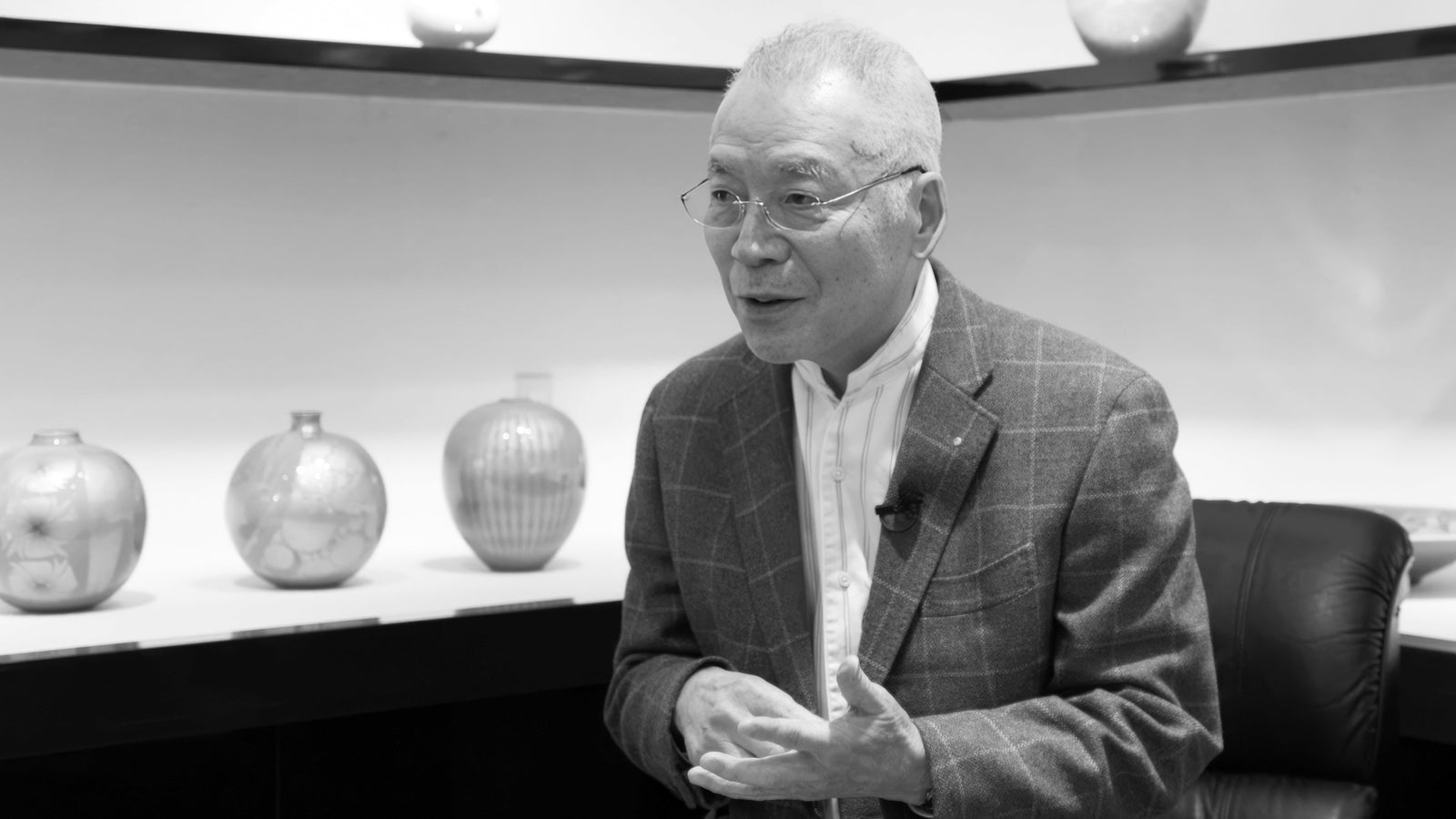
Selbst unter den Künstlern der Kutani-Ware, einem Handwerk, das für seine große Stilvielfalt bekannt ist, sticht Nakada Kazuo durch seine außergewöhnliche Individualität hervor. Seine eleganten Werke, geboren aus hochverfeinerten Techniken, fesseln weiterhin Sammler in Japan und im Ausland.
Nakada ist der einzige Künstler, der die Technik des yuri-ginsai, der Unterglasur-Silberauflage, gemeistert und verkörpert hat. Yuri-ginsai wurde 2025 von der japanischen Regierung als Technik höchsten Ranges anerkannt, würdig der Bewahrung und Verbreitung. Nakada wurde zudem zum Träger eines wichtigen immateriellen Kulturerbes ernannt – eine Ehre, die oft als „Lebender Nationalschatz" bezeichnet wird und nur den herausragendsten Künstlern Japans zuteilwird. Anders als die lebhaften Farben und Goldverzierungen, die typischerweise mit Kutani-Ware assoziiert werden, präsentiert ginsai eine neue Ausdrucksform mit einem ganz eigenen, einzigartigen Reiz. Hier beleuchten wir den Hintergrund der hohen künstlerischen und technischen Exzellenz in Nakadas yuri-ginsai.


Der Meister, der den Künstler Nakada Kazuo formte
Nakada Kazuo, heute 76 Jahre alt, wurde 1949 in Komatsu City im Süden der Präfektur Ishikawa als ältester Sohn von Nakada Takeo geboren, selbst ein Künstler der Kutani-Ware. Mit achtzehn Jahren, nach seinem Schulabschluss, begann er in der von seinem Vater geführten Nakada Kinen Kiln zu arbeiten. In seinen frühen Jahren trainierte er im Stil seines Vaters, doch bald darauf begegnete er dem Mann, der sein lebenslanger Mentor werden sollte: dem verstorbenen Tokuda Yasokichi III, einer führenden Autorität der Kutani-Ware, der später zum Träger eines wichtigen immateriellen Kulturerbes ernannt wurde. In diesem Moment wich Nakada vom Weg seines Vaters ab, der sich auf kommerziell orientierte Arbeiten spezialisiert hatte. Von da an beschritt Nakada stattdessen den Weg eines Künstlers, der den künstlerischen Ausdruck betont.

Die Beziehung zwischen Nakada und Tokuda begann, als Nakada mit Tokuda über seinen Wunsch sprach, Arbeiten bei der Japan Traditional Crafts Exhibition einzureichen, der größten offenen Ausstellung für traditionelles Handwerk des Landes und einem Tor zum Erfolg für junge Künstler. Zu dieser Zeit hatte Nakada bereits Werke eingereicht, die im damals populären komon -Malstil dekoriert waren, bei dem detaillierte Muster eine Oberfläche füllen. Nach mehreren Versuchen hatte er das Glück, ausgewählt zu werden, doch im folgenden Jahr schaffte er es nicht. Als Nakada darum rang, seinen nächsten Schritt zu entscheiden, konsultierte er Tokuda, damals Juror der Ausstellung, der ihm diesen Rat gab: „Wenn Sie weiterhin dasselbe tun wie alle anderen, werden Sie nur mit ihnen verglichen. Wäre es nicht der schnellste Weg, sich als Künstler zu etablieren, wenn Sie darauf abzielen, für einzigartige, höchst individuelle Werke bewertet zu werden?"
Dieser Anleitung folgend, begann Nakada nach einer Technik zu suchen, die noch niemand versucht hatte. Schließlich kam ihm eine Idee: Silber zu verwenden. Anders als Gold, für das es bereits viele Präzedenzfälle gab, reagiert Silber leicht chemisch mit Schwefelverbindungen in der Luft und dunkelt nach, was es zu einem lange gemiedenen Material machte, das Keramikkünstlern praktisch unbekannt war.

Nachdem Tokuda die Probestücke, die Nakada mit Silberblatt angefertigt hatte, sorgfältig geprüft hatte, ermutigte er ihn mit den Worten: „Das ist interessant. So etwas habe ich noch nie gesehen. Wenn es funktioniert, könnte es zu einem lebenslangen Kapital werden." Diese Worte zu Herzen nehmend, reichte Nakada 1982 ein Werk bei der Japan Traditional Crafts Exhibition ein und erhielt eine ehrenvolle Erwähnung. Auf dieser Dynamik aufbauend, widmete er sich in den folgenden fünfundvierzig Jahren von ganzem Herzen der Schaffung von Werken mit Silberblatt.
Yuri-Ginsai – Kutani-Ware, geschmückt mit einzigartiger Schönheit
Nakadas Werke unterscheiden sich stark von anderen Kutani-Waren, die konventionell lebhafte Farben und akribische Dekorationen mit figurativen Motiven und Mustern umfassen. Die einzigartige Technik, die Nakadas Arbeit ermöglicht, ist yuri-ginsai, so benannt vom Künstler selbst.
Der erste Schritt von yuri-ginsai besteht darin, Silberblatt in die gewünschten Formen zu schneiden und auf den Keramikkörper aufzubringen. Dies geschieht mit einem tierischen Leim namens nikawa , der hauptsächlich aus Gelatine besteht. Nach dem Trocknen wird das Stück im Ofen gebrannt, um das Silberblatt fest mit der Keramik zu verbinden. Es ist jedoch äußerst selten, nach einem einzigen Brand ein schönes Finish zu erzielen. Der Prozess erfordert wiederholtes Herauspressen eingeschlossener Luft zwischen Silberblatt und Keramik sowie mehrfaches Nachbrennen. Mehrere Arten von Silberblatt mit unterschiedlichen Stärken werden verwendet, um Tonvariationen zu erzeugen. Wenn mehrere Schichten Silberblatt aufgetragen werden, um die Dicke zu erhöhen, ist eine noch sorgfältigere Luftentfernung erforderlich.


Ein weiteres bestimmendes Merkmal von Nakadas yuri-ginsai zeigt sich im nächsten Teil des Schaffensprozesses. Über die mit Silber verzierte Oberfläche trägt er selbst entwickelte Glasuren auf und brennt sie, wie ein sanft elegantes Blassblau, oder tansei; ein blasses Rosa, das an Kirschblüten erinnert, genannt tan-o; und ein raffiniertes blasses Violett, shion.


„Zusätzlich zu meinen ursprünglich entwickelten, farbigen Glasuren tansei, tan-o und shion verwende ich auch eine transparente Glasur namens hakugin, oder ‚weißes Silber'. Diese Glasuren basieren auf den traditionellen, lebhaften Glasurfarben der Kutani-Ware, die als Kutani gosai, oder ‚fünf Farben', bekannt sind. Ich habe jedoch die Pigmentmenge reduziert, sodass sie zu viel blasseren Tönen brennen. In Silberblatt geschaffene Muster scheinen durchscheinend durch diese sanft gefärbten Glasuren hindurch, als wären sie unter der Wasseroberfläche versunken."
Unter den vier Glasuren hat das Blassblau von tansei für Nakada eine besondere Bedeutung, da diese Glasur ihn dazu veranlasste, sich vollständig yuri-ginsai zu widmen.


„Die Anziehungskraft von Silber liegt in der kühlen, reinen Qualität, die Gold nicht besitzt. Als ich es durch dieses blasse Blau sah, war selbst ich überrascht, wie schön es wirkte. Es erschien mir als eine moderne Farbe, die perfekt zu unserer Zeit passt, und ich selbst wurde vollkommen davon eingenommen. Durch das vollständige Überziehen des Silbers mit Glasur wird Verfärbung verhindert und die Schönheit des Silbers kann unbegrenzt bewahrt werden, doch dieser Vorteil war lediglich ein sich ergebendes Nebenprodukt."
Was eine fünfzigjährige künstlerische Laufbahn aufrechterhielt
Seit Nakada mit yuri-ginsai zu arbeiten begann, sind nun fast fünfzig Jahre vergangen. Er hat seine Position als aktiver Künstler an vorderster Front bewahrt, indem er sich ohne Pause weiter herausforderte.
Nakada erklärt, dass hinter diesem mutigen und beharrlichen Ansatz der Rat steht, den er von Tokuda Yasokichi erhielt, dem Mentor, der ihm erstmals den Weg zu yuri-ginsai eröffnete. Als Nakada wiederholt Ausstellungspreise gewann, wuchs sein Ruf allmählich, und er begann, als vielversprechender junger Künstler Aufmerksamkeit zu erregen. In dieser Zeit gab ihm Tokuda eine strenge, aber hilfreiche Warnung: „Wenn Sie jemals Ihre Aufmerksamkeit schweifen lassen, werden Sie sicher von denen überholt, die nach Ihnen kommen, und Ihr Leben als Künstler wird enden."
Nakada erklärte: „Seit Tokuda-sensei mir das sagte, war ich mir stets bewusst, dass ich der führende Schöpfer von yuri-ginsai sein und es als etwas einzigartig Eigenes schützen möchte. Deshalb präsentiere ich bei jeder Ausstellung weiterhin neue Werke, die Veränderungen einbeziehen, die nie zuvor gesehen wurden, sei es in Farbe oder Muster."


Eine solche Gestaltungsinnovation umfasst Motive geschichteter Kreise aus geschnittenem Silberblatt, maru-mon, neben denen abstrakte, gekerbte Muster, ebenfalls aus Silberblatt, liegen; zwischen den größeren Silberblattkreisen sind kleinere Goldblattkreise verstreut, die als Akzente wirken. Ebenso entwickelten sich die geraden vertikalen Streifenmuster, die einst ganze Oberflächen bedeckten, im Laufe der Zeit zu Mustern, die als tatewaku-monbekannt sind und aufsteigenden Dampf darstellen sollen. Eine weitere Schöpfung Nakadas ist ein Spiel mit floralen Motivmustern, hana-mon, die neben kreisförmigen und Dampfmotiven zu den Standardmustern von Kutani-Ware gehören. Doch Nakadas Blumen bilden nicht nur kühne, abstrakte Kompositionen, sondern nehmen auch die technisch weitaus anspruchsvollere Herausforderung komplexer, figurativer Ausdrucksformen an.
Während dieser selbstbewusste, erkundende Ansatz unweigerlich mit Schwierigkeiten verbunden ist, sagt Nakada, dass die Freude, die er empfindet, wenn Sammler und Bewunderer seine Arbeit loben, unersetzlich ist.
Was sich weiter verändert – als Träger der Tradition
Nun, da seine durch jahrelange engagierte Praxis verfeinerten Dekorationstechniken von der Nation mit der höchsten Ehre anerkannt wurden, der Ernennung zum Träger wichtigen immateriellen Kulturerbes, was kommt als Nächstes für Nakada?
Empfänger dieses Titels sind damit betraut, ihre Fähigkeiten an zukünftige Generationen weiterzugeben, und Nakada glaubt, dass der wichtigste Weg dazu durch die eigene Arbeit führt. Wie durch sein yuri-ginsai verkörpert, ist seine Überzeugung, dass „Tradition immer etwas ‚Neues' ist. Nur durch fortlaufende Veränderung kann sie für die Gesellschaft der Zeit notwendig bleiben und einen Wert besitzen, der es wert ist, an zukünftige Generationen weitergegeben zu werden." Nakada sagt, dass ihn nichts glücklicher machen würde, als wenn seine eigene Arbeit als Grundlage dienen könnte, aus der eine neue Generation von Kutani-Ware entstehen könnte.

„Ich werde bald 80 Jahre alt sein, aber ich möchte weiterhin einzigartige Stücke schaffen. Wenn es um yuri-ginsai geht, möchte ich gegen niemanden verlieren. Ich möchte meinen Sammlern weiterhin angenehme Überraschungen durch Ausdrucksformen bieten, die nie zuvor gesehen wurden, und dafür werde ich mich diesen einen Schritt weiter vorantreiben."
Die Herausforderungen, die der Träger wichtigen immateriellen Kulturerbes Nakada Kazuo unternimmt, stets auf der Suche nach noch größeren Höhen, werden sich in die Zukunft fortsetzen.
Stay close to the craft
Now and then, a quiet letter — new stories, seasonal notes, and the hands behind the work.
Nakada Hiroshi: Die Natur gestalten Weiß Porzellan
Tauchen Sie ein in die Welt von Nakada Hiroshi, wo zarte Formen und perlmuttartige…
Vergoldete Linien und sich ausdehnende Formen: Das Werk von Ishitomi Shunjiro
Entdecken Sie die Kutani-Keramikkunst von Ishitomi Shunjiro, in der schwarze Linien, goldene Verzierungen und…
Von Hand geformt, von der Natur bewegt: Yamaura Saori
Entdecken Sie die stille Schönheit der handgeformten Keramiken von Yamaura Saori, die von der…
Leave a comment