

Taruta Hiroshi: Líneas luminosas talladas en celadón
Descubra las piezas de celadón del artista de cerámica Seto, Taruta Hiroshi, donde las líneas talladas en porcelana brillan con luz.
Delicados haces de luz que atraviesan la porcelana como rayos de sol entre nubes. Ondulaciones que parecen moverse entre la iluminación y la sombra. Esto es hotarudelineal, el estilo característico del artista de cerámica de Seto, Taruta Hiroshi. Literalmente "técnica de luciérnaga", hotarude consiste en finos recortes tallados en porcelana cubierta con un esmalte translúcido. Al cocerse, el esmalte se funde sobre los recortes, creando una vasija sin costuras que permite el paso de la luz, como los brillantes destellos de luciérnagas danzando en una noche oscura de seda.

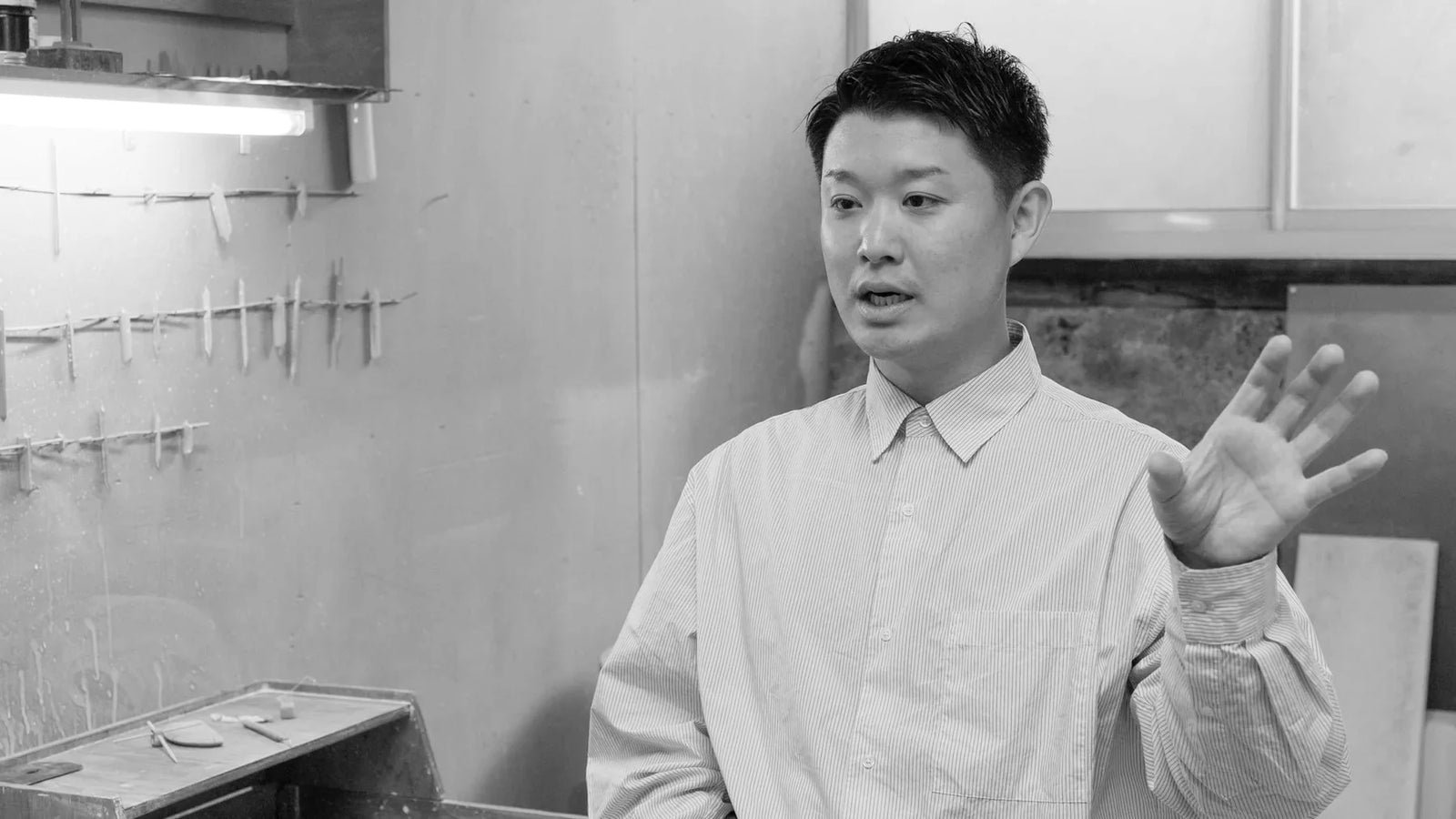
El equipo Musubi visitó el taller de Taruta en la histórica ciudad alfarera de Seto para conocer su trayectoria como artista y cómo elabora estas vasijas elegantes. Allí descubrimos un largo camino de experimentación, uno que continúa buscando nuevos destinos en el mundo del hotarude.
Encontrando el Camino Hacia la Cerámica
Taruta no había planeado convertirse en artista, ni siquiera en alfarero. Tampoco la cerámica era tradición familiar; su padre trabajaba como artesano de laca fabricando accesorios para altares budistas. Sin embargo, Taruta no fue presionado a heredar el oficio de la lacado. Más bien, fue el deseo de trabajar con las manos combinado con un conocimiento claro de lo que no quería hacer lo que llevó a Taruta a dedicarse a la cerámica.
"Cuando llegó el momento de los exámenes de ingreso a la preparatoria", recuerda Taruta, "fue un proceso de eliminación, básicamente. Como, 'No quiero ir a una escuela general, mecánica o comercial'".

Había disfrutado una experiencia de cerámica en el Museo de Materiales local, ahora el Museo de Cerámica de la Prefectura de Aichi, además de que los centros históricos de producción tanto de Seto ware como de Tokoname ware están cerca de su Nagoya natal. Finalmente, eligió estudiar en Seto.
"No fui a la Preparatoria de Cerámica de Seto con la intención específica de convertirme en ceramista en ese momento. Pero siempre me había costado imaginarme en un trabajo donde se usa traje. Me gustaba hacer cosas, y como estaba involucrado en la alfarería, me atraía la idea de pensar por mí mismo, crear bajo mis propios términos y llevar esas obras directamente a la gente".
Una Visión Artística Tallada en Luz
Después de la preparatoria, Taruta estudió dos años más en un curso de posgrado en la misma escuela antes de entrar en un aprendizaje con el alfarero Hatano Masanori. Ahí fue donde su visión artística tomó forma.
"Durante mi aprendizaje, teníamos un descanso a las tres de la tarde y conversábamos. Él preguntaba, '¿Qué quieres hacer?' o '¿Qué te gusta?'" Luego discutían los intereses de Taruta: el blanco de la porcelana y el azul pálido del celadón; la arquitectura y los tallados. La luz que atraviesa las nubes o por la rendija de una puerta entreabierta. La sensación misteriosa del hotarude. Otros artistas locales eran conocidos por hotarude que involucraba pequeños agujeros o perforaciones redondas en la arcilla, pero Hatano comentó: "Nunca he visto hotarude hecho con líneas". Eso impulsó a Taruta a combinar sus intereses en uno solo y abordar el desafío de diseños de hotarude lineal.

Comenzando con líneas talladas cortas, Taruta siguió un largo camino de experimentación, refinando la composición del esmalte, experimentando con diferentes tallados para crear gradaciones de luz y engrosando las líneas. Al principio, el 90 por ciento de las piezas que salían del horno fallaban. Pero a través de extensos ensayos y errores, finalmente encontró su estilo.
Una Visión del Mundo Ampliada en Europa
El siguiente punto de inflexión para Taruta fue su estancia de trabajo en Alemania, seguida de un viaje mochilero por Europa a los 28 años. En ese momento, se había estado cuestionando si su trabajo era lo suficientemente bueno, pero la reacción positiva que recibió en el extranjero le dio confianza de que iba por el camino correcto.
A pesar de no saber alemán, asistió a un curso de dos semanas en una escuela de alfarería alemana y visitó talleres de artistas. Las diferencias fueron sorprendentes. El torno gira en dirección opuesta: en sentido antihorario en lugar de horario. Las posiciones de las manos se invierten al amasar la arcilla. Incluso el uso de herramientas es diferente. Y aunque antes solo le interesaban las formas arquitectónicas, la naturaleza comenzó a conmoverlo también, una lección pasada de Hatano que Taruta finalmente comprendió.
"Más que como artista", añade Taruta, "fue importante para mi forma de pensar. Experimentar la cultura en el extranjero te hace darte cuenta de que es completamente diferente a tu propio país. No opera bajo el sentido común al que estás acostumbrado. Me di cuenta de mi propia pequeñez, de que solo había estado en este pequeño punto. Fue algo enorme para mi vida".
Formas de Luciérnaga: El Arte del Hotarude
En cuanto a las piezas de hotarude en sí, Taruta primero elabora el cuerpo de arcilla de porcelana torneando en el torno, luego recorta y raspa hasta lograr la forma básica que desea. Con movimientos rápidos y diestros, corta líneas parcialmente a través de la arcilla. Luego, siguiendo las líneas, talla completamente a través de la arcilla, no simplemente creando una abertura en la superficie, sino cincelando hasta llegar a formas delicadamente fluidas. Para añadir movimiento, talla la base de sus piezas hasta que se asemejan a los elegantes pliegues del origami.


El hotarude es técnicamente difícil. Fuera del taller de Taruta hay una pila de piezas "fallidas": aquellas con agujeros donde el esmalte no llenó completamente los tallados, o con grietas donde la contracción del esmalte y la arcilla entraron en conflicto durante la cocción. Incluso estas piezas eran hermosas. Mi colega quedó tan encantada que obtuvo permiso para llevarse una consigo para intentar rellenar un pequeño agujero usando kintsugi. Esto demuestra que el trabajo de un artista no siempre es lineal, y que incluso los artistas profesionales tienen cocciones en el horno que no resultan.

De hecho, el fracaso es una parte importante del proceso, especialmente cuando Taruta experimenta con nuevas series. Taruta ajusta elementos como la temperatura de cocción para obtener los resultados que desea, pero incluso los accidentes pueden producir una belleza inesperada. Recientemente, una de las piezas de Taruta no resultó como un cliente había solicitado, sin embargo, el cliente dijo: "¡Oye, esto está bien! ¿No me lo venderías?"

La experimentación y la combinación de elementos de diseño de diferentes maneras enfatizan nuevos aspectos de las piezas mientras el trabajo de Taruta se transforma continuamente.
Encuentro con las líneas
Taruta nos presentó a continuación cuatro series diferentes de su trabajo: Yuragi (Fluctuación), Hikari no Uzu (Remolino de luz), Hikari wo Mato (Vestido de luz), yYawaraka-na Hikari (Luz suave).
Fluctuación presenta líneas largas y elegantes, trazadas a mano alzada y talladas para crear una gradación de grosor en la porcelana. El resultado es una sensación de textura y un brillo especialmente intenso donde la porcelana es más delgada.

Mientras que las obras de Fluctuación se trazan a mano alzada, los remolinos rítmicos de Remolino de luz se miden para estar espaciados uniformemente, una forma que evoca la física matemática de un torbellino.

Partiendo de ambas ideas artísticas está la serie Vestido de luz, que presenta líneas más gruesas posicionadas para sugerir la caída suave de una tela.

Finalmente está Luz suave. Las líneas gruesas trazadas a mano alzada hacen eco de las de Vestido de luz, pero el ritmo es variado, líneas largas se mezclan con cortas, con una colocación intencionalmente aleatoria destinada a imitar el movimiento de la luz suave. A diferencia de las otras tres series, aquí la porcelana está redondeada en ambos lados de los recortes, creando una sensación suave sin líneas afiladas.

Lo que impacta de estas piezas no es solo su delicadeza, su etéreo celadón pálido o sus elegantes tallados. Lo que las distingue es cómo interactúan con su entorno. Cada pieza es un recipiente que contiene no solo matcha o sake, sino luz. Cada obra deja entrar la luz, la sostiene suavemente y la proyecta hacia el exterior de la pieza en las sombras que se sitúan frente a la fuente de iluminación. Cada momento del día y cada estación revelan así un nuevo paisaje. Rotar el recipiente o moverlo en relación con la fuente de luz o el nivel del ojo lo ilumina de nuevas maneras. Estas son obras de escultura tridimensionales e interactivas, que involucran tanto el interior como el exterior de cada pieza, el entorno y el lugar donde el usuario la coloca en su espacio.
Innovar con luz
Taruta continúa experimentando con variaciones de hotarude, explorando los límites de la técnica. Sus obras más recientes incluyen cascadas de líneas cortas similares a gotas de lluvia y jarrones construidos a alturas cada vez mayores. Otras reducen todo, una sola línea tallada rodeada por el aliento fresco del espacio negativo. Otras más exploran el contraste entre el esmalte blanco mate y el celadón brillante.
Usualmente, Taruta cuece con un horno de gas, pero un proyecto reciente involucra cocción en noborigama . También conocido como horno ascendente, un noborigama es un tipo de horno tradicional de leña compuesto por múltiples cámaras que ascienden por una pendiente. Usando noborigama, Taruta experimenta con una técnica llamada cocción con soda que resulta en cambios de color únicos. Diferentes hornos producen diferentes acabados: piezas cocidas en colaboración con un equipo de estadounidenses en el noborigama de la Universidad Nagoya Gakuin están delicadamente espolvoreadas de rosa, mientras que otras cocidas en el Museo de Cerámica de la Prefectura de Aichi tienen un tinte naranja. En algunos casos, el carbón que no había subido al siguiente nivel del noborigama se adhirió a la superficie de una pieza, creando un paisaje gris ahumado que contrasta bellamente con el celadón pálido.


Sobre su experiencia con hornos ascendentes, Taruta dice:
"La práctica ancestral de la cocción con leña permite ver las llamas directamente. Fue una oportunidad valiosa para reafirmar el poder crudo del fuego y la verdad fundamental de que es la llama la que completa la obra".
Con cada nueva variación, emergen más posibilidades de hotarude en patrones de luz que cambian elegantemente.
Mirando hacia atrás en su carrera hasta ahora, Taruta dice: "La razón por la que pude continuar con esto durante tanto tiempo fue la manera relajada en que comencé. Eso y la juventud. Cuando se considera que solo empecé a ver éxito alrededor de los treinta, el período anterior fue largo, y fue muy lento... Lo que mi maestro dijo fue: 'Somos motocicletas mini Super Cub donde otros son Ferraris'. Pero solo tenemos que avanzar constantemente. Ahora entiendo ese sentimiento. Si te mueves de manera sólida, lenta y constante, podrás alcanzar todos tus destinos".

Uno puede imaginar esto al observar los diseños de Taruta: cada uno desarrollado poco a poco, con variaciones sobre un tema que conducen a destinos artísticos nuevos y cada vez más elegantes. Mientras dejábamos su taller y Seto atrás bajo los rayos del sol poniente, me pregunté hacia dónde nos llevarían los haces de luz de Taruta a continuación.
Stay close to the craft
Now and then, a quiet letter — new stories, seasonal notes, and the hands behind the work.
Conozca a los especialistas en herramientas que apoyan a los artesanos de Seto ware
Descubra el trabajo en Seto y conozca a los fabricantes de herramientas y expertos…
Serie El nacimiento de lo húmedo: Dentro del taller de Hataman Touen
Visitamos el taller de Hataman Touen para ver dónde se fabrica la serie Moist…
El arte del vidrio de Otsuki Yosuke: Capas de color, grabados de memoria
Entre en el mundo del vidrio multicapa de Otsuki Yosuke, donde el color, la…
Leave a comment