

Wagashi: Japanische Süßigkeiten und ästhetische Tradition
Lernen Sie traditionelle japanische Süßigkeiten kennen, die für ihre filigrane Schönheit und saisonalen Designs bekannt sind.
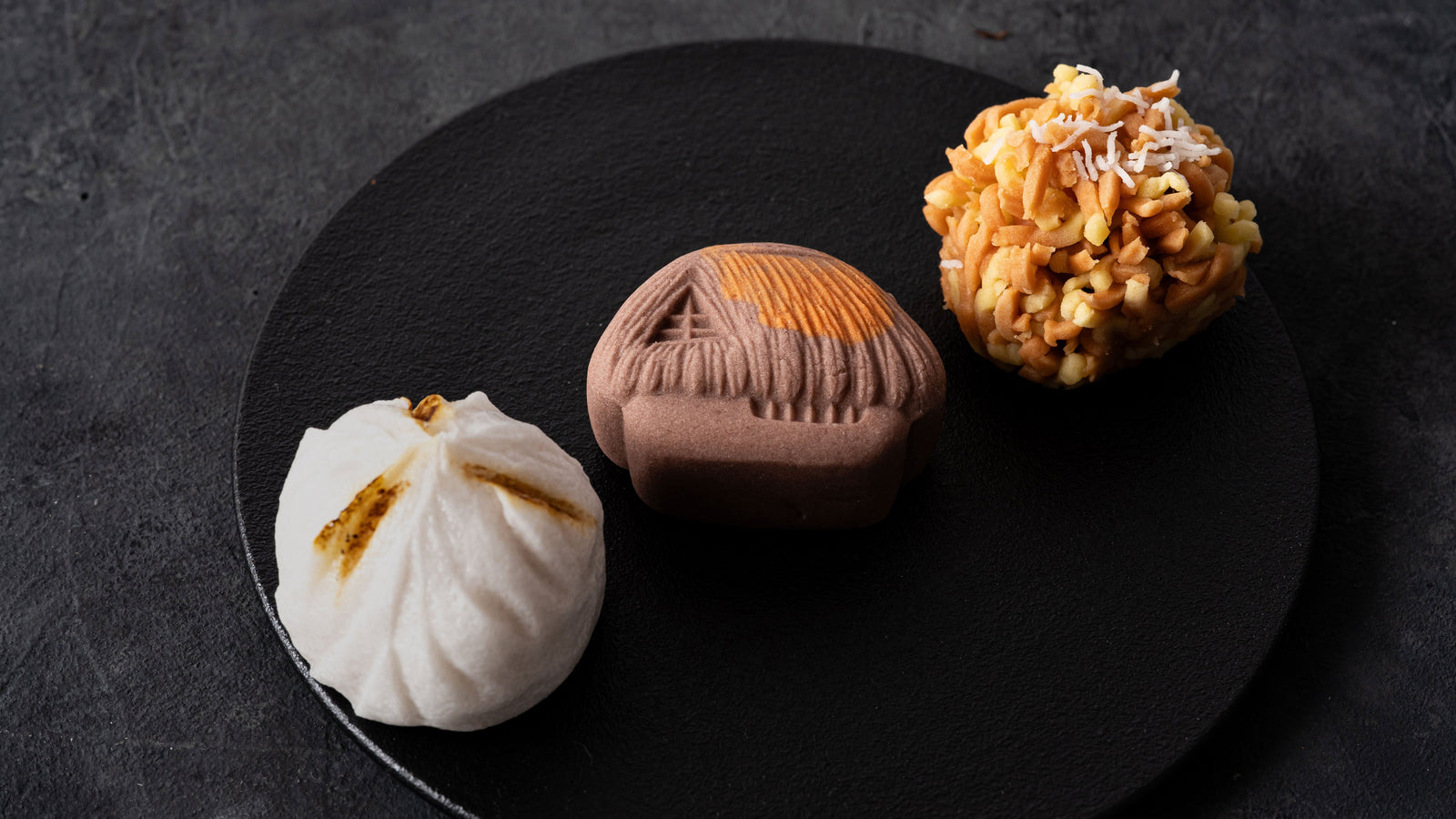
Wagashi sind traditionelle japanische Süßigkeiten, die in Japan seit Generationen geschätzt werden. Ihr zartes Erscheinungsbild und ihre sanften Aromen spiegeln die wechselnden Jahreszeiten, die natürliche Welt und das japanische Ästhetikempfinden wider. Mehr als alltägliche Leckereien spielen wagashi eine wichtige Rolle bei saisonalen Ereignissen und Feiern und begleiten bis heute das tägliche Leben in Japan.
In diesem Leitfaden erkunden wir die Grundlagen von wagashi – von ihrer Definition, ihren Zutaten und Varianten bis hin zum Ansatz von MUSUBI KILN, sie mit Tee und Geschirr zu genießen – klar und zugänglich dargestellt. Durch die sanfte Süße von wagashi hoffen wir, dass dieser Leitfaden als Einstieg dient, um alltägliche Momente zu bereichern.
Was ist Wagashi? – Eine Kunst für die fünf Sinne
Wagashi ist ein Sammelbegriff für traditionelle japanische Süßigkeiten, die in Japan seit Jahrhunderten genossen werden. Sie werden hauptsächlich aus pflanzlichen Zutaten wie azuki -Bohnen, Klebreismehl, Reismehl und Agar hergestellt und oft sorgfältig von Hand gefertigt.
In vielen Fällen sind wagashi so gestaltet, dass sie zusammen mit japanischem Tee wie sencha oder matcha genossen werden. Ihre subtile Süße soll die sanfte Bitterkeit des Tees ergänzen und ausgleichen.
Die Wurzeln von wagashi lassen sich bis in die Jomon-Zeit (ca. 10.000–300 v. Chr.) zurückverfolgen. Im Laufe der Zeit entwickelten sie sich durch Einflüsse chinesischer Süßwaren und später westlicher Süßigkeiten weiter und nahmen schließlich eine einzigartig japanische Form an. Ab der Edo-Zeit (1603–1868 n. Chr.) wurden wagashi zunehmend verfeinert, mit Designs, die von saisonalen Blumen, Vögeln und Landschaften inspiriert waren, und mit einer starken Verbindung zur Teezeremonie und ihren eleganten Süßwarentraditionen.
Wagashi werden oft als „Kunst für die fünf Sinne" beschrieben. Ihre Schönheit spricht das Auge an, ihre Süße den Gaumen, ihre Aromen rufen Jahreszeiten und Regionen hervor, ihre Texturen sprechen den Tastsinn an, und ihre Harmonie mit Tee vervollständigt das Erlebnis. Wagashi sind nicht nur etwas zum Essen – sie sind etwas zum Betrachten, zum Halten und zum Genießen.
Arten von Wagashi, die Sie kennen sollten
Wagashi werden üblicherweise in drei Hauptkategorien eingeteilt, basierend auf ihrem Feuchtigkeitsgehalt. Diese grundlegende Klassifizierung beeinflusst nicht nur Textur und Geschmack, sondern auch die Haltbarkeit. Darüber hinaus können wagashi auch nach Zubereitungsmethode oder Verwendungszweck gruppiert werden, was die bemerkenswerte Vielfalt dieser Süßwarentradition widerspiegelt.
Klassifizierung nach Feuchtigkeitsgehalt
Namagashi (Frische Süßigkeiten)
Feuchtigkeitsgehalt: 30 % oder höher
Diese Süßigkeiten sind frisch und zart, wodurch die Aromen der Zutaten am deutlichsten zur Geltung kommen. Da sie sich nicht gut halten, sind sie in der Regel dafür gedacht, am Tag ihrer Zubereitung genossen zu werden. Viele hochkünstlerische jo-namagashi (Premium-Frischsüßigkeiten) fallen in diese Kategorie.
Hergestellt durch Mischen von weißer Bohnenpaste mit Zutaten wie gyuhi (eine Art weiches Mochi), dann zart von Hand oder mit Holzwerkzeugen zu saisonalen Motiven geformt, die von der Natur inspiriert sind. Oft bei Teezeremonien serviert.

Daifuku
Ein klassisches wagashi, bestehend aus weichem Mochi, das um süße azuki-Bohnenpaste gewickelt ist. Der Name bedeutet wörtlich „großes Glück", was es zu einer glückverheißenden Süßigkeit macht. Auch mit Früchten gefüllte Varianten wie Erdbeer-Daifuku sind beliebt.

Ohagi / Botamochi
Leicht gestampfter Reis, überzogen mit süßer Bohnenpaste. Der Name wechselt mit der Jahreszeit: „botamochi" im Frühling, in Anlehnung an Pfingstrosen, und „ohagi" im Herbst, in Anlehnung an Buschklee.

Manju
Kleine Brötchen, typischerweise gedämpft, mit einem weichen äußeren Teig aus Weizenmehl und einer süßen Bohnenpastenfüllung. Sie werden oft mit regionalen Spezialitäten in Verbindung gebracht, besonders in Thermalbadorten.

Dorayaki ※
Zwei fluffige, castella-ähnliche Pfannkuchen, die um eine großzügige Füllung aus süßer roter Bohnenpaste gelegt sind. Vertraut und tröstlich, ähneln sie kleinen Pfannkuchen-Sandwiches.
※ Obwohl dorayaki technisch gesehen gebackene Süßigkeiten sind, werden sie aufgrund ihres relativ hohen Feuchtigkeitsgehalts und ihrer kurzen Haltbarkeit oft als namagashi klassifiziert.

Han-namagashi (Halbfeuchte Süßigkeiten)
Feuchtigkeitsgehalt: 10–30 %
Diese Süßigkeiten haben eine längere Haltbarkeit als namagashi, behalten aber eine weiche, feuchte Textur und eine reichhaltigere Süße.
Yokan
Ein festes Gelee, hergestellt durch Festigen von süßer azuki-Bohnenpaste mit Agar. Zu den Varianten gehören dichtes neri-yokan und leichteres, glatteres mizu-yokan, das besonders im Sommer beliebt ist. (Hinweis: mizu-yokan wird manchmal als namagashi klassifiziert.)

Monaka
Knusprige Waffeln aus Klebreis, die süße Bohnenpaste umschließen. Der Kontrast zwischen den knusprigen Schalen und der weichen Füllung ist ein charakteristisches Merkmal.

Amanatto
Bohnen wie azuki oder Kidneybohnen werden in Zuckersirup gekocht und getrocknet, wodurch der natürliche Geschmack der Bohnen erhalten bleibt.

Higashi (Trockene Süßigkeiten)
Feuchtigkeitsgehalt: 10 % oder weniger
Trockene Süßigkeiten haben eine lange Haltbarkeit und eignen sich gut als Geschenke und Souvenirs. Sie begleiten oft usucha, oder dünnen matcha, bei Teezeremonien und sind bekannt für ihre zarte Süße und ihre auf der Zunge schmelzende Textur.
Rakugan
Hergestellt aus Reismehl oder Sojabohnenmehl, gemischt mit Zucker und Sirup, dann in dekorative Holzformen gepresst und getrocknet. Sie zerfallen weich auf der Zunge.

Konpeito
Winzige, sternförmige Zuckerbonbons, die durch allmähliches Überziehen von Zuckerkristallen mit Sirup geformt werden, während sie sich in einer beheizten Trommel drehen.

Kohakuto
Juwelenähnliche Bonbons aus Agar und Zucker. Ihre Oberfläche ist knusprig, während das Innere weich und gelatineartig bleibt, was ihnen den Spitznamen „essbare Edelsteine" eingebracht hat.

Weitere Klassifizierungen nach Zubereitung oder Verwendung
Mochigashi (Reiskuchen-Süßigkeiten)
Süßigkeiten, die hauptsächlich aus Klebreis oder nicht-klebrigem Reis hergestellt werden. Viele gehören zur Kategorie namagashi.
Beispiele: sakuramochi, dango

Yakigashi (Gebackene oder gegrillte Süßigkeiten)
Süßigkeiten, die im Ofen gebacken oder auf Grillplatten zubereitet werden.
Beispiele: castella, taiyaki, imagawayaki

Agegashi (Frittierte Süßigkeiten)
In Öl frittierte Süßigkeiten, bekannt für ihren intensiven Geschmack und ihre knusprige Textur.
Beispiele: karinto

Kisetsu-gashi & Gyoji-gashi (Saisonale & festliche Süßigkeiten)
Saisonale und festliche wagashi spiegeln Japans vier Jahreszeiten und jährliche Ereignisse wider. Nur zu bestimmten Zeiten des Jahres erhältlich, verkörpern sie Gebete, Dankbarkeit und ein Bewusstsein für die Natur – sie repräsentieren das Wesen der wagashi-Kultur.

Frühling: Sakuramochi, Hanami Dango
Frühlings-wagashi symbolisieren Erneuerung und Feier. Sakuramochi, eingehüllt in duftende Kirschblätter, kündigt sanft die Ankunft des Frühlings an. Hanami dango, typischerweise in Weiß, Rosa und Grün gefärbt, sollen Schnee, Blüten und frisches Grün darstellen und sind unverzichtbar für die Kirschblütenschau.

Sommer: Mizu Yokan, Kuzu -Süßigkeiten, Wakaayu
Sommer-wagashi betonen Kühle und Erfrischung. Transparent und leicht gesüßt bieten mizu yokan und kuzu -Süßigkeiten visuelle und sensorische Linderung vor der Hitze. Wakaayu, eine gebackene Süßigkeit in Form eines jungen Süßwasserfisches, symbolisiert die Flüsse des Frühsommers.

Herbst: Tsukimi Dango, Kastanien-Wagashi
Der Herbst ist die Jahreszeit der Ernte und Dankbarkeit. Tsukimi dango werden während des Mittherbst-Mondfestesdargebracht, ihre runde Form symbolisiert Vollständigkeit und Fülle. Kastanienbasierte wagashi mit ihren tiefen, erdigen Aromen harmonieren wunderbar mit der ruhigen Atmosphäre des Herbstes.

Winter: Hanabira Mochi, Neujahrs-Wagashi
Winter-wagashi markieren neue Anfänge. Hanabira mochi, traditionell zum Neujahr gegessen, stammen aus den Hofbräuchen der Heian-Zeit (794–1185 n. Chr.). Gefüllt mit Miso-aromatisierter Bohnenpaste und Klettenwurzel, evozieren ihre weißen und zartrosa Farben Schnee und Pflaumenblüten und symbolisieren Reinheit und Erneuerung.

Wie man Wagashi genießt und zubereitet
Wagashi können zwanglos als Snacks oder Desserts genossen werden, werden aber auch als Gastgeschenke, Präsente und zeremonielle Speisen geschätzt. Die Kombination von wagashi mit japanischem Tee oder die Auswahl von Geschirr, das zur Jahreszeit passt, kann das Erlebnis noch vertiefen. Bei MUSUBI KILN stellen wir eine breite Palette traditioneller Handwerkskunst und Tischgestaltungsideen vor, die gut zu wagashi passen. Entdecken Sie die folgenden Artikel für Inspiration.
Frühling
Sommer
Herbst
Winter
Einfache wagashi-Rezepte sind ebenfalls beliebt und bieten eine Möglichkeit, die japanische Jahreszeitenkultur zu Hause mit Familie und Freunden zu genießen.
Süße Momente in Ihren Alltag bringen
Wagashi kennenzulernen bedeutet, Japans Natur, Kultur und ästhetische Sensibilität zu genießen. Ob als Reiseerinnerungen, aufmerksame Geschenke, gemeinsame Teemomente mit Lieben oder kleine Belohnungen im Alltag – wagashi bringen Wärme und Schönheit in alltägliche Augenblicke. Warum nicht Ihren ersten Schritt in ein neues wagashi-Erlebnis wagen?
Stay close to the craft
Now and then, a quiet letter — new stories, seasonal notes, and the hands behind the work.
Was ist Uji Matcha? Alles über Japans feinsten Matcha Grün Tee
Erfahren Sie, was Uji Matcha zum Inbegriff japanischen Grüntees macht – von seiner langen…
Ito Ryo
Im Inneren von Chashitsu: Das japanische Teehaus
Entdecken Sie die Essenz des japanischen Teeraums, wo Stille, Design und Ritual einen Ort…
Tanabata: Japans Sternenfest der Wünsche und Tradition
Lernen Sie Orihime und Hikoboshi kennen, die Figuren hinter Japans Tanabata, und entdecken Sie…
Leave a comment