Taido Weiß Jomon-Übertopf
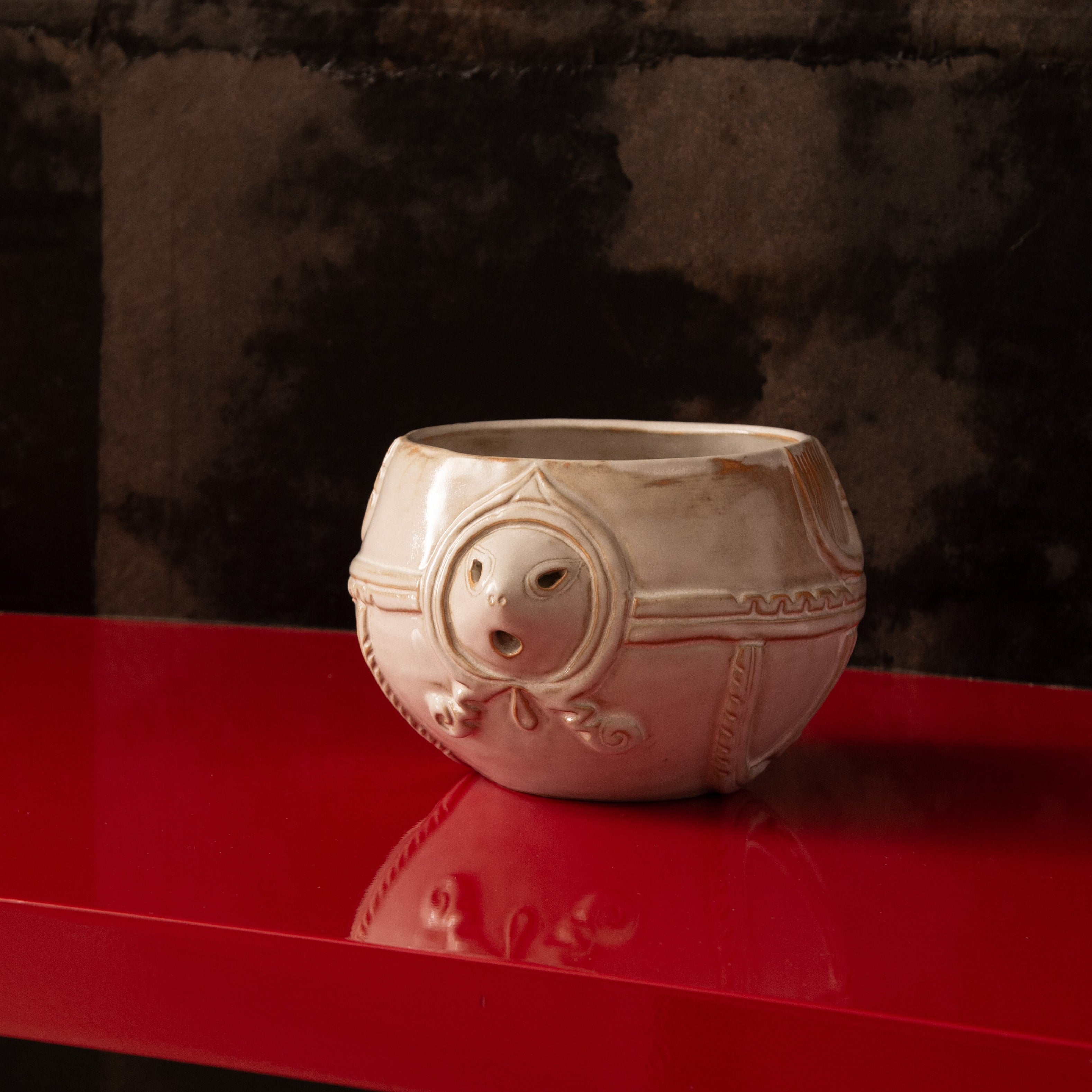
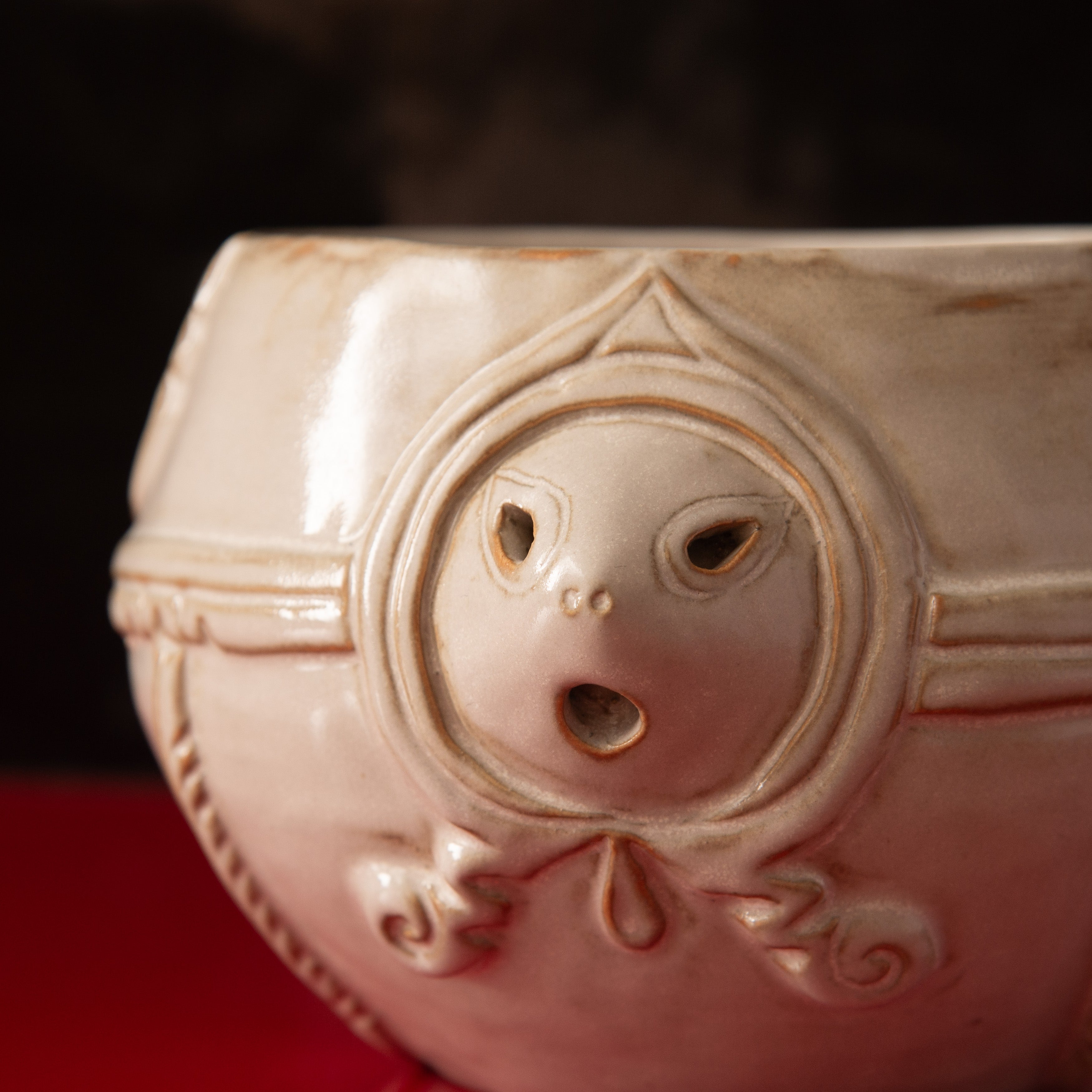
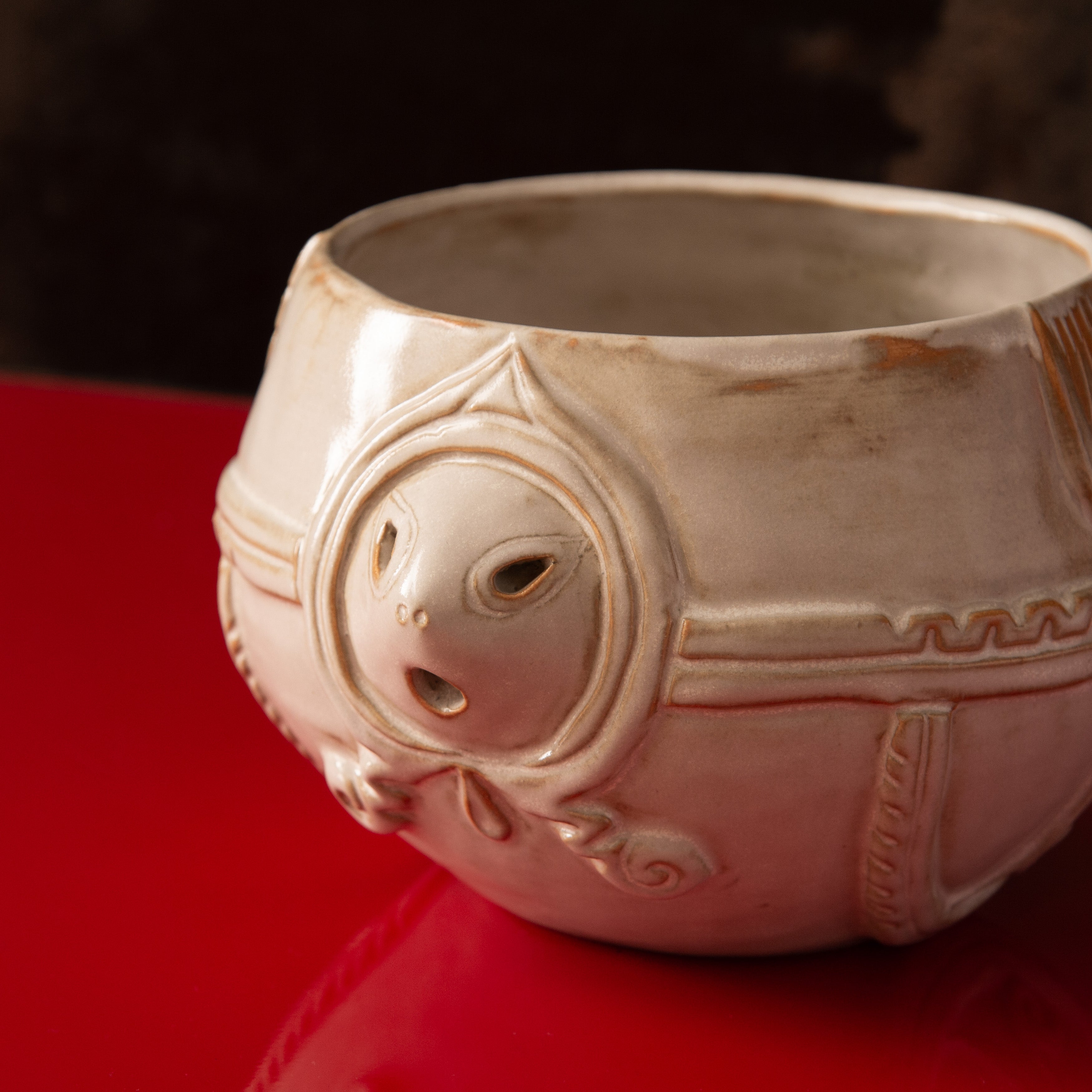
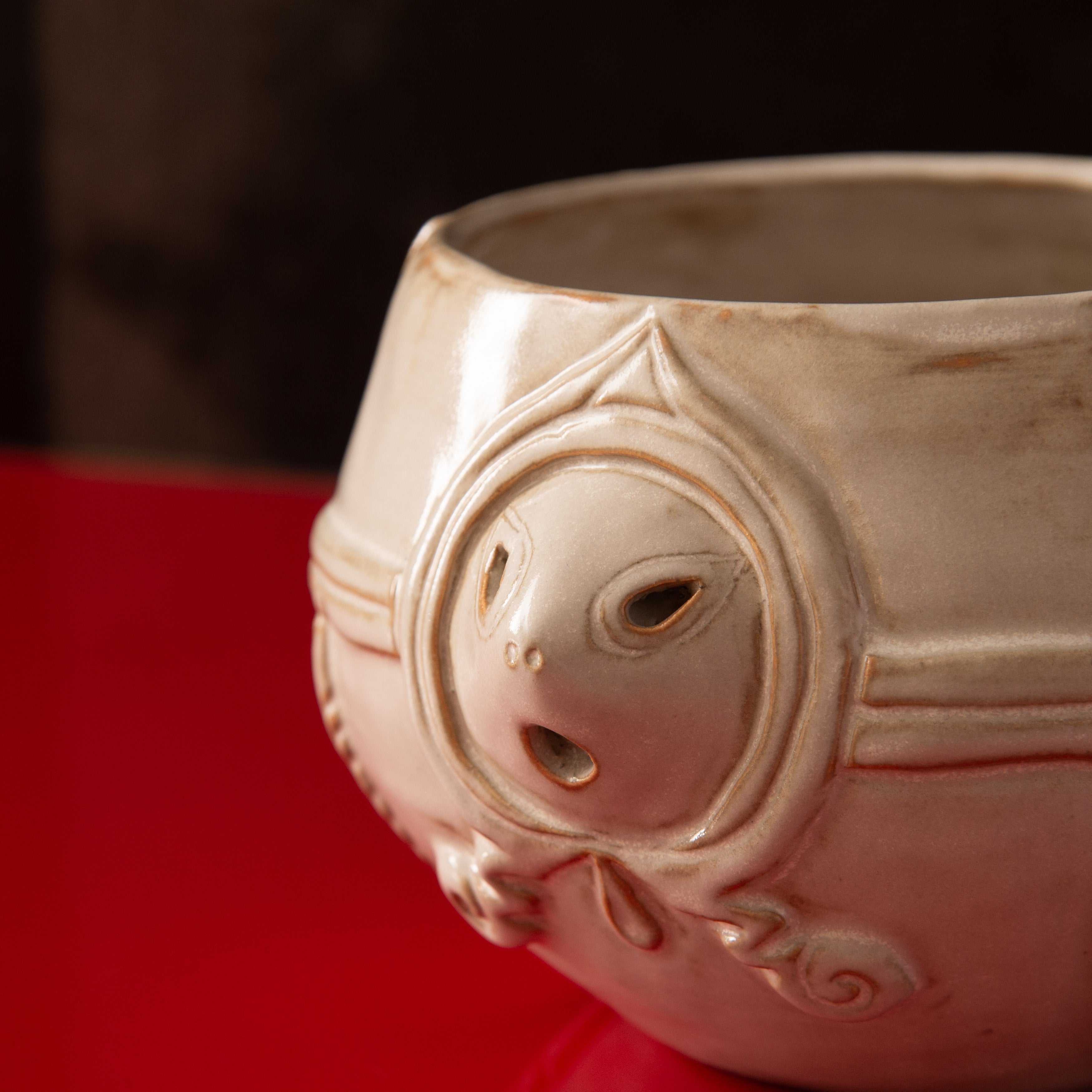
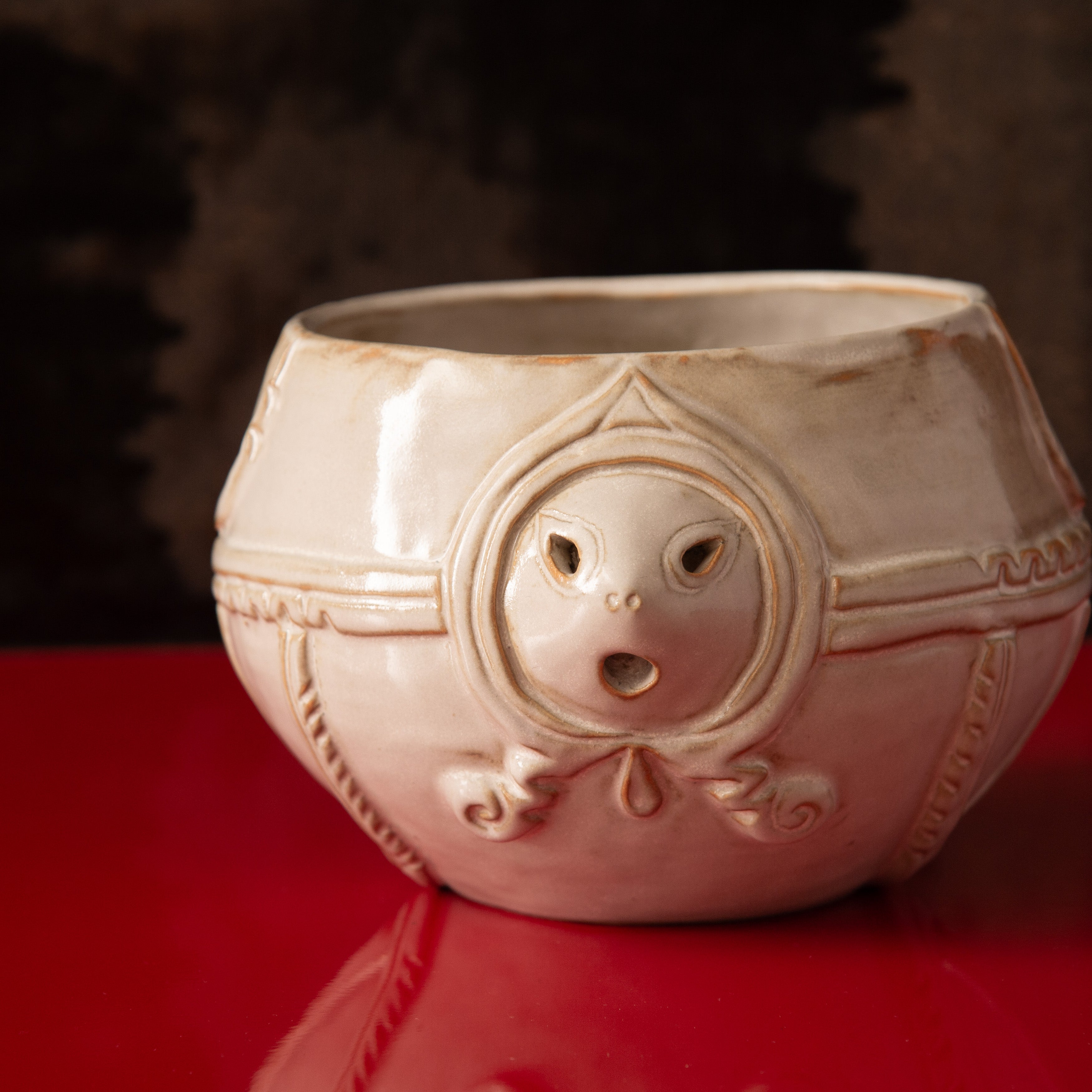
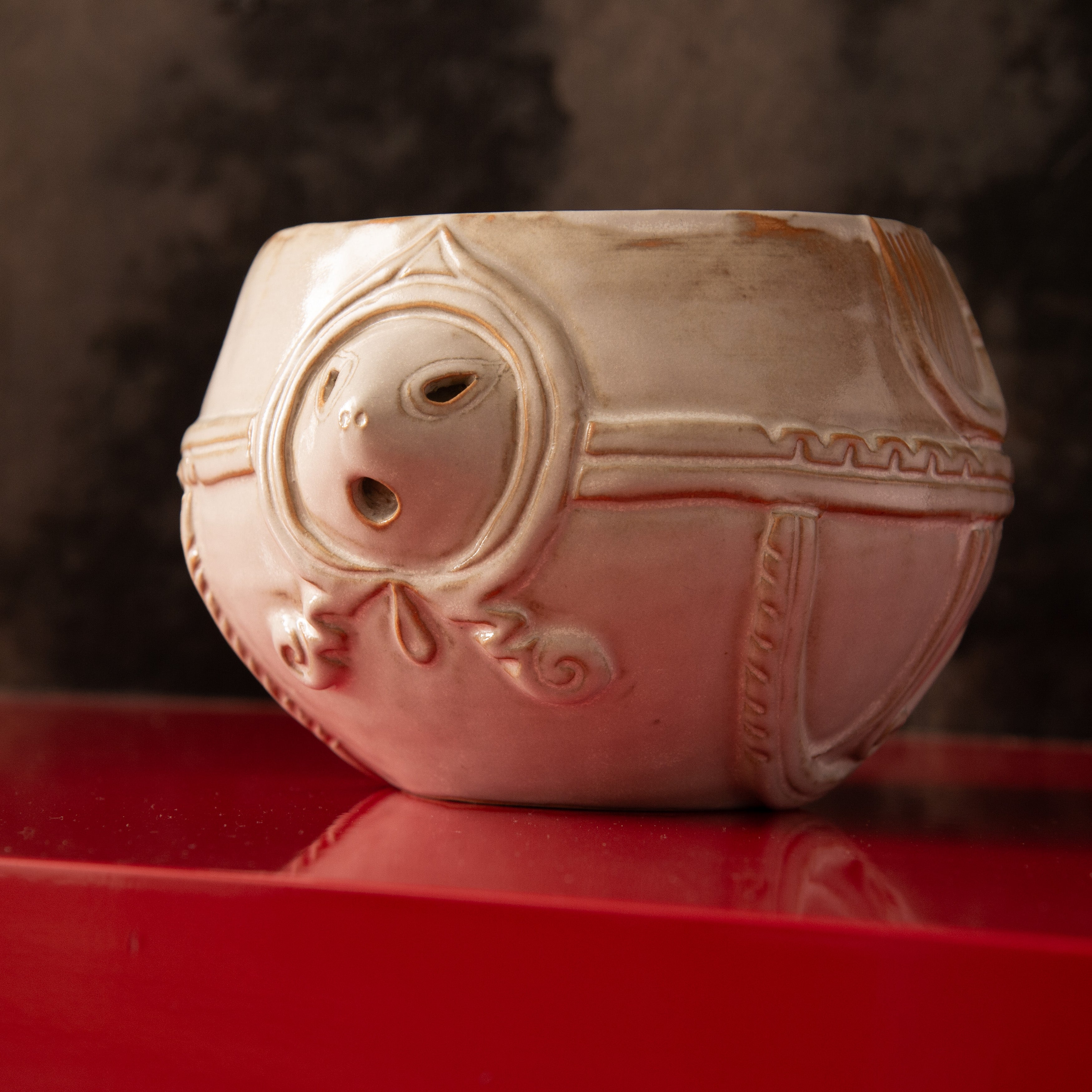
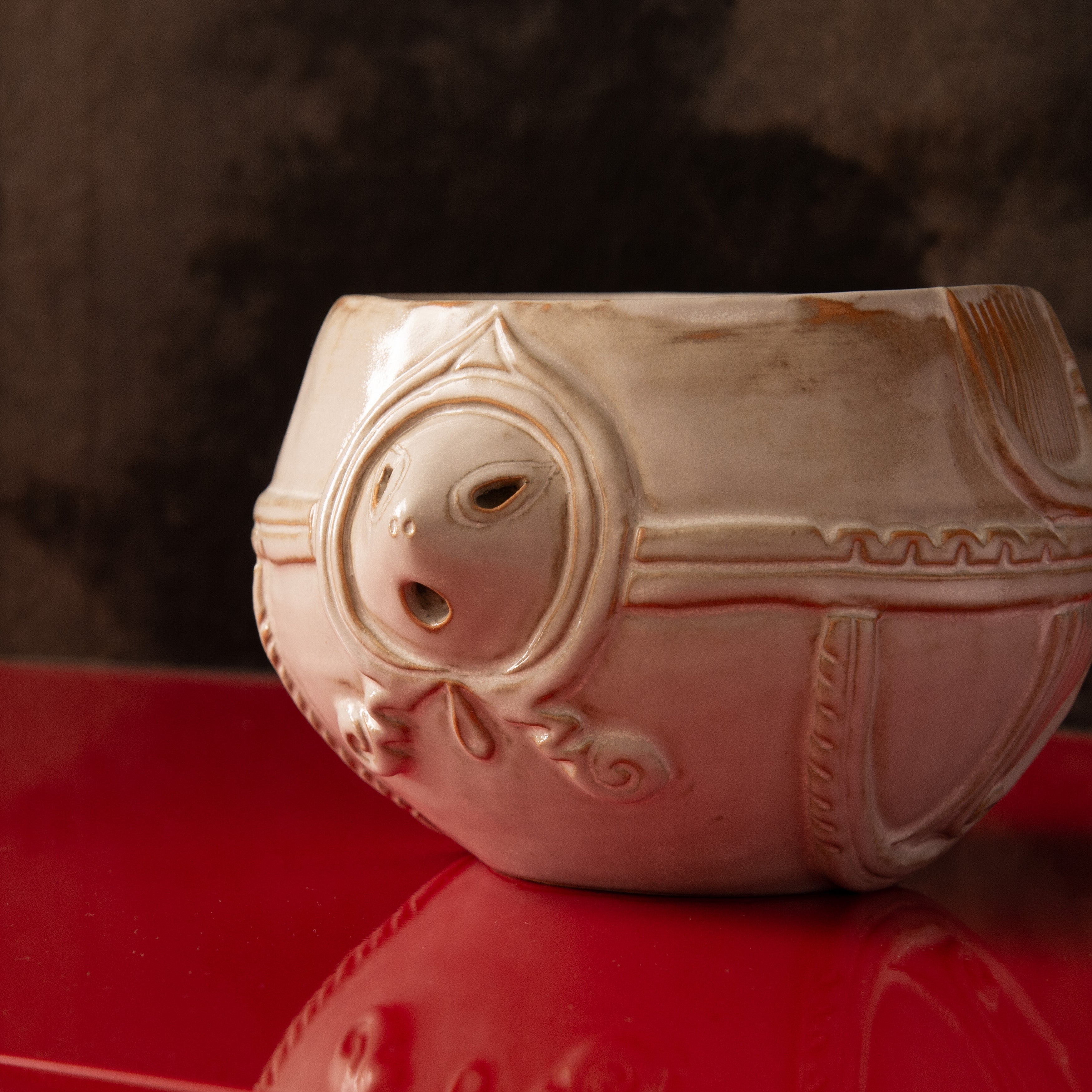
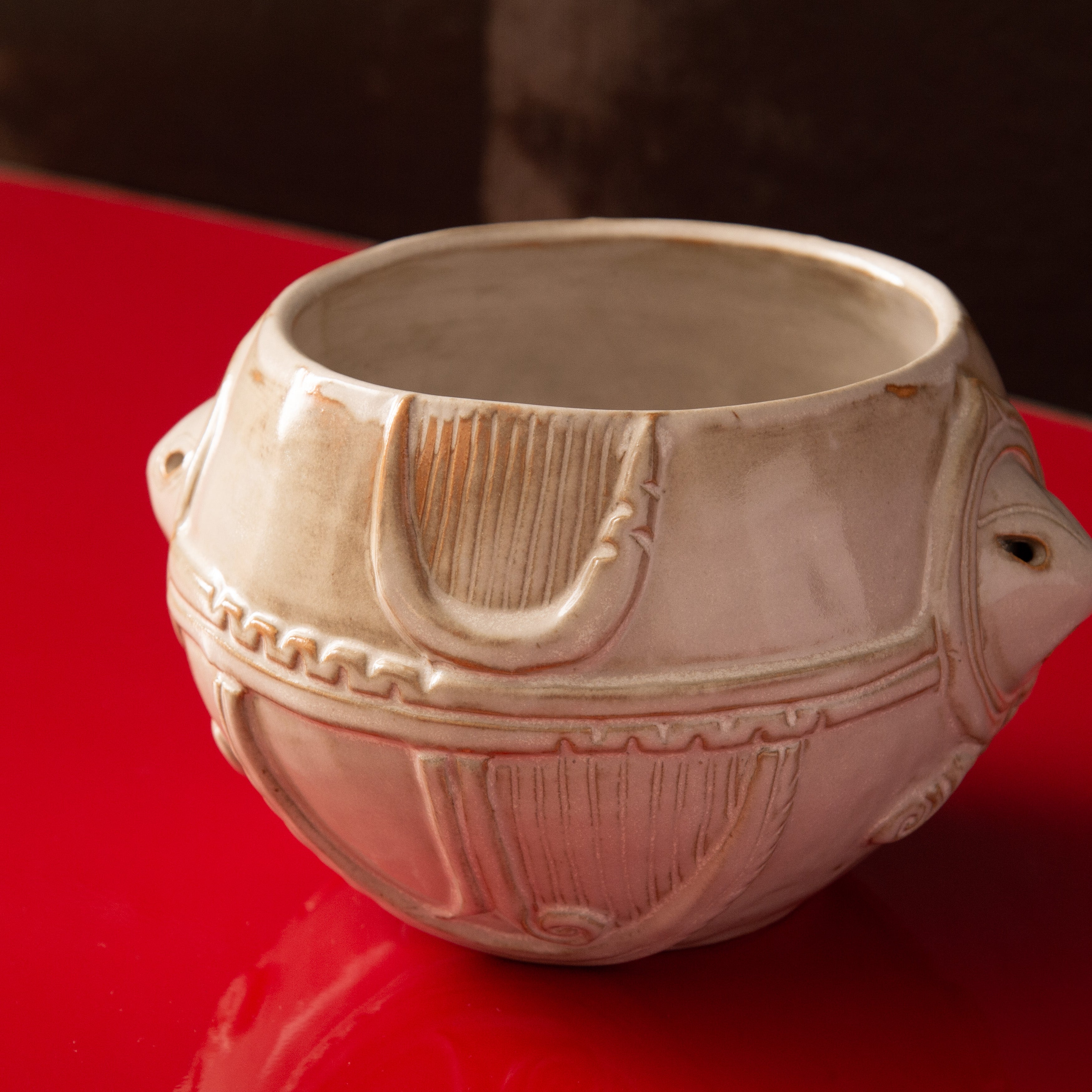
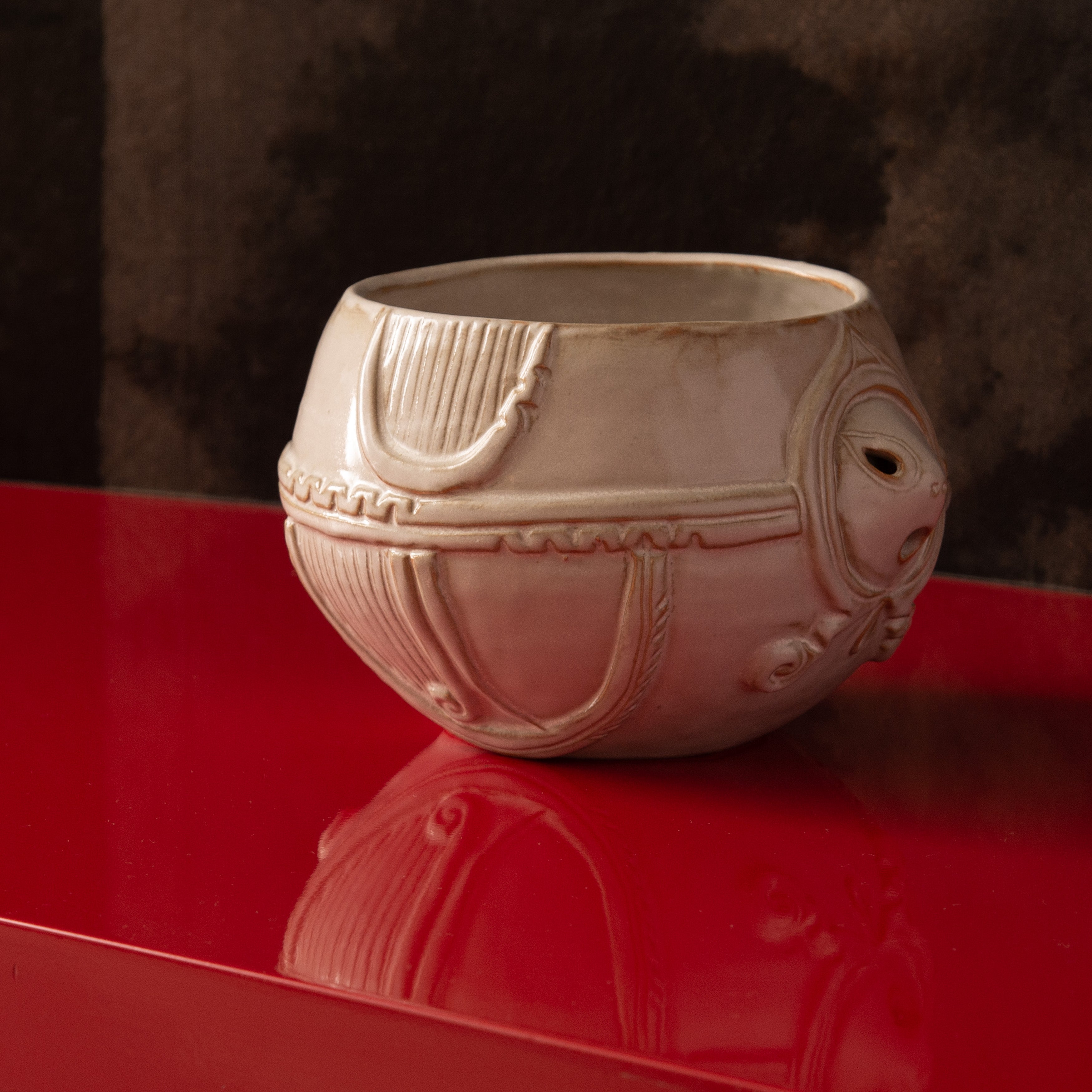
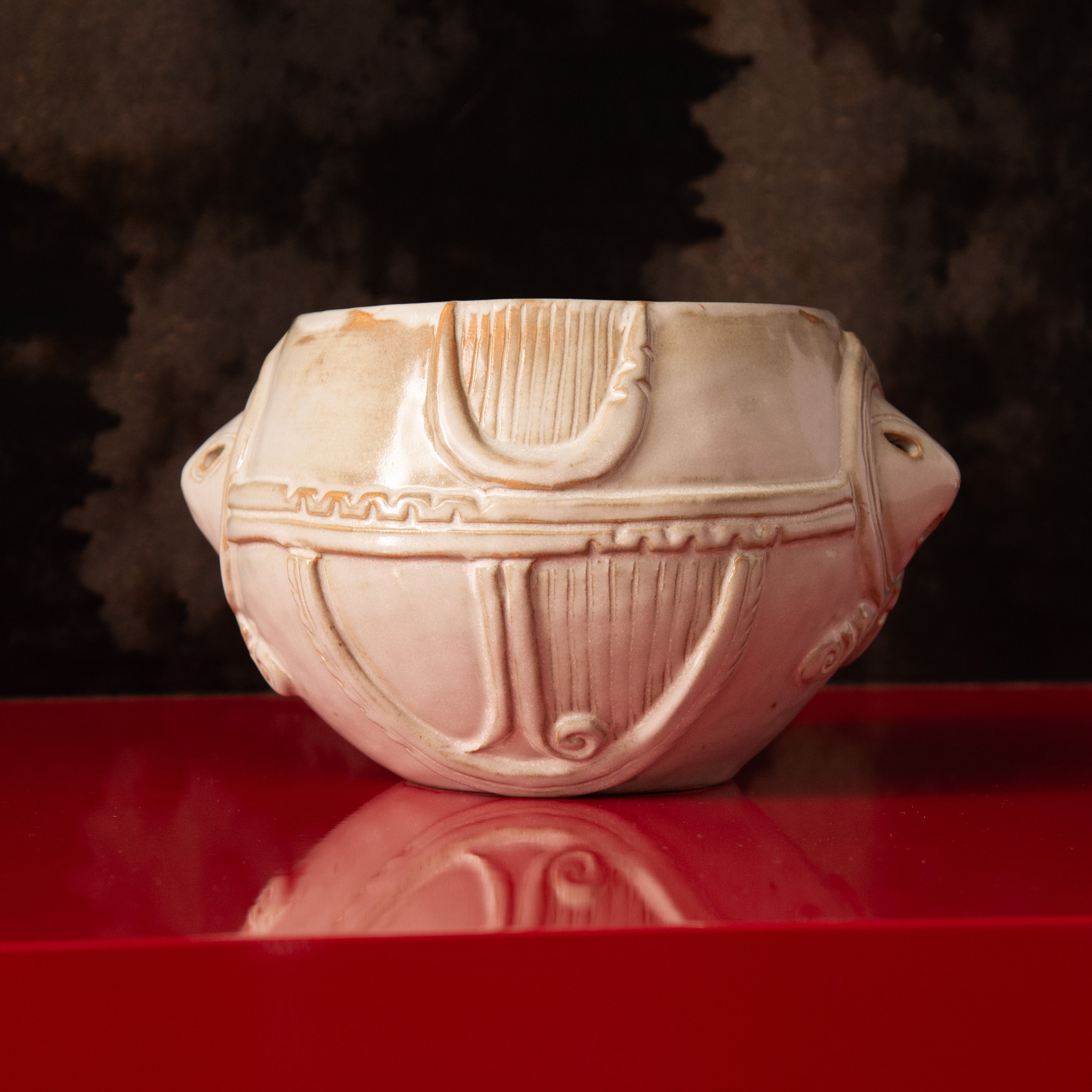
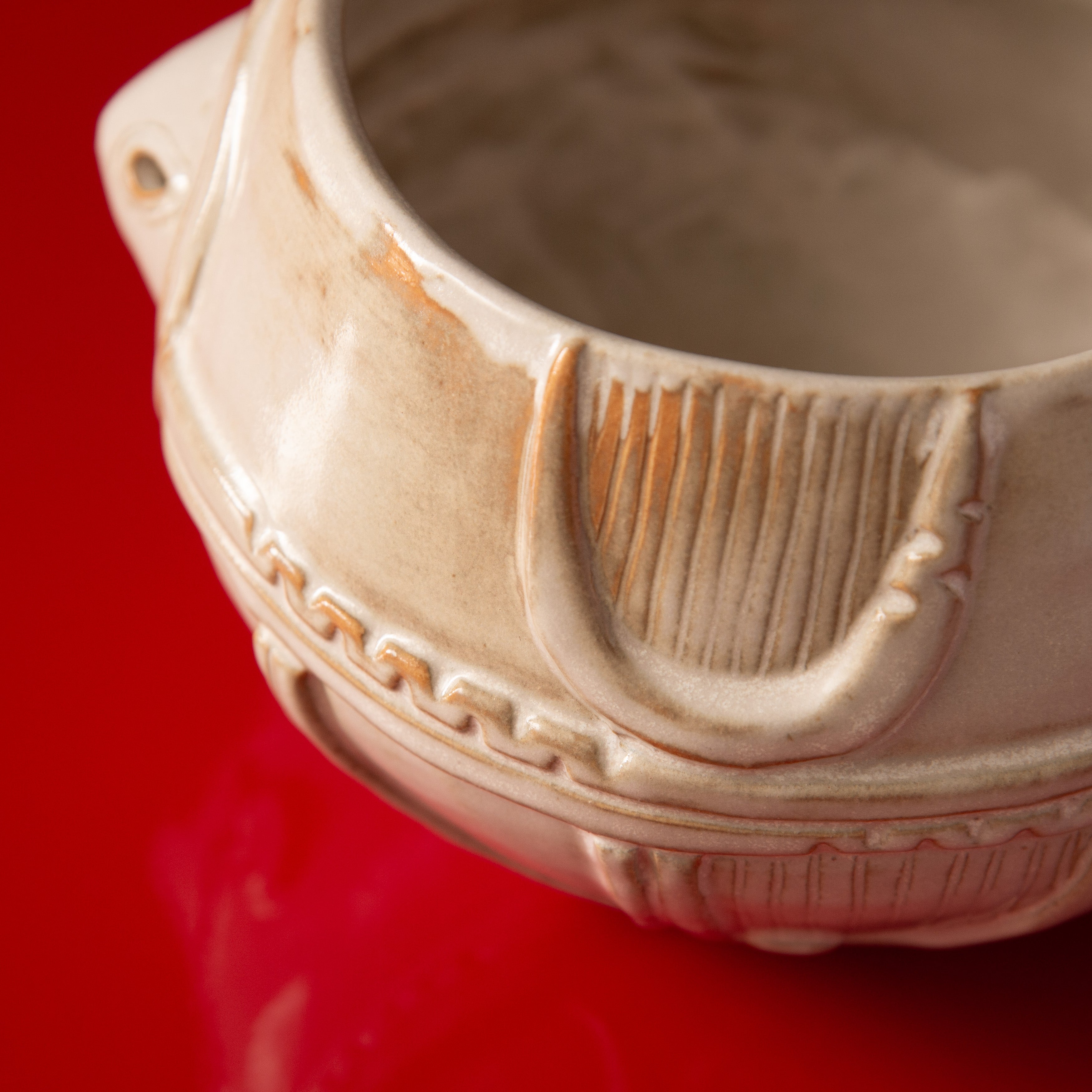
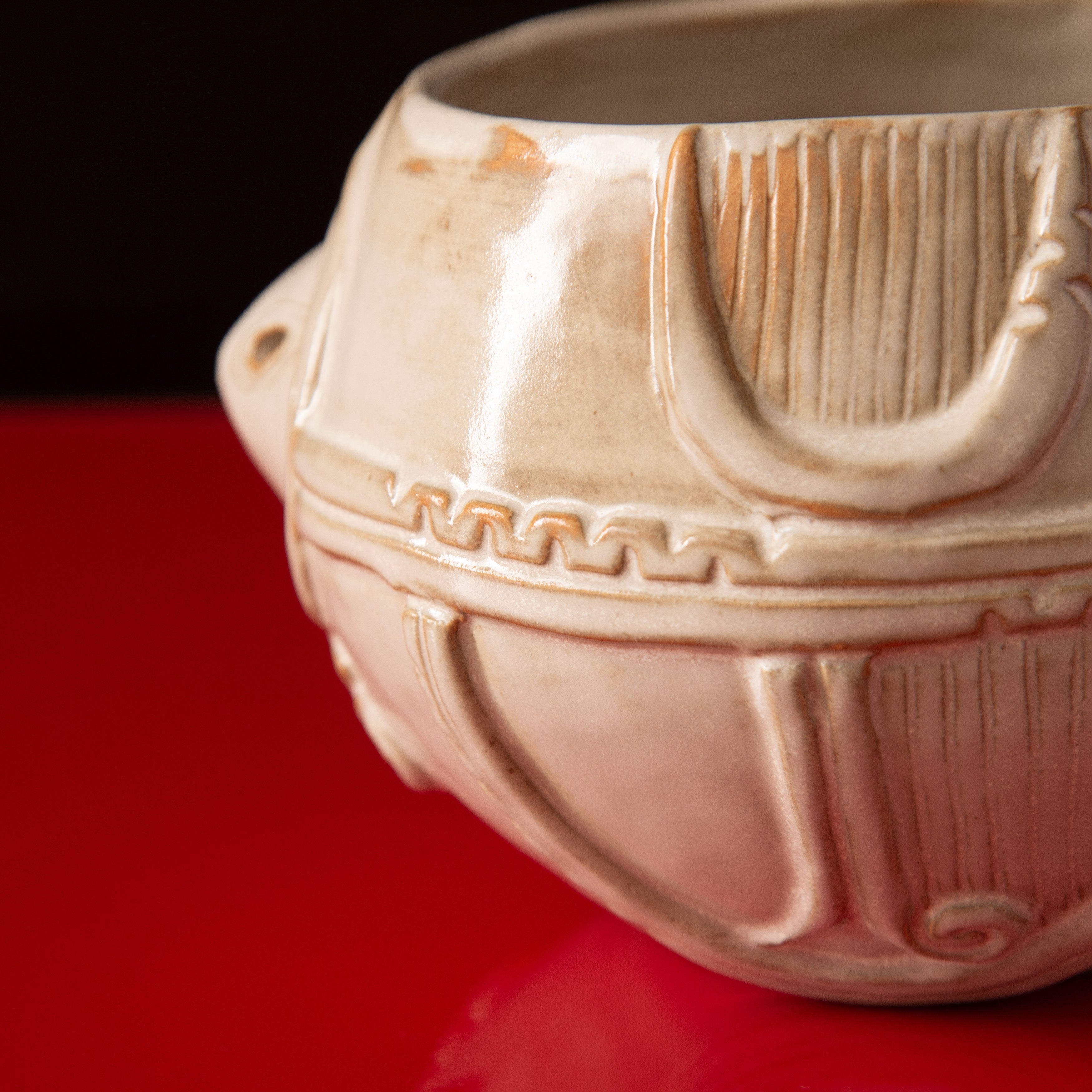
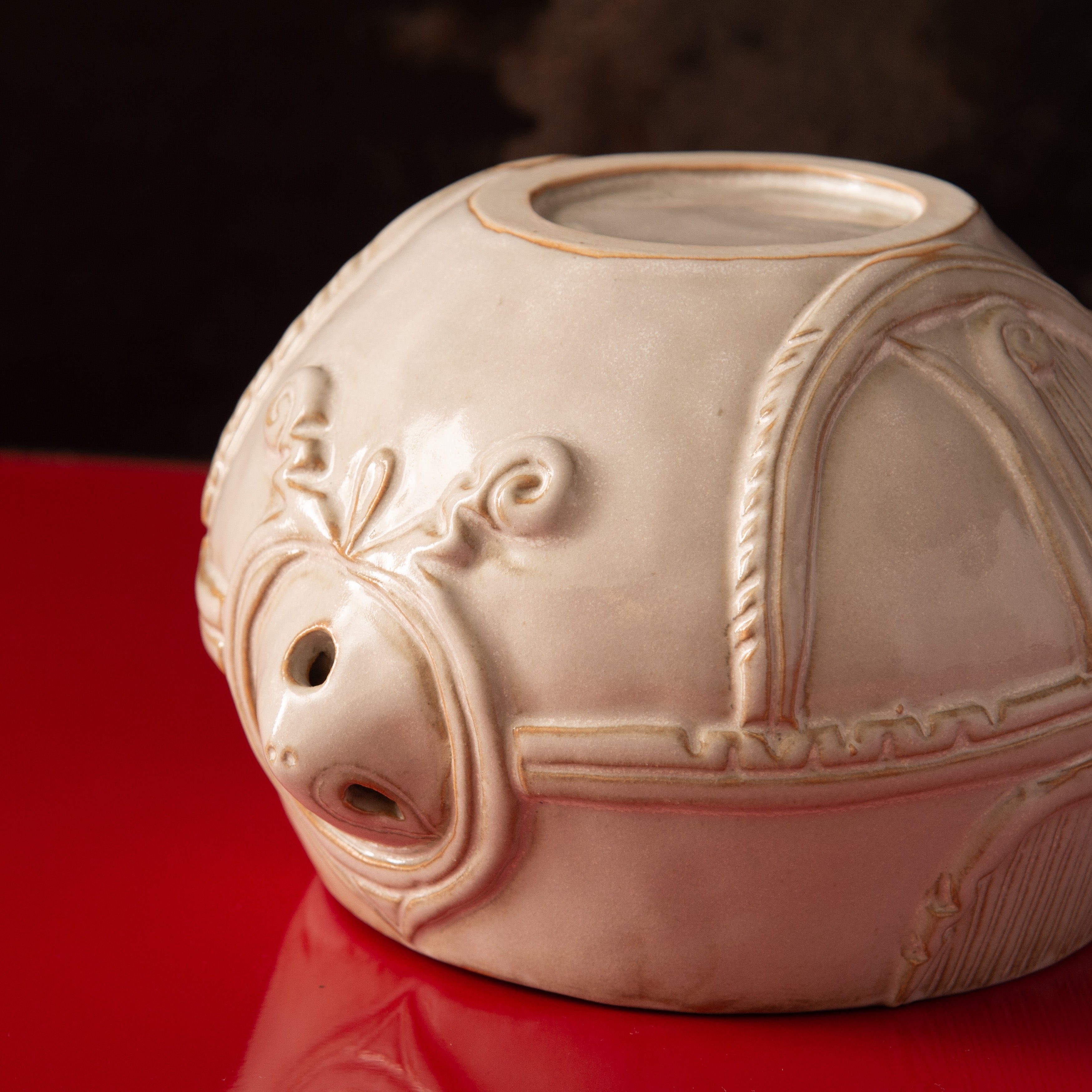
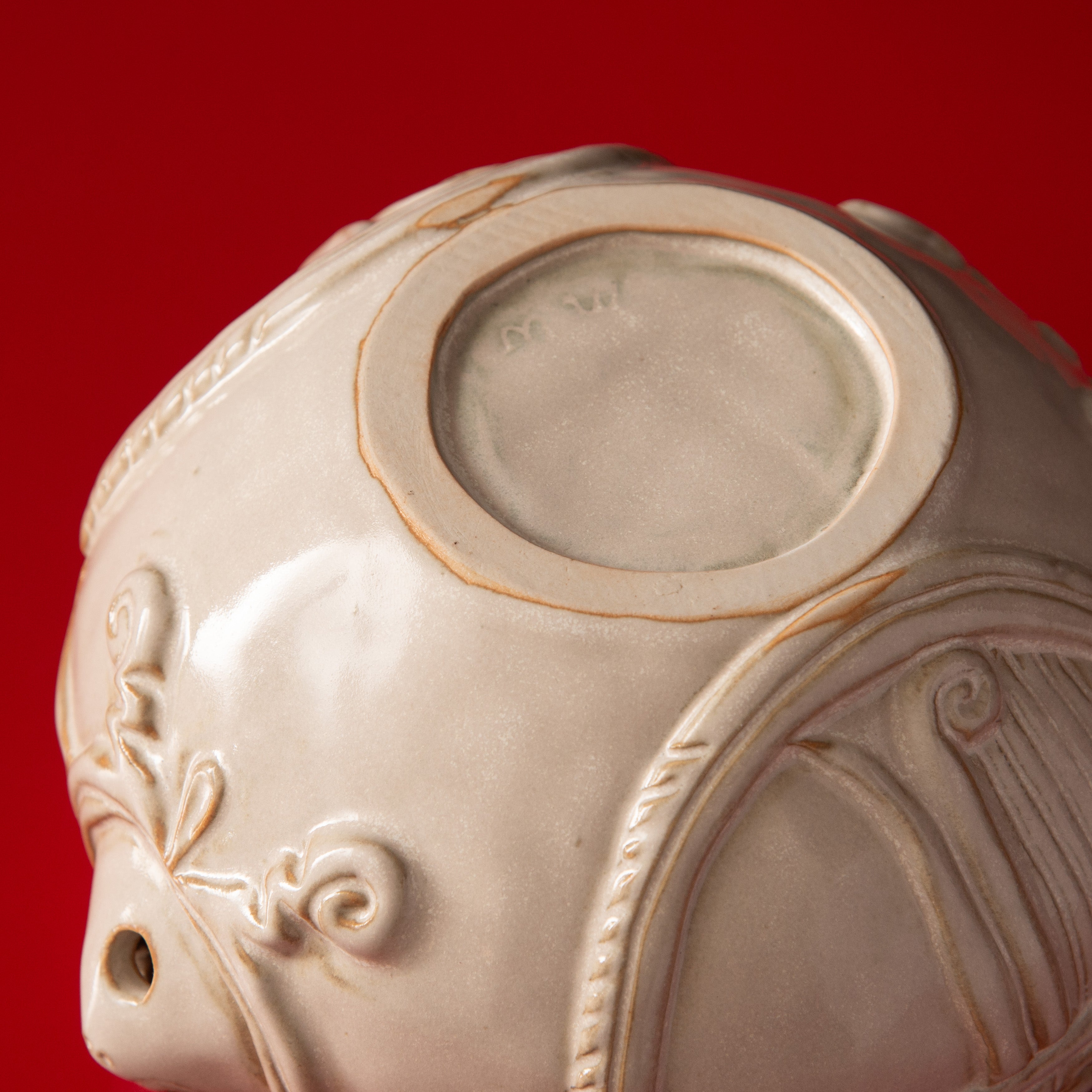
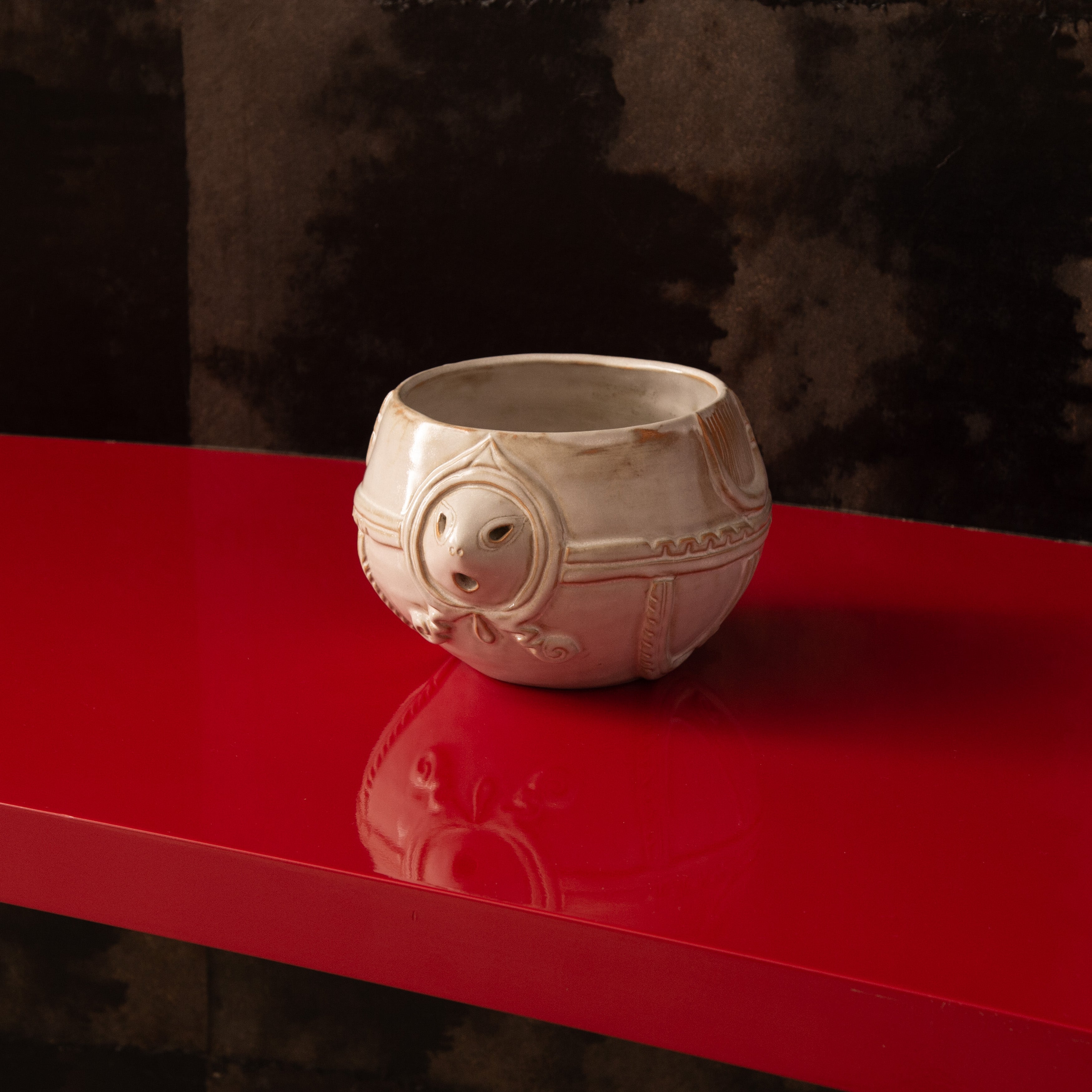
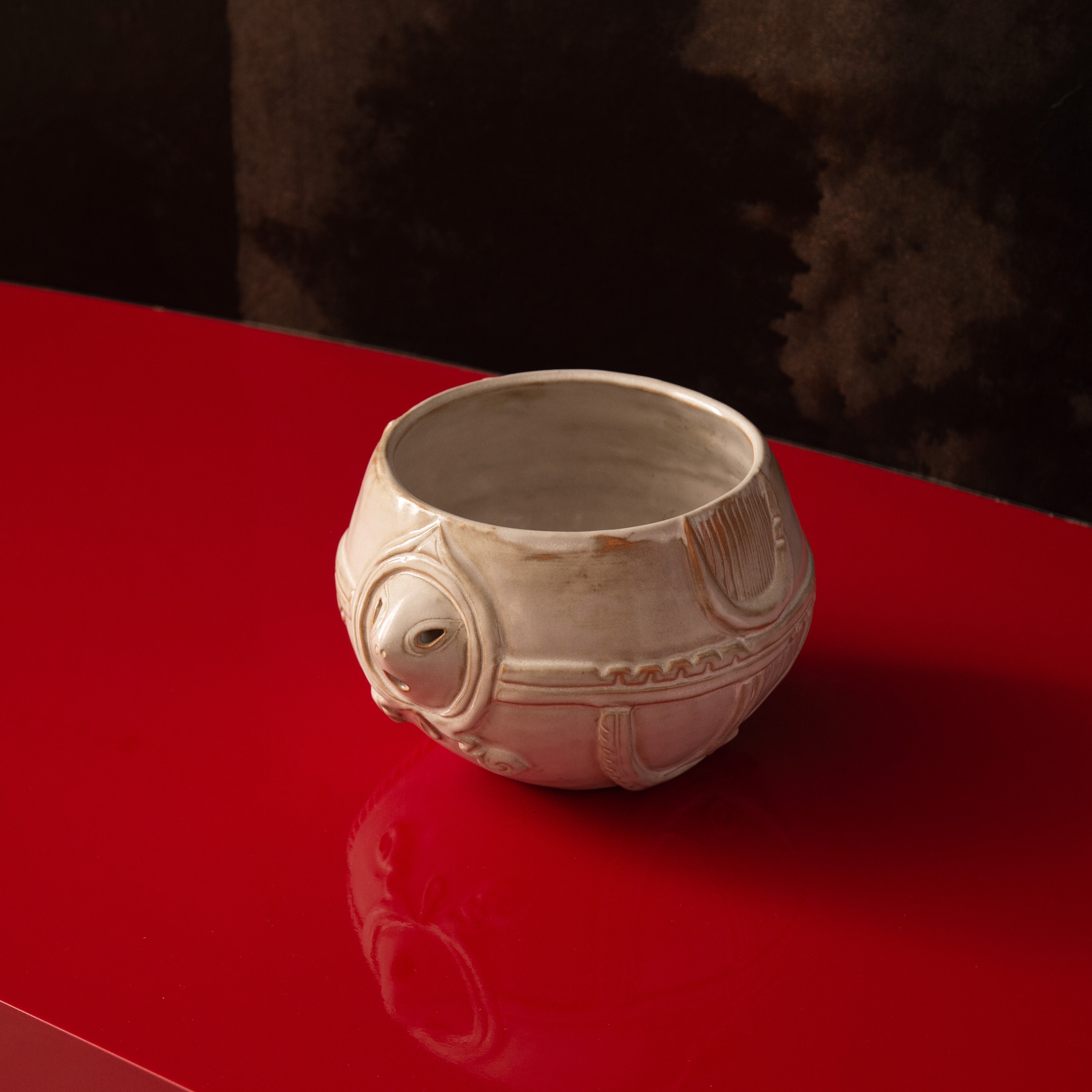
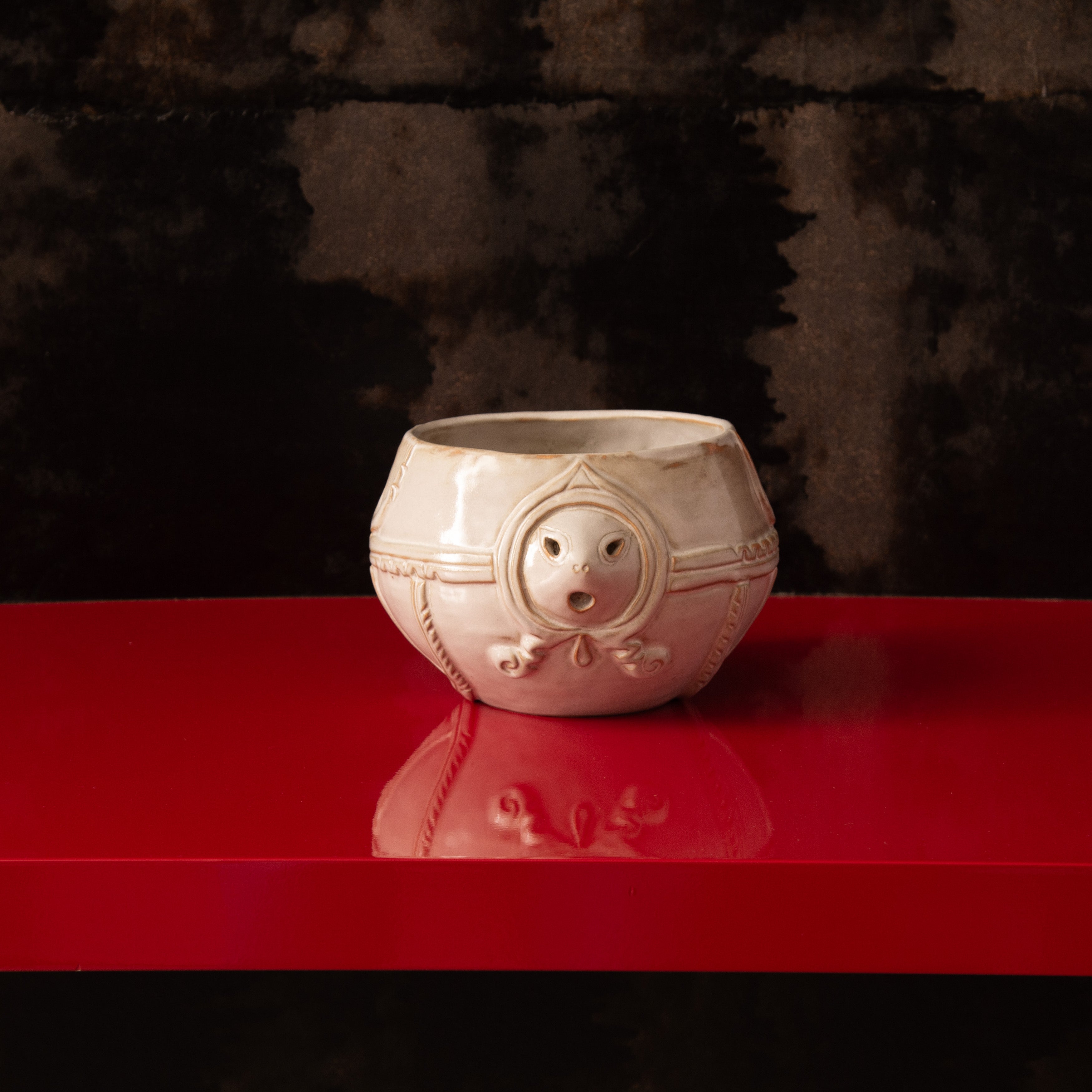
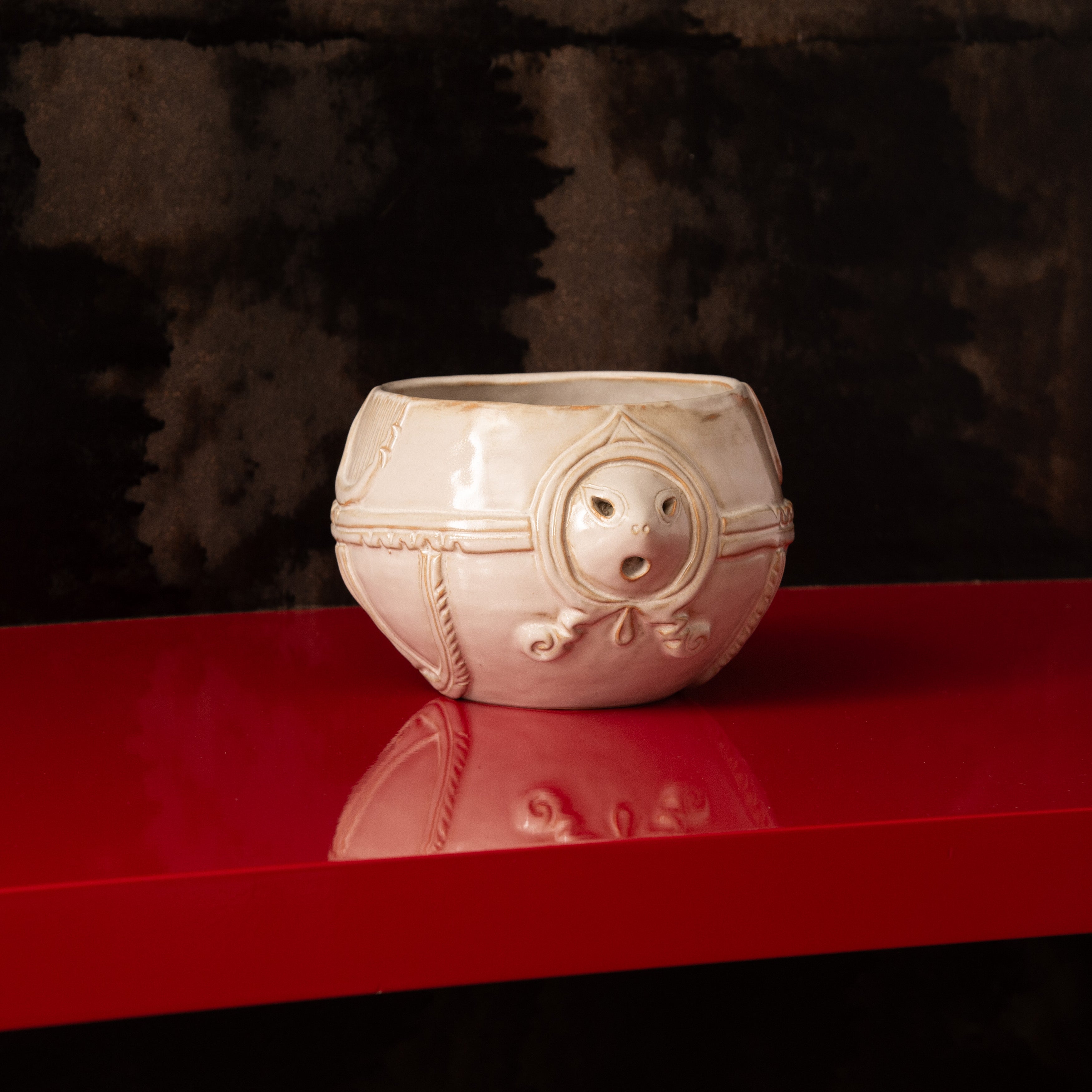
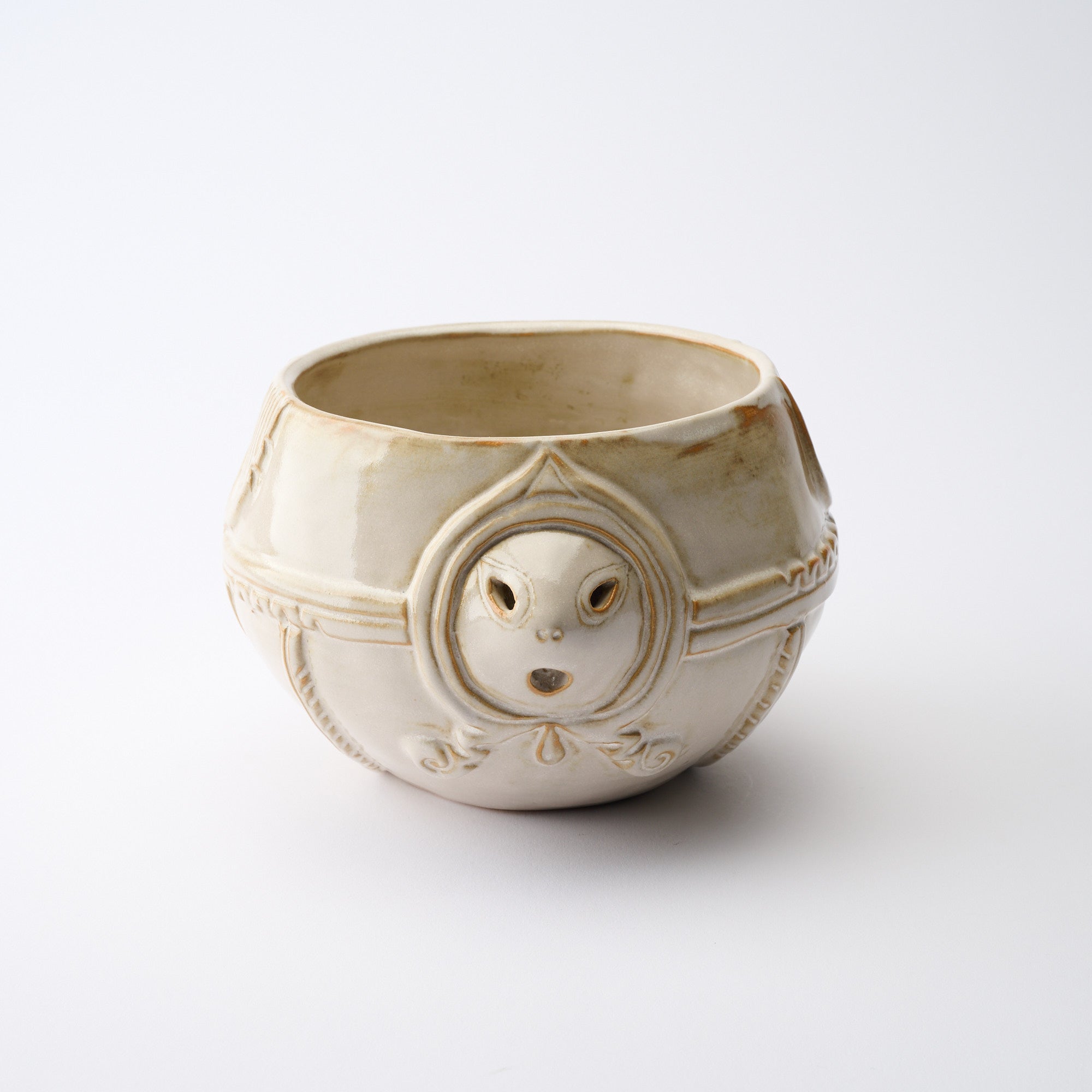
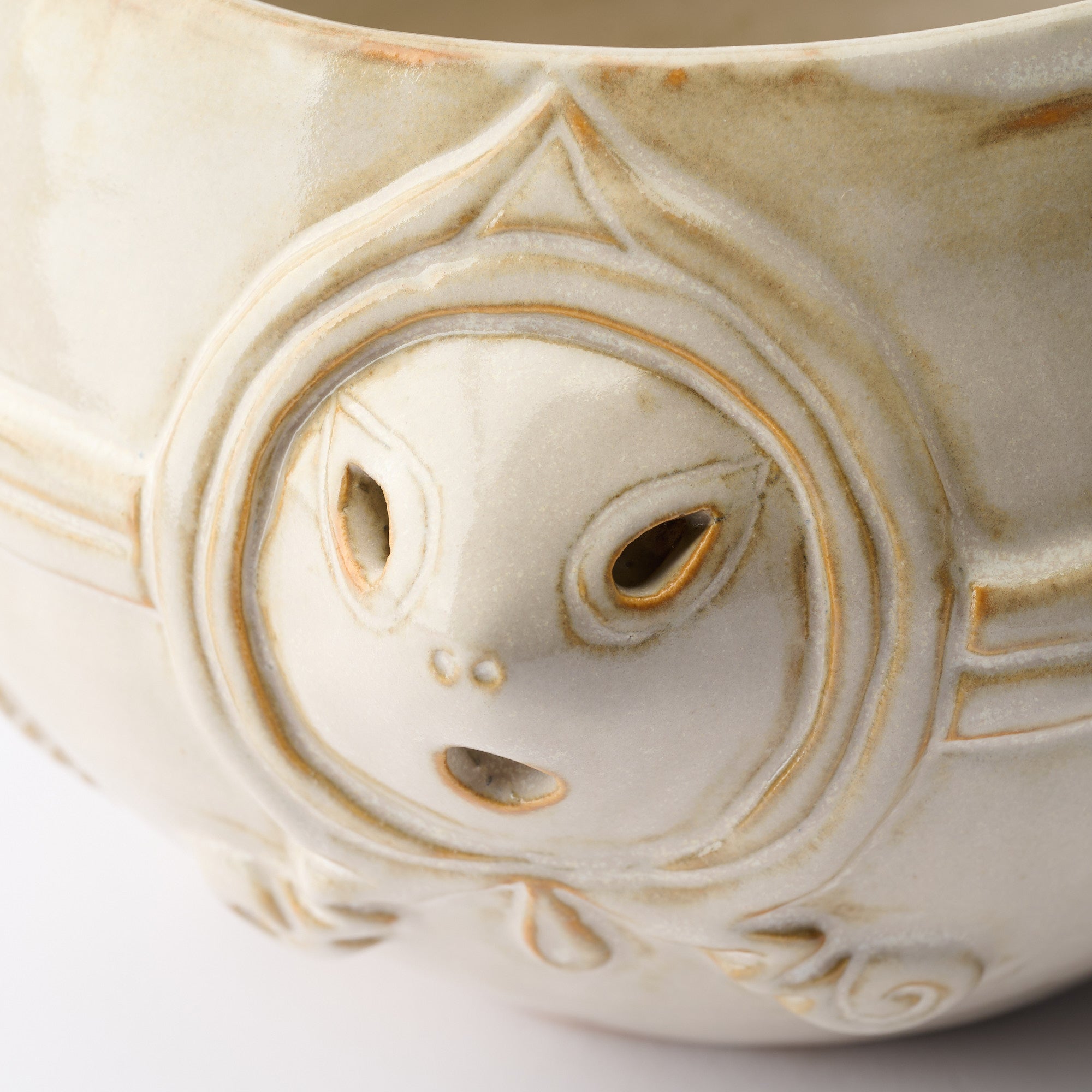
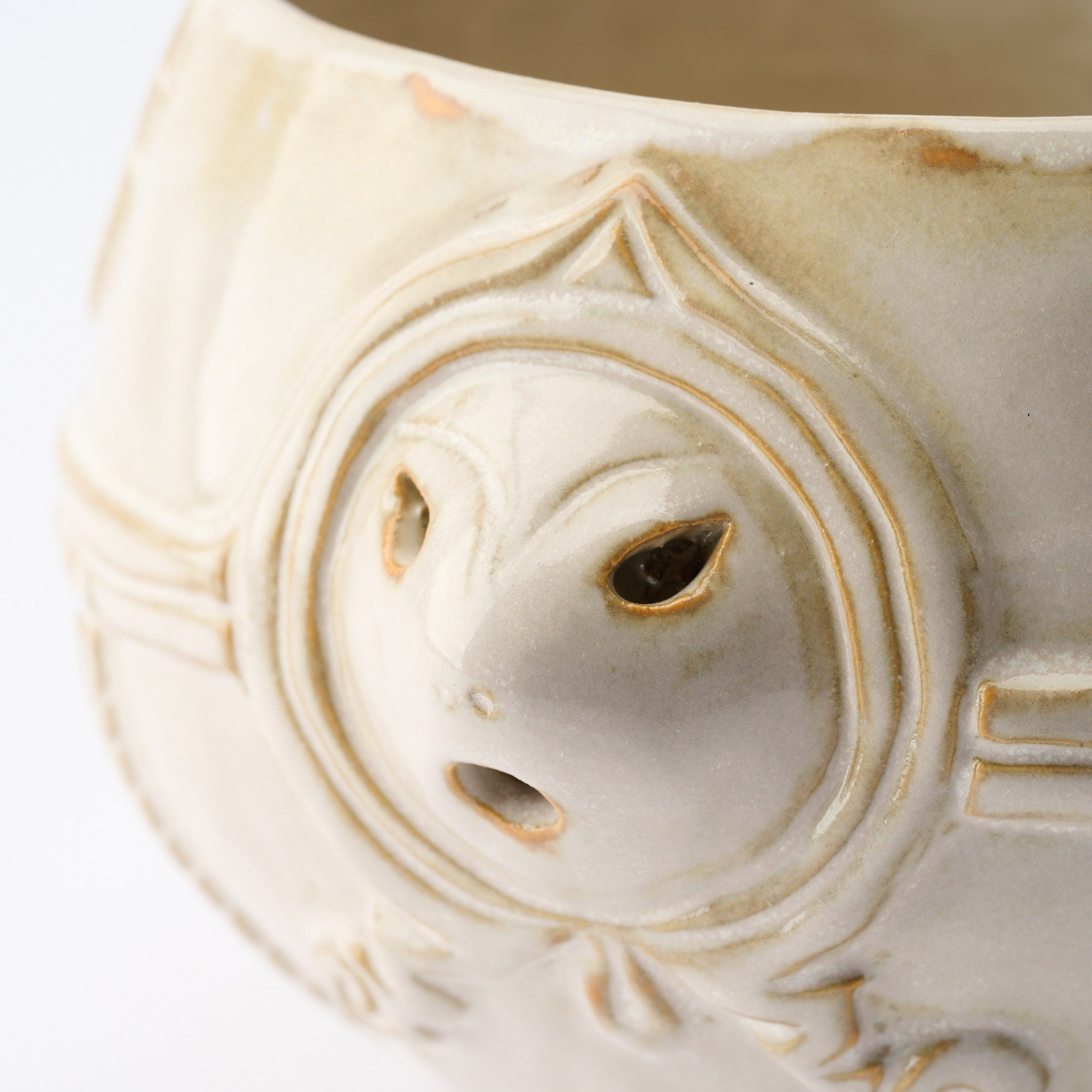
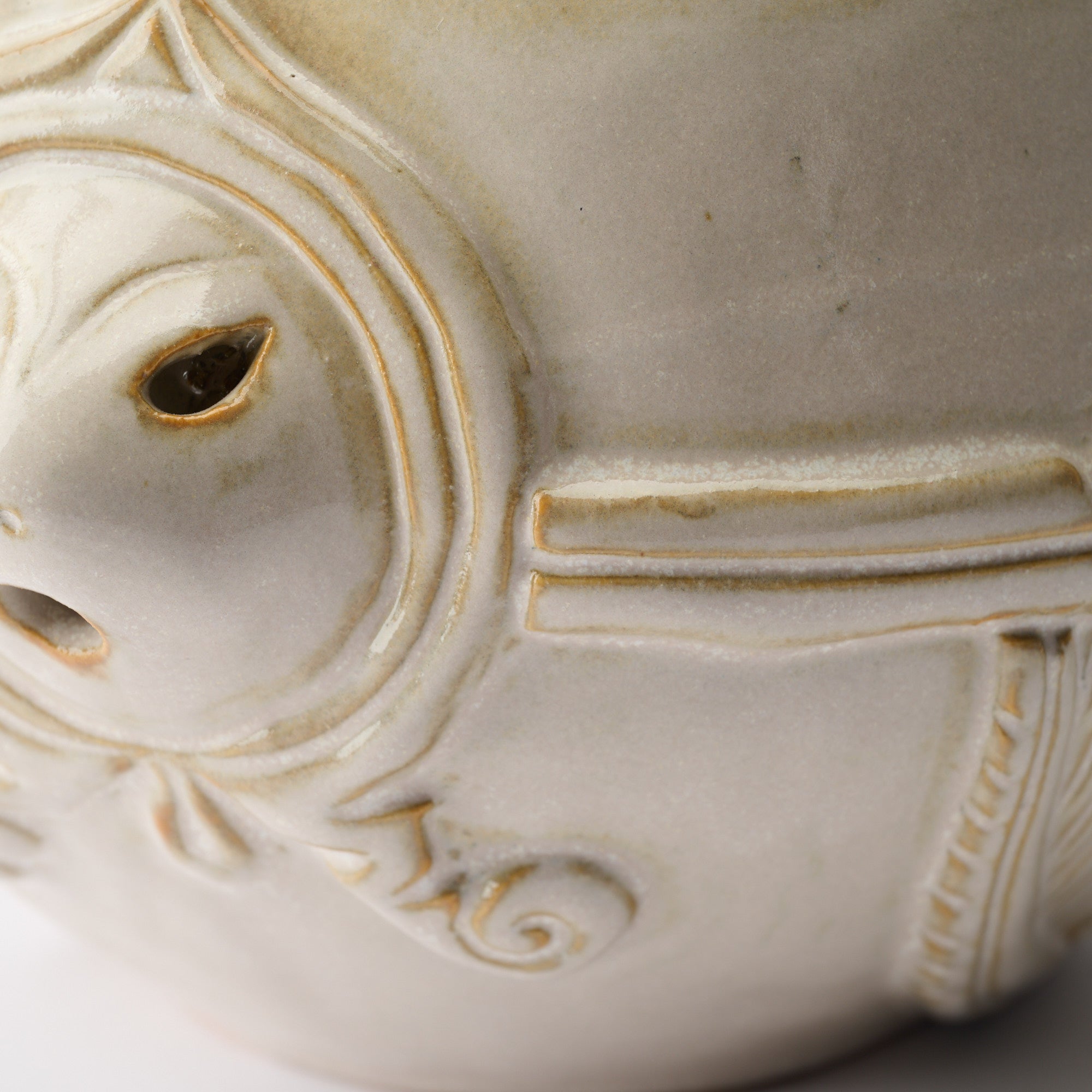
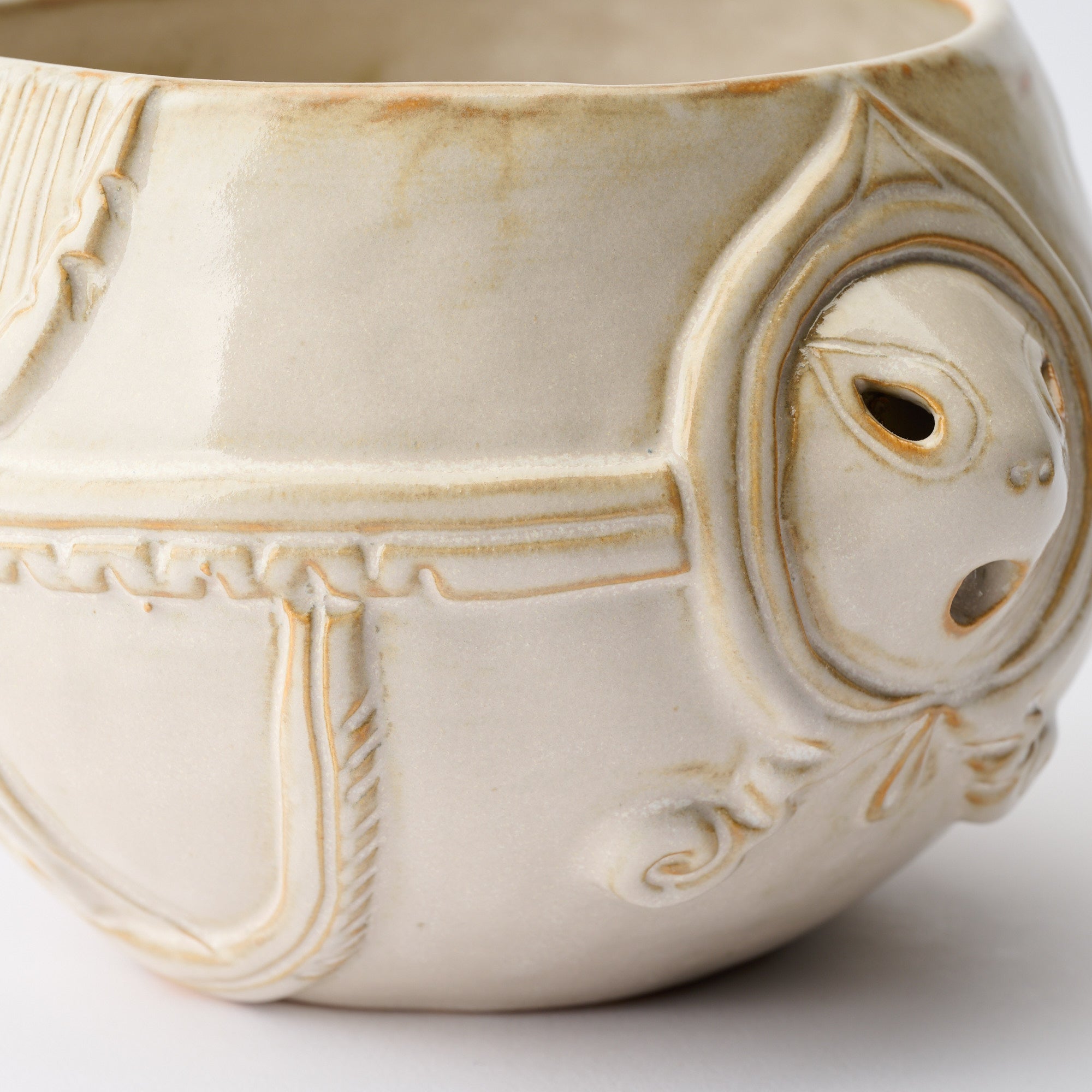
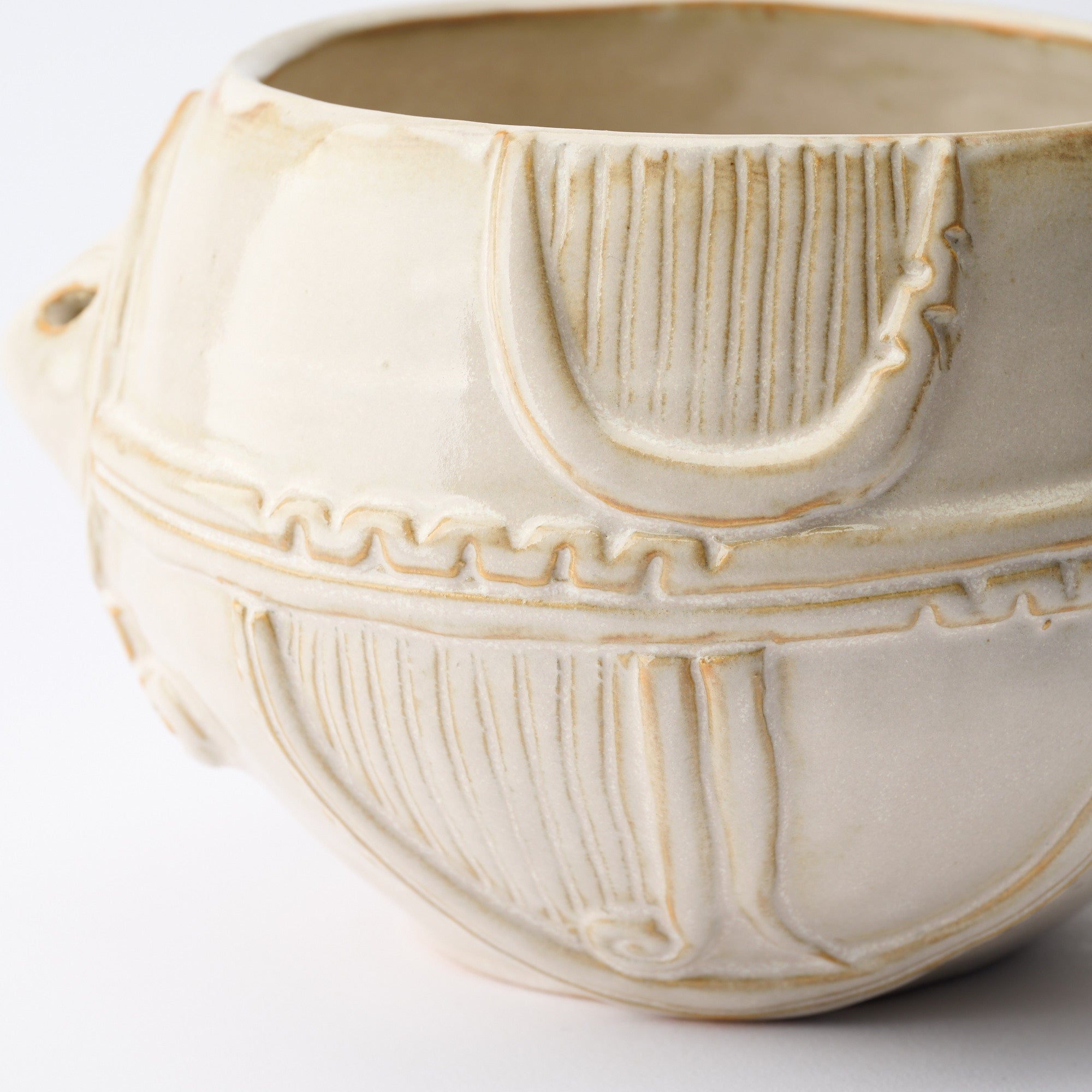
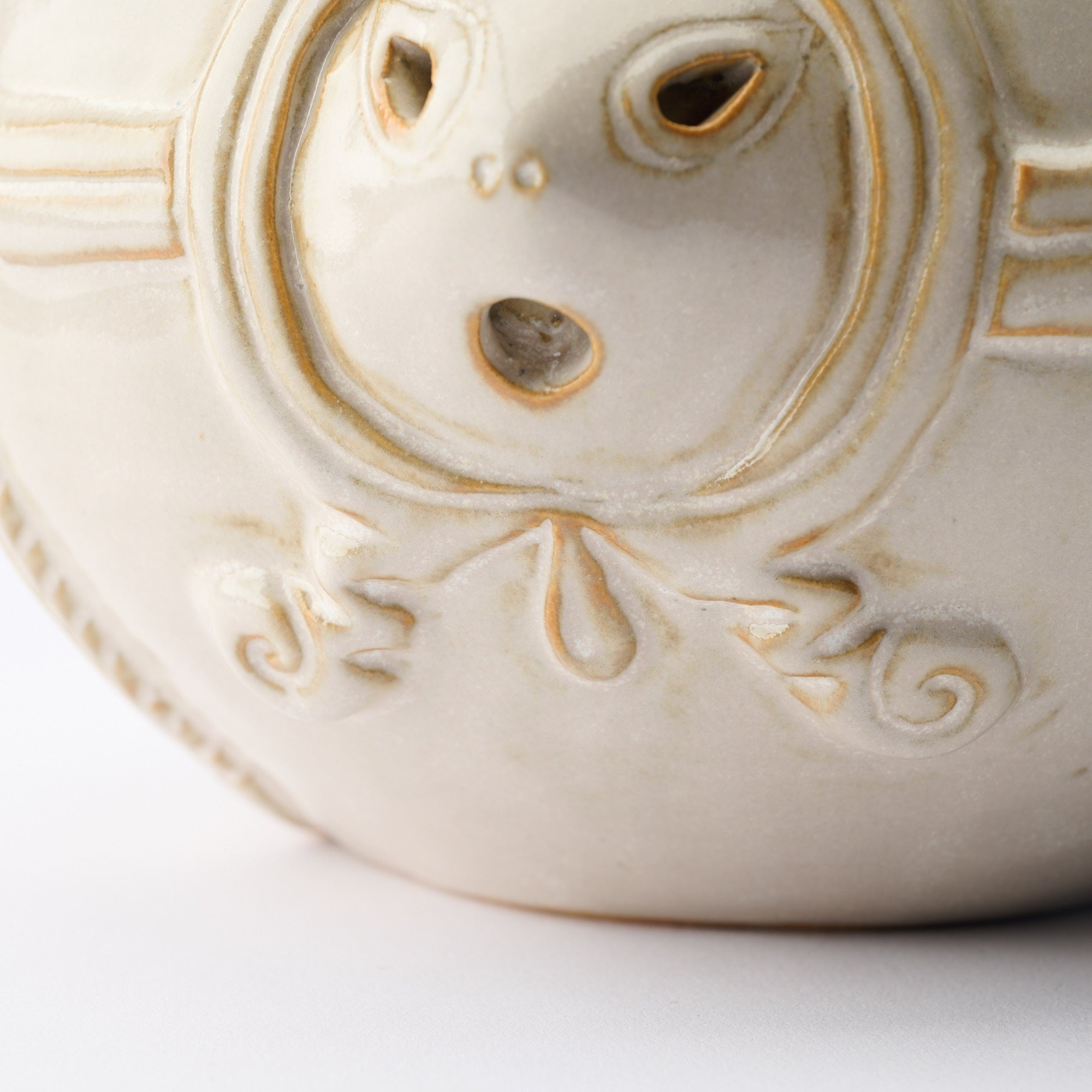
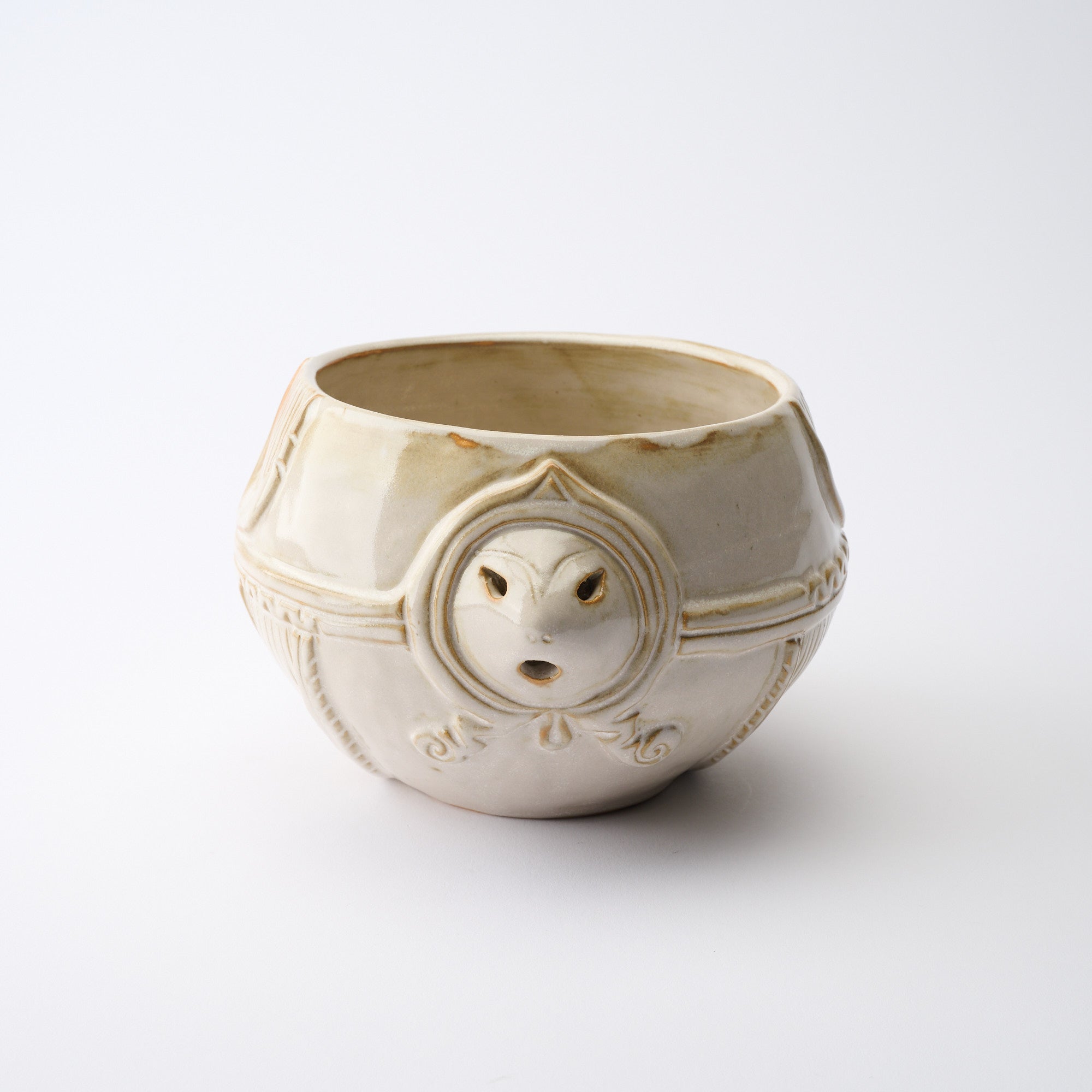
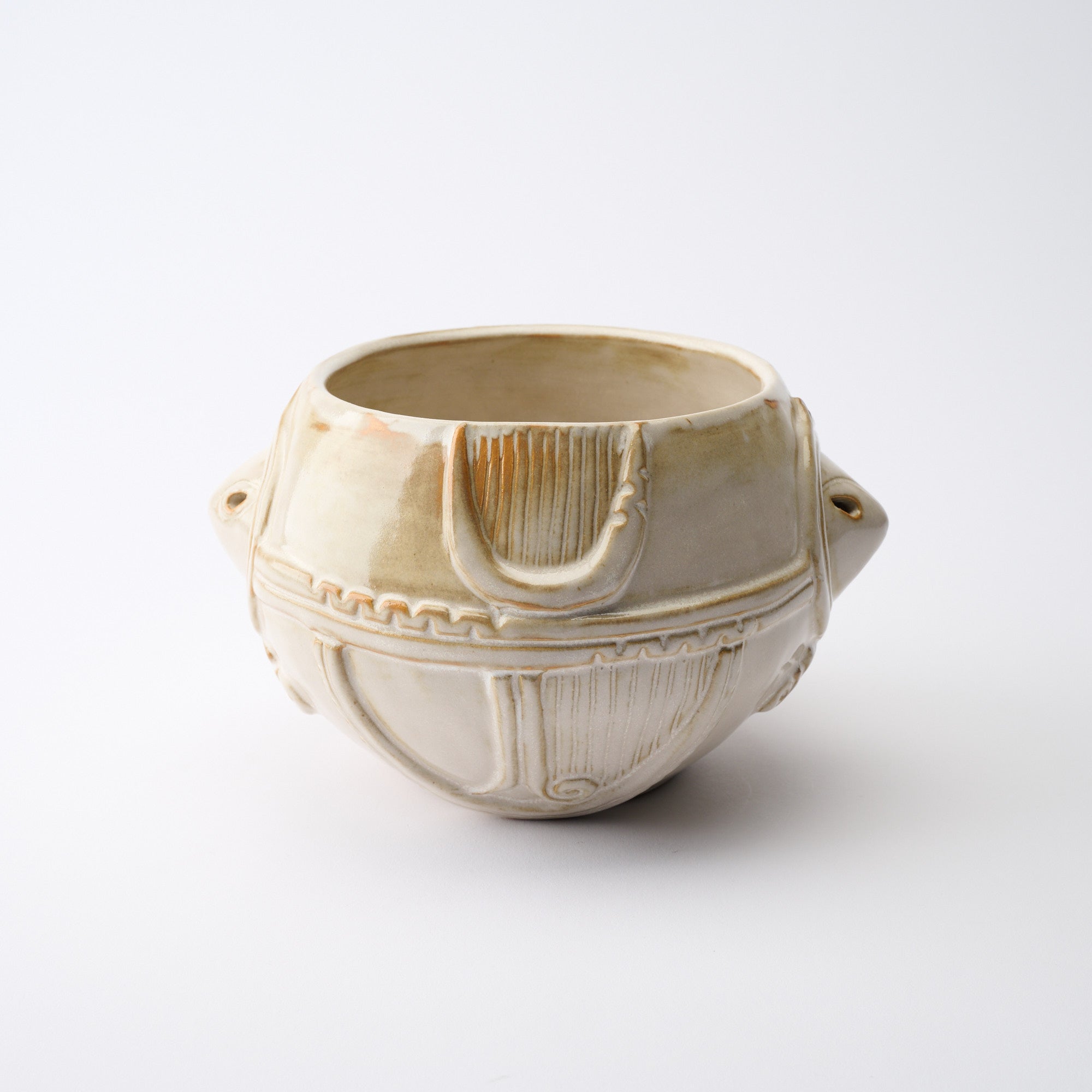
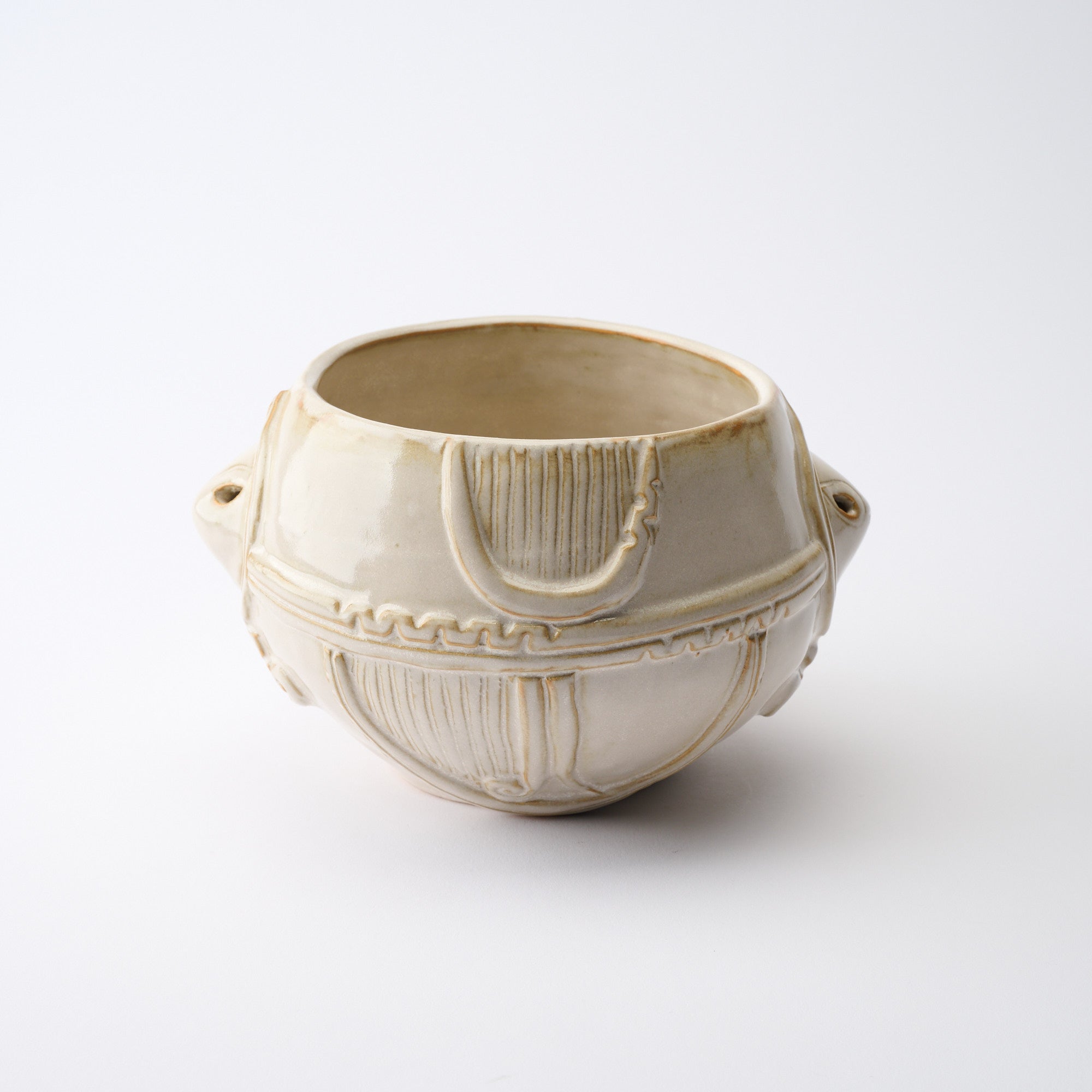
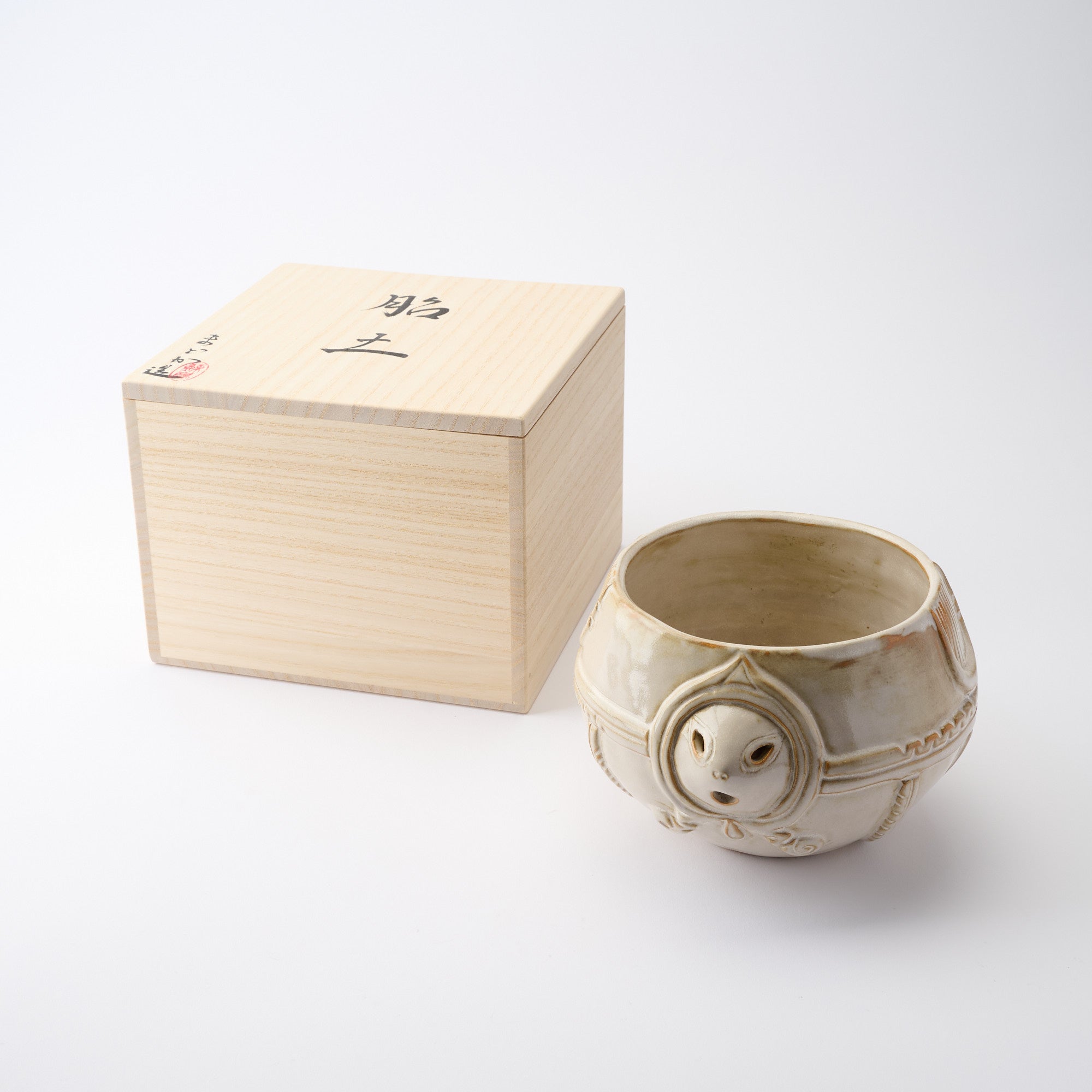
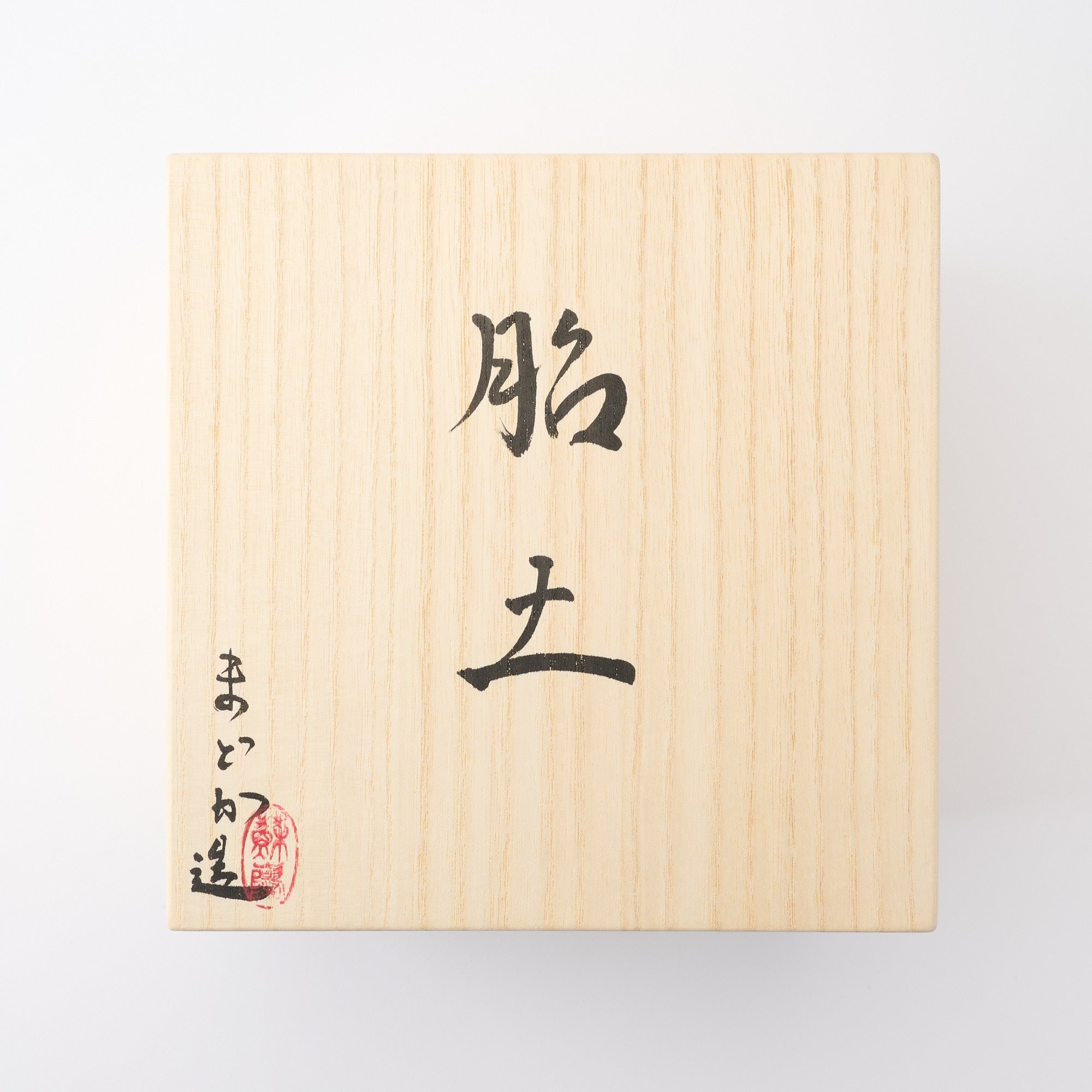
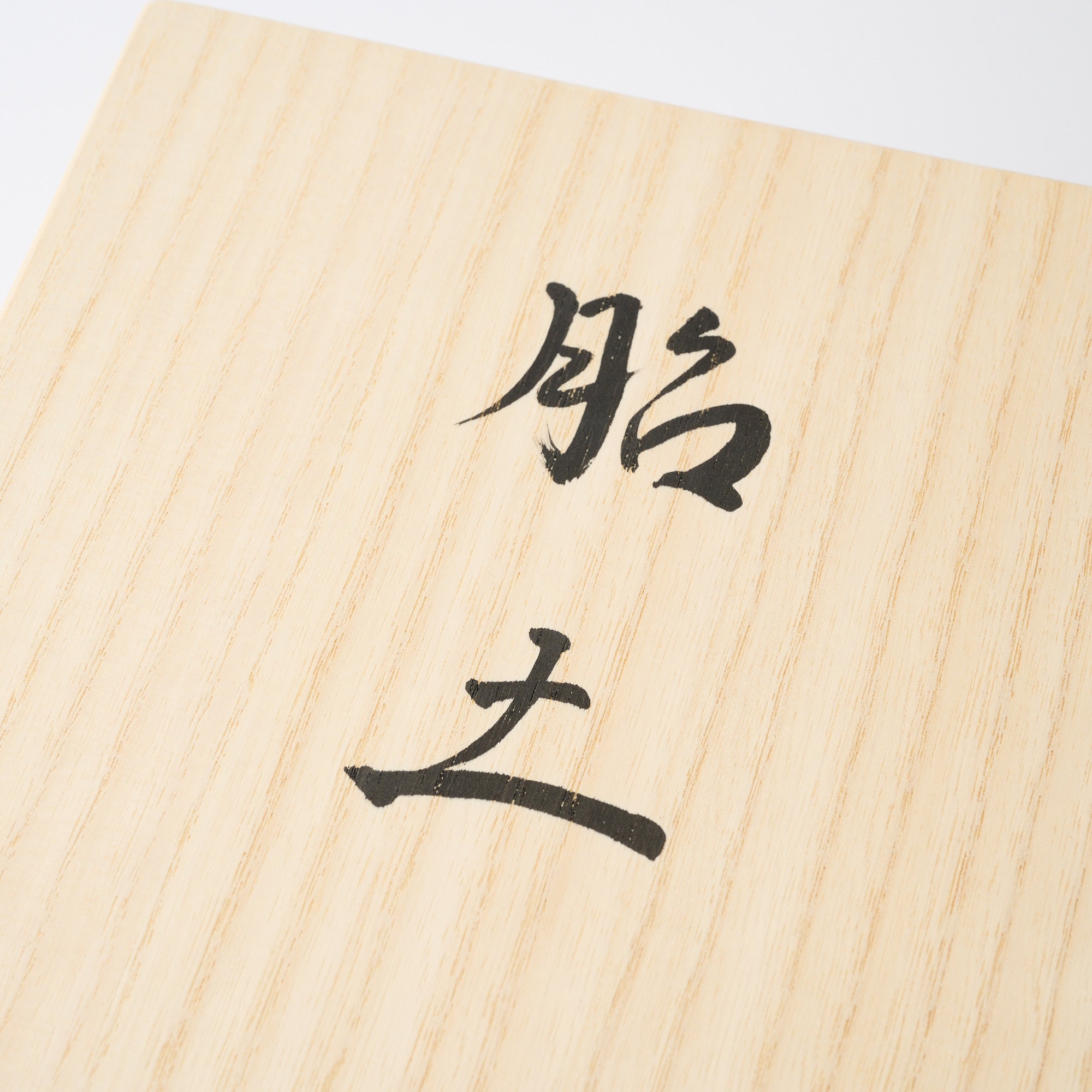
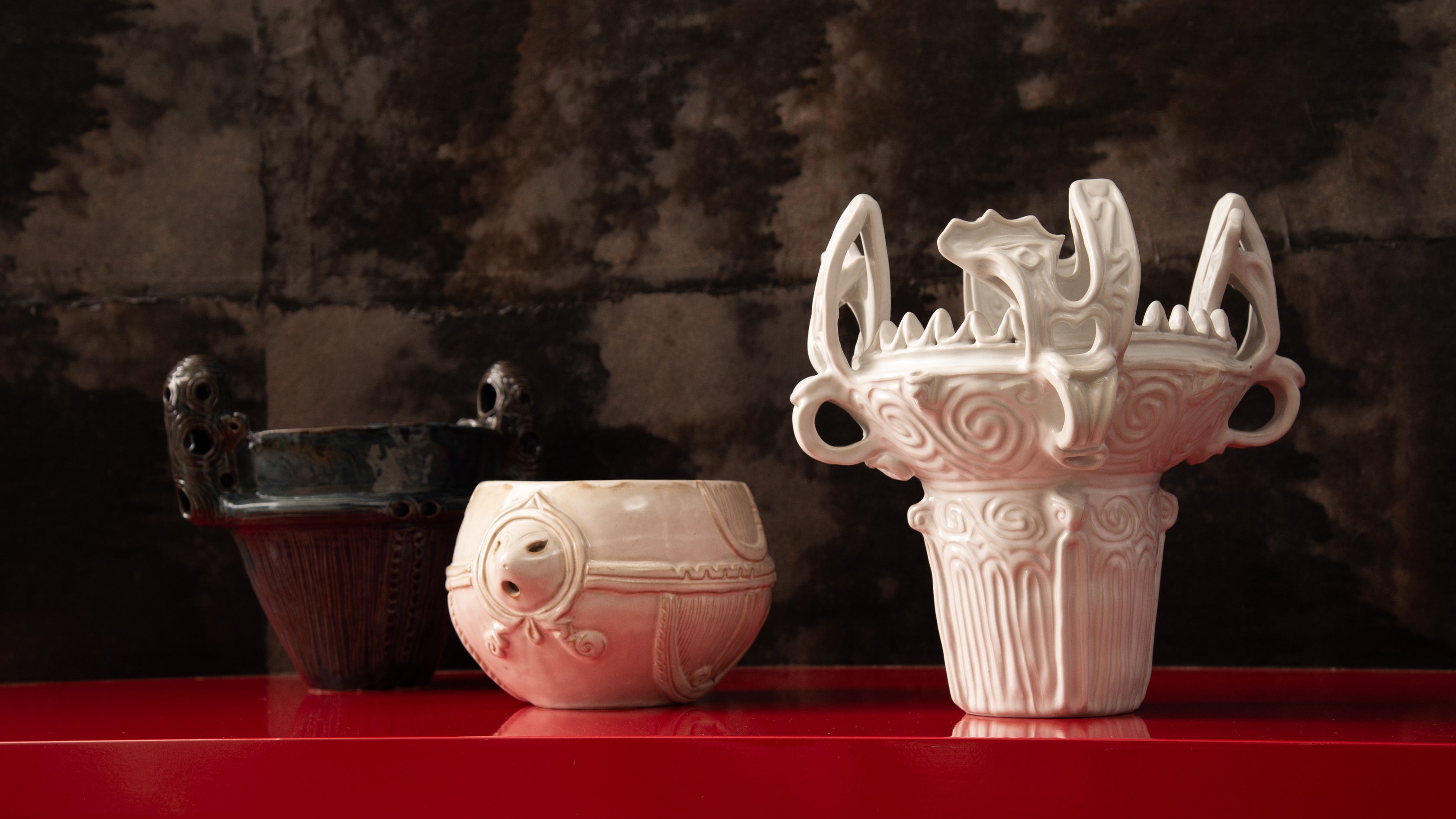
Die Aufmerksamkeit richtet sich auf die Ursprünge im Taido. Weiß Jomon-Übertopf. Das Werk der in Kyoto ansässigen Keramikerin Wakunami Madoka greift Motive der Jomon-Keramik auf, die mit der Geburt assoziiert werden und menschliche Gestalten im Moment des Entstehens zeigen. Der Titel „Taido“ vereint die Schriftzeichen für Gebärmutter und Erde und verweist so sowohl auf den Ursprung des Lebens als auch auf den Tonkörper, aus dem alle Gefäße geformt sind.
Dieses Werk bezieht sich auf Interpretationen von Jōmon-Gefäßen, die einen Geburtsmoment darstellen – ein Bild, das als symbolischer Ausdruck der Ehrfurcht vor dem Leben verstanden wird. In einer Zeit, in der das Überleben ungewiss und die Lebensspanne kurz war, galt die Geburt neuen Lebens als tiefgreifend und wundersam. Wakunami nähert sich diesen alten Motiven mit Respekt und versucht nicht, sie zu kopieren, sondern ihre Ehrfurcht vor dem Leben neu zu vermitteln.
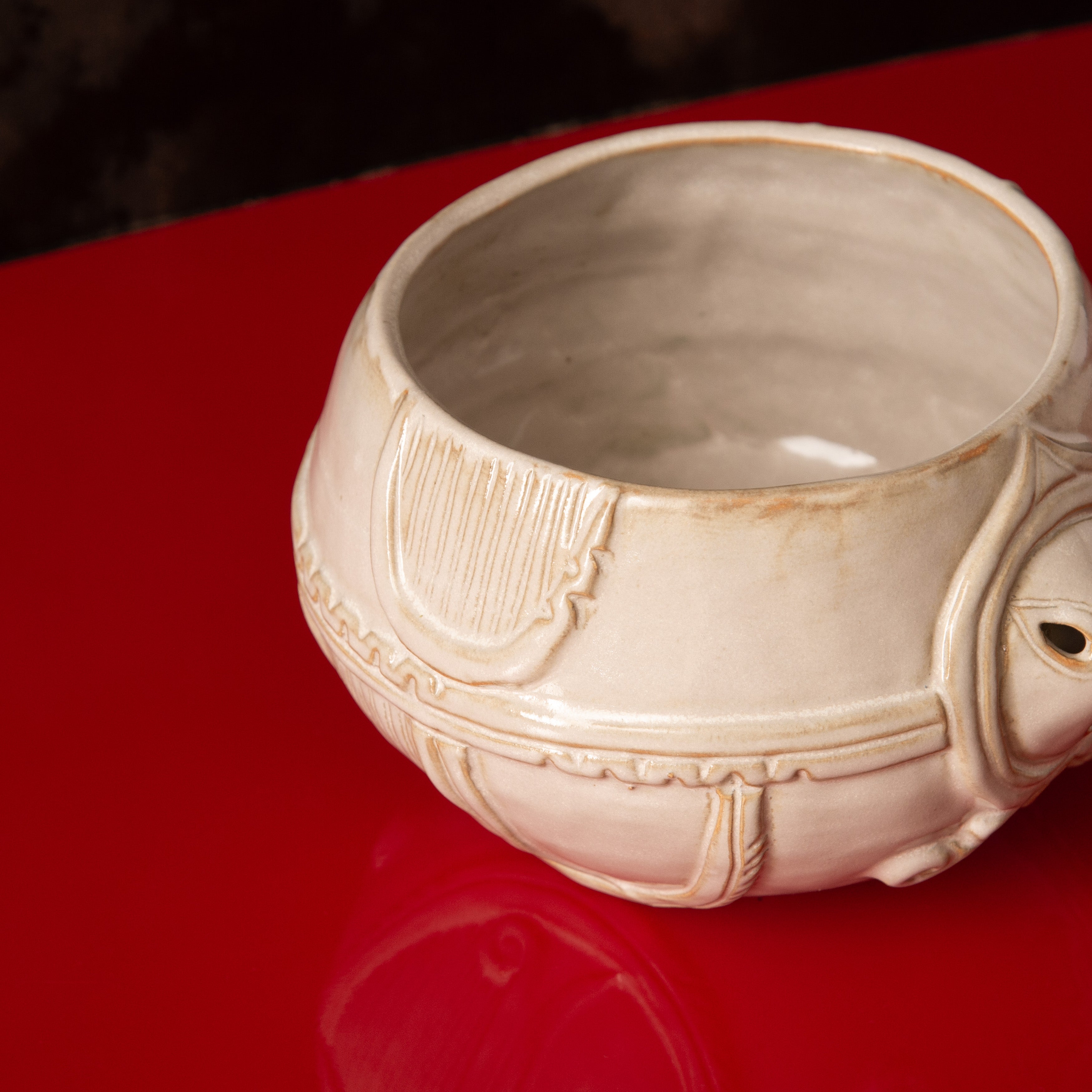
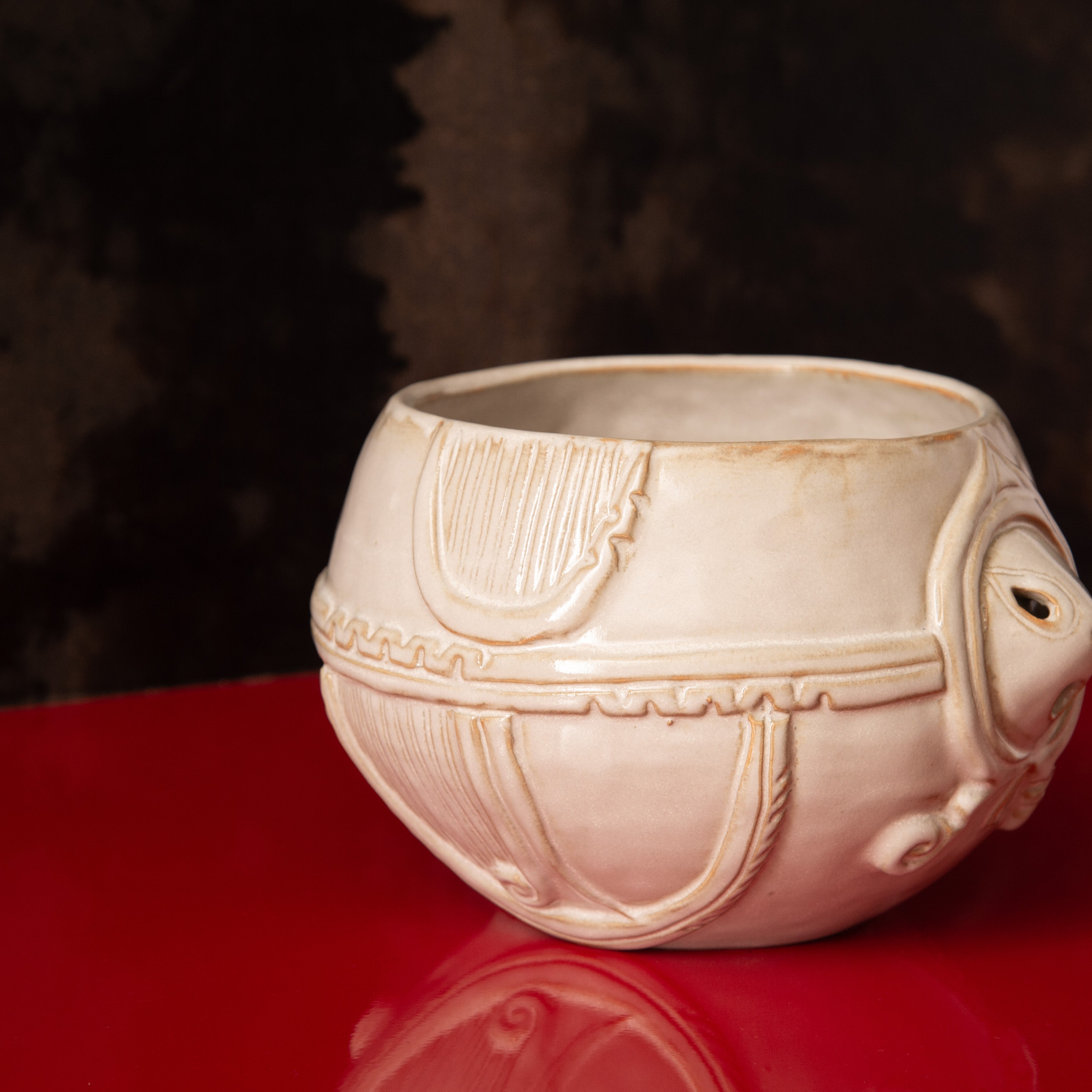
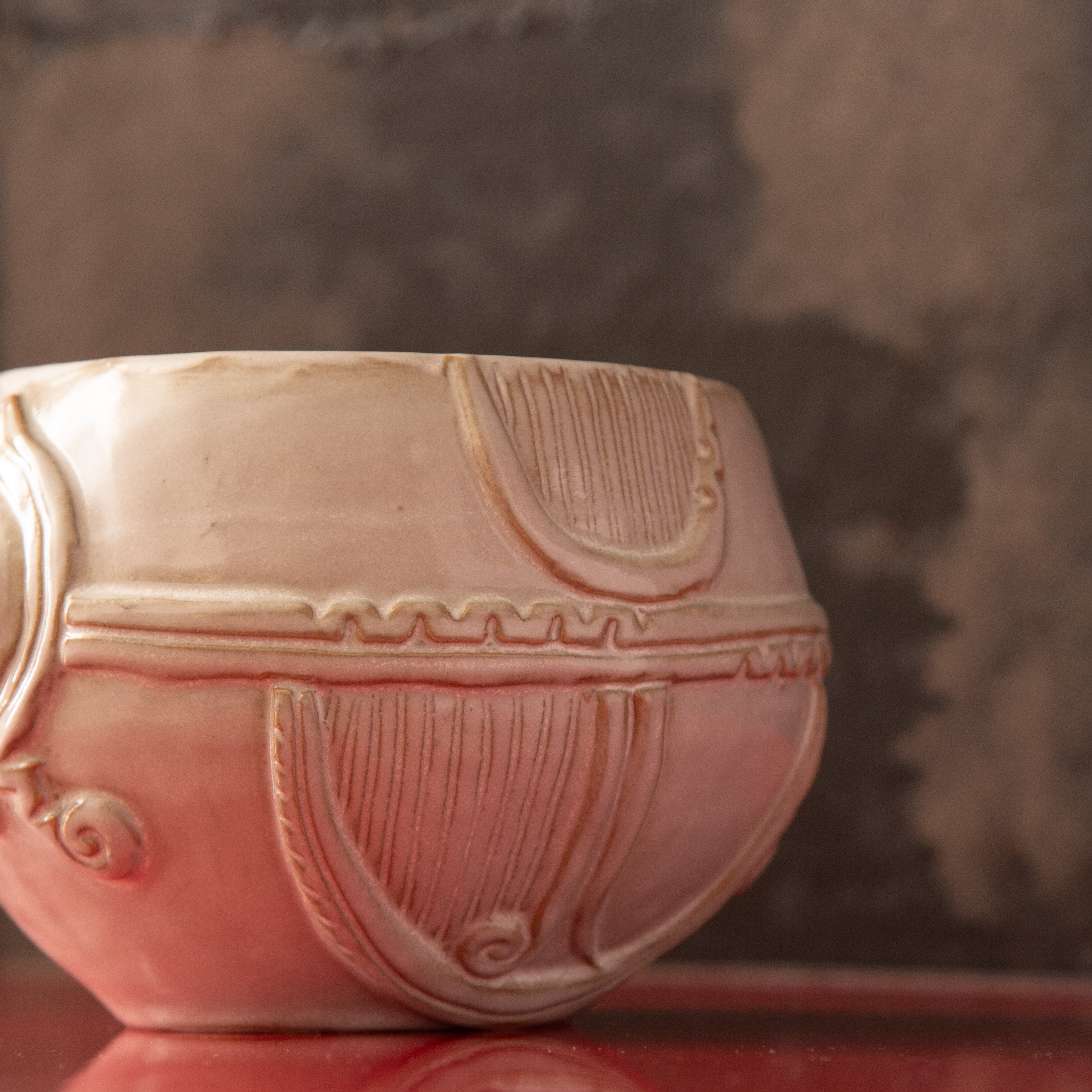
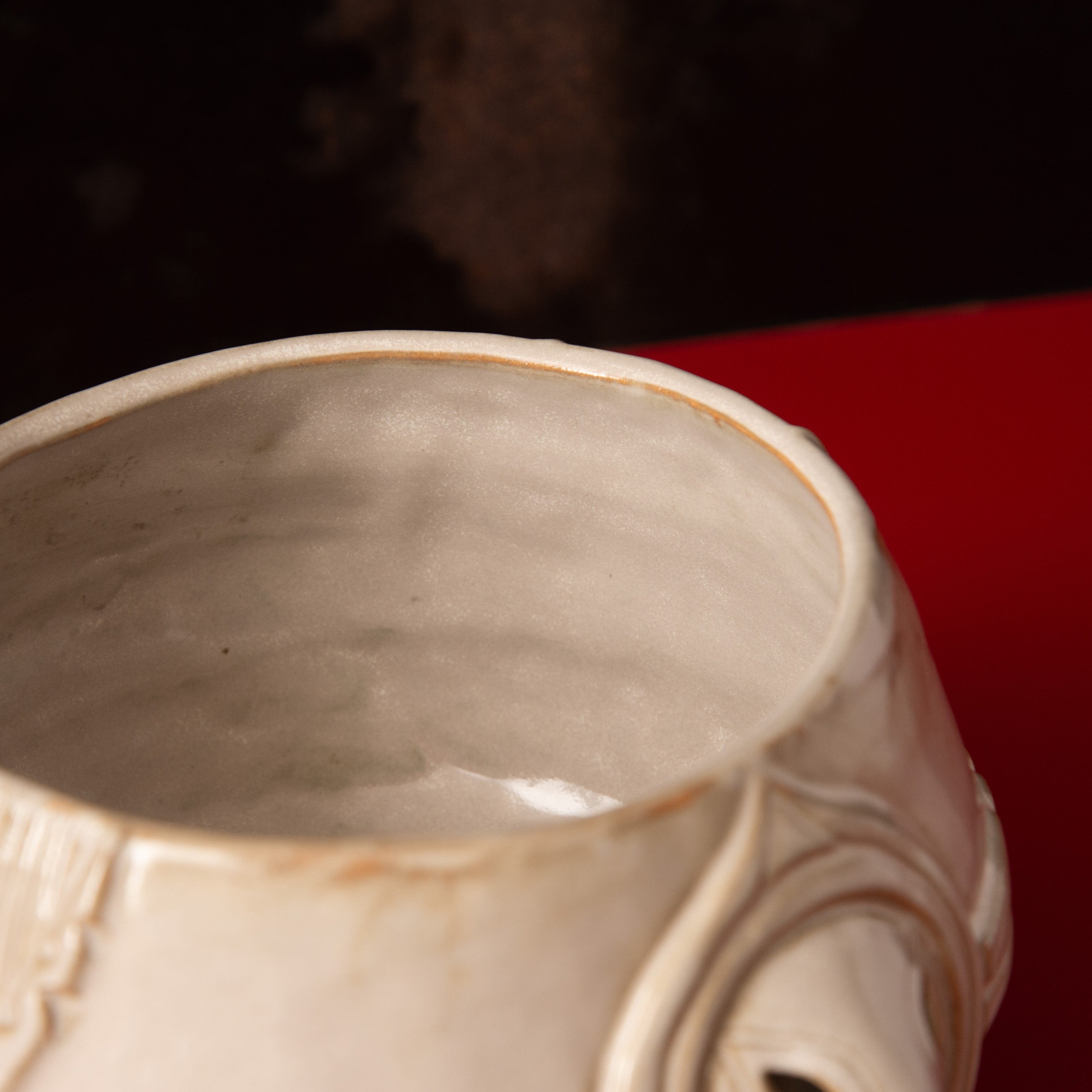
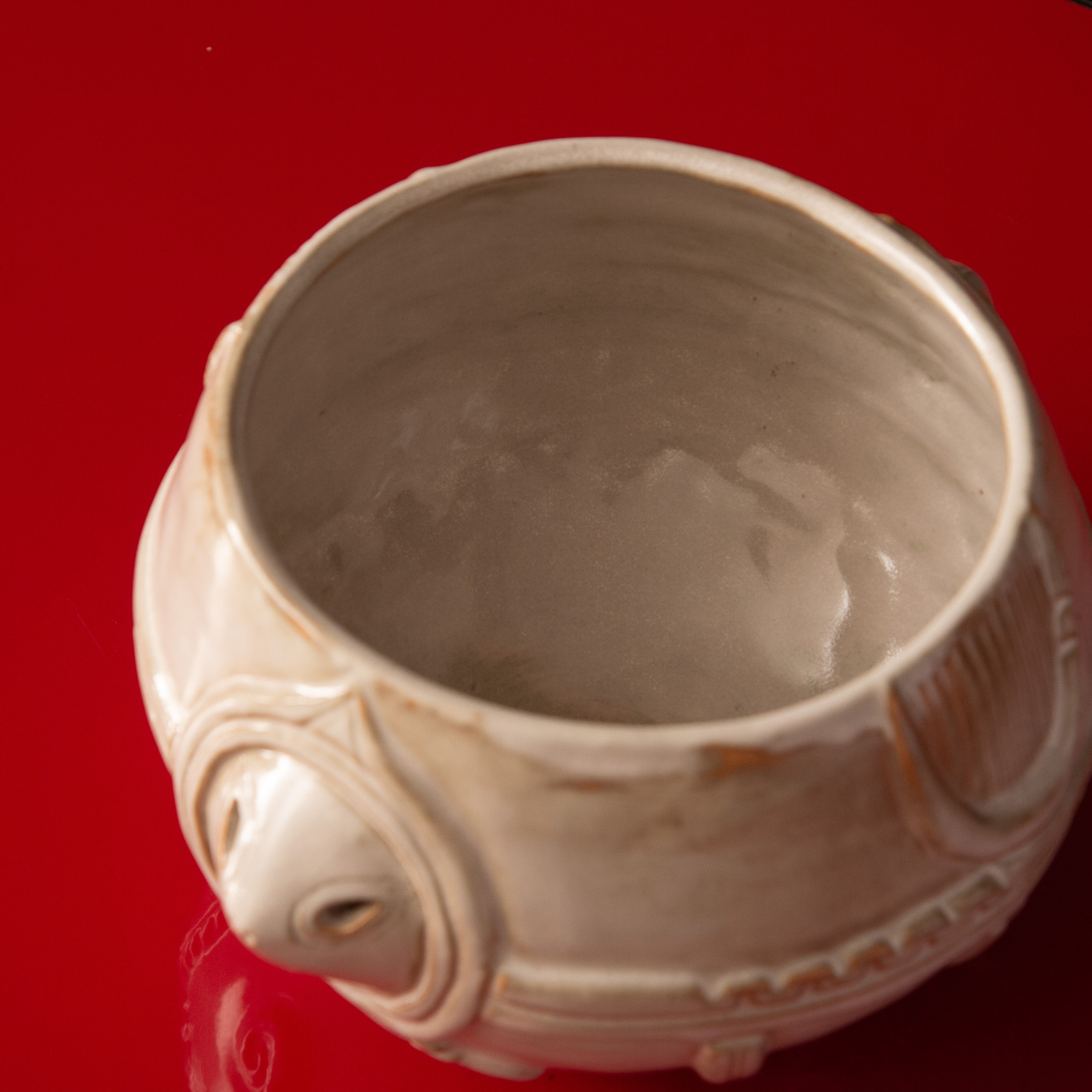
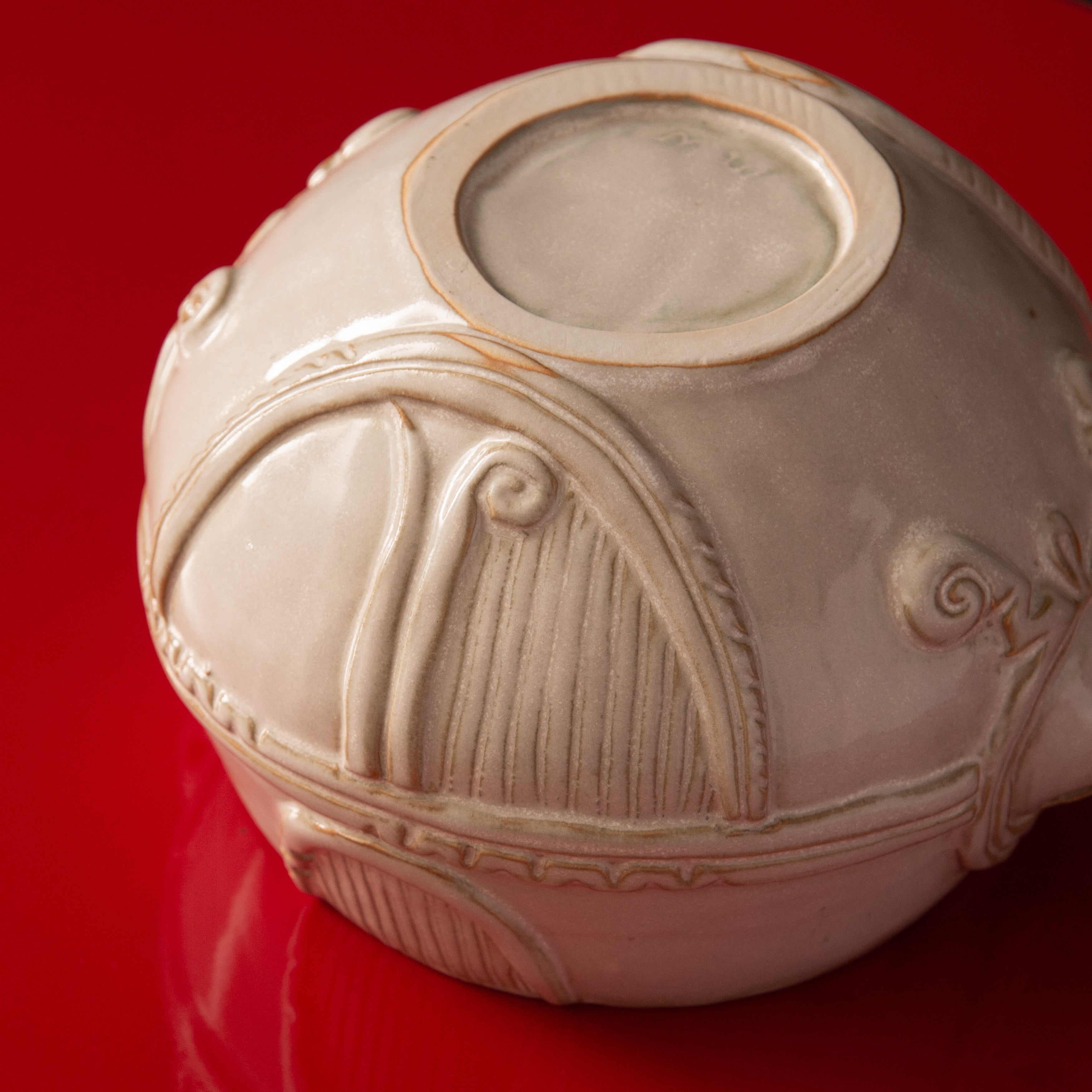
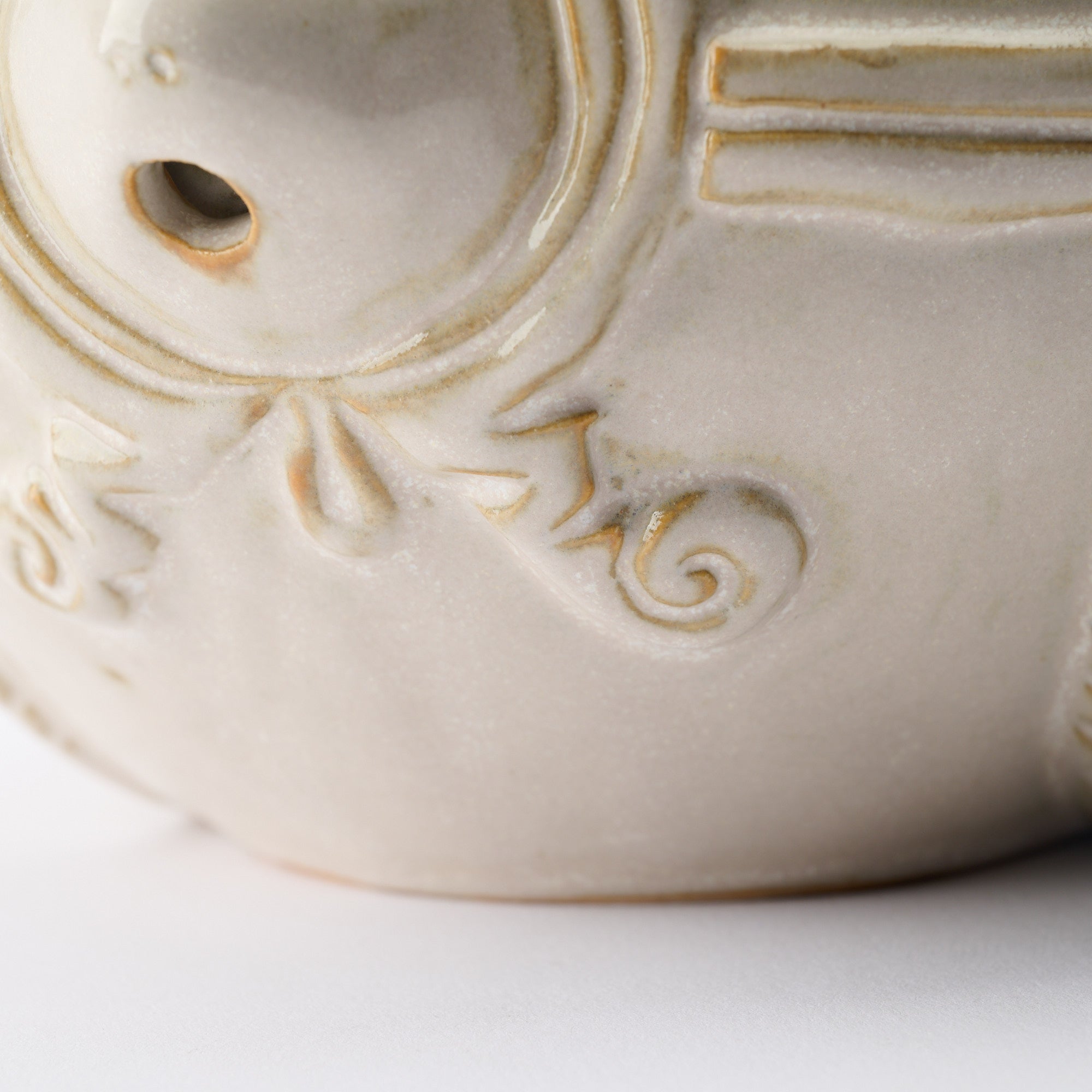
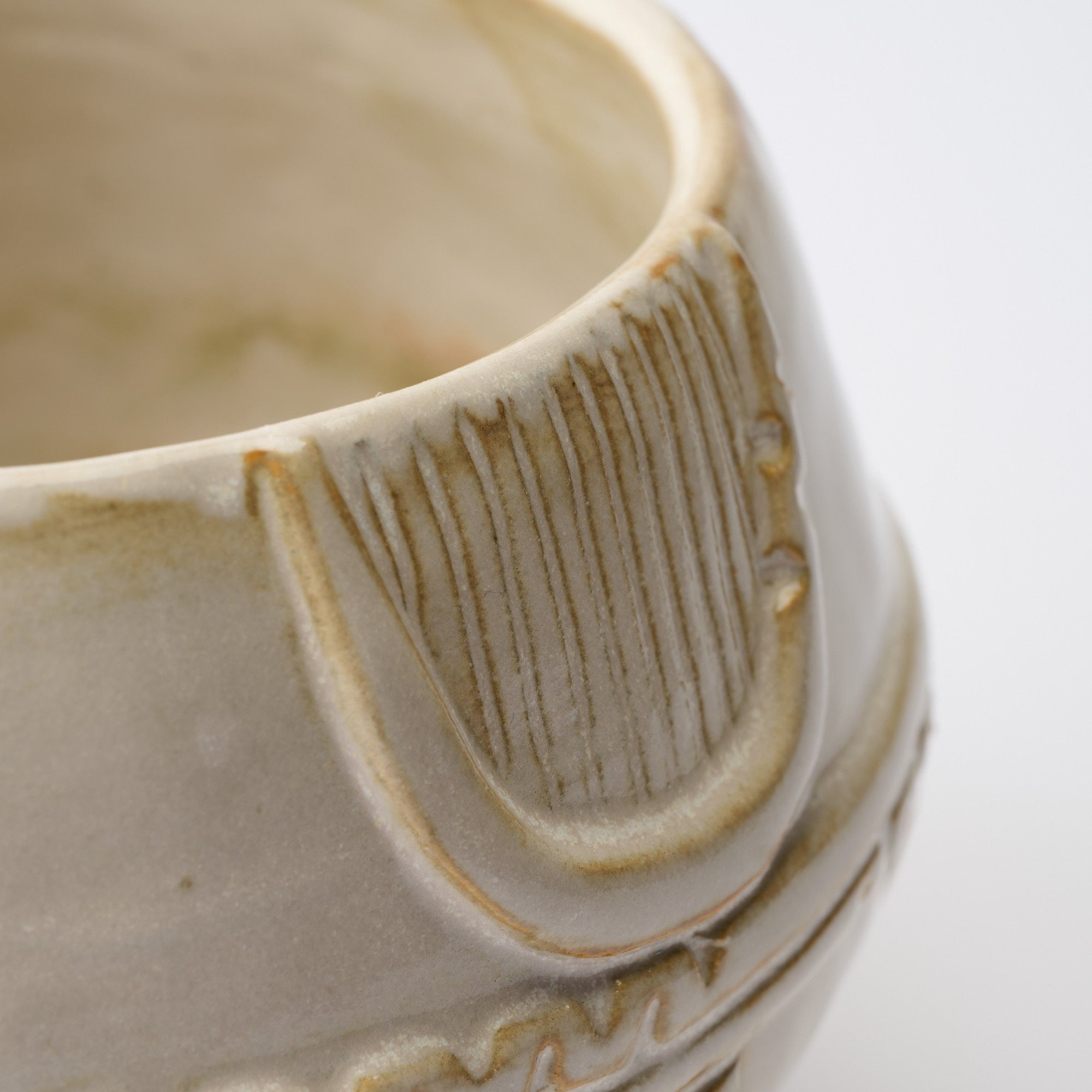
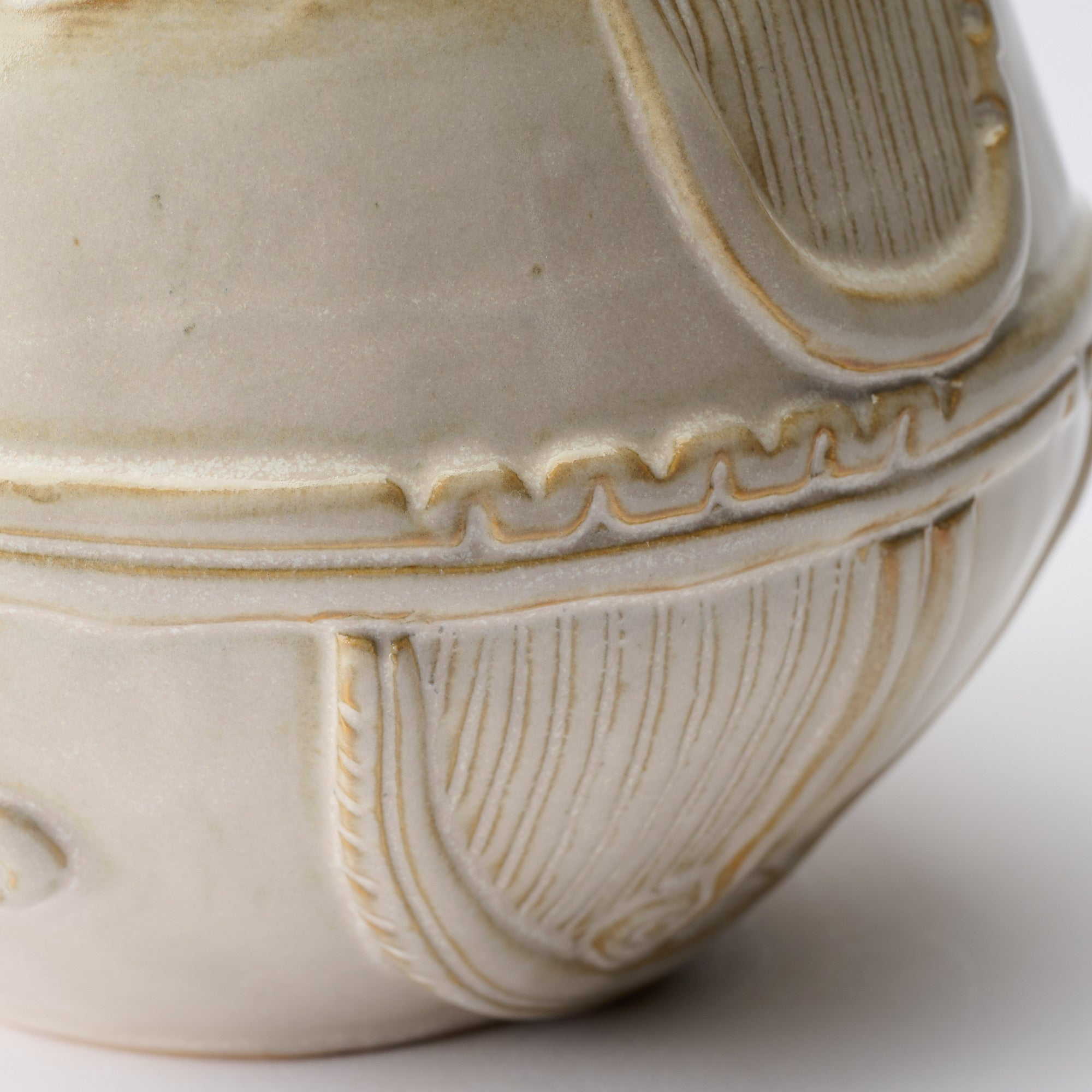
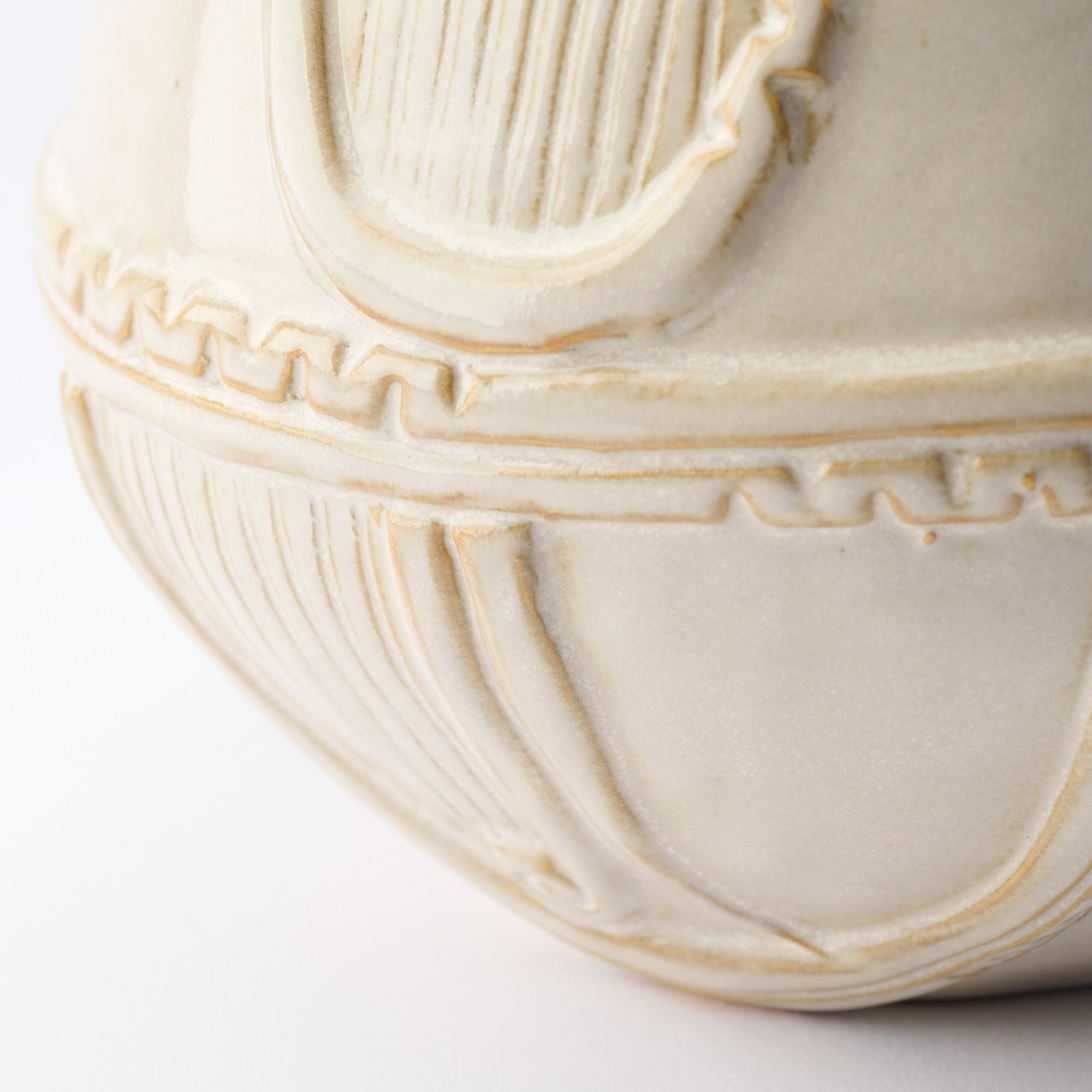
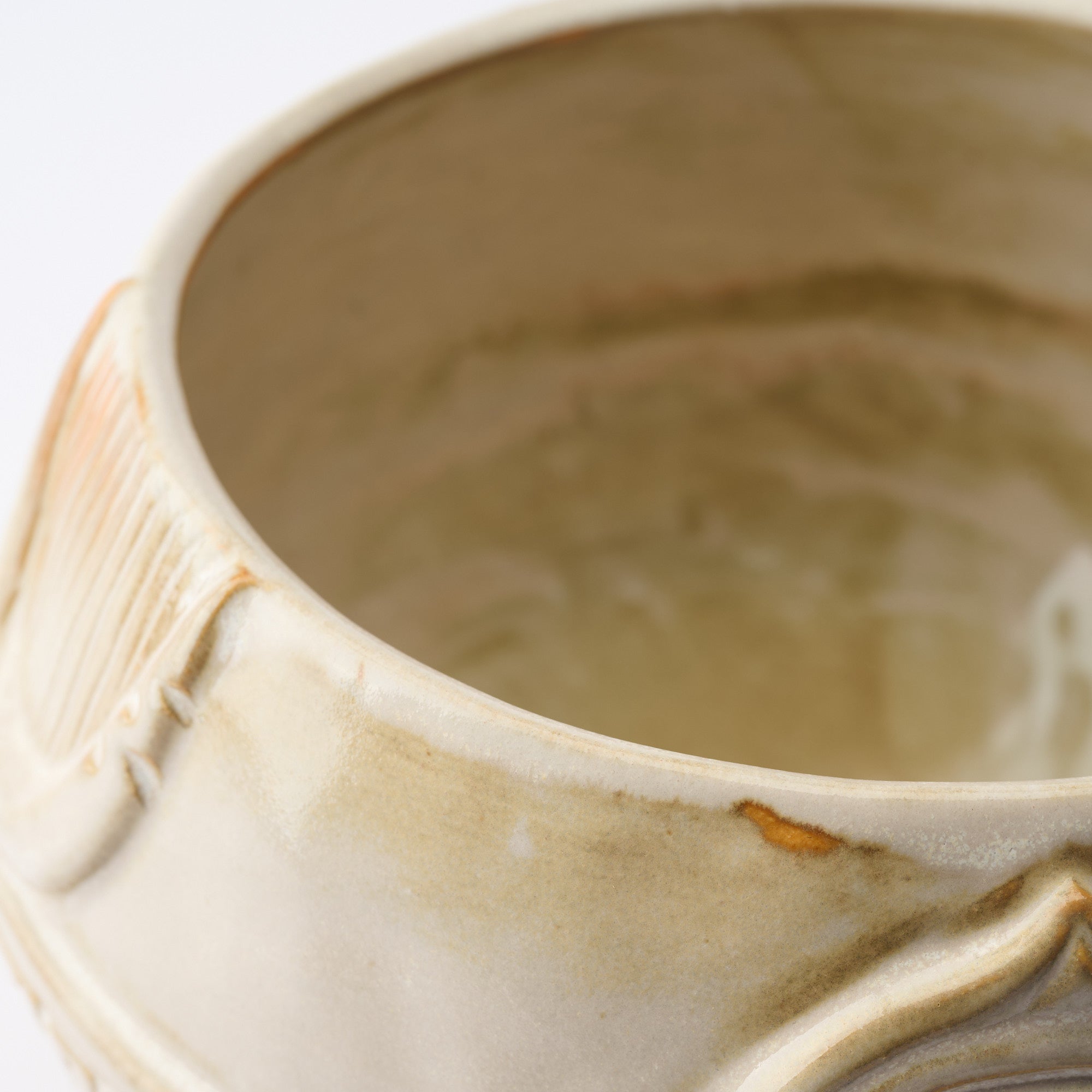
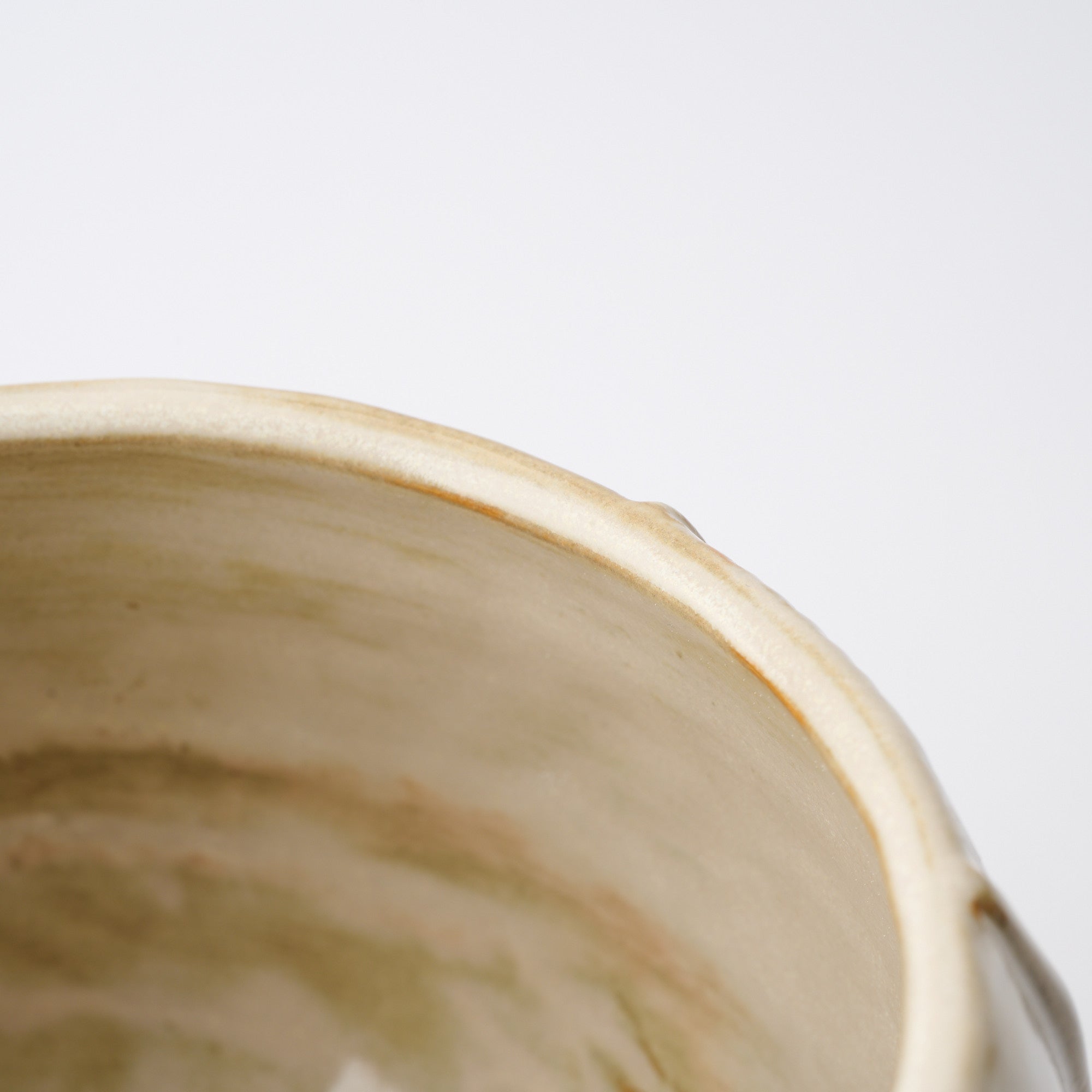
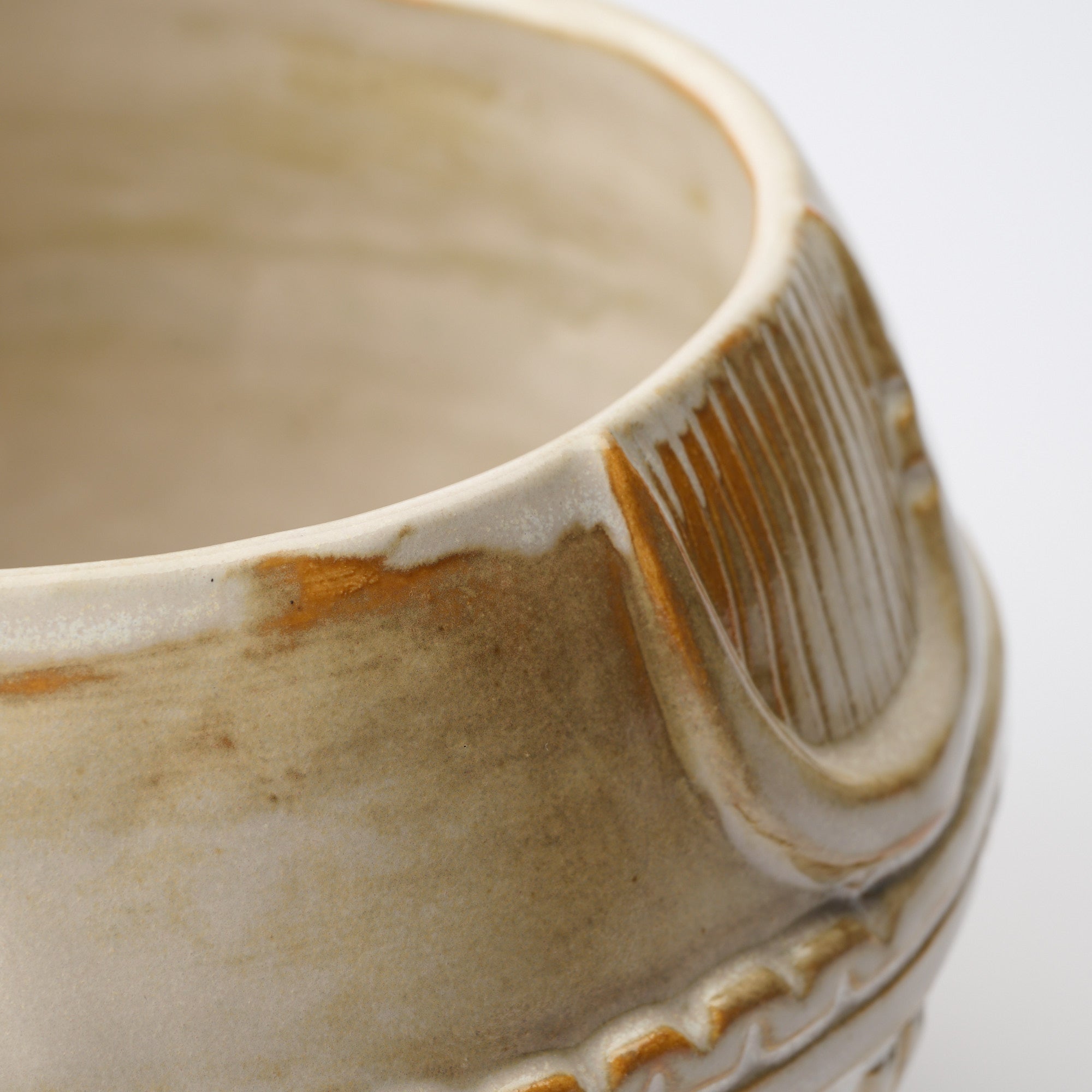
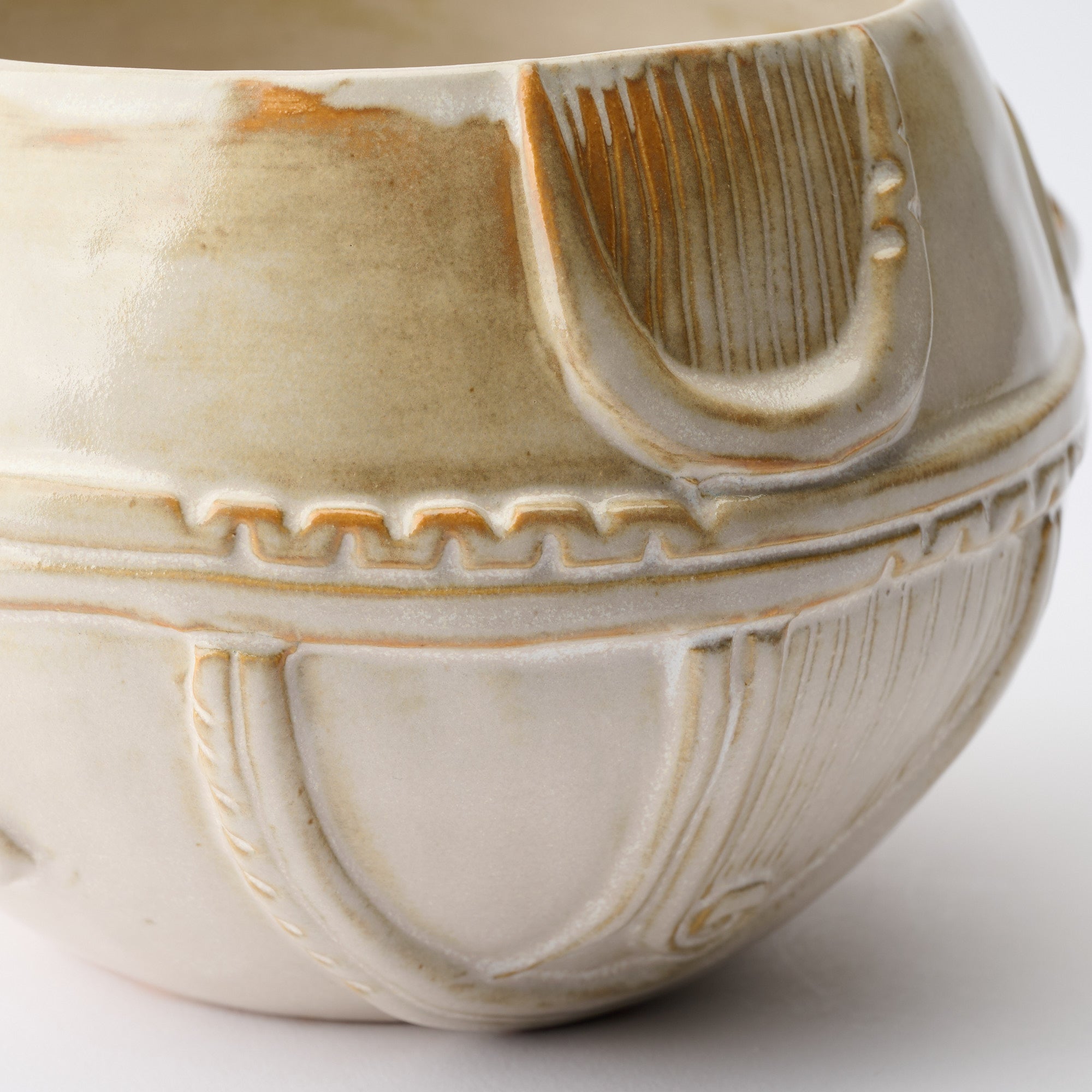
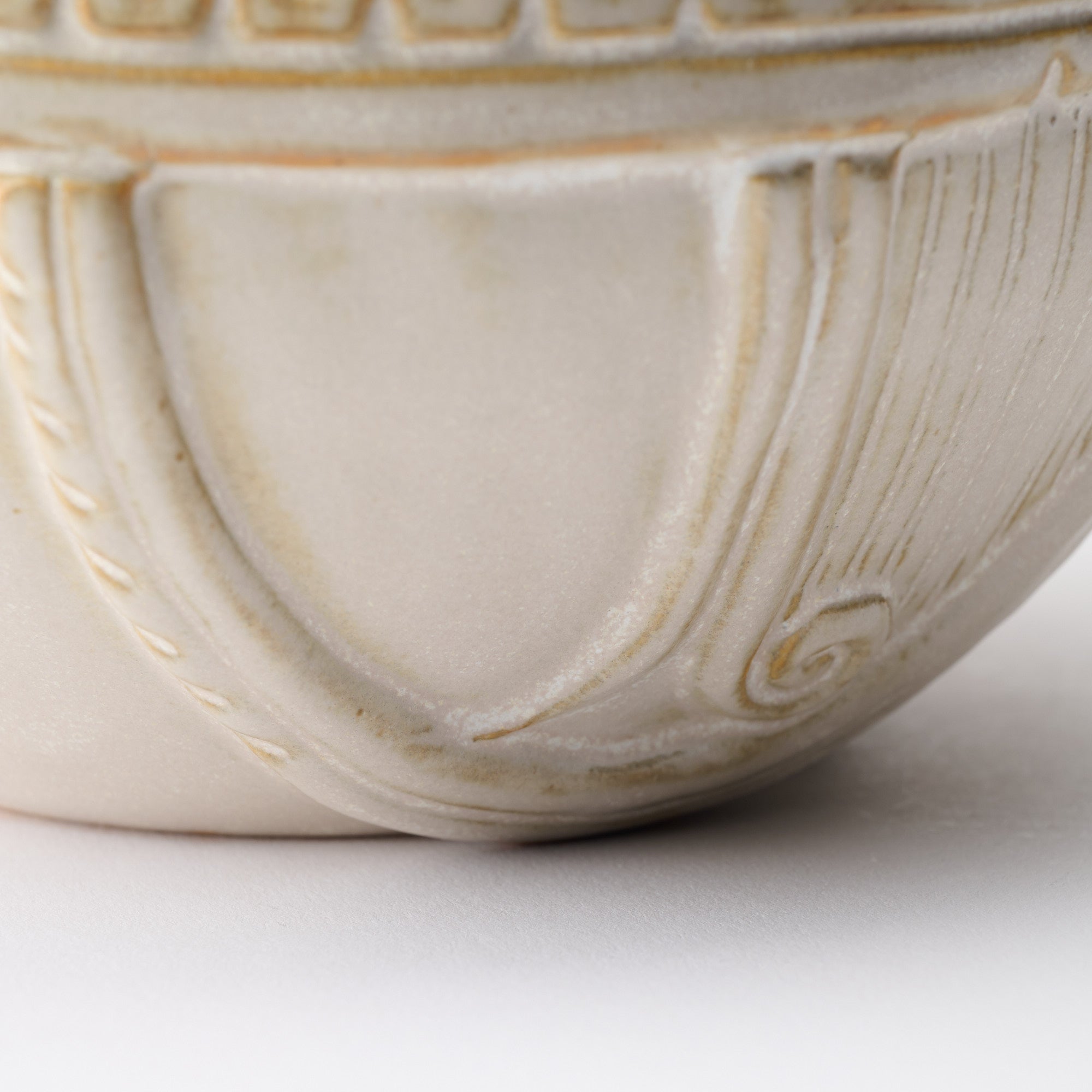
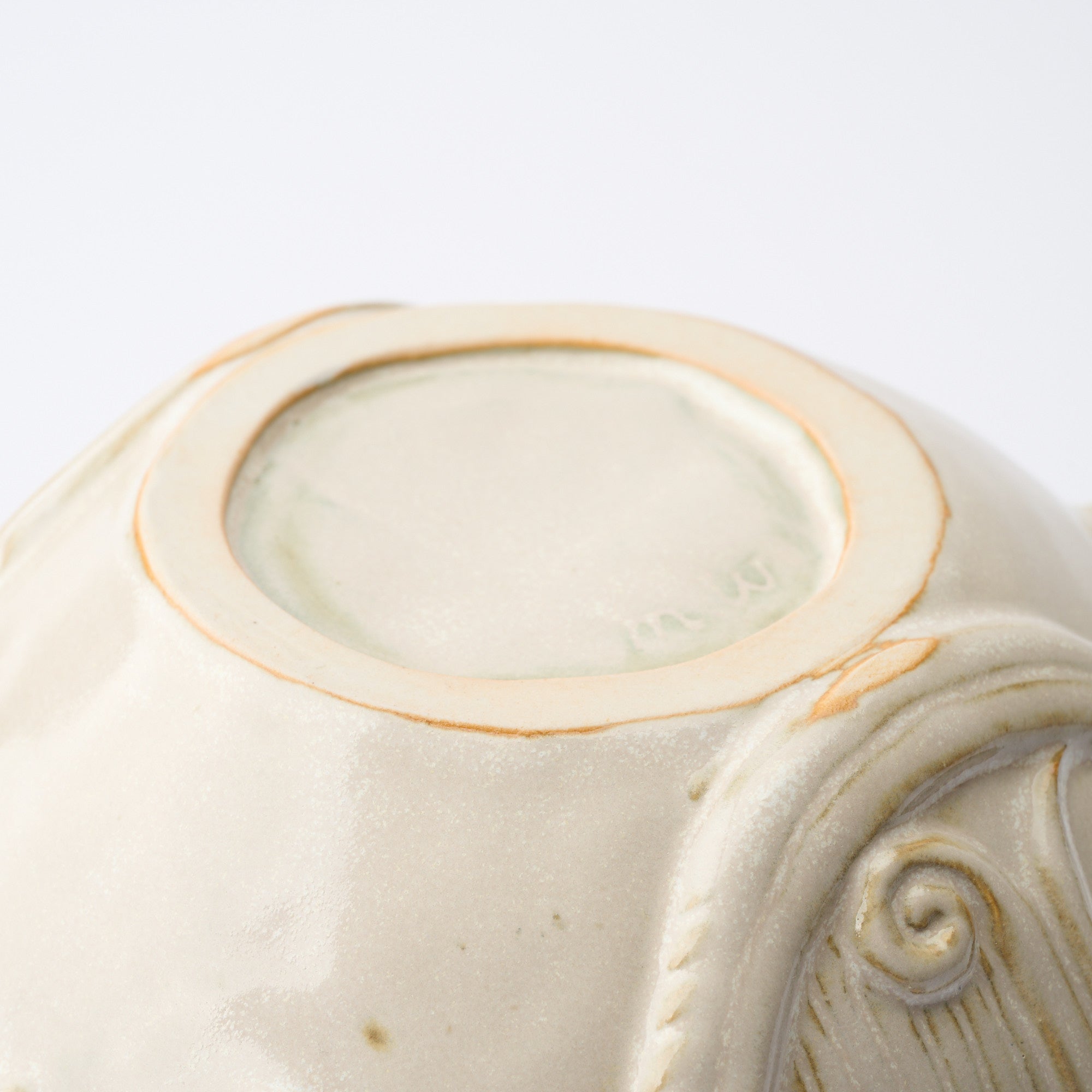
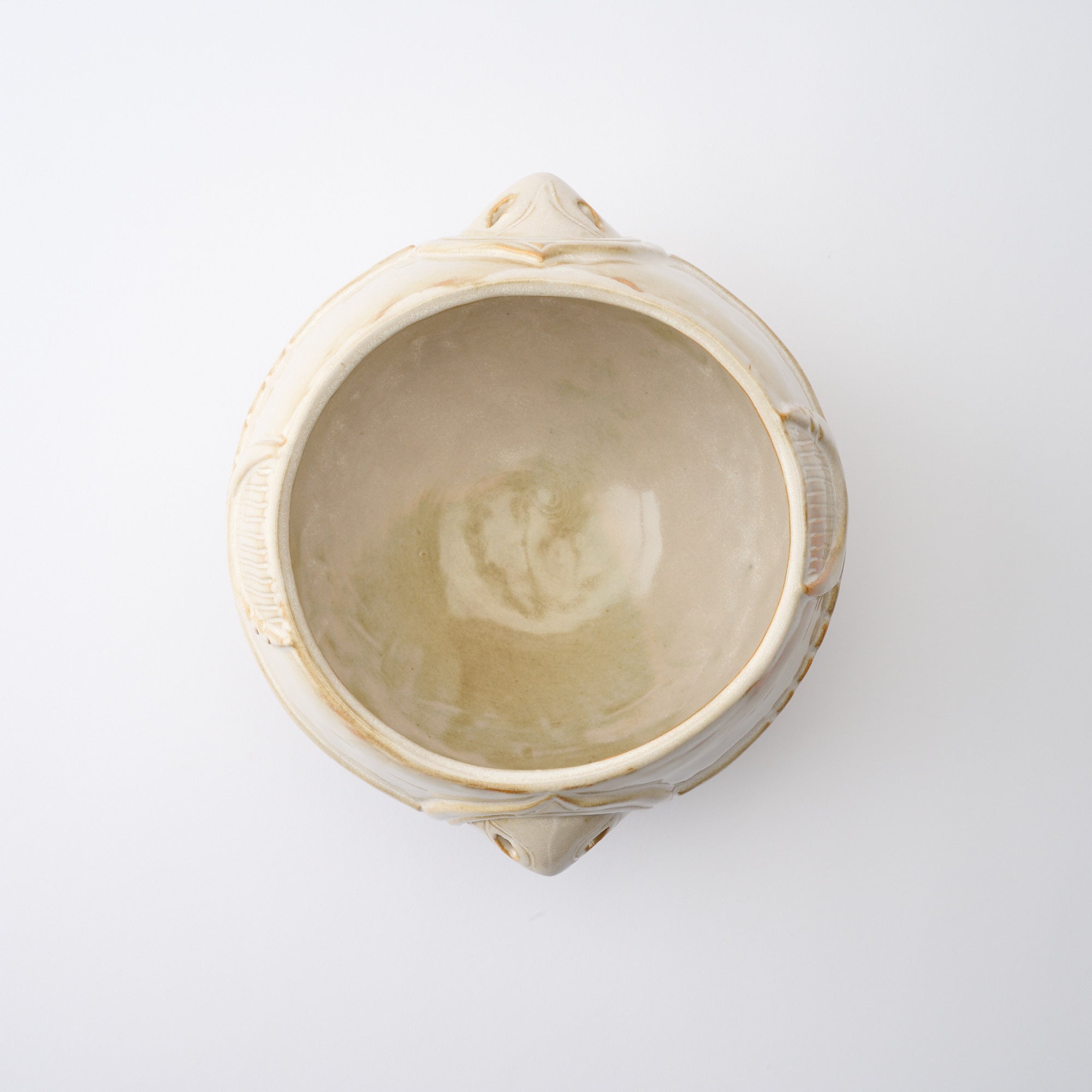
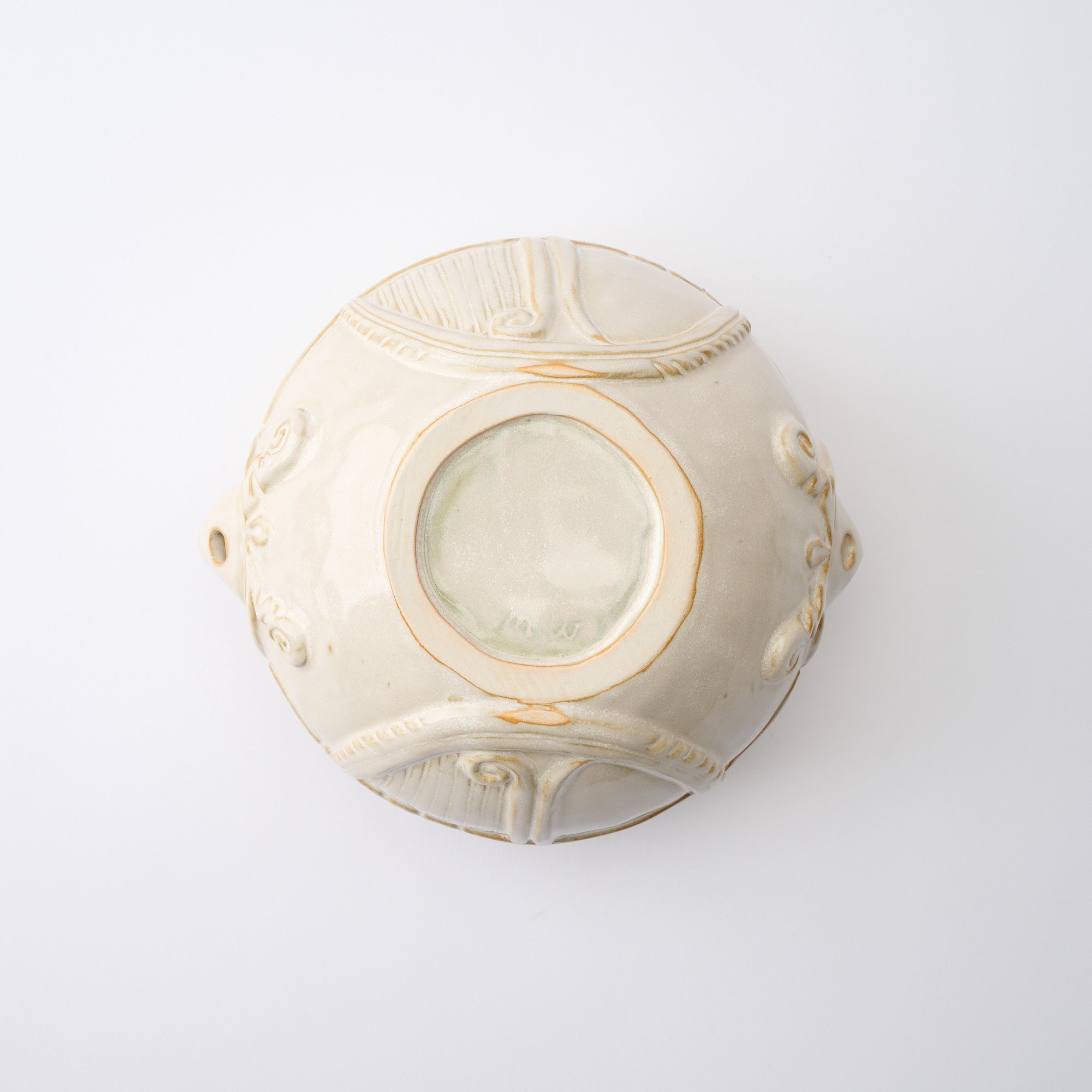
Das Gefäß wird in Handarbeit ohne Töpferscheibe in Wulsttechnik gefertigt. Zuerst entsteht der Korpus, während das Gesichtselement separat in Kegelform hergestellt und anschließend angebracht wird. Die umgebenden Details werden in die Oberfläche eingearbeitet und erinnern an die dekorativen Muster historischer Jōmon-Keramik. Der Innenraum bleibt hinter dem aufgesetzten Gesicht massiv, wodurch die strukturelle Integrität gewahrt und gleichzeitig die symbolische Präsenz des Entstehens erhalten bleibt.
Für dieses Werk wählt Wakunami eine dezente weiße Glasur, um eine weichere, natürlichere Oberfläche zu erzielen. Die Glasur wirkt zurückhaltend und nicht dramatisch, wodurch die Form ihre Präsenz behält, ohne mit den umgebenden Pflanzen zu konkurrieren.
Ursprünglich als Übertopf für eine Topfpflanze konzipiert, ist Taido Weiß Dies verleiht dem Ganzen eine zusätzliche Bedeutung. Das Gefäß wird zu einer umgebenden Form für lebendiges Wachstum – eine subtile Reflexion über Geburt, Kontinuität und die beständige Verbindung zwischen Ton und Leben.
EINZELHEITEN
| Quantity | 1 |
| Size |
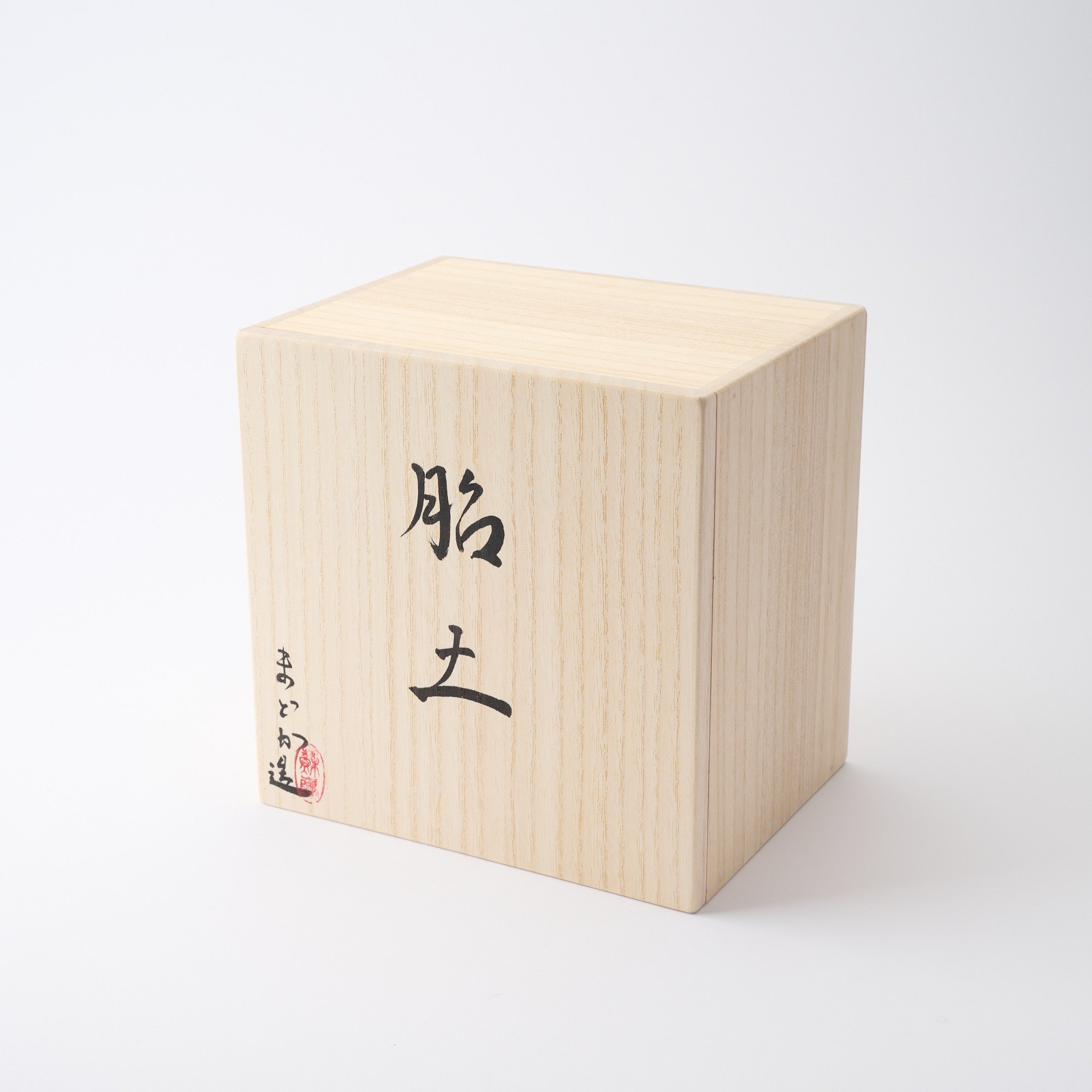
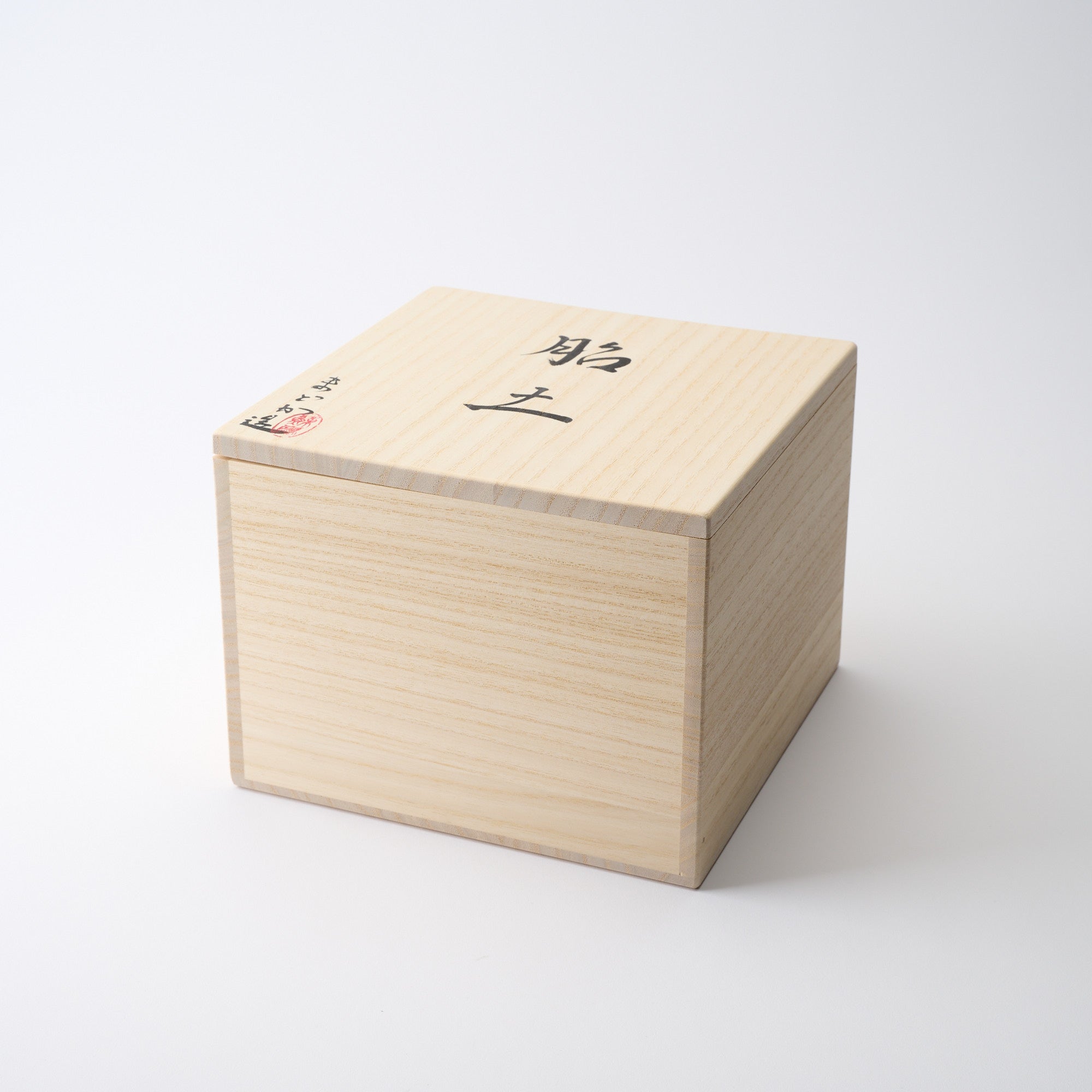
D 18 cm (7.1 in) x H 20.5 cm (8.1 in) [Wodden box] L 20.5 cm (8.0in) x W 20.5 cm (8.0 in) x H 16 cm (6.3 in) [Size of opening] D 13 cm (5.1 in) |
| Weight | approx. 2.9 lb (1.3 kg) |
| Material | Stoneware |
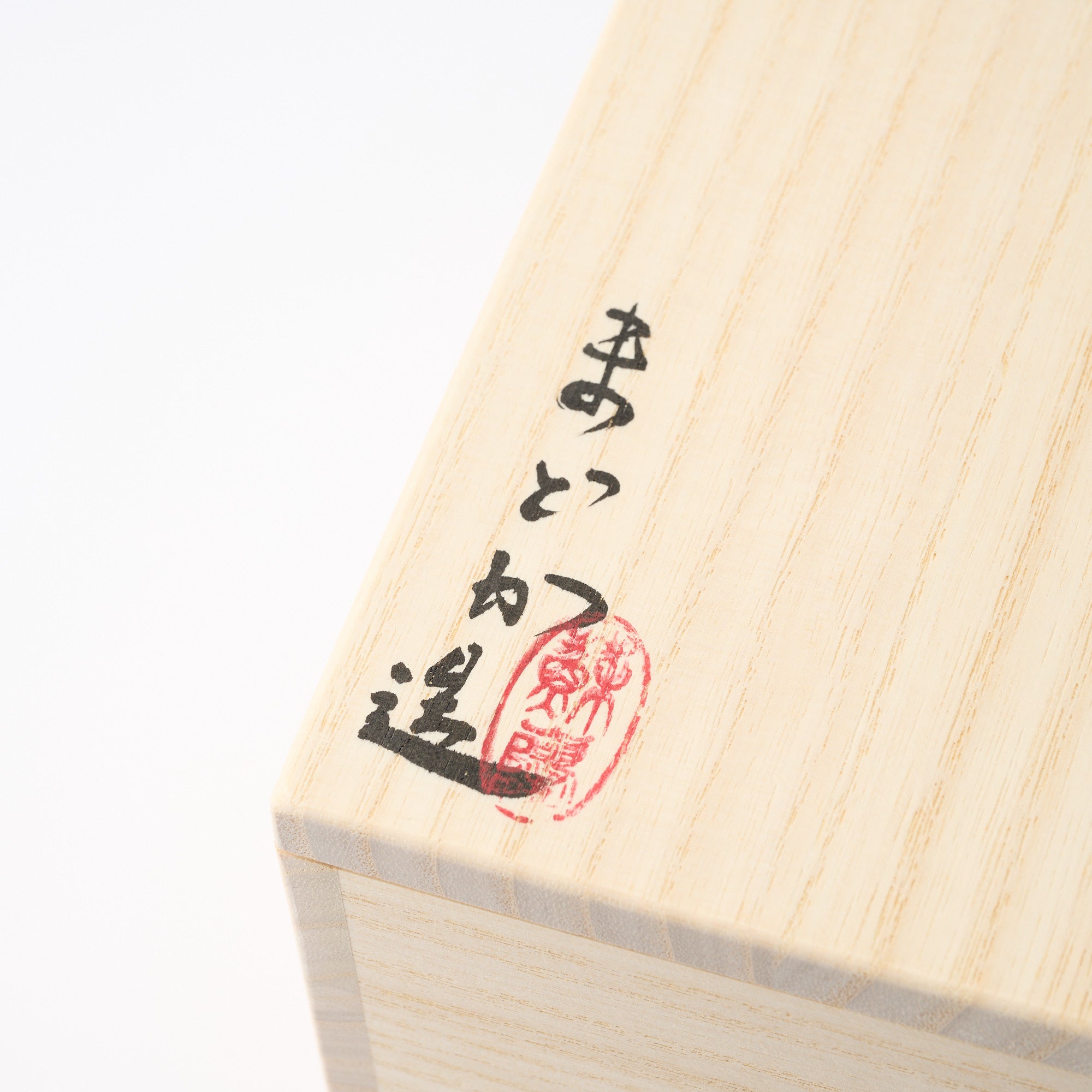
| Package Type | Wooden box |
Hersteller / Marke
Die in Kyoto lebende Keramikkünstlerin Wakunami Madoka lässt sich von der Antike inspirieren. Tief berührt von der Kunst der Jōmon-Kultur, die zu den ältesten Keramiktraditionen der Welt zählt, interpretiert sie jahrtausendealte Formen für die Gegenwart neu. Mit ihrer Erfahrung sowohl in der Koishiwara-Keramik, einem keramischen Volkshandwerk aus Kyūshū, als auch in der für Kyoto typischen Kyō-Keramik, verleiht sie dem ursprünglichen Reiz der Jōmon-Formen durch die Verwendung neuer Tone und Glasuren eine sanfte, anmutige Raffinesse.
Optionen auswählen
About Artist
Musubi-Galerie
Seit ihrer Gründung Musubi Kiln hat sich zum Ziel gesetzt, der Welt die besten traditionellen Handwerkskünste von Meistern aus ganz Japan vorzustellen.
Hier in der Galerie präsentieren wir Ihnen traditionelle Techniken auf höchstem Niveau, die über Generationen weitergegeben wurden. Entdecken Sie Werke von Meistern, die diese Methoden nicht nur perfektioniert, sondern auch ihre Fantasie eingebracht haben, um das Handwerk weiterzuentwickeln.
Einige dieser Meister wurden sogar zum Träger des Titels „Wichtiges immaterielles Kulturerbe“ ernannt, ein Titel, der ihnen von der japanischen Regierung verliehen wurde, um ihren Beitrag zu Handwerk und Kultur formell anzuerkennen – und damit ihr Vermächtnis zu festigen und sie zu einem wichtigen Teil der Kunstgeschichte zu machen.
Jedes einzelne Stück wird über viele Monate hinweg in sorgfältiger Handarbeit gefertigt, um ein zeitloses und einzigartiges Schmuckstück zu schaffen. Und wenn es einmal in Ihrem Zuhause ist, werden auch Sie Teil dieser Geschichte.
Willkommen in der Galerie. Bitte stöbern Sie in Ruhe.