

En Ikebana, las flores se convierten en usted: Experimentando el Ikebana estilo Sogetsu
Una mirada al interior del ikebana Sogetsu, explorando su filosofía, técnicas y cómo la forma y el espacio configuran cada arreglo.
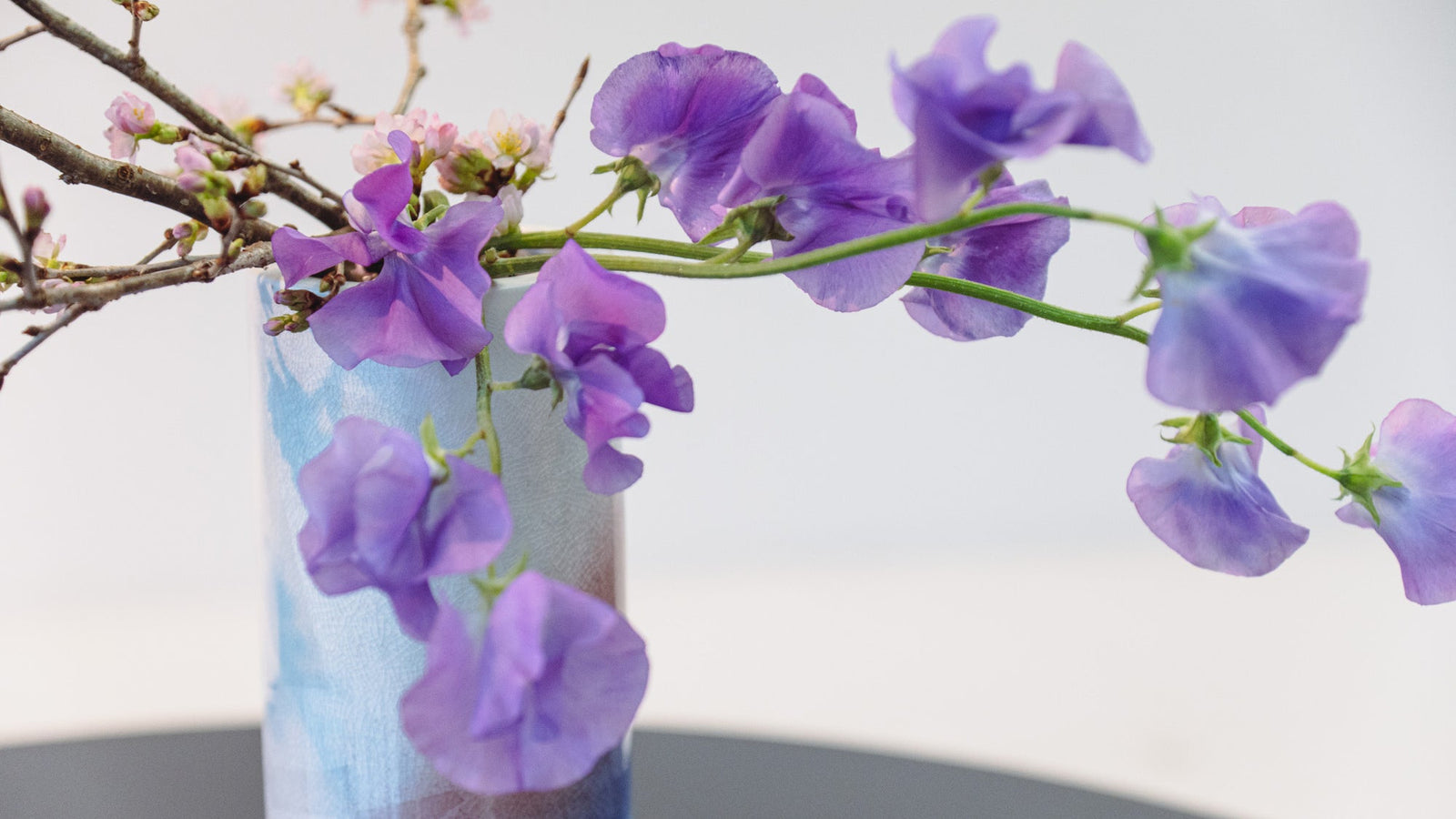
Ikebana es una forma de arte tradicional japonesa que utiliza flores naturales, plantas y ramas como materiales, disponiéndolos en un recipiente para crear una obra compuesta. Se dice que se estableció entre los siglos XIV y XVI, y ha continuado hasta hoy, evolucionando y adaptándose con el tiempo.
Hoy existen más de trescientas escuelas de ikebana. Uno de los estilos principales es Sogetsu-ryu (Escuela Sogetsu), muy popular incluso fuera de Japón por su énfasis en el arte moldeado por el individuo. En lugar de estar limitado por reglas excesivamente estrictas, deja espacio para que los practicantes piensen libremente y se expresen de maneras que les son propias.

El fundador de Sogetsu-ryu, el difunto Teshigahara Sofu, dijo una vez:
"Las flores, cuando se disponen en ikebana, dejan de ser solo flores. Las flores se vuelven humanas en ikebana."
Esta declaración expresa la filosofía de que una obra de ikebana refleja a la persona misma que la dispuso.

¿Qué significa entonces verdaderamente que ikebana sirva como proyección del propio arreglista? Profundamente intrigado por esta idea, el equipo MUSUBI decidió explorar el mundo del ikebana Sogetsu-ryu experimentando un taller de nivel principiante.
Ikebana estilo Sogetsu: abierto y accesible para todos
"En cualquier momento, en cualquier lugar, por cualquier persona, usando cualquier material. Esto es ikebana Sogetsu."
Teshigahara Sofu expresaba a menudo esta filosofía. Nacido en 1900 de un padre que era maestro del arreglo floral tradicional, Teshigahara comenzó un entrenamiento riguroso bajo la guía de su padre a los cinco años, refinando constantemente sus habilidades técnicas. Con el tiempo, sin embargo, se sintió cada vez más atraído por formas de expresión más individualistas.
Cuestionando las convenciones encarnadas por el ikebana tradicional, la práctica que su padre representaba, Sofu se preguntó: "¿Por qué el ikebana se ve igual sin importar quién lo disponga? ¿Por qué solo se valora la forma por encima de la individualidad, sin dejar espacio para la personalidad del arreglista?" En respuesta a estas preguntas, Sofu fundó Sogetsu-ryu en 1927.

Aunque el ikebana Sogetsu-ryu valora enormemente la libertad y la expresión personal, lo que podría llamarse "el propio ikebana", comparte con otras escuelas técnicas fundamentales conocidas como kakei (literalmente "formas florales"): principios fundamentales para crear arreglos armoniosos y hermosos.
Estos kakei proporcionan un marco fundamental, permitiendo incluso a principiantes disponer bellamente kazai (materiales como flores y ramas). Las estructuras son simples y sistemáticas, comprendiendo varios patrones establecidos.
Quienes entran al mundo de Sogetsu-ryu primero aprenden esta base a fondo. Solo entonces comienzan la exploración más profunda de cómo expresar su individualidad en forma de ikebana.
Importante: en la Escuela Sogetsu, dominar kakei no se considera un objetivo en sí mismo, sino un medio para un fin. Según el estilo de la escuela, es una técnica refinada y confiable que finalmente permite a los arreglistas expresar libremente sus propias visiones e intenciones.
Además, al dominar kakei, uno no solo adquiere las habilidades técnicas para disponer flores, sino que también llega a comprender la "belleza" única inherente al ikebana, cultivando las diversas sensibilidades necesarias para dar forma a esa belleza. Esta es la perspectiva Sogetsu.
Una lección de ikebana en un rascacielos del centro de Tokio
Para el taller, nosotros en el equipo MUSUBI visitamos la sede de la Escuela Sogetsu, Sogetsu Kaikan (Salón Sogetsu), ubicada en el distrito de Akasaka en el corazón de Tokio. Reflejando la sensación de novedad asociada con una escuela fundada en el siglo XX, el edificio se alza prominentemente a lo largo de una avenida principal, su fachada de vidrio marcándolo como una pieza llamativa de arquitectura contemporánea.


Allí, fuimos guiados a un espacioso Nihon-ma (salón de estilo japonés) en el quinto piso. Música suave de guitarra clásica sonaba gentilmente de fondo. Al entrar, nos recibió la vista de una gran obra de ikebana exhibida sobre tatami. A la derecha había un salón de té, y junto a él, un sereno jardín karesansui (paisaje seco) de arena blanca. Frente a estos elementos tradicionales había un área de baldosas negras amueblada con sillas y mesas. Toda la pared derecha consistía en ventanas de vidrio, ofreciendo una vista del cielo de la ciudad arriba y exuberante vegetación abajo.


En este espacio, donde elementos japoneses y occidentales coexisten armoniosamente, fuimos recibidos calurosamente por Kasuya Seika. Comenzó a estudiar ikebana Sogetsu-ryu en 1987 y ha servido como instructora en Sogetsu Kaikan desde 2014.
Como parte de su introducción, compartió el siguiente recuerdo: "Cuando tenía cuatro o cinco años, mi tía una vez me hizo un ramo usando flores de guisante de olor de su jardín. Sintiendo su afecto a través de este regalo, recuerdo haberlas dispuesto con alegría en mi florero favorito, puramente por intuición. Mirando atrás, esa experiencia bien pudo haber sido el punto de partida de mi camino como artista de ikebana."


Una demostración llena de sorpresa y descubrimiento
Antes de que yo intentara ikebana, Kasuya-sensei presentó una demostración sobre el tema "Ikebana de primavera". Mostró dos ejemplos: un arreglo básico siguiendo las formas florales fundamentales de kakei, y una composición más avanzada de forma libre que va más allá de esos fundamentos.


La primera demostración: ikebana básico basado en kakei
La primera demostración presentó Kihon Risshin-kei, la forma más fundamental de la cual se originan todos los kakei. Este arreglo minimalista se construye usando tres ramas esenciales llamadas shushi (ramas principales). Entre ellas, la rama más larga, llamada shin, se extiende hacia arriba, formando el eje central de la composición.
Desglose de las tres shushi (ramas principales):
・Shin: la rama más larga, sirviendo como columna vertebral estructural
・Soe: la segunda rama más larga, apoyando shin mientras añade carácter
・Hikae: la rama más corta, esencial para unificar la composición general

Kasuya-sensei seleccionó ramas de ciruelo blanco para shin y soe, y una rosa escarlata para hikae. Las adorables flores del ciruelo blanco florecen a principios de primavera en Japón. Al principio, la combinación del delicado ciruelo blanco con las vistosas rosas rojas resultó inesperada. Sin embargo, en el ikebana Sogetsu-ryu, la intención del arreglista prevalece sobre las reglas convencionales.
De hecho, la combinación de blanco y rojo se asocia tradicionalmente con ocasiones festivas en Japón. Teniendo presente este simbolismo, Kasuya-sensei explicó que los materiales también fueron elegidos para evocar la atmósfera auspiciosa del Año Nuevo. Además, incorporó ramas de rosa con hojas y acacia mimosa como jushi (ramas secundarias). Los jushi se disponen junto a las ramas principales para añadir acentos de color y volumen.

El recipiente utilizado fue una vasija de agua plana, redonda y de boca ancha. Me sorprendió nuevamente descubrir que estaba hecha de plástico, habiendo asumido que un jarrón de ikebana era siempre de cerámica. En efecto, Sogetsu-ryu es una escuela que propone formas de relacionarse con las plantas que responden a los cambios en los estilos de vida y contextos contemporáneos. Por ello, el uso de recipientes de plástico casuales y modernos se considera perfectamente aceptable.

Curiosamente, sin embargo, mientras existe gran libertad en la selección de flores y recipientes, los kakei mismos se rigen por reglas estrictas. Estas incluyen la longitud de cada rama principal, los ángulos en los que se fijan, sus posiciones relativas y su equilibrio con el recipiente. Estos principios se ilustran en diagramas conocidos como kakei-zu, que los arreglistas deben consultar mientras trabajan.
Durante la demostración, Kasuya-sensei explicó muchos aspectos de la esencia del ikebana Sogetsu-ryu. Entre ellos, los siguientes tres puntos dejaron la impresión más fuerte.


1. La belleza del ikebana reside en la asimetría
Al disponer las tres ramas principales para formar un triángulo escaleno asimétrico, emerge la belleza fundamental del ikebana. Esta sensibilidad me recordó los cuencos japoneses de matcha como el Oribe ware y el Shino ware, que se cuecen deliberadamente en formas irregulares en lugar de perfectamente simétricas.
2. El ikebana es un arte tridimensional
Aunque el Kihon Risshin-kei, la forma básica, prioriza el equilibrio visual cuando se observa desde el frente, el ikebana no es un arte bidimensional. Es una forma tridimensional que crea espacio a través de altura, anchura y profundidad. Por lo tanto, también debe considerarse el espacio detrás del arreglo, aunque no sea inmediatamente visible desde el frente.
3. El ikebana es el arte del espacio negativo
Las ramas y hojas excesivas se retiran de las tres ramas principales, asegurando espacio suficiente entre ellas. También se cuida de no saturar la composición con ramas secundarias. Es este uso intencional del espacio vacío lo que permite que las cualidades más expresivas de cada rama destaquen.
La belleza generada a través de tal espacio es descrita por la actual directora de la Escuela Sogetsu, Teshigahara Akane, como la "estética de la sustracción" en sus escritos. Esta apreciación del espacio negativo es un concepto fundamental compartido por las artes tradicionales japonesas y las prácticas culturales, incluyendo los jardines y la cocina.
japoneses. A través de esta demostración basada en kakei, pude aprender los fundamentos del ikebana Sogetsu-ryu mientras percibía cuán profundamente su filosofía está arraigada en la tradición japonesa.

La segunda demostración: ikebana de forma libre y autoexpresiva más allá del kakei
Para la segunda demostración, Kasuya-sensei presentó jiyubana (literalmente "flor libre"), un estilo de ikebana más abierto y creativo que se mueve más allá de las restricciones del kakei básico.
El jarrón que utilizó fue una pieza de Kutani ware de MUSUBI KILN. Su cuerpo esbelto de 7.5 pulgadas (19.1 cm) de altura es principalmente azul profundo, con una gradación de esmaltes verde, amarillo y púrpura.


En Sogetsu-ryu, las flores no son necesariamente siempre el foco principal de una pieza; el jarrón mismo se considera parte integral de la composición. A veces, por lo tanto, el jarrón se elige primero, y las flores se seleccionan después para armonizar con él. Según Kasuya-sensei, no existen reglas que rijan el material, tamaño, forma o diseño de un jarrón utilizado para jiyubana; uno puede simplemente elegir un recipiente que le atraiga instintivamente. Ella explica: "No tiene que limitarse a un jarrón de flores propiamente dicho—puede incluso usar su taza de té o taza de café favorita. Elegir un recipiente que personalmente ame fomentará un apego más profundo a su trabajo y conducirá a una expresión que es únicamente suya.” Seleccionar un recipiente de esta manera es una de las claves para permitir que el ikebana "se convierta en usted".
Sin embargo, añade que debe tenerse cuidado para que los materiales florales no estresen o dañen el recipiente. Por ejemplo, la boca de este jarrón de Kutani ware es extremadamente delgada, lo que lo hace inadecuado para flores con tallos rígidos, ramas o flores pesadas.

Para esta demostración, Kasuya-sensei seleccionó dos tipos de materiales florales: orquídeas Oncidium y Asparagus sprengeri, ambos ligeros y con tallos suaves.
Explicó: "Las flores amarillas del Oncidium complementan el azul del jarrón. Se disponen como material principal extendiéndose hacia la izquierda para crear volumen. En el lado opuesto, el Asparagus sprengeri amarillo-verde se extiende hacia afuera para producir una impresión limpia y esbelta. Esto crea asimetría".
Una parte particularmente llamativa de su proceso fue cómo trató el Asparagus sprengeri: para reforzar la sensación de claridad y ligereza en el lado derecho, retiró todas las hojas densas, dejando solo los tallos.

“Esta vez, quise destacar la forma única de los tallos del helecho Asparagus, creando una composición que se asemeja a una delicada colección de líneas finas. Pero puede, por supuesto, mantener las hojas intactas. A medida que comienzan a marchitarse con el tiempo, puede entonces retirarlas y disfrutar de la nueva expresión de los tallos desnudos. También puede dejarlos secar completamente y reutilizar los tallos como material para otro arreglo.”
Observar la demostración de jiyubana, una forma evolucionada del kakei, me dio una comprensión concreta del verdadero espíritu del ikebana Sogetsu-ryu, que respeta la individualidad.
La experiencia sorprendentemente desafiante de mi primer ikebana
Por fin había llegado el momento de intentar mi primer arreglo de ikebana. Como principiante, seguí el mismo kakei de Kihon Risshin-kei que Kasuya-sensei había demostrado anteriormente, arreglando las flores bajo su guía utilizando los siguientes materiales y jarrón.
Kazai (Materiales florales)
Shushi (Ramas principales):
・Shin y Soe: Forsitia (flores amarillas que florecen desde mediados de marzo hasta mediados de abril, con ramificación única)
・Hikae: Gerbera (pétalos largos y puntiagudos de color naranja que se irradian hacia afuera)

Jushi (Ramas secundarias):
・Gerbera (igual que hikae)
・Acacia mimosa con capullos de flores sin abrir

Jarrón
Utilicé el mismo tipo de recipiente de agua redondo de plástico que Kasuya-sensei. Mientras ella usó un recipiente negro, yo elegí uno blanco que armonizaba con los colores de mis materiales florales y se sentía más primaveral.

Primero, corté las tres ramas principales a las longitudes especificadas y comencé a arreglarlas de la más larga a la más corta. Este proceso, sin embargo, resultó ser mucho más difícil de lo que había imaginado al observar la demostración. Tenía una comprensión insuficiente de medir, cortar con las tijeras, sostener los materiales, insertarlos en el kenzan (soporte metálico con púas para flores), y manejar las tijeras, y cada movimiento se sentía torpe.


Lo que más me preocupó fue el proceso de recortar ramas, tallos y hojas con tijeras. Por miedo a cometer errores, seguía preguntándole a Kasuya-sensei: "¿Está bien así?" Su respuesta fue simple y alentadora: "Decida usted mismo y probemos". Aunque el kakei tiene más reglas que el ikebana de forma libre, todavía hay espacio para que el arreglista piense creativamente, tome decisiones y se exprese.


Después de haber logrado completar mi arreglo, Kasuya-sensei ofreció tres puntos de consejo para mejorarlo:
1. Bajar la acacia mimosa
Esto crea un amplio espacio negativo, destacando la presencia de las tres ramas principales. También resuelve cualquier aglomeración de las ramas subordinadas, resultando en una impresión limpia y aireada.
2. Recortar la gerbera que sirve como una de las ramas secundarias
Este ajuste aprieta la apariencia desde el frente, que es el aspecto más importante del Kihon Risshin-kei.
3. Detrás del shin, la rama más larga de forsitia, insertar otra pequeña rama de forsitia
Inclinada firmemente como rama secundaria, la forsitia realza la profundidad y expansión espacial en la parte posterior del arreglo.

"Se ve maravilloso, especialmente para su primer ikebana", Kasuya-sensei dijo, después de hacer algunos ajustes finales. Esto, por supuesto, solo fue posible gracias a su guía precisa y cuidadosa.
El ikebana no fue de ninguna manera fácil, pero para alguien como yo que siempre ha amado las plantas, fue una experiencia puramente agradable y gratificante. Al final de la lección, había descubierto sutilezas en el arte del ikebana, y con cada nueva comprensión, mi apreciación y fascinación por Sogetsu-ryu crecieron aún más.
¿Qué significa verdaderamente que “en el ikebana, las flores se conviertan en usted?” Es, por supuesto, imposible comprender completamente este concepto a través de una sola experiencia, pero siento que vislumbré algo de ello a través de lo que Kasuya-sensei compartió durante la lección.
En palabras de Kasuya-sensei: "El ikebana comienza observando de cerca las plantas, como si estuviéramos conversando con ellas, y pensando en cómo sacar a relucir todo su encanto. Al mismo tiempo, es importante considerar qué tipo de arreglo se adapta al espacio y qué experiencia queremos que tengan los espectadores cuando lo vean. Al agregar creativamente nuestras intenciones a las plantas, podemos hacer que las flores reflejen al arreglista. Quizás esto también es lo que significa que las flores 'se conviertan en usted'".
Esto muestra que el ikebana es más que simplemente autoexpresión para la propia satisfacción.
En retrospectiva, recordé que el ikebana comienza con el simple acto de verter agua en el recipiente. Antes de arreglar, es costumbre cortar los extremos de las ramas y tallos mientras están sumergidos, asegurando que las plantas puedan absorber completamente el agua una vez colocadas.
La palabra ike en ikebana significa "dar vida" y sin un profundo respeto por la vida de las plantas, el ikebana no puede realmente tomar forma. Esta comprensión continúa conmigo, incluso mucho después de que concluyó el taller.

Stay close to the craft
Now and then, a quiet letter — new stories, seasonal notes, and the hands behind the work.
Una guía paso a paso para principiantes de Ikebana Parte 1
Aprende sobre el arreglo floral japonés con esta guía para principiantes, que incluye técnicas,…
Guía paso a paso para principiantes de ikebana - Parte 2
Con la guía de un experto, aprende a perfeccionar tus habilidades en ikebana con…
Una Guía Paso a Paso para Principiantes de Ikebana - Parte 3
En la Parte 3 de nuestro blog de lecciones de ikebana, presentamos dos arreglos…
Leave a comment