

Descubriendo la cerámica Kusatsu: macetas inspiradas en la naturaleza y la tradición
Descubra cómo Yamamoto Kazuma revive 1.400 años de cerámica Kusatsu a través de macetas elaboradas con arcilla del lago Biwa.
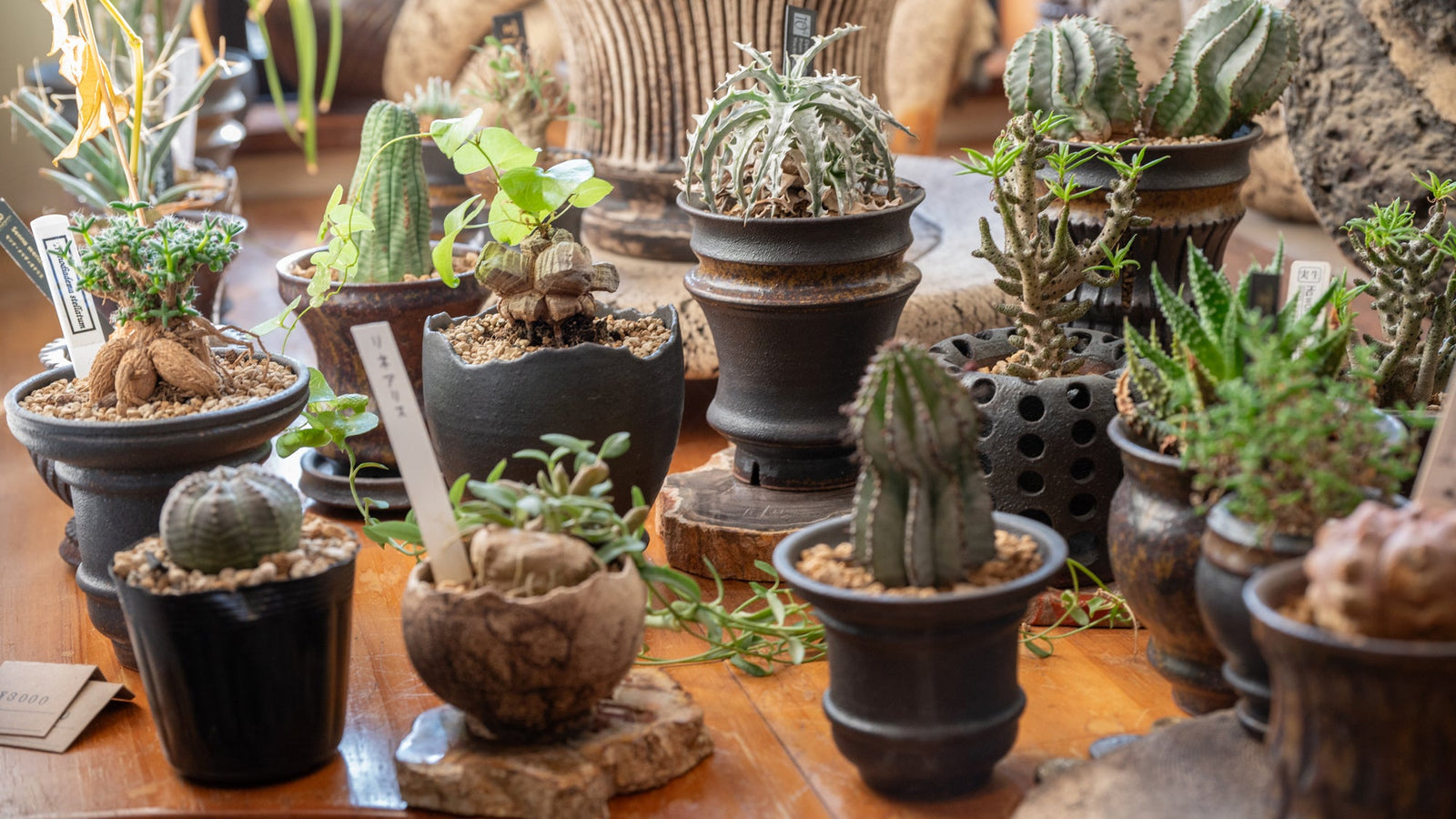
Macetas creadas por un artista que ama las plantas, utilizando una arcilla antigua de las orillas del Lago Biwa: estas son obras de Yamamoto Kazuma de Ohmitogei Research Centre. Inspirado por una cerámica antigua conocida como Kusatsu ware, creada hace 1.400 años a partir de la arcilla, el limo y el barro del Lago Biwa, Yamamoto utiliza estos mismos materiales locales para reimaginar Kusatsu ware para la era moderna, celebrando la belleza del paso del tiempo.

Combinadas con características que promueven un entorno saludable para las plantas, como arcilla transpirable y la creación cuidadosa de drenaje, el resultado es una serie de obras que se sostienen por sí mismas como piezas de arte mientras realzan lo mejor de las plantas que se plantan en ellas.

Conversamos con Yamamoto para conocer más sobre las vasijas antiguas y los motivos naturales que inspiraron estas piezas únicas, y profundizar en cómo trabajan con las plantas para crear arreglos prósperos y unificados.
De Ruinas Antiguas a la Belleza del Barro
La ciudad de Kusatsu descansa en las orillas del sur del Lago Biwa, a solo unos 20 km de distancia del centro de Kioto—un rápido viaje de 20 minutos en tren en el mundo actual.

A finales del siglo VII, la capital japonesa se trasladó brevemente a Otsu, también en la orilla sur del lago, impulsando la producción de cerámica y hierro en el área de Kusatsu. La cerámica sin esmaltar producida entonces se conoce como sueki o gres Sue: una variedad temprana de cerámica japonesa. Aunque su producción en el área de Kusatsu cesó con el tiempo, permanecen ruinas antiguas que contienen fragmentos de gres Sue.
El padre de Yamamoto, también alfarero, participó en estudios de excavación de esas ruinas, inspirándolo a reimaginar la antigua Kusatsu ware—creando con el mismo barro, limo y arcilla utilizados en aquel entonces.
"No es el mismo estilo que el sueki original de Kusatsu", aclara el joven Yamamoto, "sino más bien, utilizar materiales locales para hacer cosas nuevas para la vida y cultura modernas".


Trabajando desde ese concepto, los Yamamoto no aplican esmalte, sino un barro local del Lago Biwa llamado limo de Seta. Este material se funde alrededor de 1.100°C, mucho más bajo que la temperatura de 1.250°C que Ohmitogei Research Centre utiliza para cocer la arcilla. Como resultado, el barro se funde en el horno, convirtiéndose en un agente colorante natural. Agregar componentes como cal lo separa en tonos de negro y marrón, mientras que verter limo diluido sobre la superficie, rociar barro con un atomizador o tallar patrones añade profundidad de color y textura. Los acabados lucen rústicos, como si las macetas fueran verdaderamente cosas antiguas excavadas de la tierra.

Dice Yamamoto: "Personalmente me gustan las cosas que han envejecido. Me hace sentir como si el tiempo que el objeto ha atravesado estuviera grabado en la vasija misma". Parece apropiado para piezas inspiradas en la cerámica del área de Kusatsu de hace catorce siglos.
Macetas por y para Amantes de las Plantas
Este uso del limo de Seta es en realidad solo una de varias características de las macetas de Ohmitogei Research Centre que crean un excelente entorno para las plantas—especialmente aquellas que prosperan en ambientes áridos.
"Porque uso barro en lugar de esmalte", explica Yamamoto, "el drenaje de agua es mejor. Además, doy forma a las macetas para que sus paredes interiores estén en diagonal, permitiendo que el agua fluya hacia el orificio de drenaje. Debido a eso, el agua no se acumula en el fondo de las macetas".


También al servicio de un mejor drenaje están los orificios de drenaje grandes e intencionalmente elaborados de Yamamoto, y las ranuras en los anillos de base de sus macetas que actúan de manera similar a canaletas, permitiendo que el agua fluya más efectivamente.

Eso tiene varias implicaciones positivas para la salud de las plantas: más crucialmente, reducir la posibilidad de pudrición de raíces. Esto es clave para plantas como cactus y suculentas que sufren en condiciones húmedas y son fácilmente susceptibles al exceso de riego.
Sin embargo, Yamamoto señala que no es solo la vegetación árida la que puede prosperar en estas vasijas. "Para cosas como bonsái donde se desea retener humedad hasta cierto punto, se manejaría eso cambiando el suelo a uno con mejor retención de agua".
De hecho, Yamamoto recuerda que tuvo un cliente del extranjero que dijo que planeaba plantar un bonsái de kuromatsu (pino negro) en una de sus macetas. "Así como en Japón, las plantas buscadas incluyen aquellas de América del Sur o regiones secas, las personas en el extranjero están coleccionando macetas para cosas como bonsái y otras plantas japonesas. Me he dado cuenta de que hay personas coleccionando macetas desde esa perspectiva opuesta".
Parte del atractivo de la cerámica para Yamamoto es lo que él llama "ganar comunicación con otros a través de la arcilla". Con el diseño considerado de estas macetas y su perspectiva creativa única, realmente se siente como si crearan un diálogo entre alfarero y usuario, un susurro a través de océanos de un aficionado a las plantas a otro.
Objetos de Arte Hechos para Plantas
En cuanto a lo visual, no sería inexacto decir que estas macetas son a la vez elegantes y rústicas—dos descriptores a menudo contrastados entre sí, y sin embargo aquí se combinan sin esfuerzo. Entonces, ¿cómo lo hace Yamamoto?
Quizás el secreto está en el uso de materiales naturales y la combinación de formas creadas por el hombre e inspiradas en la naturaleza. El diseño Equator, por ejemplo, involucra líneas talladas a mano influenciadas por la arquitectura, mientras que la serie Torch tiene la forma de su homónimo. Sin embargo, sus tonos contrastantes de blanco y negro se crean superponiendo dos colores diferentes de barro. Del mismo modo, las líneas similares a columnas de Plump se contrastan con una superficie marrón terrosa y un borde que está artísticamente agrietado para lucir natural. Yamamoto utiliza estos bordes agrietados para evocar también el paso del tiempo, conectando una vez más con las raíces centenarias de Kusatsu ware.


Otras obras adoptan directamente la forma de elementos encontrados en la naturaleza. La serie Plump se modela a partir de una flor, la jacinto español, mientras que las obras Chalaza se inspiran en huevos. Yamamoto encuentra en estas formas lo que él llama la "belleza escultórica y refinamiento" de la naturaleza que desea incorporar en su trabajo.


Incluso dentro de la estética, la consideración de Yamamoto por las plantas se manifiesta claramente. "El punto de partida es que estas macetas son herramientas para usar. No tiene sentido si no se puede plantar en ellas." El diseño se fusiona con la función. Por ejemplo, Yamamoto quiso crear una maceta cilíndrica para acomodar plantas populares cuyas raíces crecen verticalmente, lo que dio origen al diseño Torch, largo y esbelto. Del mismo modo, al hablar sobre los bordes con apariencia quebrada: "Si se exagera, la arena o la tierra se derramarán. Por eso, soy consciente de romper los bordes de manera que parezca que ocurrió naturalmente, mientras mantengo el diseño fácil para plantar."
Yamamoto señala que en cuanto a las macetas artísticas, la atmósfera ha cambiado desde la pandemia de Covid-19, cuando muchas personas desarrollaron un nuevo interés en las plantas de interior—y en los recipientes que las sostienen. Ahora, un mayor número de ceramistas ha comenzado a crear estos mismos recipientes.

"Hasta que la industria de las macetas creció," dice Yamamoto, "tenía la impresión de que muchas personas en el mundo de la cerámica tendían a menospreciar la fabricación de macetas. Pero eso realmente ha desaparecido. Ahora, estas macetas se buscan por sus formas artísticas o muy elaboradas. Creo que ha sido una transición cultural interesante desde la pandemia."

Es una expansión emocionante de las posibilidades para la cerámica que invitamos a nuestras vidas diarias. No solo las que aparecen en nuestras mesas, sino también los recipientes que sostienen el verdor en nuestros hogares.
Únicas, artísticas, creativas y reflexivas: esto resume las macetas de Ohmitogei Research Centre. Con un aprecio por la larga historia cerámica de Japón y Kusatsu, y una mirada hacia el apoyo de seres vivos—tanto plantas como personas—en el presente, estos recipientes invitan a reflexionar sobre cómo el tiempo moldea tanto objetos como tradiciones—y los lleva hacia el futuro.
Stay close to the craft
Now and then, a quiet letter — new stories, seasonal notes, and the hands behind the work.
Diario del Comprador: Reutilizando Bizen Ware como Macetas
Elaboradas a mano en Okayama, estas macetas de Bizen ware combinan arcilla reciclada con…
Shirata Ai
Nakada Hiroshi: Dando forma a la naturaleza en porcelana blanca
Entre en el mundo de Nakada Hiroshi, donde formas en capullo y superficies de…
Conozca a los especialistas en herramientas que apoyan a los artesanos de Seto ware
Descubra el trabajo en Seto y conozca a los fabricantes de herramientas y expertos…
Leave a comment