

Fukube Kaji: Ein Schmied, bei dem Werkzeuge die Tradition bewahren
Entdecken Sie Fukube Kaji, einen 118 Jahre alten Schmied aus Ishikawa, der langlebige Messer und Werkzeuge herstellt, die tief in der lokalen Lebensweise und Tradition verwurzelt sind.
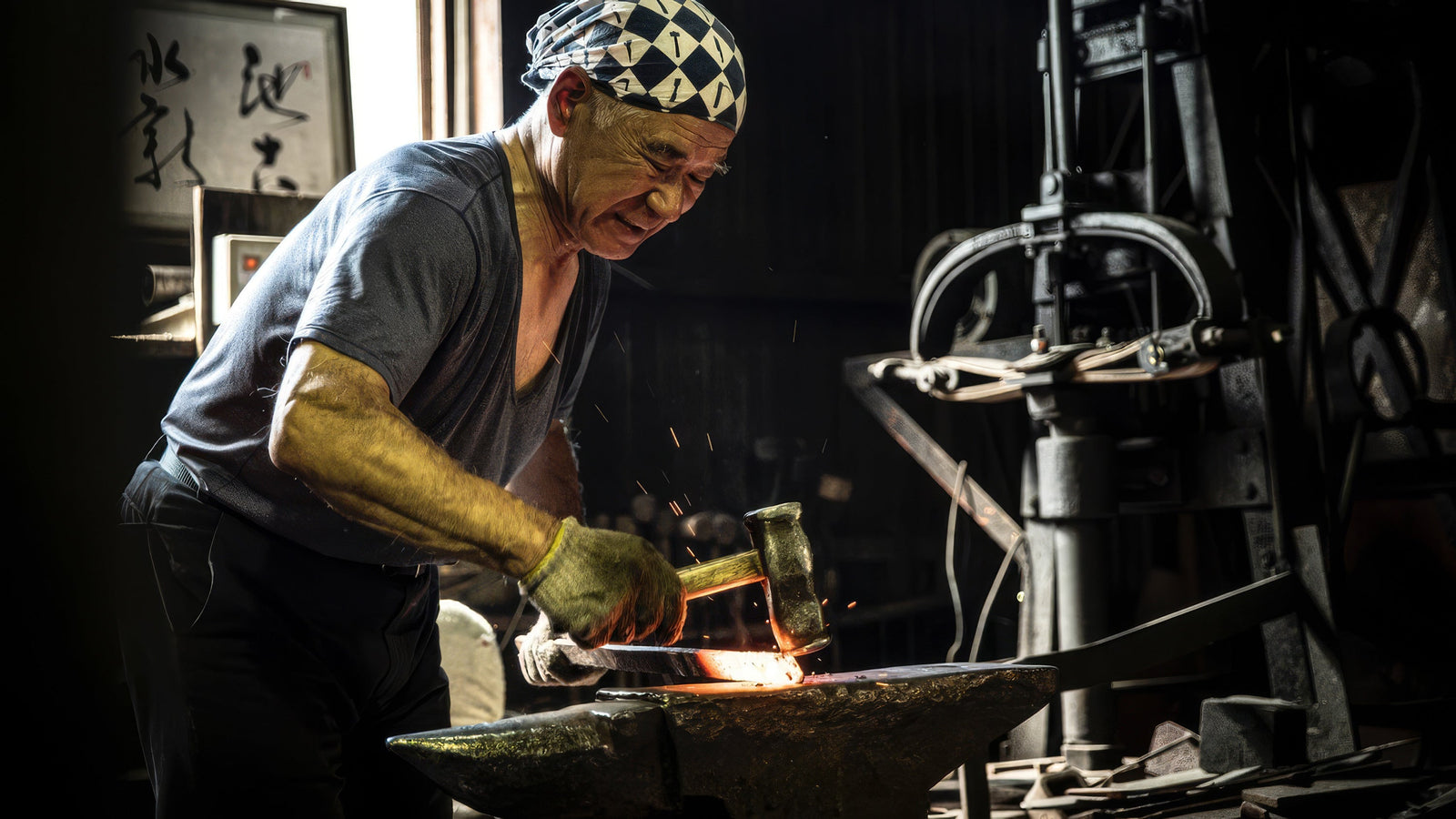
Fukube Kaji versteht sich auf Messer. Die 118 Jahre alte Schmiedewerkstatt liegt in der Präfektur Ishikawa, in der Hafenstadt Ushitsu, und ist eine lokale Institution. Eingebettet zwischen Bergen und Meer, in einer Region reich an traditionellem Handwerk, fertigt Fukube Kaji jede erdenkliche Art von Metallwerkzeug. Das Spektrum reicht von spezialisierten Haken zum Öffnen harter Schalen über Ackerhacken und Überlebensmesser bis hin zu traditionellen japanischen Küchenmessern.

Mit einem Gespür für die Handwerksgemeinschaft Ishikawas arbeitet Fukube Kaji auch mit lokalen Lackwarenproduzenten zusammen – jeder trägt zu den Werkzeugen des anderen bei. Sie sind auch in gewöhnlichen japanischen Haushalten präsent. Ihre Küchenmesser genießen nicht nur in der Präfektur Ishikawa hohes Ansehen, sondern ihre elf Schmiede schärfen auch rund 20.000 Messer pro Jahr aus Haushalten in ganz Japan.
Nun betritt Fukube Kaji zum ersten Mal den internationalen Küchenmessermarkt. MUSUBI KILN sprach mit Hoshiba Kentaro, Inhaber und Schmied in vierter Generation, und Vertriebsrepräsentant Mangyo Kazuya über die Verbindung zwischen traditionellem Handwerk, lokaler Kultur und der tiefen Expertise, die die Messer von Fukube Kaji auszeichnet.

Eine Schmiede, verwurzelt in lokalen Bedürfnissen
Die Arbeit von Fukube Kaji ist untrennbar mit dem Land und dem Meer verbunden, die ihre Werkstatt umgeben. Als traditioneller nokaji, wörtlich „Feldschmied", steht es bereits im Namen.
Mangyo erklärt: „Hier haben wir die Berge, das Meer und die Stadt – drei ‚Felder'. Ein nokaji wie wir fertigt und repariert umfassend Werkzeuge, die mit dem Leben in all diesen Feldern verbunden sind."
Ob Fischer und traditionelle Taucherinnen, bekannt als ama , die im Meer arbeiten, Bauern in den Bergen oder Köche in der Küche – Mangyo sagt: „Die Probleme, die gelöst werden müssen, sammeln sich in der Regel in der Schmiedewerkstatt. Traditionelle Fischerei und Landwirtschaft zu schützen, dieses Gefühl der Sicherheit zu bieten und lokale Lebensgrundlagen zu erhalten – darin liegt der Wert."

Ushitsu ist ein Ort, an dem eine durchschnittliche Person ihre Meeresfrüchte direkt von Fischern kaufen und einen Fisch selbst filetieren kann. Hier benötigen die Einheimischen besonders langlebige und scharfe Klingen, „Messer, die man in gewöhnlichen Geschäften nicht findet", um bestimmte Meeresfänge zu verarbeiten. Qualitätsmesser wie die von Fukube Kaji sind „tief in der Kultur verankert", praktisch eine Selbstverständlichkeit.
Während sich die Bedürfnisse der Gemeinschaft ändern, entwickelt Fukube Kaji sich weiter. Nehmen Sie das TAFU Series Double-Bevel Makiri Knife: ein robustes Outdoor-Überlebensmesser. Basierend auf den makiri -Messern, die Fukube Kaji seit 1908 fertigt, wurde dieses spezielle Modell – mit einer vielfach gewünschten doppelseitigen Schneide – nach dem Erdbeben auf der Noto-Halbinsel 2024 entwickelt. Das Beben der Stärke 7,6 verursachte erhebliche Schäden in der Präfektur Ishikawa und vertrieb Tausende Menschen aus ihren Häusern. „Als die Menschen nach dem Erdbeben und den Tsunami-Warnungen evakuiert wurden, nahmen einige Messer mit", sagt Hoshiba. „Wenn man möglicherweise drei Tage ums Überleben kämpft, wird ein Überlebensmesser zu einem äußerst beruhigenden Gegenstand."

Während Katastrophenvorsorge für die meisten ein Extremfall sein mag, werden Camper, Wanderer und Angler die Multifunktionalität dieses Messers schätzen, das Fleisch schneiden, Fische in der Wildnis ausnehmen und Holz schnitzen kann. Es kann sogar mit Feuerstein geschlagen werden, um ein Lagerfeuer zu entfachen.
„Zwischen Meer und Bergen zu sein, diese Lebensweise selbst – Menschen und ihre Werkzeuge leben neben der Natur, empfangen Segnungen von der Natur." Fischen, Landwirtschaft, Kochen, Campen: Fukube Kaji versteht das alles.
Tiefe Expertise, bessere Klingen
Gegründet 1908, begann das Geschäft von Fukube Kaji mit der Herstellung und Reparatur einer Vielzahl von Werkzeugen, die für das tägliche Leben in einer Fischer- und Bauerngemeinschaft notwendig waren. Mit so viel praktischer Erfahrung haben die Schmiede von Fukube Kaji ein besonders scharfes Auge dafür, was eine großartige Klinge ausmacht.
Mangyo erklärt: „Wir wollen unsere Klingen nicht einfach verkaufen und fertig. Wir wollen, dass die Menschen sie lange nutzen können."
Dies verkörpert ihre Magomitsu-Klingenkonstruktion. Wörtlich übersetzt „Enkelglanz" für ihre Fähigkeit, drei Generationen standzuhalten, bestehen diese Messer aus einem aogami -Stahlkern, der sich über die gesamte Länge der Klinge erstreckt.
Dies ermöglicht es, sie viele Male zu schärfen und dennoch zu schneiden, selbst wenn der Stahl dünner wird. Diese Premium-Verarbeitung zeigt sich in Fukube Kajis Double-Bevel Deba Knife und TAFU Double-Bevel Makiri Knife.

Dieselbe Philosophie jahrzehntelanger Nutzung spiegelt sich auch in den feineren Details wider. Zum Beispiel die kurouchi -Oberfläche des Kurouchi Gyuto Knife und Kurouchi Petty Knife.

Kurouchi bezeichnet eine oxidierte Beschichtung, die sich während des Schmiedens auf dem Metall bildet. Technisch gesehen ist es eine Art Rost, aber nicht der rote Rost, den die meisten von uns kennen. Vielmehr ist es ein nützlicher „schwarzer Rost", der hilft, Metallverfall zu verhindern.
Mangyo erklärt: „Kurouchi geht nicht einfach um Rostbeständigkeit. Es entspricht unserer Philosophie als Werkzeugmacher, der grundlegenden Prämisse, dass unsere Werkzeuge lange genutzt werden."
Diese Überzeugung erstreckt sich sogar auf die Griffe ihrer Messer, die mit Yamanaka lacquerware für zusätzliche Wasserbeständigkeit veredelt werden. Sie sind auch so gefertigt, dass sie bequem in der Hand liegen. „Selbst ein gut geschärftes Messer kann die Hand verletzen, wenn der Griff scharfe Kanten hat, daher werden die Griffe sorgfältig abgerundet und geglättet, sodass das Messer über lange Zeiträume bequem genutzt werden kann."
Ob über lange Jahre oder lange Stunden genutzt – jede Facette dieser Messer ist mit Blick auf Langlebigkeit und Komfort gefertigt. Es ist die Nachhaltigkeit eines Qualitätsprodukts – eines, das man nur einmal kaufen muss und dann, bei guter Pflege, jahrzehntelang nutzen kann.
Traditionelles Handwerk & kulturelle Nachhaltigkeit
Wie kam Fukube Kaji dazu, mit den Lackhandwerkern zusammenzuarbeiten, die ihre Messergriffe fertigen? Es läuft alles auf ein lokales „gegenseitiges Unterstützungsnetzwerk" hinaus.

„In Ishikawas traditioneller Handwerksgemeinschaft", erklärt Mangyo, „gibt es ein starkes horizontales Netzwerk. Alle helfen einander und heben sich gegenseitig. Deshalb pflegen wir natürlich enge Beziehungen zu Yamanaka-Lackwaren-Künstlern. Wir stehen auch in engem Kontakt mit Wajima lacquerware -Handwerkern und Holzarbeitern, die Griffmaterialien liefern. Innerhalb Ishikawas arbeiten wir zusammen und unterstützen einander." Sowohl Yamanaka- als auch Wajima-Lackwaren sind traditionelle Handwerke der Präfektur Ishikawa.
Hier erweist sich die Werkzeugherstellung als gemeinsamer Faden, der die verschiedenen Gewerbe zusammenführt.
Hoshiba erklärt: „Lokale nokaji verfügen über die Fähigkeiten, Werkzeuge in ihre richtige Form zurückzuversetzen, sodass Handwerker natürlich zu uns kommen, wenn sie in Schwierigkeiten sind. Das vertieft die Verbindung."

„Werkzeuge sind untrennbar von traditionellen Gewerben", stimmt Mangyo zu.
Neben dem Netzwerk der Handwerker trägt auch die Geschäftserweiterung von Fukube Kaji zur Langlebigkeit des traditionellen Handwerks bei. Heute bietet Fukube Kaji neben der Herstellung und Reparatur von Werkzeugen und Messern einen Messerschleif- und Reparaturservice per Post namens Pochispa an.
„Da wir jährlich so viele Messer schärfen, benötigen wir eine beträchtliche Anzahl von Schmieden. Viele Schleifwerkstätten arbeiten mit nur einem Handwerker, aber wir haben elf. Diese Größenordnung ermöglicht es uns, die Nachfrage zu erfüllen und neue Handwerker auszubilden. Ohne ausreichendes Arbeitsvolumen und Kontinuität können Fähigkeiten nicht weitergegeben werden. Die Sicherung dieser Nachfrage trägt zur kulturellen Nachhaltigkeit bei."

Unterstützung der Handwerker nach dem Erdbeben auf der Noto-Halbinsel
Das verheerende Erdbeben auf der Noto-Halbinsel 2024 führte zu eingestürzten Straßen, in Unordnung geratenen Werkstätten, zusammengebrochenen Gebäuden und weitreichenden Bränden. Die Bedeutung der Werkzeuge eines Handwerkers verstärkte die Schwierigkeiten, mit denen lokale Handwerker in der Folgezeit konfrontiert waren.

Hoshiba erklärt: „Die Asaichi-Straße in Wajima" – das Zentrum der Wajima-Lackwaren, etwa eine Autostunde von Ushitsu entfernt – „erlitt einen großen Brand. Ein Handwerker kann ohne seine Werkzeuge nicht arbeiten, die fast so wichtig sind wie das Leben selbst. Diese Werkzeuge verbrannten zusammen mit allem anderen."
Obwohl die Metallteile der Werkzeuge erhalten blieben, waren sie stark versengt und der Stahl war weich geworden, sodass sie unbrauchbar waren.
„Wajima-Lackwaren-Handwerker brachten ihre Werkzeuge unter Tränen in unsere Werkstatt. Als wir die Gegenstände sahen, waren sie stark verbogen. Normalerweise wären Werkzeuge in diesem Zustand nicht mehr zu reparieren. Aber wir sind ebenfalls Handwerker, also verstanden wir sofort, wie entscheidend diese Werkzeuge sind. Wir priorisierten ihre Reparatur, damit die Handwerker so schnell wie möglich zur Arbeit zurückkehren konnten."

Hoshiba fährt nachdenklich fort: „In diesem Sinne denke ich, dass unser langjähriger Ansatz, die lokale Industrie zu schützen, sich in die Zeit nach der Katastrophe übertrug, als wir dringenden Bedürfnissen Vorrang gaben."
Der Wiederaufbau ist ein fortlaufender Prozess. Selbst ein Jahr nach der Katastrophe berichteten nur 60 % der von der Handelskammer der Stadt Wajima befragten Wajima-Lackwaren-Handwerker, dass ihr Betrieb derzeit in Betrieb sei. Zwei Jahre später arbeiten einige Handwerker noch in provisorischen Werkstätten – ein positiver Schritt, da sie zur Arbeit zurückkehren konnten, aber auch eine Erinnerung daran, dass die Erholung weiterhin andauert.
Obwohl Fukube Kaji selbst einige Schäden erlitt, sagen sie, dass diese im Vergleich zu anderen Betrieben relativ gering waren. Das ermöglichte es dem Unternehmen, sich umzuorientieren und anderen Dienstleistungen anzubieten. Es ist Teil der Schönheit des lokalen Handwerkernetzwerks, das auf Zusammenarbeit und gegenseitiger Unterstützung aufbaut. Genau das macht japanisches traditionelles Handwerk so besonders.
Ein Schmied, der von der Gemeinschaft so sehr respektiert wird, dass ihm die kostbaren Werkzeuge anderer Handwerker zur Reparatur anvertraut werden. Ein Messermacher, der den Wert generationenübergreifender Haltbarkeit zutiefst versteht. Ein Fukube-Kaji-Messer in der Hand zu halten bedeutet, das Gewicht von 118 Jahren Problemlösung zu spüren. Ob in den Meeren und Bergen von Ushitsu oder in Küchen in Städten auf der ganzen Welt – Fukube Kajis Messer liefern nicht nur – sie schmieden die Kontinuität des japanischen Handwerks selbst.

Stay close to the craft
Now and then, a quiet letter — new stories, seasonal notes, and the hands behind the work.

Nishikata Hiroshi: Expertise aus der Schmuckindustrie für Tsuiki Innovation
Entdecken Sie bei Seigado, wie Nishikata Hiroshi sein Schmuckhandwerks-Know-how mit traditioneller Tsuiki-Metallhandwerkskunst verbindet.
Nishikata Ryota: Die Leidenschaft und die Herausforderungen von Tsuiki
Lernen Sie die Kunst des Tsuiki vom Meisterhandwerker Nishikata Ryota kennen, der kunstvolle Metallstücke…
Seigado – Die strahlende Schönheit von Kupfer
Erkunden Sie Seigados Studio und entdecken Sie traditionelle handgehämmerte Kupferwaren mit Einblicken in Produktion,…
Leave a comment