

Wie man sein japanisches Messer schärft: Eine Anleitung für Anfänger
Hier finden Sie eine Schritt-für-Schritt-Anleitung zum Schärfen japanischer Messer mit Doppelschliff mithilfe eines Wetzsteins.
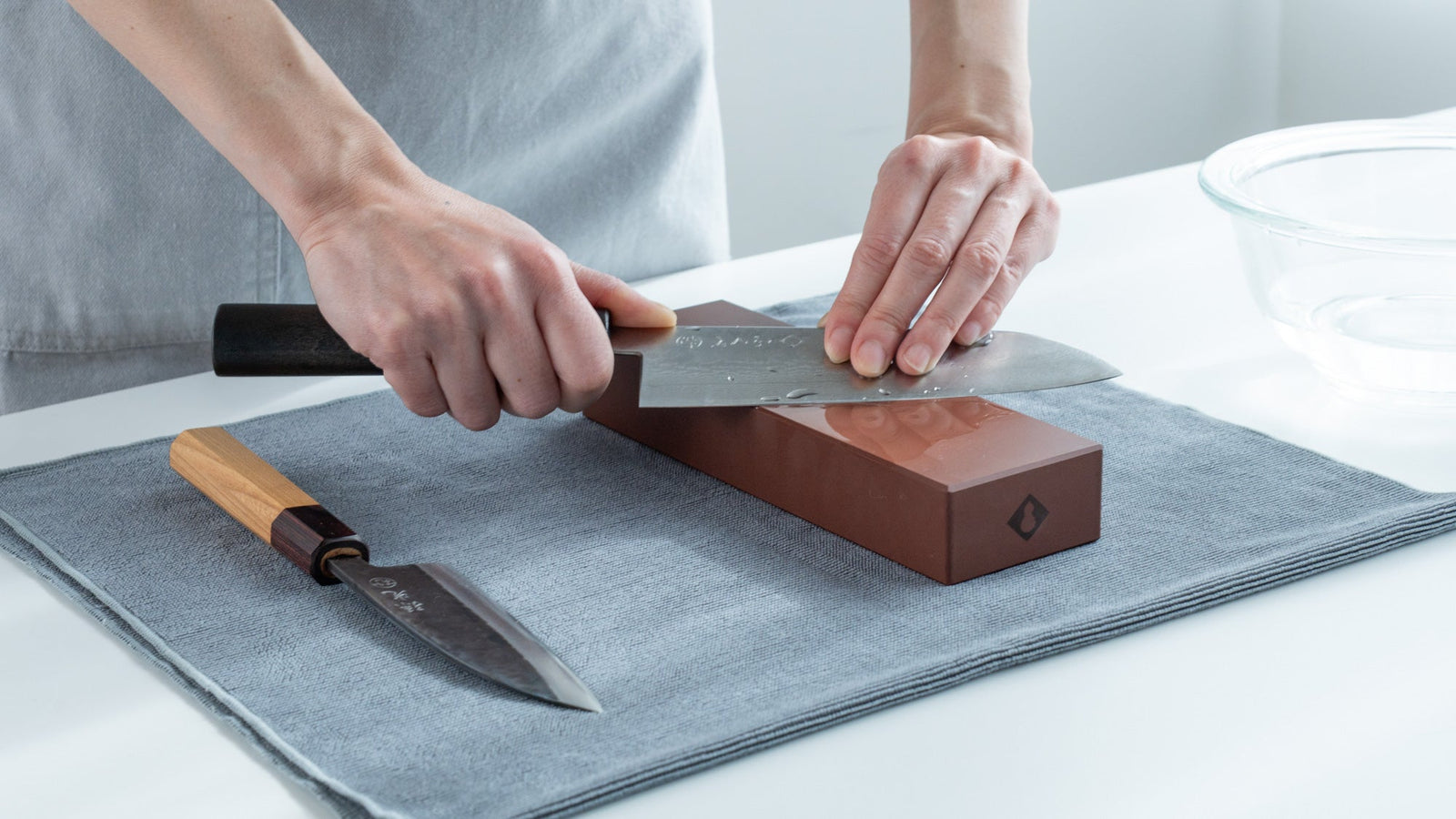
Ein gut geschärftes Messer verändert den Rhythmus des Kochens. Schnitte fühlen sich sauberer an, Bewegungen leichter, und die Arbeit wird konzentrierter.
Japanische Messer werden für ihre Schärfe und Schönheit geschätzt, aber auch dafür, wie natürlich sie durch den Gebrauch zur Pflege einladen. Mit richtigem Schärfen erfüllen sie weiterhin ihre Funktion. Was zunächst wie eine Herausforderung wirken mag, lässt sich oft mit wenigen grundlegenden Schritten bewältigen, um zu Hause mit Sicherheit eine feine Schneide wiederherzustellen.
In diesem Artikel führen wir Anfänger durch das Schärfen eines einfachen doppelseitig geschliffenen japanischen Messers mit einem traditionellen natürlichen Schleifstein – von der Vorbereitung des Steins bis zu den wesentlichen Schärftechniken. Erleben Sie die Zufriedenheit, ein Werkzeug fürs Leben mit eigenen Händen in Bestform zu bringen.
Warum Schärfe bei japanischen Messern wichtig ist
Ein scharfes Messer verändert das gesamte Kocherlebnis. Statt durch Zutaten zu drücken und zu sägen, bewegt sich die Klinge glatt und mit minimalem Kraftaufwand. Das reduziert die Belastung der Hände, verhindert das Zerreißen von Lebensmitteln und macht jeden Schnitt präziser. Eine schärfere Schneide ist auch sicherer, weil das Messer weniger leicht abrutscht.

Ein weiterer Grund, warum Schärfe wichtig ist, ist die Langlebigkeit. Eine gut gepflegte Schneide sorgt dafür, dass Ihr Messer gleichmäßig abnutzt. Japanische Messer sind dafür gemacht, Sie über Jahre zu begleiten, und regelmäßiges Schärfen wird Teil dieser Beziehung. Mit jedem Schärfen verstehen Sie die Eigenschaften Ihres Messers besser und halten die Klinge so leistungsfähig wie am Tag des Kaufs.
Es geht nicht nur um Wartung – es verbindet Sie mit dem Handwerk, das in die Klinge geflossen ist, und mit den Mahlzeiten, die Sie damit zubereiten.
Was Sie zum Schärfen eines japanischen Messers benötigen

Schleifstein
Es gibt viele Arten von Schleifsteinen, doch in diesem Leitfaden verwenden wir einen natürlichen Schleifstein. Westliche Messerschärfer können die Schneide vorübergehend schärfen, doch ein Schleifstein wird empfohlen, da er das Messer so schärft, dass die ursprüngliche Form der Klinge erhalten bleibt. Im Allgemeinen werden westliche Durchzieh-Messerschärfer für japanische Messer nicht empfohlen, da sie Metall schnell abtragen und die Schneide mit der Zeit abnutzen können.
Schleifsteine werden durch eine Körnung identifiziert, die mit einem #-Zeichen angegeben wird, etwa #220 oder #1000. Diese Zahl bezieht sich auf die Korngröße, also darauf, wie grob der Stein ist. Niedrigere Zahlen sind gröber, höhere Zahlen feiner. Die Körnung ist meist auf dem Stein oder seiner Verpackung aufgedruckt. Für Anfänger ist ein Schleifstein mittlerer Körnung um #1000 die praktischste Wahl, da er sich ideal für regelmäßiges Schärfen und das Wiederherstellen einer stumpfen Schneide eignet.

Feuchtes Handtuch oder Tuch
Wird unter den Stein gelegt, damit er nicht verrutscht. Ein Handtuch hilft auch, Wasser und Metallspäne aufzufangen.
Eine Schüssel Wasser
Hilfreich, um dem Stein kleine Mengen Wasser hinzuzufügen, da der Schleifstein während des Schärfens allmählich austrocknet.
Vorbereitung
Messer
Wischen Sie Rückstände oder Feuchtigkeit von Ihrem Messer ab. Eine saubere Oberfläche ermöglicht vollen Kontakt und hält auch Ihren Schleifstein sauber.

Schleifstein
Tauchen Sie den Schleifstein etwa zwanzig Minuten lang in Wasser. Sie werden sehen, wie Luftblasen aus dem Stein aufsteigen, während er Wasser aufnimmt. Prüfen Sie die Oberfläche des Steins auf eine dünne Wasserschicht.
Ein richtig befeuchteter Stein verbessert das Gefühl der Klinge und ermöglicht es den Schleifpartikeln, gleichmäßig in der dünnen Wasserschicht auf der Oberfläche zu wirken.

Schritt-für-Schritt-Anleitung zum Schärfen (doppelseitig geschliffene Messer)
Diese Schritte konzentrieren sich auf ein einfaches doppelseitig geschliffenes Messer, die gängigste Form für Anfänger. Die Methode gilt für gyuto, santokuund Japanese petty knives.
Schritt 1: Richten Sie Ihren Arbeitsplatz ein
Legen Sie den eingeweichten Schleifstein auf ein feuchtes Handtuch auf einer flachen, festen Oberfläche. Er darf sich nicht bewegen, sobald Sie mit dem Schärfen beginnen. Das Arbeiten auf einer instabilen Küchenplatte kann zu Verletzungen oder Schäden an Ihrem Messer führen.
Stellen Sie die Schüssel mit Wasser in Reichweite, falls Sie dem Schleifstein Wasser hinzufügen müssen.

Schritt 2: Schärfen Sie die Vorderseite der Klinge
Beginnen Sie mit der Seite, die von Ihnen weg zeigt, während Sie das Messer in Ihrer dominanten Hand halten. Positionieren Sie die Klinge so, dass sie etwa 25–30° zur Seite des Schleifsteins steht. Arbeiten Sie in dieser Position, während Sie schärfen. Legen Sie Ihren Daumen auf die Ferse und Ihren Zeigefinger auf den Rücken, und greifen Sie den Griff mit den restlichen Fingern, damit das Messer nicht wackelt.

Heben Sie dann den Rücken an, sodass die Schneide der Klinge etwa 15° von der Oberfläche des Schleifsteins entfernt ist. In Japan gilt die Faustregel, dass die Dicke von zwei Münzen zwischen Rücken und Schleifstein passt. Diese Einstellung hilft, das Messer effektiv zu schärfen und dabei seine ursprüngliche Form zu bewahren.
Um mit dem Schärfen zu beginnen, legen Sie zwei oder drei Finger Ihrer nicht dominanten Hand auf die Klinge und schieben Sie das Messer von Ihrem Körper weg über den Stein, dann ziehen Sie es leicht zurück. Wenn der Stein zu trocknen beginnt, fügen Sie etwas Wasser hinzu, da die natürliche Schleifpaste helfen kann, mikroskopische Zacken zu glätten.

Arbeiten Sie schrittweise von der Spitze zur Ferse. Manche Anfänger finden es hilfreich, die Klinge in drei Abschnitte zu unterteilen: Ferse, Mitte und Spitze. Als Richtlinie wiederholen Sie die Vor- und Rückbewegung etwa zwanzig Mal für jeden Abschnitt. Das verringert die Neigung, den Vorgang zu überstürzen, und hilft Ihnen, darauf zu achten, wie sich die Klinge an jedem Punkt anfühlt.
Schritt 3: Schärfen Sie, bis sich ein Grat bildet
Während Sie die Klinge schärfen, faltet sich Metall zu einem dünnen Grat, der Grat genannt wird (bari oder hakaeri auf Japanisch). Sie können dies spüren, indem Sie sanft mit der Fingerspitze über die Schneide streichen und sich dabei vom Rücken zur Schneide bewegen. Wenn Sie eine leichte Rauheit spüren, hat sich der Grat gebildet.
Der Grat ist wichtig, weil er bestätigt, dass Sie die äußerste Kante des Messers erreicht haben. Ohne einen Grat zu bilden, ist der Schärfvorgang unvollständig.


Schritt 4: Schärfen Sie die Rückseite der Klinge
Als Nächstes wechseln Sie zur anderen Seite der Klinge.
Drehen Sie die Klinge so, dass der Klingenrücken zu Ihnen zeigt, und richten Sie den Griff so aus, dass die Klinge in einem Winkel von etwa 70–80° zum Schleifstein steht (der Griff ist weiter von der Seitenkante des Steins entfernt). Schärfen Sie diese Seite von der Ferse zur Spitze mit etwa der gleichen Anzahl von Zügen, um die Klinge ausgewogen zu halten. Setzen Sie die Schneide erneut in einem Winkel von 15° an.

Anfänger stellen oft fest, dass sich die zweite Seite etwas anders anfühlt. Das ist normal. Das Ziel ist einfach, so lange zu schärfen, bis sich der Grat auf die gegenüberliegende Seite verlagert.
Wenn Sie Linkshänder sind, führen Sie das Spiegelbild dessen aus, was auf jedem Foto gezeigt wird. Die Winkel in Bezug auf den Schleifstein ändern sich nicht; nur die Hand, mit der Sie das Messer halten.

Schritt 5: Beide Seiten ausgleichen
Nachdem beide Seiten einen Grat gebildet und entfernt haben, schließen Sie mit einem leichten Zug auf jeder Seite ab. Heben Sie den Klingenrücken auf etwa 25–30° an (vier Münzen zwischen Klinge und Schleifsteinoberfläche), üben Sie minimalen Druck aus und lassen Sie die Vorderseite des Messers von der Spitze zur Ferse gleiten, in einer einzigen, sanften Bewegung von unten nach oben über den Stein. Machen Sie dasselbe für die Rückseite des Messers, aber gehen Sie diesmal von der Ferse zur Spitze und führen Sie die Bewegung von oben nach unten aus. Dieser letzte Durchgang hilft, die Schneide zu glätten und eventuelle Rauheit zu entfernen.


Schritt 6: Abspülen und abwischen
Spülen Sie das Messer mit Wasser ab und trocknen Sie es gründlich. Lassen Sie keine Feuchtigkeit auf der Klinge, besonders nicht bei Messern aus Kohlenstoffstahl oder mit teilweisem Kohlenstoffkern.
Spülen Sie auch Ihren Stein ab. Wischen Sie Rückstände ab und lassen Sie den Stein vollständig trocknen, bevor Sie ihn lagern.
Ihr Messer sollte sich nun merklich schärfer anfühlen. Es sollte mühelos durch Zutaten schneiden. Mit der Zeit wird Ihre Schneide noch feiner, wenn sich Ihre Technik verbessert.

Das Schärfen Ihres Messers wird mit der Zeit intuitiver. Jede Sitzung lehrt Sie etwas Neues, sei es das Geräusch der Klinge, die über den Stein gleitet, oder das Gefühl des Drucks unter Ihren Fingerspitzen.
Mit regelmäßiger Pflege bleibt Ihr Messer zuverlässig und einsatzbereit, unterstützt Ihre Art zu kochen Tag für Tag und erneuert Ihre Wertschätzung für jeden glatten Schnitt, den Sie machen.
Wir hoffen, dass dieser Leitfaden Ihrem japanischen Messer hilft, ein langjähriger Begleiter in Ihrer Küche zu werden. Wenn Sie Ihr Verständnis für japanische Messer über das Schärfen hinaus vertiefen möchten, können Sie die verschiedenen Typen und die tägliche Pflege in unserem Blog erkunden Leitfaden für japanische Messer.
Stay close to the craft
Now and then, a quiet letter — new stories, seasonal notes, and the hands behind the work.
Donabe-Abend aufwerten: Geschirr und Küchenutensilien für ein besseres Hot-Pot-Essen
Schaffen Sie ein authentisches japanisches Hot-Pot-Setup mit Donabe-Utensilien und Tischbesteck, das für einen reibungslosen…
Fukube Kaji: Ein Schmied, bei dem Werkzeuge die Tradition bewahren
Entdecken Sie Fukube Kaji, einen 118 Jahre alten Schmied aus Ishikawa, der langlebige Messer…
Leitfaden für japanische Messer
Lernen Sie japanische Messer, ihre Eigenschaften und Pflegetipps kennen, um das perfekte Messer für…
Leave a comment