

Nishikata Ryota: Forjando belleza en movimiento
Descubra más sobre el raro trabajo en metal tsuiki de Nishikata Ryota, elaborado con precisión y belleza escultural.
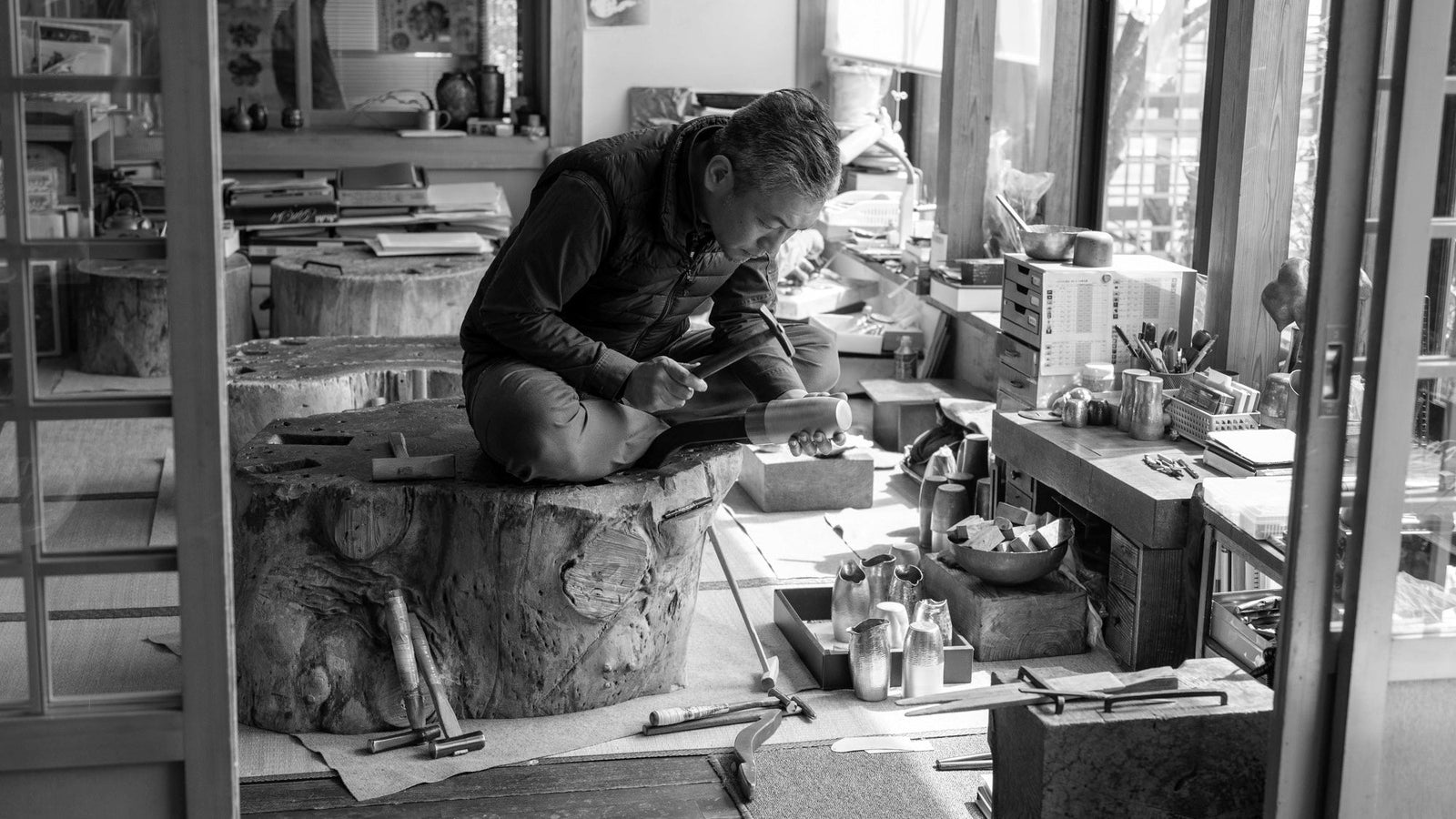
Entre las artesanías tradicionales de Japón, tsuiki —cobre forjado a martillo—se mantiene como una de las más duraderas y refinadas. Durante más de tres siglos, esta artesanía de la prefectura de Niigata ha fascinado a coleccionistas de todo el mundo.
Cada pieza comienza como una sola lámina plana de cobre, que se martilla pacientemente a mano para estirar o contraer el material hasta darle forma. El resultado es una forma sin costuras cuya resistencia se iguala con su suave resplandor. Cada golpe deja tras de sí un rastro de ritmo humano, transformando el metal en algo que parece vivo.
En Seigado, el taller fundado en 1945 por su abuelo, Nishikata Ryota continúa el linaje como su sucesor de tercera generación. Su trabajo encarna la disciplina y el arte en evolución que han definido el taller durante casi ochenta años.

Una fascinación de toda la vida por crear
Desde la infancia, Nishikata ha sentido atracción por la alegría de crear cosas. Sus primeros recuerdos son de ensamblar, desensamblar y volver a ensamblar kits de manualidades que venían con revistas, decidido a hacer algo nuevo a partir de lo que ya estaba completo. Esa curiosidad por la estructura y la reinvención nunca lo abandonó.

Aunque su familia llevaba mucho tiempo fabricando cobre martillado, inicialmente no planeaba heredar el oficio. "Quería crear cosas para ganarme la vida", recuerda, "pero imaginaba que eso significaría diseño o arte". Después de estudiar diseño artesanal en la universidad, y mientras trabajaba con muchos materiales diferentes, descubrió el atractivo del metal mismo—y la libertad de las técnicas utilizadas para darle forma. Esto se convirtió en un punto de inflexión en su carrera.

Al graduarse, ingresó al taller familiar. Durante las siguientes dos décadas, trabajó junto a su padre y su hermano menor, asumiendo finalmente el papel de artesano principal en 2022.
"Mi padre me enseñó que el trabajo no termina con una pieza perfecta. La artesanía vive en la repetición, haciendo algo una y otra vez hasta que se convierte en parte de ti".
Añade que el impulso de mirar más allá de la convención y perseguir ideas que otros pueden pasar por alto es una mentalidad heredada de su abuelo, transmitida a su padre, y ahora llevada por él.
Revivir una técnica perdida
Entre las creaciones de Nishikata, una pieza define tanto su habilidad como su espíritu: el mimikuchi-uchidashi yuwakashi—una tetera cuyo cuerpo, pico y mimi, dos pequeñas protuberancias en forma de oreja donde se fija el asa, están todos forjados a partir de una sola lámina de cobre. La técnica para producir esta tetera se originó hace aproximadamente un siglo, pero durante mucho tiempo se consideró una artesanía perdida.

Esta forma sin costuras, tanto escultórica como funcional, requiere un control extraordinario. Implica innumerables herramientas, docenas de etapas y más de un mes de trabajo paciente. Debido a su complejidad, solo se pueden fabricar unas pocas cada año. Hoy, Nishikata es el único artesano activo en Japón aún capaz de producirla.
Explica el linaje de la técnica con respeto. Alrededor de 1920, el maestro metalúrgico Sasage Kenjiro desarrolló por primera vez el método, pero pronto desapareció porque requería demasiado trabajo para sostenerse. Décadas después, Ueno Yoshio, el difunto mentor de Nishikata, lo reimaginó y revivió desde cero.

Ueno se ofreció a enseñarle a Nishikata la técnica justo cuando estaba experimentando con métodos difíciles que la mayoría de los artesanos jóvenes evitaban, presentando sus obras anualmente en la exposición de arte de la prefectura. Y fue en 2009, cuando tenía treinta años, que le pidió a Ueno que le enseñara la técnica.
"Mi maestro dijo: 'Domina las habilidades más difíciles ahora—te salvarán algún día'. Y tenía razón". Solo unos años después, cuando el trabajo en metal tsuiki ganó reconocimiento internacional, comenzaron a llegar pedidos de todo el mundo. Ese aumento de interés ayudó a establecer la reputación de Seigado más allá de Japón, y se ha mantenido constante desde entonces.
Belleza y precisión en la forma cotidiana

El arte de Nishikata reside en su búsqueda tanto de la belleza como de la usabilidad. "Una forma debe ser hermosa, pero también tiene que funcionar perfectamente", dice. En la tetera mimikuchi-uchidashi, esta filosofía es más visible en el pico. La parte inferior es redondeada y llena, la punta inclinada hacia adelante en una curva delicada para asegurar un vertido limpio. El equilibrio es sutil, casi anatómico, y es difícil de replicar.

Debido a que la tetera está formada completamente a partir de una sola lámina, no hay costuras que puedan debilitarse con el tiempo. La integridad de la forma asegura no solo armonía estética sino también una durabilidad notable.
"Sin costuras, la pieza permanece completa durante generaciones. Es tanto más fuerte como más hermosa de esa manera".
Su proceso encarna el ritmo de la maestría: un ciclo de creación y reflexión. "Ninguna pieza ha salido de mis manos sin terminar o insatisfactoria", dice en voz baja. "Pero meses o años después, siempre veo algo que podría mejorar. La siguiente es siempre el verdadero desafío".
Color, superficie y expresión sutil
El trabajo de Nishikata también se distingue por su color. El cobre de Seigado es conocido por sus acabados suaves pero vívidos, logrados mediante reacciones químicas controladas. Al sumergir el cobre en soluciones especiales, la superficie se transforma lentamente: su tono influenciado por la temperatura, la humedad y la condición del líquido ese día.

Describe el proceso como "partes iguales de ciencia y sentimiento". El tono dorado de la tetera mimikuchi-uchidashi, por ejemplo, se crea fusionando una fina capa de estaño sobre el cobre y luego induciendo color mediante calor. El resultado es un brillo suave y envejecido en lugar de un resplandor llamativo. La superficie martillada, o tsuchime, atrapa la luz de manera desigual, revelando cambios delicados de tono.
Rodeando la tetera hay varias bandas tenues, un motivo de rayas sutiles tomado del diseño original de Sasage. "Las sombras entre las crestas hacen que la forma cobre vida", señala Nishikata.

Llevar adelante un legado de tres siglos
Como único practicante vivo del mimikuchi-uchidashi, Nishikata lleva tanto el peso como la libertad de la tradición. Reconoce la responsabilidad mientras mantiene una perspectiva moderna. "Por más que lo intentemos, nunca podremos recrear las piezas del pasado con perfección", reflexiona. "Lo que podemos hacer es honrar a quienes nos precedieron haciendo descubrimientos a través de nuestro propio trabajo".
En su taller, continúa produciendo cada tetera a mano junto a su familia, guiado por la convicción de que el refinamiento no tiene fin. "Agradezco estar ocupado, pero nunca me duermo en los laureles".

"No hay mayor reconocimiento que saber que las piezas que hago se usan durante mucho tiempo", dice. Las superficies de sus teteras llevan marcas de martillo visibles—una elección intencional. Con el paso de los años, estas texturas elevadas y hundidas evolucionan. Los picos se pulen naturalmente con el uso, mientras que los valles se oscurecen, acentuando el patrón. Para Nishikata, esta transformación lenta forma parte de la belleza. "Espero continuar haciendo piezas llenas de este tipo de atractivo", concluye Nishikata.
El Arte de un Artesano
Durante sus días universitarios, Nishikata soñó alguna vez con ser artista, creando obras escultóricas en metal durante las noches y fines de semana. Hoy, aunque su enfoque se ha desplazado hacia la artesanía funcional, ese espíritu creativo permanece integrado en su trabajo. "Si alguien me pidiera hacer arte de nuevo, me encantaría", comparte con una sonrisa.

En verdad, sus excepcionales piezas tsuiki ya tienden un puente entre arte y uso. Cada una lleva la precisión de lo utilitario y una presencia que perdura por años, una fusión posible gracias a su conexión de toda la vida con el arte. Es la artesanía constante de un hombre que, a través del martillo y la mano, otorga al cobre tanto belleza como vida.
Stay close to the craft
Now and then, a quiet letter — new stories, seasonal notes, and the hands behind the work.
Nishikata Ryota: La pasión y los desafíos de Tsuiki
Aprenda sobre tsuiki con el maestro artesano Nishikata Ryota, quien crea intrincadas piezas de…

Nishikata Hiroshi: Aportando su experiencia en la industria joyera a Tsuiki Innovation
Descubra cómo Nishikata Hiroshi combina su experiencia en joyería con la artesanía tradicional del…
Seigado: la radiante belleza del cobre
Explore el estudio de Seigado y descubra objetos tradicionales de cobre martillados a mano,…
Leave a comment