

Was ist der Kutani-Yoshidaya-Stil?
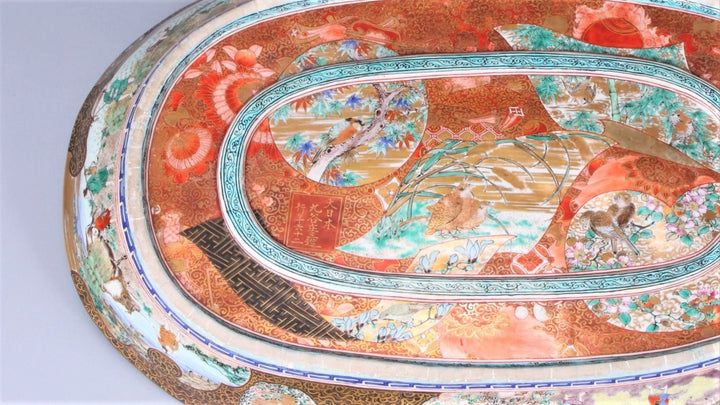
Der Charme des Yoshidaya-Stils liegt in der Verwendung von durchscheinenden Pigmenten und einem feinen Malstil sowie in den raffinierten Designs.
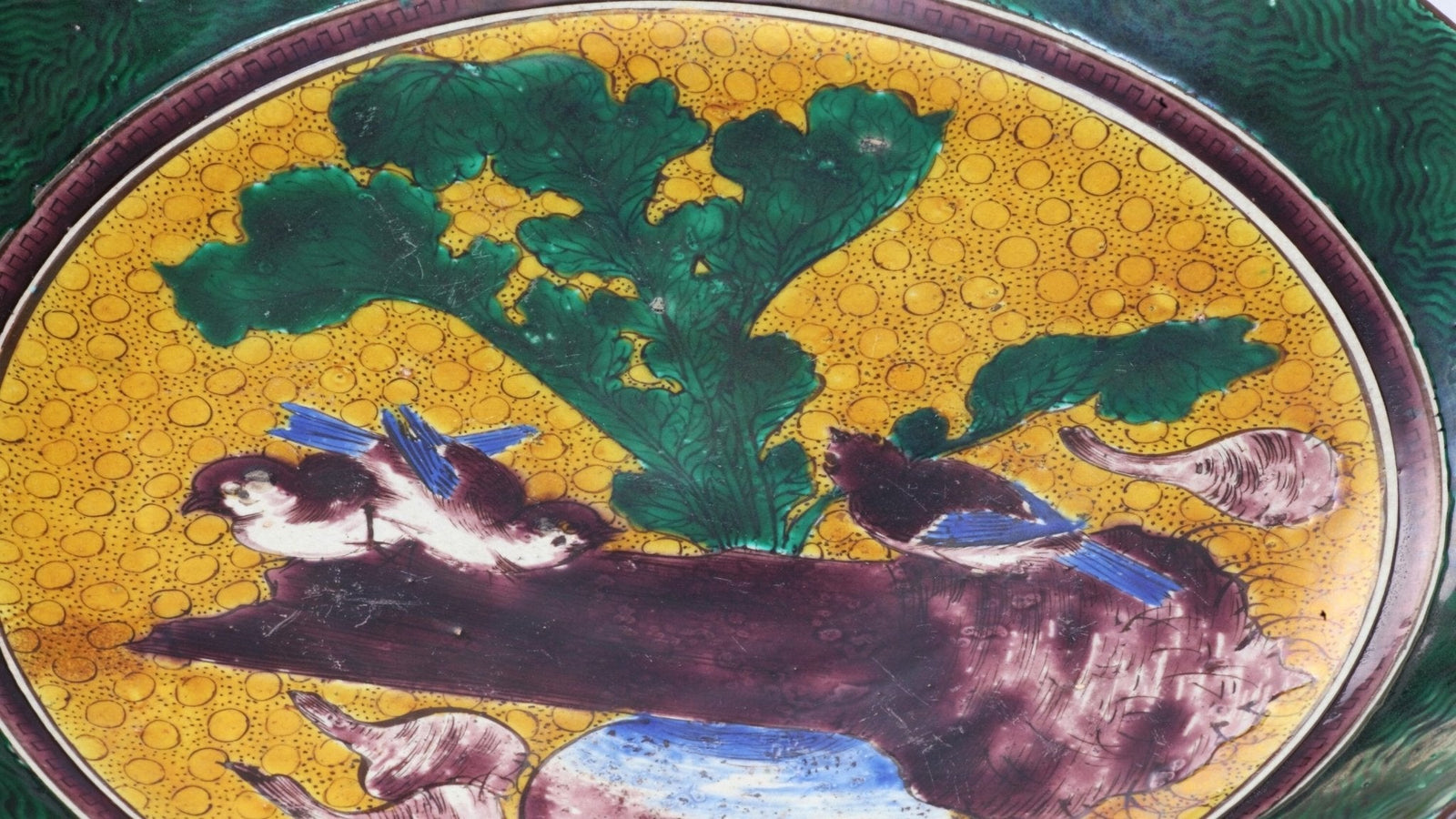
Der Reiz des Yoshidaya style liegt in der Verwendung transluzenter Pigmente und einem feinen Malstil sowie in den raffinierten, äußerst geschickt gezeichneten Bildern. Die Stücke werden bemalt und mit gelber Glasur überzogen – die kunstvolle und zügige Pinselführung verleiht der Malerei eine Leichtigkeit. Im Vergleich zum Ko-Kutani style, der durch kräftige Gosu-Linien (schwarze Konturlinien) gekennzeichnet ist, zeigt sich der Yoshidaya style präziser und feiner.


Der Yoshidaya-Brennofen, in dem der Yoshidaya style entstand, wurde im Dorf Kutani eröffnet, dem Geburtsort von Ko-Kutani, um Kutani-Ware wiederzubeleben. Yoshidaya-Arbeiten waren jedoch keine bloßen Nachahmungen, und es entstanden viele originelle Werke von hoher künstlerischer Qualität im Ko-Kutani Aote style (blaubasiertes Aufglasurporzellan). Die im Yoshidaya style verwendeten Farben sind gedämpfter und strenger als jene von Ko-Kutani, und die Balance der einzelnen Farben fügt sich harmonisch zusammen.
Zusätzlich wird das gewebte Muster mit Nanako Komon (feinen runden Formen) und Punkten bedeckt, die das Hauptmuster ergänzen. Obwohl die Verwendung von runden und punktförmigen Mustern von Stück zu Stück variiert, heißt es, dass das Auftragen auf leere Flächen dem Design Tiefe verleiht. Die Hauptmuster sind vielfältig: von Blumen, Vögeln, Landschaften und Menschen bis hin zu gefärbten Mustern – sie fesseln Geist und Gemüt des Betrachters.
Yoshidaya-Brennofen (1824–31) und Toyoda Den-emon
Der Yoshidaya-Brennofen wurde 1824 neben dem Kutani-Brennofen im Dorf Kutani von Toyoda Den-emon errichtet. Er war ein wohlhabender Kaufmann des Daishoji-Clans und ein Mann von großer Bildung. In seinen späteren Jahren zog er sich zurück und widmete sich der Töpferei. Im Alter von 72 Jahren beschloss Toyoda, Kutani-Ware nachzuschaffen, und eröffnete mit eigenen Mitteln einen Brennofen im Dorf Kutani. Obwohl er wusste, dass es nicht rentabel sein würde, einen Brennofen im tief in den Bergen gelegenen und schwer zugänglichen Dorf Kutani zu eröffnen, wagte er das Risiko. Dies geschah, weil er seinen starken Wunsch, Kutani-Ware zu reproduzieren, demonstrieren wollte, indem er den Yoshidaya-Brennofen neben dem Kutani-Brennofen im Dorf errichtete.
Yoshidaya-Arbeiten wurden von Aristokraten und Intellektuellen der Zeit für ihre Kunstfertigkeit und Qualität geschätzt, die jener von Ko-Kutani nahe kam. Das Streben nach Qualität ohne Rücksicht auf Rentabilität führte jedoch zu wirtschaftlichen Schwierigkeiten des Yoshidaya-Brennofens, und obwohl der Brennofen in die Stadt Yamashiro verlegt wurde, wo der Transport günstiger war, schloss er bedauerlicherweise nach etwa sieben Jahren im Jahr 1831.

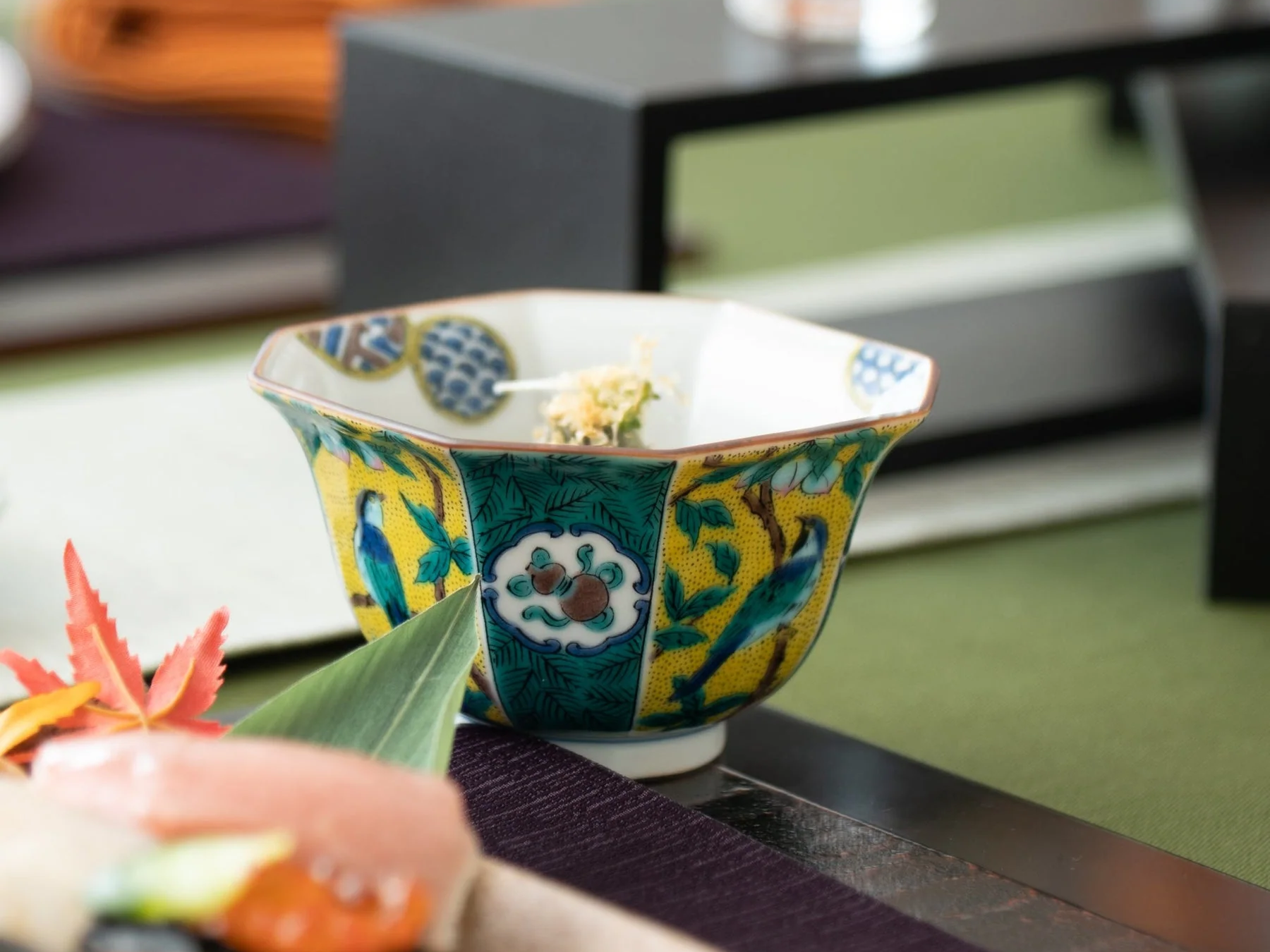
Geschirr im Yoshidaya style besitzt eine starke Präsenz am Esstisch und harmoniert gut mit schlichten Arrangements. Bitte klicken Sie auf das Banner unten, um unsere Artikel im Yoshidaya style zu sehen.
Weitere Kutani-Geschichten
Stay close to the craft
Now and then, a quiet letter — new stories, seasonal notes, and the hands behind the work.
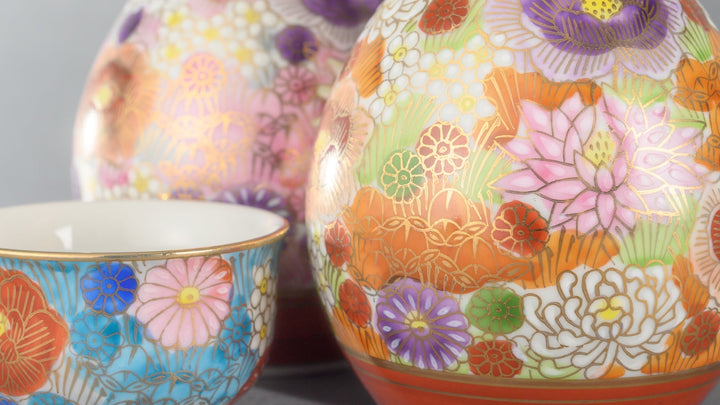
Was ist Hanazume?
Lernen Sie Hanazume kennen, einen Kutani-Keramikstil, der mit lebhaften Blumenmotiven und elegantem Gold verziert…
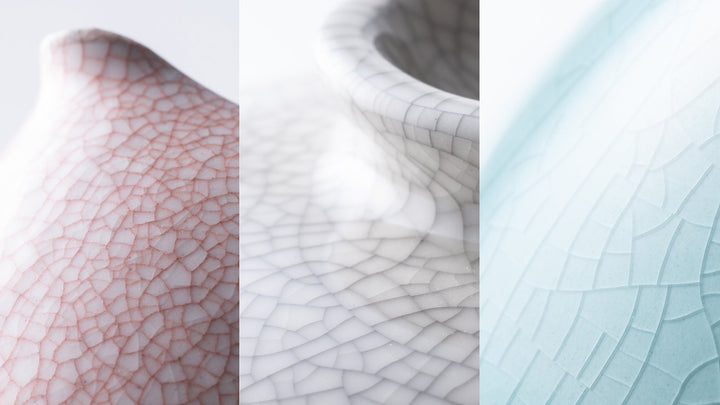
Unvollkommene Schönheit: Den Code von Kannyu knacken
Entdecken Sie die Geschichte von Kannyu, dem Namen der Krakelee-Oberfläche auf glasierter Keramik, die…
Was ist der Kutani Shoza Stil?
Lernen Sie Shoza kennen, einen Malstil, der westliche Farben neben der traditionellen Kutani-Gosai-Technik verwendet.
Leave a comment
Phillup We are so glad that you are very eager to explain your precious vase that was gifted by your dear son. We replied to your previous comment but we would like to contact you from our email address of 【infomusubikiln.com】so please check your inbox when it is possible for you!
@Phillup Thank you very much for your color clarification. Your dragon is more towards green! We would like to see it!
Phillup We enjoyed your writings about your vase. It was so detailed that we could tell that you love the vase. We would like to contact you from our email of 【infomusubikiln.com】so that we could communicate better/easier! Please check your inbox when it is possible for you!
View 3 more comments Hide comments
Please forgive this old man. I revised my post, and thank you again for your time!
Thank you for your help!🥰🤗🖖
My son purchased for my birthday an old Kutani jar, or vase if you prefer. It seems to be a masterpiece. It has the five colors, with the red being a sort of flat non glassy enamel! It has the green kukufuku mark on the bottom. It is made of stoneware that is so heavy it feels like it is filled with sand, and it is empty. 9” tall, and no chips, or cracks. I would like a positive date of manufacture, and place of manufacture. I just read an article that seems to identify that no over glaze was found in shards at the old Kutani kiln site. Plus point’s out that all old Kutani that is surviving is Arita manufactured. This has my head spinning 😵💫. Back to my vase. It seems to be very rare thing.
Forgive me my ignorance. It seems to be in a Aote style of the Edo period. It is not flowers, birds, trees, or people! 🤔 It has a large, and long three clawed Japanese dragon floating all around the entire jar, through a yellow background of vortex interlocking pattern. The dragon has red fire flying off the body, and a red tongue. Smiling like a Korean dragon. There are what appears to be clouds of every combination of the classic colors except red. There are a number of sunburst, or flaming pearl with the same varying combinations purple, light green, and dark blue, and black. No single one is the same. Nothing boring about this jar. The color slaps you in the face. 😁 The dragon also floats above a dark blue water, that is jumping up from the bottom, boiling like a storm, with black line decoration through it. Last it has a vary pleasurable ice crackle through out the jar in every color except red. I have search everywhere for another KoKutni like this, and have found non. It seem to have a white under glaze on the inside. It has a three-de magical effect to it. Every part of the jar is covered in enamel except the foot. If you would like photos please send me email link to send them.
Thank you for your time!
Phillup Brinkman
Ware I say light blue on the Kutani dragon vase, it is actually green. Please change that for me phillup
Thank you for your help!🥰🤗🖖
My son purchased for my birthday an old Kutani jar, or vase if you prefer. It seems to be a masterpiece. It has the five colors, with the red being a sort of flat non glassy enamel! It has the green kukufuku mark on the bottom. It is made of stoneware that is so heavy it feels like it is filled with sand, and it is empty. 9” tall, and no chips, or cracks. I would like a positive date of manufacture, and place of manufacture. I just read an article that seems to identify that no overgrazing was found in shards at the old Kutani kiln site. Plus point’s out that all old Kutani that is surviving is Arita manufactured. This has my head spinning 😵💫. Back to my vase. It seems to be very rare thing.
Forgive me my ignorance. It seems to be in a Aote style of the Edo period. It is not flowers, birds, trees, or people! 🤔 It has a large, and long three clawed Japanese dragon floating all around the entire jar, through a yellow background of vortex interlocking pattern. The dragon has red fire flying off the body, and a red tongue. Smiling like a Korean dragon. There are what appears to be clouds of every combination of the classic colors except red. There are a number of sunburst, or flaming pearl with the same varying combinations purple, light blue and dark blue, and black. No single one is the same. Nothing boring about this jar. The color slaps you in the face. 😁 The dragon also floats above a dark blue water, that is jumping up from the bottom, boiling like a storm, with black line decoration through it. Last it has a vary pleasurable ice crackle through out the jar in every color except red. I have search everywhere for another KoKutni like this, and have found non. It seem to have a white under glaze on the inside. It has a three-de magical effect to it. If you would like photos please send me email link to send them.
Thank you for your time!
Phillup Brinkman