

De Arita a su mesa: el legado perdurable del horno Gen-emon
Visite Gen-emon Kiln en Arita y descubra en nuestra entrevista cómo se elabora la cerámica Arita de uso diario con pinceladas audaces en azul.
A mediados de diciembre, el equipo Musubi llegó a Arita. El invierno aquí se siente claro y silencioso; las crestas de las montañas se elevan y retroceden a través de un velo de niebla. La ciudad de Arita se encuentra en el oeste de Saga, bordeando el sur de Nagasaki, con aproximadamente el setenta por ciento de su territorio conformado por bosques y montañas. Acunados por este terreno, los fuegos de los hornos han continuado durante siglos, respirando al ritmo del paisaje mismo.

Es en un suelo como este donde nació Arita ware y donde continúa evolucionando. Esta vez, con igual medida de anticipación y respeto, visitamos Gen-emon Kiln en el marco de nuestra colaboración MUSUBI KILN × Gen-emon Kiln. Esta visita fue un encuentro con una tradición que permanece viva, que aún crece en tiempo presente.
Le invitamos a comenzar aquí con nosotros en un sitio cuyo oficio se ha transmitido desde principios de la era Meiji (1868–1912 d.C.), y a adentrarse en el mundo de Gen-emon Kiln. Durante nuestra visita, tuvimos el privilegio de conversar con Kaneko Shoji, director de Gen-emon Kiln, así como con otros miembros del equipo que llevan adelante esta tradición viva.

Donde Todo Comenzó
La historia que porta Gen-emon Kiln comienza alrededor de 1753, aunque la ubicación actual del taller data de principios de la era Meiji, hace aproximadamente 160 años. Antes de la Restauración Meiji, los señores del dominio controlaban estrictamente la producción de cerámica en Arita. Los artesanos individuales no podían simplemente establecer hornos donde eligieran. Cuando estas restricciones se levantaron, la libertad de crear de manera independiente transformó el paisaje, y fue entonces cuando Gen-emon Kiln estableció sus raíces en este sitio.


Dentro del continuo de 400 años de Arita, Gen-emon Kiln es relativamente joven. Sin embargo, este lapso más breve ha forjado un carácter distintivo. En lugar de estar atado por siglos de métodos inmutables, Gen-emon Kiln ha mantenido flexibilidad, respondiendo a demandas cambiantes mientras preserva el núcleo de su oficio.
Desde el principio, el taller se enfocó en vajilla para uso diario. Esta orientación ha requerido atención a lo que las personas realmente necesitan en sus mesas. A medida que los tiempos cambian, también lo hacen los hábitos alimenticios, las preferencias estéticas y los ritmos de la vida doméstica. Gen-emon Kiln ha buscado consistentemente mantenerse al paso, no persiguiendo tendencias, sino estando presente en el momento.
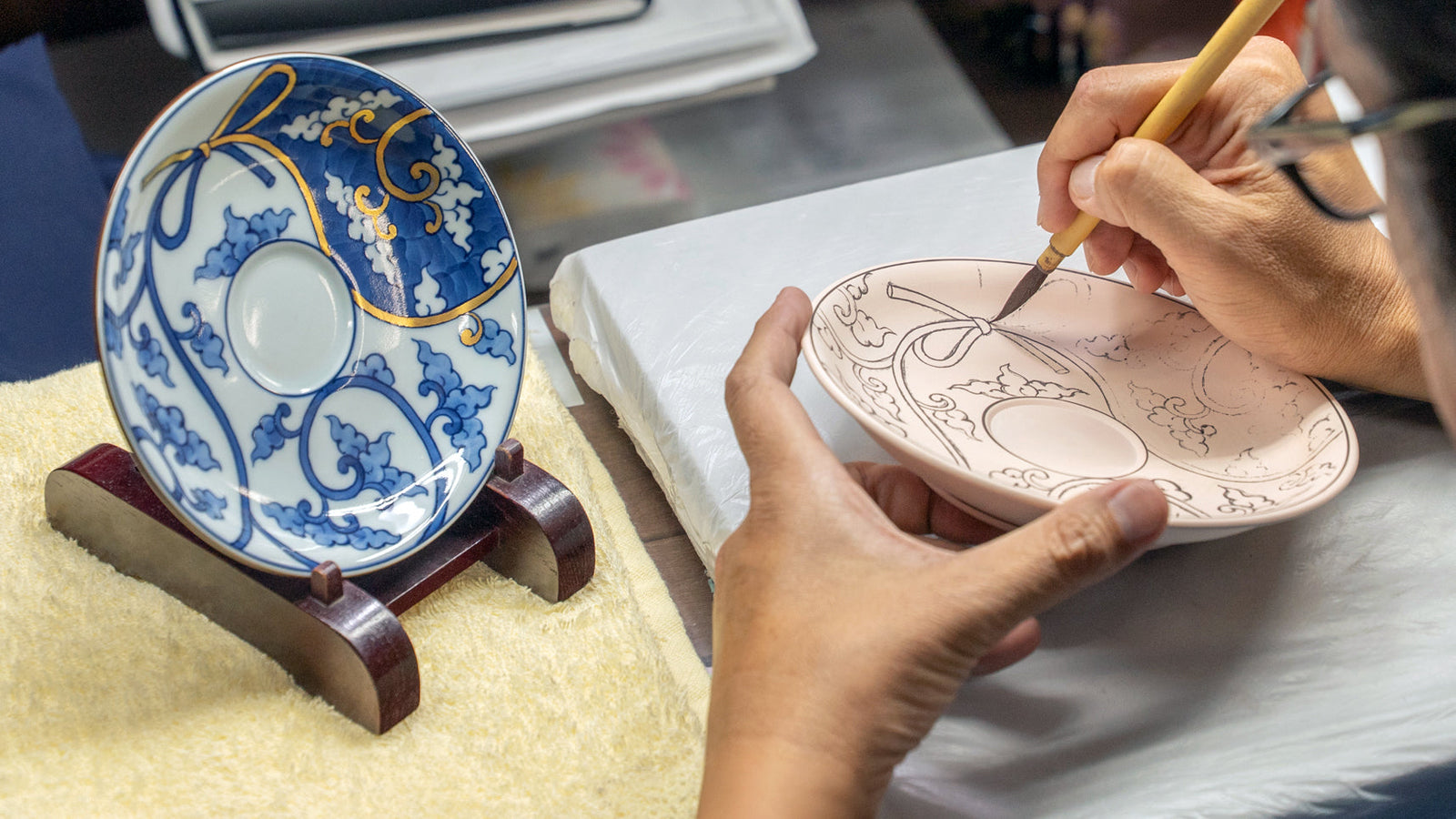
Lo que ha permanecido constante es el compromiso con el trabajo arduo. Los procesos fundamentales establecidos en la fundación del taller continúan sin cambios hasta hoy. Cada pieza pasa por manos hábiles en múltiples etapas: torneado, recorte, decoración y esmaltado. La calidez de una línea pintada a mano, la sutil variación entre piezas y el carácter que se acumula a través de incontables pequeñas decisiones otorgan a la cerámica de Gen-emon Kiln su presencia particular.

Valores Transmitidos a Través de la Práctica
Cuando se le pregunta sobre la filosofía del taller, Kaneko hace una pausa. "Realmente no lo hemos expresado con palabras", explica. "No hay declaraciones de misión en las paredes, ni sesiones de orientación sobre nuestros valores. Los nuevos artesanos aprenden haciendo. Absorben lo que significa Gen-emon Kiln a través de años de trabajo junto a artesanos experimentados".

Este enfoque refleja tanto humildad como confianza. El trabajo mismo porta la enseñanza. Un principiante comienza con patrones simples, repitiendo movimientos que gradualmente entrenan la mano y el ojo. A lo largo de meses y años, el pincel desarrolla fluidez. Eventualmente, pueden intentar diseños más intrincados. A lo largo de esta progresión, interiorizan no solo la técnica sino la sensibilidad, una percepción de lo que debe ser el trabajo de Gen-emon Kiln.

Hecho para Usarse, Hecho para Durar
"¿Cuál es el mejor cumplido que podría recibir de alguien que compra su trabajo?", preguntamos. La respuesta llegó de inmediato. "Que lo usen todos los días. No para ser admirado o guardado en un armario, sino para ser parte de la vida diaria. Clientes de mucho tiempo nos dicen: 'Mi madre ha estado usando sus platos durante treinta años', o 'Comienzo cada mañana con café en su taza, y eso marca todo el día'. Eso es lo que buscamos".

Este compromiso con la utilidad da forma a cada decisión de diseño. Cuando el líder del taller dibuja especificaciones para una nueva forma de vasija, anota el grosor de las paredes, la distribución del peso y el ancho del borde. "Los clientes a menudo dicen que nuestras piezas no se rompen fácilmente", comenta. "Mencionan haber dejado caer algo y sorprenderse de que sobreviviera". Esta durabilidad no es accidental. El cuerpo de arcilla, el programa de cocción y el diseño de la forma contribuyen, sin embargo, no hay nada pesado o torpe en la cerámica. Simplemente posee sustancia, el peso reconfortante de algo hecho para perdurar.

Esta solidez comienza con los materiales. Gen-emon Kiln trabaja principalmente con piedra Amakusa, el material de porcelana que ha reemplazado en gran medida los depósitos originales de Izumiyama. Para muchos, la diferencia es imperceptible. Ambos producen la característica porcelana blanca japonesa: suave, de grano fino y luminosa. Sin embargo, los creadores perciben distinciones. La piedra Amakusa tiene un contenido de arcilla ligeramente menor, lo que la hace algo menos plástica durante el torneado, aunque la calidad cocida resulta excelente. Lo más importante es que produce esa suavidad particular de superficie que distingue a la porcelana japonesa de otras variedades. "Comparado con la porcelana de otras partes del mundo, el trabajo japonés porta un toque más gentil", observa el líder del taller. "Hay calidez en lugar de frialdad. Es menos vítreo, más acogedor".
Más allá de los materiales, lo que hace distintivo a Gen-emon Kiln entre los numerosos talleres de Arita se reduce a dos firmas visuales: un azul propio y un trabajo de pincel vigoroso. El azul deriva de una fórmula transmitida a través de generaciones. Aunque el pigmento de cobalto comercial está fácilmente disponible en toda Arita, desarrollaron su propia mezcla para lograr profundidad y carácter específicos: vibrante pero arraigado, ni chillón ni tímido.

El trazo revela una cualidad más matizada de lo que podría sugerir la simple audacia. El estilo de Gen-emon Kiln se caracteriza por lo que podría llamarse "fuerza resuelta": líneas que transmiten convicción y claridad sin volverse agresivas o forzadas. Esta fuerza se combina con una generosidad de espíritu inherente, una cualidad vinculada a la posición geográfica e histórica del taller.
En la geografía tradicional de Arita, los talleres del área uchiyama (montaña interior) se enfocaban exclusivamente en la producción de cerámica, creando decoración refinada y meticulosa para mercados de élite. Gen-emon Kiln pertenece a la región satoyama (montaña exterior). Las tierras de cultivo y las áreas de producción cerámica se entremezclaban, y había hornos, como Gen-emon, que operaban combinando agricultura con producción de porcelana. Esta identidad dual fomentó una estética más expansiva. El trazo encarna esta herencia: pinceladas seguras que respiran libremente sobre la superficie.

"Les decimos a los artesanos que no contengan la respiración mientras pintan", señala el líder. "Esa tensión se muestra en la línea. El trabajo debe sentirse expansivo, no constreñido". Las líneas llevan peso y se anuncian, no mediante ejecución tosca, sino a través de una expresividad deliberada que solo llega después de años de práctica, cuando la mano sabe exactamente cuánta presión aplicar, cuándo pausar, cuándo dejar fluir el pincel. Incluso las líneas finas mantienen esta cualidad de ejecución asegurada, creando decoración que se distingue visible desde la distancia pero recompensa el examen cercano con su vitalidad y variación.

MUSUBI KILN × Gen-emon Kiln
La colaboración entre MUSUBI KILN y Gen-emon Kiln surgió de intenciones alineadas. Cuando MUSUBI KILN se conectó por primera vez con Gen-emon Kiln, una seriedad compartida sobre el oficio se hizo evidente rápidamente.
Los diseños de la taza y el platillo provienen del repertorio establecido desde hace tiempo de Gen-emon Kiln. Yokota Atsushi, Director de Planificación de Productos, explicó que los patrones en esta colección no eran meras reproducciones, sino reinterpretaciones que respetan la tradición mientras incorporan estética contemporánea. El musubi karakusa (arabesco de nudo), por ejemplo, fue creado por primera vez hace alrededor de treinta años como motivo para platos.
Posteriormente, fue reimaginado por Yokota, quien añadió color y lo adaptó para tazas de té yunomi , trayendo el motivo de vuelta al foco. Las piezas resultantes se sintieron tanto familiares como refrescantemente nuevas.

Transferir un diseño desde un yunomi de lados rectos a las superficies curvas de tazas y platillos requirió repensar la composición. Patrones que funcionaban en superficies verticales necesitaban ajuste cuidadoso en escala y ubicación sobre formas curvas. Yokota creó múltiples conjuntos de prototipos, probando repetidamente diferentes arreglos. "El desafío no es solo ampliar o reducir el patrón", dijo. "Se trata de dejar que el diseño 'respire' en una nueva forma—encontrar la posición correcta para que el balance general no esté apretado ni disperso, especialmente a lo largo de curvas complejas como la unión del cuerpo y el asa".
La banda decorativa, tan característica en el exterior del yunomi, demandó ubicación particularmente precisa en la taza: demasiado alta, y desaparece desde ciertos ángulos; demasiado baja, y el peso visual cae. Después de múltiples cocciones y refinamientos, Yokota ajustó gradualmente los patrones para que envuelvan naturalmente toda la forma. El proceso enfatizó experimentación e intuición en lugar de adherencia estricta a planos. "Probamos varios enfoques, vimos cuál se sentía más interesante y apropiado, y luego lo refinamos", explicó.

Lo que hace especiales estas piezas es cómo conectan naturalmente diferentes contextos culturales. Aunque las tazas y platillos provienen de una tradición de vajilla occidental, estas piezas llevan la delicadeza distintiva de la porcelana japonesa, suaves al tacto y perfectamente proporcionadas. La decoración continúa el estilo audaz característico de Gen-emon Kiln mientras armoniza con la forma. El color juega un papel clave en este balance. Mientras el azul característico permanece central, la introducción de esmalte sobre cubierta y toques de oro son experimentos nuevos; resaltan los patrones sin abrumarlos. A través de cocciones de prueba repetidas, la combinación ideal emergió gradualmente.
Al concluir nuestra visita, comprendimos más claramente lo que Gen-emon Kiln valora. Hechas para la vida diaria, estas piezas encuentran su significado a través del uso, tejiéndose suavemente en momentos cotidianos. Son compañeras para el vivir diario—objetos que traen placer mediante uso regular, que mejoran en lugar de desvanecerse con el manejo, y que podrían eventualmente pasar de una generación a la siguiente, llevando historias de comidas compartidas y mañanas comenzadas.
Stay close to the craft
Now and then, a quiet letter — new stories, seasonal notes, and the hands behind the work.
El legado del maestro de la 14ª generación en el horno Le Sanpei
En Le Sanpei Kiln, el maestro de 14ª generación Kanagae Sanbei mantiene vivas las…
Conozca a los especialistas en herramientas que apoyan a los artesanos de Seto ware
Descubra el trabajo en Seto y conozca a los fabricantes de herramientas y expertos…
Diario del Comprador: Reutilizando Bizen Ware como Macetas
Elaboradas a mano en Okayama, estas macetas de Bizen ware combinan arcilla reciclada con…
Shirata Ai
Leave a comment
@Alexander – Thank you very much for your kind comment. It truly means a great deal to hear that the pieces have found a place in your home and that you take pride in them as part of your collection. We hope the pieces you cherish continue to resonate with your connection to Japan, and we look forward to helping you discover others that speak to you.
Thank you again for sharing your experience with us.
All the products were exceptional
I am very pleased and proud to have them
Will continue to enlarge my collection
As someone who has lived in Japan I truly respect the culture and the customs
My heart and soul is with Japam
Thank you so much
@Kathleen – Thank you very much for reading and for your kind comment. We’re so glad to hear that you enjoyed learning about the history and philosophy of Gen-emon Kiln.
View 1 more comment Hide comments
Beautiful! Lovely backstory I learn so much