

Comprender los Tesoros Nacionales y los Tesoros Nacionales Vivientes de Japón
Conozca el significado de los Tesoros Nacionales y Tesoros Nacionales Vivientes de Japón.
Entre las piezas que maneja MUSUBI KILN se encuentran varias obras creadas por artistas designados como Portadores de Bienes Culturales Intangibles Importantes: Yoshita Minori y Nakada Kazuo.
El título de Portador de un Bien Cultural Intangible Importante es quizás más conocido por su nombre común, Tesoro Nacional Viviente, y se refiere a "un tesoro humano viviente del país". Este título designa a individuos o grupos reconocidos por el Estado como poseedores del más alto nivel de habilidad en artes escénicas tradicionales como Kabuki y Shamisen, o en técnicas artesanales como cerámica y lacado. Estas certificaciones son gestionadas por el gobierno, y Japón fue uno de los primeros países del mundo en evaluar este tipo de técnicas tradicionales intangibles como patrimonio cultural.
Por separado, también existe la designación de Tesoro Nacional, que el gobierno japonés aplica a obras tangibles de bellas artes, artesanía y arquitectura consideradas de valor histórico o cultural extremadamente alto desde una perspectiva global. El apodo "Tesoro Nacional Viviente" es en realidad un término coloquial creado por los medios de comunicación basándose en esta designación de Tesoro Nacional.
Ya sea intangible o tangible, poseer el título de Tesoro Nacional es prueba de que el gobierno japonés ha reconocido oficialmente el inmenso valor de alguien o algo, y sirve como punto de referencia para juzgar la importancia artística, histórica y cultural de la persona u objeto. En este sentido, tanto "Tesoro Nacional" como "Tesoro Nacional Viviente" son palabras clave esenciales para profundizar la comprensión de la cultura japonesa.
Este artículo presenta los fundamentos de los Tesoros Nacionales y los Portadores de Bienes Culturales Intangibles Importantes, junto con datos curiosos relacionados.
¿Cuáles son los Tesoros Nacionales más grande y más pequeño de Japón?
Como el nombre "Tesoro Nacional Viviente" deriva de "Tesoro Nacional", para comprender el primero, primero se debe comprender el segundo. Comencemos entonces con una descripción general de los Tesoros Nacionales.
La designación de Tesoro Nacional se basa en la Ley para la Protección de Bienes Culturales, promulgada en 1950 para mejorar la cultura nacional mediante la protección y utilización de bienes culturales. Entre los bienes culturales tangibles importantes, aquellos de valor particularmente alto y significado incomparable son designados como tesoros del Estado y del pueblo: Tesoros Nacionales.
A enero de 2026, hay un total de 1.149 Tesoros Nacionales, incluyendo obras de bellas artes, artesanía y edificios. La prefectura japonesa con el mayor número de designaciones es Tokio con 293—más que Kioto o Nara, famosas por sus numerosos santuarios y templos—debido a la alta concentración de museos y galerías en la capital.
De los 1.149 elementos, el más grande es el Gran Buda de Todai-ji en Nara, con 14,98 m de altura. Esta estatua budista fue construida durante aproximadamente nueve años a mediados del siglo VIII por el emperador Shomu, quien deseaba la paz nacional y la unificación de los corazones del pueblo.

El Tesoro Nacional más pequeño, por otro lado, es el Sello de Oro del Rey de Na (cuya cara del sello mide aproximadamente 2,3 cm de ancho) albergado en el Museo de la Ciudad de Fukuoka. Se dice que este sello de oro fue presentado por un emperador chino a un gobernante japonés local en el año 57 d.C. Fue descubierto durante el período Edo (1603–1868 d.C.) en el siglo XVIII en la isla de Shikanoshima en lo que ahora es el este de la prefectura de Fukuoka, Kyushu—supuestamente encontrado por casualidad por un agricultor realizando trabajos agrícolas.

Para los Tesoros Nacionales, donde la protección es un objetivo primordial, la aparición en exposiciones generalmente se limita a dos veces al año, con exhibición pública limitada a sesenta días. Sin embargo, es posible que objetos hechos de materiales relativamente resistentes al deterioro, como piedra o metal, tengan sus exhibiciones extendidas más allá de sesenta días. Quizás por esta razón, el Gran Buda de bronce de Todai-ji y el Sello de Oro del Rey de Na son Tesoros Nacionales que pueden apreciarse fácilmente dentro de Japón por cualquier persona en cualquier momento. Tenga en cuenta que sacar Tesoros Nacionales del país está, como regla general, prohibido.
Por qué el Pabellón de Plata es un Tesoro Nacional pero el Pabellón de Oro no lo es
Dos templos budistas representativos en Kioto, Rokuon-ji y Jisho-ji, son conocidos por las estructuras popularmente llamadas Pabellón de Oro (Kinkaku-ji) y Pabellón de Plata (Ginkaku-ji), respectivamente. Aunque ambos son edificios japoneses icónicos ampliamente conocidos dentro y fuera del país, el Pabellón de Oro no es un Tesoro Nacional, mientras que el Pabellón de Plata sí lo es. ¿Por qué?
El Pabellón de Oro se originó como una villa de montaña construida por Ashikaga Yoshimitsu, el tercer shogun del shogunato Muromachi, que gobernó Japón durante el período medieval Muromachi (1336–1573 d.C.). Recibió el nombre de "Pabellón de Oro" por la lujosa decoración de sus pilares y paredes con pan de oro. Aunque se completó en 1397, fue destruido por un incendio provocado en 1950 por un joven monje en formación en Rokuon-ji; fue reconstruido cinco años después. Debido a que el Pabellón de Oro actual es, en cierto sentido, un edificio "moderno", no está designado como Tesoro Nacional.

El Pabellón de Plata, por su parte, es una estructura de dos pisos que se dice fue influenciada por el Pabellón de Oro, y fue construido dentro de la villa del octavo shogun Muromachi, Ashikaga Yoshimasa. El estilo de su arquitectura y el de los jardines circundantes son elogiados como representativos de la cultura de esa época. Se dice que hubo un plan para cubrir el edificio con láminas de plata en el momento de su construcción, pero finalmente, solo se aplicó laca a las paredes interiores y exteriores del segundo piso, construido para consagrar al Buda. Desde el período Edo del siglo XVII en adelante, llegó a ser llamado el Pabellón de Plata en contraste con el Pabellón de Oro. A diferencia del Pabellón de Oro, conserva su apariencia original desde el momento de su finalización, un valor que eventualmente fue reconocido y llevó a su designación como Tesoro Nacional en 1951.

El artista con más designaciones individuales de Tesoro Nacional, el pintor medieval Sesshu
Watada Minoru, quien supervisa las investigaciones de propiedad cultural en la Agencia de Asuntos Culturales—la oficina gubernamental involucrada en las designaciones de Tesoro Nacional—describe los Tesoros Nacionales como "objetos que no sería vergonzoso llevar a cualquier parte del mundo para representar la cultura japonesa" y (en el caso del arte) "cosas que son indispensables para explicar características específicas de una época particular del arte japonés".
Las pinturas de tinta aguada, o suibokuga, de Sesshu (1420–1506?), un monje zen del período Muromachi, cumplen perfectamente estos requisitos. Él posee el récord de más obras creadas por un solo individuo que han sido designadas como Tesoros Nacionales.
Sesshu fue el primer pintor japonés de tinta aguada en viajar a China, el lugar de nacimiento de la técnica, para perfeccionar sus habilidades. Allí, no solo fue elogiado como pintor sino también reconocido como un excelente monje zen antes de regresar a Japón aproximadamente dos años después. Aunque basadas en estilos chinos de tinta aguada, sus obras únicas—que comprendió y perfeccionó a fondo—se caracterizan por un dinamismo robusto mientras mantienen un sentido general de estabilidad y compostura profundas.

Como sugiere el número de sus Tesoros Nacionales designados, Sesshu es considerado el pintor más importante y preeminente en la historia del arte japonés. Fukushi Yuya, quien investiga la pintura de la era moderna temprana en el Museo Nacional de Kioto, afirma que este estatus es el resultado de la evaluación acumulativa de muchas generaciones posteriores de pintores.
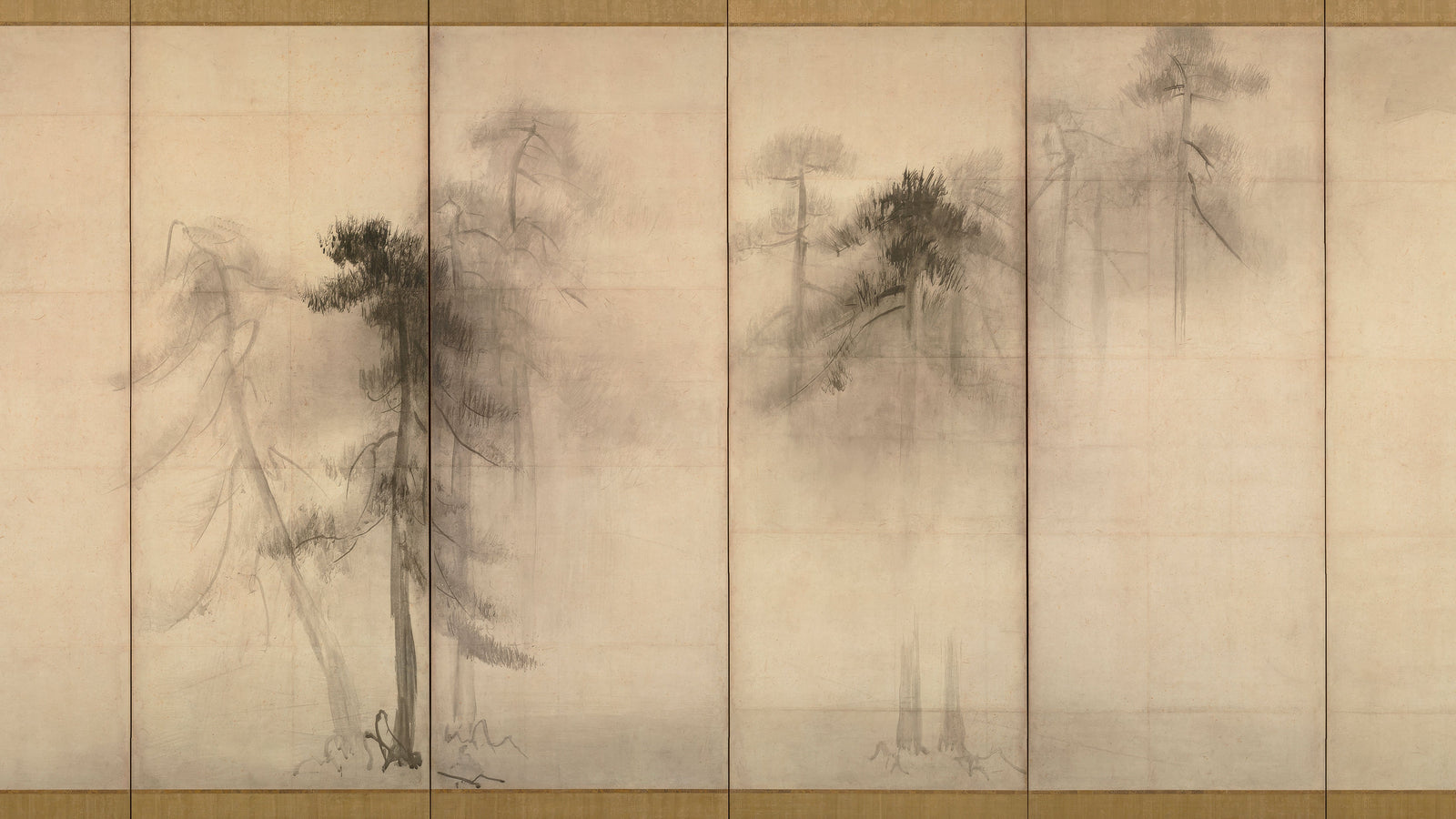
Quien afirmó ser sucesor de Sesshu fue Hasegawa Tohaku (1539–1610), quien pintó los biombos plegables Tesoro Nacional Pinos (Shorin-zu byobu)—considerados una de las obras maestras más grandes en la historia de la pintura de tinta aguada japonesa. También influenciada por Sesshu fue la escuela Kano, el grupo más grande de pintores activos en el Japón del período Edo, quienes estudiaron y absorbieron activamente la obra de Sesshu. Además, Kano Tan-yu (1602–1674), quien sirvió como el pintor oficial de más alto rango para el shogunato Edo y reinó en la cúspide del mundo del arte en ese momento, se dedicó particularmente a estudiar el estilo de Sesshu, ejerciendo una fuerte influencia en la pintura del período Edo en general. Muchos otros pintores japoneses importantes caen bajo la influencia de Sesshu también, incluyendo a Ogata Korin (1658–1716), conocido por su estilo brillante y decorativo; Sakai Hoitsu (1761–1828), quien perteneció a la escuela Rimpa siguiendo el linaje de Korin; e Ito Jakuchu (1716–1800), famoso por sus pinturas creativas de flora y fauna. Esta influencia ahora se extiende al extranjero y se sabe que ha proporcionado inspiración creativa al artista contemporáneo de renombre mundial nacido en Corea, Lee Ufan.

¿Un hecho extraño? Solo dos de los ocho tazones de matcha Tesoro Nacional son de fabricación japonesa
Hay un total de ocho tazones de té hechos para beber matcha durante la ceremonia del té que están designados como Tesoros Nacionales. De estos, cinco son importaciones hechas en China alrededor de los siglos XII a XIII, y uno es una importación hecha en la península coreana en el siglo XVI. Solo hay dos tazones de té de fabricación japonesa designados como Tesoros Nacionales, y ambos fueron producidos más tarde, en la segunda mitad del siglo XVI o después.
El hecho de que las importaciones representen la mayoría de los tazones de matcha Tesoro Nacional—tesoros de Japón—podría parecer contradictorio a primera vista. Sin embargo, esa percepción cambia si uno conoce la historia de los tazones de matcha en la ceremonia del té japonesa.
. La ceremonia del té nació del desarrollo del consumo de matcha, una costumbre que fue introducida desde China entre finales del siglo XII y principios del siglo XIV. Debido a esto, las herramientas utilizadas, incluyendo los tazones de matcha, fueron inicialmente importaciones de China. Estos fueron llamadoskaramono , o cerámicas chinas, y generalmente se caracterizaban por una apariencia brillante. Los tazones de té karamono designados como Tesoros Nacionales son todos altamente decorativos y continúan influyendo fuertemente en la cerámica japonesa hoy: elYohen Tenmoku Chawan , con manchas azules brillando contra un fondo negro; el Yuteki Tenmoku (Mancha de aceite)Chawan , donde innumerables manchas y brillo en el interior y exterior se asemejan al aceite flotando en el agua; y el Taihi Tenmoku (Esmalte de carey)Chawan

Tazón de té Yuteki Tenmoku, Museo de Cerámica Oriental, Osaka Estos tazones de té karamono lujosos fueron particularmente apreciados por los y su uso para beber matcha se convirtió en símbolo de estatus. Las reuniones de té—donde un anfitrión agasajaba a sus invitados con matcha—eran también eventos para que los participantes disfrutaran de la belleza de los karamono. De esta manera, los cuencos de té karamono desempeñaron un papel fundamental en el establecimiento de la cultura de la ceremonia del té. Además, se dice que en aquella época se fabricaban activamente productos que imitaban los karamono en las regiones centrales de Honshu, Seto y Mino , áreas productoras de cerámica representativas de Japón.
A finales del siglo XV, la ceremonia del té comenzó a extenderse más allá de la clase samurái hacia la vida cotidiana de las personas. Con esto nació el wabi-cha, una nueva forma de ceremonia del té que encontraba belleza en la simplicidad en lugar del lujo. En el wabi-cha se valoraban especialmente los cuencos de té llamados wamono (cerámicas japonesas), que, en contraste con los karamono, utilizaban la textura simple de la arcilla. También se valoraban los koraimono (cerámicas coreanas), que no se creaban como artículos de lujo, sino como recipientes utilitarios cotidianos en diversas partes de la península coreana. Los dos cuencos de té de fabricación japonesa designados como Tesoros Nacionales—el Shino Chawan y el Raku Chawan—son precisamente wamono, mientras que el cuenco importado restante, el Oido Chawan, es koraimono. Entre los cuencos de matcha wamono de fabricación japonesa, aquellos cocidos en la región de Mino, en particular, ejercieron una gran influencia sobre otras áreas de producción cerámica en Japón, al igual que los cuencos koraimono—fomentando estilos diversos en todo el país.

La ceremonia del té es un aspecto importante de la cultura japonesa que ha influido significativamente en la arquitectura japonesatradicional, el arte y la gastronomía—y los cuencos de matcha se encuentran entre los objetos que trazan con precisión un camino desde el nacimiento de la ceremonia del té hasta su desarrollo y evolución. Dado este contexto y la historia de la cerámica en Japón, el hecho de que muchos cuencos de té que alguna vez fueron importados estén designados como Tesoros Nacionales puede considerarse completamente razonable.
El sistema que previene la pérdida de habilidades avanzadas
Para recapitular, el título de Portadores de Propiedades Culturales Intangibles Importantes es prueba de que el Estado ha reconocido a un individuo como poseedor del más alto nivel de habilidad avanzada en artes escénicas tradicionales o técnicas artesanales.
Este sistema se institucionalizó para "habilidades del más alto nivel que podrían extinguirse si no se hace nada, con el objetivo de que mientras los portadores aún vivan estas habilidades puedan protegerse y transmitirse a las generaciones futuras". Los designados individuales reciben 2 millones de yenes anuales como subsidio para perfeccionar sus habilidades y formar sucesores.
Por razones presupuestarias, el número de designados individuales se limitó a 116. Sin embargo, se ha decidido que a partir de 2026 se añadirán hasta 10 más. Además de los campos existentes de artes escénicas y artesanía, el alcance se ampliará para incluir la "cultura de la vida cotidiana", incluyendo toji (maestros cerveceros de sake), chefs de la cocina de Kioto (Kyo-ryori) cultivada a lo largo de la larga historia de Kioto, artesanos de la fabricación de té japonés, artistas de ikebana y calígrafos.

Como puede entenderse a partir del propósito original del sistema, una designación de Portador de Propiedad Cultural Intangible Importante expira automáticamente al fallecer el individuo. Aunque el mencionado pintor de tinta Sesshu es una figura prominente con el más alto nivel de evaluación en la historia del arte japonés y se incluye invariablemente en los libros de texto de historia, él—como persona fallecida—nunca se convertirá en un "Tesoro Nacional Viviente".
Obras de Portadores de Propiedades Culturales Intangibles Importantes disponibles en MUSUBI KILN
Entre las piezas de MUSUBI KILN se encuentran algunas realizadas por Portadores de Propiedades Culturales Intangibles Importantes. Concretamente, se trata de obras de Yoshita Minori y Nakada Kazuo, artistas ceramistas de Kutani ware, uno de los estilos cerámicos representativos de Japón.
Nacido en 1932, Yoshita es una figura destacada en la técnica yuri-kinsai (hoja de oro bajo cubierta). Esta técnica consiste en aplicar patrones hechos de hoja de oro cortada sobre la superficie de un recipiente que ha sido coloreado con pigmento, luego cubrir toda la pieza con un esmalte transparente incoloro y brillante antes de la cocción. La belleza elegante y suave creada por delicados motivos de flores y aves en hoja de oro sobre colores de fondo profundos es el encanto de su yuri-kinsai.


Por su parte, Nakada, nacido en 1949, es el creador y único poseedor de la técnica yuri-ginsai (hoja de plata bajo cubierta). Utiliza hoja de plata, que en contraste con el brillo del oro tiene una impresión limpia y refinada, para crear patrones sobre la superficie del recipiente, luego aplica un esmalte transparente incoloro o de color pálido de su propia formulación antes de la cocción. La manera en que diversos patrones, que parecen hundirse bajo la superficie, se observan a través del esmalte crea una belleza única e incomparable.


Como la "sucesión de habilidades" es uno de los objetivos principales del sistema de Portadores de Propiedades Culturales Intangibles Importantes, se requiere que los individuos designados tengan un historial y disposición para guiar y formar sucesores. Sin embargo, las habilidades superiores y el poder expresivo tanto de Yoshita como de Nakada son únicos; incluso si nacen sucesores en el futuro, es poco probable que se creen obras idénticas a las suyas. Esperamos que nuestros lectores aprovechen esta oportunidad para ver por sí mismos cómo son realmente las obras de los Portadores de Propiedades Culturales Intangibles Importantes.
Ver colección de Yoshita Minori
En Japón, una película de 2025 titulada Kokuho, que significa "Tesoro Nacional", se convirtió en un éxito sin precedentes. Ambientada en el mundo del teatro tradicional Kabuki, retrata la vida turbulenta de un hombre que, a pesar de no provenir de una familia multigeneracional de actores de Kabuki como la mayoría, ingresa al mundo por casualidad, se distingue gradualmente y finalmente asciende hasta convertirse en Tesoro Nacional Viviente. La película está programada para comenzar a proyectarse en Estados Unidos en febrero de 2026 y según se informa ya se ha estrenado secuencialmente en varios países de Asia y Europa.
Esta obra es material introductorio perfecto para aprender más sobre qué es un Portador de Propiedad Cultural Intangible Importante. También es una película ideal para conocer el onnagata—un aspecto único del Kabuki donde actores masculinos utilizan diversas técnicas para interpretar brillantemente papeles femeninos.
Para quienes estén interesados, recomiendo encarecidamente ver la película Kokuho junto con las obras de Yoshita Minori y Nakada Kazuo. A través de ellas, seguramente podrán percibir el profundo atractivo de la cultura japonesa.
Stay close to the craft
Now and then, a quiet letter — new stories, seasonal notes, and the hands behind the work.
Una guía sobre las artes escénicas tradicionales japonesas: Noh y Kabuki
Aprende sobre Noh y Kabuki, las artes escénicas tradicionales de Japón, con nuestra guía…
Explorando las profundidades sutiles: El arte del yugen en la cultura japonesa
Descubra Yugen, un valor arraigado en la cultura y las artes japonesas que celebra…
Tanabata: El Festival de las Estrellas de Japón, Deseos y Tradición
Conozca a Orihime y Hikoboshi detrás del Tanabata japonés, y descubra sus deseos en…
Leave a comment