

Copa de sake auspiciosa Akae Guinomi
Ships from Japan · Free shipping on orders over $250 USD
Estimated Shipping Widget will be displayed here!
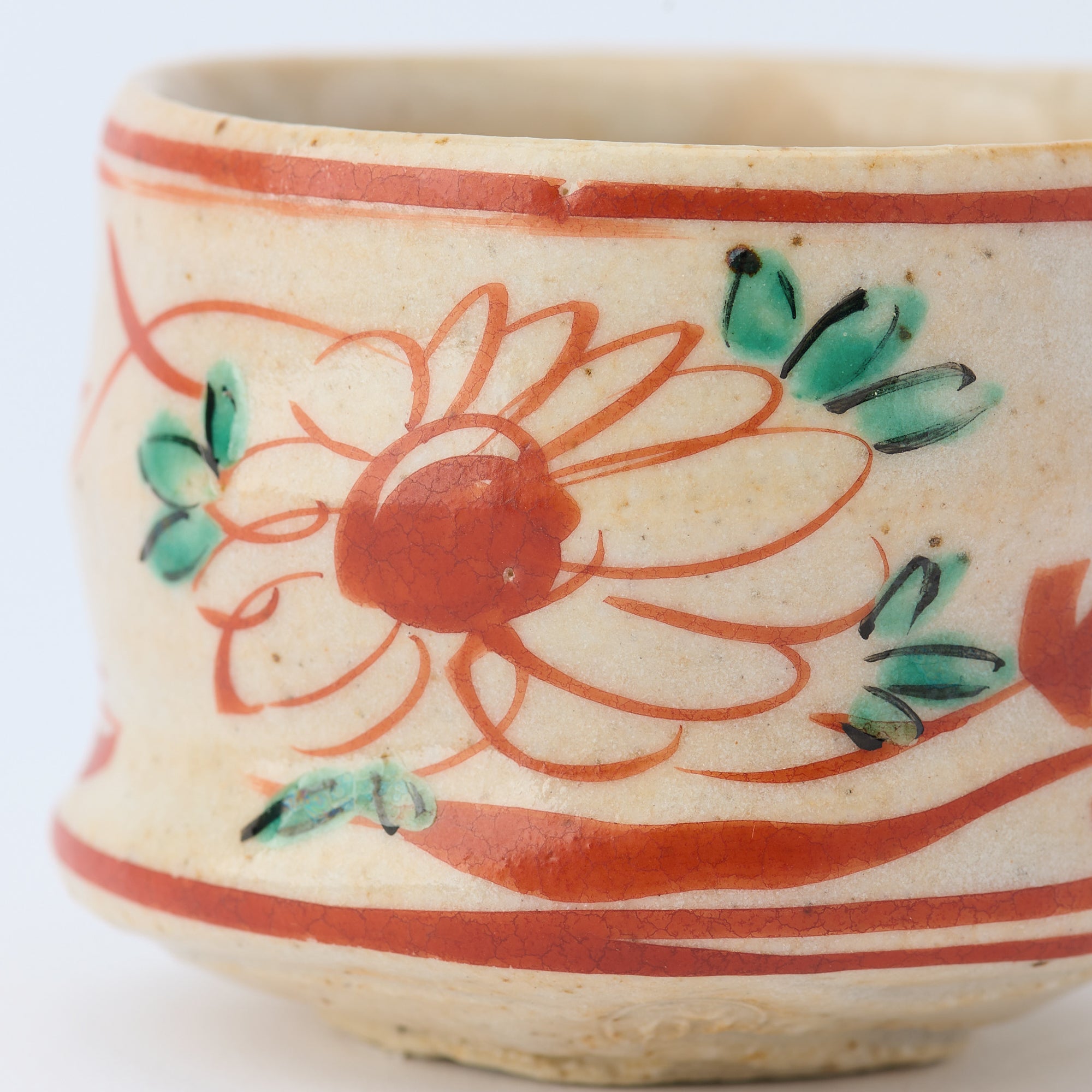
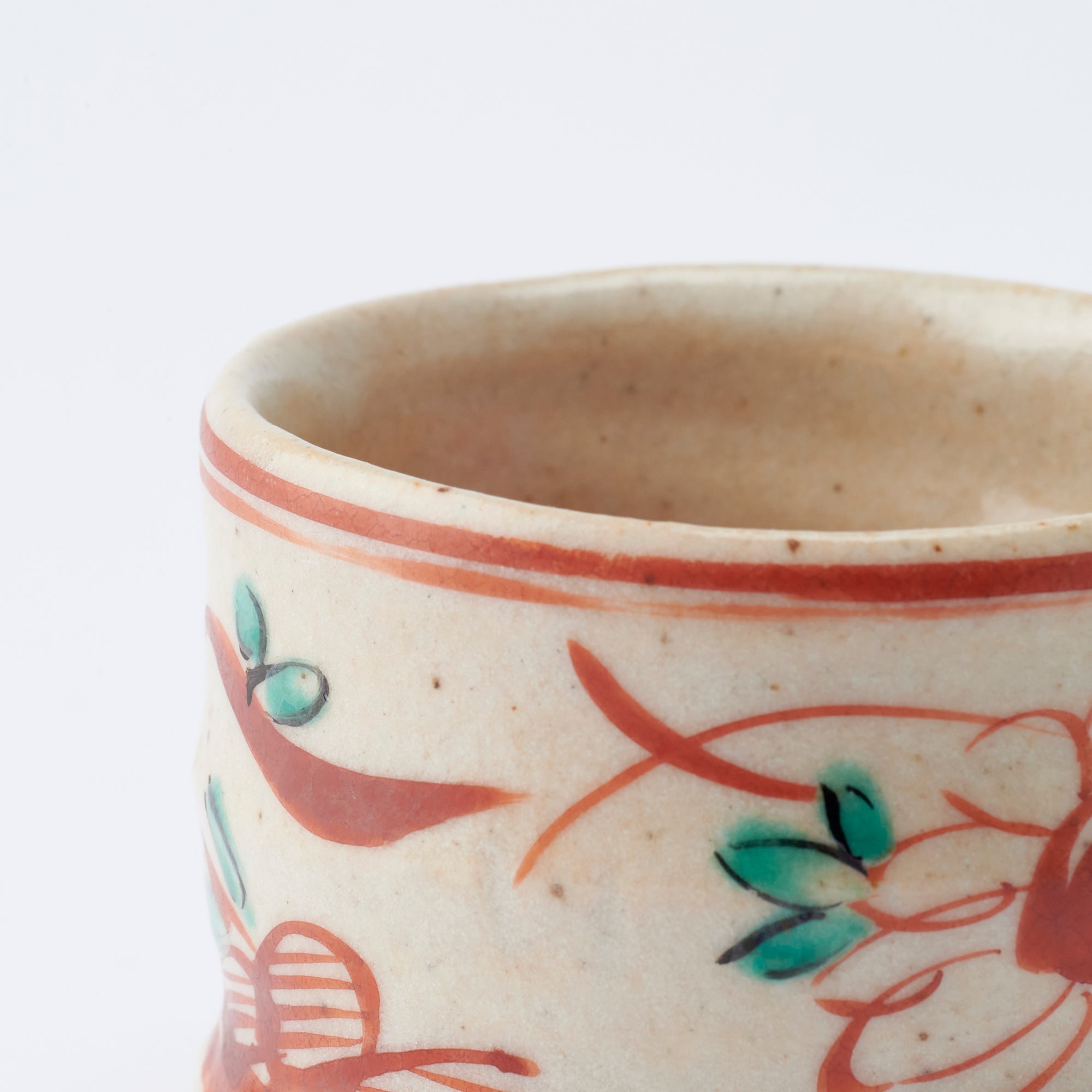
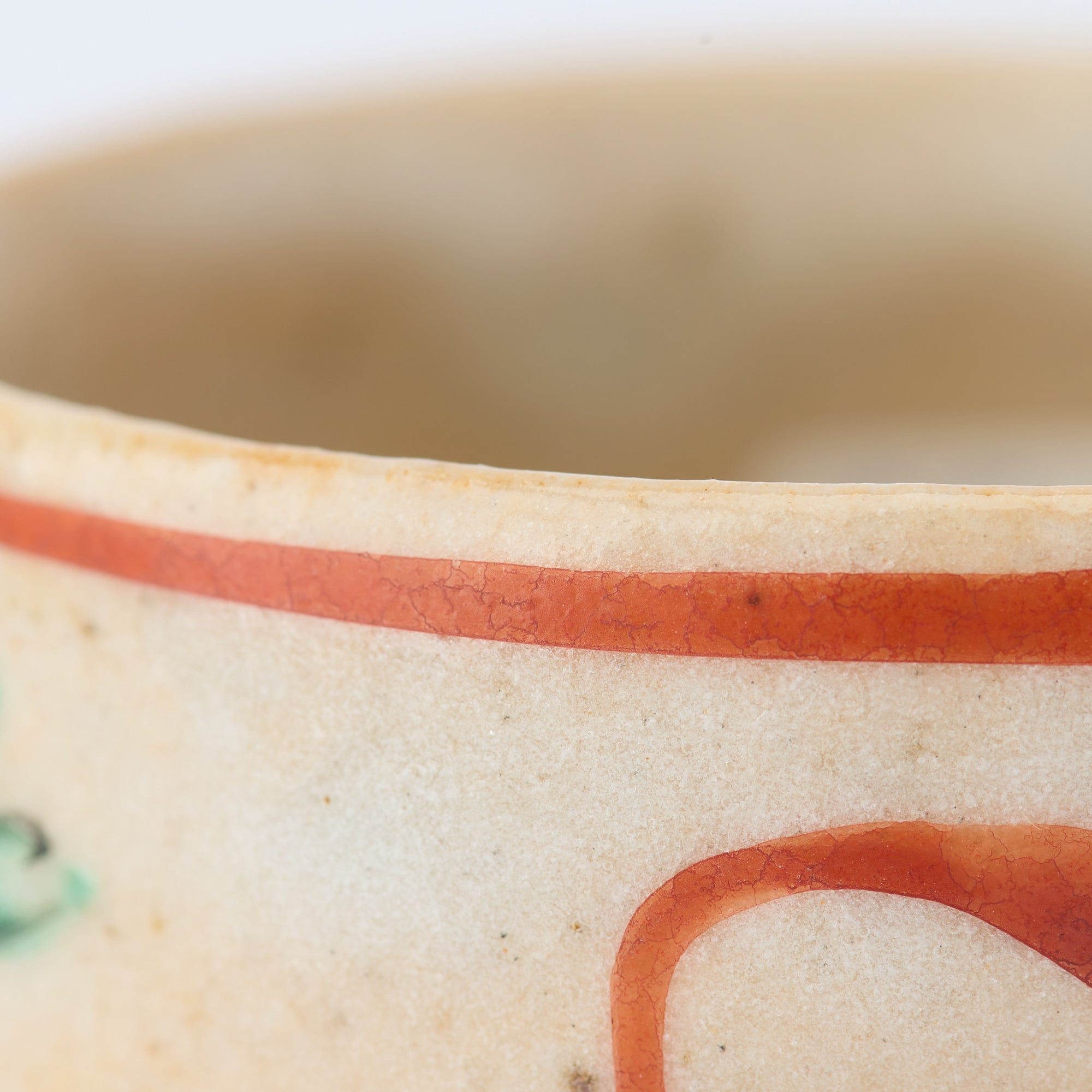
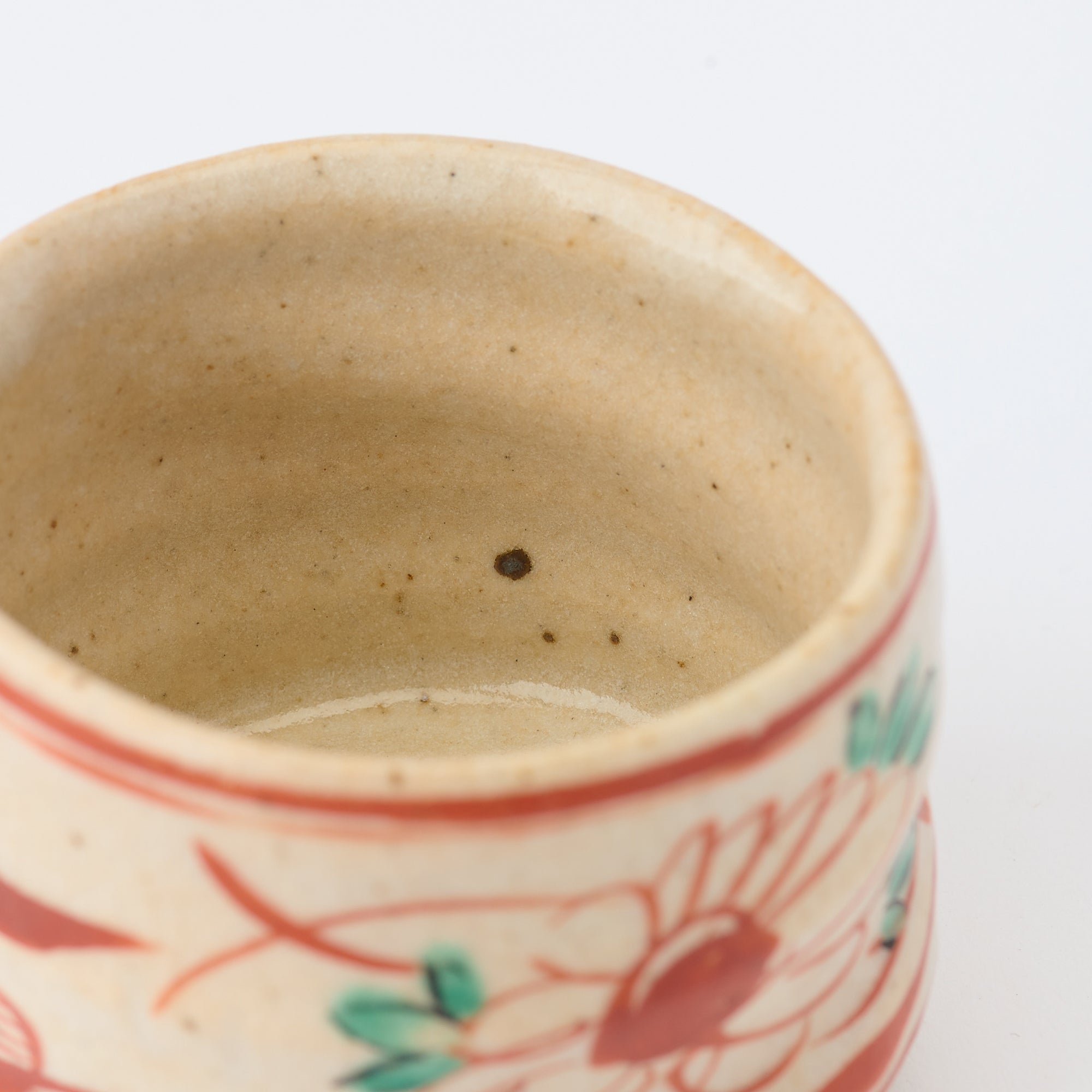
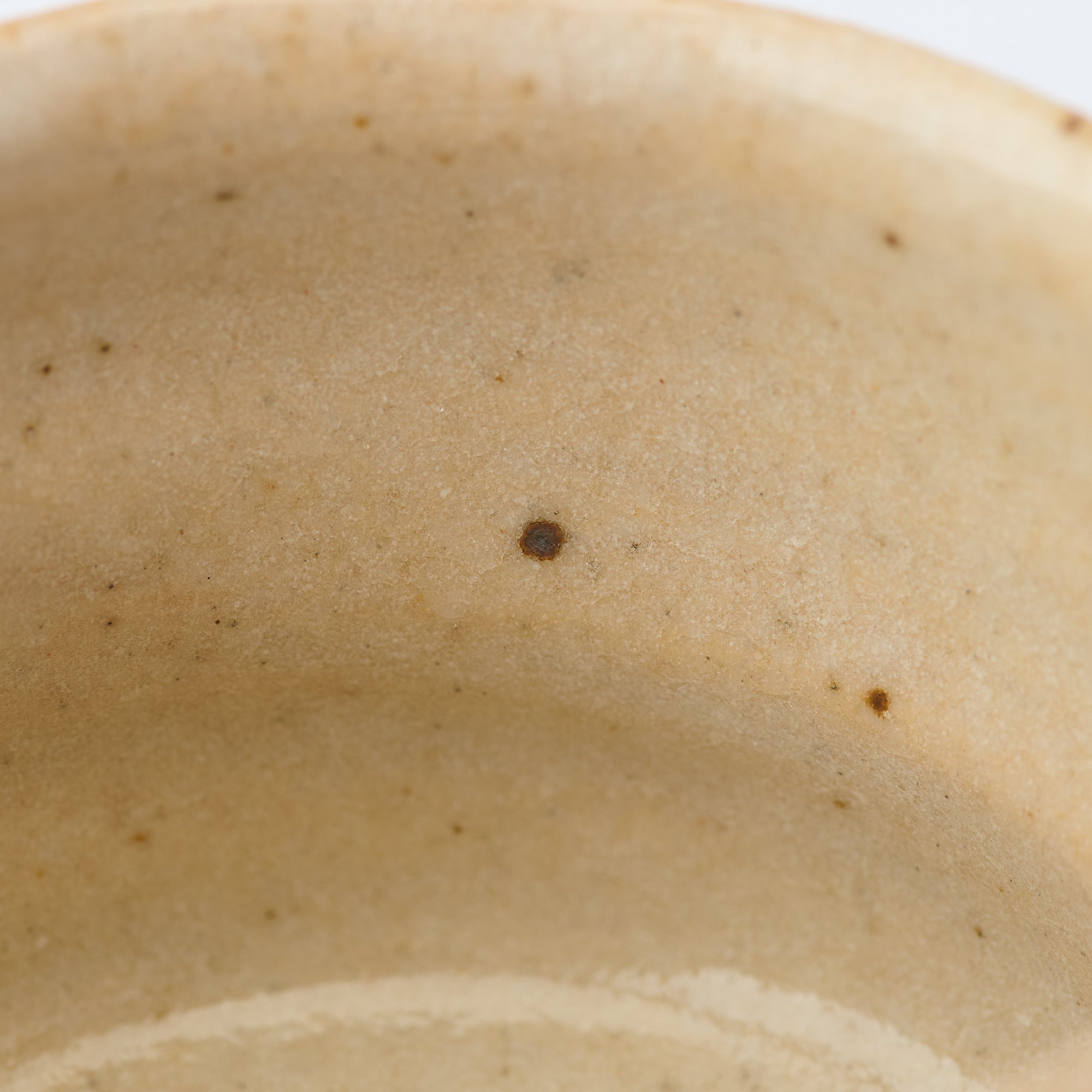
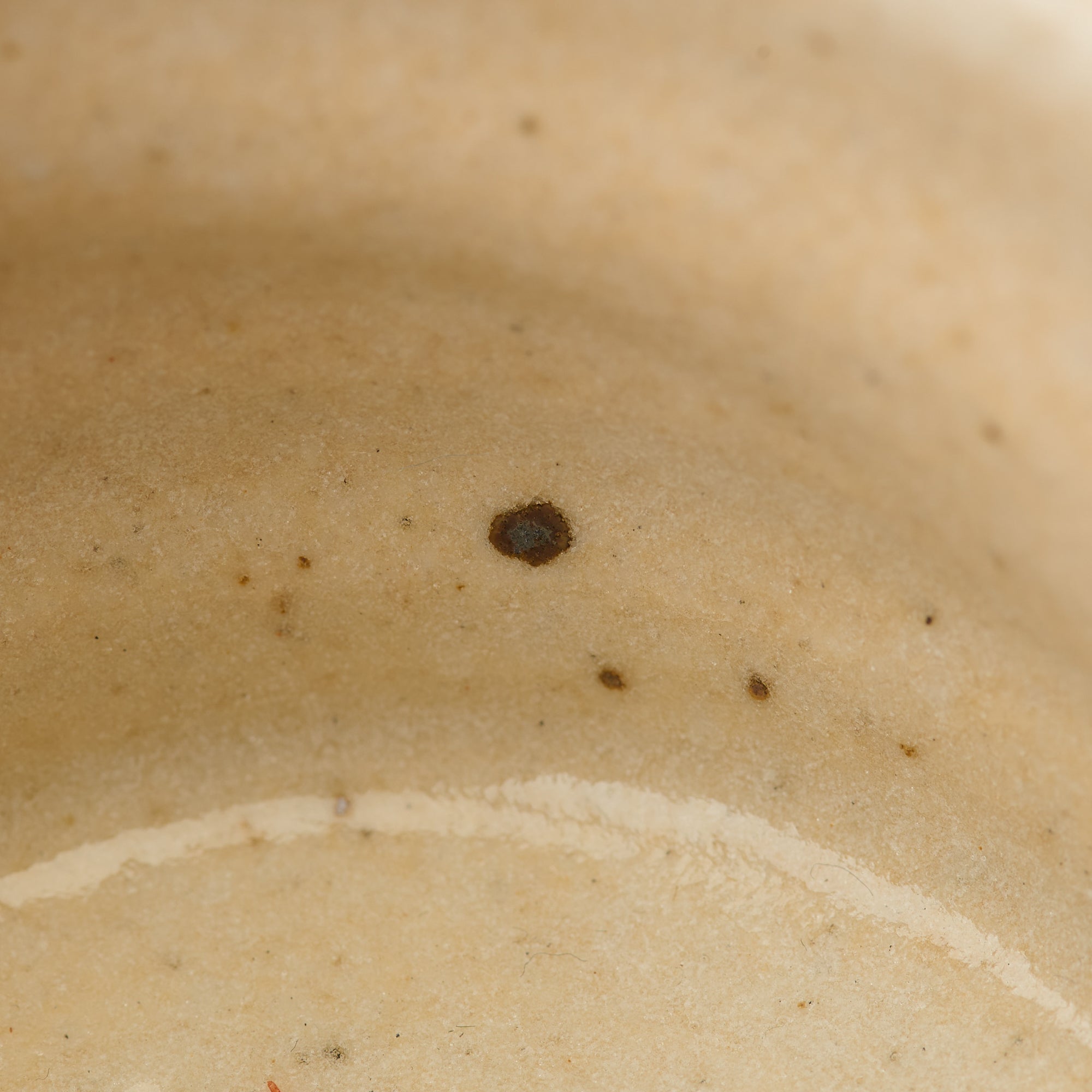
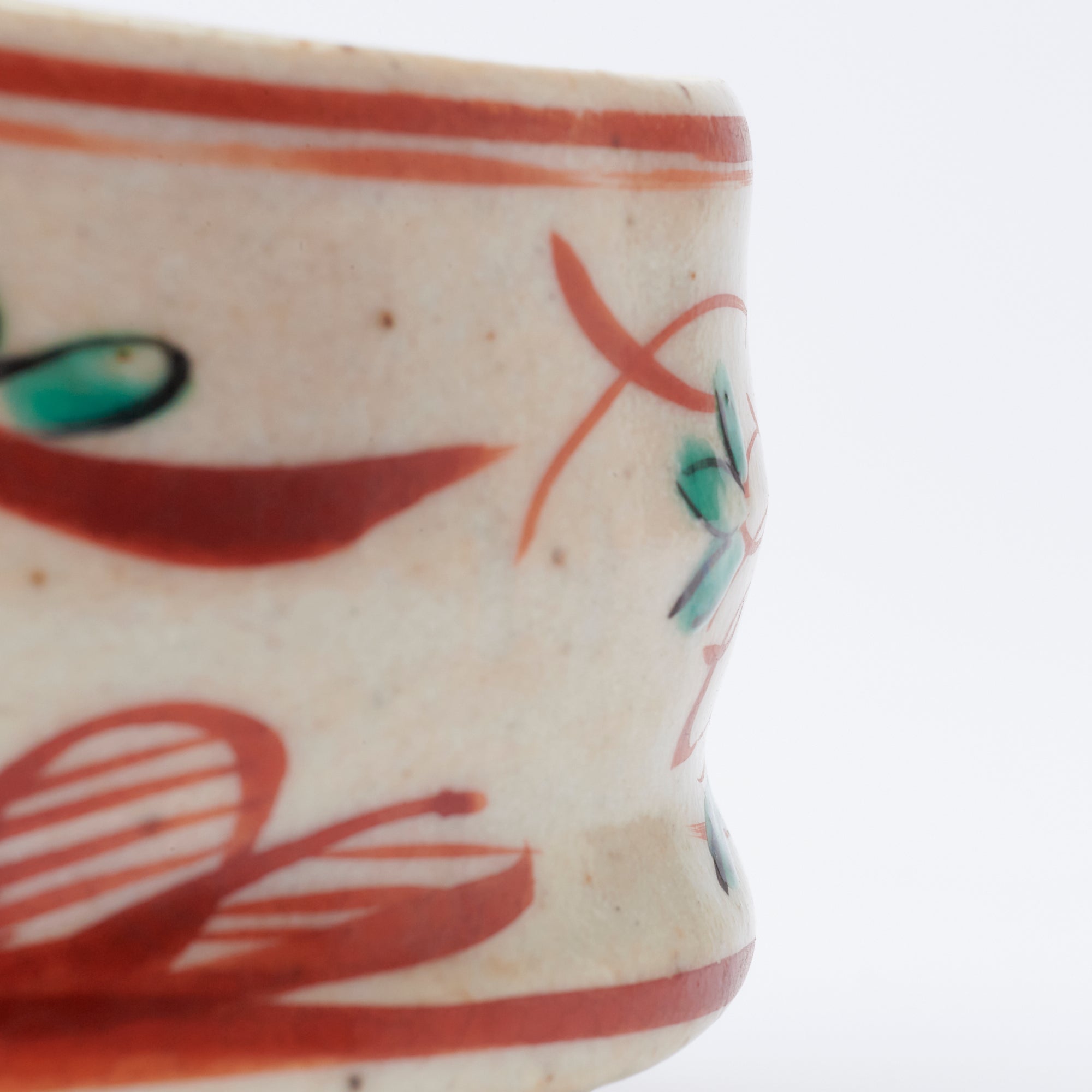
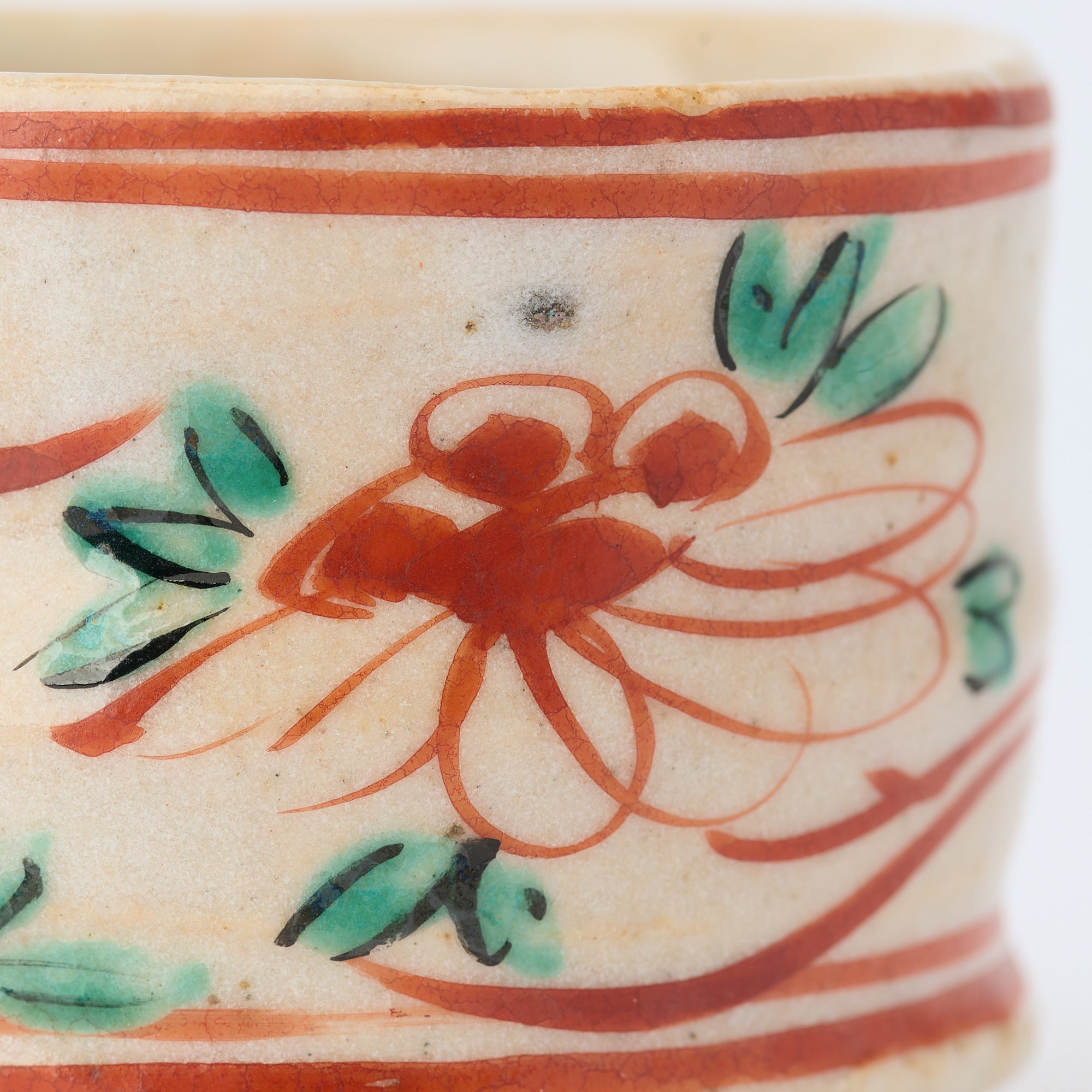
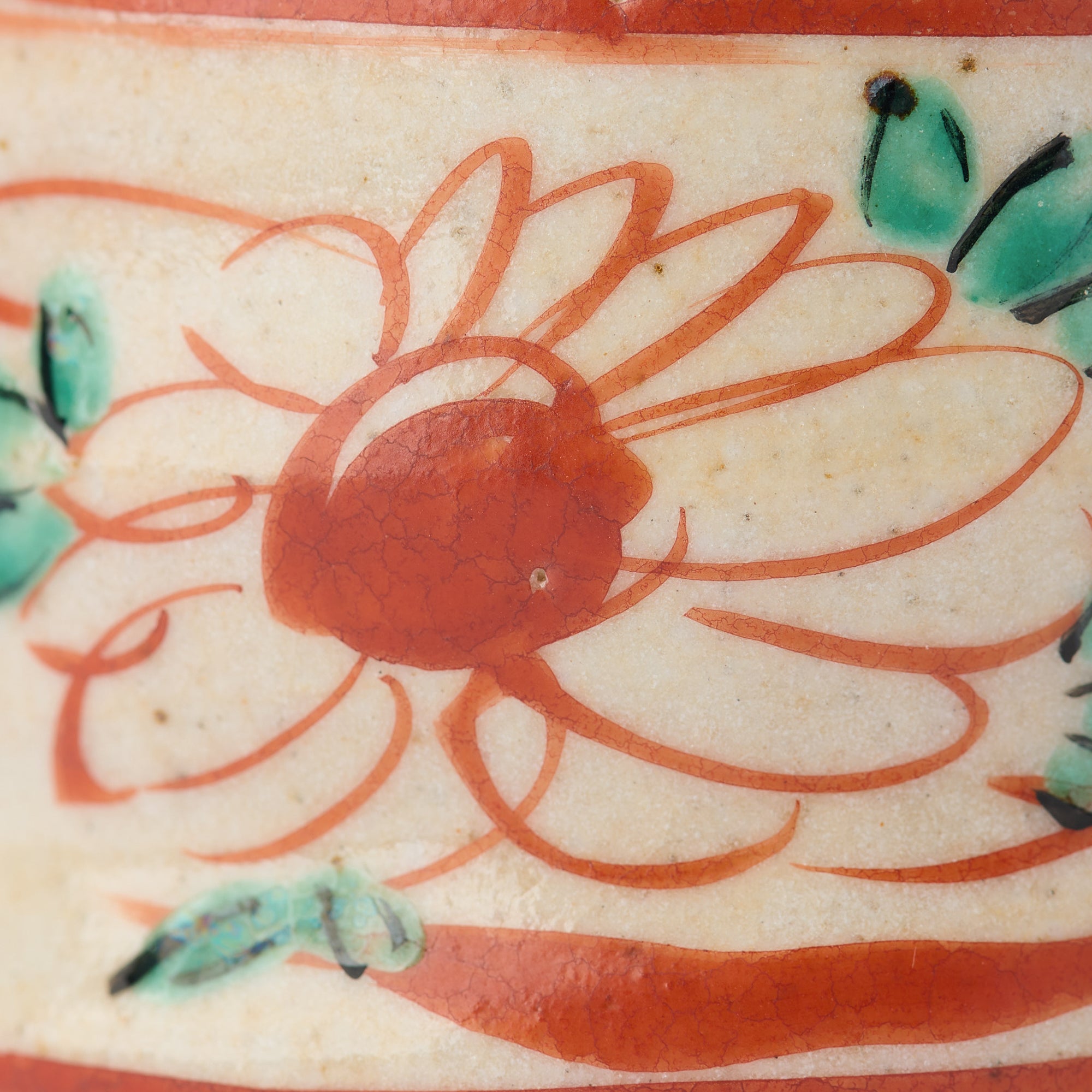
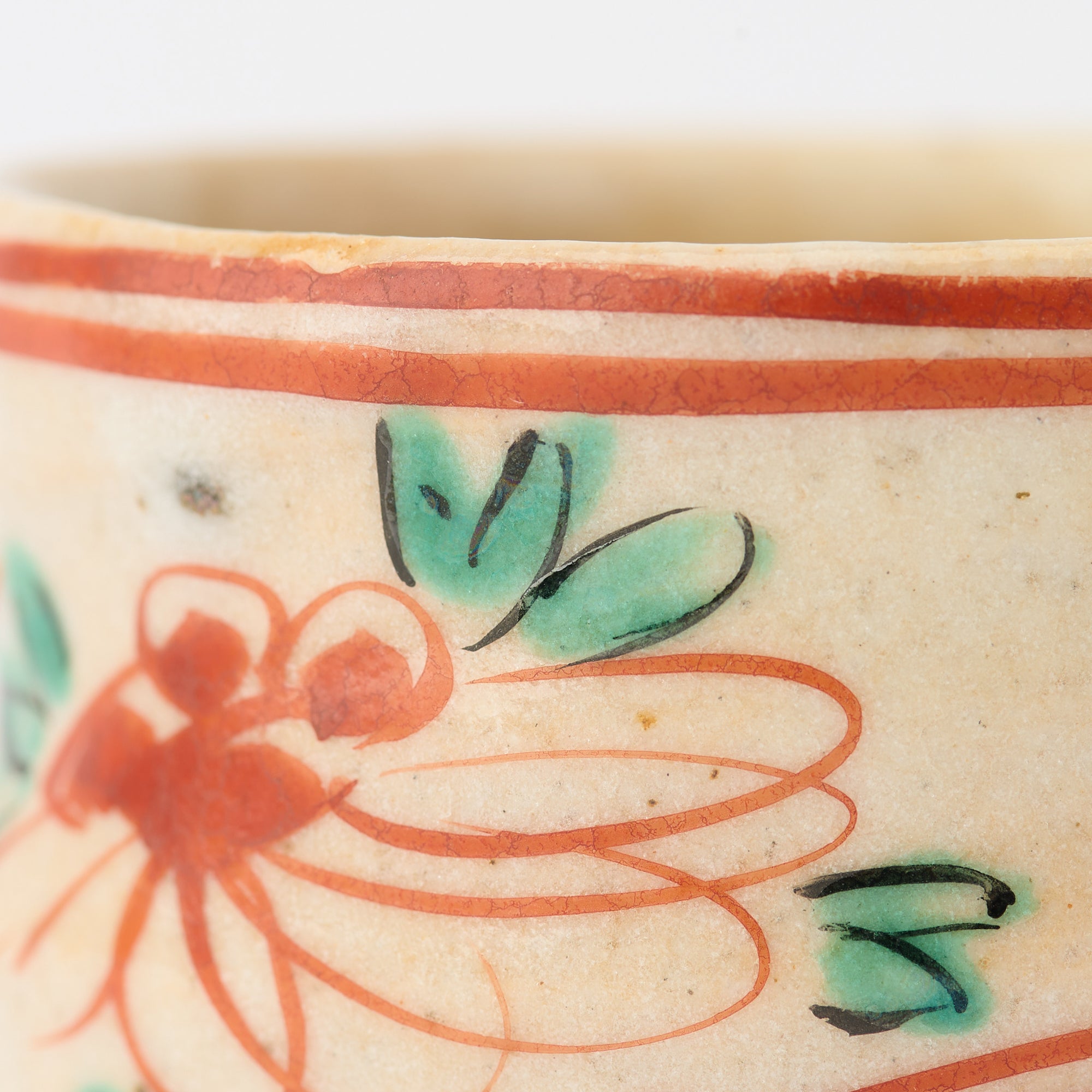
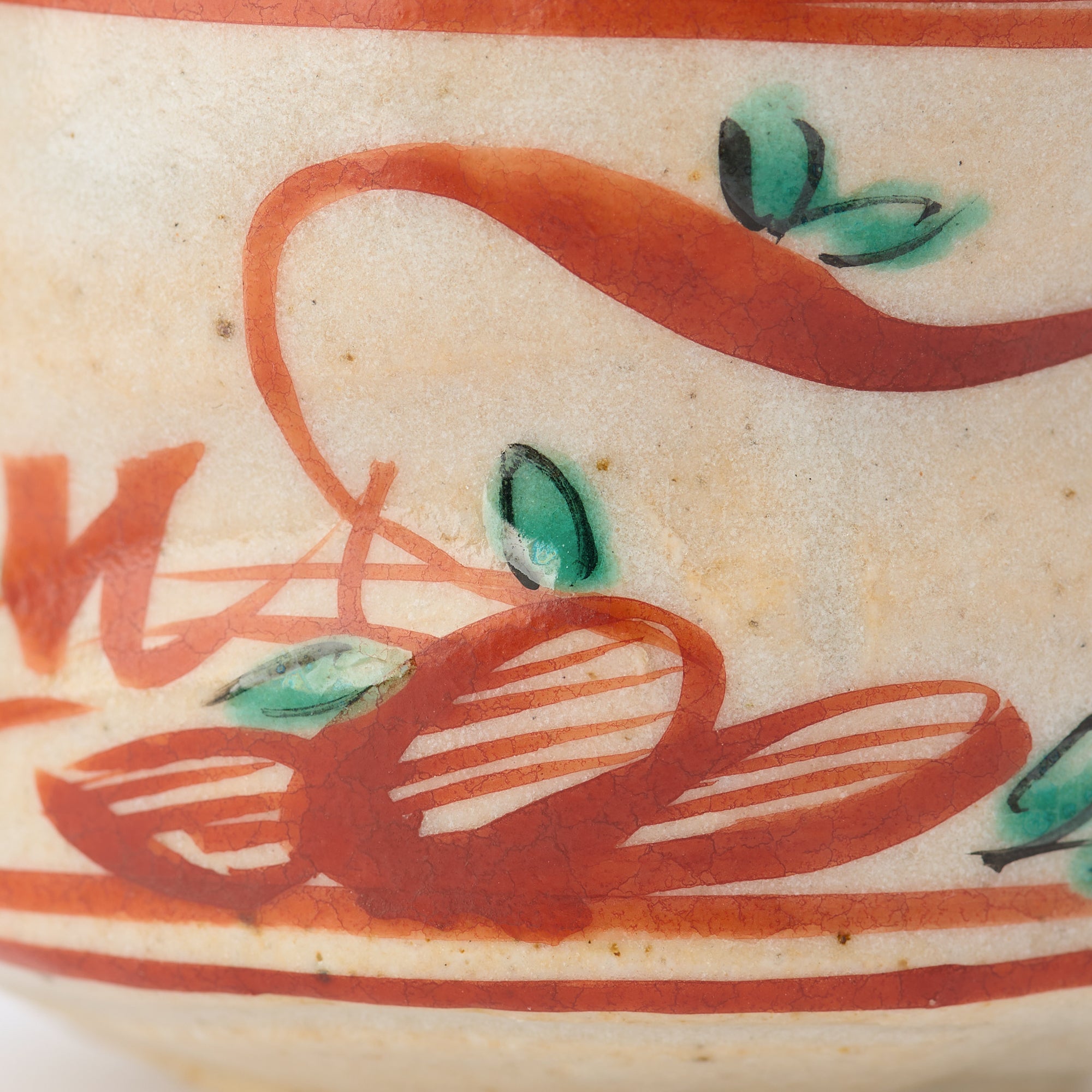
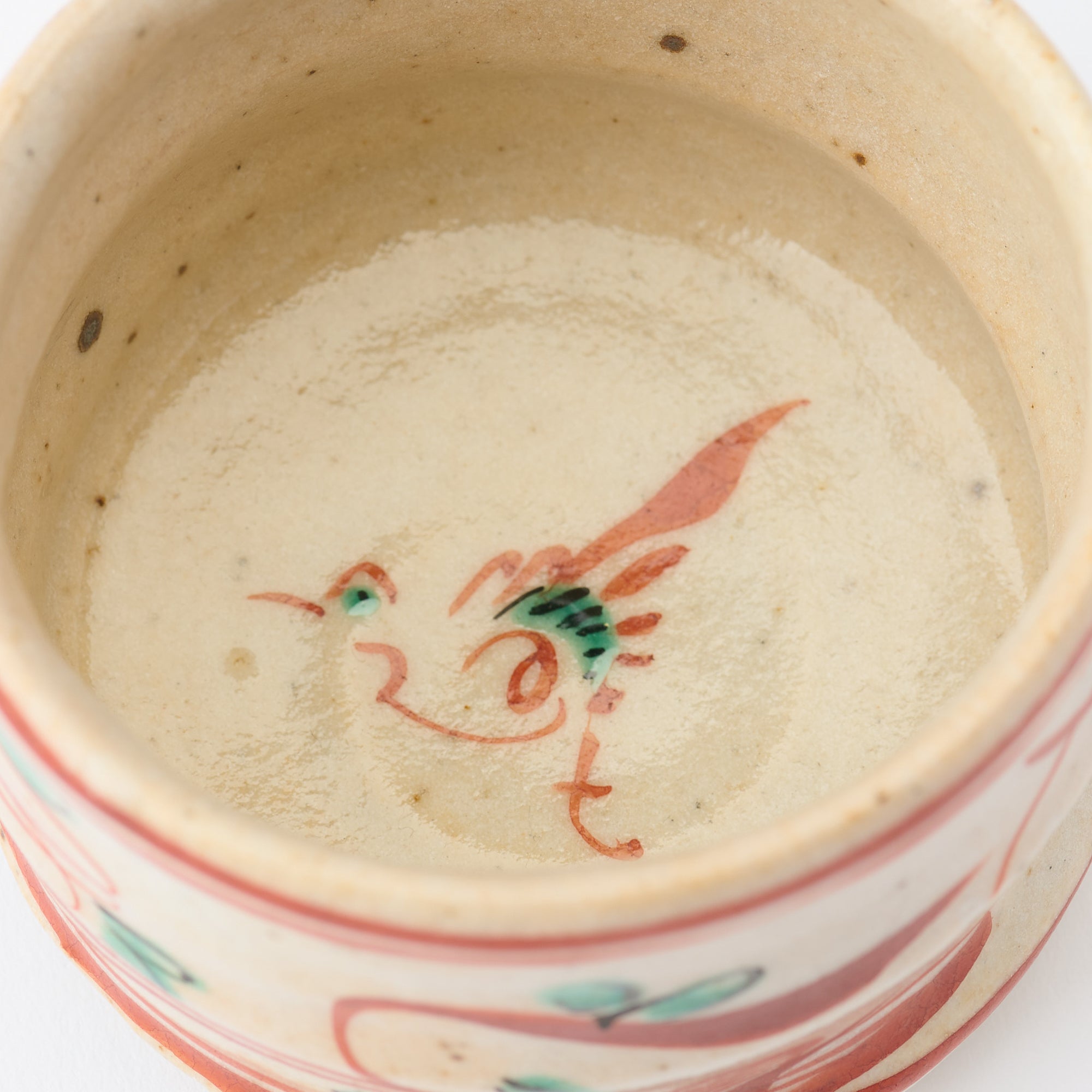
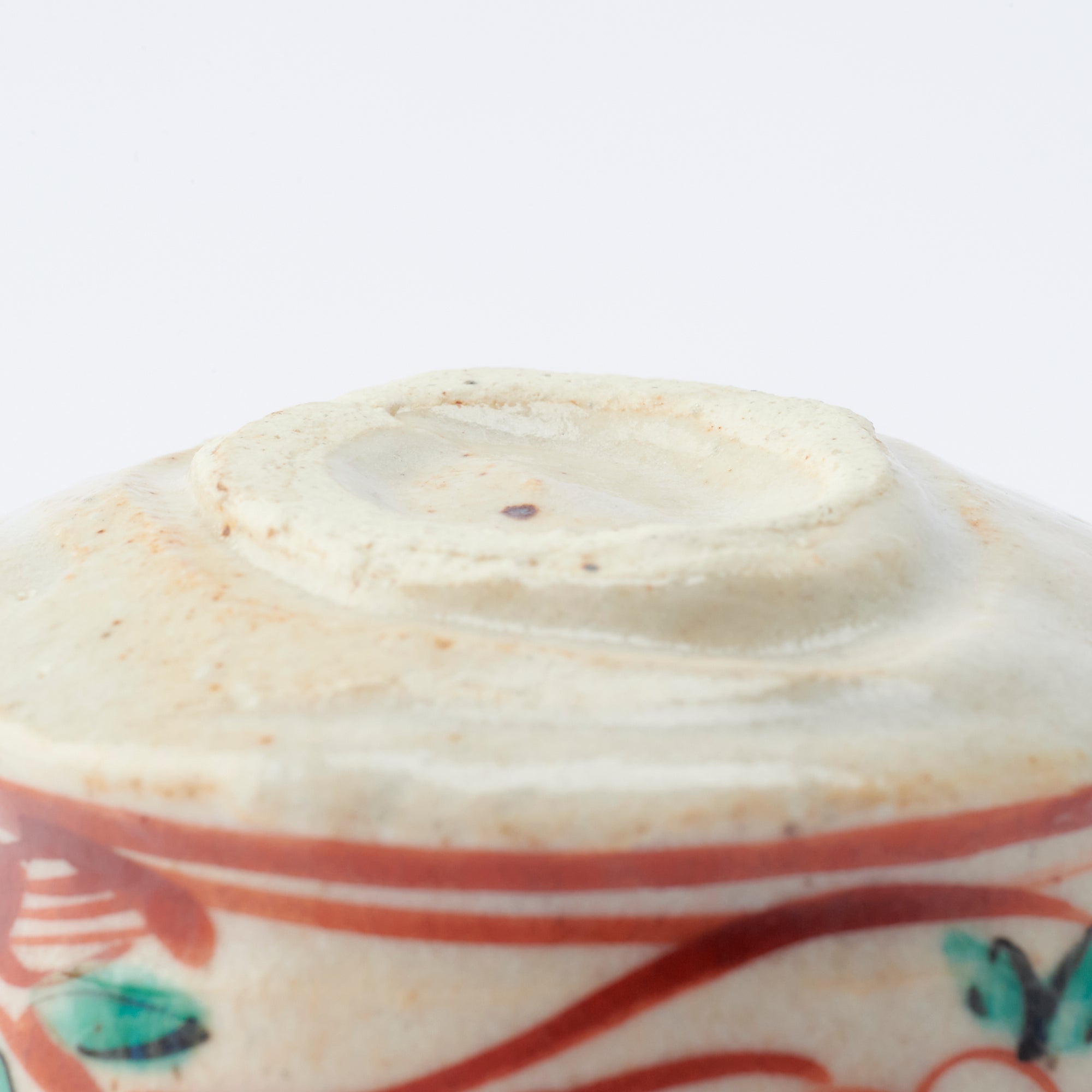
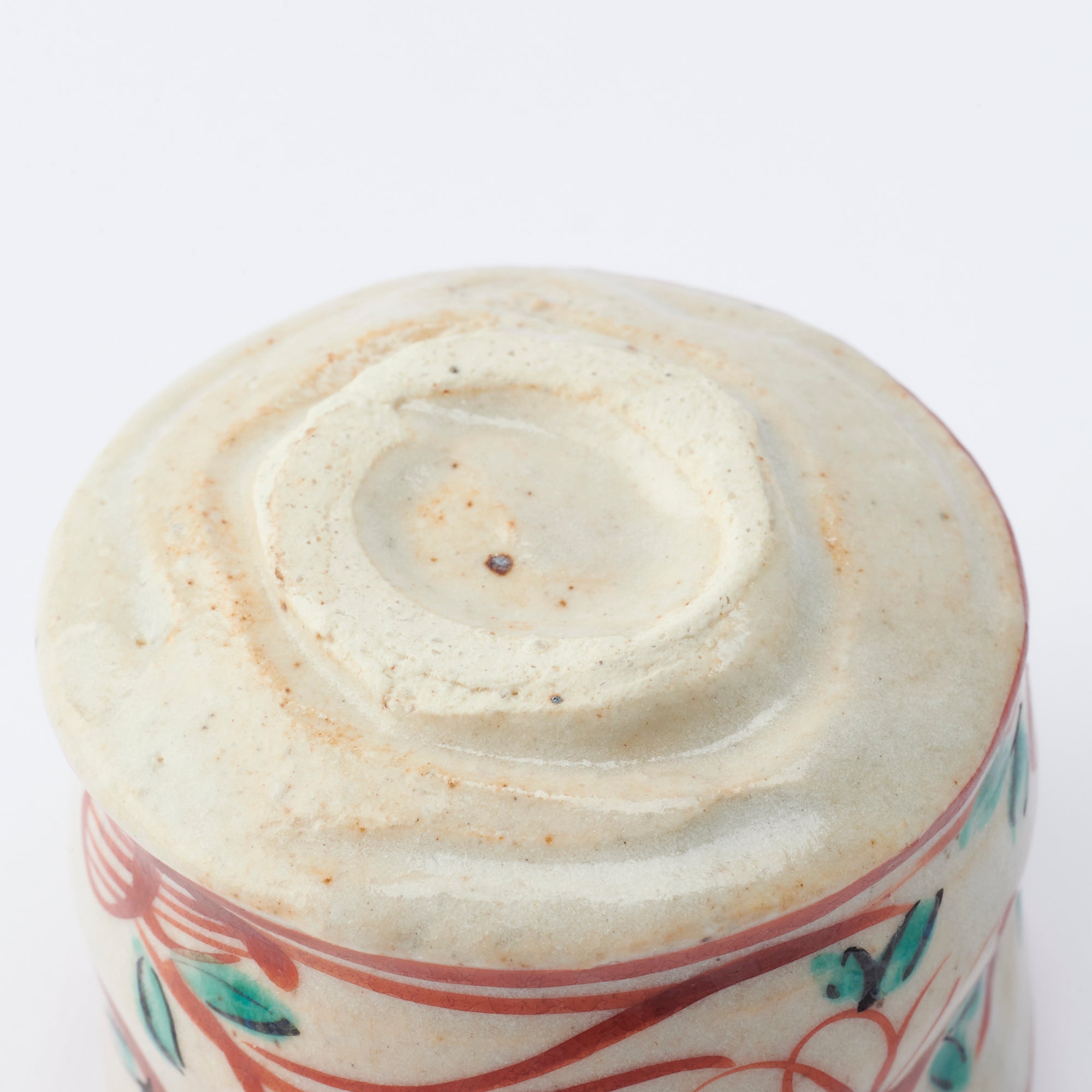
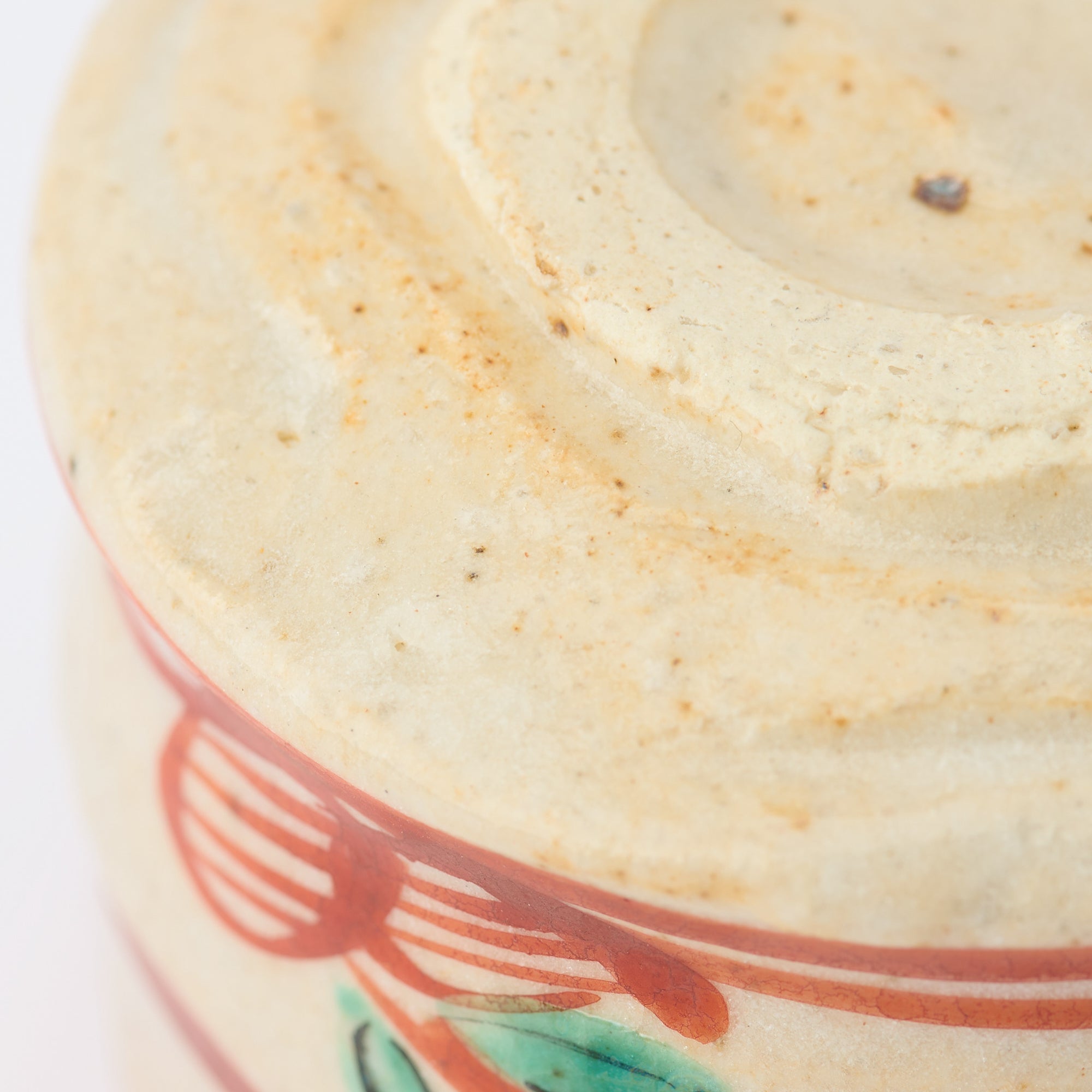
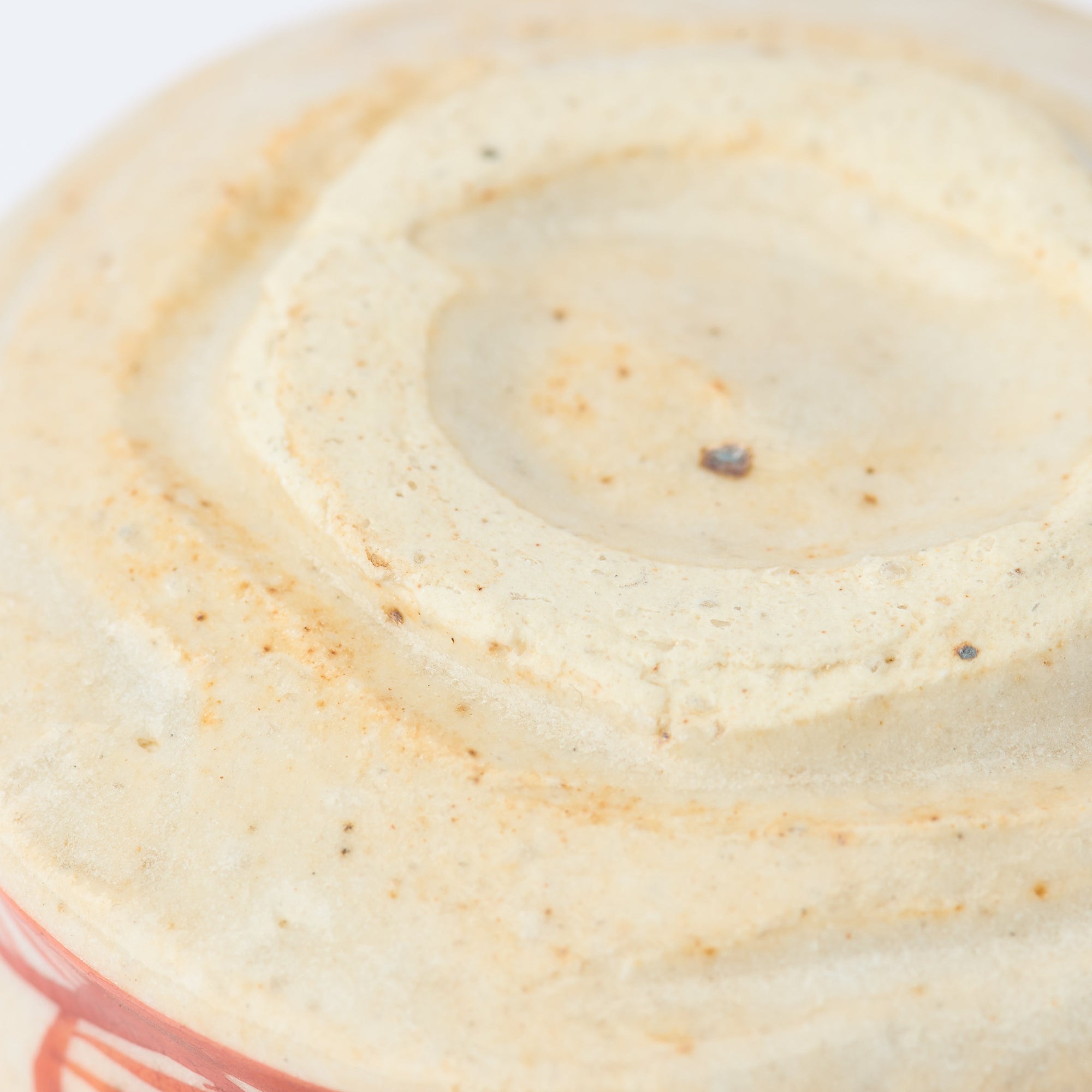
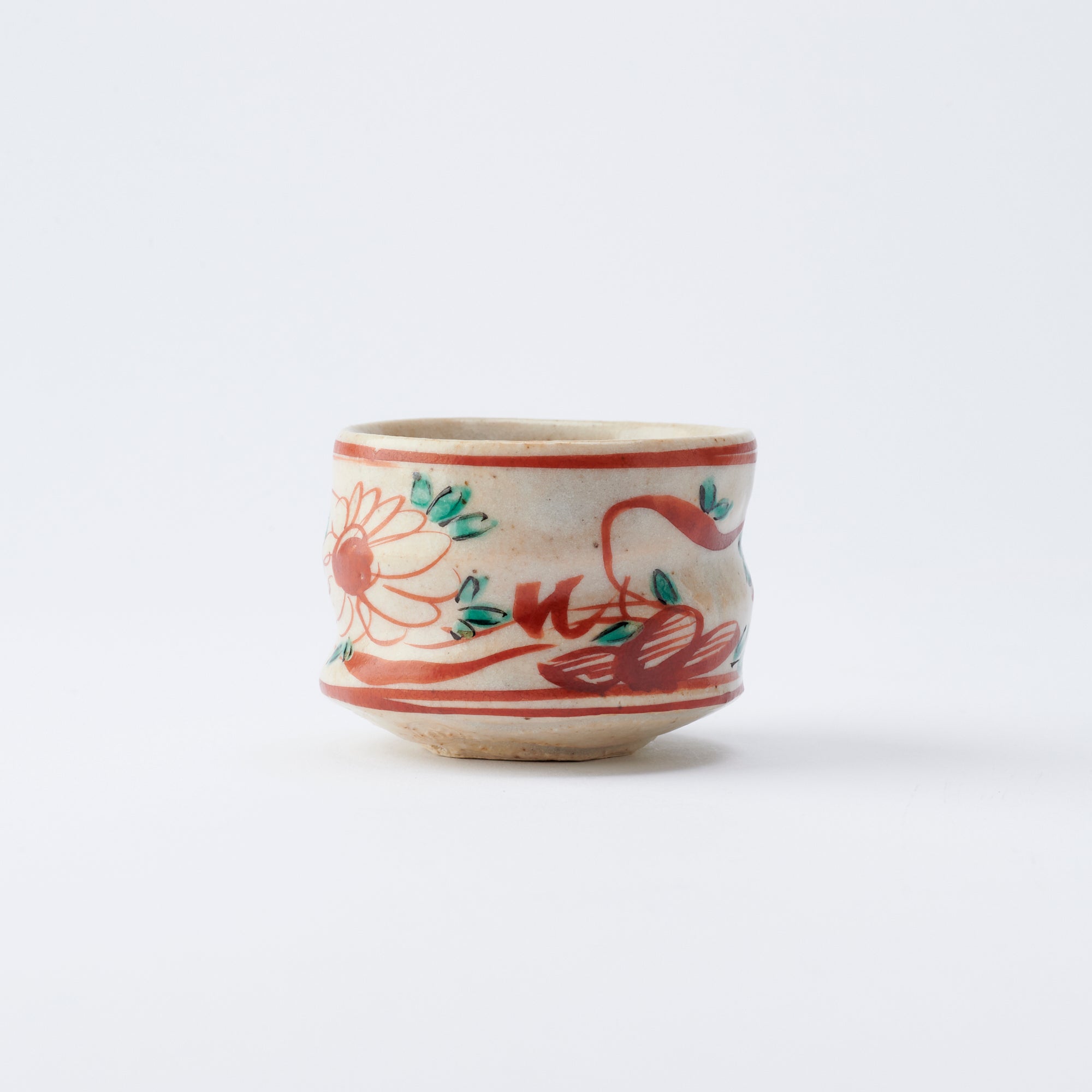
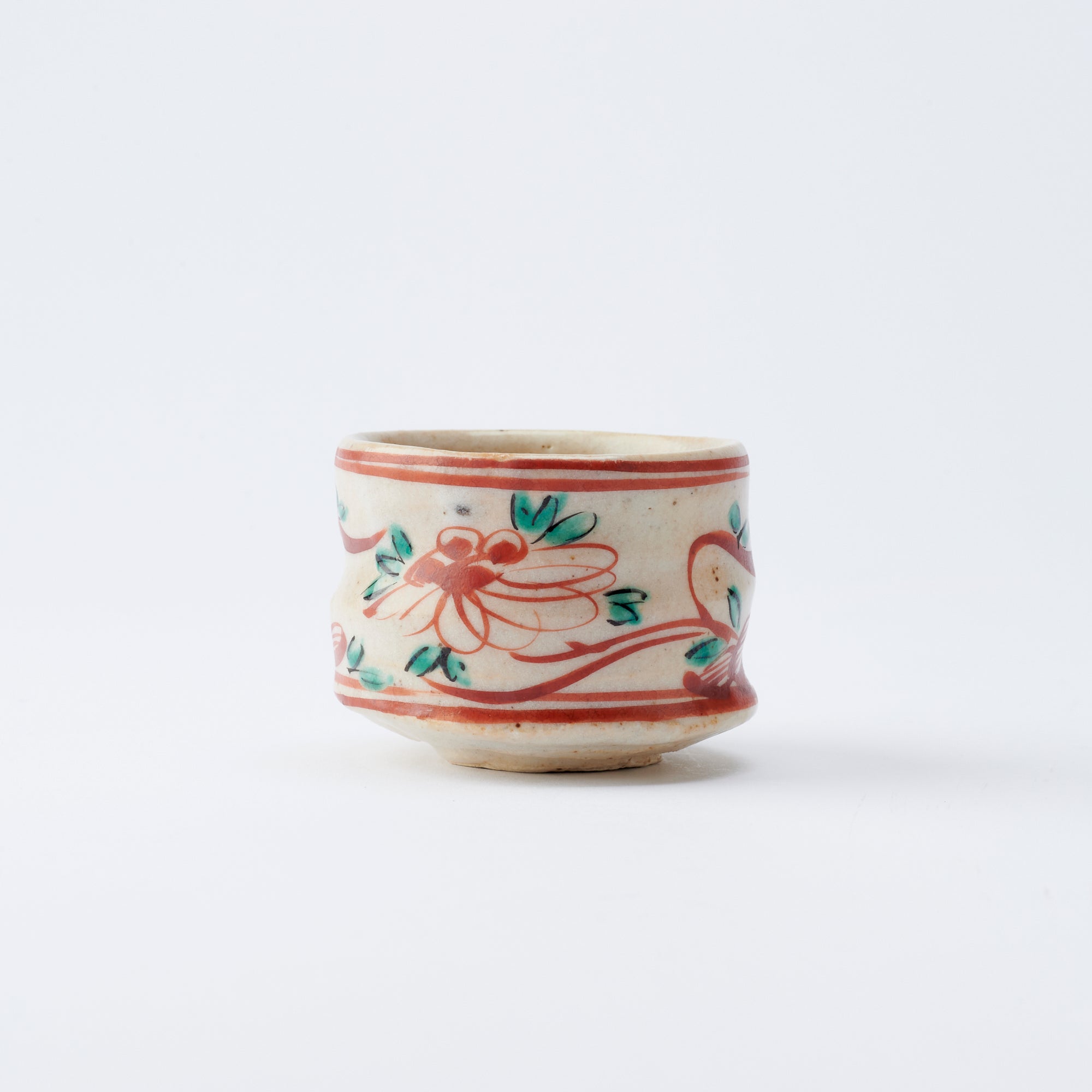
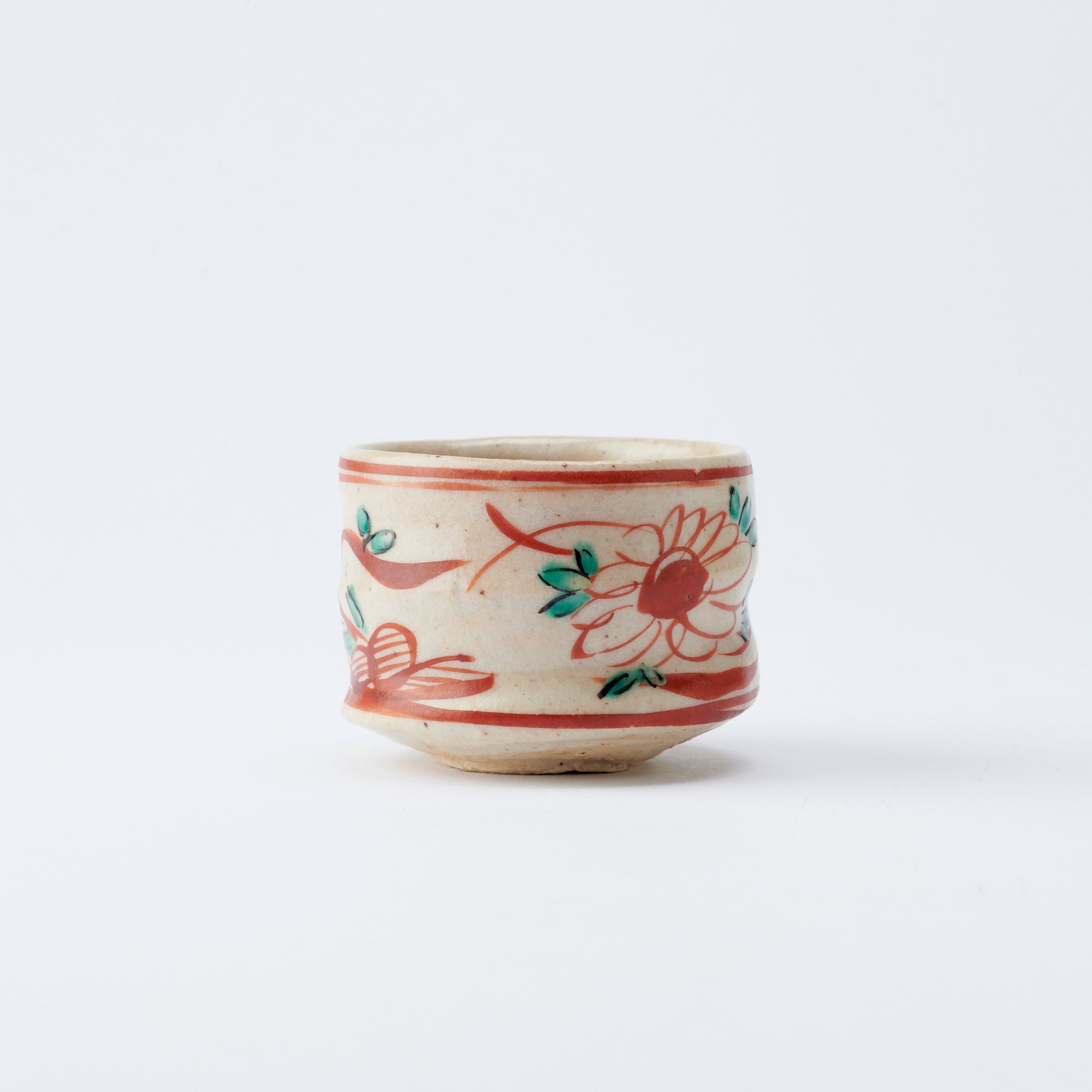
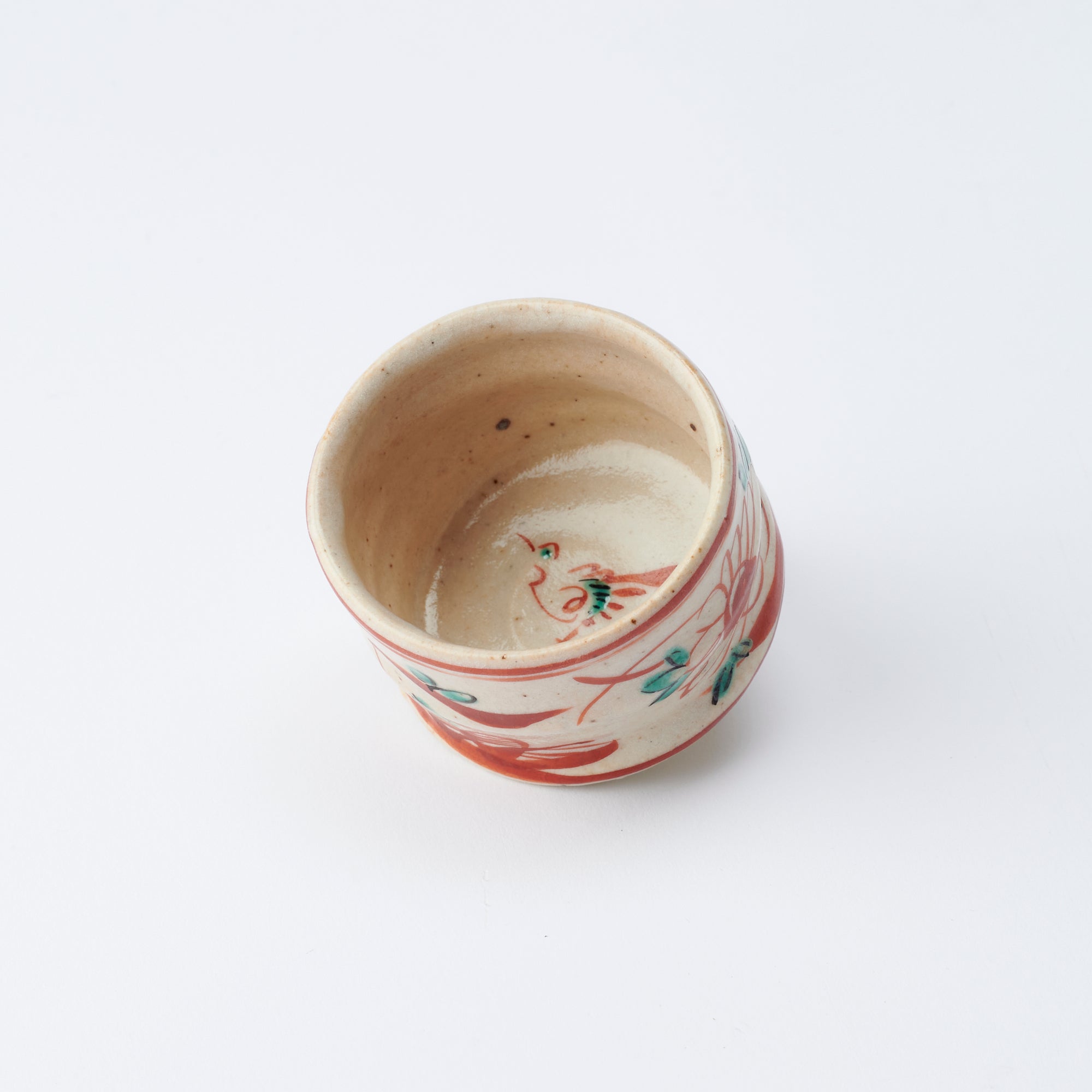
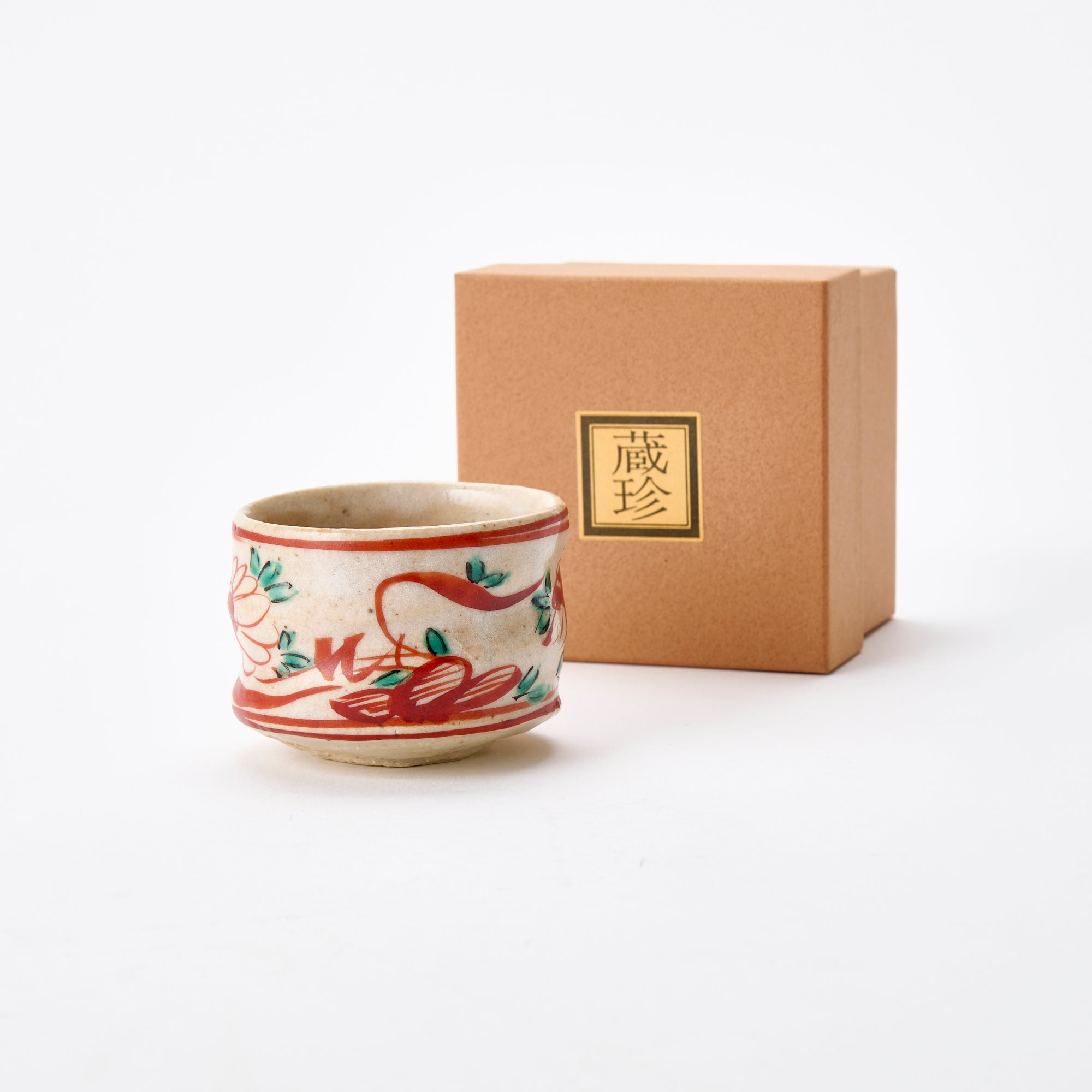
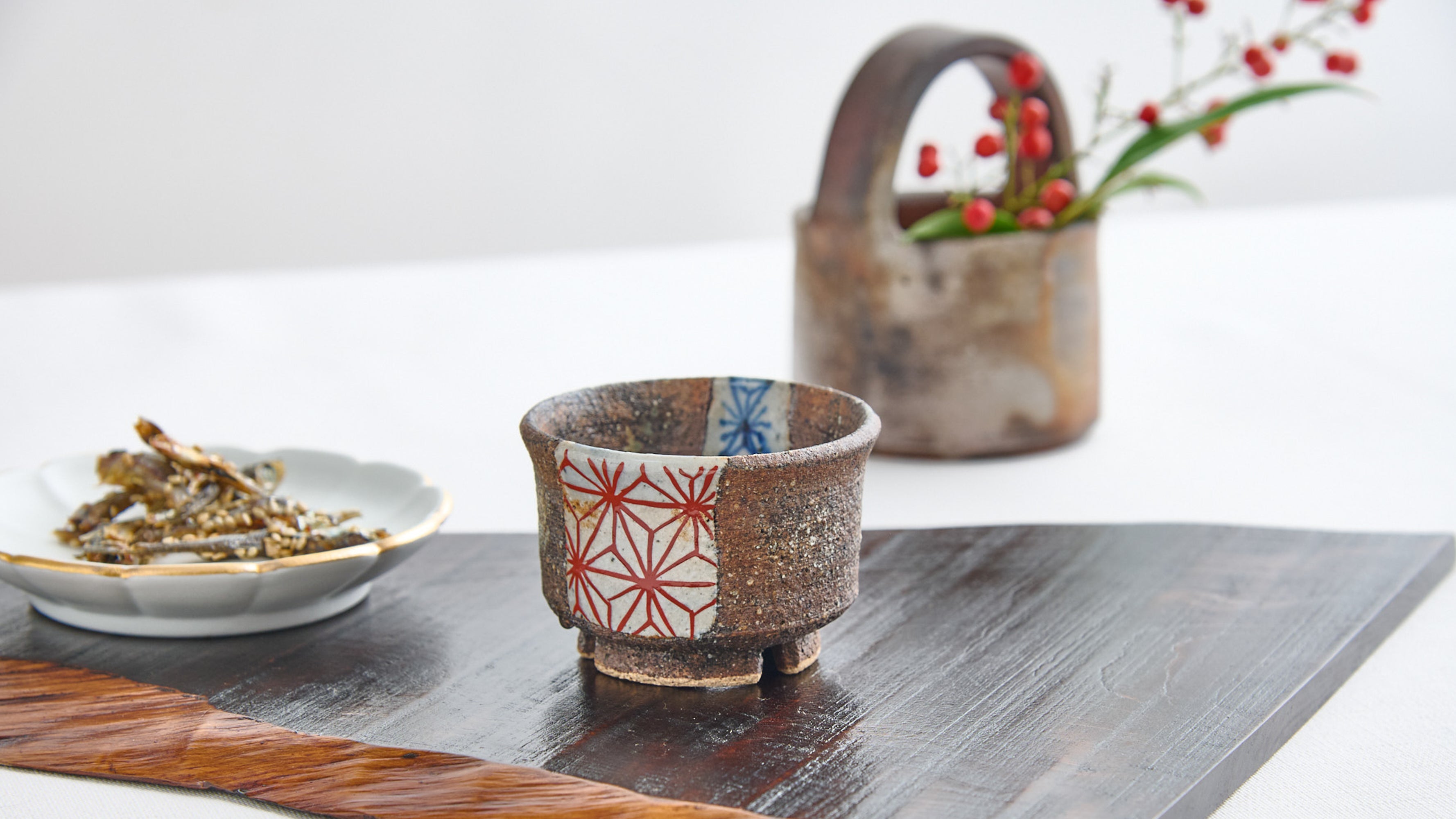
Los motivos vívidos de fénix y peonía captan la mirada en este guinomi finamente elaborado para sake. Su forma se asienta naturalmente en la mano, permitiendo apreciar de cerca la calidez del gres y la suavidad del trabajo de pincel detallado.
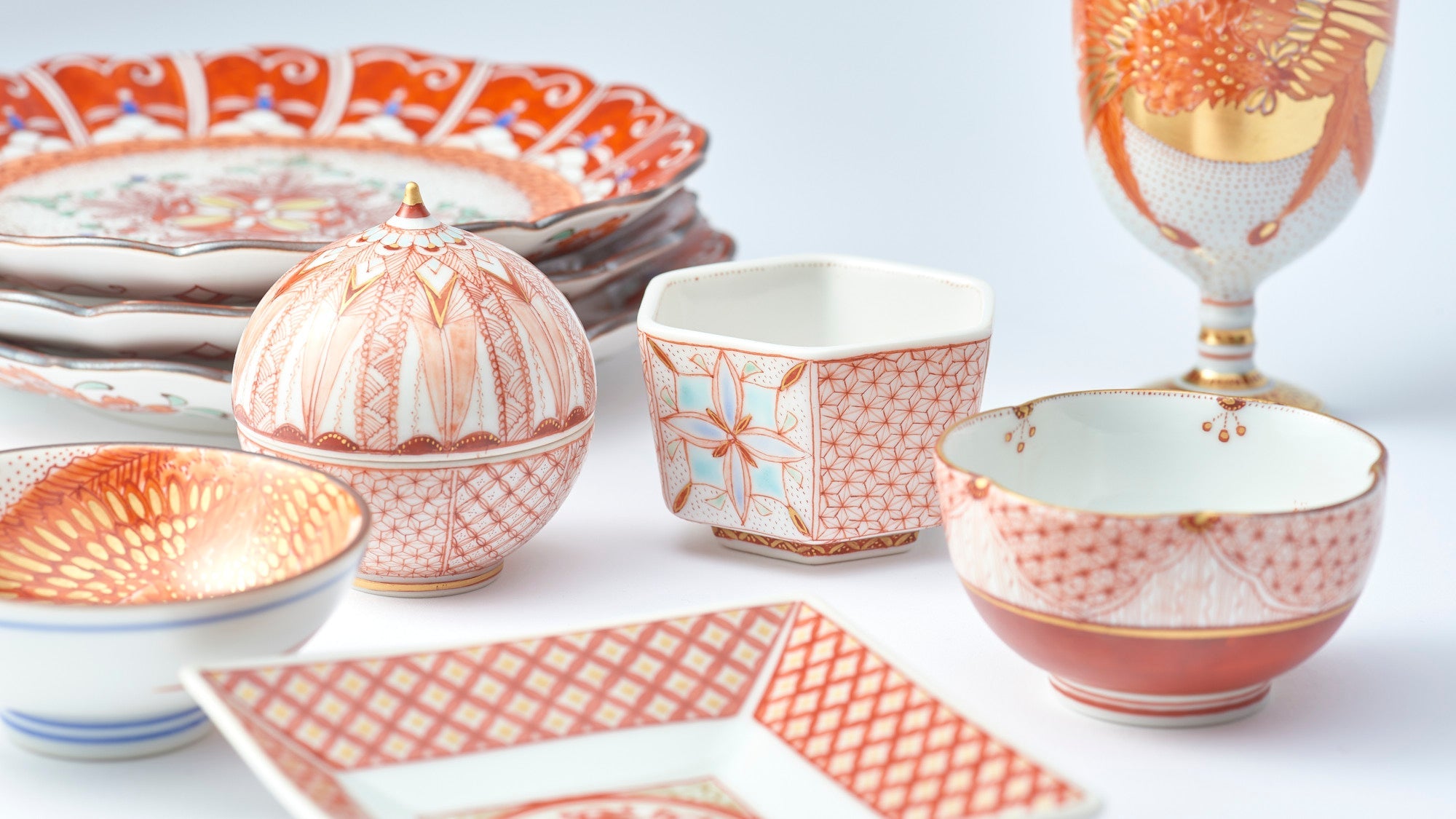
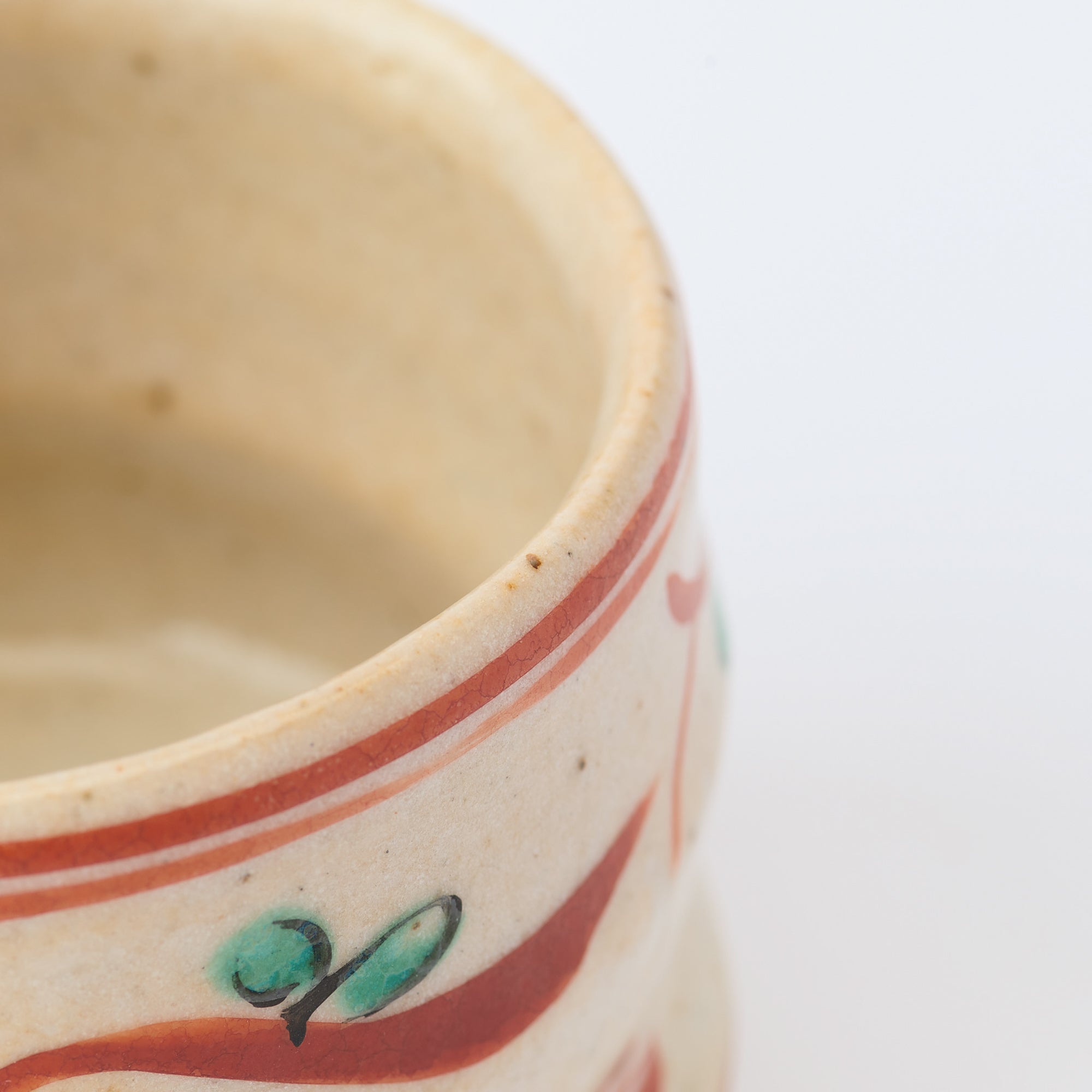
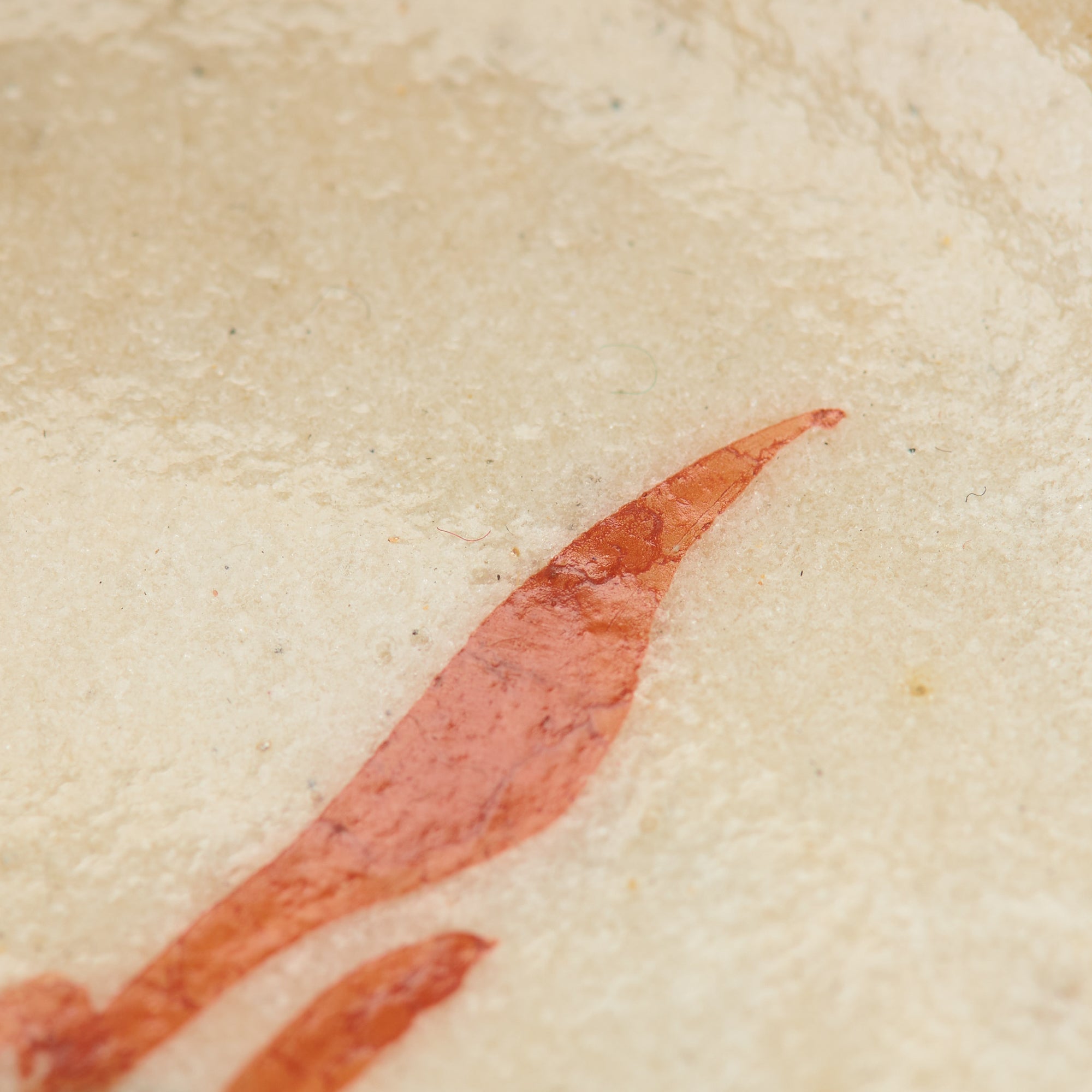
La decoración se ejecuta en akae, utilizando el pigmento natural de bengara especialmente desarrollado por Zoho Kiln, preparado a partir de un material de bengara que ya no se produce y que el taller conserva cuidadosamente. Con el tiempo, el rojo vibrante madurará suavemente, ganando profundidad y carácter a través de años de uso.
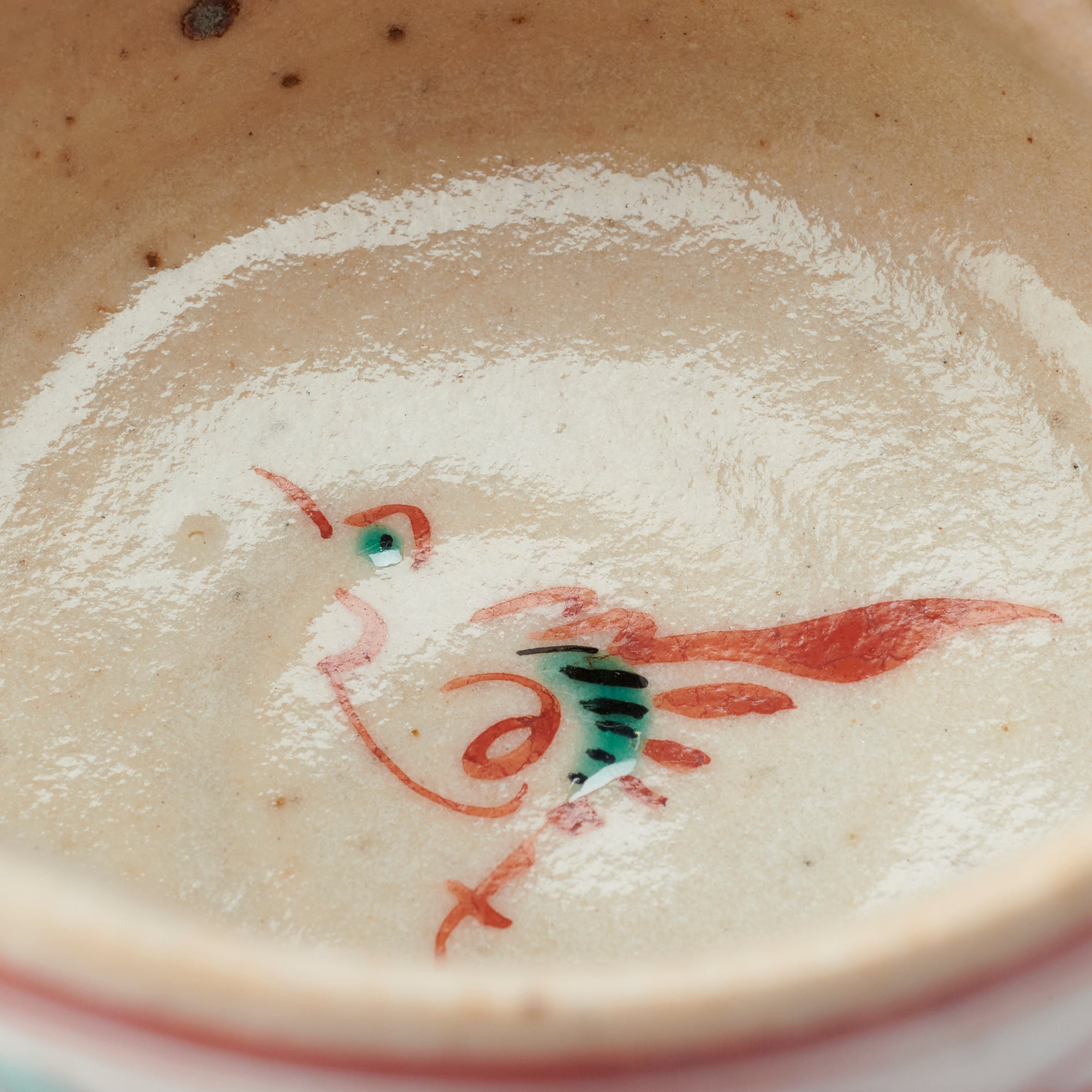
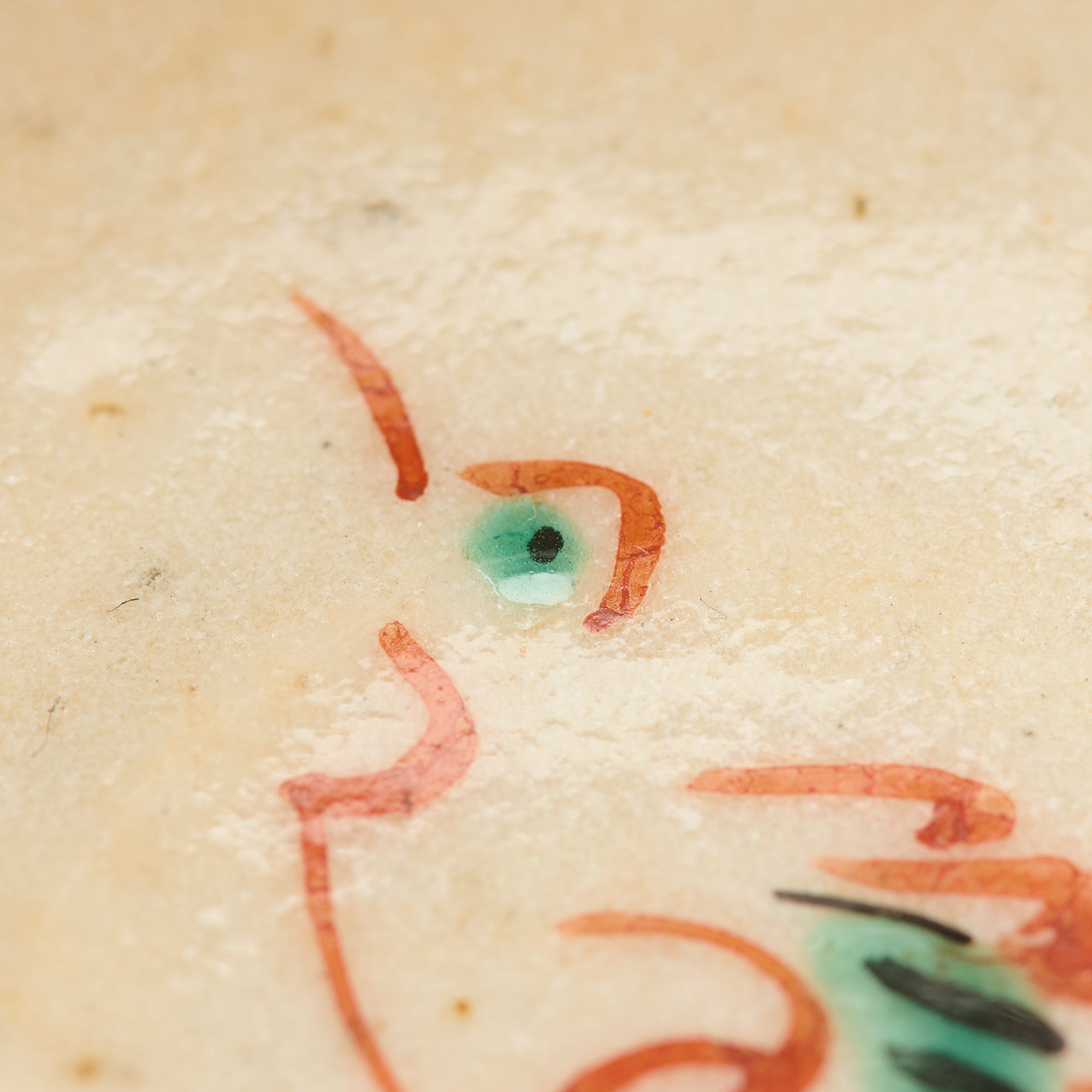
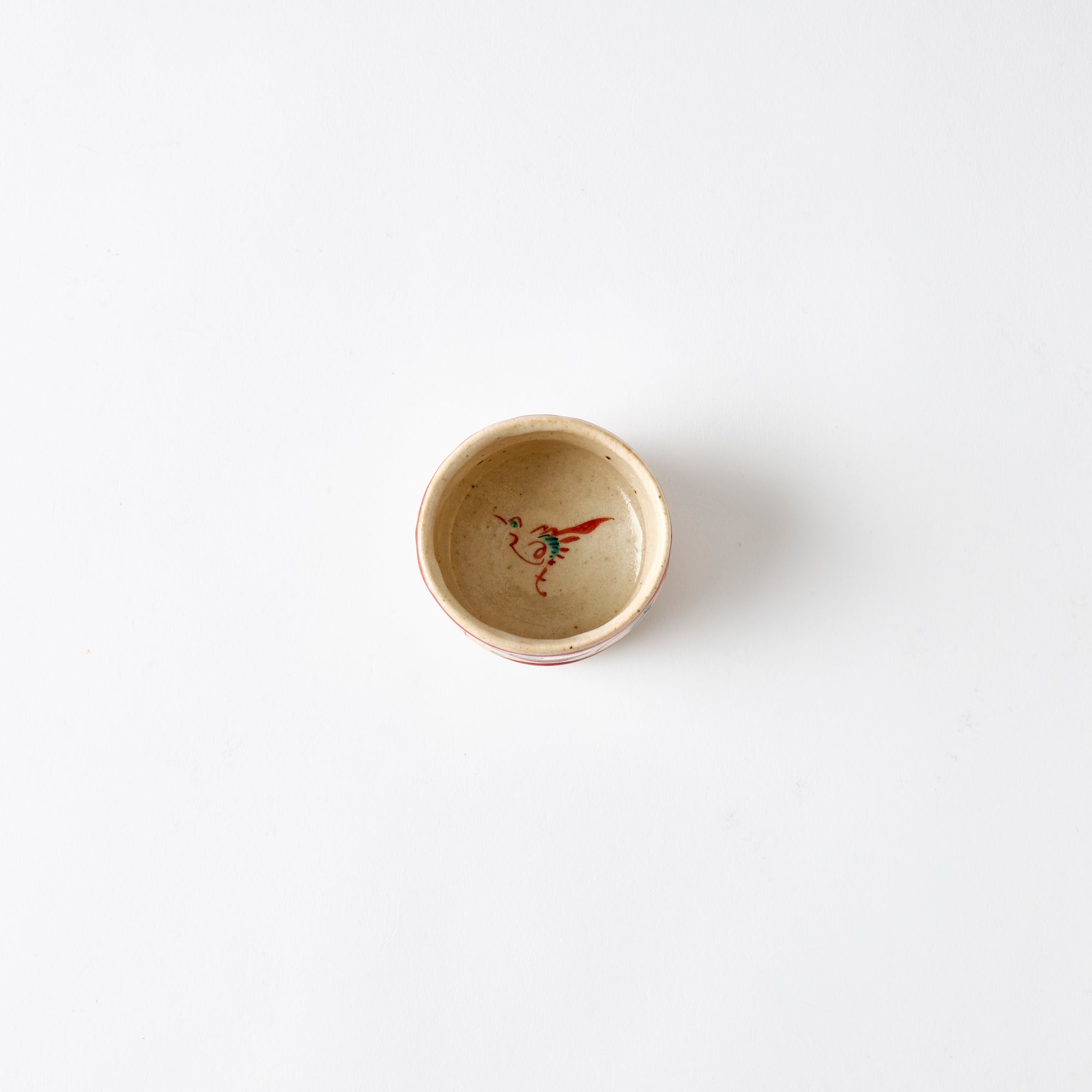
Ejecutados con trazos suaves y fluidos, los motivos de fénix y peonía aportan movimiento y vitalidad a la superficie. Un fénix, símbolo de buen augurio, brilla suavemente en la base cada vez que se vierte sake, mientras que la peonía que adorna el exterior confiere un espíritu festivo a la mesa.
DETALLES
| Quantity | 1 |
| Size | D 6.5 cm (2.6 in) x H 5.5 cm (2.2 in) |
| Capacity | approx. 3.7 fl oz (110 ml) |
| Weight | approx. 3.9 oz (110 g) |
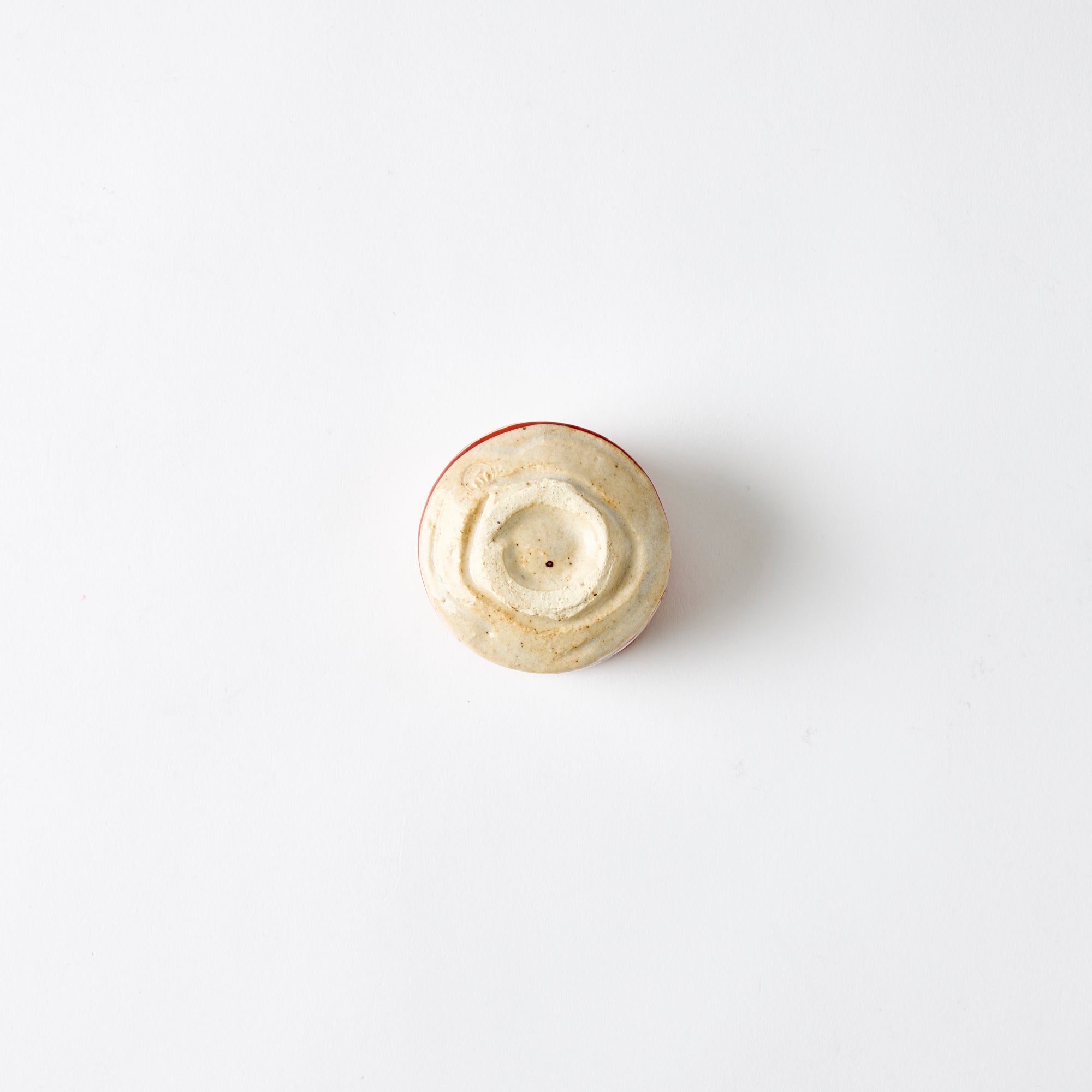
| Material | Stoneware |
| Package Type | Paper box |
| Microwave | Yes |
| Dishwasher | Yes |
Fabricante / Marca
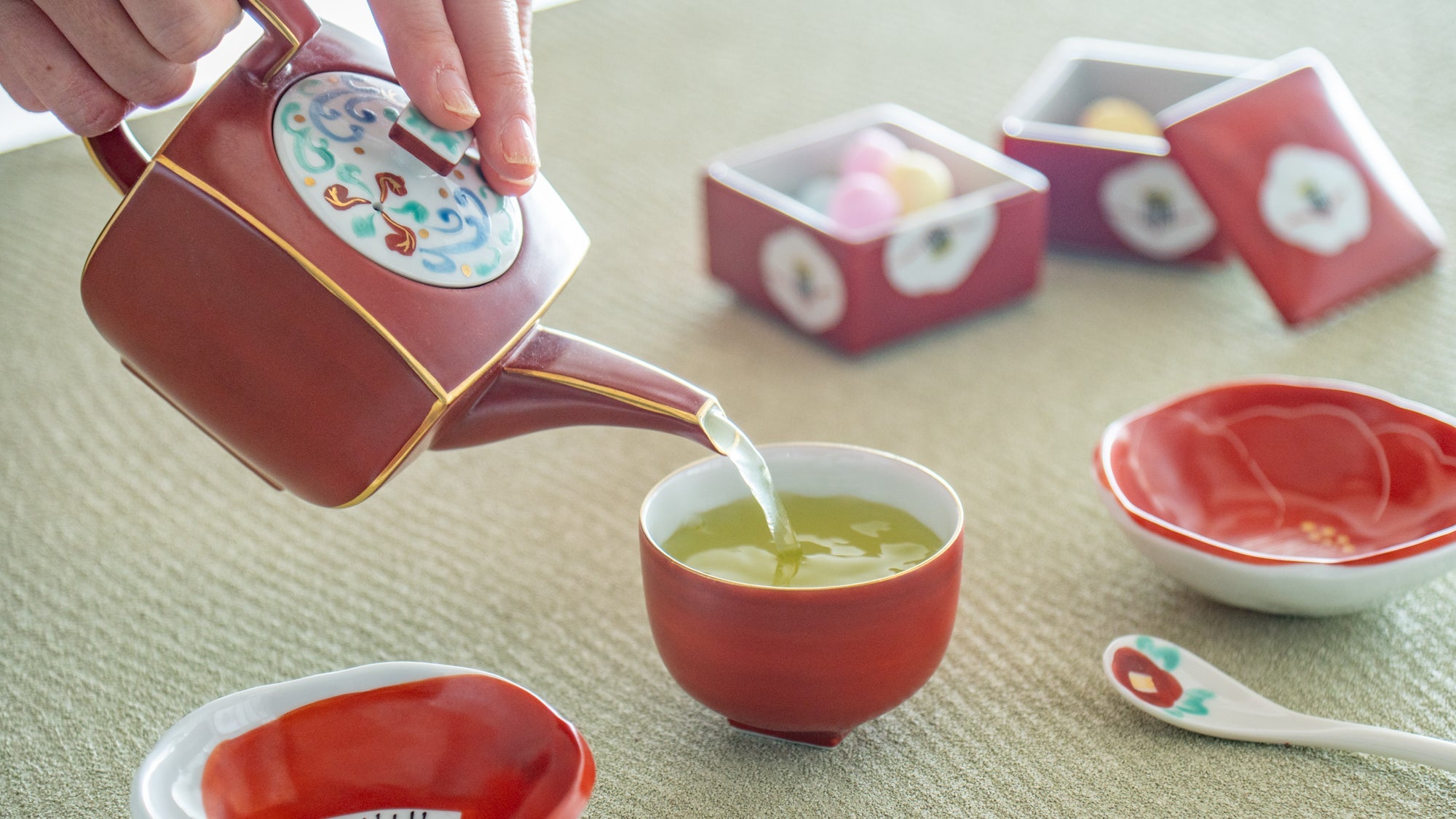
Zoho Kiln, ubicado en la ciudad de Tajimi, prefectura de Gifu, es un reconocido productor de Mino ware. Sus diseños se inspiran en flores de temporada y patrones tradicionales, mientras se enfocan en la belleza práctica de sus piezas, asegurando facilidad de uso y presentación elegante.
Zoho Kiln otorga particular importancia al bengara, el distintivo pigmento rojo utilizado en sus diseños de akae, o esmalte rojo sobre cubierta. El intenso tono rojo que adorna su cerámica profundiza en carácter y se vuelve aún más hermoso con el tiempo y el uso, enriqueciendo la experiencia estética.
Artesanía
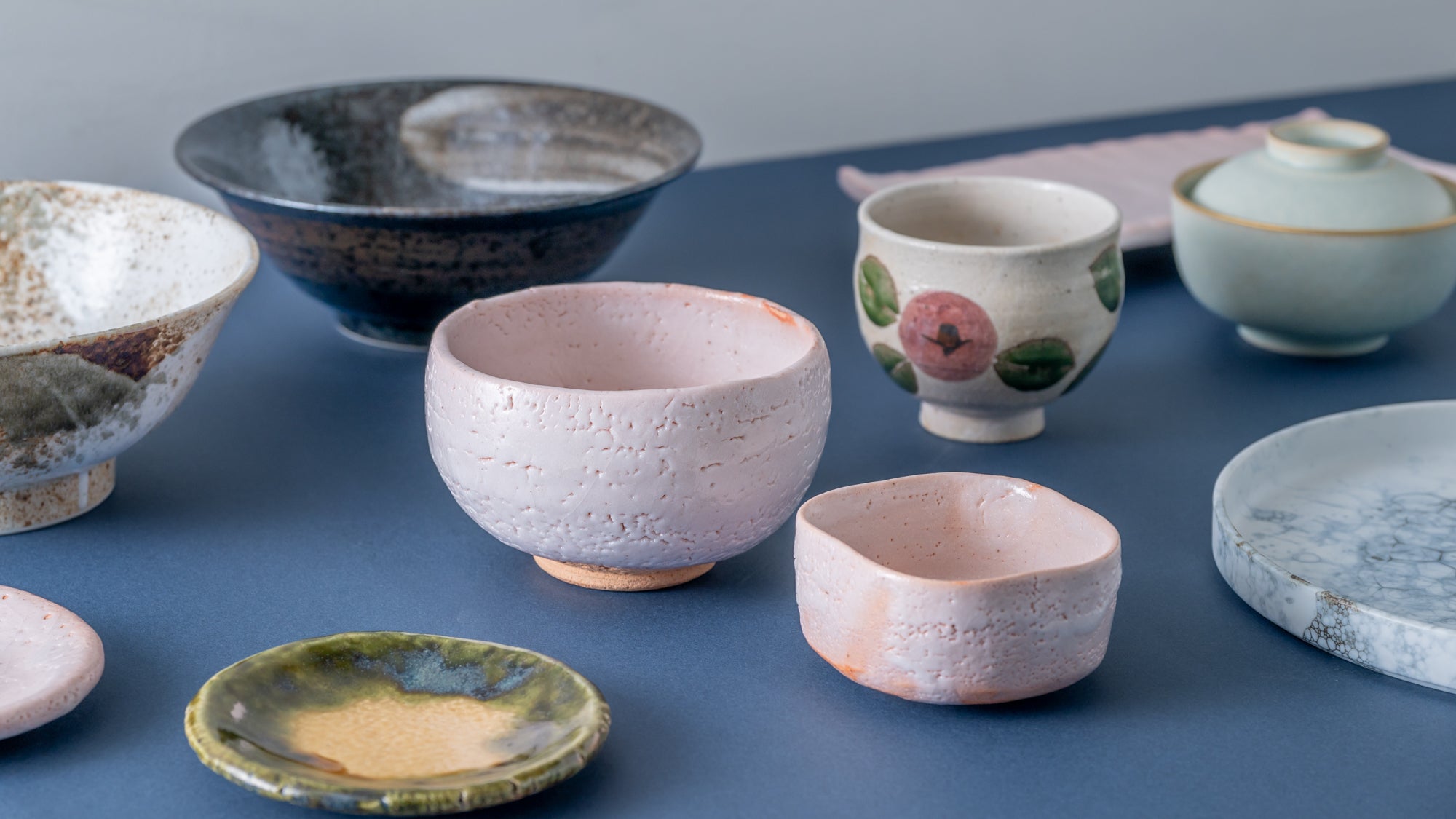
La cerámica Mino, elaborada en la región de Tono, en la prefectura de Gifu, es reconocida en la cerámica japonesa por su rico legado y versatilidad. Presenta más de quince estilos distintos, lo que la hace más variada que muchas otras cerámicas japonesas.
Representando actualmente más del 50 % de la producción cerámica de Japón, su popularidad es inigualable. Designada como artesanía tradicional en 1978, la cerámica Mino refleja una combinación de profundidad histórica y relevancia moderna, ejemplificando una artesanía excepcional.
Elige opciones
Estimated Shipping Widget will be displayed here!
Guinomi
Guinomi Son un tipo de taza para sake, más pequeñas que una taza de té japonesa típica, pero algo más grandes que otras tazas. Suelen usarse sin jarra, y el sake se vierte directamente de la botella.
Originalmente, el guinomi contenía exquisiteces durante las ceremonias del té japonesas, pero con el tiempo se utilizó para beber sake. Por lo tanto, ha evolucionado junto con la singular cultura del té de Japón.
Akae
Akae , o pintura roja, es una decoración sobre vidriado que utiliza principalmente el rojo, complementado con colores como el verde, el morado y el azul. En China, este estilo se originó durante la dinastía Song (960 d. C.-1279 d. C.), mientras que en Japón fue introducido por Sakaida Kakiemon durante la era Shoho (1644 d. C.-1648 d. C.) y posteriormente se integró en la cerámica Kutani.
En la porcelana de Kutani, el akae-saibyo es particularmente famoso. Akae-saibyo significa literalmente "pintura fina en rojo". Con un pincel extremadamente fino, cada línea se dibuja en la superficie de la vasija con exquisito detalle, creando patrones de una complejidad asombrosa.