

Kintsugi FAQ: Alles über die japanische Goldreparatur
Antworten auf die häufigsten Fragen zu kintsugi – was es bedeutet, ob reparierte Stücke lebensmittelecht sind, wie man sie pflegt und was Anfänger vor dem Start benötigen.
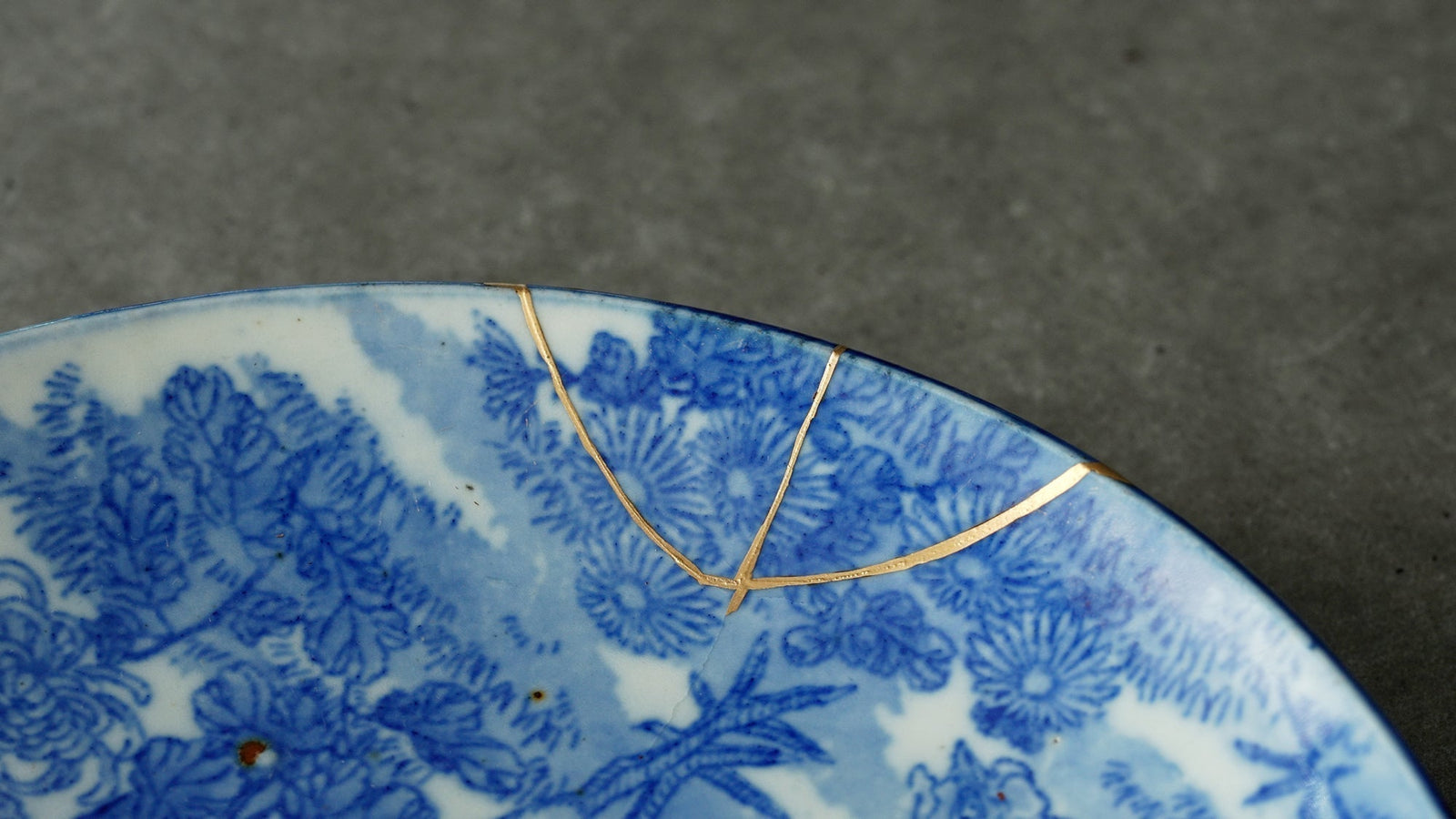
Ihre Fragen zu kintsugi, beantwortet. Wir haben die häufigsten Fragen an einem Ort zusammengestellt, damit Sie schnell Antworten erhalten – und entdecken können, was Sie benötigen, um Ihre eigene kintsugi-Reise zu beginnen.
Von den Grundlagen wie der Bedeutung von kintsugi im Japanischen über praktisches Wissen wie die Frage, ob man von mit kintsugi reparierten Geschirr essen kann, bis hin zu Anfängertipps wie der Vorbereitung vor dem Beginn – lassen Sie diese FAQ Ihr Wegweiser in die tiefe Welt der japanischen Goldreparatur sein. Ob Sie einfach nur neugierig auf kintsugi sind oder bereit, die Ärmel hochzukrempeln und mit dem Kintsugi MUSUBI Craft Kitzu arbeiten – dieser Artikel deckt alles ab.
Über Kintsugi
Was bedeutet kintsugi?
Kintsugi bedeutet auf Japanisch „Goldfügung". Es ist eine Methode zur Reparatur von Keramik mit Lack, oft abgeschlossen mit Gold- oder anderen Metallpulvern. Der Lack dient als Klebstoff zum Füllen von Absplitterungen, Kitten von Rissen oder Zusammenfügen von Bruchstücken, während das Gold und andere Oberflächen die reparierten Bereiche verzieren.
Obwohl es „Goldfügung" genannt wird, verwenden nicht alle kintsugi-Reparaturen Gold. Kintsugi kann auch mit Messingpulver, Silberpulver oder sogar farbigem Lack abgeschlossen werden.
Die Technik ist dafür bekannt, die Brüche schön hervorzuheben, anstatt sie zu verbergen. Um mehr über die Philosophie hinter kintsugi zu erfahren, lesen Sie unseren Artikel Kintsugi Repair Experience: The Meaning Behind Golden Restoration.

Wann entstand kintsugi?
Man nimmt an, dass kintsugi während der Muromachi-Zeit (1336–1573 n. Chr.) entstand, parallel zum Aufstieg der Teezeremonie.
Was ist Lack? Was ist der Unterschied zwischen Lack und synthetischen Klebstoffen?
Lack ist ein natürliches Material, das aus dem Saft des Lackbaums gewonnen wird. Sobald er ausgehärtet ist – das heißt, vollständig getrocknet –, wird er vollständig lebensmittelecht. Lack härtet mit der Zeit weiter aus und besitzt zudem leichte antibakterielle und antimikrobielle Eigenschaften. Im Gegensatz dazu sind synthetische Klebstoffe wie Epoxidharz in der Regel nicht lebensmittelecht und neigen dazu, mit der Zeit schwächer zu werden.

Verwendung von mit Kintsugi reparierten Gegenständen
Ist kintsugi lebensmittelecht?
Ja, im Fall von authentischem Naturlack, wie er im Kintsugi MUSUBI Craft Kit enthalten ist, ist ein mit kintsugi reparierter Gegenstand lebensmittelecht. Sobald der Lack vollständig ausgehärtet ist (vollständig trocken), ist der Gegenstand genauso sicher zum Essen wie jedes andere Lackwarenprodukt.
Bitte beachten Sie jedoch, dass viele Klebstoffe und synthetische Lacke auf dem Markt nicht lebensmittelecht sind und nicht für kintsugi auf Geschirr verwendet werden sollten, von dem Sie essen möchten.

Kann man mit kintsugi reparierte Gegenstände im Ofen oder in der Mikrowelle verwenden?
Nein, Sie sollten vermeiden, kintsugi-Gegenstände im Ofen oder in der Mikrowelle zu verwenden. Selbst Gegenstände, die ursprünglich ofenfest waren, werden nach einem Riss empfindlicher, daher ist es am besten, sie nach der Reparatur nicht im Ofen zu verwenden. Mit Metall abgeschlossenes kintsugi könnte in der Mikrowelle Funken schlagen oder Feuer fangen.
Wie pflege ich mit kintsugi reparierte Gegenstände?
Pflegen Sie mit kintsugi reparierte Gegenstände auf die gleiche Weise wie Lackwaren:
- Waschen Sie den Gegenstand nicht in der Spülmaschine und weichen Sie ihn nicht lange in Wasser ein.
- Von Hand in kaltem oder lauwarmem Wasser mit einem weichen Schwamm und mildem Reinigungsmittel waschen.
- Sofort mit einem weichen, trockenen Tuch abtrocknen.
- Vermeiden Sie die Lagerung in direktem Sonnenlicht oder an einem extrem trockenen Ort.
- Beim Stapeln eine Schicht aus weichem Tuch oder Papier zwischen die Gegenstände legen.
- Behandeln Sie den Gegenstand mit Sorgfalt und vermeiden Sie Stöße, da die gebrochenen Bereiche schwächer sind als zuvor und erneut brechen können.
Um mehr zu erfahren, lesen Sie unseren Artikel How to Care for Japanese Lacquerware.
Mit Lack reparierte Gegenstände können bei richtiger Pflege viele Jahre halten. Mit Lack reparierte Töpferwaren wurden in Japan an einer Fundstätte ausgegraben, die 4.000 Jahre zurückreicht.
Bevor Sie beginnen
Was kann mit kintsugi repariert werden?
Keramik wie Steinzeug und Porzellan kann mit kintsugi repariert werden. Obwohl es nicht unmöglich ist, Lackwaren oder Glas mit kintsugi zu reparieren, sind beide extrem schwierig und können ohne entsprechende Ausbildung nicht erfolgreich durchgeführt werden.

Ich mache zum ersten Mal kintsugi. Können Anfänger kintsugi von Anfang bis Ende durchführen?
Ja. Folgen Sie dem digitalen Anleitungsheft, das mit dem Kintsugi MUSUBI Craft Kit geliefert wird, oder sehen Sie zu, wie ein erfahrener kintsugi-Handwerker jeden Schritt in unserem Kintsugi Tutorial -Video demonstriert.
Wie lange dauert es, eine kintsugi-Reparatur abzuschließen?
Da jede Lackschicht zwischen den Schritten aushärten muss, kann es je nach Aushärtungsumgebung und Komplexität des Bruchs zwischen drei Wochen und drei Monaten dauern, eine kintsugi-Reparatur abzuschließen. Zum Beispiel dauert die Reparatur einer einfachen, kleinen Absplitterung in der Regel mindestens drei Wochen.
Ich habe einen Gegenstand mit sentimentalem Wert, den ich mit kintsugi reparieren möchte. Wo soll ich beginnen?
Es ist am besten, etwas Erfahrung zu sammeln, bevor Sie versuchen, etwas mit sentimentalem Wert zu reparieren. Es wäre enttäuschend, einen Fehler zu machen, der schwer rückgängig zu machen ist. Versuchen Sie zunächst einige andere Projekte. Sobald Sie Übung haben und Vertrauen gewonnen haben, können Sie sich an einen emotional bedeutsamen Gegenstand wagen. Sie könnten auch in Erwägung ziehen, einen Fachmann zu beauftragen.
Kintsugi durchführen
Welche Vorsichtsmaßnahmen sollte ich beim Durchführen von kintsugi beachten?
Der natürliche Bestandteil im Lack, Urushiol, ist ein Öl, das Hautreaktionen ähnlich einem Giftefeu-Ausschlag verursachen kann. Daher sind beim Umgang Vorsichtsmaßnahmen erforderlich.
- Arbeiten Sie in einer gut belüfteten Umgebung.
- Tragen Sie Handschuhe und langärmelige Kleidung.
- Wenn Lack auf Ihre Haut gelangt, waschen Sie ihn sofort ab, indem Sie die Stelle mit einem pflanzlichen Öl (wie Raps-, Oliven- oder Pflanzenöl) abwischen, um das Urushiol zu lösen, und dann gründlich mit einer fettlösenden Seife wie Spülmittel schrubben.
- Wenn Sie ungewöhnliche Hautreaktionen bemerken, suchen Sie umgehend einen Arzt auf.
Lackausschläge klingen in der Regel innerhalb von etwa zwei Wochen ab. Konsultieren Sie Ihren Arzt bezüglich der richtigen Pflege. MUSUBI KILN übernimmt keine Verantwortung für unerwünschte Reaktionen, die durch Lack verursacht werden. Sobald der Lack vollständig ausgehärtet ist, kann er gefahrlos berührt werden.
Wie erstelle ich eine Muro, eine Box zum Aushärten?
Eine Muro ist ein Raum, Schrank oder eine Box, die zum Aushärten von Lack verwendet wird. Sie können zu Hause eine erstellen, indem Sie eine Box mit Deckel verwenden. Eine Holzbox, falls vorhanden, hält in der Regel eine stabile Luftfeuchtigkeit und Temperatur am besten. Karton ist ebenfalls wirksam. Wenn Sie beides nicht haben, können Sie stattdessen eine Plastikbox verwenden.
Wischen Sie das Innere Ihrer Box mit einem feuchten Tuch aus. Sie können auch ein fest ausgewrungenes Tuch auf den Boden der Box oder unter den Deckel legen. Halten Sie das Innere der Box bei etwa 70 % Luftfeuchtigkeit und 20 °C. Wenn Sie die Box in einem Raum Ihres Hauses platzieren, den Sie regelmäßig nutzen, reicht dies oft aus, um die richtige Temperatur zu halten. Wir empfehlen, die internen Bedingungen mit einem Thermometer und einem Hygrometer, das die Luftfeuchtigkeit misst, oder einem Gewächshaus-Thermometer, das sowohl Temperatur als auch Luftfeuchtigkeit misst, zu überwachen.
Um zu verhindern, dass nasser Lack den Boden oder die Seiten der Box berührt, stützen Sie Ihr Stück mit Gegenständen wie Einweg-Essstäbchen oder Eisstielen ab.

Wie viele Gegenstände können mit dem Kintsugi MUSUBI Craft Kit repariert werden?
Je nach Fläche, die Sie reparieren möchten, der Komplexität des Bruchs und der Art, wie Sie den Lack und das Goldpulver verwenden, variiert die benötigte Materialmenge erheblich. Bei kleinen Absplitterungen oder Rissen wird nur eine geringe Menge Lack benötigt, während bei komplexeren Brüchen möglicherweise mehrere Lackschichten aufgetragen werden müssen. Es ist daher schwierig, eine genaue Anzahl anzugeben, wie viele Gegenstände Sie mit dem Kit reparieren können. Wir empfehlen, sich unser YouTube-Video anzusehen, um ein Gefühl dafür zu bekommen, wie viel Lack und Goldpulver auf verschiedene Oberflächen aufgetragen werden. Von dort aus können Sie eine Schätzung basierend auf den Besonderheiten der zerbrochenen Gegenstände erstellen, die Sie reparieren möchten.

Wir hoffen, dass dies Ihnen hilft, Ihre Reise in die reiche Tradition des kintsugi zu beginnen. Probieren Sie es selbst zu Hause mit dem Kintsugi MUSUBI Craft Kit aus oder erkunden Sie unsere weiteren kintsugi-Bloginhalte, um mehr zu erfahren.
Fragen, die hier nicht beantwortet wurden? Hinterlassen Sie gerne einen Kommentar oder wenden Sie sich an unser Concierge-Team unter info@musubikiln.com. Wir helfen Ihnen gerne weiter.
Stay close to the craft
Now and then, a quiet letter — new stories, seasonal notes, and the hands behind the work.
Die Kunst von Kitaoji Rosanjin: Die Schönheit der Küche
Rosanjin vereinte Keramik, Kalligraphie und Küche zu einer Vision von Schönheit, in der Geschirr…
Iwata Mana
Die vielen Ursprünge des Rot in japanischer Keramik
Entdecken Sie die vielfältigen Ursprünge des Rot in der japanischen Keramik – von fein…
Die Schönheit des Geflechts: Japanische Bambuskunst
Erfahren Sie, wie sechs Flechttechniken – von Yotsume bis Ajiro – Form und Funktion…
Leave a comment