

Decoraciones de Superficie en Cerámica
Mientras el esmalte otorga color y atmósfera a las piezas, la decoración de superficie aporta textura y estructura directamente en la arcilla. Presentamos técnicas tradicionales de cerámica japonesa: tobikanna, shinogi, mentori, hotarude y sukashibori.
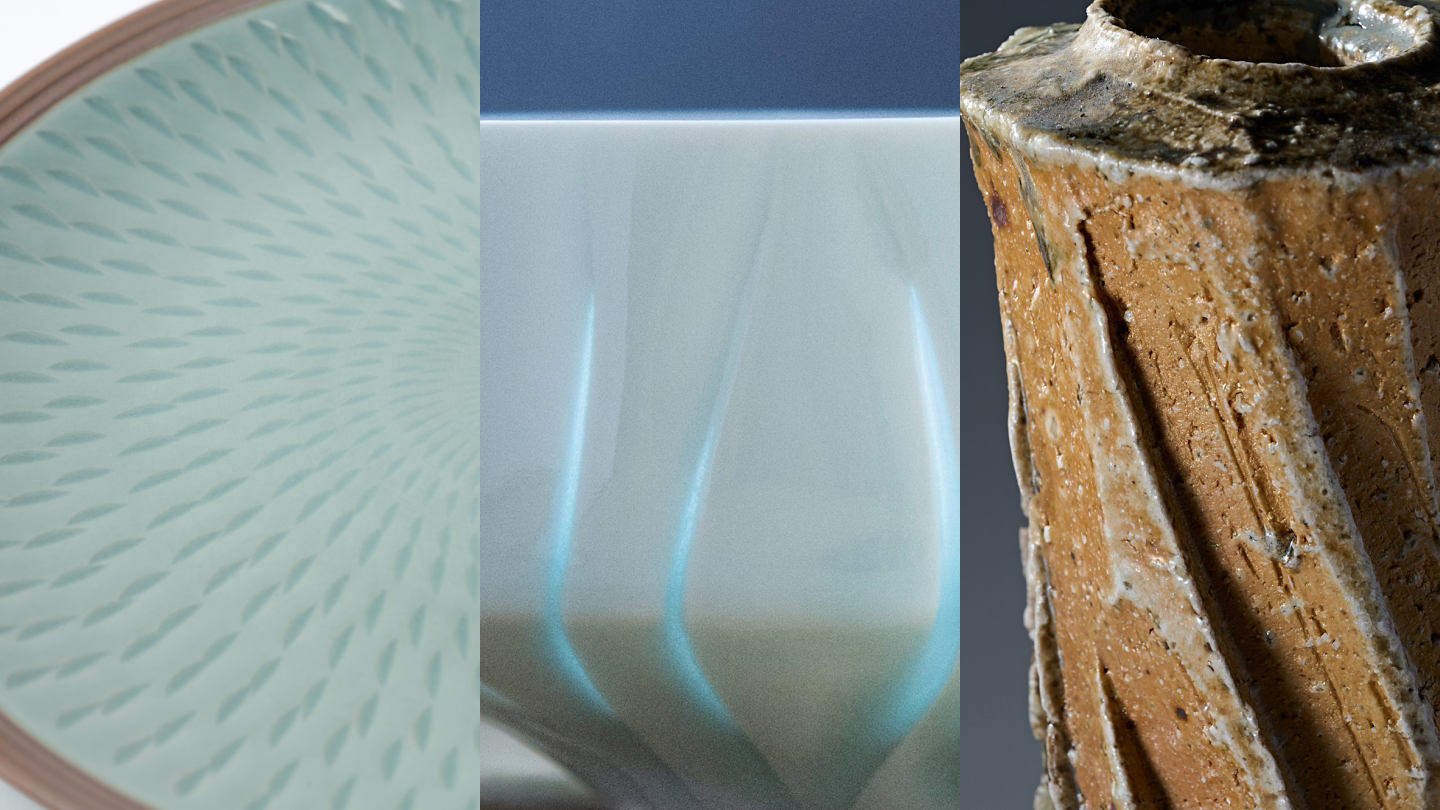
Las expresiones táctiles de la cerámica llevan algunos de los rastros más claros de la mano del artesano: una línea tallada que atrapa la luz, patrones rítmicos presionados en la arcilla, o una abertura que revela el espacio más allá. Mientras el esmalte otorga a las vasijas su color y atmósfera, la decoración de superficie aporta textura y estructura directamente en la arcilla misma.
En este artículo, presentamos varias técnicas tradicionales de alfarería presentes en la cerámica japonesa, explorando cómo dan forma al carácter y la belleza de cada pieza.
Tobikanna: Movimiento Rítmico Sobre la Arcilla
Tobikanna, o repiqueteo, es una técnica decorativa creada al presionar la punta de una herramienta metálica flexible contra la superficie de una vasija colocada en un torno de alfarero.Tobikanna, o repiqueteo, es una técnica decorativa creada al presionar la punta de una herramienta metálica flexible contra la superficie de una vasija colocada en un torno de alfarero.

Mientras el torno gira, la cuchilla salta ligeramente sobre la arcilla, dejando marcas repetidas que se extienden en ritmos constantes. Aunque altamente controlado, tobikanna conserva pequeñas irregularidades creadas por la presión de la mano del artesano. Las variaciones en la velocidad del torno y la sequedad de la arcilla crean cambios sutiles en la densidad de las marcas sobre la superficie.
Esta técnica se observa frecuentemente en las tradiciones de alfarería popular de Koishiwara ware y Onta ware. Soryu Kiln incorpora tobikanna bajo su distintivo esmalte celadón. El Turquoise Colored Dinner Plate presenta marcas finamente talladas que irradian hacia afuera desde el centro del plato. Bajo el esmalte turquesa pálido, las impresiones talladas permanecen visibles como sombras suaves que cambian según el ángulo de la luz.

Shinogi: La Belleza del Relieve Tallado
Shinogi es una técnica en la que la superficie de una vasija se talla en líneas elevadas rítmicas usando una espátula o herramienta de tallado. El término "shinogi" originalmente se refiere a la línea de cresta que recorre la parte más gruesa entre el filo y el lomo de una hoja de espada japonesa, reflejando los contornos definidos con precisión creados sobre la superficie de arcilla.
A medida que el esmalte se asienta de manera desigual a lo largo de las líneas talladas, la técnica produce cambios graduales de tono en toda la vasija. La luz se asienta de manera diferente en cada surco, permitiendo que incluso un esmalte de un solo color aparezca estratificado y variado.
El SHINOGI Lapis Lazuli Dinner Plate combina líneas profundamente talladas con un esmalte azul lapislázuli saturado. El patrón dirige la mirada hacia afuera desde el centro del plato, destacando tanto la profundidad del color como la precisión del tallado.

Mentori: Planos Facetados y Geometría Silenciosa
Mentori se crea al raspar porciones de una vasija para formar planos facetados sobre la superficie. Los contornos redondeados se cortan de modo que se conviertan en secciones planas. Líneas rectas y bordes angulados reconfiguran la silueta de la pieza.
La atmósfera de una vasija puede cambiar dramáticamente dependiendo de cuánta arcilla se retira. Los cortes audaces y decisivos a menudo otorgan al trabajo mentori un ritmo fuerte y un carácter más angular.
El momento preciso es esencial. Si la arcilla permanece demasiado blanda, los bordes pierden definición; si está demasiado seca, la superficie puede agrietarse durante el tallado. Debido a que se retira material durante todo el proceso, los artesanos usualmente comienzan con paredes más gruesas antes de refinar gradualmente la vasija hasta su forma final.
El Iga Faceted Gloss Japanese Flower Vase muestra cómo los cortes facetados pueden enfatizar la textura rugosa de la arcilla Iga. Los planos angulados rompen el perfil redondeado del jarrón, mientras que los depósitos de ceniza y las marcas de cocción se acumulan de manera diferente sobre cada superficie.

Hotarude: Porcelana Iluminada por la Luz

Literalmente "técnica de luciérnaga", hotarude es un método decorativo asociado más comúnmente con la porcelana. Se realizan aberturas en la vasija y se llenan con esmalte transparente antes de la cocción. Cuando se sostiene hacia la luz, estas secciones esmaltadas se vuelven suavemente translúcidas, evocando el resplandor de las luciérnagas en la oscuridad.
Los patrones tradicionales de hotarude a menudo se componen de pequeñas aberturas circulares o motivos perforados repetidos dispersos sobre la superficie de una vasija. Debido a que el efecto depende de la translucidez y condiciones de cocción cuidadosas, el tamaño de las aberturas y el grosor de la arcilla deben controlarse con precisión. Si las aberturas son demasiado grandes, el esmalte se vuelve difícil de mantener en su lugar; si las paredes son demasiado gruesas, la luz no puede atravesar con claridad.
Mientras que el hotarude tradicional utiliza pequeñas aberturas circulares, el Clad in Light Faceted Matcha Bowl de Taruta Hiroshi presenta una variación conocida como "hotarude lineal". Líneas translúcidas delgadas recorren los planos facetados del cuenco, permitiendo que la luz aparezca en bandas estrechas sobre la superficie. Cuando se ilumina, la estructura tallada y las líneas translúcidas emergen gradualmente juntas.

Sukashibori: Expresiones Caladas en Arcilla
Sukashibori, o tallado calado, es un estilo decorativo en el que se cortan cuidadosamente secciones de arcilla para crear aberturas dentro de la vasija. El método ha aparecido en la cerámica japonesa desde tiempos antiguos, con ejemplos de accesorios que datan del período Jomon (ca. 10,000–300 a.C.).
A diferencia de la decoración tallada que permanece en la superficie, sukashibori cambia la estructura de la forma misma. Las aberturas exponen capas de sombra dentro de la vasija mientras permiten vislumbres a través del cuerpo de arcilla desde diferentes ángulos. Se utiliza frecuentemente para quemadores de incienso, cuencos para dulces y vasijas decorativas.
En este cuenco celadón, las aberturas cortadas repetidas en el borde reducen el peso visual de su forma. Las secciones perforadas revelan sombras cambiantes bajo la superficie esmaltada, haciendo que el cuenco parezca más ligero.

Las crestas talladas, los planos facetados y las aberturas perforadas presentadas en estas técnicas revelan cuánta expresión puede emerger directamente de la arcilla misma, incluso antes de aplicar el esmalte. Sin embargo, en la cerámica japonesa, la decoración de superficie y el esmalte son a menudo inseparables. Un surco tallado puede profundizar la acumulación de esmalte, mientras que las aberturas cortadas y la porcelana translúcida pueden cambiar la manera en que la luz se mueve sobre una vasija después de la cocción.
Para explorar cómo los esmaltes dan forma a la apariencia de la cerámica japonesa, lea nuestro artículo, Introducción a los esmaltes cerámicos japoneses, donde examinamos los colores, texturas y superficies creados mediante la cocción.
Stay close to the craft
Now and then, a quiet letter — new stories, seasonal notes, and the hands behind the work.
Una introducción a las técnicas japonesas de modelado cerámico
Conozca las técnicas de moldeado de cerámica japonesa y observe cómo la arcilla, el…
Iwata Mana
Experimentar el teñido Shibori con Suzusan: textiles tradicionales en clave contemporánea
Descubra la interpretación contemporánea de Suzusan sobre el shibori de Arimatsu, una técnica de…
Rebecca Menasché
Conozca a los especialistas en herramientas que apoyan a los artesanos de Seto ware
Descubra el trabajo en Seto y conozca a los fabricantes de herramientas y expertos…
Leave a comment