

El arte del vidrio de Otsuki Yosuke: Capas de color, grabados de memoria
Entre en el mundo del vidrio multicapa de Otsuki Yosuke, donde el color, la memoria y el tiempo se fusionan en obras luminosas.
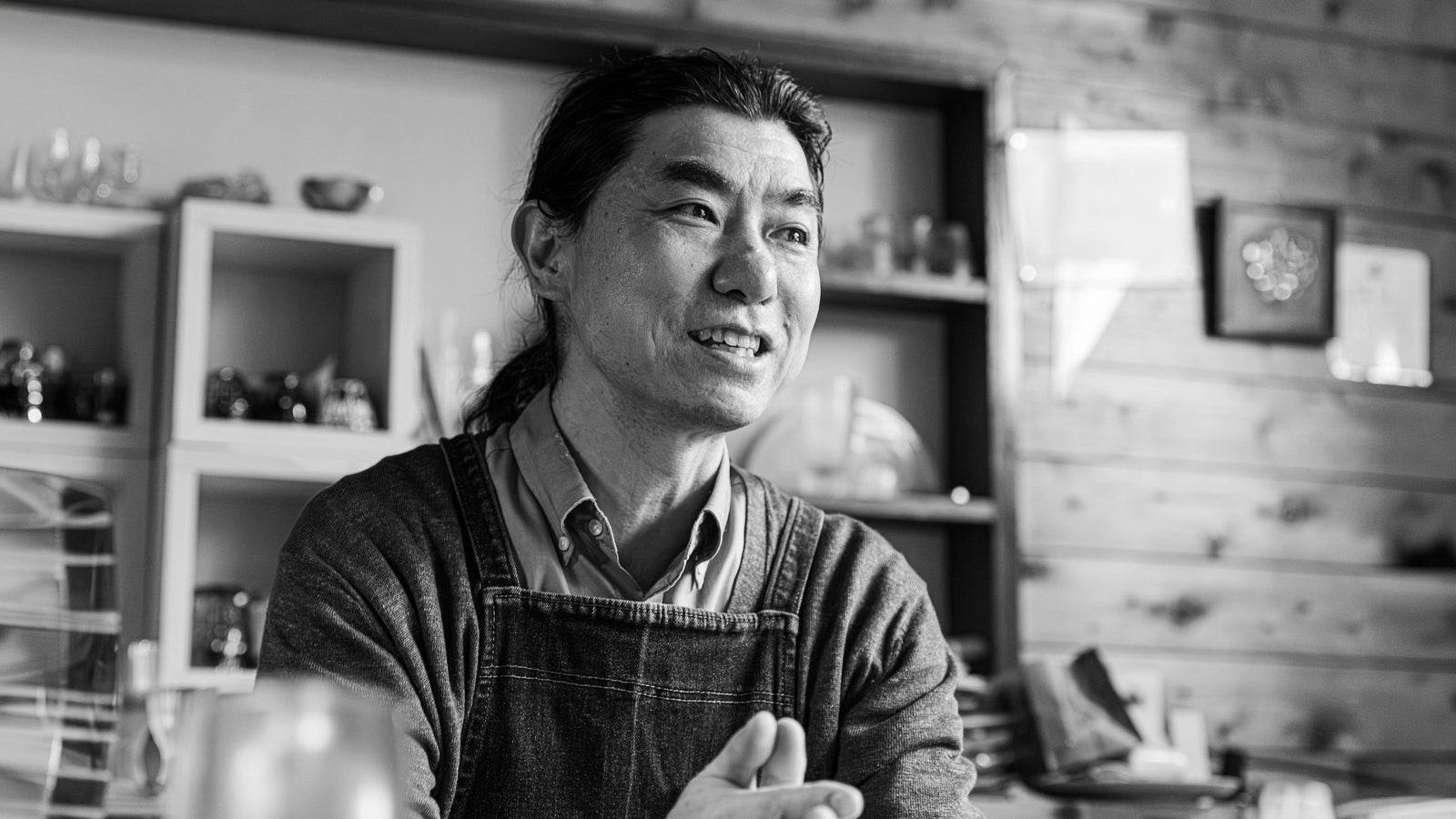
Colores tenues superpuestos dentro del vidrio brillan cuando captan la luz. Dentro de esos colores habitan los recuerdos del artista, la vasta cantidad de tiempo dedicado a la creación y técnicas que no pueden imitarse.

"Quiero crear colores que permanezcan 100 o 1,000 años en el futuro", dice Otsuki Yosuke, uno de los artistas más observados en la artesanía del vidrio japonesa. Esta es la historia de cómo un artista fascinado por el vidrio ha llegado a sus obras únicas.
Una originalidad encontrada mediante combinaciones de técnicas
Fascinado por el misterio del vidrio

Para el artista del vidrio Otsuki Yosuke, la artesanía era simplemente parte de la vida cotidiana en el hogar donde nació y creció. Su madre se graduó de la Universidad de Arte Tama, una de las principales escuelas de arte de Japón, y se encuentra entre los principales artistas de trabajo en metal de Japón. Su padre, también graduado de la Universidad de Arte Tama, trabajó en una agencia de publicidad antes de dedicarse a la pintura y el grabado en placa de cobre.
Dice Otsuki: "Era el tipo de niño que dibujaba durante horas si le dabas crayones y papel para dibujar".
Otsuki decidió que después de la preparatoria, buscaría una educación en una universidad de arte.
"No era bueno en el trabajo escolar, y tampoco era particularmente destacado en deportes. Como ambos padres eran graduados de escuelas de arte, fue una progresión natural seguir el camino del arte. Sin embargo, en ese momento, los exámenes de ingreso a la universidad de arte estaban divididos por especialidad, y cambiar de especialidad después de la inscripción era difícil. Me preocupé durante algún tiempo sobre en qué debería especializarme".

Fue entonces cuando Otsuki vio imágenes de artesanía en vidrio en televisión, y algo resonó dentro de él.
"Había trabajado con madera y papel, arcilla y metal antes. Pero nunca antes había sido consciente del vidrio como medio artístico. Siempre me habían enseñado simplemente: 'Es peligroso, no lo toques', y si se rompía, lo envolvía en periódico y lo tiraba inmediatamente. Había asumido que eso era simplemente lo que era el vidrio. En el momento en que aprendí que el vidrio podía ser un material de escultura, pensé: 'Quiero intentar eso'".
Las características del material también fascinaron a Otsuki, particularmente el interior del vidrio transparente. "Aunque está justo ahí y es visible, los humanos no pueden tocarlo... Es misterioso e interesante de una manera diferente a otros materiales. El vidrio me pareció un medio hermoso como ningún otro".
Así, Otsuki llegó a especializarse en obras de vidrio en la Universidad de Arte Tama.
Encuentro con especialistas del vidrio y una inversión de perspectiva
Después de la universidad, Otsuki se dedicó a formarse como artista del vidrio en el Centro de Arte en Vidrio de Niijima. Niijima se encuentra entre las islas remotas en las aguas al sur de Tokio. Los días de Otsuki en esta isla rica en naturaleza estuvieron llenos de sorpresas.

"La pareja que dirigía el centro de arte fue a América después de estudiar artesanía en vidrio en Japón. Allí, experimentaron el movimiento de arte Studio Glass de primera mano. Al menos una vez al año, invitaban a artistas destacados de América e Italia a venir y realizar talleres. Trabajar allí como miembro del personal me puso en contacto con las tendencias de la artesanía más avanzada del mundo".
Después, regresó a su ciudad natal y estableció un estudio en Yokohama. Mientras continuaba buscando su propio modo de expresión, comenzó a considerar exhibir en la Exposición de Kōgei Tradicional de Japón como una de las plataformas para presentar su trabajo. Influenciado por su madre, había estado expuesto desde temprana edad a una amplia gama de artesanías más allá del vidrio. Esto lo llevó a reconsiderar cómo las obras de vidrio podían afirmar su propia presencia dentro del contexto más amplio de las tradiciones artesanales japonesas.
Se sintió profundamente inspirado por los trabajos meticulosos de artesanos de laca y metal, aunque hubo momentos en que sintió: "No importa cuánto esfuerzo ponga, nunca alcanzaré a estas personas". Sin embargo, un comentario de otro artista, "Es maravilloso que puedas soplar y cortar vidrio tú mismo", llevó a un cambio completo en su perspectiva.
"Soplar, moldear, cortar, pulir. No puedo competir con especialistas en cada técnica individual. Pero el otro lado de eso es que me di cuenta de que mi fortaleza estaba en la amplia gama de técnicas que había aprendido en la universidad y el centro de arte. En términos de judo, se llama awase-waza ippon: ganar usando una combinación de técnicas. En lugar de un lanzamiento limpio de hombro con un brazo, es como ganar con una combinación de técnicas. Pensé que eso podría convertirse en mi originalidad".

Otsuki comenzó su búsqueda de su propia combinación de técnicas, y finalmente llegó al vidrio multicapa, nacido de combinar múltiples técnicas como soplar, tallar y pulir. A diferencia del vidrio soplado, donde las formas están limitadas a "sólidos de revolución" —formas que pueden hacerse mediante rotación alrededor de un eje—, el vidrio multicapa permite cuadrados, pentágonos y otras formas multilaterales.
Técnicas de superposición sin concesiones
El trabajo manual interminable vertido en el vidrio

Púrpura y azul, verde y rojo. Una vasta cantidad de tiempo y habilidad se vierte en crear las obras de vidrio multicapa de Otsuki, donde colores transparentes se superponen muchas veces.
Los trozos de vidrio se funden para crear una amplia variedad de placas de vidrio. Estas placas de vidrio se pulen una por una antes de fusionarse en un horno eléctrico. Se utilizan técnicas de soplado de vidrio para crear cavidades internas huecas. Solo después de que la base de la pieza de vidrio multicapa nacida de estos procesos está suficientemente pulida, la obra finalmente se completa.
Otsuki maneja todos estos procesos solo, y dice que una pieza puede tomar hasta dos años desde el concepto inicial hasta el pulido final para completarse.


"El objetivo no es poner esfuerzo por el bien del esfuerzo. Es solo que si poner esfuerzo hace que el trabajo sea mejor, entonces no quiero hacer concesiones en ello. Incluso si es ineficiente, quiero crear algo que nunca podría hacerse mediante producción en masa. Creo que ese es mi papel como artista de artesanía en vidrio".


La historia de Light Buoy
Todas las obras de vidrio multicapa de Otsuki llevan el subtítulo "Memorias de Colores". Esto se debe a que las propias memorias de Otsuki están contenidas dentro de sus obras.
Por ejemplo, una de sus piezas representativas es Tofuhyo, o Boya de Luz. El jarrón, coloreado con una gradación brillante que cambia de índigo a púrpura, guarda la memoria del viaje de Otsuki al comenzar como artista.


"Era el día en que regresaría a mi ciudad natal después de terminar cinco años de formación en Niijima. Cuando partimos, el océano estaba agitado por una tormenta, pero al acercarnos al puerto de Yokohama, las olas se fueron calmando gradualmente. Cuando salí a cubierta, vi, flotando entre un cielo teñido con los colores del atardecer y el mar, el parpadeo de una boya de luz. Al verla, sentí verdaderamente: 'Mi vida como artista comienza ahora'".
Las memorias personales del artista y el funcionamiento universal de la naturaleza—precisamente por la conexión entre ambos, la belleza de Boya de Luz se siente como la de un fragmento de una historia.

El Vidrio Multicapa como "Experiencia Cinematográfica"
Hasta ahora, las obras de Memorias de Colores se han enfocado principalmente en la estratificación horizontal, donde los colores se apilan como los estratos de la tierra. Sin embargo, en años recientes, Otsuki también ha estado abordando la estratificación vertical. El catalizador fue su objetivo de "crear obras cinematográficas, en lugar de imágenes estáticas".
Imagine, por ejemplo, caminar lentamente frente a una pieza de Memorias de Colores colocada en un espacio particular. Dado que el movimiento humano es principalmente horizontal, los colores no cambian significativamente con la estratificación horizontal. Por otro lado, el aspecto de la estratificación vertical cambia poco a poco cada vez que el espectador se mueve. Eso es lo que Otsuki quiere decir con "obras cinematográficas".
Los jarrones de una sola flor ahora en MUSUBI Gallery se encuentran entre las nuevas obras de Otsuki realizadas con estratificación vertical.

"Quiero que las personas disfruten la transición cinematográfica de los colores, por eso he mantenido intencionalmente las formas simples. Aunque doy a las superficies un acabado ligeramente brumoso para crear una impresión suave, también pulo las líneas de los bordes con claridad. Al hacerlo, resalto la belleza de la luz que atraviesa el vidrio".
Del azul pálido al púrpura, los colores cambian como si se balancearan, como si albergaran la niebla matutina. Solo con cambiar ligeramente el ángulo de visión, los colores emergen y se mezclan, y aparecen nuevos tonos. Ahí reside una belleza silenciosa, una que solo es posible con un material transparente como el vidrio.
Mirando Hacia el Futuro
Lo que Sostiene la Pasión del Artista
El vidrio es un material que tarda mucho tiempo—de uno a dos millones de años—en descomponerse naturalmente. Por eso, especialmente, Otsuki es consciente de "trascender el tiempo".
"Algo pintado sobre una superficie finalmente desaparecerá con el tiempo. Sin embargo, con el vidrio fusionado en capas, a menos que la pieza se haya caído y roto, los colores esencialmente nunca desaparecerán. En 100 o 1,000 años, incluso si mi nombre es olvidado, los colores del vidrio continuarán existiendo sin cambios. Precisamente por eso quiero crear obras que resuenen incluso en los corazones de las personas del futuro".


Otsuki Yosuke, fascinado por la belleza misteriosa del vidrio, llegó a su técnica única de vidrio multicapa mediante combinaciones de técnicas. Lo que sostiene su creación es una filosofía heredada de una destacada artista japonesa del trabajo en metal: su madre.
"Para nosotros los creadores, la obra lo es todo. Una vez que sale de nuestras manos, no puede corregirse, y no podemos dar excusas. Por eso quiero dar lo mejor de mí mientras el 'ahora' está en mis manos. Mi madre y yo hacemos obras completamente diferentes. Sin embargo, la filosofía de un creador que aprendí de mi madre vive dentro de mí.
"Creo que soy el único en el mundo haciendo obras como estas. Ser único es mi orgullo", dice Otsuki. Hoy, como siempre, se pone a trabajar en su pequeño estudio de vidrio, con la esperanza de que Memorias de Colores trascienda el tiempo y conmueva los corazones de las personas del futuro.
Stay close to the craft
Now and then, a quiet letter — new stories, seasonal notes, and the hands behind the work.
Nakada Hiroshi: Dando forma a la naturaleza en porcelana blanca
Entre en el mundo de Nakada Hiroshi, donde formas en capullo y superficies de…
Taruta Hiroshi: Líneas luminosas talladas en celadón
Descubra las piezas de celadón del artista de cerámica Seto, Taruta Hiroshi, donde las…
Rebecca Menasché
Wakunami Madoka: En diálogo con la cerámica Jomon
Conozca a la ceramista Wakunami Madoka, cuyas obras moldeadas a mano reinterpretan la antigua…
Leave a comment