Precisión Radiante en Movimiento
Ishitomi Shunjiro
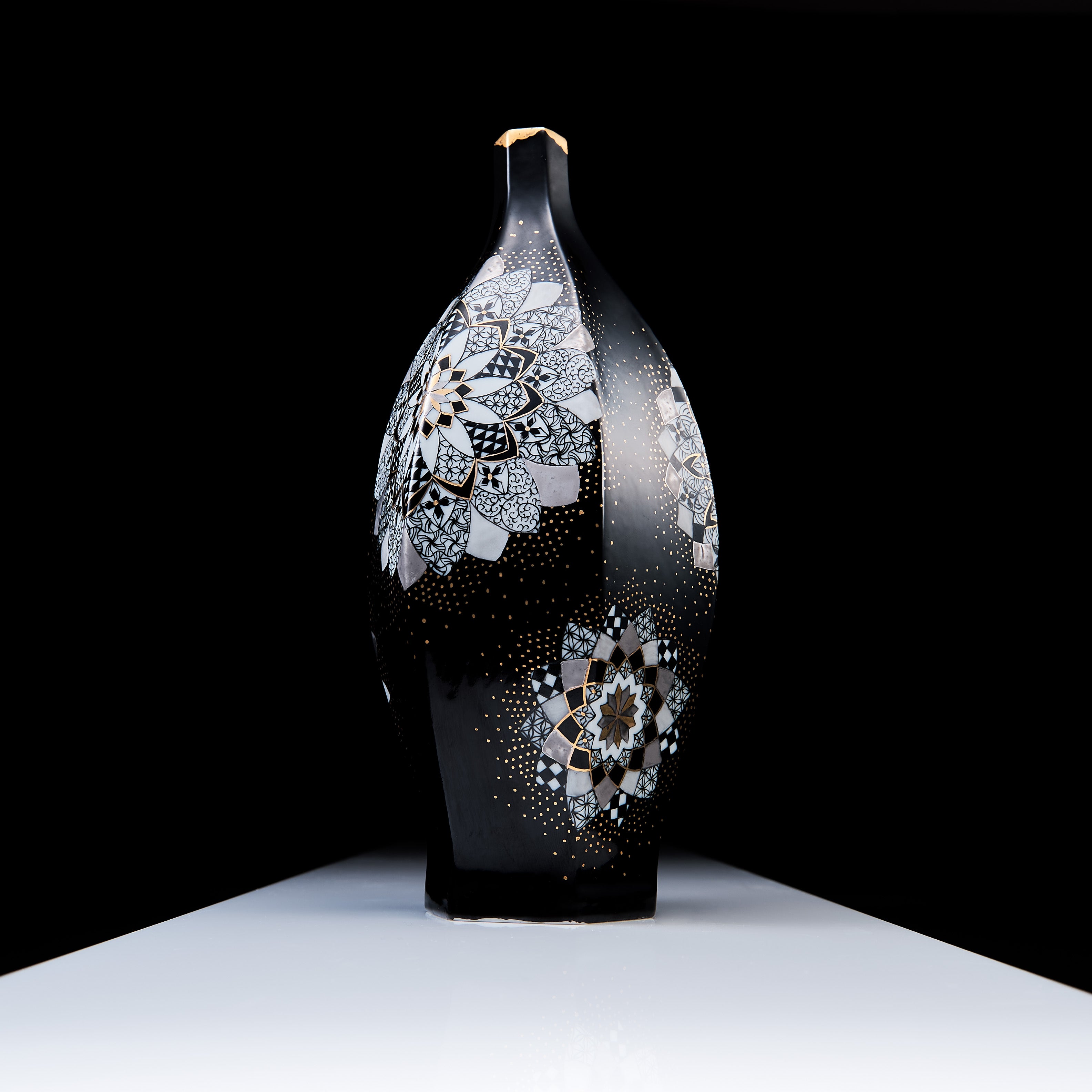
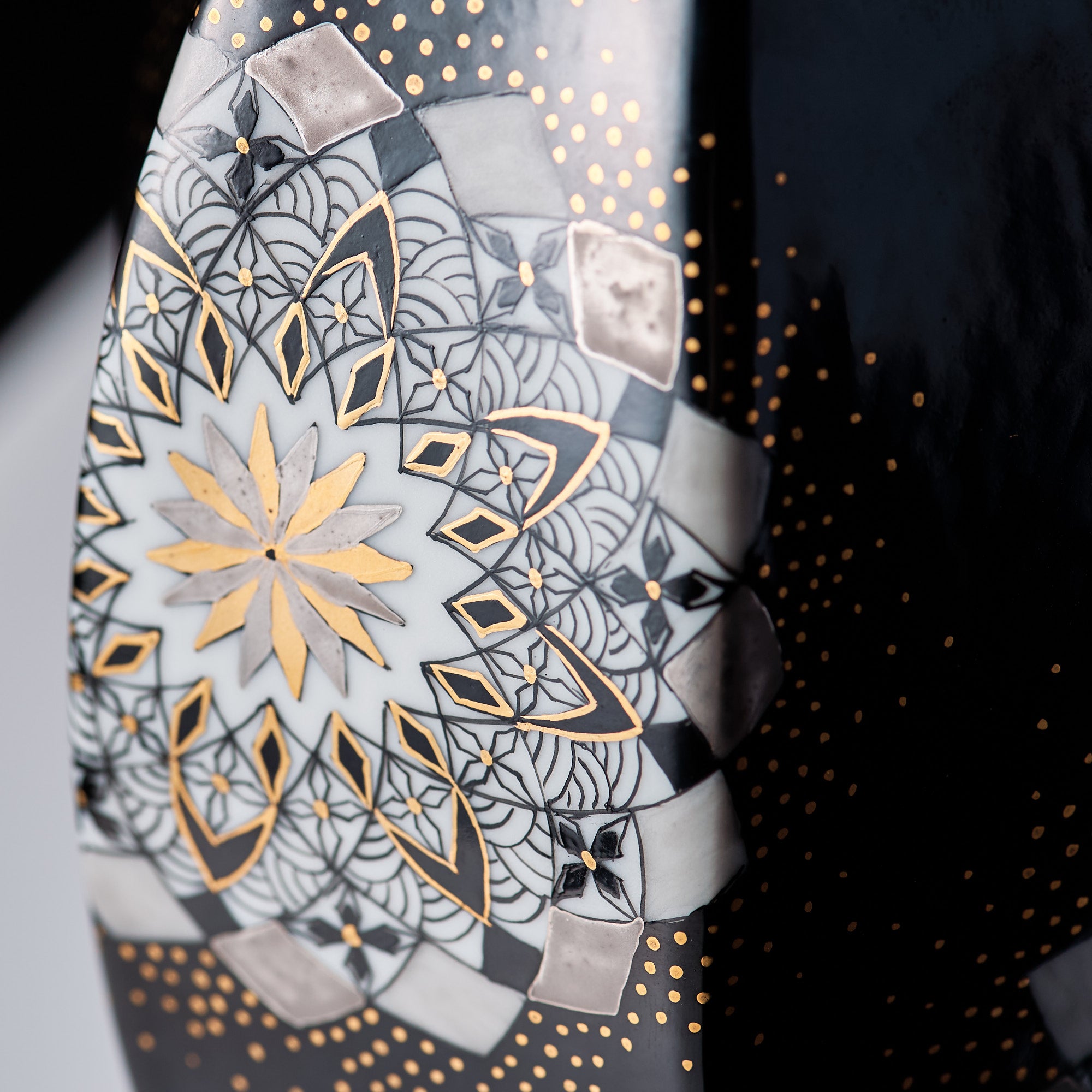
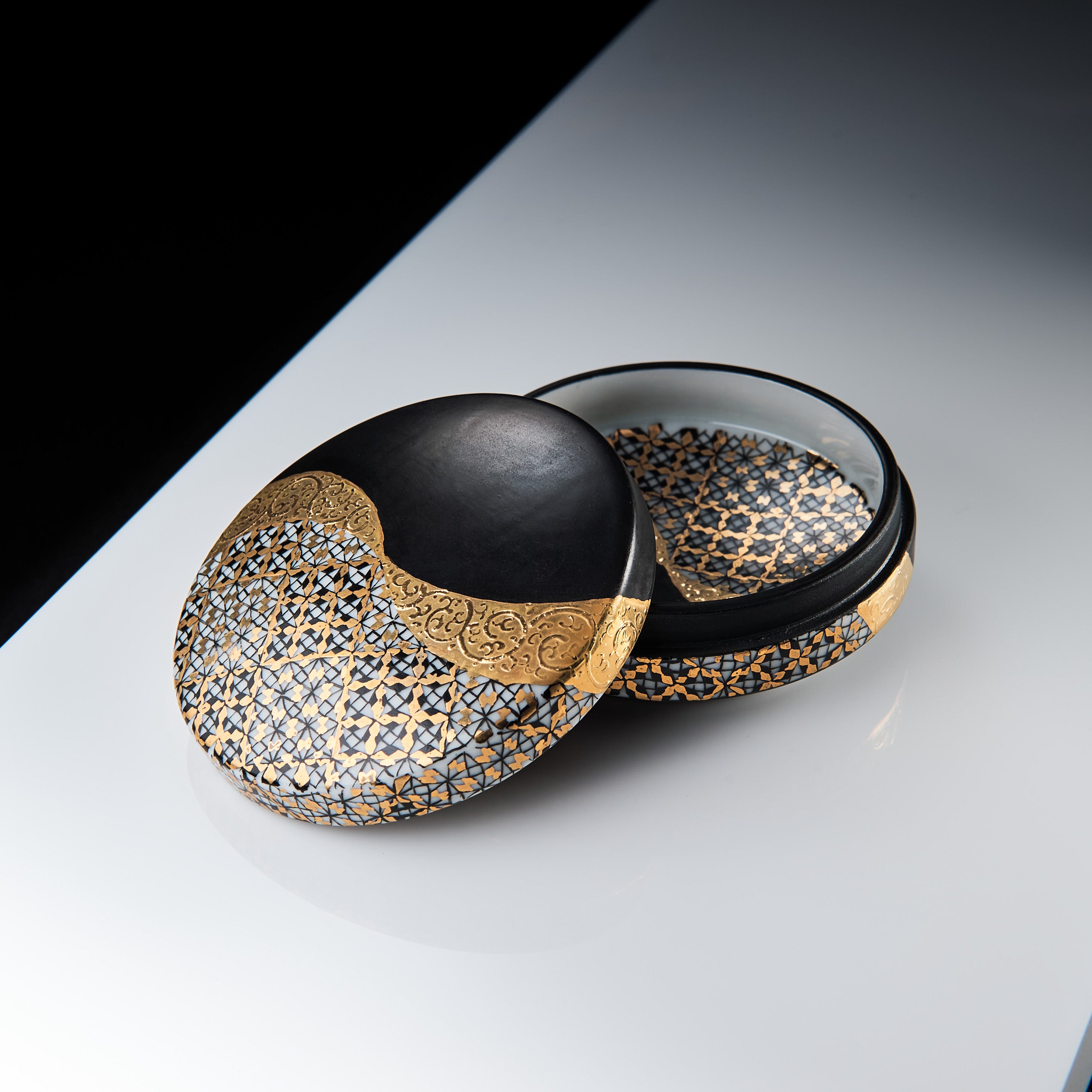
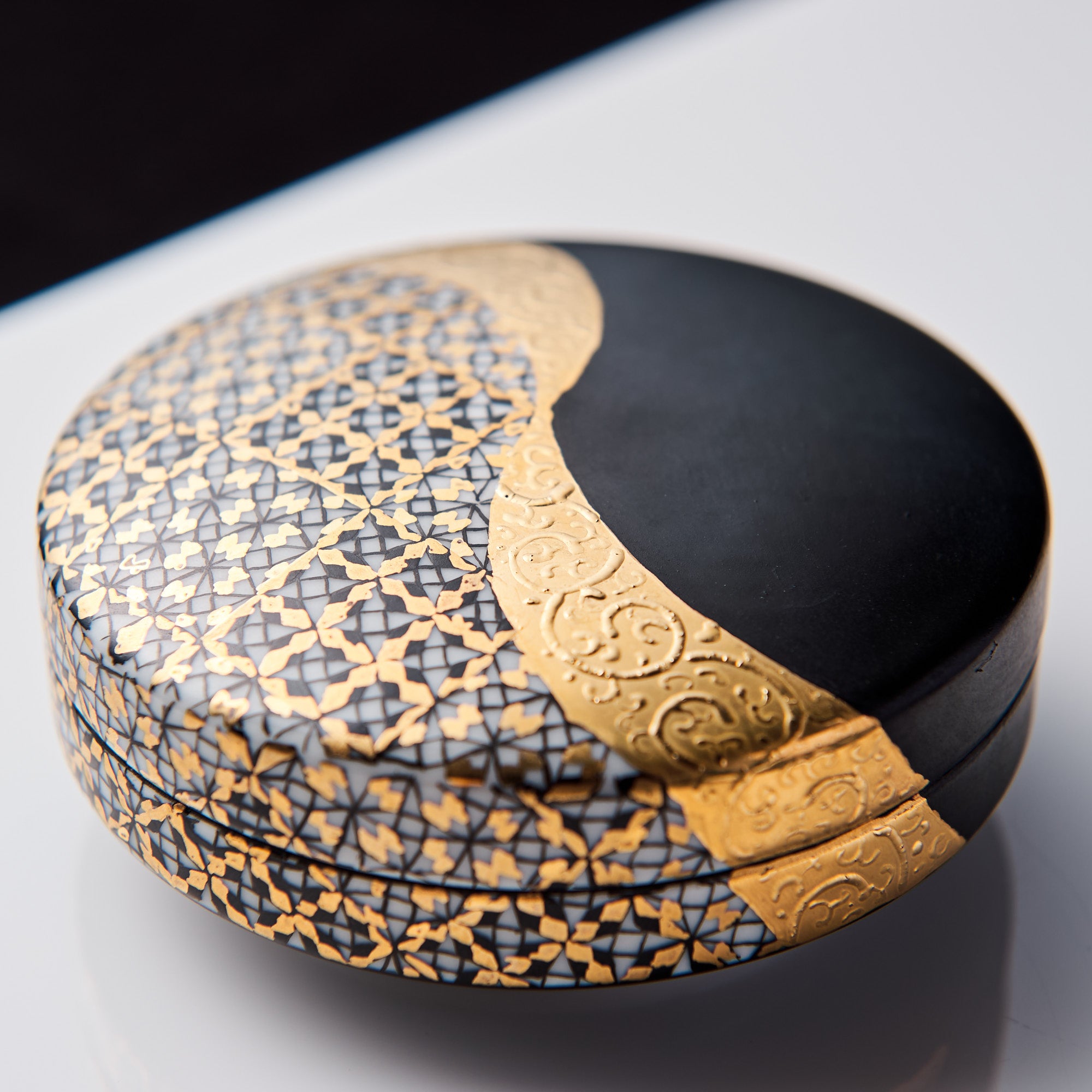
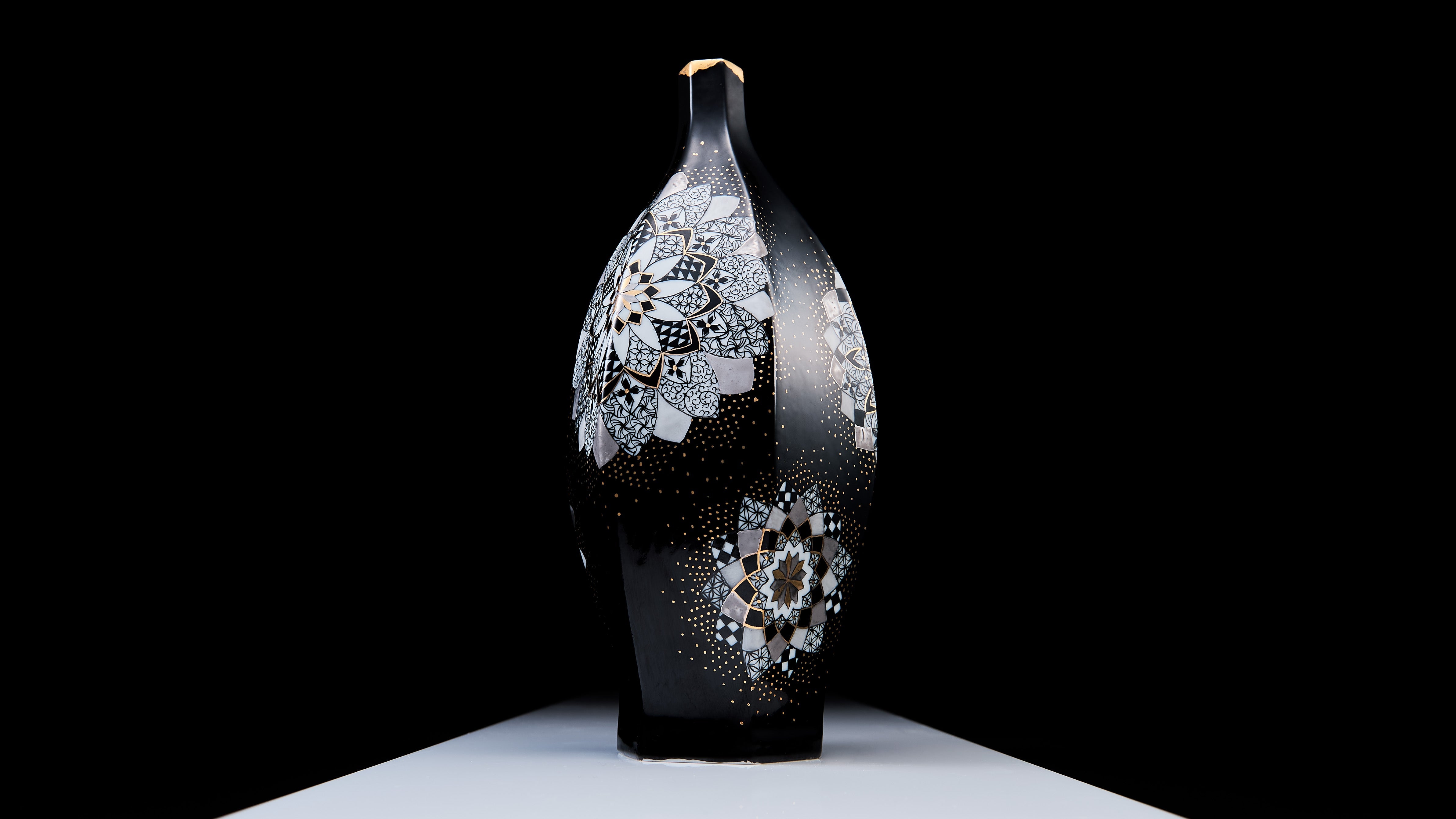
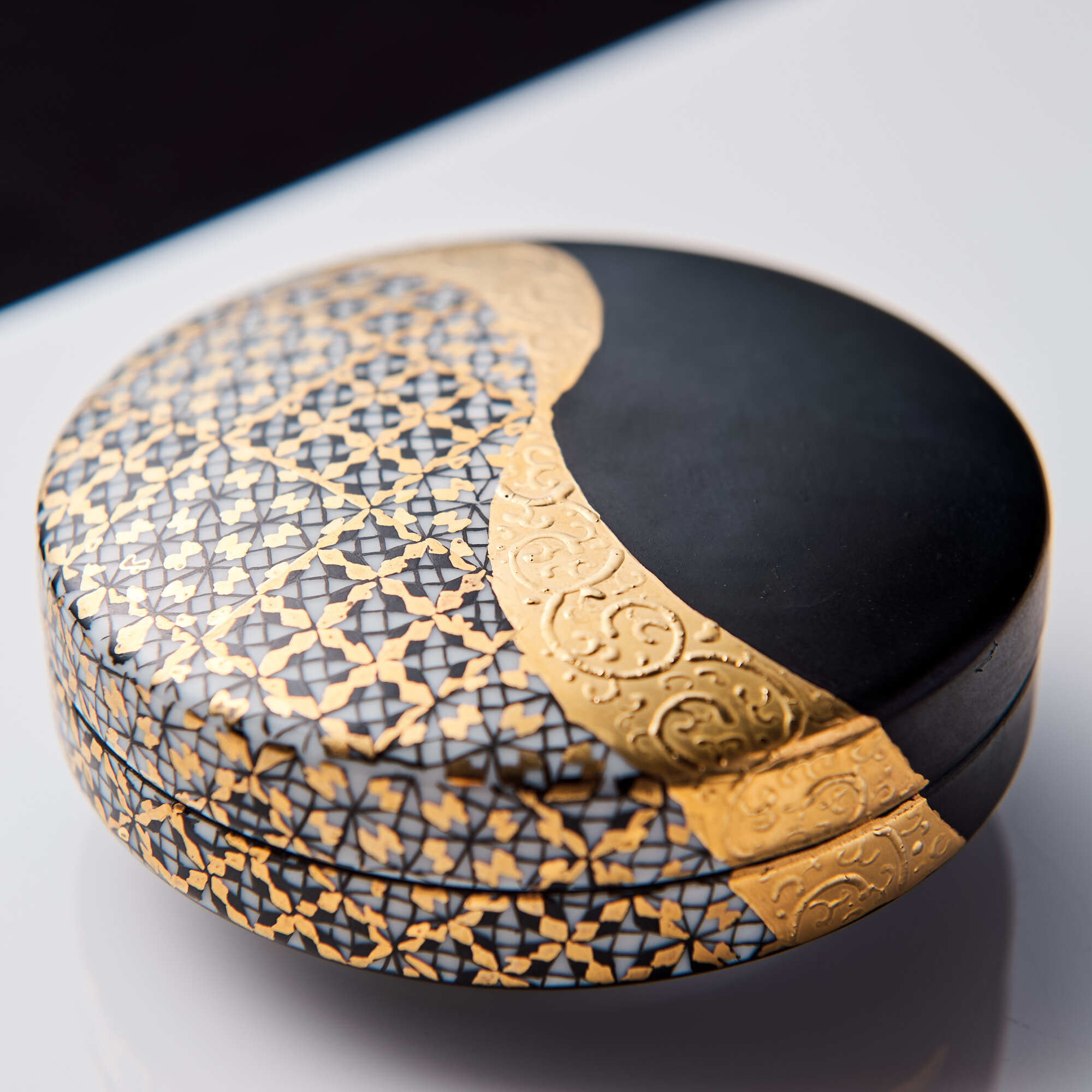
A través de sus obras de cerámica japonesa, Ishitomi Shunjiro aporta una claridad gráfica distintiva a la porcelana Kutani mediante su intrincado trazo y sus luminosos detalles. Arraigadas en la tradición, pero moldeadas por un ritmo personal, sus piezas combinan estructura y espontaneidad de maneras que se perciben a la vez precisas y libres. Utilizando negro ultrafino gosu Con líneas superpuestas con adornos de platino y oro, construye patrones que van de lo floral a lo geométrico y lo abstracto, invitando a la interpretación abierta y al descubrimiento silencioso.
El ornamento como estructura
A primera vista, la porcelana de Ishitomi parece decorativa. Observe de nuevo, y un orden más profundo se revela. Su proceso comienza con cuadrículas trazadas a lápiz sobre papel suave de chikushi , estableciendo una base para el equilibrio. Dentro de cada sección, pinta a mano patrones intrincados usando un pincel recortado hasta puntas finas. Las líneas se trazan con gosu negro, un pigmento conocido por su densidad y dificultad, especialmente en trazos finos y limpios. A diferencia del gosu rojo fluido, el negro exige control, y esa tensión informa el movimiento de cada pieza.
Mientras pinta, Ishitomi responde intuitivamente a la composición en desarrollo, permitiendo que las secciones se desplacen y evolucionen. Lo que puede comenzar como un pétalo podría resolverse en un estallido estelar o un patrón celular. Cada capa se aplica y se cuece antes de añadir más: texturas mate, nuevos patrones o destellos de metal precioso. Muchas obras pasan por múltiples cocciones, y el oro a menudo requiere tres para lograr un brillo duradero. El platino, que refleja la luz de manera más suave, se aplica con igual precisión pero se cuece a temperaturas ligeramente más bajas para preservar su luminosidad.

Una Visión Contemporánea de Kutani
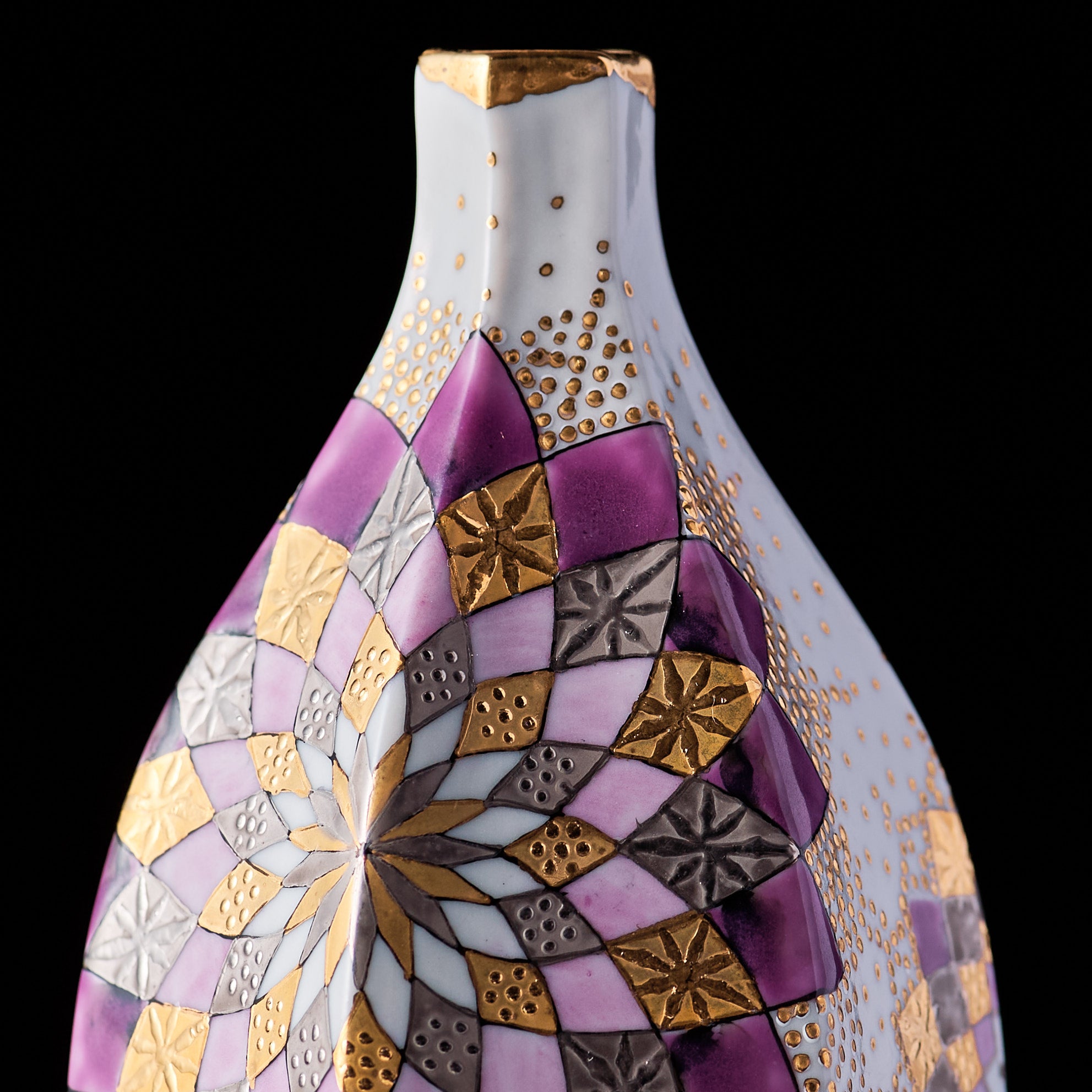
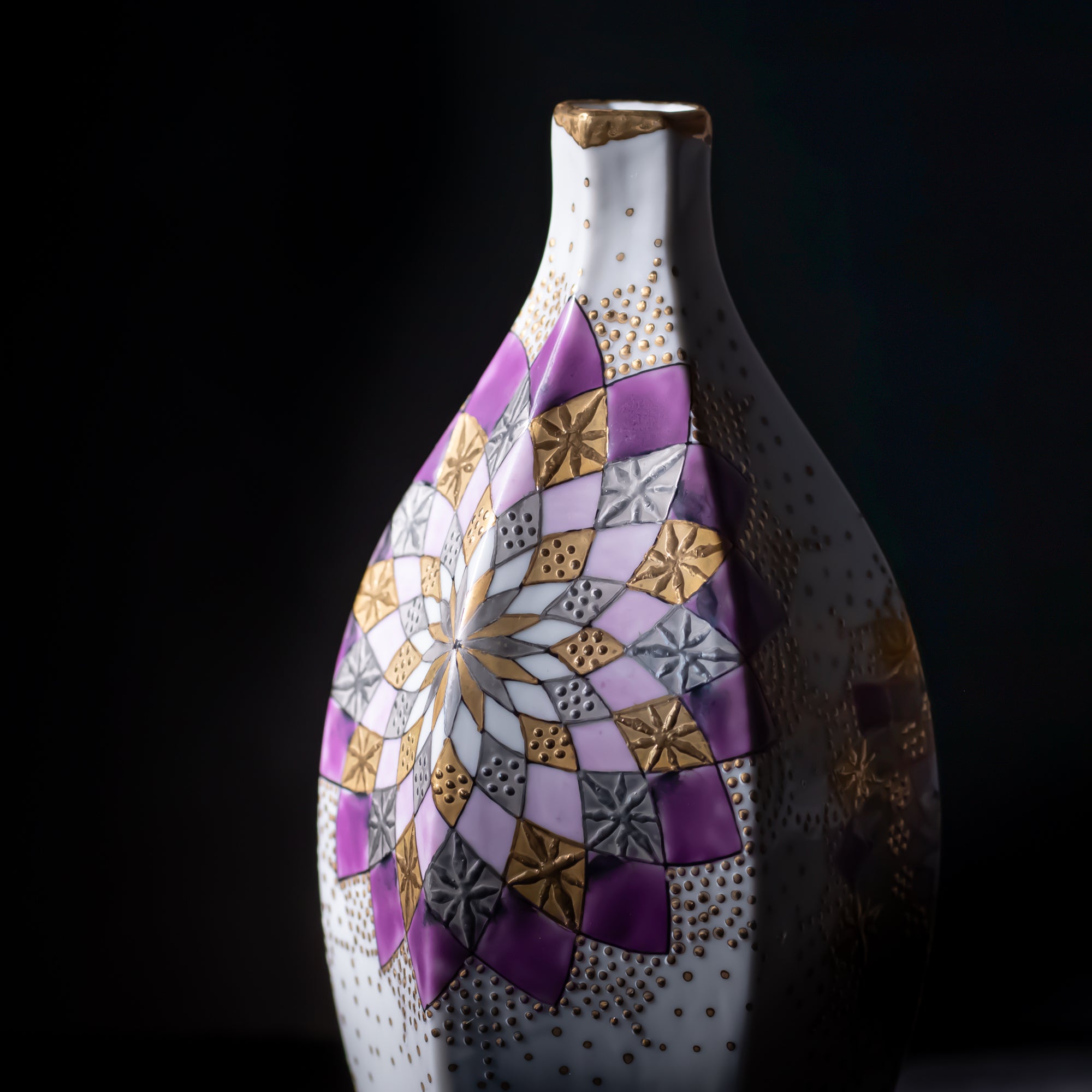
Una firma del trabajo reciente de Ishitomi es el uso sutil de esmalte blanco en relieve (shiromori) para elevar los motivos de oro o platino. Estos relieves apenas visibles otorgan a los detalles metálicos un leve alzamiento, permitiéndoles captar la luz desde ángulos cambiantes.
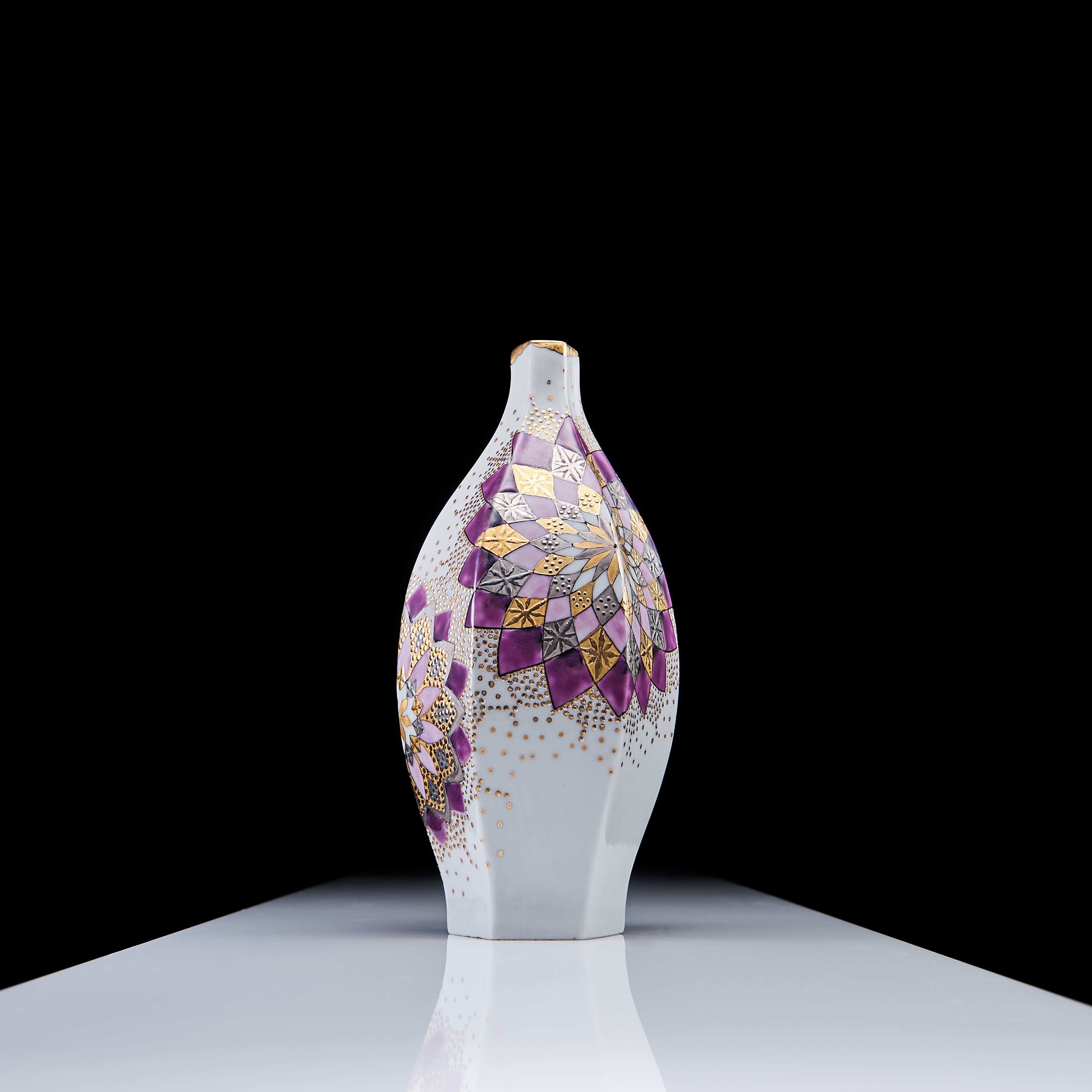
Aunque sus técnicas se fundamentan en los métodos tradicionales de Kutani, la interpretación de Ishitomi se percibe contemporánea, contenida en color, precisa en forma y serena en presencia. Sus jarrones y recipientes suelen presentar una paleta apagada de negro, blanco y oro, ocasionalmente suavizada con un tono lavanda delicado. Juntos, estos elementos crean obras que aportan un resplandor a interiores modernos mientras honran la artesanía estratificada de Kutani ware.
Biografía
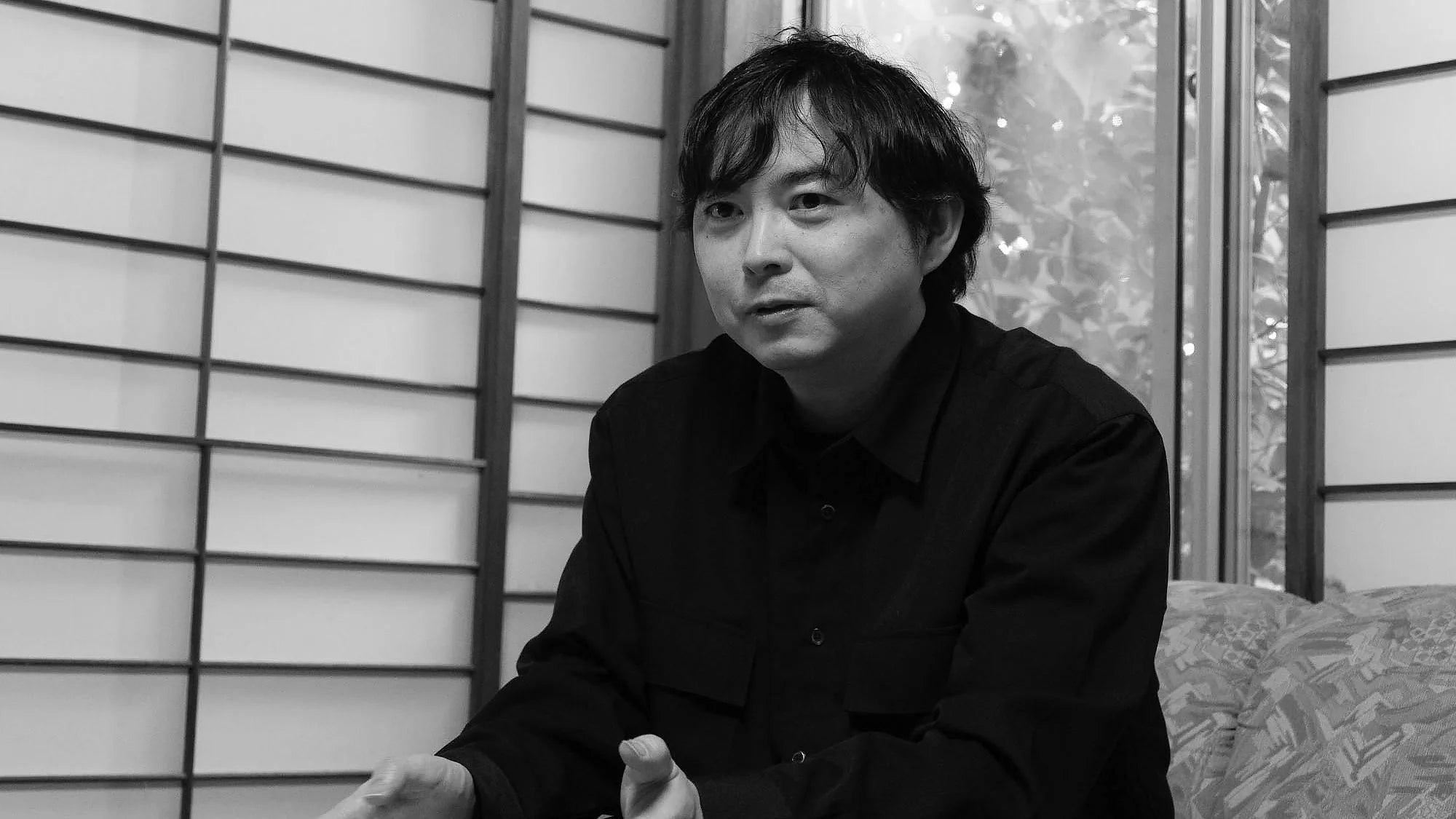
Ishitomi nació en 1975 en Kanazawa, Prefectura de Ishikawa, y se graduó del Instituto de Formación Técnica en Cerámica Kutani de la Prefectura de Ishikawa en 1997. Estudió bajo la tutela de Yoshita Minori, Poseedor de Patrimonio Cultural Inmaterial Importante, reconocido por su dominio del yuri kinsai (pan de oro bajo cubierta), y se formó en los ritmos tradicionales de la vida de taller en Kinzan Kiln. Tras muchos años como artesano de taller, ahora trabaja de forma independiente desde su estudio en casa.
Desde su primera selección para la Exposición de Artesanía Tradicional de Kutani en 2005, ha expuesto regularmente en diversas exposiciones, así como en la Exposición de Artesanía Tradicional de Ishikawa. En 2016, recibió el Premio de Estímulo en la Exposición de Artesanía Tradicional de Kutani.
En 2021, Ishitomi fue oficialmente certificado como Artesano Tradicional en reconocimiento a su habilidad y contribuciones a la tradición de Kutani ware.