
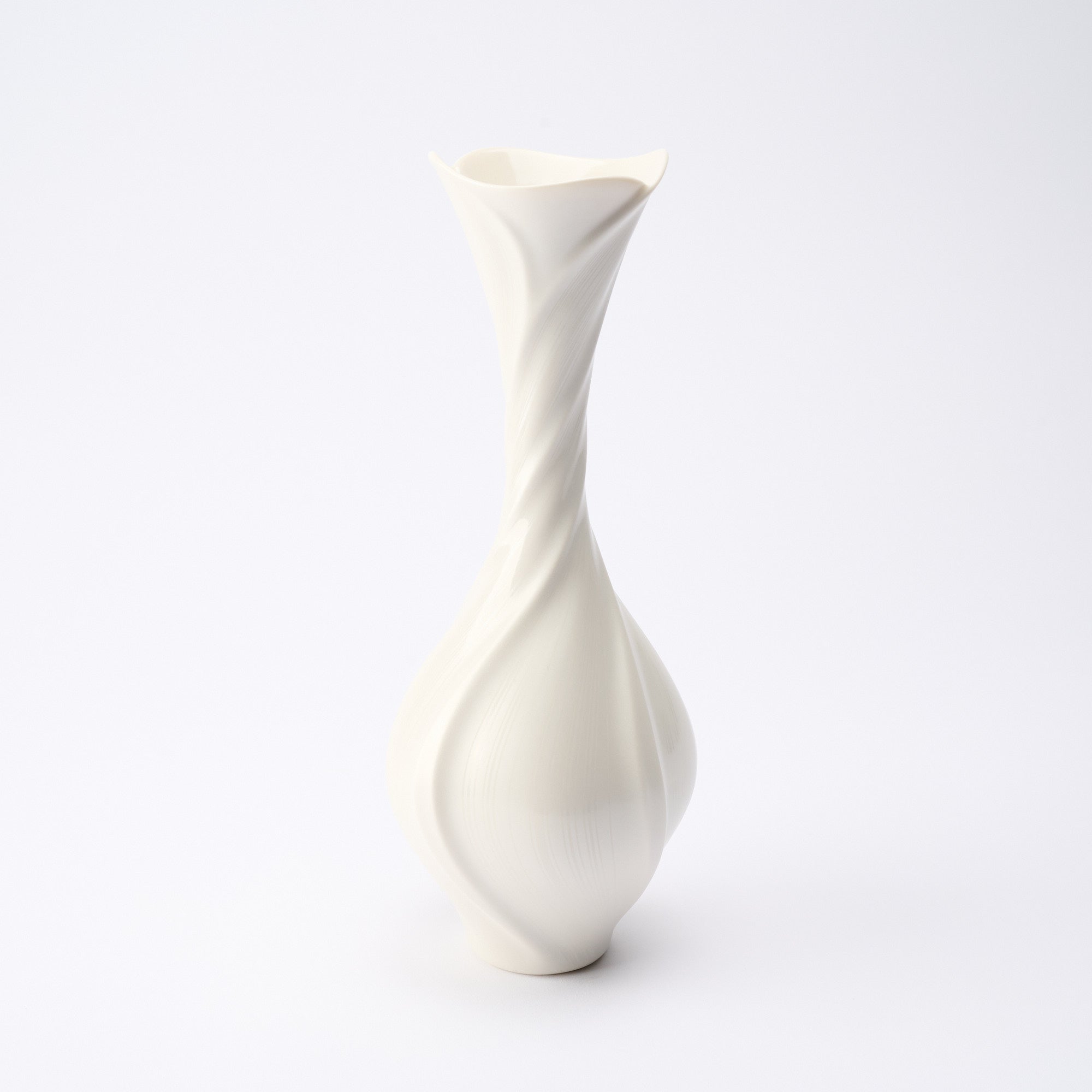
Jarrón de Cuello de Grulla Shinju Kosai
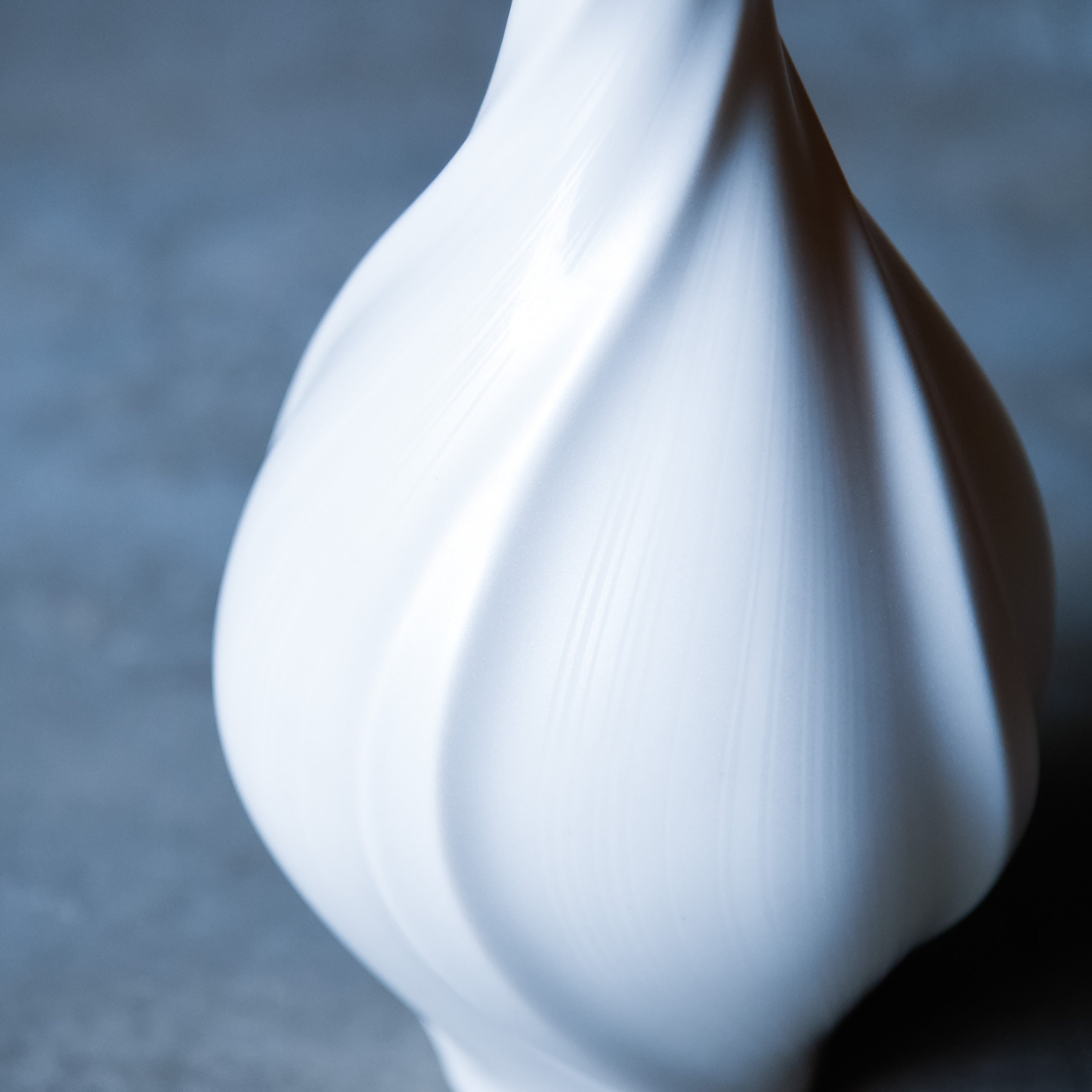
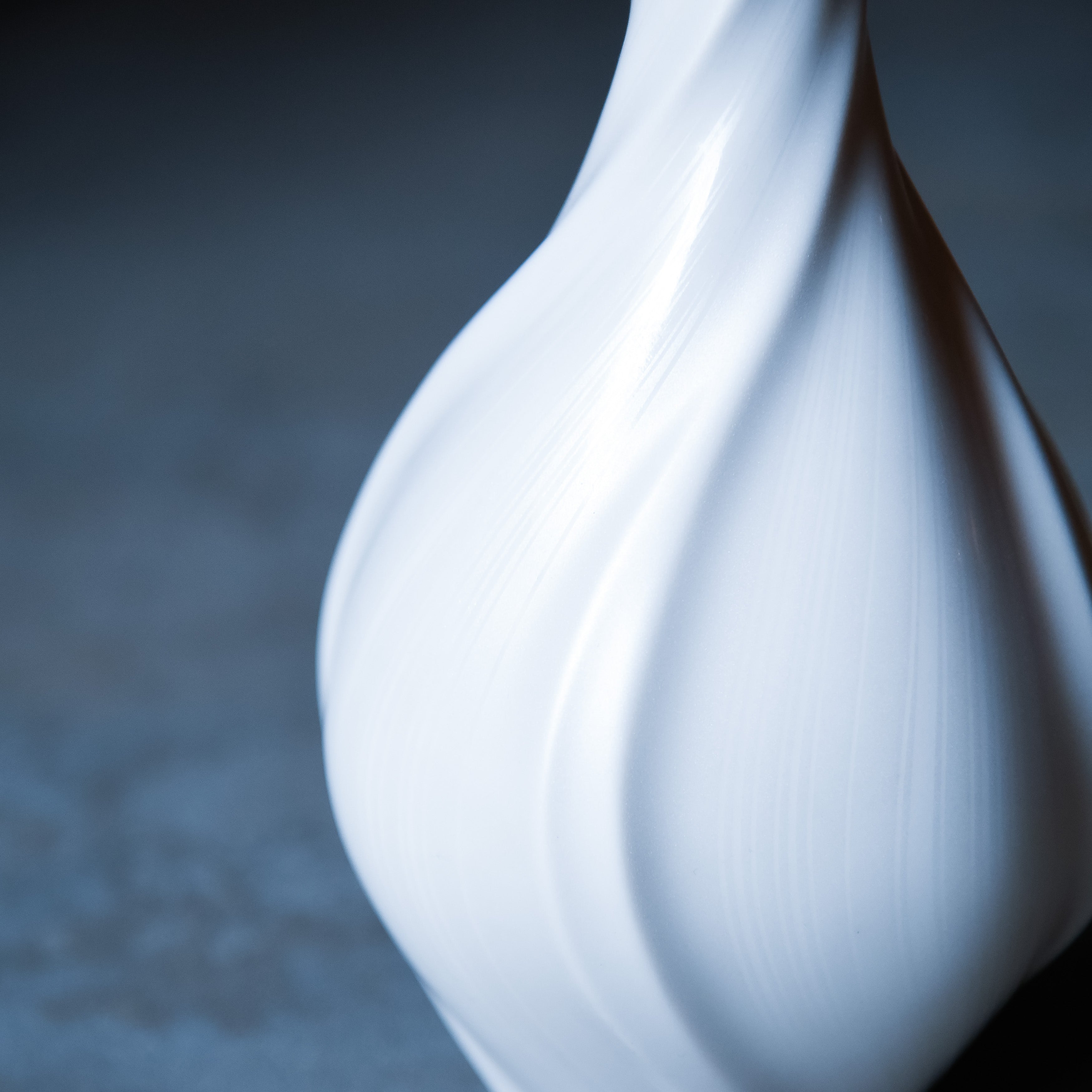
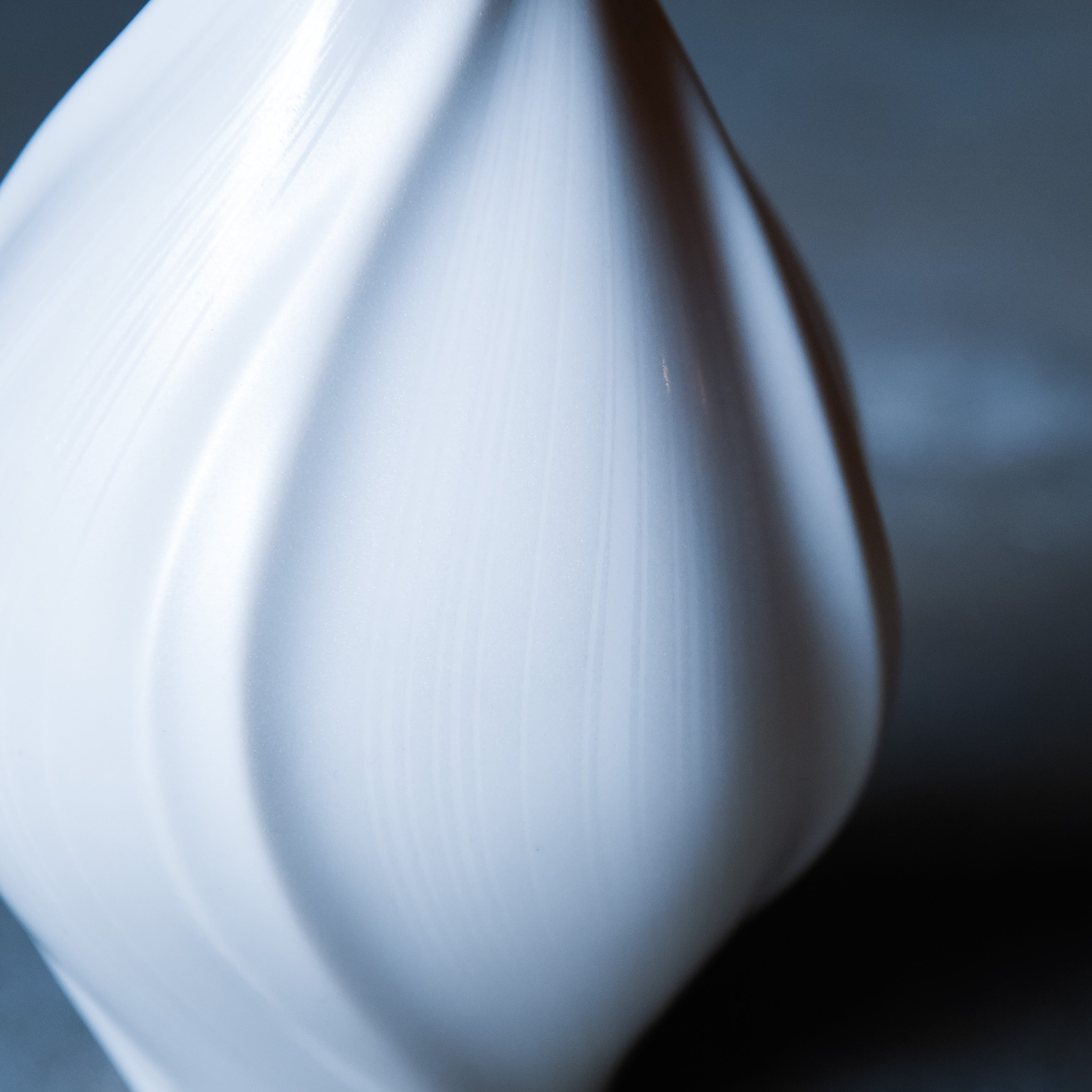
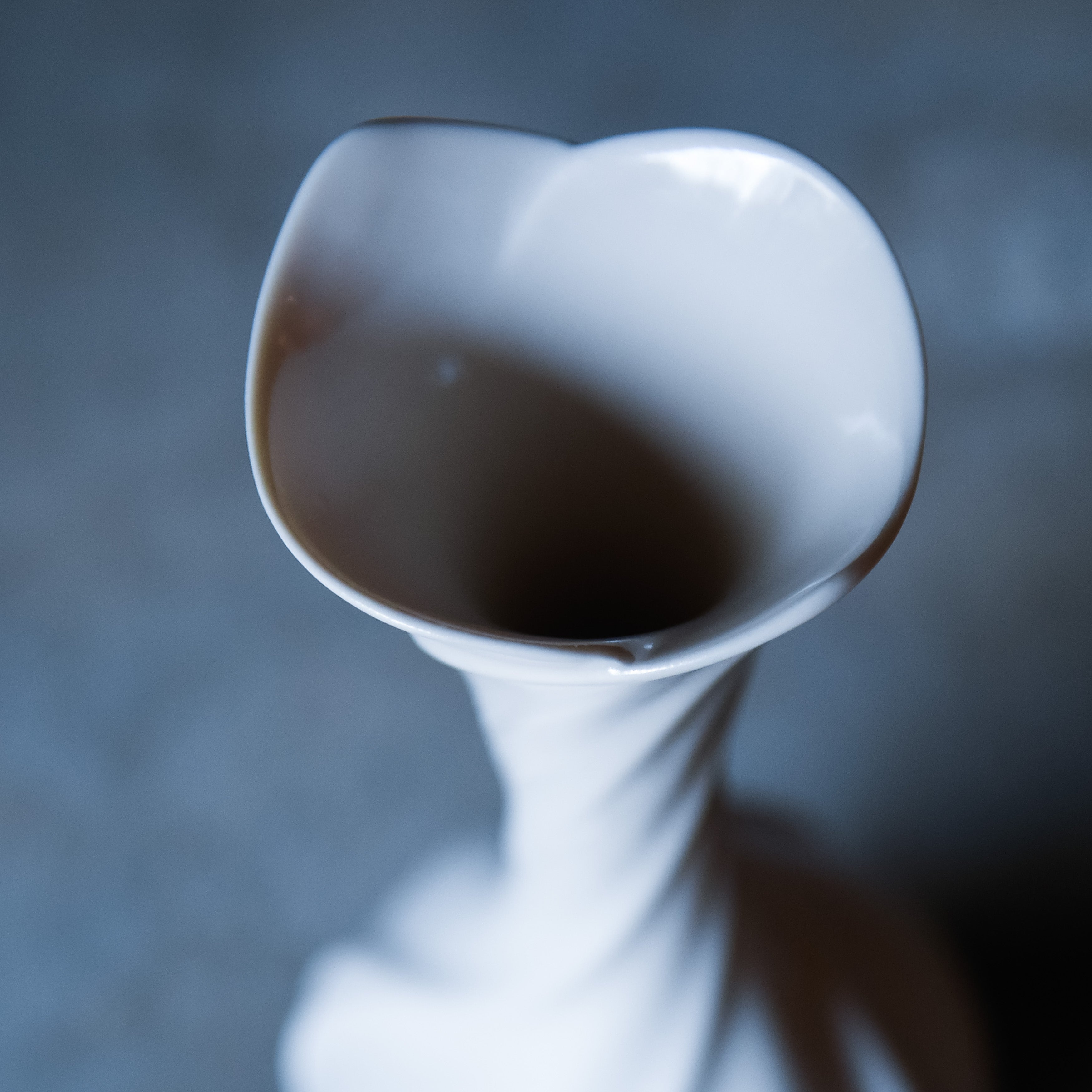
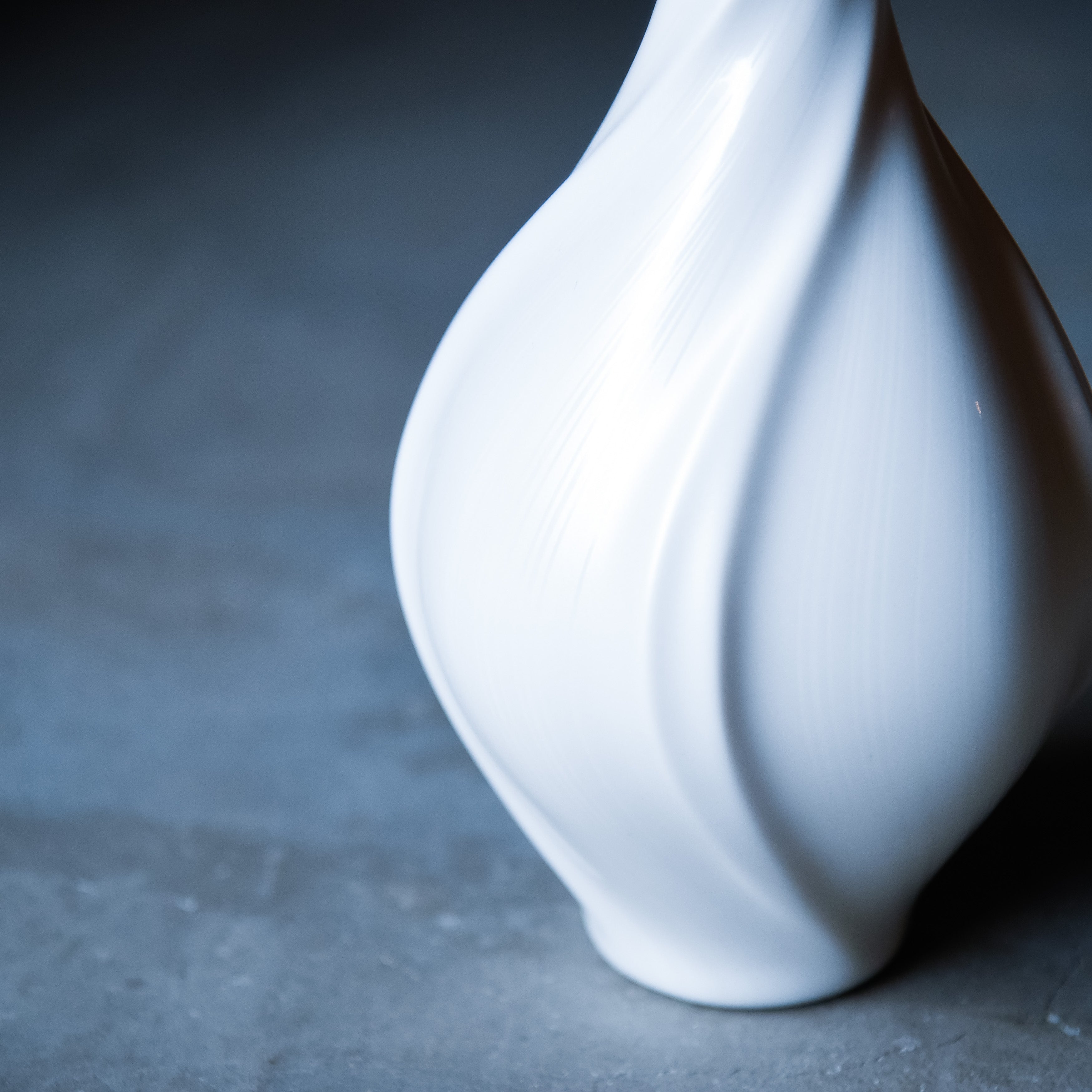
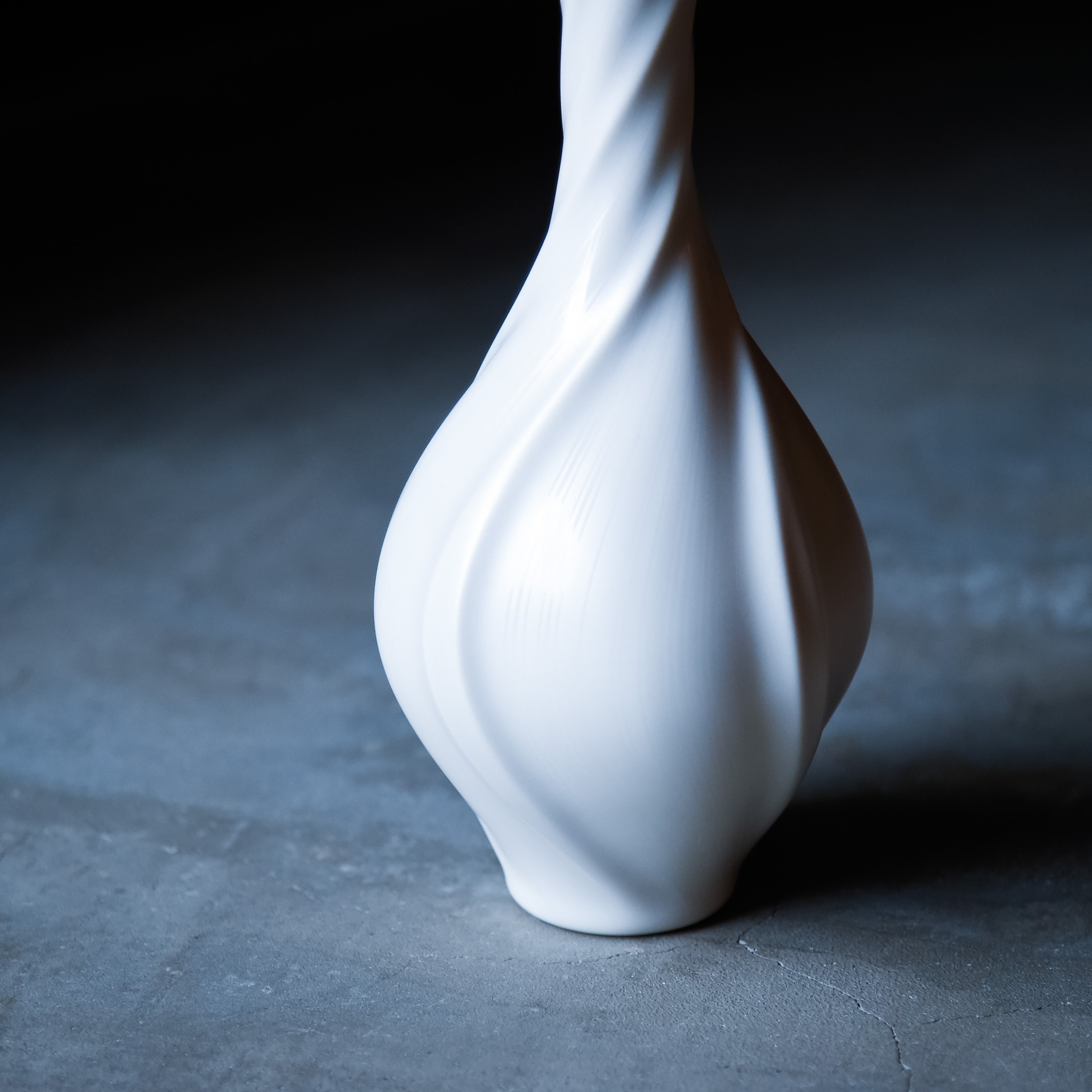
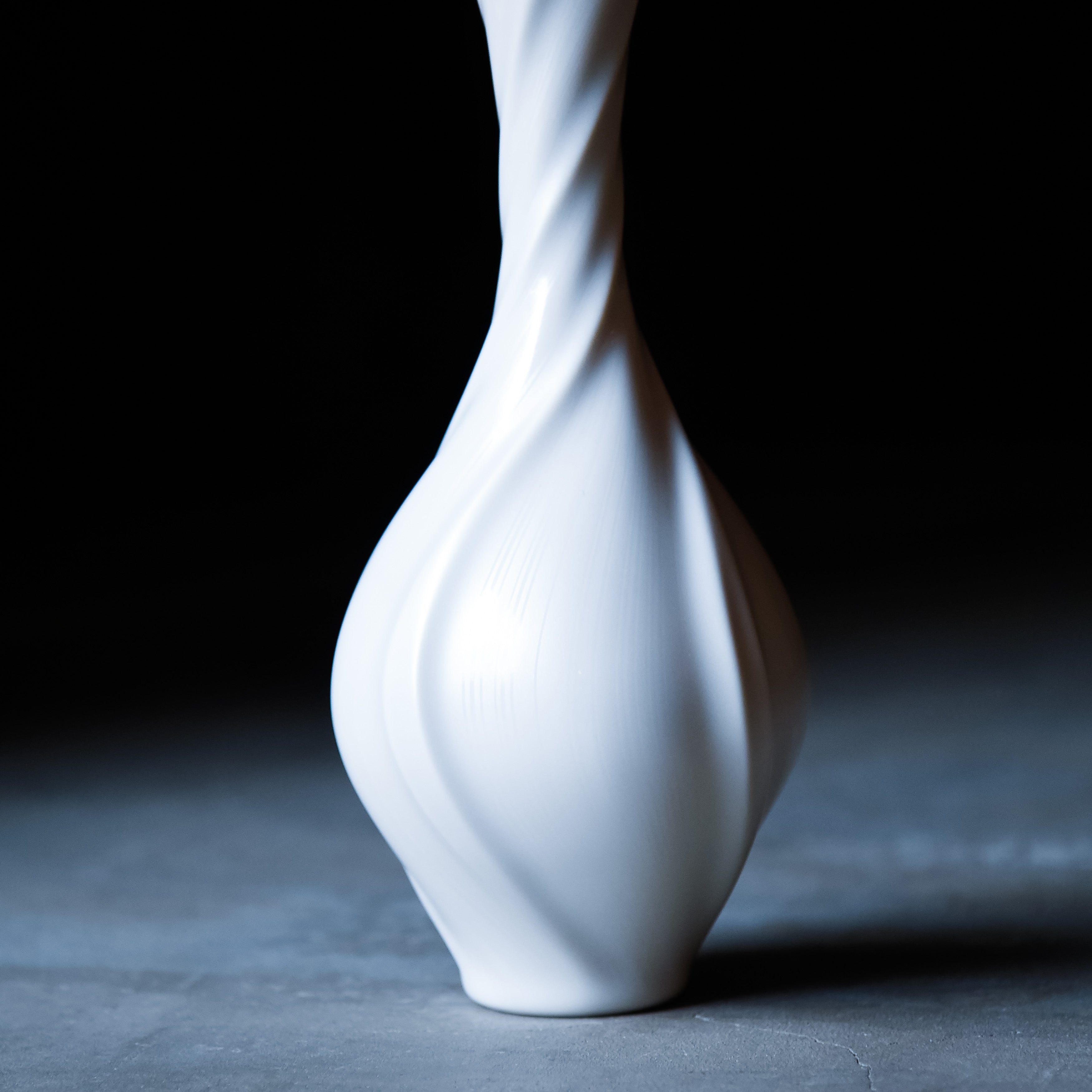
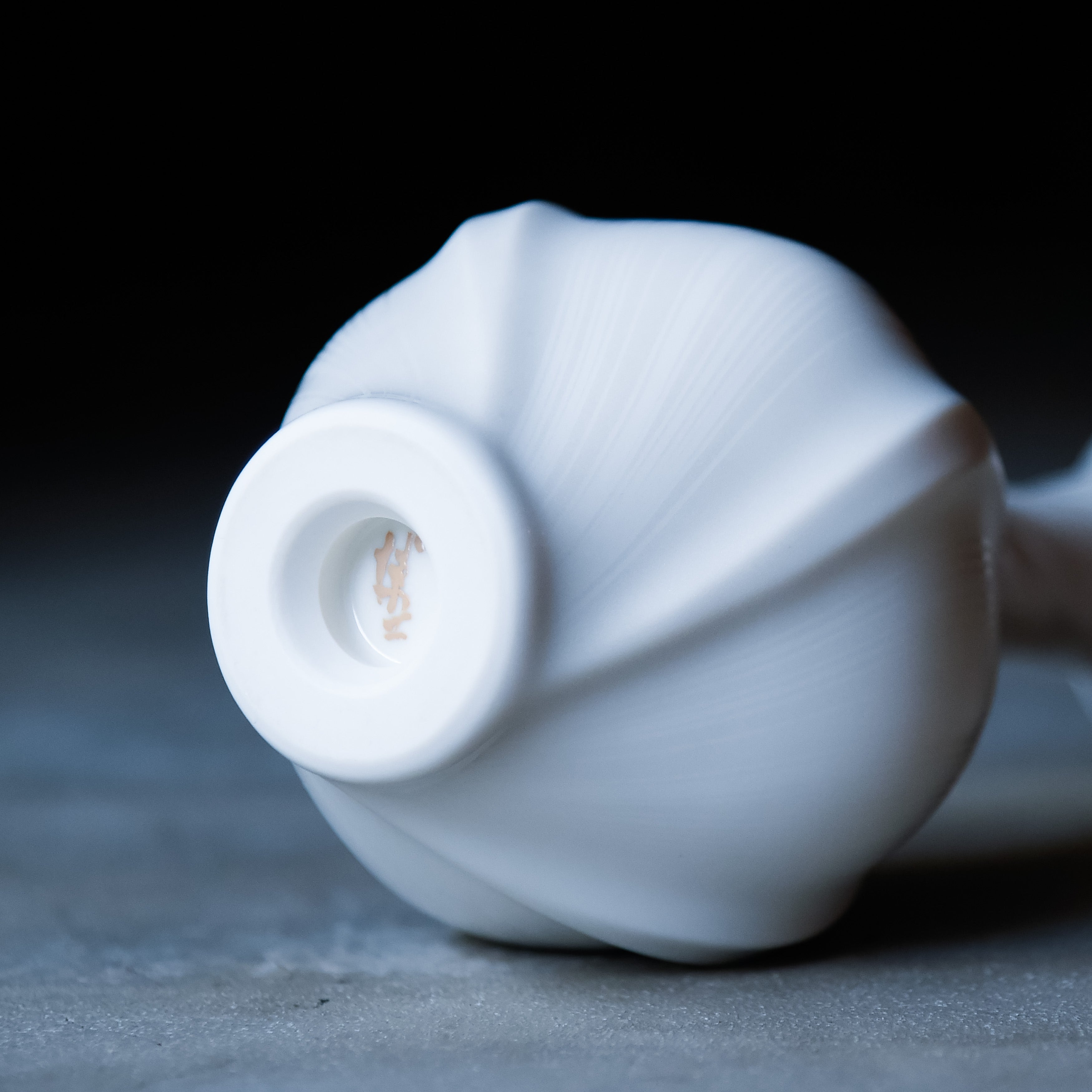
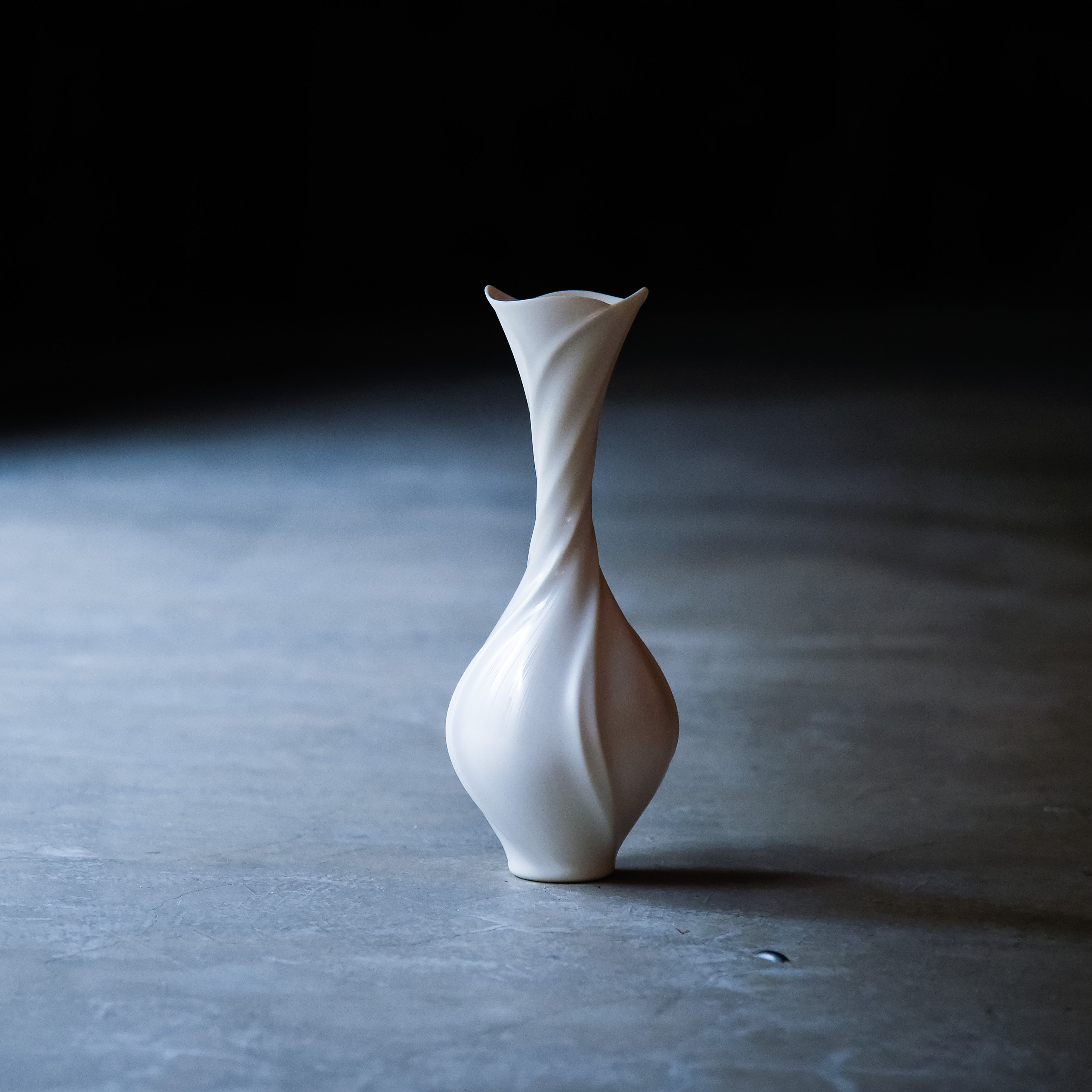
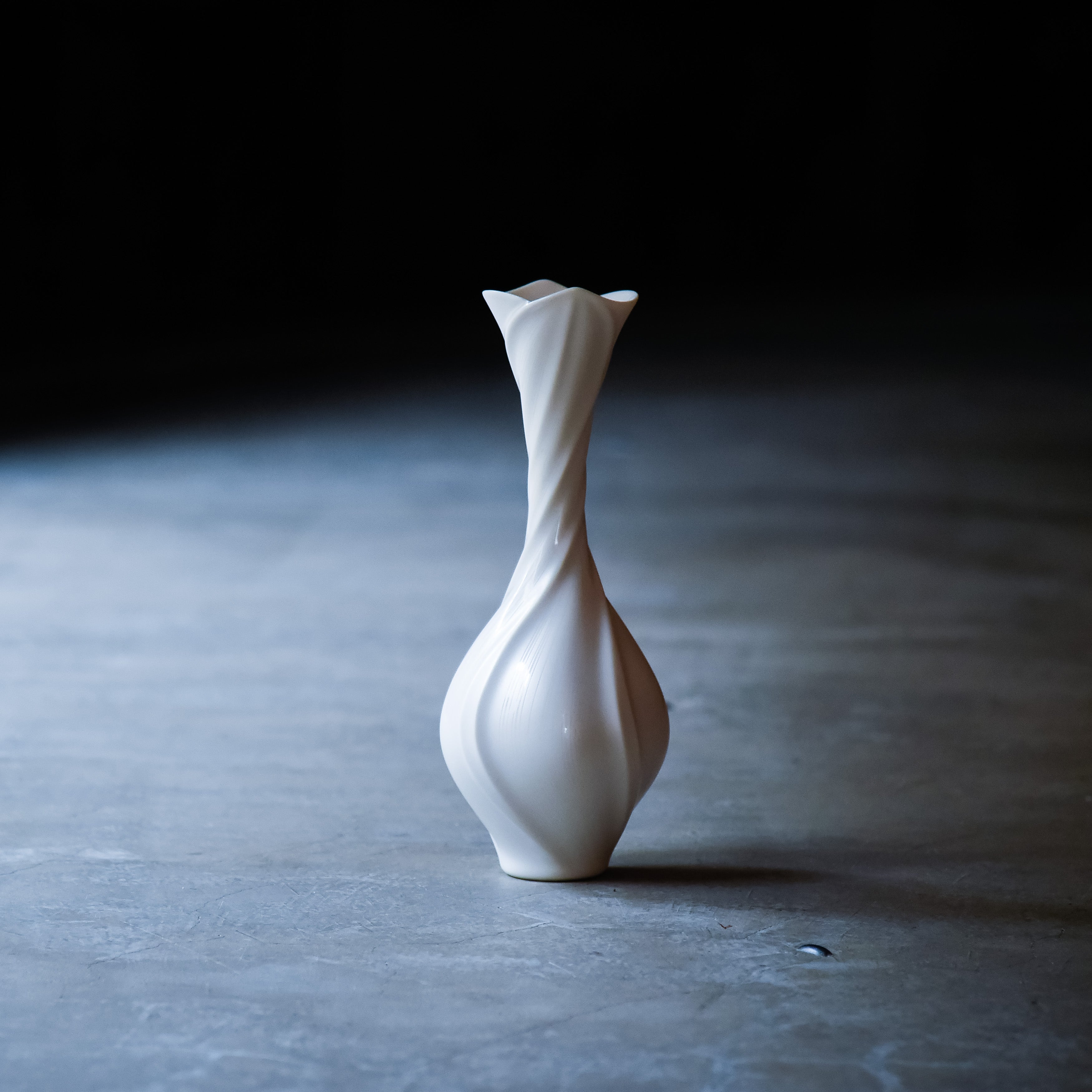
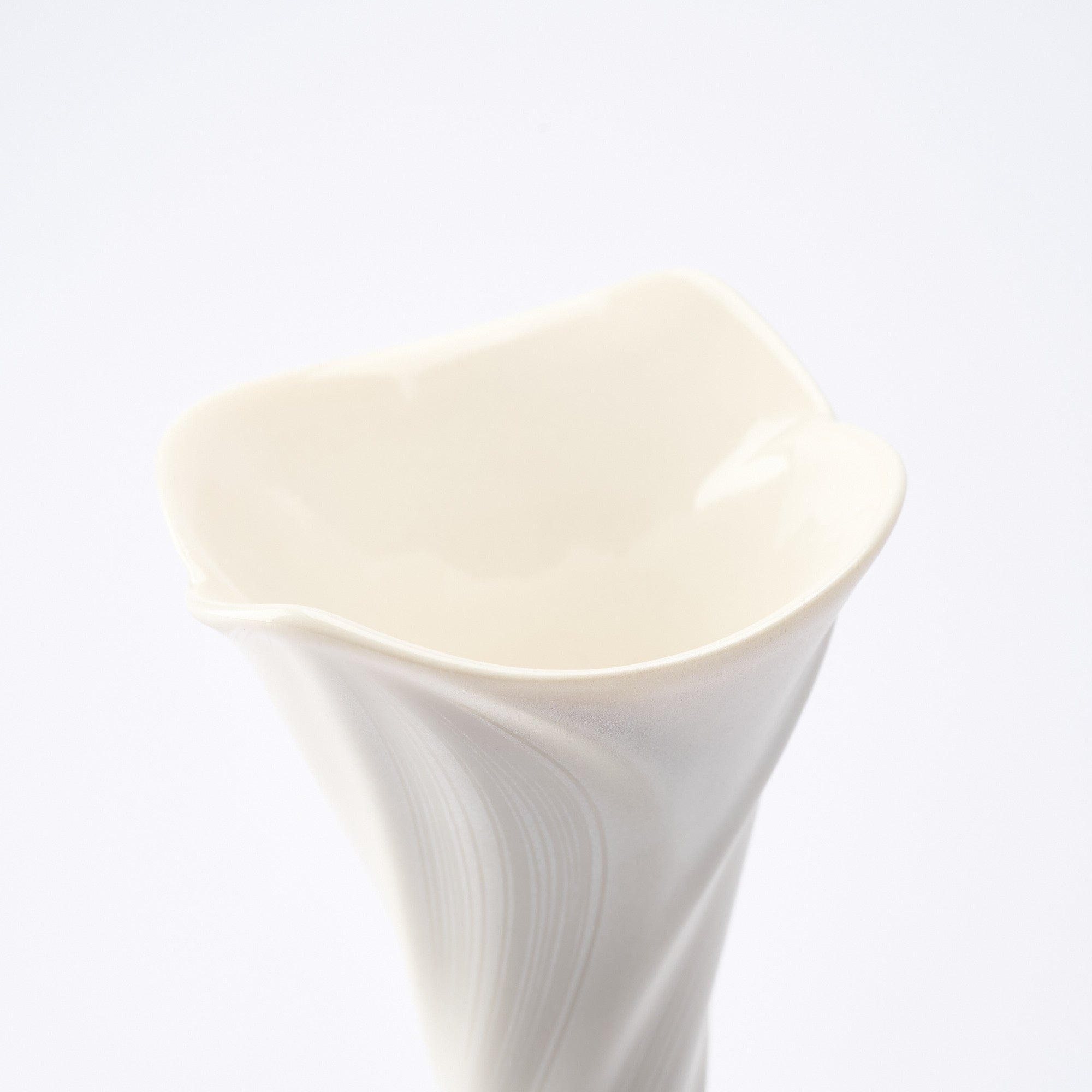
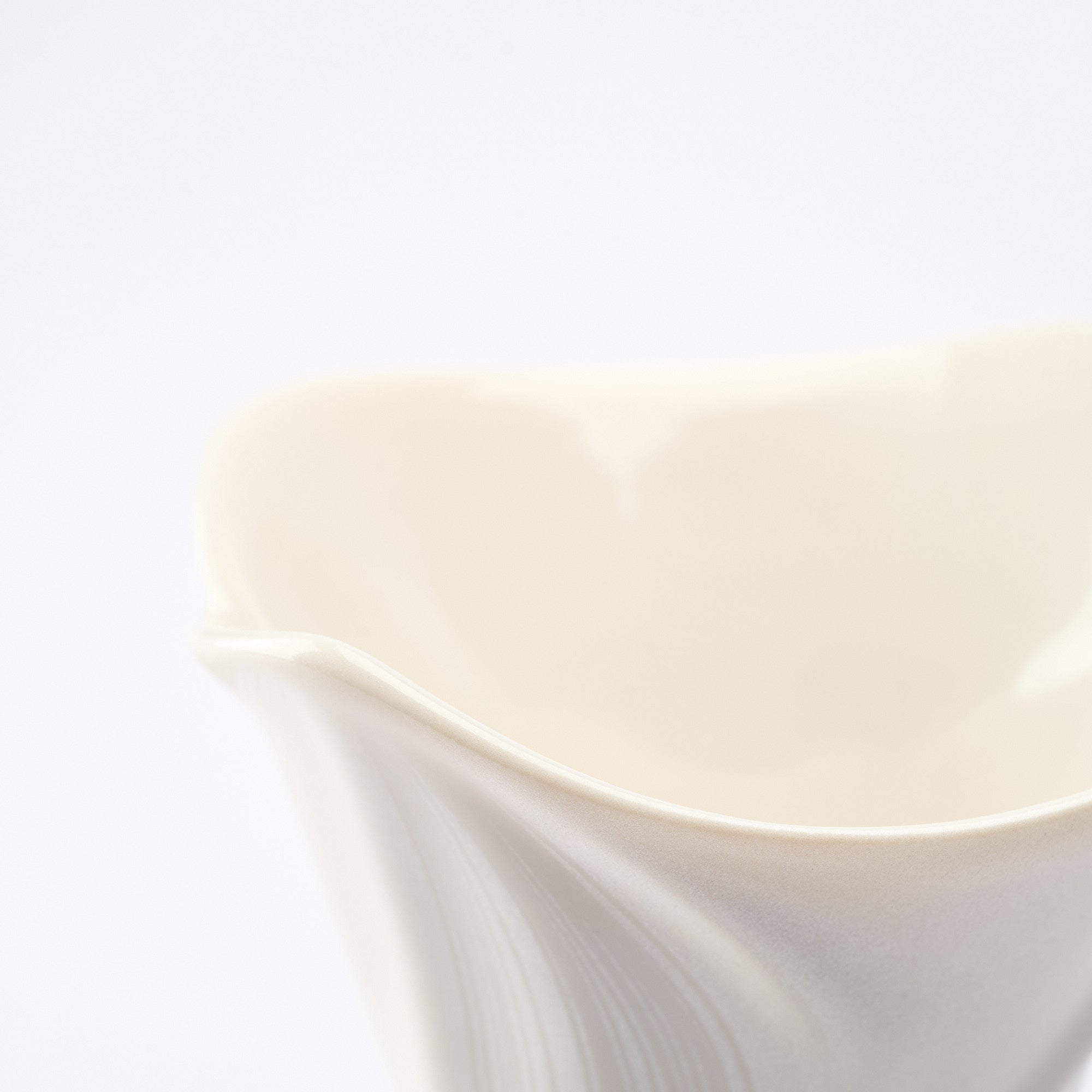
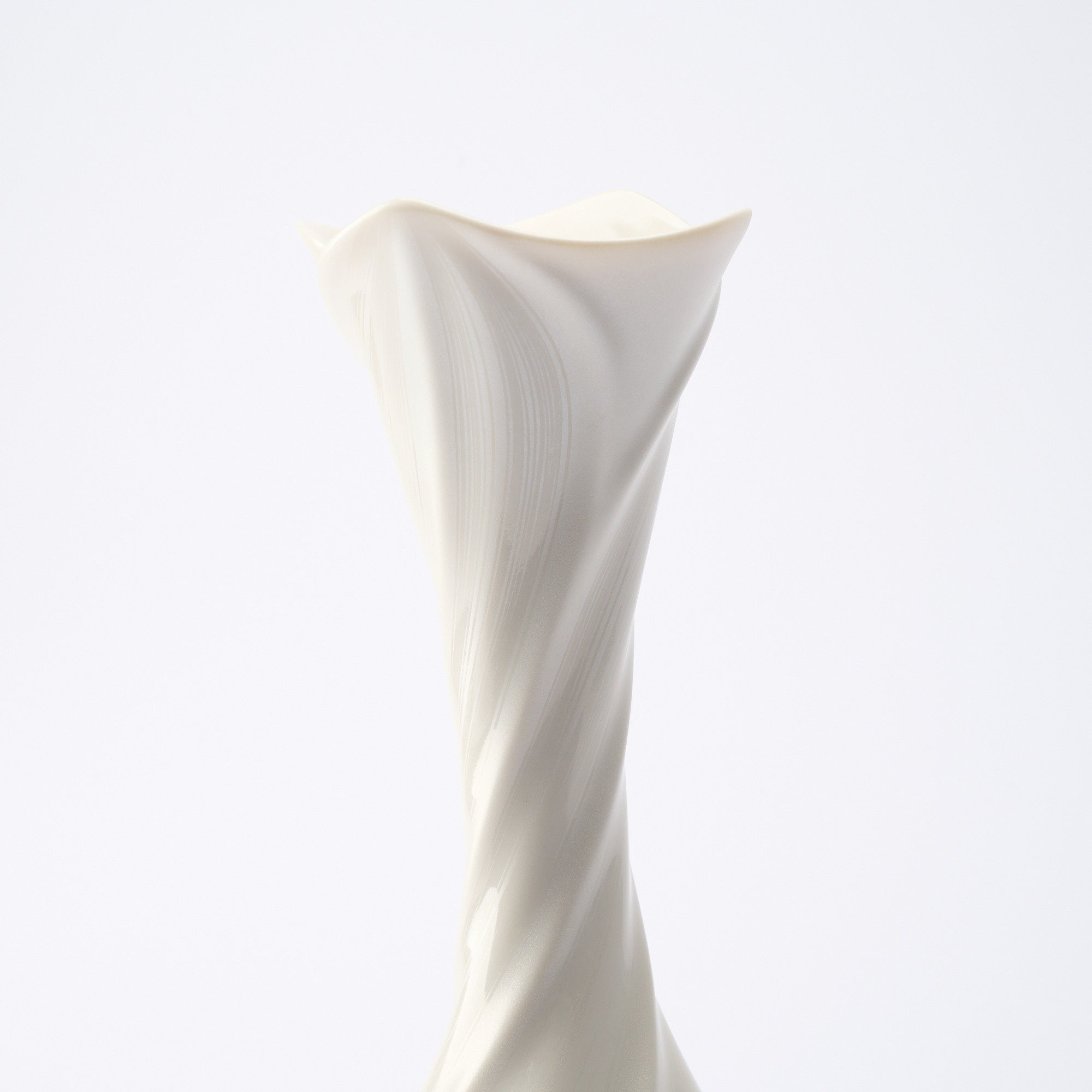
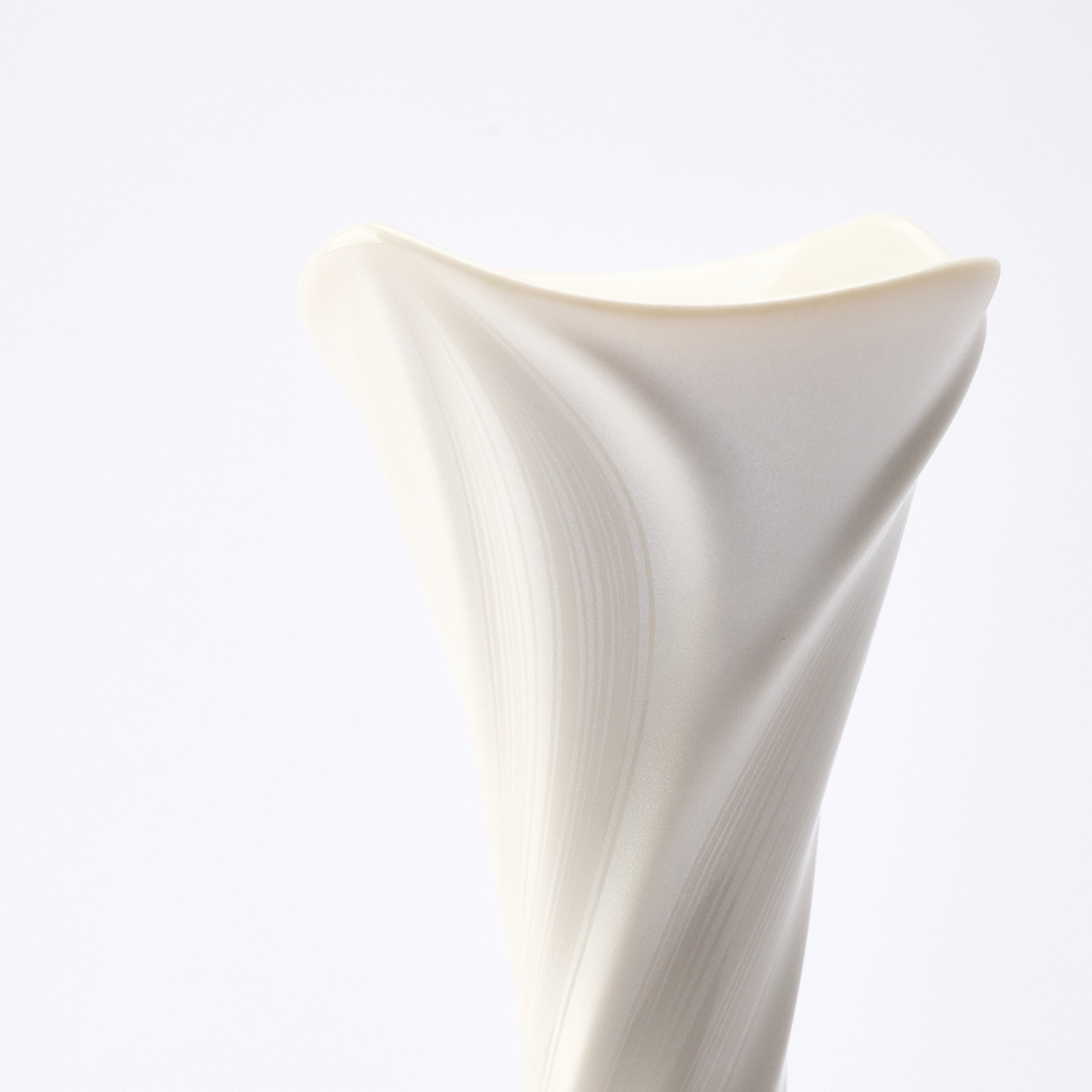
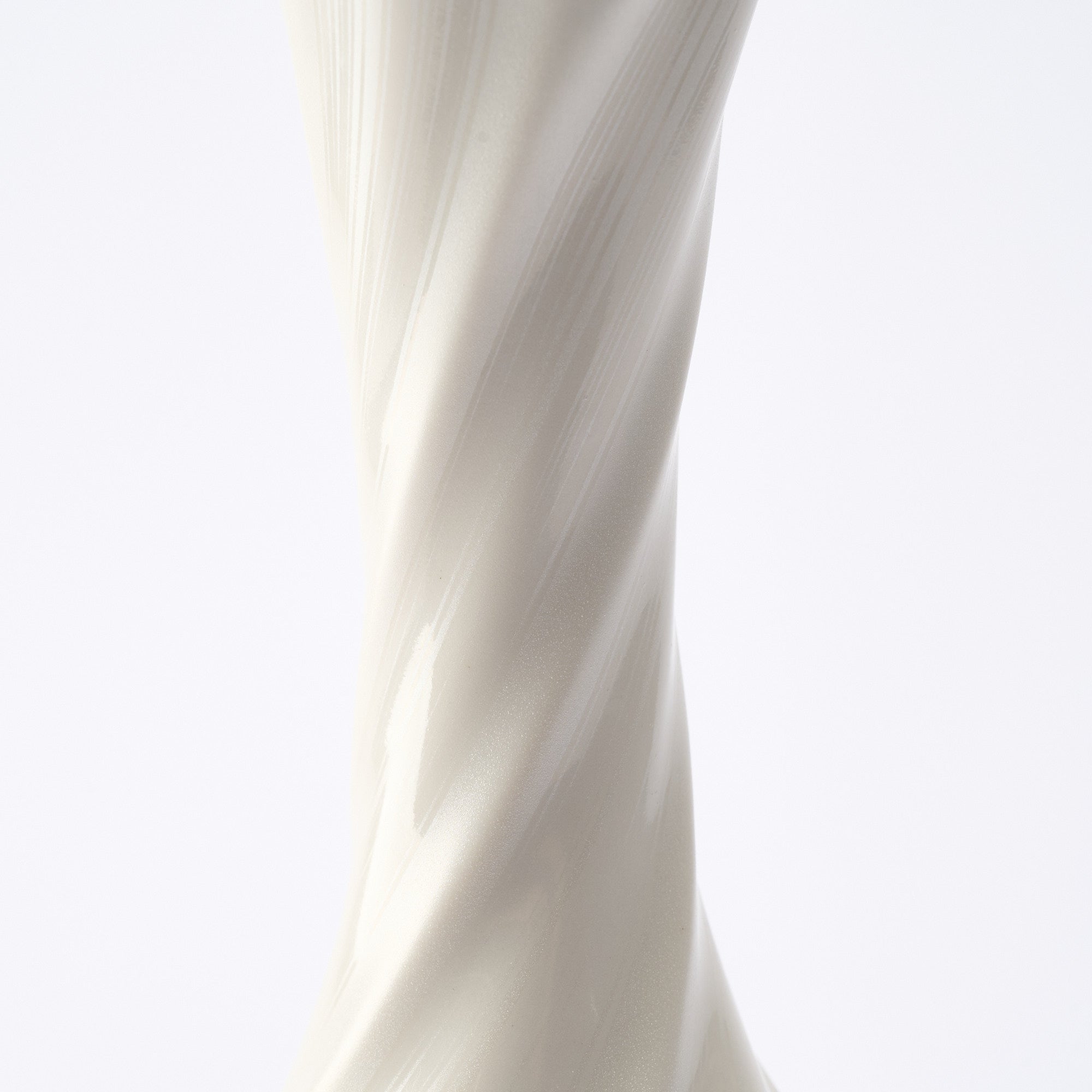
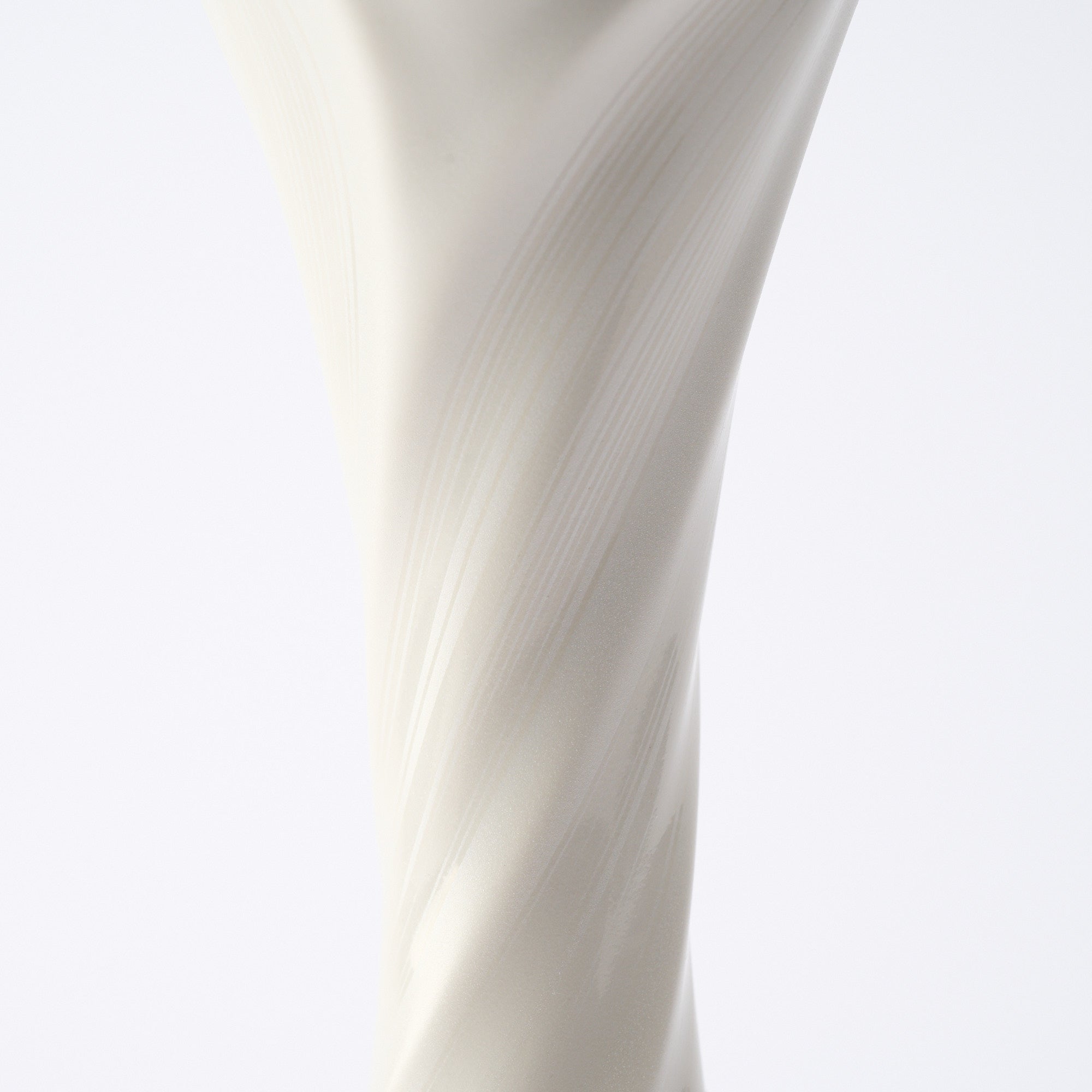
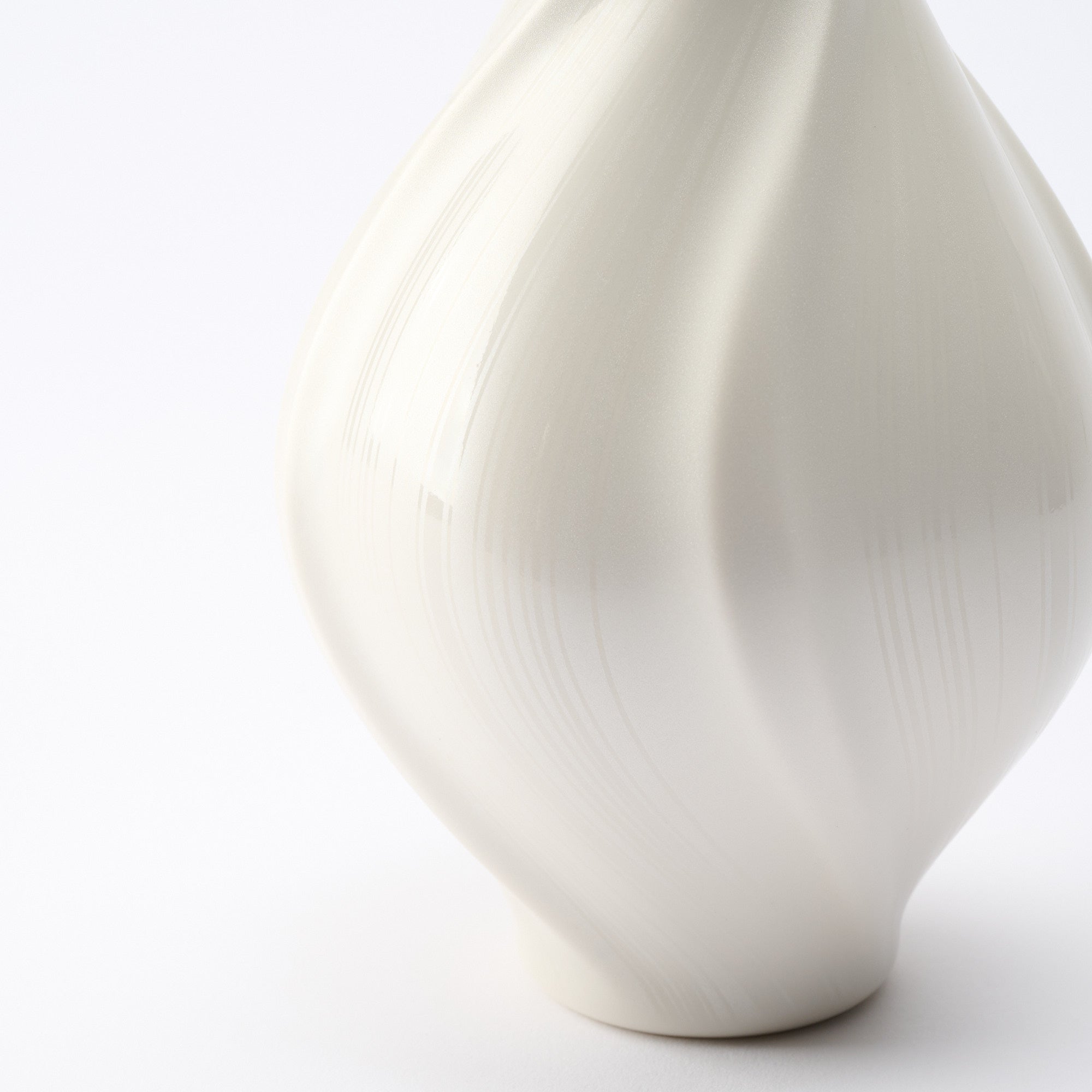
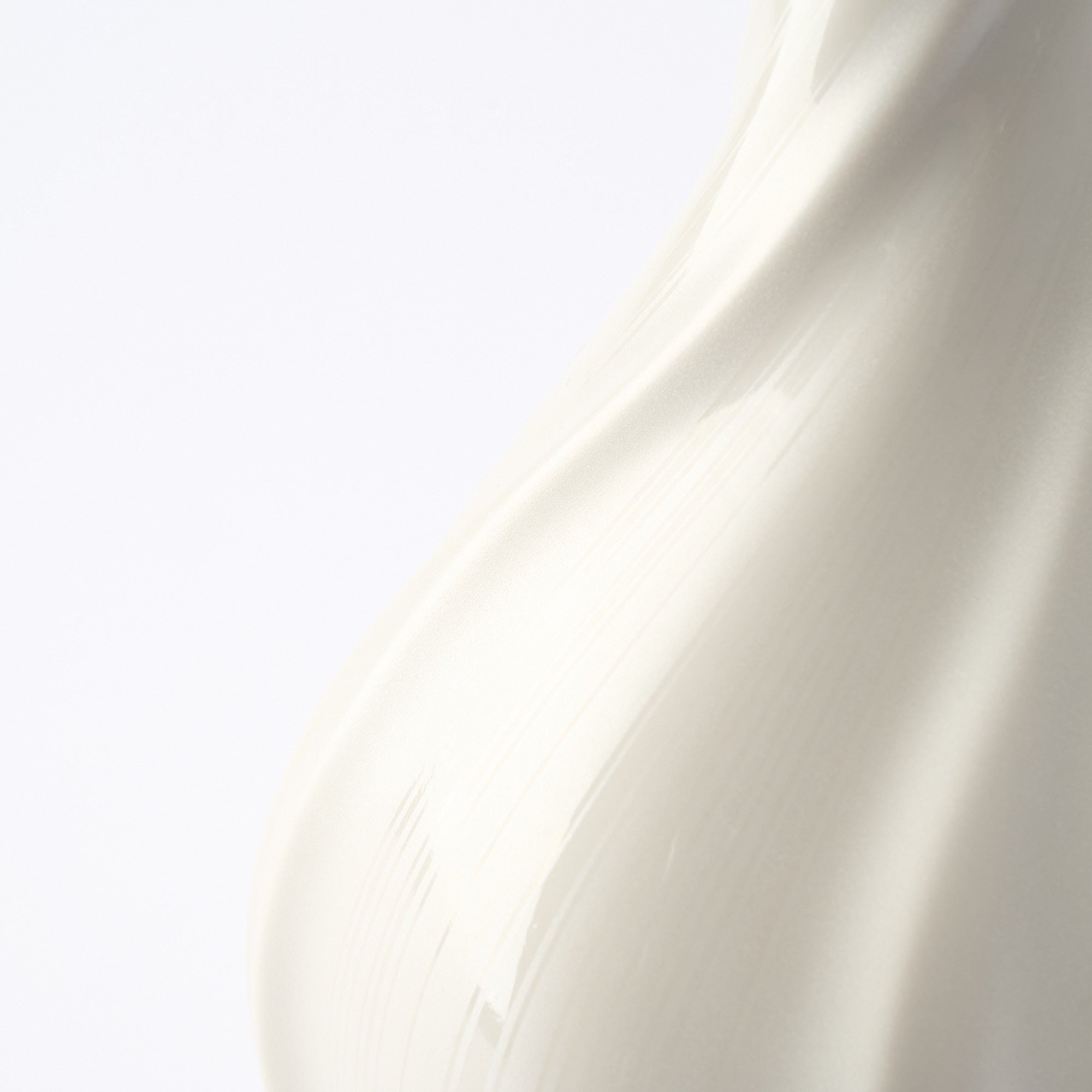
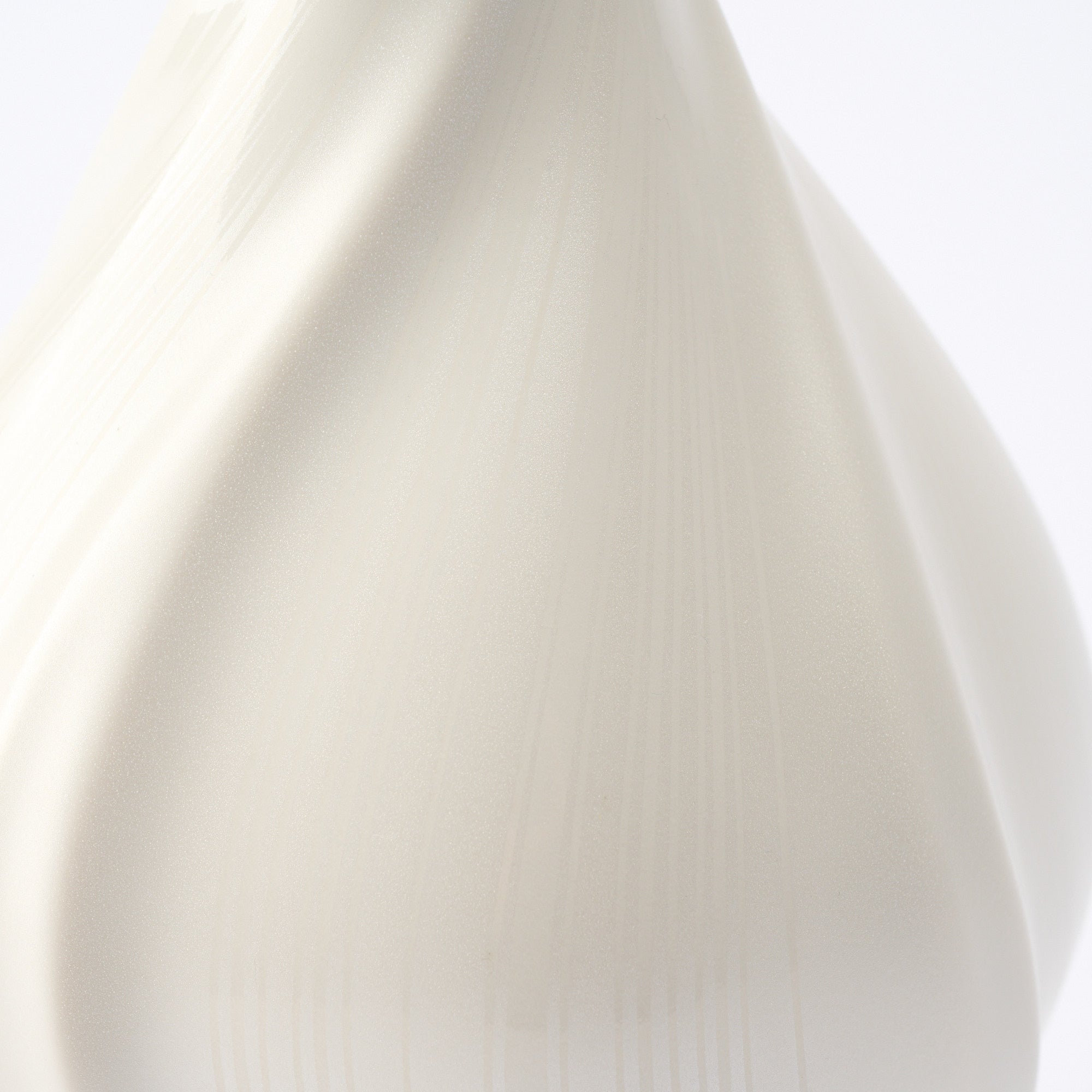
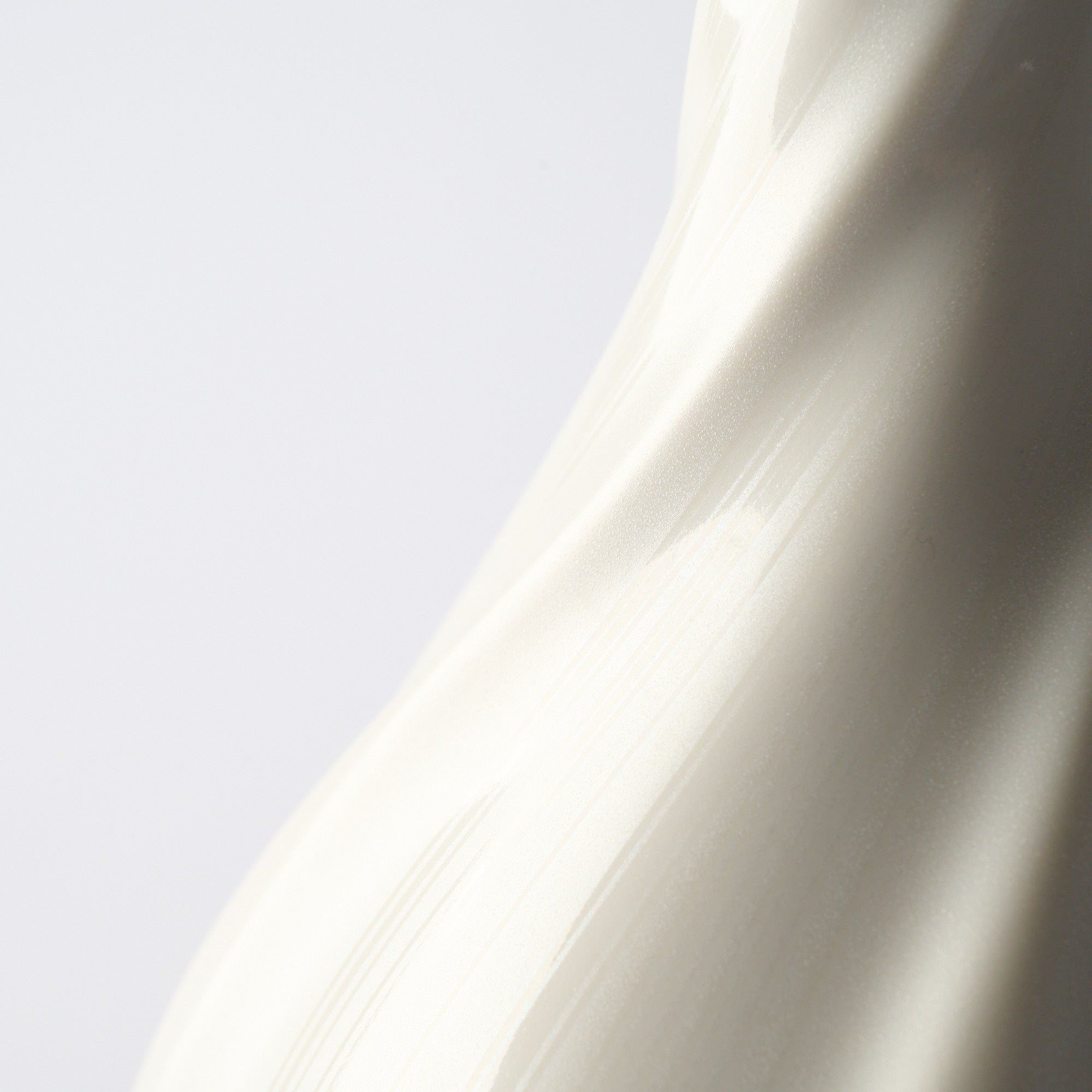
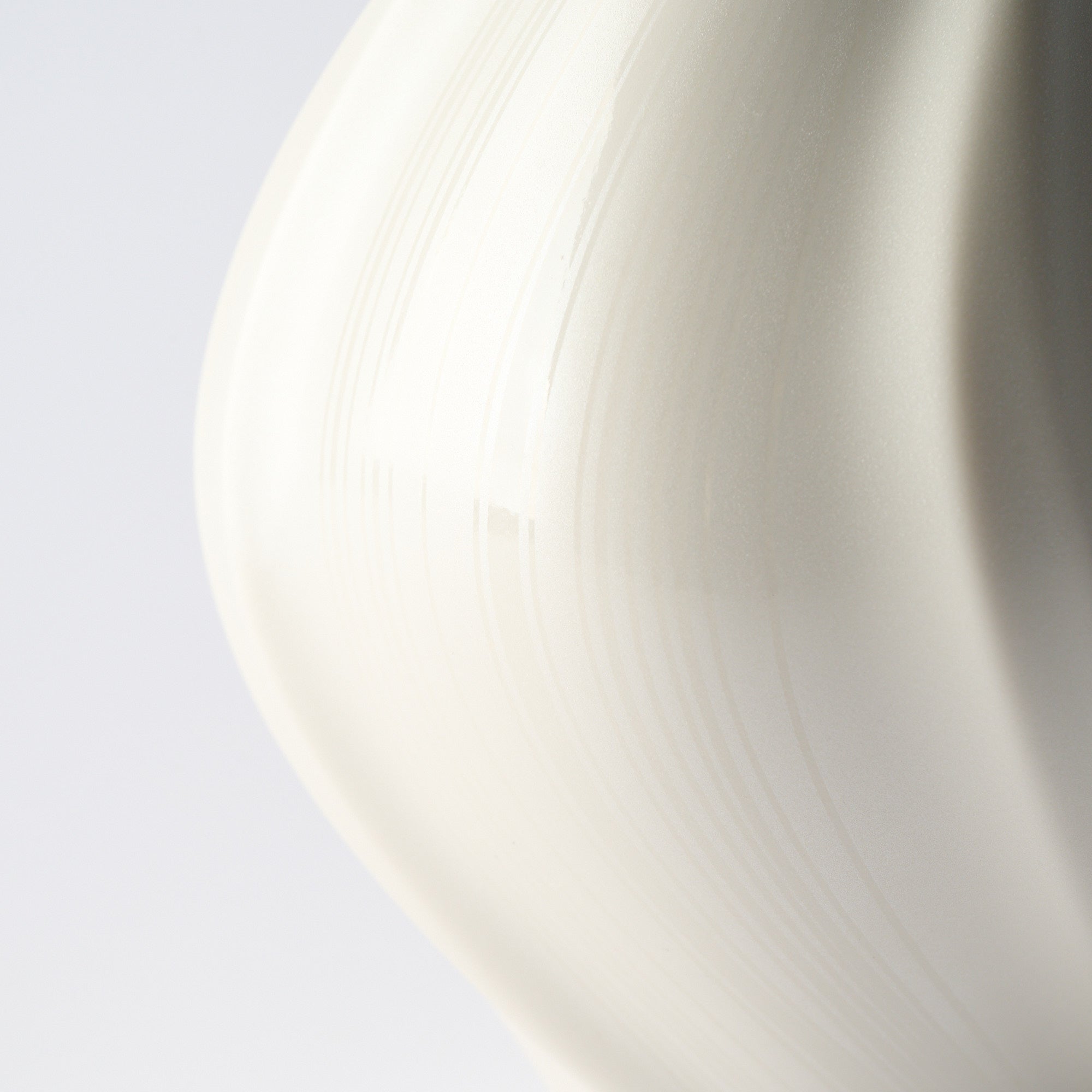
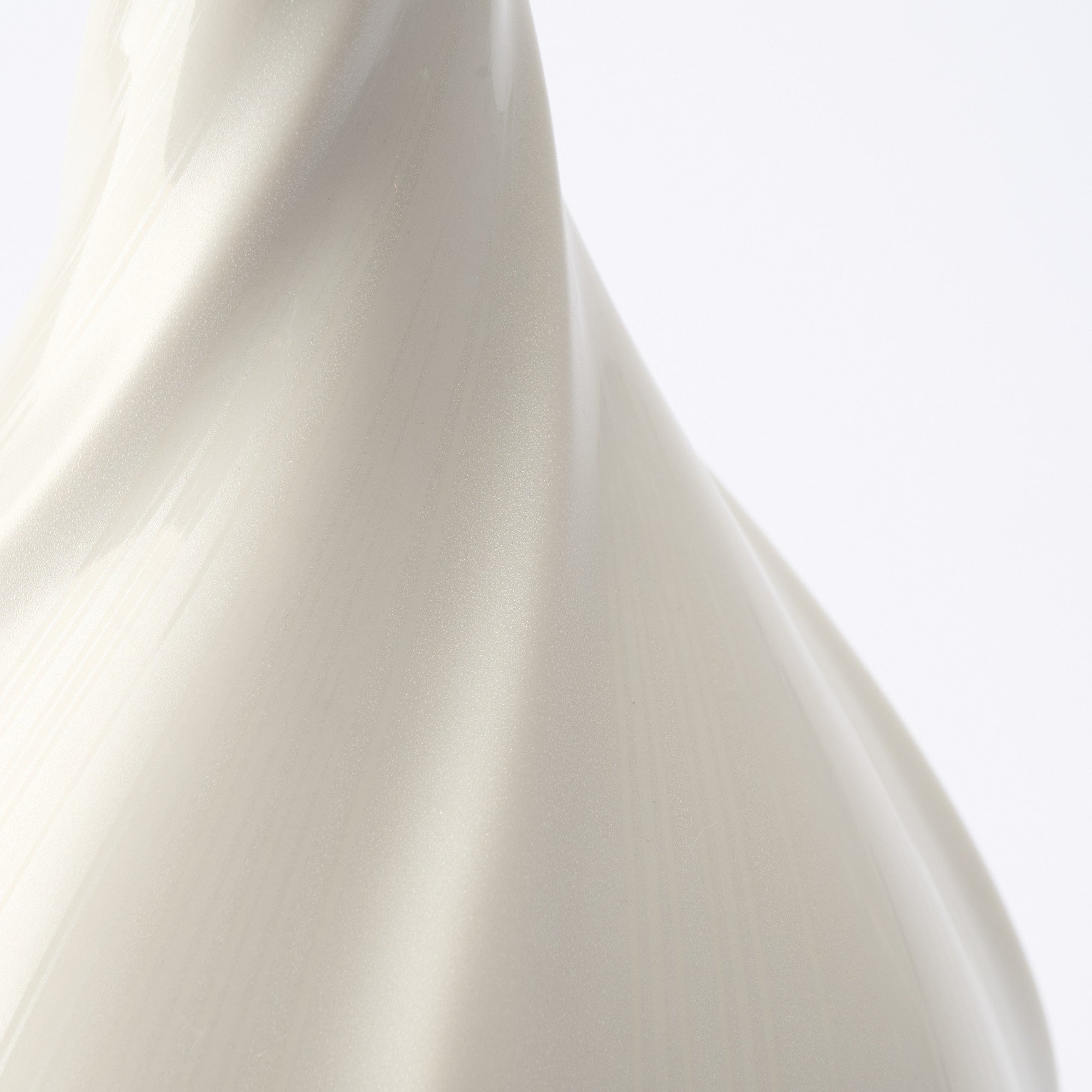
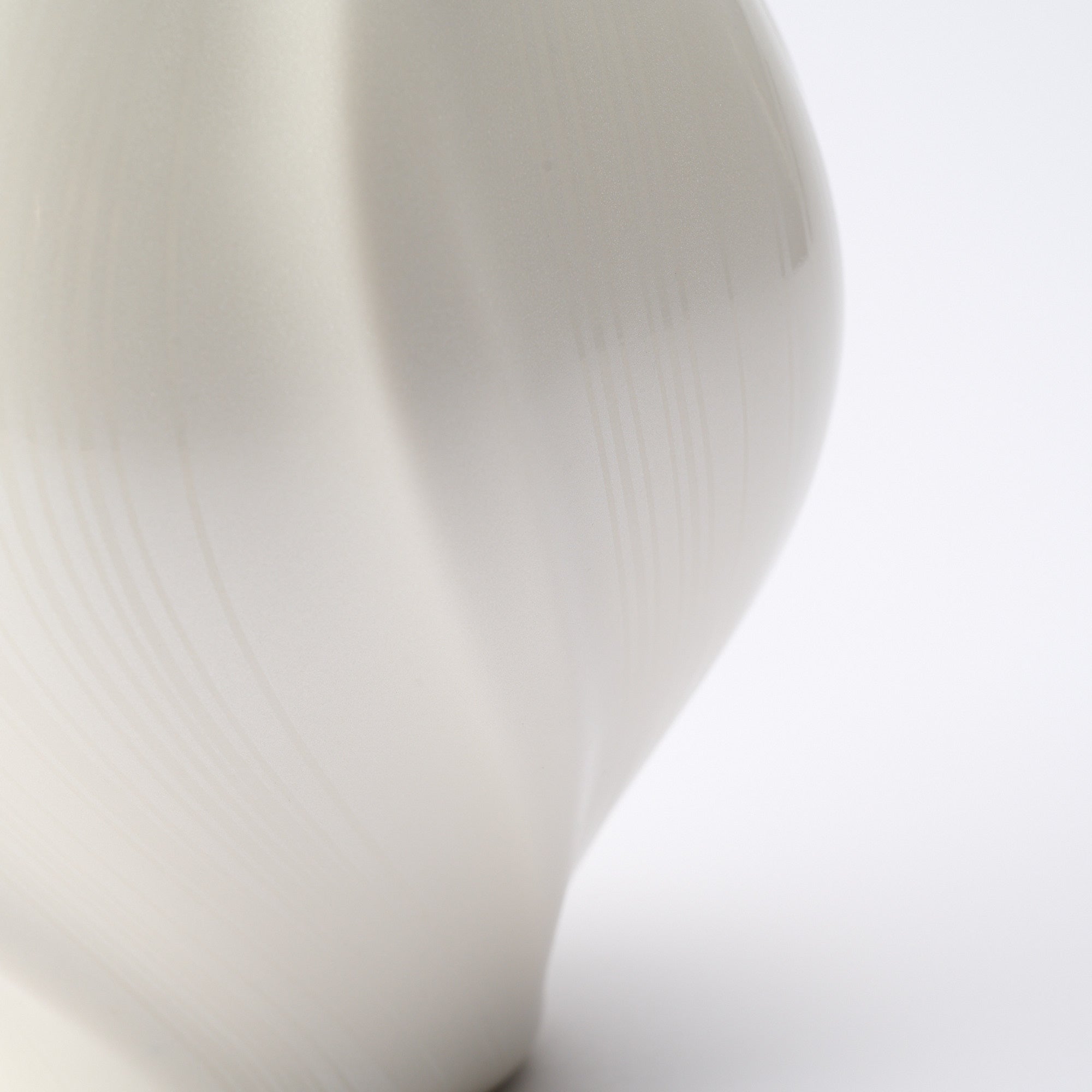
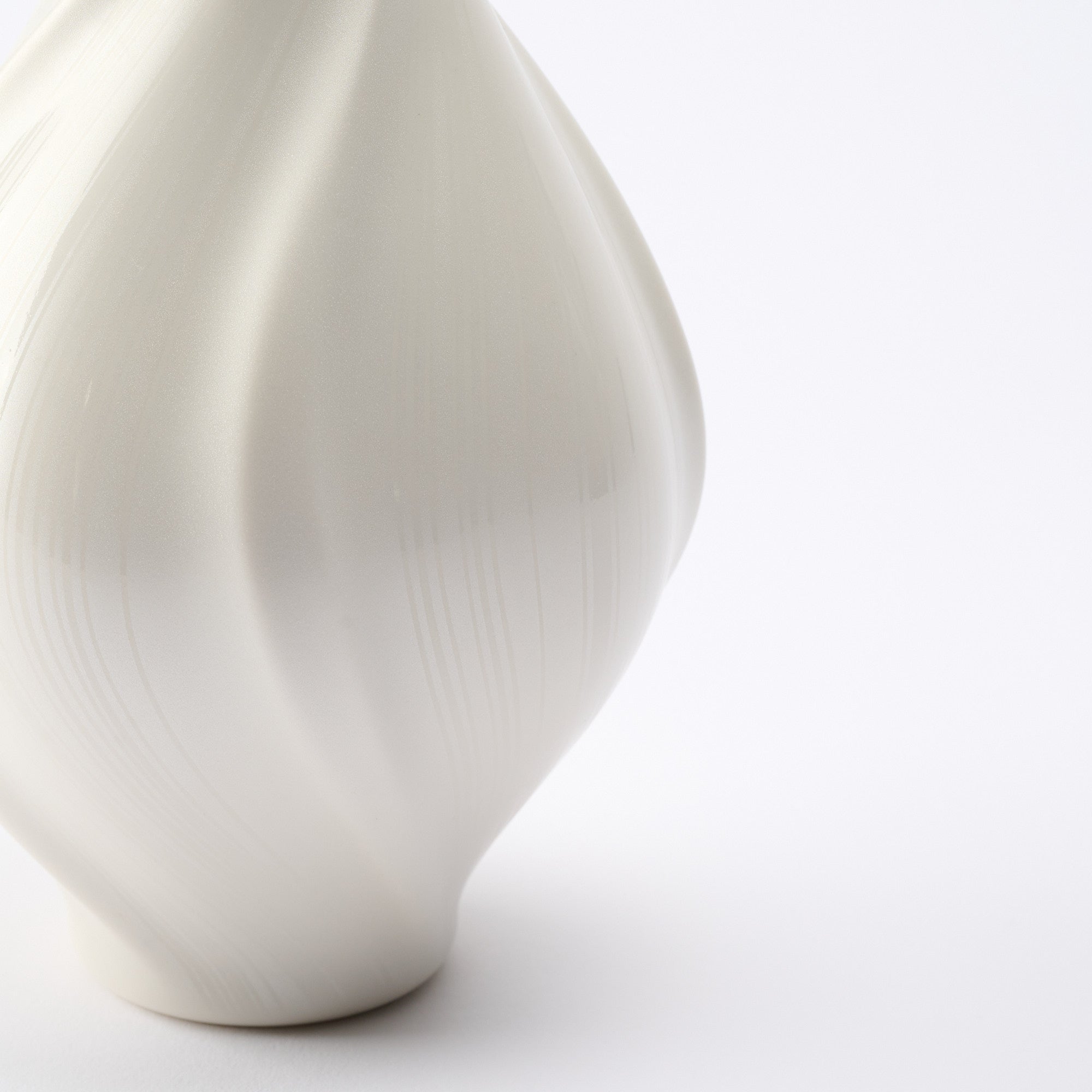
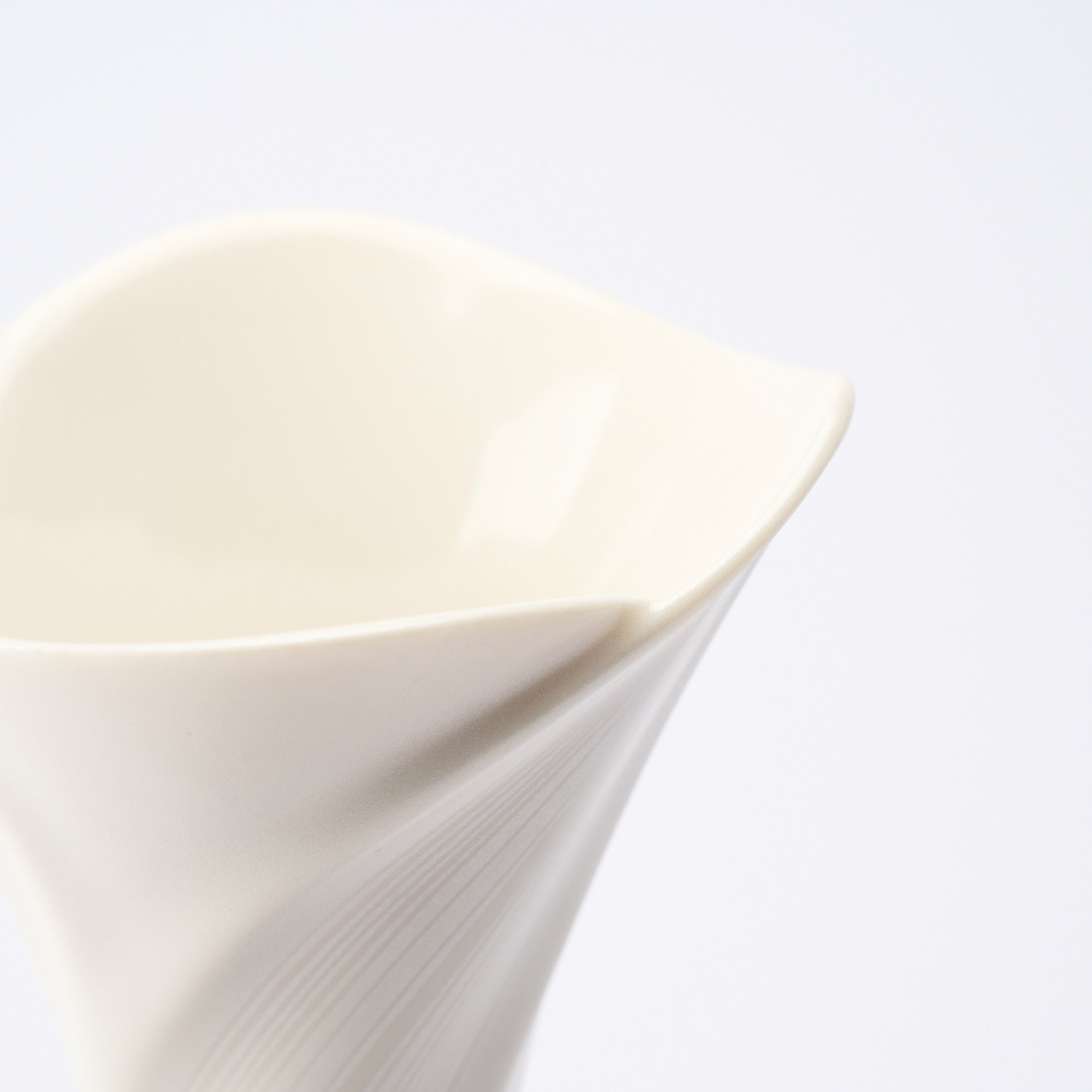
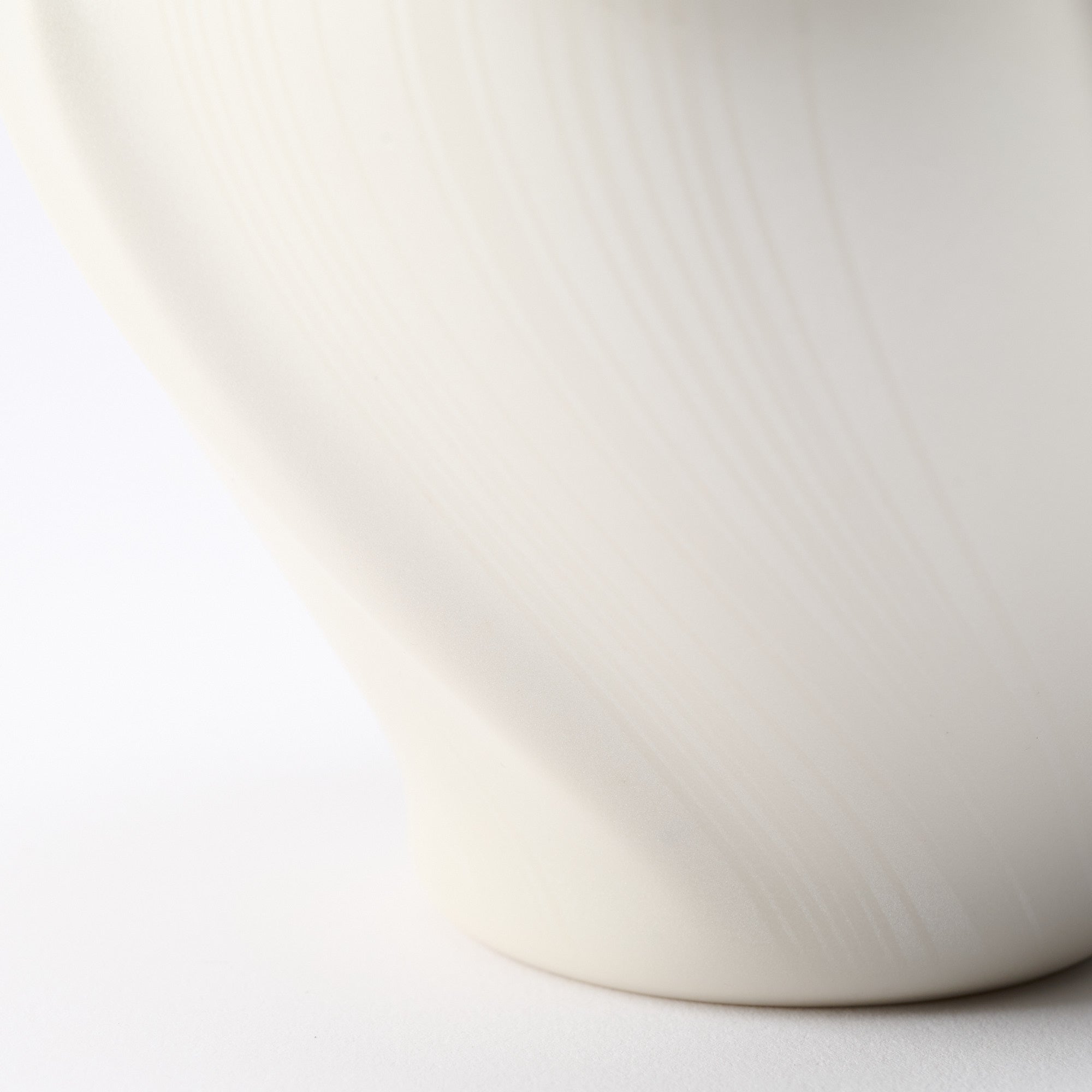
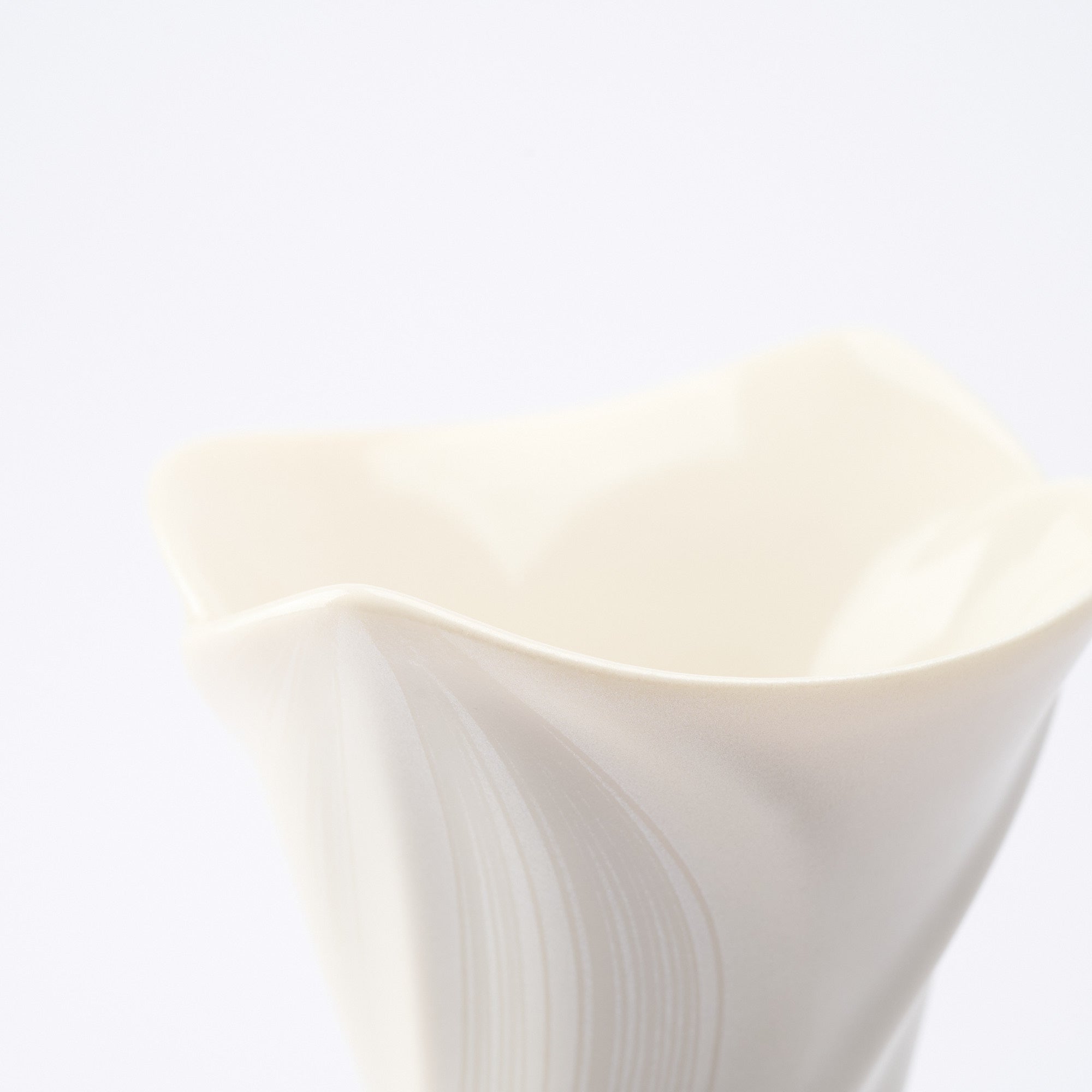
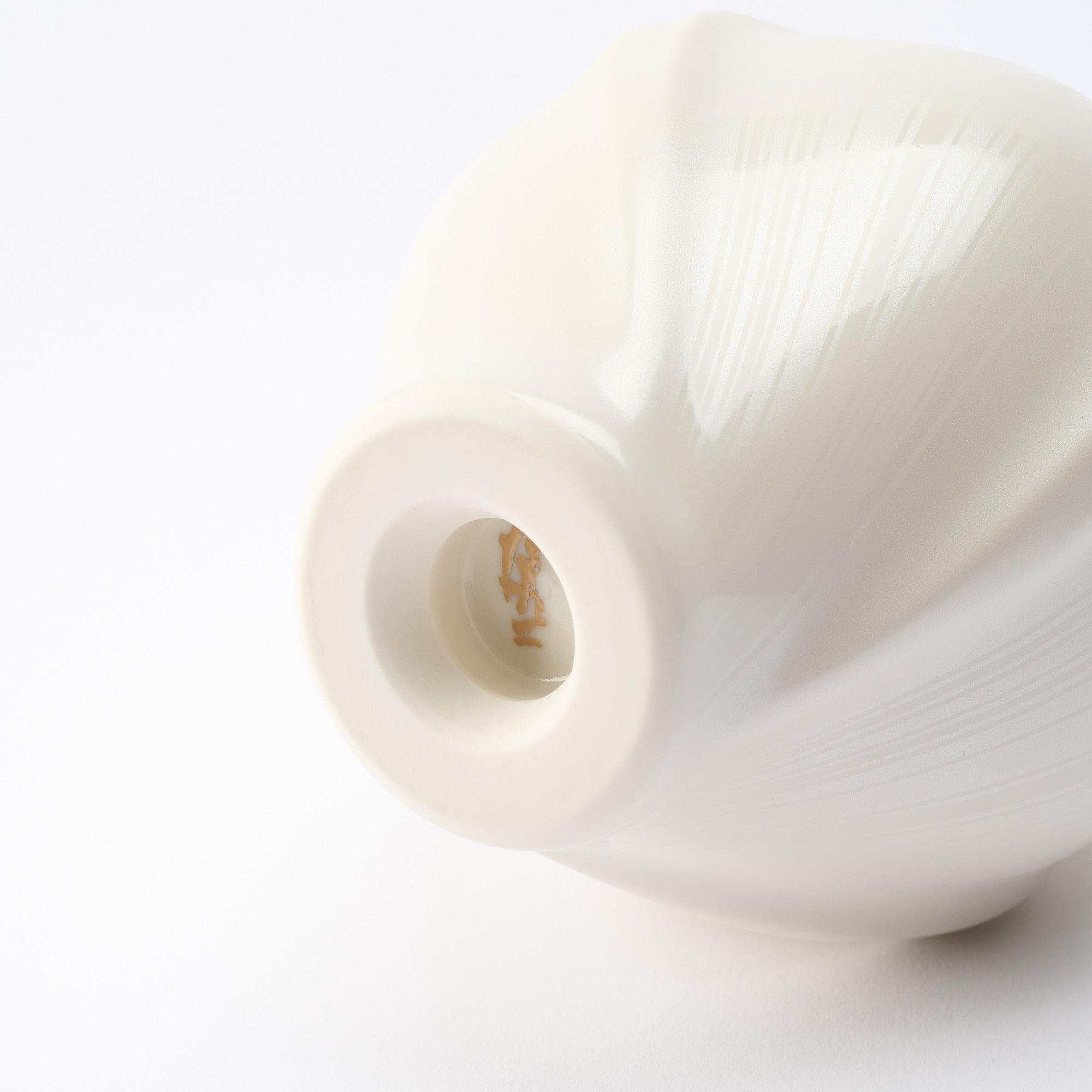
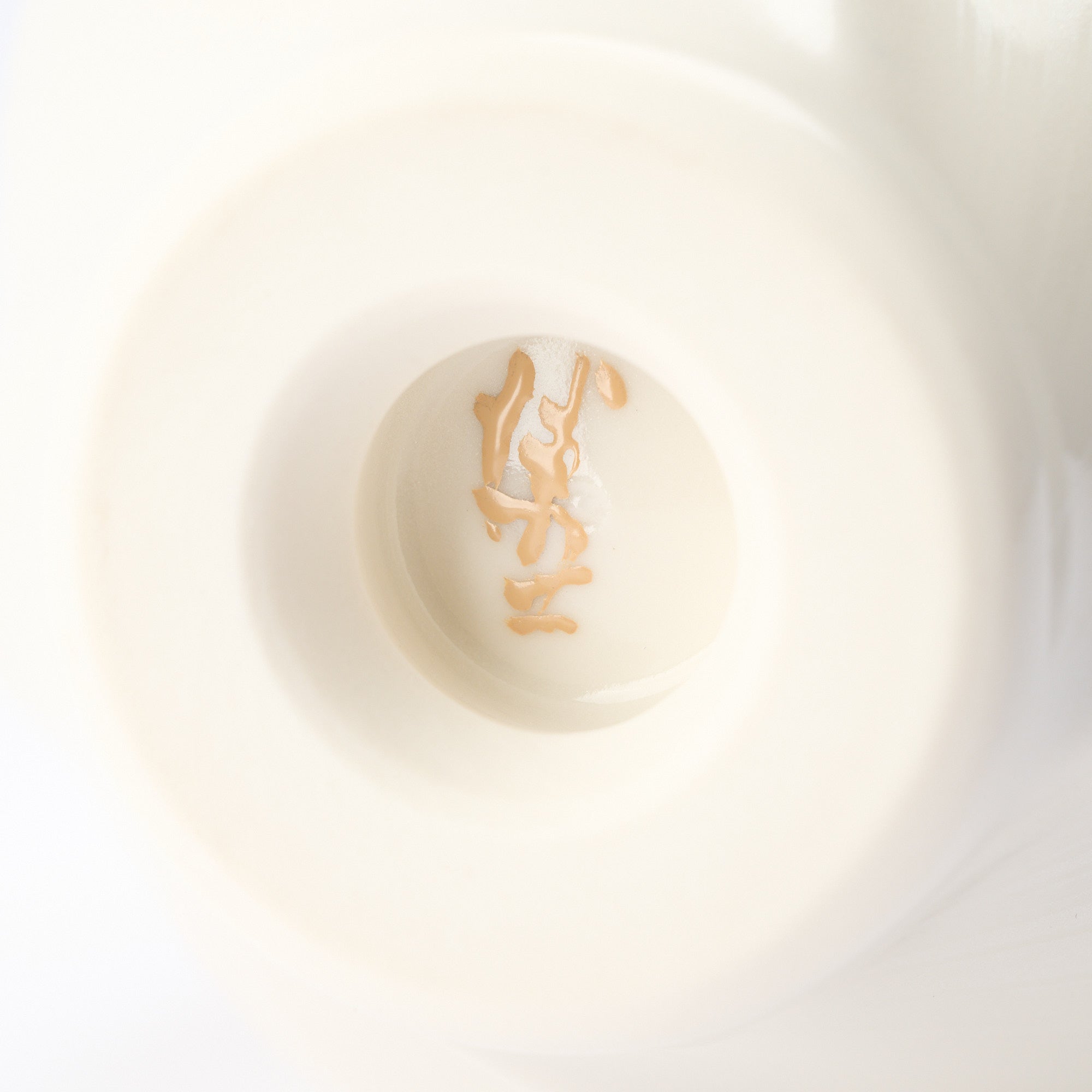
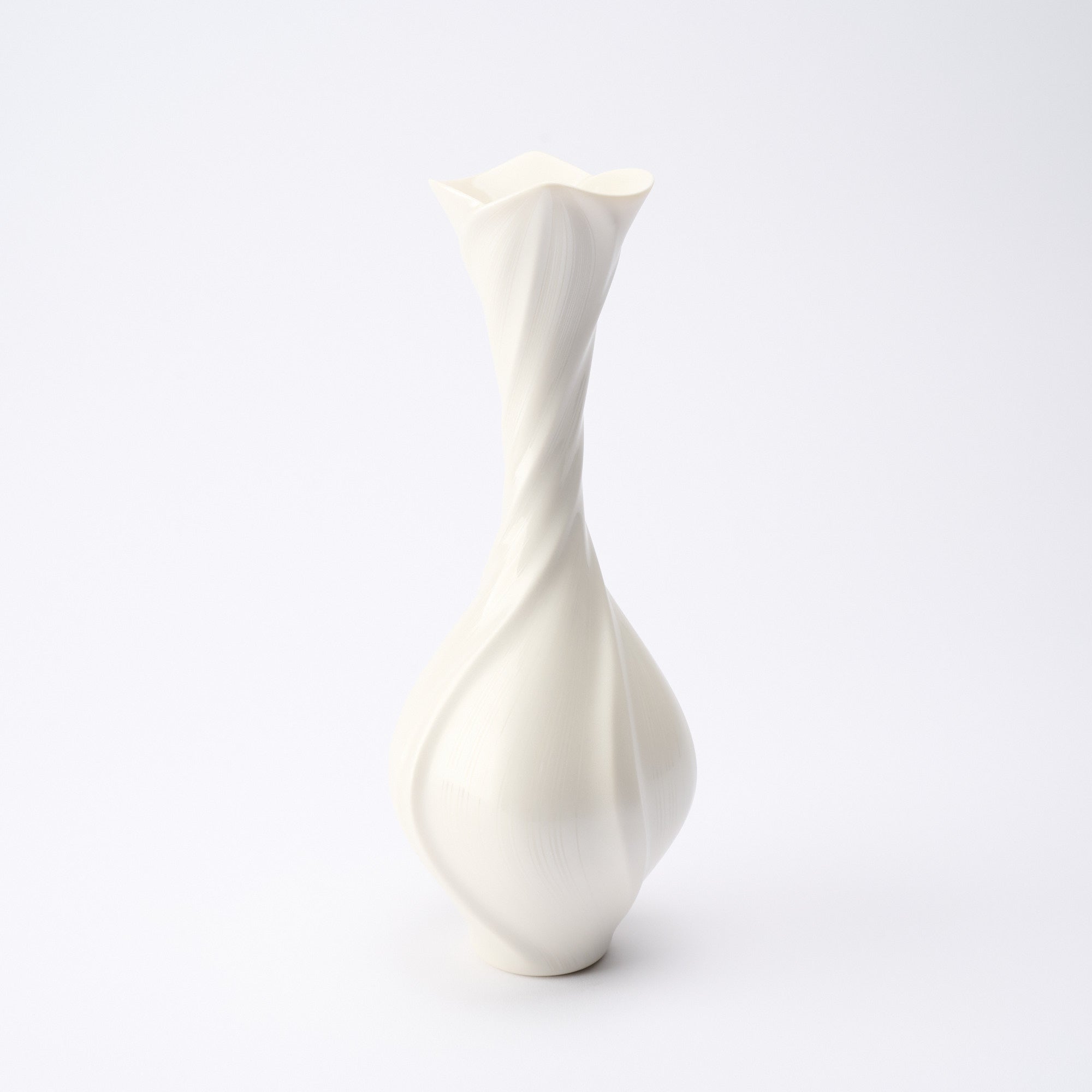
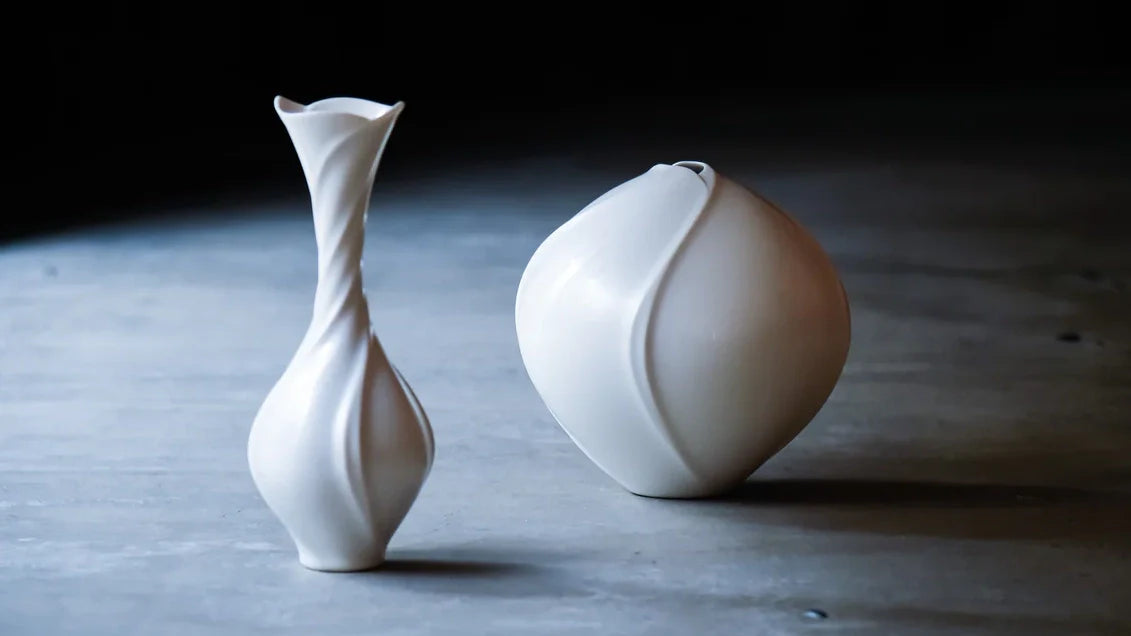
La técnica decorativa shinju kosai (lustre perlado) de Nakada Hiroshi aporta profundidad a una paleta completamente blanca mediante la superposición controlada de dos esmaltes contrastantes. Ciertas áreas de la superficie se dejan intencionalmente visibles bajo un esmalte transparente, revelando la pureza de la porcelana subyacente, mientras emerge junto a ellas un brillo suave similar al de una perla. Este contraste sutil entre brillo y mate crea un juego matizado de luz, otorgando al acabado una delicada sensación de dimensión.
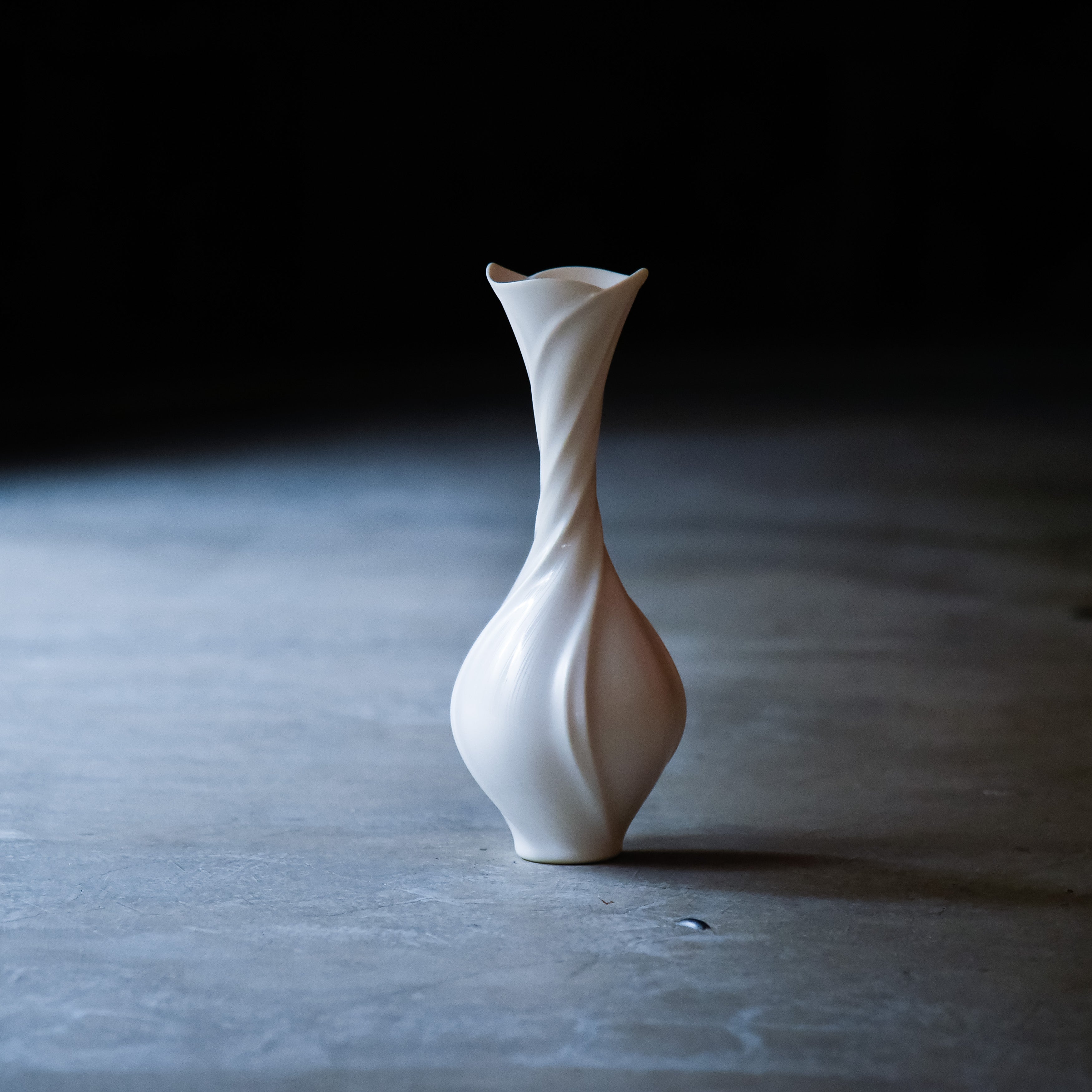
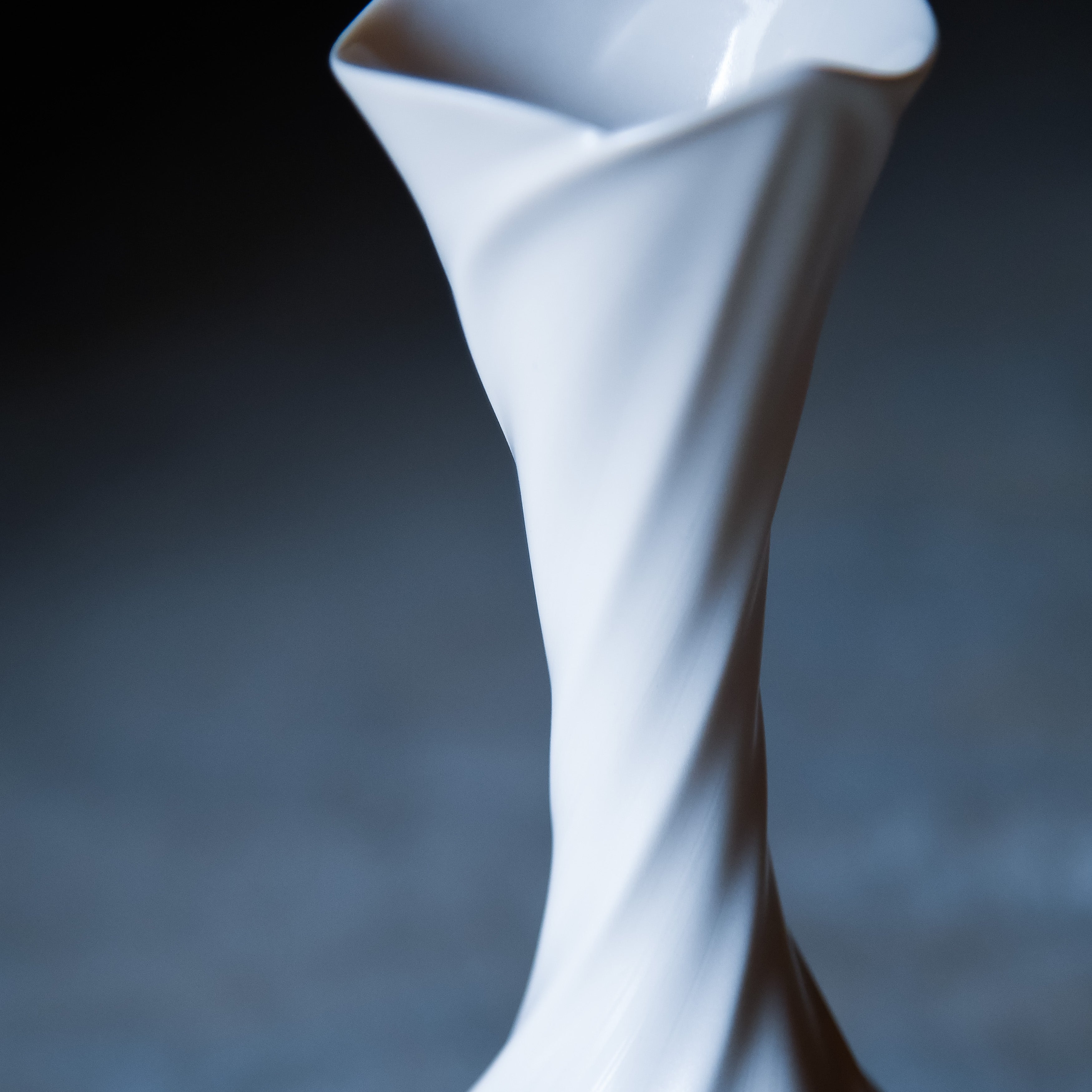
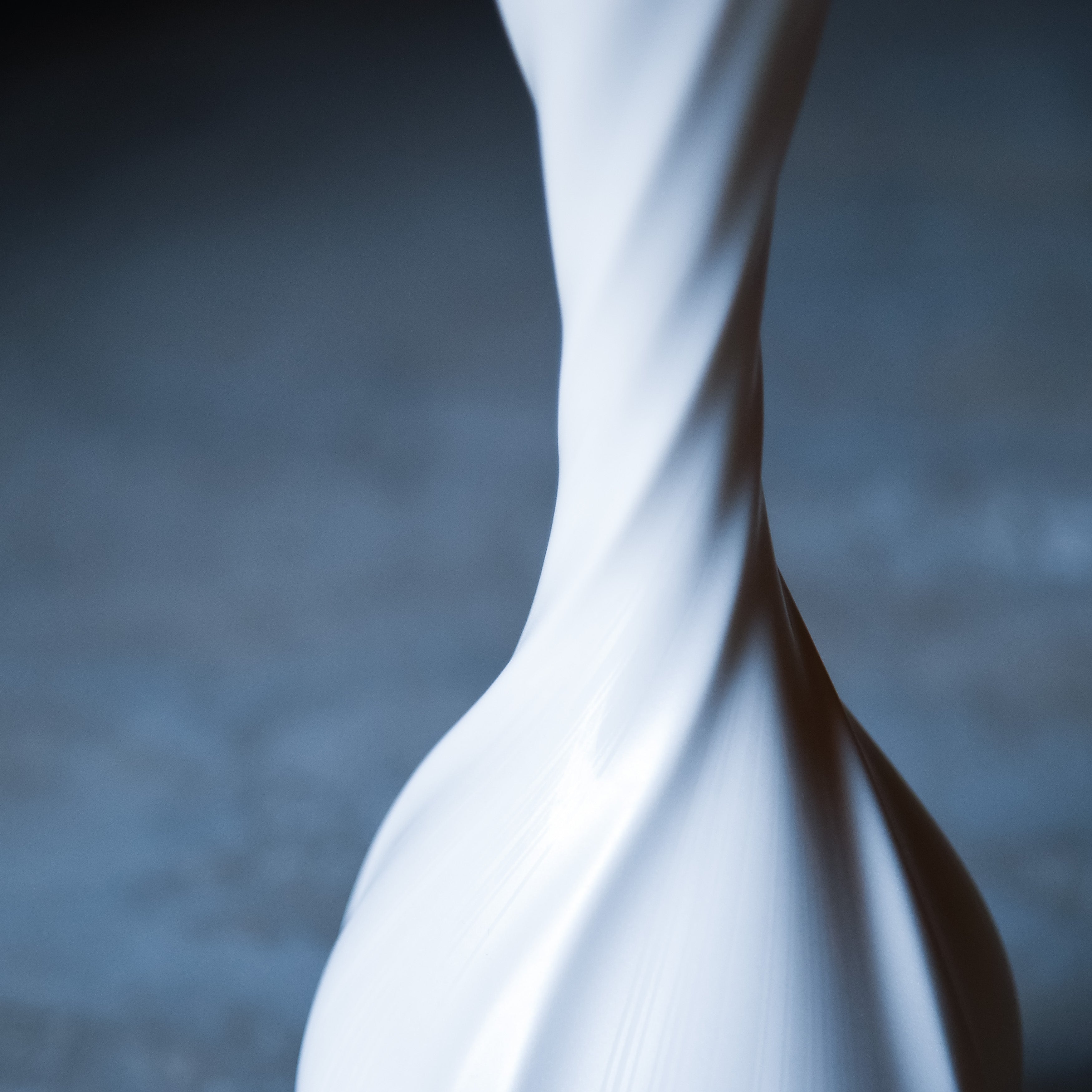
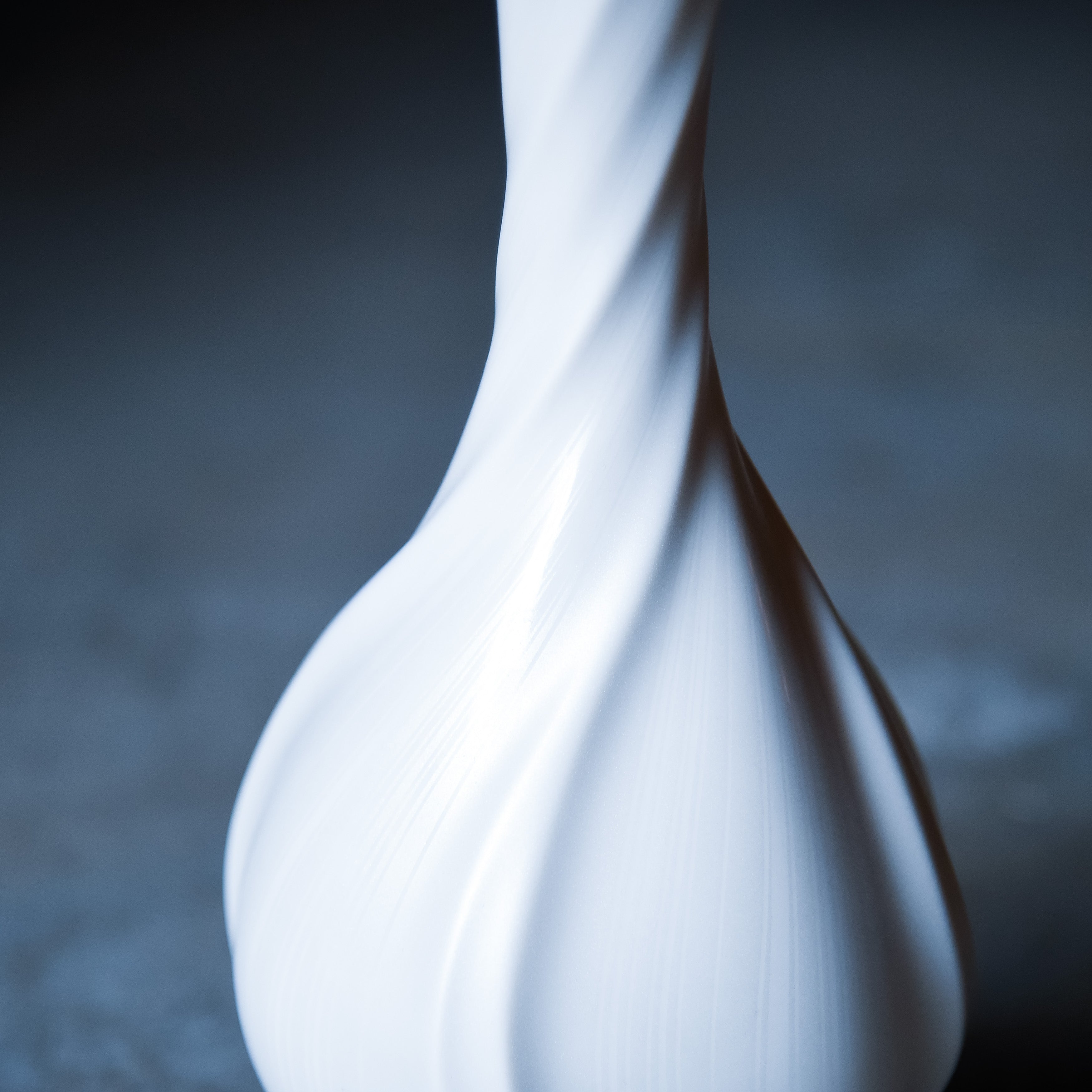
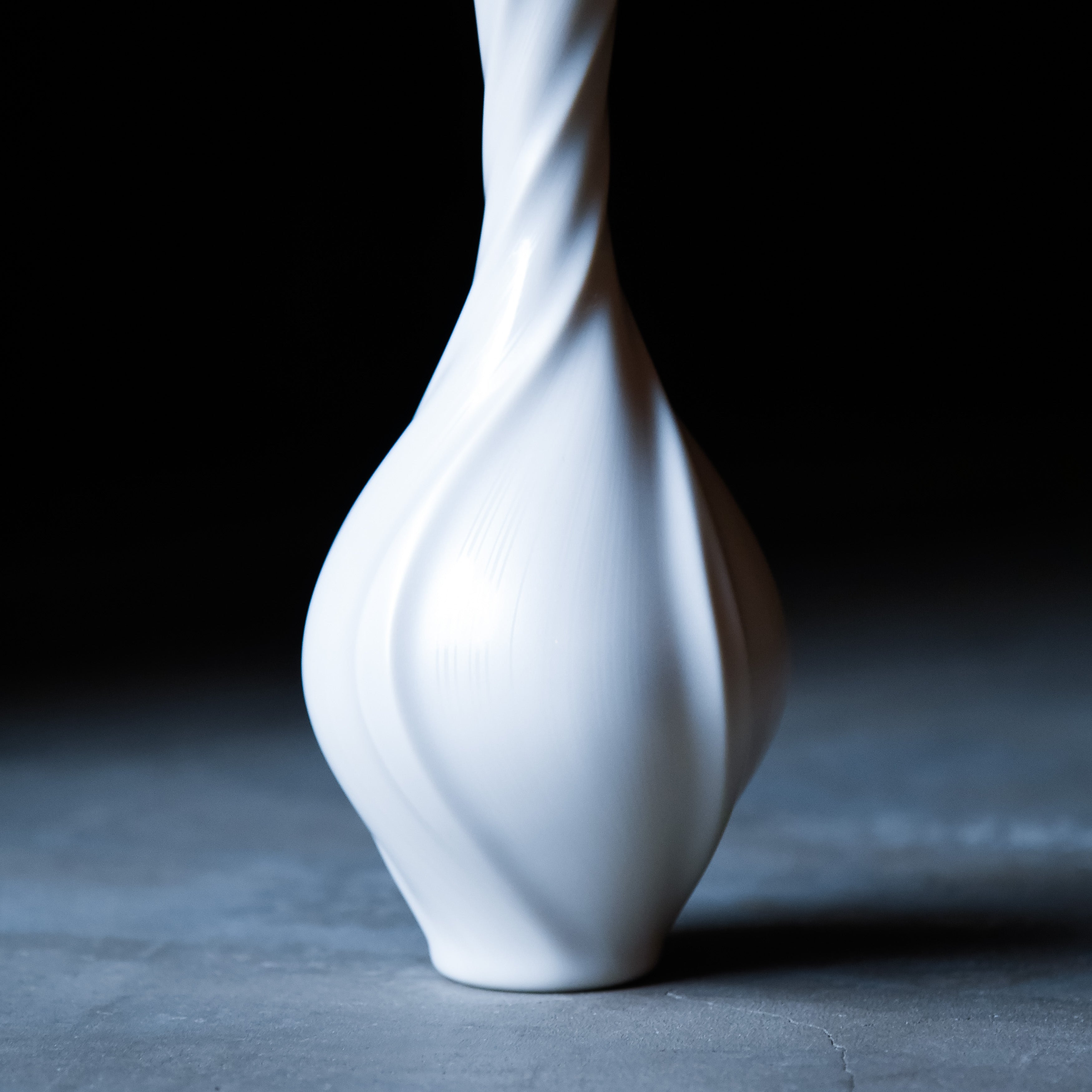
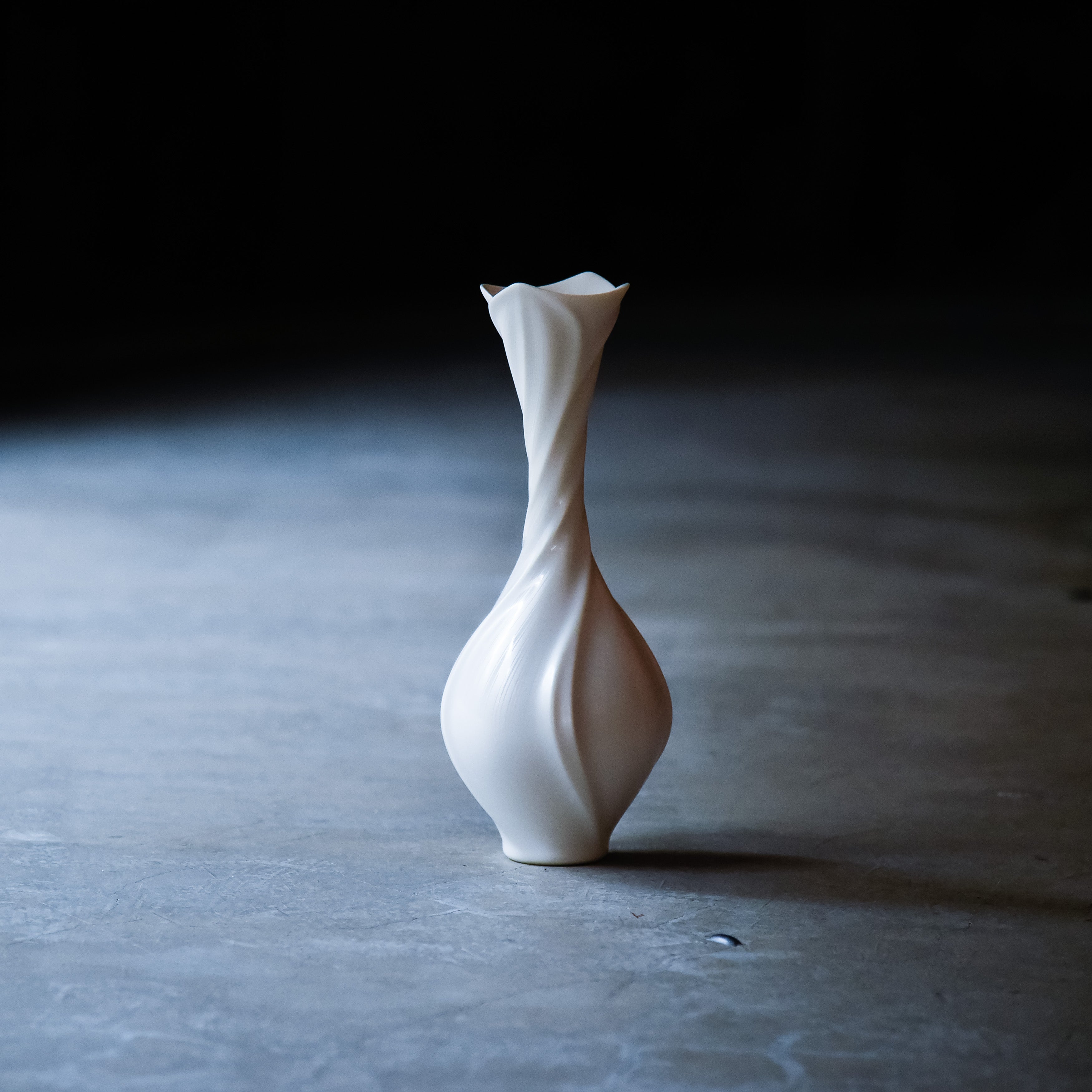
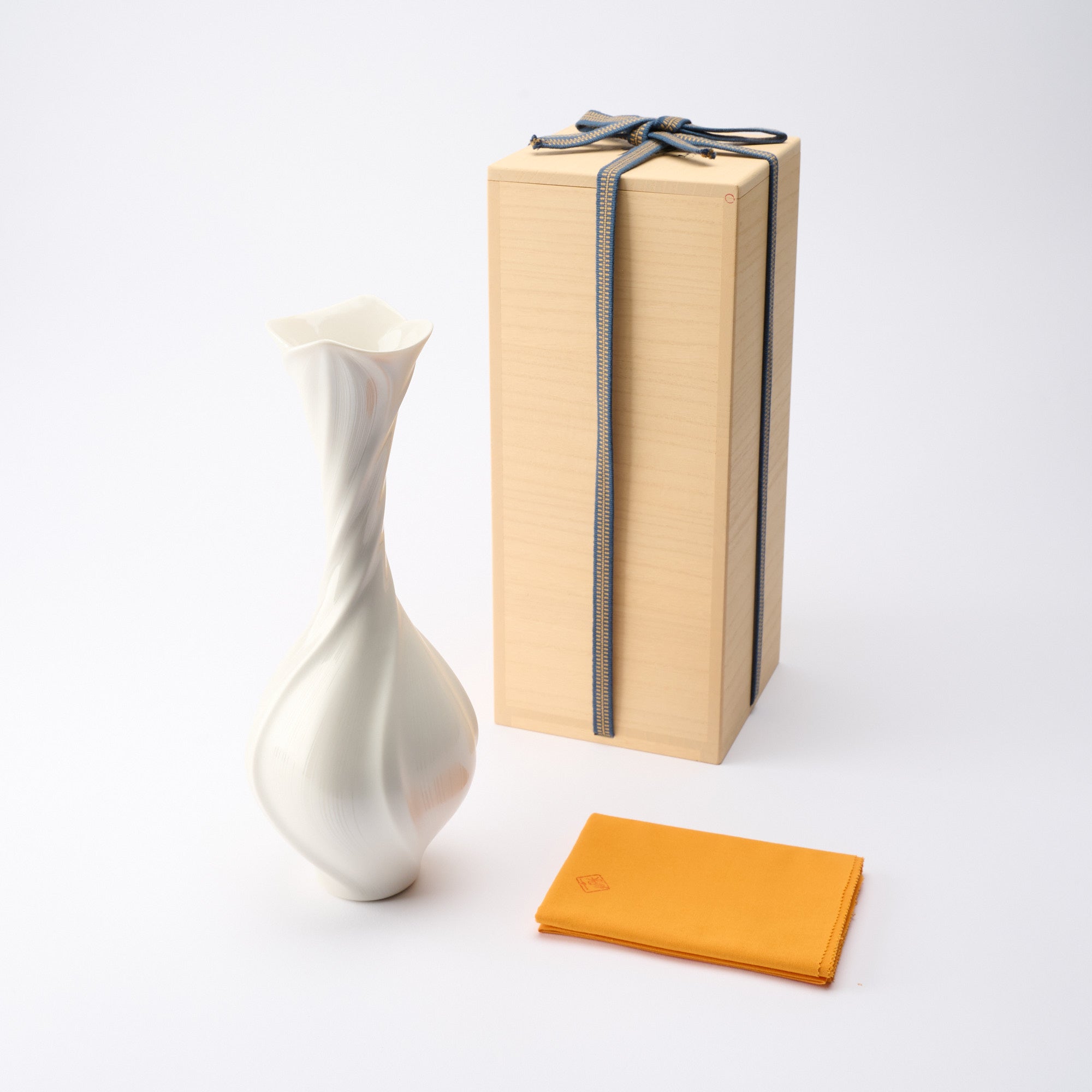
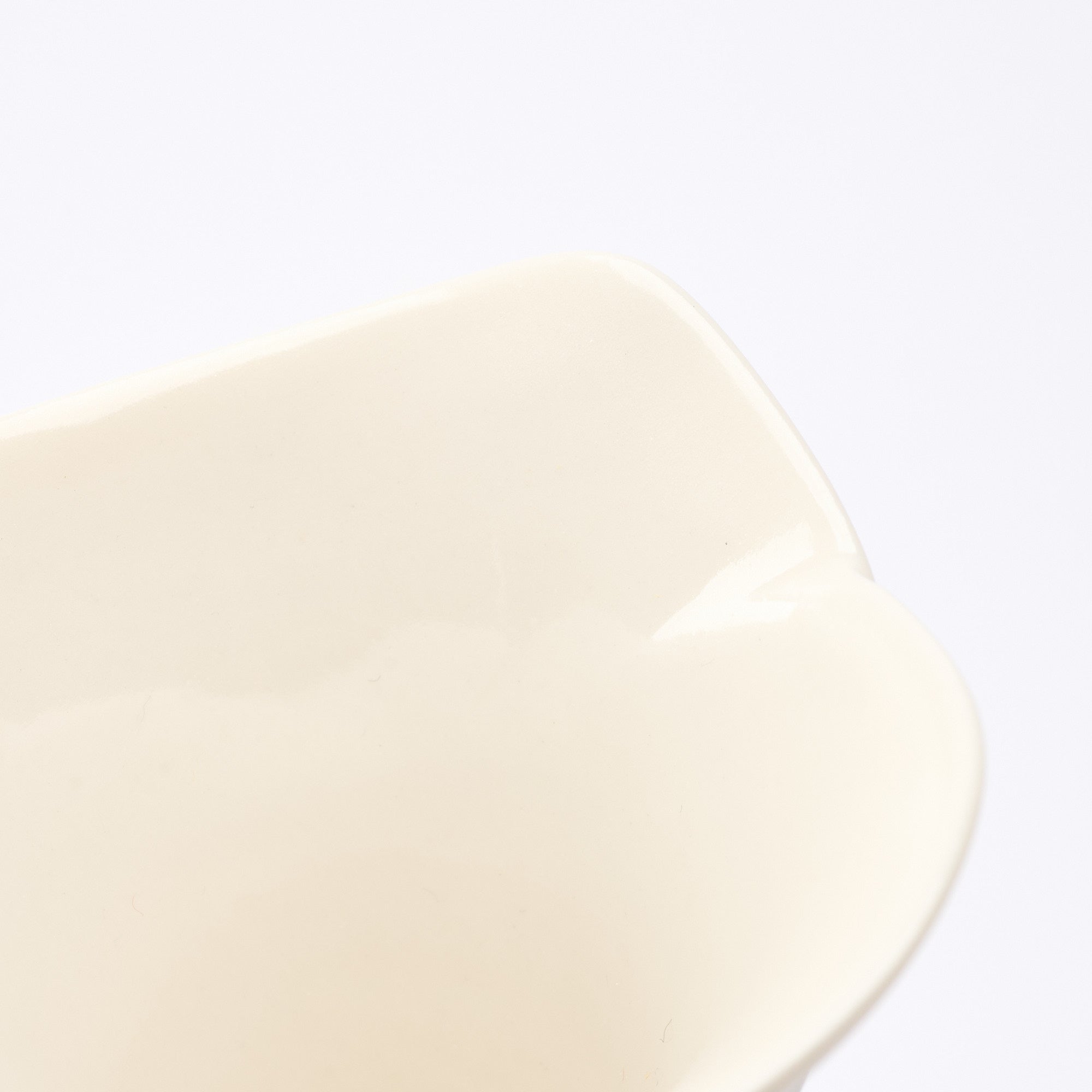
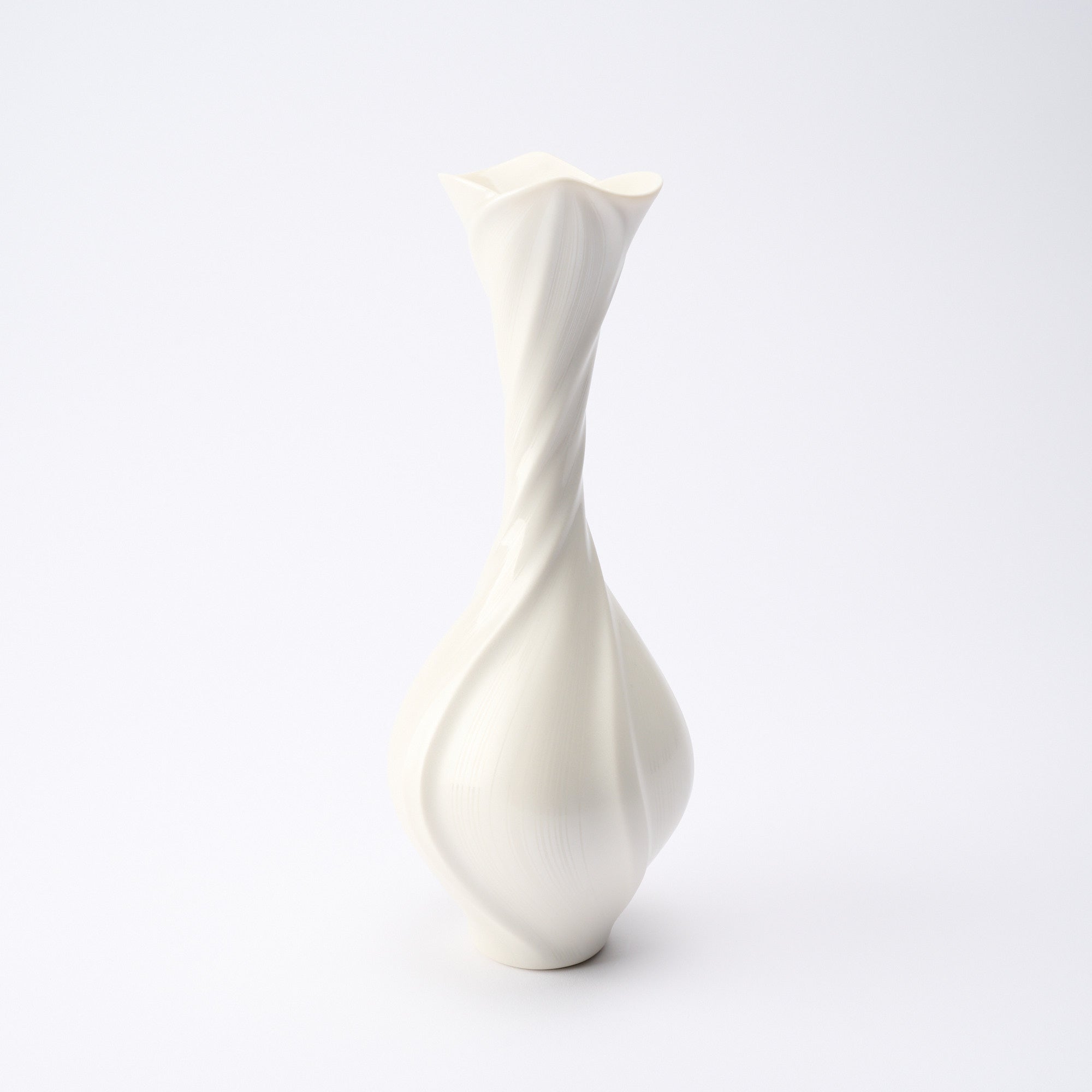
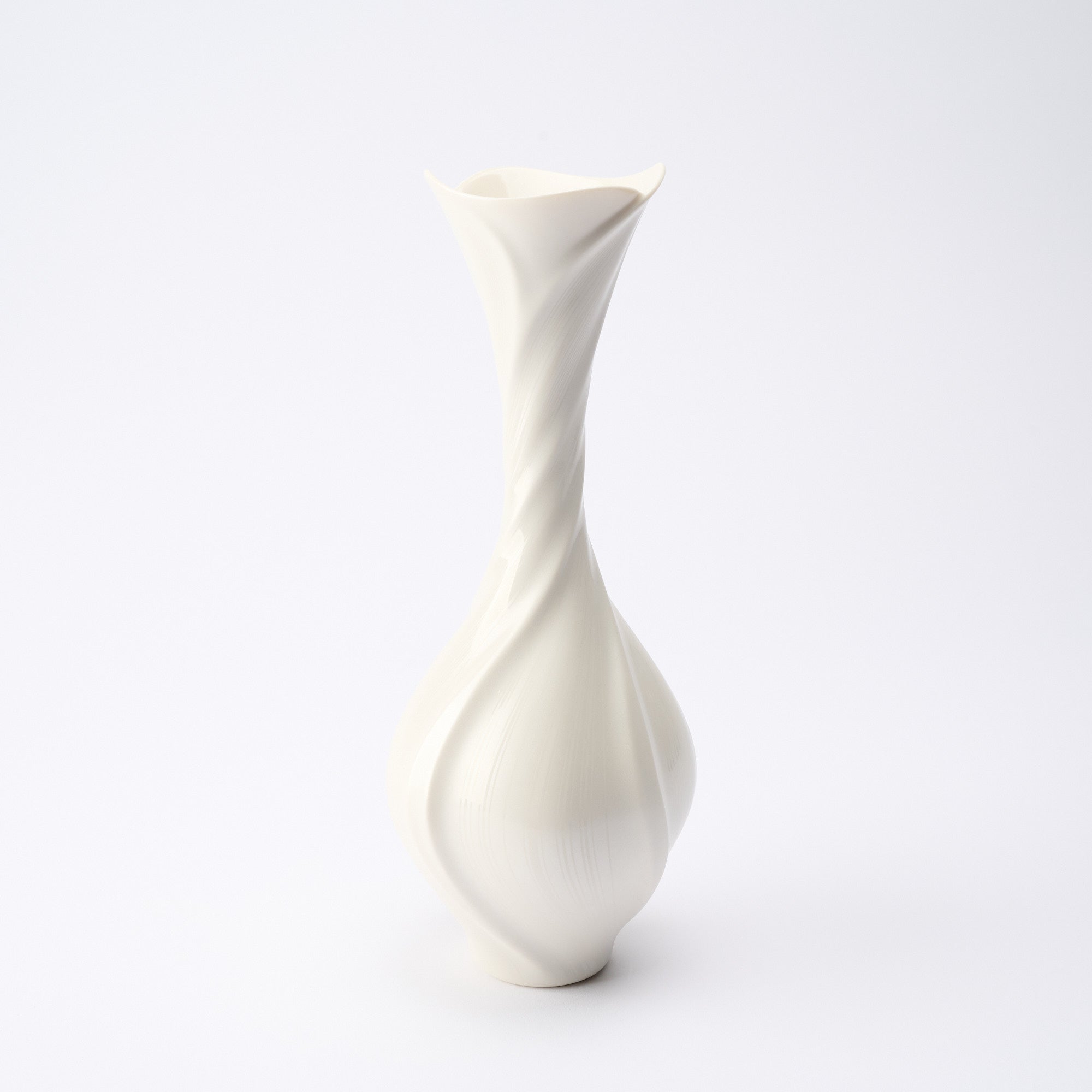
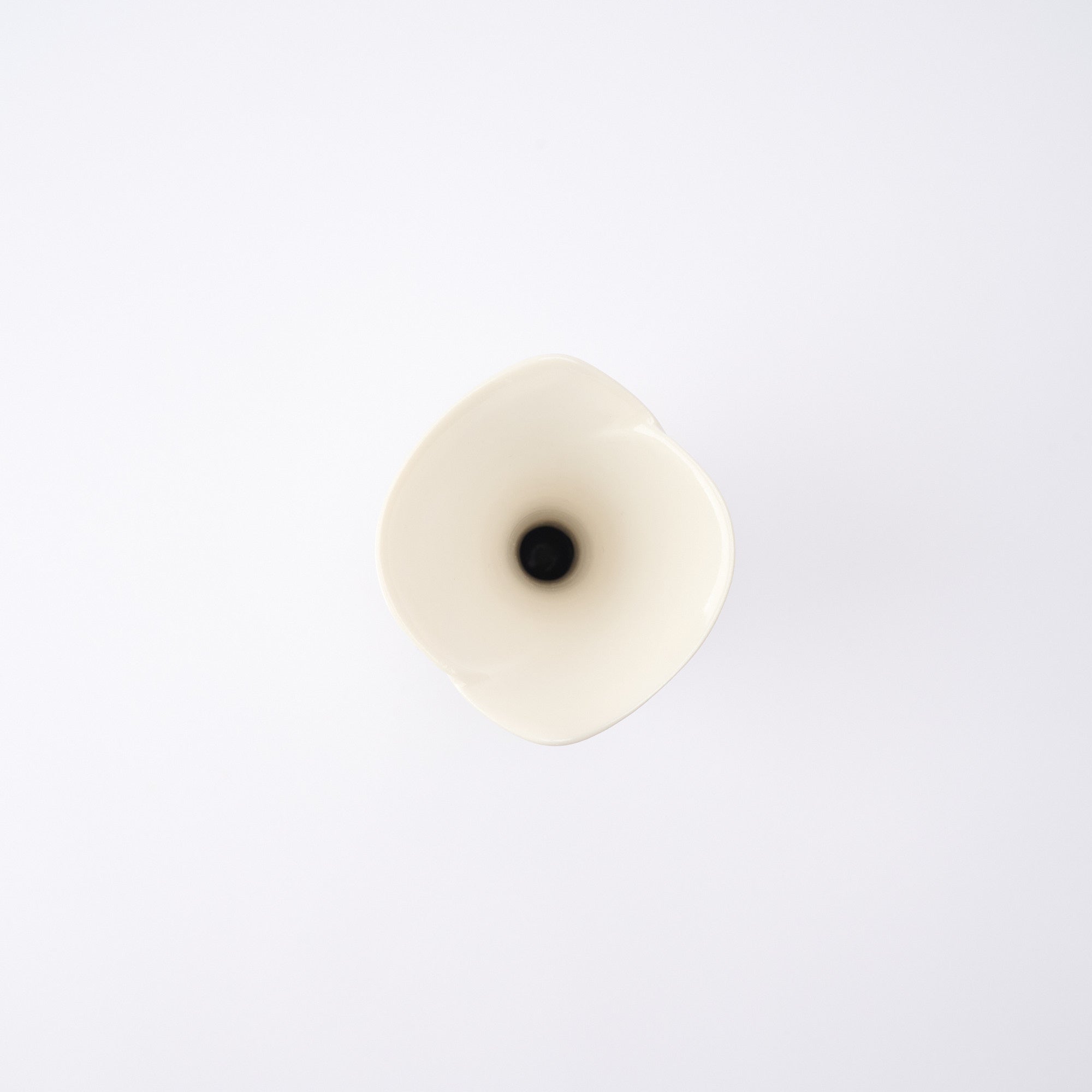
La forma se moldea primero en el torno, luego se refina cuidadosamente mediante tallado para definir sus contornos fluidos. Un cuello suavemente alargado se eleva desde el cuerpo, su perfil marcado por una línea elegante y equilibrada. El borde se abre suavemente como una magnolia en flor, representada en blanco puro. Las proporciones equilibradas y las transiciones suaves confieren a la pieza un aire de contención, mientras la forma general sugiere un momento suspendido entre quietud y movimiento.
A medida que la luz cambia, las texturas matizadas de los esmaltes superpuestos revelan un ritmo sereno. El contraste entre el cuerpo blanco expuesto y la superficie radiante crea una tensión sutil, realzando la pieza con una sensación de quietud y elegancia discreta. Esta obra encarna un equilibrio armonioso entre dominio técnico y expresión poética, ofreciendo una presencia serena pero cautivadora en cualquier espacio.
DETALLES
| Quantity | 1 pc |
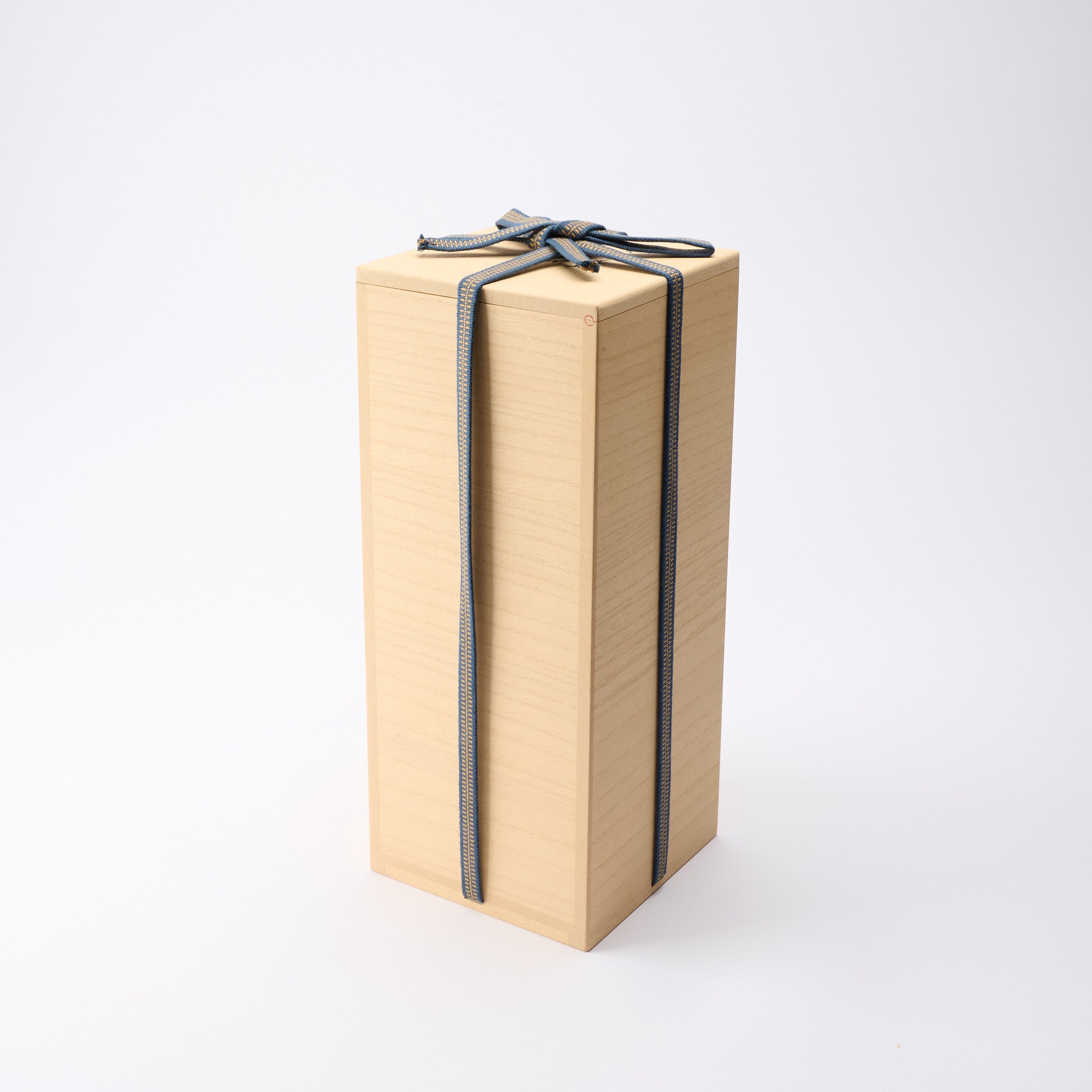
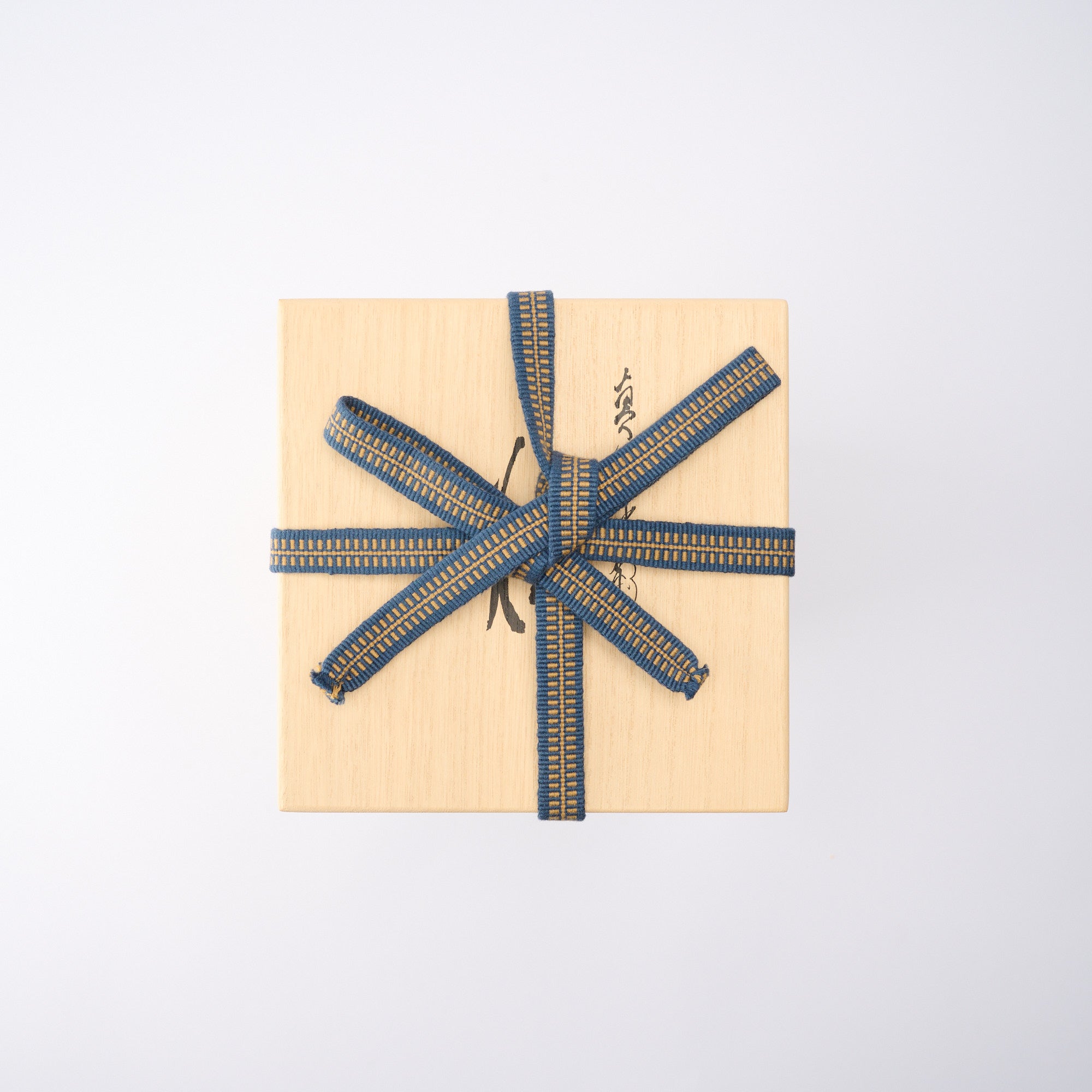
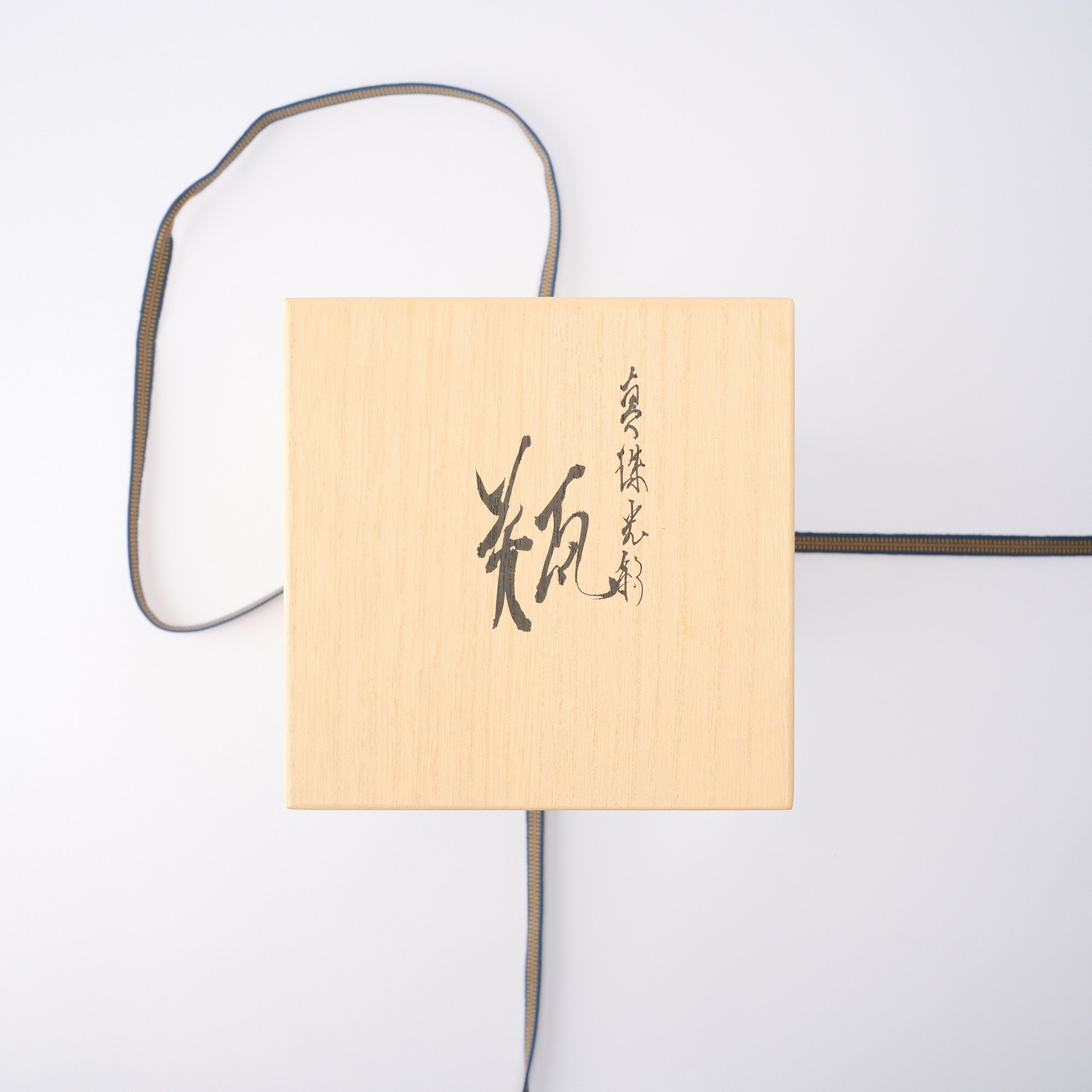
| Size | D 11 cm (4.3 in) x H 31 cm (12.2 in) Size of opening D 9 cm (3.5 in) Wooden box L 15 cm (5.9 in) x W 15 cm (5.9 in) x H 36 cm (14.2 in) |
| Weight | 1800 g (63.5 oz) |
| Material | Porcelain |
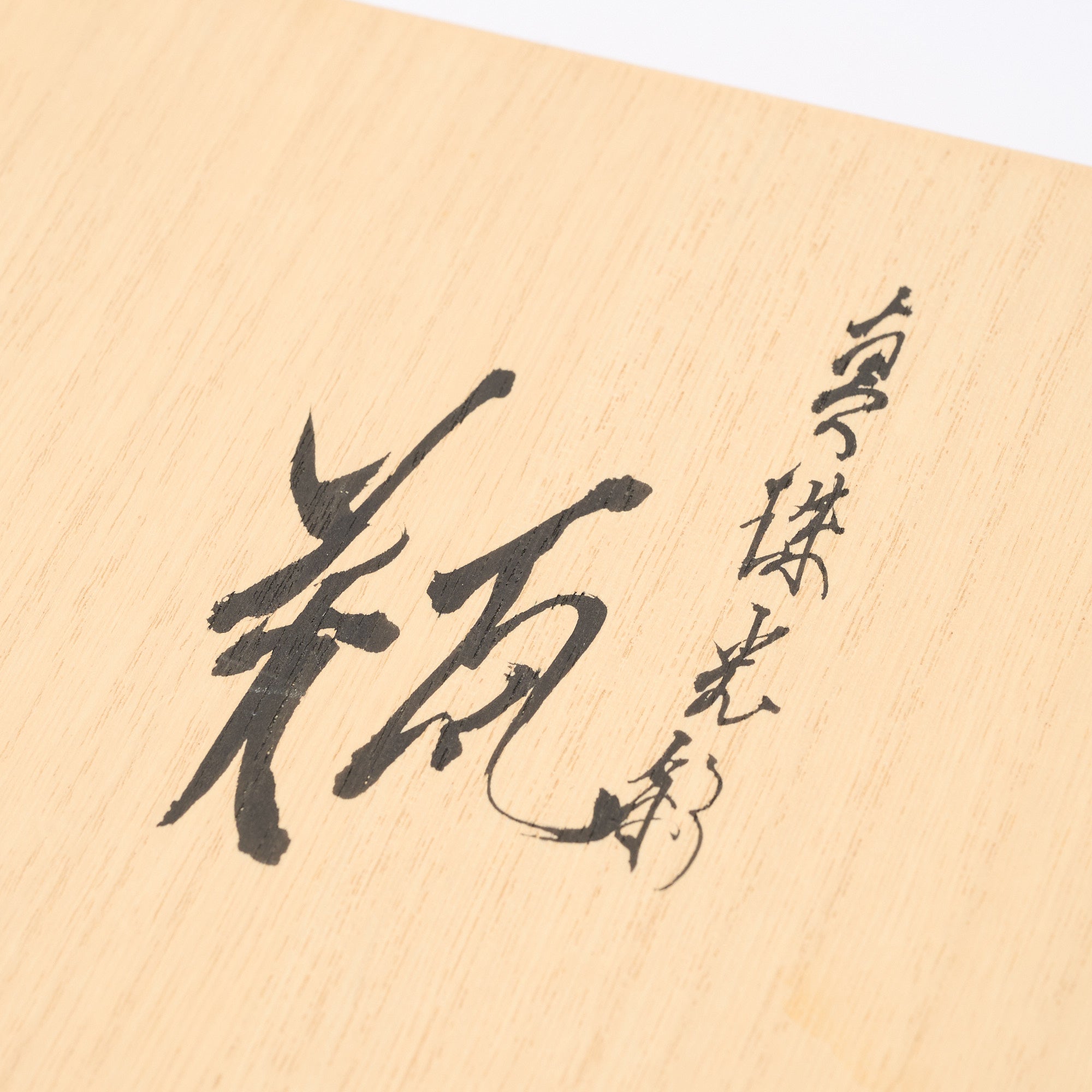
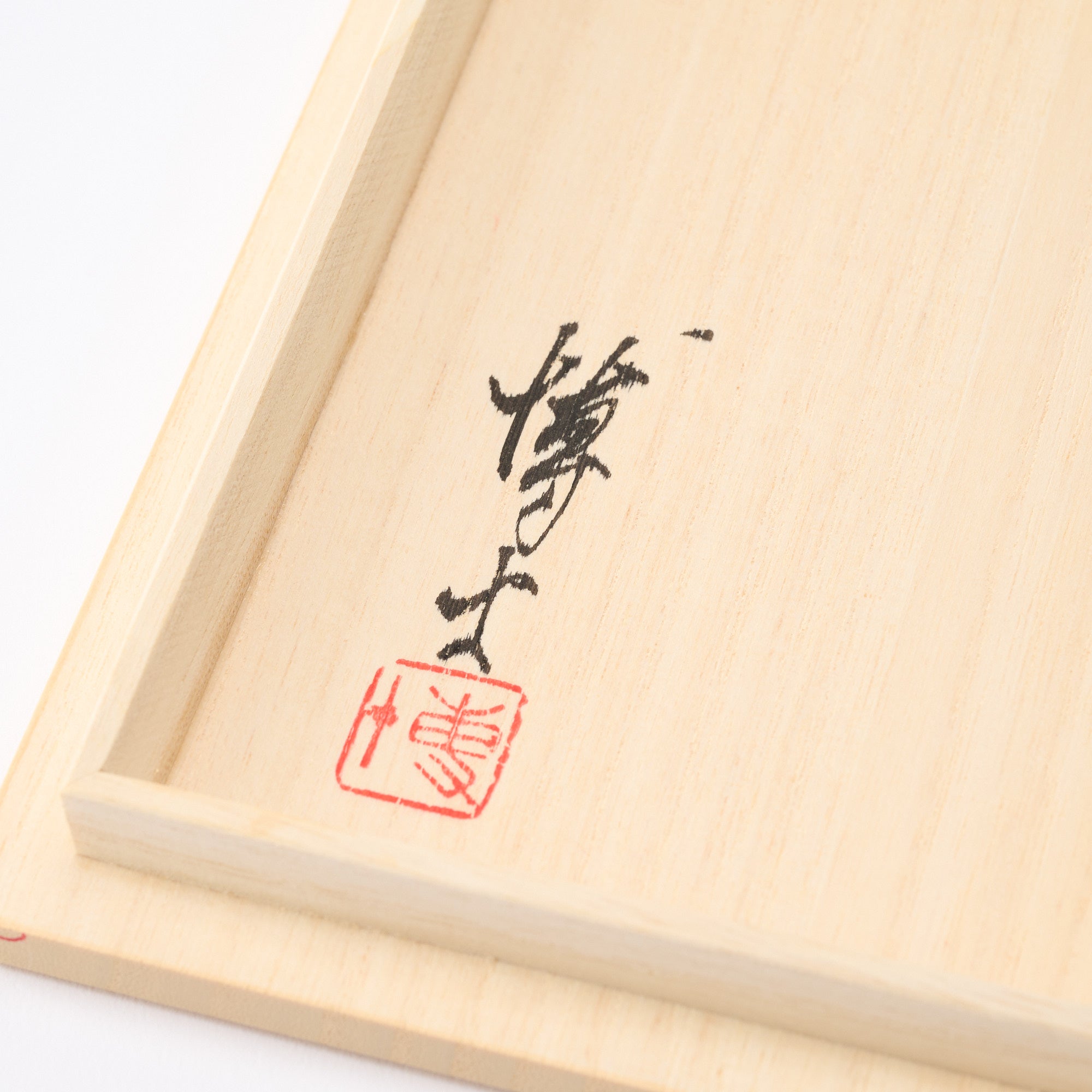
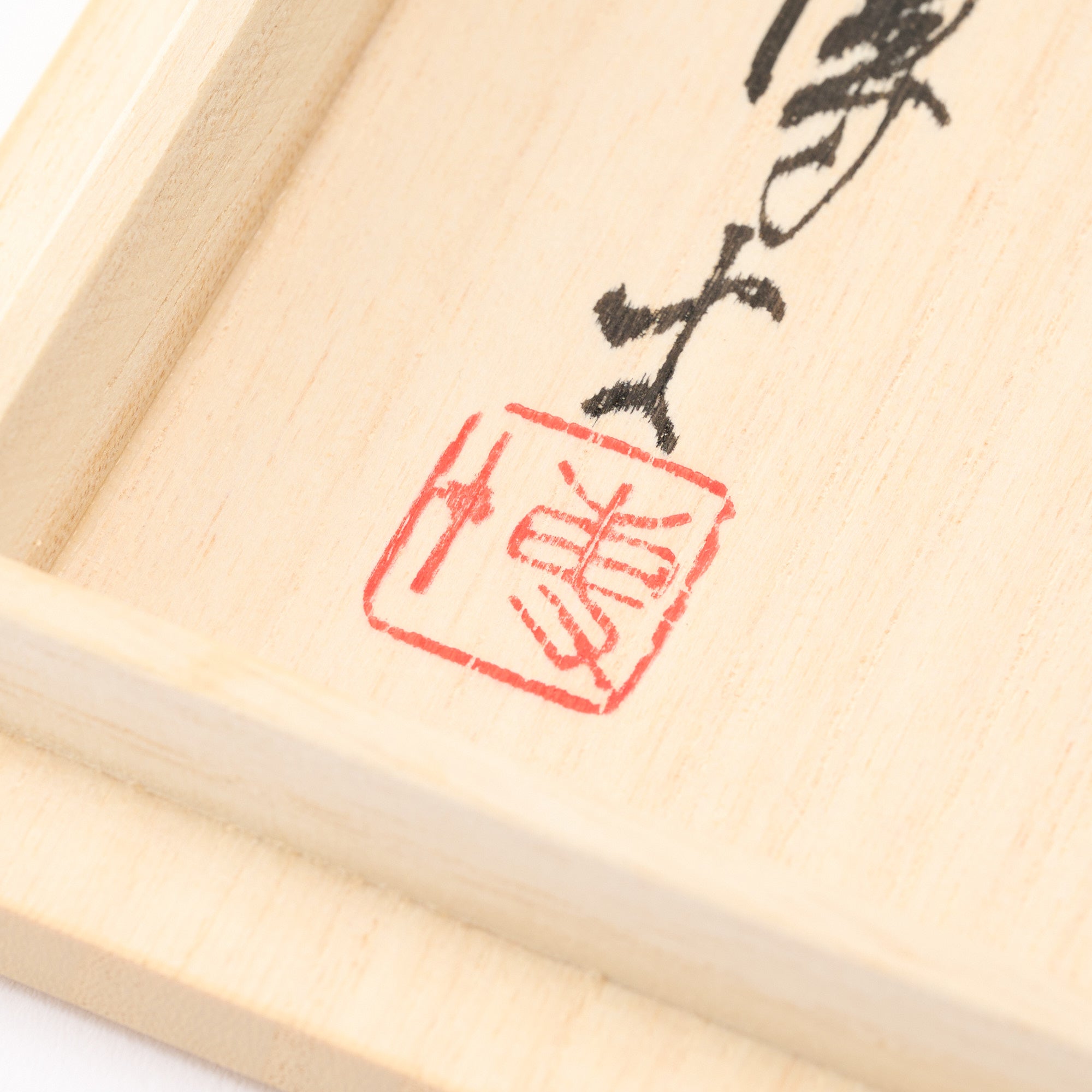
| Package Type | Wooden box |
Fabricante / Marca
En el mundo de Kutani ware, reconocido por su ornamentación vívida e intrincada, la porcelana de Nakada Hiroshi traza una presencia singular mediante una búsqueda inquebrantable del blanco. Su fuerza silenciosa no surge del color sino de la forma misma—guiada por una profunda sintonía con los ritmos y el orden del mundo natural. Arraigado en una tradición Kutani definida por su rigurosa exigencia de perfección, Nakada ha dirigido ese mismo espíritu exigente hacia adentro, despojando la decoración.
Artesanía
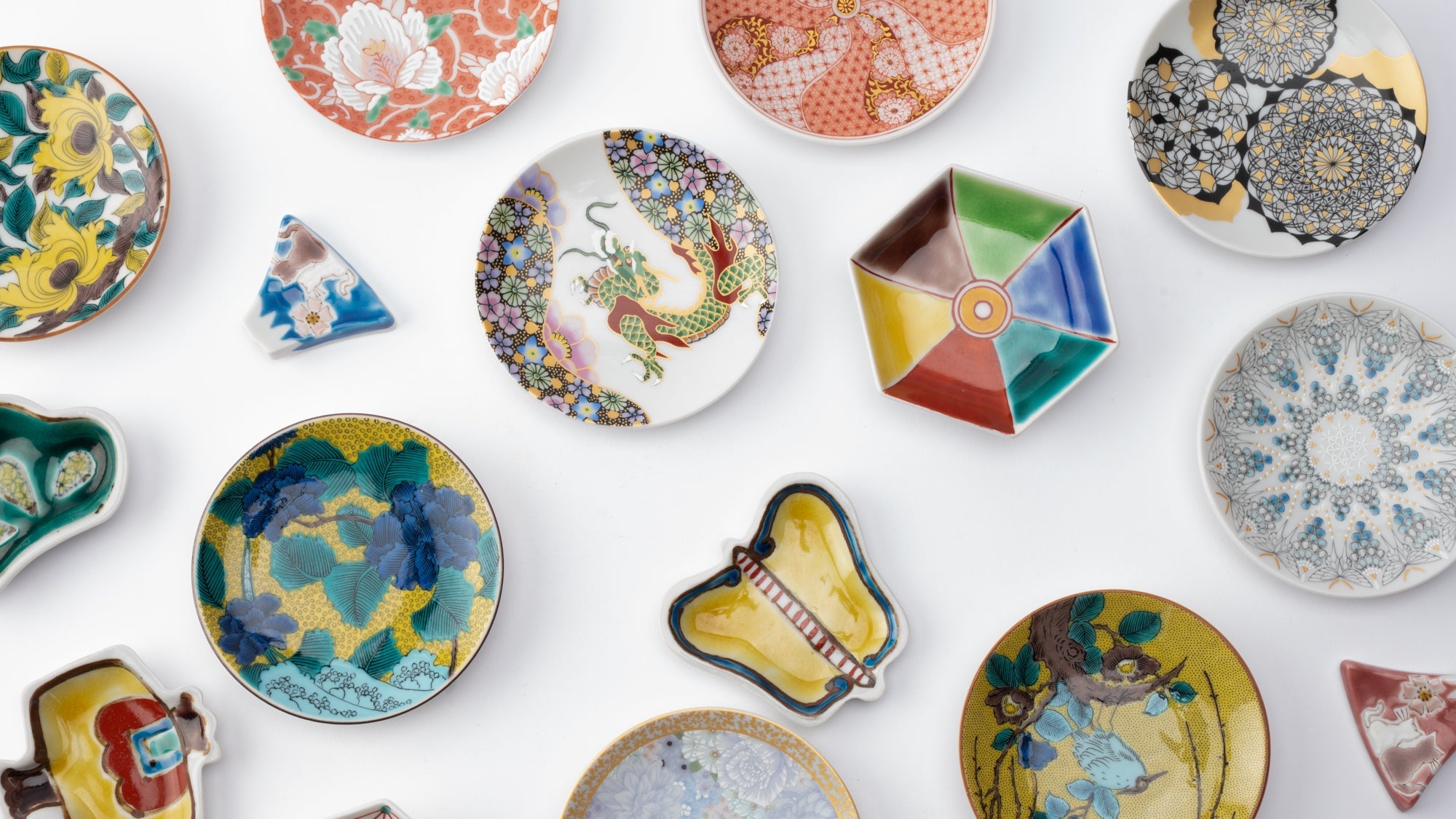
La cerámica Kutani se produce en la región de Kaga, en la prefectura de Ishikawa, con más de 350 años de historia. Se caracteriza por el intenso brillo de sus cinco colores: azul marino, rojo, morado, verde y amarillo. que se aplican a las líneas audaces y atrevidas. Su larga historia se ha desarrollado gracias al esfuerzo incansable y al entusiasmo de quienes han buscado la innovación manteniendo la tradición.
notas
Elige opciones
About Artist
Galería Musubi
Desde sus inicios, Musubi Kiln Se ha esforzado por presentar al mundo las mejores artesanías tradicionales de maestros de todo Japón.
Aquí, en la Galería, buscamos exhibir las técnicas tradicionales más avanzadas, transmitidas de generación en generación. Podrás descubrir obras de maestros que no solo han perfeccionado estos métodos, sino que también han aportado su imaginación para innovar aún más el oficio.
Algunos de estos maestros incluso han sido nombrados Poseedores de Importante Patrimonio Cultural Inmaterial, un título que les otorgó el gobierno japonés para reconocer formalmente su contribución a la artesanía y la cultura, consolidando así su legado y convirtiéndolos en una parte importante de la historia del arte.
Cada pieza se elabora meticulosamente a mano durante muchos meses para crear un tesoro atemporal único. Y cuando esté en tu hogar, tú también formarás parte de esa historia.
Bienvenidos a la Galería. Les invitamos a explorarla con calma.