

Die Schönheit des Geflechts: Japanische Bambuskunst
Erfahren Sie, wie sechs Flechttechniken – von Yotsume bis Ajiro – Form und Funktion japanischer Bambuskunst prägen.
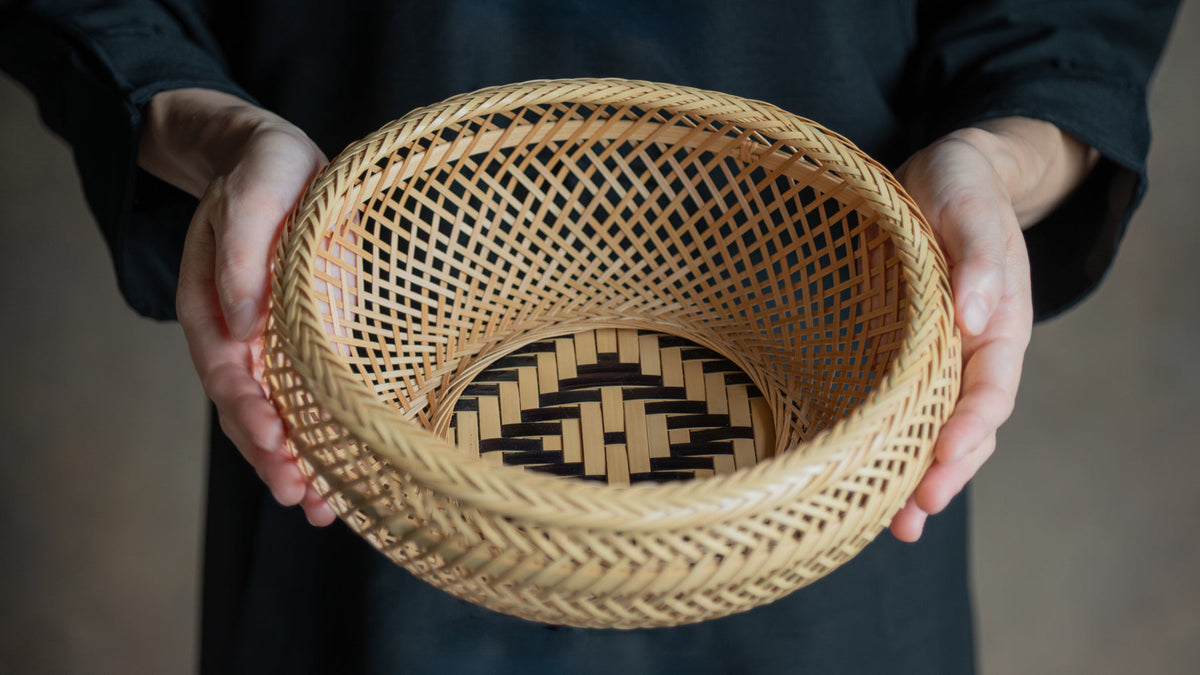
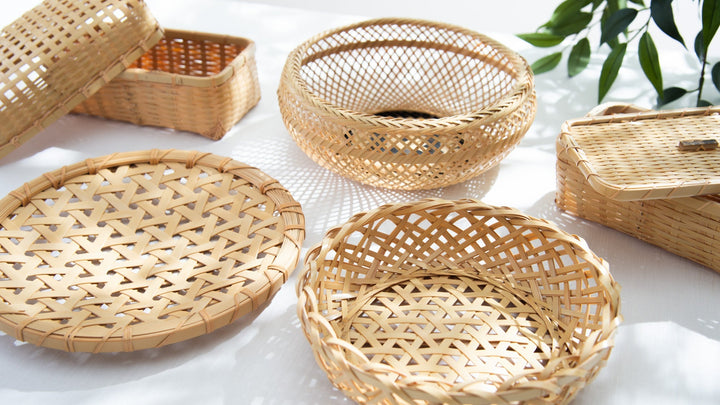
Von zarten Blumenkörben bis zu robusten Tabletts und fein geflochtenen Schachteln – japanisches Bambushandwerk nimmt eine außergewöhnliche Vielfalt an Formen an. Hinter dieser Vielfalt liegt ein ebenso reiches Vokabular an Flechttechniken.
Manche sind offen und luftig. Andere sind dicht oder kunstvoll verflochten. Weit mehr als Dekoration bestimmt jede einzelne, wie ein Objekt funktioniert – wie viel Luft hindurchströmt, wie viel Gewicht es tragen kann und wie es sich in der Hand anfühlt.
Das Verständnis dieser Techniken eröffnet einen weiteren Zugang zur Wertschätzung des Bambushandwerks.
Vor dem Flechten: Der Bambusstreifen
Obwohl jede Technik ihr eigenes Erscheinungsbild hat, beginnen alle mit demselben Material: schmalen Bambusstreifen, die von Hand vorbereitet werden. Was sich ändert, ist nicht der Bambus selbst, sondern die Art, wie diese Streifen sich kreuzen, einander stützen und zusammenkommen, um eine Form zu schaffen.

Die Eigenschaften des fertigen Stücks hängen nicht nur davon ab, wie der Bambus geflochten wird, sondern auch vom Bambus selbst. Madake ist die Bambusart, die am häufigsten für Bambushandwerk in Japan verwendet wird. Relativ weich, mit langen Abständen zwischen seinen Knoten, lässt er sich auf vielfältige Weise bearbeiten. Seine Außenhaut ist fein und glänzend, und sein Ton vertieft sich, wenn das Stück benutzt wird.
Grundlegende Flechtweisen, unzählige Möglichkeiten
Obwohl sich die Bambusflechttechniken in Japan unterscheiden, teilen viele ein gemeinsames Vokabular grundlegender Techniken. Diese wiederum bringen viele Variationen hervor. Zusammen bieten sie einen nützlichen Ausgangspunkt, um zu erkunden, wie unterschiedliche Ansätze das fertige Objekt prägen.
Yotsume-Flechtung: Beginn mit der einfachsten Struktur

Erkennbar an ihrem regelmäßigen Gitter aus quadratischen Öffnungen, entsteht yotsume durch das Kreuzen von Streifen gleicher Breite im rechten Winkel. Sie erscheint auf Bambuskörben, Bento-Boxenund anderen Alltagsgegenständen, bei denen eine offene Konstruktion einem praktischen Zweck dient.

Die Veränderung des Abstands zwischen den Streifen verändert subtil das Erscheinungsbild des Gitters. Breitere Öffnungen erzeugen einen leichteren Eindruck, während engere eine dichtere, strukturiertere Oberfläche hervorbringen.
Da jeder Streifen über seine gesamte Länge sichtbar bleibt, ist die Konstruktion leicht nachzuvollziehen. Jede Kreuzung liegt frei, und der gleichmäßige Abstand ist eines der ersten Dinge, die das Auge bemerkt.
Mutsume-Flechtung: Stärke durch Diagonalen

Mutsume verfolgt einen anderen Ansatz, indem es die Streifen in ein sich wiederholendes Muster aus sechseckigen Öffnungen organisiert. Das Ergebnis ist größere Festigkeit bei gleichzeitiger Beibehaltung einer offenen Konstruktion. Aufgrund dieser Balance eignet es sich gut für Körbe und andere Objekte, die leicht bleiben müssen, während sie ihre Form behalten.

Eine bekannte Variation ist kikko, die sich wiederholende Sechsecke betont, die einem Schildkrötenpanzer ähneln. Die Breite der Bambusstreifen kann jedes Sechseck weiter akzentuieren und der Oberfläche einen ausgeprägteren geometrischen Charakter verleihen.


Yatsume-Flechtung: Verstärkung des Gitters

Aufbauend auf dem quadratischen Gitter von yotsume führt yatsume zusätzliche diagonale Streifen ein, die sich wiederholende achteckige Öffnungen schaffen. Obwohl die Öffnungen groß bleiben, verstärken die hinzugefügten Diagonalen die Flechtung und verleihen ihr größere Stabilität, ohne ihr leichtes, offenes Erscheinungsbild zu opfern.

Diese Balance aus Offenheit und Haltbarkeit macht yatsume gut geeignet für größere Körbe und Aufbewahrungsstücke. Die großzügigen Öffnungen halten das Stück leicht und gut belüftet, während die sich kreuzenden Streifen dem Korb helfen, seine Form unter schwereren Lasten zu bewahren.
Gozame-Flechtung: Eine dichtere Struktur


Bis jetzt hat jede Technik großzügige Öffnungen zwischen den Streifen gelassen. Gozame schließt diese Zwischenräume. Dickere Streifen verlaufen in eine Richtung, während feinere sie kreuzen. Zusammen schaffen sie eine dichtere, haltbarere Oberfläche.
Diese Konstruktion wird oft für Bambus- Siebeverwendet, bei denen die kleineren Öffnungen Wasser ablaufen lassen, während sie verhindern, dass Lebensmittel hindurchrutschen.

Wenn die Öffnungen kleiner werden, beginnt sich die Oberfläche weniger wie ein Gitter und mehr wie eine durchgehende Fläche anzufühlen.
Ajiro-Flechtung: Eine durchgehende Oberfläche

Ajiro führt diese Idee einen Schritt weiter. Flache Bambusstreifen werden eng in überlappenden, versetzten Reihen geflochten und schaffen eine glatte, ununterbrochene Oberfläche.

Die enge Konstruktion verleiht ihr beträchtliche Festigkeit, während subtile Veränderungen in der Anordnung der Streifen eine bemerkenswerte Vielfalt visueller Effekte hervorbringen. In Stücken, die helleren und dunkleren Bambus kombinieren, betont der Kontrast das geometrische Design zusätzlich.


Aufgrund dieser Eigenschaften wird die ajiro-Flechtung oft für Schachteln und die Böden von Objekten gewählt, wo Festigkeit und Stabilität wesentlich sind.
Rinko-Flechtung: Ein Kreis, geformt durch die Flechtung

Die rinko -Flechtung schafft natürlich eine kreisförmige Öffnung in der Mitte, wobei lange Bambusstreifen in einem strahlenden Muster nach außen verlaufen. Wenn sie über den Kreis hinaus fortgesetzt werden, können sie in die umgebende Form geformt werden, wodurch dieser offene Raum zu einem integralen Bestandteil des fertigen Designs wird.

Variationen in der Breite und Dicke der Bambusstreifen sowie die Art, wie die Flechtung in das Gesamtstück eingebunden wird, ermöglichen es ihr, eine breite Palette von Ausdrucksformen anzunehmen. Andere Flechtungen, wie ajiro, können hinzugefügt werden, um den Kreis zu füllen und den Boden selbst zu einem dekorativen Akzent zu machen.
Kikuzoko-Flechtung: Ein Muster, das nach außen blüht

Während rinko einen offenen Kreis in der Mitte bildet, füllt kikuzoko die Mitte mit einem Muster, das von einem zentralen Punkt nach außen aufgebaut wird. Sein Name stammt vom fertigen Motiv, das den Blütenblättern einer Chrysantheme (kiku auf Japanisch) ähnelt.

Strukturelle Streifen werden radial angeordnet, während dünnere Bambusstreifen abwechselnd über und unter von der Mitte nach außen geflochten werden. Diese Konstruktion schafft eine starke, stabile Basis und macht sie zu einer gängigen Wahl für runde Bambuskörbe und Siebe.
Die hier vorgestellten Techniken sind nur der Anfang. Im Beppu-Bambushandwerk, unzählige Kombinationen und Variationen ergeben mehr als zweihundert Designs, von denen jedes ein anderes Gleichgewicht aus Offenheit, Festigkeit, Textur und Form bietet. Jede Kreuzung, jede Lücke und jede Richtungsänderung spiegelt eine bewusste Entscheidung wider.

Sobald Sie Bambusarbeiten auf diese Weise betrachten, sehen Sie das fertige Objekt anders. Ein Korb wird nicht mehr nur durch seine Form definiert, sondern auch durch die Entscheidungen, die in ihn eingeflochten sind – wo Raum gelassen wird, wo Festigkeit hinzugefügt wird und wie jeder Streifen mit dem nächsten zusammenwirkt, um sowohl Funktion als auch Schönheit zu schaffen.
Stay close to the craft
Now and then, a quiet letter — new stories, seasonal notes, and the hands behind the work.
Leitfaden für japanische Bambuskunst
Entdecken Sie die Geschichte, die Schönheit und die Nachhaltigkeit japanischer Bambuskunsthandwerke.
Pflege von Bambushandwerk
Einfache Pflegetipps für Bambuskörbe, Tabletts und Teeutensilien – vom täglichen Gebrauch über saisonale Gewohnheiten…
A Beginner’s First Kintsugi with the MUSUBI Craft Kit
Five pieces of chipped, cracked, and broken tableware, seven sessions, and one beginner's honest…
Rebecca Menasché
Leave a comment