

Tamura Seito: Caligrafía sobre Kutani Ware, Conectando a Través del Tiempo
El practicante de cuarta generación de Kutani mohitsu saiji, Tamura Seito, pinta poemas waka en microcaligrafía sobre porcelana esmaltada.
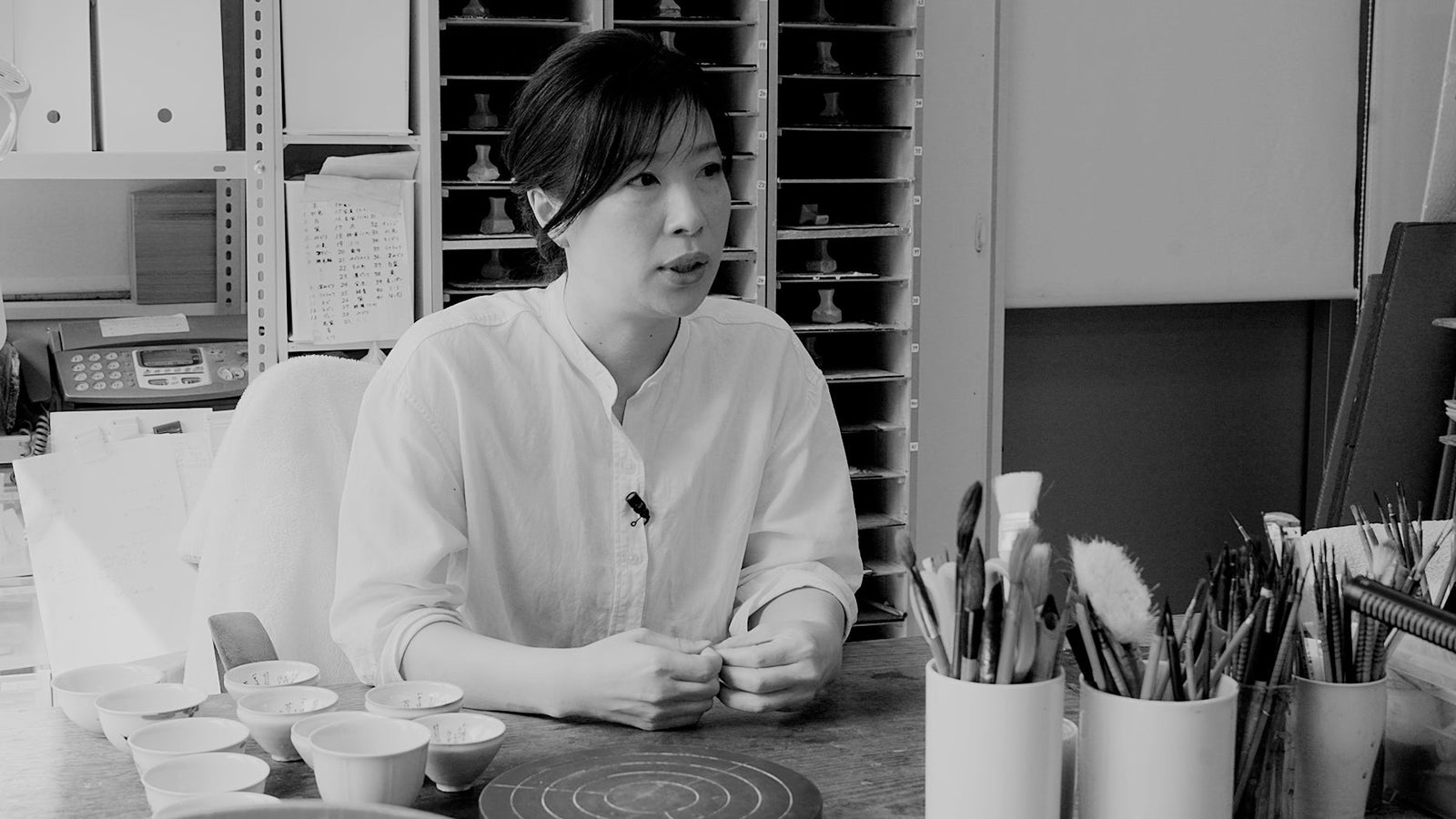
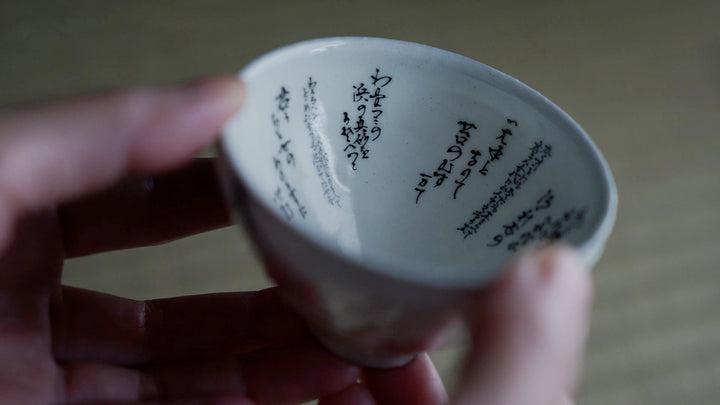
La punta fina de un pincel impregnado en pigmento negro toca la porcelana esmaltada. Aunque apenas tiene unos pocos pelos de grosor, sus cerdas apenas se doblan mientras se deslizan sobre la superficie. Un solo trazo completo, el pincel se levanta brevemente y luego vuelve a tocar. Parece temblar, pero sus movimientos son seguros mientras delinean un nuevo trazo: un remate más grueso. Dos trazos más, y líneas aparentemente desconectadas se unen. Un carácter hiragana japonés ha emergido. Pronto, un poema completo toma forma, palabras milenarias que respiran con vida sobre la cerámica.

Este es el trabajo de Tamura Seito, la sucesora de cuarta generación de una técnica conocida como Kutani mohitsu saiji, o Kutani microcaligrafía con pincel. La única artista que continúa este estilo, combina con destreza esmaltes expresivos con poemas waka para crear piezas unificadas donde los espacios vacíos entre los caracteres cuentan tanto de la historia como las palabras mismas.

Conversamos con ella sobre volver a sus raíces, la creatividad que habita dentro del espacio negativo, y cómo los poemas de personas de hace más de mil años aún resuenan hoy.
Redescubrir el Valor de Donde Comenzó
"Para ser honesta, no me interesaba en absoluto hacerme cargo del negocio familiar", confiesa Tamura. "En cambio, realmente quería ir al extranjero y probar trabajar en una oficina. Quería ver cómo era una empresa".

Es difícil imaginarlo, rodeada como está ahora por sus herramientas de trabajo: al menos cinco frascos de pinceles alineados en su escritorio, el disco de un torno de alfarero a su lado, y obras en proceso cuidadosamente apiladas en estanterías en la esquina.
"Mi padre siempre hacía el mismo trabajo solo en casa, así que simplemente me parecía bastante simple".
Aunque estudió Kutani mohitsu saiji bajo su padre, Tamura Keisei, Tamura también se graduó de la Universidad de Tsukuba, Escuela de Estudios Internacionales, en 2004. Pasó los siguientes tres años trabajando en ventas, un trabajo que encontró completamente satisfactorio. También fue durante este tiempo que comenzó a ver el trabajo de su padre bajo una luz diferente. Los productos que encontraba en las tiendas simplemente no se comparaban con las piezas que había visto crear a su padre cada día.

"Otras cosas parecían superficiales en comparación. Cuando ese nivel de calidad es simplemente parte de tu vida diaria desde la infancia, tu ojo naturalmente se acostumbra a ello".
Tamura también comenzó a pensar que quería crear algo que pudiera seguir construyendo con el tiempo, algo que durara y permaneciera.
"Por esa época", continúa, "mientras pensaba en el tipo de trabajo al que quería dedicar mi vida, me di cuenta de que mi padre era el último artesano que practicaba Kutani mohitsu saiji. Una vez que él se fuera, la técnica misma desaparecería".
Decidió volver a estudiar, esta vez para estudiar cerámica, completando un curso de formación en el Instituto de Formación Técnica de Kutani Ware de la Prefectura de Ishikawa en 2007. Comenzó a exponer tan pronto como en 2008 y ha estado dedicada diligentemente al oficio desde entonces.

Aunque se inspira en su padre y su abuelo, Tamura Kinsei de segunda generación, ha estado forjando constantemente su propia voz artística.
"Quiero escribir caracteres suaves", dice sobre sus técnicas de letrado, usando una palabra que puede traducirse igualmente como suave, delicado o amable. "Caracteres con un sentido de flexibilidad o maleabilidad. Diseño mis piezas para que se vean bien desde cualquier ángulo. En última instancia, espero que la persona que reciba mis piezas sea quien complete la obra".

De esta manera, los caracteres "suaves" no solo se refieren a la forma o la técnica, sino a la consideración hacia el usuario. Caligrafía que responde no solo al recipiente sobre el cual se pinta, sino también al estado de ánimo mismo de la persona que la disfruta: eso es lo que forma el núcleo del trabajo de Tamura.
Dejar que la Obra Hable
Sin embargo, el arte de Tamura no se detiene en la microcaligrafía. De hecho, comienza mucho antes de que el pincel de caligrafía toque la cerámica. Otra característica distintiva de sus creaciones incluye esmaltes expresivos, así como diseños pintados en los cinco colores tradicionales de Kutani ware, el Kutani gosai.

La forma en que Tamura combina técnicas revela otro aspecto de su enfoque artístico flexible y receptivo. Su serie Washi, por ejemplo, presenta un esmalte blanco texturizado que recuerda al fino papel washi . El esmalte se aplica con spray, creando un patrón diferente cada vez. Tamura ajusta la colocación de los caracteres para que coincidan con los cambios naturales del esmalte. Letra todo su trabajo a simple vista. No se utiliza lupa, ni siquiera para los caracteres más pequeños.

Los colores también varían con cada pieza. Algunas salen del horno con tonos rosados; otras tienden hacia el amarillo. Solo entonces Tamura decide la dirección de la obra. Podría elegir motivos de flores de cerezo o poesía con temas primaverales para una pieza rosada, mientras que lleva hojas de otoño y temas a recipientes con tonos amarillos. La obra se descubre así de nuevo en cada etapa.
Los poemas que Tamura elige, y las superficies de sus obras, están en diálogo entre sí.

"Con este esmalte blanco, si pongo un poema con tema de nieve, parece nieve; si pongo un poema sobre flores de cerezo, parece pétalos dispersándose en el viento". Dando otro ejemplo, dice: "A veces tengo la intención desde el principio de usar un esmalte rojo porque quiero incluir un poema de hojas de arce; dependiendo de cómo resulte, podría decidir que se adapta mejor a las flores de cerezo, o podría adaptarse a un poema sobre el atardecer. Así que no decido todo de antemano. La obra se completa a través de ese proceso de ver nuevas posibilidades en lo que emerge".
Sin embargo, Tamura deja intencionalmente espacio en blanco, tanto literalmente —muy pocos de sus recipientes están completamente cubiertos de texto o patrón— como conceptualmente.
"Me gusta crear una atmósfera que permita a los espectadores interpretar una pieza por sí mismos", dice.
Poemas en un Viaje
Los poemas se prestan bien a este arte del espacio negativo. La mayoría son waka de las antologías poéticas más antiguas de Japón: el Manyoshu, compilado en la última parte del período Nara (710–794 d.C.), y el Kokin Wakashu (ca. 905–920 d.C.).

"Los waka contienen solo treinta y un sílabas", dice Tamura, "así que uno debe llenar los espacios en blanco con su imaginación. Termina reflexionando sobre el poema mientras evoca algo dentro de sí mismo".
Escritos en japonés clásico, el contenido no es particularmente fácil de entender incluso para la mayoría de los hablantes nativos de japonés. Pero para Tamura, eso es parte del atractivo.
"Creo que es bueno no entender completamente. No hay encanto en una lista de lo que sucedió ese día, o en una conclusión tras otra. En cambio, incluso si no puede leer lo que está escrito, si aún se siente como japonés, creo que eso es justo. Cuando está justo en el límite de 'puedo leerlo, no puedo leerlo'. Ese es el punto ideal que busco con mi caligrafía".
El sistema de escritura japonés contiene tres escrituras: kanji, o caracteres tomados del chino; katakana, un sistema fonético usado a menudo para préstamos lingüísticos; e hiragana, la escritura fonética principal.
"La belleza del hiragana, que es asimétrico, es algo único de Japón, y realmente quiero atesorar eso. Esa cualidad dispersa, esa sensación de ser irregular pero armoniosa, es lo que busco".

Sus cualidades visuales pueden apreciarse por sí mismas, ya sea que uno entienda su significado o no.
Aunque Tamura comenzó con poemas de amor, hoy se siente atraída por poemas sobre personas en viajes. Parece apropiado para una artista que encontró su vocación al dejar su hogar y regresar nuevamente.
"Siento que dependo mucho del poder de estos poemas". Aunque su trabajo puede ser solitario, Tamura no crea sola. Los poemas, el lenguaje y la sensibilidad que portan han sido transmitidos durante siglos. Su papel es tomar prestado su poder y belleza, añadir su propia perspectiva, y dejarlos hablar una vez más a través de Kutani ware.
Cartas Enviadas a Través de Mil Años
"Que un poema compuesto por una persona hace tanto tiempo haya llegado hasta nosotros hoy—es simplemente asombroso, ¿no es así? Aunque esa persona vivió tan lejos en el pasado, seguía siendo humana, como nosotros. Las emociones son las mismas. Un waka es una canción, pero también es como una carta. Leer esas palabras y empatizar con alguien nacido hace más de mil años—hay algo profundamente conmovedor en eso".

El trabajo de Tamura, también, es como una carta. Un momento capturado en el tiempo, receptivo al destinatario, solo se completa verdaderamente una vez que alcanza a otro ser humano. Cada una de las piezas de Tamura está destinada a ser completada por quien la sostiene. Un viajero antiguo emprendiendo un viaje, una artista de cuarta generación pintando en su estudio, y, al otro lado del océano, una persona colocando una flor en un jarrón adornado con caligrafía, girándolo para captar la luz de ese día de la manera justa. Cada persona y cada momento están conectados, una carta gentil de humanidad que siempre está en proceso de ser escrita.

Stay close to the craft
Now and then, a quiet letter — new stories, seasonal notes, and the hands behind the work.
El arte de Kitaoji Rosanjin: la belleza de la cocina
Rosanjin unió la cerámica, la caligrafía y la cocina en una sola visión de…
Iwata Mana
Dele la vuelta: Leer una pieza desde su base
Descubra lo que revela la base de una vasija: arcilla desnuda, anillo de apoyo,…
La estética del carácter escrito en las artesanías japonesas
Desde el auspicioso 福 hasta la poesía oculta ashide, explore cómo los caracteres se…
Leave a comment