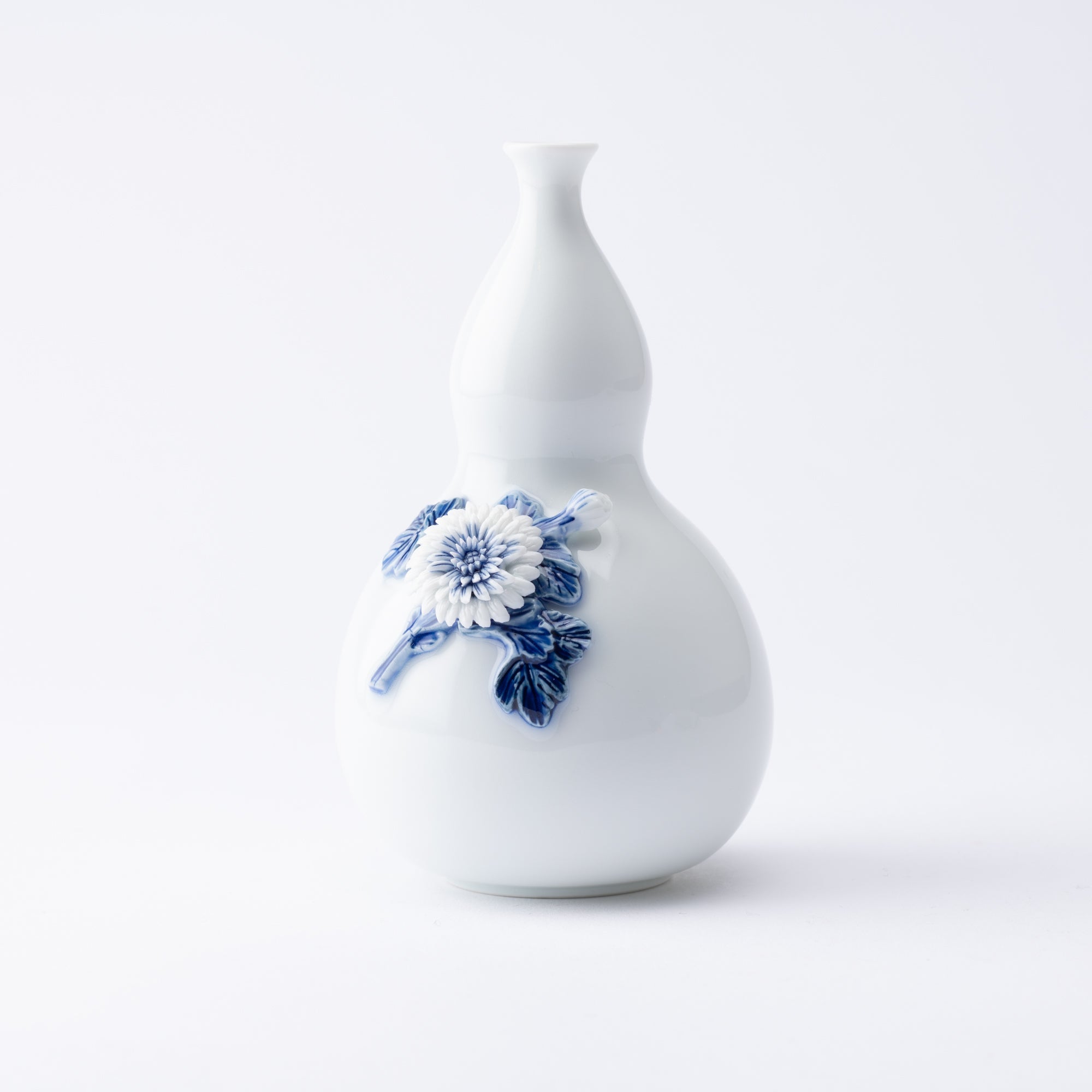
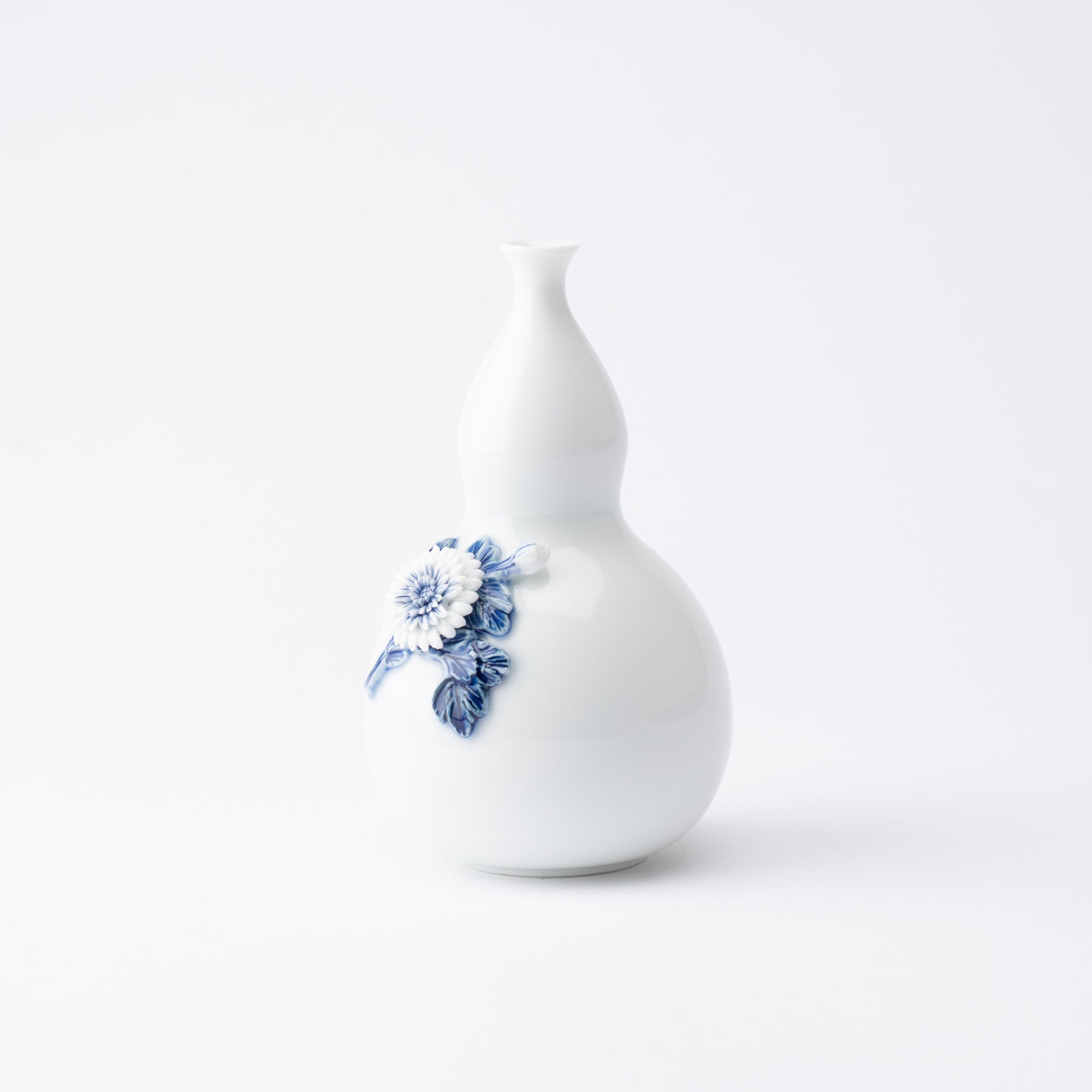
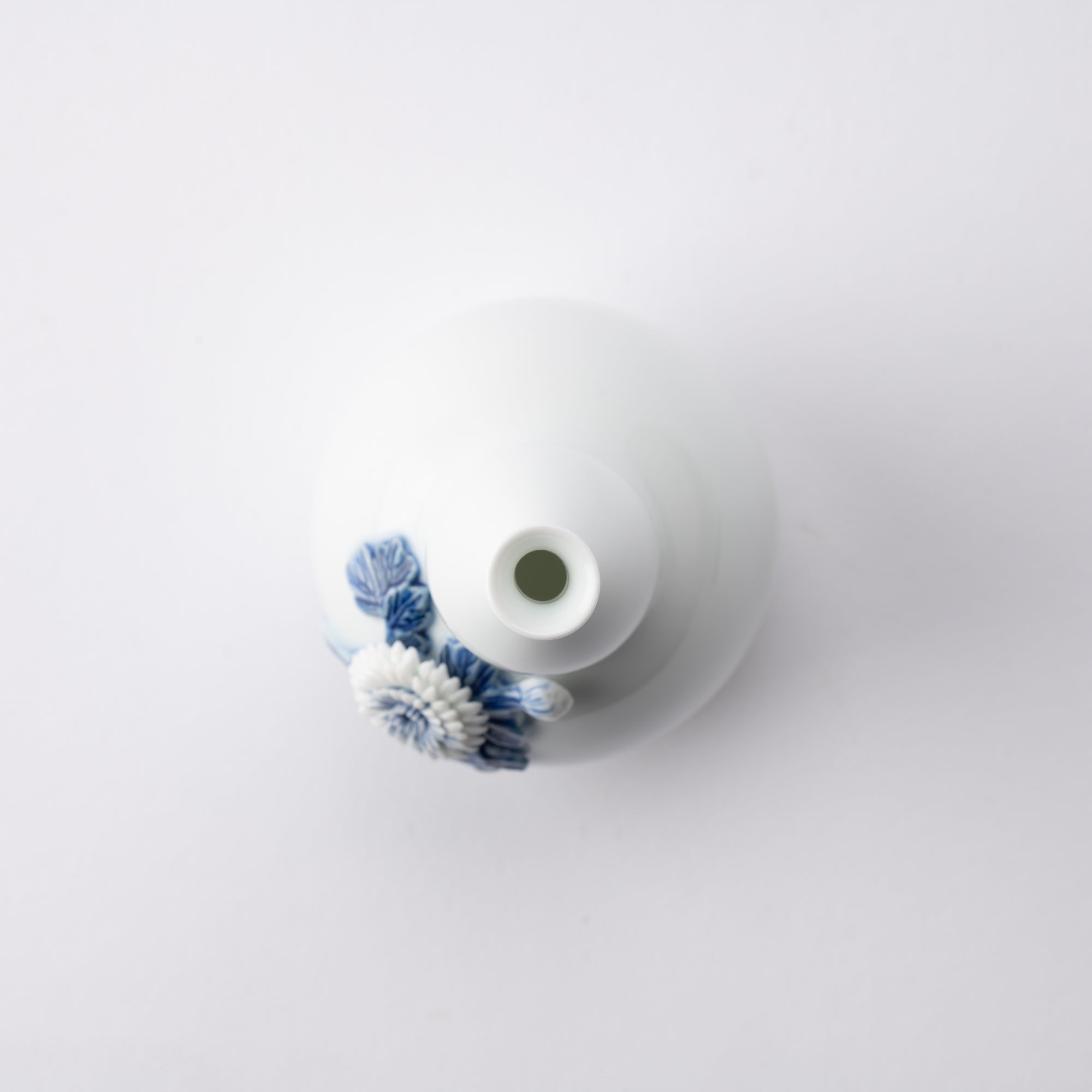
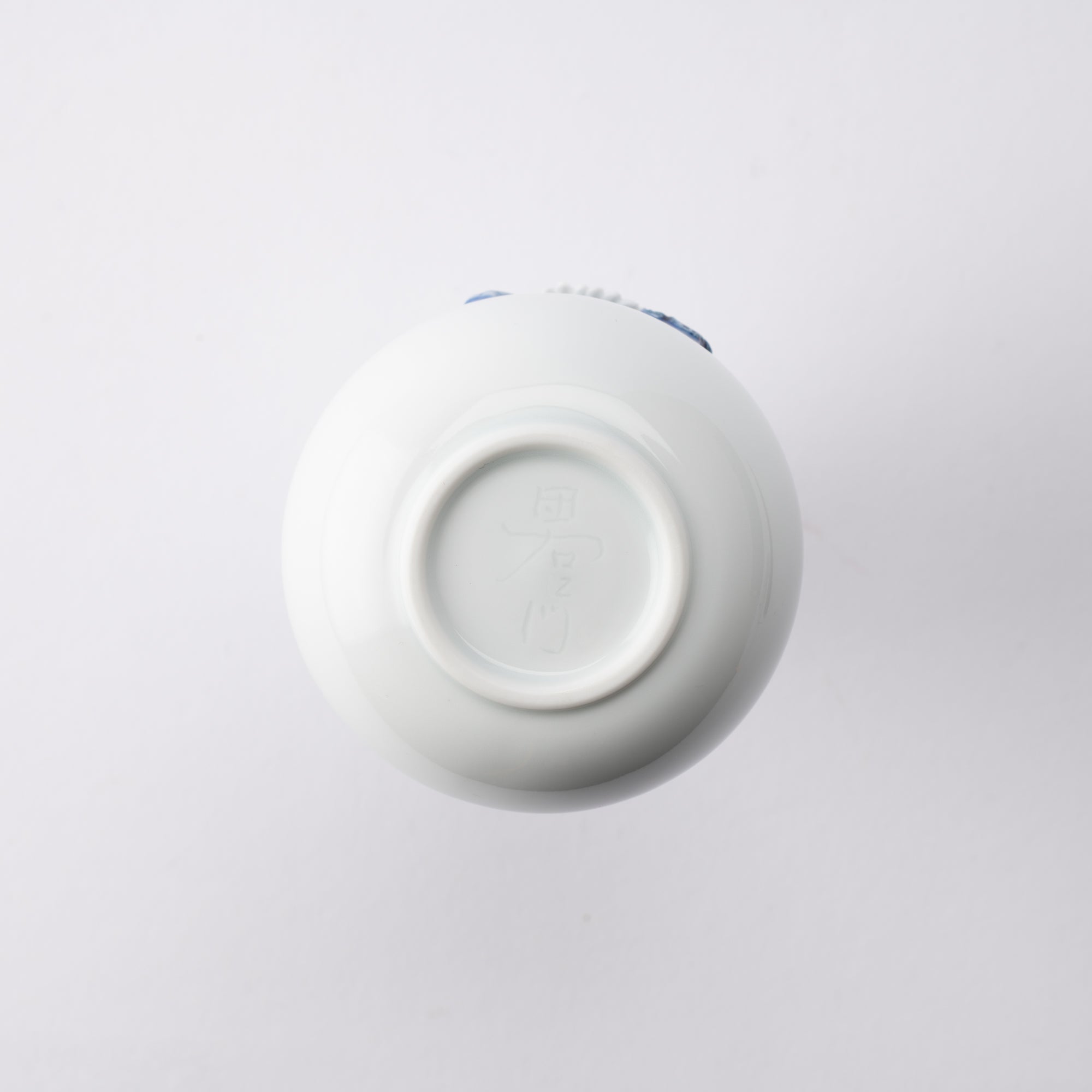
Chrysanthemum Bloom Single Flower Vase
Ships from Japan · Free shipping on orders over $250 USD
Estimated Shipping Widget will be displayed here!
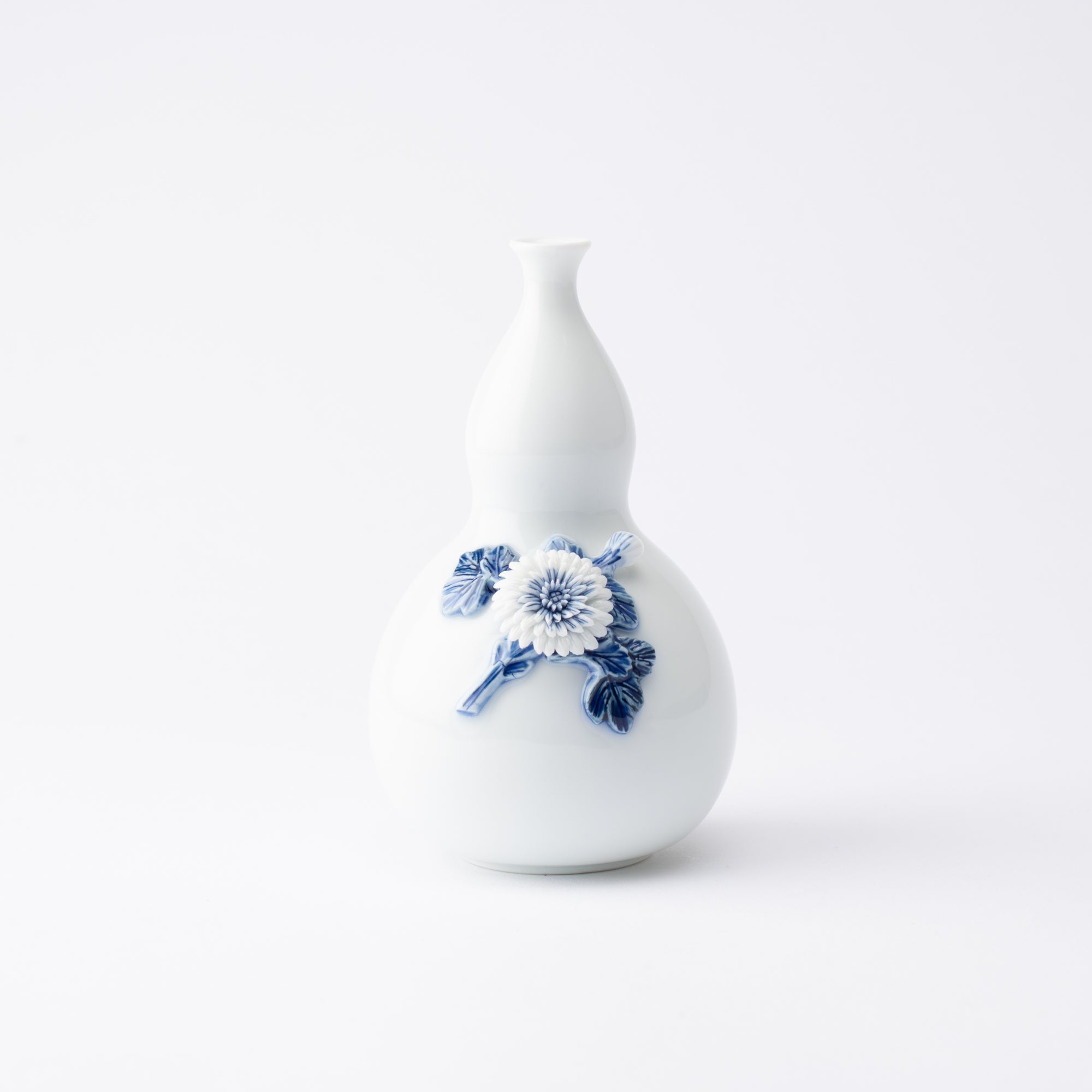
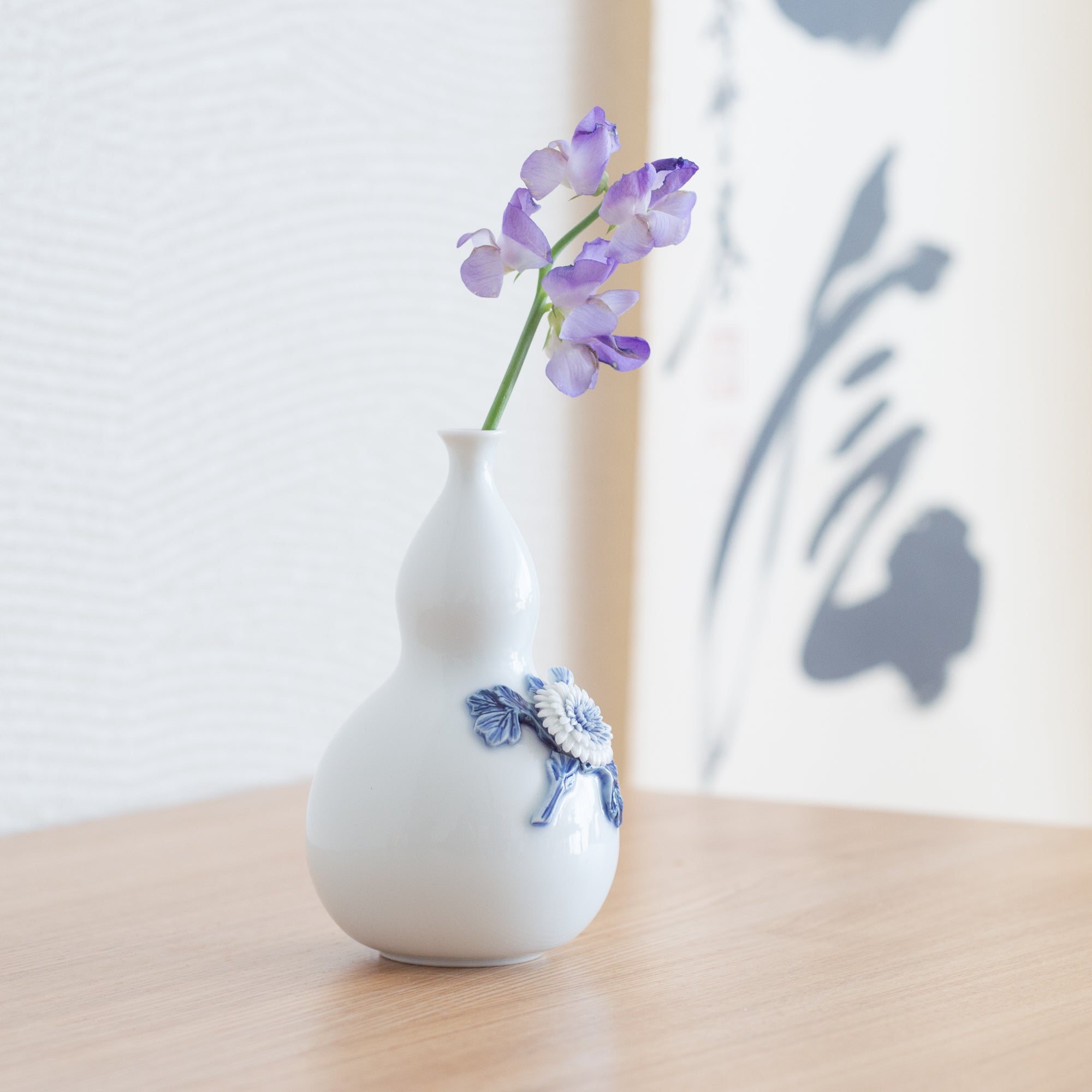
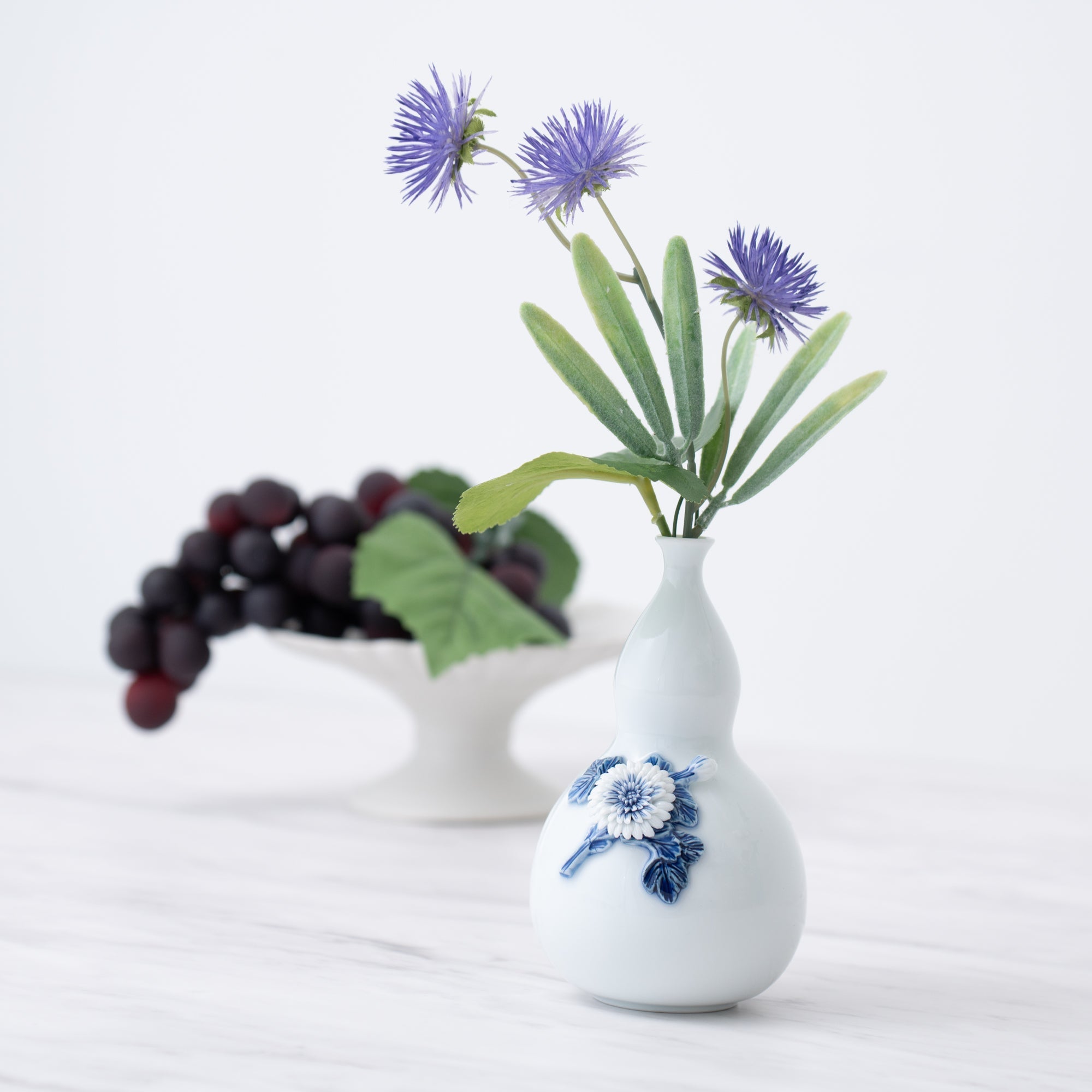
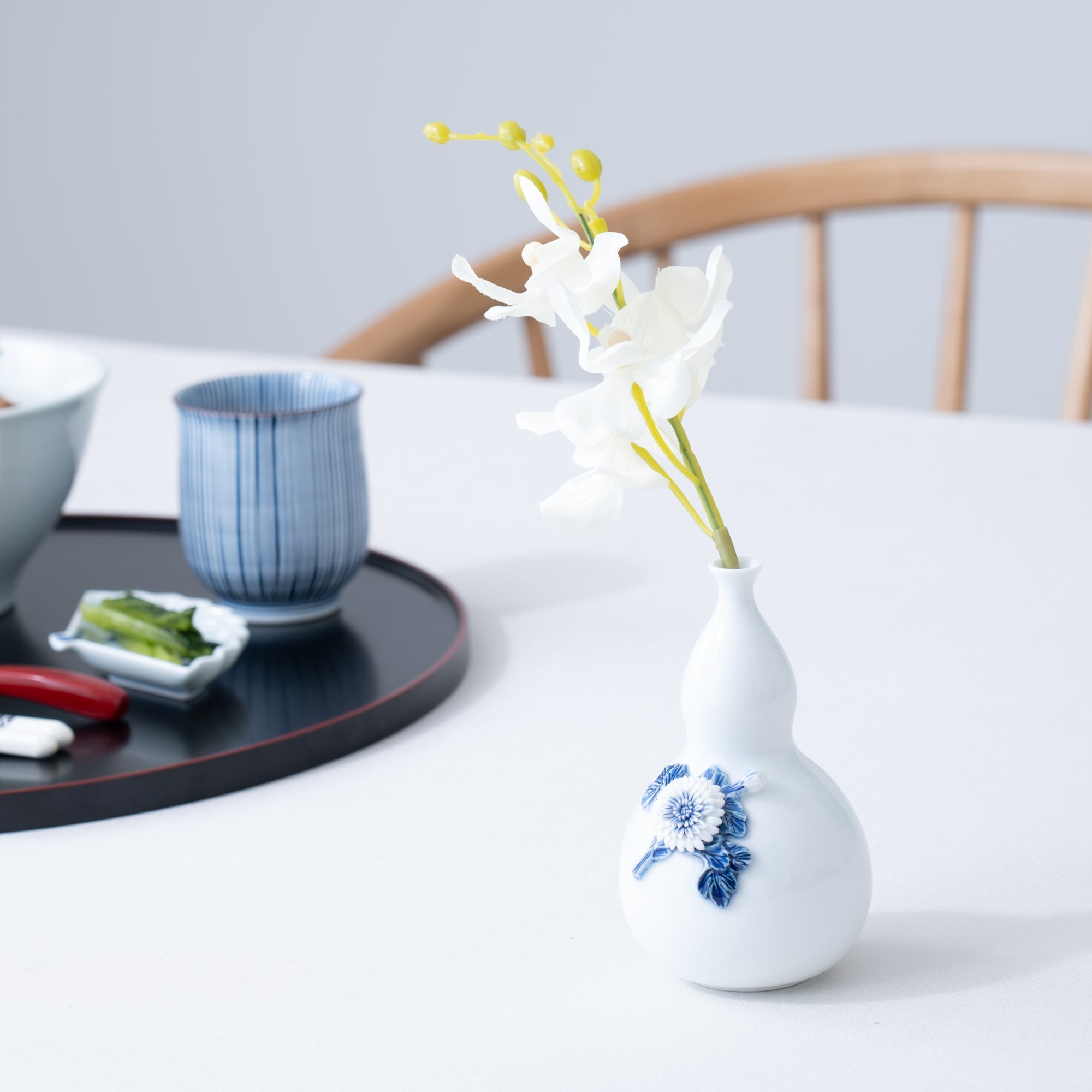
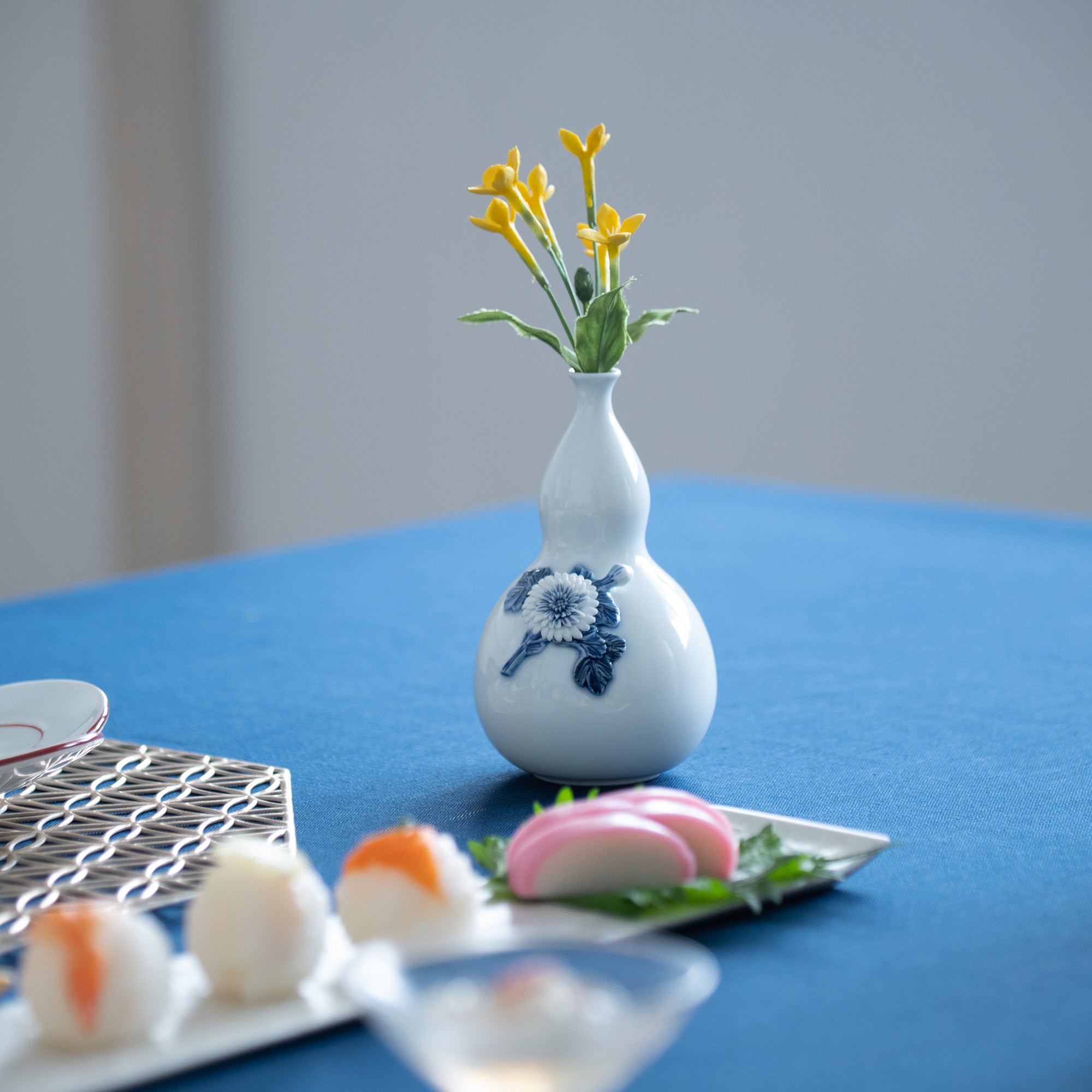
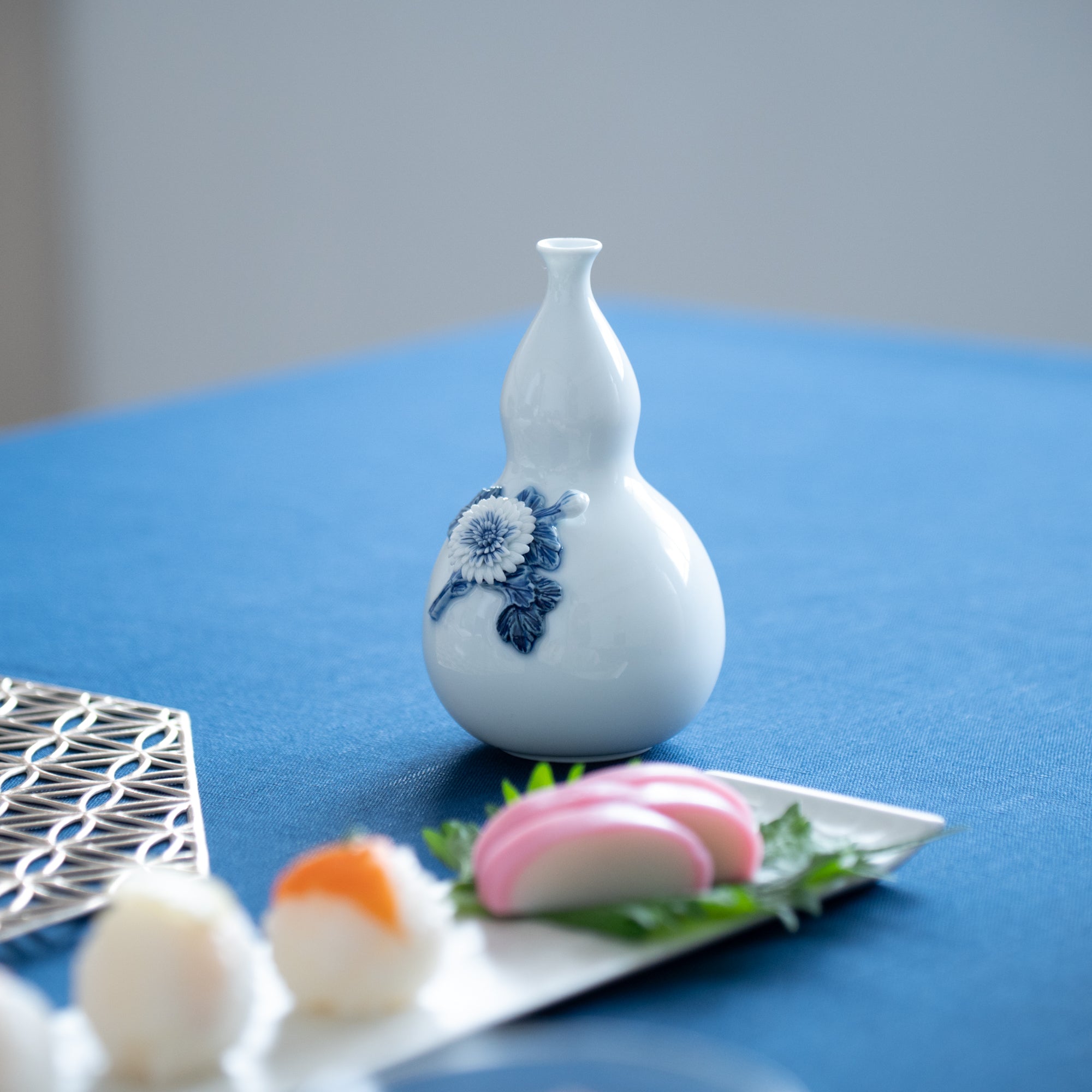
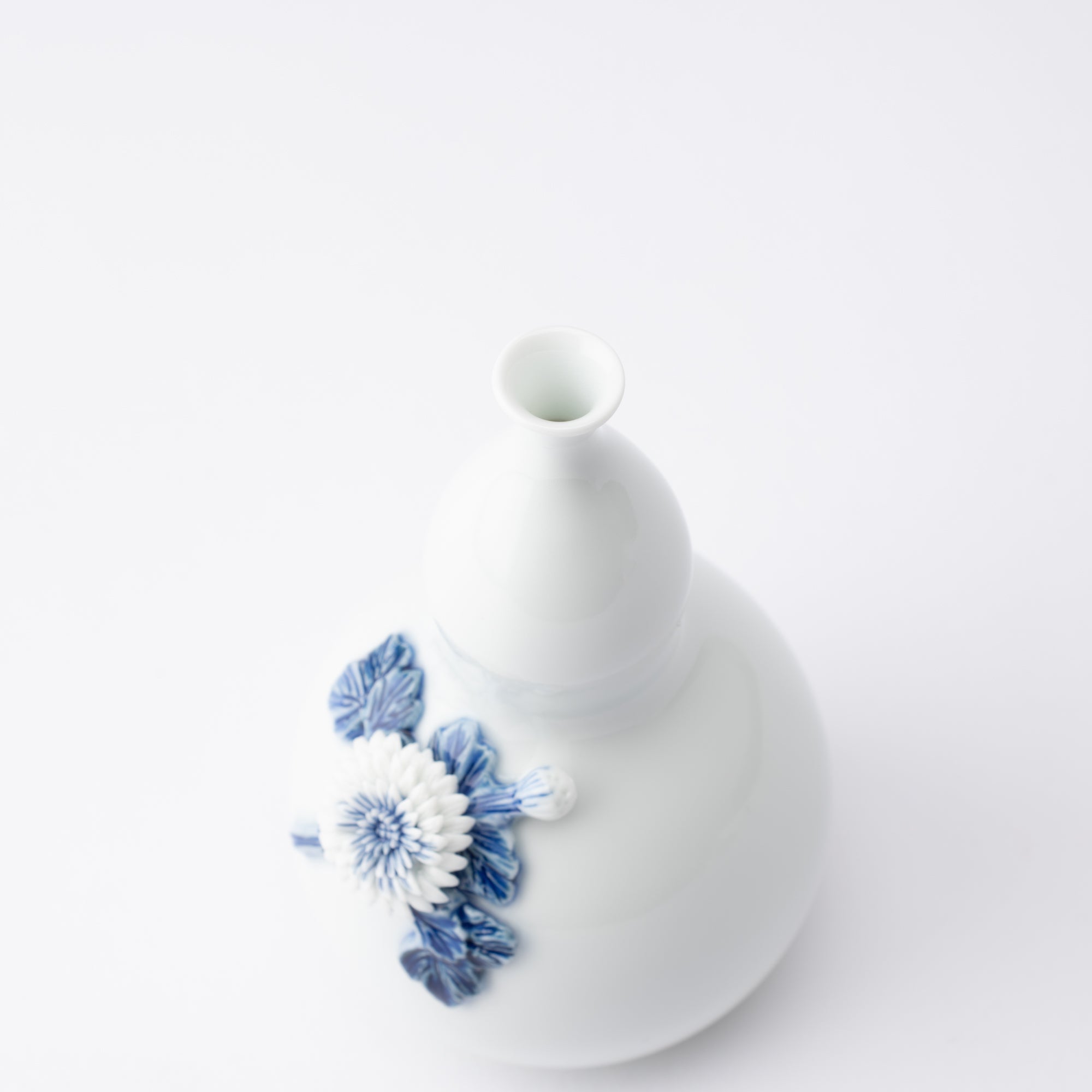
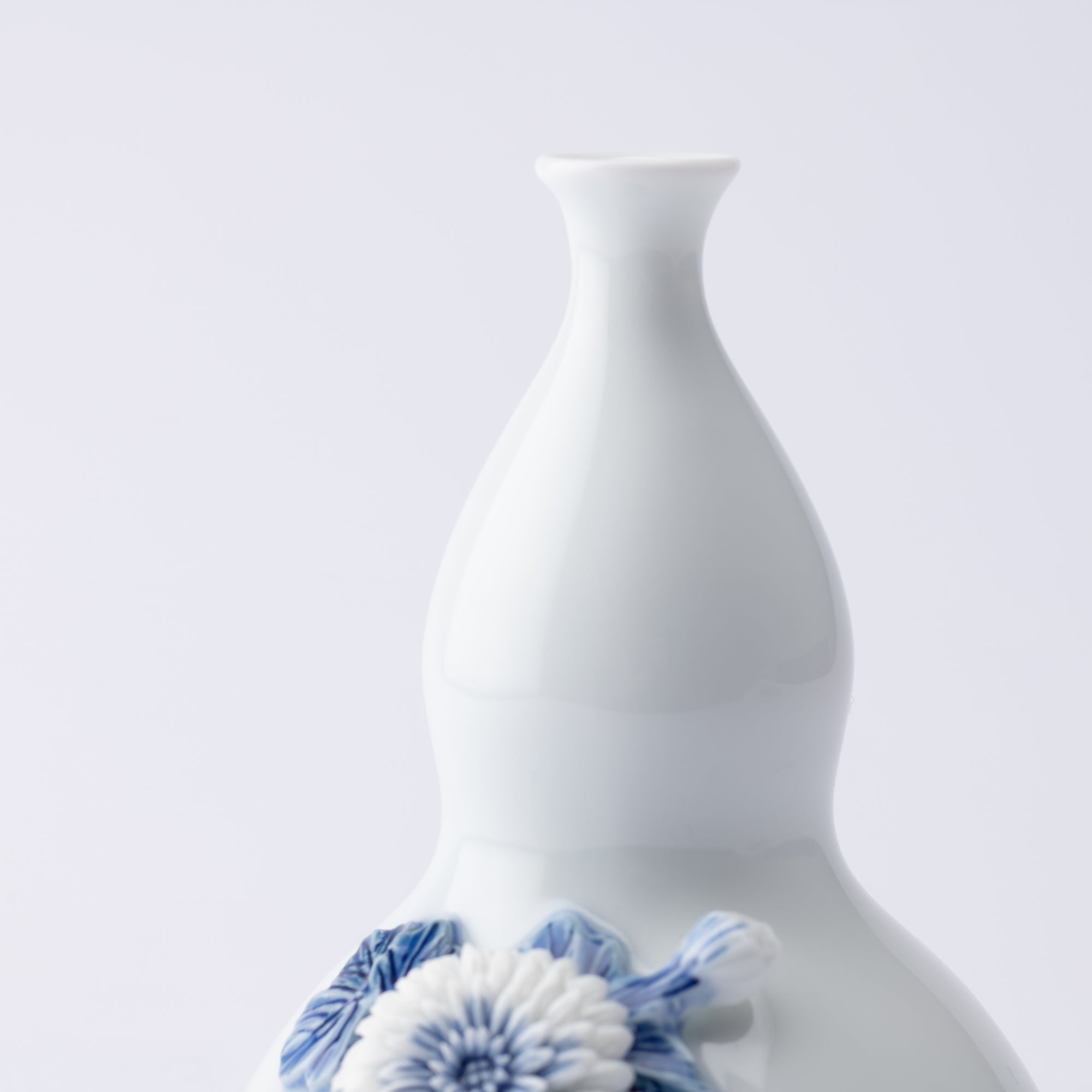
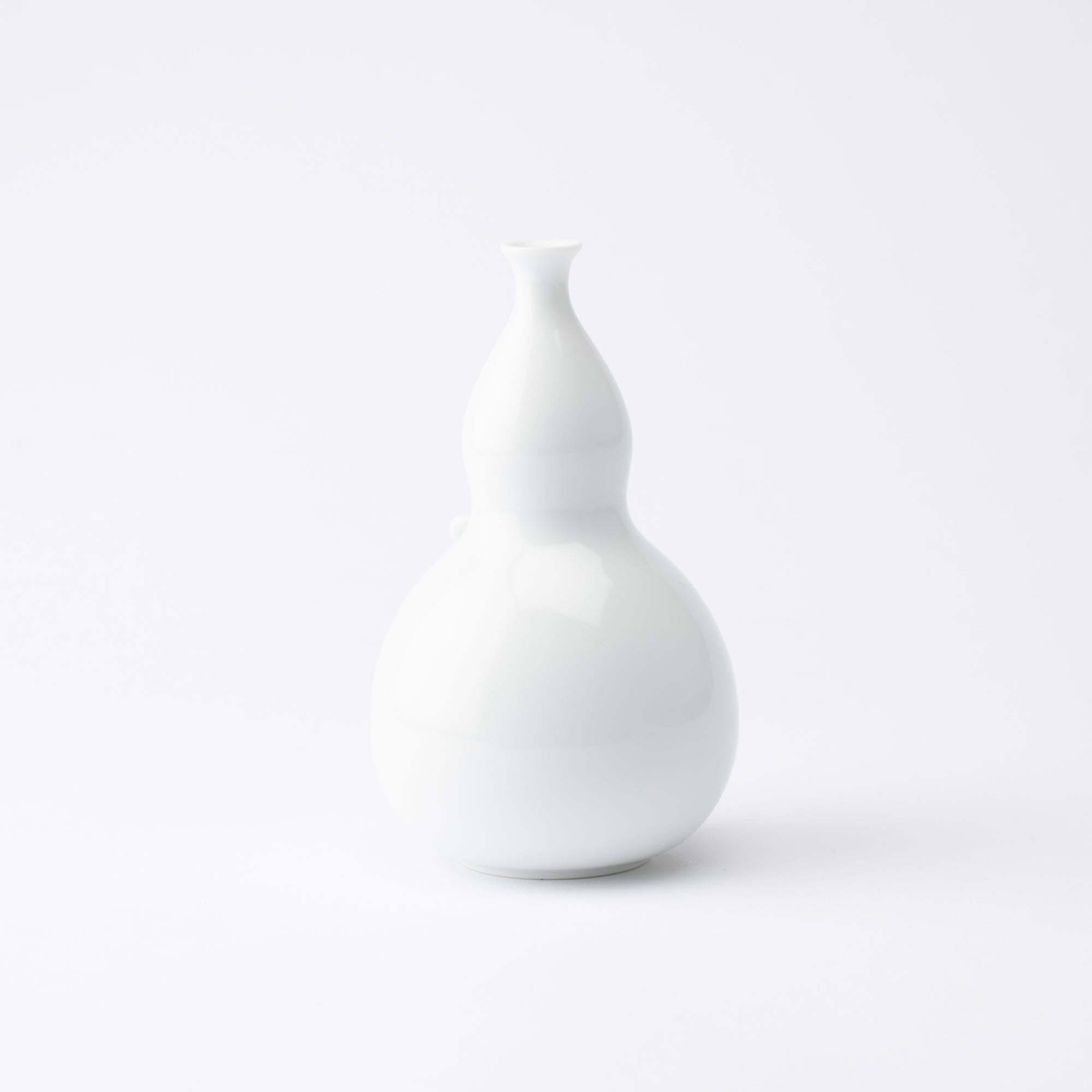
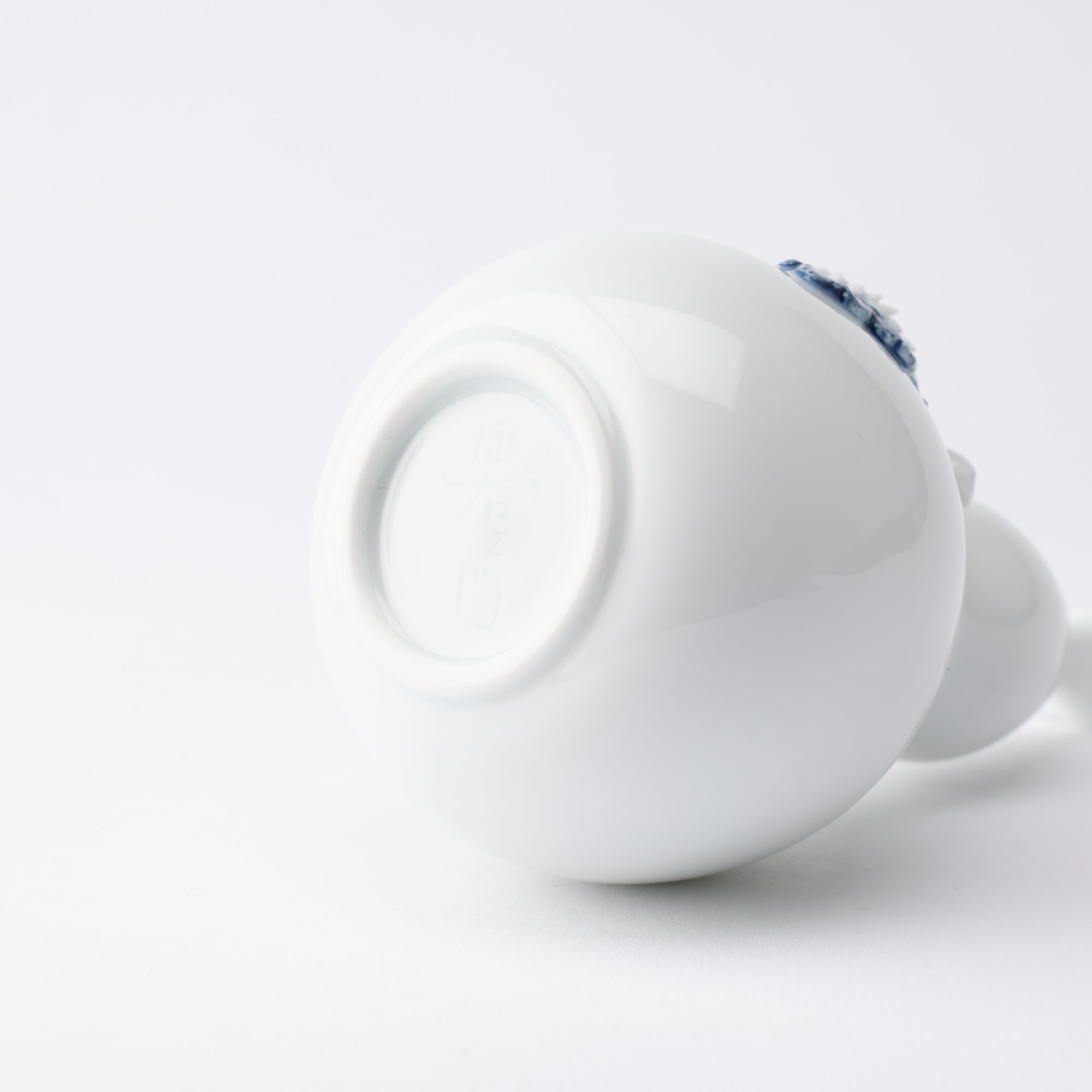
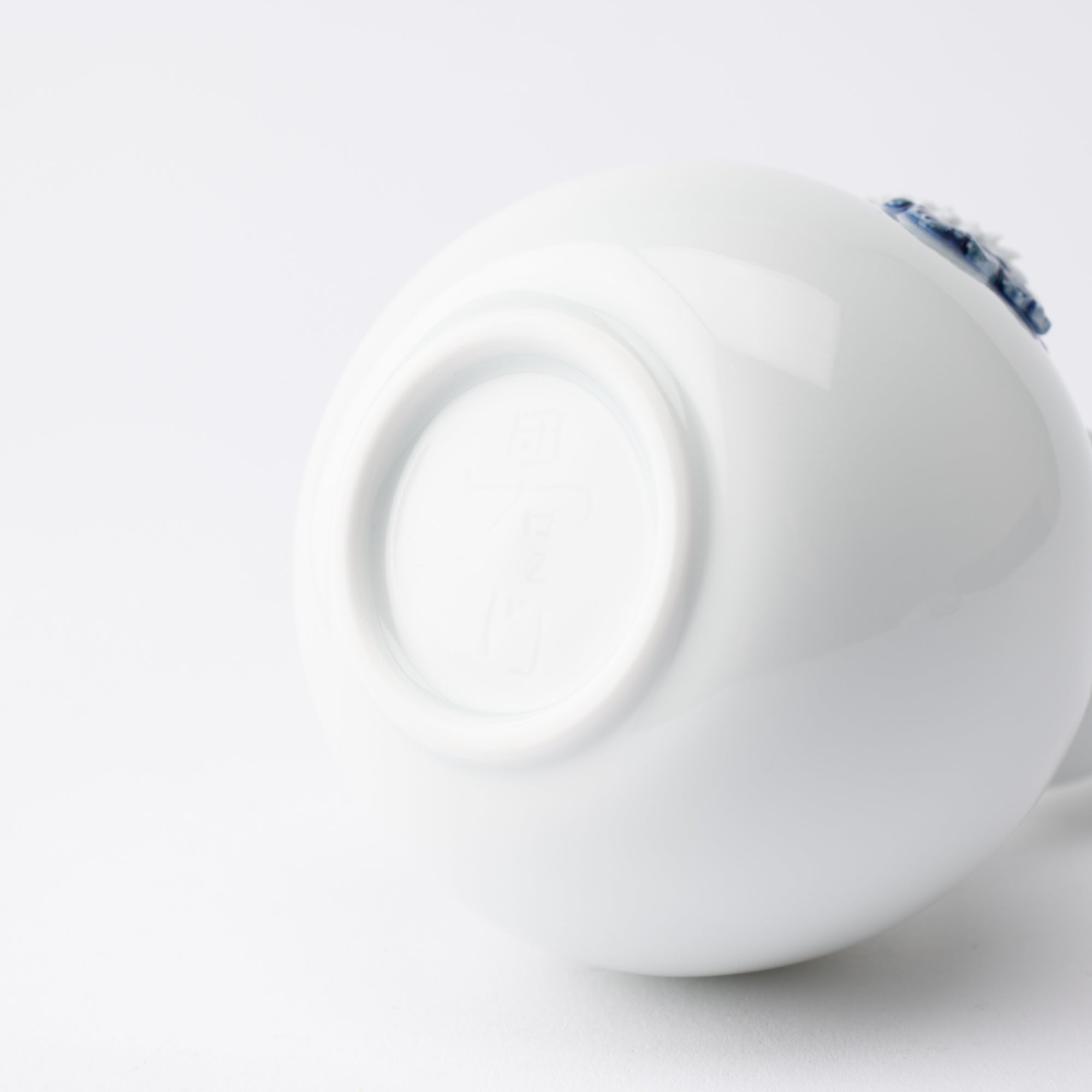
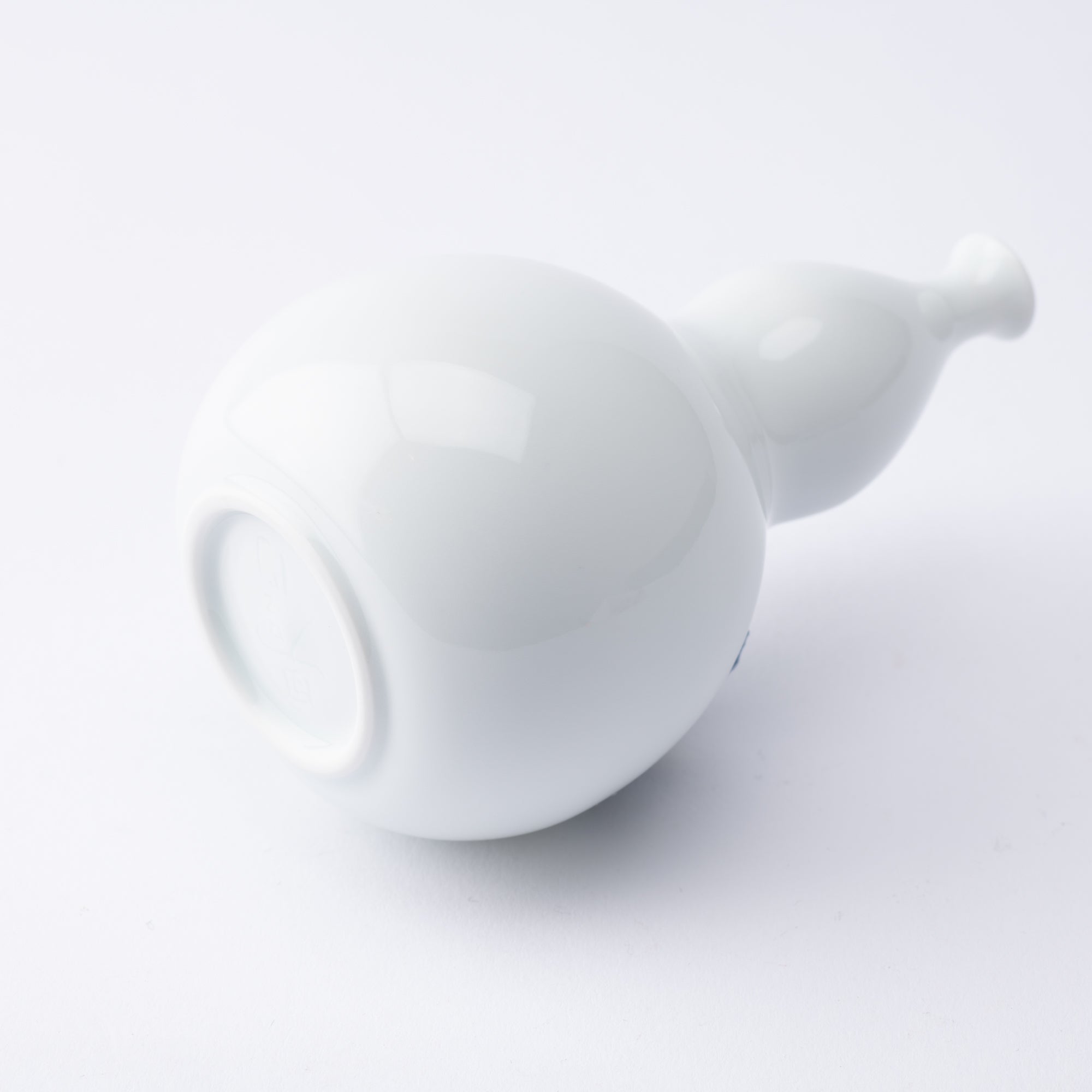
This gourd-shaped porcelain vase is a remarkable work of art, crafted from Amakusa ceramic stone sourced in Kumamoto Prefecture. Celebrated for its translucent white hue and pearly texture, this material enhances the vase’s sophisticated appeal.
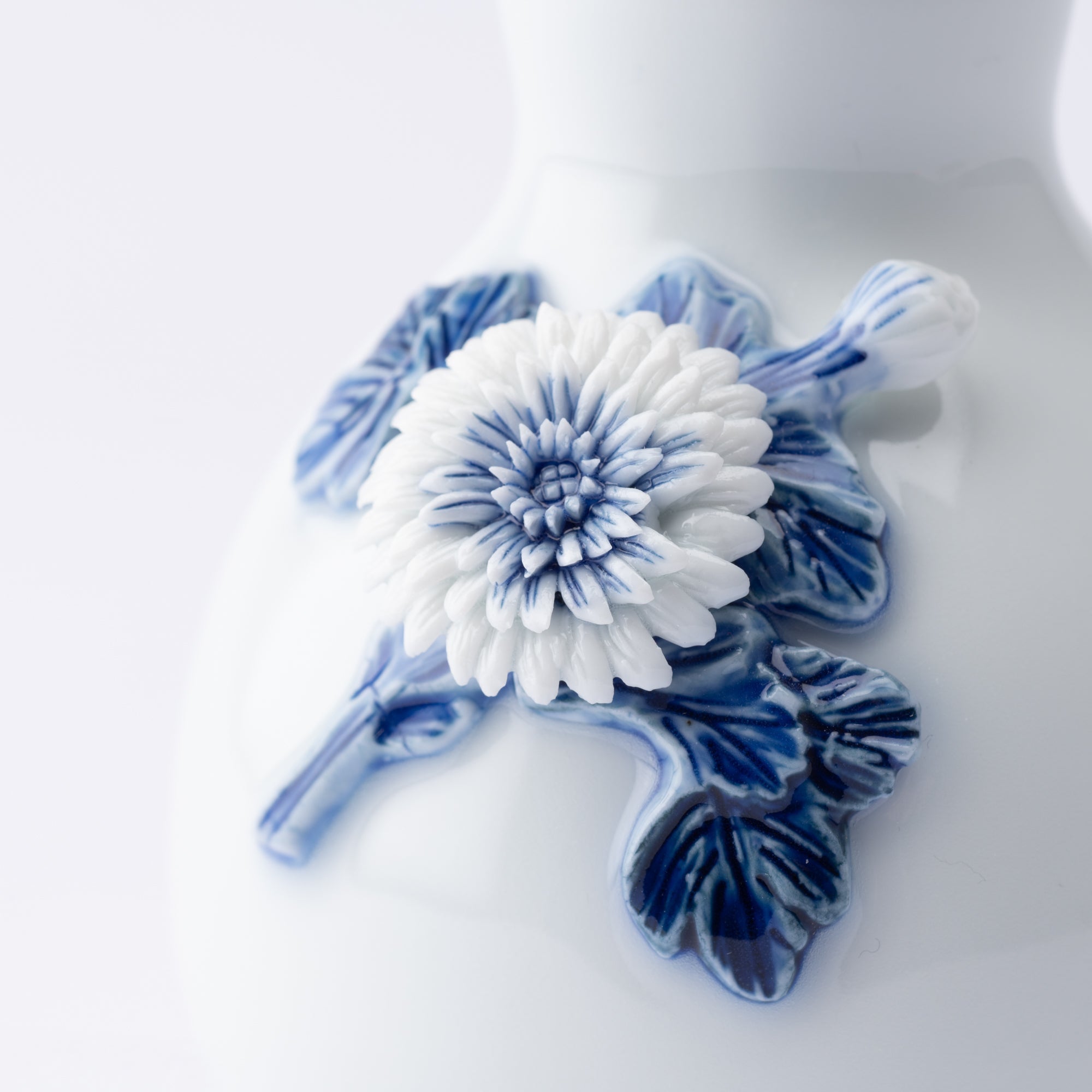
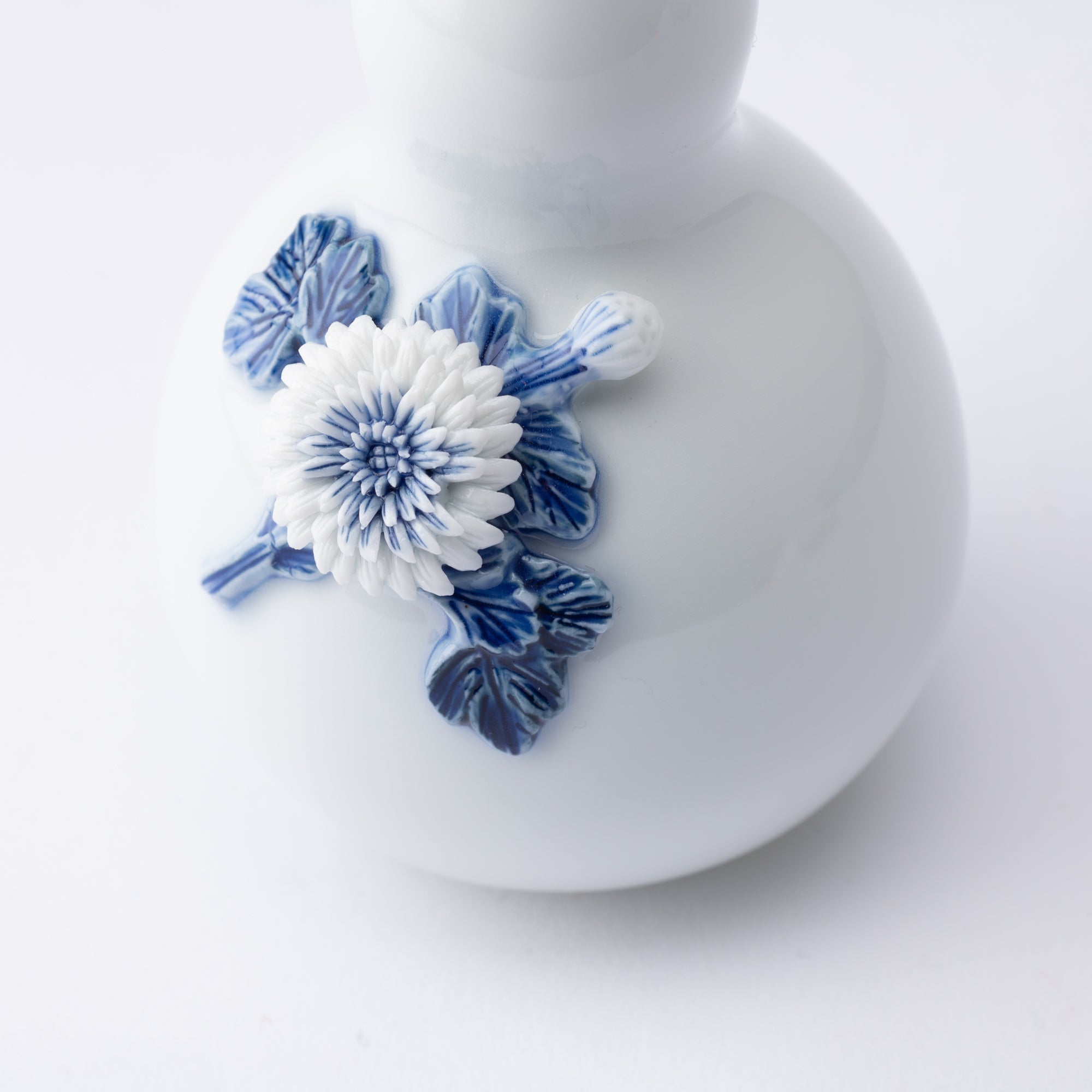
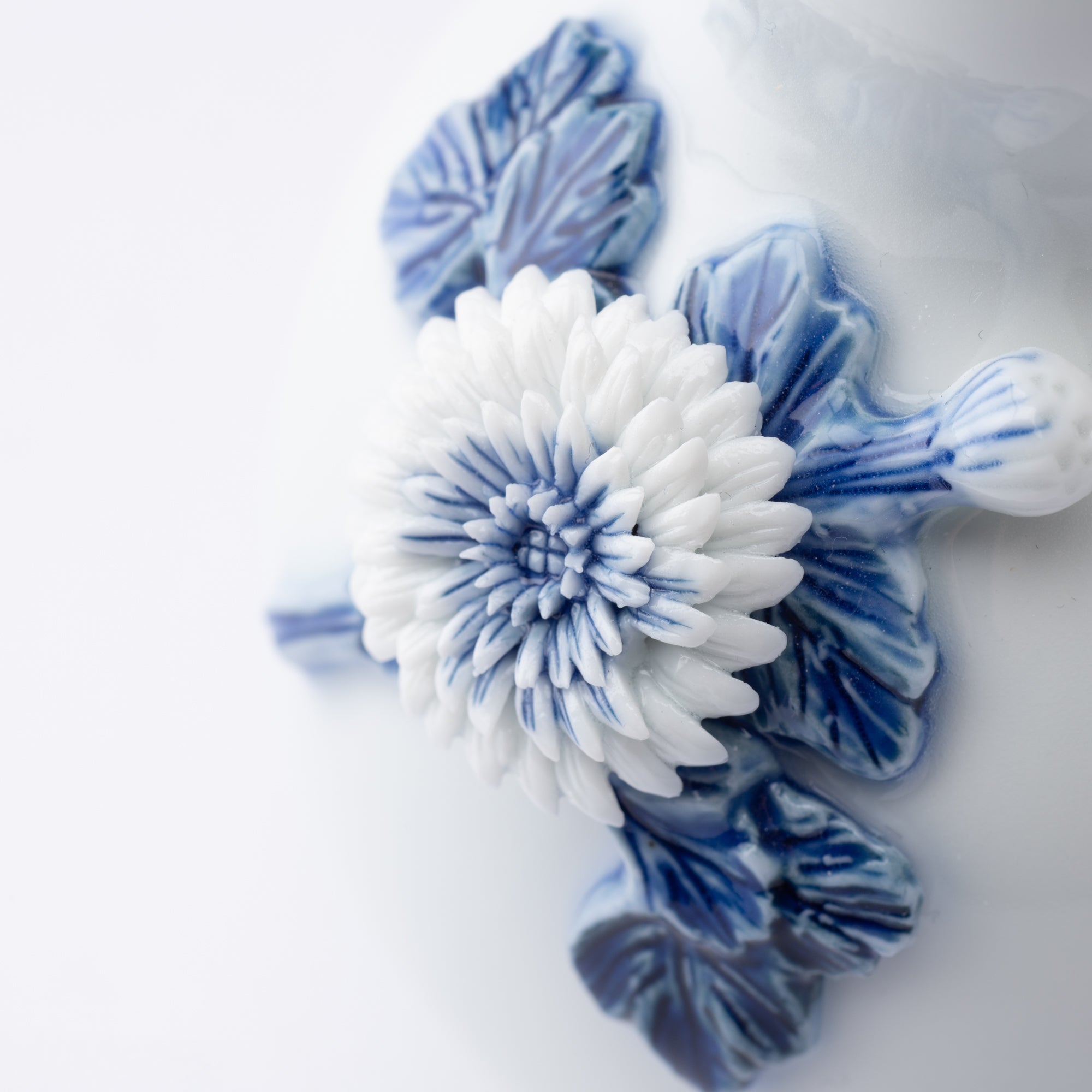
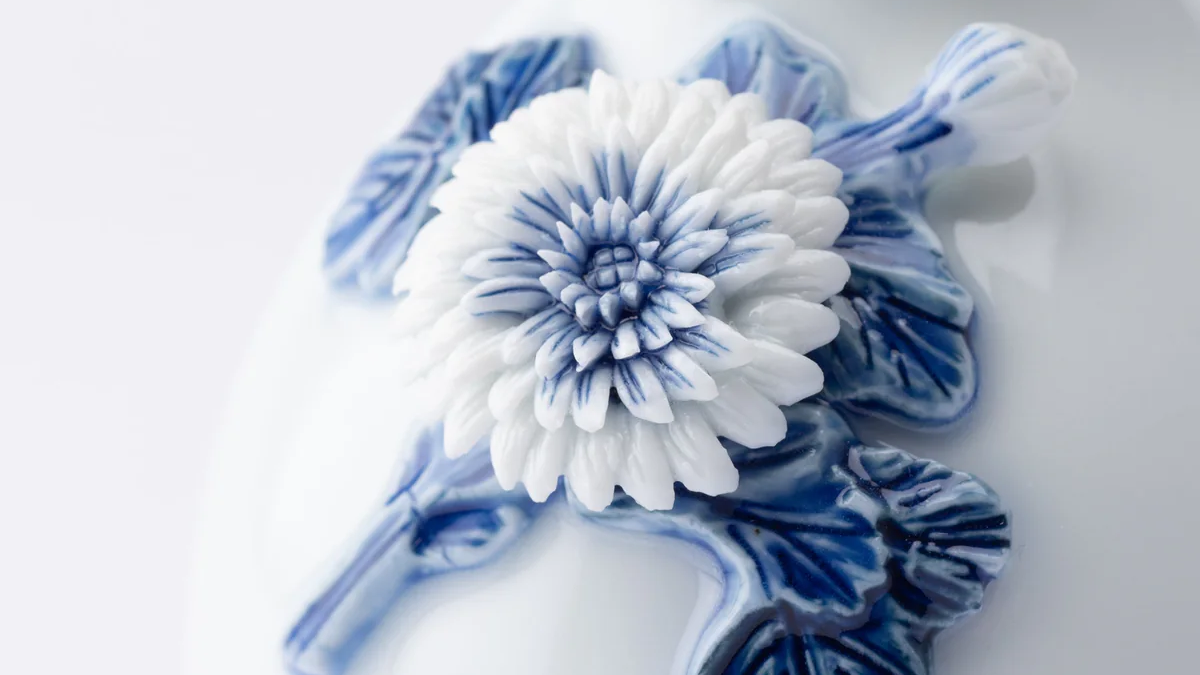
The intricate chrysanthemum decoration exemplifies the craftsmanship of the Hirado Kohsyo Danemon Kiln. Each flower is painstakingly handcrafted using a pointed bamboo tool, with petals carefully carved one by one from a lump of clay. After the initial carving, the petals are delicately raised and arranged into graceful chrysanthemum blooms. Once glazed and fired, the petals develop a soft, natural look reminiscent of real chrysanthemums.
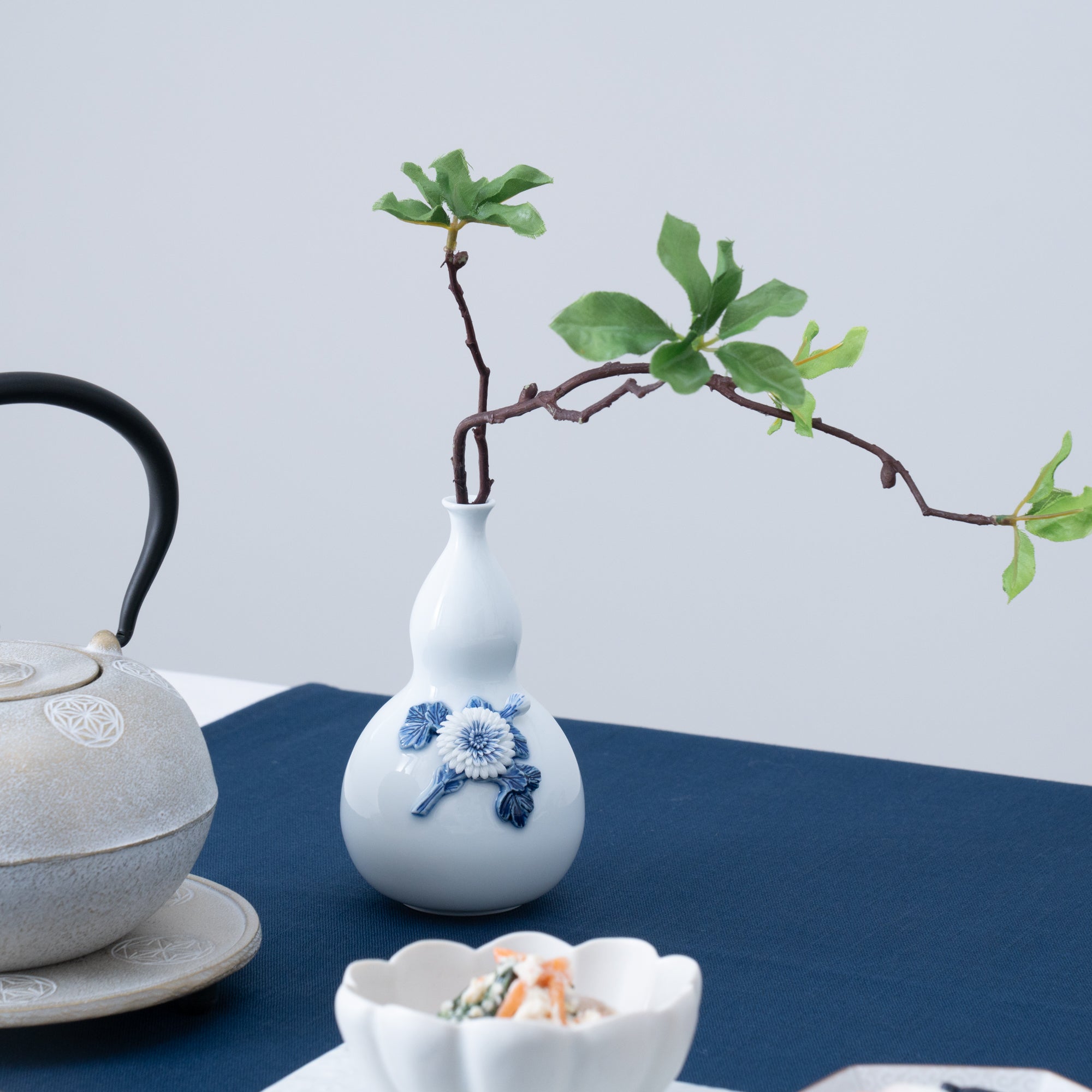
With its refined design, this vase makes an elegant statement as a decorative piece, bringing timeless beauty to any interior space.
DETAILS
| Quantity | 1 |
| Size |
D 7.3 cm (2.9 in) x H 12.2 cm (4.8 in) |
| Weight | approx. 6.7 oz (190 g) |
| Material | Porcelain |
| Microwave | No |
| Dishwasher | No |
Maker / Brand
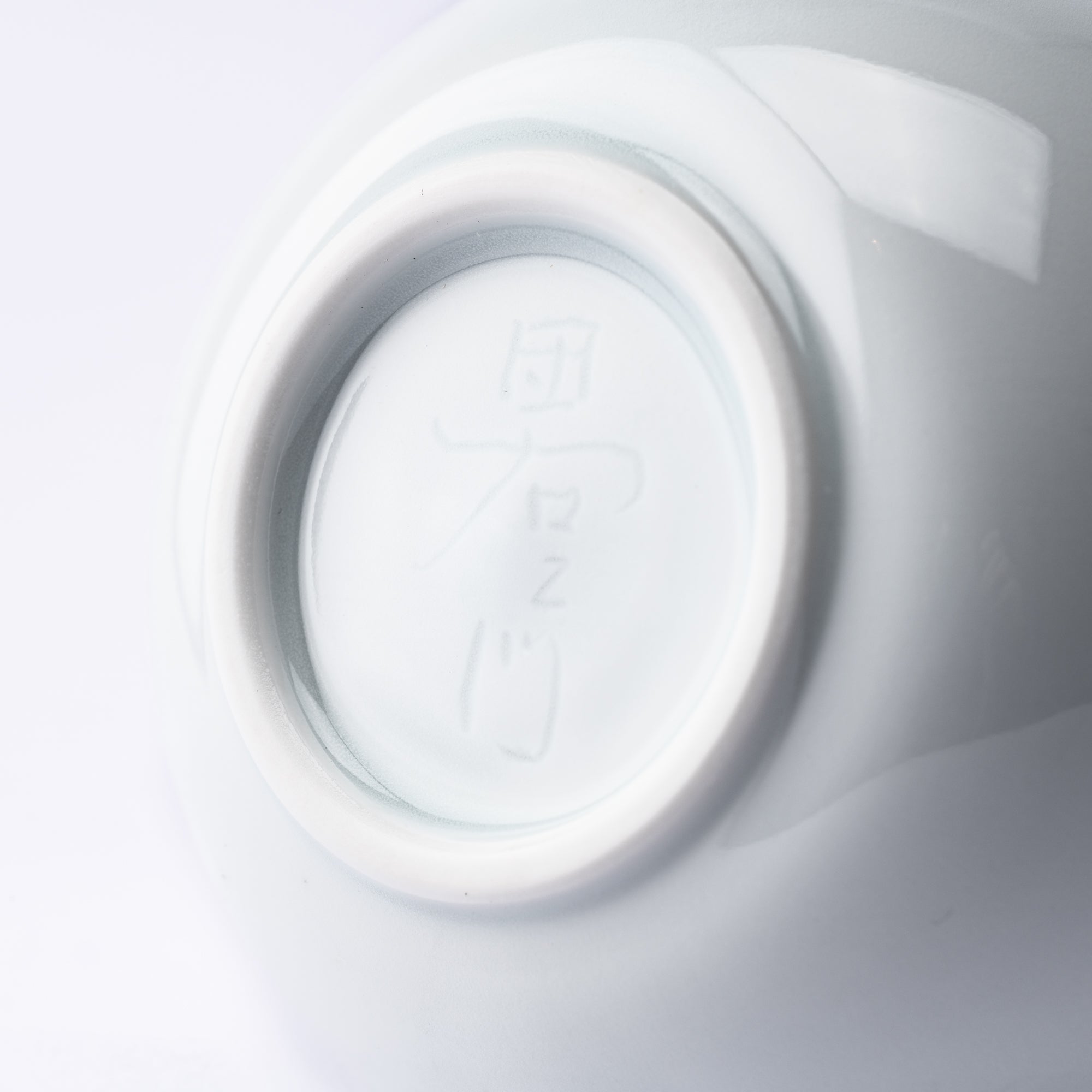
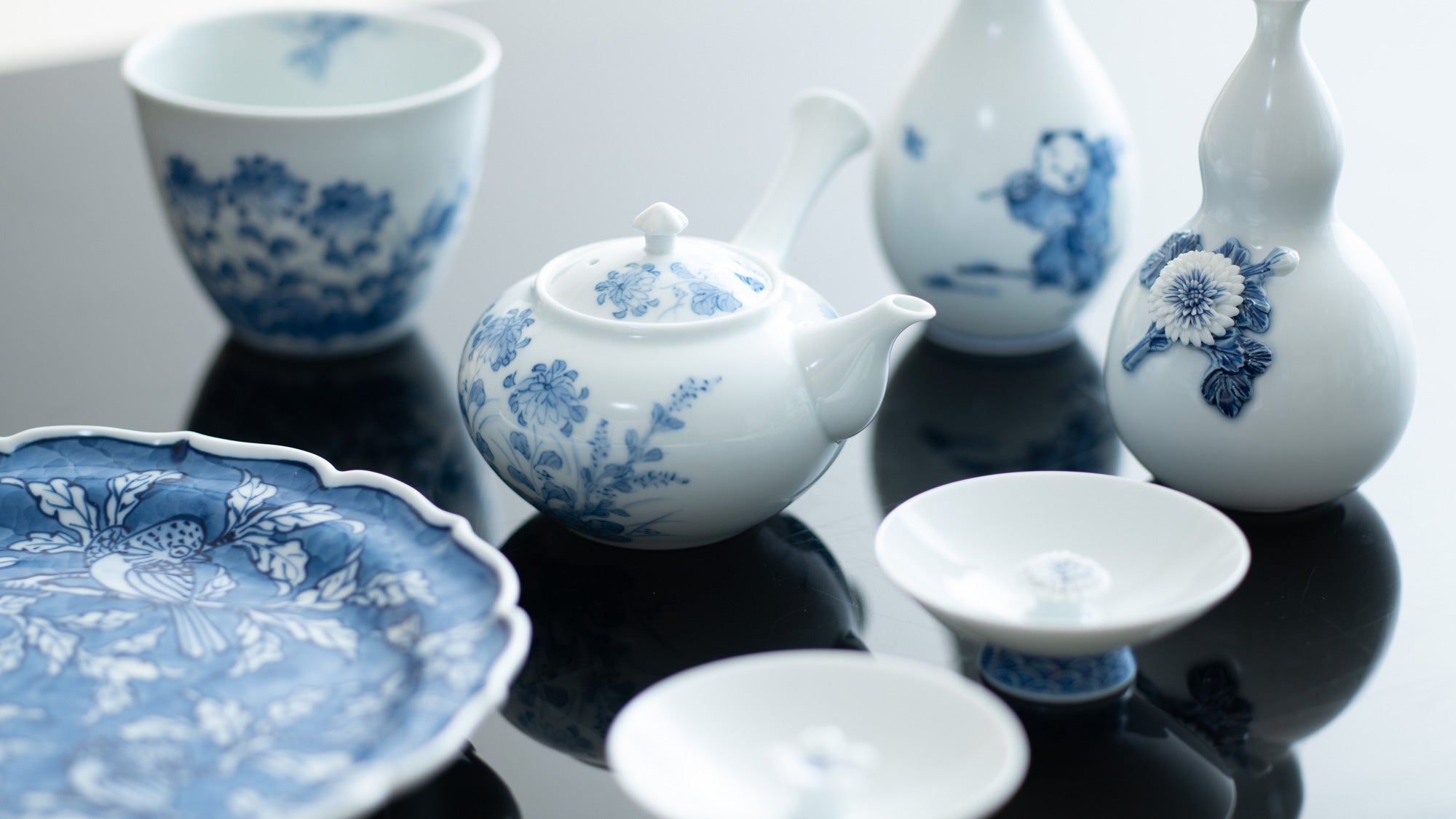
As the direct descendant of Goryeo-on, one of the founders of the Mikawachi ware in Nagasaki Prefecture, Hirado Kohsyo Danemon Kiln has been carrying on the technique for 400 years and is highly regarded both in Japan and abroad for its outstanding technique and artistic sensibility in design.
Crafts
Mikawachi ware, also known as Hirado ware, is a pottery made in Sasebo City, Nagasaki Prefecture, Japan. Known for its translucent white porcelain, it was highly popular in Europe during the trend toward Japanese crafts in the West in the 20th century. Mikawachi ware is remarkable for its delicate modeling techniques that push the limits of porcelain, such as openwork and relief carving, and for its beautiful painting that looks like a single piece of art.
Choose options
Estimated Shipping Widget will be displayed here!
Flower Vases
This collection brings together Japanese flower vases crafted in a variety of materials, from hand-painted porcelain to finely woven bamboo. Ranging from small vessels for a single stem to generously sized bouquet vases, each piece is designed to highlight flowers and greenery, while many remain visually striking as a decorative accent in the home.
Blue
As a cool color, blue evokes feelings of calm, nobility, coolness, and tranquility. It is highly suitable for use in a variety of items, from everyday to celebratory.
Blue is featured prominently across Japanese art: for example, in Katsushika Hokusai's The Great Wave of Kanagawa. Shades like mizu iro, a pale aqua that literally means "water color," have been used frequently for summer kimonos since the Edo period (1603 CE–1868 CE). Meanwhile kon, or navy blue, conveys a sense of calm and sophistication and has historically been widely used in daily life. Finally, sometsuke refers to blue and white ceramics, a classic color pairing that is always in style. Explore these and more beautiful blues below.