P.S. Blue Dinner Plate
Ships from Japan · Free shipping on orders over $250 USD
Estimated Shipping Widget will be displayed here!
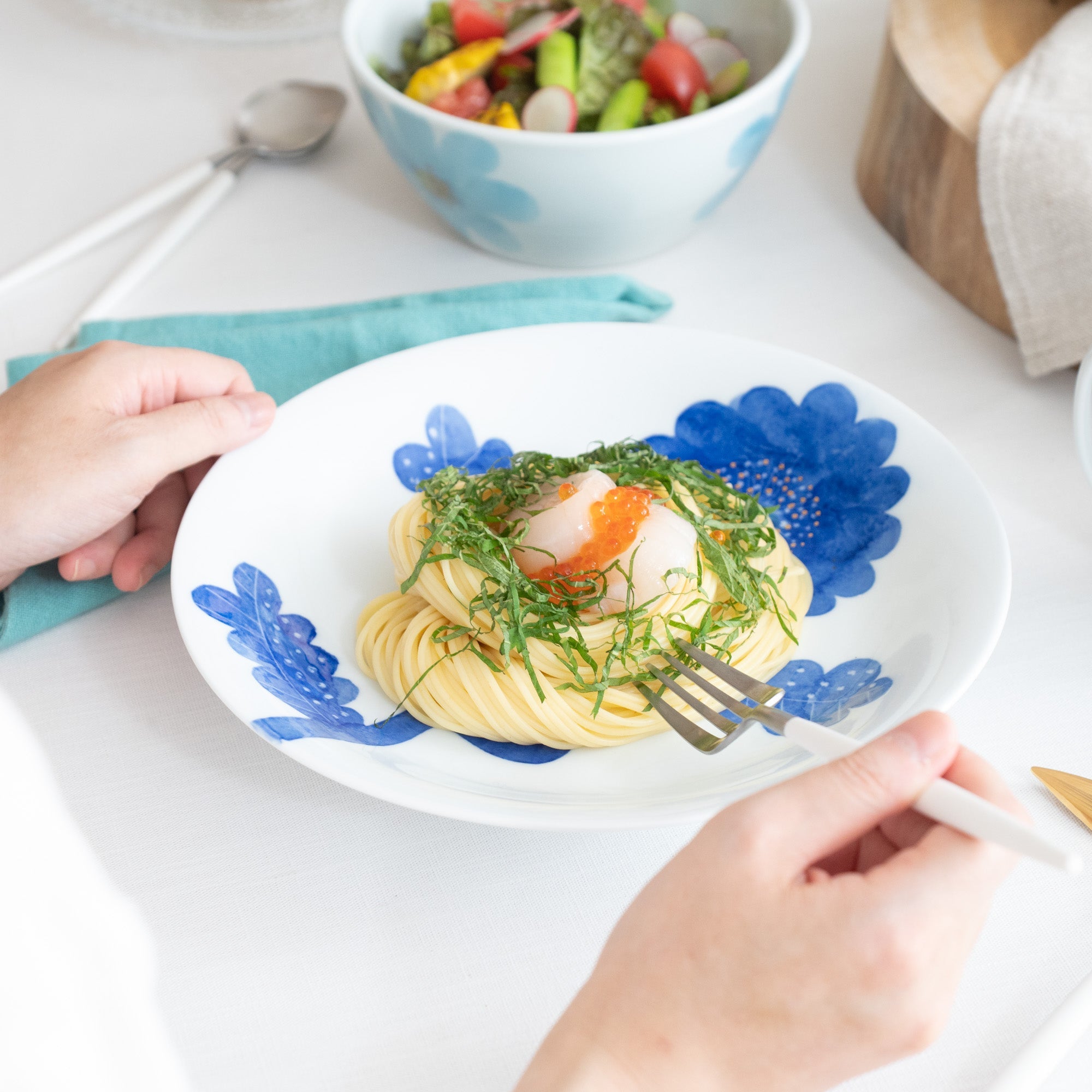
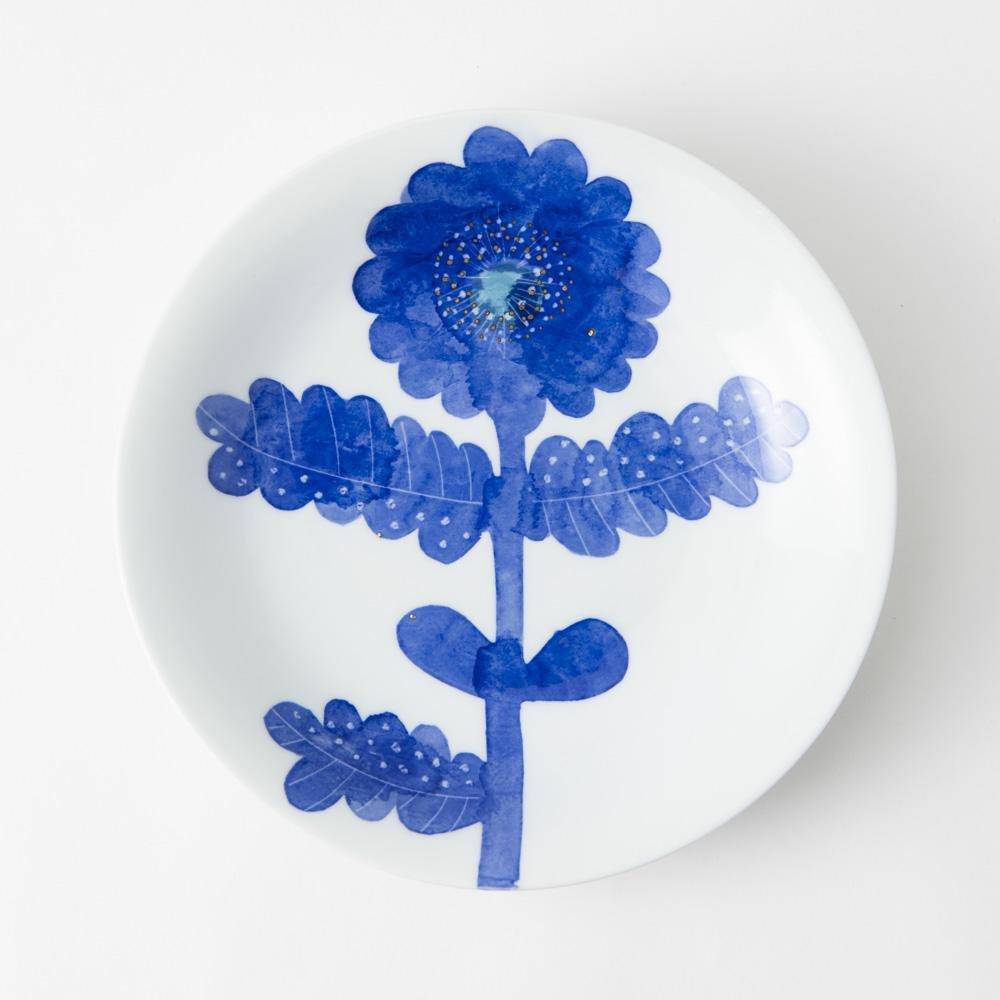
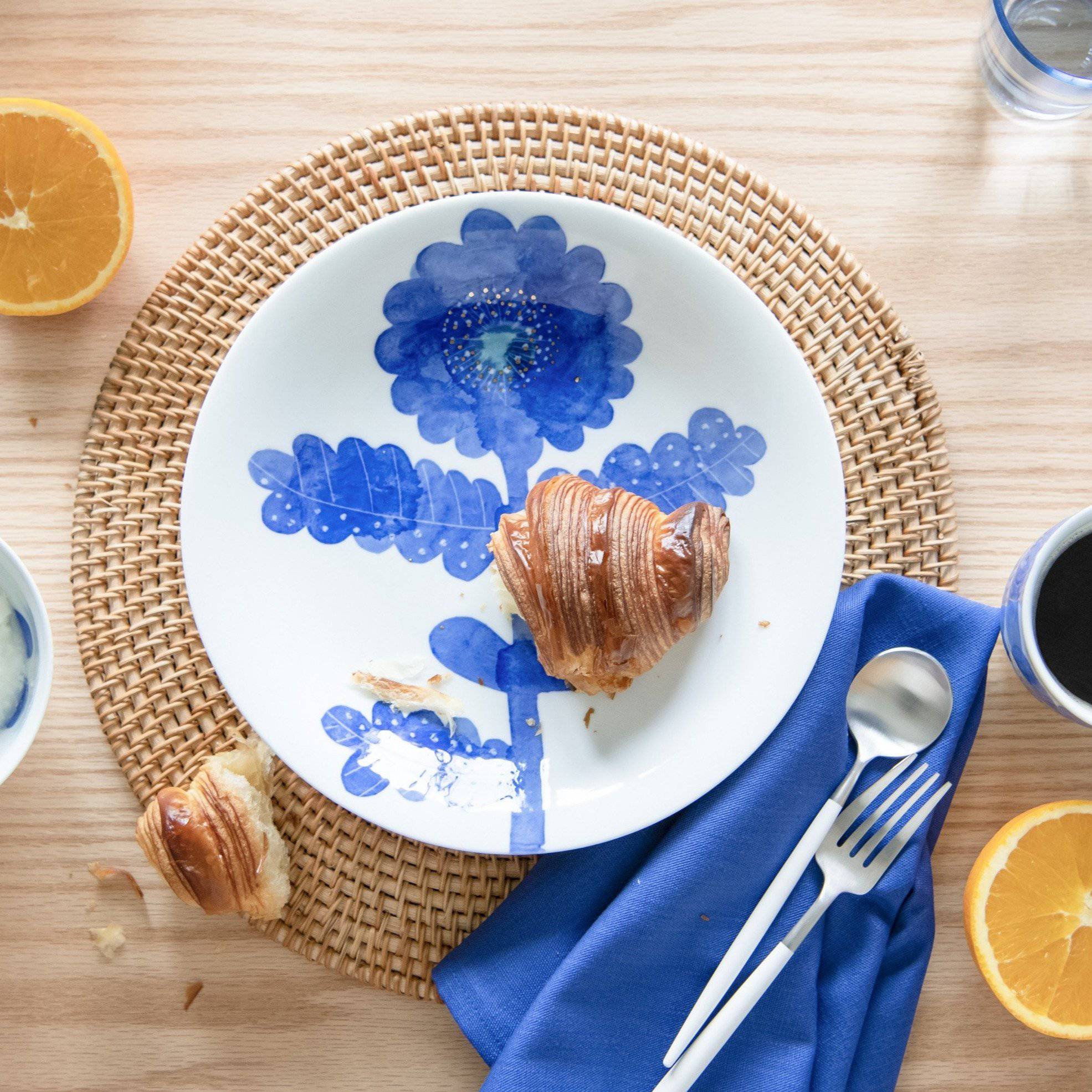
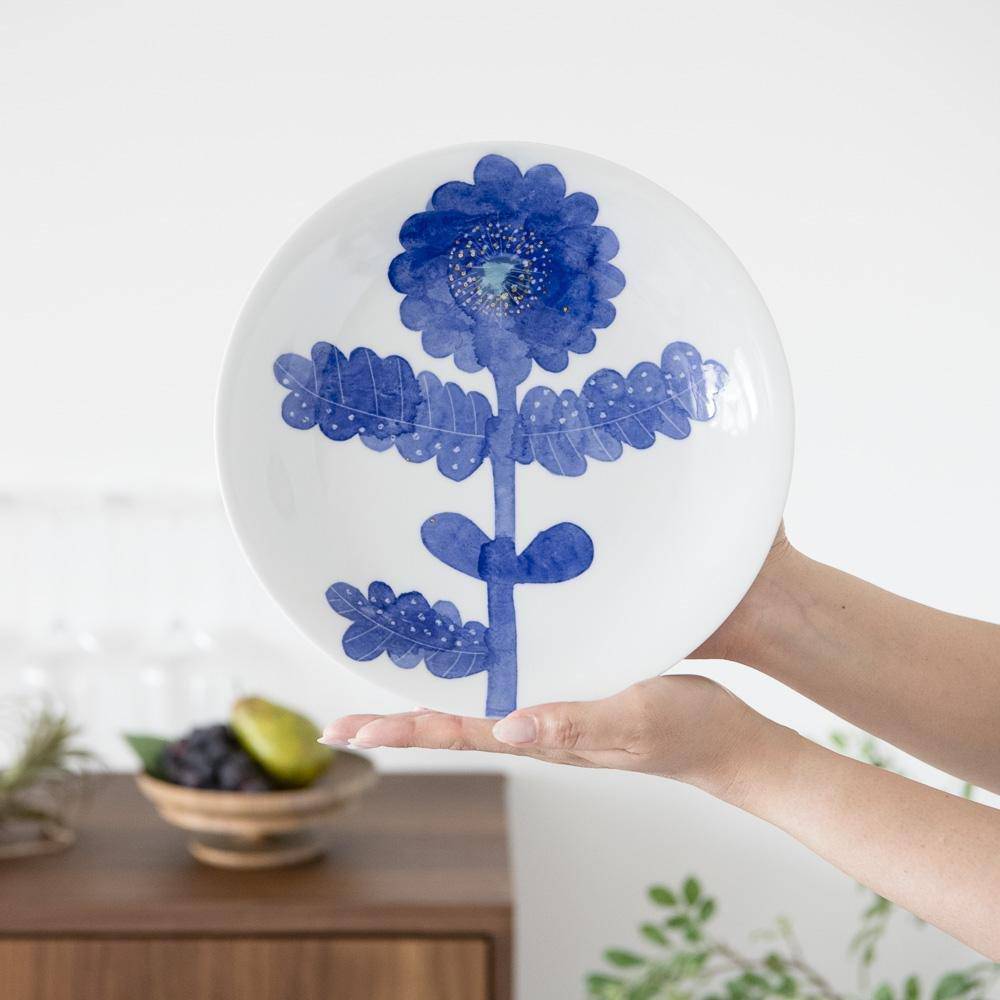
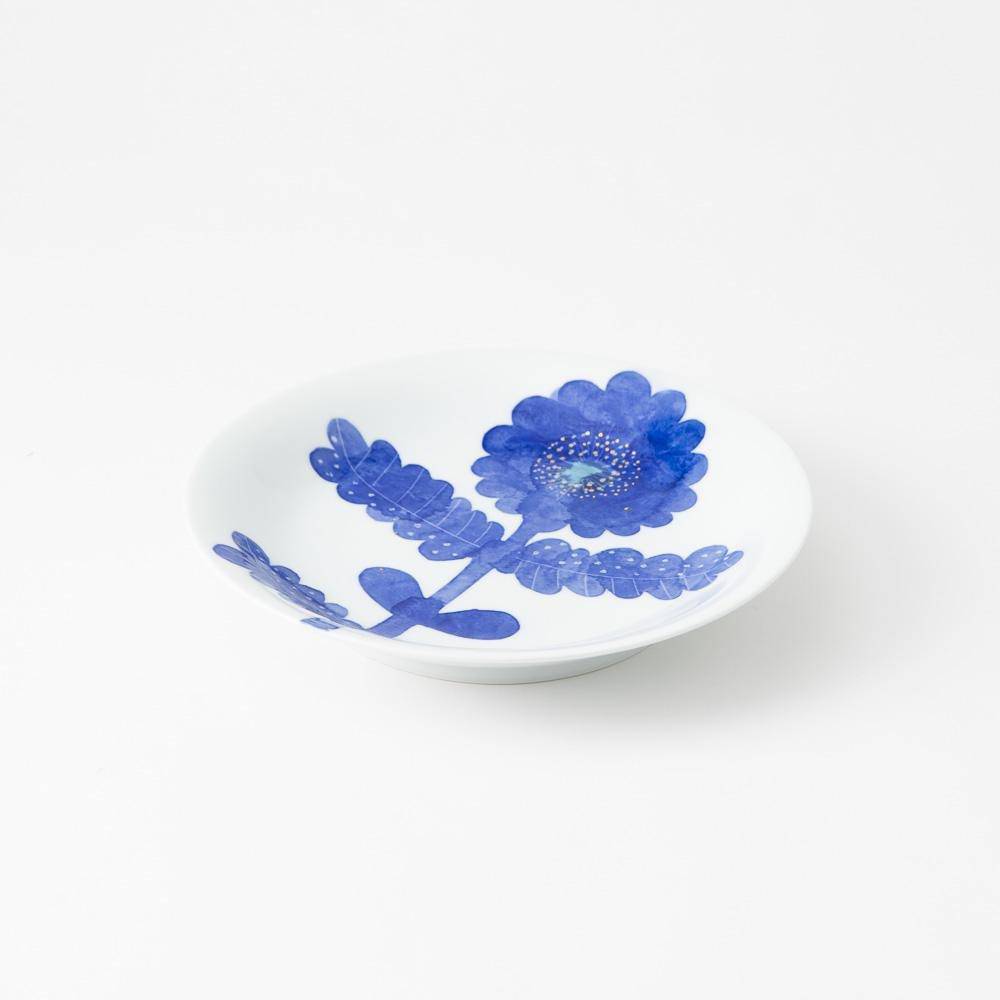
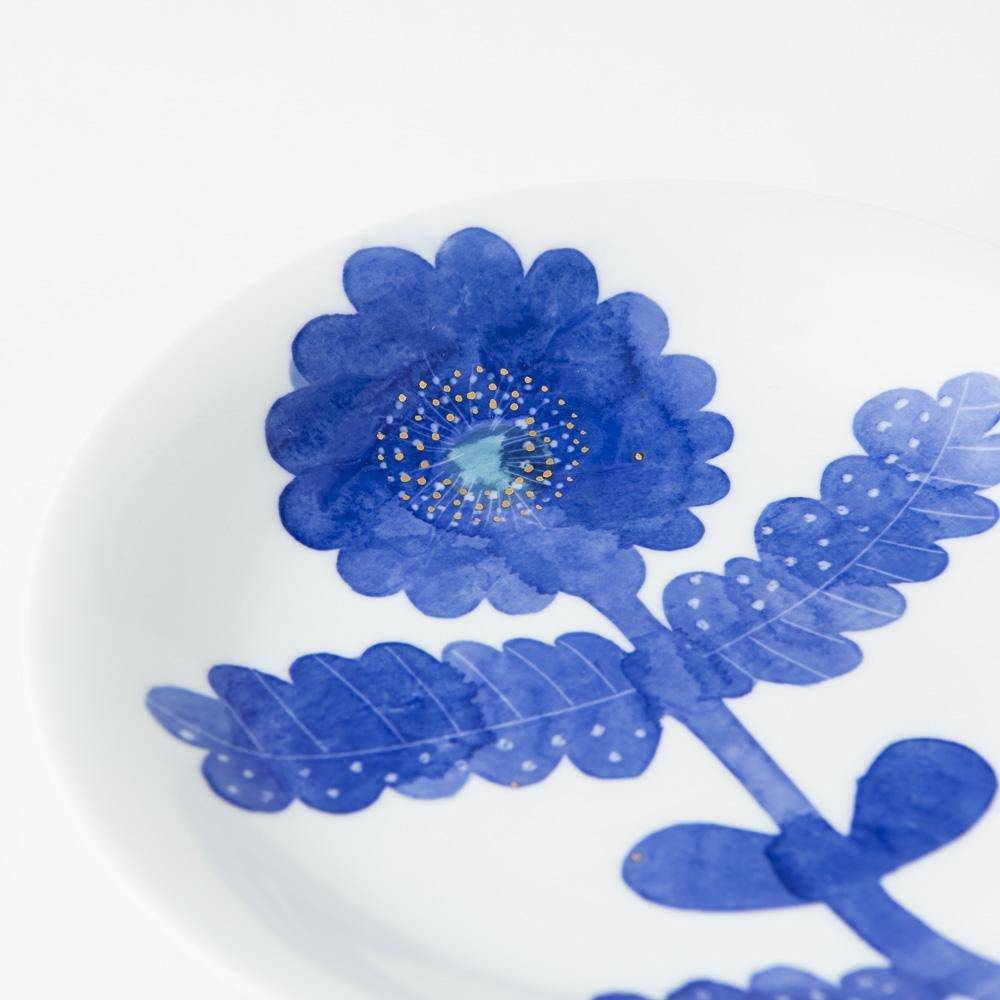
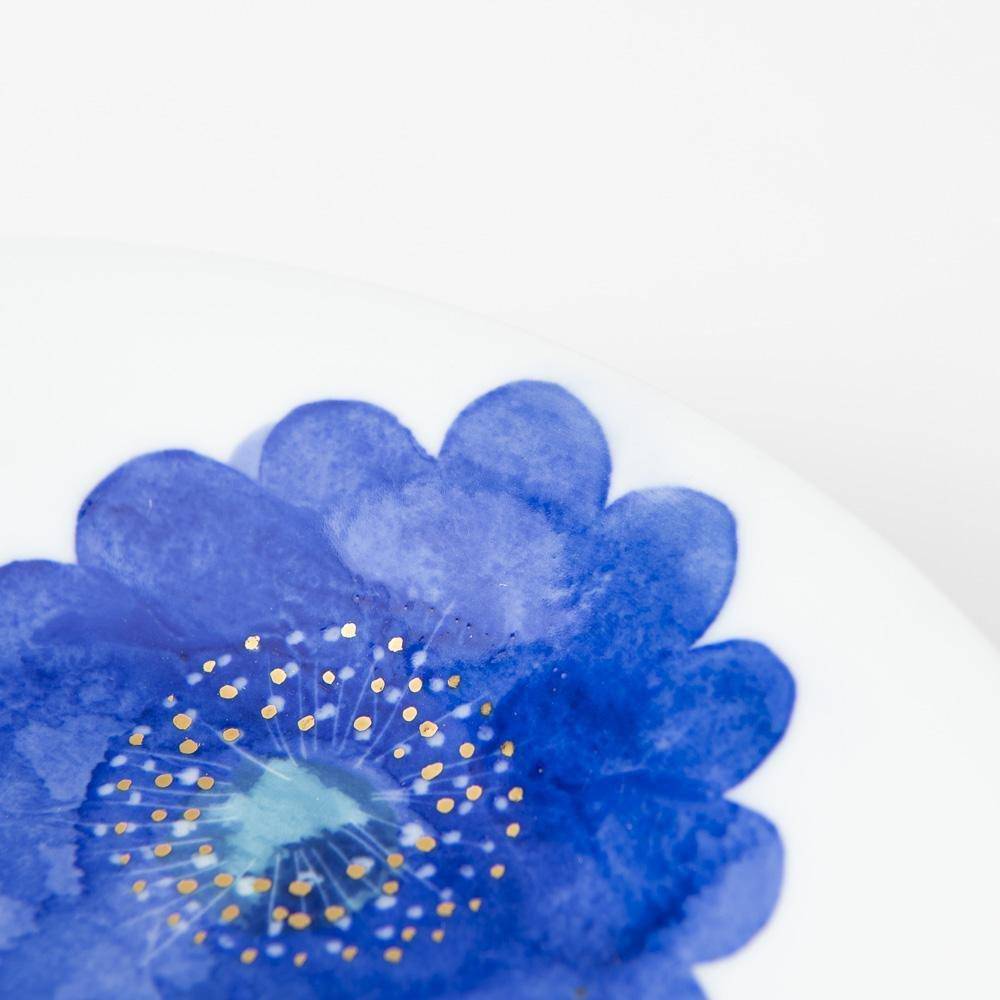
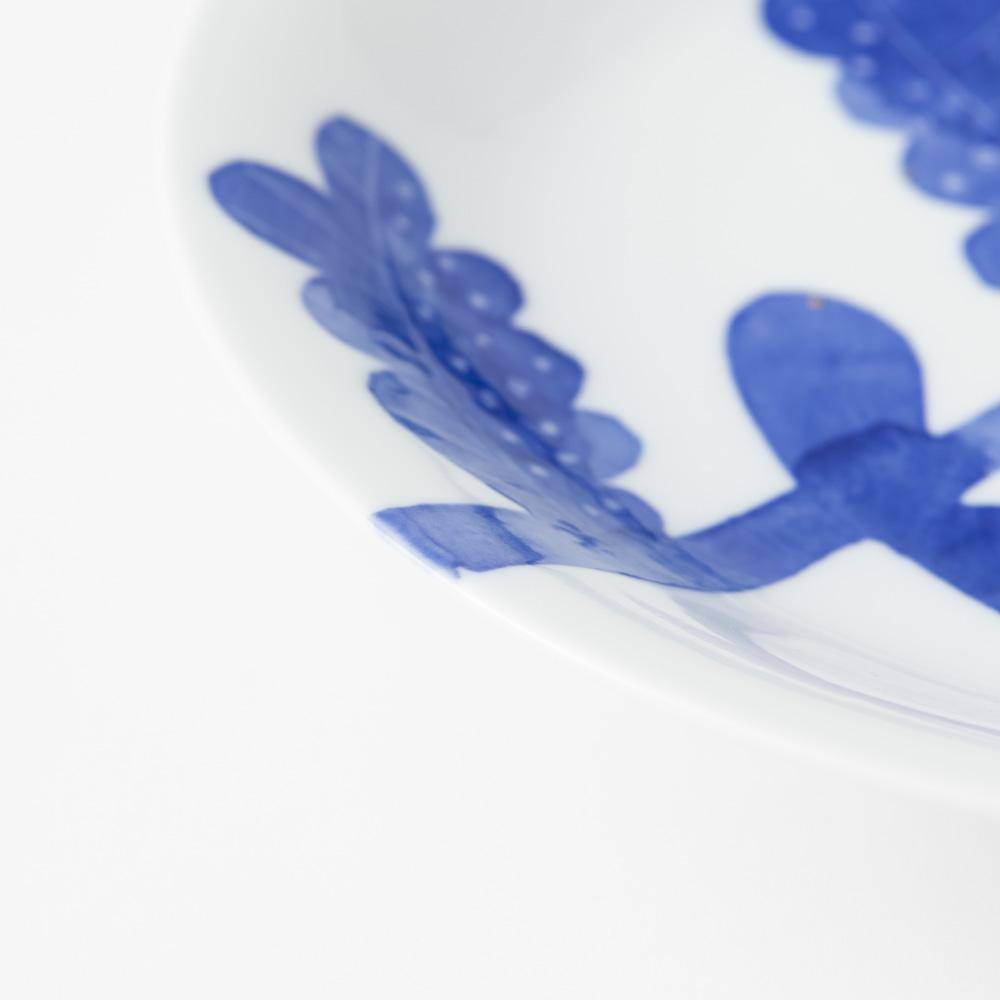
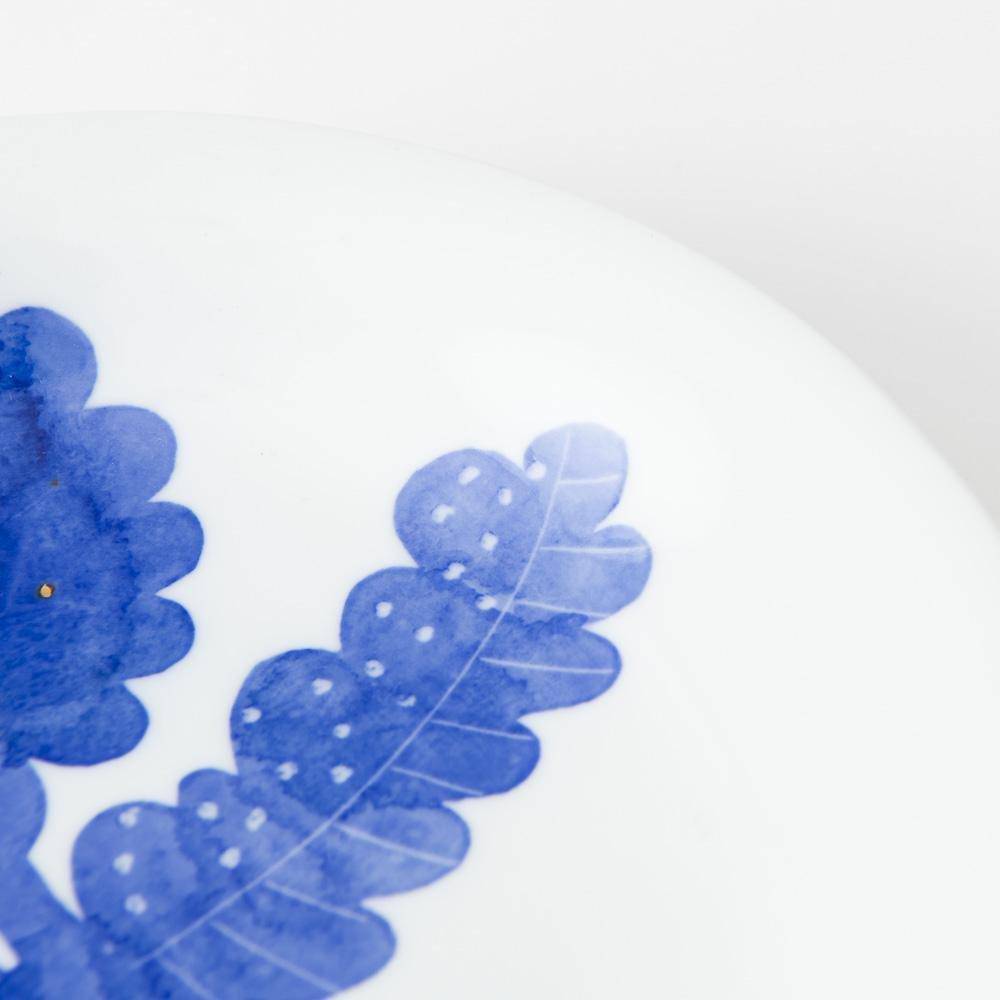
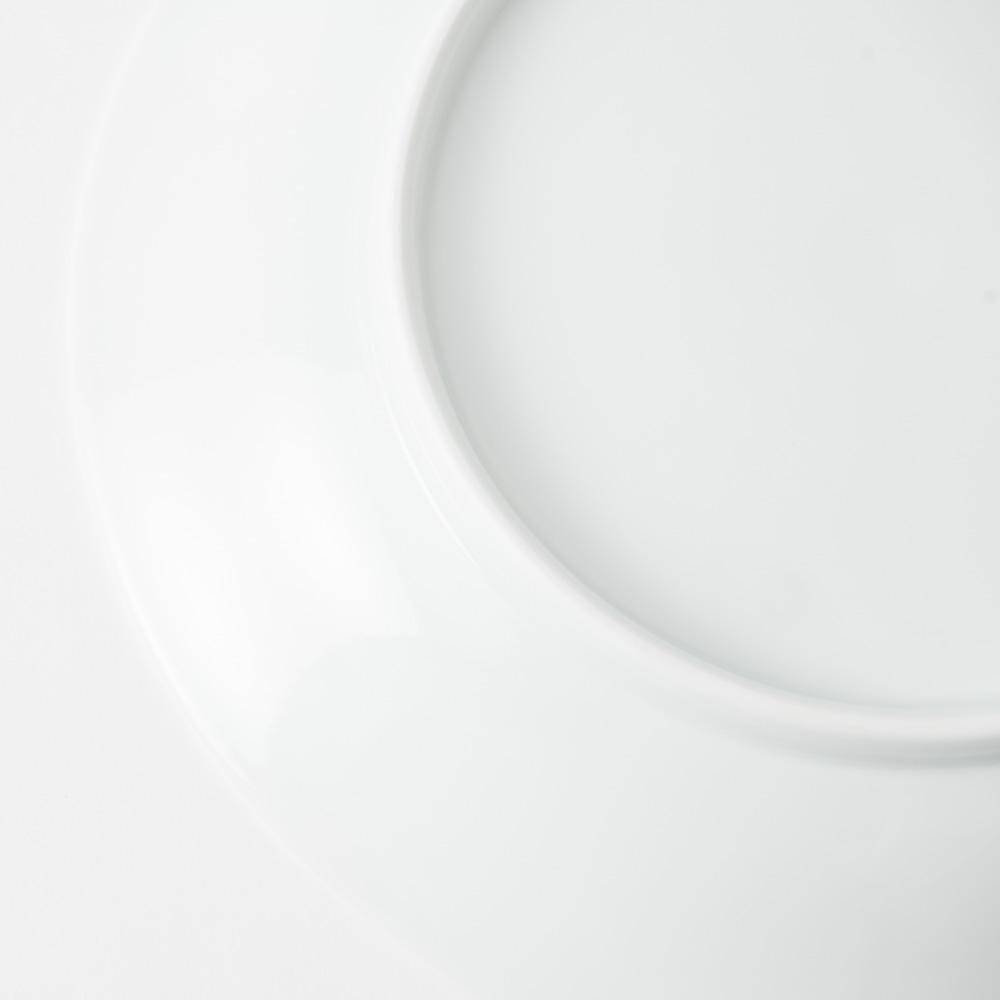
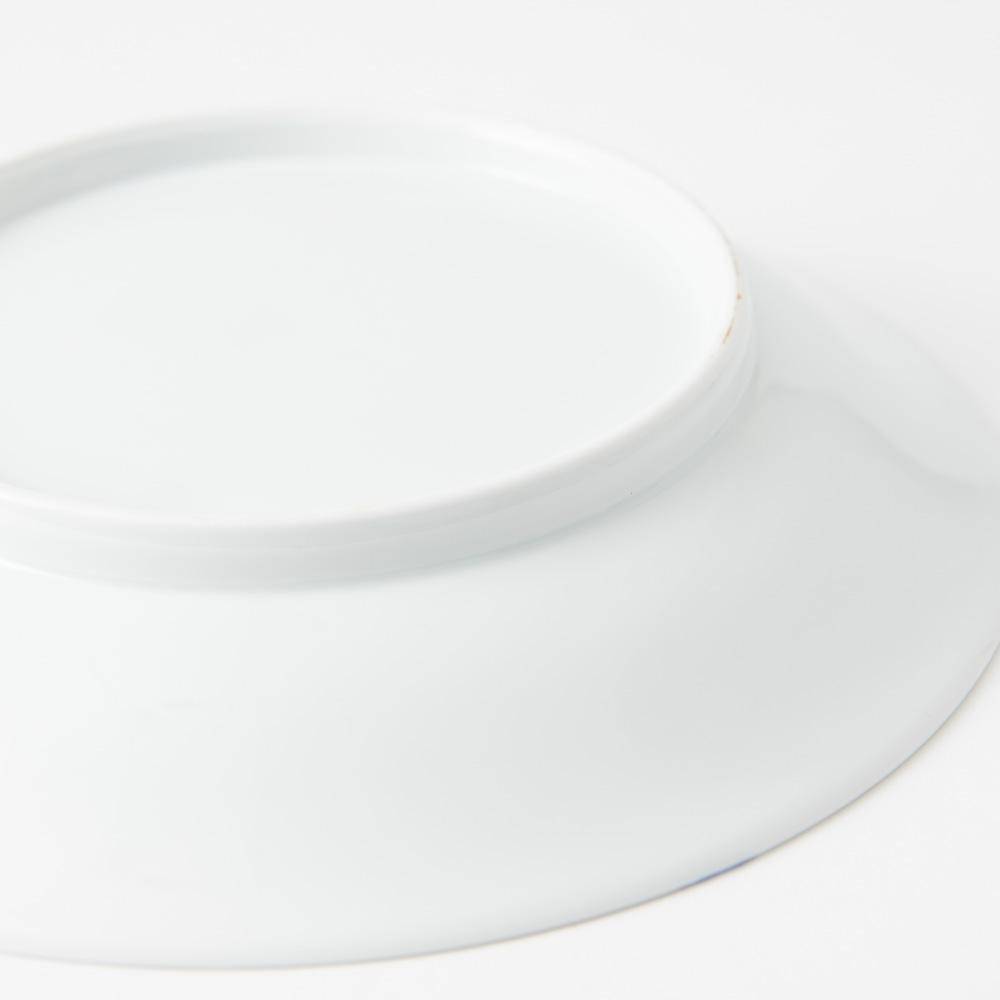
This beautiful round plate features blue flowers as if painted with watercolors. The bright design resembles blooming flowers, bringing a joyful atmosphere to the table.
It is painted by the female artist, Ohigashi Alyne, who was born in the Philippines. She uses a unique technique called washi-zome (Japanese paper dyeing) and continues her craft at Higashi Kiln, one of the kilns of Tobe ware.
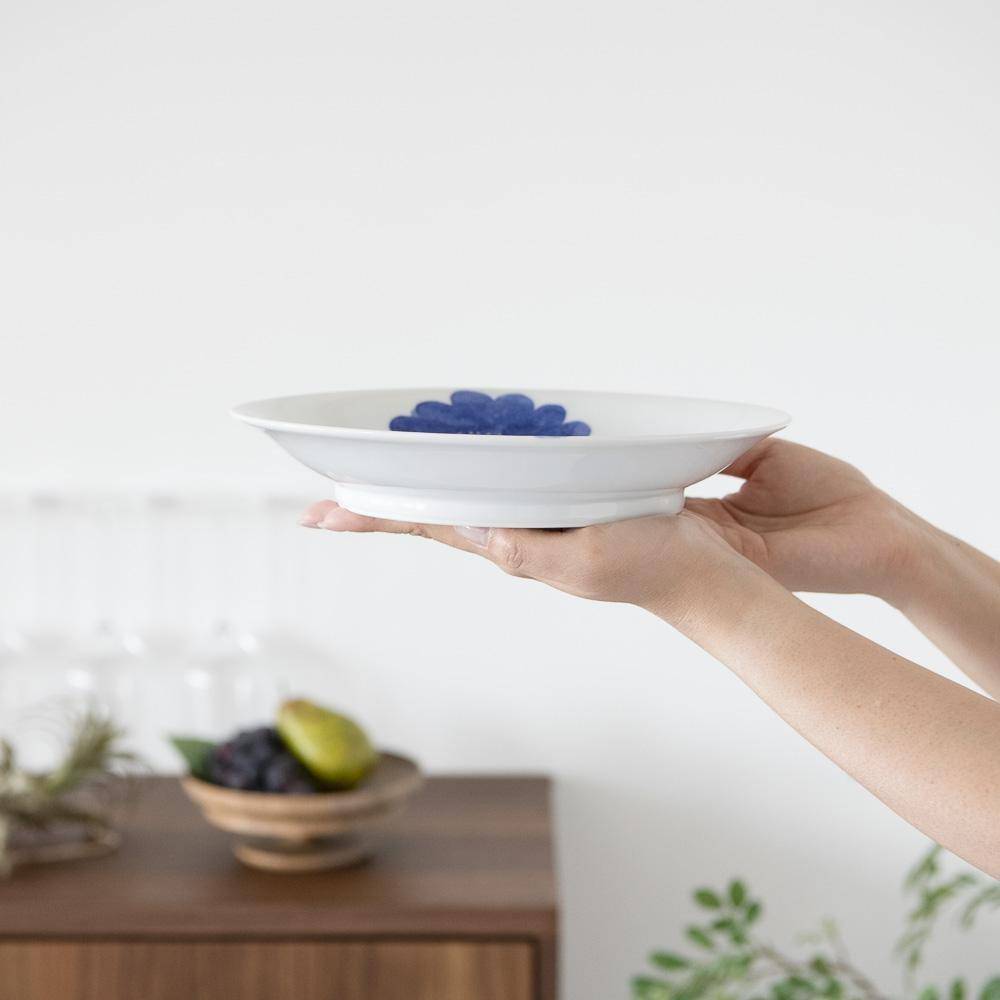
The size of 24.5 cm (9.7 in) makes this plate is perfect for serving salads, appetizers, side dishes, and main dishes.
DETAILS
| Quantity | 1 |
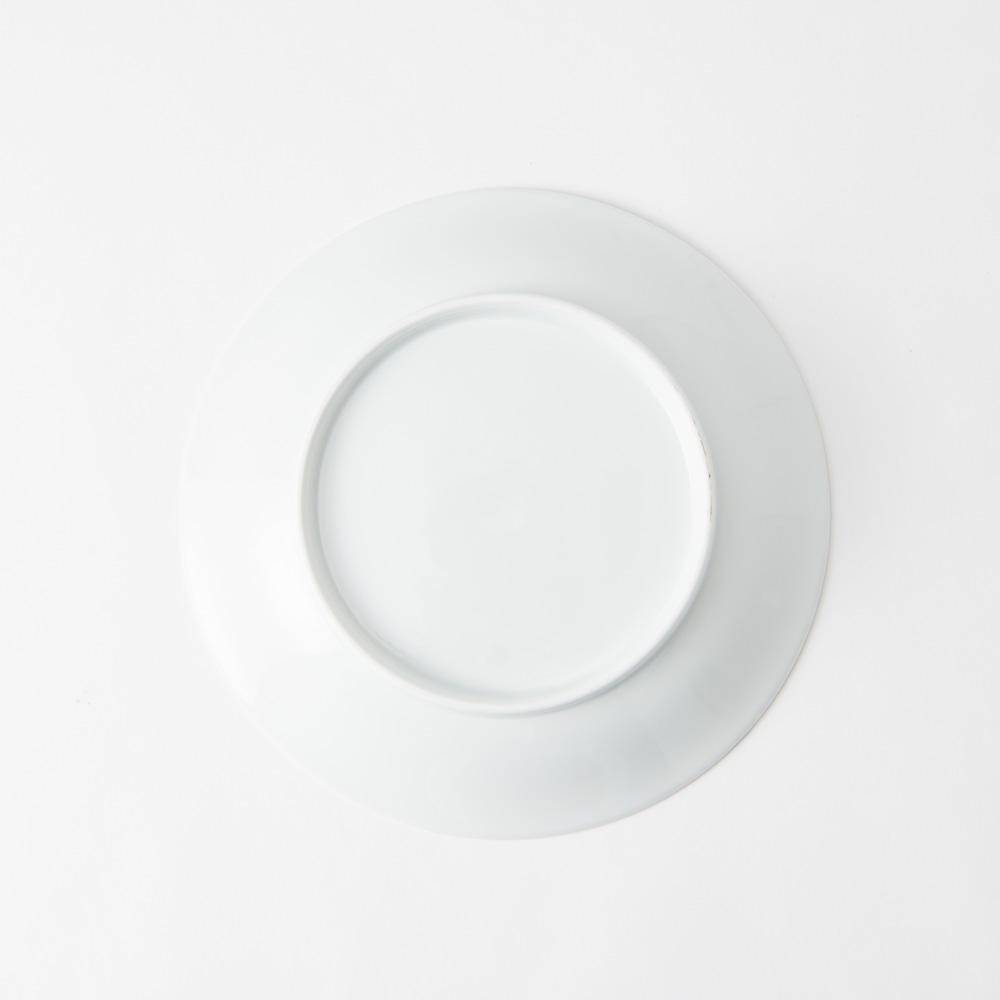
| Size | D 24.5 cm (9.7 in) x H 4.5 cm (1.8 in) |
| Weight | 727 g (25.6 oz) |
| Material | Porcelain |
| Microwave | No |
| Dishwasher | Yes |
Maker / Brand
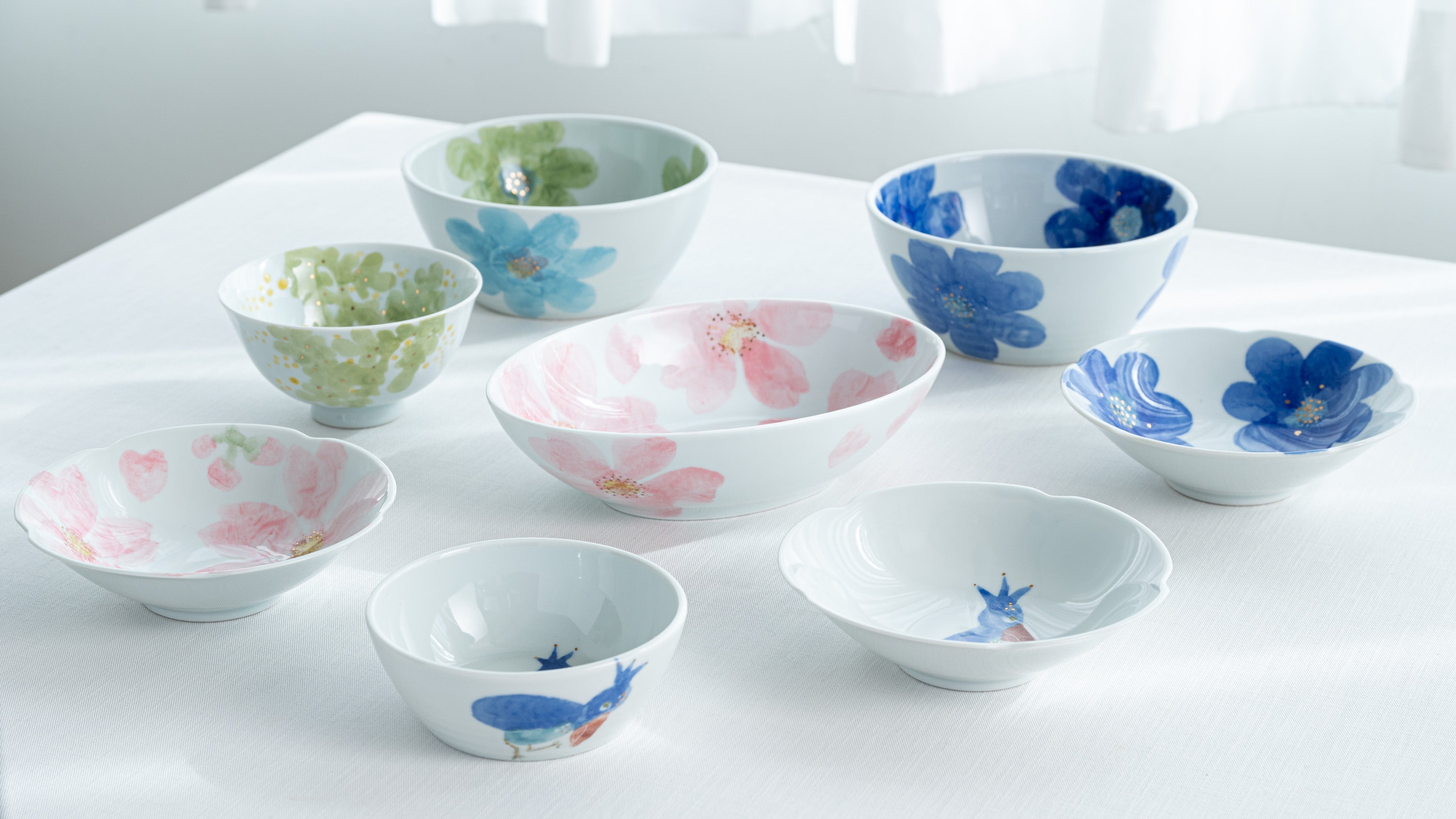
Higashi Kiln’s works are famous for their glass-like smoothness and use of soft and pastel colors that resemble watercolor paintings. This unique style utilizes the beauty of Tobe ware ceramics without being bound by its conventional frameworks.
The painting is performed by woman artist Ohigashi Alyne. Born in the Philippines, she has been creating beautiful, innovative Tobe ware at Higashi Kiln for nearly forty years.
Crafts
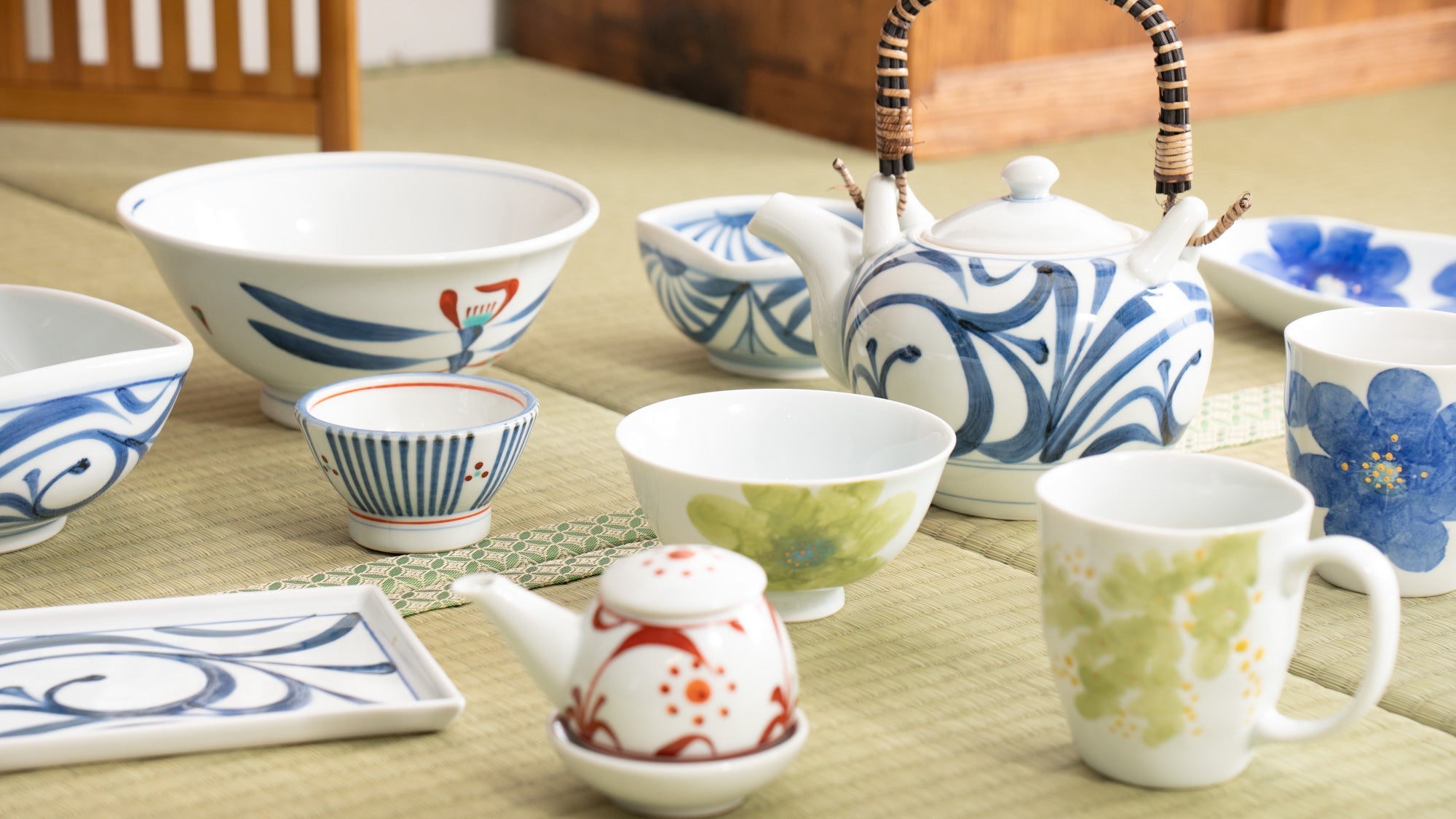
Tobe ware is porcelain produced in the Tobe region of Ehime Prefecture, located in the northwest of Shikoku Island. The white porcelain, with its beautiful, slightly bluish hue from the iron content, continues to be highly valued and loved. Tobe ware maintains a strong respect for traditional handicraft techniques, even amidst modernization.
Choose options
Dinner Plates
This category is for plates ranging from 21 cm (8.3 in) to 30.9 cm (12.2 in). For traditional Japanese meals, plates around 8 in are the most practical. On the other hand, when serving a one-plate dinner or pasta, plates around 25 cm (10 in) are more convenient.
Blue
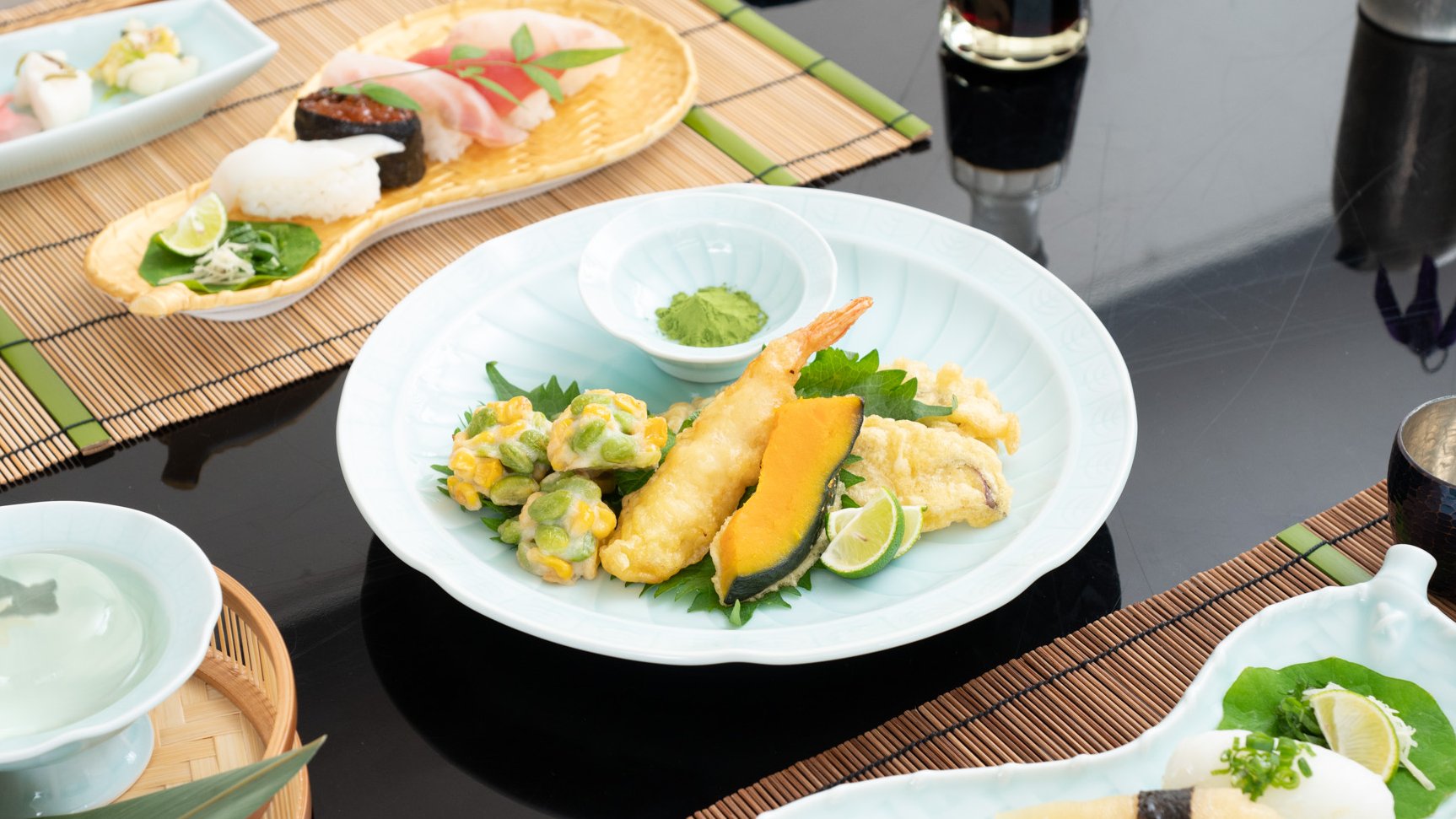
As a cool color, blue evokes feelings of calm, nobility, coolness, and tranquility. It is highly suitable for use in a variety of items, from everyday to celebratory.
Blue is featured prominently across Japanese art: for example, in Katsushika Hokusai's The Great Wave of Kanagawa. Shades like mizu iro, a pale aqua that literally means "water color," have been used frequently for summer kimonos since the Edo period (1603 CE–1868 CE). Meanwhile kon, or navy blue, conveys a sense of calm and sophistication and has historically been widely used in daily life. Finally, sometsuke refers to blue and white ceramics, a classic color pairing that is always in style. Explore these and more beautiful blues below.