



Hiiro Shino Matcha Bowl
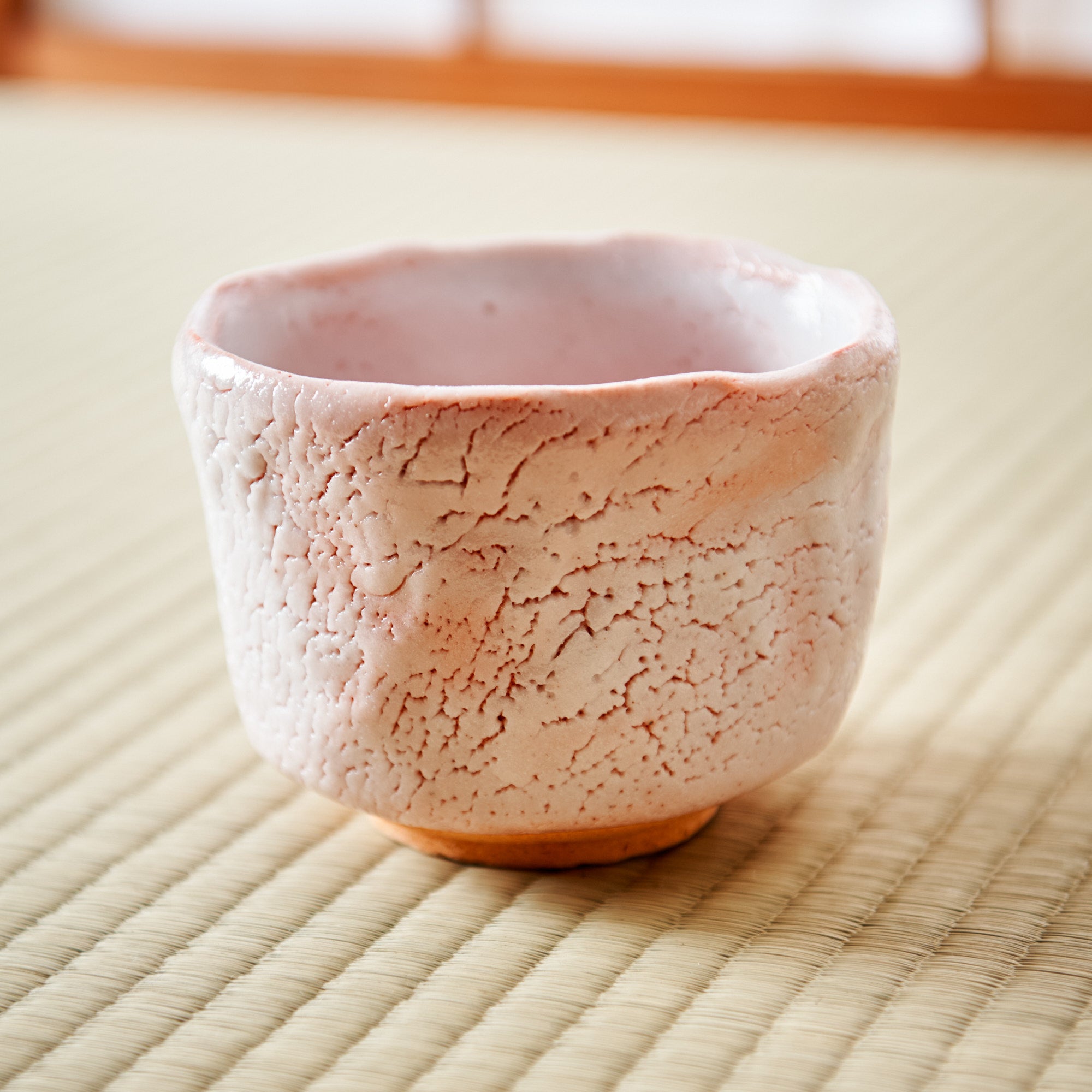
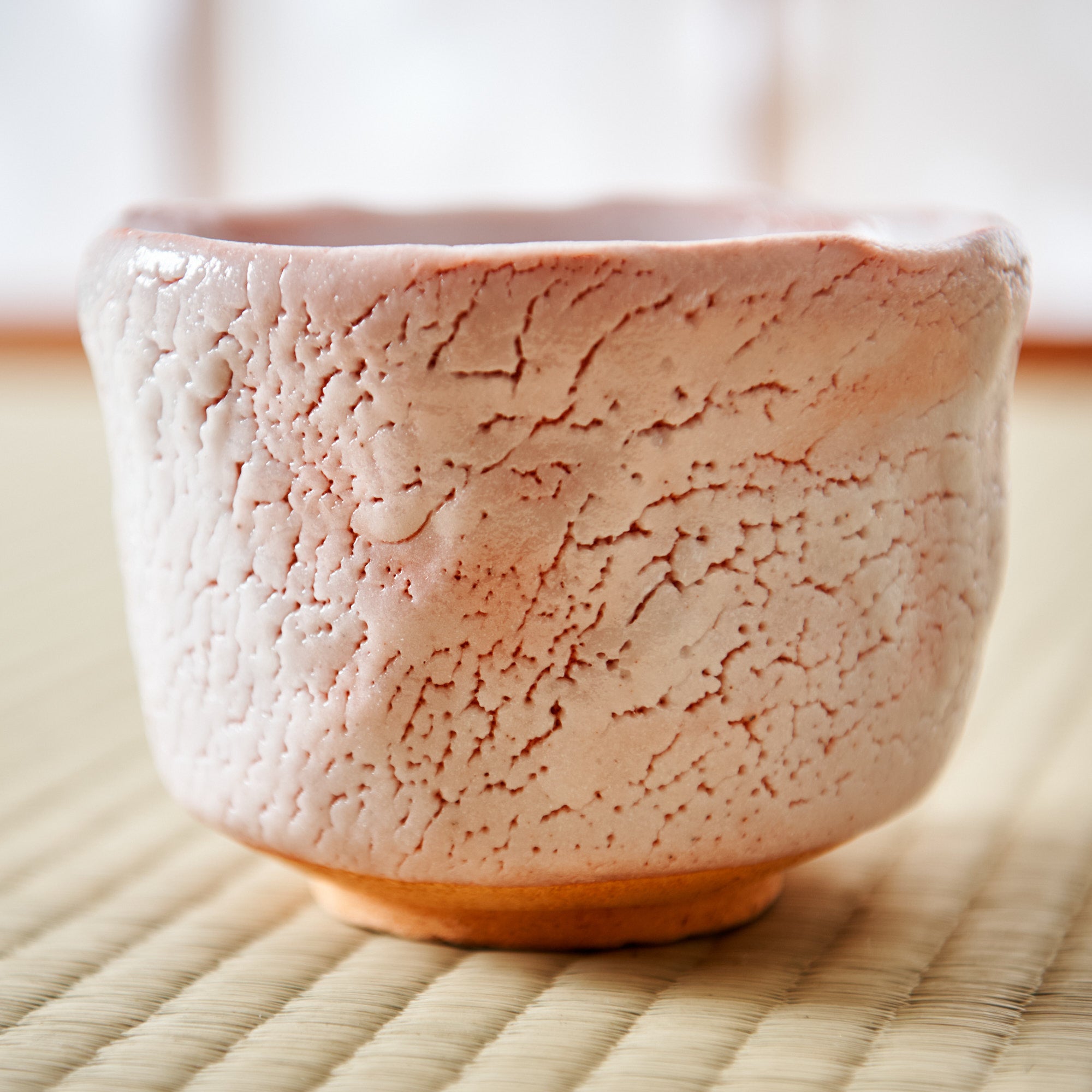
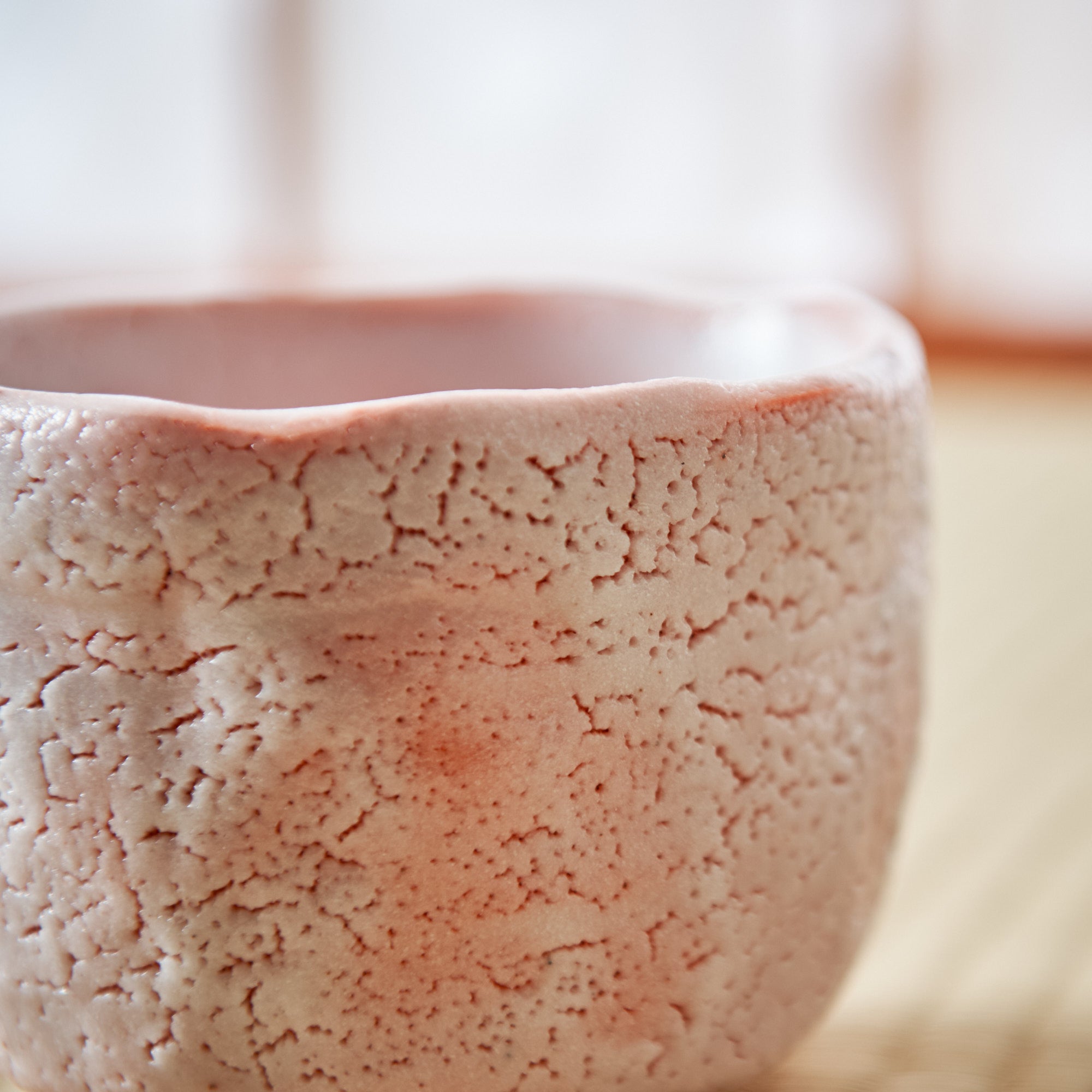
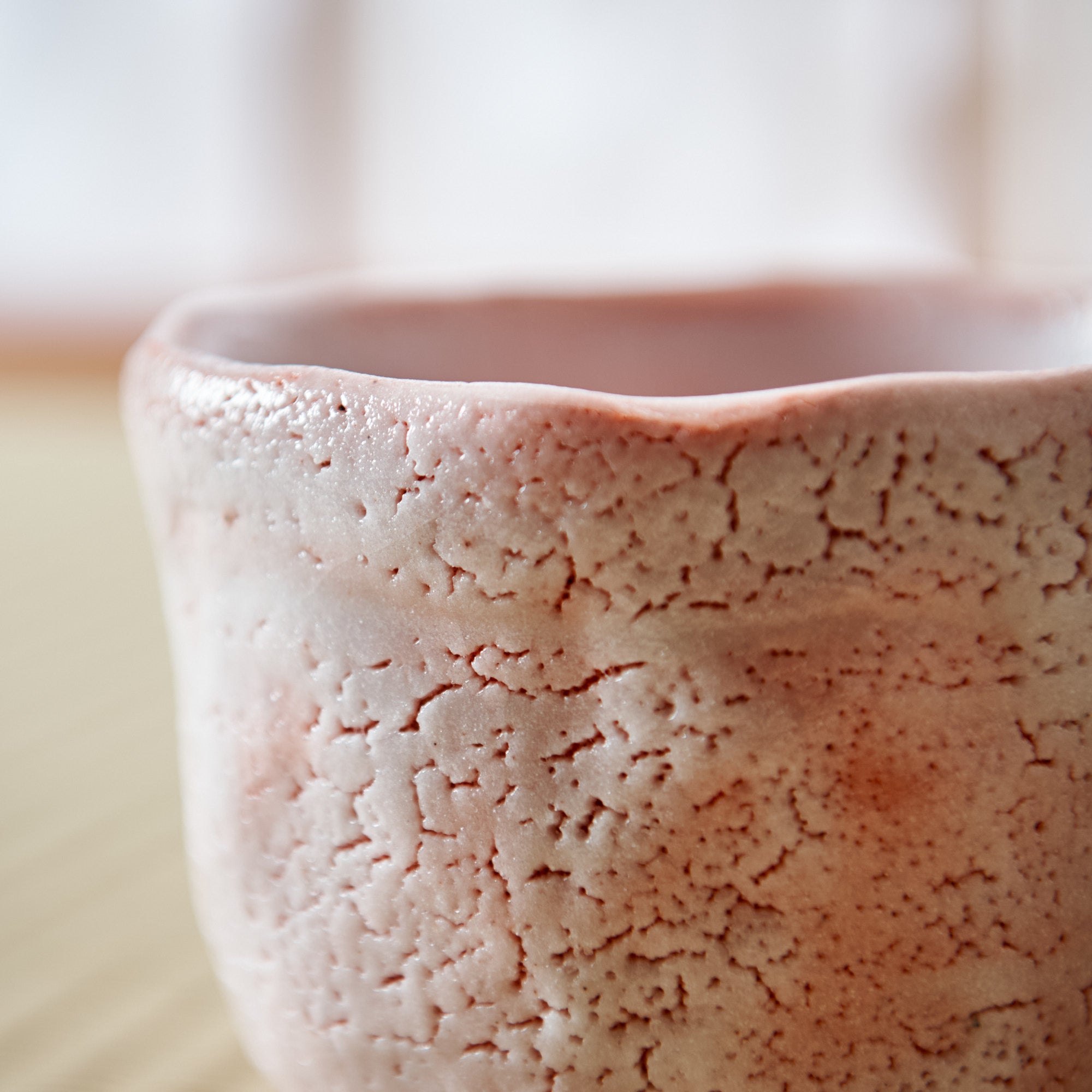
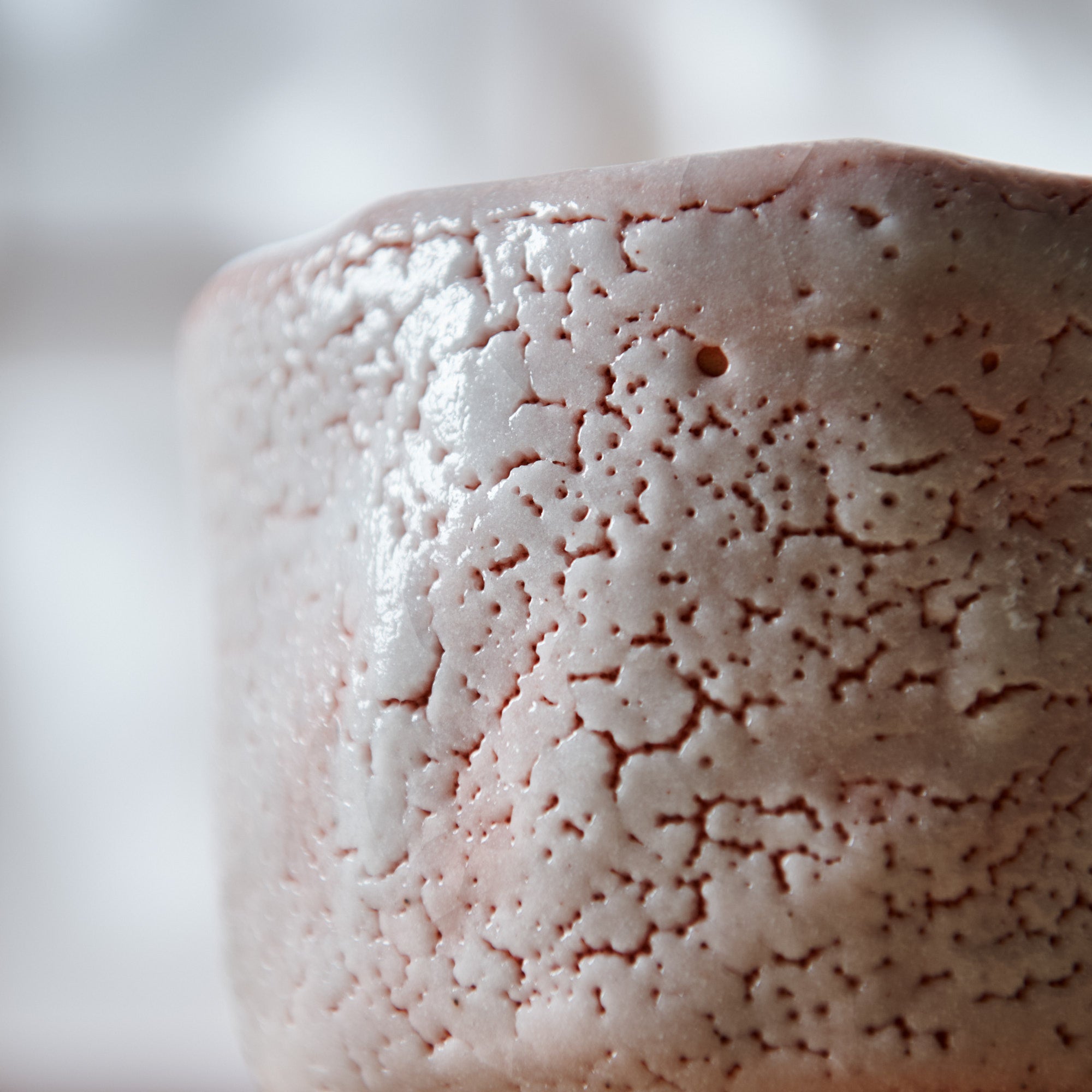
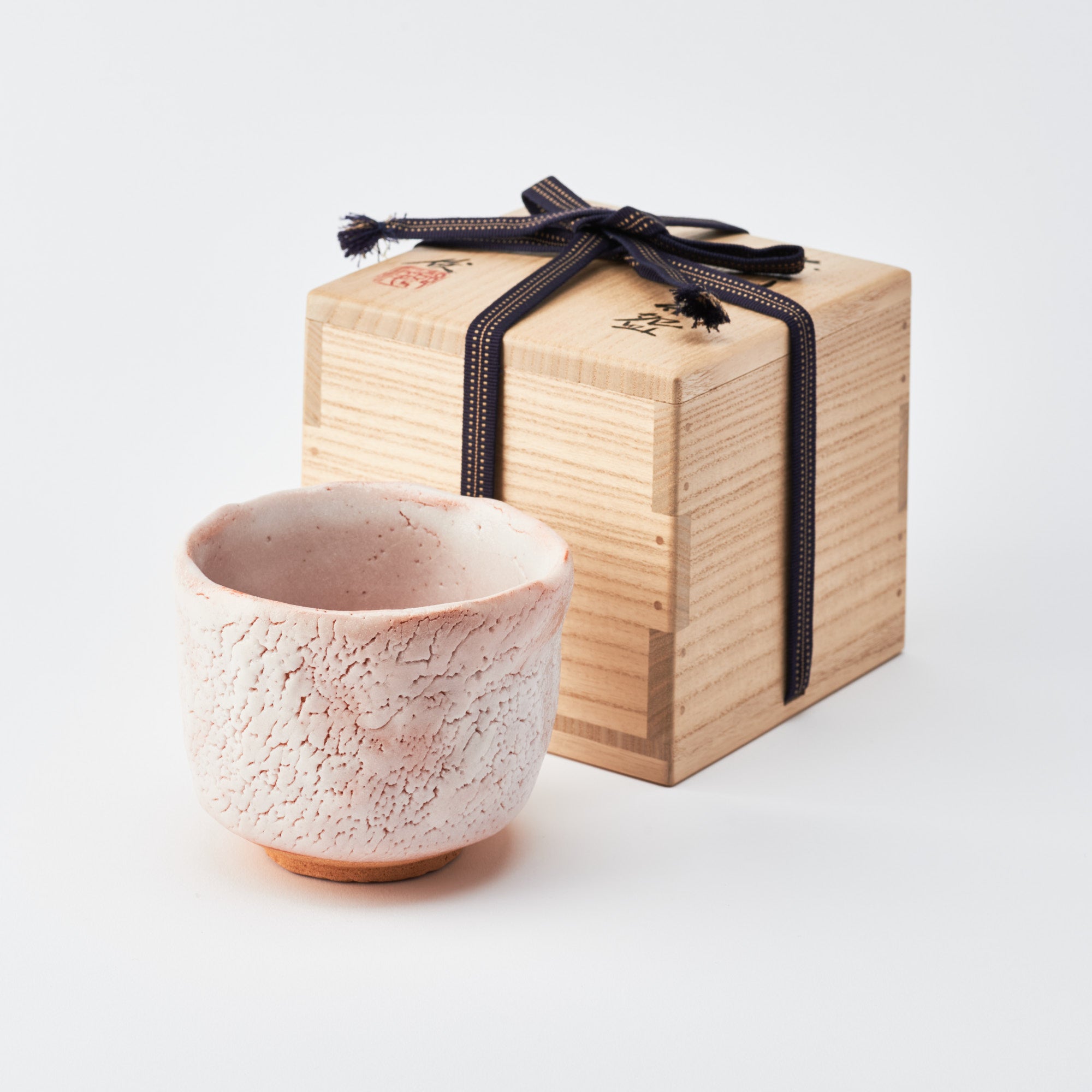
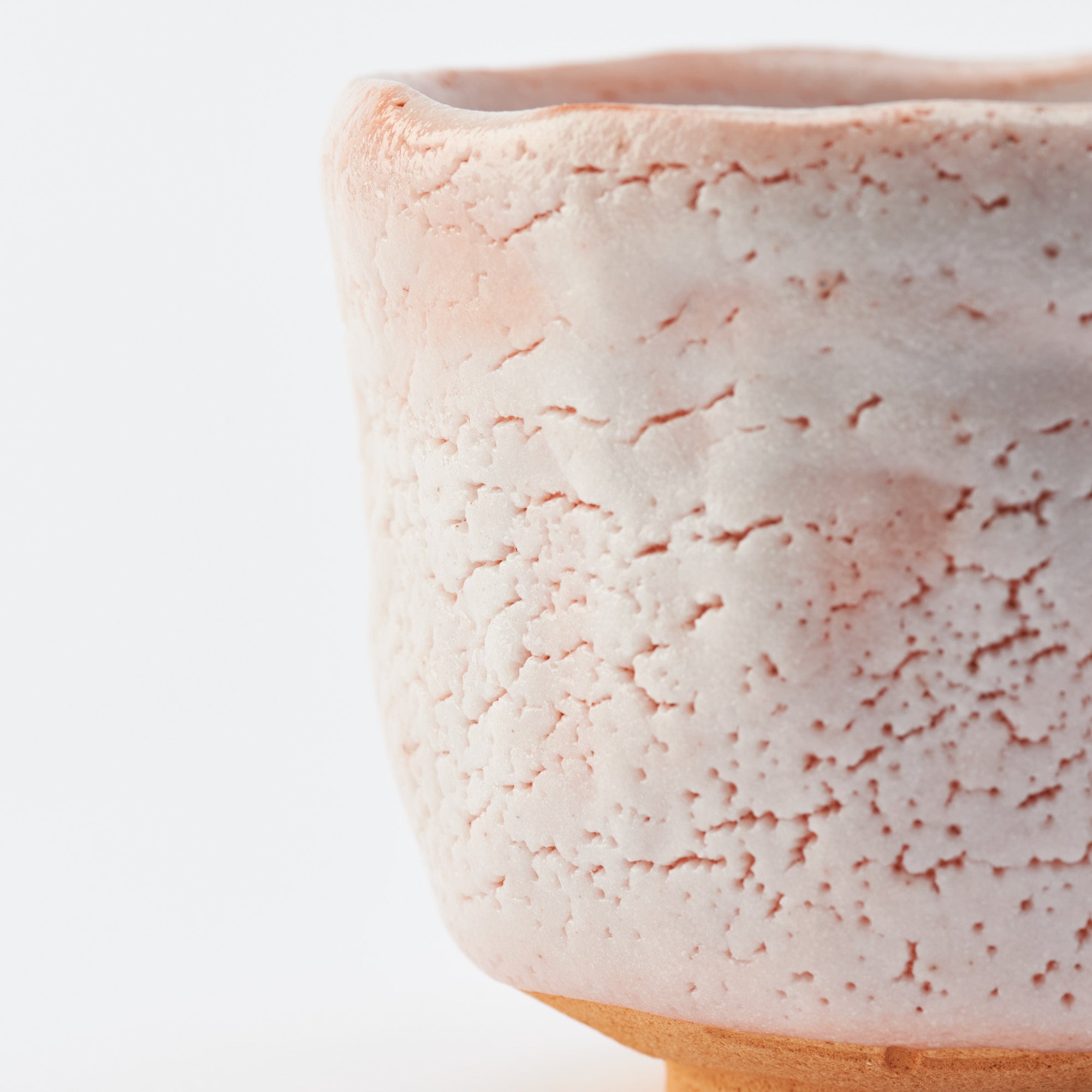
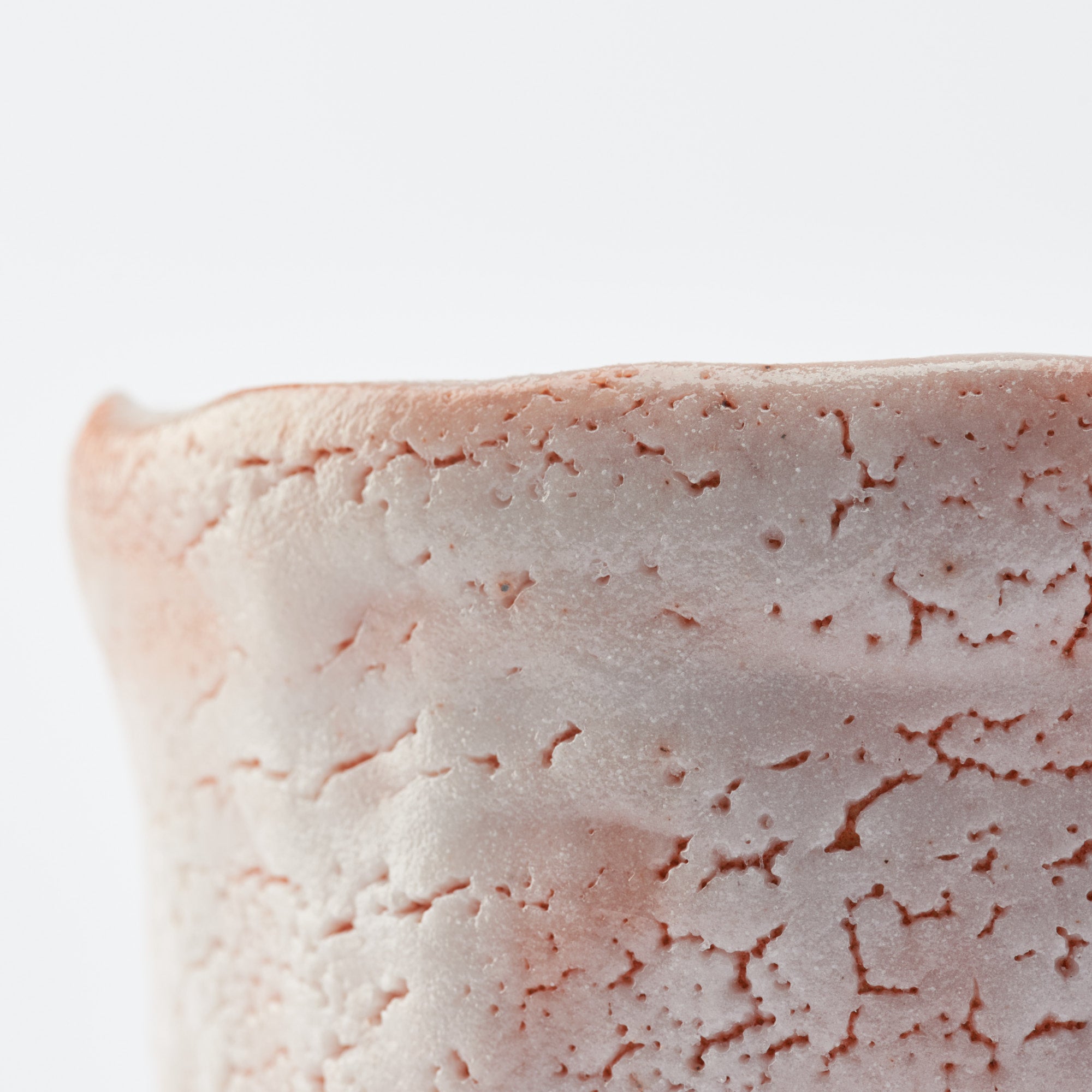
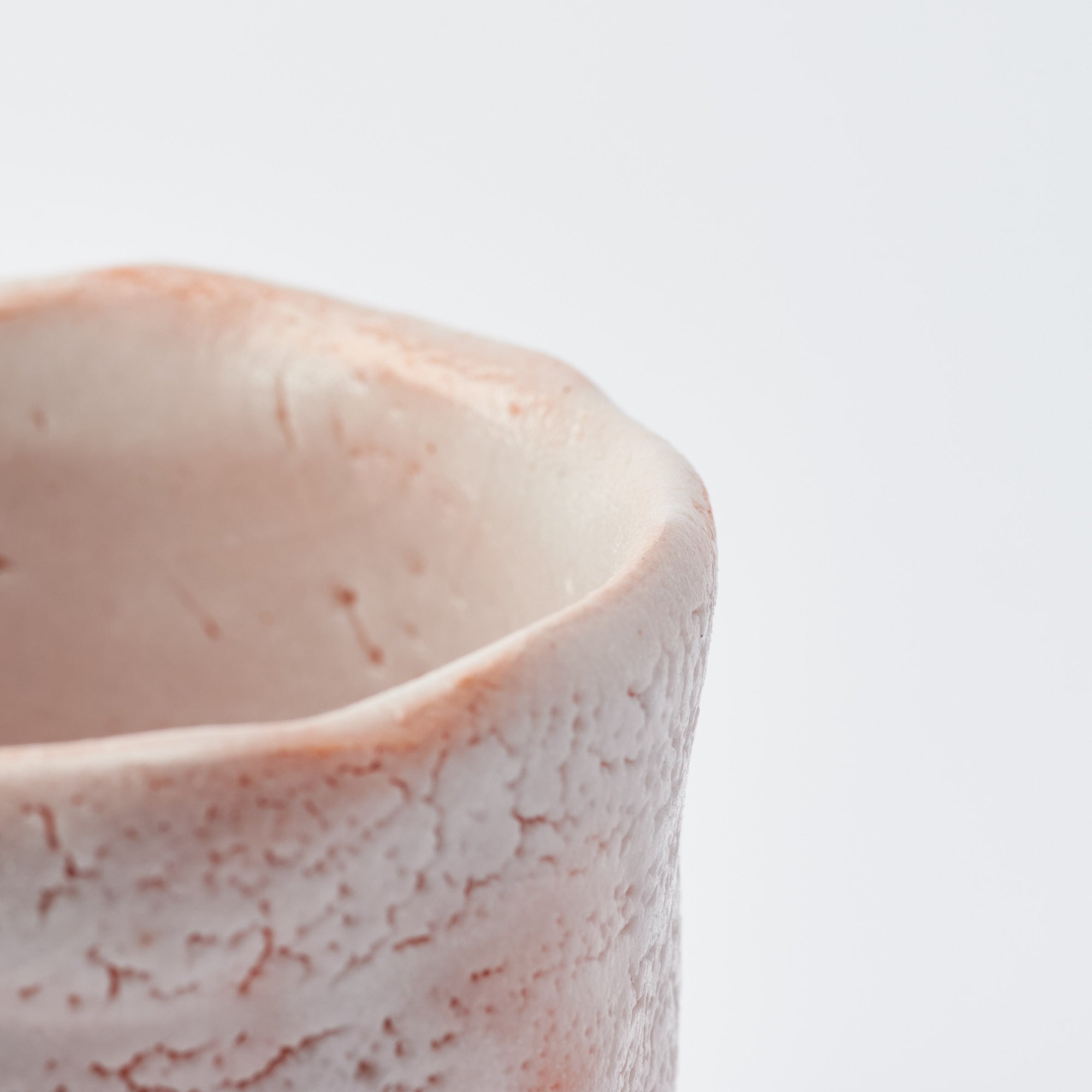
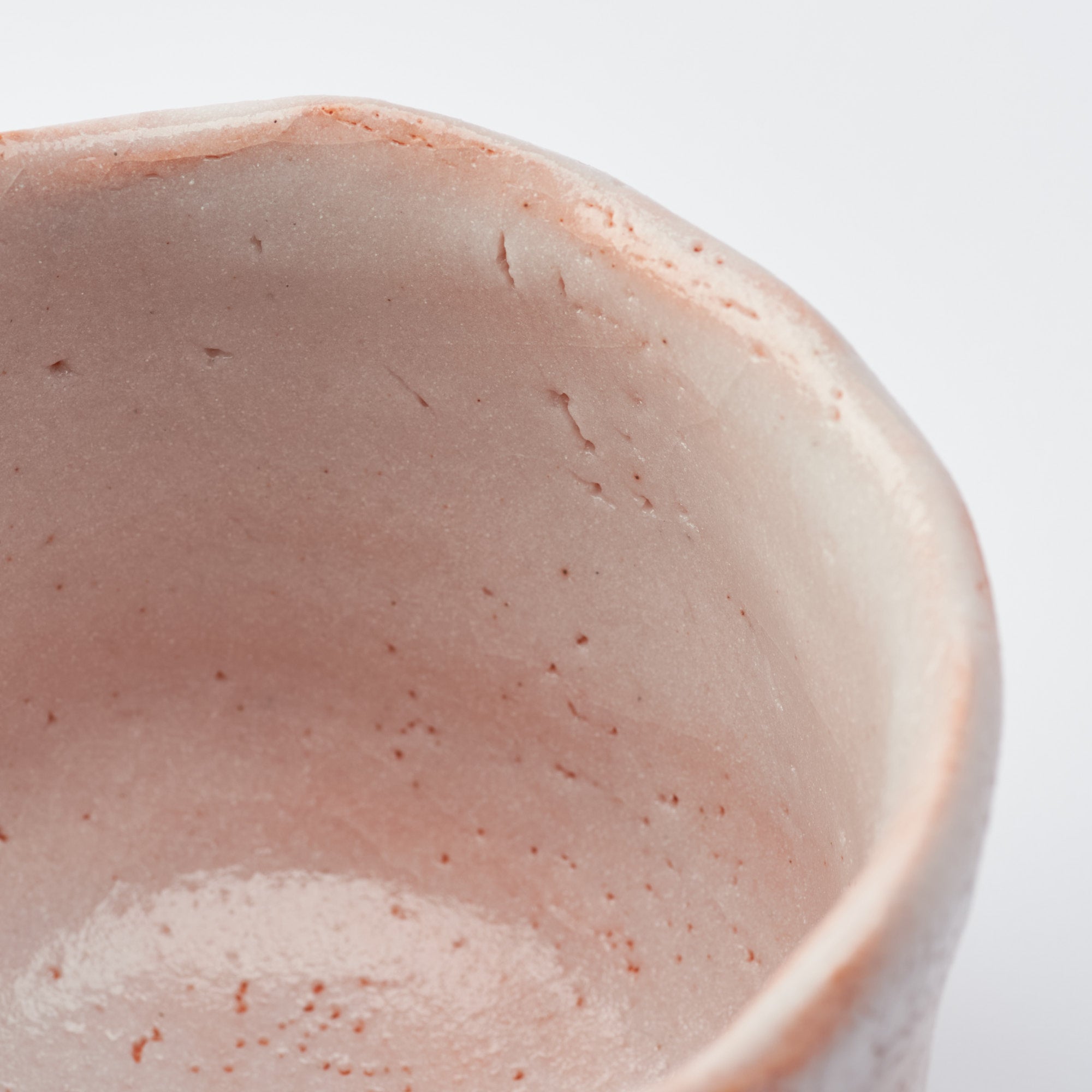
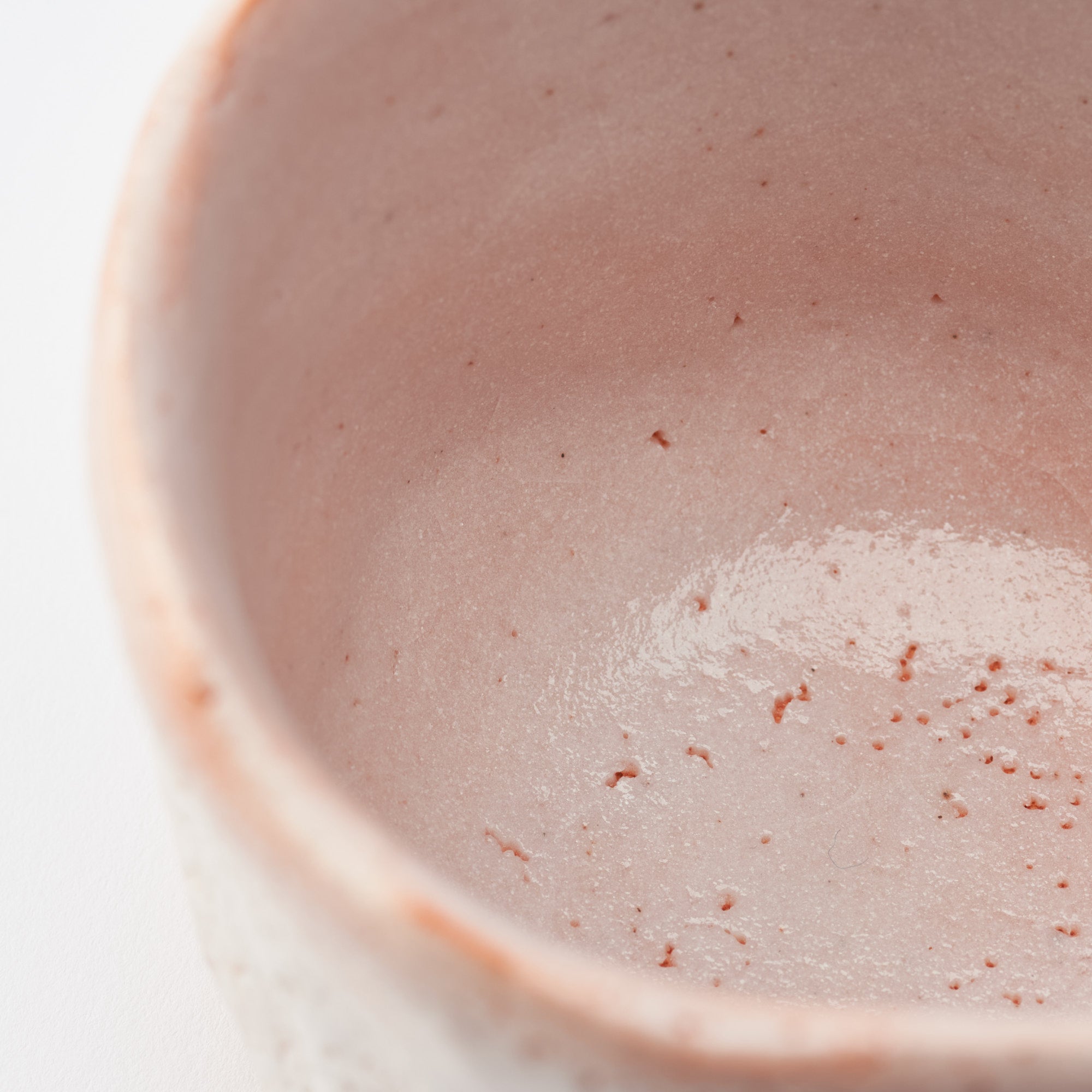
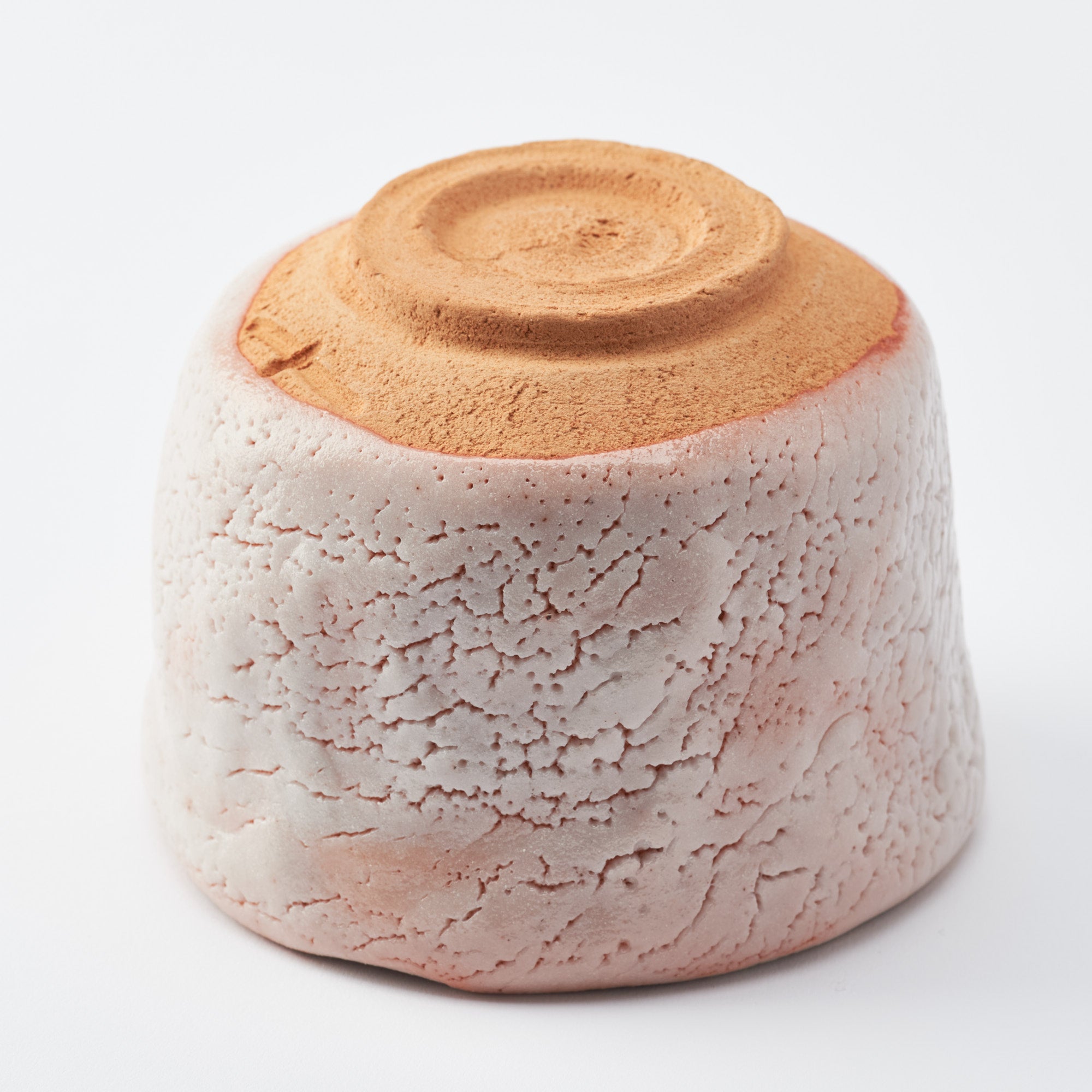
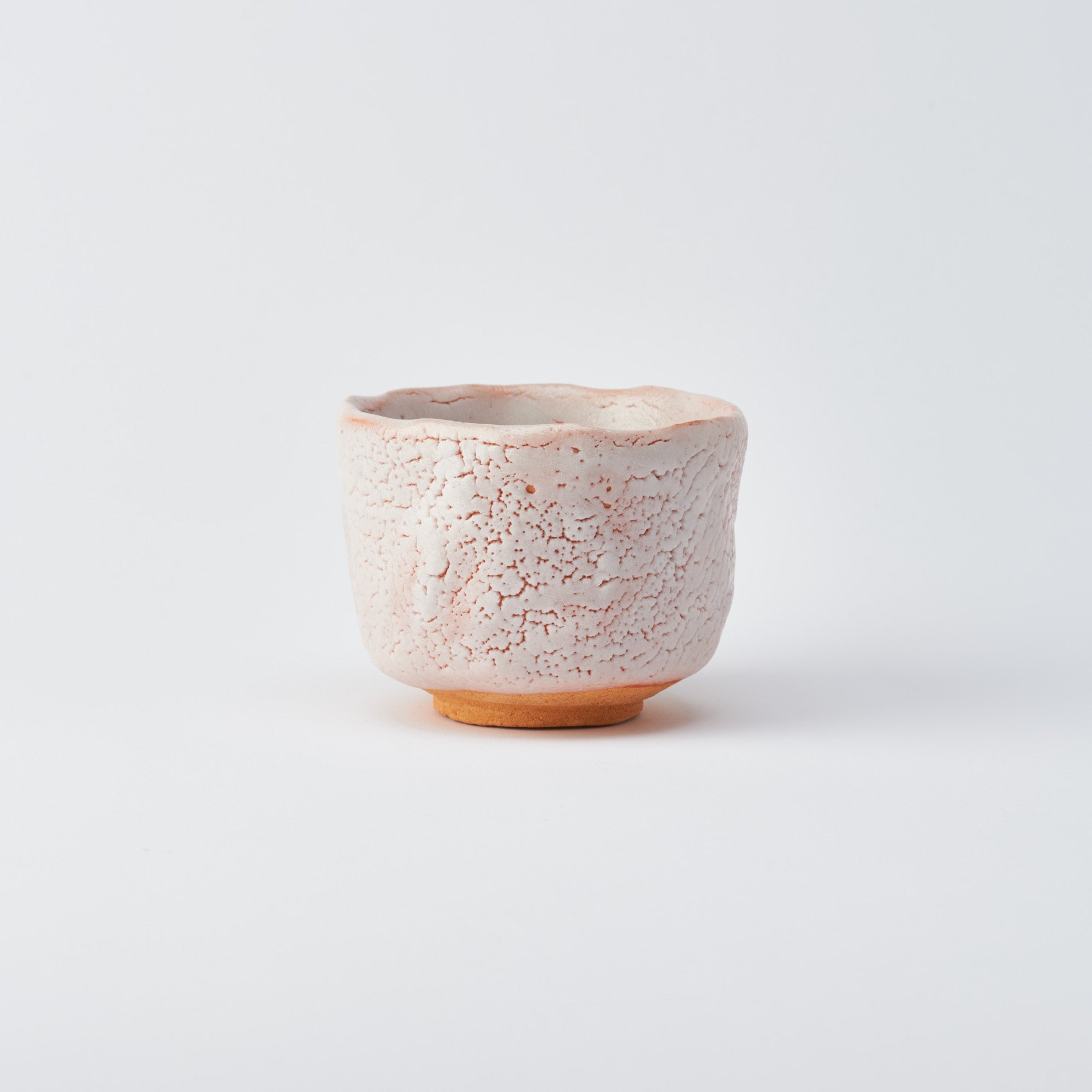
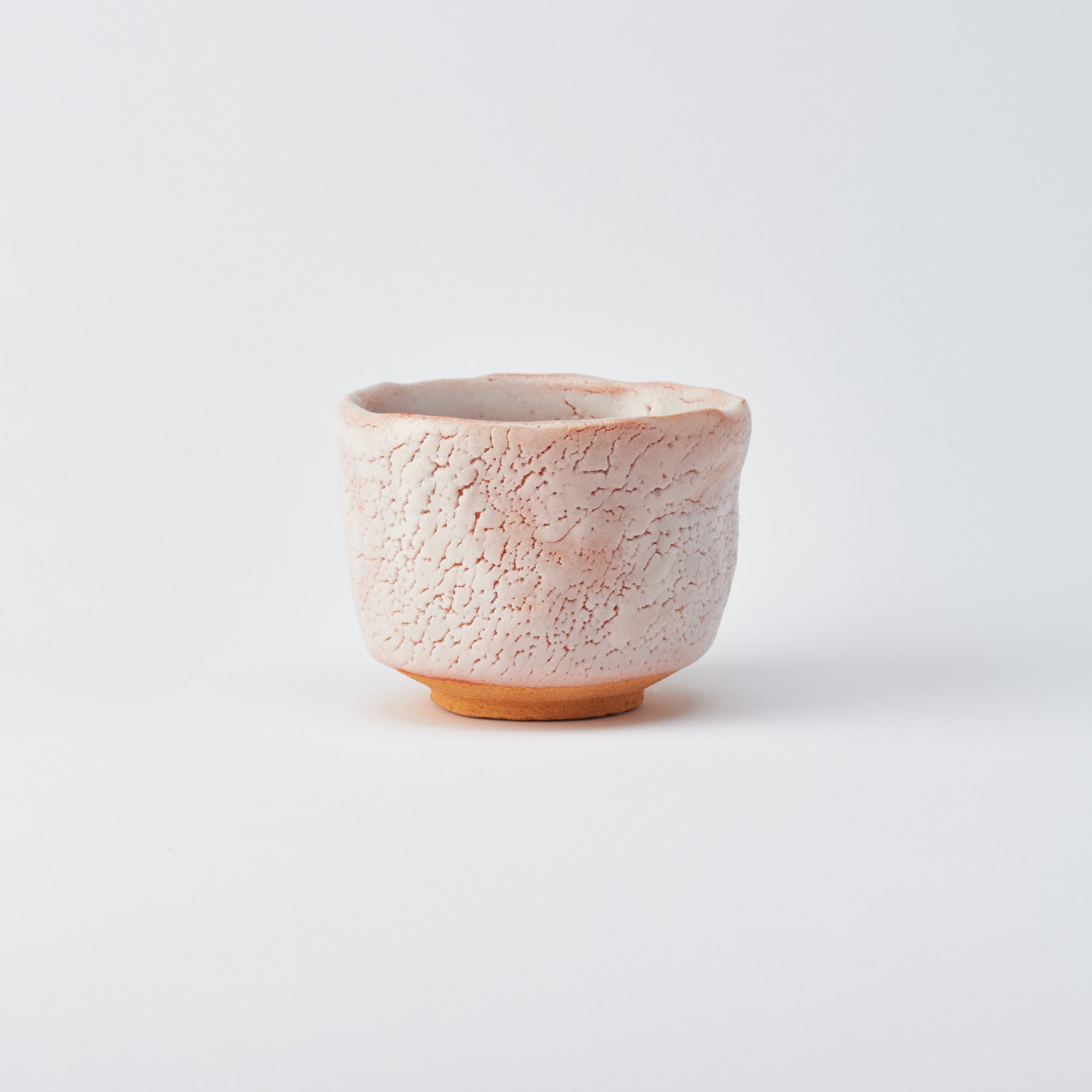
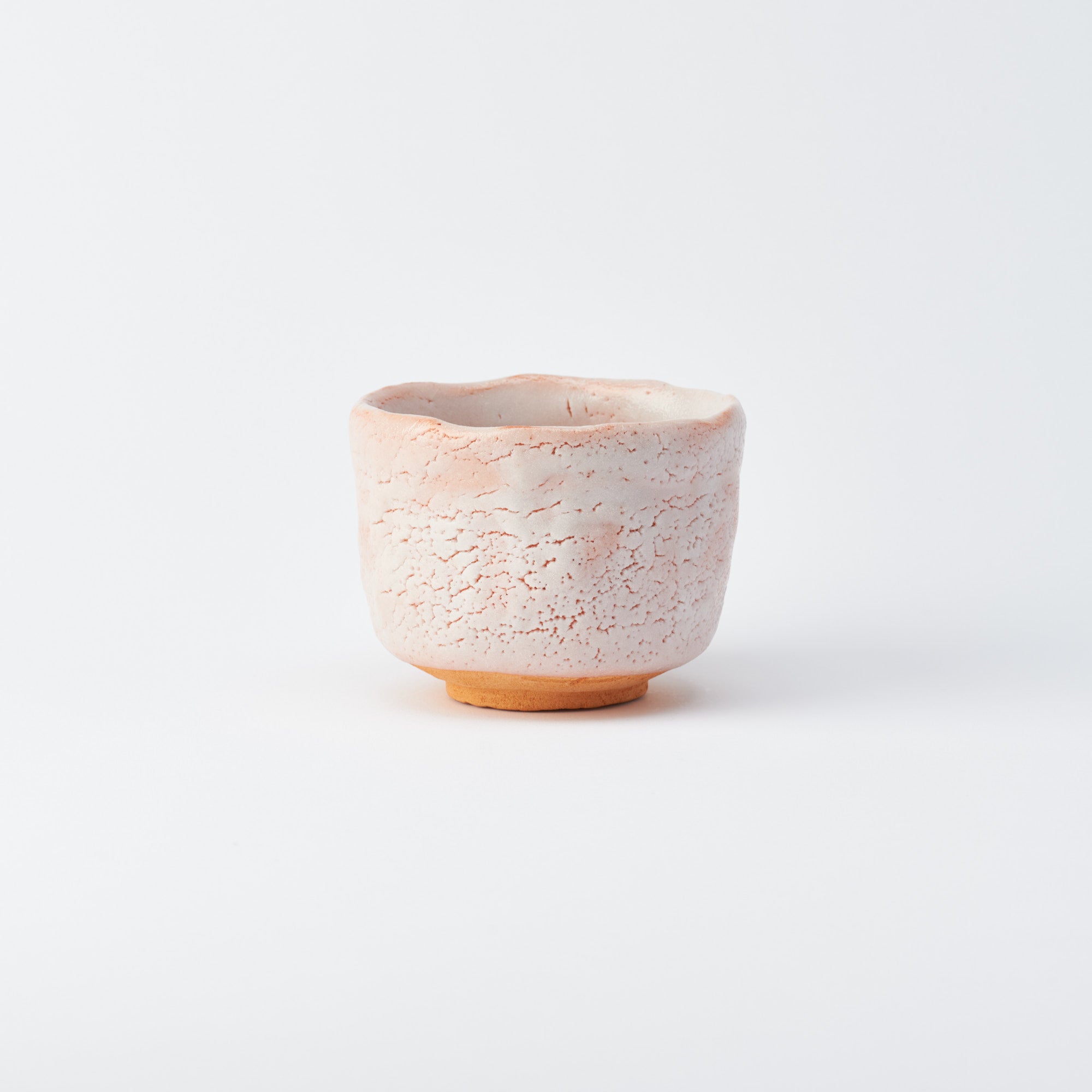
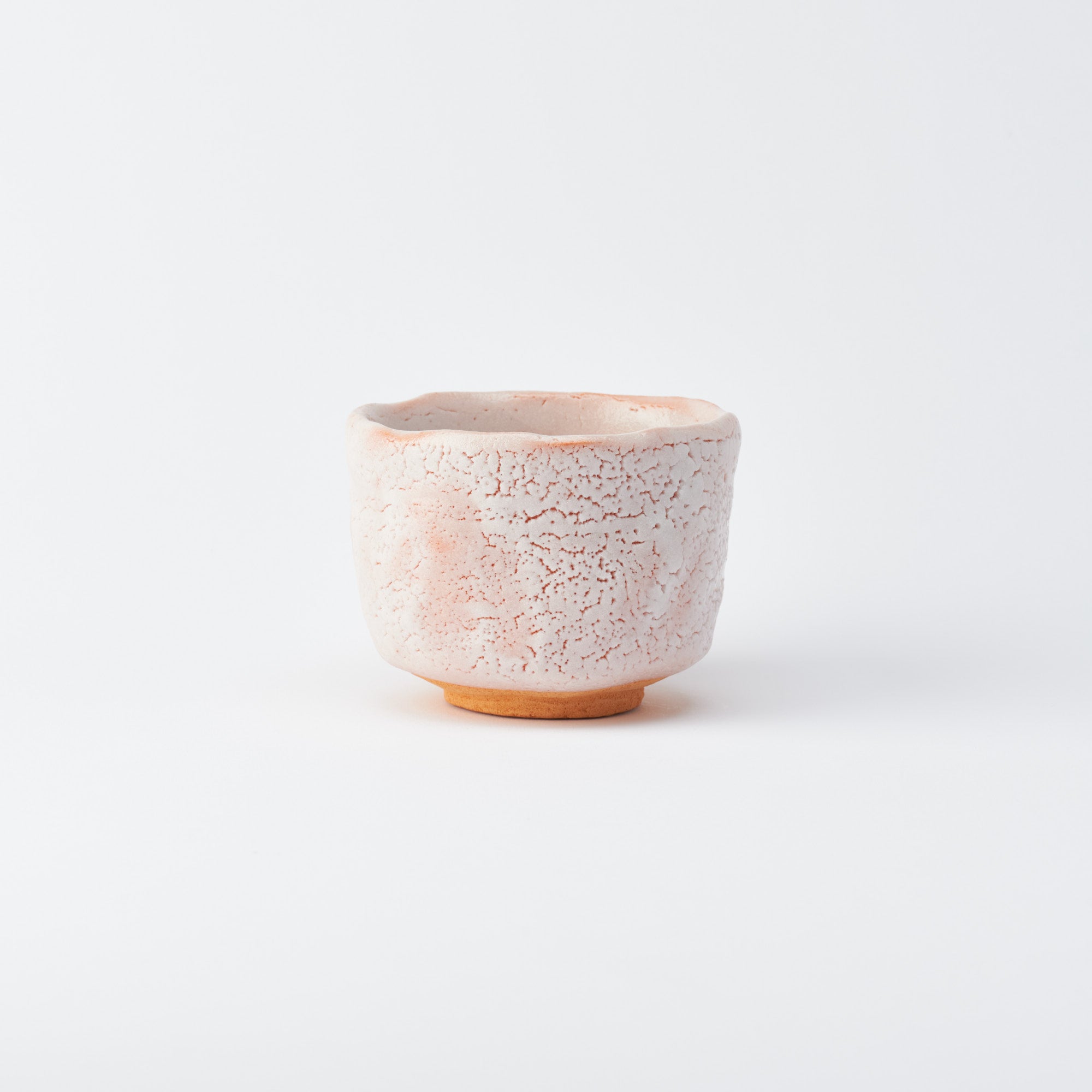
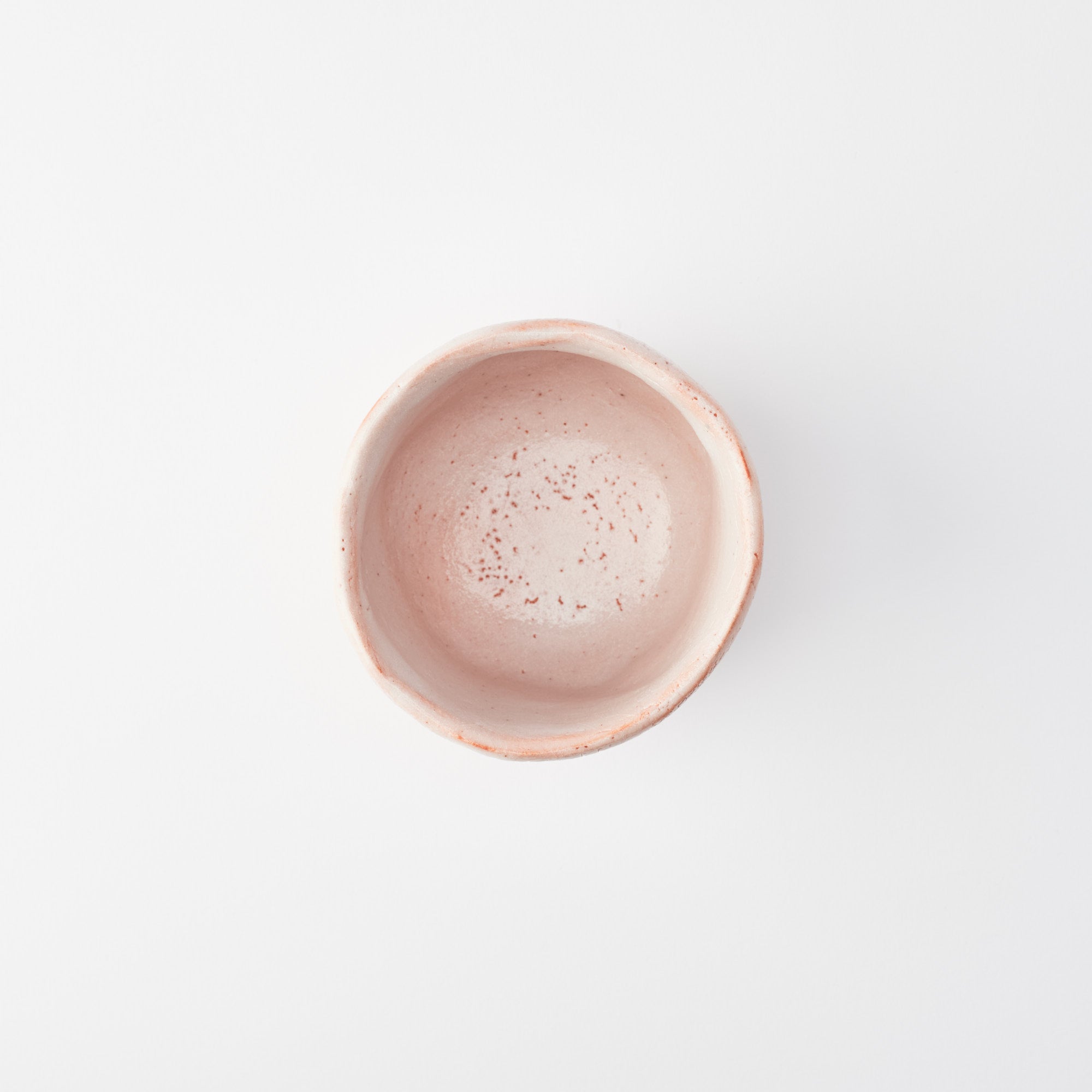
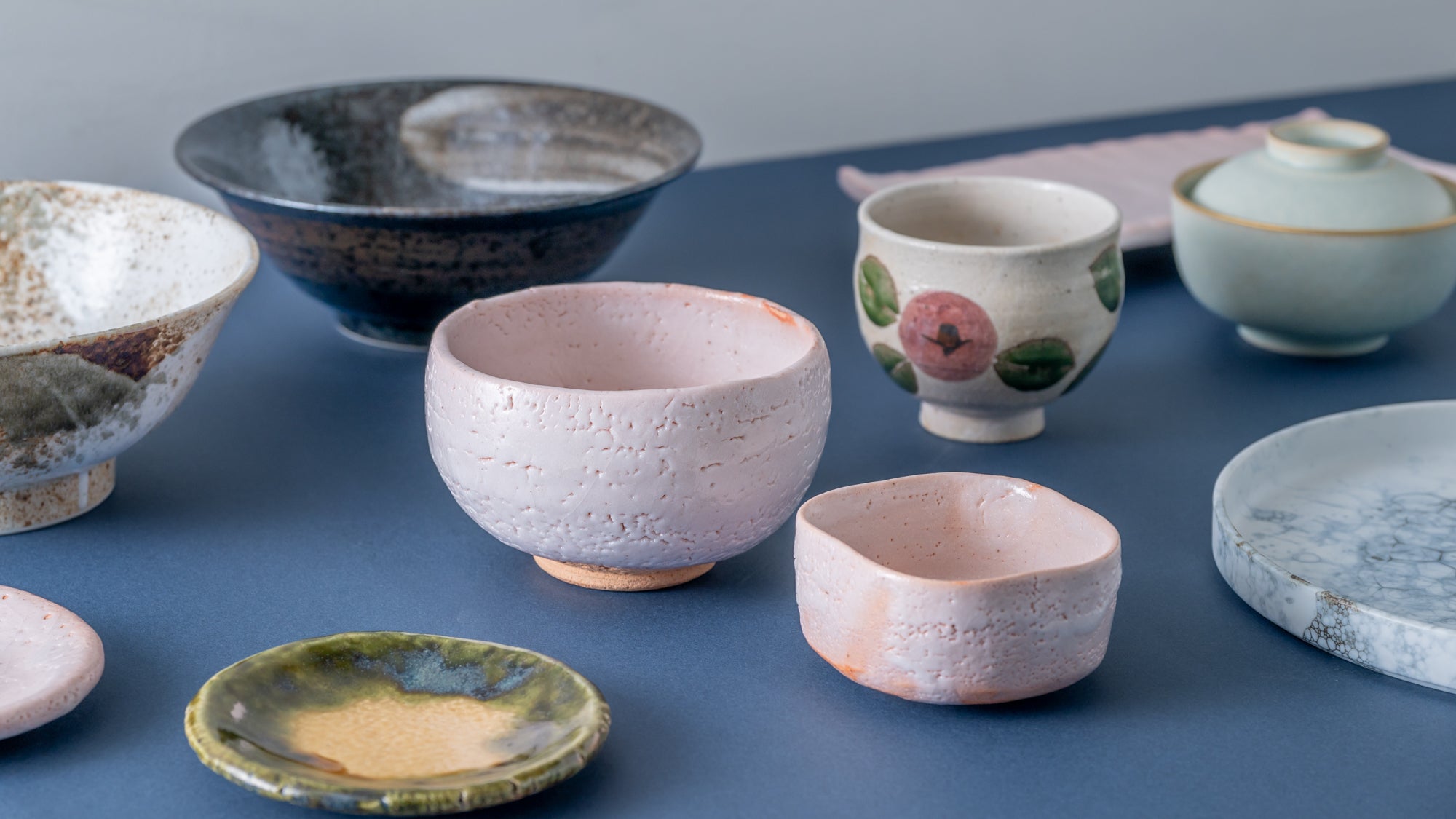
This matcha bowl by Hori Toshiro, a master of Mino ware, exemplifies the refined warmth of Shino, Japan’s first white glaze. Bold yet delicate crackles in the glaze surface branch softly across the piece, creating a dialogue of color between the pearly-white Shino glaze and the clay’s flame-like hue of hiiro. Both concealing and revealing, it shows Hori’s skill in balancing technical control with the chance variation born of natural forces.
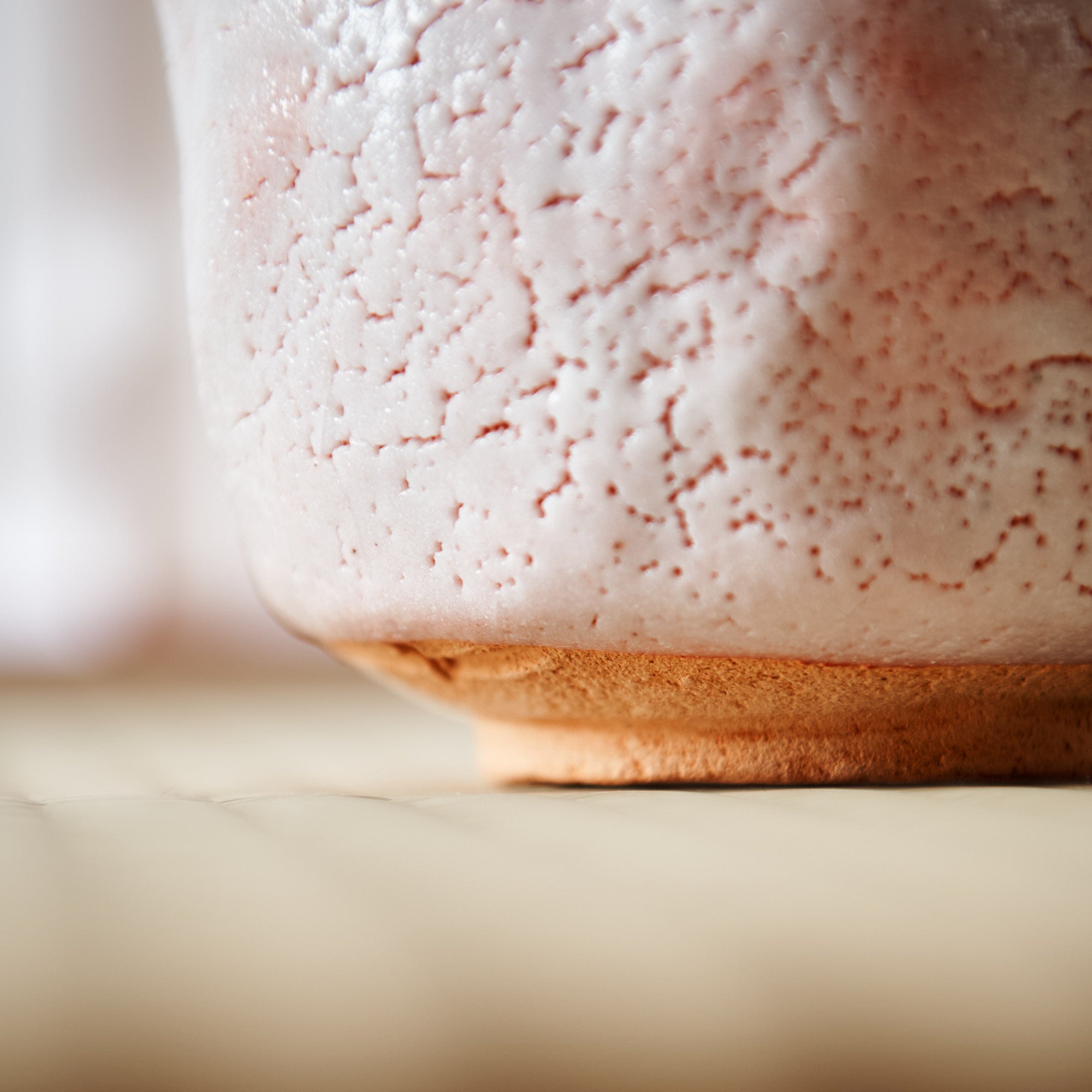
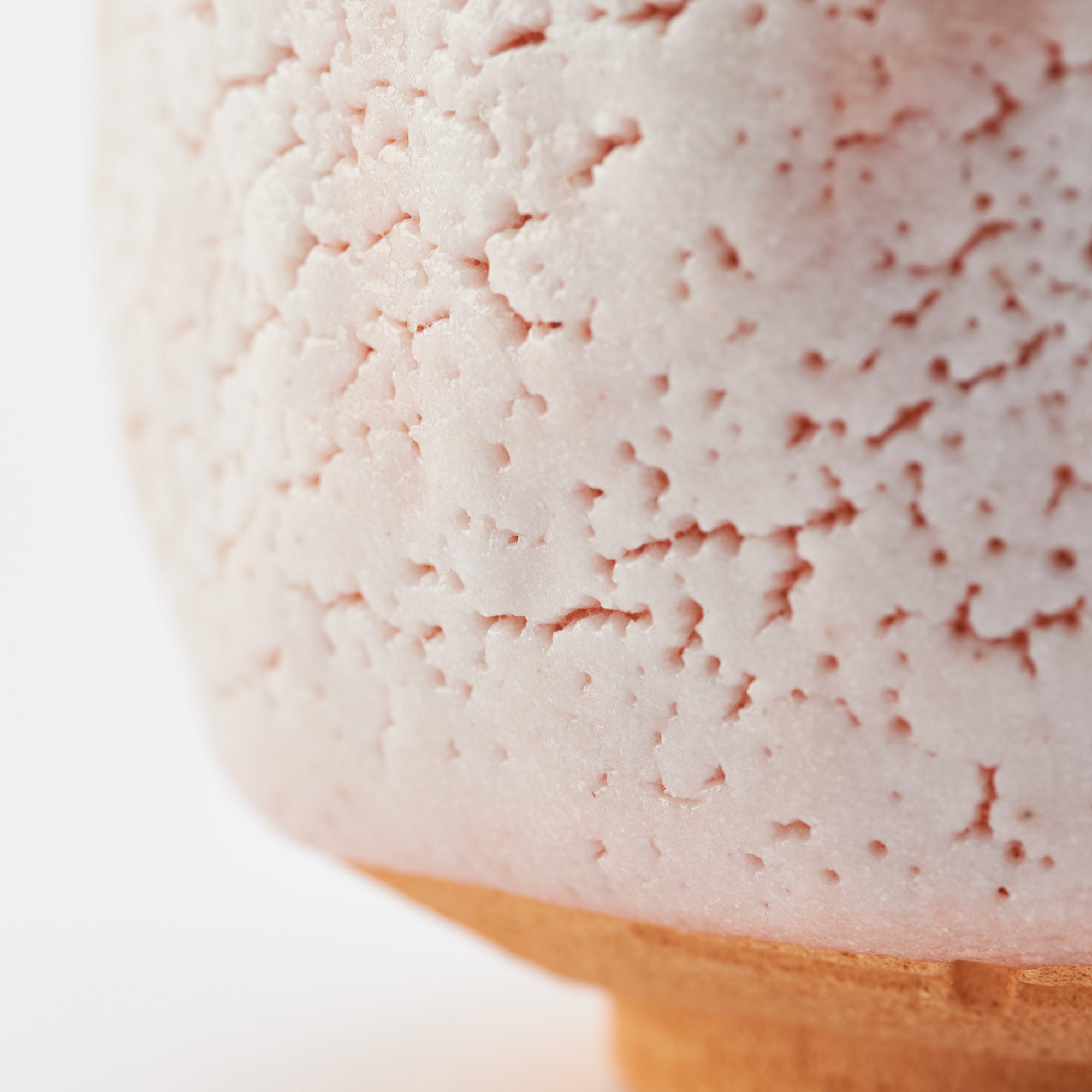
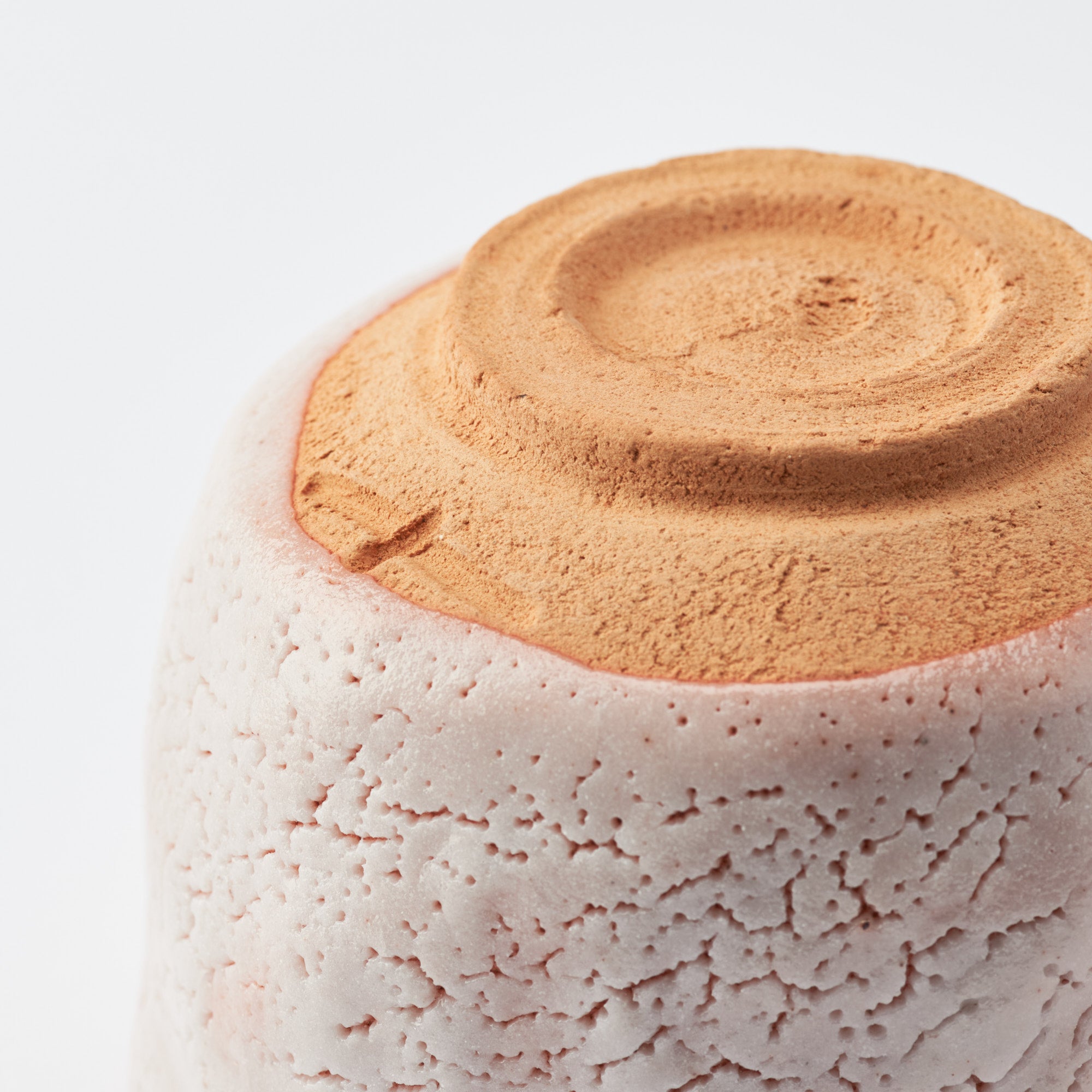
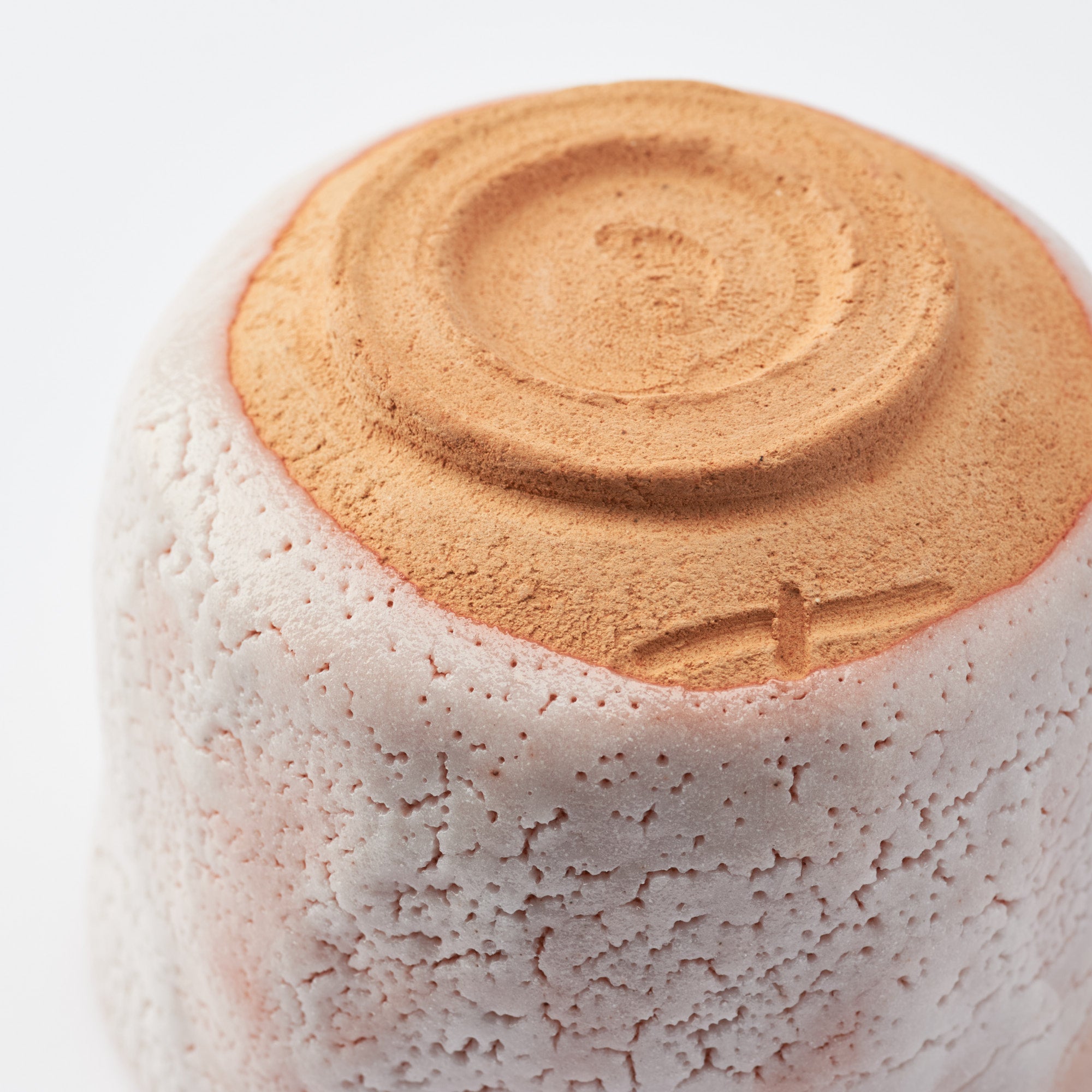
Shino is a feldspar-based glaze that contracts more than the clay body underneath, resulting in its distinctive kairagi, or “plum-blossom skin,” texture. This particular piece was fired for three days in a traditional anagama kiln, a tunnel-like wood-fired kiln used in Japan for 1,600 years. Interactions between iron in the clay, the kiln’s strong reduction environment, and an iron-rich sheath placed around the vessel during firing are what generated the orange-red color that shows through the crackles.
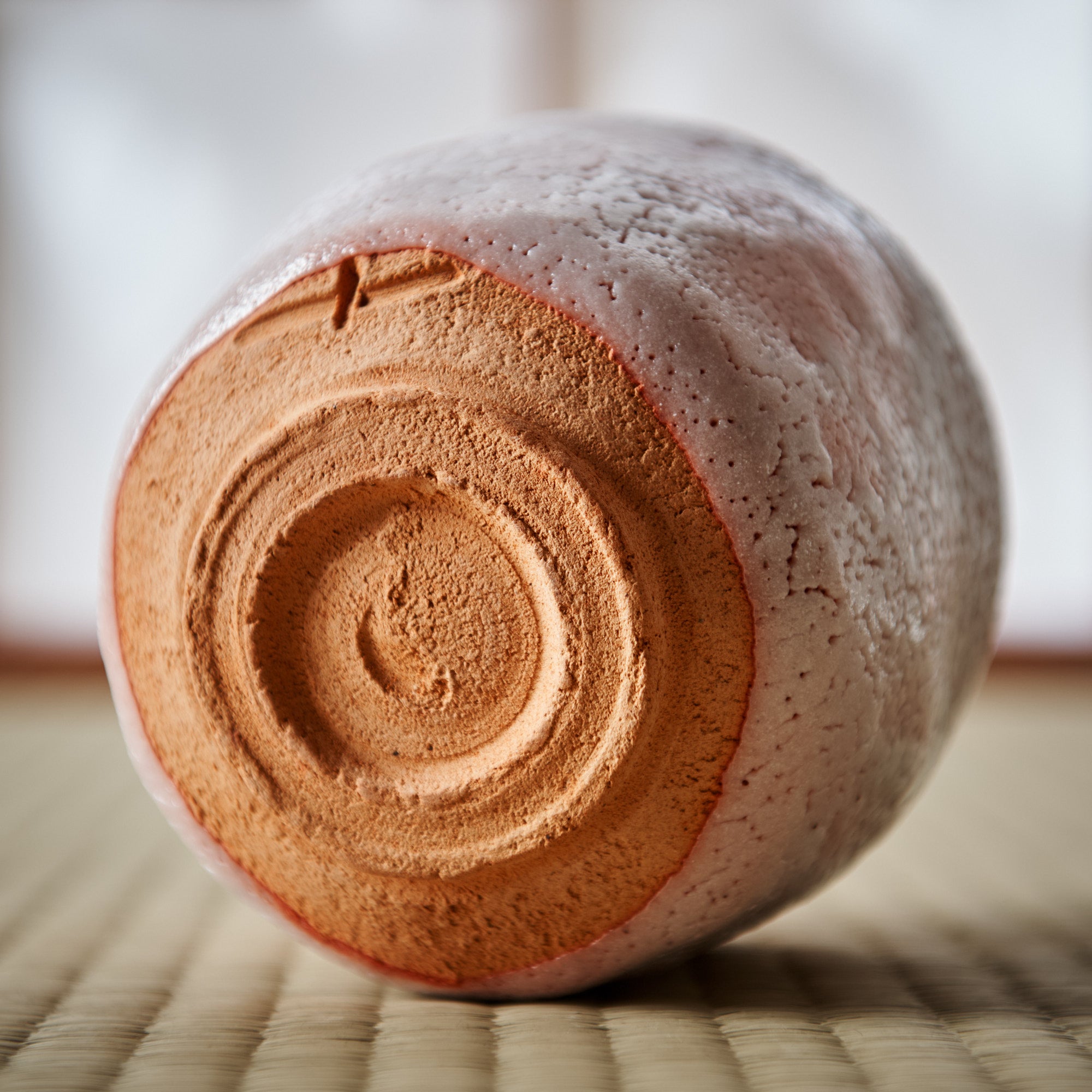
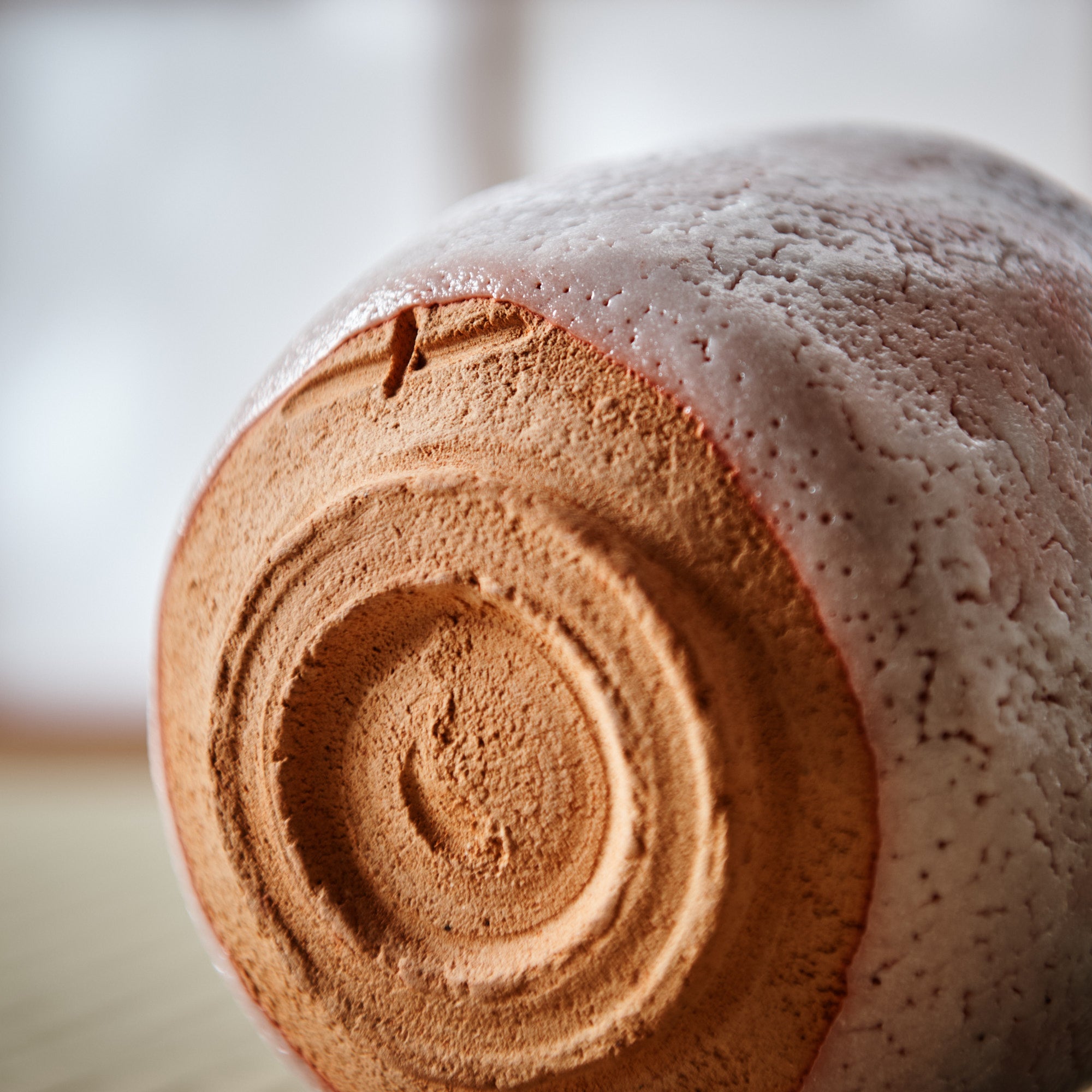
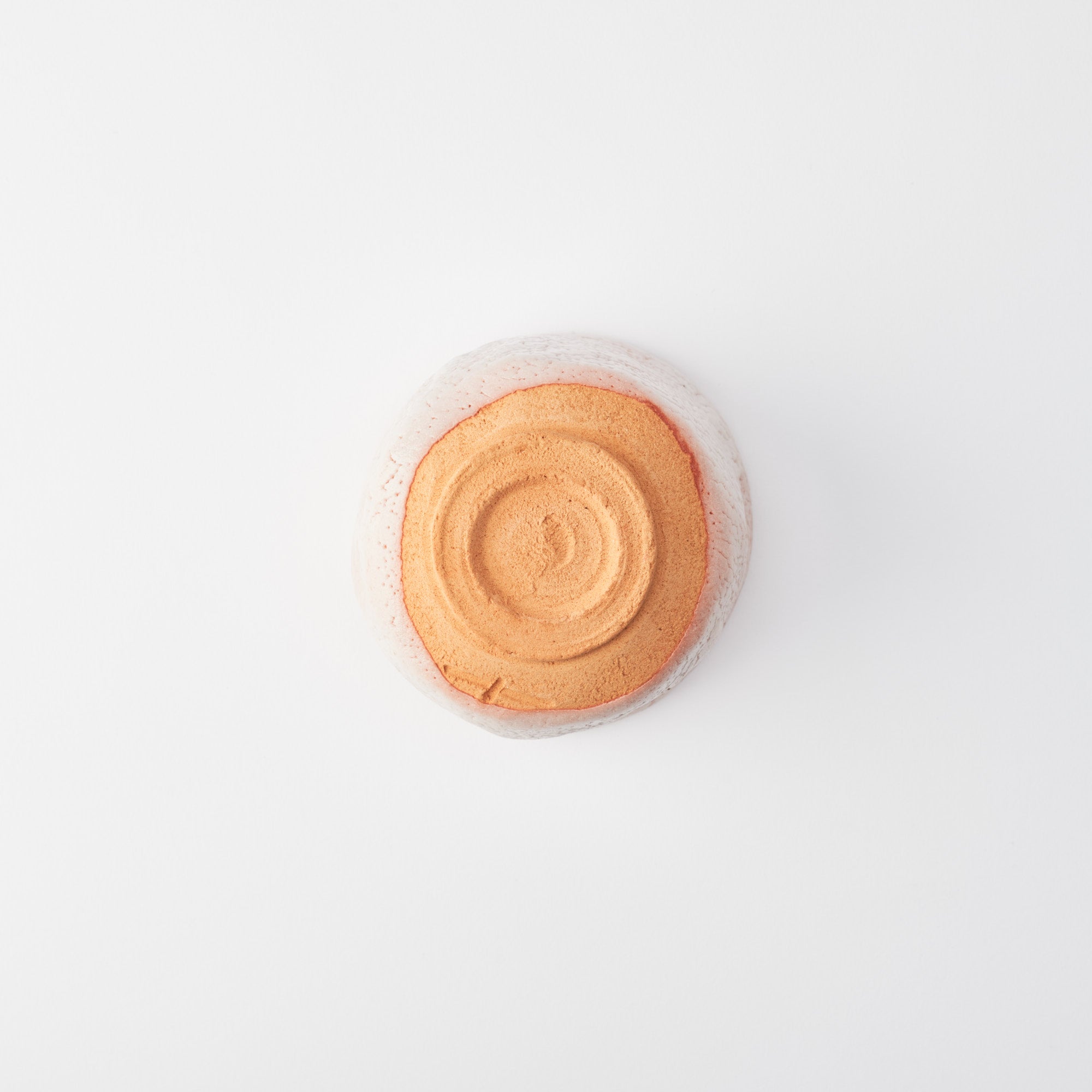
This piece was formed from local mogusa and gotomaki clays in equal parts, a high ratio of mogusa. Named after moxibustion herbs for its texture, mogusa clay is highly difficult to work with, but has a fluffy quality akin to ceramics from the Azuchi-Momoyama period (1573–1603 CE). The base is left unglazed, a style called tsuchimise, or “showing the earth,” which reveals this particular clay’s soft, organic quality.
Imperfectly cylindrical, the matcha bowl’s subtle dips and curves allow it to nestle gently in the palms, the thick glaze giving a soft, lush feel. Each turn reveals a new surface landscape, rewarding repeated viewing. With use, tea will slowly seep into the crackles, embodying tea ceremony philosophies and the Japanese concept of keinen bika, the belief that beauty grows with age. The user thus becomes part of the story of this work of art, one that is not just historically significant, but also creates a bridge into the future.
DETAILS
| Quantity | 1 |
| Size |
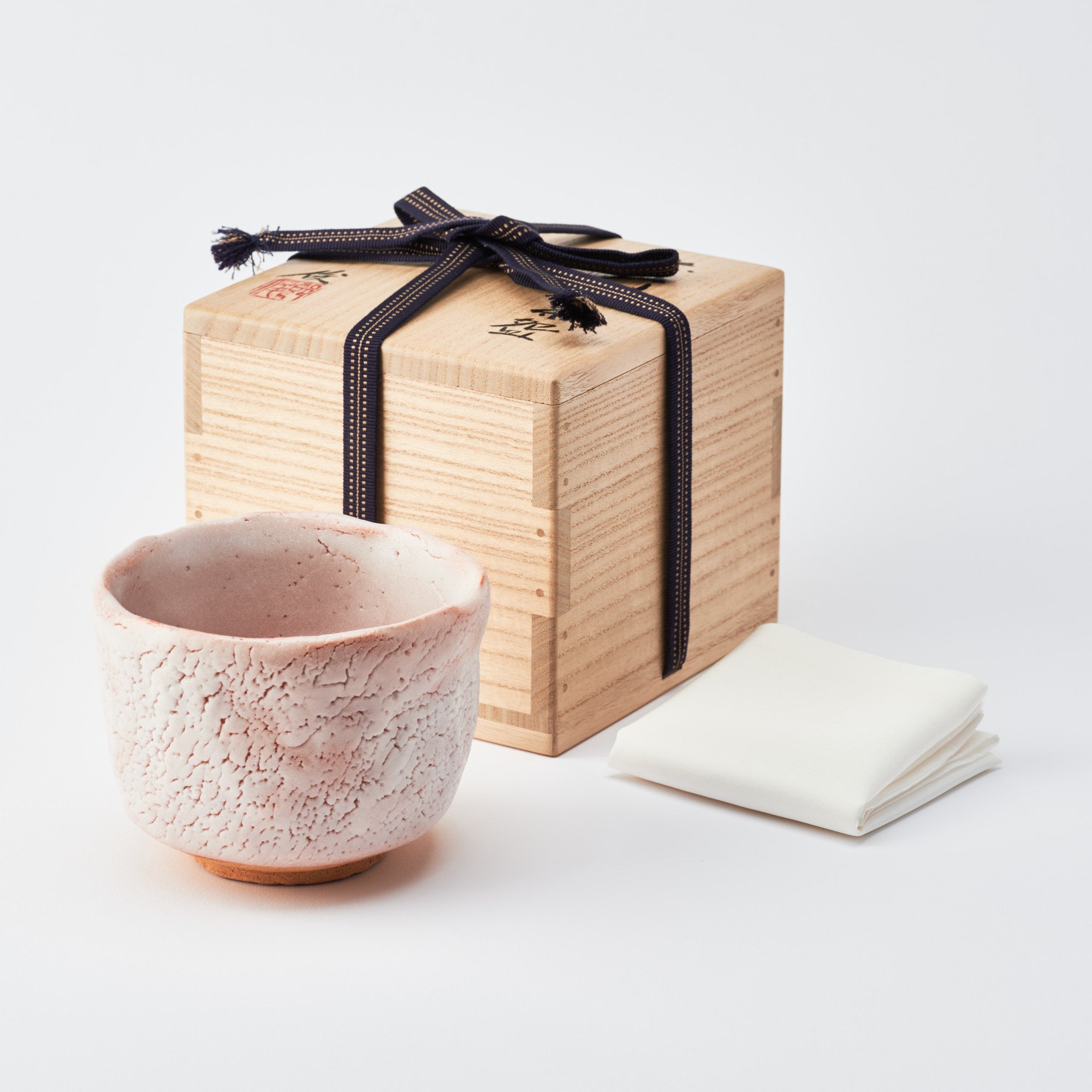
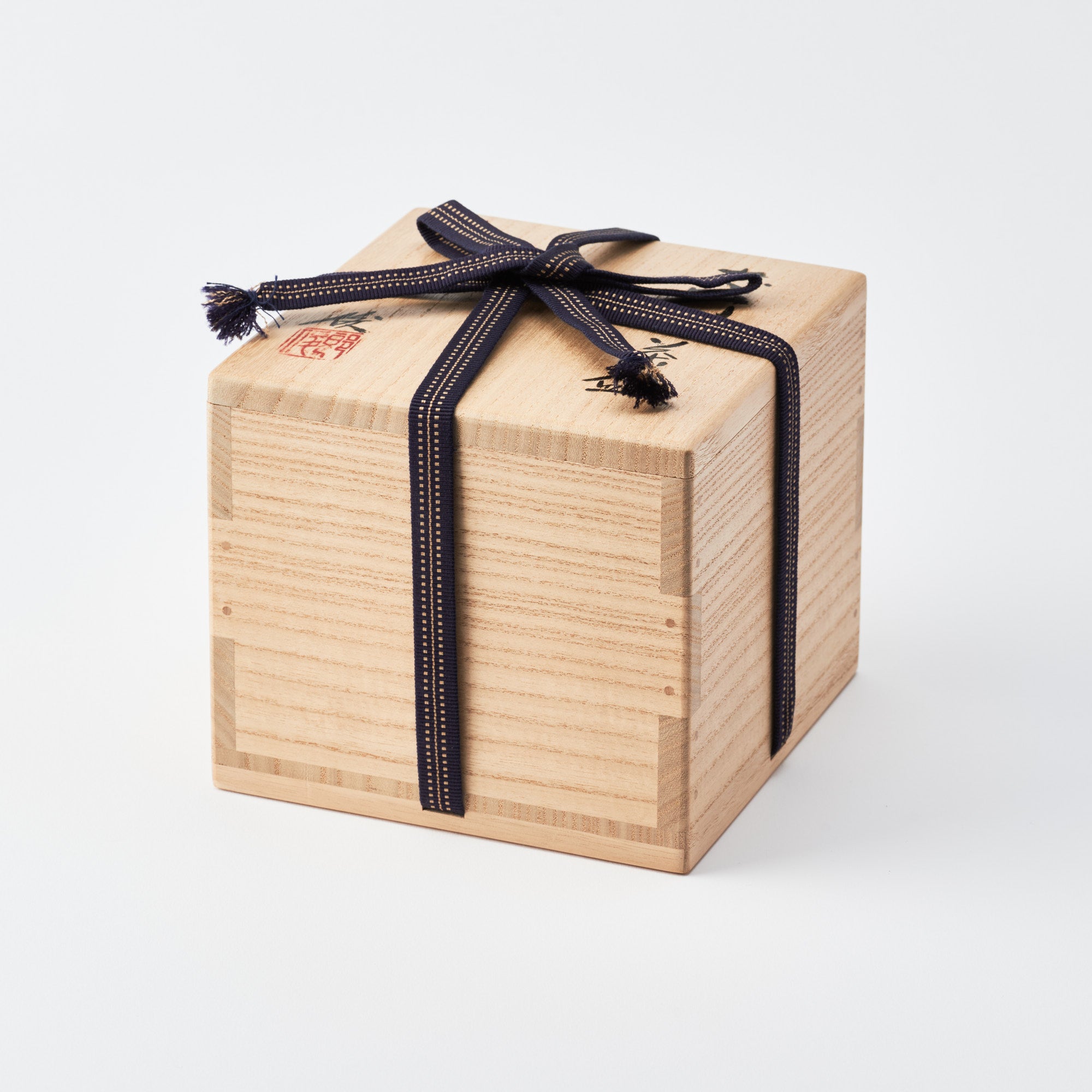
D 12.0 cm (4.7 in) x H 9.5 cm (3.7 in) [Innner size] D 11.0 cm (4.3 in) x H 8.0 cm (3.1 in) [Wooden box] L 14.5 cm (5.7 in) x W 14.5 cm (5.7 in) x H 14.0 cm (5.5 in) |
| Weight | 470 g (16.6 oz) |
| Material | Stoneware |
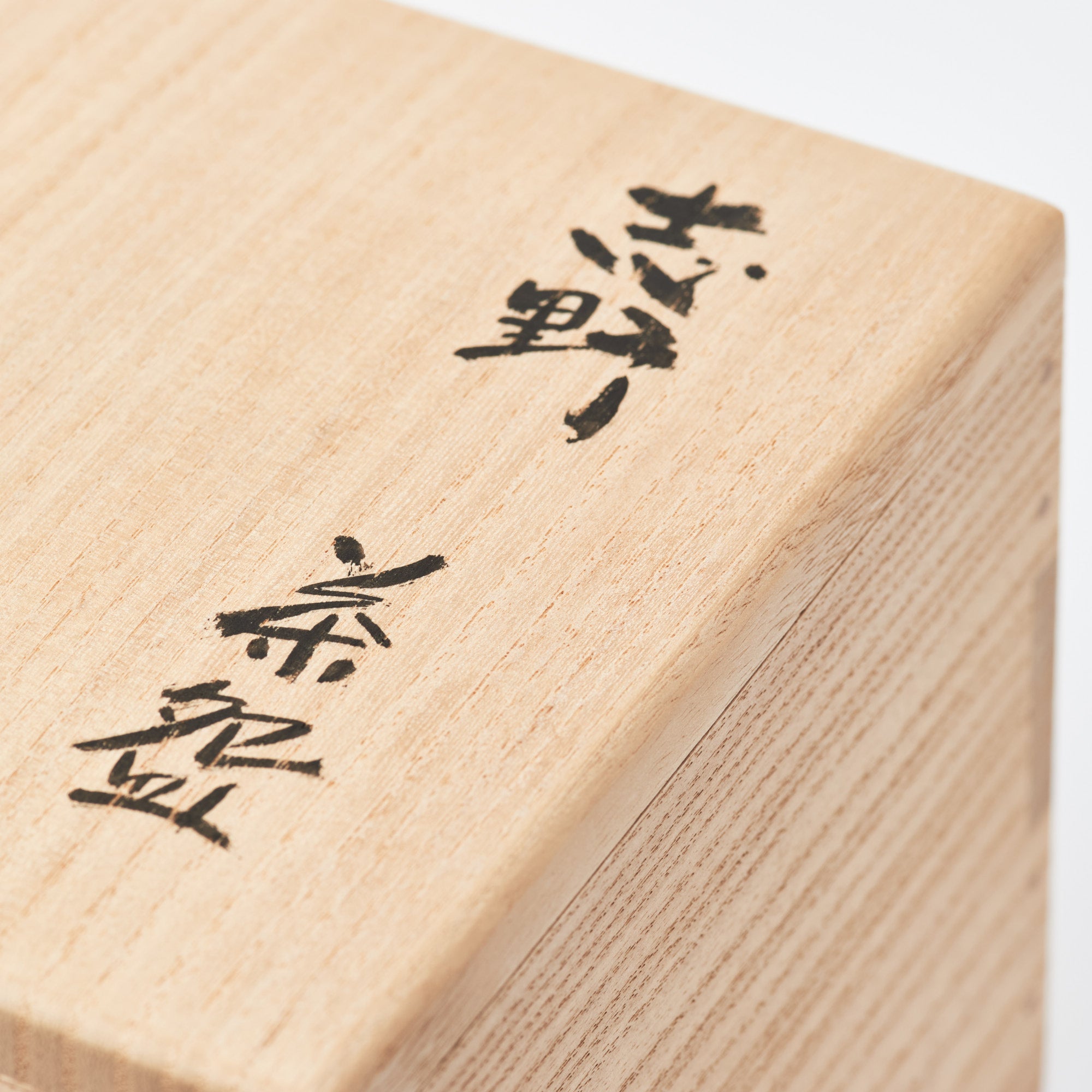
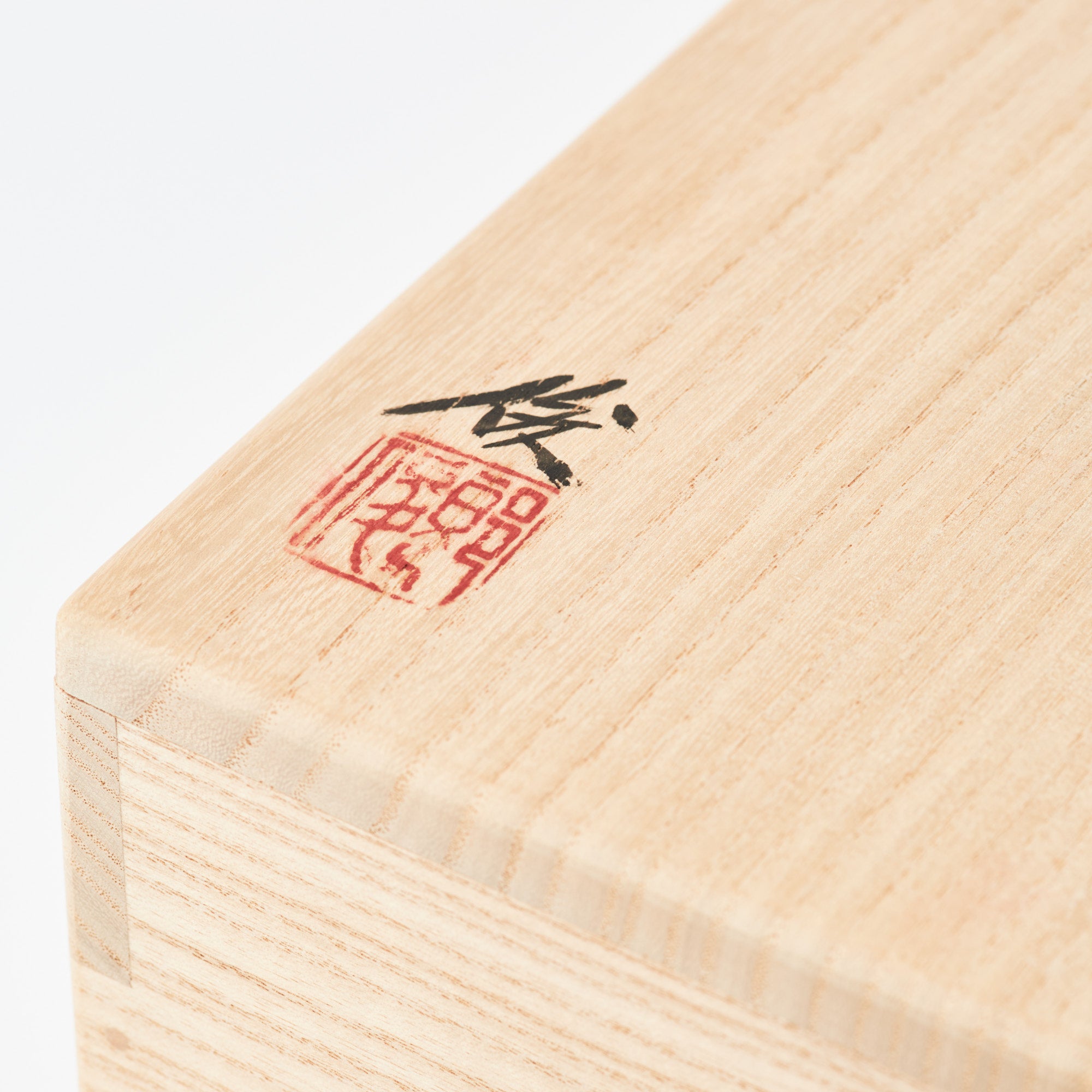
| Package Type | Wooden box |
| Microwave | No |
| Dishwasher | No |
Maker / Brand
Hori Toshiro is an artist specializing in traditional Mino Momoyama ware techniques such as Shino, Setoguro, Oribe, and ki-Seto. Using local clay and a wood-fired anagama kiln, he crafts rich textures and lustrous glazes that exemplify the genre's wabi sabi elegance.
Hori is a Kani City Intangible Cultural Property Holder of Shino, and inherited Setoguro from the Holder of Important Intangible Cultural Heritage Kato Kozo, alongside whom he worked for fifty years. Today, Hori actively contributes to the revival and spread of Mino Momoyama ceramics. In addition to his own artistic pursuits, Hori acts as technical advisor to ceramics brand deidei to pass the craft on to future generations.

Crafts
Mino ware, crafted in Gifu Prefecture's Tono region, is renowned among Japanese pottery for its rich heritage and versatility. It features over fifteen distinct styles, making it more varied than many other Japanese ceramics.
Now accounting for over 50 percent of Japan's ceramic production, its popularity is unmatched. Designated as a traditional craft in 1978, Mino ware reflects a blend of historical depth and modern relevance, exemplifying exceptional craftsmanship.
Choose options
About Artist
Musubi Gallery
Since its inception, MUSUBI KILN has strived to introduce the world to the finest traditional crafts from masters all around Japan.
Here, in the Gallery, we seek to showcase the highest echelon of traditional techniques passed down through generations. You can discover works from masters who have not only perfected those methods, but added their imagination to innovate the craft even further.
Some of these masters have even been named Holder of Important Intangible Cultural Heritage, a title bestowed upon them by the Japanese government to formally recognize their contribution to crafts and culture—thereby cementing their legacy and making them an important part of art history.
Each piece is meticulously handcrafted over many months to create a timeless treasure that's unlike any other. And when it's in your home, you, too, will become part of that history.
Welcome to the Gallery. Please, peruse at your leisure.