

The Allure of Snow in Japan
Uncover how snow shapes Japanese life, culture, and crafts, from winter traditions to snow-inspired tableware.
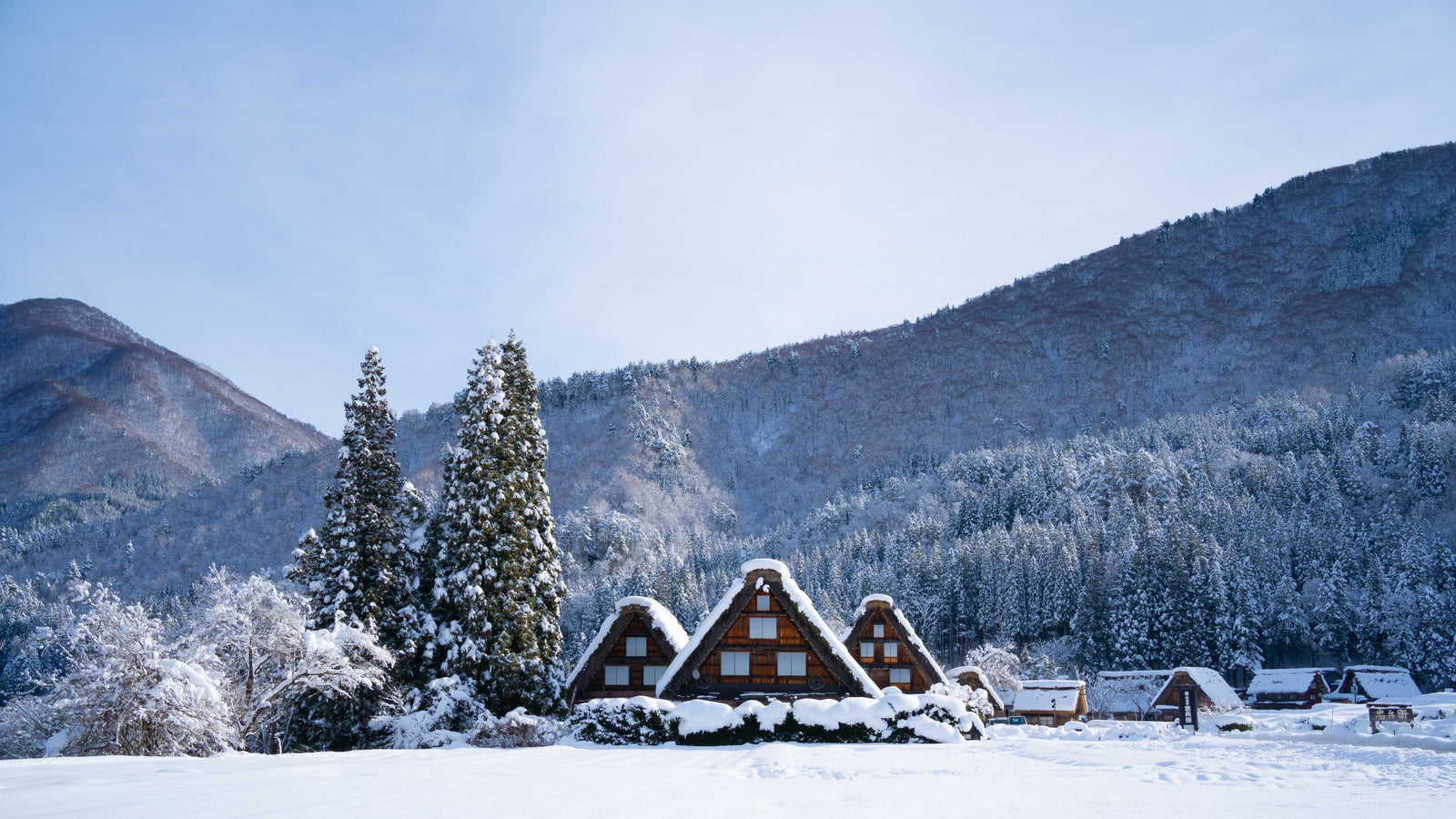
Japan gets some of the highest snowfall amounts of anywhere in the world, meaning that in much of the country snow is a familiar sight, one with deep ties to daily life and culture. Although snow can be a hazard, sometimes crushing houses or even taking lives during blizzards, the Japanese people have found ways to live alongside and find beauty in it.
Even for those who live in countries where snow does not usually fall, reading this article should help you understand what appeal snow holds beyond winter sports. By learning about snow’s diverse charms, you are sure to pick up hints that deepen your enjoyment of snow-themed crafts, as well.
Does It Snow in Japan?
Japan is one of the world’s snowiest countries, and the Sea of Japan coast in particular is internationally known for its exceptionally heavy snowfall. In 1927, for example, Mount Ibuki in Shiga Prefecture recorded a snowfall depth of 11.82 m (36.7 ft). This remains the greatest snowfall ever observed in Japan’s meteorological records and has yet to be surpassed. Even by global standards, such an amount of snowfall is extraordinarily rare and ranks among the highest ever recorded worldwide. It is not uncommon for Japanese cities to dominate rankings of the world’s snowiest cities, often occupying all of the top three positions.

Why does so much snow fall in Japan? The answer lies in the cold, dry seasonal winds that blow from Siberia and China in the winter. As these winds cross the Sea of Japan, they pass over a warm ocean current known as the Tsushima Current. The temperature difference between the icy cold air and warm seawater causes snow clouds to rapidly develop above the ocean. When these clouds collide with the Japanese archipelago’s mountain ranges, they drop large amounts of snow on cities such as Sapporo, Akita, Niigata, and Toyama on the Sea of Japan coast of Honshu (the main island) and Hokkaido.
Yet after sparking snowfall along the Sea of Japan side of the country, the seasonal winds lose their water vapor. By the time they pass on to the Pacific Ocean side, the winds have become dry. As a result, Pacific-facing cities such as Tokyo, Nagoya, and Osaka trend toward clear days in winter, instead.

Winter sports such as skiing and snowboarding are popular in the heavy snowfall regions facing the Sea of Japan. The world-famous snow resort areas of Niseko, Rusutsu, Hakuba, and Shiga Kogen attract many tourists. Interestingly, even within Japan, snow quality differs greatly by region. Although Hokkaido and Nagano get light, dry snow containing a great deal of air, the snow in Aomori and Niigata tends to become moist and heavy. The snow in Niseko and Hakuba in particular is top-class powder snow known as “JAPOW” (a portmanteau of “Japan” and “powder snow”) that lures skiers and snowboarders from around the world.


Traditional Wisdom That Makes Snow an Ally
Japan’s snowy regions have cultivated ways of coexisting with snow and putting it to good use. Here, we can see three traditional pieces of wisdom.
The first is the clever technique of building the roofs of houses steep enough that snow falls off on its own. This prevents houses from collapsing under snow’s weight and also reduces the labor of and risk involved in snow removal. These roofs are commonly seen on old houses in Niigata, Aomori, and the Hokuriku region. Representative examples are the thatched-roof gassho-zukuri houses of Gokayama and Shirakawa-go, which are registered as World Heritage sites.

The second piece of wisdom is the technique of exposing vegetables to snow to draw out their sweetness. When deliberately placed in a cold environment, vegetables work to protect themselves from the cold by converting starch into sugar. As a result, their sweetness increases and bitterness decreases. Some regions have even branded the sweet carrots and spinach they produce in this way.

The third is a food storage method that uses a natural refrigerator called a yukimuro, or “snow room.” This is a hut in which a large amount of snow is stored so that the cold air can be used to keep food cool. An eco-friendly method that does not require electricity, yukimuro are used to store rice, sake, vegetables, aged meat, and more. Amidst the snow, the temperature remains stable, humidity is high, and there is little vibration, so maturation progresses slowly. Mellow and deep flavors are said to develop as a result. Centered around Niigata, yukimuro-aged sake and coffee beans are starting to be recognized as distinct brands.

These three innovations emerging from life in harsh snow country not only protect people from snow, but even turn it into a strength.
Yukimi: The Japanese Culture of Snow Viewing
In addition to making use of snow in daily life, people in Japan have also long cherished it as something to be appreciated for its charm. This is well-reflected in the culture of yukimi, or snow viewing.
Yukimi-buro, or “snow-viewing baths,” are a luxurious way of enjoying oneself by soaking in a hot spring while gazing at falling snow or all-white snowy landscapes. The contrasting sensations of sinking into hot water while looking at cold snow bring deep relaxation to both body and mind. In hot spring areas in heavy snowfall regions, it is possible to enjoy snowy scenery from open-air baths, snow glittering white beyond the rising steam, a winter spectacle unique to Japan.

Yukimi-chakai, “snow-viewing tea gatherings,” is an elegant custom cherished in the tea ceremony world in which one enjoys tea in quiet stillness while gazing at a snow-covered garden. At these gatherings, the favored tea utensils are ones that evoke winter, decorated with motifs such as snow crystals, snow-laden bamboo leaves, and rabbit-shaped snow sculptures. This mixes with the sound of charcoal being placed in the hearth, the sound of water boiling, and the quiet of falling snow to create a space embodying the aesthetic sense of wabi sabi.

Finally, yukimi-zake, “snow-viewing sake,” is a refined way to enjoy sake while gazing at snowy scenery. In addition to tokkuri sake carafes and sakazuki flat cups decorated with patterns like snowflakes and winter flowers, one might also use vessels that express the transparency of snow, such as those made of white porcelain or glass. Sake drunk in the cold, clear air coupled with the purity of snow has a special taste all its own.

These customs express the sensibility of the Japanese people, who find beauty even within the harshness of winter.
Japanese Traditional Crafts Celebrating Snow
Snow began to be incorporated into designs in dyeing and weaving, lacquerware, ceramics, and other crafts starting around the late Muromachi period (1336–1573 CE). There is a rich variety of traditional patterns, such as snow fluttering down from the sky, snow piled up on plants such as willows and bamboo, and “snow flowers” depicting snowflakes.
A number of items at MUSUBI KILN, too, showcase the appeal of snow in all its diverse forms. Why not bring unique tableware and decor into your home and incorporate snow’s quiet atmosphere and purity into your own life?
An Artist's Rendition of Sparrows in the Snow
This Kutani ware vase, by celebrated artist Nakamura Toshito, depicts three sparrows nestling close together on a branch amid heavy snowfall. The soft appearance of snow drifting through the sky is created with a fine metal mesh and brush using a technique called furi. The vase’s rounded, softly curved form harmonizes with the charming figures of the sparrows, making this a piece that warms the heart the more one gazes upon it.

Snowflake-Shaped Sauce Plate
This snowflake-shaped sauce plate is made by Takayama, a kiln famous for Hasami ware. The delicate ripples decorating the outer edge of the plate, the soft cutouts, and the translucent white porcelain evoke snow crystals fluttering down from the sky. It is a size well suited for small dishes or petite desserts.

Flower Vase Evoking a Snow Spirit
A yukinko is a kind of snow spirit in the form of a child that appears in tales passed down in the Tohoku region. The straw snow hat worn by yukinko inspired this vase’s form. The vase was woven using Suruga Bamboo Basketry techniques, whose history dates back over 400 years. Its design of neat, straight lines beautifully accentuates the forms of flowers.

Sake Ware Expressing the Texture of a Blizzard
A three-piece set containing one tokkuri sake carafe and two cups, this sake ware was made by Hirota Glass, one of the oldest glass manufacturers in Tokyo. As suggested by the name fubuki, meaning “blizzard,” frosted glass is used to depict snow that fills one’s field of vision with white. The delicately flecked white lends the set a quiet charm, making it an ideal choice for entertaining guests or as a thoughtful gift.

Flower Vase Depicting Snow on the Ground
This Shigaraki ware flower vase elegantly suggests snow on the ground. The way pure white, freshly fallen snow gradually turns ash-colored over time is represented through a color gradation from the mouth of the vase to the base, as well as with flowing patterns drawn across the surface. The vase’s solid presence, retaining the texture of the clay, gracefully brings together a space.

Feel the Winter Scenery of Japan Through Snow Designs
In Japan, snow is not just a harsh natural phenomenon, but something enjoyed for how it can be useful in daily life and evoke a sense of beauty. Both the wisdom of how to coexist with snow’s dangers and the sensibility that sees charm in snowy landscapes are aspects of Japanese culture that have been cultivated over a long history.
We hope that MUSUBI KILN’s collection of snow motifs turns your attention to the diverse charms of snow enjoyed in Japan for centuries and offers an opportunity to feel the seasons in your own everyday life. Even for those who live in regions where snow does not usually fall, may these crafts allow you to experience a unique piece of Japan’s winter scenery and culture.
Stay close to the craft
Now and then, a quiet letter — new stories, seasonal notes, and the hands behind the work.
Japan’s Must-Visit Pottery Markets in 2026
Visit Japan’s top pottery markets in 2026. Find handcrafted tableware, meet artisans, and uncover…
A Calm, Quiet Ending—the End of the Year in Japan
Explore Japan’s peaceful New Year traditions, from year-end cleaning and osechi to temple visits…
Michael Pronko
Welcome a Joyful New Year with Lucky Japanese Plants
Celebrate the New Year with Japan's cherished plant symbols. Pine, bamboo, plum, and more…
Leave a comment