

What is Mingei? All About Japanese Folk Craft
Learn about the Japanese folk craft movement, its history, characteristics, and how crafts can enrich your life today.
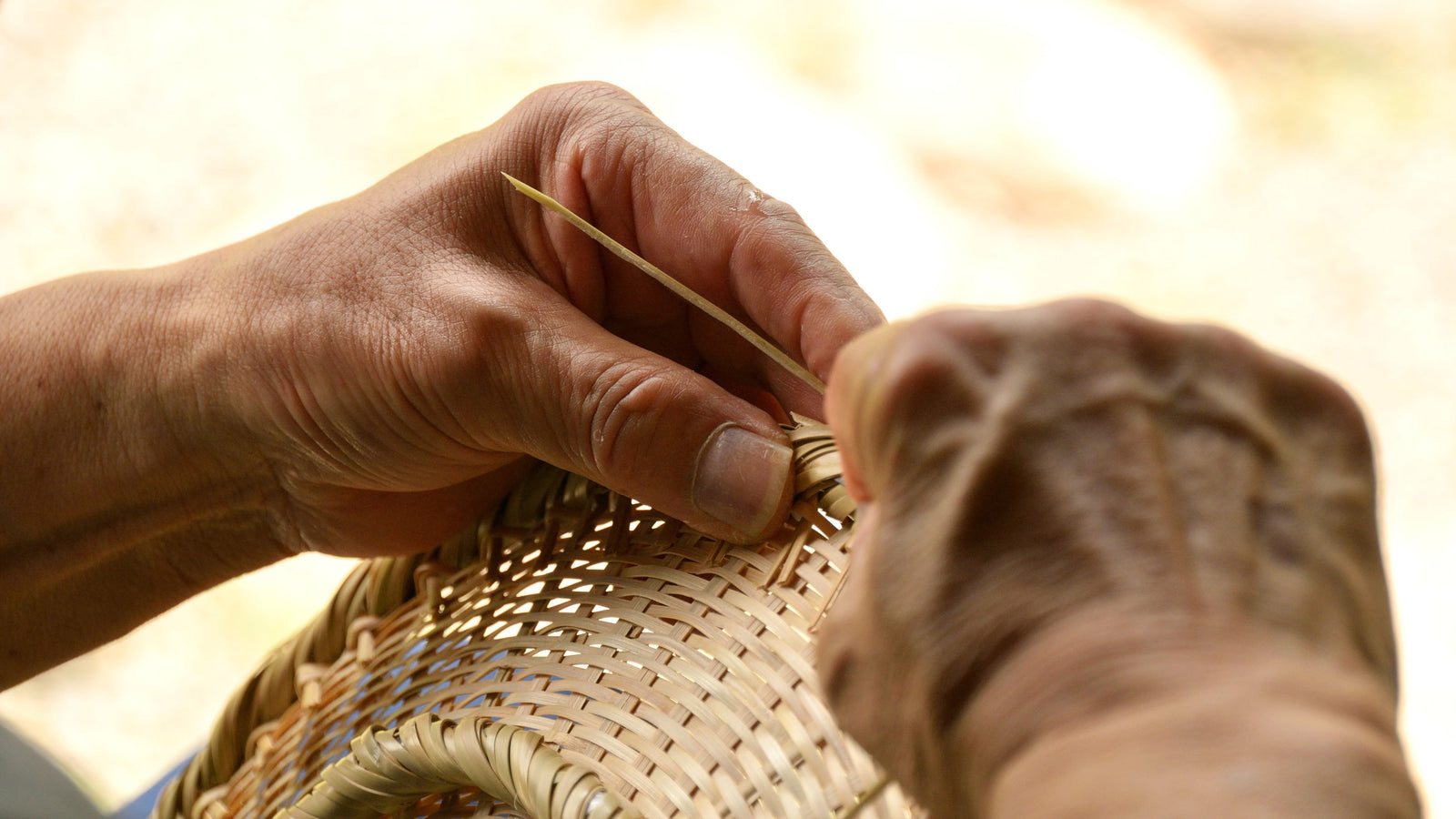
For those who want to bring traditional Japanese tableware into their daily lives with ease, and improve their day-to-day by enjoying beautiful craft, I would like to recommend Mingei, or Japanese folk craft, tableware.
Mingei is a concept born in the first half of the twentieth century that finds a unique beauty in the tools of daily life. Created by anonymous craftspeople, Mingei art and craft items are those made by and for the common people. The traditional tools that embody this concept are also known as mingei or mingei-hin, which translates to “folk craft items.”
In Japan, there have been repeated folk art and folk craft booms. Since the 2000s, Mingei has been attracting attention once again. Today, its popularity seems to have reached a steady level.

Recently, the existence of Mingei and the Mingei art movement have come to be better known overseas. Some of the oft-discussed points of commonality are those shared with England’s Arts and Crafts movement, led by the father of modern design, William Morris. We can also draw parallels to elements of the now globally popular Scandinavian design.
Read on to learn more about Mingei folk craft in detail and explore its charm.
What is Mingei Folk Craft?
In the first half of the twentieth century in Japan, machine manufacturing progressed amidst rapid modernization, and the strains of capitalism began to emerge. Under those circumstances, the question of “Has Japan truly become wealthy?” changed into one of “Can we, under our own power, create a society where we can live with true spiritual richness?” This way of thinking and the activities of Japanese young people at the time gave birth to the concept of Mingei folk art and craft.
A central player in this movement was Yanagi Soetsu, also known as Yanagi Muneyoshi (1889–1961). He was inspired not just by daily-use tableware, but by the daily tools that emerged through the necessities of life of the common people. These tools had continued to be made by excellent craftspeople in regions all across Japan. Yanagi discovered in these folk crafts a beauty that was every bit as good as that of art pieces created by recognized artists.

Yanagi concluded that connecting that beauty with daily life would bring a sense of richness to society and people’s lives. With that, he engaged in activities to enlighten others—what came to be known as the Mingei movement. Yanagi and his colleagues referred to these everyday utensils—which differed from ornate, aristocratic crafts—as minshuteki kogei, or “the people’s crafts,” which is abbreviated to mingei: folk crafts.
Meanwhile, England had experienced its own similar movement just a few decades earlier. The late nineteenth to early twentieth centuries saw the rise of the Arts and Crafts movement, sparked by artist, designer, and poet William Morris (1834–1896). Morris felt a sense of crisis at a moment when advancing industrial technology saw machine-made, mass-produced products flood the market. With the conviction that the beauty of handwork—a beauty that can’t be replicated by industrial machines—should be incorporated into daily life, Morris set out to revive handmade products.

It is interesting that England and Japan, two countries widely separated by geography and culture, experienced similar art movements against the backdrop of comparable social and economic conditions. Today, the value placed on the mass production and mass consumption made possible by advanced technology is beginning to waver worldwide. It can be no coincidence that Mingei is attracting attention and becoming popular in Japan once more.
What Makes Something Mingei? Characteristics of Japanese Folk Craft

The many daily tools from across Japan that Yanagi and his peers evaluated as beautiful share the following nine characteristics.
1. Practicality:
Items that are not made purely to be appreciated, but are practical in some way.
2. Anonymity:
Made by anonymous craftspeople, not by a particular artist.
3. Plurality:
Made in large numbers to meet the demands of the common people.
4. Affordability:
Priced cheaply enough for anyone to purchase.
5. Labor intensiveness:
Creation involves skilled techniques acquired through intense, repetitive labor.
6. Regionality:
Items possess unique colors, shapes, or other qualities shaped by life in each region, making them rich in regional flavor.
7. Division of labor:
Collaborative work by multiple people is necessary to produce large quantities.
8. Tradition:
Preserved through the accumulated skills and knowledge of predecessors that is known as tradition.
9. Surrender to external power:
Supported not by the power of an individual, but by the power of large, invisible forces such as the local climate, the blessings of nature, and tradition.
Some of these elements, such as “practicality,” “labor intensiveness,” and “surrender to external power” are also common in Scandinavian design, and Scandinavian tableware, furniture, and home goods have become beloved worldwide.
Japandi, the combination of Scandinavian design with traditional Japanese aesthetics, has grown increasingly popular in recent years. With Japandi’s focus on nature, negative space, serene beauty, and practicality, it would not be off the mark to consider the compatibility of Scandinavian design and Mingei.
When speaking about the beauty unique to Mingei, Yanagi identified three key words: the beauty of innocence, the beauty of nature, and the beauty of health. Though understanding their true meaning is not easy, we could, for example, interpret “innocence” as “not being artificial,” “nature” as “fully utilizing the natural materials of the region,” and “health” as “sturdy and possessing a sense of vitality.”
Mingei Crafts Across Japan
Beautiful crafts worthy of the name Mingei continue to be made in many regions of Japan today. Let us introduce a few representative varieties, including those at MUSUBI KILN.
Tobe Ware (Ehime Prefecture)
Tobe ware is a general term for pottery made around the town of Tobe in central Ehime Prefecture, Shikoku. Born in 1777 during Japan’s Edo period (1603–1868 CE), Tobe ware was originally made using whetstone scraps generated when cutting stone for whetstones. Later, it was made using locally produced pottery stone as the main raw material, which still continues to this day.

The late nineteenth century onward saw the export of Tobe ware bowls to China and other foreign countries, bringing with it a height of prosperity. However, as mechanization and mass production advanced in other regions, and driven in part by the economic downturn of the early twentieth century, production volumes of Tobe ware ultimately declined.
But this craft drew attention once again after World War II, when the promoter of the Mingei movement, Yanagi Soetsu, and those who worked with Yanagi, such as Bernard Leach (1887–1979), Hamada Shoji (1894–1978), and Tomimoto Kenkichi (1886–1963), praised Tobe ware highly for its preservation of handmade, handcrafted techniques.
Among those Tobe ware workshops is Baizan Kiln. Their one-stroke painting method, where natural motifs such as flowers and plants are painted in a single breath without an under-sketch, earned them praise by Yanagi and the others. Taking some direction from them, Baizan Kiln continued to improve their techniques, and today is the oldest existing maker in Tobe.

Tobe ware, with its ease of use, reasonable prices, robustness, and timeless designs that complement any cuisine regardless of where in the world the cuisine is from, embodies the very essence of Mingei folk craft. Furthermore, its handpainted patterns carry the friendly presence of the maker, while the smooth texture, natural luster, rustic warmth of the thick clay forms, and sense of stability thanks to its moderate weight are also very attractive points.
Onta Ware (Oita Prefecture)
Onta ware is a kind of Japanese pottery born around 1705 in the Edo period, originating in Hita City, a nature-rich area of western Oita Prefecture, Kyushu. In 1931, Yanagi praised it highly as “the world's best folk pottery.” It gained wide attention after receiving guidance from the potter Bernard Leach, a comrade of Yanagi, in 1954 and 1964.

Using only clay collected in the surrounding area, all processes from clay preparation to kick-wheel molding and firing in the kiln are performed by hand. These vessels for daily use come in a number of expressive shapes and patterns. Here are three characteristic techniques that have been protected and maintained since the start of Onta ware production.
1. Hakeme (brush marks): A technique for creating patterns by rhythmically tapping a brush dipped in slip, a liquid clay used for decoration, against a vessel while rotating it on the kick-wheel.
2. Tobikanna (chattering): A technique for creating patterns by holding an L-shaped plane so that it skips across the surface of a vessel to create carvings while the kick-wheel is turning.
3. Nagashigake (streaked glazes): A technique for creating patterns that involves dripping and pouring slip or glaze from a certain height using a dropper or similar tool.

Onta ware, with its calm and warm appearance and textural surfaces of green, brown, gray, and black overtop a milky white base, does not feature signatures or unique paintings that identify a specific artist; all nine existing kilns produce items using the same materials and the same techniques.
Kurashiki Glass (Okayama Prefecture)
This is a relatively new Mingei craft, born in Kurashiki City in southern Okayama Prefecture in 1964—the same year that Tokyo hosted the first Summer Olympics to be held in Asia. A kind of mouth-blown glass, Kurashiki glass began when artisan Kodani Shinzo (1930–), who originally made glass balls as Christmas tree ornaments, received a request from people associated with the Mingei movement to create glass cups.

Bernard Leach's reported evaluation of Kurashiki Glass was, “It’s not vulgar, it has a certain elegance, it’s done in a very natural way, and it’s really very good.”
Kurashiki glass includes cups, wine glasses, plates, bowls, bottles, tokkuri sake carafes, and guinomi sake cups. All are thick, sturdy, and long-lasting. They feature practical shapes that forgo excess decoration, easy-to-use weights and sizes, and a texture with a natural simplicity and warmth.

You can read more about Kurashiki glass in our article covering the Kurashiki Museum of Folk Craft, which I visited previously, so please do take a look.
As you can see, Tobe ware, Onta ware, and Kurashiki glass can all trace their development or birth to the Mingei movement. Members such as Yanagi Soetsu, Bernard Leach, Hamada Shoji, and Tomimoto Kenkichi were powerful so-called influencers in the world of Japanese traditional crafts.
If you have gained even a little interest in Mingei after reading this article, why not start by seeing if there is something there that you can truly love, something you really want to use day to day, something that seems likely to enrich your life? We also recommend you try visiting museums and archives across the country that specialize in Mingei, starting with the Japan Folk Crafts Museum (Meguro Ward, Tokyo), which exhibits approximately 17,000 craft items collected by Yanagi Soetsu from both Japan and overseas.

And if you obtain even one Mingei item, we would love for you to try actually using it in your own daily life. You will find that the true beauty and value possessed by Mingei folk crafts shine most brilliantly with practical use.
Stay close to the craft
Now and then, a quiet letter — new stories, seasonal notes, and the hands behind the work.
What Is Kintsugi? A Guide to Japan’s Art of Gold Repair
Learn about kintsugi, Japan’s art of gold repair, from its origins to wabi-sabi philosophy…
What Is Wabi-Sabi? Discovering a Key Japanese Aesthetic
Explore wabi-sabi, the Japanese aesthetic of imperfection, aging, and care, and learn how to…
The Flower Pots Behind Japan's Garden Culture
From Edo-era street gardening to modern balconies, explore how flower pots shaped Japan’s unique…
Ito Ryo
Leave a comment