Maki-e 蒔絵
蒔 sprinkle · 絵 picture
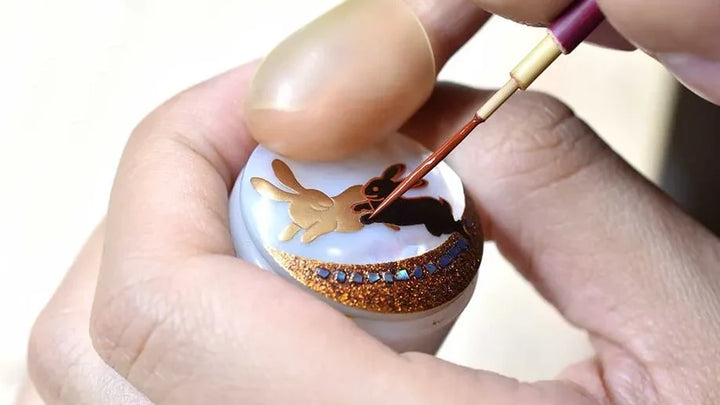
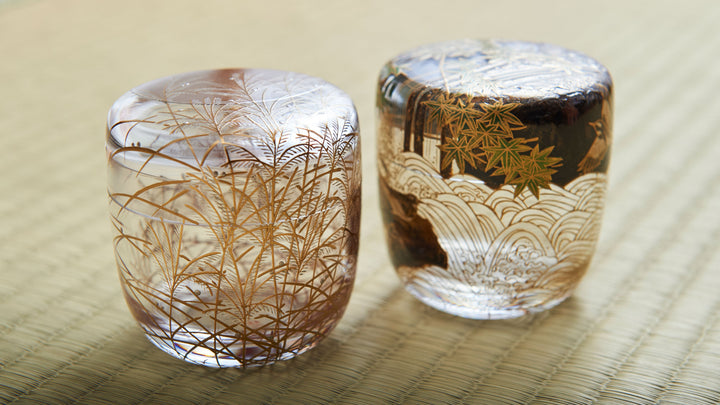
Maki-e is a decorative technique used in lacquerware in which metallic powders, such as gold or silver dust, are sprinkled onto soft, freshly applied lacquer to form a design. The term means “sprinkled picture.” Its origins date to the Nara period, and it developed highly from the Heian period onward; principal types include togidashi maki-e, hira maki-e, and taka maki-e. It was designated an Important Intangible Cultural Property in 1955.
Craftspeople use skilled strokes of colored lacquer and a light touch of metal dust to create intricate designs. The process requires precise timing to sprinkle the powder while the lacquer remains wet. Once complete, the transparent topcoat is meticulously polished to amplify the shimmering effect of the metal beneath.