

A Guide to Japanese Cutting Techniques
Learn essential Japanese cutting techniques, from basic slices to advanced knife skills you can use confidently at home.
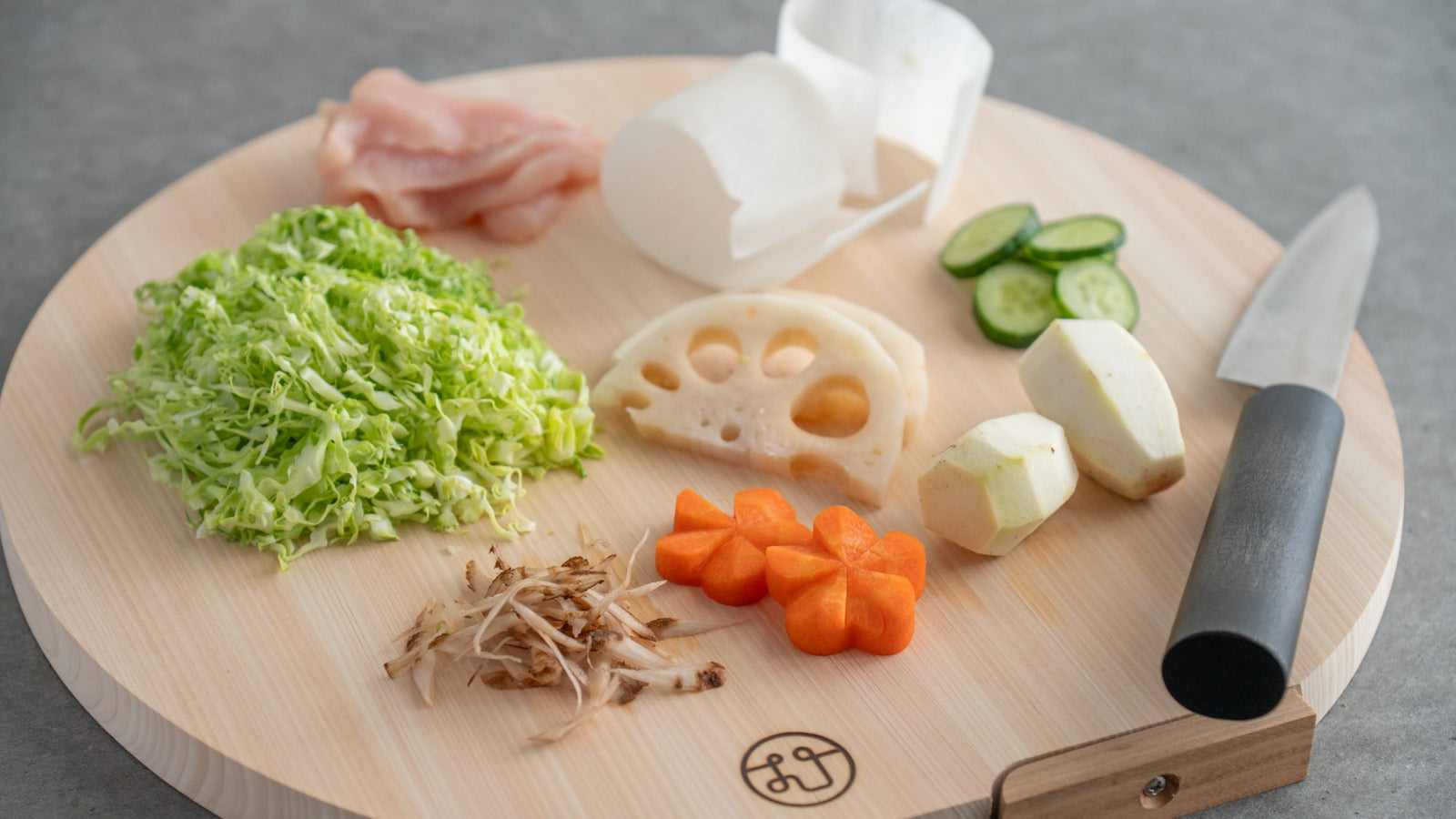
In Japanese cooking, “cutting” isn’t just prep work. It’s a craft that shapes flavor, texture, and the way a dish looks when plated. Slice ingredients into clean, even rounds, and you get a steady bite. Cut on the bias, and the larger surface area helps flavors sink in faster. Turn vegetables into fine shreds, and the whole dish feels lighter, almost airy. Each choice—angle, thickness, size—changes the final impression.
In this article, we’ll walk you through a range of Japanese knife cuts and techniques, with clear explanations so you can actually try them in your own kitchen. Make your food prettier, tastier, and a lot more fun to cook. Ready to level up your knife work starting today?
Why Cutting Matters in Japanese Cooking

Japanese recipes often look deceptively simple on paper: a short ingredient list, a light hand with seasoning, and a quick simmer. That’s exactly why knife work carries so much weight. When you’re not relying on heavy spices or slow-simmered sauces to do the lifting, the cut becomes one of the main ways you control the outcome.
Cuts that match in size help ingredients cook at the same pace, which is essential in dishes built on clear broth, gentle heat, and short cooking windows. If your slices vary wildly, some pieces turn soft before others lose their raw edge—and the whole dish feels uneven.
The right knife makes the work smoother and the results more consistent. Choosing a good Japanese knife can make a noticeable difference in the final result. If you’re thinking about buying your first Japanese knife, or you want a clearer sense of which knife styles suit which jobs, our Guide to Japanese Knives will help you choose with confidence and use your knife properly from day one.
Combine our knife guidance with the cutting techniques in this guide, and your knife work will turn into a practical way to cook with more control, better timing, and sharper definition.
Japanese Cutting Techniques
・Basic Cutting Techniques
Wagiri (Round Slices)

What it is
Wagiri is the most basic—and most widely used—cut in Japanese cooking. It means slicing a cylindrical or round vegetable straight across at a right angle, creating even, circular slices.
How to do it
Lay the vegetable horizontally on the cutting board. Starting from one end, slice straight down at a 90-degree angle, maintaining a consistent thickness for each slice. Because the motion is simple and repetitive, wagiri makes it easy to produce cleanly shaped pieces with minimal effort.
Best uses
Wagiri is commonly used for daikon, carrots, cucumbers, lotus roots, and negi (Japanese leeks). You’ll see it often in nimono (simmered dishes), soups, pickles, and simple side dishes.
Good to know
- 5 mm to 1 cm (0.2 to 0.4 in) works well for pickles or raw ingredients for stir-fries, where you want the vegetables to cook quickly.
- 2 to 3 cm (0.8 to 1.2 in) is better suited for simmered dishes, where thicker slices hold their shape and absorb flavor gradually.
Hangetsugiri (Half-Moon Slices)

What it is
Hangetsugiri is made by cutting a vegetable lengthwise in half, then slicing it crosswise into half-moon pieces. It’s a staple cut in Japanese home cooking, especially for soups and simmered dishes.
How to do it
Peel if needed, then cut the vegetable lengthwise into two halves. Place the cut side flat on the board so it won’t roll, then slice from the end in steady strokes, keeping the thickness consistent.
Best uses
Hangetsugiri works well for many round or cylindrical vegetables, including daikon, carrots, lotus roots, turnips, eggplants, potatoes, cucumbers, and gobo (burdock root). You’ll see this cut often in nimono and soups, where consistent size helps everything cook evenly.
Good to know
- Go thin for quick pickles or miso soup, where you want the pieces to cook fast and feel light.
- Go thicker for simmered dishes, where the pieces need to keep their shape while taking on flavor.
Sengiri (Julienne Cut)

What it is
Sengiri is an extra-fine julienne: long, slender strips cut to about 1 to 2 mm (0.04 to 0.08 in) thick. It’s finer than a standard “thin strip” cut, which makes it especially easy to eat for dishes that aren’t cooked.
How to do it
For leafy vegetables like cabbage, stack a small number of leaves, thin out any thick core sections, then roll the leaves along the grain and slice from the end into fine strips.
For firm vegetables like daikon, cut into a manageable length, slice lengthwise into thin sheets, stack the sheets slightly offset, then cut into thin matchsticks.
Best uses
Sengiri is ideal for vegetables such as daikon, cabbage, carrot, cucumber, and ginger. It’s commonly used in salads, sunomono-style vinegared dishes, slaws, and garnishes, where the fine cut keeps the texture tender and pleasant without cooking.
Good to know
- Cutting direction matters: slice with the grain for a crisper bite, or across the grain for a softer texture.
- Aim for uniform 1 to 2 mm (0.04 to 0.08 in) thickness—consistency makes the biggest difference in mouthfeel.
- Use a sharp knife and a light touch to avoid bruising delicate greens and crushing water-rich vegetables.
Sogigiri (Slanted Slice)

What it is
Sogigiri is a diagonal slicing technique where the knife is angled across the ingredient. By cutting on the bias, you increase the surface area of each piece, which changes both how it cooks and how it absorbs flavor.
How to do it
Hold the knife at a shallow angle and slice forward in a single, smooth motion. Let the angle—not pressure—control the thickness. Keep the movement consistent so each slice comes out the same.
Best uses
Sogigiri works especially well for fish fillets, chicken breast, green onions, and gobo. It’s commonly used in simmered dishes, quick pan-seared preparations, and light marinades where fast flavor uptake matters. This cut is ideal for lean ingredients that benefit from a softer, more tender bite.
Good to know
- A shallower angle creates wider slices that take on seasoning more easily.
- Keep slices uniform to avoid uneven texture, especially with short cook times.
Sasagaki (Shaving Cut)

What it is
Sasagaki, written with the characters for “bamboo grass shaving,” is a thin, slanted cut that creates pieces resembling narrow bamboo leaves. It’s most often used for gobo. The thin shavings make fibrous vegetables easier to eat, and the increased surface area allows the seasoning to soak in quickly.
How to do it
Remove dirt, but don’t over-peel. Keeping a bit of skin preserves that earthy gobo flavor. Lightly scrape off the rough outer skin of gobo using the knife edge or spine.
Hold the knife at a low angle and shave the gobo as if sharpening a pencil, rotating the root as you go. Work quickly to prevent discoloration from oxidation, and adjust the thickness to suit the dish.
If the gobo is very thick—or you want finer shavings—score a few shallow lengthwise cuts before shaving so the pieces don’t come off too wide. For shavings at a fixed thickness, you can also use a peeler.
Best uses
Sasagaki is ideal for gobo and also works for carrots. It’s especially useful in dishes where you want quick cooking and strong seasoning absorption, such as kinpira-style preparations and simmered sides.
Good to know
- Don’t keep the shavings in water for long. A brief rinse is fine, as prolonged soaking can strip not only bitterness, but also aroma and flavor compounds.
- Prioritize speed and light pressure. Thin, fine shavings will taste better and cook more evenly.
・Advanced Cutting Techniques
Ropponmuki (Hexagon Cut)

What it is
Ropponmuki is a technique used mainly for small, round root vegetables. The ingredient is peeled and shaped into a six-sided form, with both the top and bottom appearing hexagonal. The result is a vegetable with more flat surfaces than a simple round cut.
How to do it
Trim off the top and bottom to create flat ends. Holding the vegetable upright, peel one vertical side from top to bottom. Then peel the opposite side to the same width, rather than moving to an adjacent face. Once two opposing sides match in width, move on to shaping the remaining four faces to complete the hexagonal form. This approach keeps the shape balanced.
Best uses
Ropponmuki is most commonly used for satoimo (taro) and other small, round root vegetables such as turnips. It appears frequently in nimono and is also a standard cut for osechi ryori, where presentation matters as much as texture.
Good to know
- Even spacing between faces matters more than perfect geometry—focus on balance, not sharp edges.
Katsuramuki (Rotary Peel Cut)

What it is
Katsuramuki is a continuous rotary peeling technique that turns a cylindrical vegetable into a single, long sheet of uniform thickness. It’s one of the technically demanding cuts in Japanese cooking and a foundational skill in professional kitchens.
How to do it
Hold the vegetable upright and rotate it steadily while shaving off a thin sheet with the knife, keeping the blade at a consistent depth. The goal is a sheet thin enough to be nearly translucent, without tearing. The sheet is then folded and cut into fine strips or decorative shapes.
Best uses
Most often performed on daikon radish, katsuramuki is used for fine garnishes, translucent shreds, and decorative elements in refined dishes. You’ll see it in kaiseki cuisine and formal presentations—it’s also the classic technique for making daikon tsuma, the fine, shredded radish served with sashimi.
Good to know
- This cut prioritizes control over speed—slow, even rotation is key.
- Uniform thickness matters more than length; a broken sheet can still be used effectively.
Kazarigiri (Decorative Cuts)

What it is
Kazarigiri refers to decorative cutting techniques designed to enhance visual presentation. These cuts transform vegetables into shapes such as flowers, leaves, or geometric forms, often revealing patterns once cooked.
How to do it
The exact method varies by design, but most kazarigiri cuts involve shallow, intentional knife work that anticipates how the ingredient will open, curl, or bloom when heated. Precision and planning matter more than complexity.
Best uses
Kazarigiri is commonly used for carrots, lotus root, daikon, and mushrooms, especially in celebratory dishes, seasonal cuisine, and formal meals such as osechi or banquet food.
Good to know
- Think ahead: many decorative cuts only reveal their shape after cooking. But kazarigiri isn’t limited to cooked dishes—techniques like these are also used for ready-to-serve ingredients, such as kamaboko and cucumbers served with sashimi.
- Sharp tools and light pressure prevent tearing and keep edges neat.
If you’ve made it this far, you already have what you need to start: a few cuts, a clear purpose, and a little curiosity.
You don’t have to overhaul your cooking or practice everything at once. Pick one technique—wagiri for a simmer, sengiri for a salad, sogigiri for a quick marinade—and try it the next time you cook. The best part is that knife skills build over time. A cleaner slice today makes tomorrow’s dinner easier, and next week’s cooking more confident. Keep it simple, keep it steady, and let your cutting board become a familiar place to level up.
Stay close to the craft
Now and then, a quiet letter — new stories, seasonal notes, and the hands behind the work.
In Ikebana, flowers become you: Experiencing Sogetsu-style Ikebana
An inside look at Sogetsu ikebana, exploring its philosophy, techniques, and how form and…
Ito Ryo
Japanese Table Manners: Enjoy Washoku with Ease and Confidence
Learn Japanese table manners, from handling tableware and chopsticks to dining etiquette for sushi,…
How to Enjoy Ochazuke: Discover Japan’s Comforting Rice & Tea Fusion
Ochazuke turns rice and tea into soulful comfort. Discover its roots, recipes, and how…
Hirata Paku Kayoko
Leave a comment