Blue Flower Crane Ornament
Ships from Japan · Free shipping on orders over $250 USD
Estimated Shipping Widget will be displayed here!
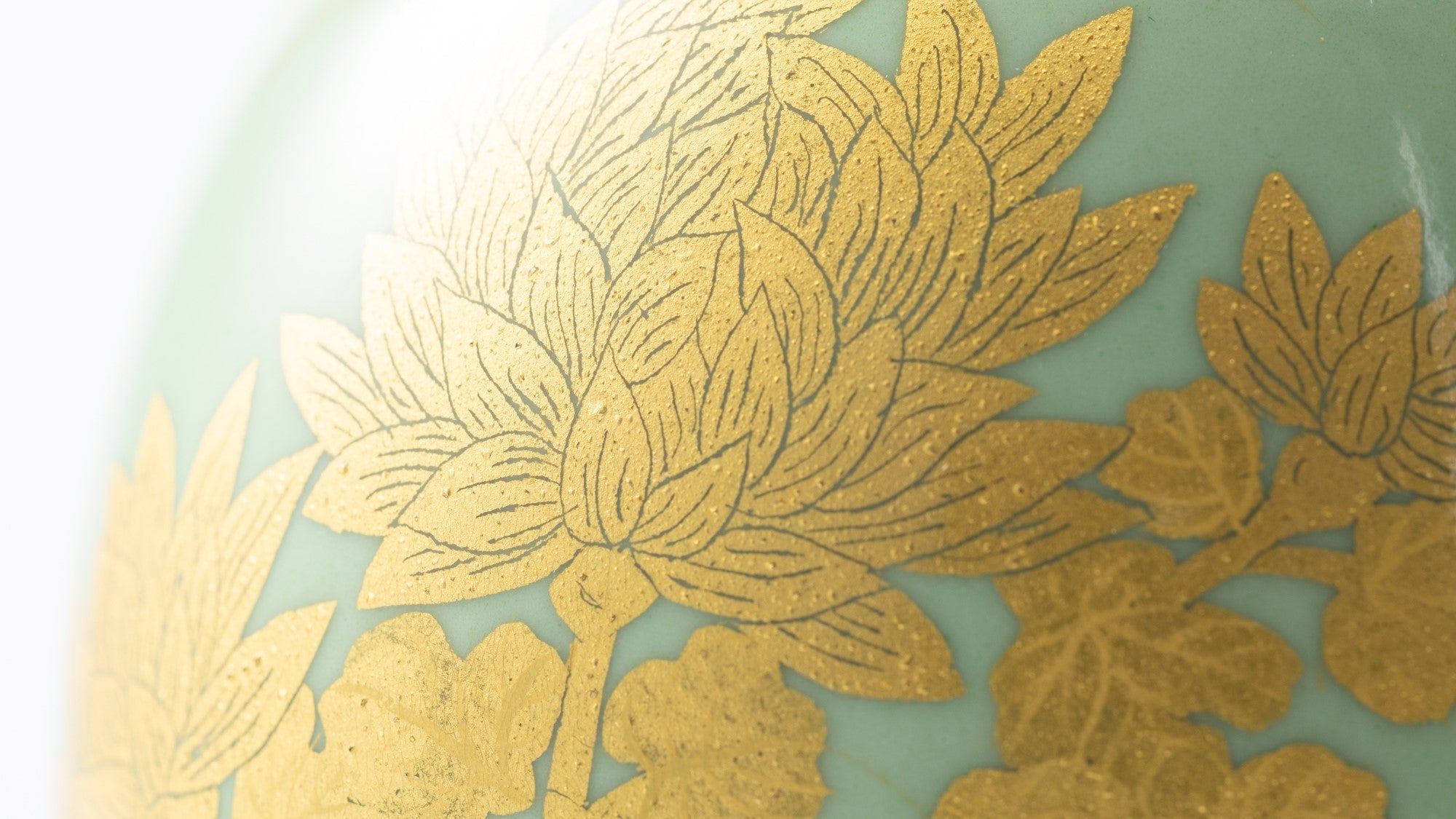
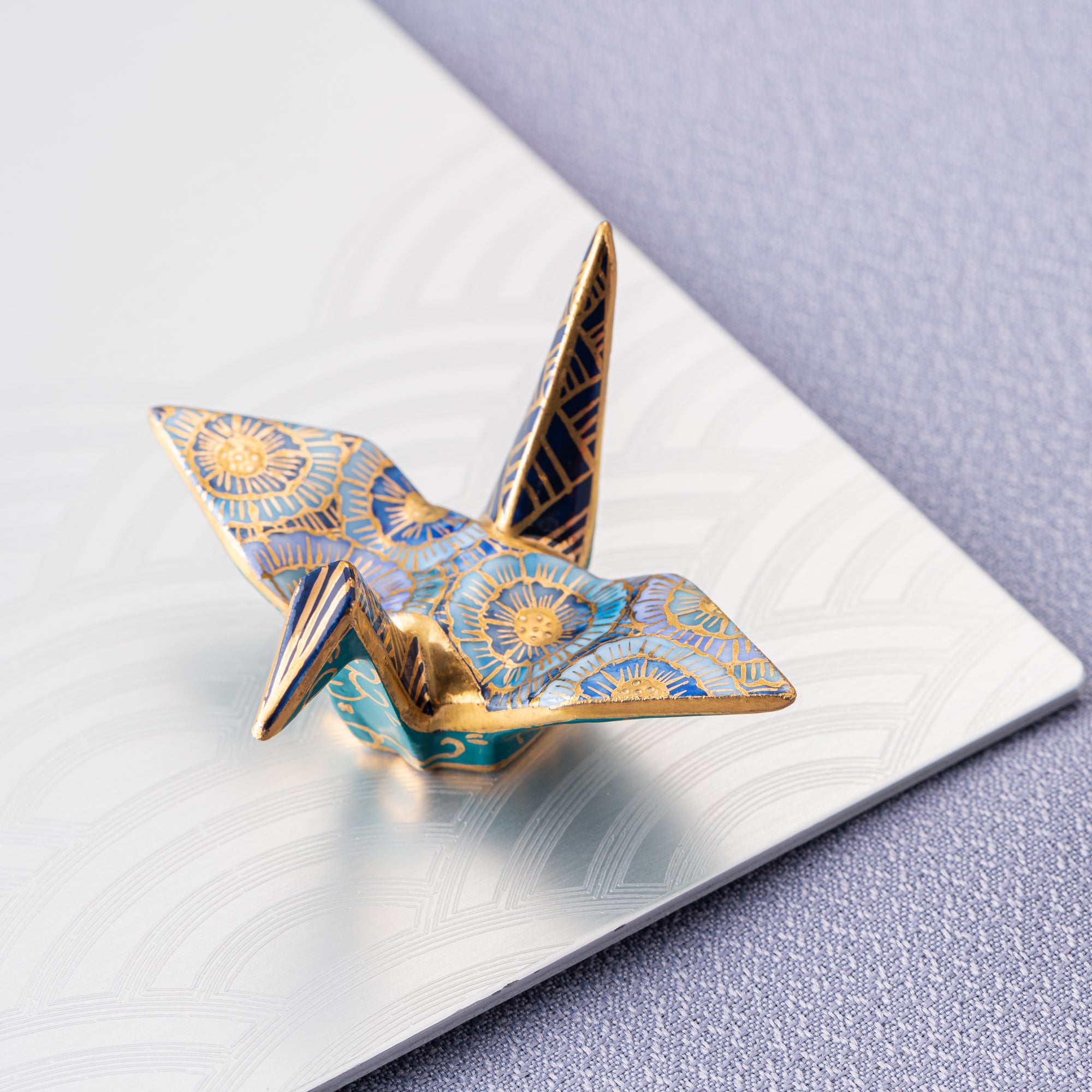
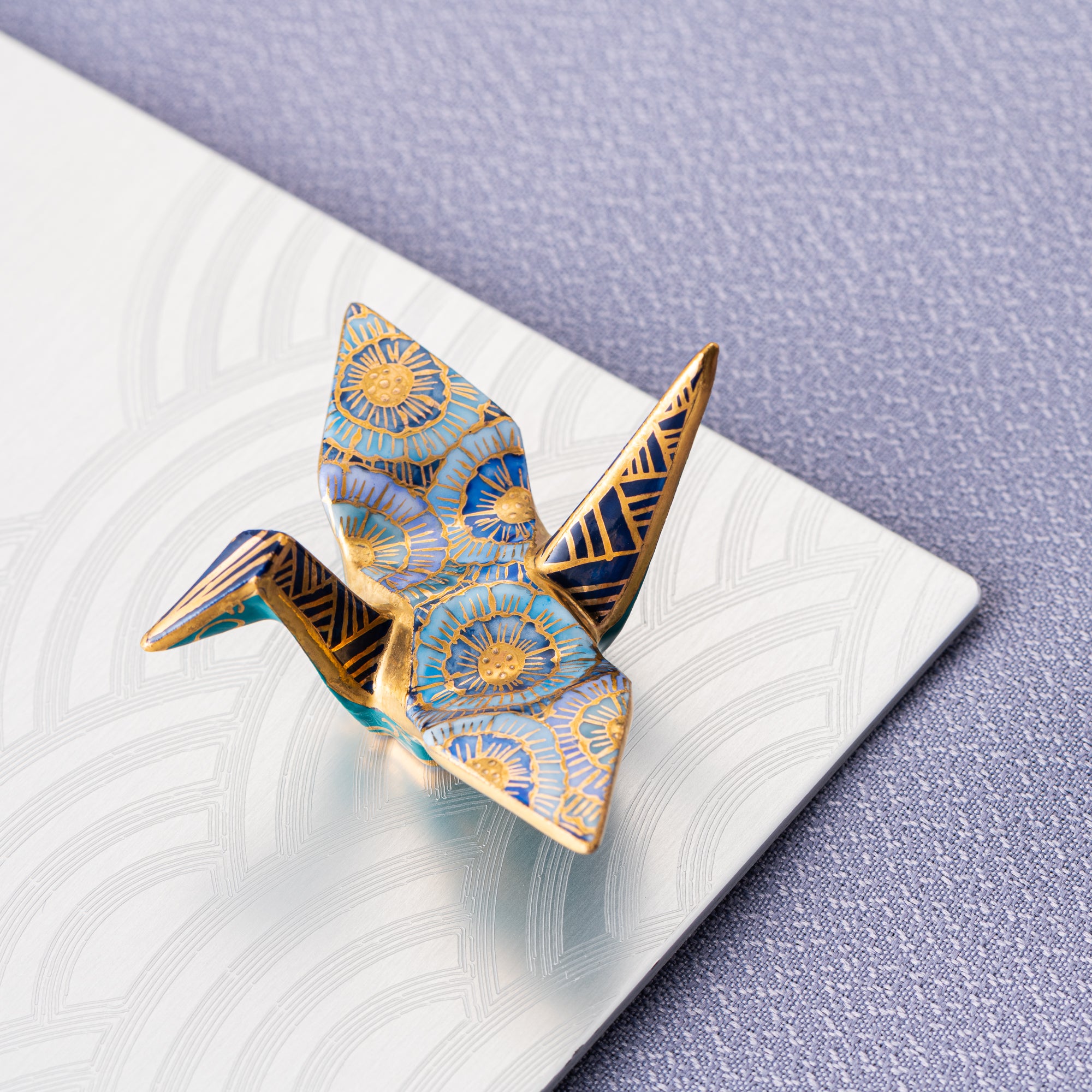
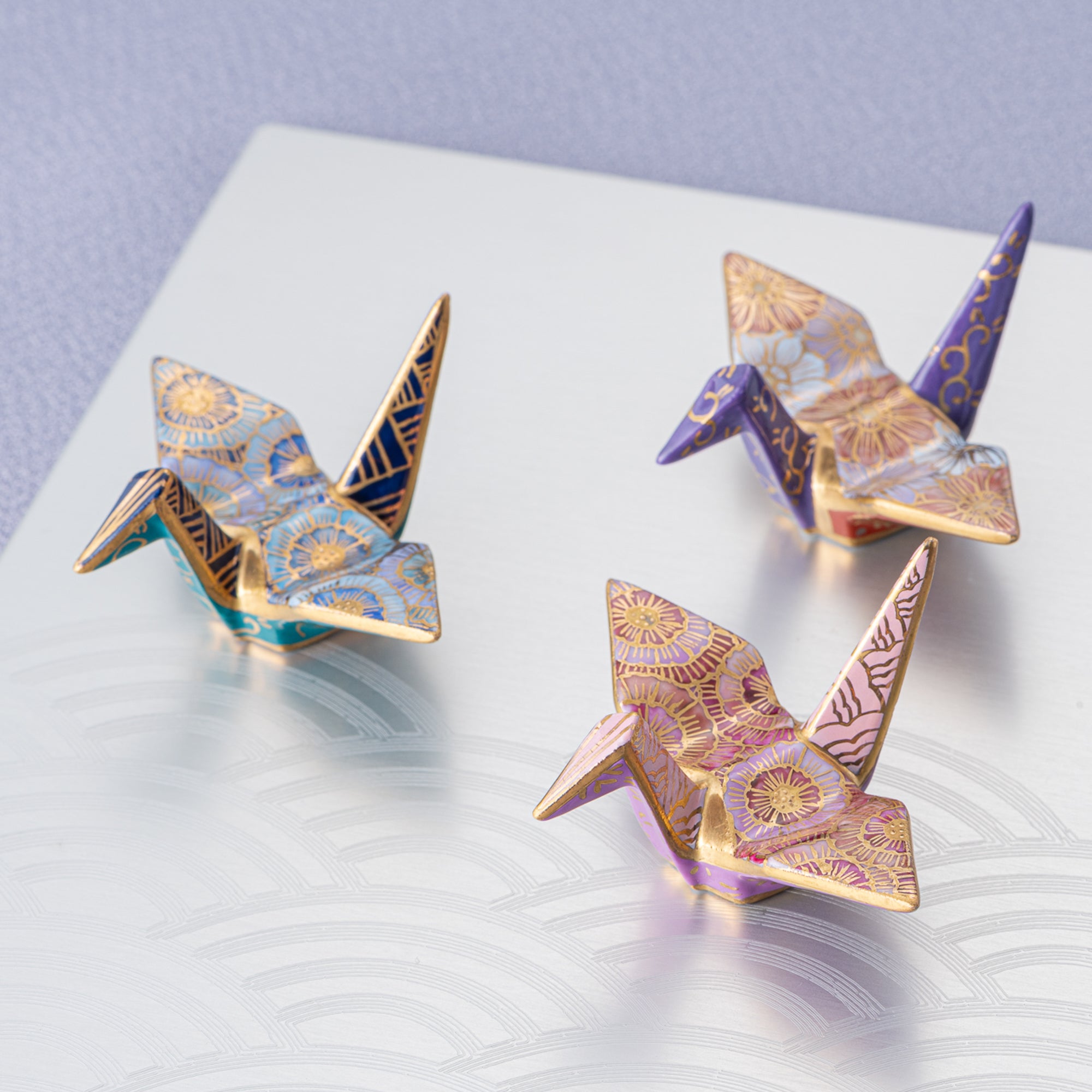
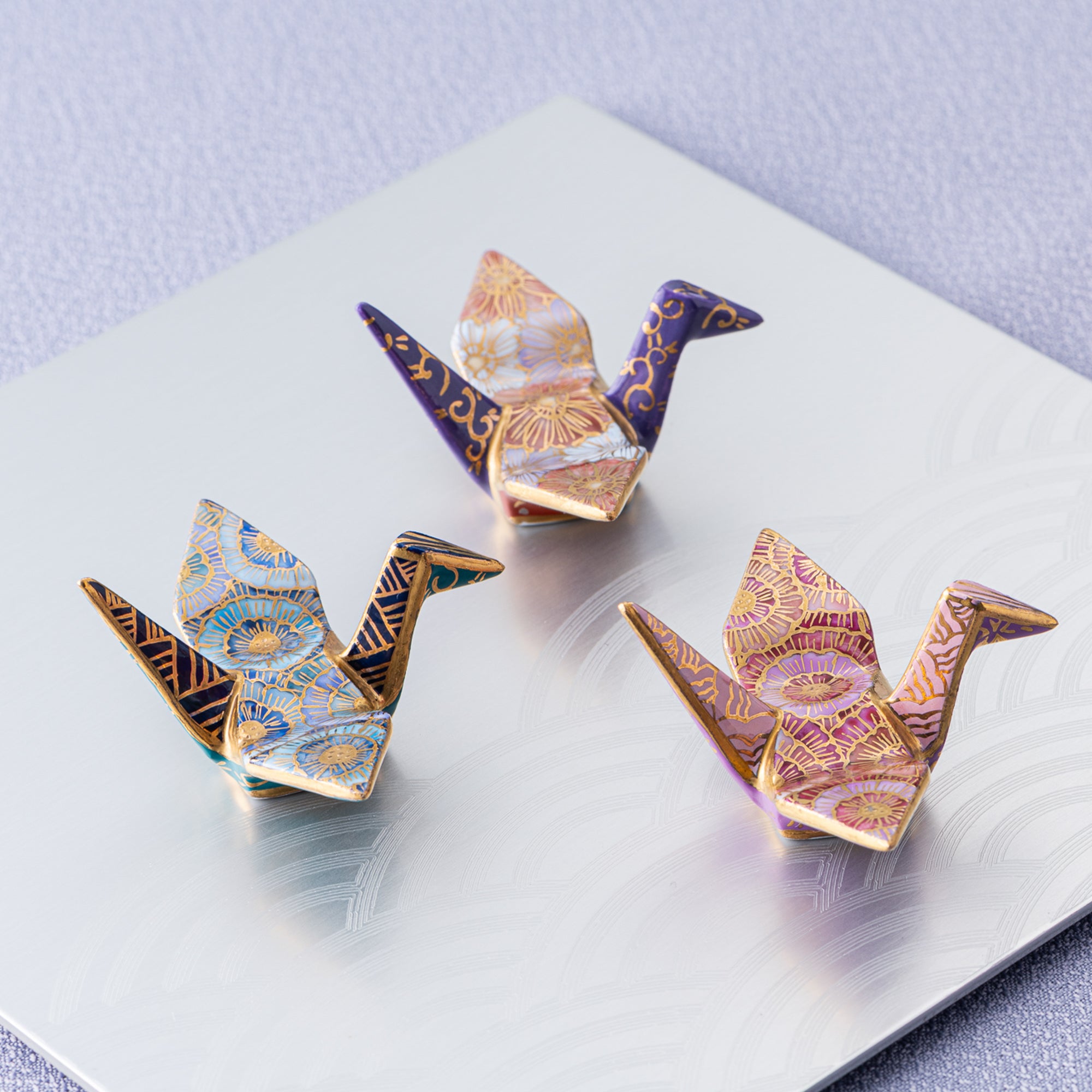
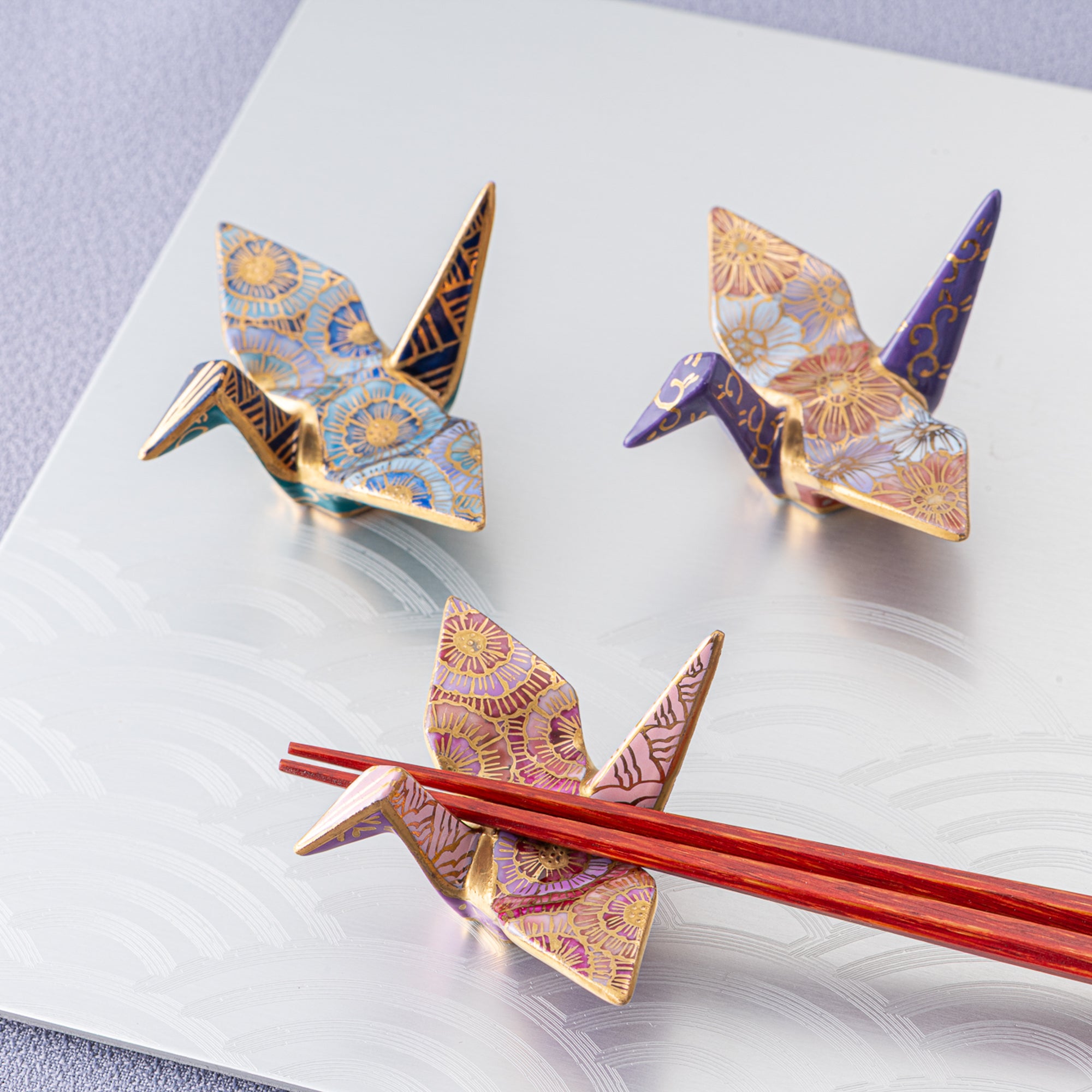
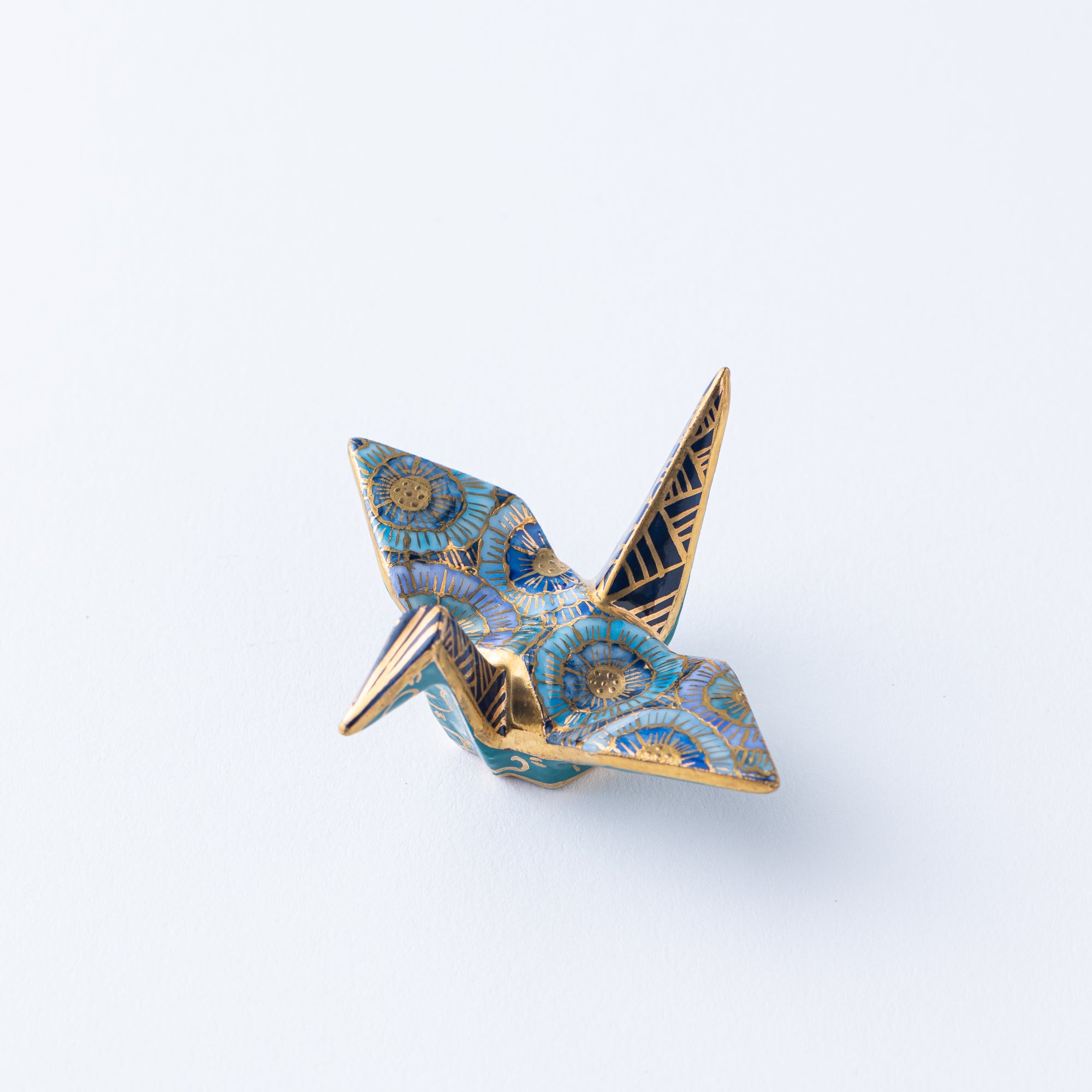
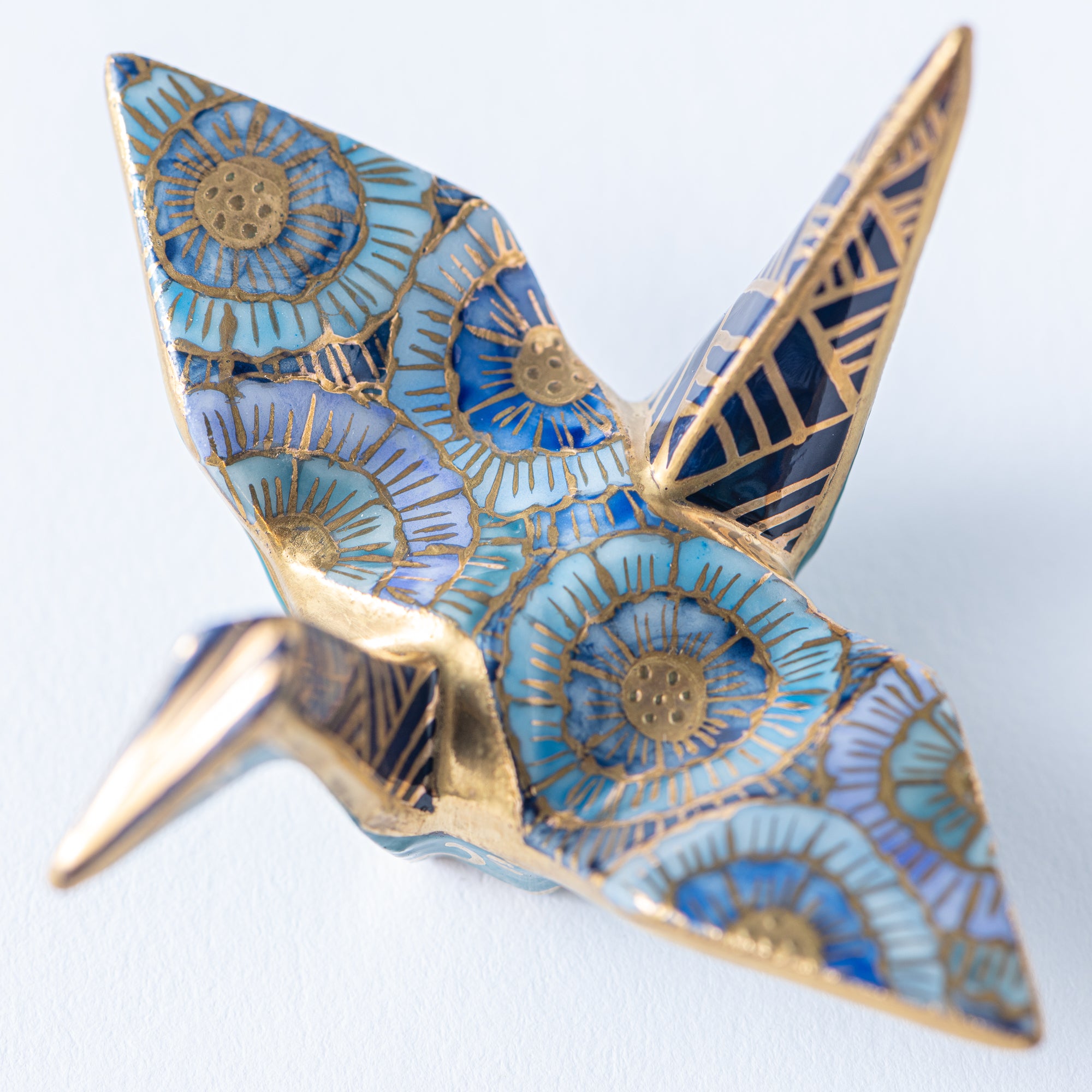
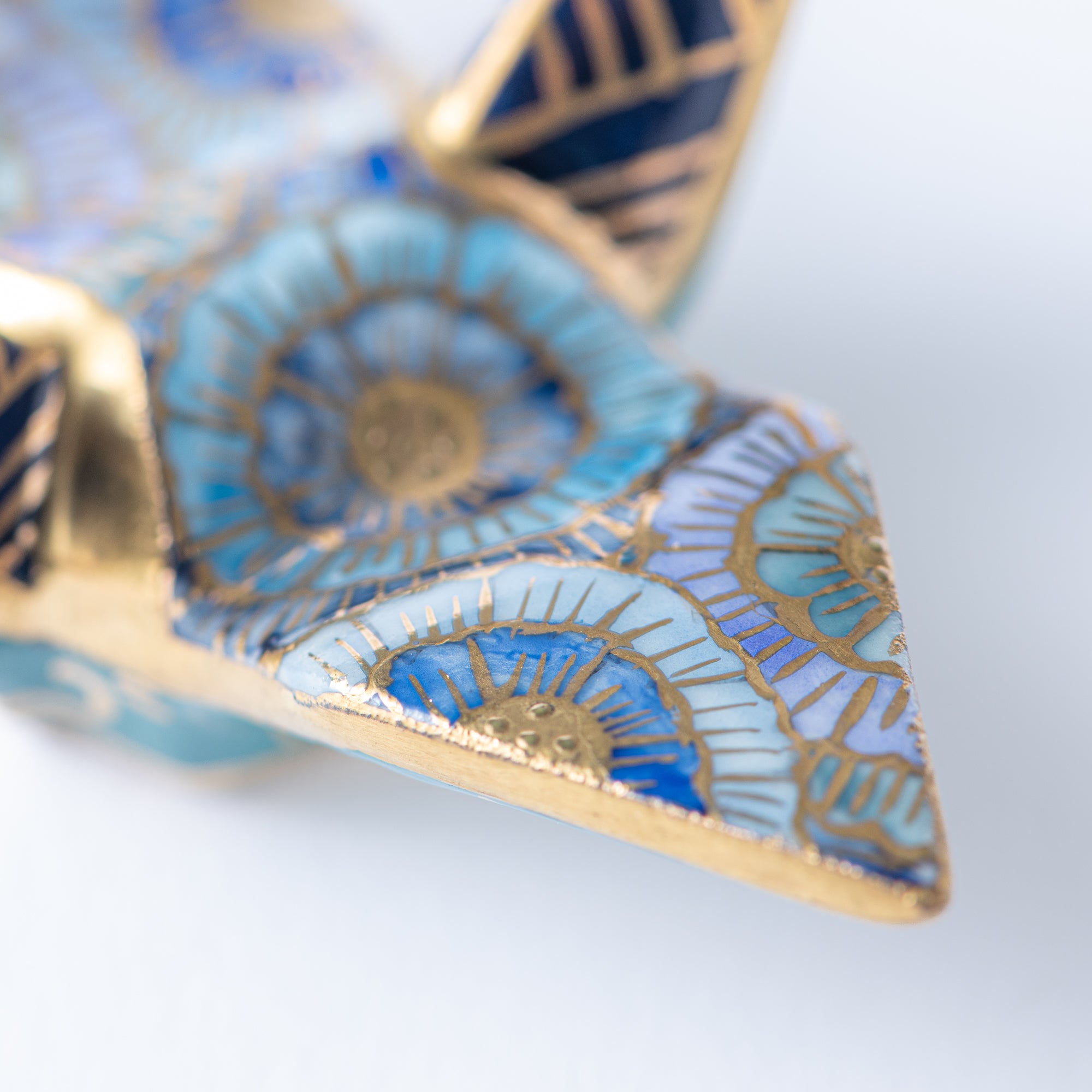
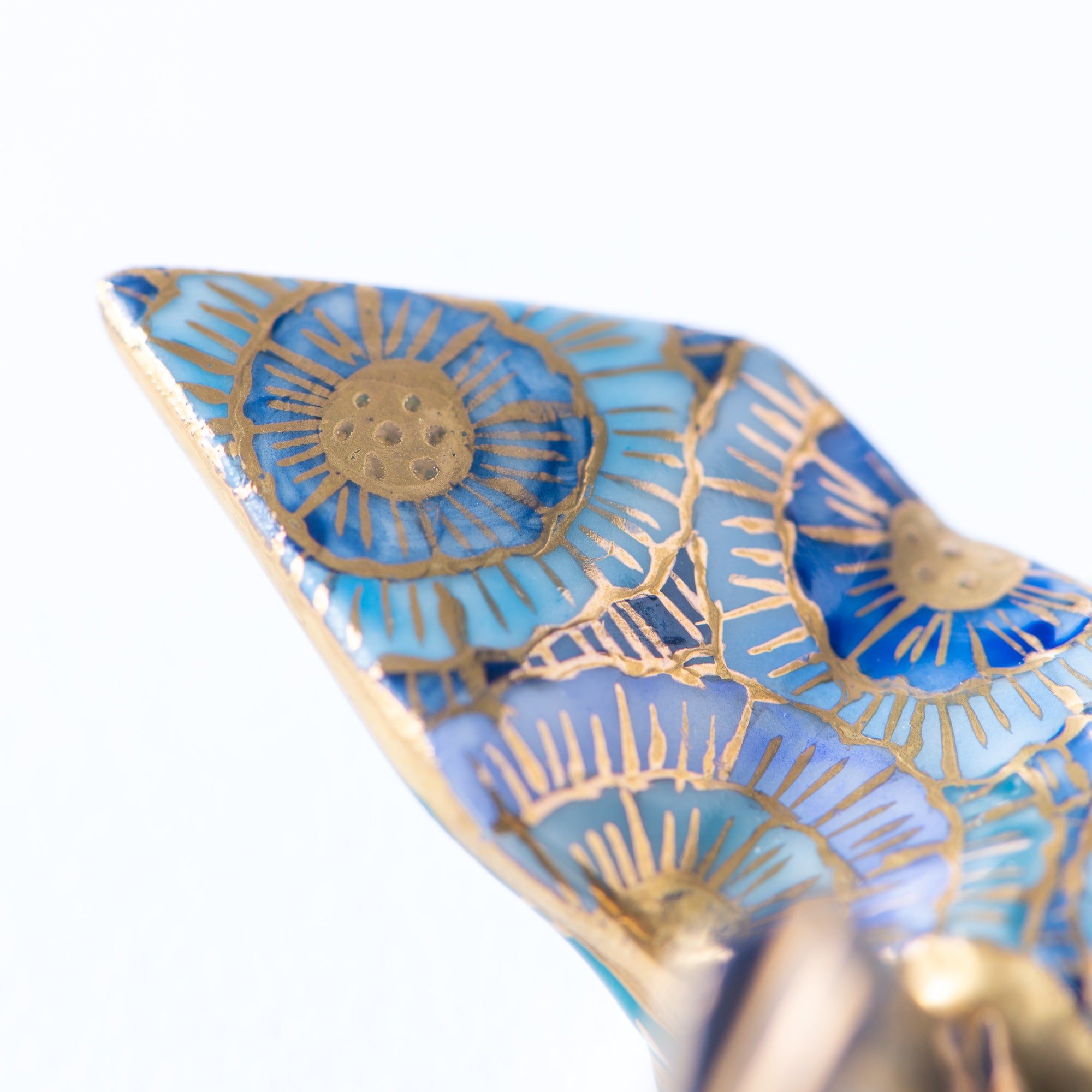
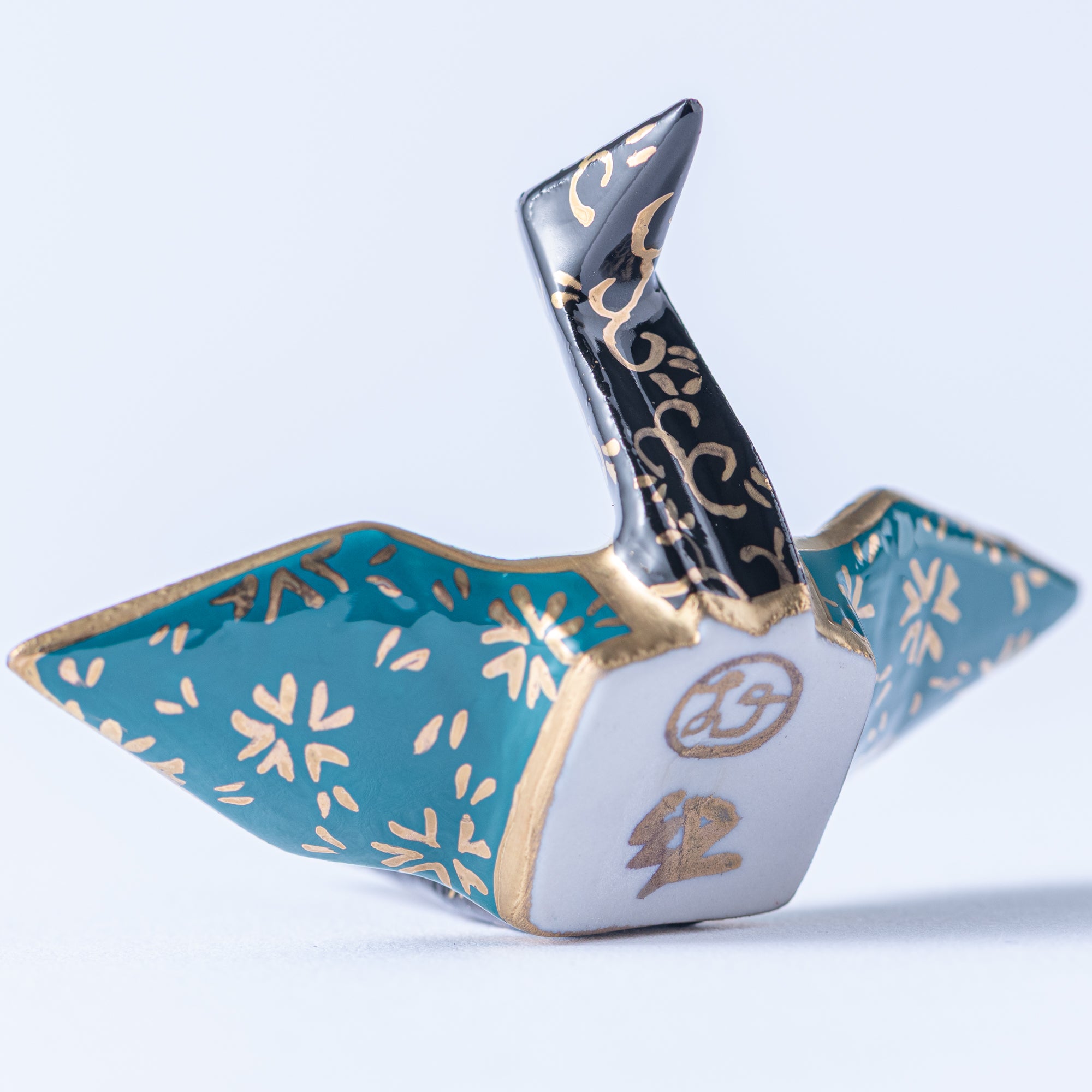
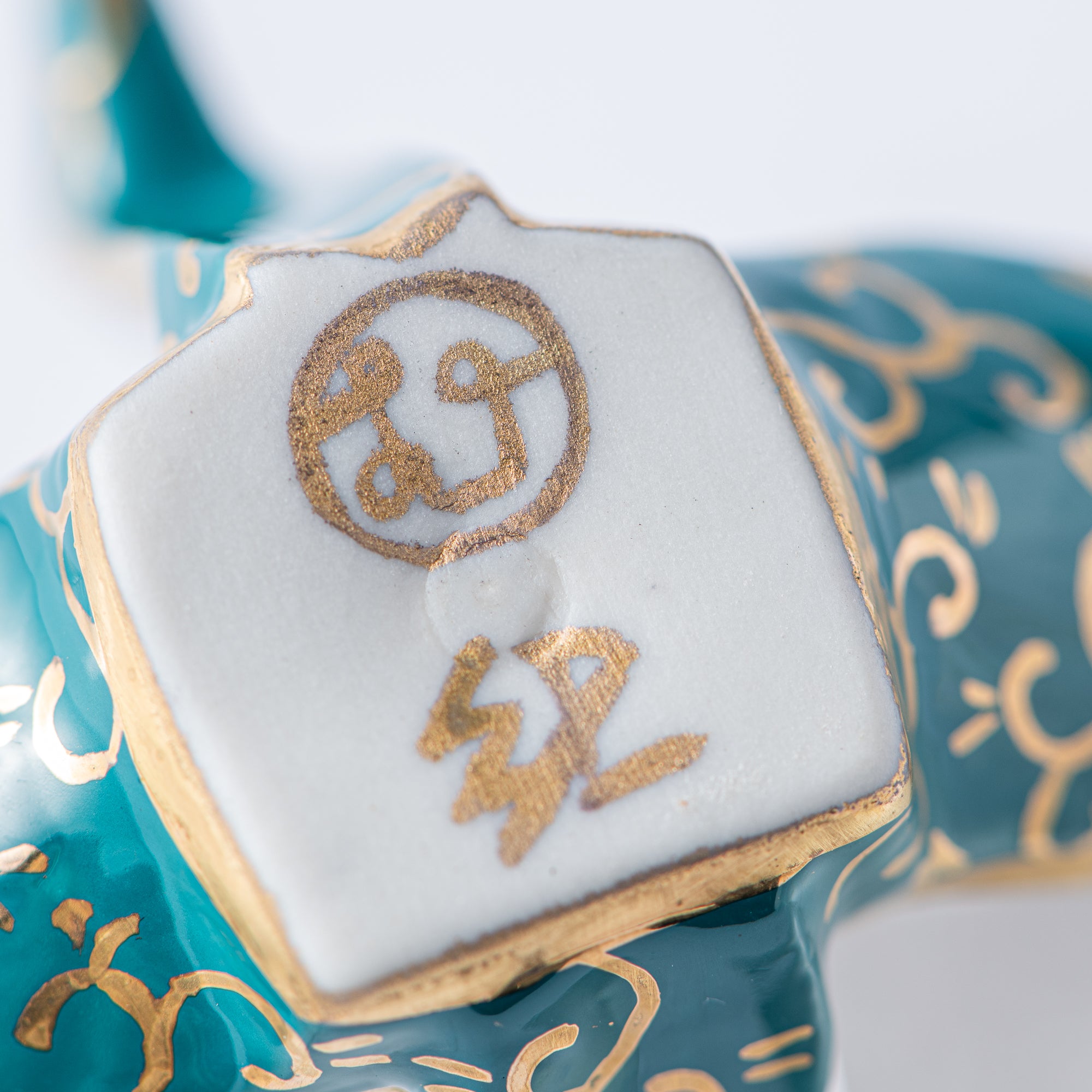
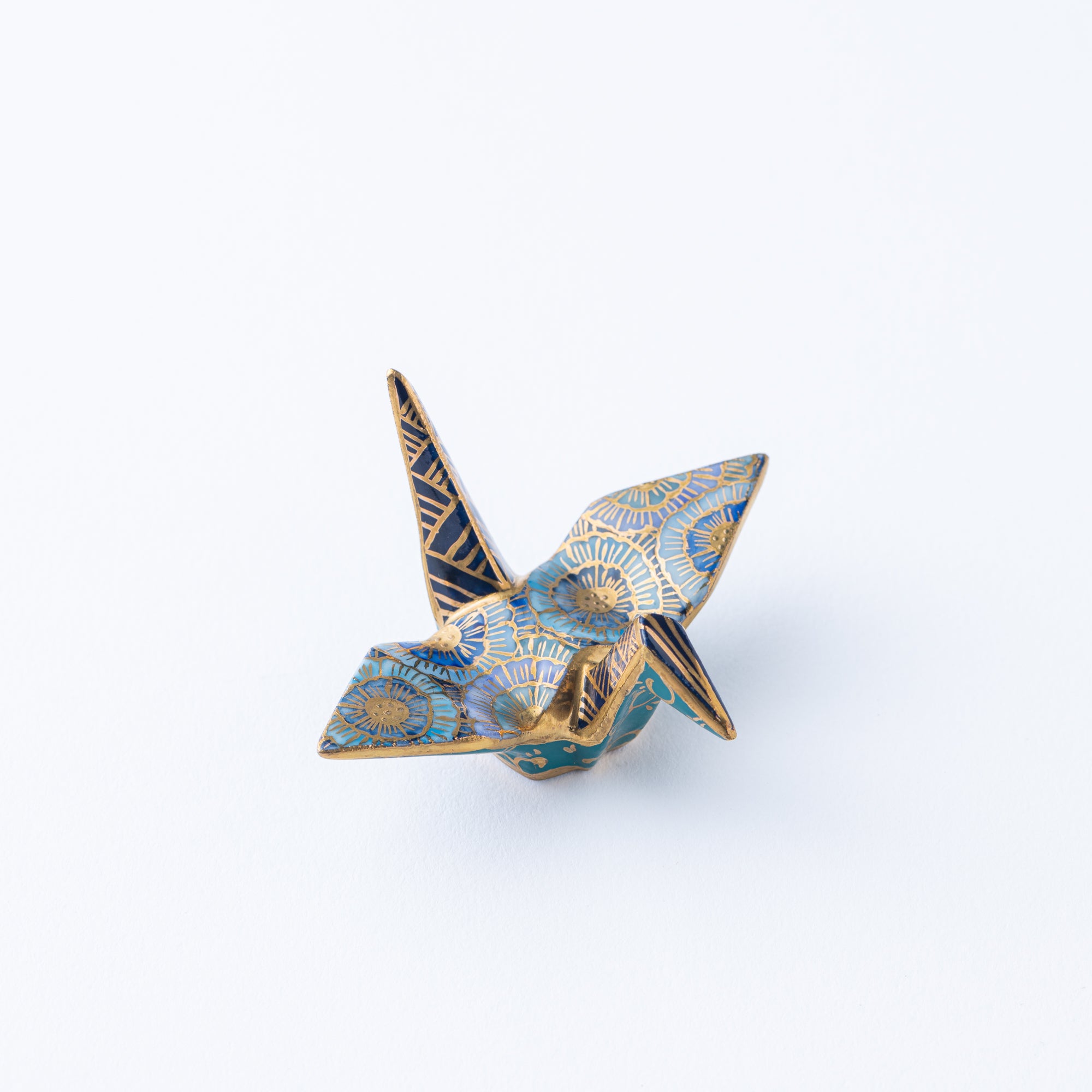
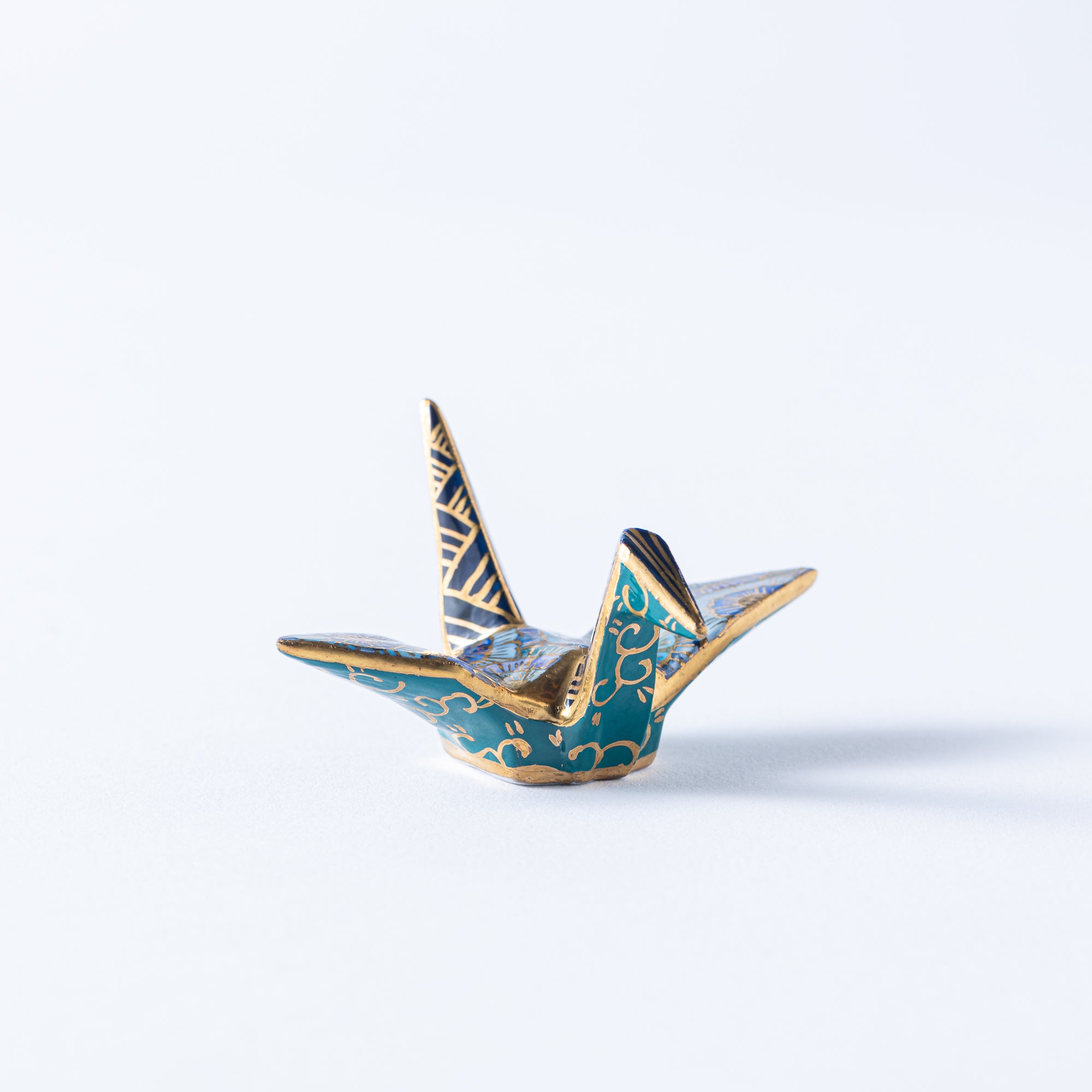
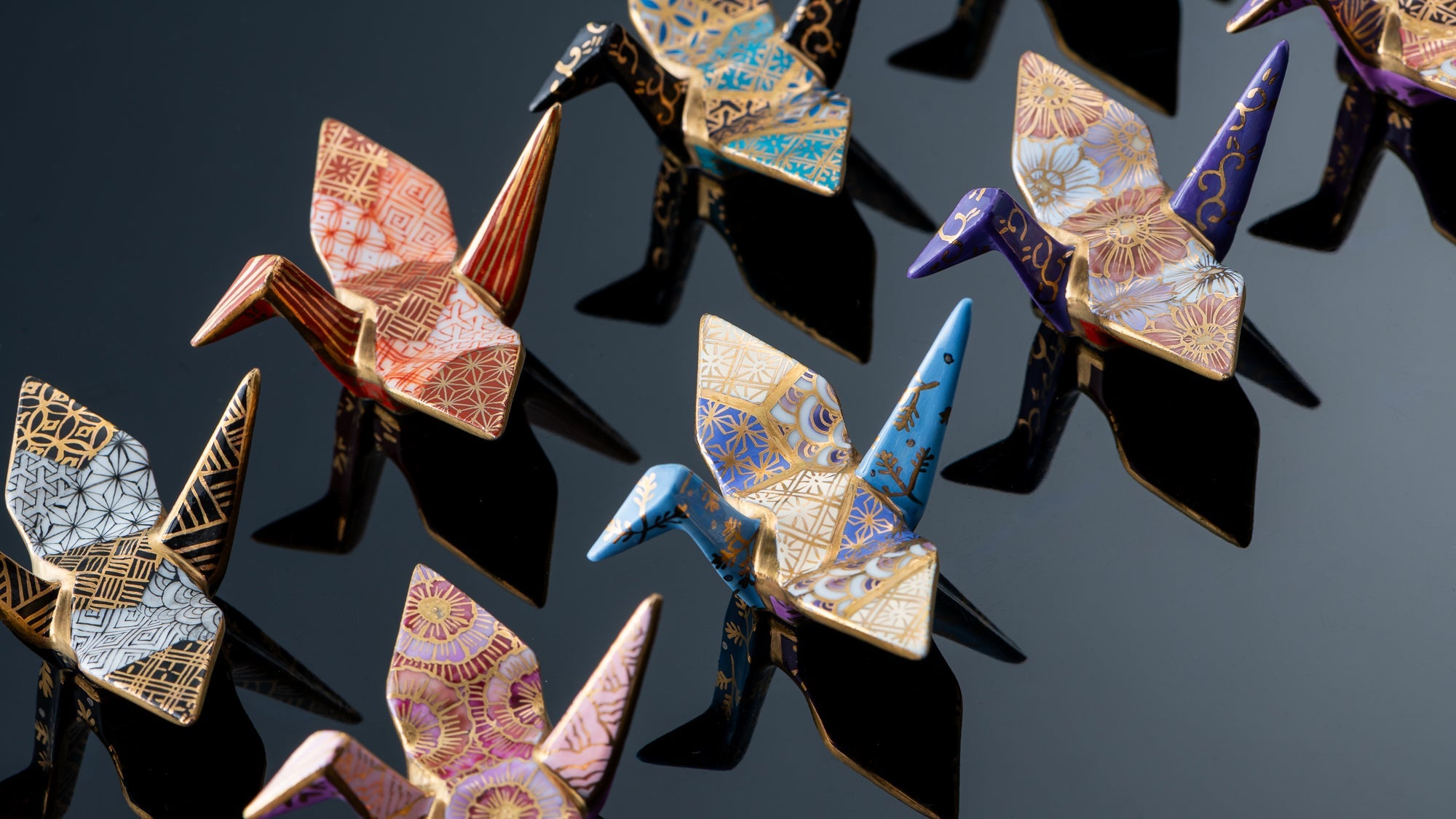
Shaped like a paper crane, this porcelain ornament is embellished with fine lines of gold and traditional Japanese motifs in shades of blue and teal. Meticulously hand-painted by skilled artisans, the gold glimmers as it catches the light, while more detail reveals itself with every glance. Placed on a shelf, nestled in an entryway, or adorning a table centerpiece, this crane ornament invites quiet tranquility into a space.
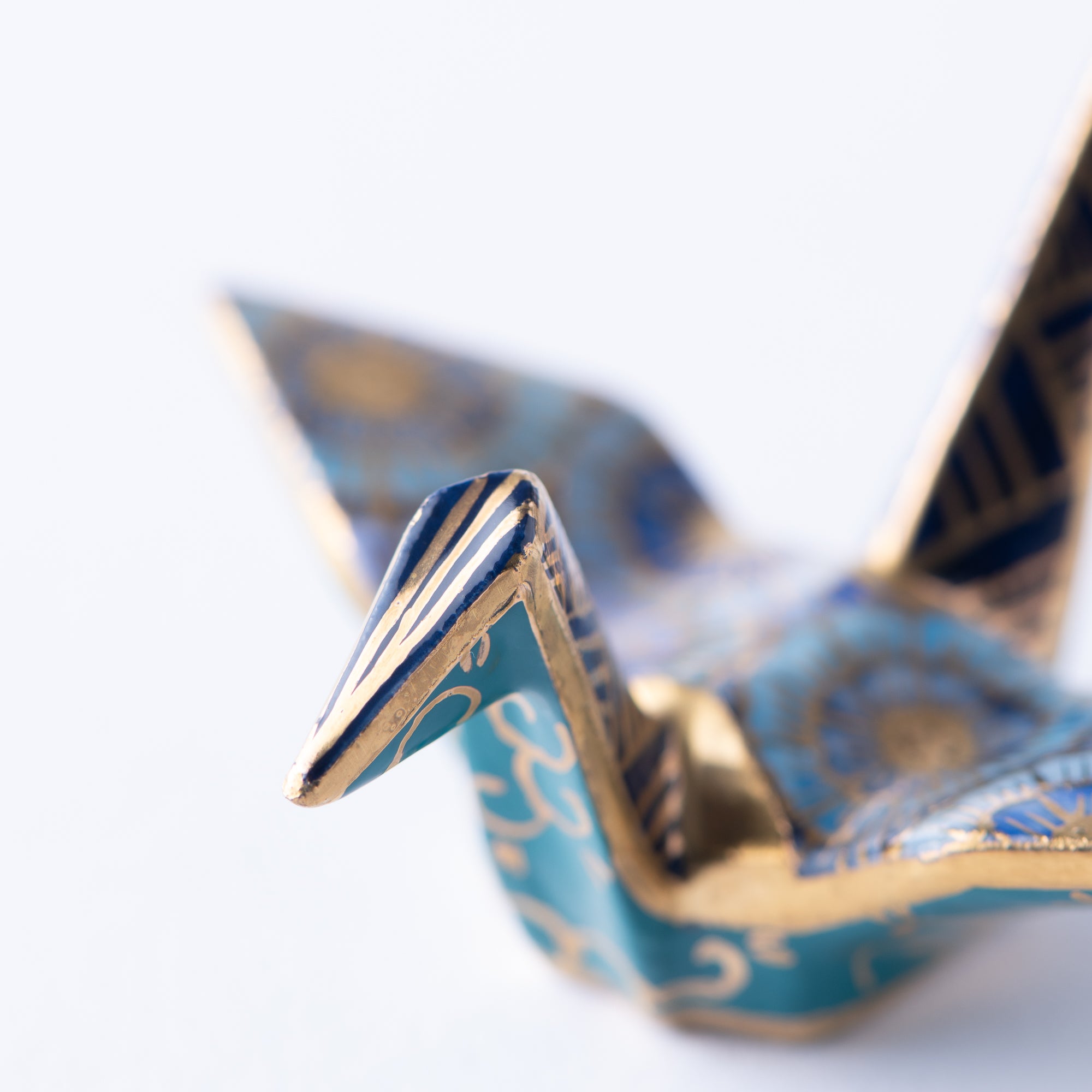
Each piece takes as many as twelve steps to complete. First, the edges are outlined in gold. Then, artisans apply multiple undercoats of color, with kiln firings between each coat. This results in a smooth, even finish. The main motifs are then painted, followed by intricate gold detailing. The piece is completed through layered decoration and repeated kiln firings. A single piece might be fired up to eight times before it is complete.
Every element of the design holds meaning. The crane shape itself was chosen by lead designer Kinosawa, who was born in Hiroshima, for its symbolism of peace. An explanation of each pattern is below.
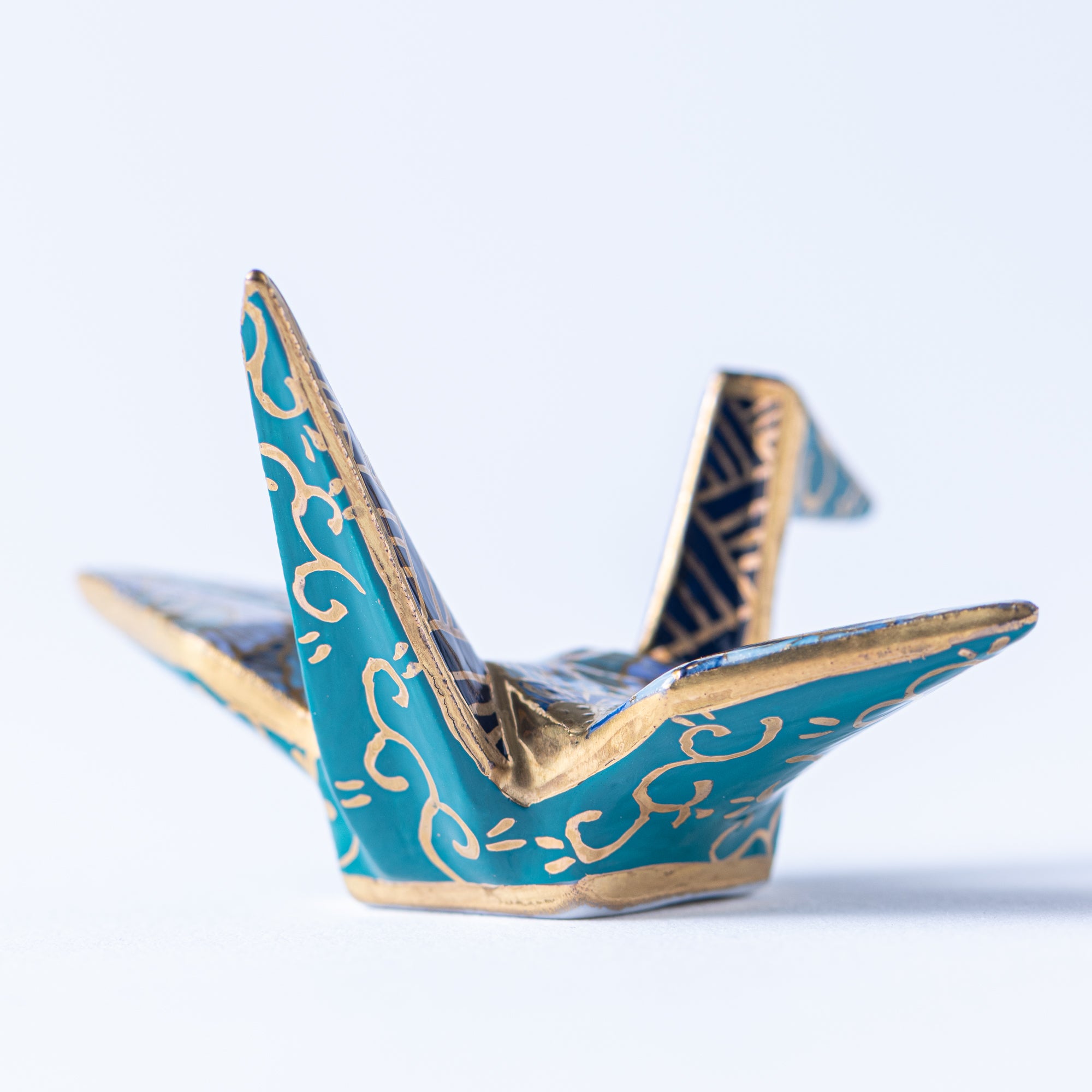
-Sankuzushi, alternating groups of lines. Found on the neck and tail.
-Layered flowers bloom across the back and wings.
-Karakusa, arabesques: symbolize longevity, growth, and prosperity. Found on the underside.
DETAILS
| Quantity | 1 |
| Size | L 5.3 cm (2.1 in) x W 6.0 cm (2.4 in) x H 3.2 cm (1.3 in) |
| Weight | 16 g (0.6 oz) |
| Material | Porcelain |
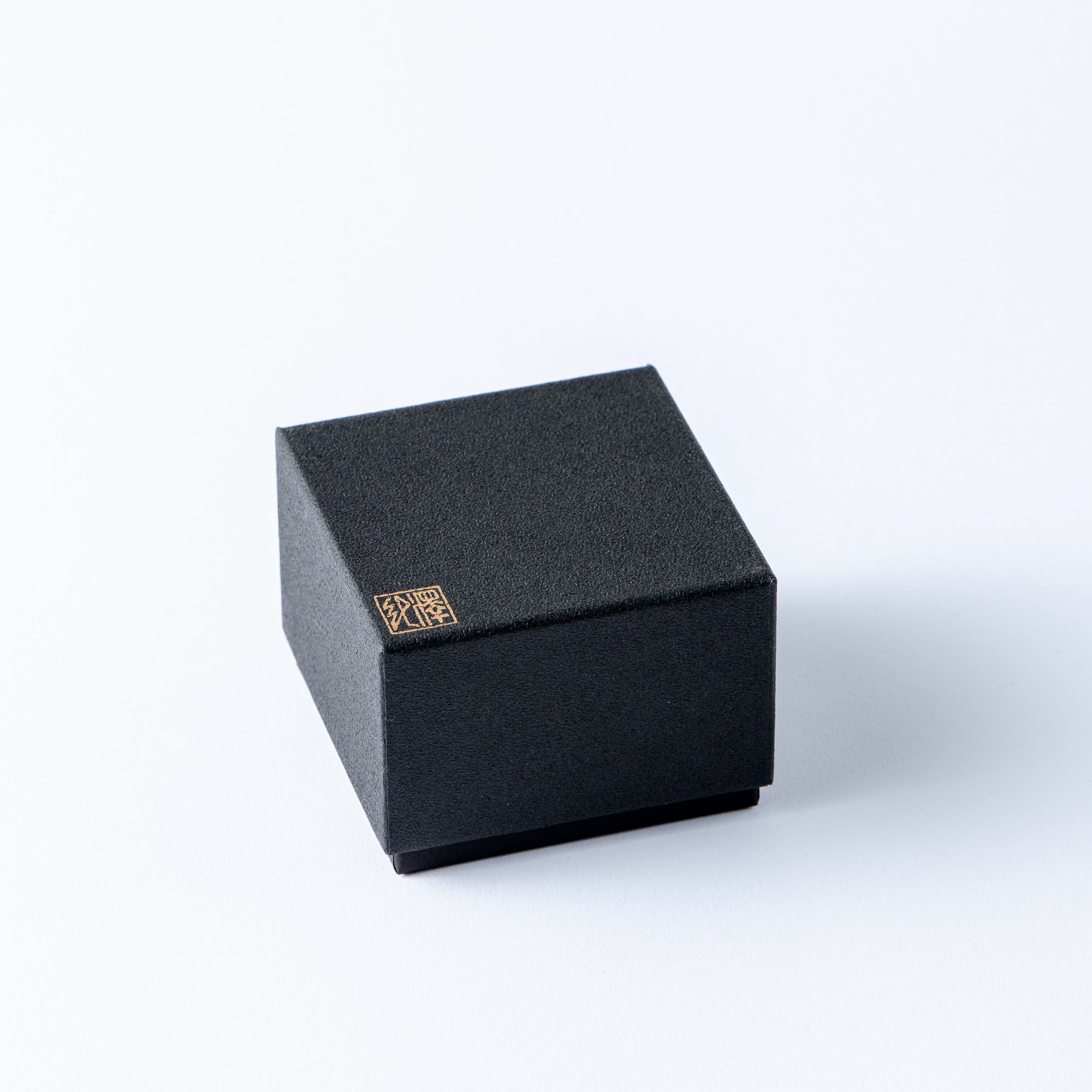
| Package Type | Paper box |
Maker / Brand
KIZAWA is a Kyoto-based studio specializing in hand-painted ceramics, led by female artist Kinosawa. Known for its delicate designs, the studio is guided by a wish to bring happiness to those who hold its work. Minutely detailed patterns and rich color are combined differently for every piece, making each truly one of a kind.
Crafts
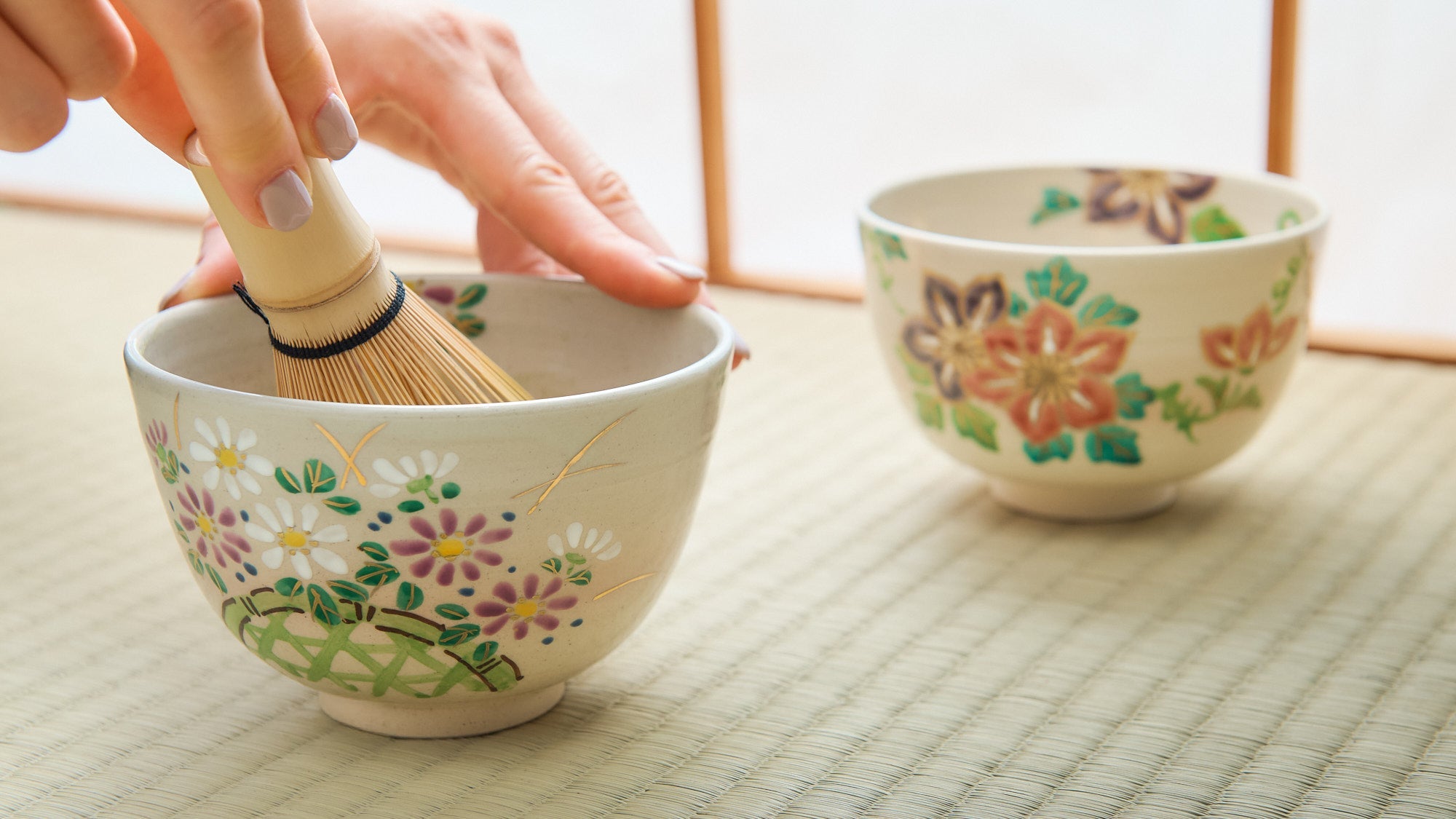
Kyo ware and Kiyomizu ware, collectively known as Kyo-yaki and Kiyomizu-yaki, are celebrated pottery styles from Kyoto. Known for their vibrant designs, finely sculpted forms, and dedication to handcrafted detail, these wares reflect Kyoto’s distinctive sense of beauty and artistic refinement.
Defined by a long-cultivated diversity, Kyo ware and Kiyomizu ware have drawn on techniques and styles from pottery traditions across Japan, evolving into a richly expressive and distinctly Kyoto art form. Recognized as a Traditional Craft of Japan in 1977, they continue to be cherished for their cultural depth and everyday appeal.
Choose options
Japanese Dolls & Decor
Experience the timeless charm of Japanese dolls and Japanese figurines, symbols of cultural heritage and artistic craftsmanship that have been cherished for generations. Our curated collection of Japanese dolls showcases exquisite hand-painted details, elegant silhouettes, and the storied traditions that inspire their creation.
Each figurine transforms any space into a corner of refined beauty, inviting a deeper appreciation for the craftsmanship and history that make these Japanese doll treasures so enchanting. Whether you’re a seasoned collector or discovering these cultural icons for the first time, our selection promises to connect you with the enduring spirit and serenity of Japan.
Kinsai
Kinsai refers to techniques used to apply gold leaf or gold paint to ceramics. Both terms also refer to the works produced by these techniques. Gold leaf or paint is applied over the ceramics’ glaze or overglaze decoration and then fired at a lower temperature than the overglaze itself.
Gold leaf and gold paint are valuable materials. In addition, gold leaf is very thin and particularly difficult to handle. Works flawlessly decorated with these materials reveal the extraordinary skill of the artisan.